
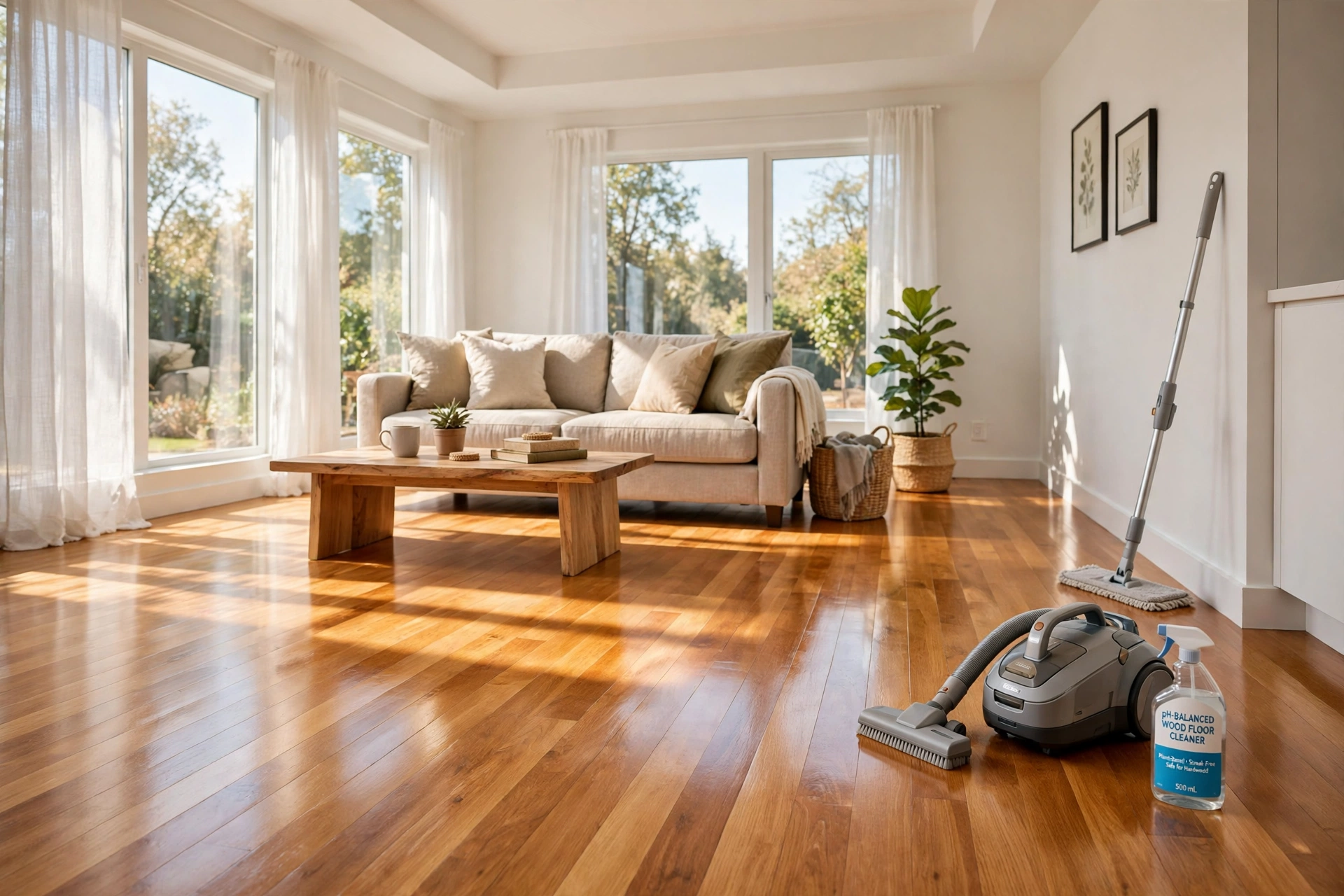
How to Clean Hardwood Floors: 14 Tips That Keep Them Beautiful
Introduction
Learning how to clean hardwood floors properly starts with one idea: wood and water do not mix. A hardwood floor is not a tile floor — a wet mop, vinegar, or a steam cleaner will dull, warp, or strip its finish fast.
The routine below follows the National Wood Flooring Association’s guidance: sweep or dust mop daily, vacuum weekly on the bare-floor setting, and clean monthly with a recommended wood cleaner. If your whole house needs the same reset, our guide to how to declutter your home room by room starts with the floors once the clutter is gone.
1. First, Know Your Finish — How to Clean Hardwood Floors Starts Here
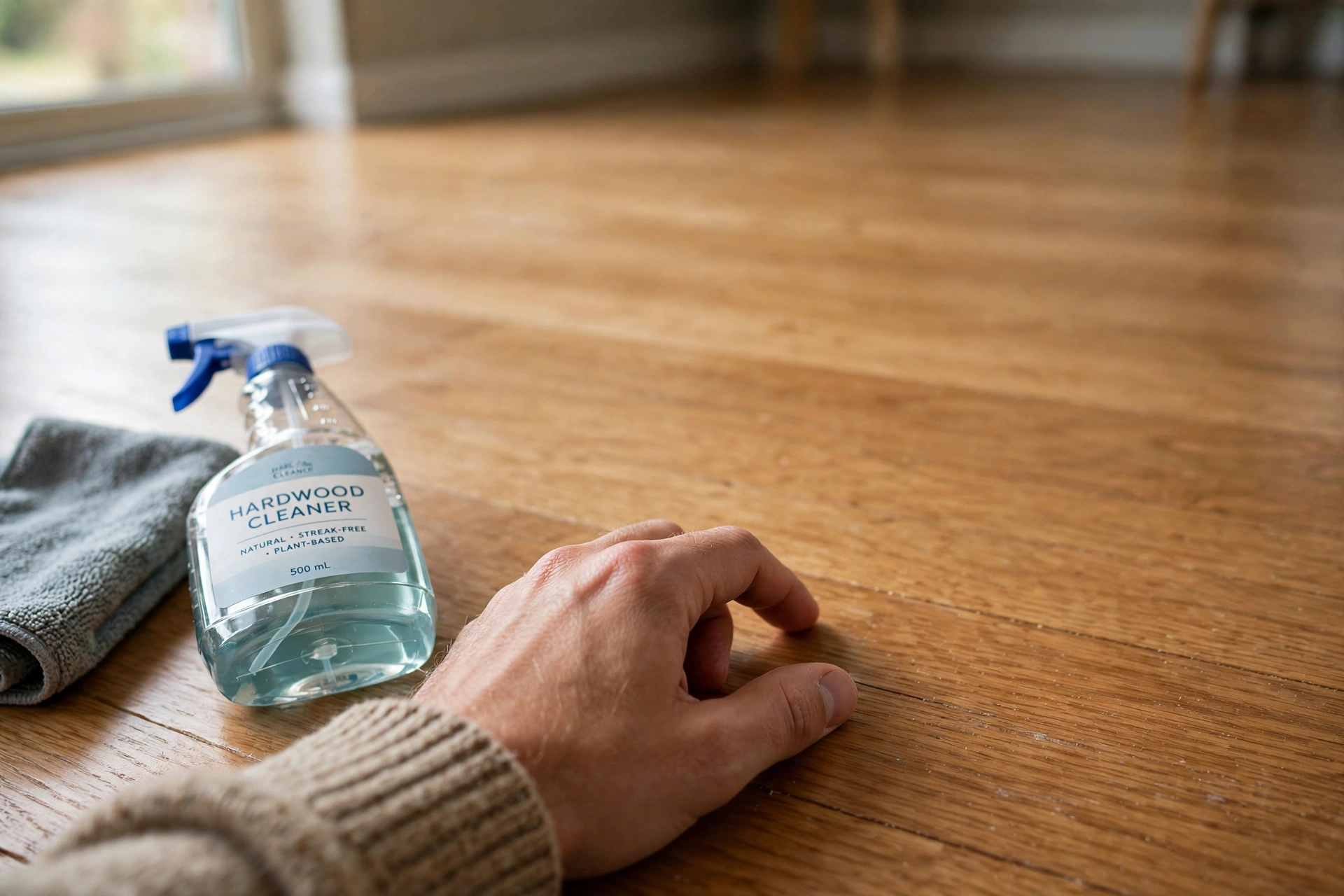
Every hardwood floor has a finish, and the finish decides the cleaning. Most modern floors have a surface finish — usually polyurethane — a hard, clear coating that seals the wood. Older floors may have wax or oil instead.
Not sure which you have? Rub a fingertip across a hidden spot: a surface finish feels smooth and slightly plastic, while waxed or oiled wood feels more like bare wood. When in doubt, ask the installer or manufacturer.
2. The Daily Routine: Sweep or Dust Mop — How to Clean Hardwood Floors Every Day
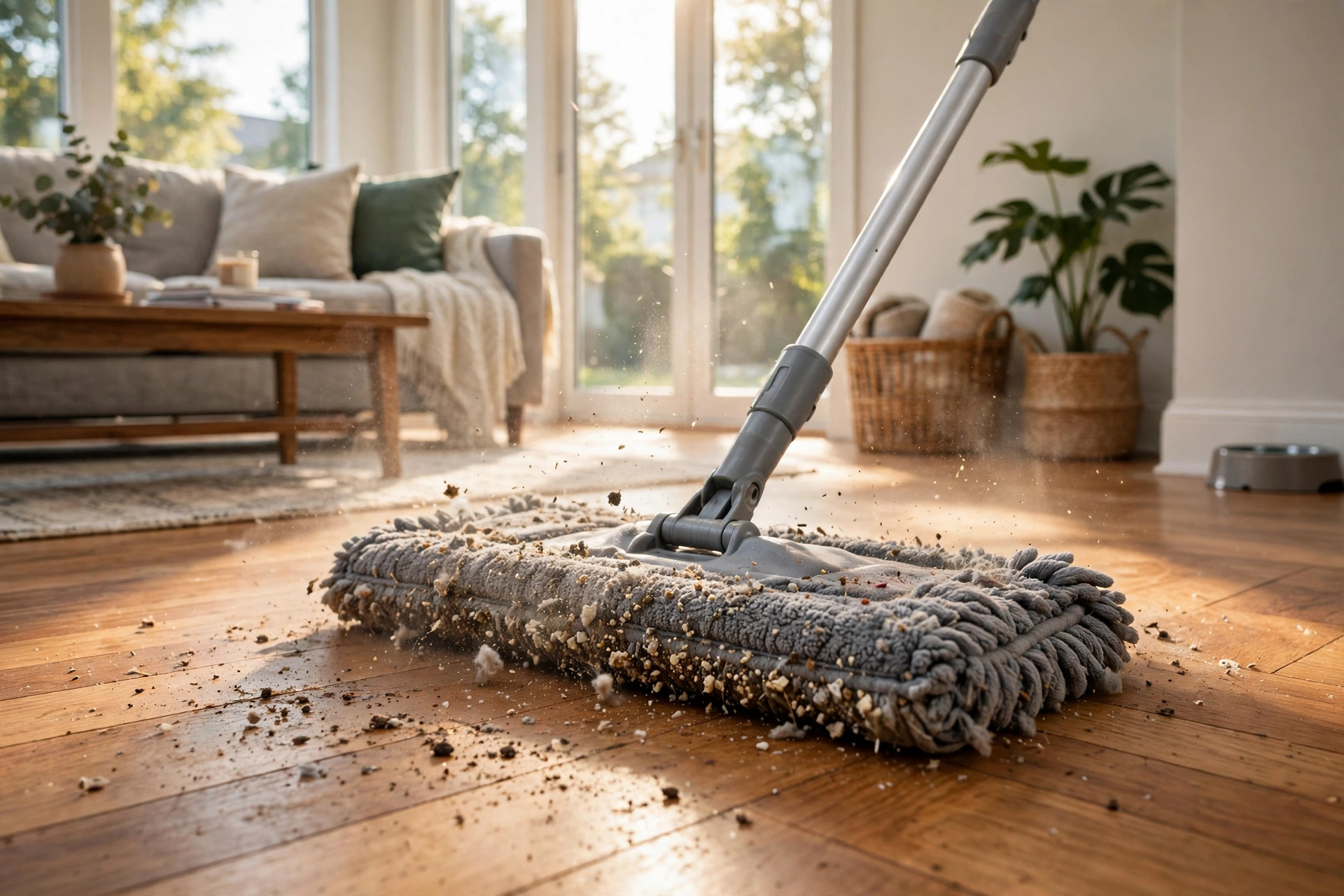
The most damaging thing that happens to a hardwood floor each day is not foot traffic — it is grit. Sand and dirt tracked in on shoes act like sandpaper, scratching the finish with every step. That is why the daily step in how to clean hardwood floors is dry, not wet: sweep or dust mop every day, or several times a week in busy homes.
Use a microfiber dust mop or a soft-bristle broom — a stiff one can scratch, and a regular broom just pushes grit around. Work with the grain, and focus on entryways and the kitchen.
3. The Weekly Routine: Vacuum on the Bare-Floor Setting
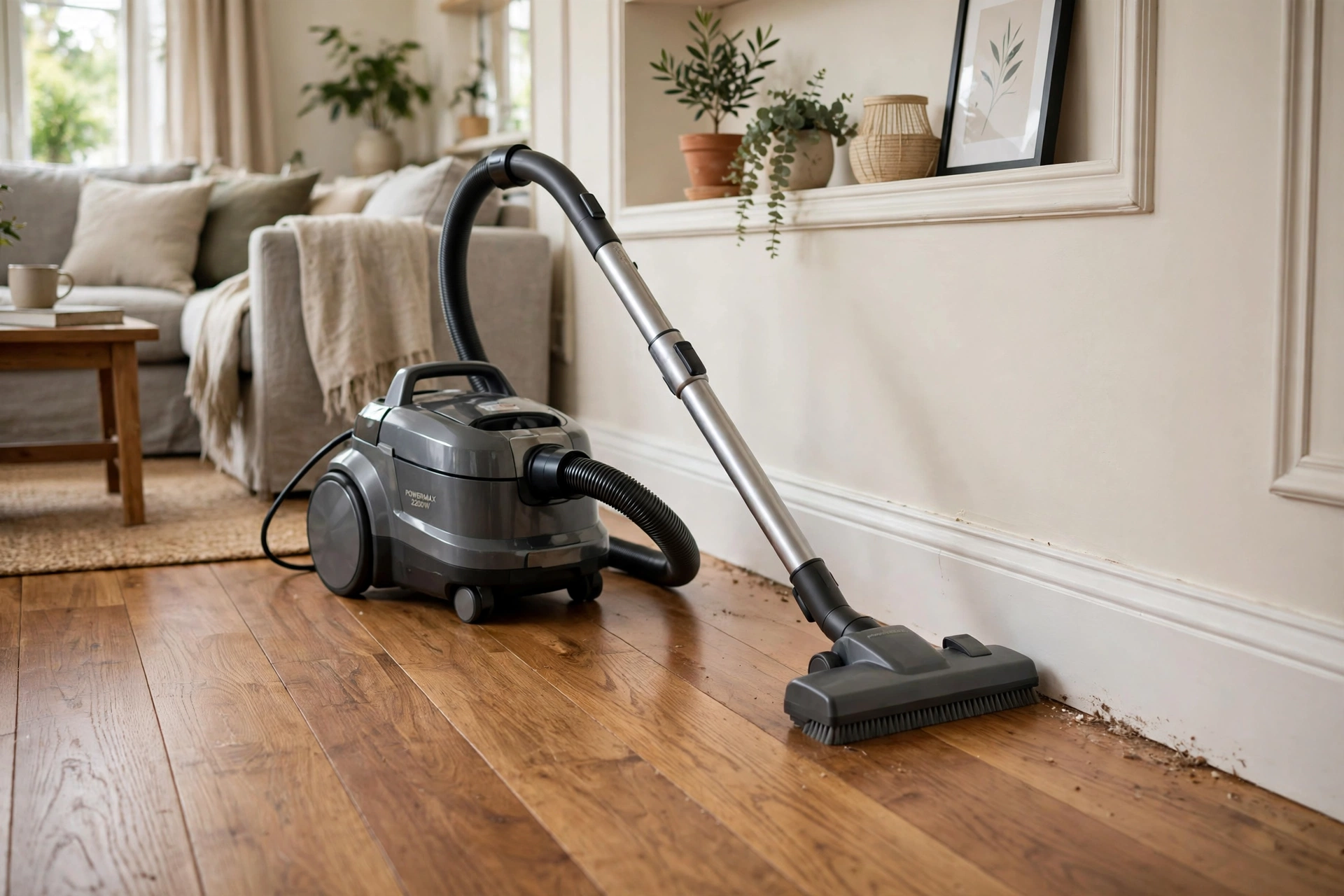
Once a week, vacuum on the bare-floor setting with a soft brush or felt head. Vacuuming lifts the fine dust a dust mop leaves behind, especially along baseboards and in the seams between boards.
Never use a beater bar or a rotating brush roll on hardwood — it dents and scratches the surface. If your vacuum has no bare-floor setting, switch off the brush roll or use the hard-floor attachment. Keeping the filter clean matters for suction — our guide to how to clean a vacuum cleaner filter shows how.
4. The Monthly Routine: Damp Mop with a Wood-Floor Cleaner
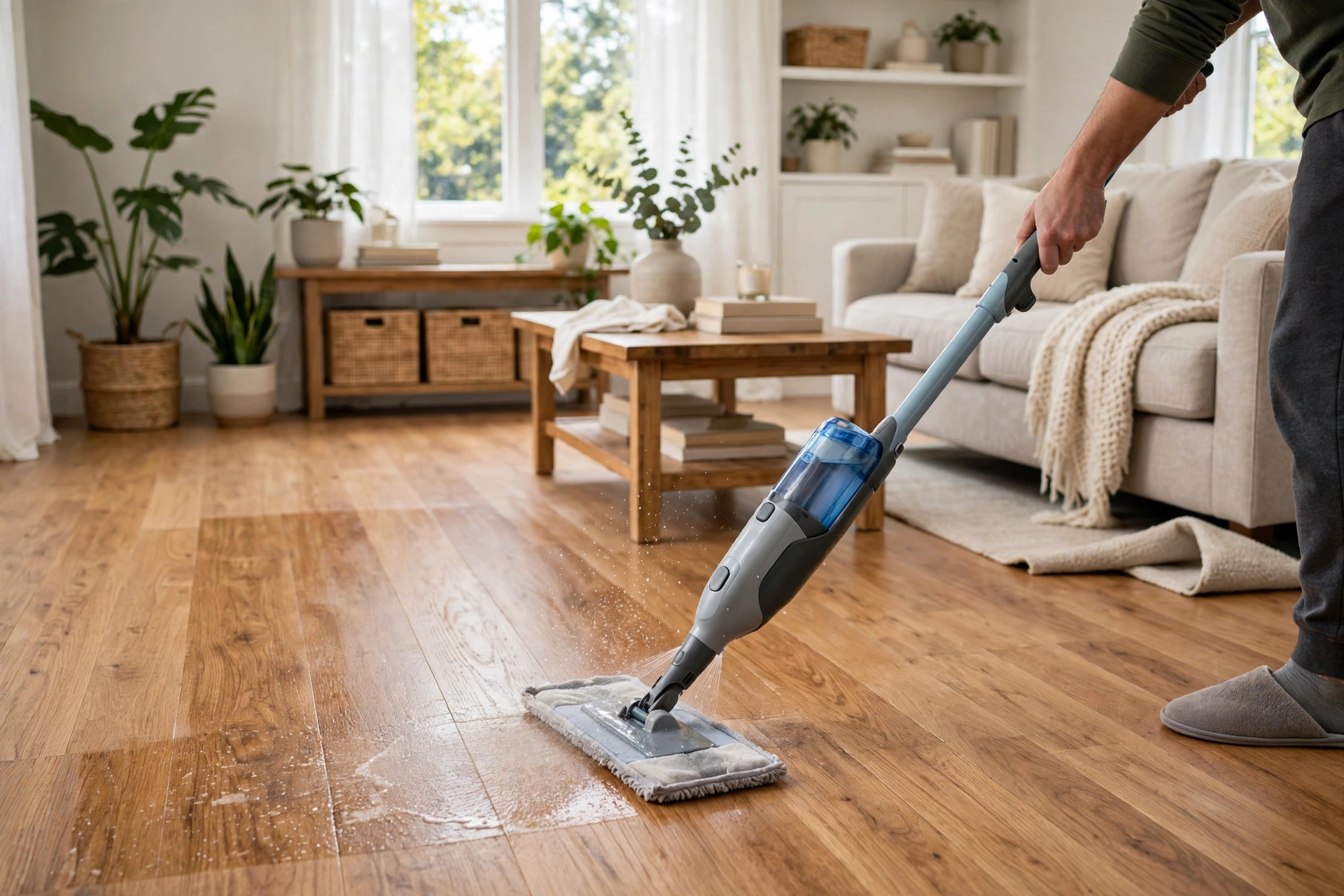
About once a month, damp mop the whole floor with a wood floor cleaner. This deeper clean lifts the film a dust mop cannot reach — cooking grease, sticky residue by the front door, the dull haze from weeks of dry cleaning.
Spray the cleaner onto the mop, not onto the floor. Work in small sections, moving with the grain, and let each section dry before walking on it. Streaks afterward mean too much liquid — use a drier mop next time.
5. How to Damp Mop Without Damaging the Finish — How to Clean Hardwood Floors Safely
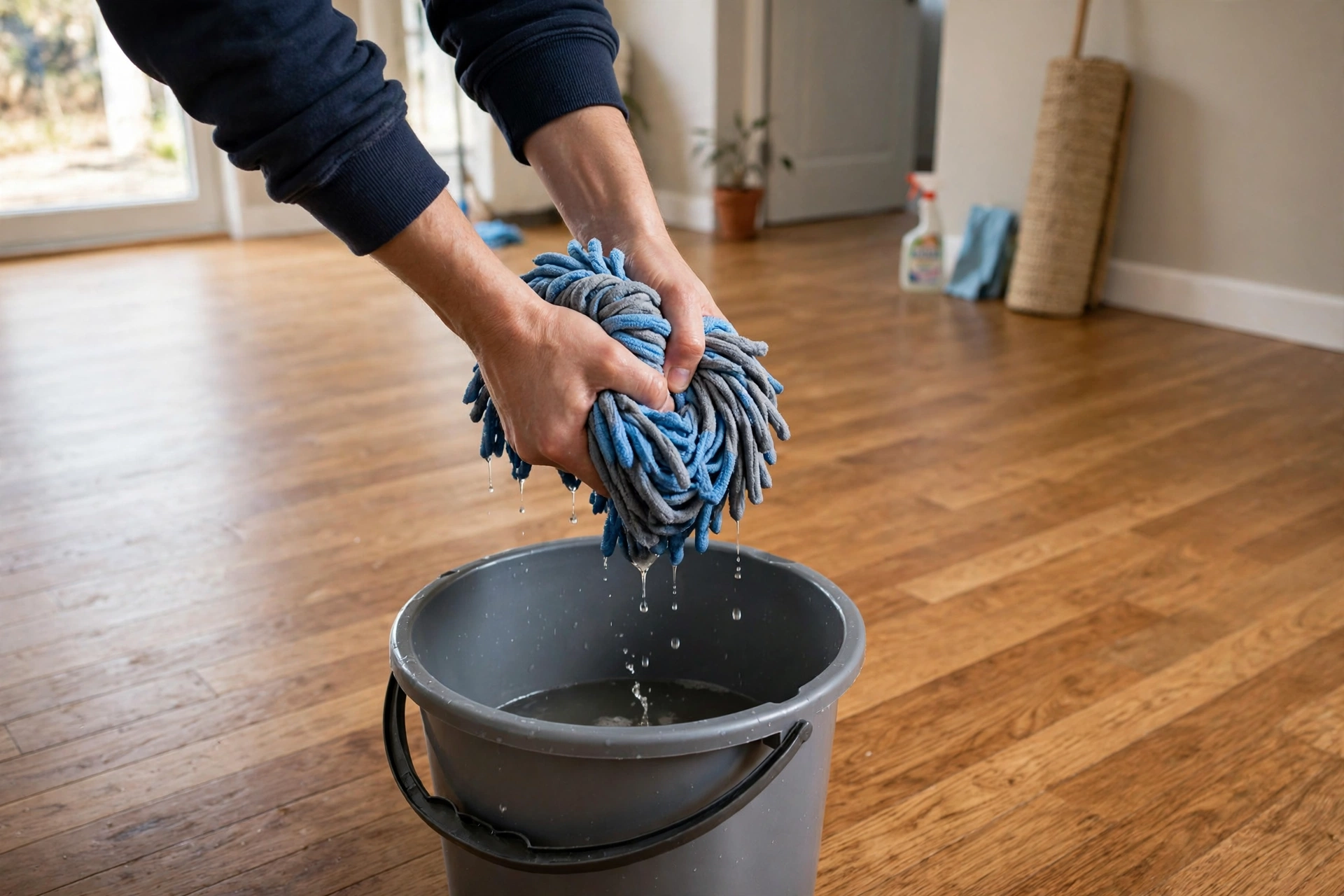
Damp mopping rule: the mop should be damp, almost dry — never wet. Wring it out until almost no water comes out. The NWFA’s advice is a damp, near-dry mop: wood absorbs water, and even small amounts left standing can swell and warp boards.
Never pour water or cleaner directly onto the floor, and never let a puddle sit. If you spill water, wipe it up right away with a dry cloth, then dry the spot with a second cloth. HGTV’s guide to how to clean hardwood floors quotes the NWFA’s vice president on the same point: a damp, near-dry mop, never an over-wet floor.
6. What to Use on Hardwood Floors (and What to Reach For First)
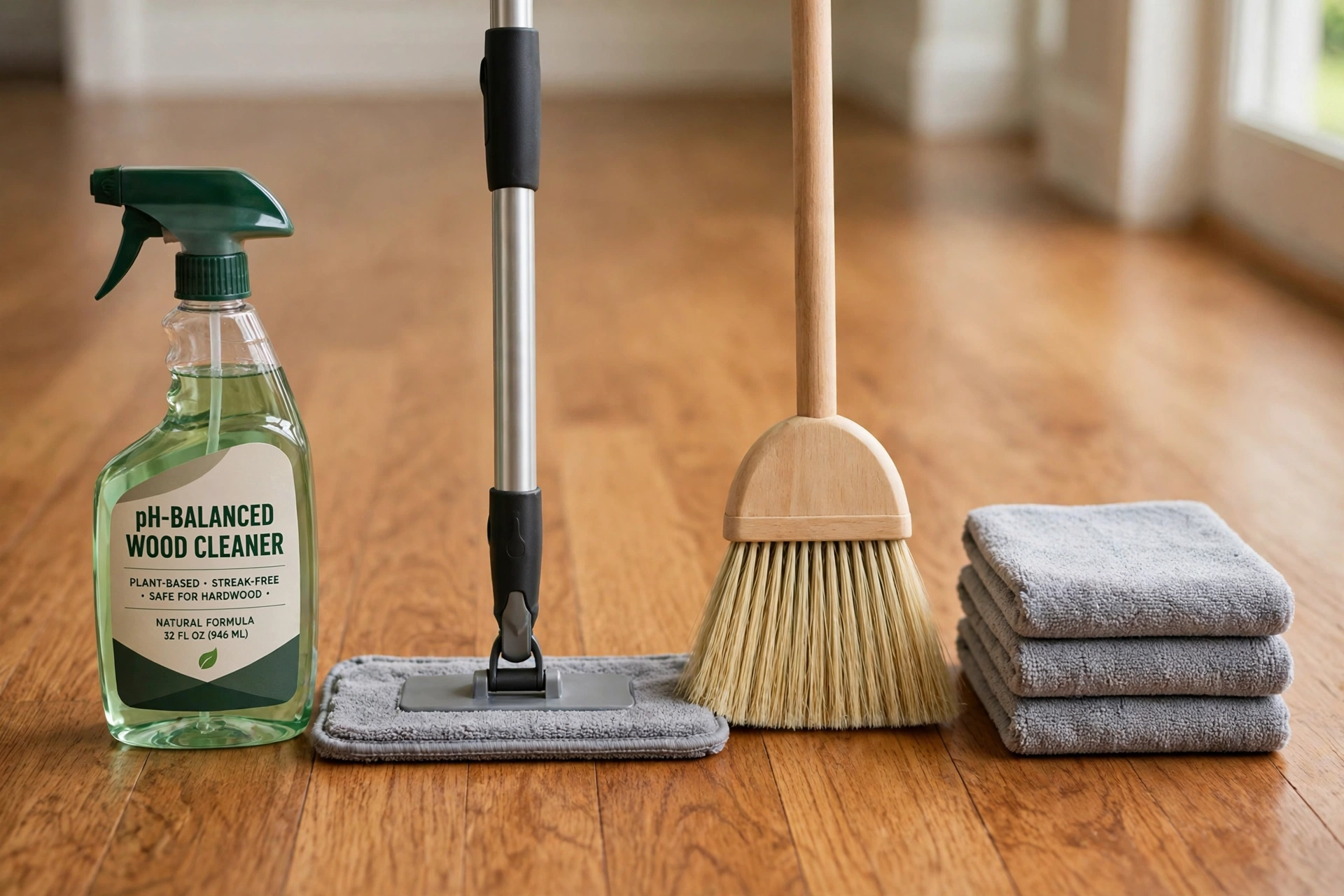
The safest cleaner is the one made for your floor’s finish. A pH-balanced wood floor cleaner — Bona is the one most flooring brands point to — cleans without stripping the finish or leaving a film. Follow the label exactly.
For everyday cleaning, you need very little: a microfiber dust mop, a soft-bristle broom, a vacuum with a bare-floor setting, and a microfiber mop pad. Microfiber traps grit instead of dragging it across the finish — keep two or three pads on hand.
7. What NOT to Use — No Steam Mops, No Vinegar, No Oil Soap
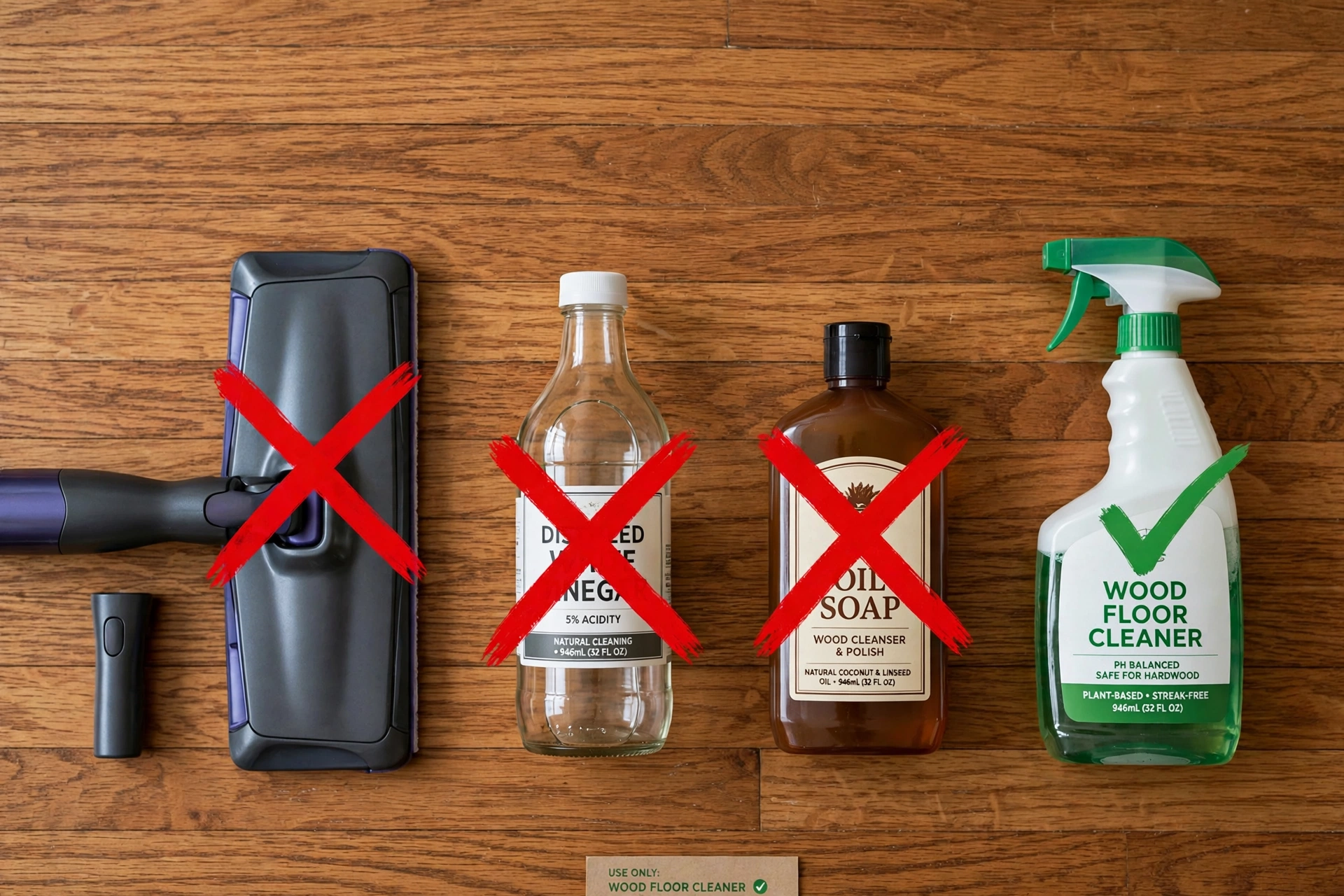
Never use a steam mop on a real wood floor: steam travels deeper into the cracks and cells of the wood than liquid water does, and it can permanently damage wood and finish. The NWFA is direct — no wet mops, no steam mops.
Vinegar is the other popular mistake. It is acidic enough to damage wood flooring and its finish over time, and vinegar-and-water mixtures leave a sticky residue that attracts dirt. The same goes for oil soap, ammonia-based cleaners, bleach, all-purpose detergents, and anything promising to “restore shine” with wax or silicone.
8. Sealed (Urethane) Floors — How to Clean Hardwood Floors with a Surface Finish
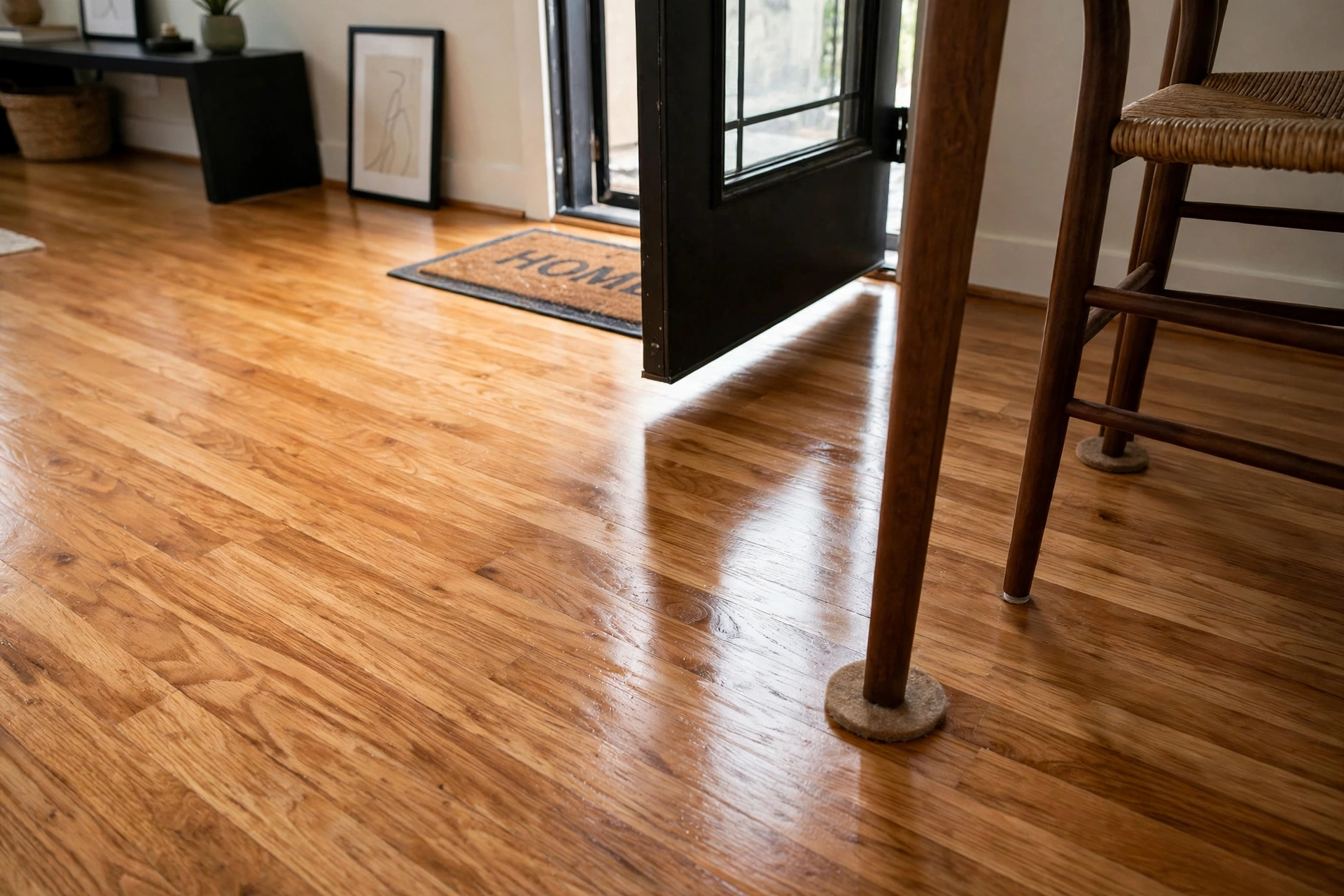
Most floors installed in the last thirty years have a polyurethane surface finish, and they are the easiest to care for — the routine above is written for them. The finish is a hard shell, so spills sit on top of it: wipe them up promptly with a dry cloth, or a slightly damp cloth for sticky spills.
Two things still damage a sealed floor: standing water and grit. Water seeps into seams and board ends, swelling the wood and lifting the finish. Doormats at every door, felt pads under furniture legs, and the daily dust mop protect a sealed floor better than any product.
9. Waxed and Oiled Floors — A Different Routine
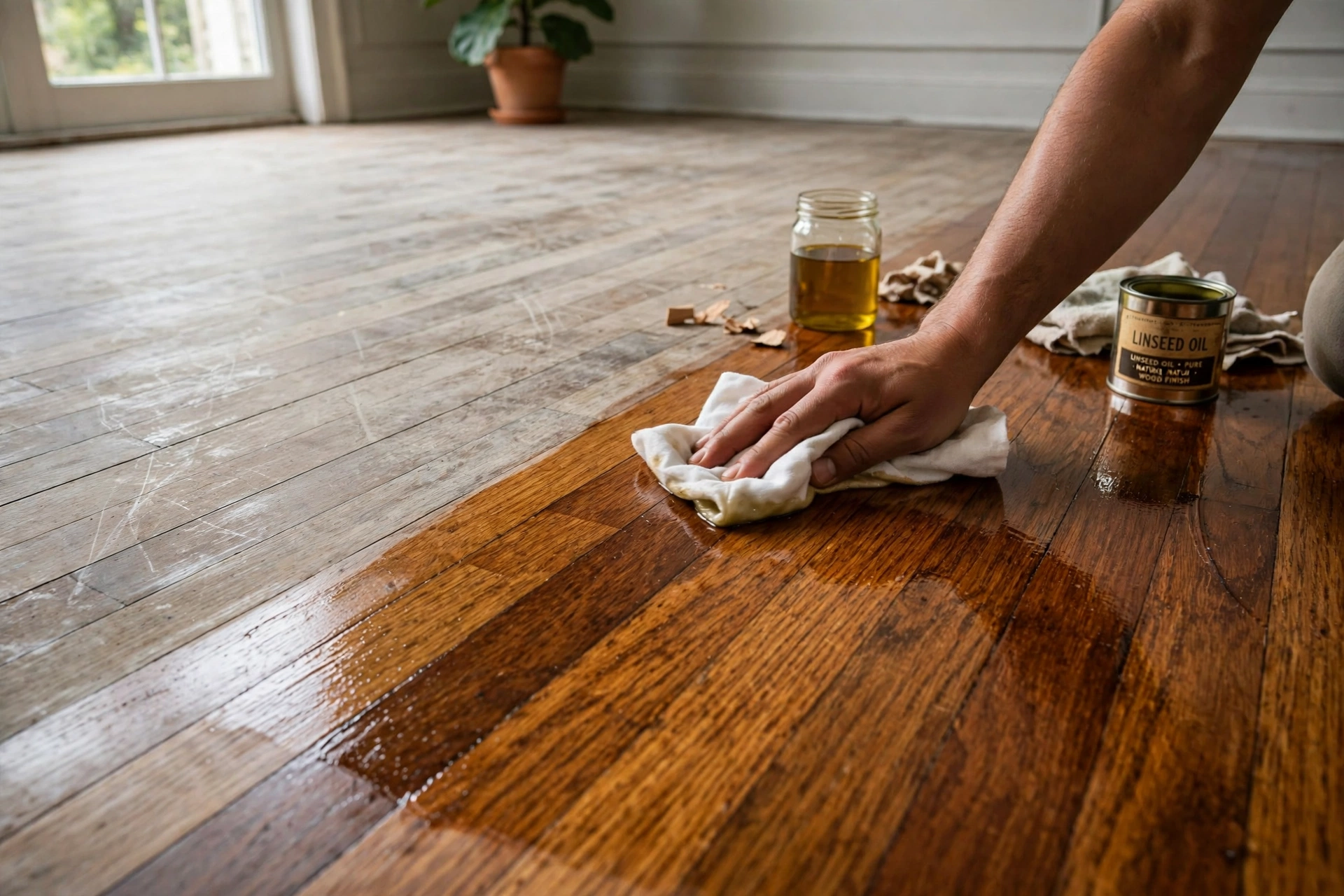
Waxed and oiled floors need a different routine, because the finish is in the wood, not on top of it. Never damp mop a waxed floor like a sealed one, and never use a water-based wood cleaner on it — water is the enemy of a wax finish. Sweep and vacuum the same way, but use only products made for waxed or oiled floors.
Oiled floors need re-oiling every year or two, and waxed floors need re-waxing on a similar schedule. If the floor looks dry, patchy, or gray in high-traffic spots, that is the finish wearing thin — not dirt — and no cleaning will fix it. Ask a flooring professional before buying any product.
10. Removing Scuffs and Light Scratches
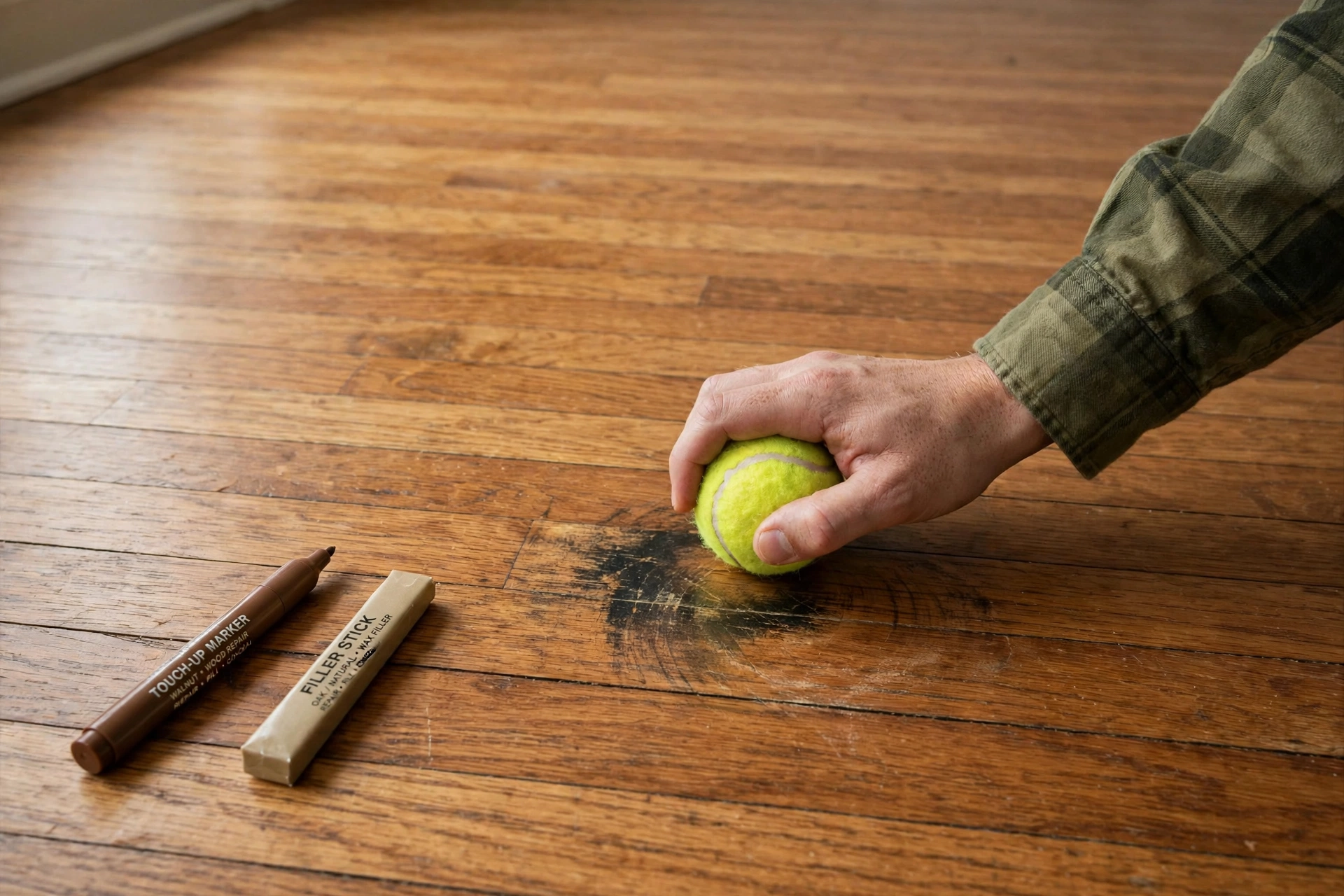
Scuffs and light scratches are the most common hardwood floor damage, and most are easy to fix. For a rubber scuff mark, rub gently with a clean tennis ball or a pencil eraser — the friction lifts the mark without touching the finish. For a light scratch, a matching touch-up marker or filler stick fills it in seconds.
Deeper scratches that catch your fingernail need a little more: clean the area, apply a matching wood filler or stain pen, let it dry, then buff lightly with a soft cloth. Never sand a sealed floor — you will cut through the finish and leave a dull patch worse than the scratch.
11. Removing Stains — Water Rings, Dark Spots, and Pet Urine
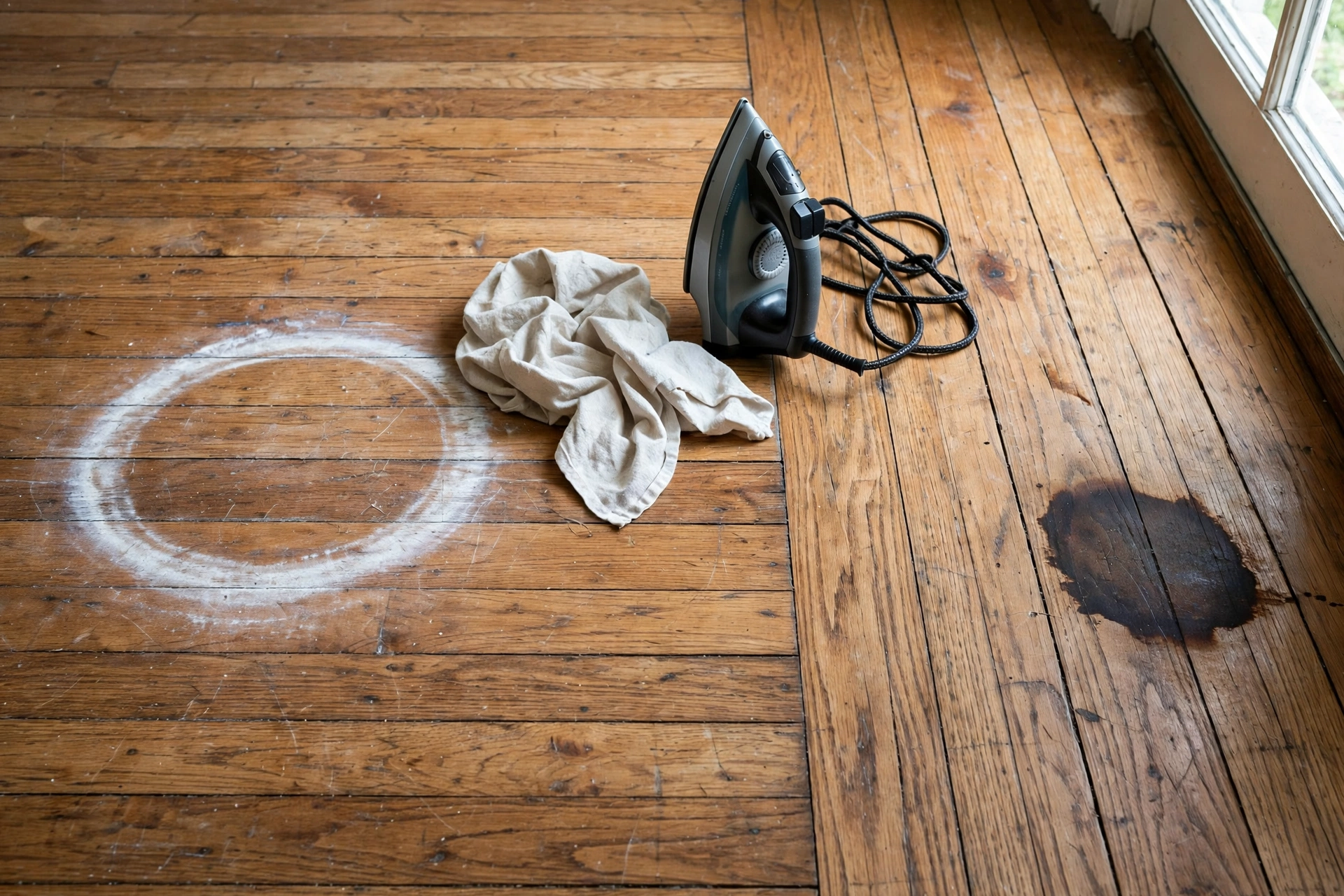
A white water ring is moisture trapped in the finish, not in the wood, and it often lifts with gentle heat: lay a dry cotton cloth over the ring and press a warm (not hot) iron on it for a few seconds. Dark stains mean water reached the wood itself — they usually need sanding and refinishing by a professional.
Pet urine is the hardest stain on a hardwood floor. Blot it up immediately — never rub, which spreads it — then clean with a wood-floor cleaner and dry it completely. If the stain has already turned dark, the urine has soaked into the wood, and the board may need sanding or replacing. The real fix is speed.
12. Pet Messes and Heavy Traffic — How to Clean Hardwood Floors with Pets
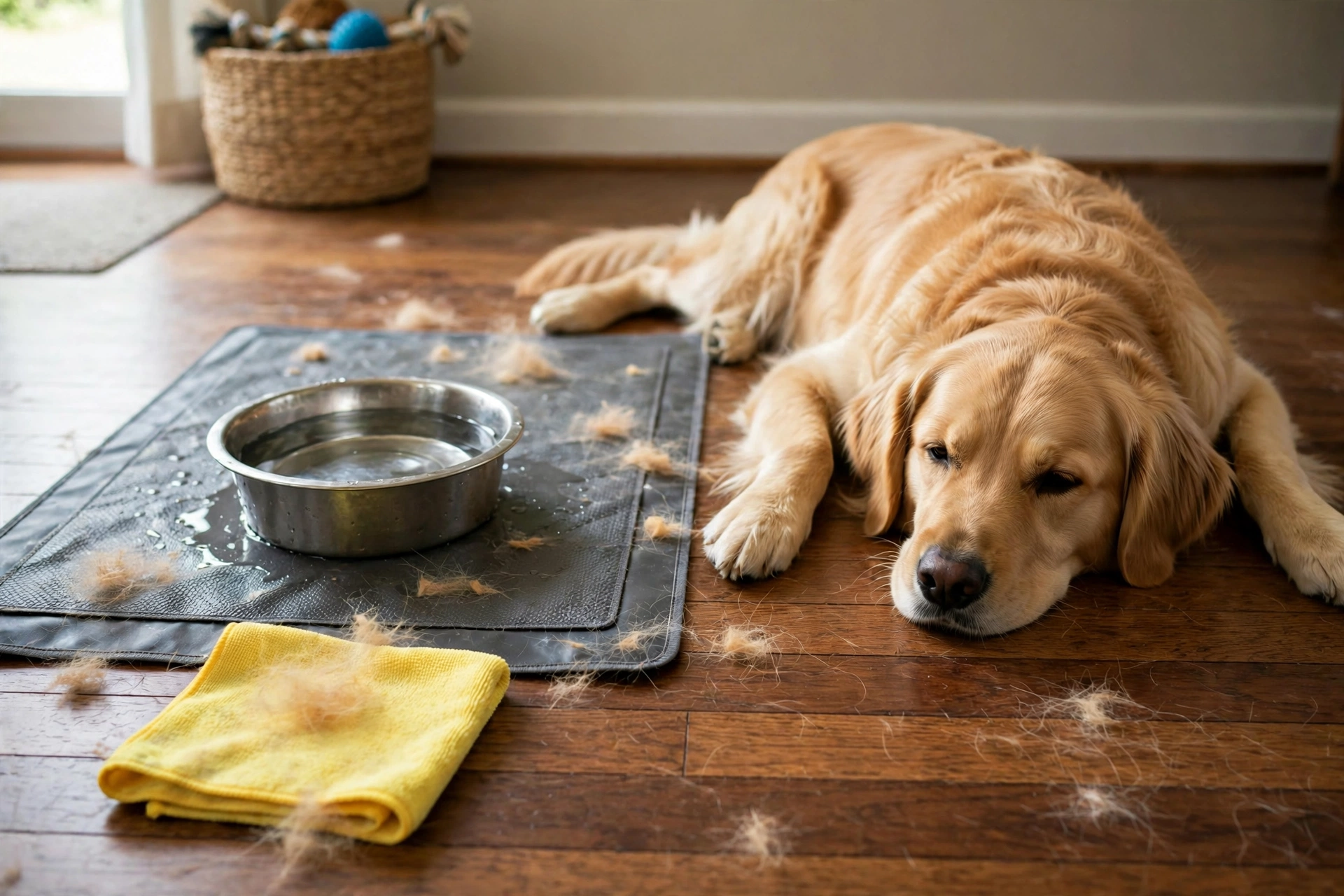
Pets are the hardest test for a hardwood floor: claws scratch, water bowls splash, and accidents happen. Keep the same routine, but do it more often — dust mop daily, and vacuum twice a week if you have a dog that sheds. Trim your pets’ nails regularly — one untrimmed claw can leave a trail of fine scratches across a room.
Put a waterproof mat under food and water bowls, and wipe up splashes right away. For pet hair, a damp rubber glove or a microfiber cloth picks up more than a broom — and for the soft furnishings your pets sleep on, our guide to clean a mattress without a vacuum cleaner covers the same dust-and-hair problem on fabric.
13. The Tools That Actually Work (and the Ones That Don’t)
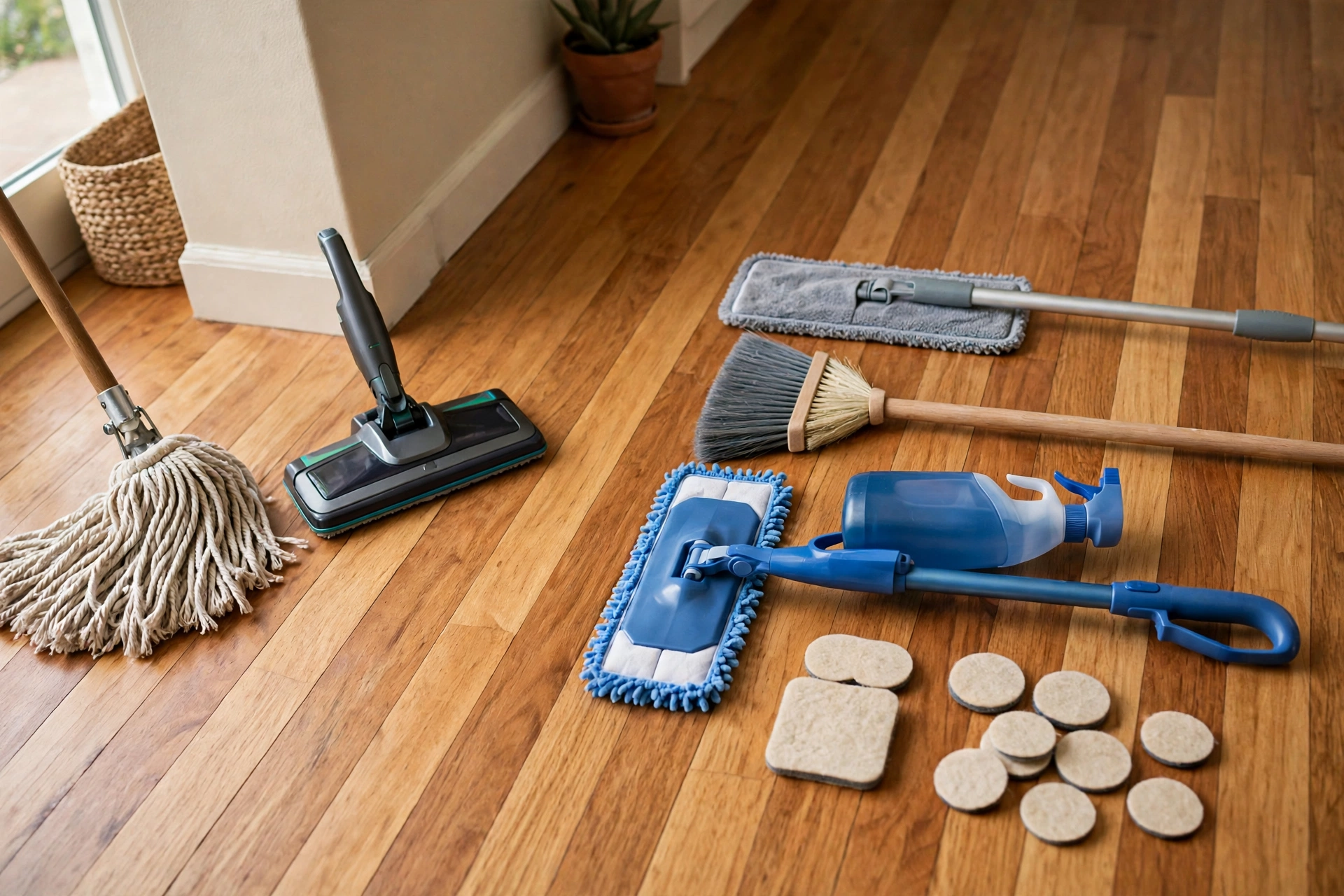
The right tools make this job fast; the wrong ones make it damaging. What works: a microfiber dust mop, a soft-bristle broom, a vacuum with a bare-floor setting and a soft brush head, a spray mop with a washable microfiber pad, and felt pads under every chair and table leg. Wash mop pads after every use — a dirty pad moves grit around.
What does not work: a steam mop, a wet string mop, a stiff broom, a vacuum with the beater bar on, and a sponge mop that holds too much water. A bucket-and-string-mop setup is the worst — the mop is always too wet. Our 10-minute daily cleaning habits guide fits the daily dust mop into ten minutes a day.
14. Common Mistakes That Wear Floors Out Early — and When to Refinish
The mistakes that wear a floor out early are all avoidable: mopping with too much water, using vinegar or oil soap, dragging furniture, wearing outdoor shoes inside, and skipping the doormat. Each one is small alone, but together they grind the finish down years early. The easy home cleaning hacks guide has more shortcuts, but none replace the dry-first routine.
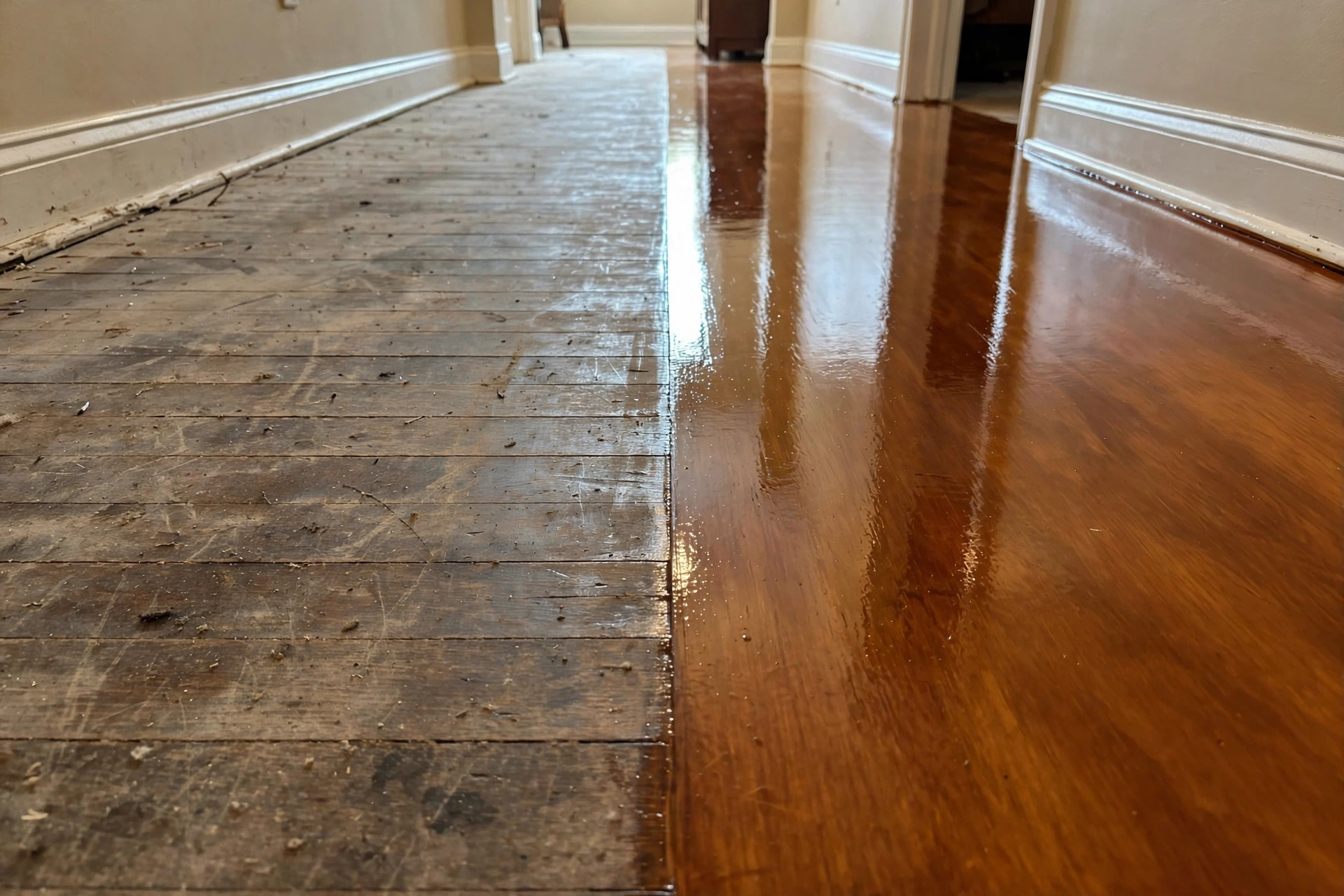
Even a well-cared-for floor eventually needs more than cleaning. The NWFA’s guideline is a maintenance coat every 3 to 5 years, or as needed, and a full sand and refinish every few decades, or as needed. If the finish looks dull after a proper cleaning, if water soaks in instead of beading, or if scratches reach bare wood, get a maintenance coat. Cupped, gapped, or deeply stained boards mean calling a professional about refinishing.
Frequently Asked Questions
Can I use vinegar to clean hardwood floors?
No. Vinegar is acidic enough to damage wood flooring and its finish over time, and vinegar-and-water mixtures leave a sticky residue that attracts dirt. Use a pH-balanced wood floor cleaner instead.
Can I steam mop hardwood floors?
No. Never use a steam mop on a real wood floor. Steam travels deeper into the cracks and cells of the wood than liquid water does, and it can permanently damage wood and finish. The NWFA advises against wet mops and steam mops.
How often should I mop hardwood floors?
Damp mop about once a month, with a cleaner made for your floor’s finish. Sweep or dust mop daily, and vacuum weekly on the bare-floor setting. The NWFA’s guideline for how to clean hardwood floors is daily sweeping, weekly vacuuming, and monthly cleaning — your own schedule depends on traffic, pets, and lifestyle.
How do I remove pet urine stains from hardwood floors?
Blot it up immediately with a dry cloth — never rub, which spreads it — then clean the spot with a wood-floor cleaner and dry it completely. A dark stain means the urine soaked into the wood, and that board usually needs sanding or replacing.
How do I know if my hardwood floor needs refinishing?
Three signs: the finish looks dull after a proper cleaning, water soaks in instead of beading, or scratches reach bare wood. A maintenance coat every 3 to 5 years often fixes the first two; cupped, gapped, or deeply stained boards mean talking to a professional about a refinish.
Related Reading
- Easy Home Cleaning Hacks — https://perfectioncleaner.com/easy-home-cleaning-hacks/
- 10-Minute Daily Cleaning Habits — https://perfectioncleaner.com/10-minute-daily-cleaning-habits/
- How to Clean a Vacuum Cleaner Filter — https://perfectioncleaner.com/how-to-clean-a-vacuum-cleaner-filter/
- Remove Baking Soda from Mattress — https://perfectioncleaner.com/remove-baking-soda-from-mattress/
- Clean a Mattress Without a Vacuum Cleaner — https://perfectioncleaner.com/clean-a-mattress-without-a-vacuum-cleaner/
- How to Declutter Your Home Room by Room — https://perfectioncleaner.com/how-to-declutter-your-home-room-by-room/
Conclusion
How to clean hardwood floors comes down to one rule: keep them dry, keep them clean, and protect the finish. Sweep or dust mop daily, vacuum weekly on the bare-floor setting, damp mop monthly with a cleaner made for your finish — and never let a steam mop, a bucket of water, or a bottle of vinegar near the wood. Do that, and today’s floor will still look beautiful decades from now.


