
15 Upcycling Furniture Ideas That Turn Old Pieces Into Treasures
Upcycling furniture ideas start with a simple truth: old furniture was usually built better than new. A solid-wood dresser from the 1980s has real dovetail joints and a frame that will outlast a flat-pack replacement — it just needs a new finish, new hardware, or a new job in the house. The fifteen ideas below run from easiest to most ambitious, so a first-timer can start with paint and hardware and work up to a full repurposing project. Most cost under $75 in supplies, and every one keeps a good piece out of the landfill. Before sanding anything painted before 1978, test it for lead — the safety rule in Idea 1 applies to every project on this list.
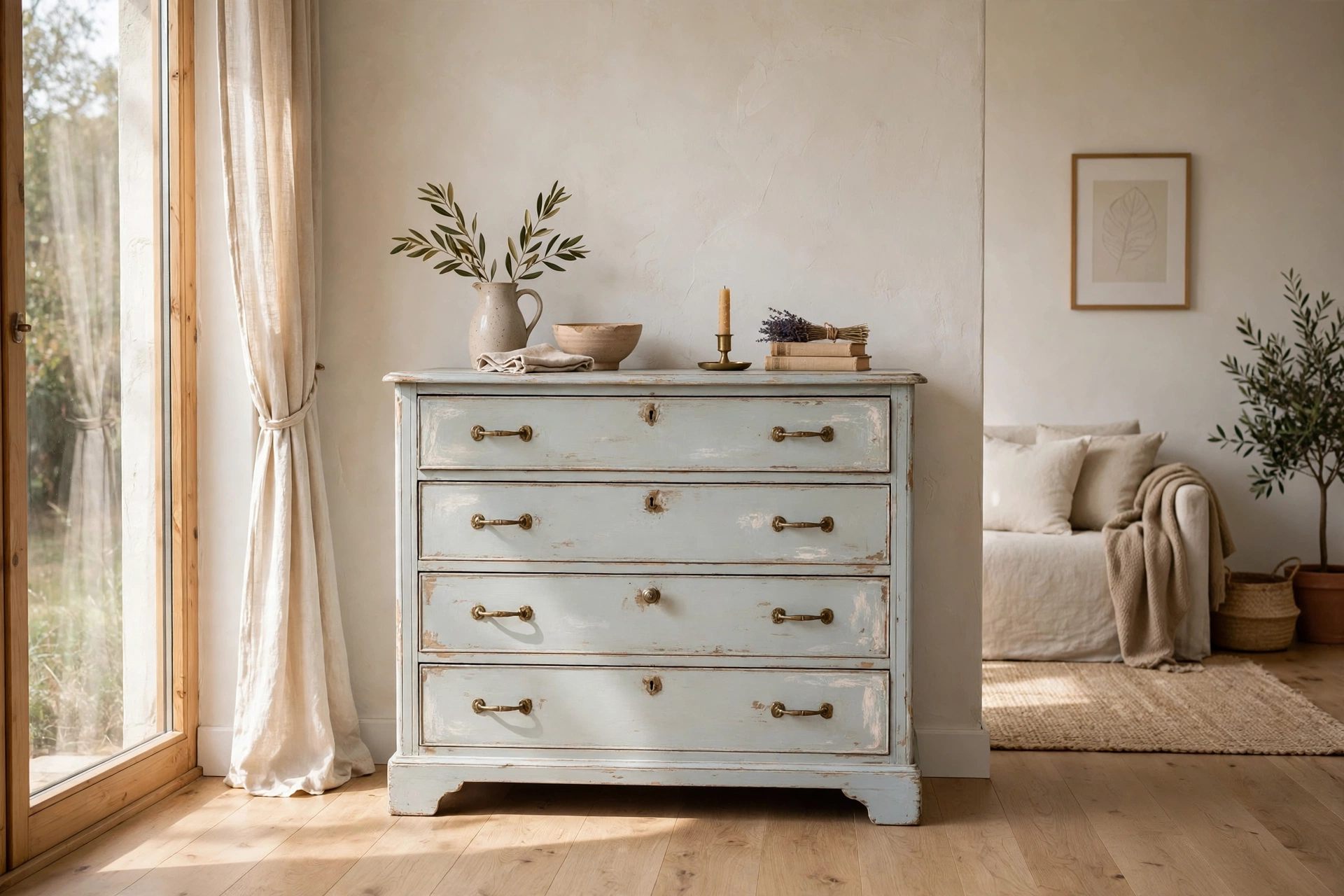
1. Chalk Paint a Tired Dresser — Classic Upcycling Furniture Ideas
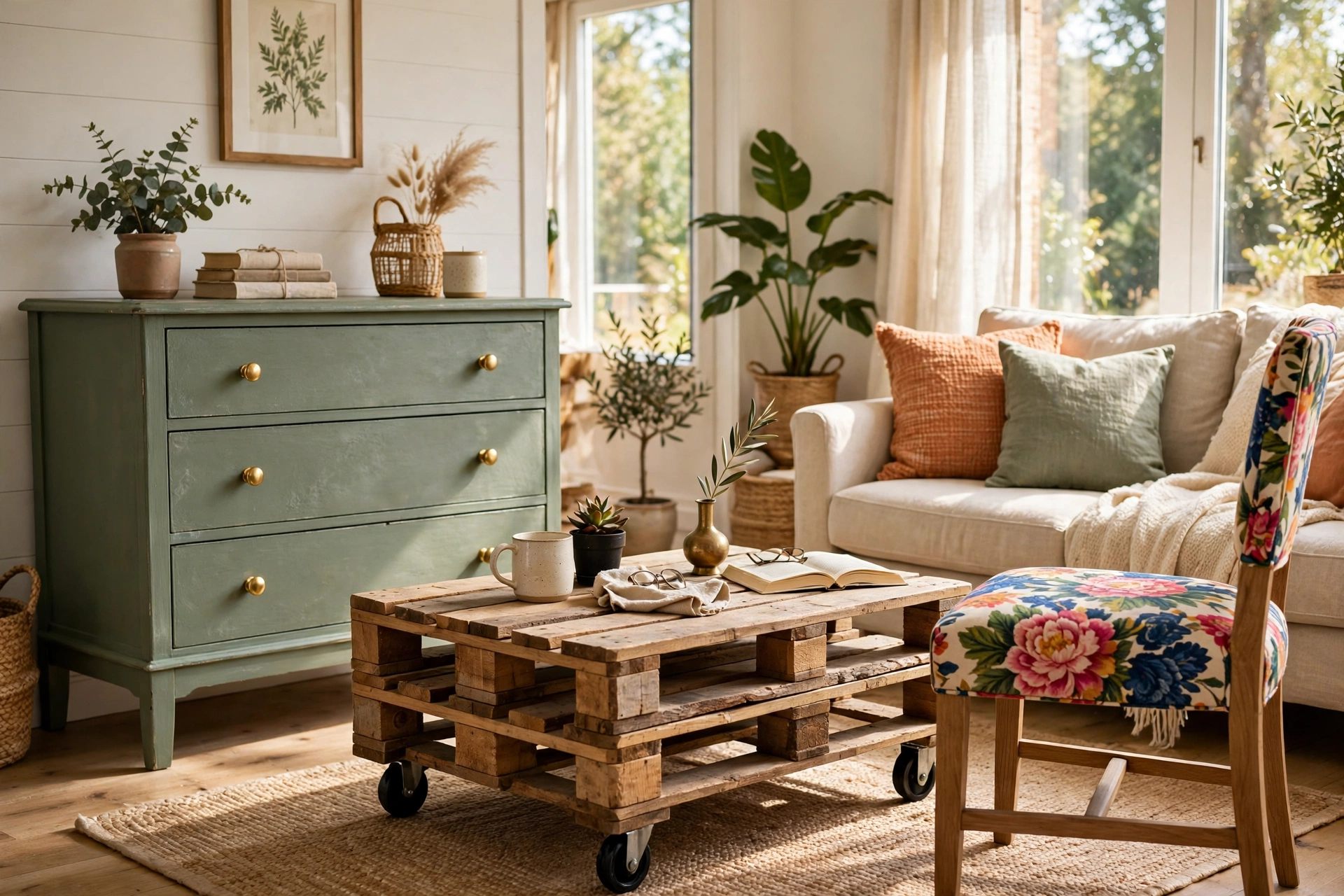
Chalk paint is the easiest entry point into upcycling furniture ideas — it sticks to almost anything with little sanding. Clean the dresser with warm soapy water, let it dry, and brush on two thin coats; a quart covers a standard six-drawer dresser for about $35. Finish with clear wax or a water-based topcoat so the paint survives daily use. Swap the hardware while the paint dries — new knobs cost $3 to $8 each, and brass pulls or matte black bars change the dresser more than paint does. HGTV’s 20 upcycled furniture ideas shows the same transformations in real designer rooms. Cost: about $50. Difficulty: beginner. Time: one weekend.
2. Turn an Old Dresser Into a Bathroom Vanity
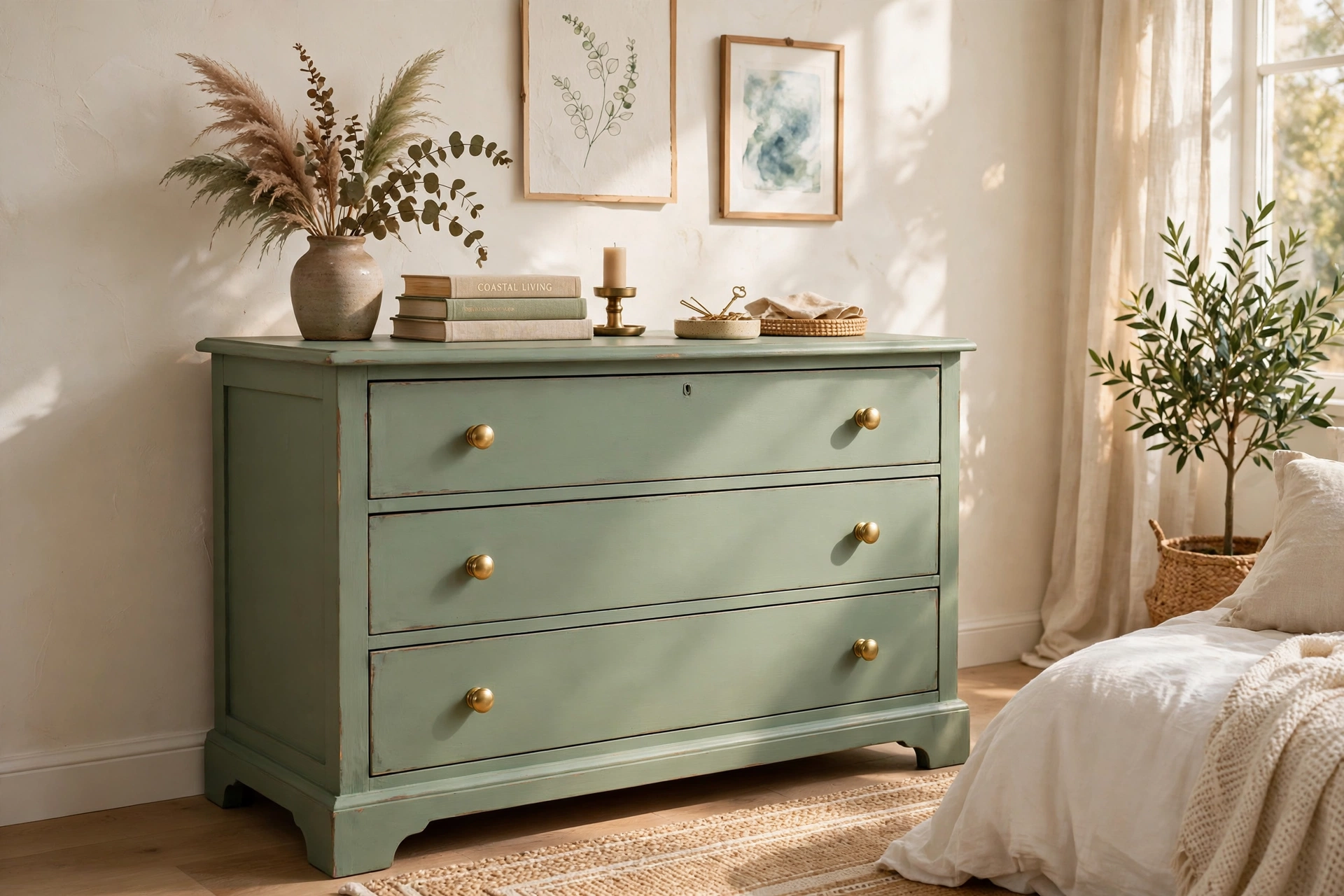
A dresser with a cut-out top becomes a bathroom vanity with more storage than any store-bought cabinet, for a fraction of the price. Remove the top drawers, cut an opening for the sink and plumbing, and seal every surface with a waterproof topcoat — bathroom steam ruins painted wood. Use a vessel sink on top rather than an undermount, so the cut is simpler and plumbing stays accessible. Solid wood works best; particle board swells when wet. Cost: about $75 plus the sink. Difficulty: intermediate. Time: one weekend.
3. A Coffee Table From a Wooden Pallet
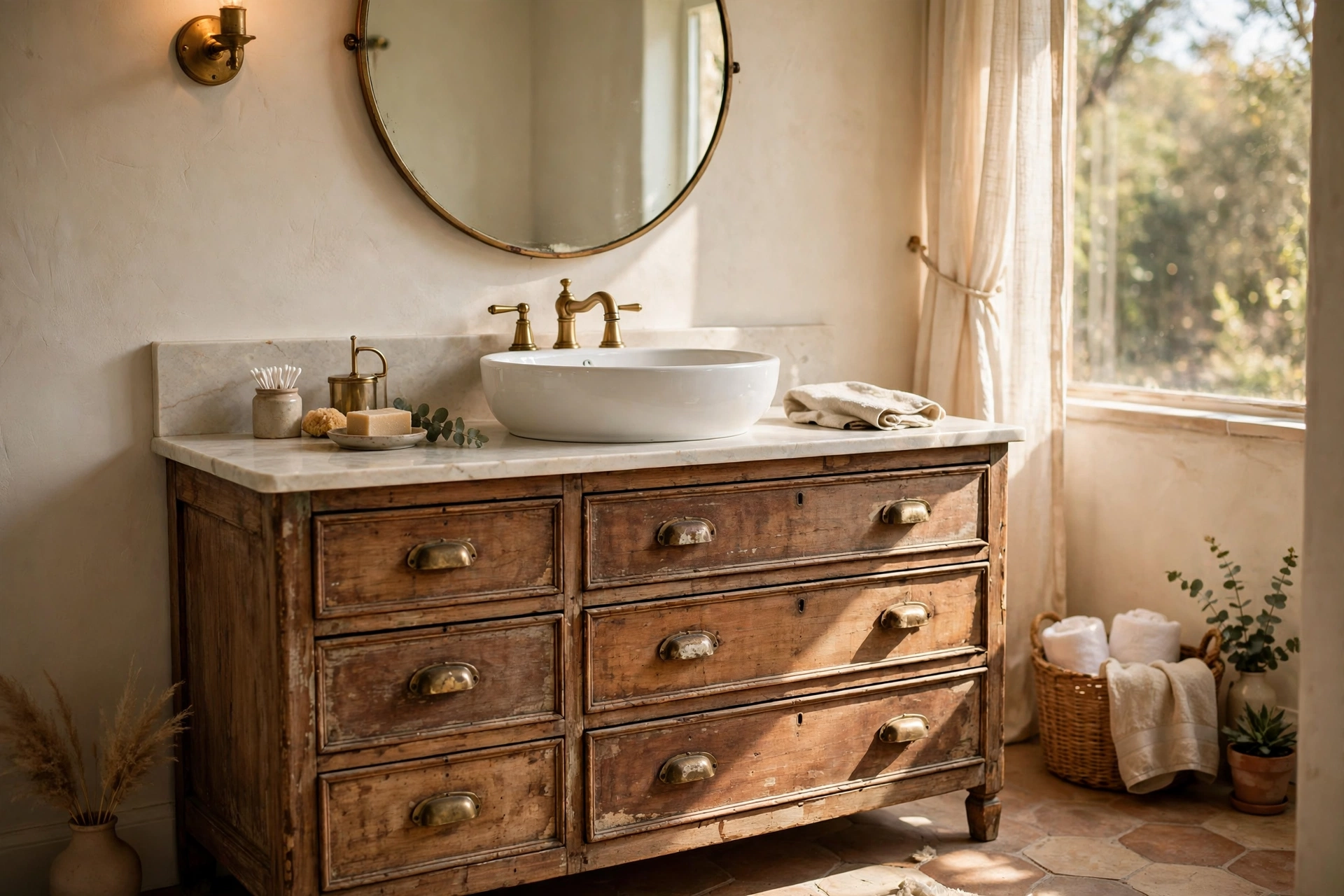
A clean, heat-treated pallet — look for the “HT” stamp, never “MB” — becomes a coffee table in an afternoon. Sand it smooth with 120-grit, then 220-grit sandpaper, add legs or caster wheels, and finish with stain or paint. The slats give it a rustic look no store-bought table can match. Sand thoroughly — pallet wood splinters easily — and add two coats of polyurethane against coffee rings. Cost: about $30. Difficulty: beginner. Time: one afternoon. Our easy DIY home decor projects on a budget guide has more under-$35 projects in the same spirit.
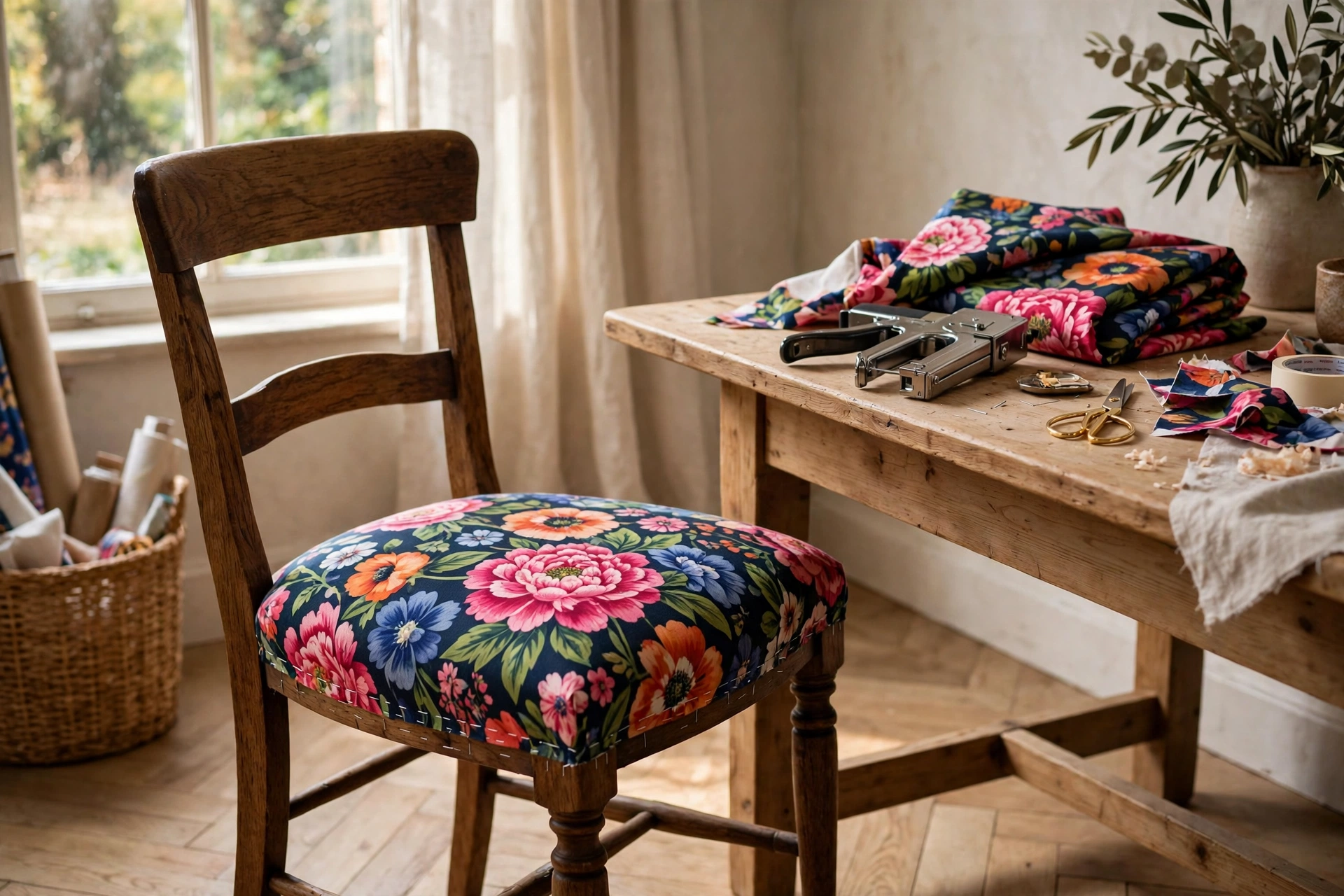
4. Reupholster a Dining Chair — the Easiest First Project
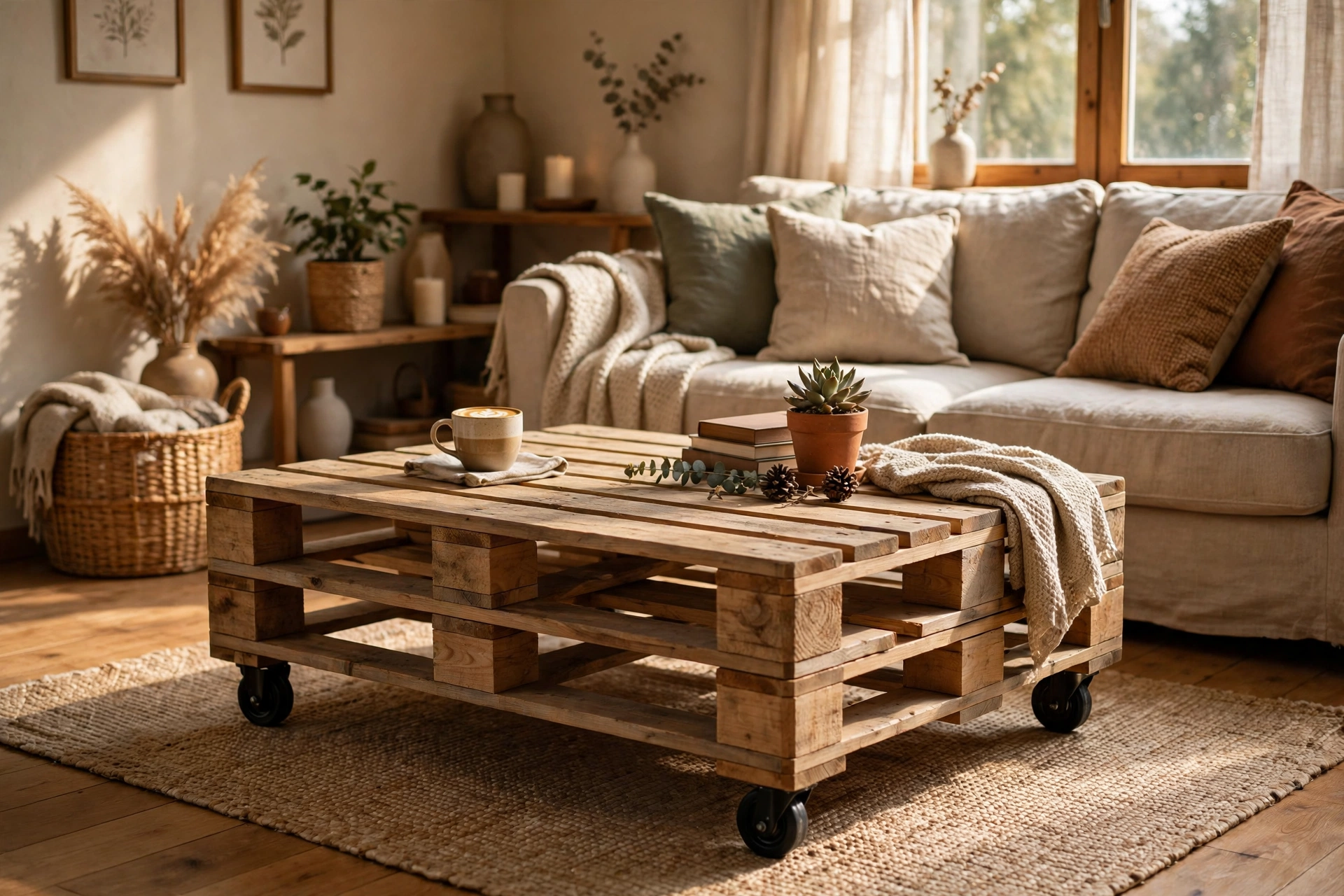
A dining chair is the best first upholstery project: the seat is a flat cushion you remove with four screws. Unscrew it, pull off the old fabric, wrap new fabric over the foam, and staple it underneath — no sewing, no pattern-making, about an hour per chair. Pick a durable fabric — outdoor canvas, heavy cotton, or vinyl with kids or pets. A yard covers two seats for about $12. Cost: about $15 per chair. Difficulty: beginner. Time: one hour per chair.
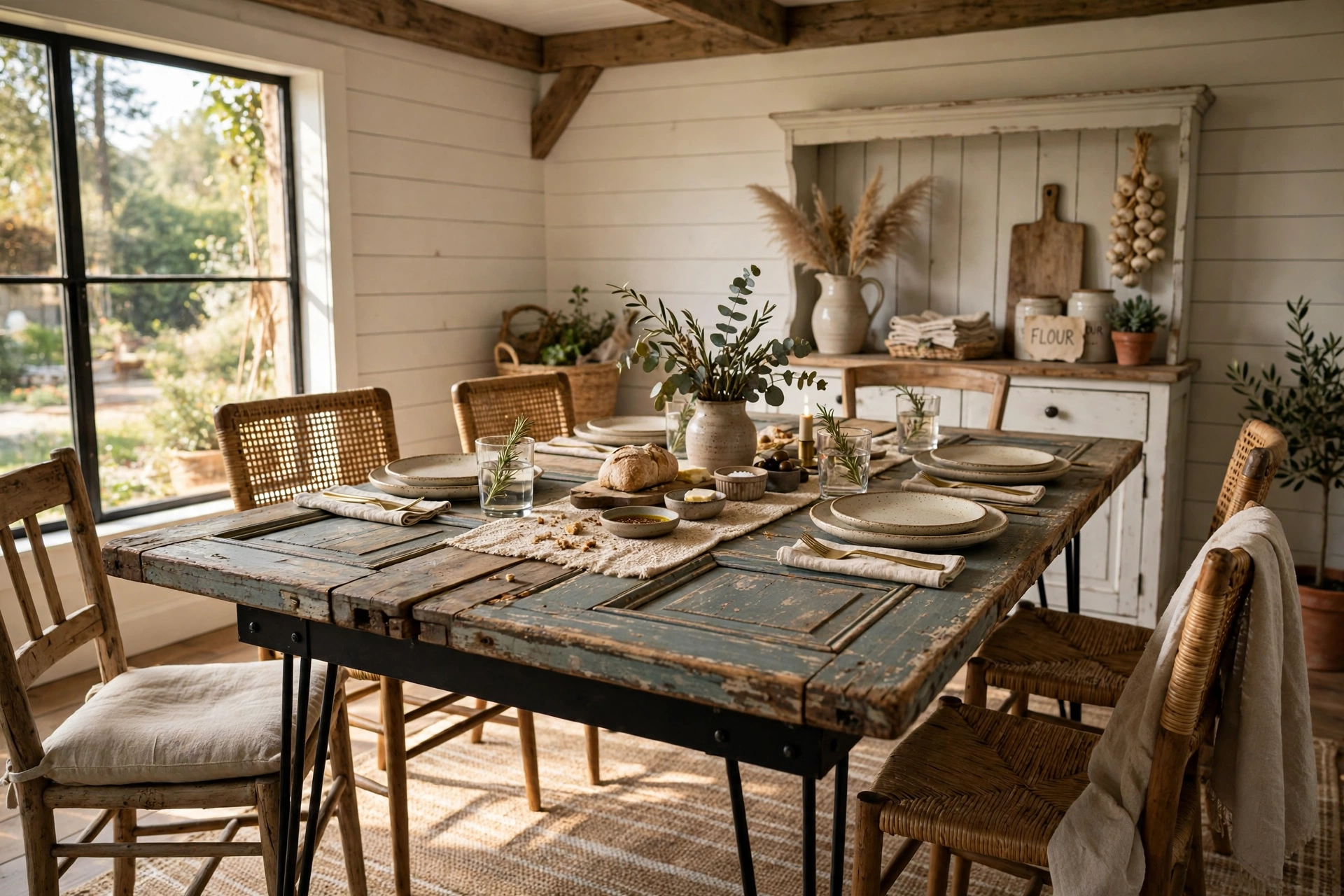
5. An Old Door Becomes a Dining Table
A solid old door — paneled, not hollow — makes a dining table with a story. Lay it flat on two sawhorses or short legs, sand the top smooth, and seal it with three coats of polyurethane to survive plates, spills, and homework. Check the door before sanding: doors from pre-1978 homes may carry lead paint, so test first with an EPA-recognized kit like 3M LeadCheck, and never dry-sand old paint — mist it or strip it chemically. Cost: about $40 plus legs. Difficulty: intermediate. Time: one weekend.
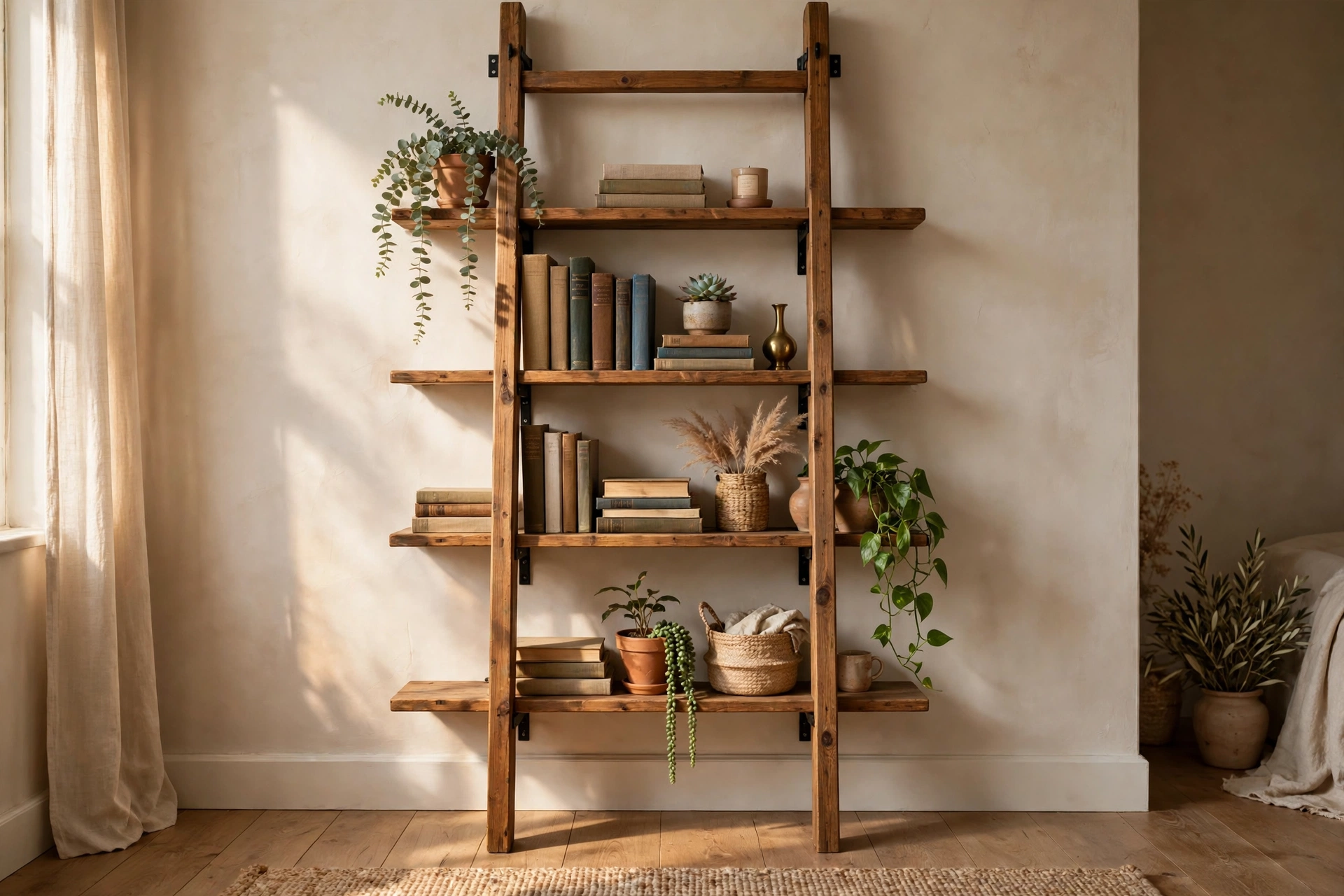
6. Ladder Shelf From a Broken Ladder
A wooden ladder with a broken rung is not trash — it is a shelf waiting to happen. Cut it in half, mount the halves on the wall a few feet apart, and rest boards across the rungs. The rungs are the brackets, so the project needs only boards and screws. Sand the ladder first — old wood is rough — and anchor into studs, not just drywall, especially under books. Cost: about $25. Difficulty: beginner. Time: one afternoon.
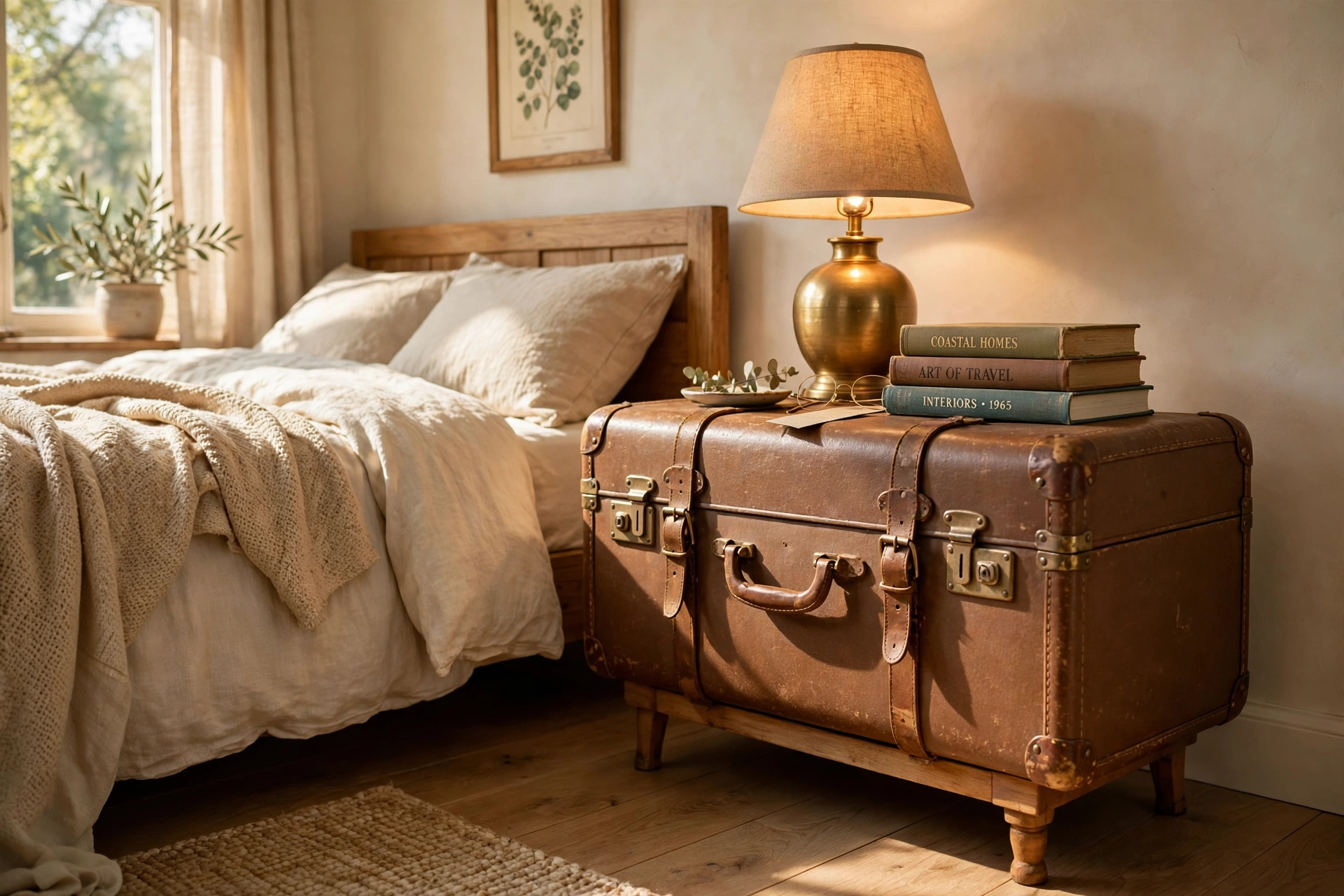
7. Nightstand From a Vintage Suitcase
A hard-shell vintage suitcase on short legs becomes a nightstand with hidden storage — lift the lid for books, chargers, and out-of-season clothes. It fits a boho or eclectic bedroom better than any flat-pack nightstand, and the project is only legs, screws, and a suitcase. Pick a suitcase with a sturdy frame and working latches, and add a small tray on top so a glass never sits on old leather or vinyl. Cost: about $20 plus the suitcase. Difficulty: beginner. Time: one hour. Our boho bedroom decor ideas guide uses the same suitcase-and-basket trick in a bedroom.
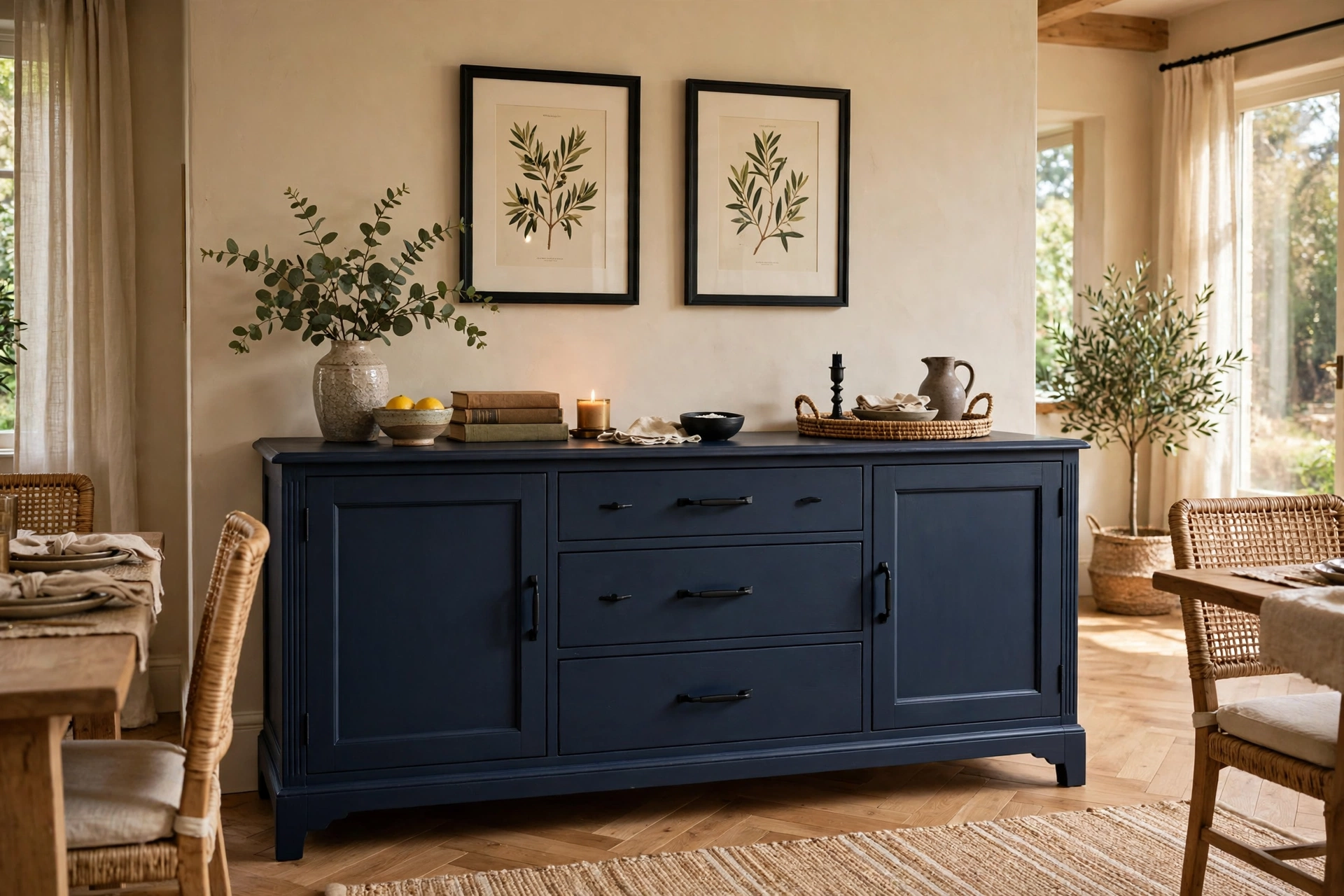
8. Paint and New Hardware: The 1-Day Cabinet Refresh — Easy Upcycling Furniture Ideas
The fastest of all upcycling furniture ideas is also the simplest: repaint a cabinet or sideboard and change its hardware. Remove the doors and drawers, clean them, and apply two coats of latex paint — tougher than chalk paint for pieces touched daily, at about $30 a gallon. Latex needs a light sanding first so it grips; chalk paint usually does not. Paint in thin coats and let each dry fully, or the finish peels within months. Cost: about $40. Difficulty: beginner. Time: one day.
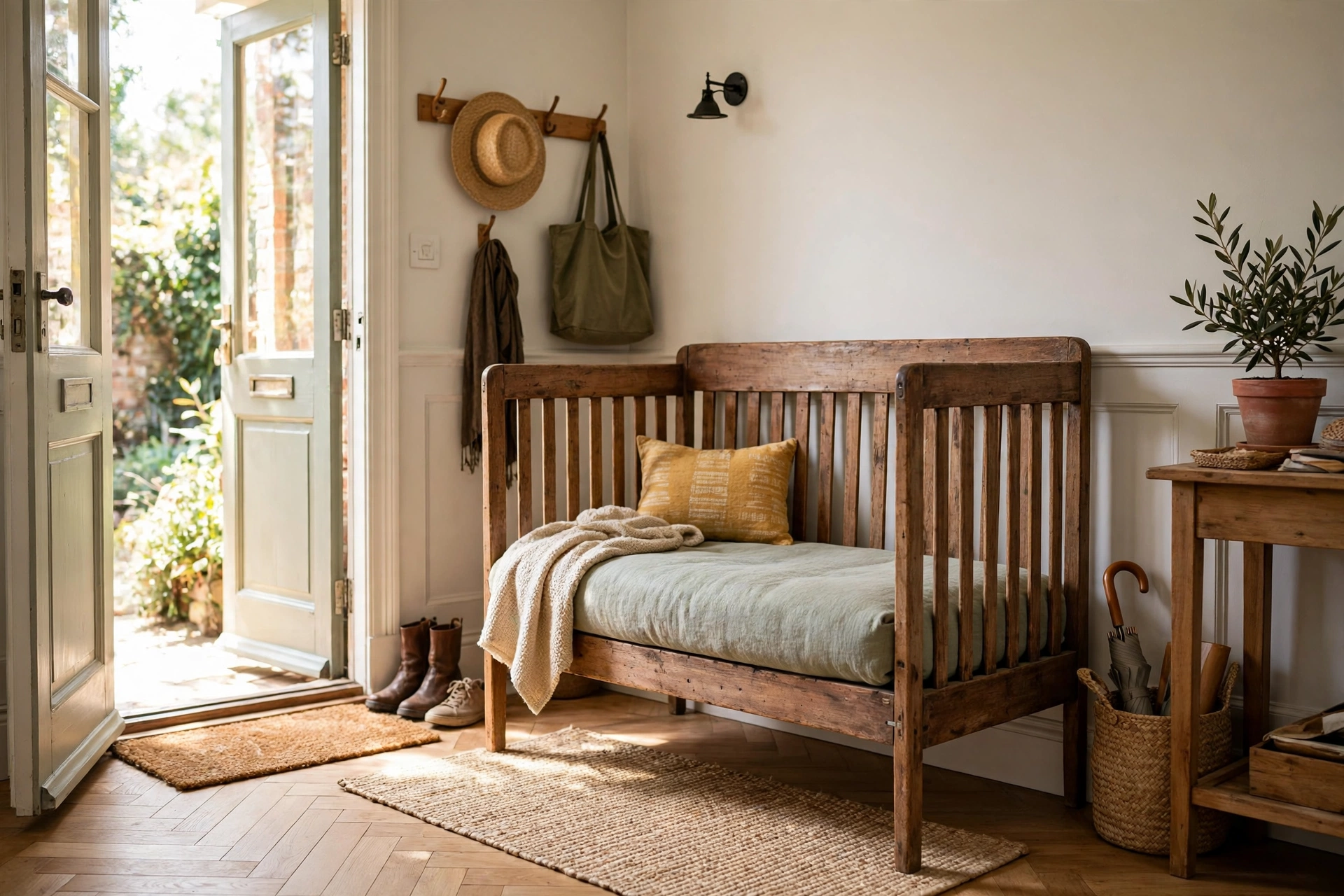
9. Turn a Crib Into a Toddler Bed or Bench
A crib your child has outgrown is solid hardwood — too good to throw away. Remove one side rail and add a small safety rail for a toddler bed; or remove the mattress platform, add a seat board, and it becomes a bench for an entryway or the foot of a bed. Check the crib’s safety record first: drop-side cribs were recalled years ago and should never be reused as a bed. A fixed-side crib in good condition is fine; sand seating smooth and seal it. Cost: about $20. Difficulty: intermediate. Time: one afternoon.
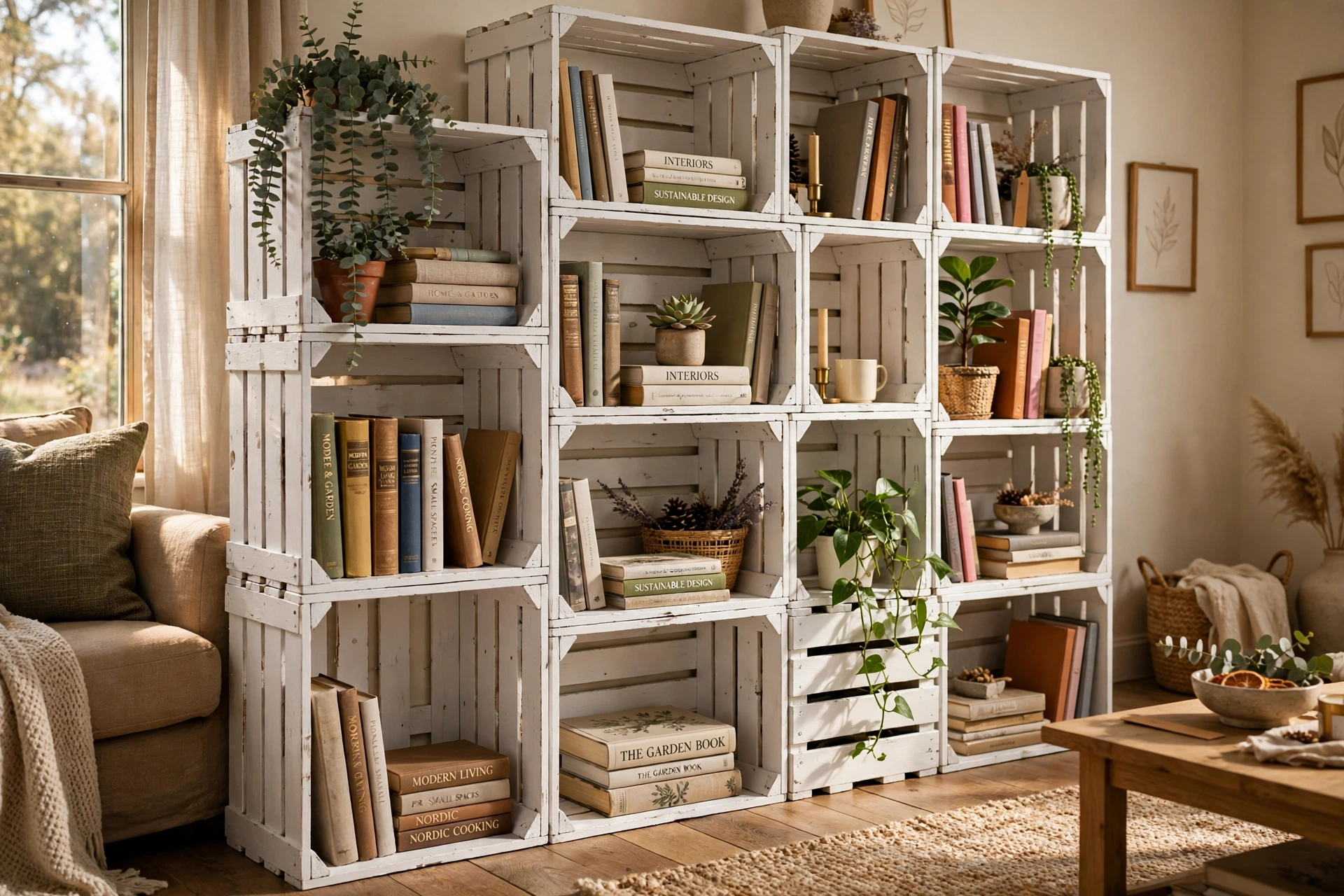
10. Bookshelf From Wooden Crates
Wooden crates — the kind apples and wine ship in — stack into a bookshelf that looks intentional instead of improvised. Sand each crate, paint or stain them one color, and stack them staggered for shelves of different heights. Screw them together and anchor the unit to the wall so it cannot tip. Thrift and grocery stores sell crates for a few dollars each; six make a bookshelf about five feet tall. Cost: about $30. Difficulty: beginner. Time: one afternoon. Our home organization ideas guide shows how to keep a crate shelf tidy.
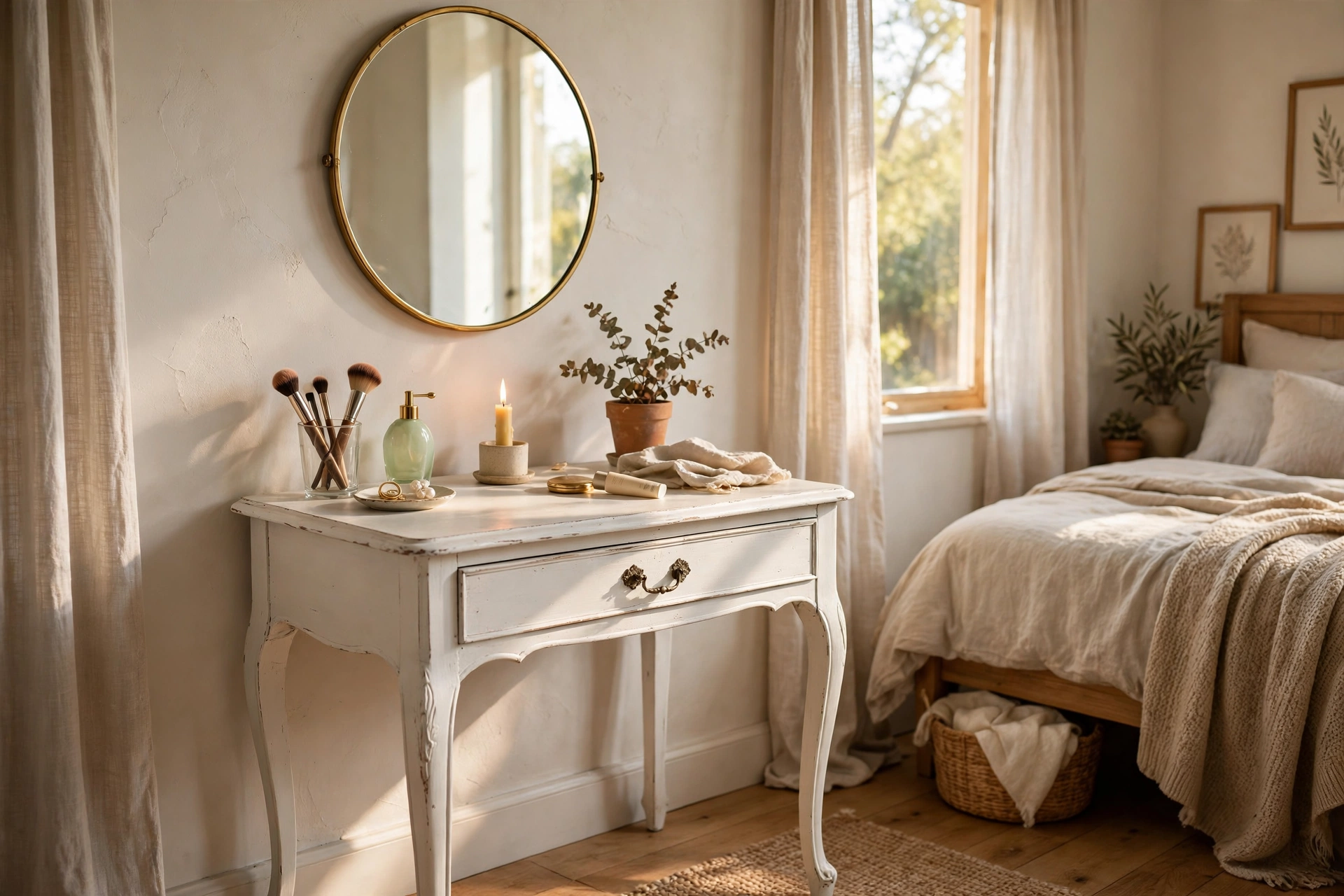
11. An Old Desk Becomes a Vanity Table — Upcycling Furniture Ideas for the Bedroom
A small writing desk with drawers is already a vanity table — it just needs a mirror and a stool. Hang a mirror above it, add a small tray for makeup and jewelry, and slide a stool underneath. The drawers hold everything a store-bought vanity would, at a tenth of the price. Paint it soft white, pale pink, or sage, and match the drawer pulls to the mirror frame. A worn top can be sanded and restained instead, showing the wood grain. Cost: about $35 plus the mirror. Difficulty: beginner. Time: one day.
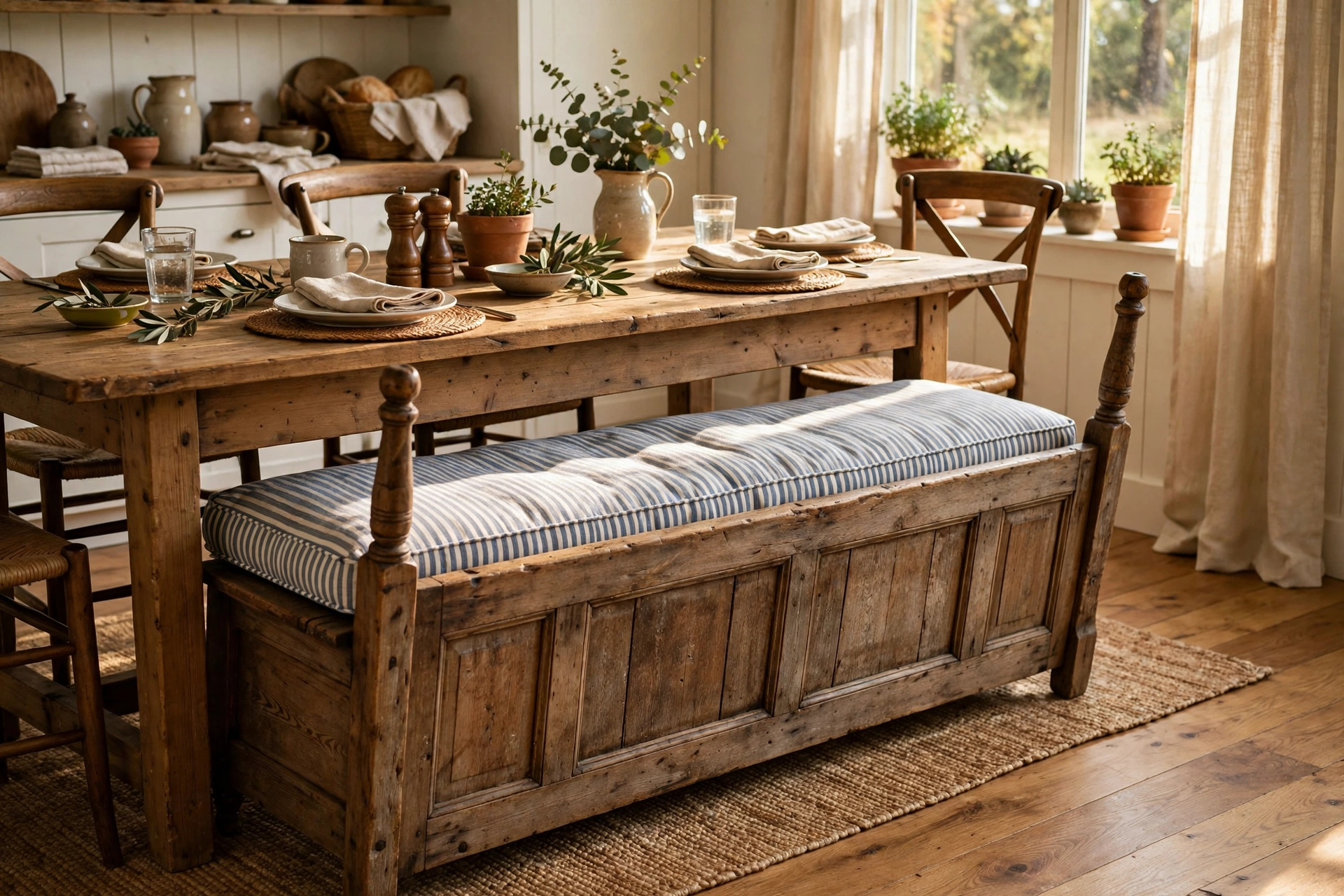
12. Dining Bench From a Headboard
A wooden headboard laid on its side becomes a dining bench: add four short legs or a box base, sand and paint it, and you have seating for two to match your table. Headboards are easy to find at thrift stores — people replace beds far more often than tables. A dining bench seat should sit about 18 inches from the floor — measure your table first. Add a cushion with a washable cover for daily meals. Cost: about $30. Difficulty: intermediate. Time: one weekend.
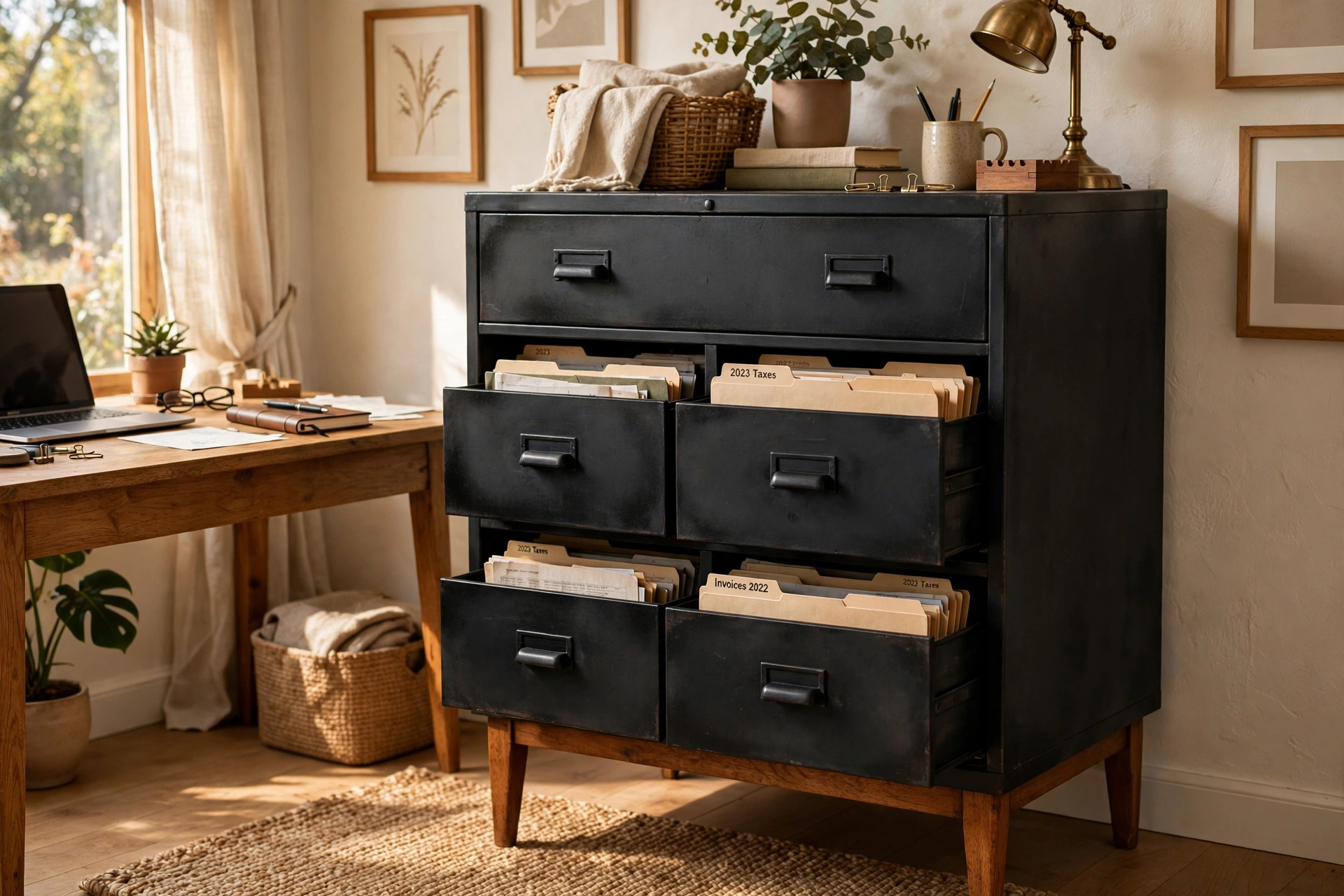
13. Filing Cabinet to Stylish Storage
A metal filing cabinet is the most useful ugly thing in any thrift store — and the easiest to fix. Sand off the rust, spray two coats of metal paint in a bold color, add legs or casters, and it becomes stylish storage for a home office or craft room. Remove the drawers before painting and mask the slides so they still glide. Matte black with brass label holders looks like it cost ten times what you paid. Cost: about $25. Difficulty: beginner. Time: one afternoon.
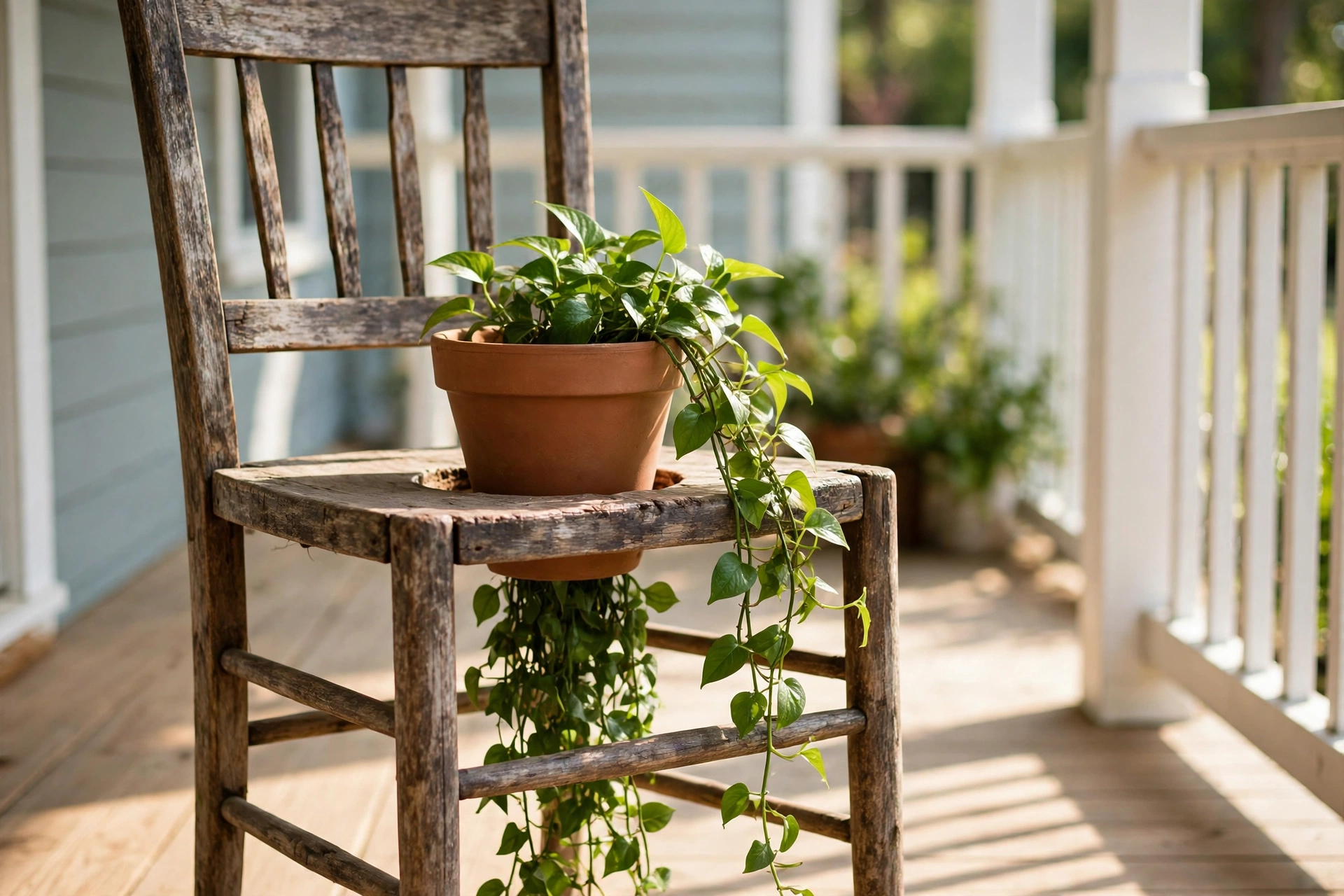
14. Wooden Chair to Plant Stand
A wooden chair with a broken seat is not a chair anymore — it is a plant stand. Cut a hole in the seat, drop a flowerpot through it, and the chair becomes a display for a trailing plant. On a porch or in a sunny corner, the broken chair has a better job than the one it lost. Seal the wood with outdoor polyurethane if it will live outside, and pick a snug pot so it cannot slip through. Cost: about $10. Difficulty: beginner. Time: one hour.
15. One Room, One Upcycled Piece — Calm Upcycling Furniture Ideas
The last idea holds the other fourteen together: start with ONE piece, not the whole house. Pick the piece you see most — the dresser in your bedroom, the coffee table in your living room — and upcycle only that one, well. One painted dresser or reupholstered chair refreshes the room. It is also the cheapest way: one project needs one set of supplies, not five. Live with that one piece for a week before you start the next — and if you decluttered first, the piece you already own may be worth saving. Our how to declutter your home room by room guide shows how to find it.
Frequently Asked Questions
What is the easiest furniture to upcycle for beginners?
Start with a solid-wood dresser, side table, or dining chair. Paint and new hardware alone transform them, and a chair seat is the simplest reupholstery job — four screws, new fabric, and a staple gun. Avoid structural repairs for a first project.
Do I need to sand before painting furniture?
It depends on the paint. Chalk paint sticks to most surfaces with little or no sanding, which is why beginners love it. Latex needs a light sanding so it grips, and it is tougher for pieces touched daily, like cabinets. If the piece was painted before 1978, test for lead first and never dry-sand.
What paint is best for upcycling furniture?
Chalk paint for beginners and decorative pieces — little prep, soft matte finish, but it needs wax or a topcoat to survive daily use. Latex for hard-working pieces like cabinets and tables — needs sanding first but dries tougher. Milk paint gives a chippy vintage look on raw wood.
How do I know if old furniture has lead paint?
Furniture painted before 1978 may contain lead paint — residential lead paint was banned in the United States in 1978. Test with an EPA-recognized kit such as 3M LeadCheck before sanding or stripping. Never dry-sand, power-sand without a HEPA vacuum attachment, or use a heat gun above 1,100°F on old paint — these create toxic lead dust. If the test is positive, seal the paint with a topcoat or hire a lead-safe certified professional.
Is upcycling furniture cheaper than buying new?
Yes, almost always. Most projects here cost $10 to $75 in supplies, while a comparable new piece costs $150 to $600 or more. The savings are biggest on solid wood — a thrift-store dresser plus $50 of paint and hardware beats a new one of the same quality by hundreds of dollars.
Related Reading
- Easy DIY Home Decor Projects on a Budget
- Spring DIY Home Decor Ideas
- DIY Christmas Ornaments
- Home Organization Ideas
- How to Declutter Your Home Room by Room
- Small Closet Organization Ideas
Conclusion
Upcycling furniture ideas follow one rule: start with one piece, not the whole house. A chalk-painted dresser, a reupholstered chair, or a pallet coffee table turns a thrift-store find into a treasure, and most cost less than dinner out. Pick the piece you look at most, test old paint, and start there.