How to Get Rid of Dust in Your House: 15 Tips That Actually Work
Introduction
How to get rid of dust in house is a question with a two-part answer: stop new dust from coming in, then remove the dust that is already there. Most household dust is outdoor soil tracked in on shoes, dead skin flakes, pet dander, fabric fibers, and pollen — and about two-thirds of it comes from outdoors.
The fifteen tips below follow that order: cut dust off at the source, clean top to bottom with a damp cloth and a HEPA vacuum, then build a short weekly routine. If clutter is part of the problem, our how to declutter your home room by room guide clears the surfaces dust hides on.
1. Stop Dust at the Door — How to Get Rid of Dust in House Starts Outside
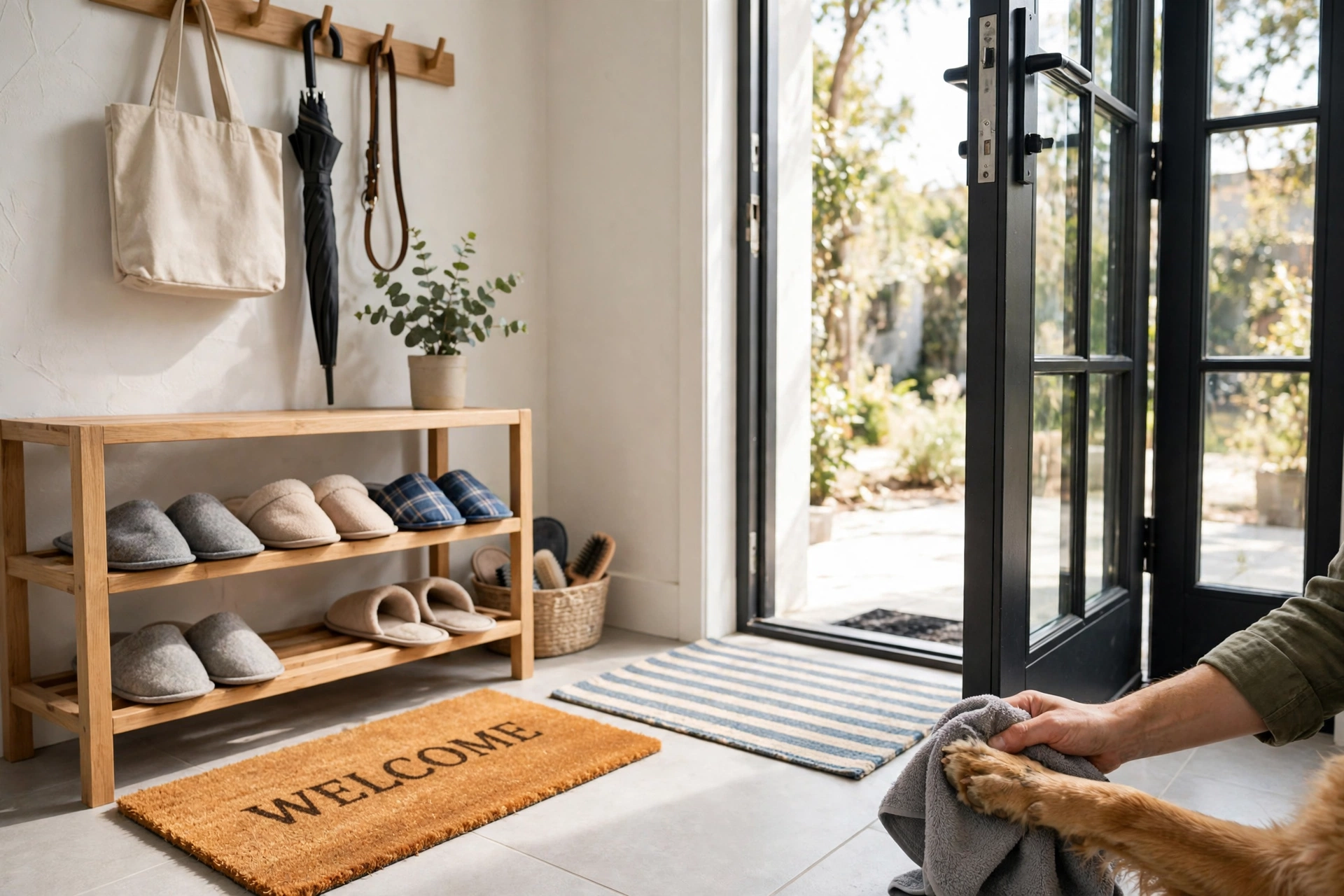
About two-thirds of household dust comes from outdoors, carried in on shoes, paws, and the air itself. The cheapest dust-fighting tool is a shoes-off rule: leave outdoor shoes at the door. Two doormats help more than one: a rough outdoor mat to scrape shoes, a softer indoor mat to catch what is left.
Wipe pets’ paws after walks, and keep leashes and bags in a basket by the door. A door sweep on the front and back doors closes the gap dust blows in through, and costs under $10.
2. The Right Tools: A Damp Microfiber Cloth and a HEPA Vacuum
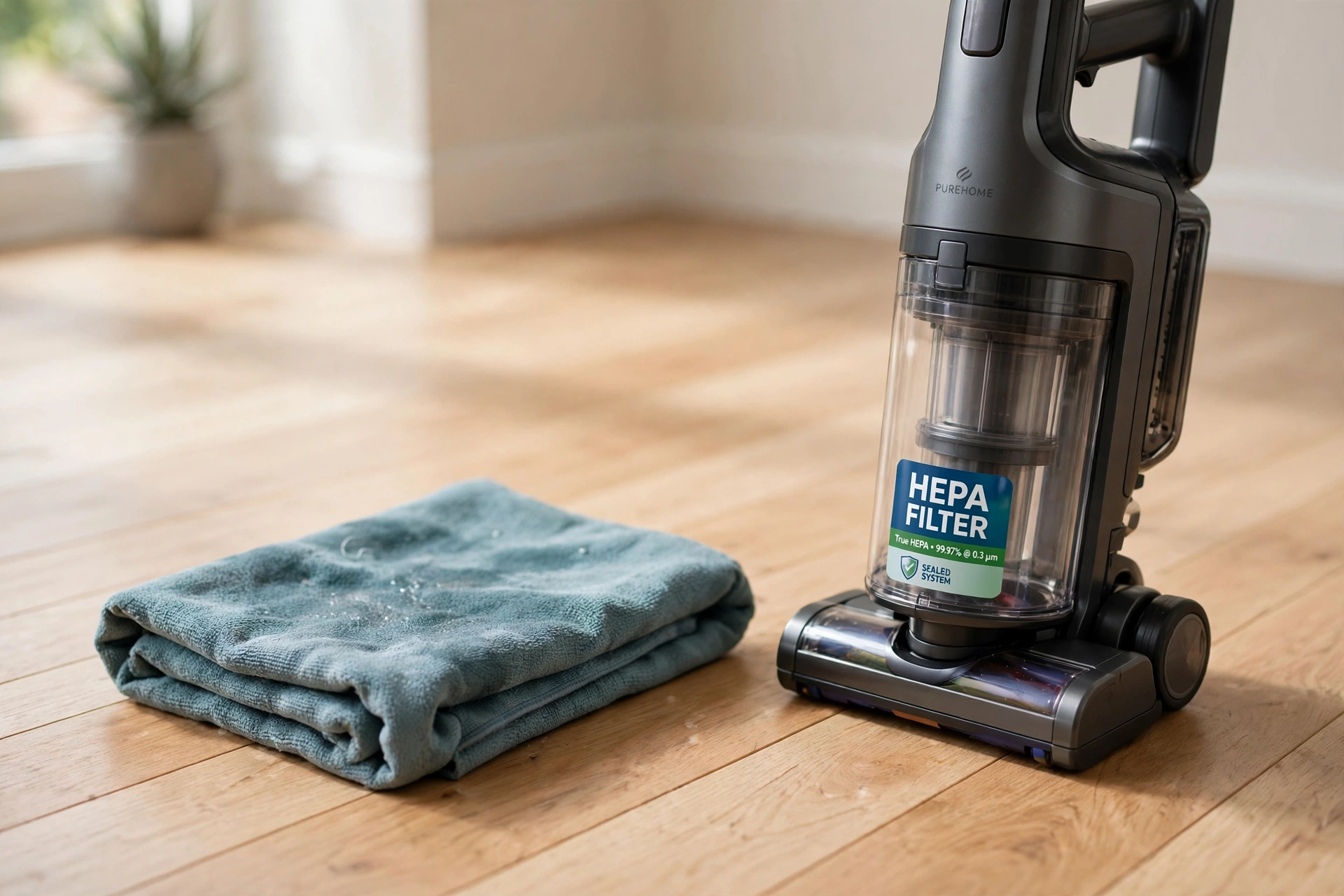
Dry dusting with a feather duster mostly moves dust into the air, where it settles again an hour later. A slightly damp microfiber cloth traps dust instead of pushing it around.
A vacuum with a HEPA filter is the other essential tool: it traps the fine particles a standard vacuum blows back out through its exhaust, so the dust you pick up stays picked up. Our how to clean a HEPA filter guide keeps that filter working at full strength.
3. Always Clean Top to Bottom
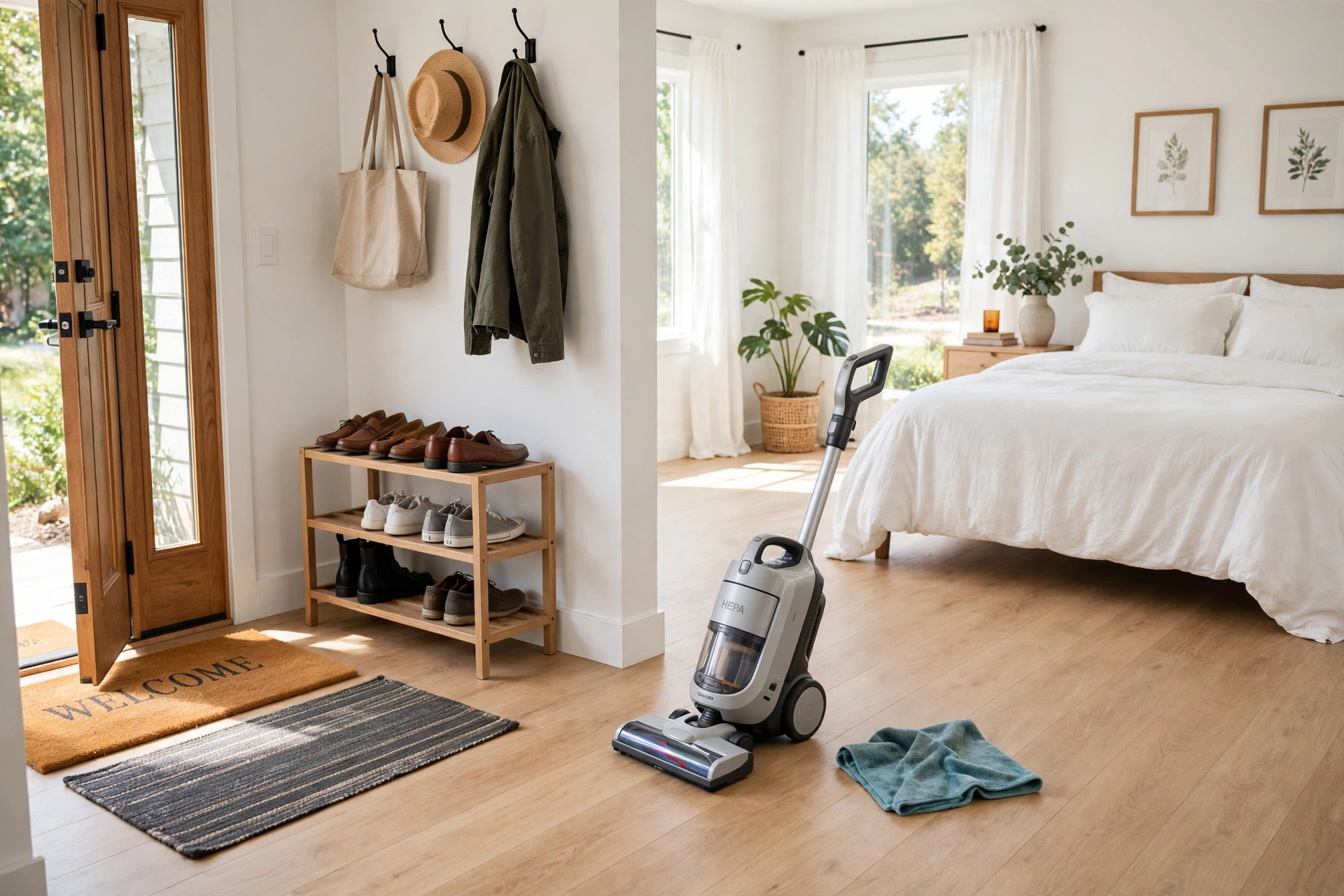
Dust falls down, so clean in the direction gravity works. Start with ceiling fans, light fixtures, and cabinet tops, then work down to the floors. Cleaning the floor first and the shelves after means dusting everything twice.
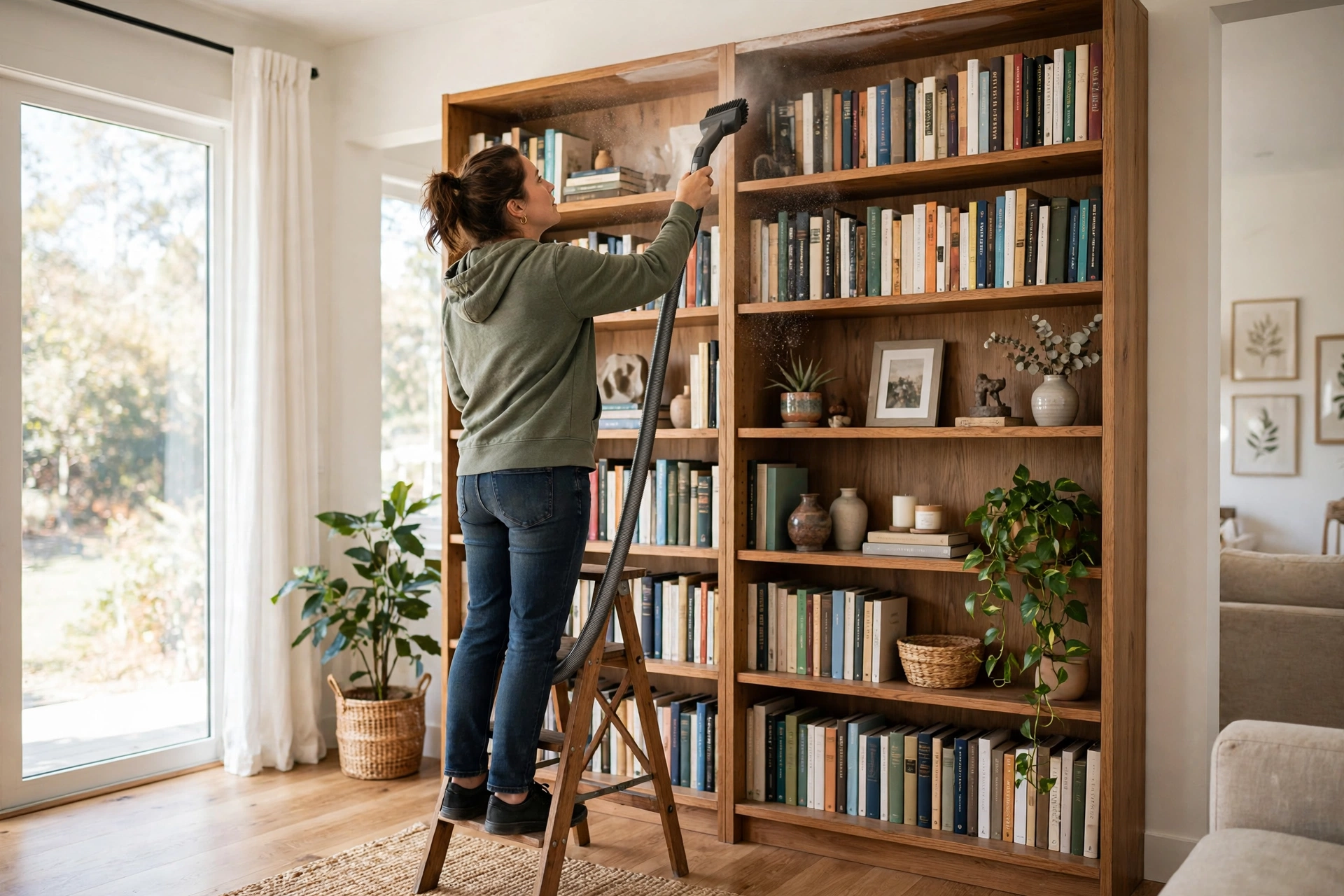
Work one room at a time and close the door when you leave, so stirred-up dust does not drift back in. A vacuum with a brush attachment is the fastest way to dust the high spots — use it on shelves, baseboards, and door frames first. That order is the core of how to get rid of dust in house: let gravity do the work.
4. The Bedroom First — Dust Mites Live Where You Sleep
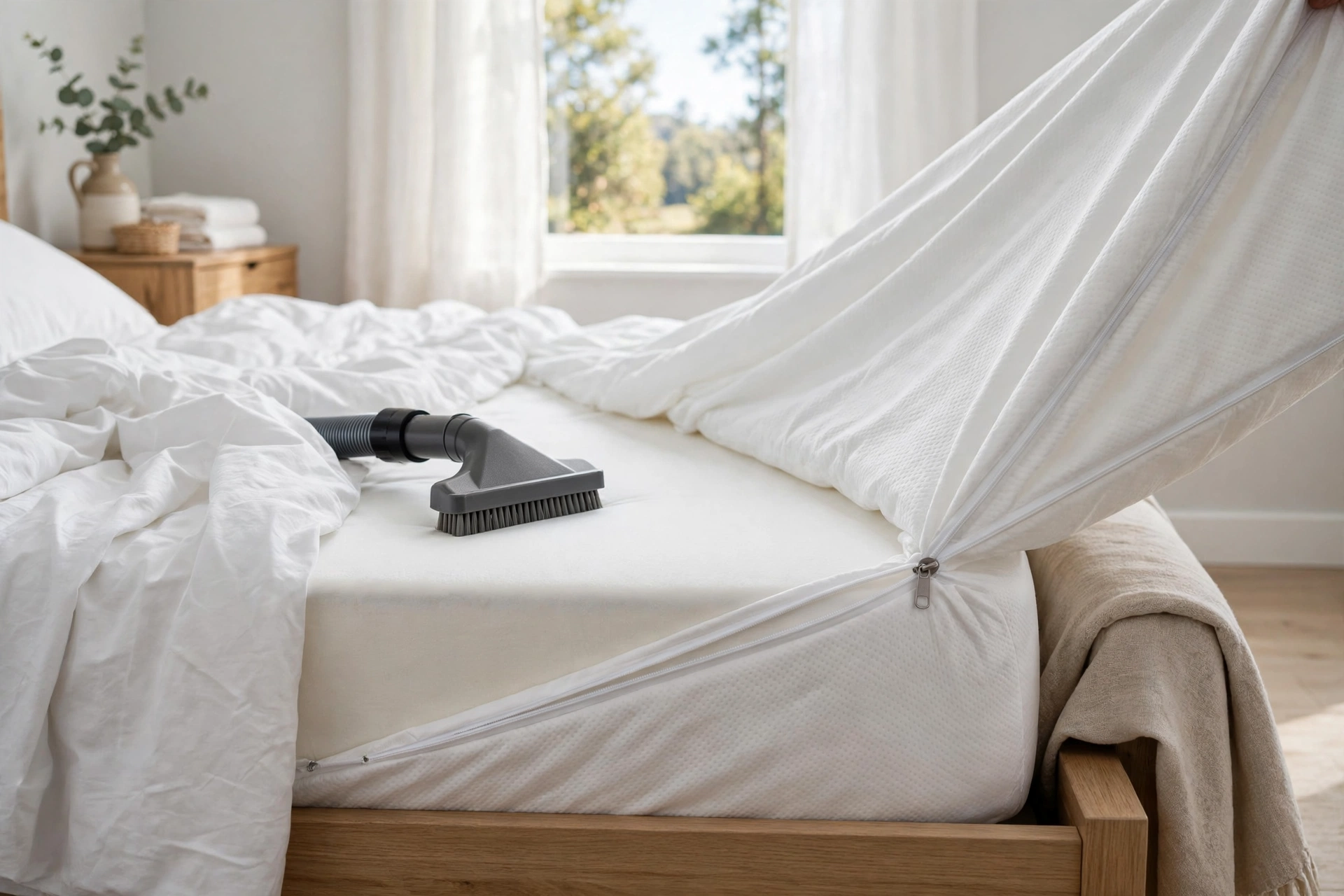
The bedroom holds more dust than any other room: eight hours a night shedding skin flakes into the bedding — dust mites’ favorite food. Wash sheets and pillowcases weekly in hot water and dry on high heat — at least 130°F kills dust mites and washes away their allergens.
Cover the mattress and pillows with zippered allergen-proof encasements, and vacuum the mattress monthly with the upholstery tool. Our clean a mattress without a vacuum cleaner guide covers the baking-soda method for freshening a mattress between vacuumings.
5. The Living Room — How to Get Rid of Dust in House Where Everyone Gathers
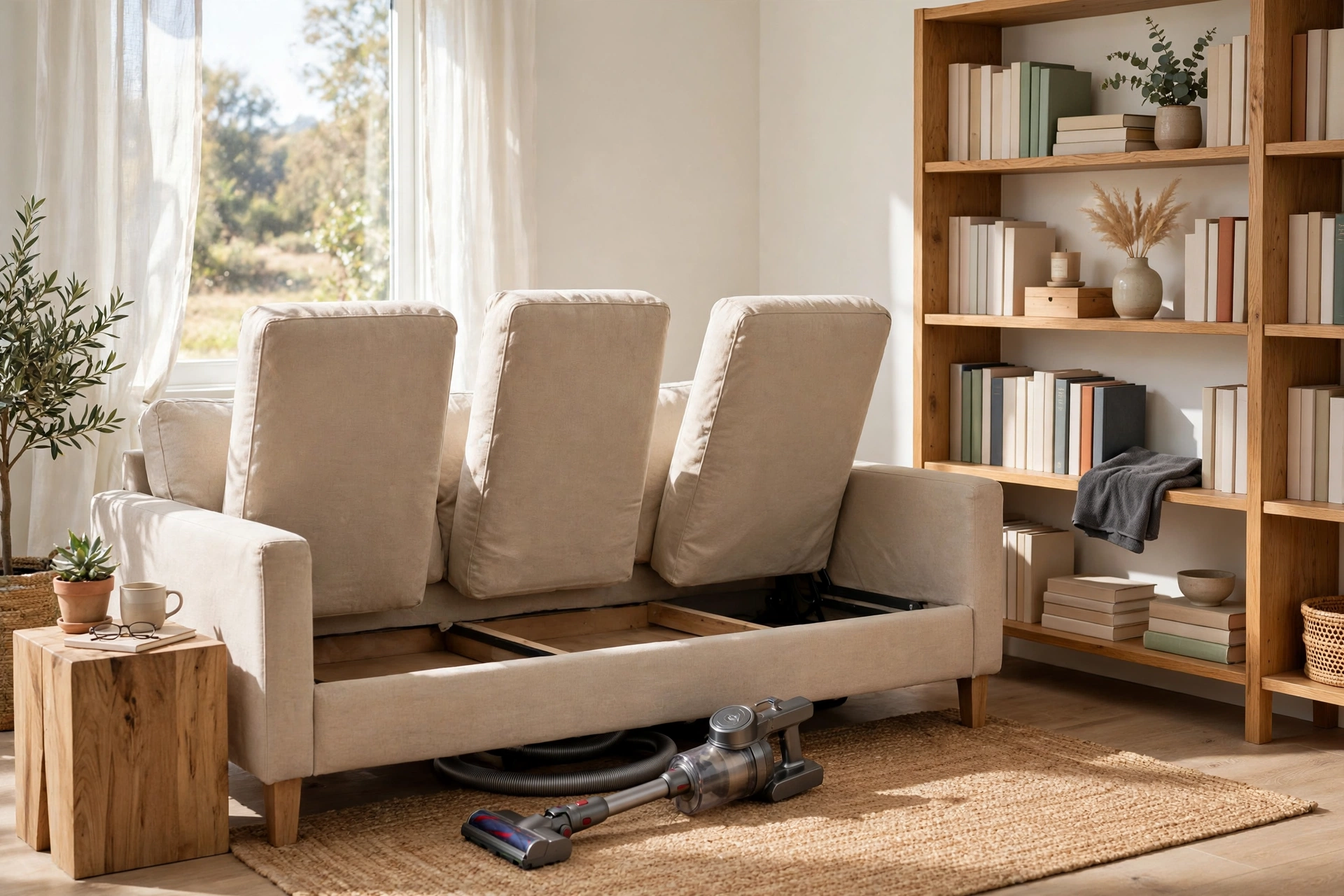
The living room collects dust from every direction: the front door, the fireplace, the TV, and every person who sits down. Start with the soft surfaces — vacuum sofa cushions and armchairs with the upholstery attachment, lifting the cushions for the crumbs and dust underneath. Wash throw pillow covers and blankets every two weeks.
Dust shelves and the TV stand with a damp microfiber cloth, top to bottom, and wipe the screen with a dry cloth made for electronics. Keep books upright and tight, and use a closed cabinet for anything you do not use daily.
6. The Kitchen — Grease Makes Dust Stick
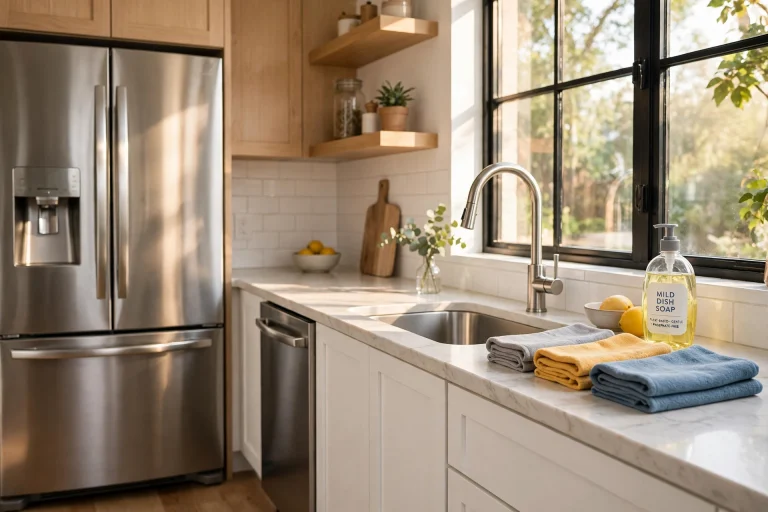
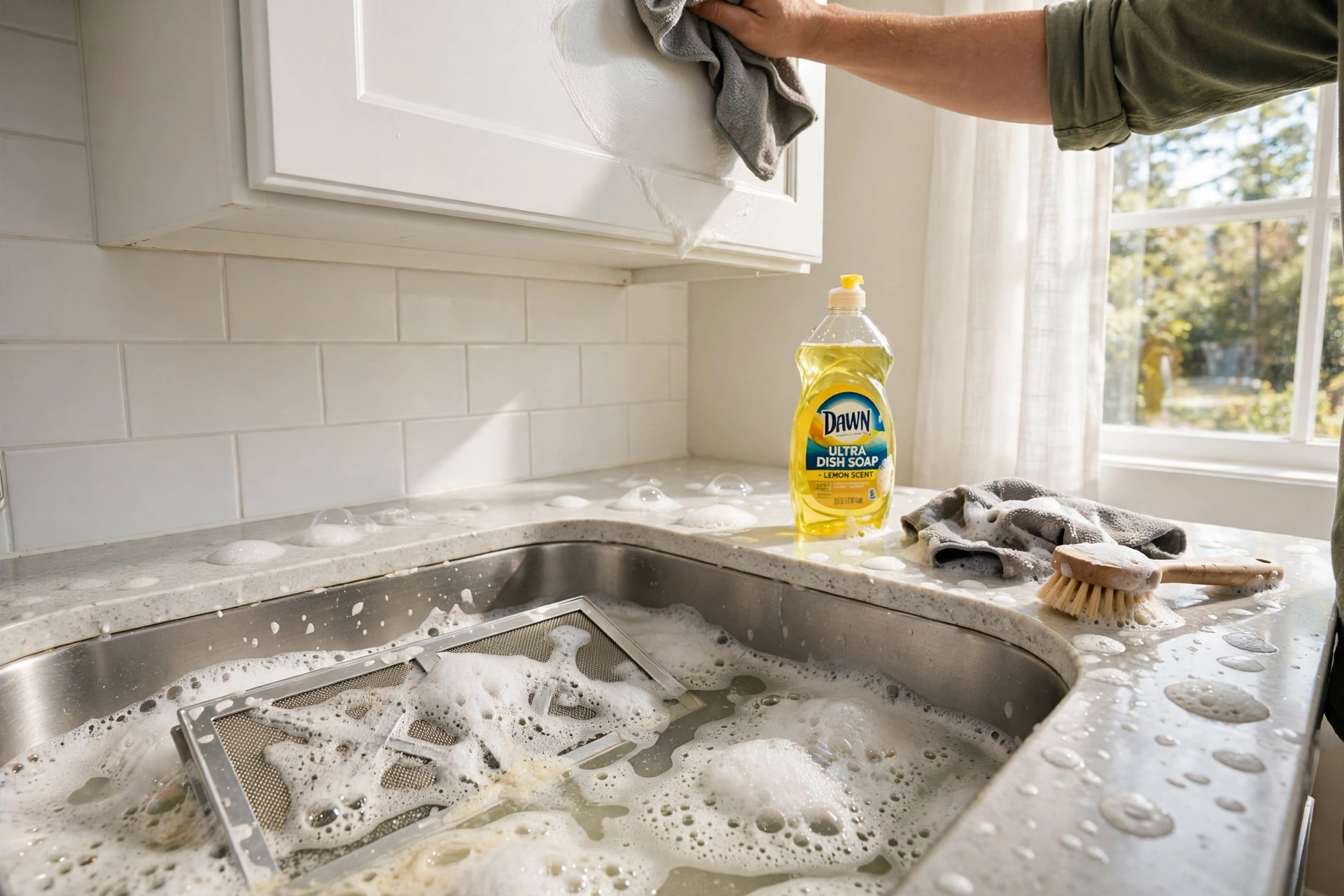
Kitchen dust is worse than ordinary dust because cooking grease makes it stick. Start with the range hood filter: a greasy filter cannot catch anything, so soak it in hot soapy water once a month and let it dry before replacing it. Wipe the top of the refrigerator and the cabinets with a damp cloth and a drop of dish soap, which cuts the grease film dust clings to.
Dust the light fixtures and cabinet tops every deep-clean, and keep small appliances covered or in cabinets when not in use.
7. The Bathroom — Small Room, Steady Dust
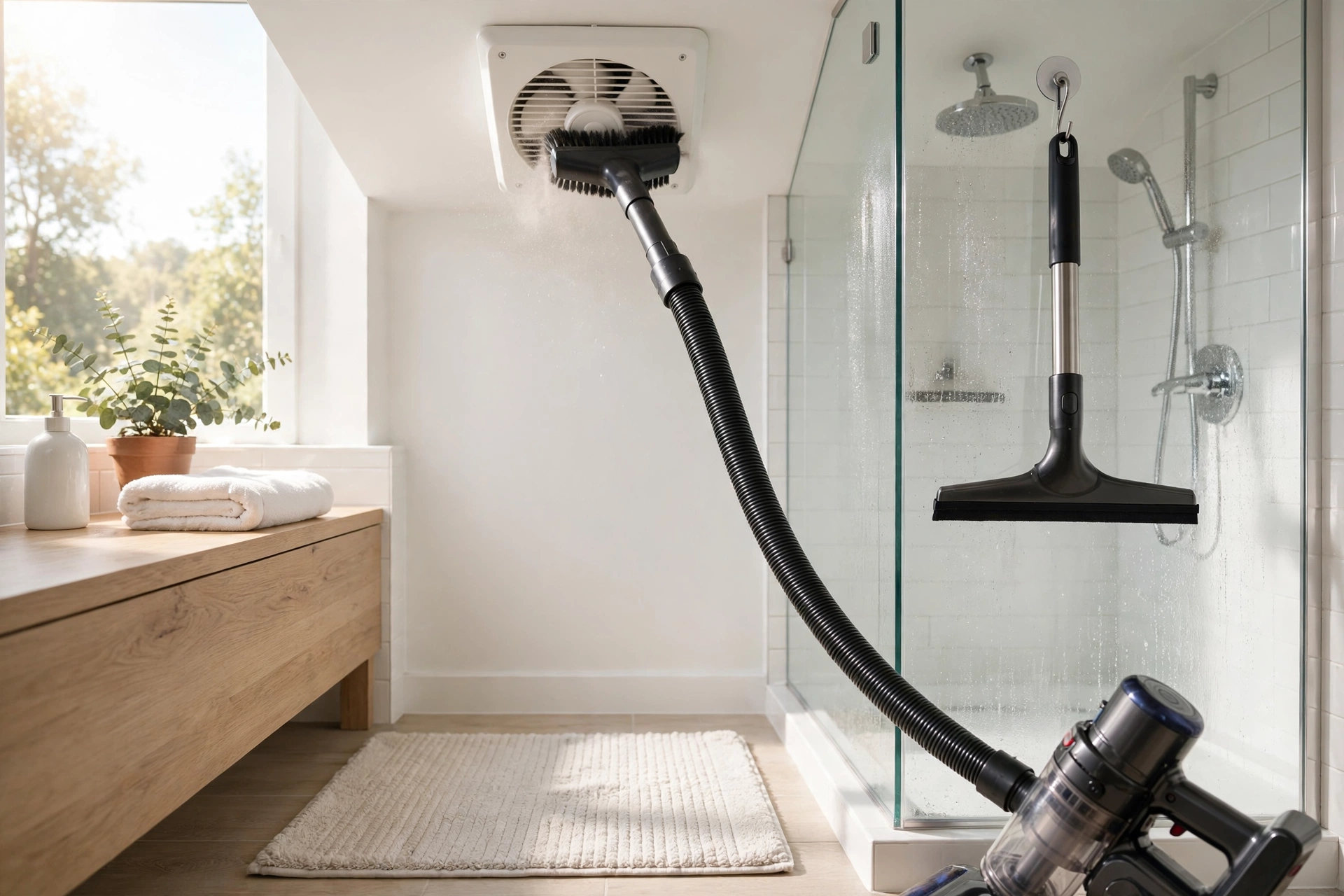
The bathroom looks clean because it gets wiped down often, but the exhaust fan, the vent cover, and the top of the shower door collect dust nobody sees. Vacuum the exhaust fan cover monthly — a clogged fan cannot pull steam out, and damp air grows mold. Wipe the vent cover with a damp cloth and let it dry before switching the fan back on.
Shake out bath mats and wash them weekly, and keep the shower curtain pulled closed so air moves around it instead of trapping moisture behind it. A small squeegee on the shower glass after every shower stops the soap film dust sticks to.
8. Dust Mites and Allergies — How to Get Rid of Dust in House for Sensitive Lungs
Dust mites are too small to see, but they are why dust matters for health: their droppings trigger sneezing, itchy eyes, and asthma, and about 20 million Americans have a dust mite allergy. Mites live in mattresses, pillows, carpets, and upholstered furniture.
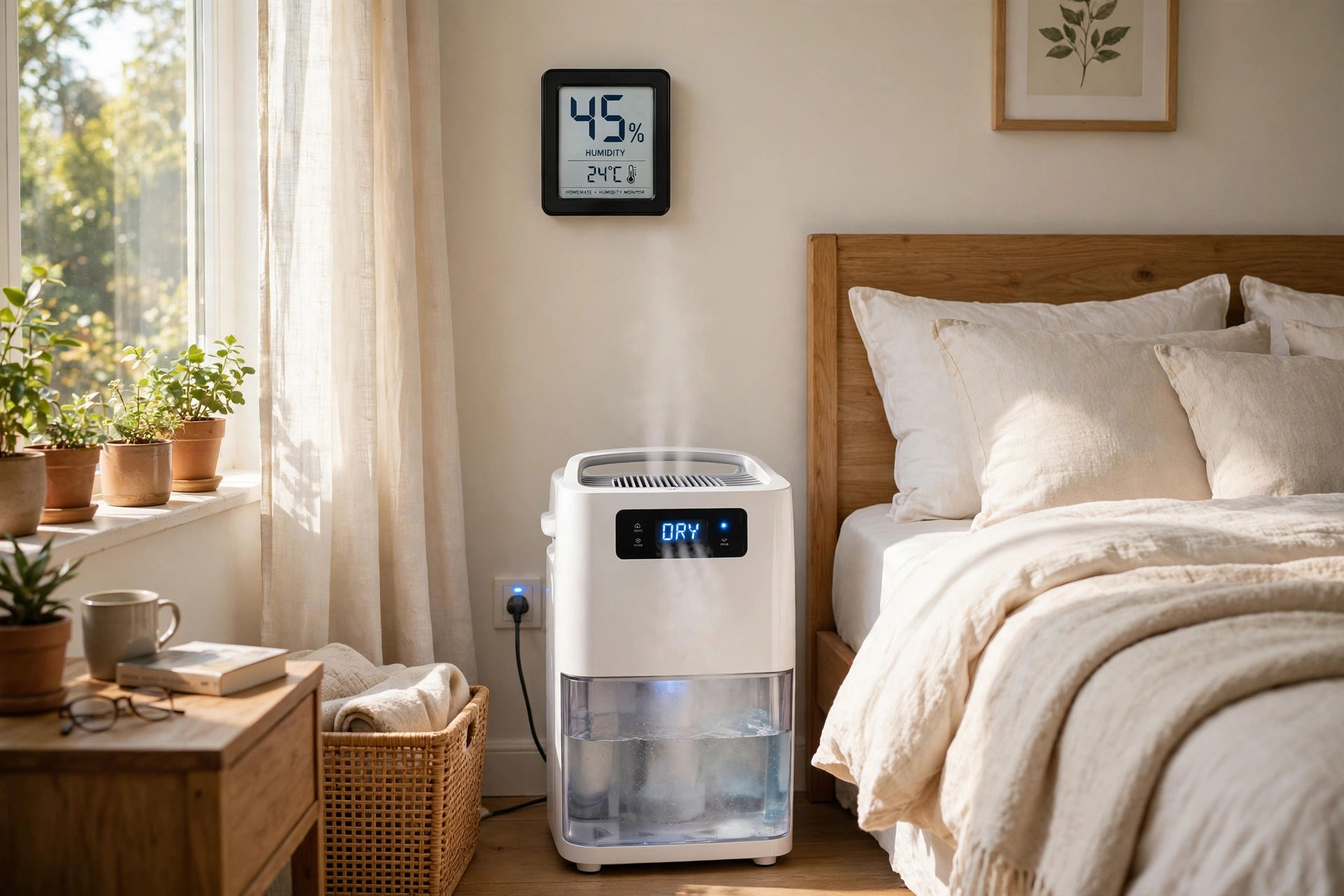
Mites need humidity, so keep indoor humidity between 30 and 50 percent — a dehumidifier in a damp bedroom does more against mites than any spray. The U.S. Environmental Protection Agency’s guide to sources of indoor particulate matter explains the same three steps: control the source, ventilate, and clean the air. If symptoms persist, see a doctor — cleaning reduces exposure, but it is not a treatment.
9. Air Purifiers and HVAC Filters
An air purifier with a true HEPA filter catches the dust already floating — the fine particles a cloth and vacuum cannot reach. Run one in the bedroom, sized to the room rather than the biggest unit you can buy. It helps most with the door shut, so run it at night.
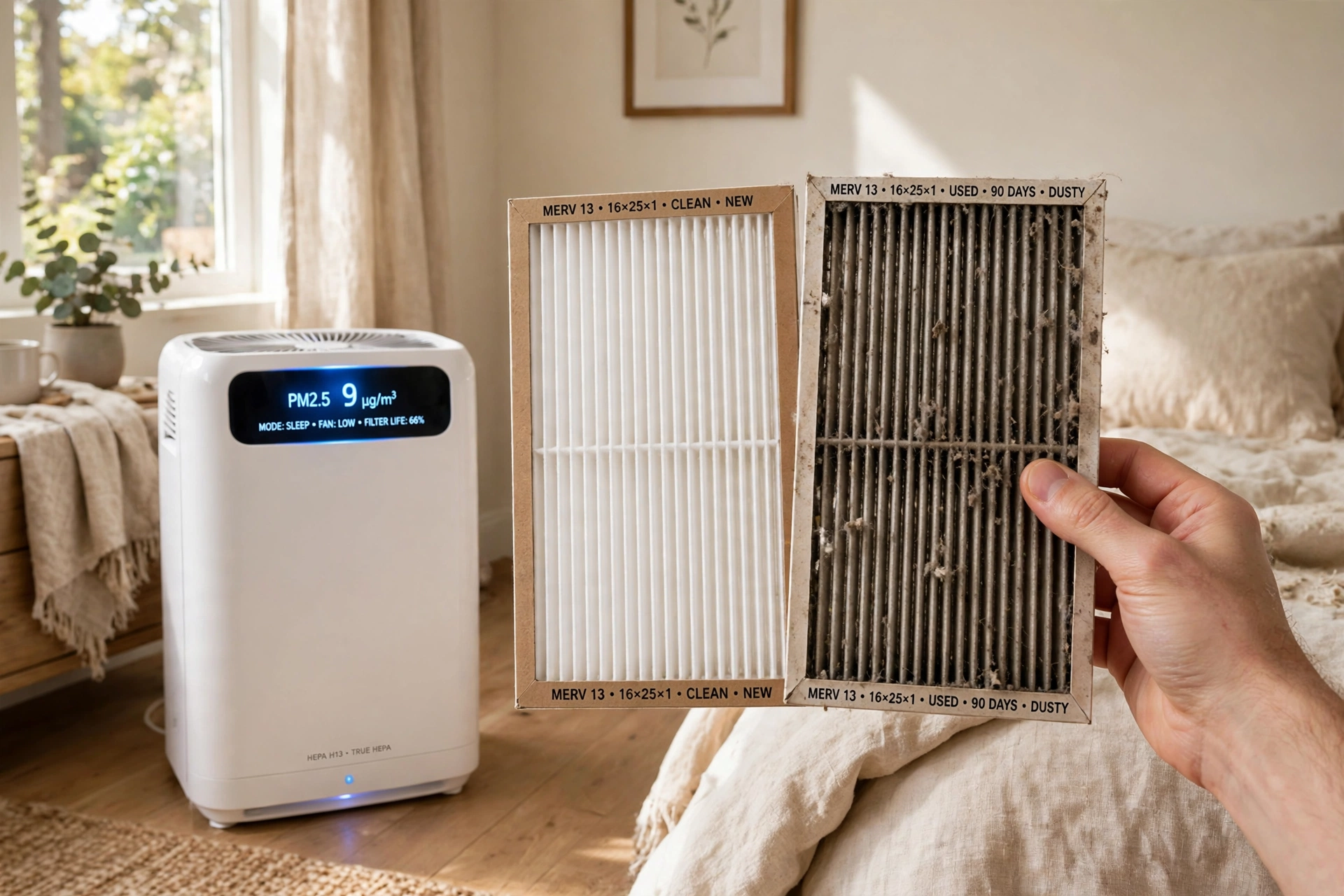
Your furnace filter is the whole-house version of the same idea, and it only works if you change it. Swap a standard filter every three months — every one to three months with pets or allergies — and write the date on it. A clogged filter pushes dust back through the vents instead of catching it, and changing it on schedule is the cheapest part of how to get rid of dust in house for good.
10. Hard-to-Reach Spots: Fans, Blinds, and Cabinet Tops
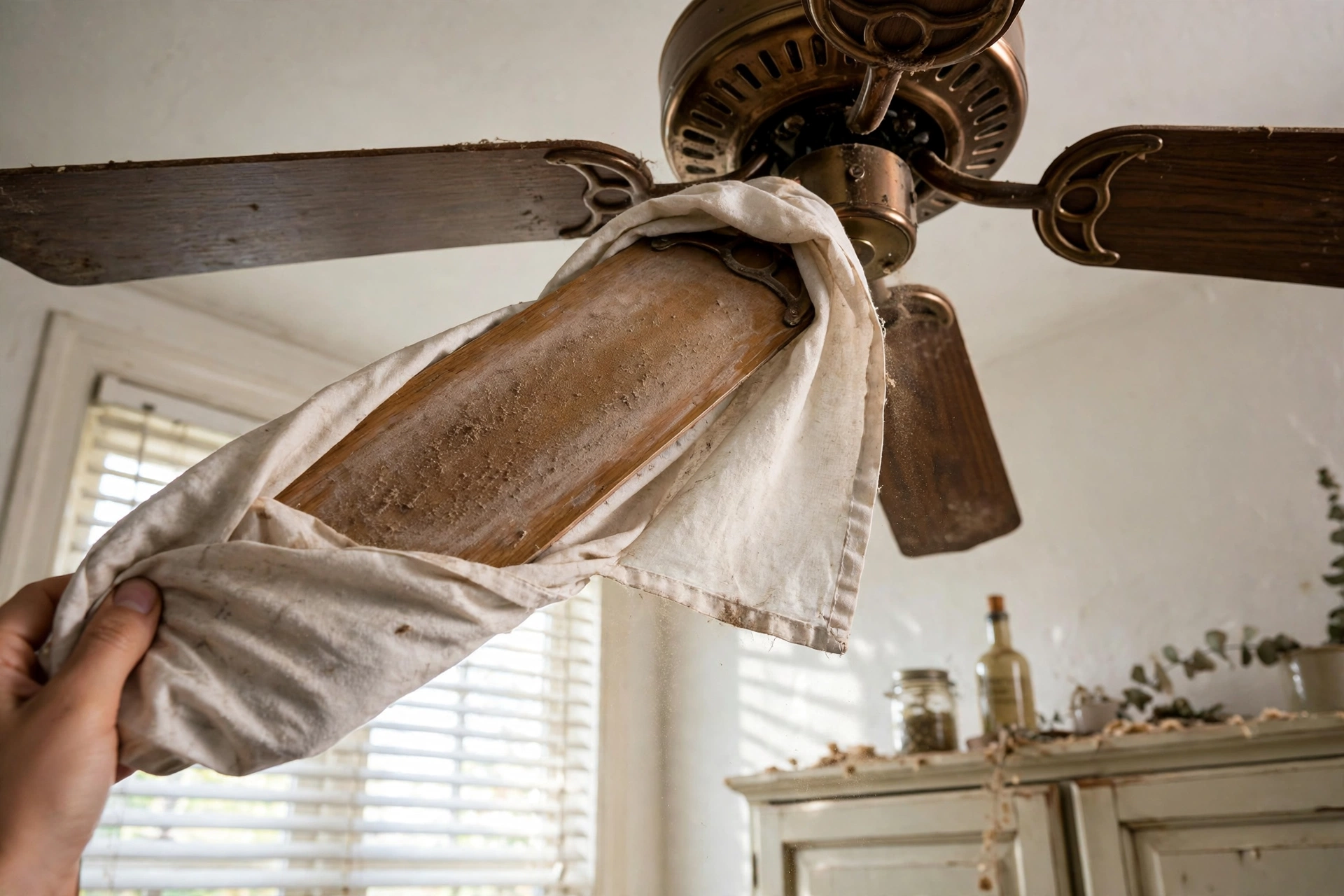
The dustiest spots are the ones nobody sees: ceiling fan blades, cabinet tops, window blinds, and the back of the refrigerator. A pillowcase is the best tool for a ceiling fan — slide a blade inside, pull, and the dust stays in the case instead of raining down on the bed. Do it monthly.
Blinds collect a thick layer on every slat — wipe them with a damp cloth wrapped around tongs, or vacuum them with the brush attachment, slat by slat. Cabinet tops need a damp wipe twice a year; lining them with wax paper turns the next clean into a five-minute swap.
11. Electronics and Screens
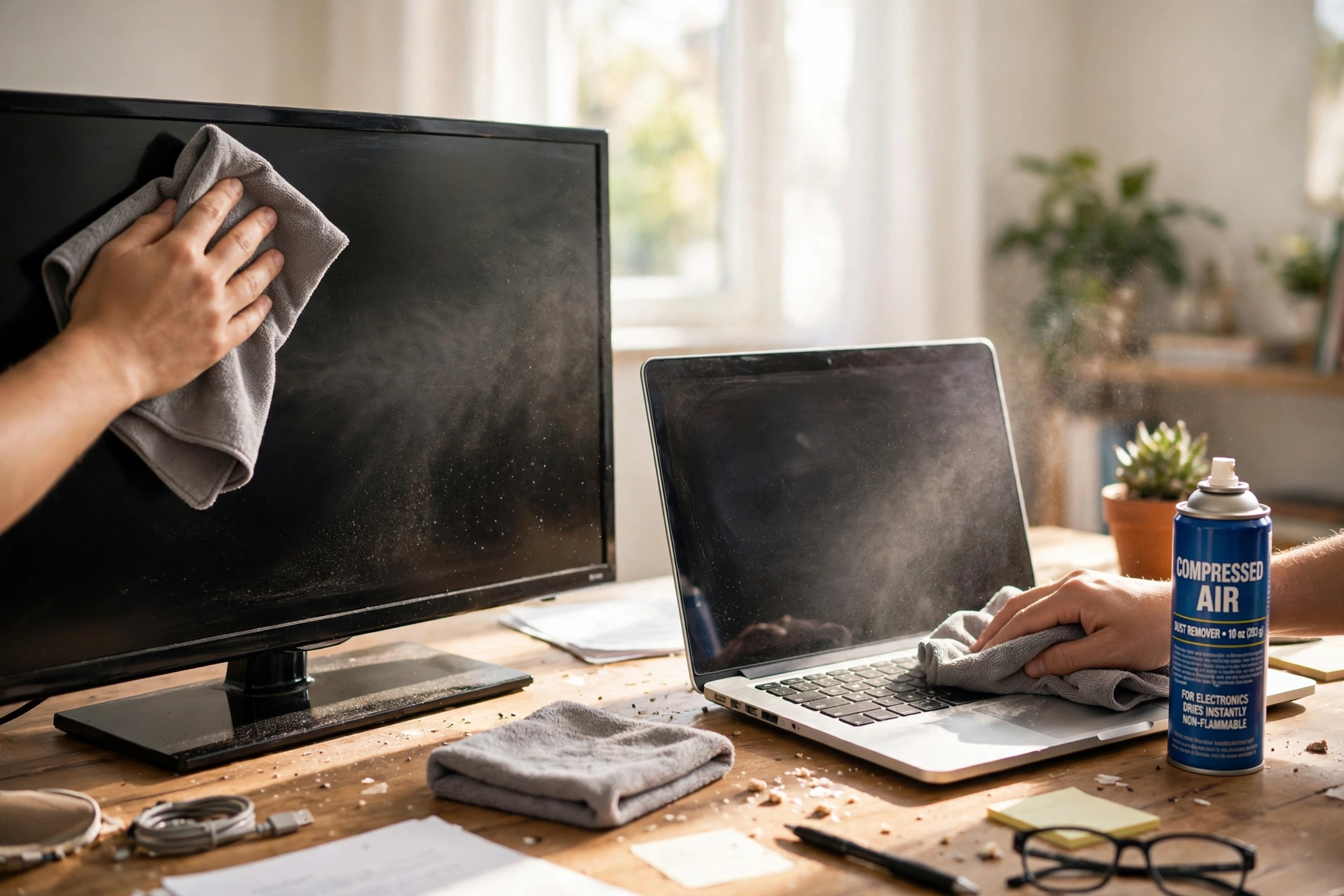
TVs, laptops, and game consoles attract dust because their fans pull air through them, and a dusty vent makes the device run hotter and louder. Unplug the device, then wipe the vents and ports with a dry microfiber cloth or short bursts of compressed air held upright. Never spray cleaner directly onto a screen.
Wipe screens with a dry microfiber cloth, or one lightly dampened with water for fingerprints. Keep devices off the floor, where dust is thickest, and clean a desktop computer’s vents monthly. A keyboard turned upside down and shaken over the trash loses a surprising amount of dust and crumbs — a monthly pass like this is how to get rid of dust in house electronics before the dust makes them run hot.
12. Fabrics and Upholstery — How to Get Rid of Dust in House Soft Surfaces
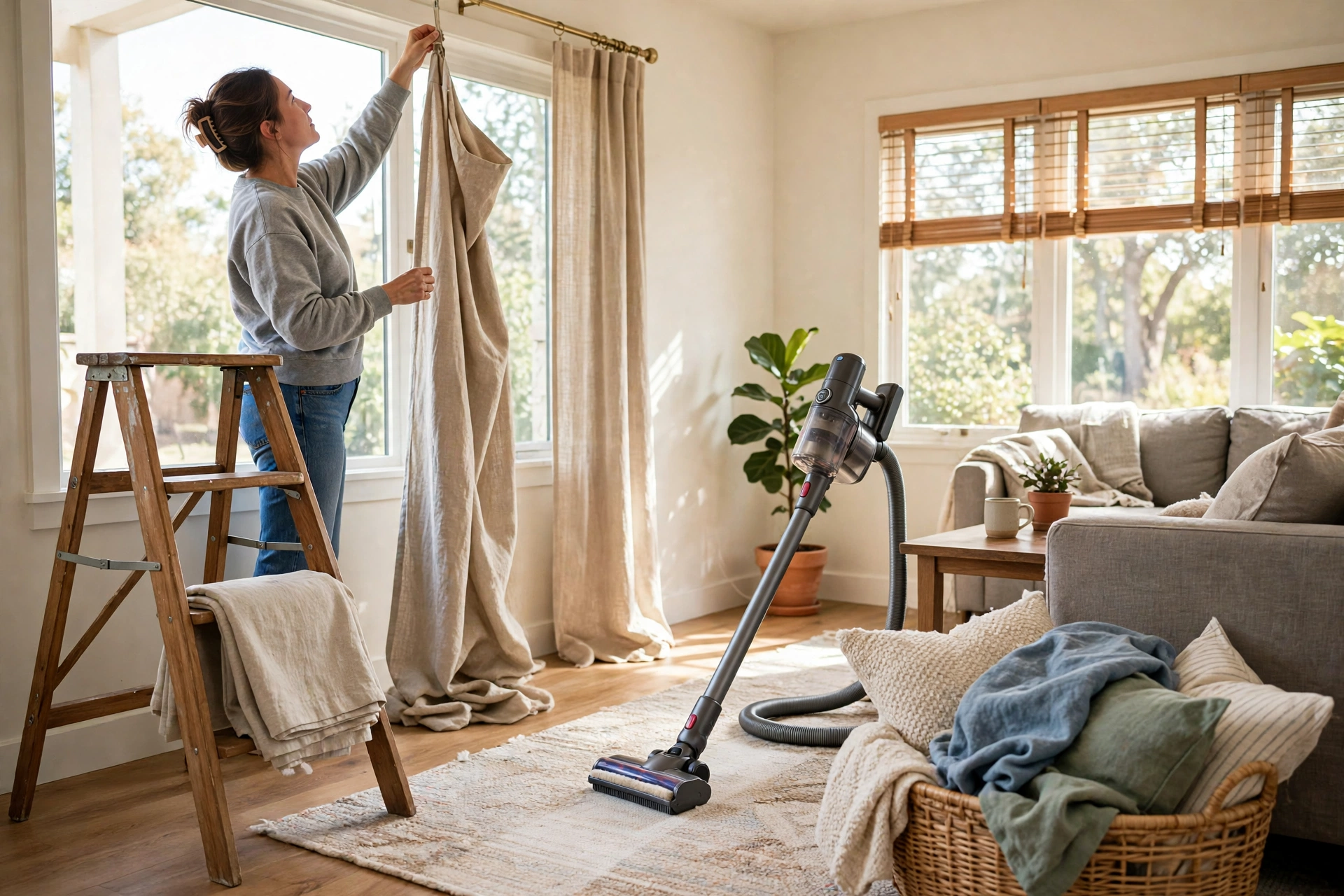
Fabric is where dust hides. Curtains, rugs, cushions, and throws all trap dust in their fibers, and a fabric-heavy room needs a different routine than one full of hard surfaces. Wash curtains twice a year, or swap heavy drapes for washable roller shades. Vacuum rugs and upholstery weekly, and take small rugs outside to shake them out.
Wash throw blankets and cushion covers every two weeks, and keep decorative pillows few — each is another dust trap. Our how to clean a vacuum cleaner filter guide matters here: fabric dust clogs a filter fast, so check it after every upholstery session.
13. Pets: Dander, Hair, and the Dust They Bring In
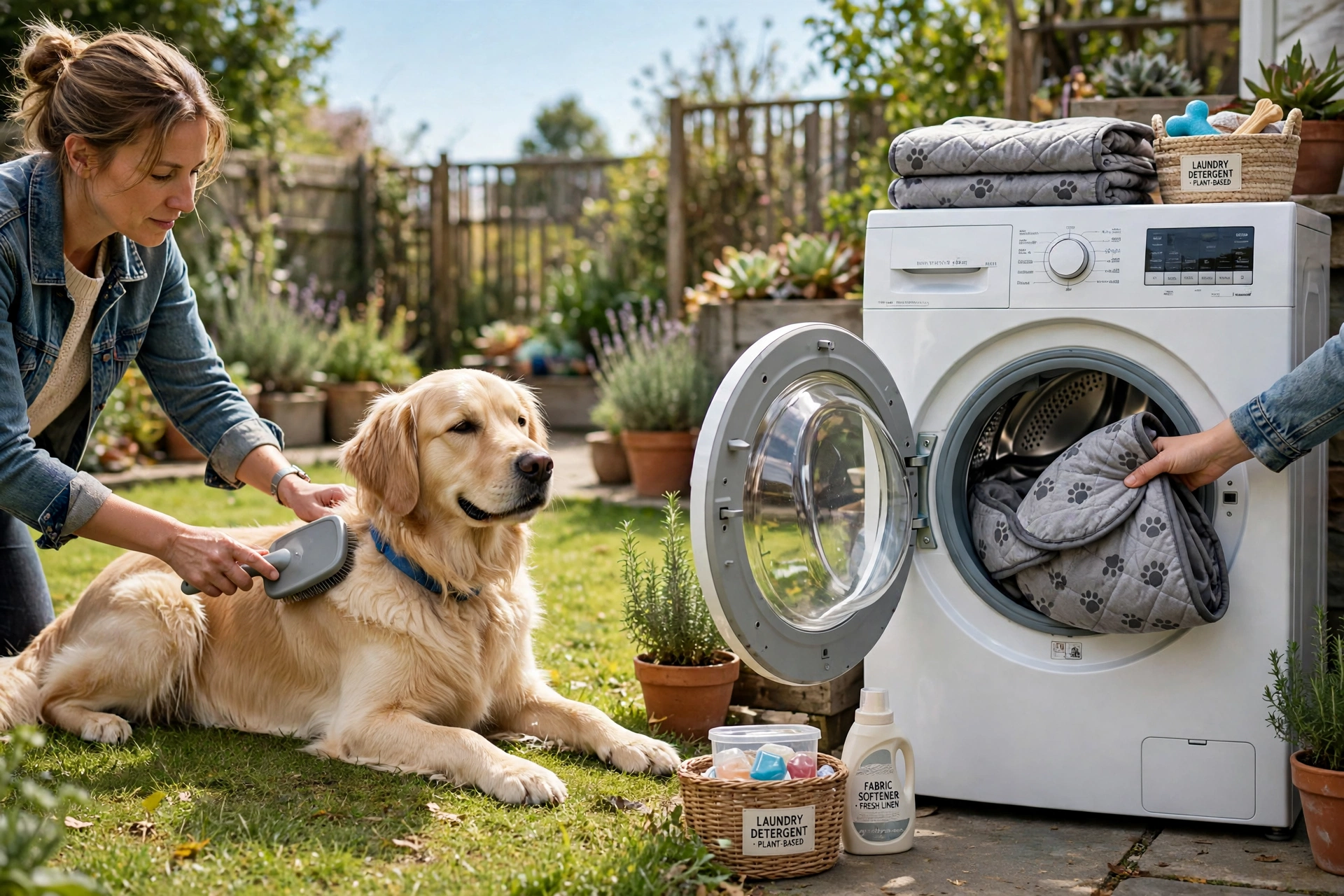
Pets add two kinds of dust: their dander, which is itself an allergen, and the outdoor dust they carry in on fur and paws. Brush your pet outside twice a week and wipe paws at the door. A pet bed with a washable cover is the best pet-dust fix — wash the cover weekly in hot water and the bed stops being a dust reservoir.
Vacuum pet sleeping spots twice a week, and groom long-haired pets more often in shedding season. Keep pets out of the bedroom if anyone in the house has allergies — the bed is where dander does the most harm overnight, and that one rule is how to get rid of dust in house where it matters most.
14. The Daily 10-Minute Routine
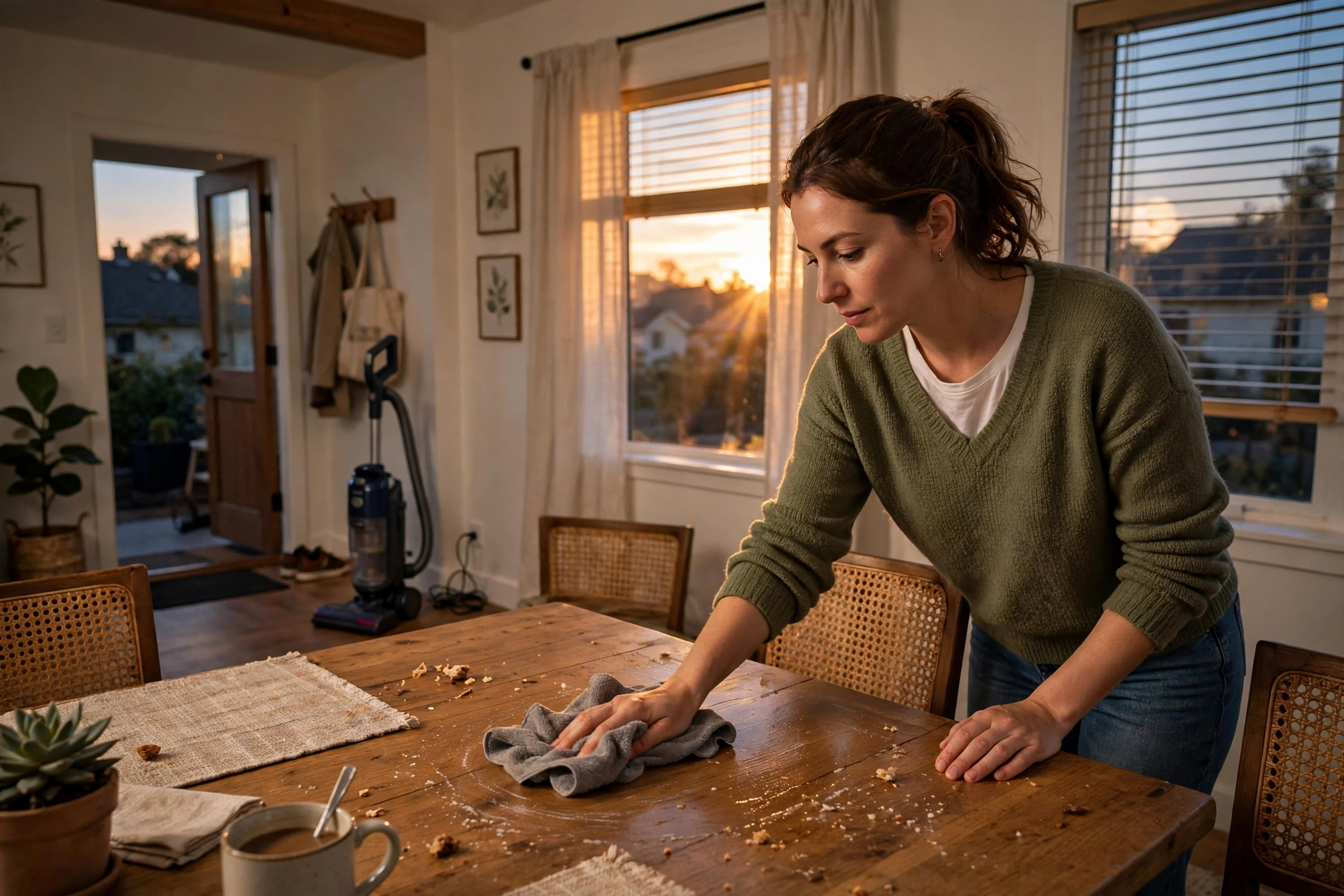
Dust control is mostly maintenance, and ten minutes a day beats a whole Saturday of deep cleaning. Each evening, do one quick pass: wipe the kitchen counters and the dining table with a damp cloth, shake out the doormat, and vacuum the highest-traffic patch of floor. The habit keeps dust from building up.
Pair the routine with something you already do — wipe the table while dinner cooks, or shake the mat when you take the trash out. Our 10-minute daily cleaning habits guide builds the same idea into a whole-house routine, and our easy home cleaning hacks guide has more shortcuts.
15. The Weekly Deep-Dust Routine — How to Get Rid of Dust in House for Good
Once a week, give the house a full top-to-bottom pass: damp-cloth the shelves and surfaces, vacuum the carpets and furniture with the HEPA vacuum, mop the hard floors, and wash the bedding. The whole routine takes about an hour, and it keeps dust at a level you never notice.
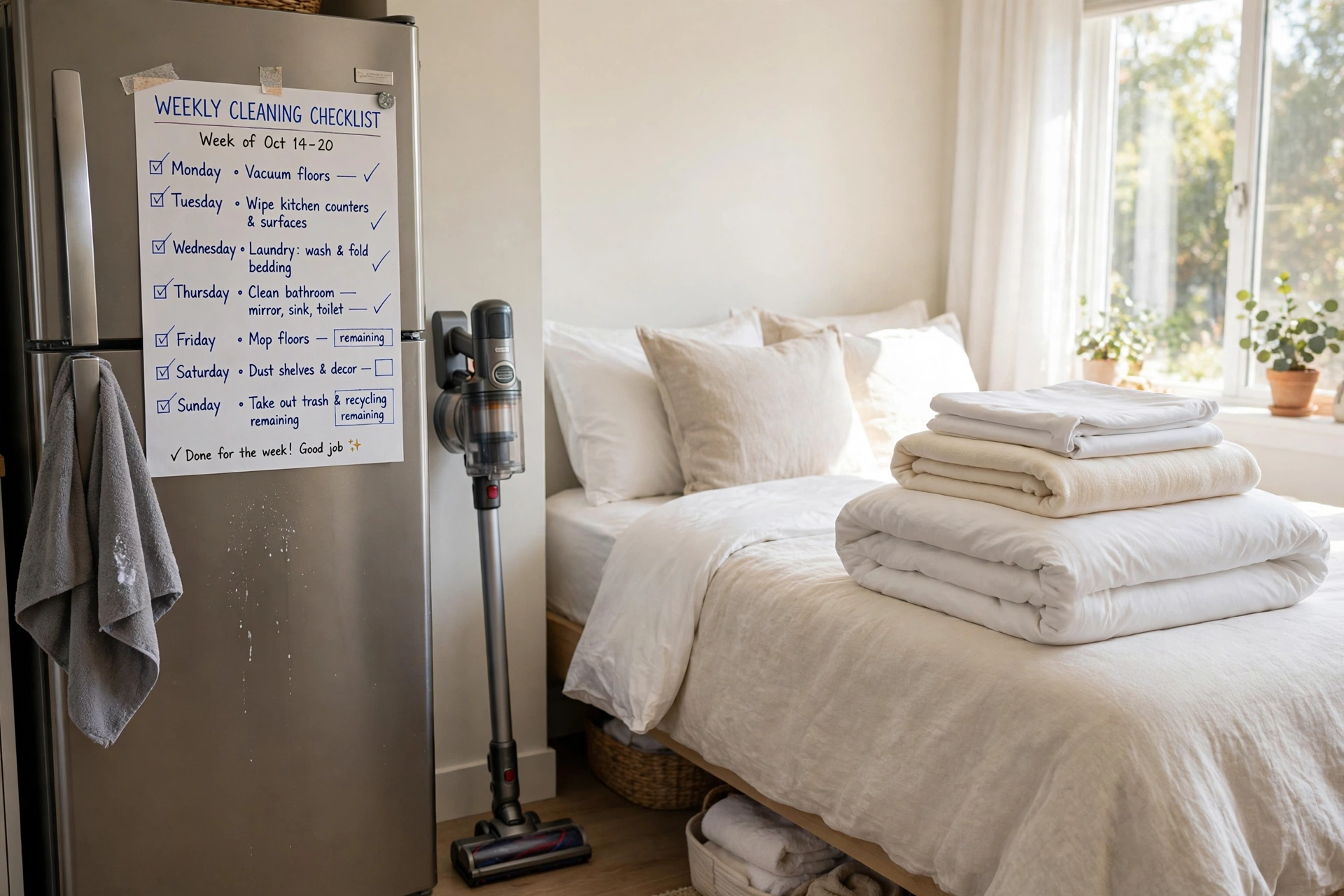
Keep a short checklist on the fridge — fans, blinds, shelves, floors, bedding — and check it off as you go. Change the furnace filter the same day once a season, and the routine runs itself.
Frequently Asked Questions
Q: Why does my house get dusty so fast?
A: Most household dust comes from outdoors — about two-thirds of it is soil and pollen tracked in on shoes and blown in through gaps — plus skin flakes, pet dander, and fabric fibers from inside. A shoes-off rule, two doormats, and a door sweep cut incoming dust dramatically. That is how to get rid of dust in house at the source, before it spreads.
Q: Does an air purifier help with dust?
A: Yes, for the dust that is already floating in the air — a true HEPA purifier captures 99.97% of particles 0.3 microns and larger. It works best in a closed bedroom. It does not replace dusting and vacuuming, because most household dust sits on surfaces, not in the air — so how to get rid of dust in house still starts with a cloth and a vacuum.
Q: How often should I dust my house?
A: Dust surfaces with a damp cloth once a week, vacuum carpets and furniture weekly, and wash bedding weekly in hot water. High-traffic spots like the entryway and kitchen counters deserve a quick wipe every day, and fans, blinds, and cabinet tops need it once a month.
Q: Are dust mites harmful?
A: Dust mites themselves do not bite, but their droppings are a common allergen — they trigger sneezing, itchy eyes, and asthma in about 20 million Americans. The fix is exposure control: wash bedding weekly in water of at least 130°F, use allergen-proof mattress and pillow covers, keep humidity between 30 and 50 percent, and vacuum with a HEPA filter. That routine is how to get rid of dust in house for allergy sufferers, day by day.
Related Reading
- Easy Home Cleaning Hacks
- 10-Minute Daily Cleaning Habits
- How to Clean a Vacuum Cleaner Filter
- How to Clean a HEPA Filter
- Clean a Mattress Without a Vacuum Cleaner
- How to Declutter Your Home Room by Room
Conclusion
How to get rid of dust in house comes down to three habits: stop it at the door, clean top to bottom with a damp cloth and a HEPA vacuum, and keep it down with a short weekly routine. Start with the shoes-off rule and the bedroom this weekend.