
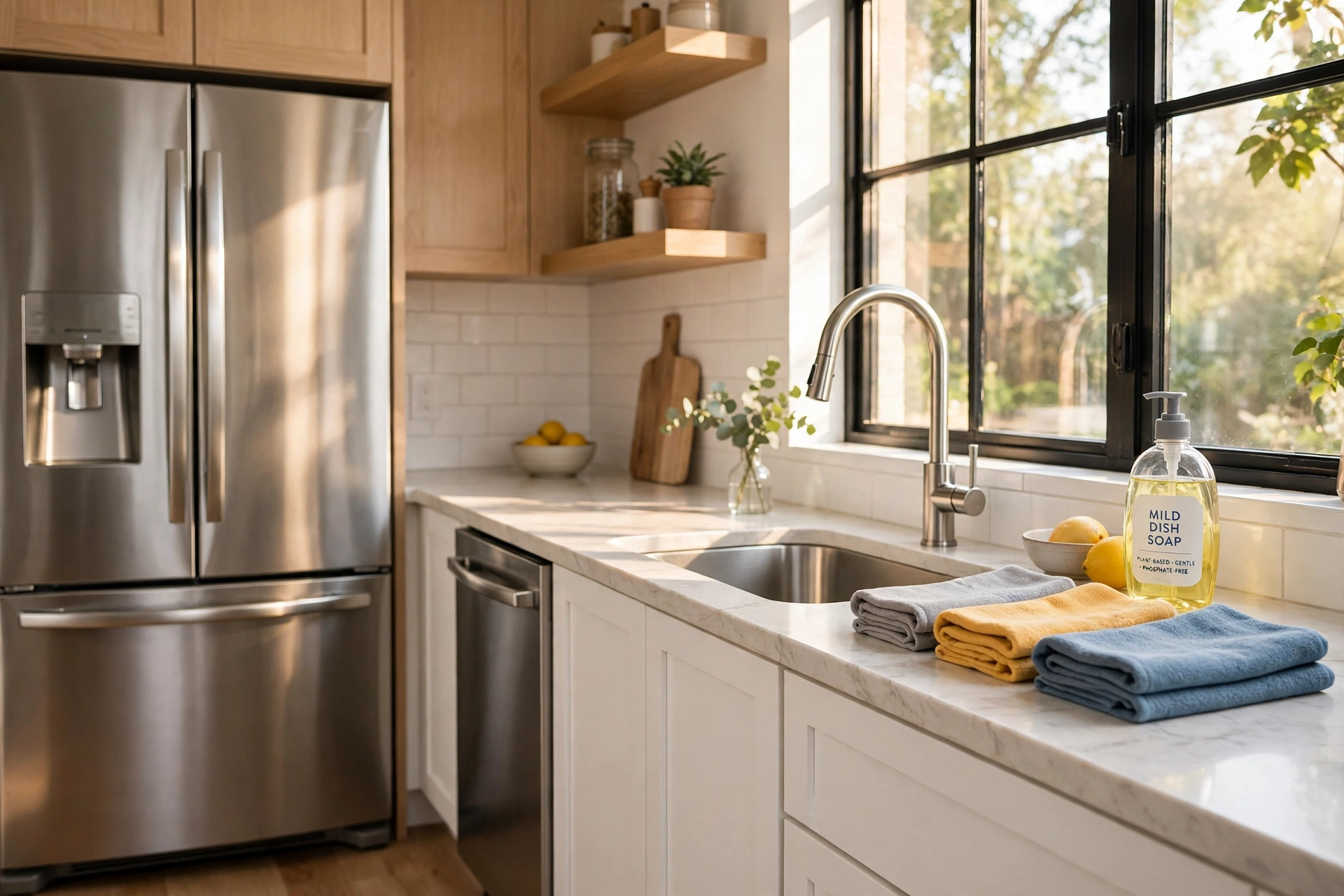
How to Clean Stainless Steel: 15 Streak-Free Tips for Appliances, Sinks & More
How to clean stainless steel has a short answer: warm soapy water, a soft microfiber cloth, and always wipe in the direction of the grain. Most streaks and smudges come from doing one of those three things wrong — wiping against the grain, using a harsh cleaner, or letting water dry.
The fifteen tips below work on every stainless surface in the house: the fridge, the dishwasher, the range, the sink, and the pots in the cabinet. Before you start, check which finish you have — the rules change for black stainless and fingerprint-resistant coatings. If clutter is in the way, our how to declutter your home room by room guide clears the counters first.
1. Find the Grain First — How to Clean Stainless Steel Starts Here
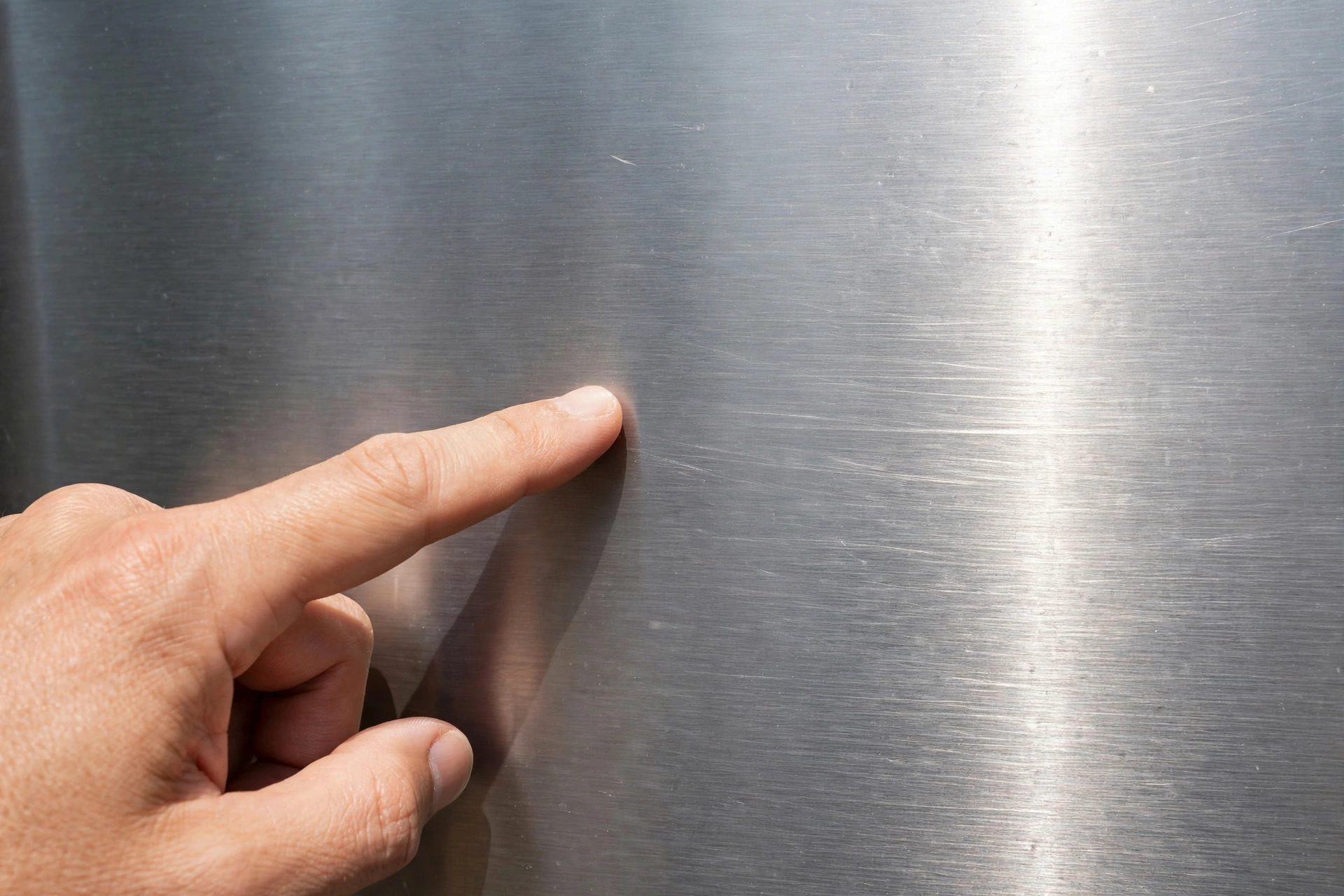
Stainless steel is brushed metal, and the brushing leaves faint lines called the grain — usually horizontal on fridge doors and vertical on dishwasher panels. Hold the surface up to the light to see them, and wipe along those lines.
Wiping against the grain pushes dirt into the tiny grooves and leaves the streaks people blame on the cleaner. Whirlpool’s care guide states the rule plainly: always wipe with the grain to avoid streaks.
2. The Daily Wipe: Warm Soapy Water and a Microfiber Cloth
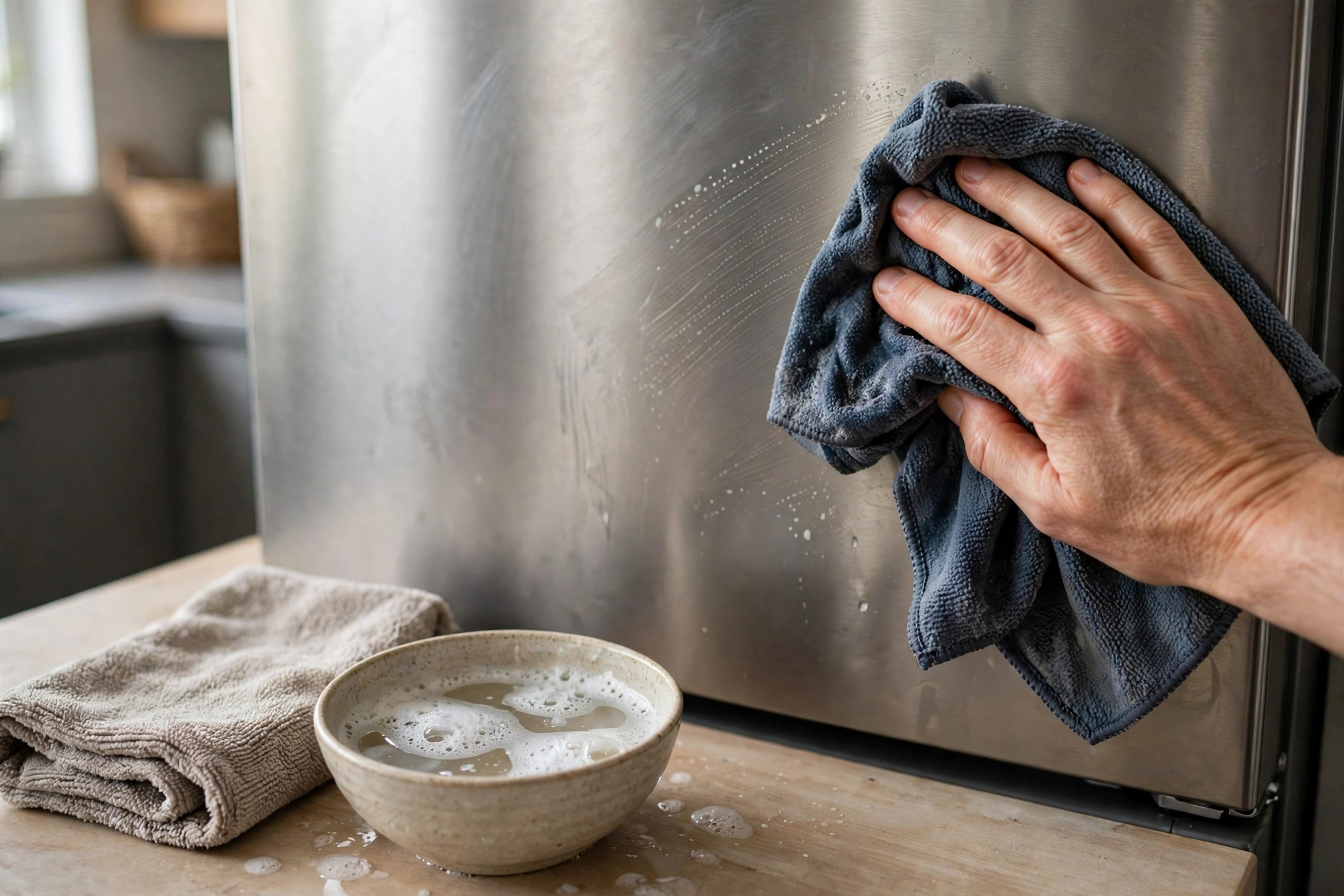
How to clean stainless steel every day needs nothing fancy: warm water, a few drops of mild dish soap, and two microfiber cloths — one for washing, one for drying. Dampen the first cloth, wring it out, and wash the panel with the grain. Rinse with a clean damp cloth, then buff dry with the second cloth right away.
Whirlpool and GE both recommend this method for everyday cleaning: it handles fingerprints, light smudges, and dust in one pass. Skip paper towels — they shed lint and scratch.
3. Know Your Finish — How to Clean Stainless Steel Depends on the Coating
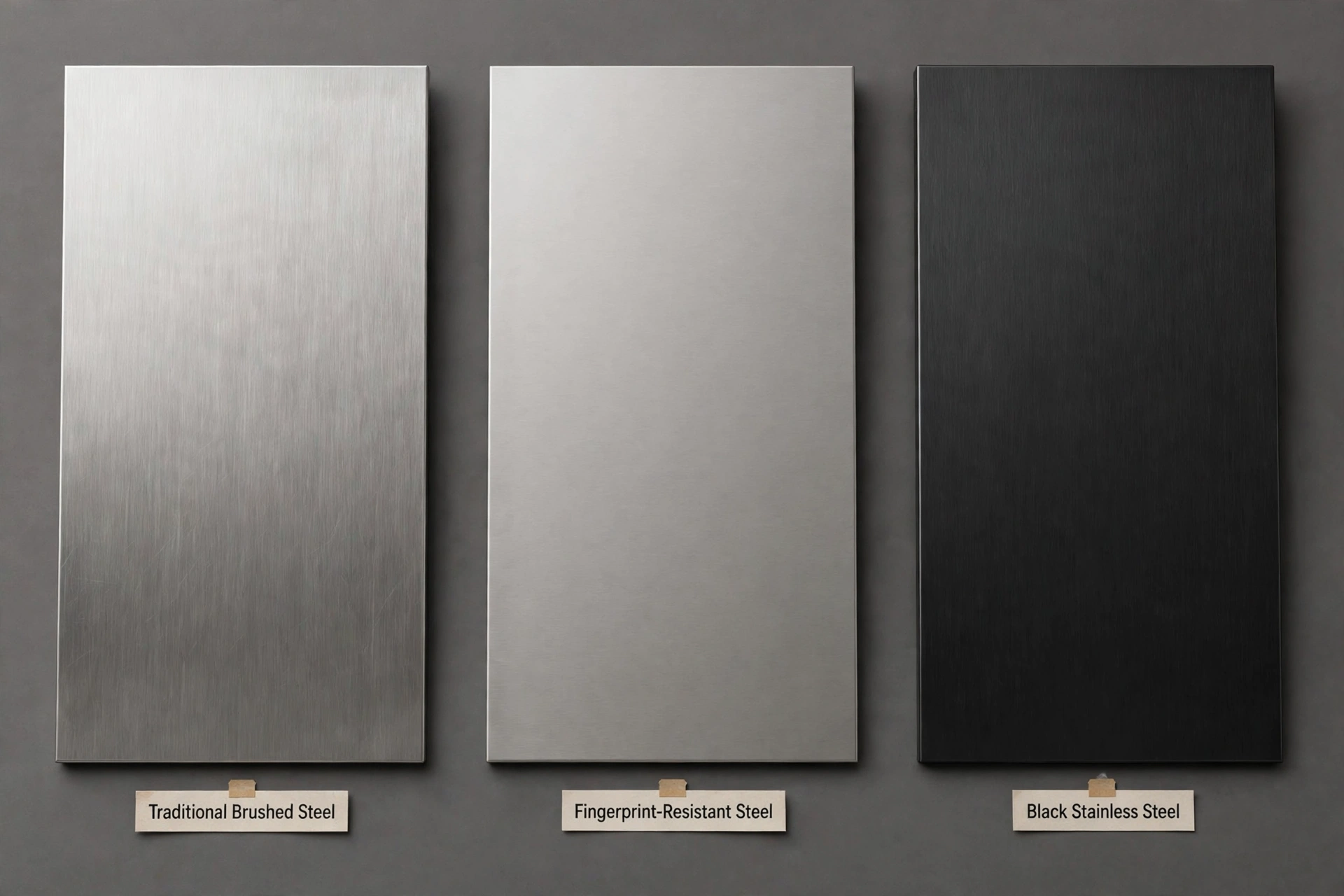
Not all stainless steel is bare metal. Traditional stainless has a visible brushed grain and takes a dedicated polish. Fingerprint-resistant stainless has a clear protective coating, and black stainless is a colored coating over the steel — and both need a different routine.
For coated finishes, mild soap and water is the whole routine: no polishes, no stainless cleaners, no bleach, no window spray, no ammonia, no acidic cleaners. GE’s refrigerator manual is blunt: do not use stainless steel cleaners on black or fingerprint-resistant door surfaces — check the model number in the owner’s manual if you are not sure which finish you have.
4. Removing Fingerprints and Smudges
Fingerprints are mostly skin oil, and warm soapy water cuts oil. Wash the spot with a damp microfiber cloth and a drop of dish soap, moving with the grain, then rinse and buff dry. On a fridge door, work one panel at a time.
For a print baked on by a warm oven door or a sunny window, leave the damp soapy cloth on the spot for two minutes to loosen the oil first. Never reach for glass cleaner: most contain ammonia, which Whirlpool lists among the products that damage stainless steel.
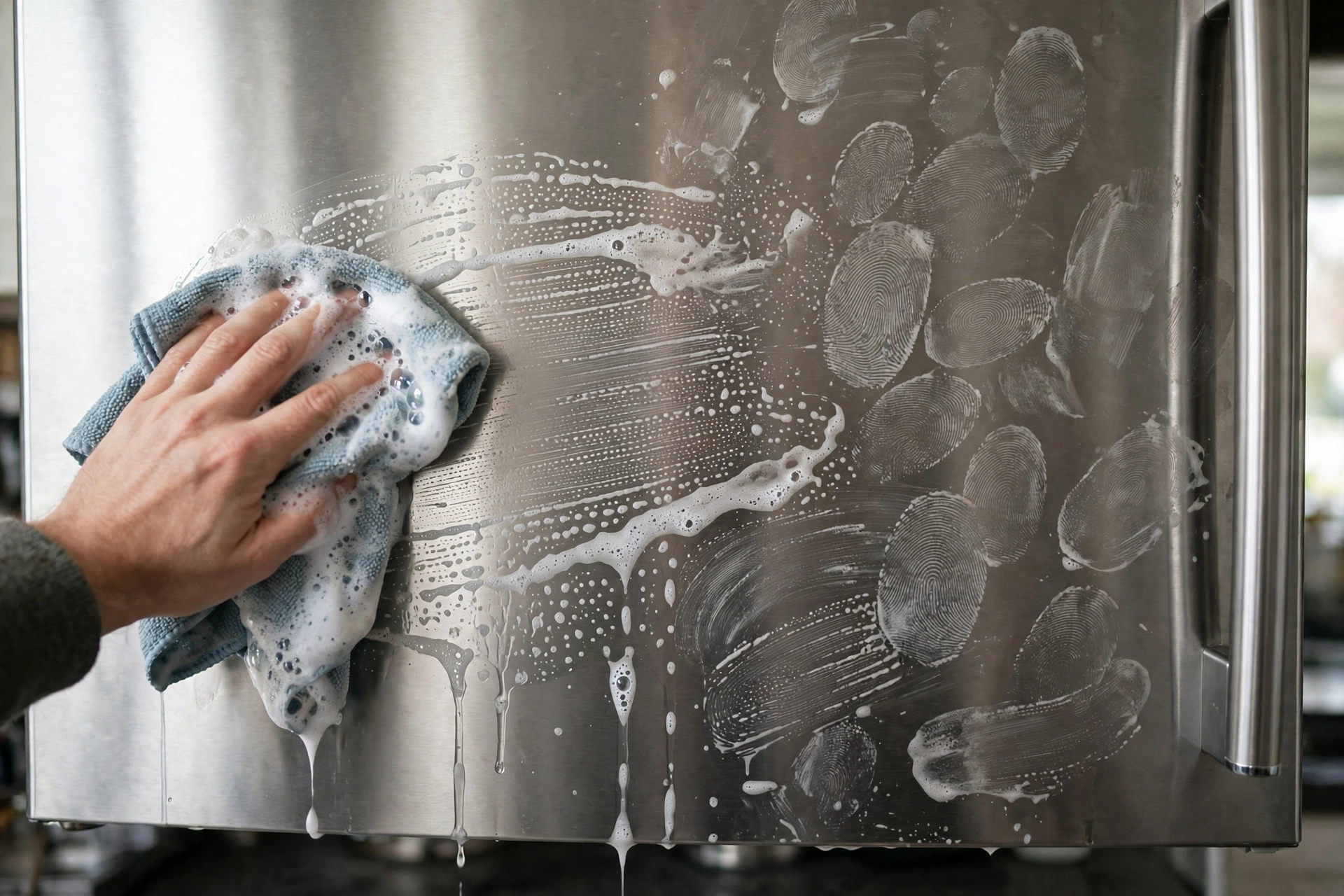
5. Water Spots and Streaks — How to Clean Stainless Steel So It Stays Clear
Water spots are mineral deposits left when water dries on the surface. Whirlpool warns that water left to dry on stainless can discolor it, because minerals such as iron in tap water stay behind. The fix is simple: never let the surface air-dry.
Rewash the spot with warm soapy water, rinse, and buff completely dry with a microfiber cloth while the surface is still damp. Streaks that looked permanent often turn out to have been water all along. If your tap water is very hard, a final wipe with distilled water stops new spots.
6. Stuck-On Grease and Food
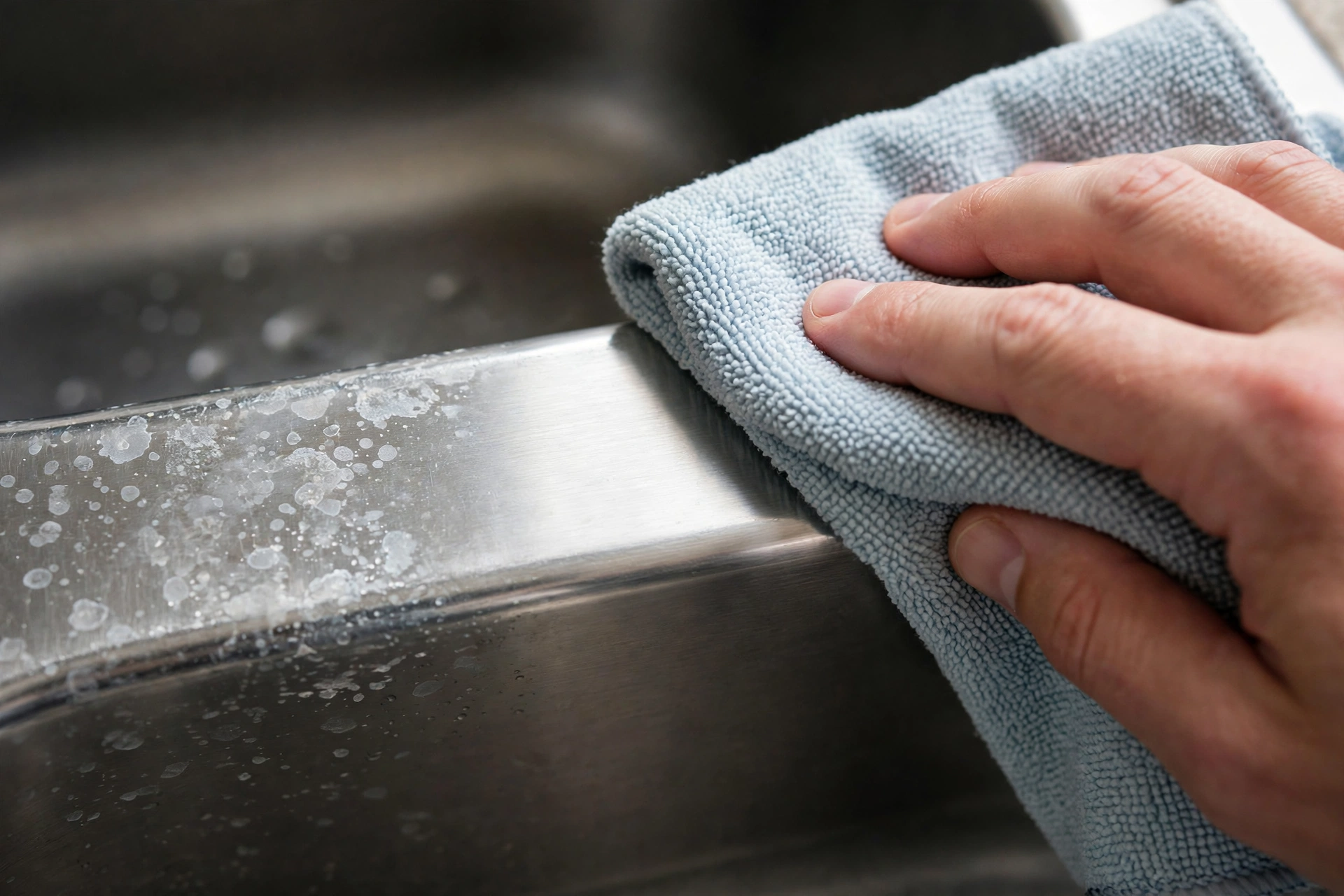
Grease needs time, not force. Lay a hot soapy cloth over the spot for five minutes, then wipe with the grain. The heat and soap loosen the grease so it lifts off instead of smearing. Repeat once for a heavy buildup rather than scrubbing harder.
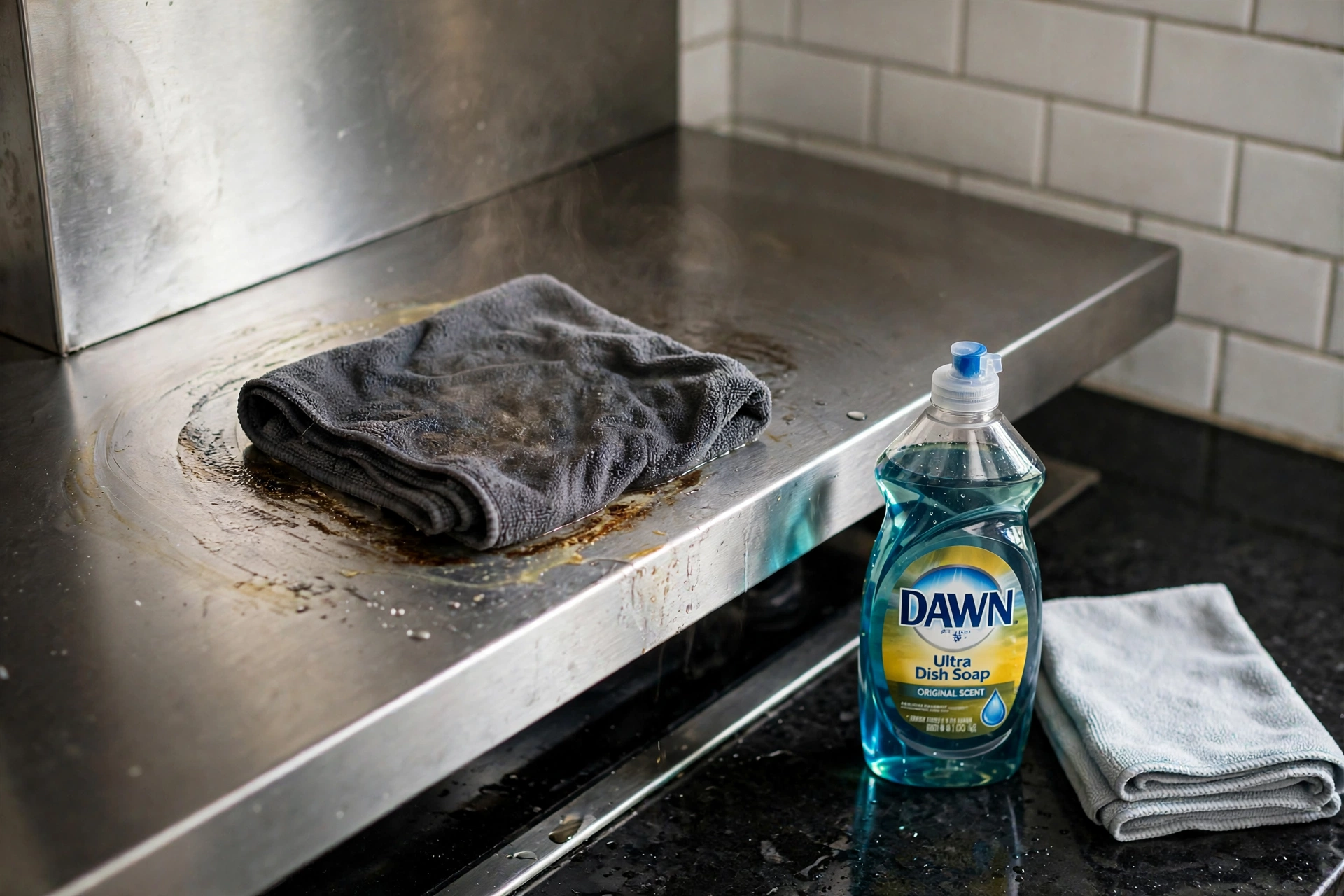
For the range hood and cooktop surround, where grease bakes on, a drop of dish soap straight on the damp cloth gives extra cutting power. Rinse well — soap residue attracts dust and turns streaky. Never use oven cleaner on the outside of a range or oven door; Whirlpool and GE both list it among the products that damage stainless steel.
7. The Sink — How to Clean Stainless Steel Sinks Without Scratches
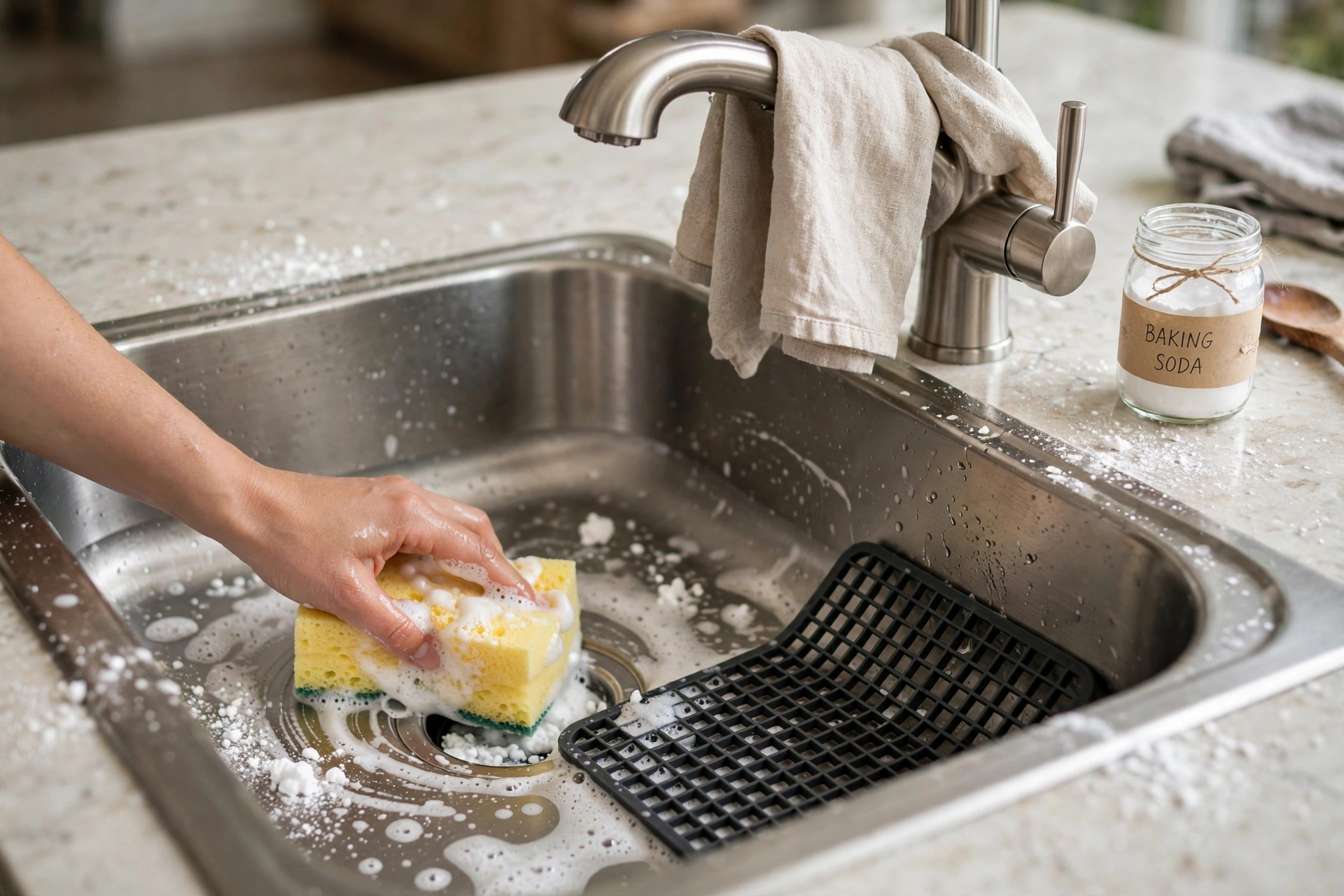
The kitchen sink takes more abuse than any other stainless surface, so it needs its own routine. Rinse after every use to keep food acids off the steel, and once a week give it a proper clean: sprinkle baking soda over the wet basin, scrub gently with a soft sponge with the grain, and rinse.
For limescale around the faucet base, a baking soda paste — three parts soda to one part water — left for ten minutes lifts deposits without scratching. Rinse thoroughly and towel-dry the basin and faucet, because standing water leaves the white rings. A sink grid on the bottom stops pots and pans from scratching the basin.
8. Cookware and Pots
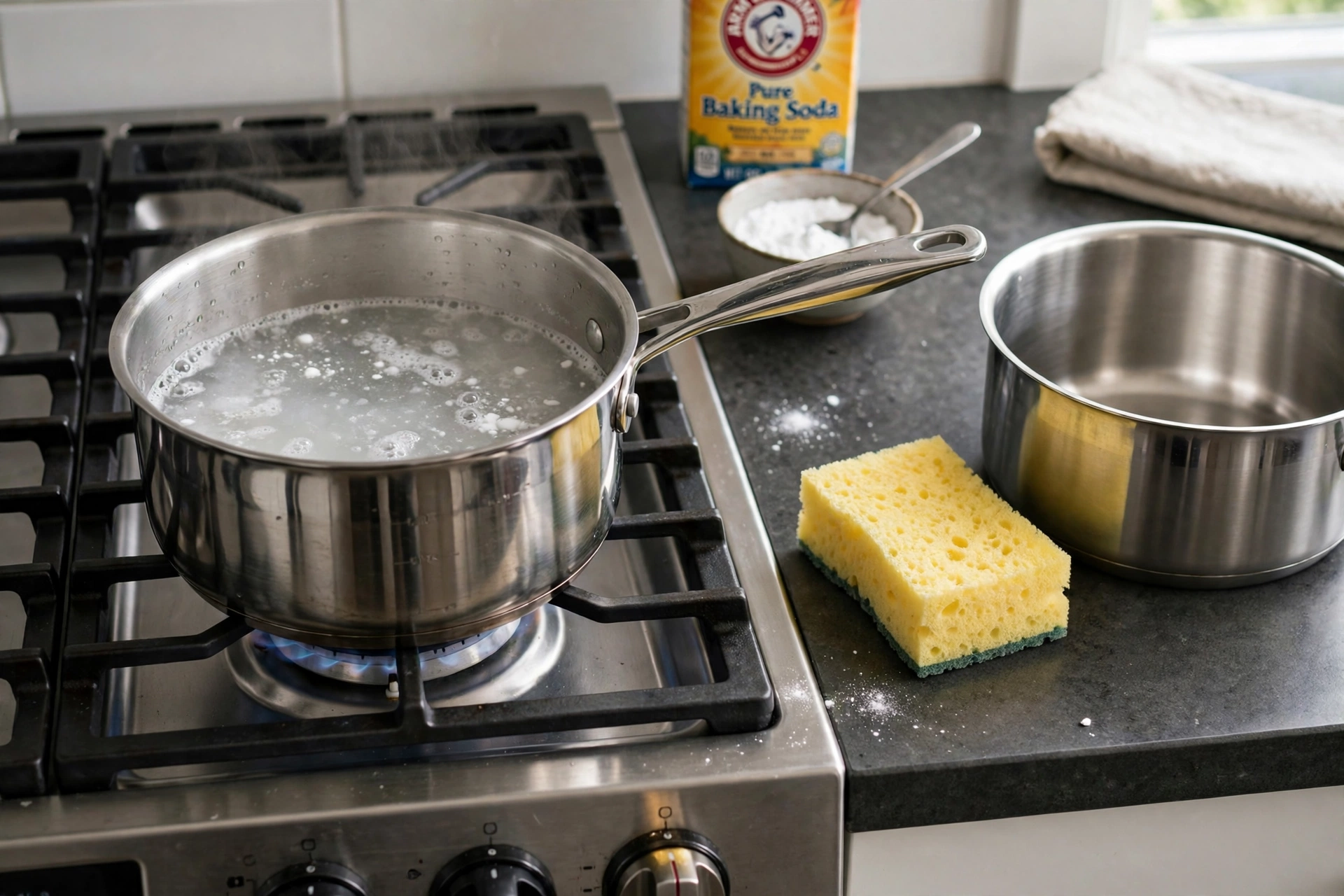
Stainless pots and pans follow the same grain rule, but they can take more heat and scrubbing. For burnt-on food, fill the pan with water, add a spoonful of baking soda, and simmer for ten minutes — the stuck food lifts off with a soft sponge. For the brown rainbow discoloration heat leaves behind, a baking soda paste rubbed with the grain restores the shine.
Avoid steel wool and scouring pads even on cookware: they leave fine scratches that food sticks to next time. A non-scratch sponge and a nylon brush handle everything a pan throws at you. Dry pots right after washing — air-dried pans spot just like a fridge door.
9. The Refrigerator — How to Clean Stainless Steel Fridge Doors
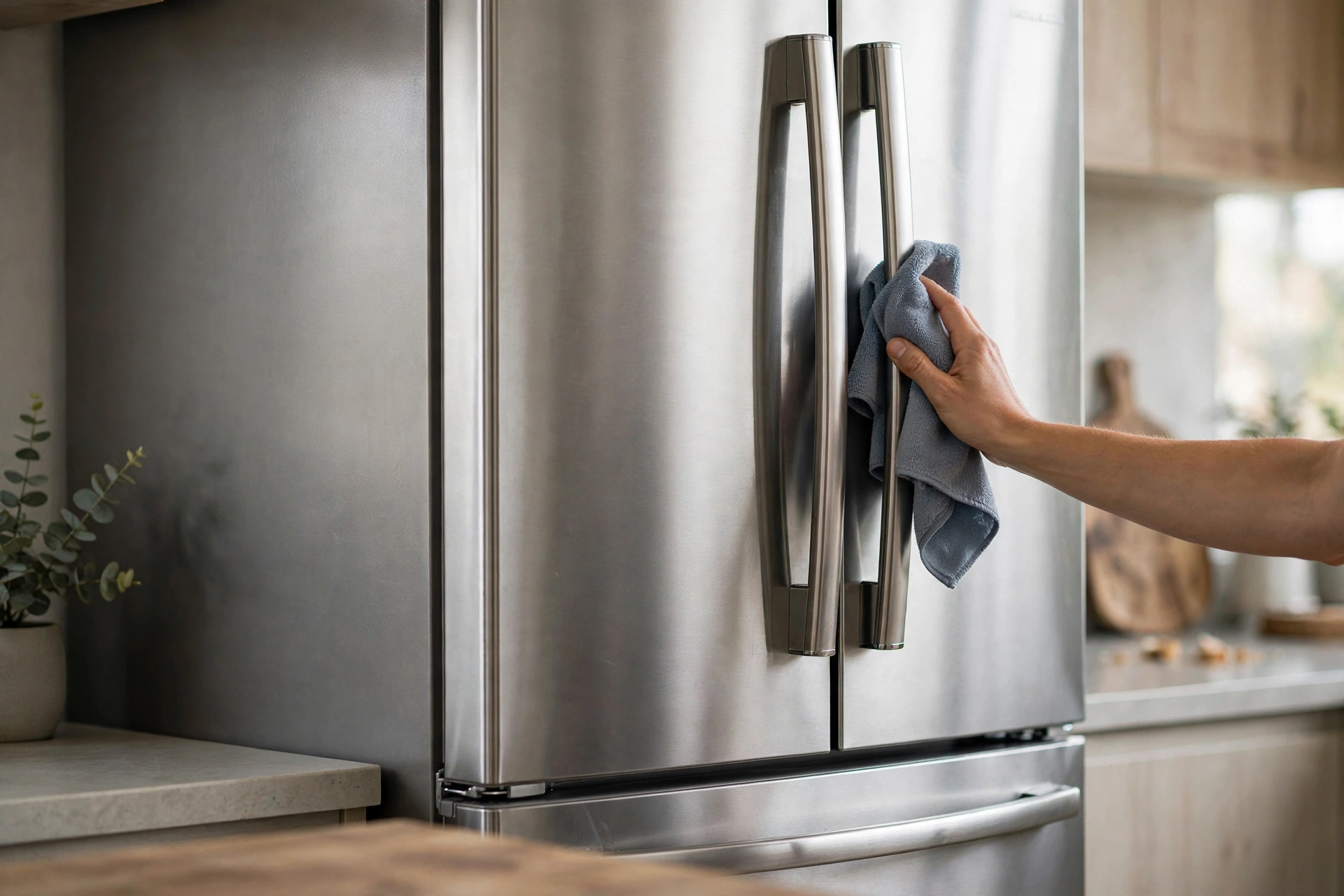
The fridge door is the biggest stainless panel in most kitchens, and the one everyone touches. Work one panel at a time, top to bottom, with the grain: wash with warm soapy water, rinse, and buff dry. Handles and the dispenser area collect the most fingerprints, so give them a second pass.
GE advises keeping magnets off black stainless finishes, where they can mark the coating. On traditional stainless, move magnets occasionally and wipe underneath — grime collects under anything left in one place for months.
10. Dishwasher, Oven, and Range Exteriors
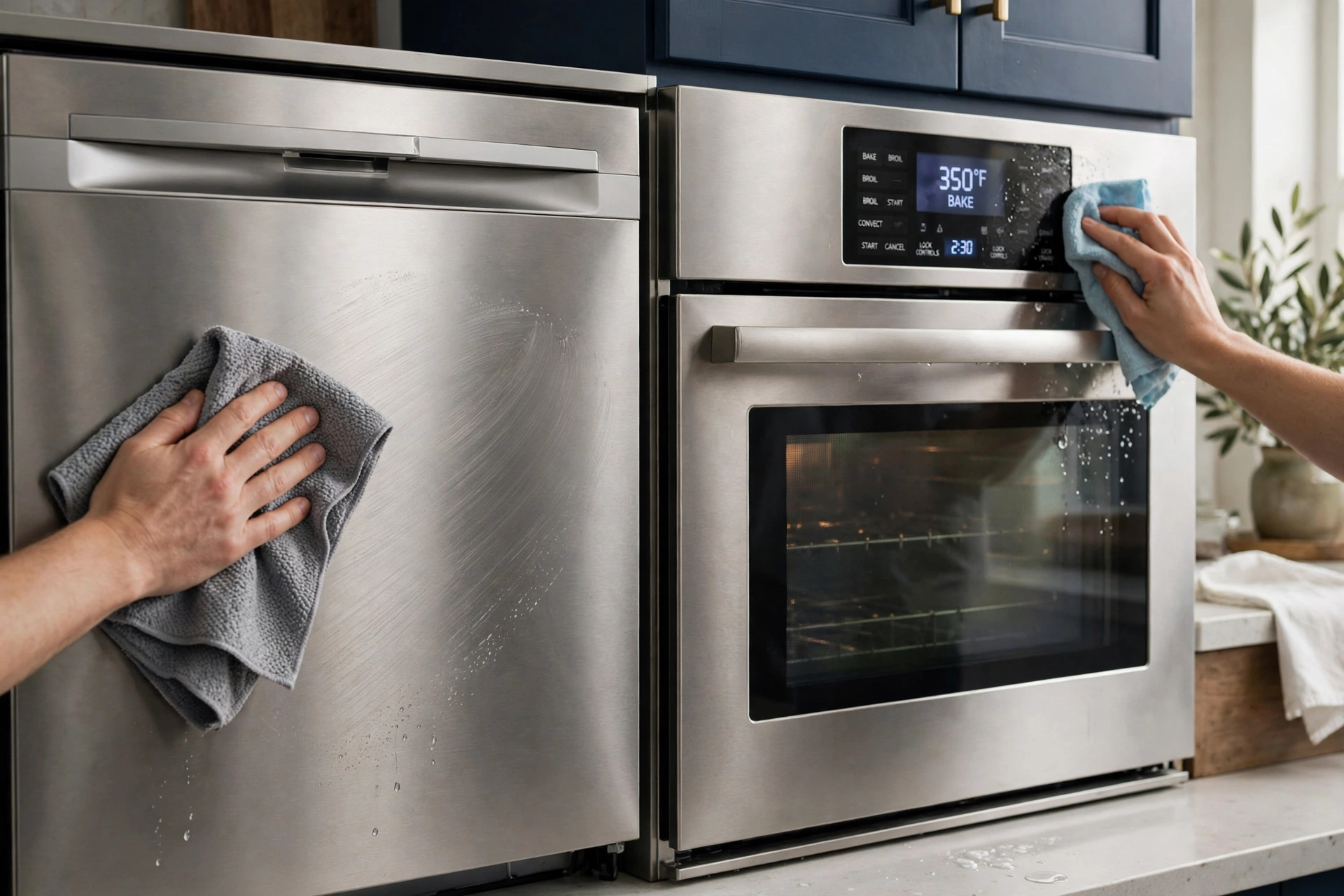
Dishwasher doors, oven doors, and range fronts are smaller panels, but they sit next to heat and steam, which bakes smudges on. Let the oven cool completely before cleaning its door, and never spray cleaner on a hot surface. Wash with warm soapy water, with the grain, then buff dry.
The control panel needs extra care: it is often plastic or glass beside the steel, so wipe it with a barely damp cloth and dry it at once. Never let stainless polish touch plastic trim or rubber door gaskets — if it does, wash it off with mild detergent.
11. What Never to Use on Stainless Steel
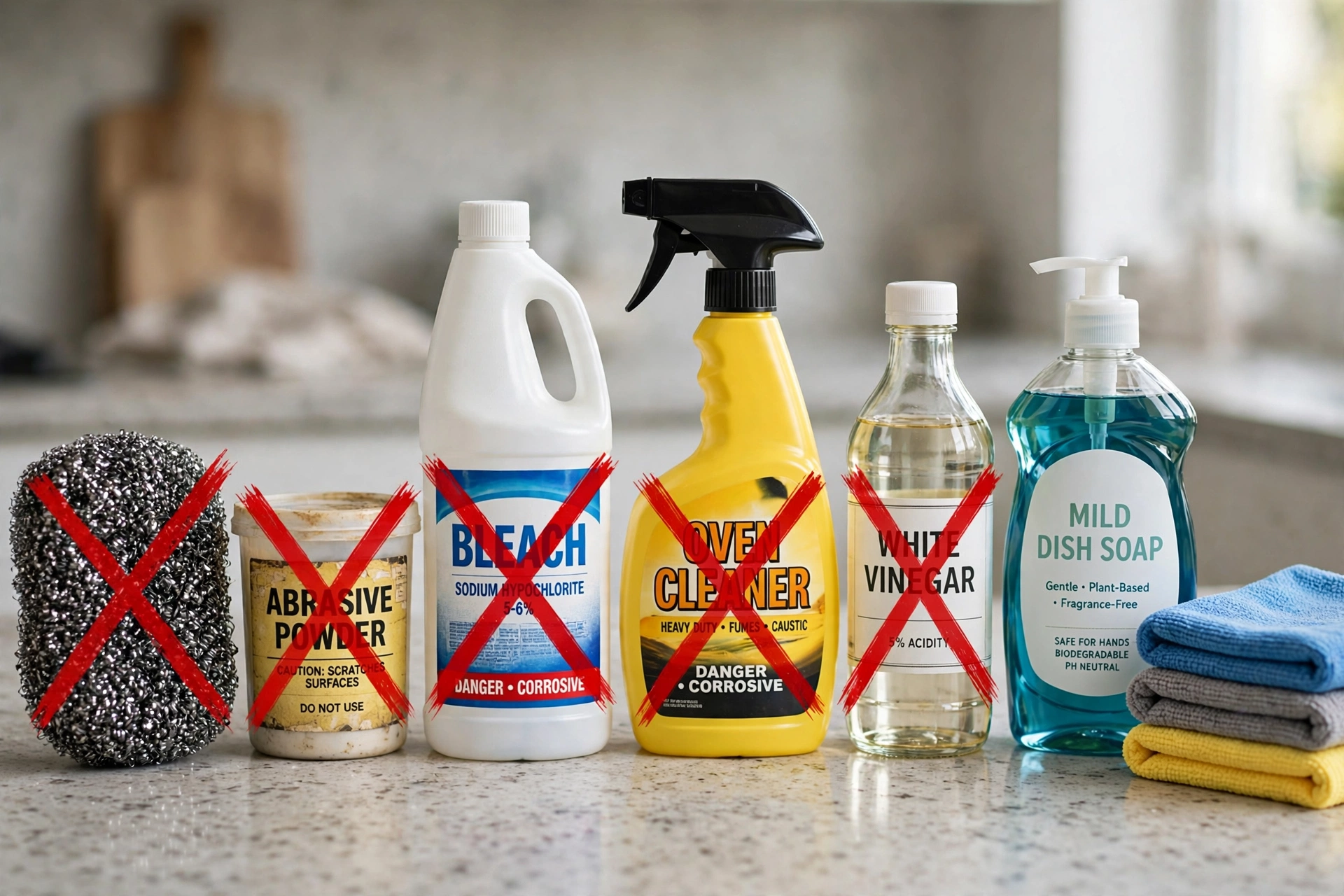
When learning how to clean stainless steel, this is the list that saves a finish. Whirlpool’s care guide is explicit: do not use abrasive cloths, paper towels, newsprint, steel wool pads, abrasive powders, ammonia, citrus-based cleaners, vinegar-based cleaners, or oven cleaners. Damage from these products is not covered by the warranty.
GE’s manuals say it plainer: do not use a steel wool pad — it will scratch the surface. And the damage can happen fast: a Whirlpool range manual warns it may occur even with one-time or limited use. When a viral hack suggests vinegar, lemon, or a scouring pad, skip it — the safe routine in this guide handles the same job without the risk.
12. Rust Spots, Tarnish, and Small Blemishes
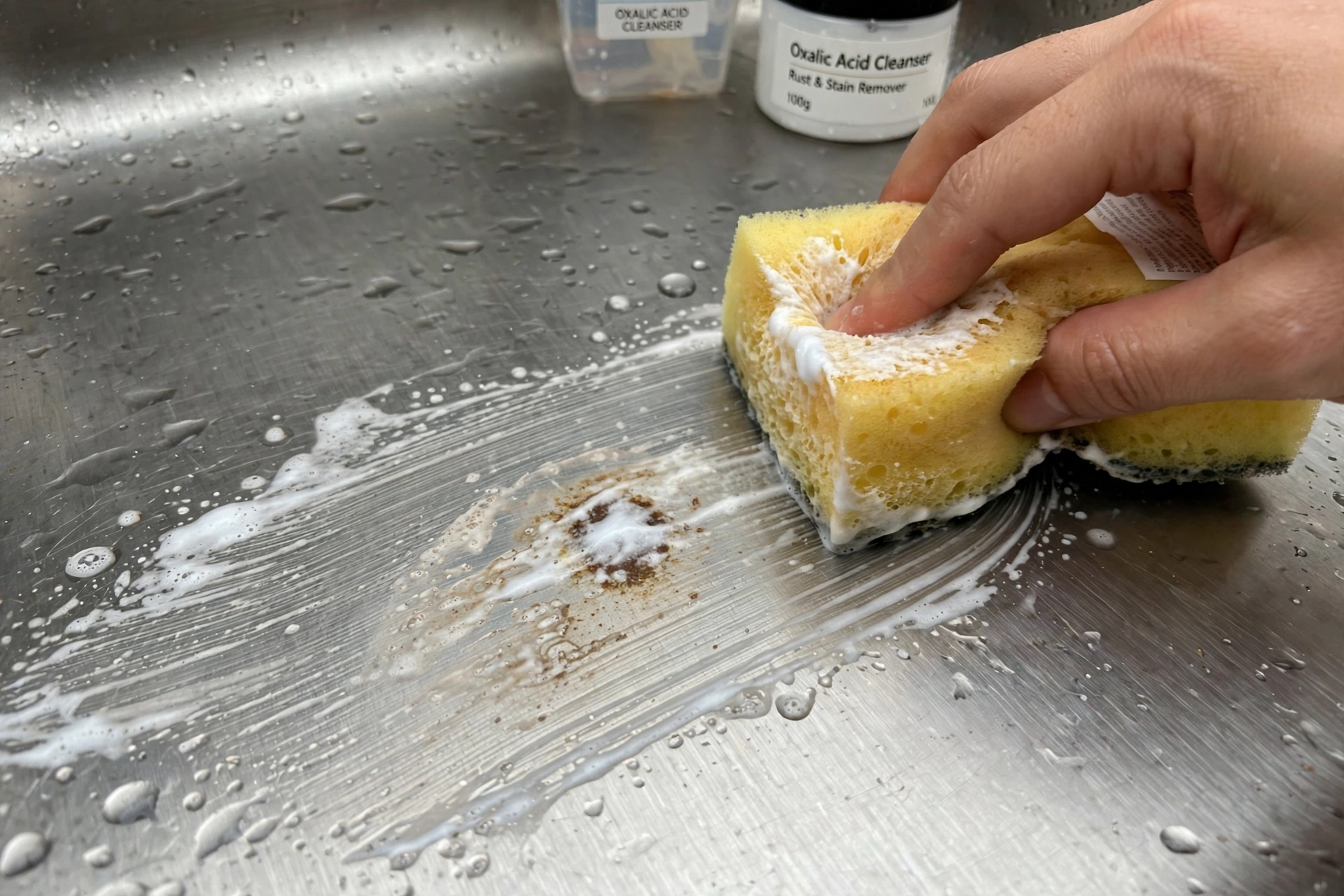
Small rust spots are usually surface deposits, not the steel itself rusting — often from a steel wool fragment or a cast iron pan left on the sink. GE’s manuals recommend an oxalic-acid cleaner, such as Bar Keepers Friend Soft Cleanser, which removes surface rust, tarnish, and small blemishes.
Use only a liquid cleanser free of grit, applied with a damp soft sponge, rubbing with the brush lines. Rinse thoroughly and dry the spot completely. For light tarnish, try a baking soda paste first — the gentler option before the stronger product.
13. Polishing for a Shine — How to Clean Stainless Steel to a Mirror Finish
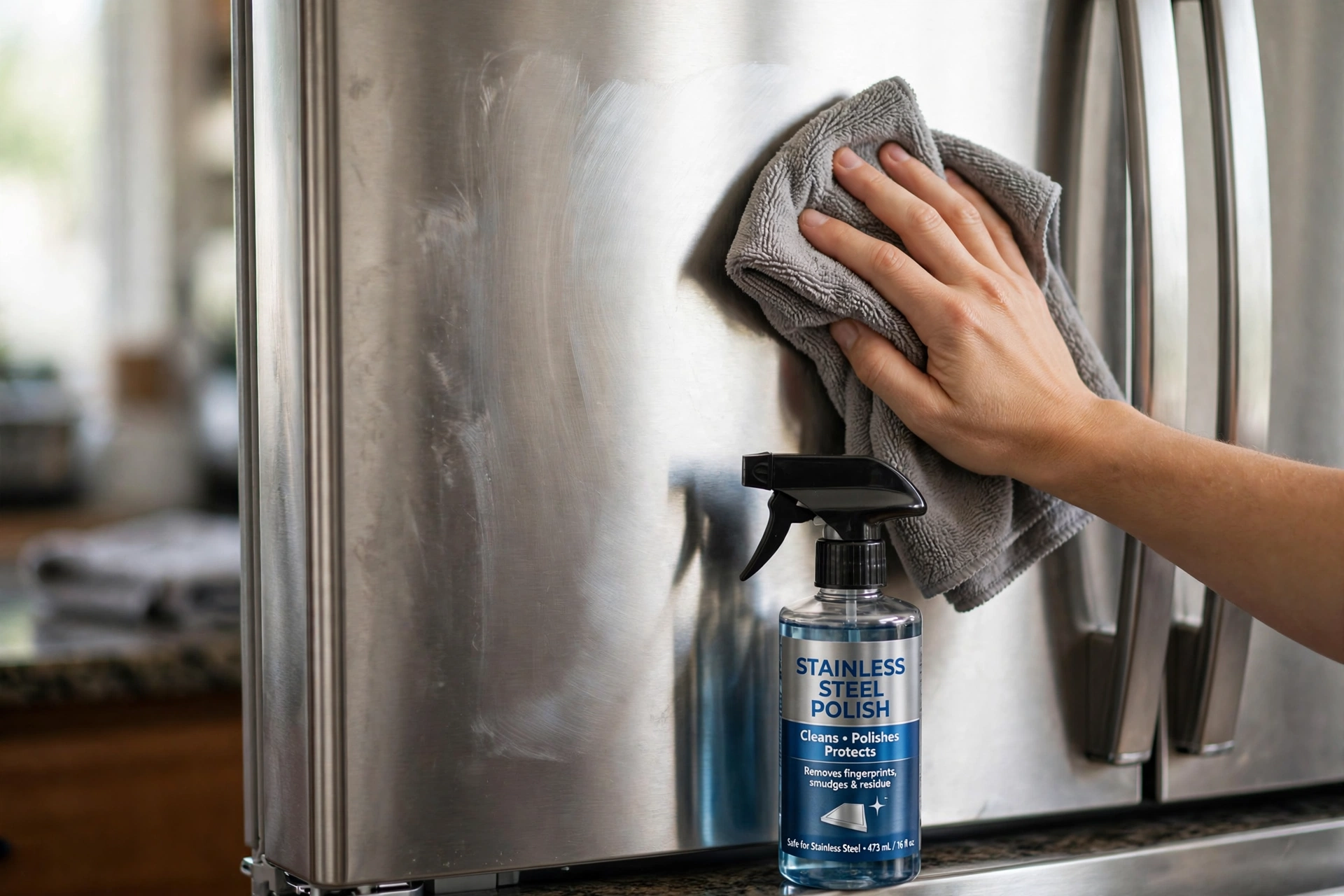
On traditional, uncoated stainless only, a dedicated stainless cleaner or polish is the final step. Apply a small amount to a clean microfiber cloth — never straight onto the panel — and wipe with the grain. Buff with a second dry cloth until the haze is gone.
Polish is a finishing touch, not a cleaner: it removes fingerprints, oil buildup, and water spots, and leaves a thin layer that slows new smudges. Skip it entirely on fingerprint-resistant and black stainless finishes, where soap and water are the whole routine — and keep it off plastic trim and rubber gaskets.
14. Hard Water Areas: Stopping Spots Before They Start
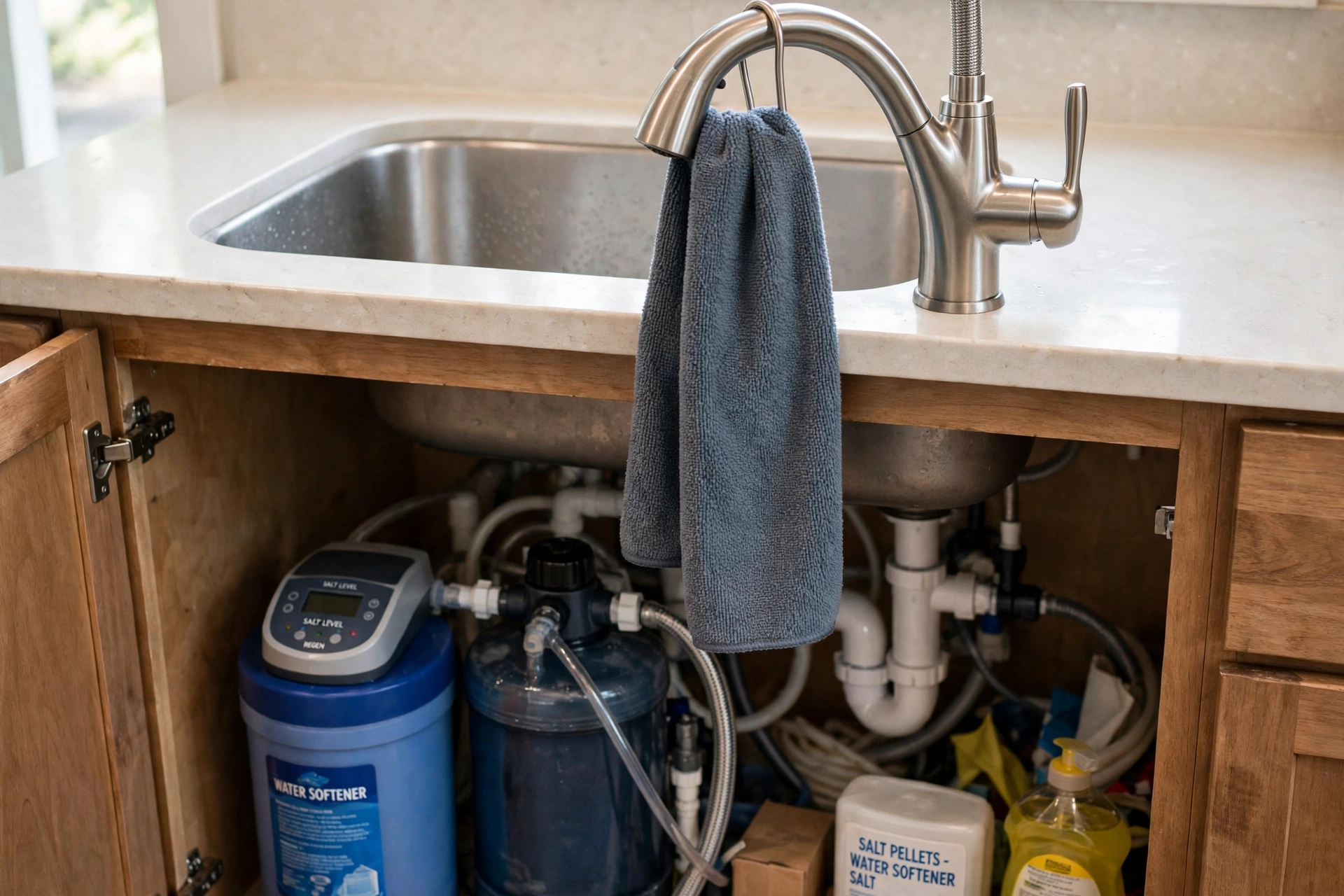
Hard water is the enemy of a streak-free finish, because every drop that dries leaves its minerals behind. In a hard-water home, drying matters more than washing: buff every surface dry the moment you rinse it, and never leave a wet sink or faucet to air-dry.
A water softener is the long-term fix. For a cheaper stopgap, keep a dry microfiber cloth by the sink and wipe the faucet and basin after the last use of the day — thirty seconds that prevents white mineral rings. In our how to get rid of dust in house guide, the same principle applies: stop the problem at the source instead of fighting it later.
15. The Weekly Routine That Keeps It Clean — How to Clean Stainless Steel for Good
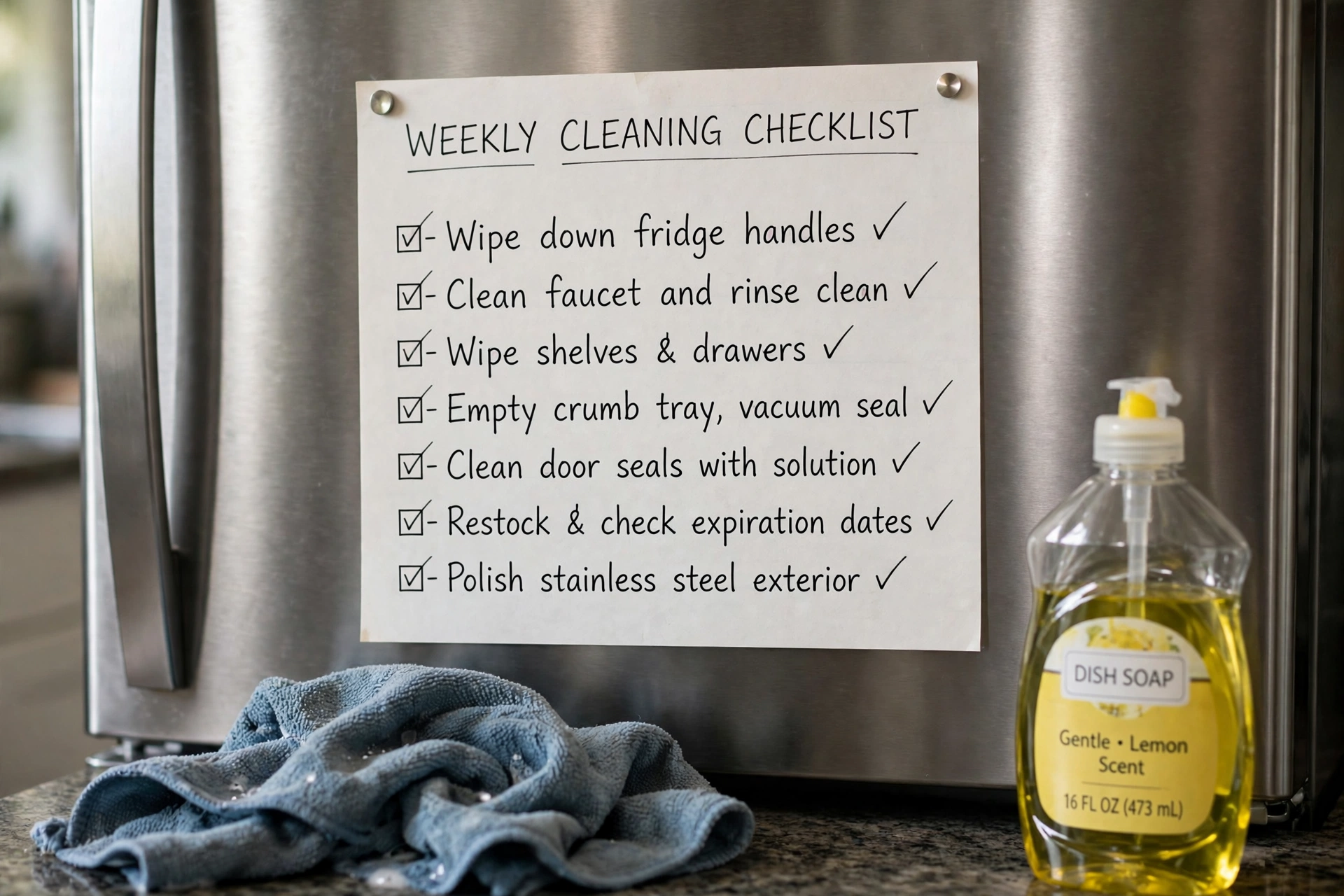
Stainless steel stays clean when the routine is short enough to actually happen. Once a week, give every panel the full wash-rinse-buff pass: warm soapy water, damp rinse, dry buff. Daily, a ten-second wipe of the fridge handles and faucet stops fingerprints.
Pair the routine with something you already do — wipe the fridge while dinner cooks, or buff the sink after the dishes. Our 10-minute daily cleaning habits guide builds the same idea into a whole-house routine, and our easy home cleaning hacks guide has more shortcuts. That is how to clean stainless steel for good: a small weekly habit instead of a big rescue clean every few months.
Frequently Asked Questions
Can I use vinegar on stainless steel?
No — not on appliance finishes. Whirlpool lists vinegar-based cleaners among the products that damage stainless steel, and says the damage is not covered by warranty. Vinegar is acidic: it etches the finish and leaves dull patches. Use warm soapy water instead, and baking soda paste for stains.
How do I remove fingerprints from stainless steel?
Wash the spot with warm soapy water and a microfiber cloth, always wiping with the grain, then rinse and buff dry right away. Fingerprints are skin oil, and dish soap cuts oil. For a stubborn print, leave the damp soapy cloth on the spot for two minutes before wiping.
Is baking soda safe on stainless steel?
Yes. Baking soda is mild and non-abrasive, and Whirlpool’s care guide lists a baking soda and water paste for removing discoloration and stains. Mix three parts soda to one part water, rub gently with the grain using a soft sponge, then rinse well and dry. Do not mix it with vinegar — the acid is the problem, not the baking soda.
What removes scratches from stainless steel?
Light scratches and small blemishes can fade with a liquid cleanser containing oxalic acid, such as Bar Keepers Friend Soft Cleanser, rubbed with the grain on a damp soft sponge — GE’s recommended method. Deep scratches that catch a fingernail cannot be removed at home; they need a professional refinish, so prevention matters more than repair.
Why does my stainless steel look streaky after cleaning?
Three usual causes: wiping against the grain, a dirty cloth, or water left to dry on the surface. Rewash with warm soapy water, rinse, and buff completely dry with a fresh microfiber cloth — always with the grain. If the streaks keep coming back, check your water: hard-water minerals leave spots only a dry buff stops.
Related Reading
- Easy Home Cleaning Hacks
- 10-Minute Daily Cleaning Habits
- How to Get Rid of Dust in Your House
- How to Clean a Vacuum Cleaner Filter
- Can You Vacuum Artificial Grass?
- How to Declutter Your Home Room by Room
Conclusion
How to clean stainless steel comes down to three habits: wipe with the grain, use warm soapy water and a microfiber cloth, and buff the surface dry every time. Skip the steel wool, the vinegar, and the oven cleaner, and the finish stays streak-free for years. Start with the fridge door.