
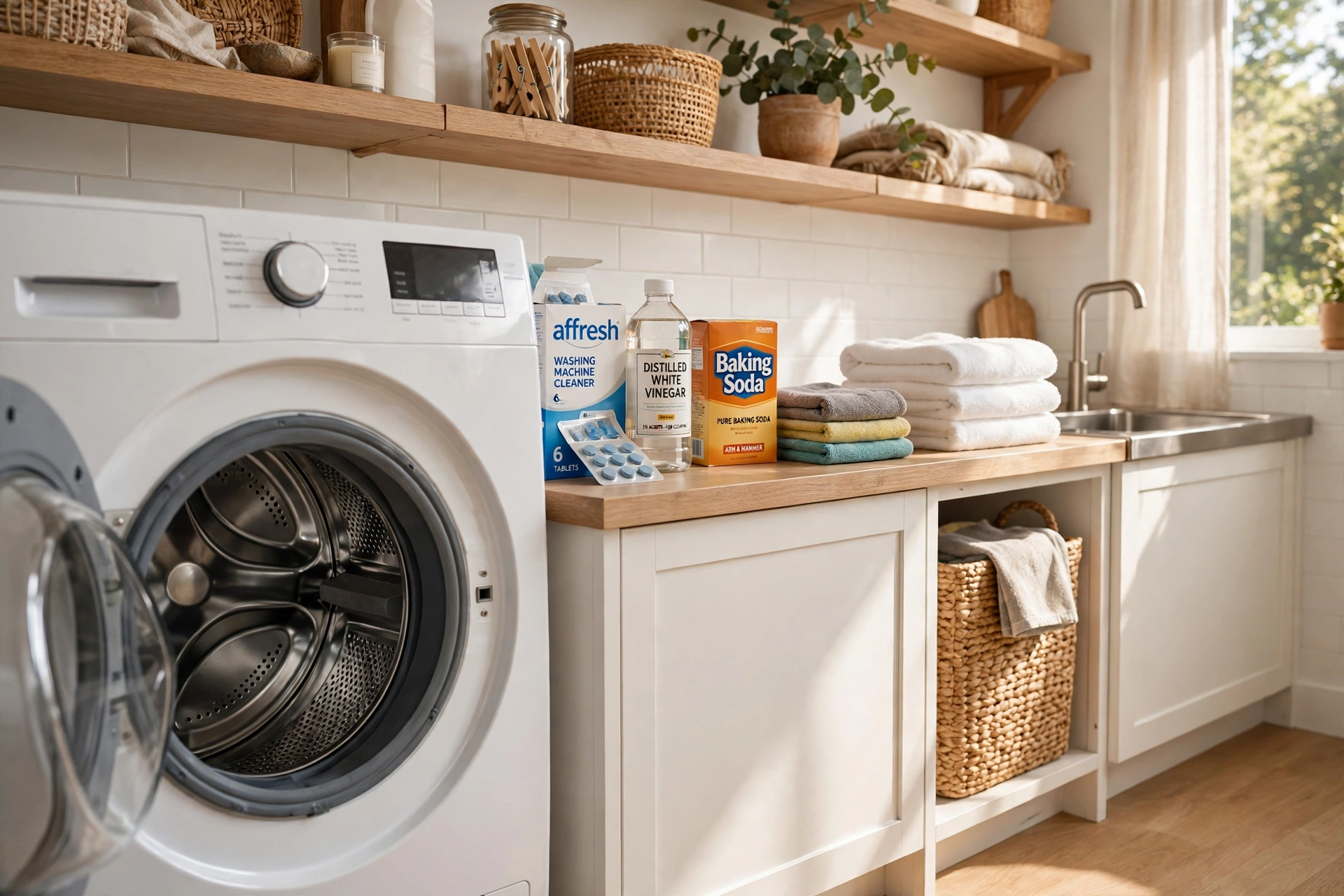
How to Clean a Washing Machine (Top Loader & Front Loader)
Learning how to clean a washing machine is one of those jobs nobody teaches you — until your “clean” laundry smells worse than it went in. Detergent residue, softener, lint, and standing water build up where you never see — and that buildup is what smells.
The fix is a cleaning cycle, a cloth, and 20 minutes once a month. Whirlpool recommends cleaning your washer every 30 days or every 30 wash cycles, whichever comes first. Our easy home cleaning hacks guide covers the rest of the laundry room.
1. Why Your Washer Smells — What Is Actually Growing in There
The smell is not the machine. It is a biofilm — a thin, slimy layer of bacteria and mold that grows wherever water, warmth, and detergent residue sit undisturbed. A 2024 review in the journal Antibiotics found biofilms in the drum, gasket, and detergent drawer, surviving normal cycles because the water never gets hot enough.
Front loaders smell more because the airtight seal traps moisture; top loaders still grow residue under the rim and around the agitator.
2. What You Need Before You Start — How to Clean a Washing Machine the Right Way
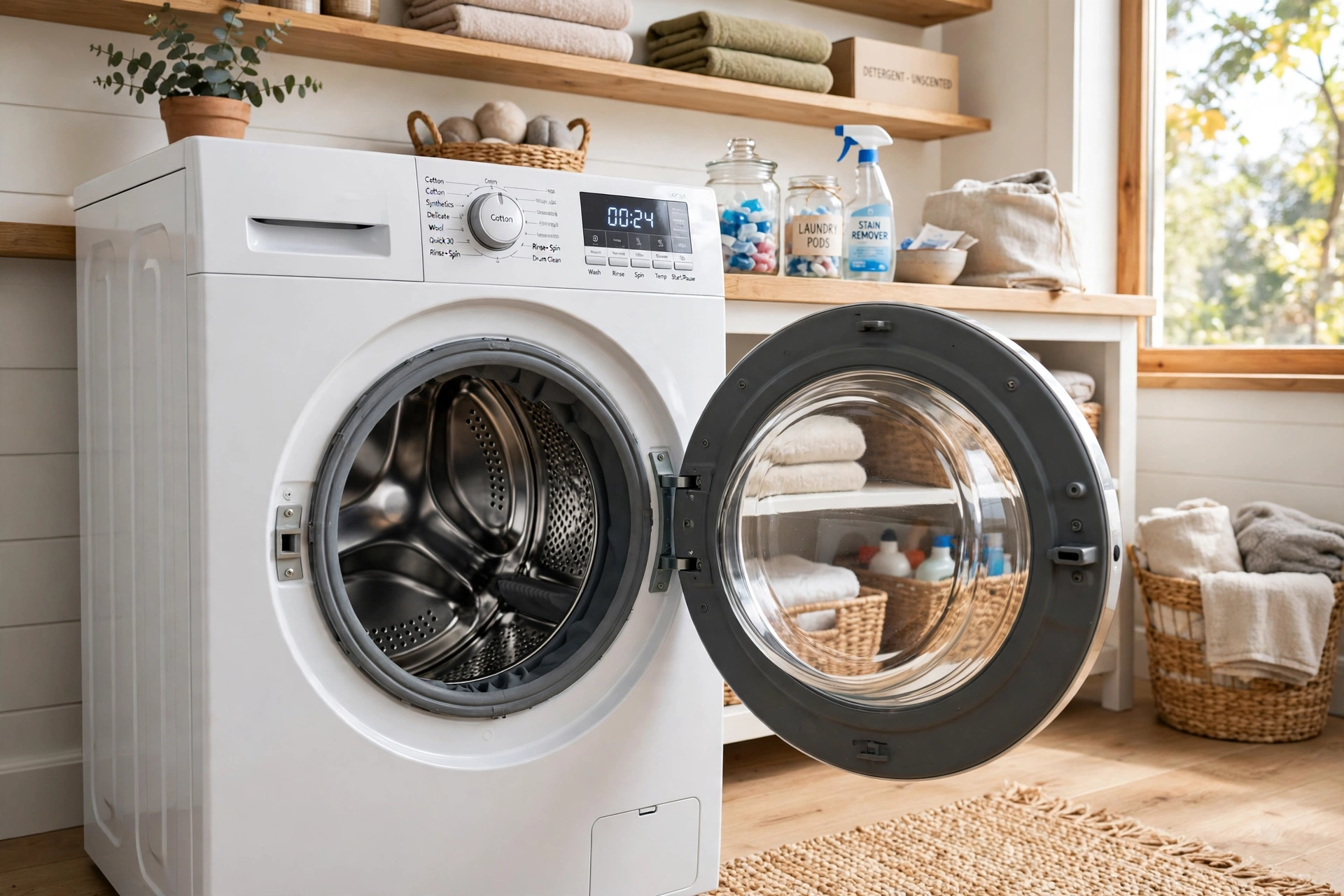
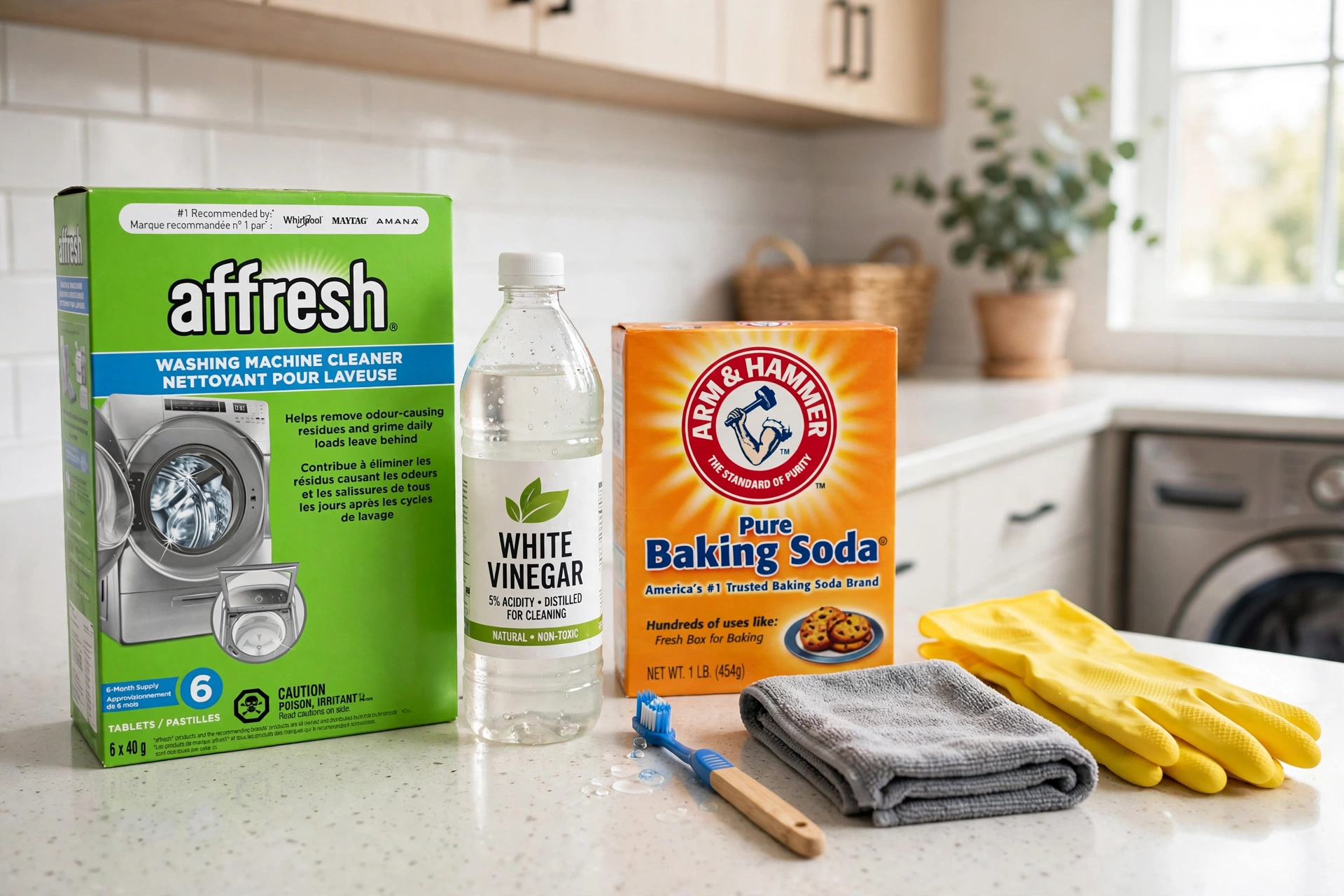
You need one cleaner tablet (affresh is the standard), white vinegar, baking soda, a microfiber cloth, an old toothbrush, rubber gloves, and a shallow pan for the drain filter. Check your owner’s manual first for the cleaning cycle.
Empty the washer completely, then pick your cleaner: affresh tablets are oxygen bleach (sodium percarbonate) in a measured dose — the safest default. Liquid chlorine bleach also works for mold — but never mix bleach with vinegar or any acidic cleaner: the combination produces toxic chlorine gas. Our how to get rid of dust in your house guide uses the same rule.
3. Front Loader: The Deep Clean, Step by Step — How to Clean a Washing Machine (Front Loader)
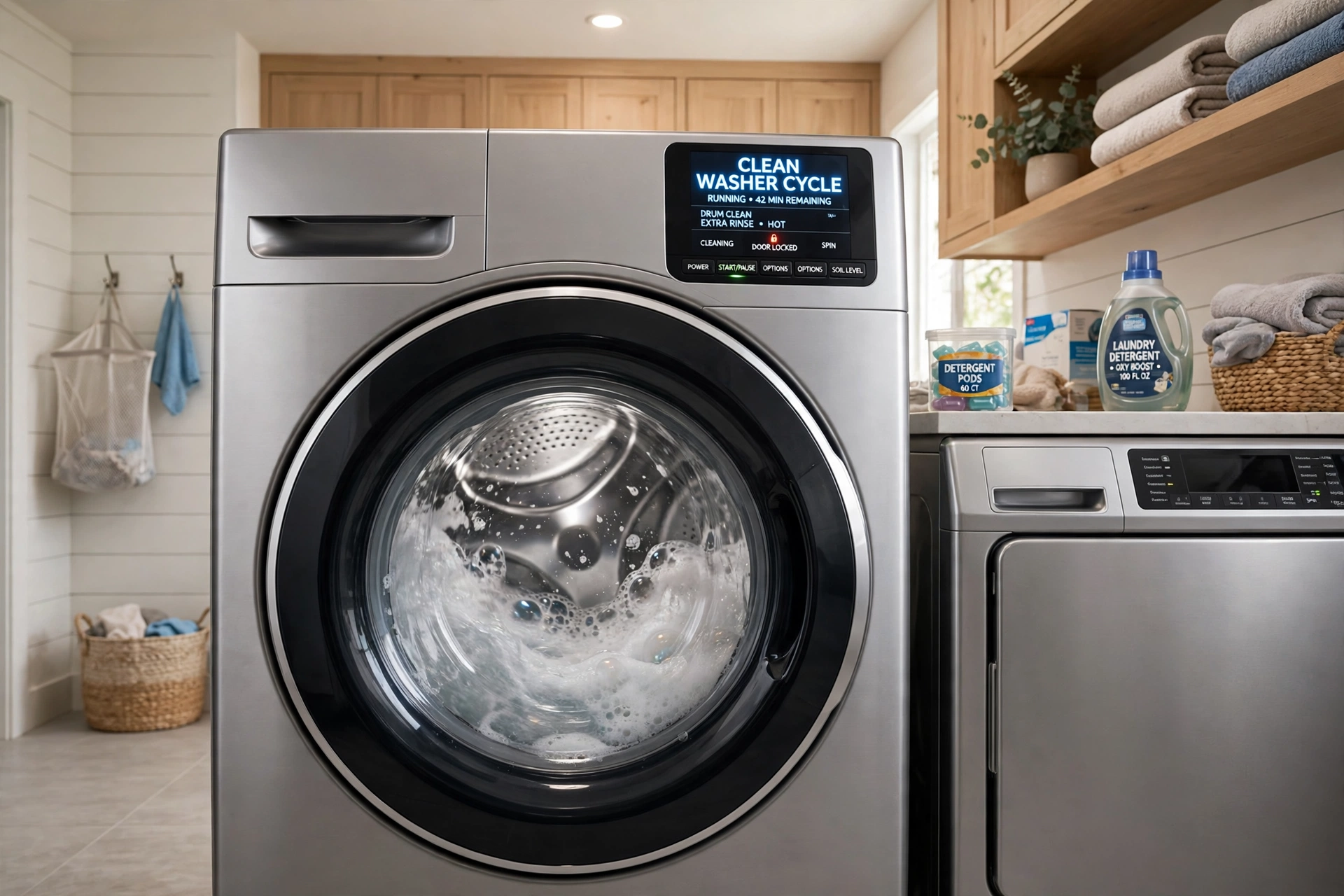
Drop one affresh tablet into the bottom of the empty drum — never into the dispenser drawer. Close the door and select the Clean Washer, Tub Clean, or Drum Clean cycle; if your machine has none, choose the hottest, longest Normal or Heavy cycle.
Let it run, then run one extra rinse-and-spin cycle to clear residue. While it runs, clean the gasket, drawer, and filter by hand (sections below). Then leave the door open for several hours to dry.
4. Top Loader: The Deep Clean, Step by Step
Top loaders are simpler: the drum is open and easy to reach. Drop one affresh tablet into the empty tub, close the lid, and select the Clean Washer cycle if your machine has one. Without it, fill the tub on the hottest setting, agitate for a minute, then pause and soak for an hour.
After the soak, restart the cycle, then run a rinse-and-spin. While the tub soaks, wipe the rim, lid, and agitator (sections 8 and 11). Leave the lid open when you finish.
5. The Rubber Gasket: Where Front-Load Smell Lives
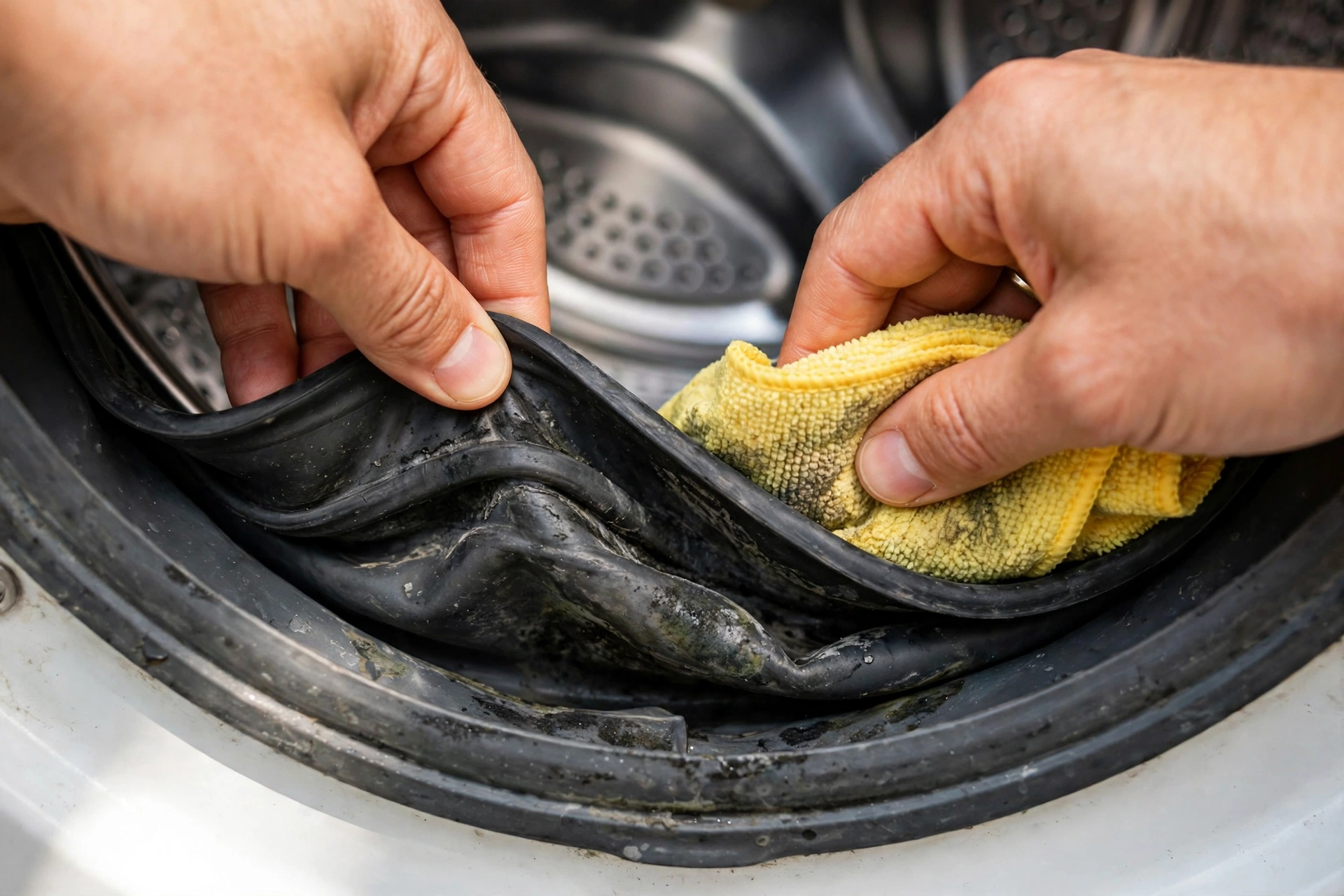
The rubber door seal — the gasket — is the number one source of front-load smell. Water, soap, and lint collect in its folds, and mold grows there because the seal never fully dries between loads. Pull the folds back and look inside first: most grime hides in the bottom fold.
Wipe the seal with a damp microfiber cloth and mild soap. For visible mold, use a diluted bleach solution — about 1 cup of bleach per quart of warm water — and a toothbrush for the folds and drain holes. Wear gloves; never use vinegar in the same session as bleach. Dry the seal, and wipe it dry after every wash.
6. The Detergent Drawer and Dispensers
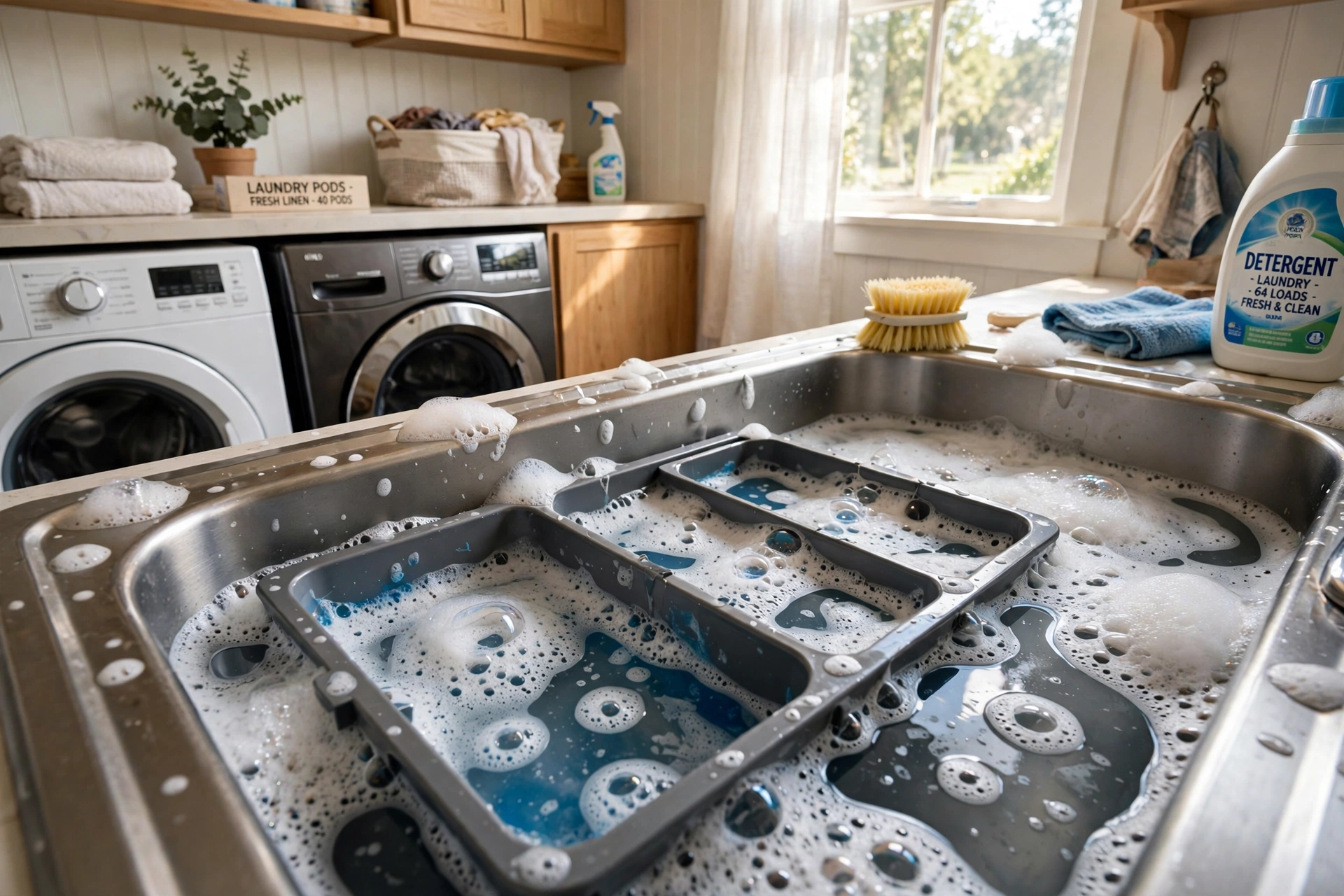
The detergent drawer is the second most ignored part of the washer, and it grows black mold like the gasket. Pull it out — most release with a small tab or button — and soak it in hot, soapy water for 15 minutes. Scrub the compartments with the toothbrush, especially the fabric softener channel, where residue hardens.
While it soaks, wipe the empty drawer cavity: mold hides on the walls and roof. Dry both before sliding it back in. Whirlpool recommends cleaning dispensers every 30 days.
7. The Drain Pump Filter — the Most Forgotten Part
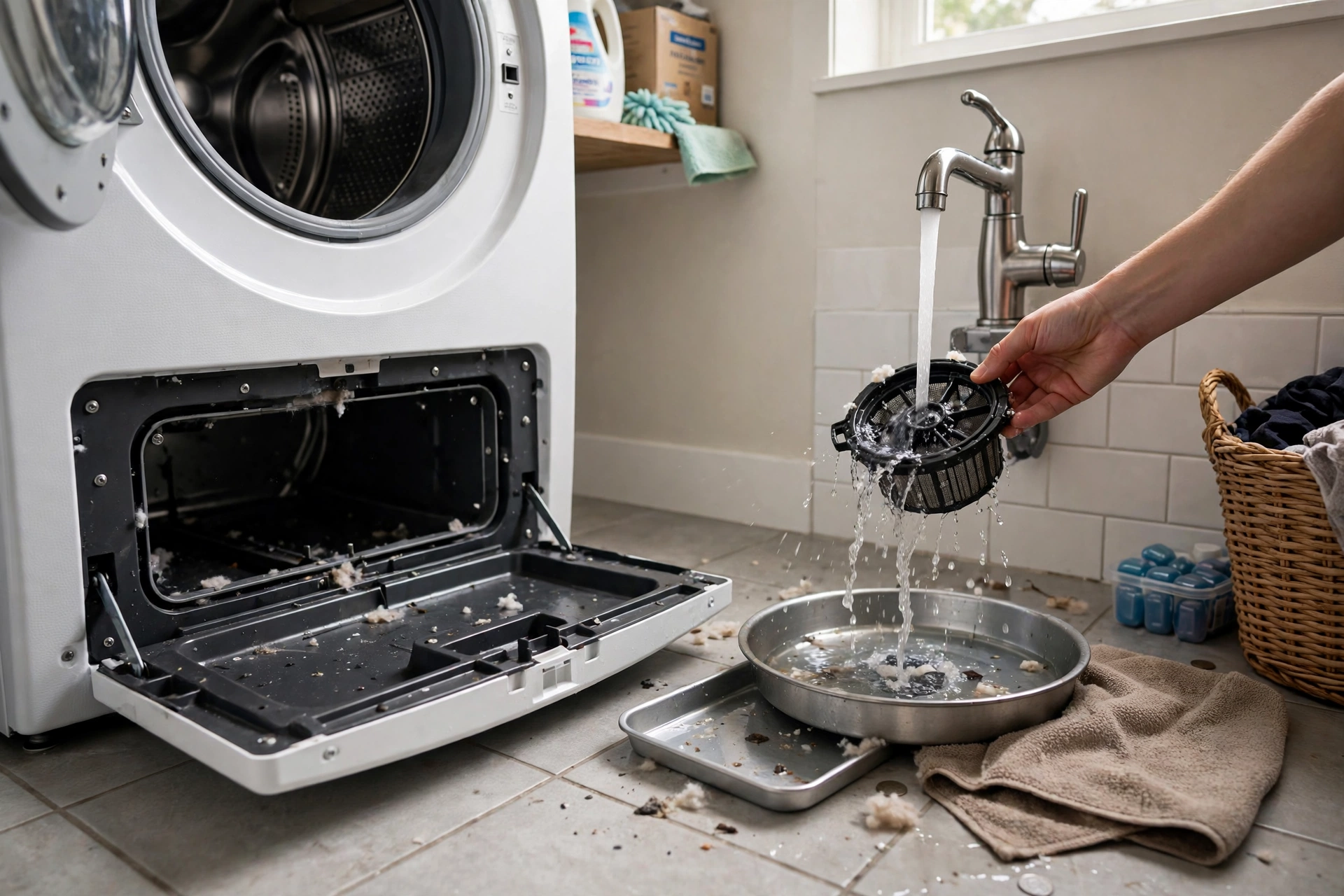
The drain pump filter catches coins, lint, hair, and everything else that slips out of pockets — and when it clogs, the washer drains slowly and smells stagnant. It sits behind a small access panel at the bottom front of most front loaders, or a lower panel on many top loaders.
Put a shallow pan and towel under the panel first — trapped water will spill. Unscrew the filter slowly, pull it out, and rinse it under running water, picking out lint and debris. Wipe the housing, screw it back in firmly, and close the panel. Do this every two to three months.
8. The Agitator and the Top Rim (Top Loaders)
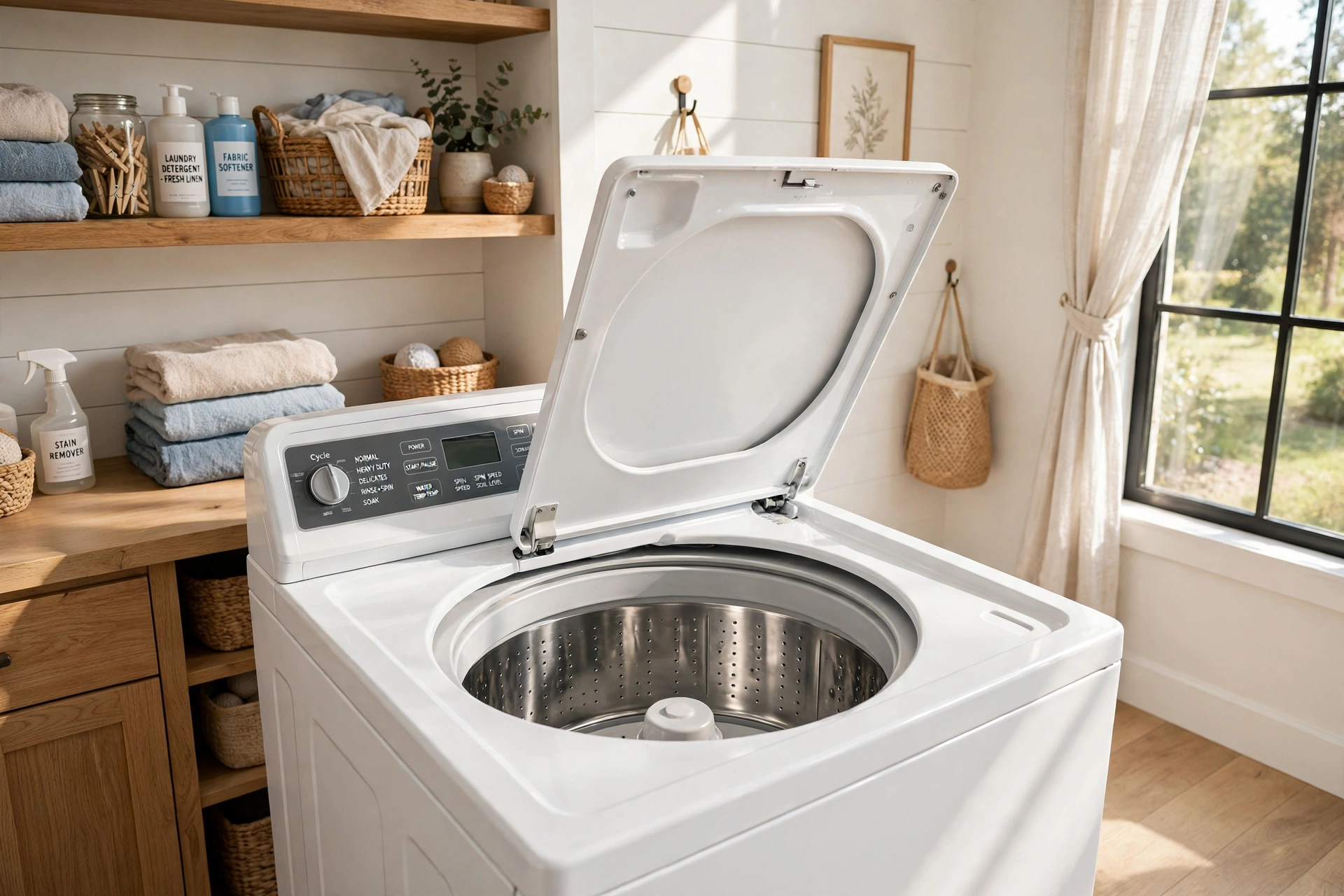
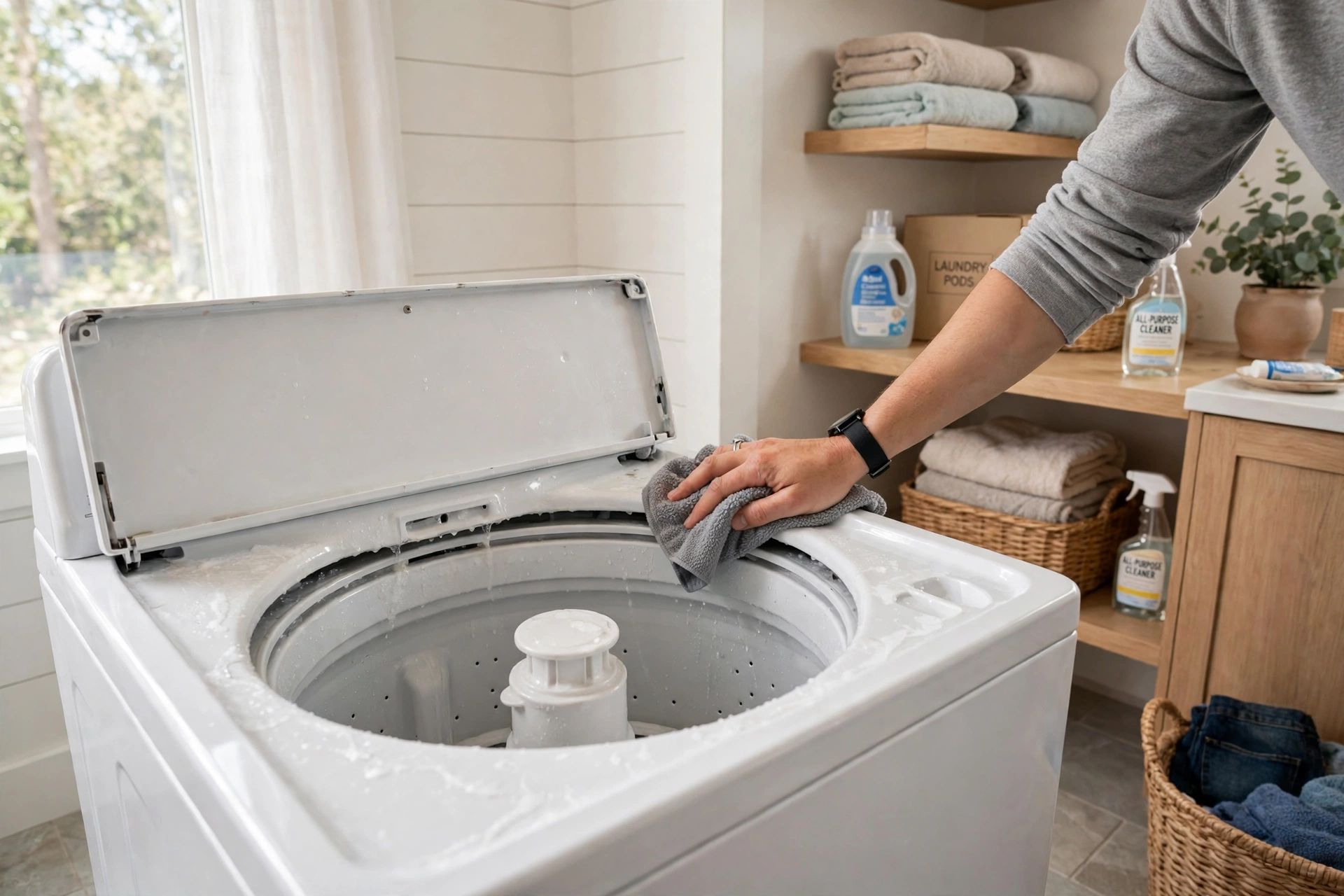
Top loaders have their own hiding places: the agitator and the rim under the lid. Grime collects where the agitator meets the tub floor, and a ring of detergent scum builds under the top rim, where the waterline sits each wash.
Wipe the agitator top to bottom with a damp cloth and mild soap, around the fins and base. If the agitator cap comes off, wash it in the sink; if not, wipe it in place. Run the cloth around the top rim, under the lip, and along the lid hinge, where lint collects. A top loader that still smells after a cleaning cycle has a dirty rim or agitator.
9. Vinegar vs. Bleach vs. Affresh Tablets — What Actually Works
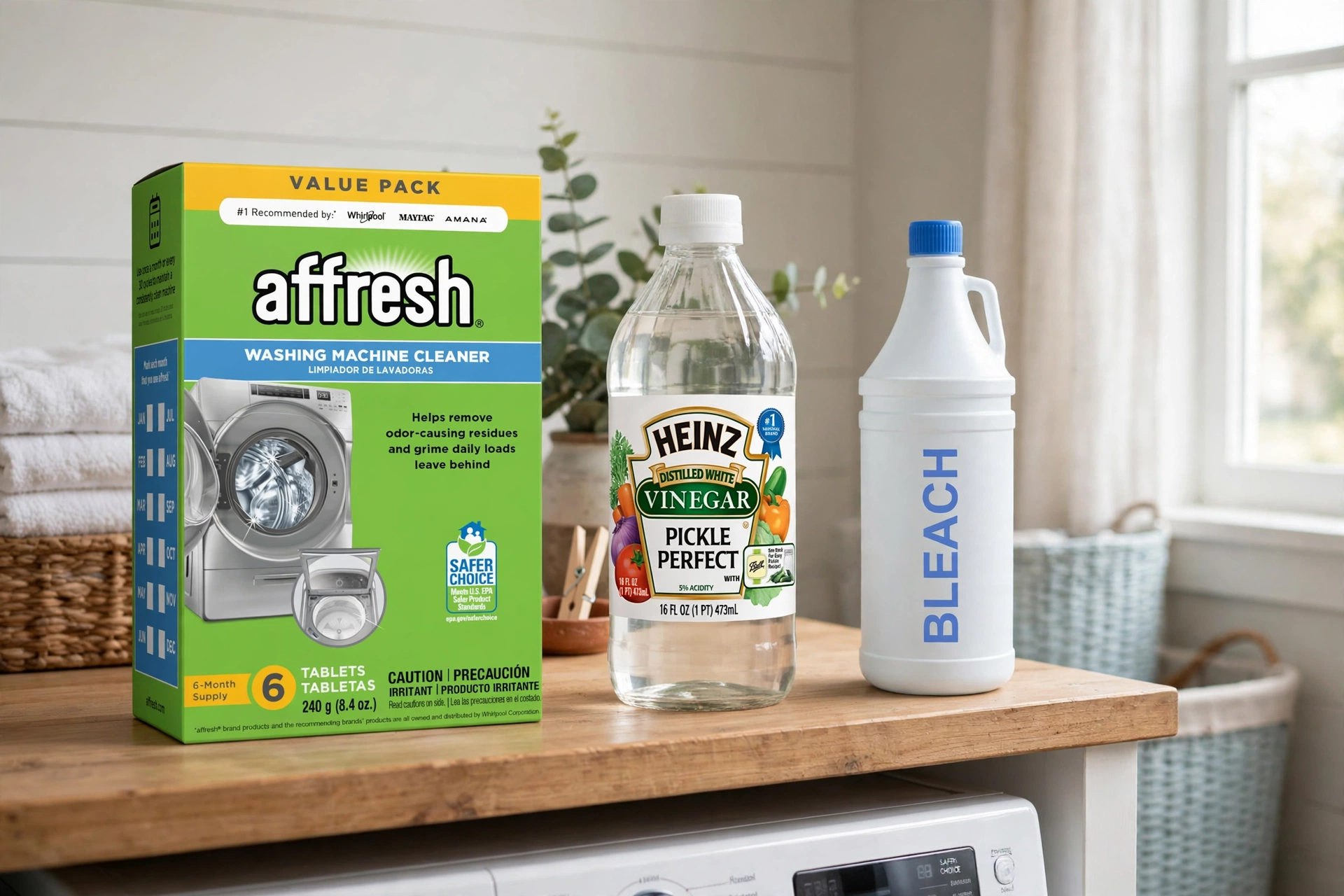
Every cleaner has a job, and none does all three. Affresh tablets are the best monthly choice: measured, safe, and slow-dissolving, so the cleaner reaches behind the drum. One tablet a month, or every 30 washes, is the maintenance dose.
White vinegar dissolves limescale and cuts residue, but repeated use can wear down rubber seals and hoses — use it as an occasional descaler, not a monthly habit. Liquid chlorine bleach kills mold and bacteria fast — the right choice for a black gasket: about 1 cup in the cleaning cycle, no detergent, never mixed with vinegar. Our how to clean stainless steel guide follows the same logic: match the cleaner to the job.
10. Hard Water and Limescale — How to Clean a Washing Machine in Hard-Water Homes
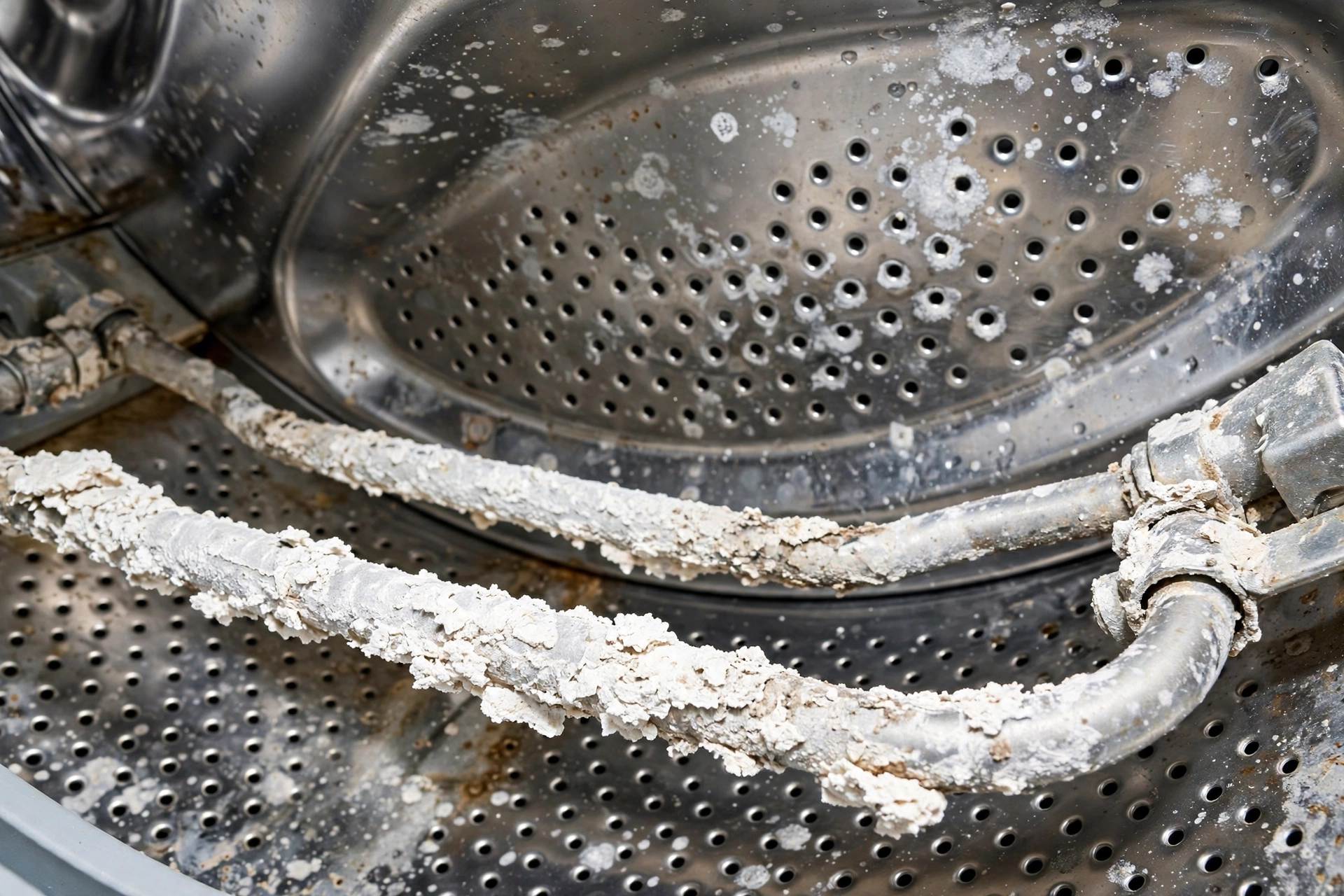
Hard water leaves limescale on the heating element, drum, and dispensers, and scale traps detergent residue that feeds smell. Run the monthly cleaning cycle with a washing machine cleaner or descaler, on the hottest setting — heat is what dissolves scale.
Vinegar earns its place here: run an empty hot cycle with 2 cups of white vinegar once every few months to dissolve scale, then a second empty cycle with plain water to rinse it out. Use less detergent than the box suggests — hard water makes people overdose, and the extra soap leaves residue scale sticks to.
11. The Drum Baffles, the Door, and the Outside
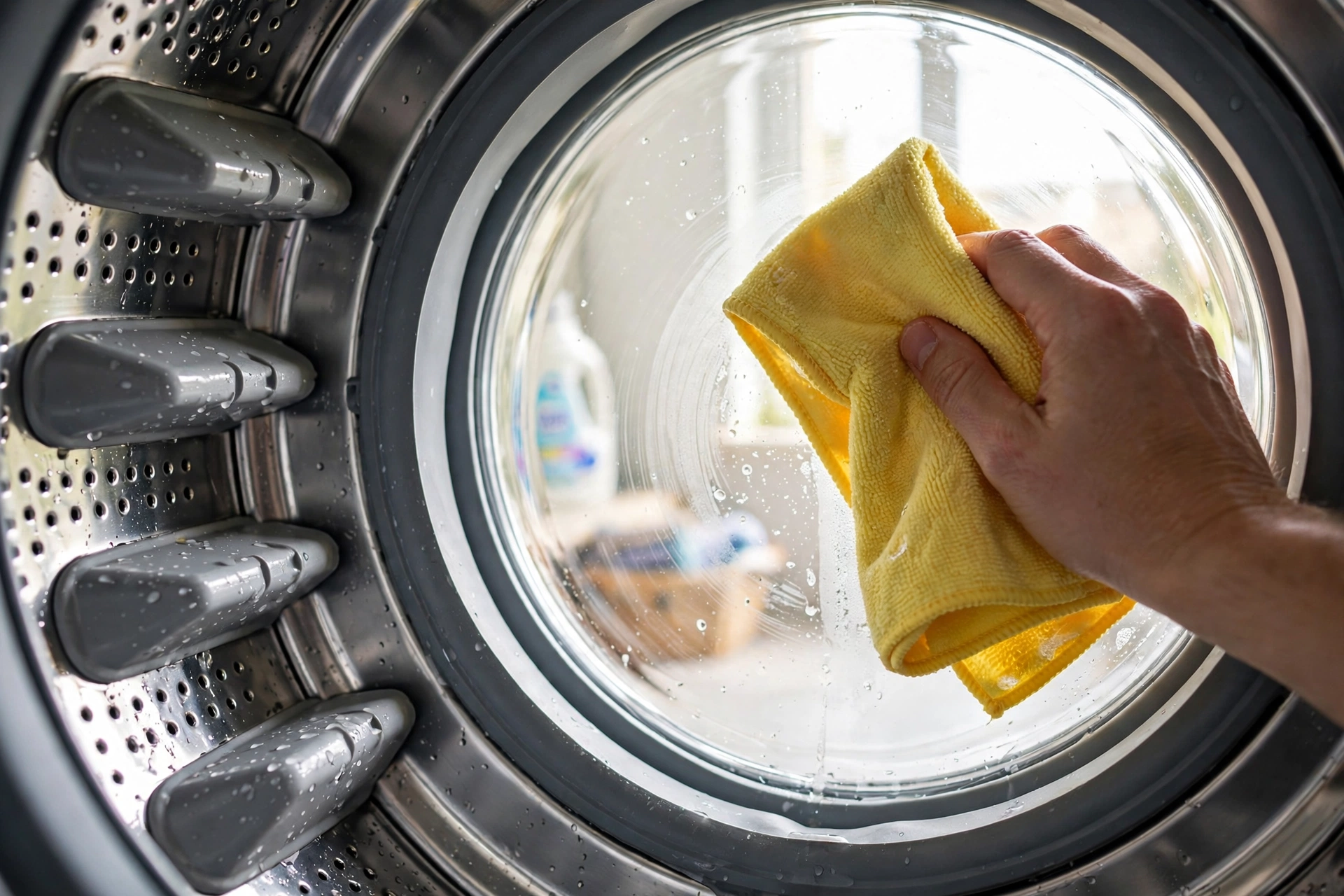
In a front loader, the drum baffles — the raised fins inside the drum — trap lint and residue on their back edges. Wipe them with a damp cloth after the cleaning cycle, and wipe the door glass, where detergent film clouds the view.
Wipe the outside too: the control panel, door handle, and top surface, where detergent drips dry into a sticky film. Use a damp microfiber cloth and mild soap — never spray cleaner on the control panel, where liquid can seep behind the buttons. Finish by wiping the floor around the washer and checking the hoses for drips.
12. The Monthly Routine That Keeps It Clean — How to Clean a Washing Machine Every Month
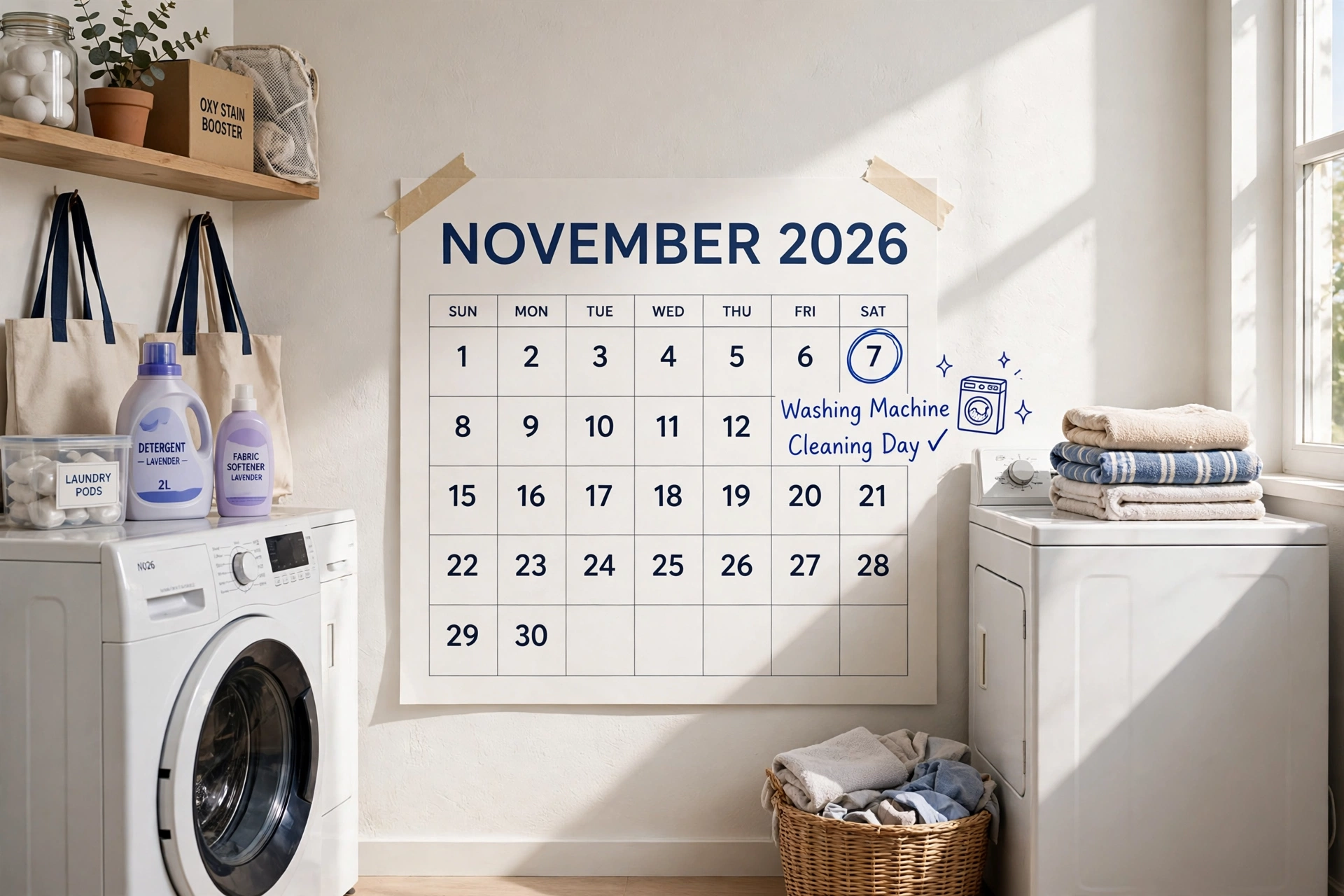
On the first Saturday of the month — or every 30 washes, whichever comes first — drop one affresh tablet in the empty drum and run the Clean Washer or Tub Clean cycle. While it runs, wipe the gasket or rim, rinse the drawer, and wipe the door or lid.
That is the whole routine: one tablet, one cycle, three wipes, once a month — about 20 minutes. Our 10-minute daily cleaning habits guide uses the same idea. A Clean Washer light or “tCL” message means it is due.
13. Daily Habits That Stop Smell Before It Starts
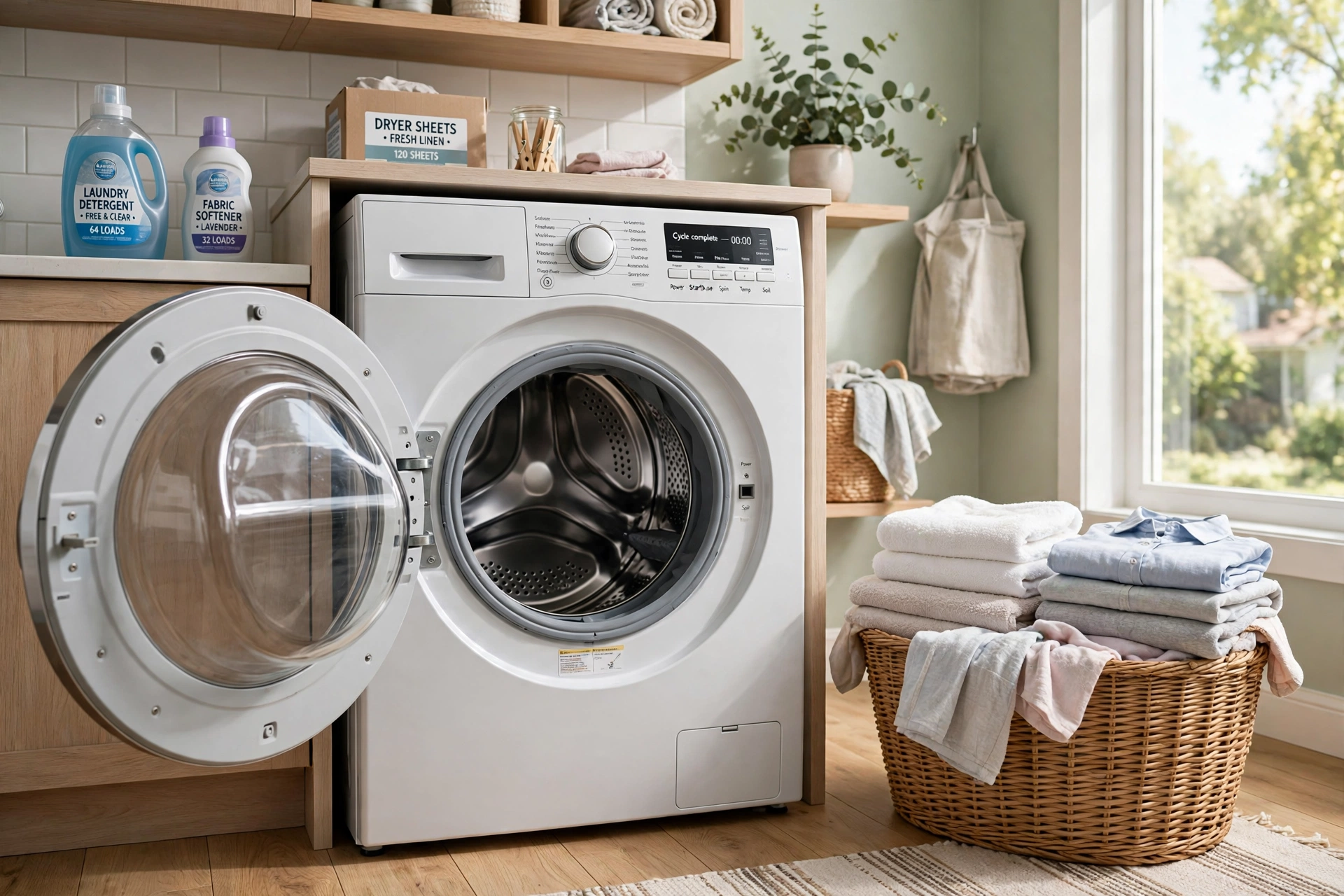
The monthly clean works best when daily habits back it up. Leave the door or lid open after every wash so the drum and gasket dry — this prevents more mold than any cleaner. Take laundry out as soon as the cycle ends: wet clothes left in a closed drum re-soak and start the smell again.
Use the right amount of HE detergent, and only HE detergent in an HE machine — too much soap causes residue. Skip fabric softener most of the time; it coats the drum and gasket. Wash a hot load now and then: hot water melts away residue cold washes leave behind.
14. When the Smell Won’t Go Away — Deeper Problems
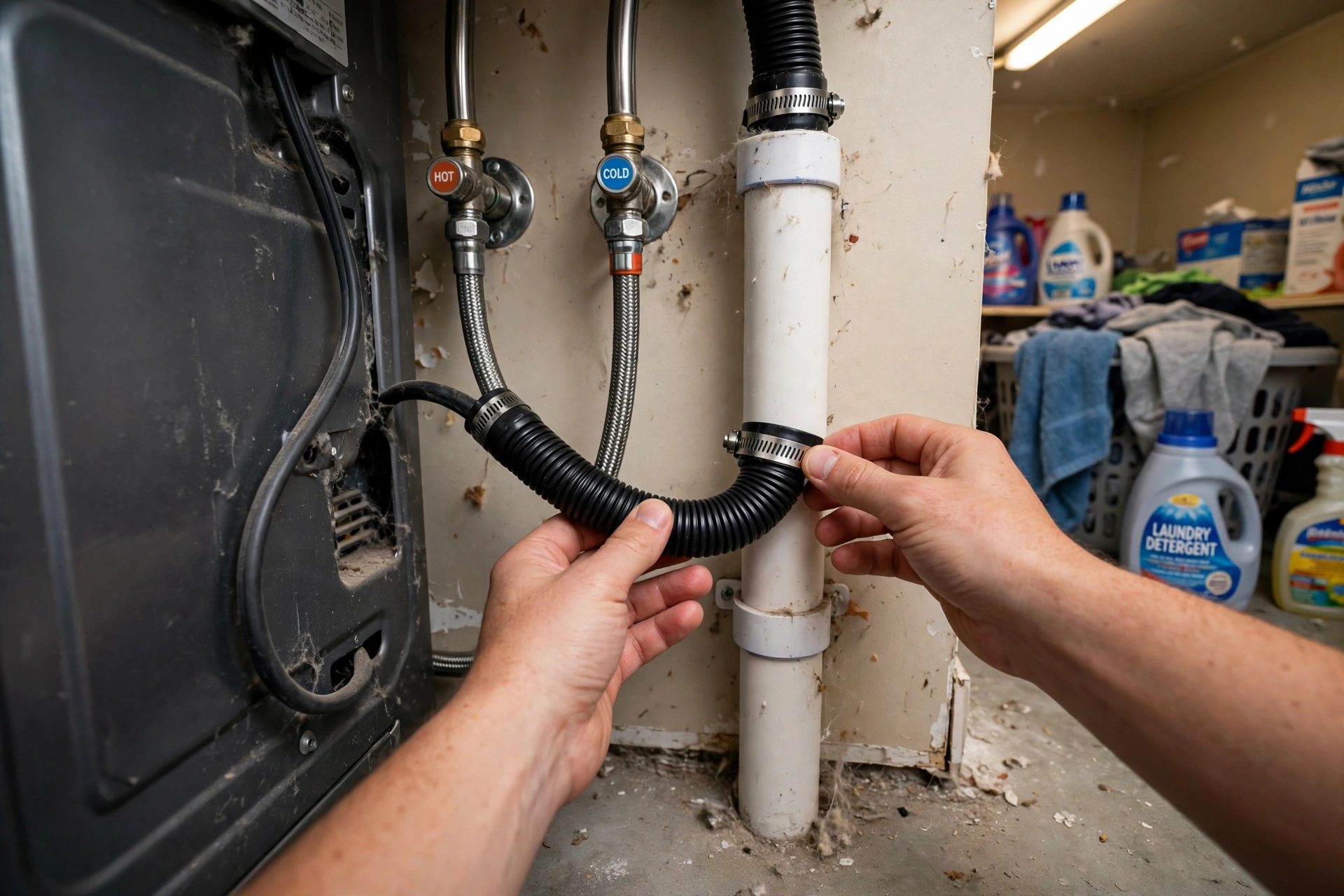
If the smell survives a deep clean and a month of good habits, look deeper than the drum. Check the drain hose: if it is pushed too far into the standpipe, sewer gas and dirty water can flow back into the machine. The hose should sit a few inches in.
Check the drain pump filter again — a filter only rinsed, not scrubbed, can still hold a plug of lint and old water. Smell the machine after a cycle: strongest at the bottom front, it is the filter; at the door, the gasket; everywhere at once, the drum needs two or three cycles in a row.
15. When to Call a Professional — How to Clean a Washing Machine vs. When to Get Help
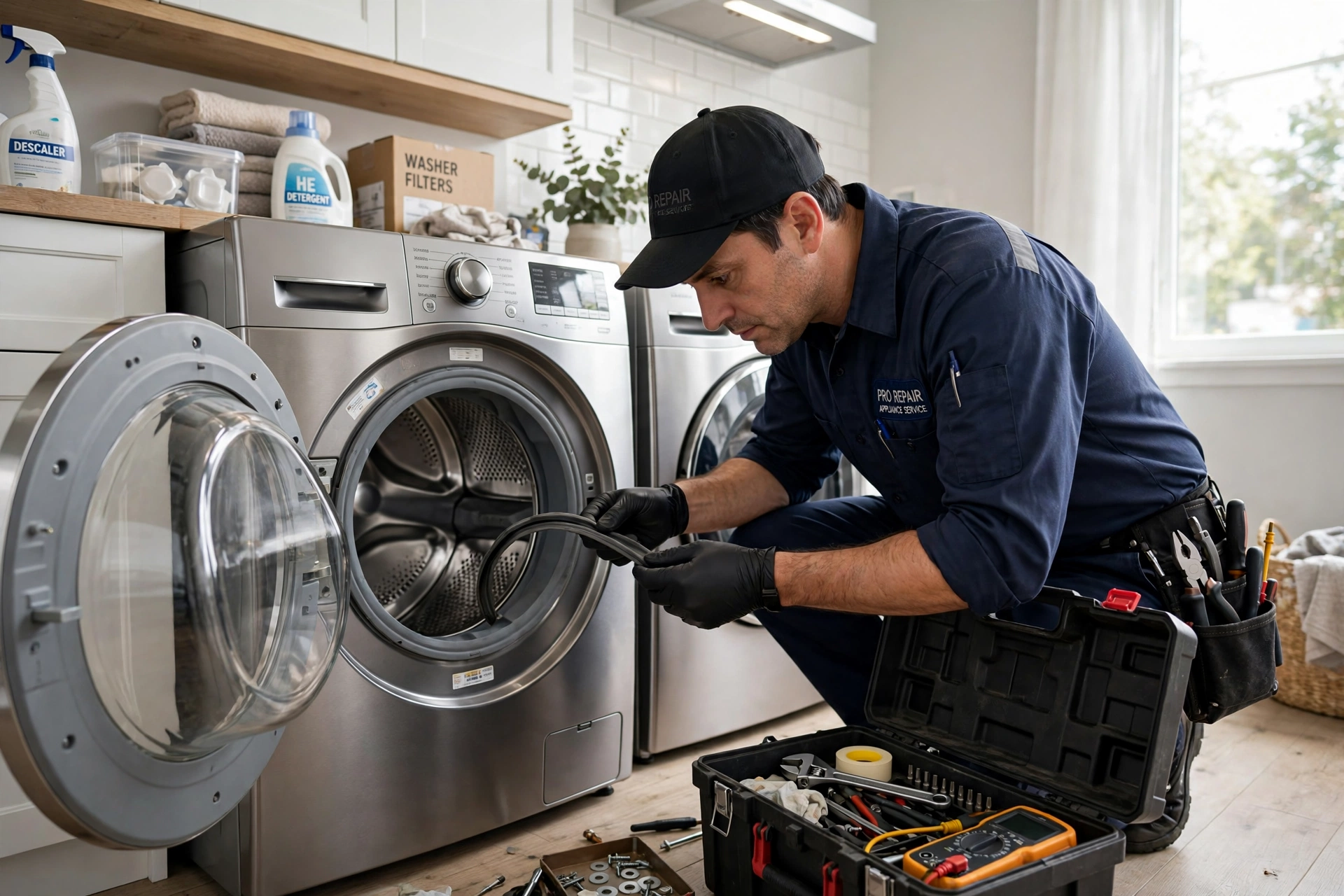
Most washer cleaning is do-it-yourself, but some signs mean a technician, not a tablet. Call one if the gasket is torn, cracked, or mold has grown into the rubber — no cleaner fixes damaged rubber, and a new seal is a technician’s job. Call one if the drum has rust, the machine leaks, or the filter housing is cracked.
Call one, too, if the smell comes with a grinding noise, a burning smell, or water that will not drain at all — those point to a failing pump or motor, not to dirt. A service visit costs more than a tablet, but a washer cleaned on schedule lasts years longer than one ignored until it breaks.
Frequently Asked Questions
Why does my washing machine smell?
A biofilm of bacteria and mold grows in the drum, gasket, drawer, and filter — where water, warmth, and detergent residue sit undisturbed. Fix it with a monthly cleaning cycle, a wiped gasket, and an open door.
Can I use vinegar in my washing machine?
Yes, occasionally. Two cups of white vinegar in an empty hot cycle dissolves limescale and residue. Do not use it monthly: repeated acid exposure wears down rubber seals and hoses. Never mix vinegar with bleach: the combination produces toxic chlorine gas.
How often should I clean my washing machine?
Once a month, or every 30 wash cycles, whichever comes first — Whirlpool’s recommendation. Daily washers reach 30 cycles in about three weeks. Cold-water washers: do not stretch past 30 loads.
Is affresh worth it?
For routine monthly cleaning, yes. Affresh tablets are oxygen bleach in a measured dose, designed to dissolve slowly so the cleaner reaches behind the drum — recommended by Whirlpool, Maytag, and Amana. A tablet cleans the drum, but not the gasket, drawer, or filter; those still need a cloth. A machine never cleaned may need up to three cycles in a row.
Related Reading
- 35 Easy Home Cleaning Ideas That Actually Work
- 10-Minute Daily Cleaning Habits
- How to Get Rid of Dust in Your House
- How to Clean Stainless Steel
- How to Declutter Your Home Room by Room
How to clean a washing machine comes down to three habits: a cleaning cycle once a month, a wipe of the gasket and drawer while it runs, and a door left open after every wash. Do those three, and the washer that washes your clothes stays as clean as the clothes it washes.