How to Get Rid of Pet Odor in Your House: 15 Fixes That Actually Work
Introduction
To learn how to get rid of pet odor in your house, start with a hard truth: air freshener never removes a smell, it only covers it for an hour. Real odor removal means finding the source, breaking down the smelly compounds, and cleaning the surfaces that absorbed them. Roughly 7 in 10 US households have a pet (American Pet Products Association), so this is one of the most common cleaning problems in the country — and one of the most fixable.
The fifteen ideas below work in order, cheapest and simplest first, so you stop as soon as the house smells clean again. They focus on smell — the source, the chemistry, and the surfaces that hold it — not on pet hair, which our best vacuums for pet hair guide already covers in full. If the smell is worst in one room, start there; if the whole house smells like pet, start at idea 1 and work down.
1. Find the Source First — Nose, Then a Black Light
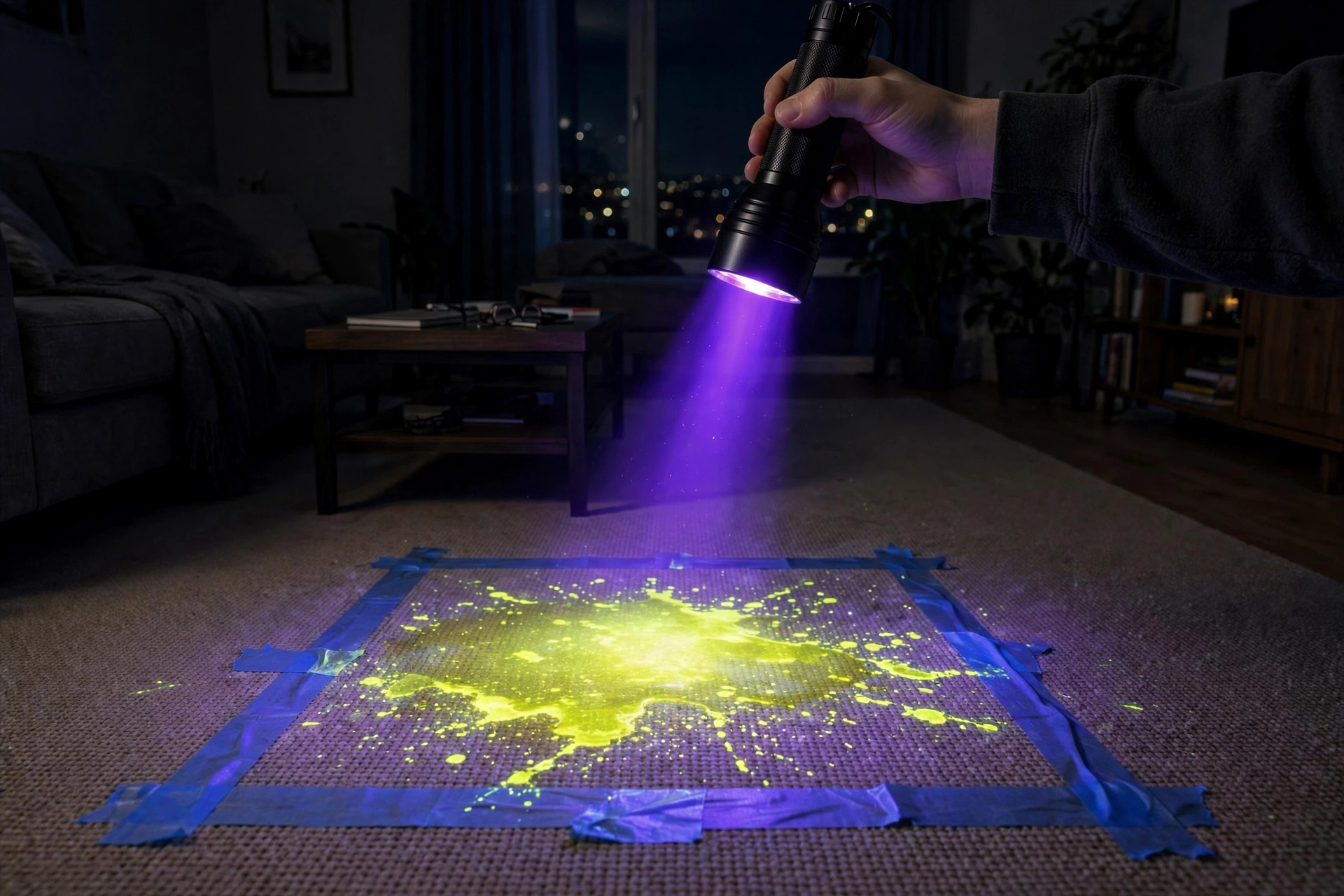
Every odor fix fails if you treat the wrong spot. Pet odor comes from specific places: a urine spot in the carpet pad, a litter box corner, a dog bed that has not been washed in months, or a cat that sprayed a baseboard. Your nose finds the room; a black light (UV flashlight, under $15 at any hardware store) finds the exact spot — dried urine glows yellow-green under UV light.
Turn off the lights, close the curtains, and sweep the light slowly across carpets, baseboards, and furniture legs at night. Mark every glowing spot with painter’s tape. Most homes have two or three hidden spots the owner stopped noticing months ago. Finding them first means every step after this one actually works.
2. Enzyme Cleaner on Accidents — The Only Cleaner That Breaks Down Urine
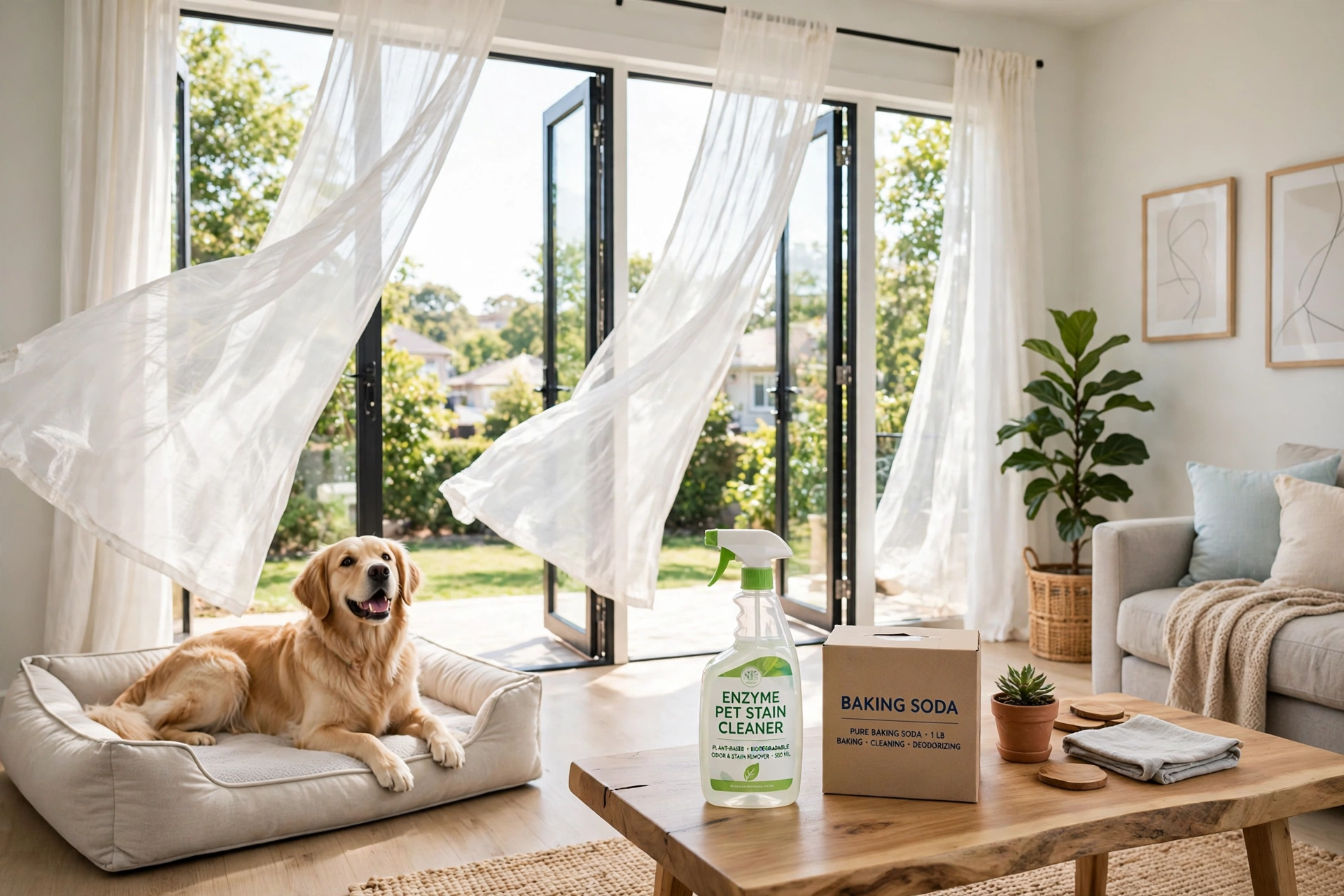
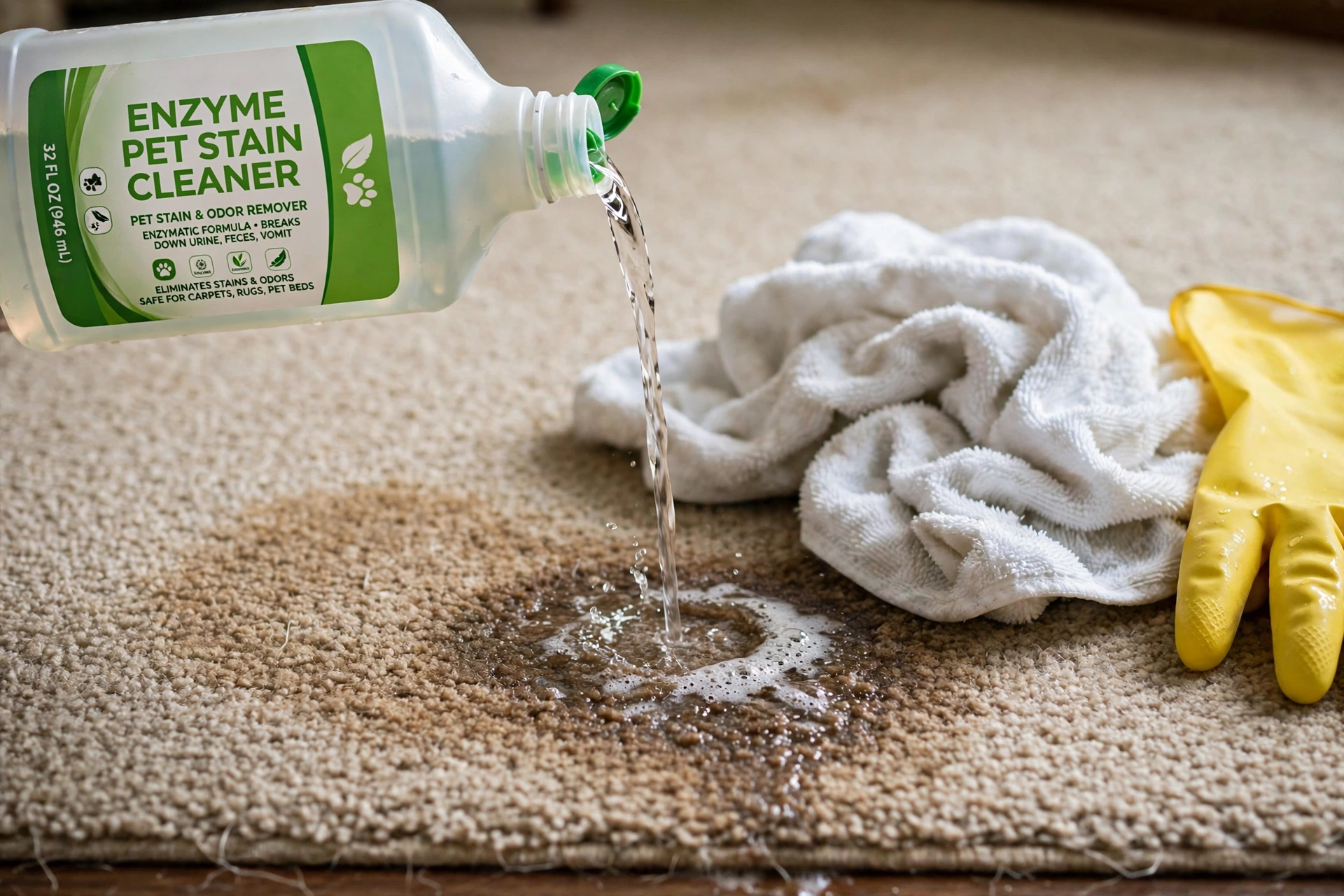
Regular cleaners wash away the surface of a urine stain; the smell stays because urine contains proteins (uric acid and urea) that ordinary soap cannot break down. An enzyme cleaner contains live bacteria and enzymes that digest those proteins into odorless water and carbon dioxide — the smell is gone, not covered.
Saturate the spot, not just the surface: urine soaks into the carpet pad, so the cleaner must reach it. Pour enough to wet the pad, cover it with a damp towel, and leave it for 8 to 12 hours (overnight is best). Do not scrub first — scrubbing spreads the stain. Use enzyme cleaner on every spot the black light found in Section 1, and on any fresh accident the moment it happens.
3. Wash Pet Bedding Weekly — The Biggest Smell Source in the House
A dog or cat bed holds more odor than any other single item in the house. Body oils, shed skin, drool, and tracked-in dirt build up in the filling, and the bed sits in the room where the family spends the most time. If your house smells like pet the moment you walk in, the bed is the first suspect.
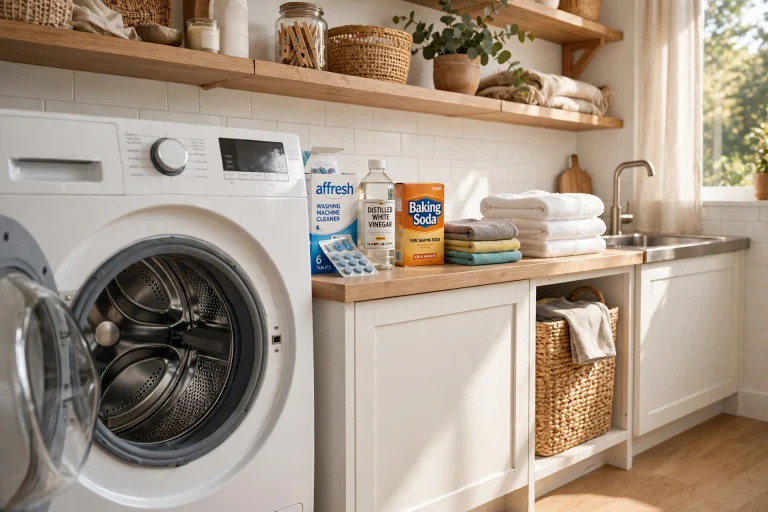
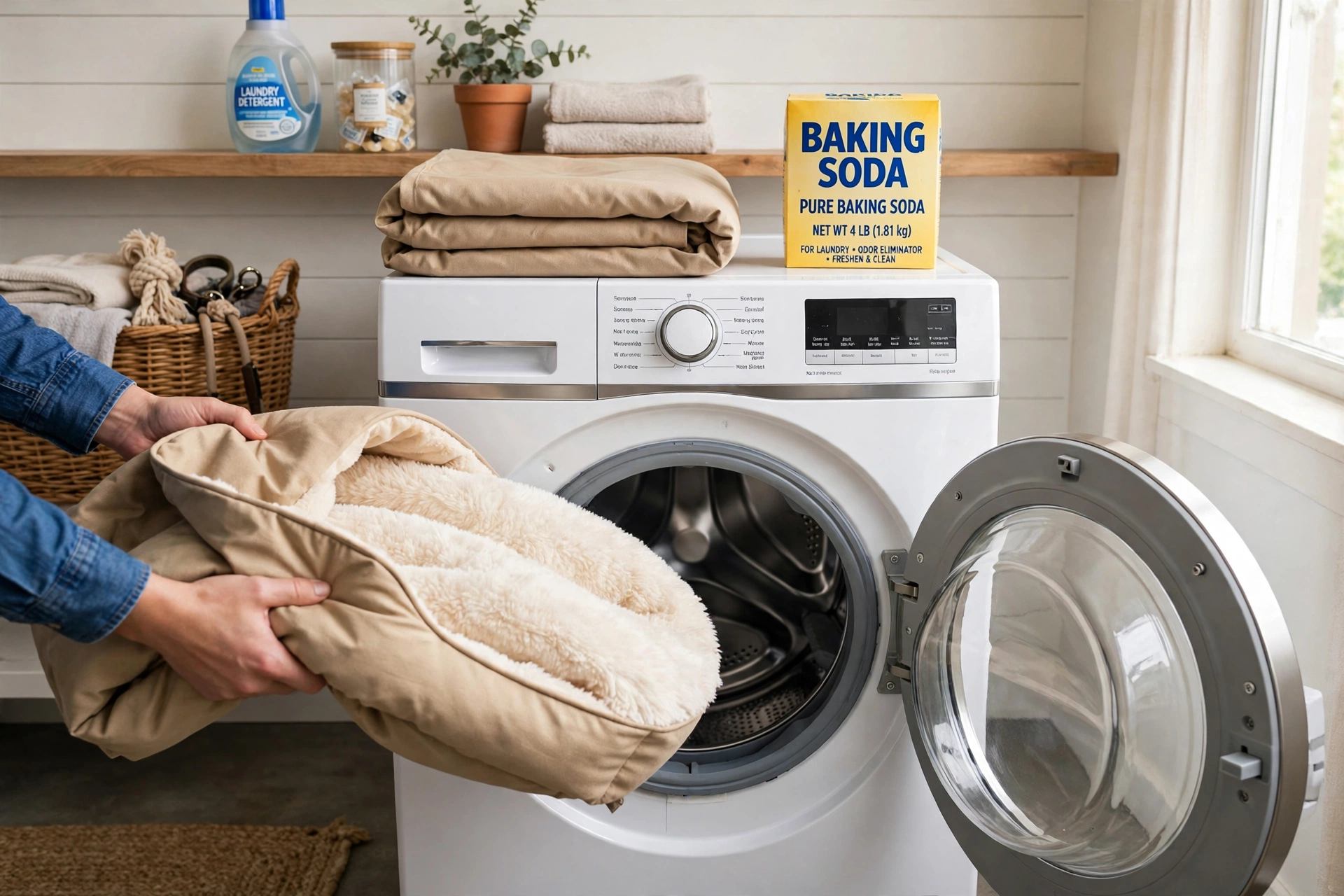
Wash the cover and the insert (most are machine-washable) once a week in hot water with your regular detergent plus half a cup of baking soda in the wash. Dry it fully — a damp bed smells worse than a dirty one. And if the washer itself smells musty, clean it first — our how to clean a washing machine guide shows how, so the smell does not transfer straight back onto the bedding. If the insert cannot be washed, replace it every six months. Keep a second bed cover so one is always in use while the other is in the wash.
4. Vacuum With a HEPA Filter Two to Three Times a Week
Odor rides on dust and dander. Every time someone walks across a carpet, tiny particles of pet dander, skin, and dried saliva lift into the air — and they carry the smell with them. Vacuuming two to three times a week keeps that reservoir low, especially in the rooms where the pet sleeps.
Use a vacuum with a sealed HEPA filter so the fine particles stay in the machine instead of blowing back into the room. Vacuum slowly, in overlapping passes, and empty the bin or change the bag outside the house so the smell does not come right back in. For the full pet-hair routine — which machine to pick and how to use it — see our best vacuums for pet hair guide and our pet dander guide.
5. Baking Soda on Carpets and Upholstery — The Cheap Deodorizer That Works
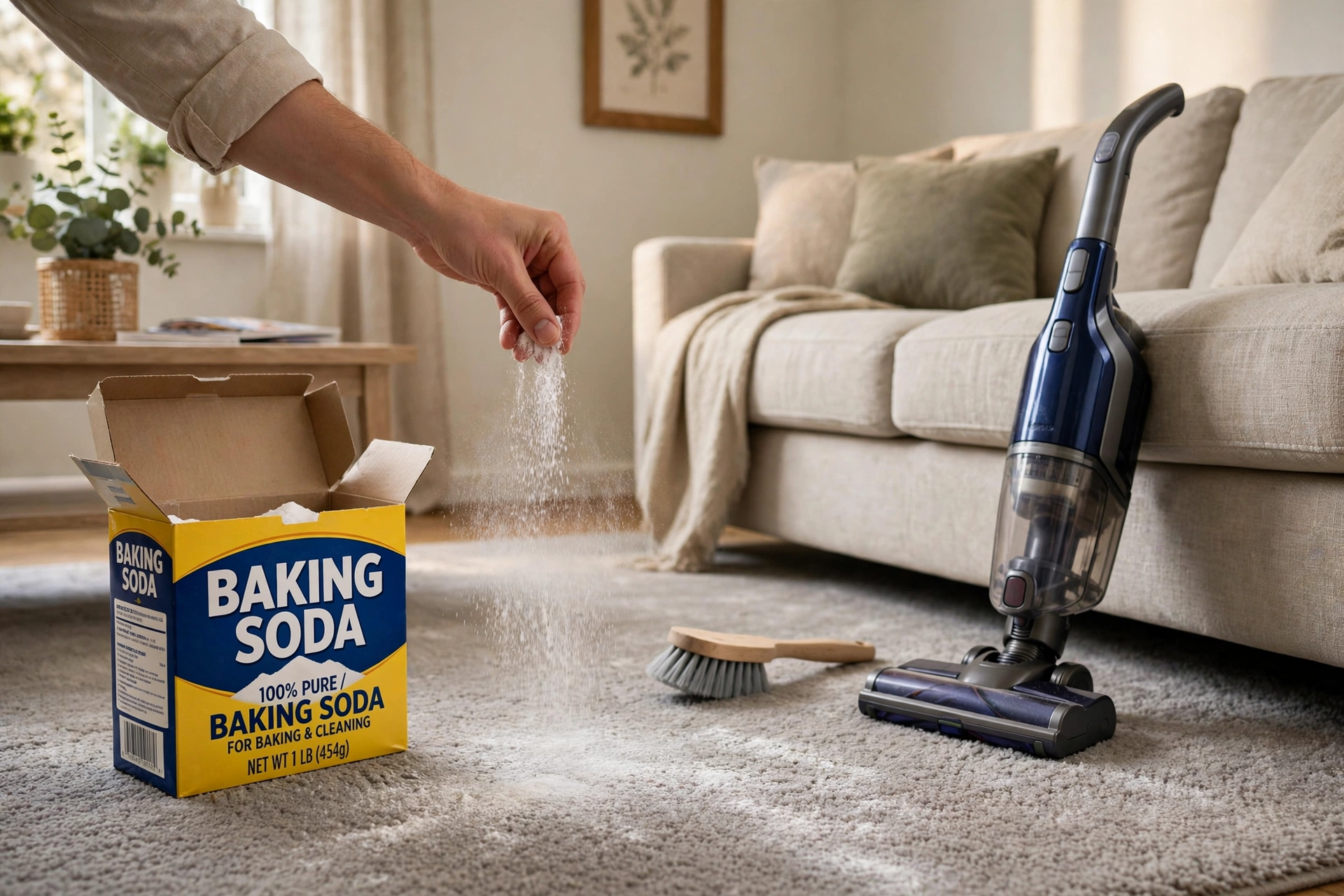
Baking soda (sodium bicarbonate) absorbs odor molecules instead of covering them, which is why it is the standard deodorizer for pet smell. Sprinkle a generous layer over carpets, rugs, and upholstered furniture, work it in lightly with a soft brush, and leave it for at least 30 minutes — overnight is better for a strong smell.
Vacuum it up slowly, in two passes. Do this once a week on the pet’s favorite spots and once a month on the whole carpet. It will not fix a urine stain in the pad (that needs the enzyme cleaner from Section 2), but it takes the general “lived-in pet” smell out of every soft surface in the room. Do not use scented carpet powders — they leave a residue that traps new odor.
6. Wash Collars, Toys, and Bowls — The Small Items That Smell Big
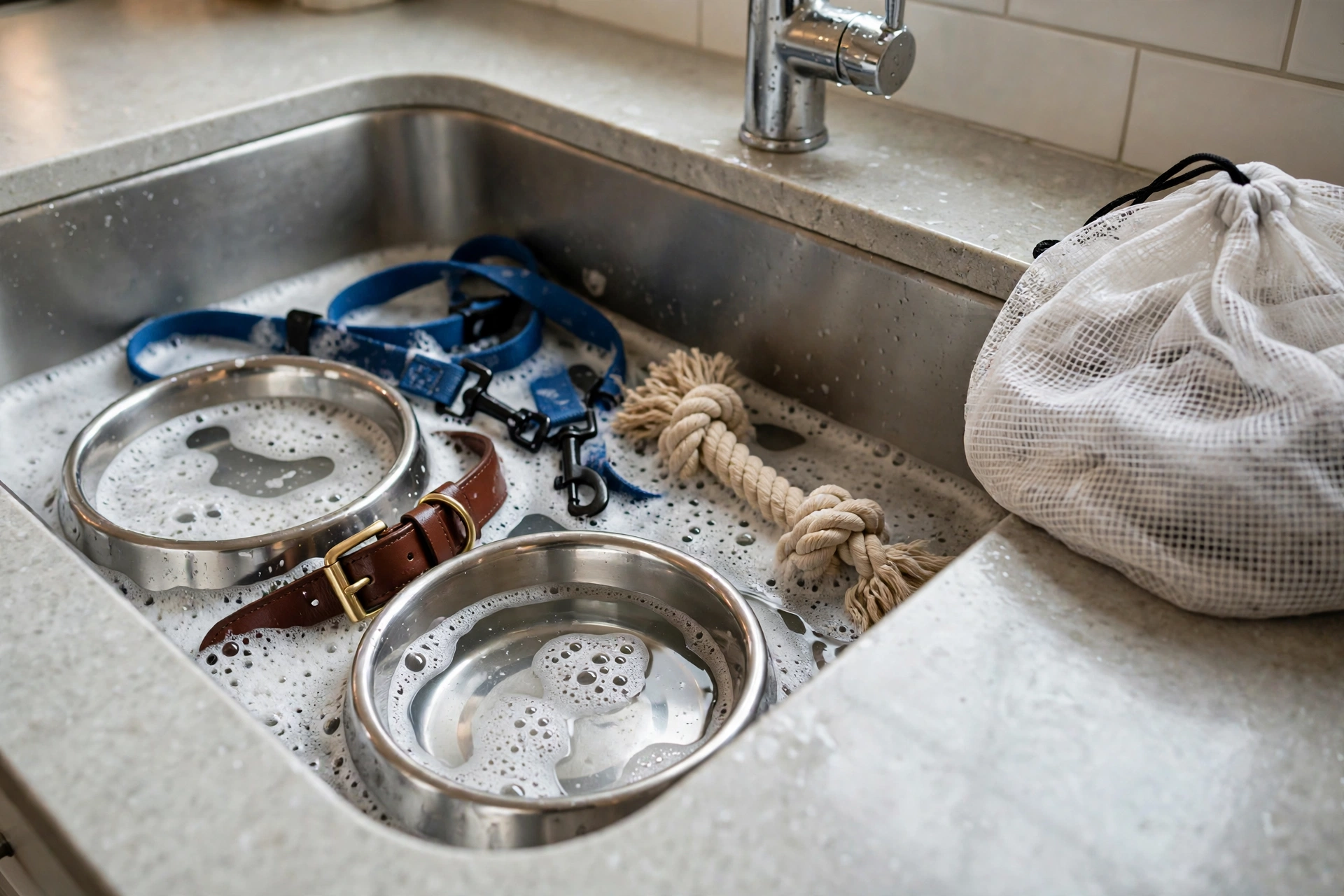
Collars, leashes, toys, and food bowls are small, but they sit close to noses — yours and your guests’. A nylon collar absorbs skin oils and rain and can smell worse than the dog wearing it. Rope toys hold drool and bacteria. Food and water bowls grow a slimy biofilm that smells stale within days.
Wash collars and leashes in a mesh laundry bag on a gentle cycle once a month (or soak them in warm soapy water for 30 minutes). Toss soft toys in the washing machine weekly; hard toys go in the dishwasher on the top rack. Wash food and water bowls with hot soapy water every day — the same standard as your own dishes. Replace a collar that still smells after washing; the oils have soaked too deep.
7. Bathe and Groom the Pet Regularly — The Source Wears the Smell
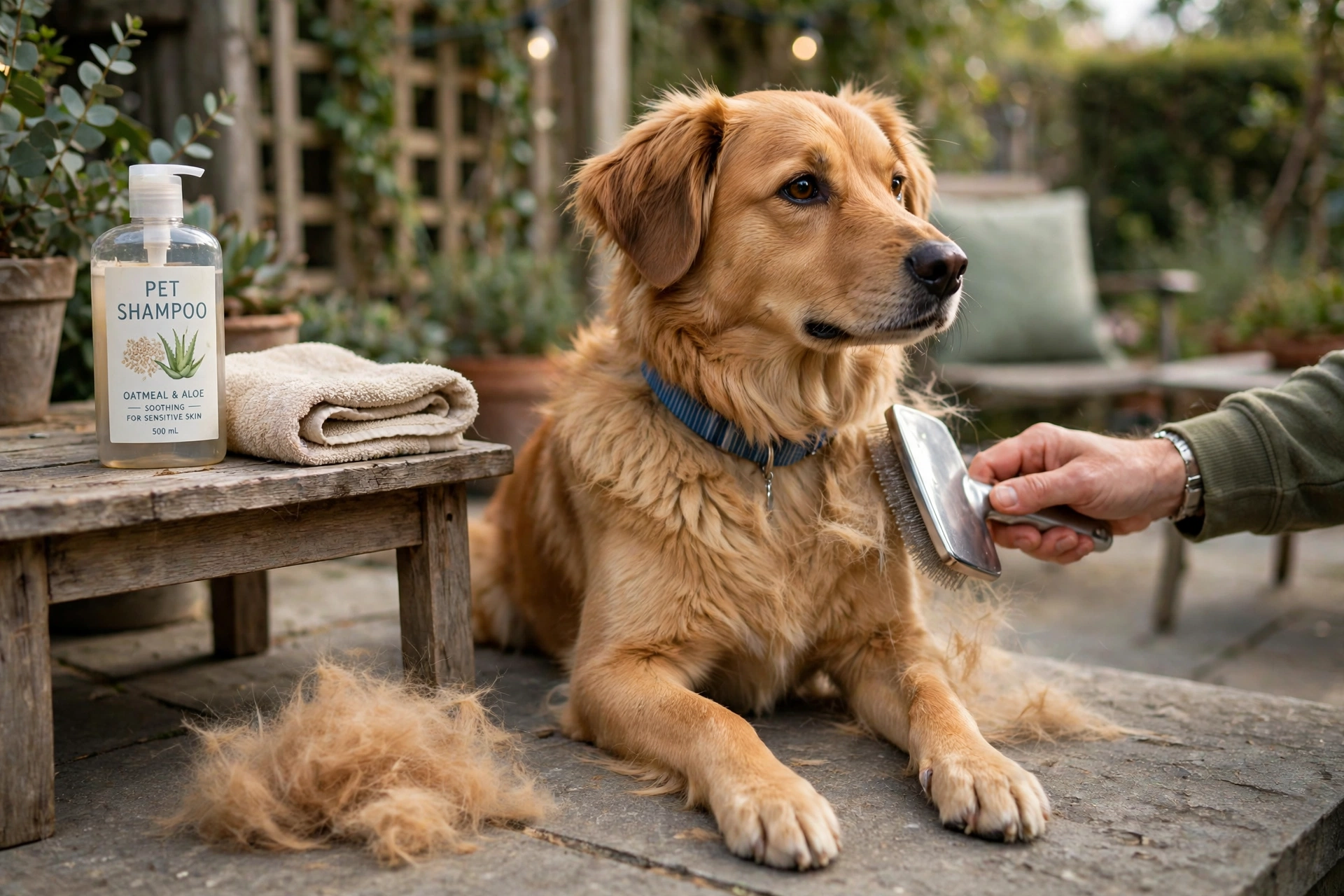
A pet that smells is a house that smells. Dogs need a bath every four to six weeks (more often if they swim or roll in things), and cats that go outdoors benefit from regular brushing even though they groom themselves. Brushing between baths removes loose fur, dander, and the skin oils that carry odor — five minutes a day beats one long grooming session a month.
Use a pet-specific shampoo, never human shampoo: human products are the wrong pH for pet skin and can cause dryness that makes the smell worse. Dry the pet completely after a bath — a damp dog smells far stronger than a dry one, and damp fur transfers odor to every surface it touches. If a healthy pet suddenly smells worse than usual, see a vet first; skin infections, ear infections, and dental problems all have their own smell.
8. Cross-Breeze Ventilation — Five to Ten Minutes Changes a Room
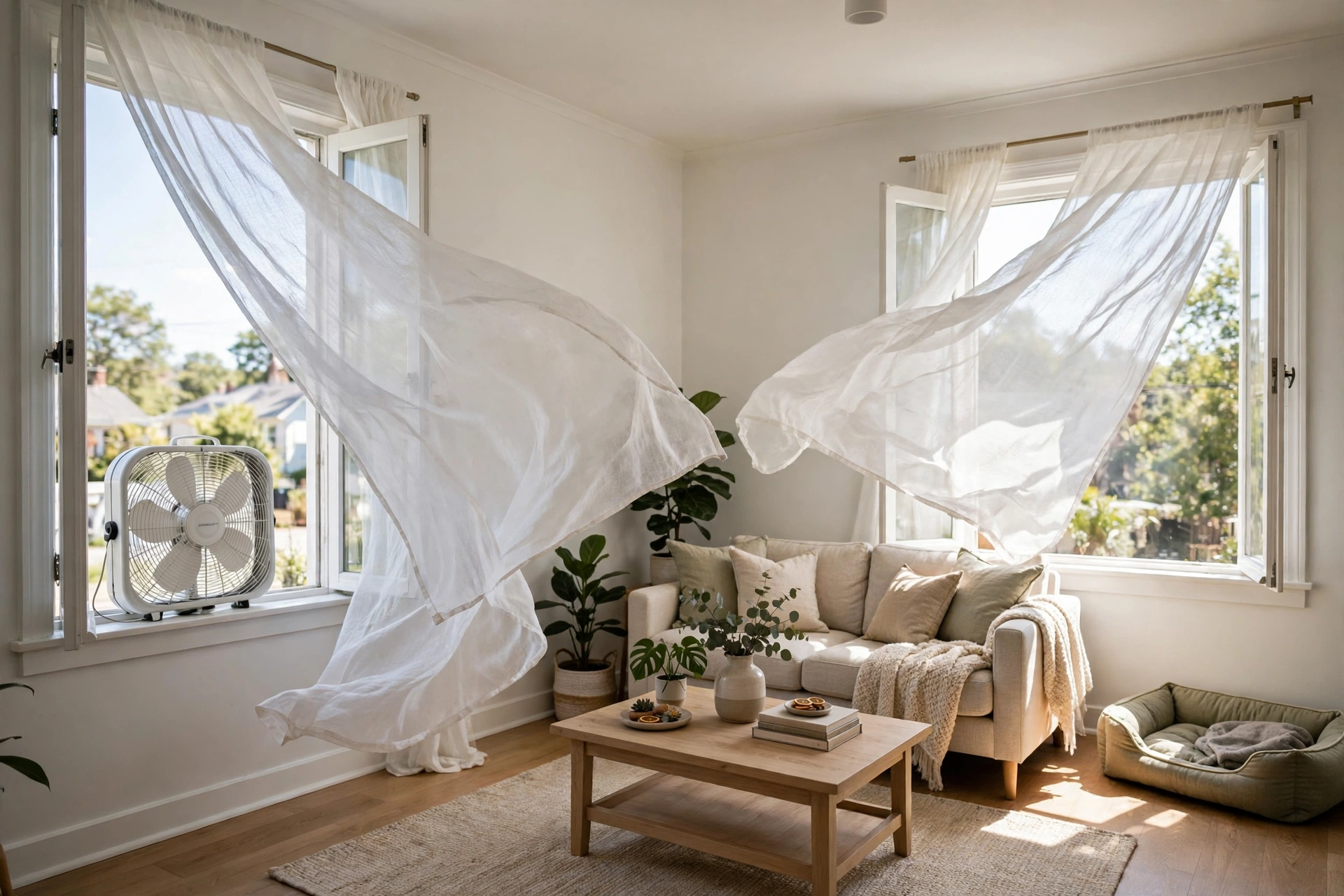
Stale air is half the problem. A closed house recycles the same air all day, and every soft surface slowly releases the odor it absorbed. Opening windows on opposite sides of the house for five to ten minutes creates a cross-breeze that replaces the room’s air entirely — the fastest free fix in this guide.
Do it once a day, ideally in the morning when the air is cool and dry. Run the bathroom and kitchen exhaust fans at the same time to pull air through the house. In winter, even three minutes helps; in summer, a box fan in one window (blowing out) and an open window on the other side moves the same volume. Ventilation does not remove the source, but it stops the smell from building up between cleanings.
9. HEPA Plus Activated Carbon Air Purifier — The Filter That Catches Smell
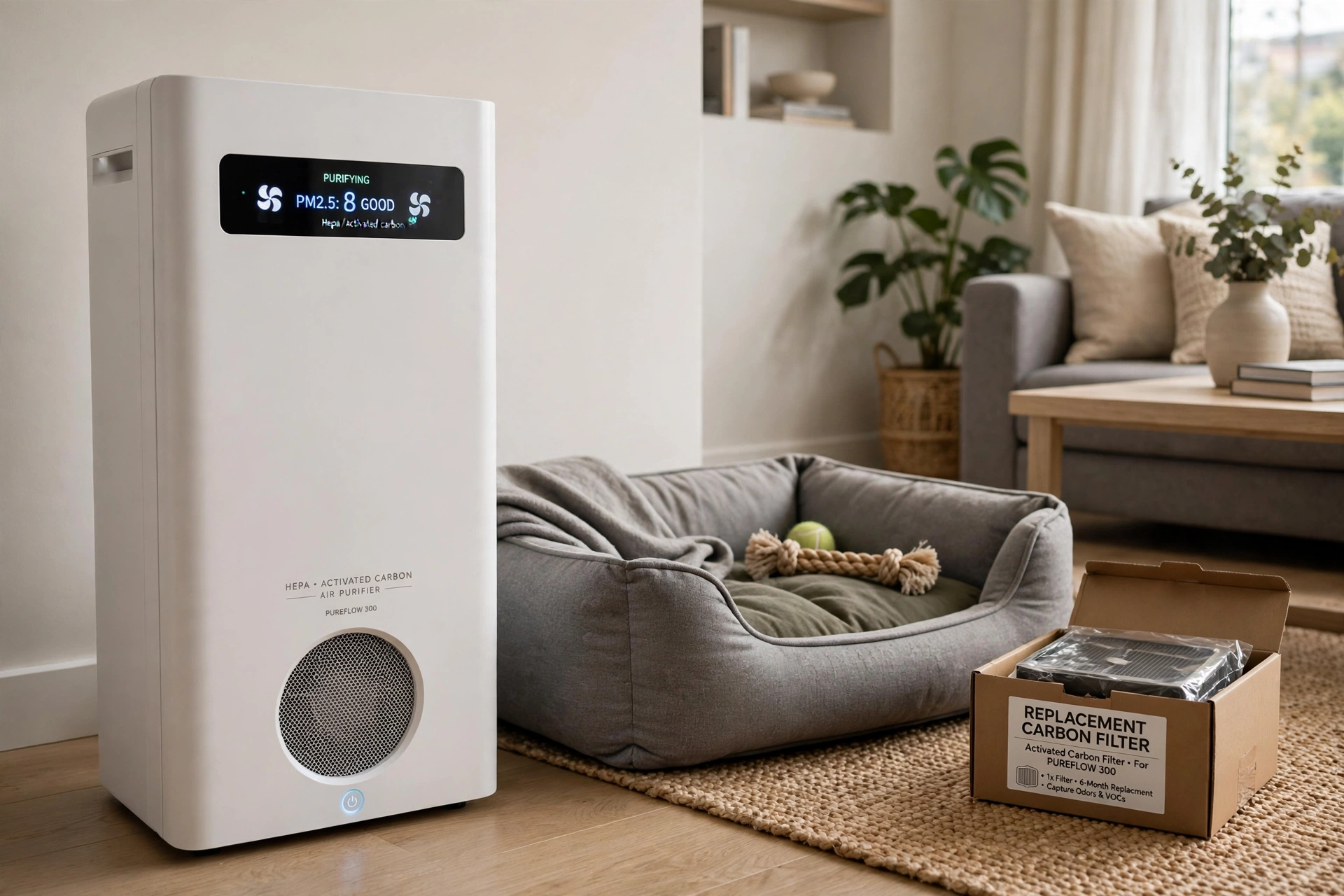
A standard air purifier with only a HEPA filter catches particles, not smells — odor molecules are gases, and they pass straight through a HEPA filter. The fix is a purifier that pairs HEPA with an activated carbon filter: the carbon’s huge surface area traps odor molecules (volatile organic compounds) while the HEPA catches the dander that carries them.
Size the purifier to the room (check the CADR rating on the box — it should match the room’s square footage) and run it on medium in the room where the pet sleeps. Replace the carbon filter on schedule — a saturated carbon filter stops working and can release the trapped odor back into the room. This is a support tool, not a substitute for cleaning the source.
10. Wash Curtains, Throws, and Slipcovers — The Fabric That Soaks Up Smell
Soft furnishings are odor sponges. Curtains hang in the air current, throws sit where the pet sleeps, and slipcovers absorb everything the sofa does. If you have cleaned the carpet and the bed but the room still smells, the curtains and throws are usually the reason.
Wash throws and slipcovers every two to four weeks in hot water with baking soda in the wash, the same as pet bedding. Curtains go in the machine on a gentle cycle every two to three months (check the care label first — some need dry cleaning). While they are down, wipe the curtain rods and vacuum the window frames. Rotate two sets of throws so one is always clean and in use.
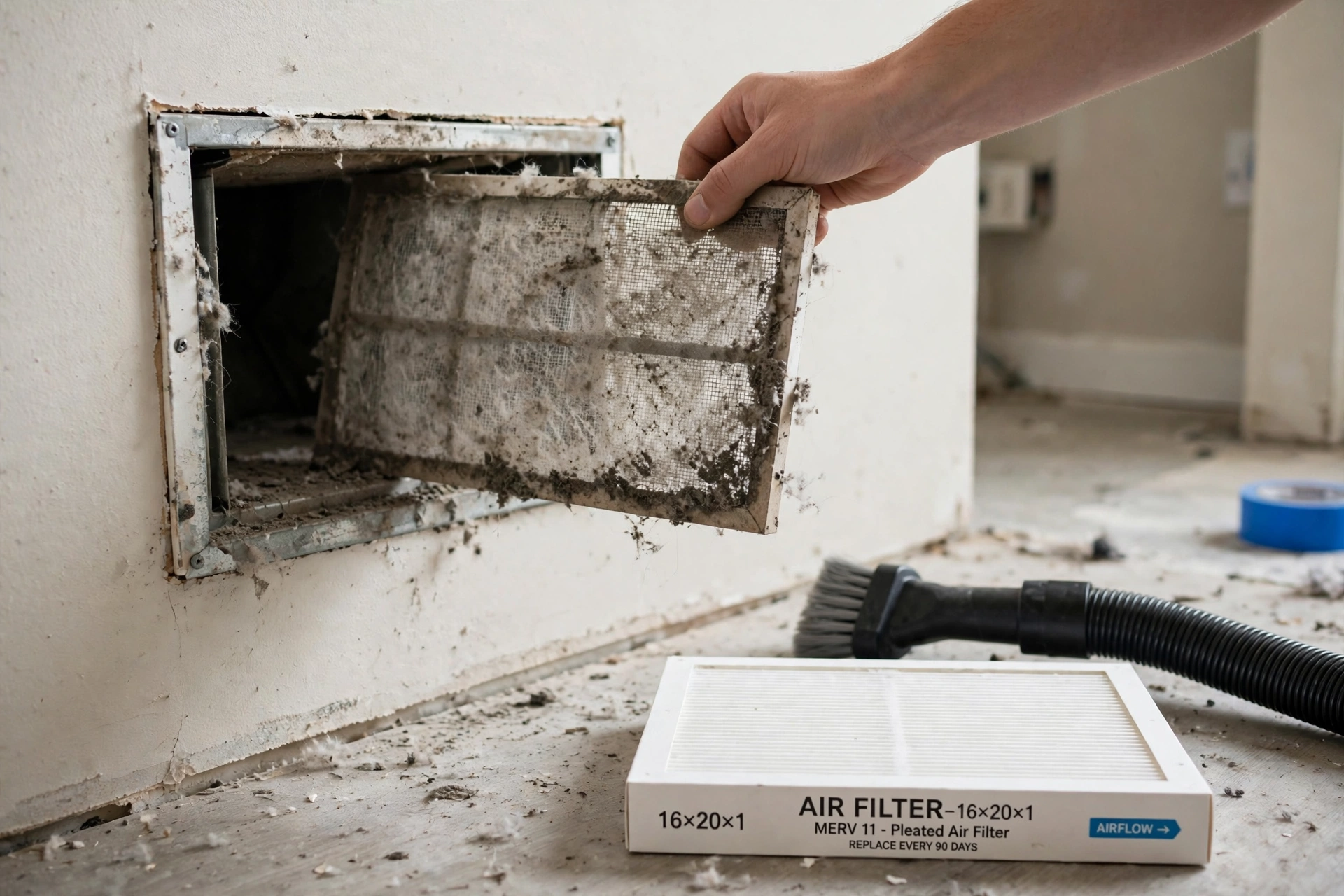
11. Clean HVAC Filters and Vents — The Smell Circulates Through the Ducts
Your heating and cooling system moves air — and odor — to every room in the house. A dirty HVAC filter loaded with pet dander restricts airflow and slowly releases the smell it trapped. Vents and registers collect dust and fur that the system then blows around the house.
Replace the HVAC filter every one to three months (monthly if you have multiple pets or anyone in the house has allergies). Vacuum the vent covers and registers when you change the filter, and wipe inside the first few inches of each duct opening with a damp cloth. If the smell persists after cleaning, have the ducts professionally inspected — a pet that urinated near a floor vent can leave odor in the ductwork that no filter will fix.
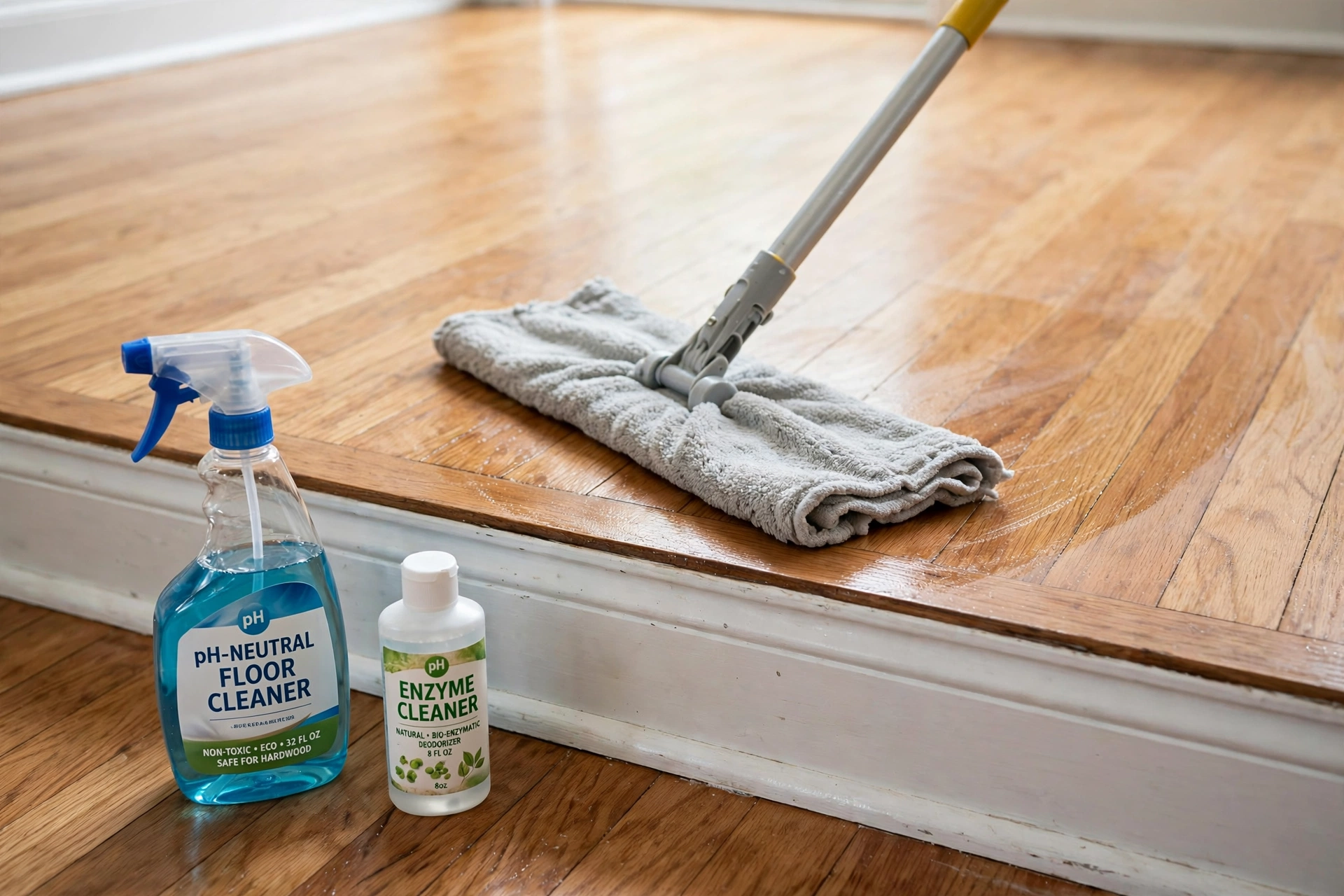
12. Hard-Floor Mop Routine — Pet Odor on Wood, Tile, and Laminate
Hard floors do not absorb odor the way carpet does, but they hold it in the finish, the grout lines, and the gaps between boards. Urine that dries on a hard floor leaves a film of salts and proteins that keeps smelling every time the room gets humid.
Mop hard floors once a week with a pH-appropriate cleaner for the floor type (never vinegar on stone or hardwood — acid damages the finish), and treat any accident spot with enzyme cleaner first, exactly as on carpet. Pay attention to grout lines and the edges where the floor meets the baseboard — that is where urine pools and dries. For the full floor-care routine, our hardwood floor cleaning guide covers the rest of the routine.
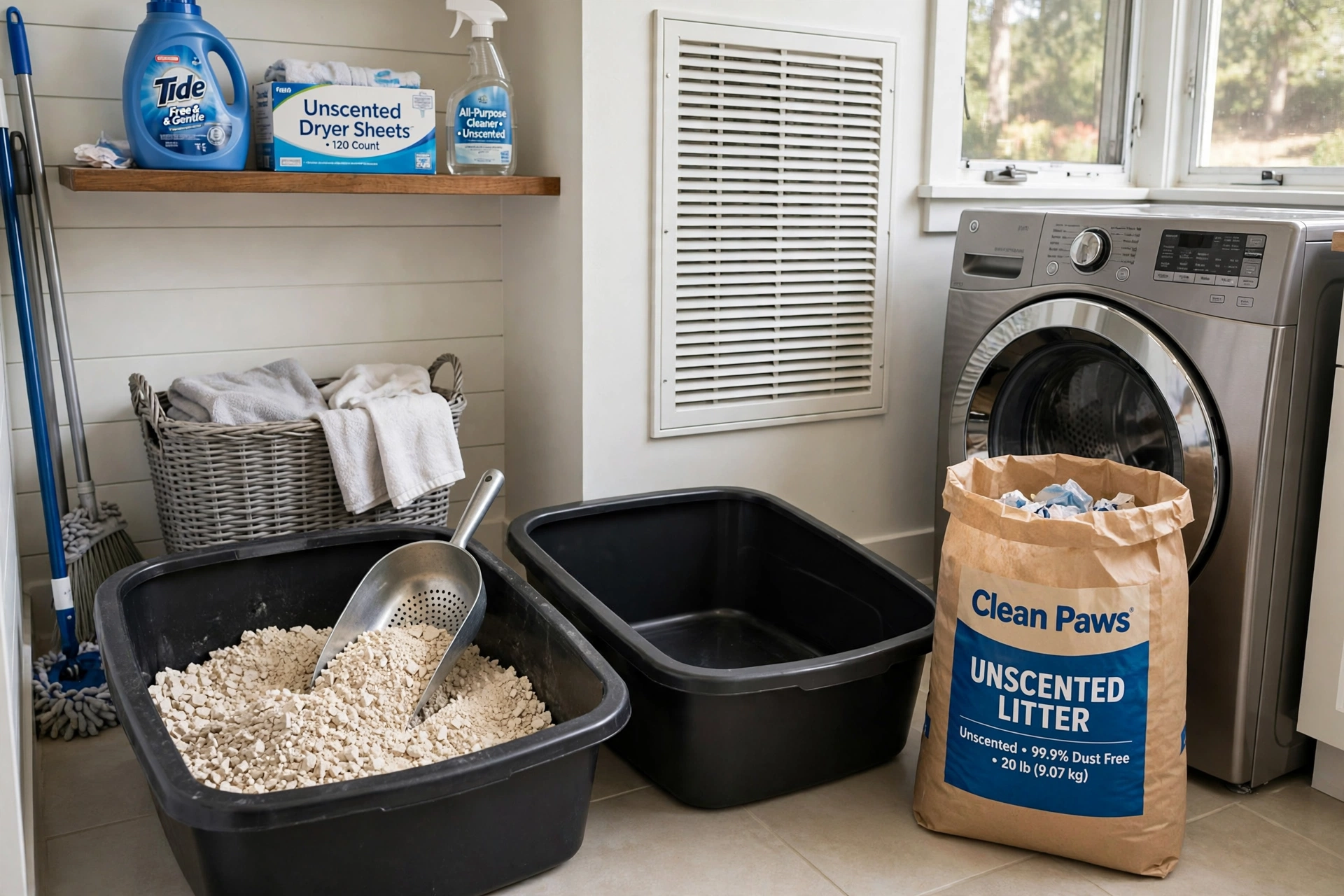
13. Litter Box Routine — The Cat Smell Fix Is Mostly Schedule
A litter box smells when the schedule slips, not because cats are inherently smelly. Scoop solid waste and clumps twice a day — once in the morning, once in the evening — and the box stops being the room’s main odor source. Top up the litter after scooping so the depth stays at three to four inches.
Dump the whole box and wash it with warm soapy water once a month (never with ammonia cleaners — see Section 14). Use unscented litter; scented litter only masks the smell and many cats dislike it enough to go elsewhere. Keep one box per cat plus one extra, in a ventilated spot — a box crammed in a closed closet concentrates the smell and discourages the cat from using it. If the box area still smells after this routine, the cat may be missing the box; check the floor around it with a black light.
14. What NOT to Do — Never Steam Urine, Never Use Ammonia Cleaners
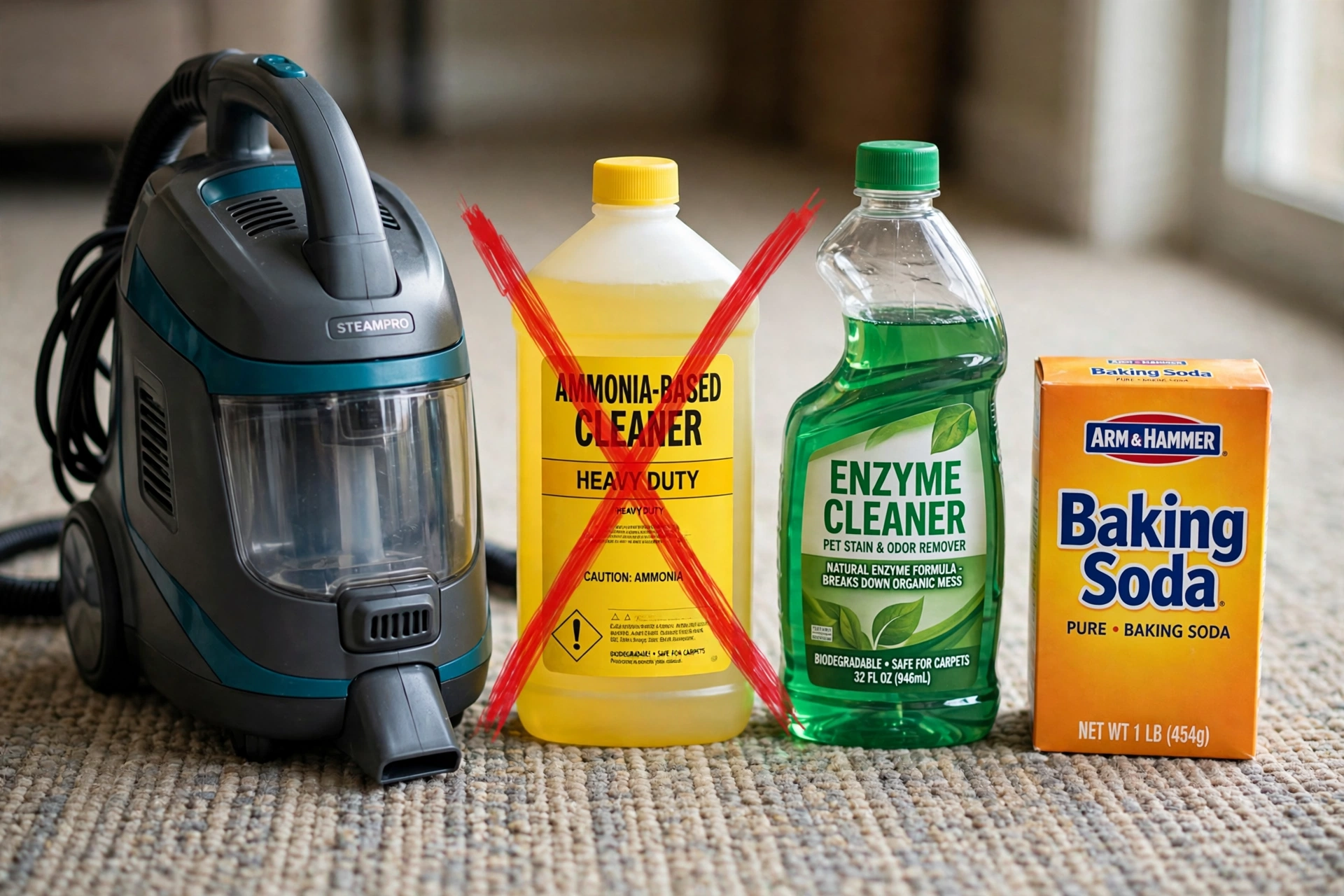
Two common fixes make pet odor permanently worse. First, never steam-clean a urine stain: the heat bonds the urine proteins to the carpet fibers, setting the stain and the smell in place so no cleaner can remove it afterward. Enzyme-clean first, steam later — only after the smell is fully gone.
Second, never clean pet accidents with ammonia-based cleaners. Ammonia smells like urine to a pet, so the animal returns to the same spot and marks it again. The same goes for vinegar on a fresh accident — it does not break down the proteins, and the strong smell can confuse the pet. Stick to enzyme cleaners for accidents, baking soda for general deodorizing, and pH-neutral cleaners for hard floors.
15. When DIY Is Not Enough — Signs to Call a Professional
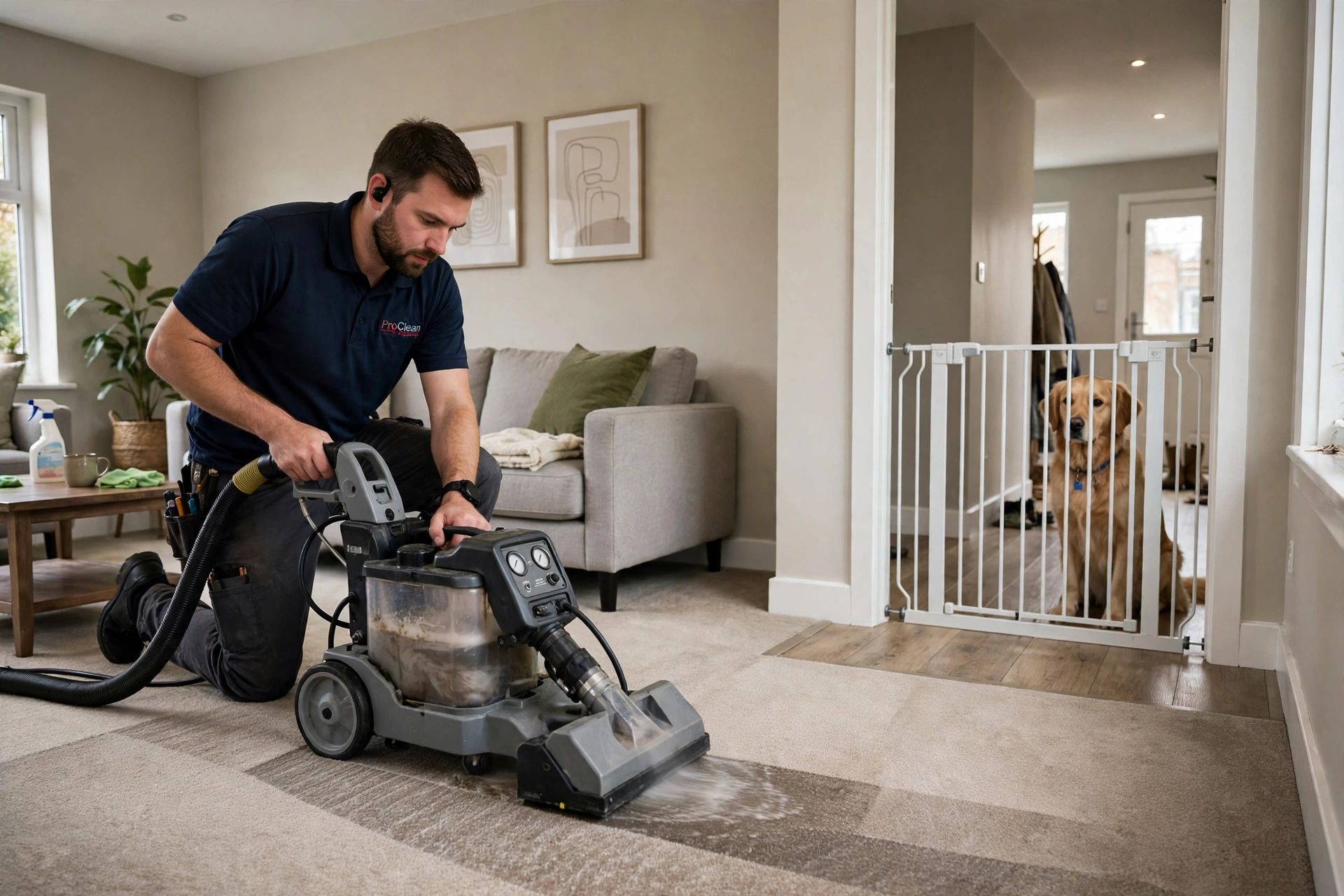
Most pet odor yields to the steps above within a week. Call a professional when it does not. The signs: the black light shows stains across a whole room (not just a few spots), the smell returns within days of cleaning, the carpet pad is soaked through, or the odor is in the subfloor, the drywall, or the ductwork.
A professional carpet cleaner with a hot-water extraction machine and a subfloor treatment can reach the pad and the floor underneath — equipment no homeowner owns. For subfloor or drywall odor, a restoration company can seal the subfloor with an odor-blocking primer after cleaning. Get two quotes, ask what products they use (enzyme-based, not just deodorizers), and treat the source first — a professional clean on top of an unwashed pet bed is money wasted.
Frequently Asked Questions
How do I find where the pet smell is coming from?
Start with your nose to find the room, then use a UV black light at night with the lights off — dried urine glows yellow-green under UV. Mark every glowing spot with painter’s tape before you clean. The most common hidden spots are carpet edges, baseboards, the litter box corner, and the pet’s bed.
Does baking soda really remove pet odor?
Yes, for general odor on soft surfaces: baking soda absorbs odor molecules rather than covering them. Sprinkle it on carpets and upholstery, leave it for 30 minutes or overnight, then vacuum it up. It will not fix a urine stain soaked into the carpet pad — that needs an enzyme cleaner, which breaks down the proteins that cause the smell.
Why does my house still smell like dog after cleaning?
The most common reasons are a hidden source you have not found yet (check with a black light), a pet bed or curtains that have not been washed, or a saturated air purifier filter. Clean the source first, wash all soft furnishings, and replace the carbon filter. If the smell returns within days, the urine may be in the carpet pad or subfloor — see Section 15.
Can I use vinegar to remove pet urine odor?
Vinegar does not break down the proteins in urine, so it does not remove the smell — and its strong scent can confuse the pet. Use an enzyme cleaner on urine stains instead: the enzymes digest the odor-causing proteins. Never use ammonia cleaners on pet accidents either, because ammonia smells like urine to pets and encourages them to mark the same spot again.
How often should I wash my pet’s bedding?
Once a week, cover and insert, in hot water with half a cup of baking soda in the wash. A pet bed is the biggest single odor source in most homes. Dry it fully before use — a damp bed smells worse than a dirty one — and keep a spare cover so one is always in the wash.
Related Reading
- Best Vacuums for Pet Hair
- Does Vacuuming Remove Pet Dander?
- Vacuums for Allergies
- How to Get Rid of Dust in Your House
- Easy Home Cleaning Hacks
- How to Clean Hardwood Floors
- How to Clean a Washing Machine
Conclusion
Pet odor is not a mystery — it is a source, a surface, and a habit. Find the source with your nose and a black light, treat it with an enzyme cleaner, wash the bedding and soft furnishings that hold the smell, and keep the air moving. Do the weekly routine — bedding, baking soda, vacuuming, ventilation — and the house stops smelling like pet without a single air freshener. And if the smell beats every step here, the pad or the subfloor is the problem, and a professional is the honest next call.