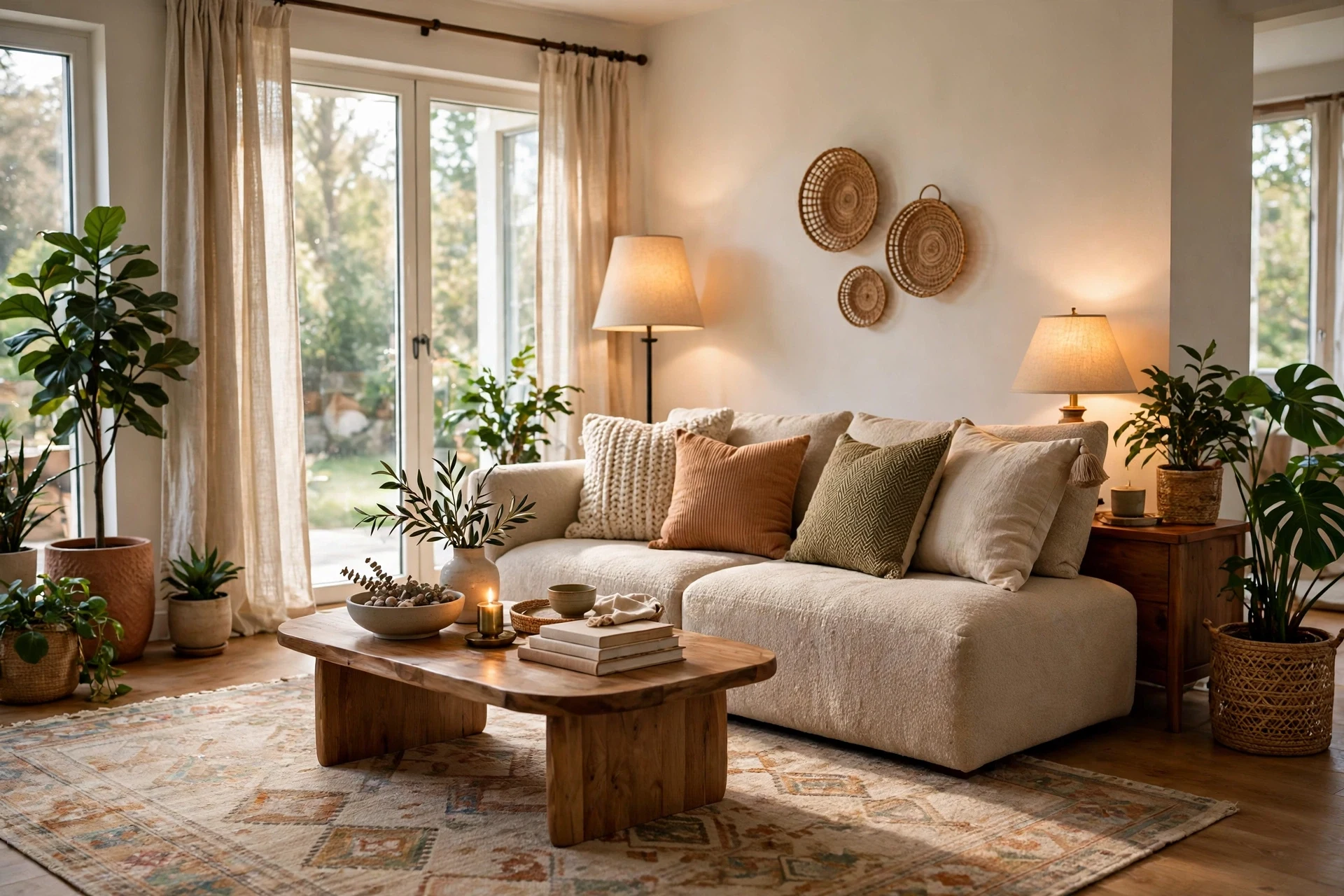
52 Genius Living Room Ideas That Make Any Space Feel Bigger, Brighter, and More You
Introduction
The living room is the hardest-working room in the house. It is where you drink your morning coffee, host friends on Friday night, help with homework, binge a show, and collapse after a long day — sometimes all in the same afternoon. Yet most living rooms are set up once, usually on moving day, and then never really rethought. The sofa stays where the delivery crew left it, the lamp stays where the outlet is, and the room slowly settles into “fine” instead of feeling great.
These 52 genius living room ideas are here to change that, and none of them require a renovation, a designer, or a big budget. They are practical, year-round ideas that work in a small apartment, a suburban family room, or a wide-open great room: smarter layouts that open up floor space, lighting tricks that make a dark room glow, seating that actually invites people to sit down, storage that hides the mess without hiding the style, and small decor moves that make the whole room feel finished. Pick one idea and try it this weekend, or work through the list room by room. Either way, your living room is about to start working as hard as you do.
1. Float the Sofa Off the Wall
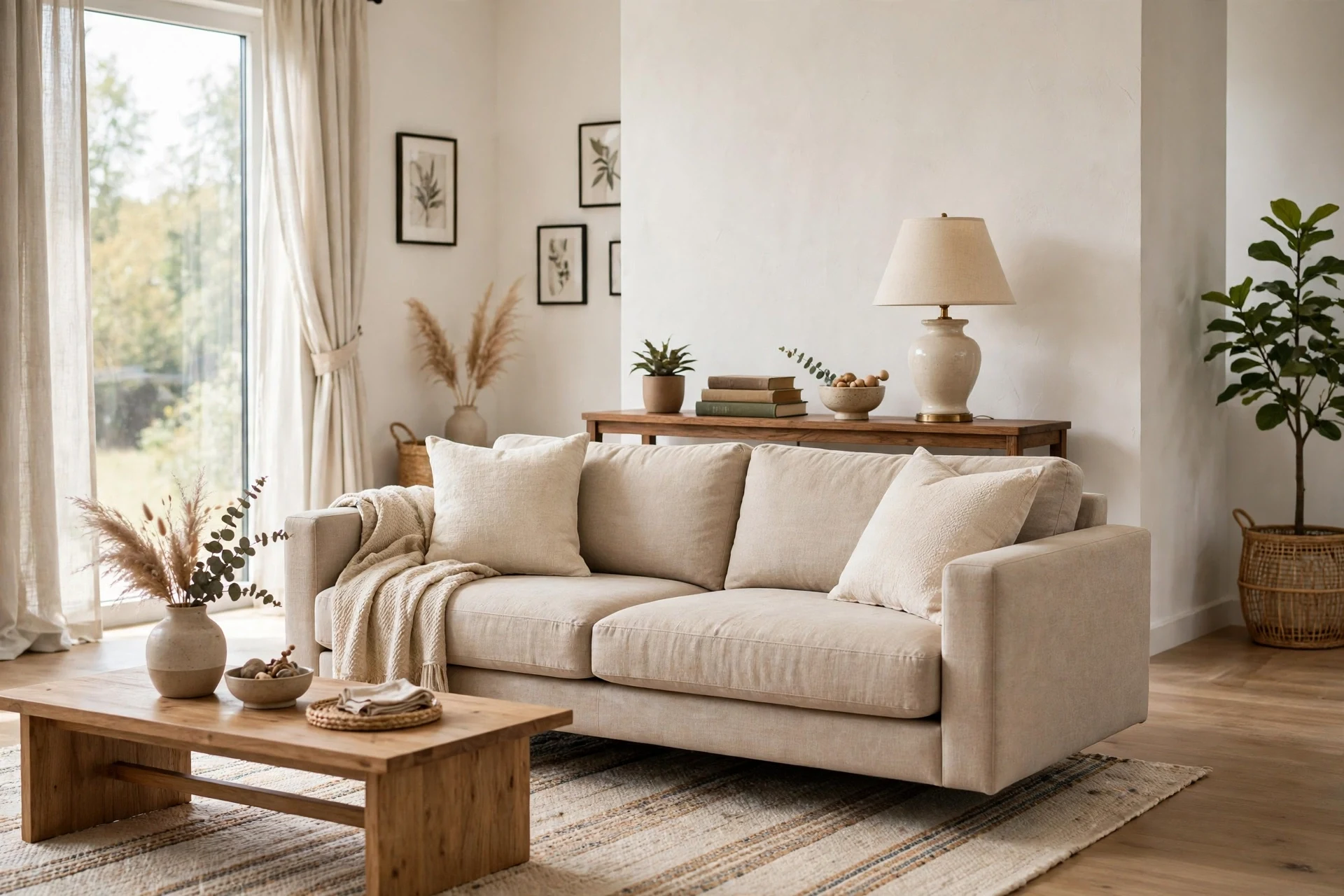
Pushing the sofa flat against the wall feels like the obvious way to save space, but it usually does the opposite. A sofa jammed against the wall makes a room feel like a waiting area, and it wastes the space behind it while crowding everything in front of it. Pulling the sofa even eight to twelve inches away from the wall instantly makes the room feel deeper, and it gives you room to run a cord, tuck a floor lamp, or slide a narrow console table behind it. The wall gets breathing room, the sofa gets a silhouette, and the whole arrangement starts to look intentional instead of accidental.
Floating the sofa completely — placing it in the middle of the room with its back to the rest of the space — works even better in larger rooms and open plans. A floating sofa defines the seating area without a single wall, and it creates a natural walkway behind it. If the back of your sofa is not pretty, drape a throw over it or place a low console table behind it with a lamp and a stack of books. The back of the sofa becomes a feature instead of something to hide, and your living room gains a layout that actually invites conversation.
2. Anchor the Room with a Rug That Fits
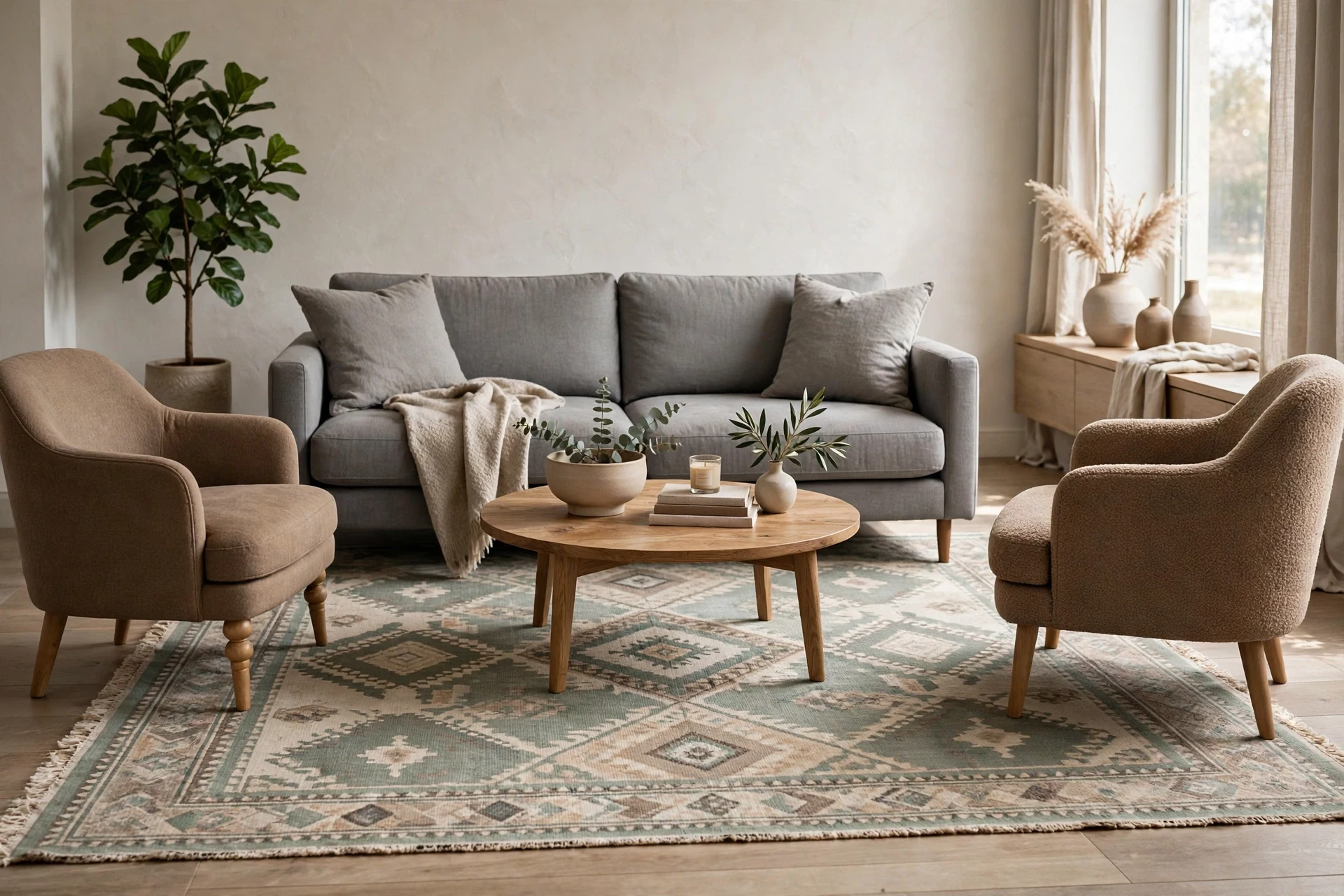
The single most common living room mistake is a rug that is too small. A tiny rug floating in the middle of the floor makes the furniture look scattered and the room look smaller, like a postage stamp on a big envelope. The fix is simple: the rug should be large enough that at least the front legs of the sofa and chairs sit on it. In most living rooms that means an 8-by-10-foot rug or larger, and in a small room a 5-by-8 can work if the furniture is compact.
A properly sized rug does more than look right — it pulls the whole seating group together into one clear zone, softens hard floors, and absorbs sound so the room feels calmer. Choose a low-pile rug if you have pets or kids, because it is far easier to vacuum, and pick a pattern with a little variation in it so everyday dust and crumbs do not show. If a large rug feels like a big spend, layer a smaller patterned rug over a big, inexpensive jute base and you get the same anchored look for a fraction of the price.
3. Layer Lighting in Threes
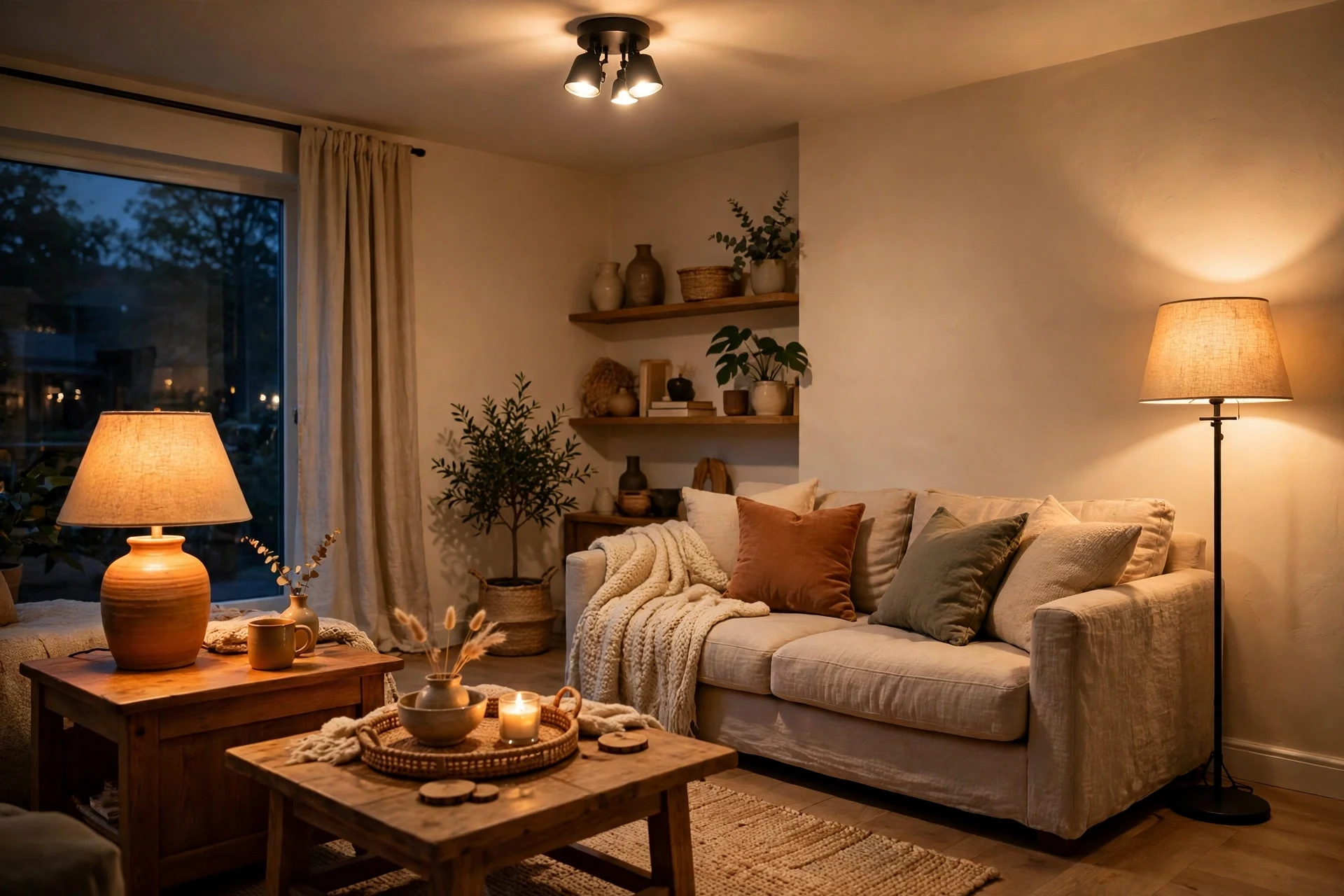
A living room lit by a single ceiling fixture will always feel flat, no matter how nice the furniture is. Overhead light alone casts harsh shadows and leaves the corners dark, which is why rooms lit this way feel gloomy by seven in the evening. The fix designers swear by is layering three kinds of light: ambient light from the ceiling, task light from lamps for reading and working, and accent light that highlights art, shelves, or a plant. When all three are on at a low level, the room glows instead of glaring.
Start with what you have. Add a floor lamp beside the sofa for reading, a small table lamp on a side table, and a plug-in picture light or a battery-operated puck light inside a bookshelf. Put the lamps on dimmers or use smart bulbs so you can turn the brightness down as the evening goes on. Warm bulbs, around 2700K, make skin tones and wood look their best, and a room with three soft light sources at different heights feels cozy, expensive, and complete — even if every lamp came from a thrift store.
4. Build a Reading Nook by the Window
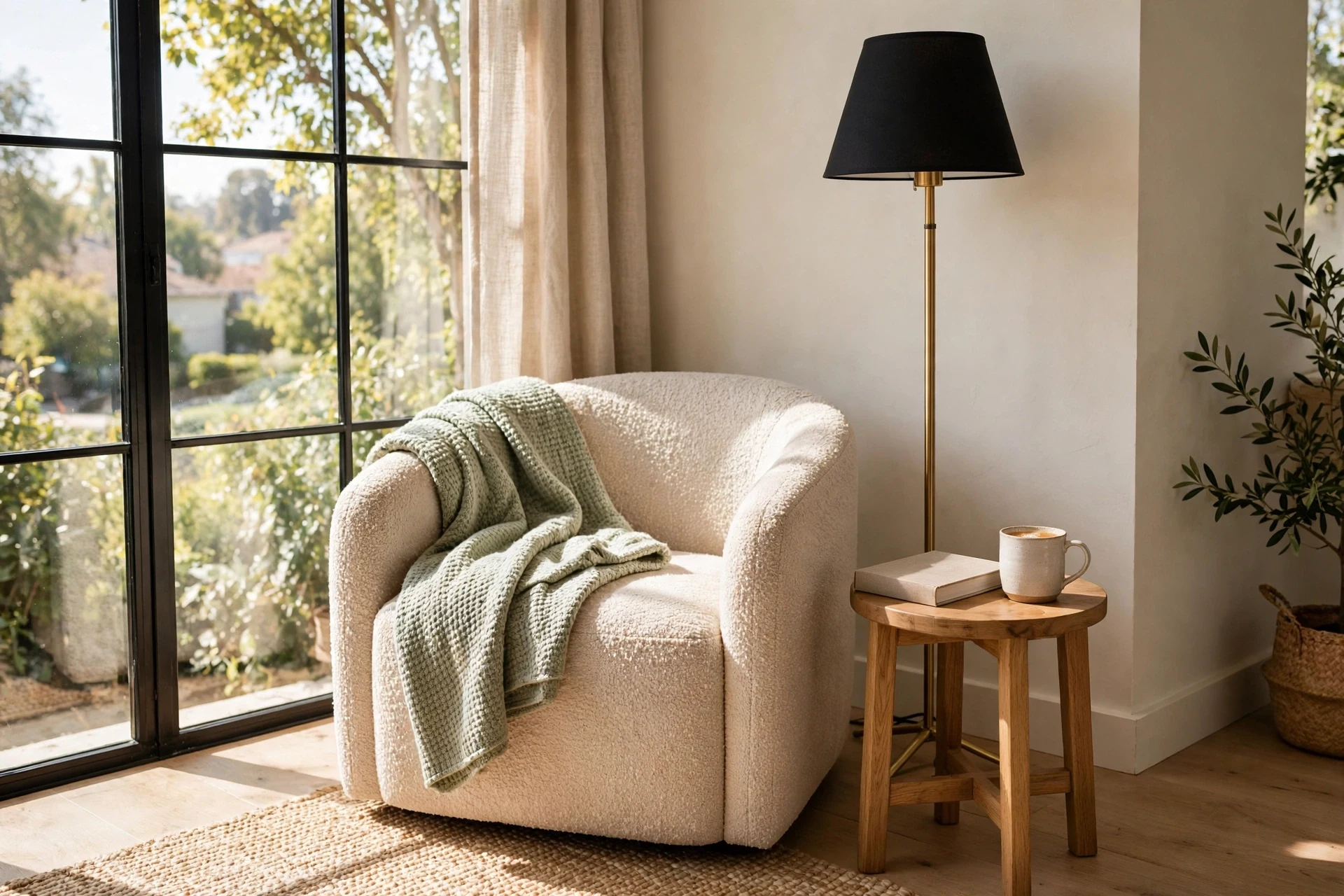
Every living room has a corner that does nothing — usually the spot beside a window where a chair would block the view. Turn that dead corner into the best seat in the house. A comfortable armchair, a small side table for a mug, a floor lamp with a warm bulb, and a soft throw are all it takes. The natural light makes it perfect for reading during the day, and the lamp makes it just as inviting after dark.
The secret to a nook people actually use is keeping everything within arm’s reach. A small basket beside the chair holds the current book and a magazine or two, and a throw draped over the arm means nobody has to get up to get comfortable. If the window is drafty, hang a lined curtain panel on just that side to cut the chill without blocking the light. A reading nook does not need much space, but it gives the living room a purpose beyond the television — a quiet corner that says this room is for slowing down, too.
5. Choose a Sofa That Fits Your Life
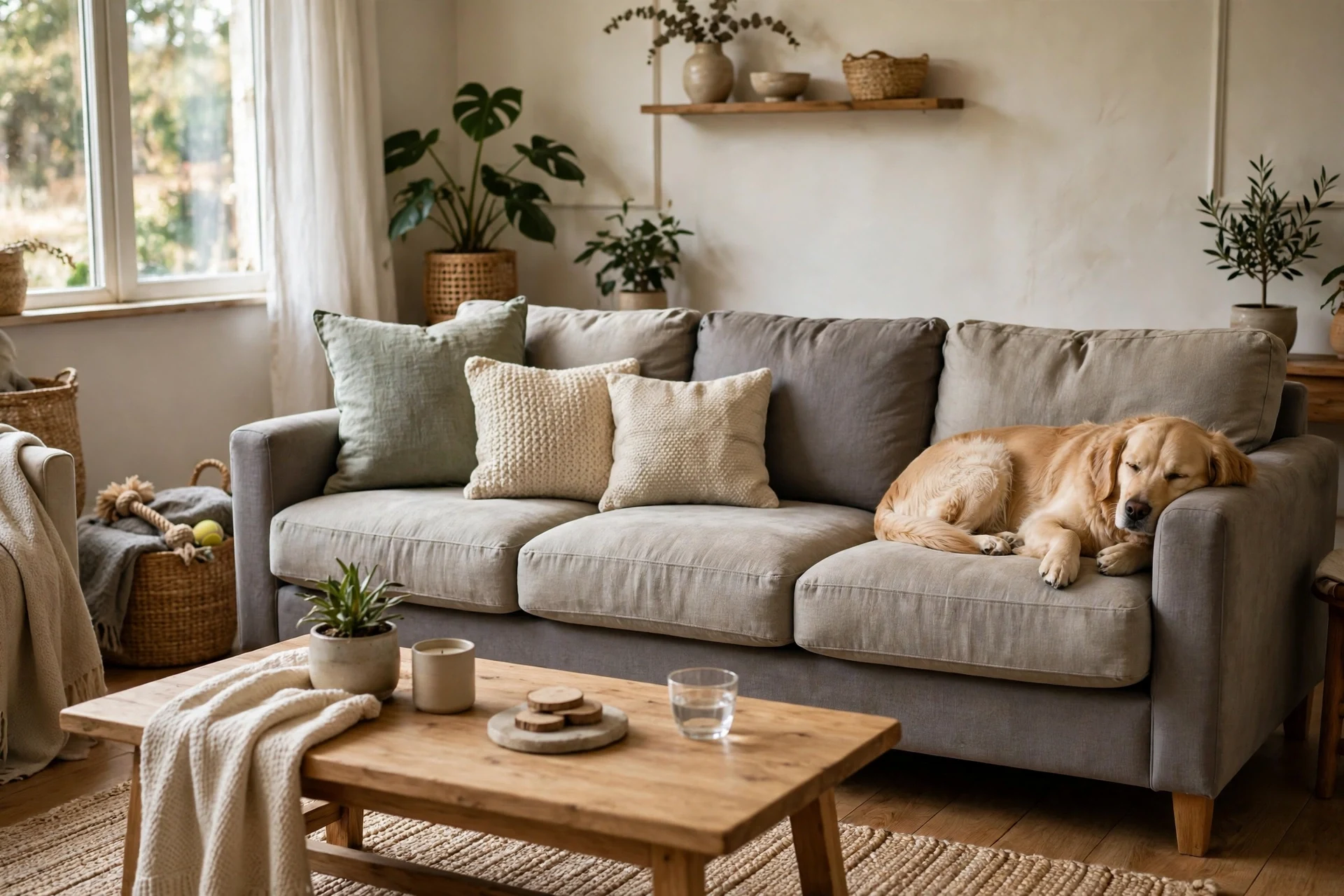
A sofa is the biggest purchase in most living rooms, and the most common regret. People buy for how a sofa looks in the showroom, then live with one that is too deep to sit upright on, too light-colored for a dog, or too long for the room. Before you shop, measure your room and your habits: how many people sit here on a normal night, do guests sleep over, does anyone eat on the sofa, and does the dog claim a cushion? The answers matter more than the style name.
For busy households, a performance fabric in a mid-tone color hides life far better than white or black, and removable, washable cushion covers are worth every penny. A sofa with a seat depth around 22 to 24 inches suits most adults for sitting and chatting; deeper seats are for lounging. And always check the fit through your door and hallway before delivery day — a beautiful sofa that cannot get inside the house is not a bargain at any price.
6. Mix Seating Heights
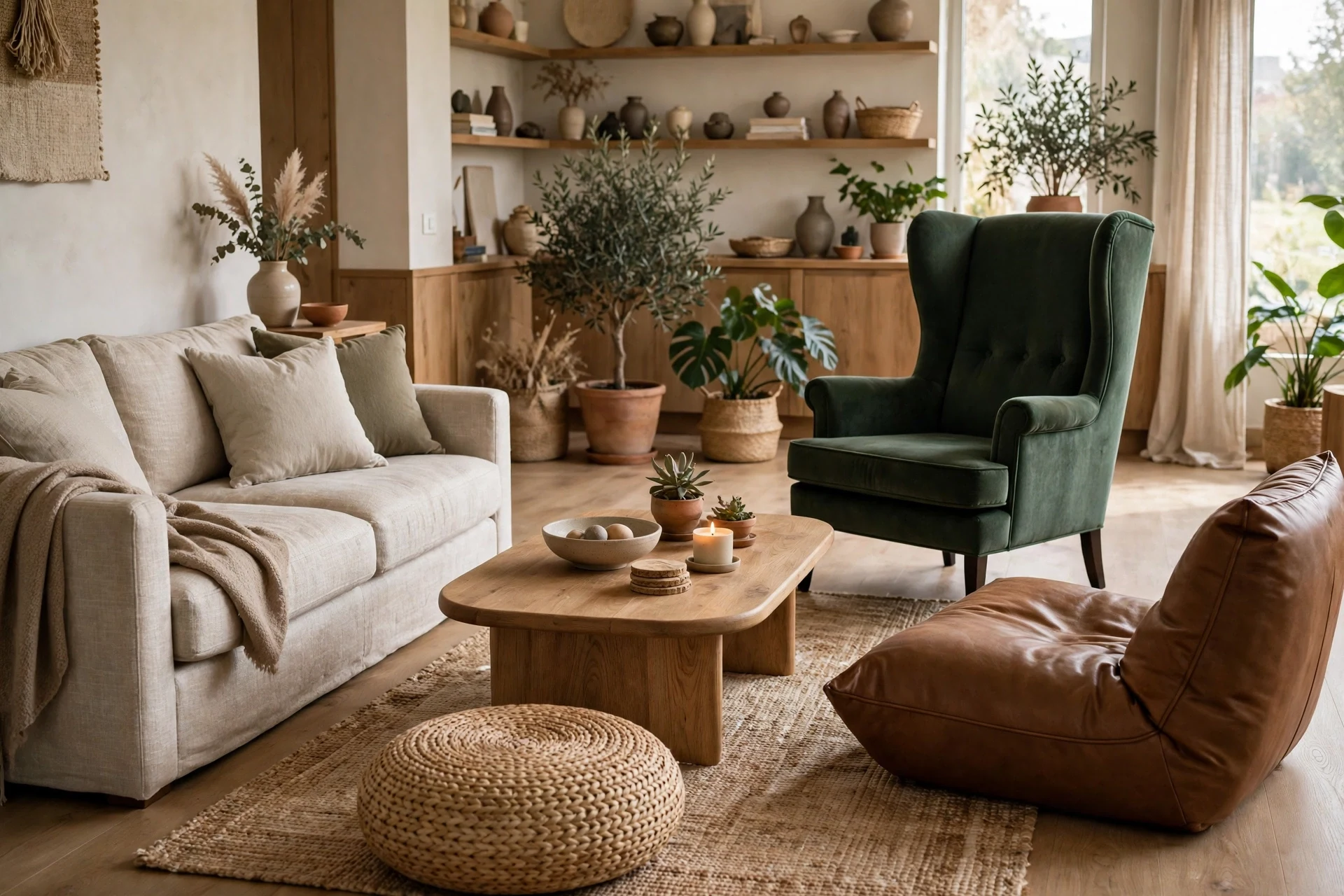
A living room where every seat is the same height feels like a waiting room. Mixing seating heights — a low lounge chair, a standard sofa, a tall accent chair, a pouf on the floor — makes the room look collected over time instead of bought in one afternoon, and it gives everyone a seat that suits them. Kids love the floor pouf, grandparents love the chair with arms that is easy to get out of, and guests love having a real choice.
The trick is keeping the heights within a comfortable range so conversation still flows. A difference of a few inches between seats is interesting; a foot of difference makes people feel like they are sitting at the kids’ table. Pair a low chair with a taller side table so a drink is still in reach, and keep the coffee table low enough that it works for all of them. Mixed heights add visual rhythm to a room that a matching set never can.
7. Add a Console Table Behind the Sofa
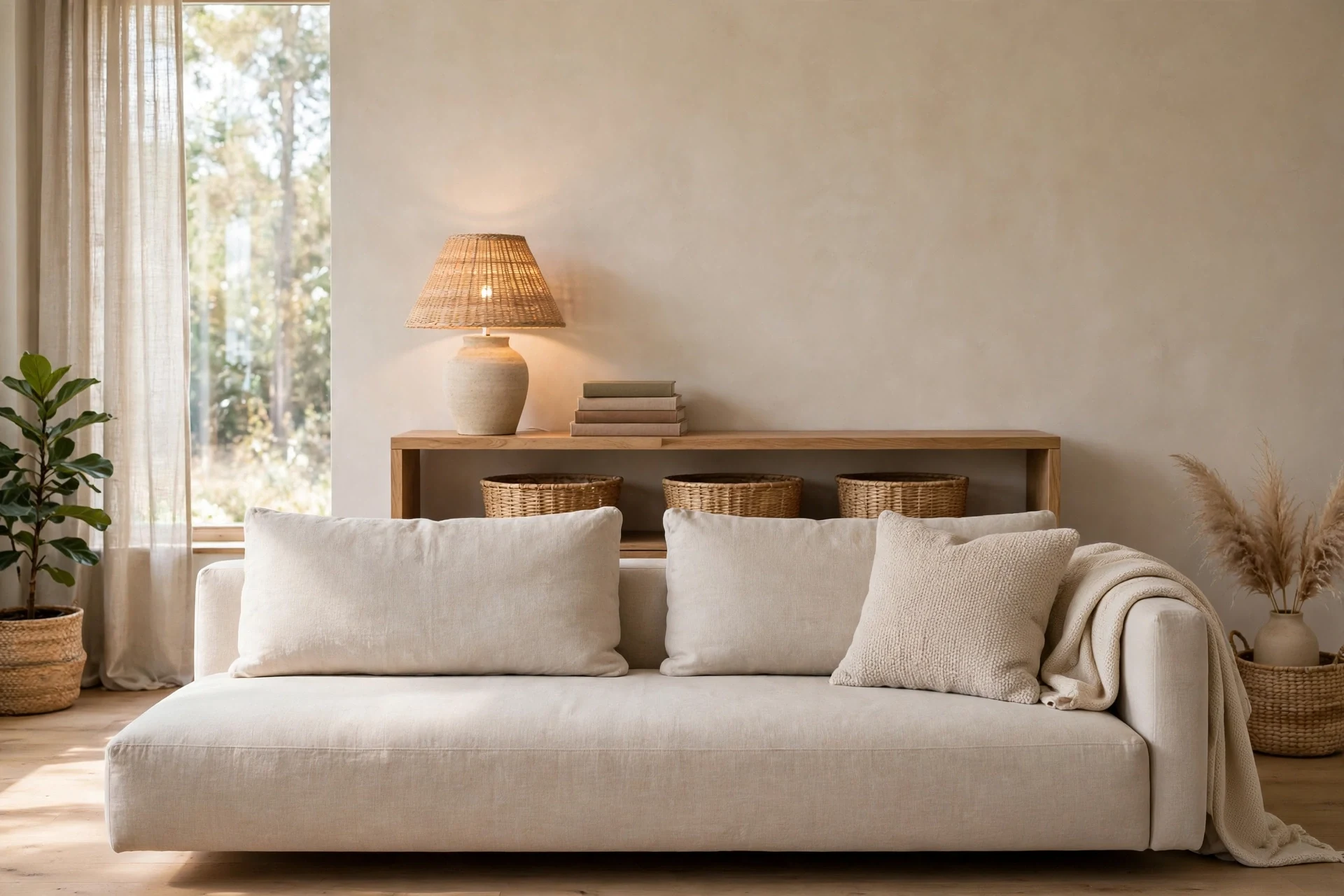
The space behind a floating sofa is the most underused real estate in the living room, and a console table turns it into one of the most useful spots in the house. A slim table, twelve inches deep or less, holds a lamp, a charging station, a stack of books, or a vase of greenery — and it gives the back of the sofa a finished look from the other side of the room. In an open-plan home, it also acts as a gentle divider between the living area and the dining or kitchen space.
Choose a console that is about two-thirds the length of the sofa so it looks proportional, and keep the top styling simple: one tall thing, one low thing, and one personal thing. A lamp on one end, a short stack of books in the middle, and a framed photo on the other end is a classic formula that never looks cluttered. If you need the storage, pick a console with a lower shelf for baskets and you have hidden storage that looks like decor.
8. Create a Coffee Table Vignette
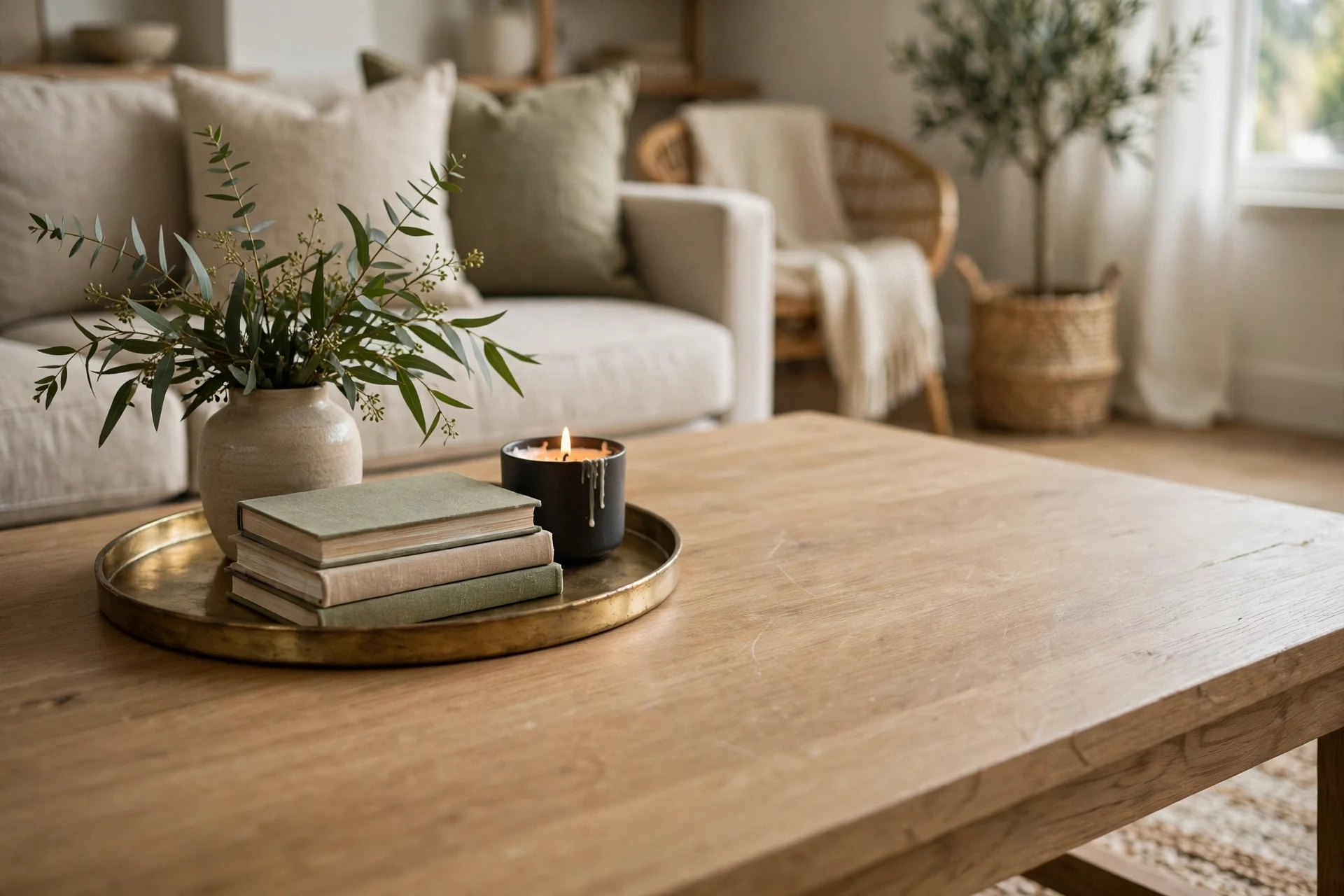
A coffee table with nothing on it looks unfinished, and one covered in clutter looks stressful. The sweet spot is a small vignette — a group of three to five objects that look good together and still leave room for a mug. Start with a tray to corral everything; it instantly makes a random collection look deliberate. Add something tall, like a vase with stems, something low and flat, like a stack of two books, and something with texture, like a small bowl or a candle.
Leave at least a third of the table empty. That breathing room is what keeps the vignette from tipping into clutter, and it means there is always somewhere to set a drink down without a juggling act. Swap one item every month or so — a new candle, a different book, fresh stems — and the whole room feels refreshed for free. A coffee table vignette is the fastest five-minute upgrade in this entire list.
9. Use Trays to Tame Surfaces
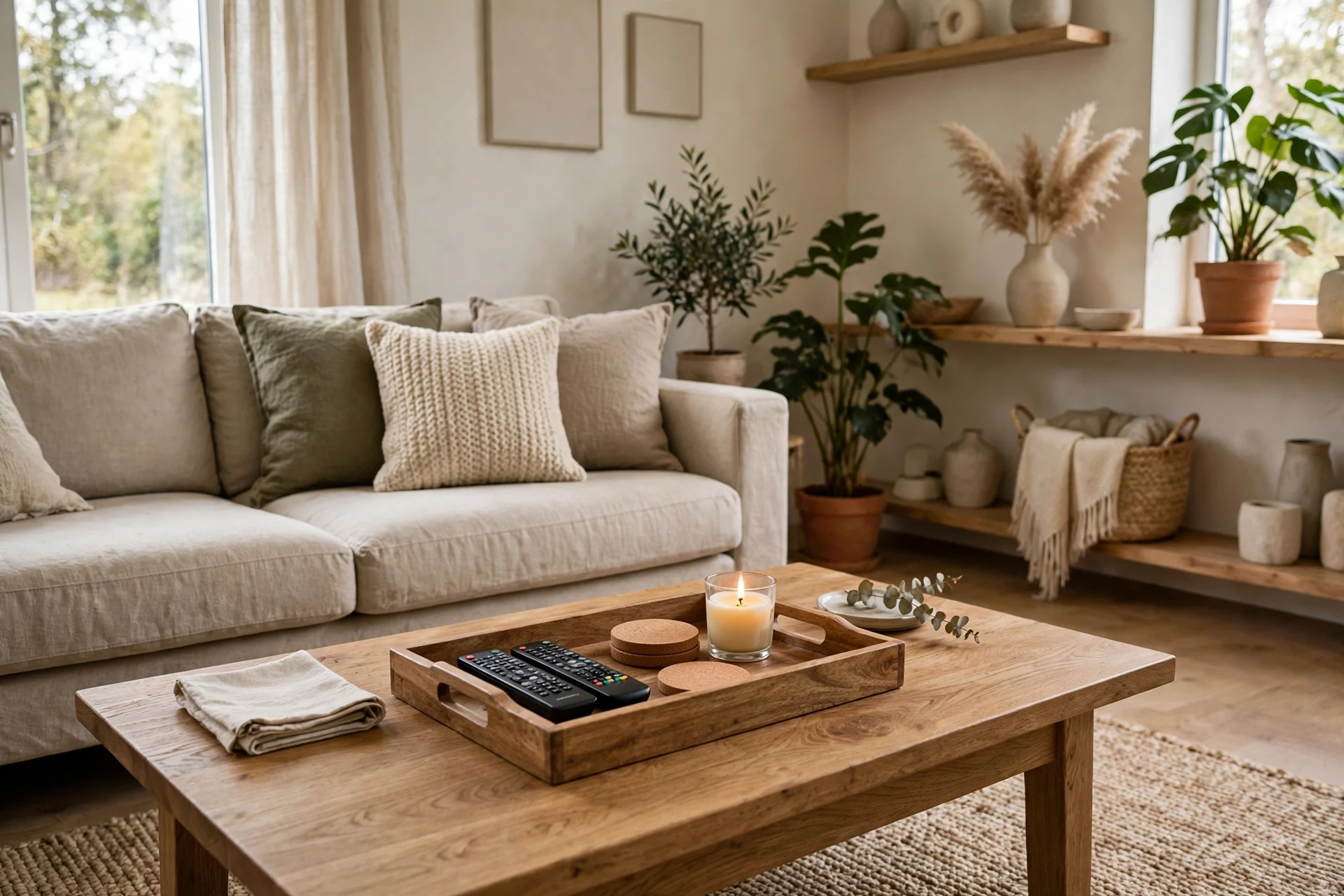
Every flat surface in a living room attracts clutter — remote controls, mail, reading glasses, a half-finished puzzle. A tray is the simplest fix ever invented: it gathers the small stuff into one neat, movable group and makes the surface underneath look intentional. Use a tray on the coffee table for remotes and coasters, one on the ottoman to turn it into a stable spot for a drink, and one on a side table for a candle and a small plant.
The trick is choosing trays that suit the surface. A wooden tray warms up a glass coffee table, a metal tray adds shine to a dark wood table, and a woven tray softens a leather ottoman. Keep what is on the tray to three or four items, and once a week do a thirty-second tray reset — anything that does not belong goes back where it came from. Trays do not create storage, but they create the look of order, and in a living room that is half the battle.
10. Add Plants at Three Heights
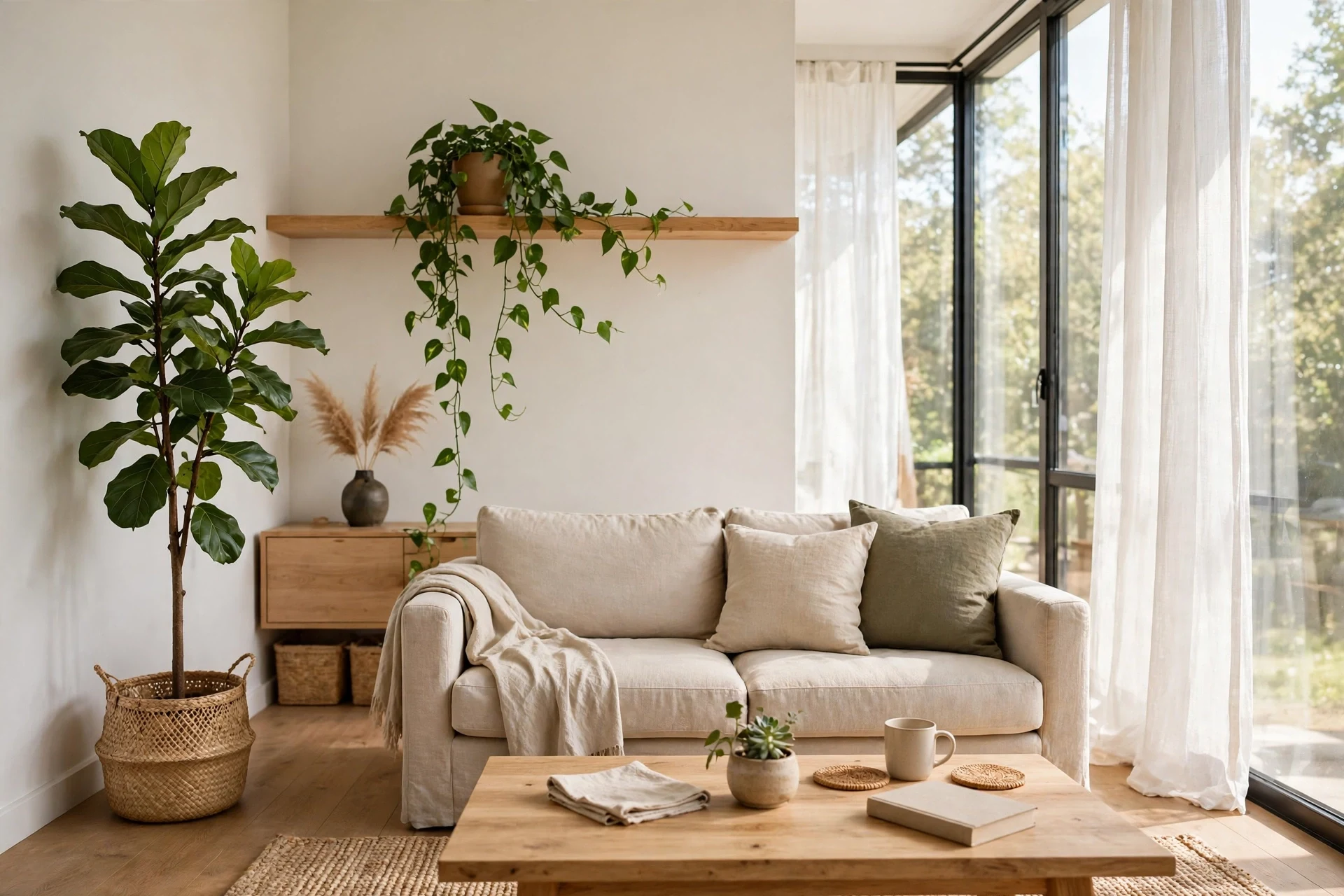
One plant on a windowsill is decoration. Plants at three different heights — one on the floor, one on a table, one hanging or on a high shelf — is a design move. The mix of heights draws the eye around the room, fills empty corners, and makes the space feel alive in a way no single plant can. A tall fiddle-leaf fig or olive tree in a corner, a pothos trailing from a shelf, and a small snake plant on the coffee table is a combination that works in almost any living room.
If you do not have a green thumb, start with plants that forgive neglect: snake plants, pothos, and ZZ plants survive low light and irregular watering. Put the floor plant in a basket instead of a pot for instant texture, and group plants in odd numbers for a natural look. Real plants also clean the air and soften hard edges, but honestly, the best reason to add them is simpler — a room with plants just feels more like a home.
11. Hang Curtains High and Wide
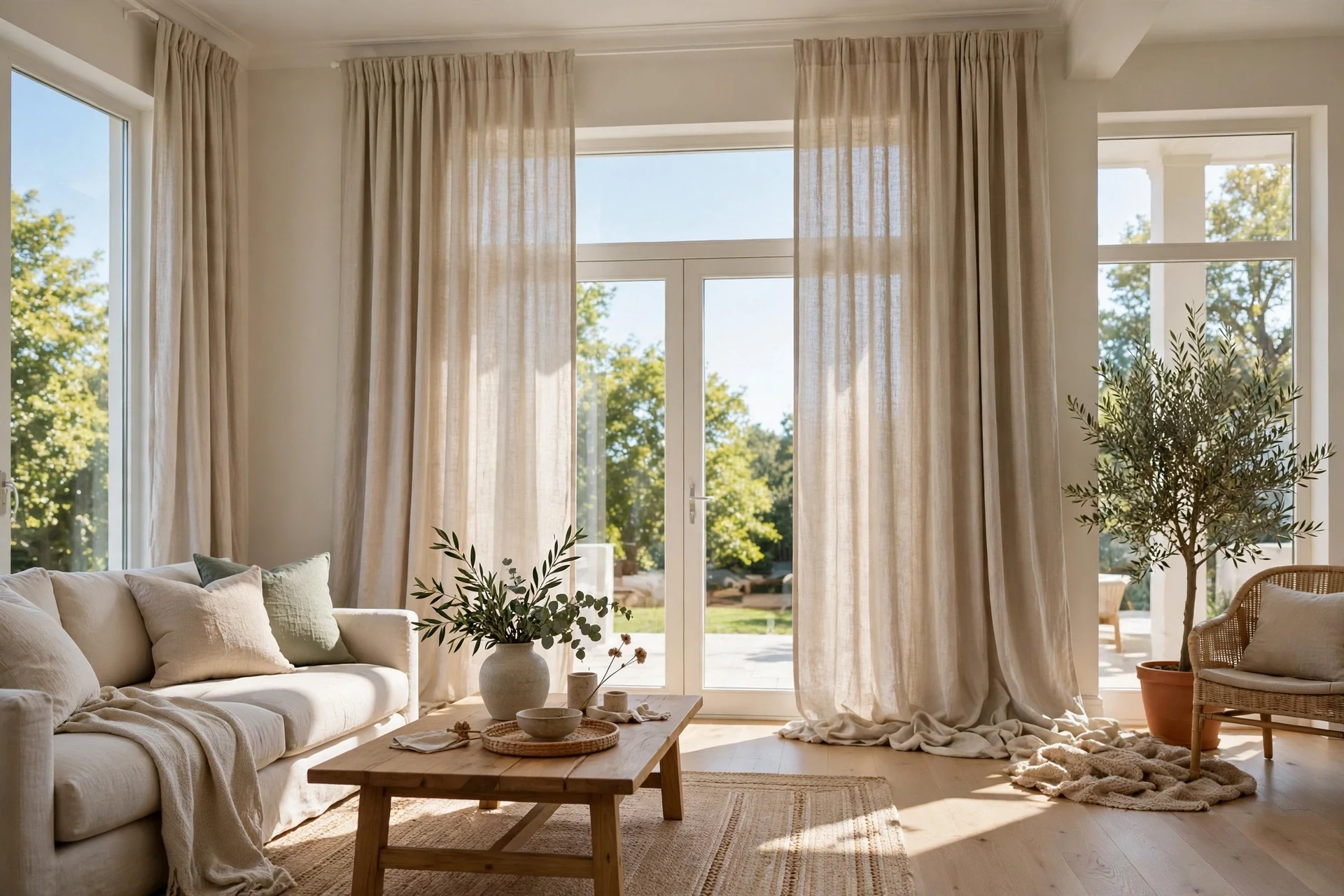
Curtains hung right at the top of the window frame make the window — and the whole room — look smaller. Hang the rod four to six inches above the frame, or all the way to the ceiling, and extend it six to twelve inches past the window on each side. The window instantly looks taller and wider, the ceiling looks higher, and when the curtains are open they frame the view instead of blocking it.
Length matters just as much. Curtains should just kiss the floor or pool very slightly — anything shorter chops the room in half visually. Choose a fabric with some weight, like linen or a cotton blend, so the panels hang in soft folds instead of stiffening out. And if you are choosing between sheer and solid, consider layering: sheers for daytime privacy and light, solid panels on the outside for evening warmth and a finished look.
12. Pick a Paint Color That Works All Year
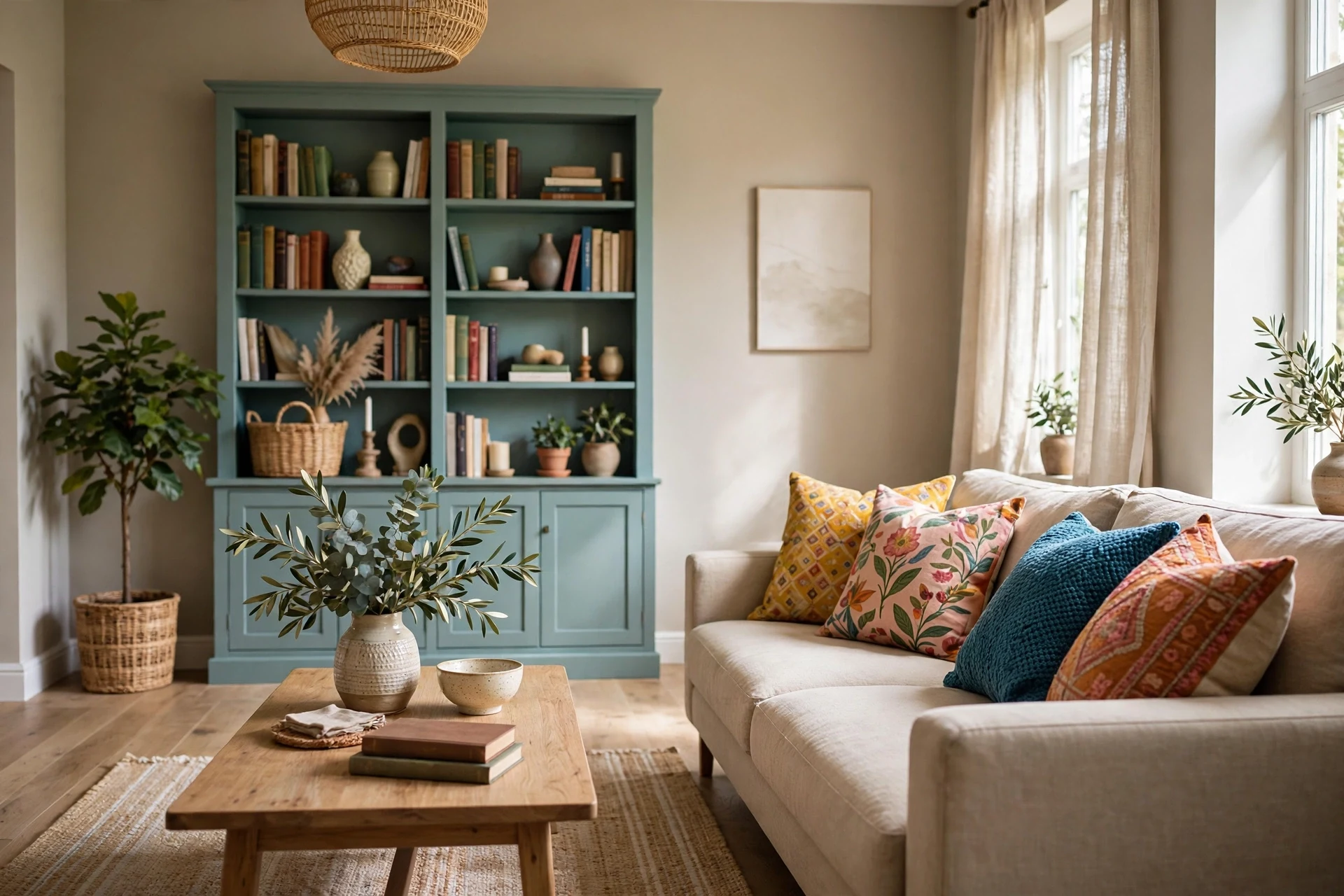
Trendy paint colors are fun for a season and tiring for the other three. A living room color that works all year is one that looks good in January’s gray light and July’s bright sun, and that lets you change pillows and throws without repainting. Warm whites, soft greiges, pale sage, and dusty blue are the workhorses here — calm enough to live with daily, interesting enough to never feel boring.
Before committing, paint a large swatch — at least two feet square — on two different walls and live with it for three days, watching it in morning, afternoon, and lamplight. Paint always looks different on a wall than on a chip. If you love bold color, use it on one accent wall or in a painted bookshelf back panel instead of all four walls; you get the drama without the commitment, and repainting one wall later is a weekend job, not a whole-room project.
13. Add a Statement Mirror
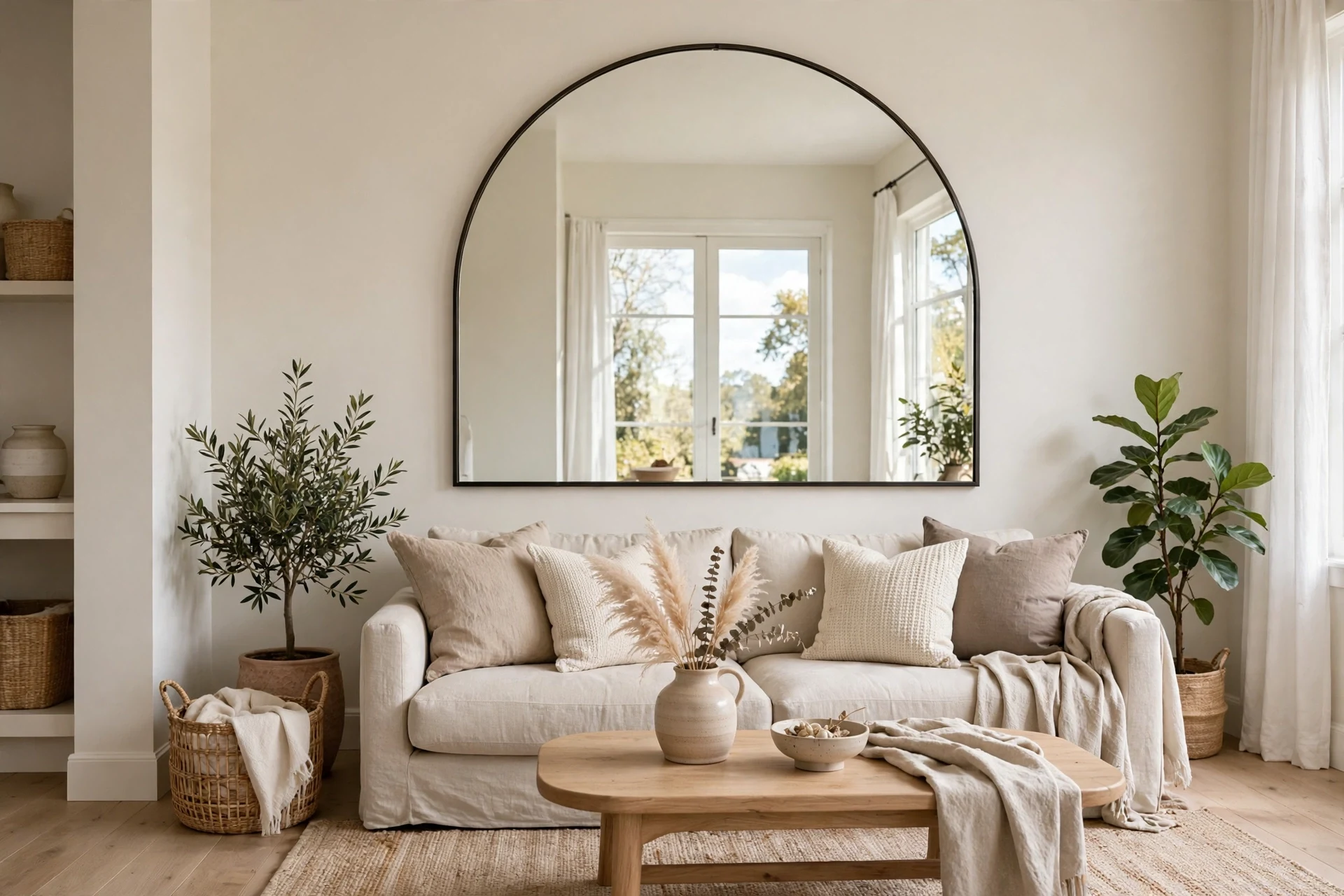
A large mirror is the cheapest way to make a living room feel bigger and brighter, and it works instantly. Hung across from a window, it bounces daylight deep into the room; hung above a sofa or mantel, it becomes the focal point the room was missing. A mirror with an interesting frame — arched, round, or sunburst — doubles as art, so it earns its wall space twice over.
Scale is everything. A mirror that is too small above a sofa looks like an afterthought, so aim for one that is about two-thirds the width of the furniture below it. Hang it at eye level, around 57 inches to the center, and check what it reflects before you hang it: a mirror reflecting a blank wall or a pile of clutter doubles the problem. Angle it slightly toward the window or the prettiest part of the room, and let it do the work of a second window.
14. Create a Gallery Wall of Personal Photos
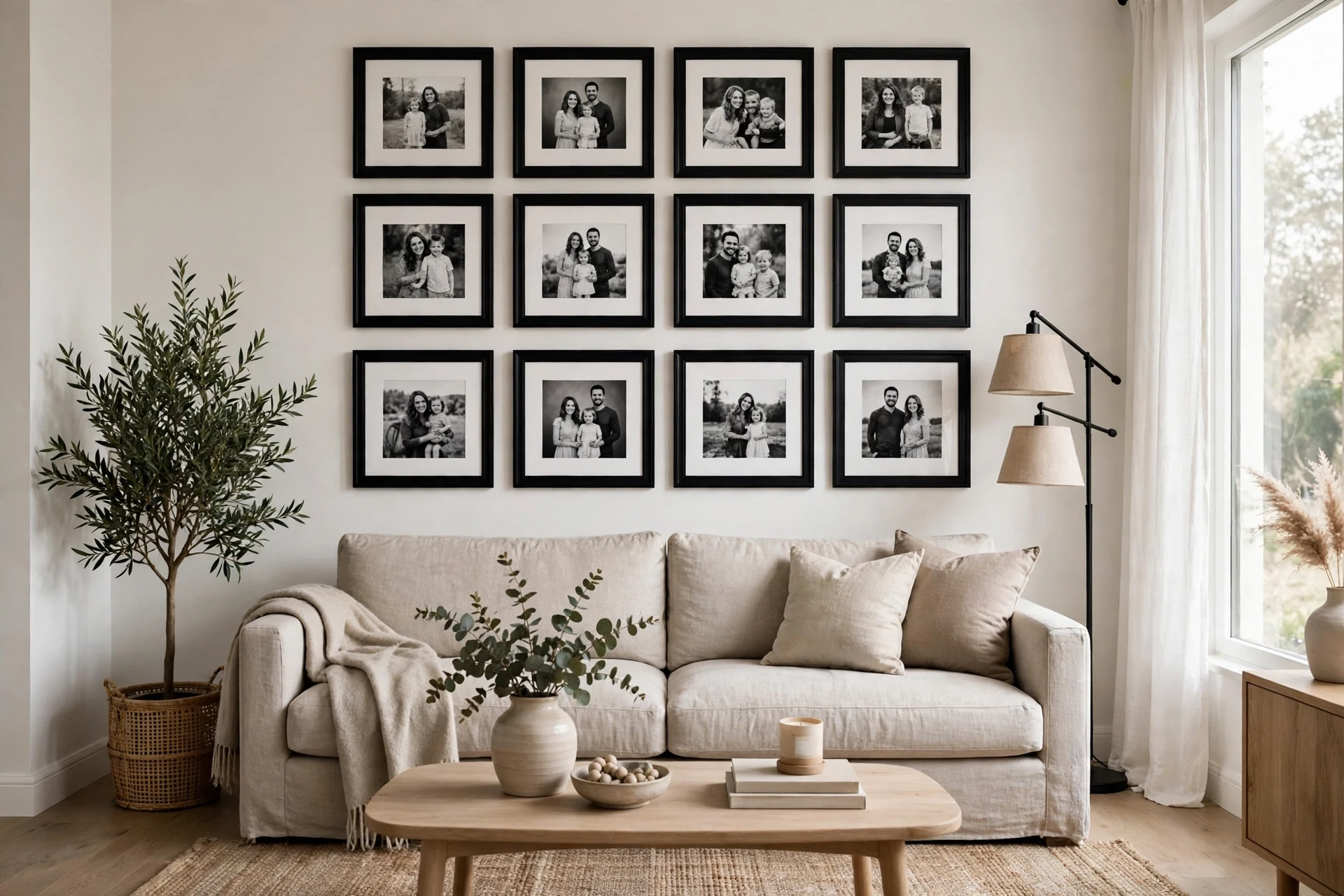
A gallery wall of your own photos beats store-bought art every time, because nobody else has one like it. The trick is treating it like a design project instead of a random nail collection. Start by laying the frames on the floor and arranging them until the group feels balanced, then trace the arrangement onto paper templates and tape those to the wall before you hammer a single nail. Mixing frame sizes is fine — mixing frame colors is where it usually goes wrong, so stick to one or two finishes.
Keep the spacing consistent, about two inches between frames, and hang the center of the whole arrangement at eye level. Black-and-white prints are a smart move for a mixed collection, because they unify photos taken in different light and different years. A gallery wall over a sofa, along a hallway wall in the living room, or above a console table turns blank space into the most personal spot in the house.
15. Use Baskets for Beautiful Storage
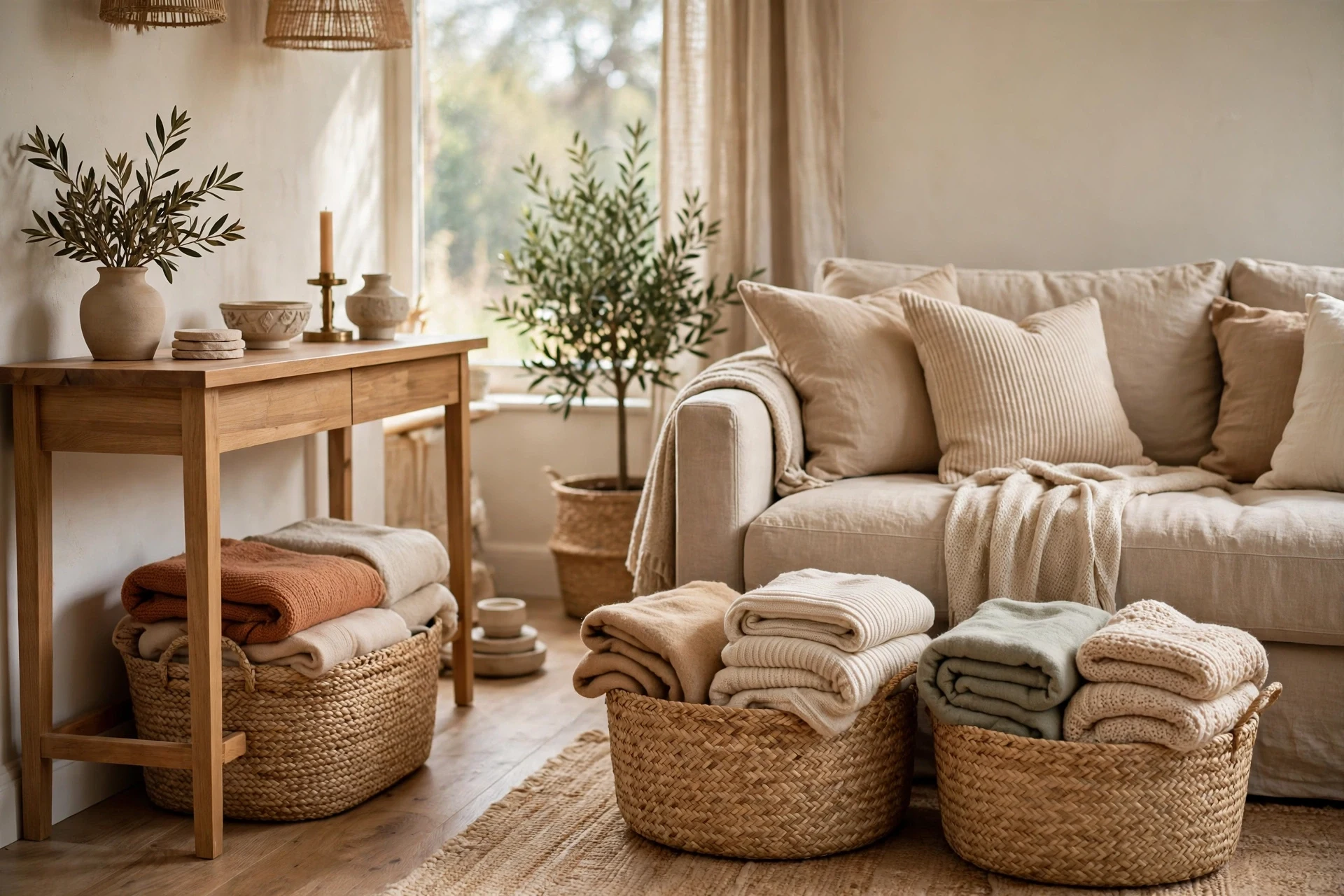
The living room collects things that have nowhere else to go: extra throws, kids’ toys, dog toys, magazines, charging cables. Baskets solve the storage problem without adding a single piece of furniture, and they look good doing it. A large seagrass basket beside the sofa holds throws, a medium one under the console table holds shoes or games, and a small one on a shelf corrals remotes and chargers.
Choose baskets with lids for anything you do not want to see, and open baskets for things you grab daily. Natural materials like seagrass, rattan, and cotton rope add texture that a plastic bin never will, and they work with every style from farmhouse to modern. Label the inside of a basket if it holds something specific, and do a quick basket audit once a season — if something has not been used in three months, it probably belongs somewhere else entirely.
16. Add a Throw Blanket (or Two)
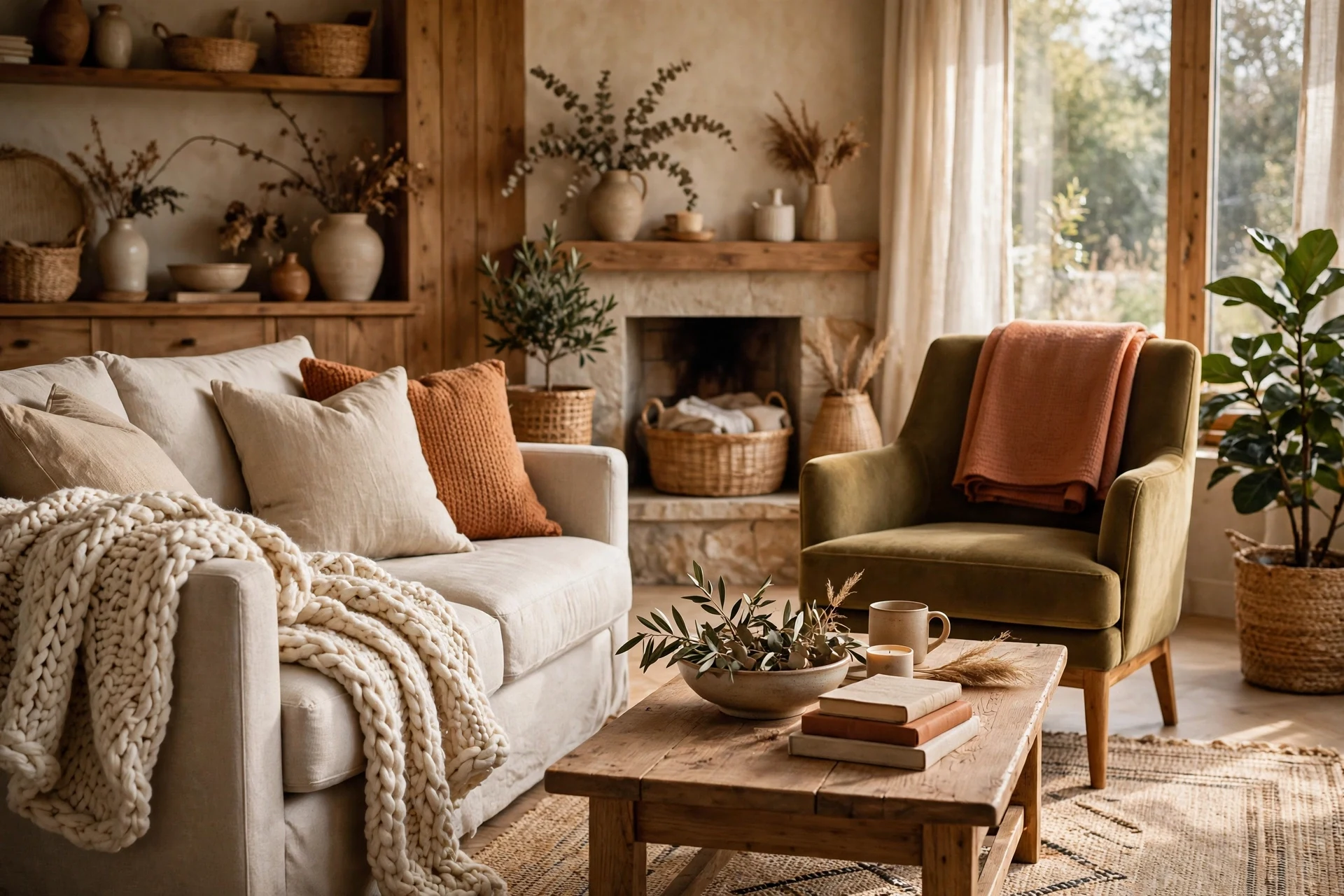
A throw blanket is the fastest way to make a living room feel inviting, and it costs less than dinner out. Drape one over the arm of the sofa, fold one over the back of a chair, and keep one in a basket for movie night. The layers of softness make the room look lived-in and comfortable, and they invite people to actually settle in instead of perching on the edge of the seat.
Texture matters more than color here. A chunky knit throw adds coziness to a leather sofa, a lightweight cotton throw suits a linen sofa in summer, and a faux-fur throw makes a plain chair feel luxurious. Stick to a simple fold — drape it over the arm with one fold, or fold it in thirds over the back — because a carefully arranged throw looks effortless and a tangled one looks messy. Wash throws regularly, because the throw everyone reaches for is also the one that collects the most use.
17. Mix Pillow Textures, Not Just Colors
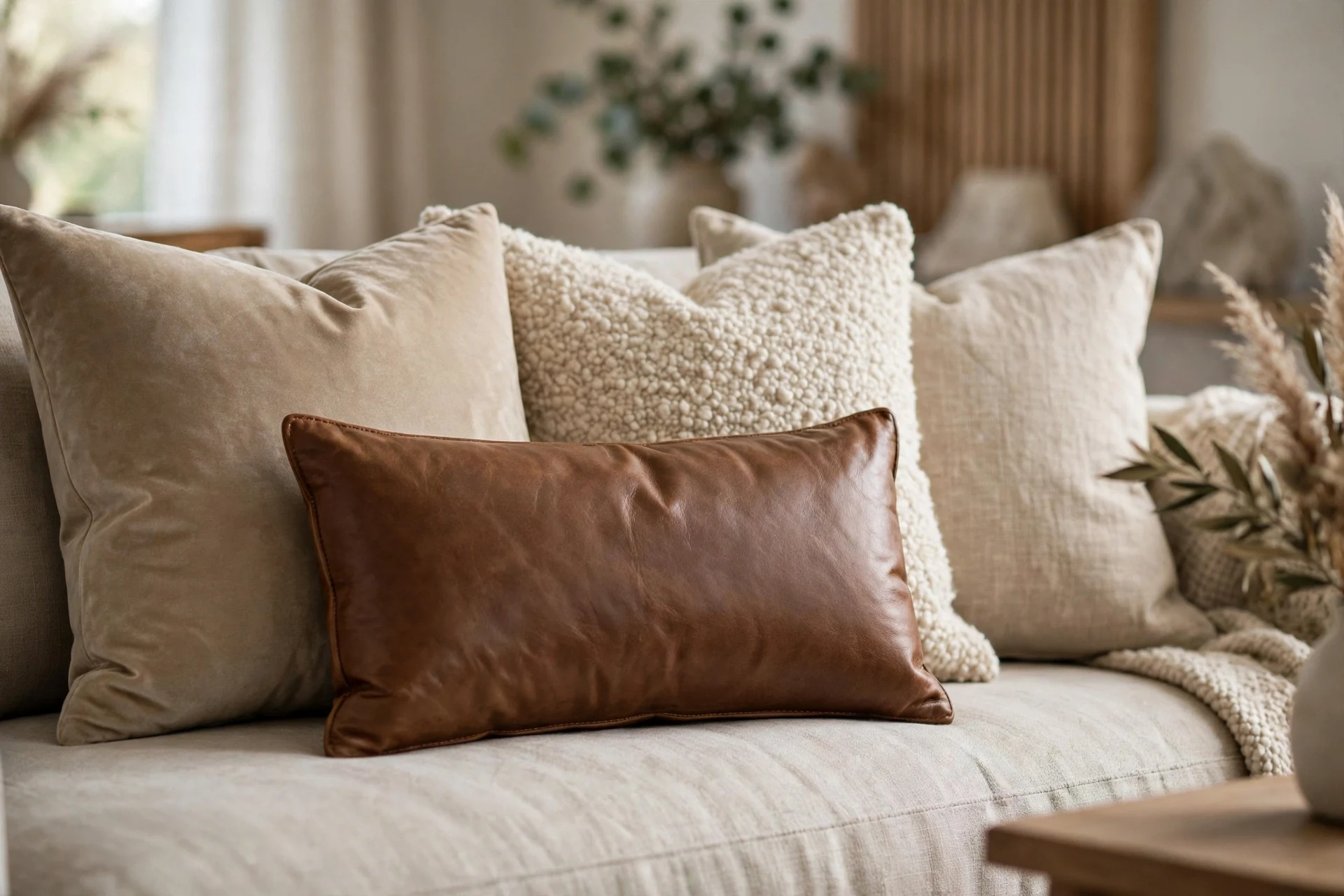
Most people shop for throw pillows by color, and that is why so many sofas look flat. The secret to pillows that look professionally styled is mixing textures: a velvet pillow next to a linen one, a nubby boucle beside a smooth cotton, a leather lumbar in front of soft knits. Texture catches the light differently, so the sofa looks layered and interesting even in a single color palette.
Start with two larger pillows in the corners of the sofa, add two medium ones in front of them, and finish with one lumbar pillow in the center. Odd numbers look more natural than pairs, and varying the sizes keeps the arrangement from looking like a matched set. Keep the pillow count to five or fewer on a standard sofa — more than that and there is nowhere left to sit, which defeats the purpose of the sofa entirely.
18. Define Zones in an Open Plan
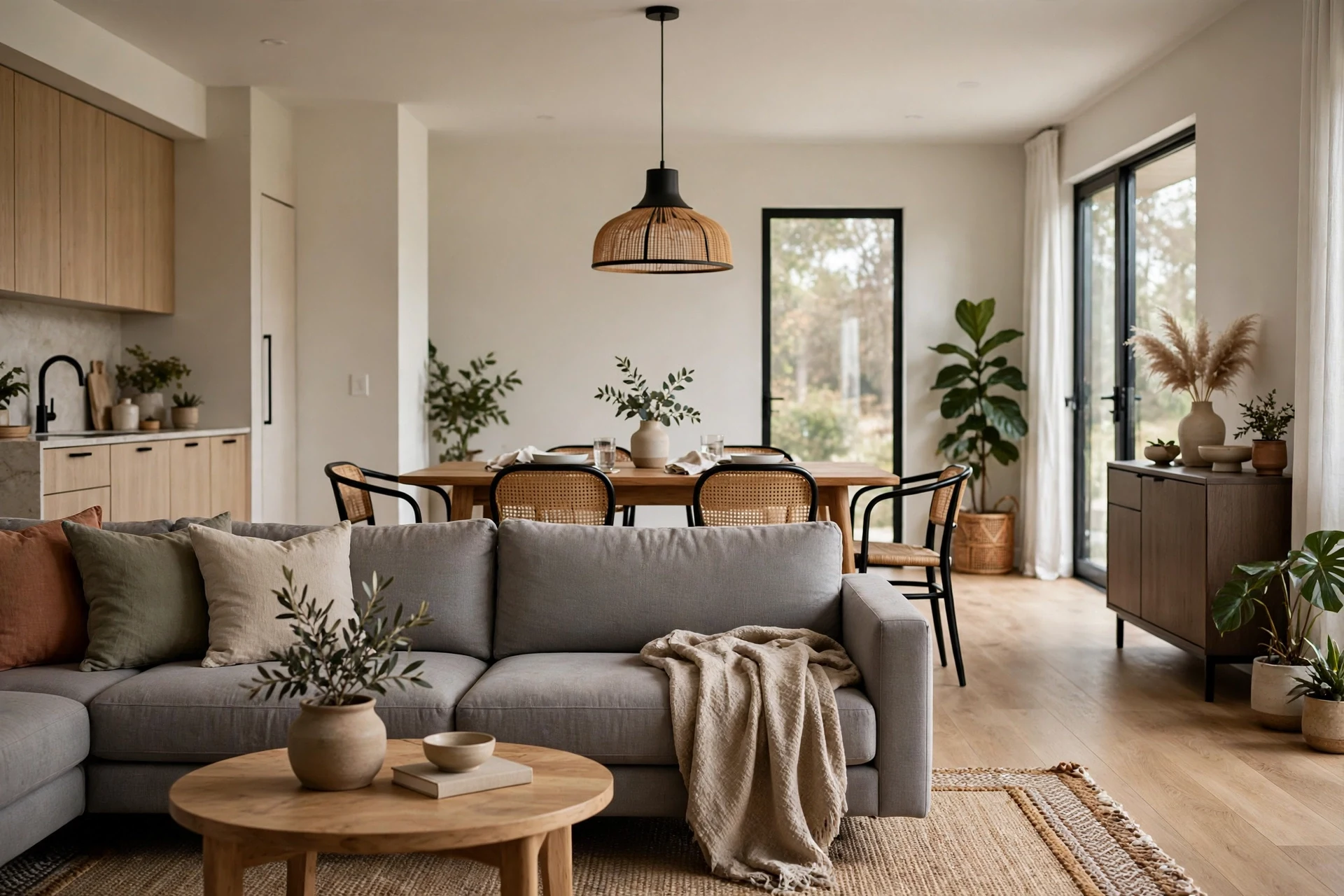
Open-plan living rooms are wonderful until everything blurs into one big room where nobody knows where the living area ends and the dining area begins. Defining zones does not require walls — a rug marks the seating zone, a console table marks the boundary, and a change in lighting marks the shift from one area to the next. Each zone gets its own job, and the room suddenly makes sense.
Use furniture placement to draw the lines. The back of the sofa can face the dining table, a bookshelf can stand perpendicular to the wall as a divider, and a pendant light over the dining table tells everyone exactly where dinner happens. Keep a clear walkway of about three feet between zones so the room flows instead of feeling blocked. Zoning is what turns an open plan from a big empty box into a house full of rooms that happen to share the air.
19. Add a Floor Lamp with a Dimmer
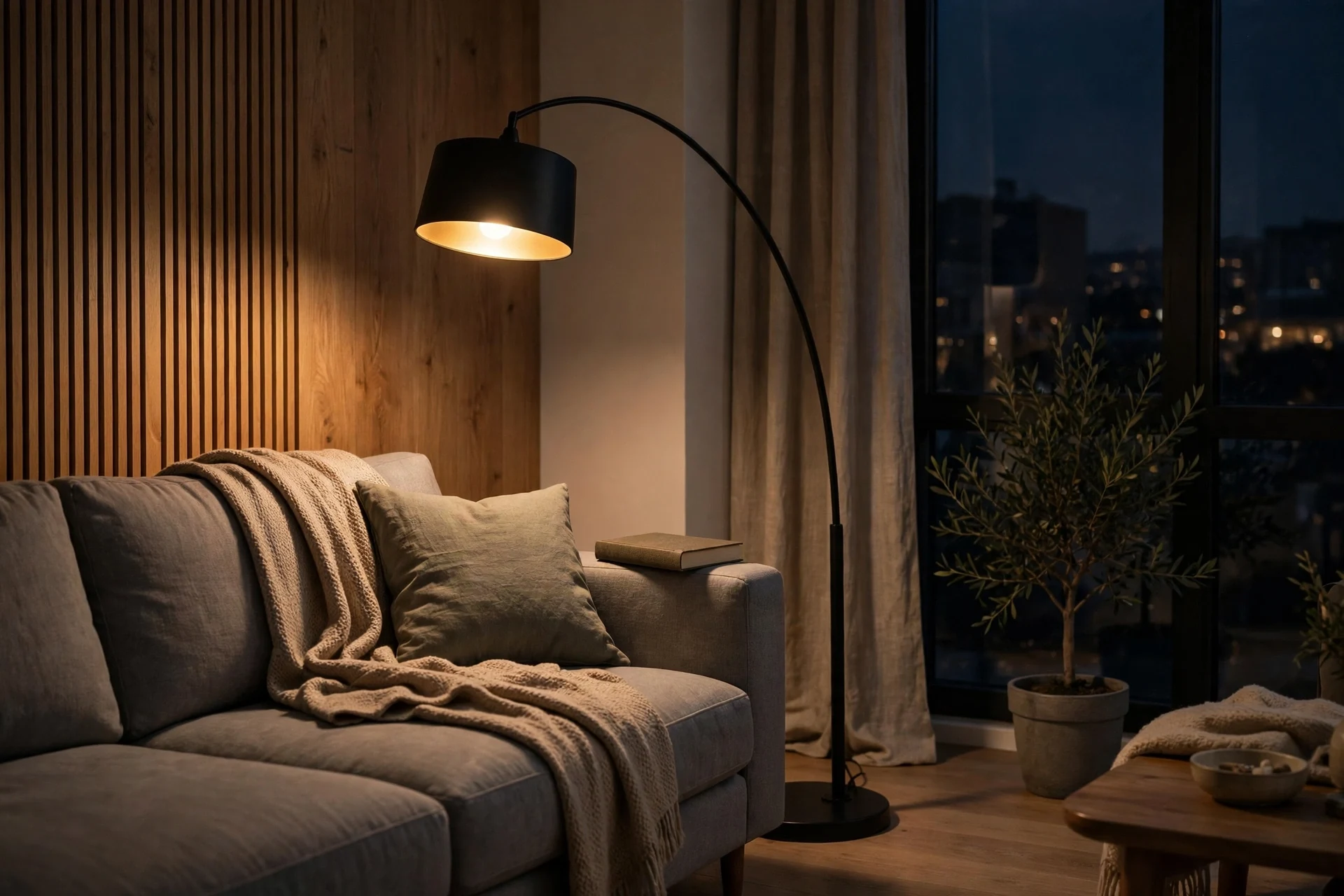
A floor lamp is the most useful light in a living room, and a dimmer makes it ten times better. Place one beside the sofa or behind a reading chair, and it gives you light exactly where you need it without flooding the whole room. A dimmer lets the same lamp be bright enough to read by at four in the afternoon and soft enough for a movie at nine at night.
Arc floor lamps are great for reaching over a sofa without a side table, while a classic tripod lamp adds a sculptural shape to an empty corner. If your lamp does not have a built-in dimmer, a plug-in dimmer switch costs a few dollars and works with most bulbs. Pair the lamp with a smart bulb and you can dim it from the sofa, set it to turn on at sunset, and never walk across a dark room again.
20. Style the Mantel with a Simple Formula
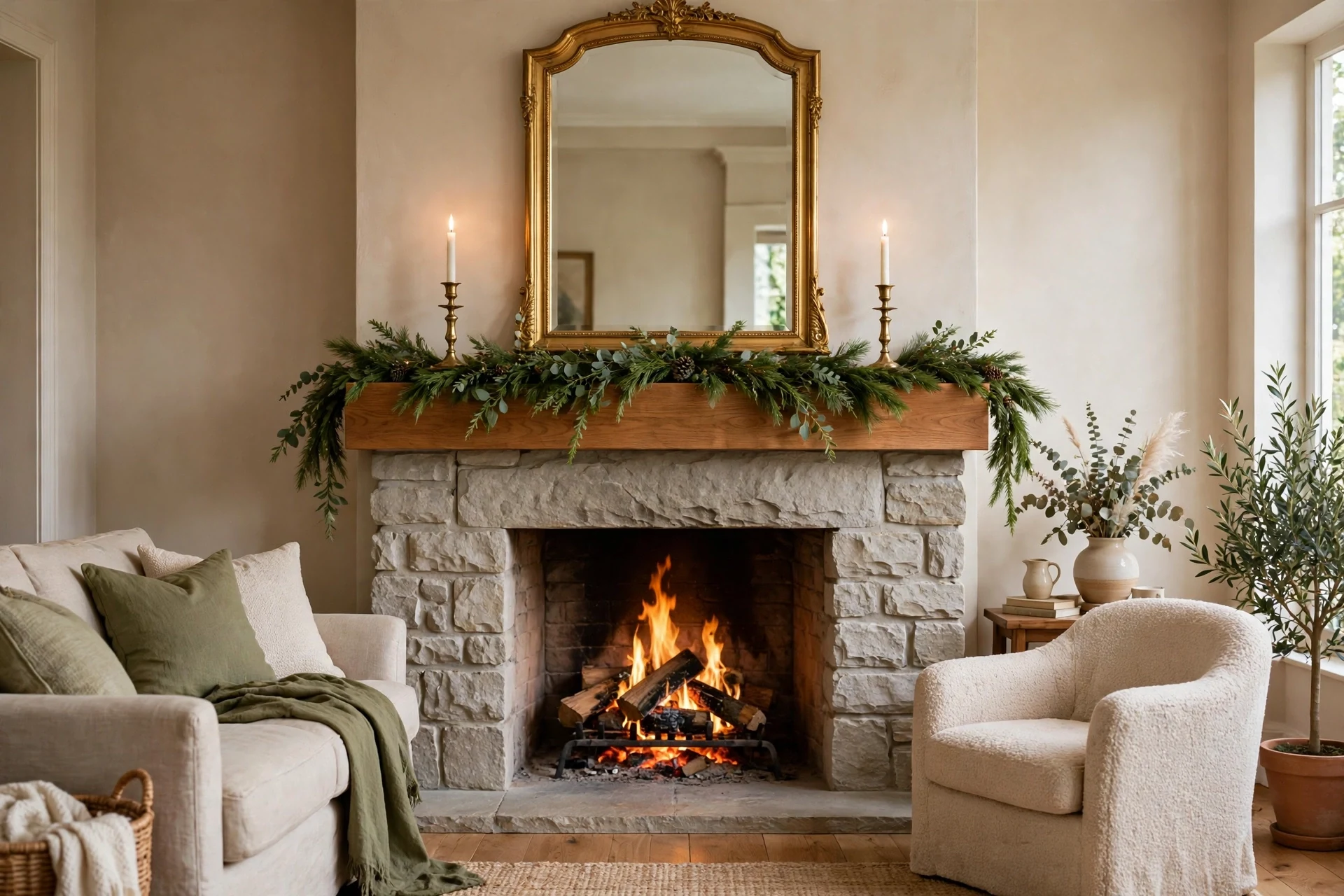
A mantel is the natural focal point of a living room, and it is also the easiest place to overdo it. The simple formula that always works: one large anchor in the center, like a mirror or a piece of art, two matching or similar items on either side, like candlesticks or small vases, and one low layer in front, like a garland of greenery or a row of small books. Symmetry keeps it calm; one slightly off-center item keeps it from feeling stiff.
Change the low layer with the year — fresh greenery in spring, a bowl of shells in summer, a stack of books in fall — and the mantel always feels current without a full redecoration. Keep the height of the side items lower than the center anchor so the eye travels up to the middle. And leave a little empty space on the mantel itself; a mantel packed edge to edge looks like a shelf, not a focal point.
21. Bring in a Vintage Find
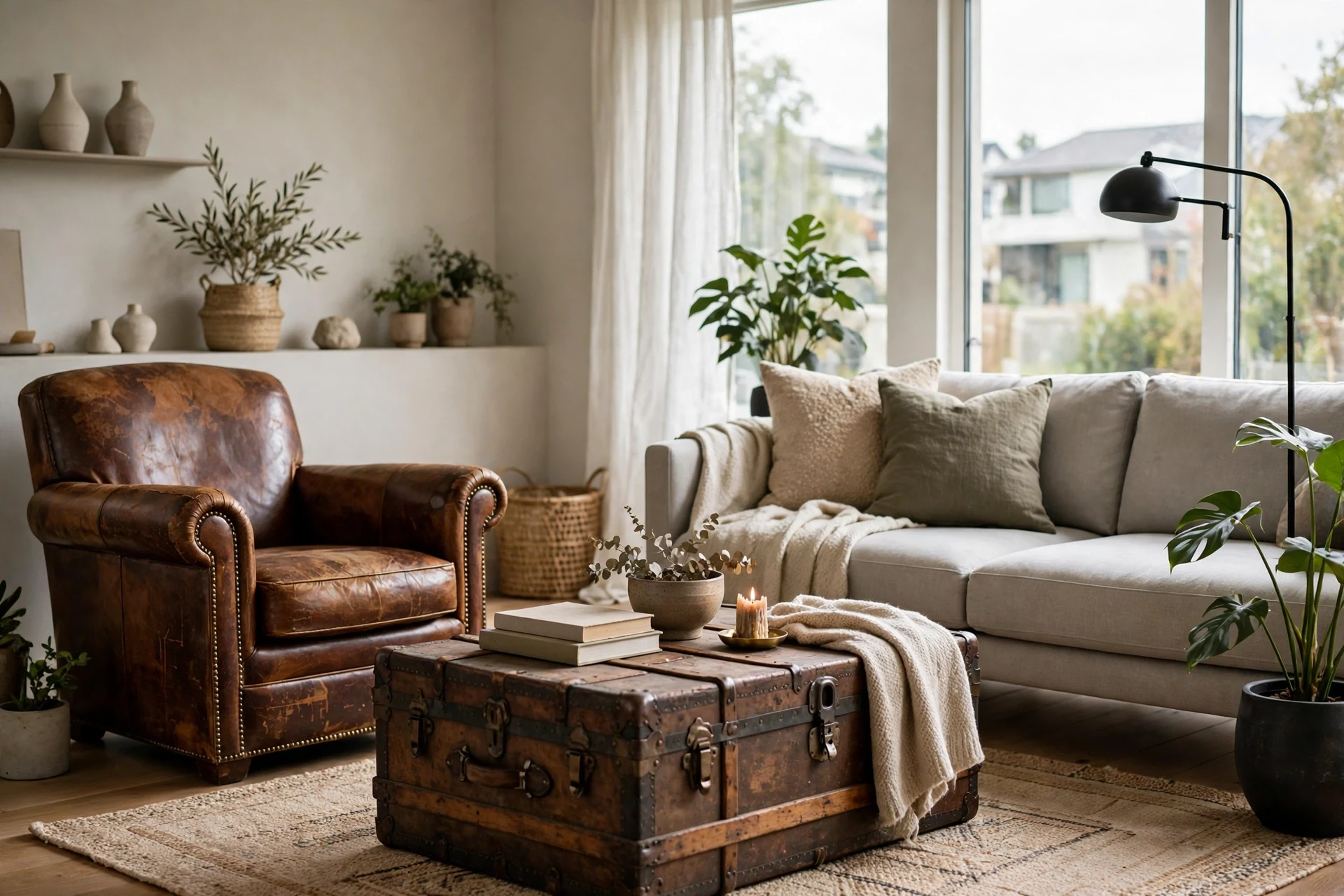
A living room full of brand-new furniture can feel like a showroom — nice to look at, hard to relax in. One vintage piece changes everything: a worn leather chair, a mid-century sideboard, an old trunk used as a coffee table, or a brass lamp with a little patina. The age and wear give the room a story and a sense of history that new furniture cannot fake.
Hunt at thrift stores, estate sales, and online marketplaces, and look for solid wood and good bones rather than perfect condition — scratches on a vintage trunk are character, not damage. Mix the vintage piece in with your newer furniture instead of grouping all the old things together, so it reads as collected rather than themed. One strong vintage find is enough; two or three is a collection, and a room full of them is a museum.
22. Add a Pouf or Ottoman
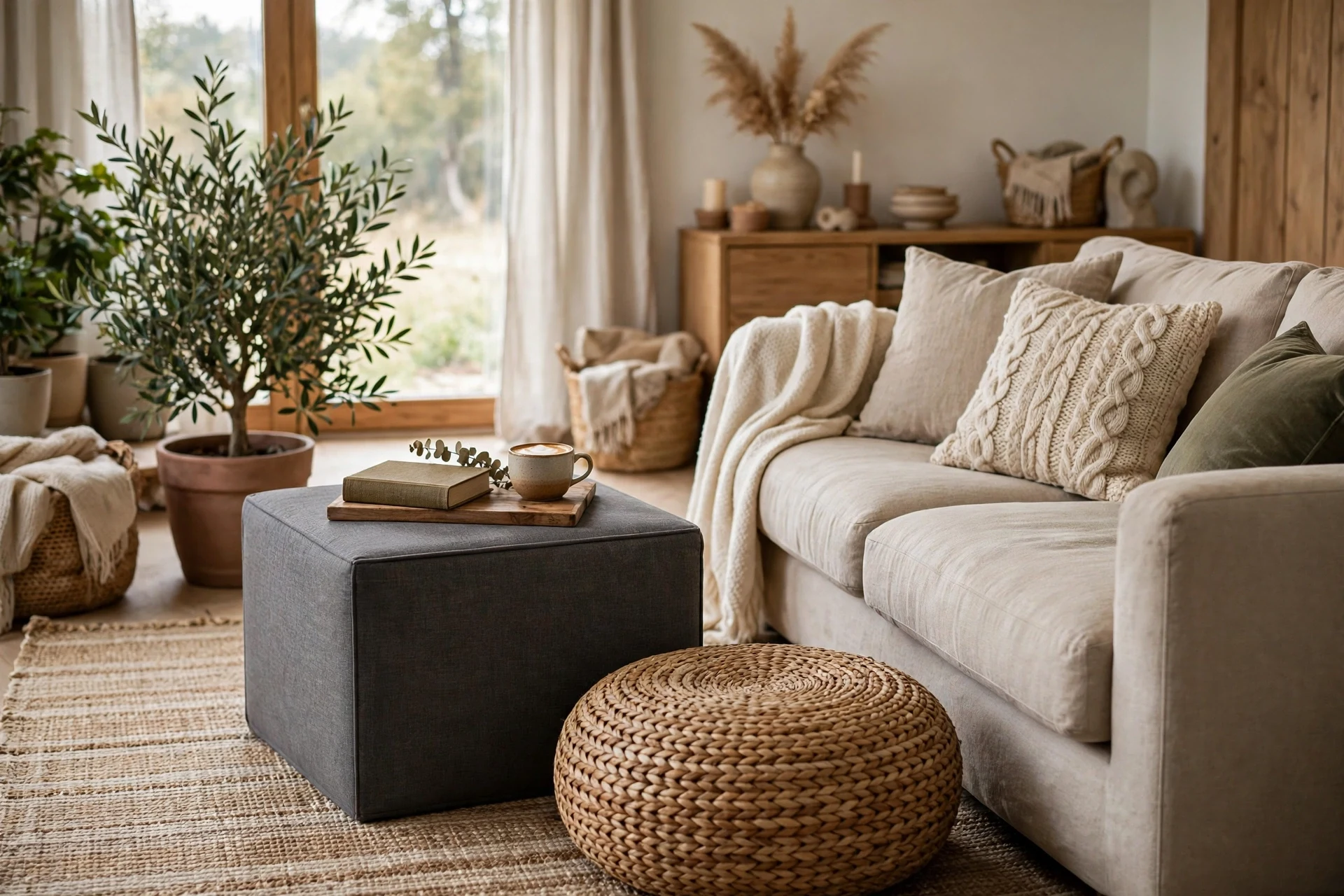
A pouf or ottoman is the hardest-working small piece in a living room. It is a footrest during a movie, an extra seat when friends drop by, a coffee table with a tray on top, and a place to perch a book or a laptop. Unlike a chair, it tucks under a console table or beside the sofa when it is not needed, so it adds function without adding bulk.
Choose a pouf in a durable fabric or leather that can handle feet, and pick a size that is about two-thirds the width of the seat it serves. A round pouf softens a room full of straight lines, while a square ottoman with storage inside hides blankets and board games. Keep one in a color or texture that contrasts with the sofa — a woven pouf against a smooth sofa, or a leather ottoman against fabric — and it becomes a style statement as well as a workhorse.
23. Create a Kids’ Corner That Blends In
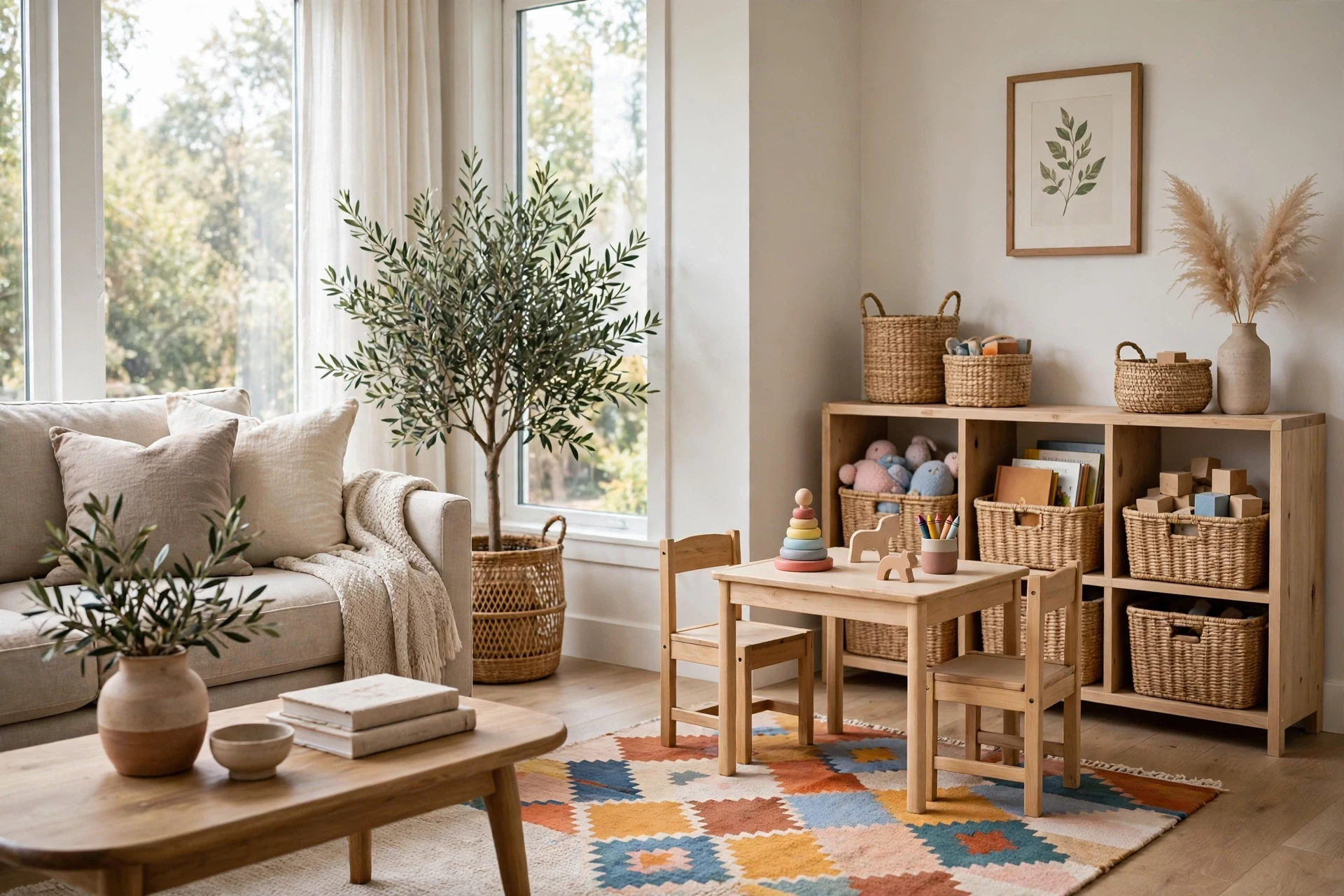
A living room shared with kids does not have to look like a toy store exploded. Give the kids one defined corner — a low bookshelf, a small table with two chairs, and a rug that marks their zone — and the rest of the room stays yours. The trick is choosing kid furniture in the same style and colors as the rest of the room, so the corner looks like part of the design instead of an invasion.
Storage is what makes it work. A low shelf with baskets lets kids put toys away themselves, and a rule that toys live in the corner keeps the sofa clear. A small chalkboard or a roll of paper on the wall gives them a creative outlet that does not involve your walls. When the kids outgrow the corner, the furniture moves out and the room is already styled — no redecoration required.
24. Use a Bookshelf as a Room Divider
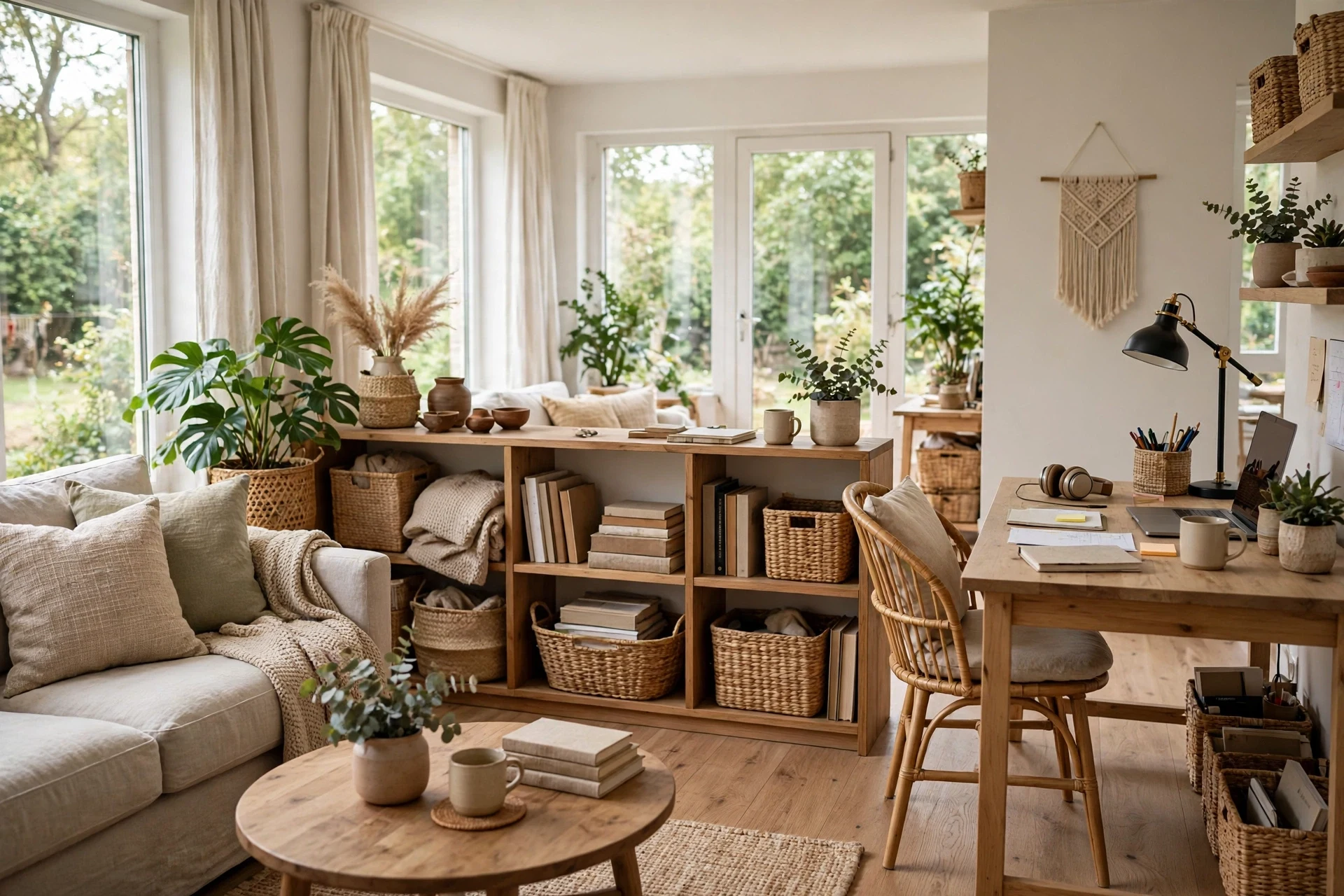
In a large or open living room, a bookshelf turned sideways is a divider that earns its floor space. A low bookshelf, about waist high, separates the seating area from a play zone or a workspace while keeping the sightlines open, so the room still feels connected. A tall bookshelf creates a stronger divide and adds a wall of storage without any construction.
Style both sides of the divider, because both sides are visible. Books, baskets, and a few decorative objects on each side make it look intentional from every angle. Anchor the bookshelf so it cannot tip, especially if kids climb, and leave the top shelf clear or style it lightly so the divider does not feel like a wall. A bookshelf divider is the easiest room division you will ever build — it arrives assembled and it holds your books.
25. Add Texture with a Woven Rug
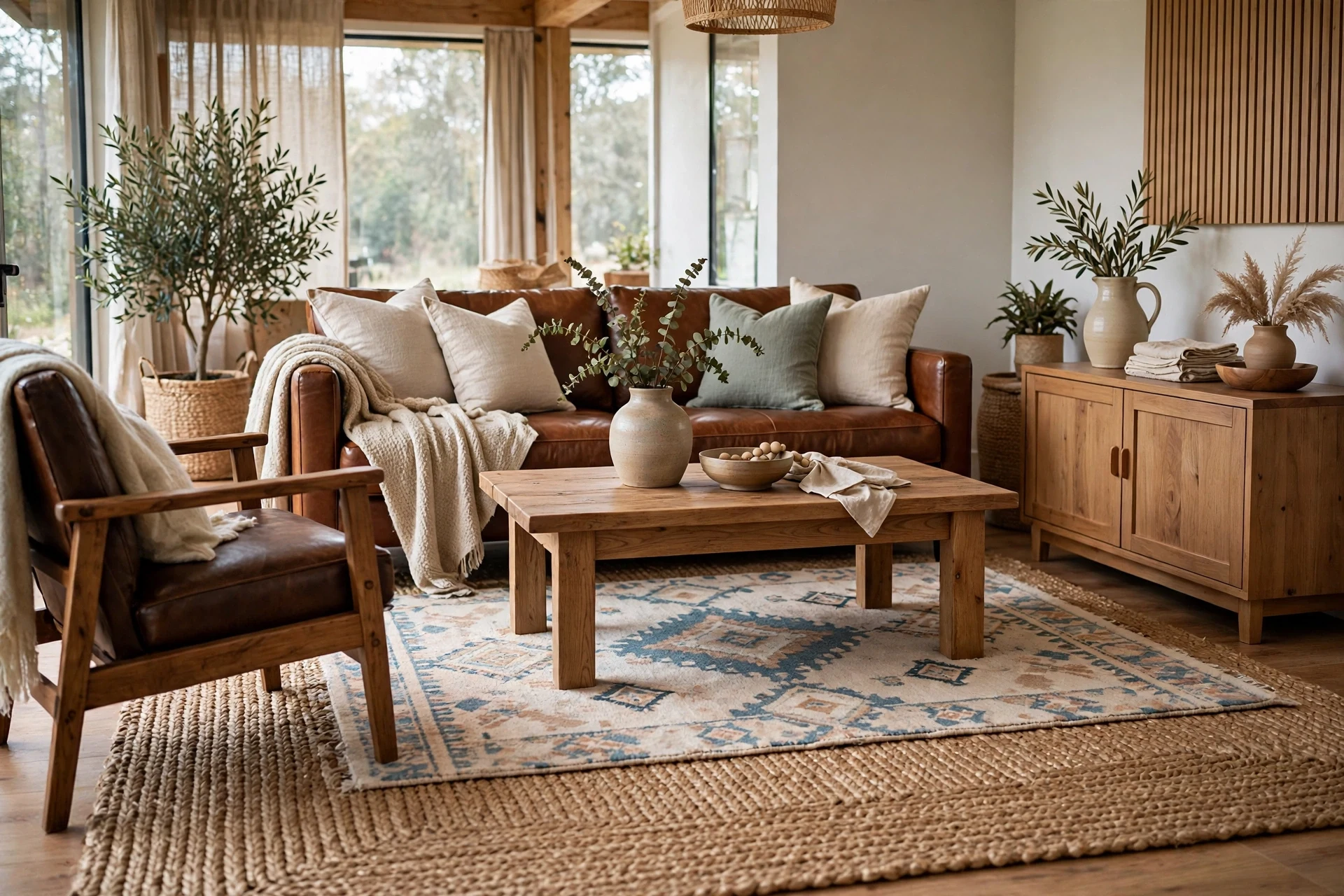
A flat, smooth living room can feel cold even in a warm color, because the eye has nothing to catch on. A woven rug — jute, sisal, or a chunky wool weave — adds texture underfoot that changes the whole feel of the room. It grounds the furniture, adds a natural, relaxed layer, and works with almost any style, from coastal to modern to farmhouse.
Jute and sisal are affordable and durable, but they can feel rough on bare feet, so layer a softer rug on top in the seating area if comfort matters. A woven rug also hides dirt well, which makes it a smart choice for high-traffic living rooms and homes with pets. Pair it with smooth surfaces — a glass coffee table, a leather chair — and the contrast makes both the rug and the furniture look better.
26. Hang a Pendant Light
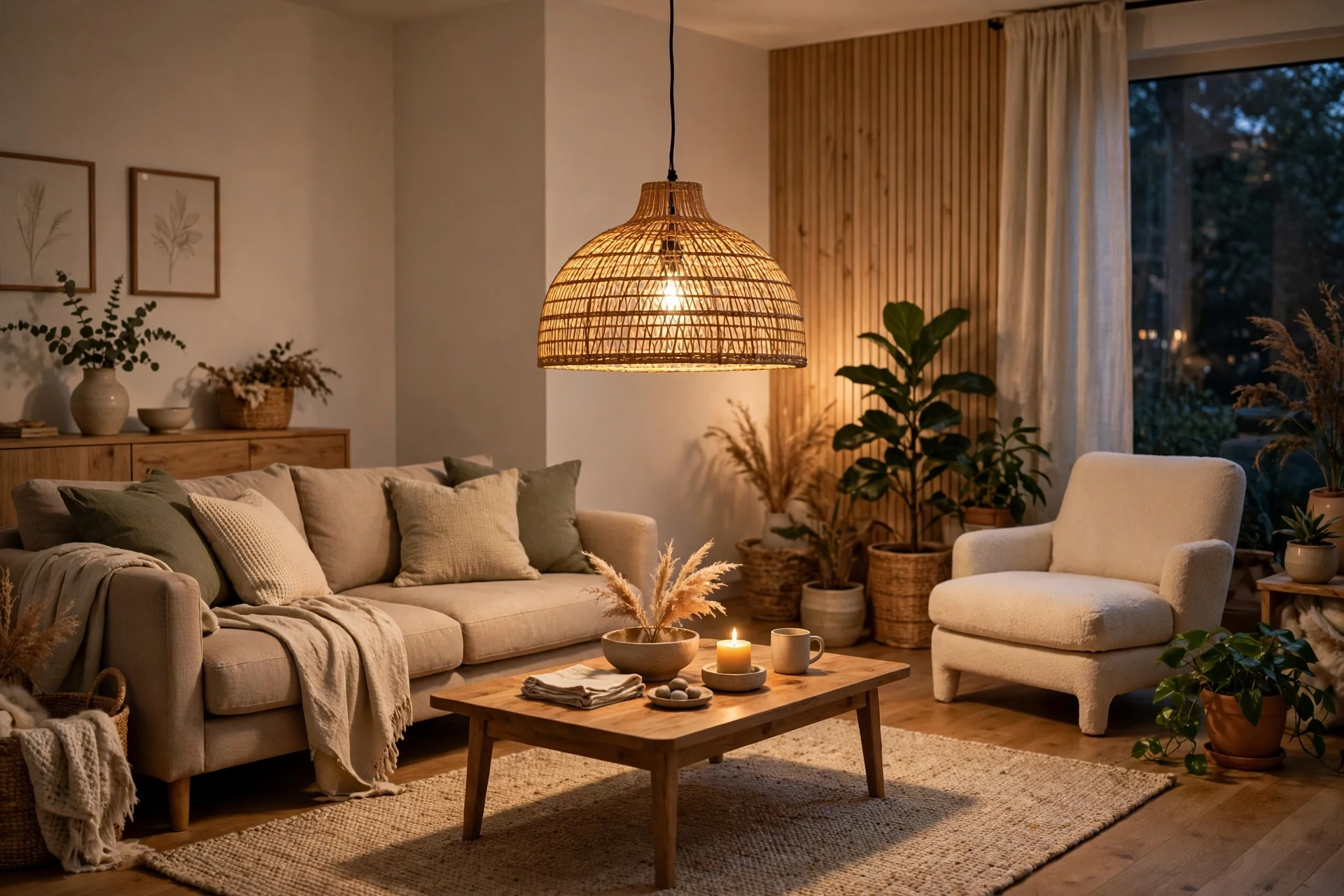
A pendant light does two jobs at once: it lights the room and it acts as jewelry for the ceiling. Over a coffee table, in the center of a seating area, or flanking a fireplace, a pendant draws the eye up and gives the room a focal point that a flush-mount fixture never will. A pair of small pendants works beautifully over a console table or on either side of a large mirror.
Hang pendants so the bottom sits about seven feet from the floor in a walkway, or lower — around five and a half feet — over a table where nobody walks underneath. Choose a shade that matches the room’s style: a woven rattan shade for a relaxed room, a brass dome for a classic room, a clear glass globe for a modern one. A pendant on a dimmer is even better, because it can be a statement piece by day and a soft glow by night.
27. Make the TV Blend In
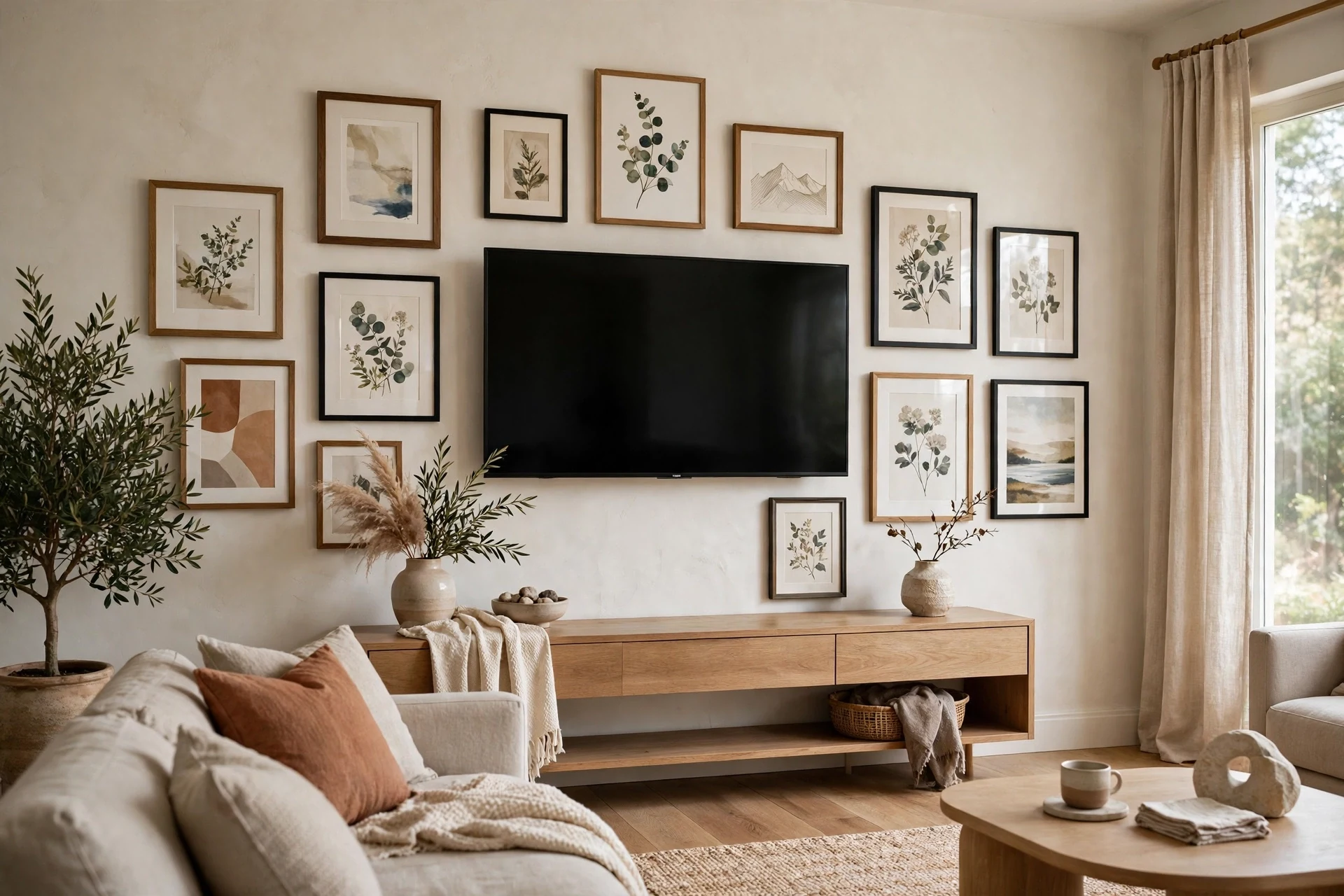
A big black television is the elephant in most living rooms — the largest, darkest thing in the room, and the first thing the eye finds. You do not have to hide it completely, but you can make it blend in. Mount it on the wall at eye level when seated, about 42 inches to the center, and frame it with the same kind of attention you would give a piece of art: a console below, books or objects on either side, and art or shelves around it.
A gallery wall around the television is the classic trick — the black rectangle becomes just one more frame among many. Or paint the wall behind the television a darker color so the screen disappears into it when it is off. Hide the cords with a cable cover painted to match the wall, and put the components in a closed cabinet. The television is still there when you want it, but it stops shouting when you do not.
28. Add a Side Table for Every Seat
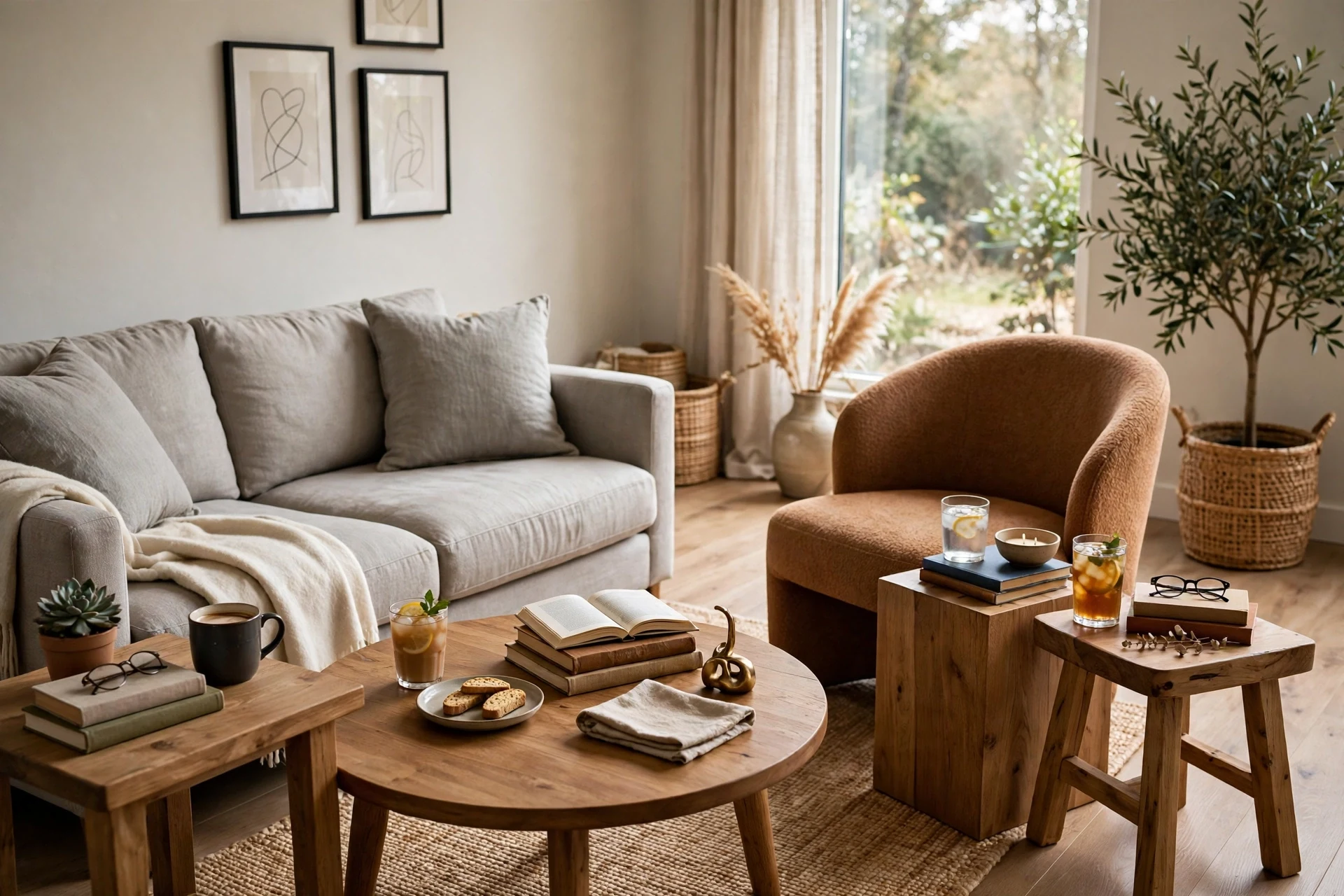
Nothing kills a relaxing evening like having nowhere to put your drink. The rule is simple: every seat in the living room should have a surface within arm’s reach. A side table beside the sofa, a small stool beside the accent chair, a C-table that slides over the arm of the sofa for a laptop — each one is small, cheap, and makes the seat next to it ten times more usable.
Side tables do not need to match. A round wood table, a metal stool, and a small marble C-table can all live in the same room as long as they are roughly the same height as the arm of the seat they serve — around 24 to 26 inches for most sofas. Keep the styling minimal: a lamp, a coaster, and maybe a book. A side table’s job is to be useful first and pretty second, and a room where every seat has one feels thoughtfully designed without trying hard.
29. Use Color in Small Doses
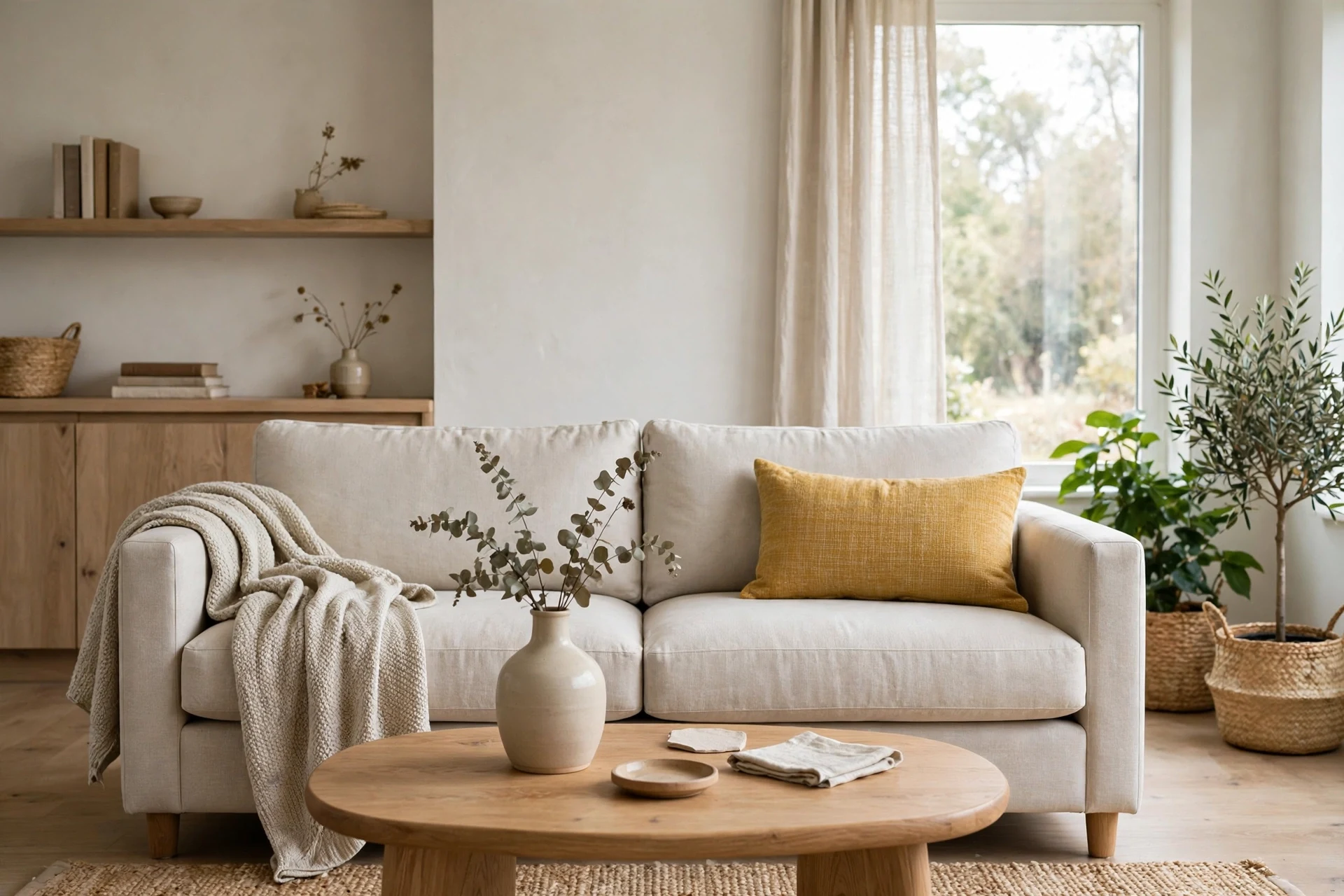
You do not need to paint a wall or buy a red sofa to have a colorful living room. Color in small doses — a pair of pillows, a throw, a vase, a piece of art — gives you all the personality with none of the commitment, and you can change it whenever the mood strikes. Pick one accent color and repeat it three times around the room: a pillow, a throw, and a vase in the same mustard yellow, for example, and the room looks coordinated without matching.
The 60-30-10 rule keeps it balanced: 60 percent of the room is a dominant neutral, 30 percent is a secondary color, and 10 percent is the accent. That 10 percent is where the fun lives. If you get tired of the accent, swapping three small items is an afternoon’s work, not a redecoration. Small doses of color are the lowest-risk, highest-reward move in this whole list.
30. Create a Cozy Conversation Circle
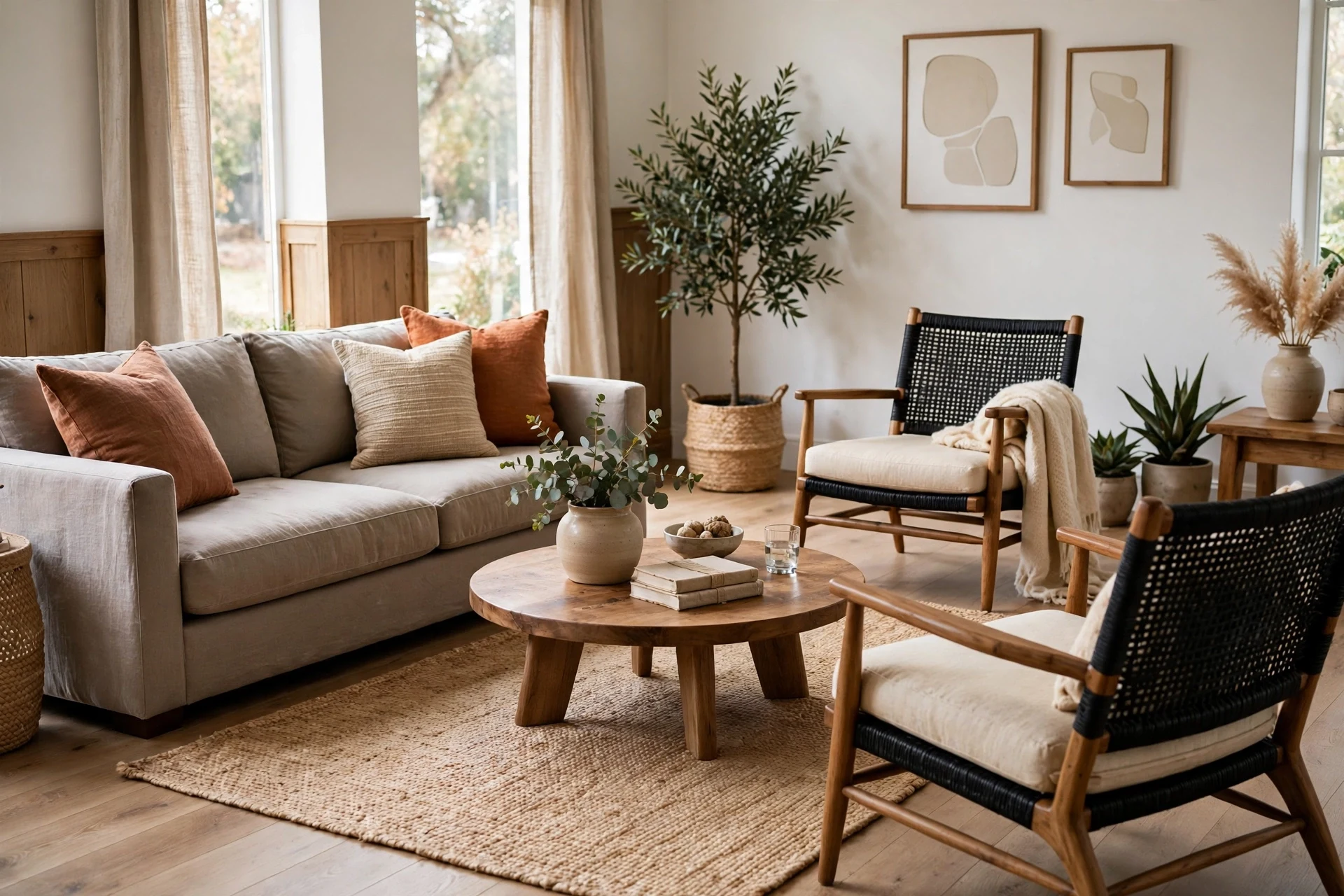
Most living rooms are arranged around the television, which means everyone sits in a row staring at a screen. A conversation circle flips that: chairs and sofa arranged facing each other, close enough that nobody has to raise their voice. Pull the chairs in so the distance between seats is about four to eight feet, put the coffee table in the middle, and suddenly the room is built for talking.
You do not have to banish the television — put it on a side wall or on a swivel mount so it can turn toward the seating when needed and away when it is not. The conversation arrangement works just as well for watching, because everyone can still see the screen from an angle, but the default of the room becomes people facing people. Try it for a week and notice how much longer guests stay after dinner.
31. Add a Bar Cart
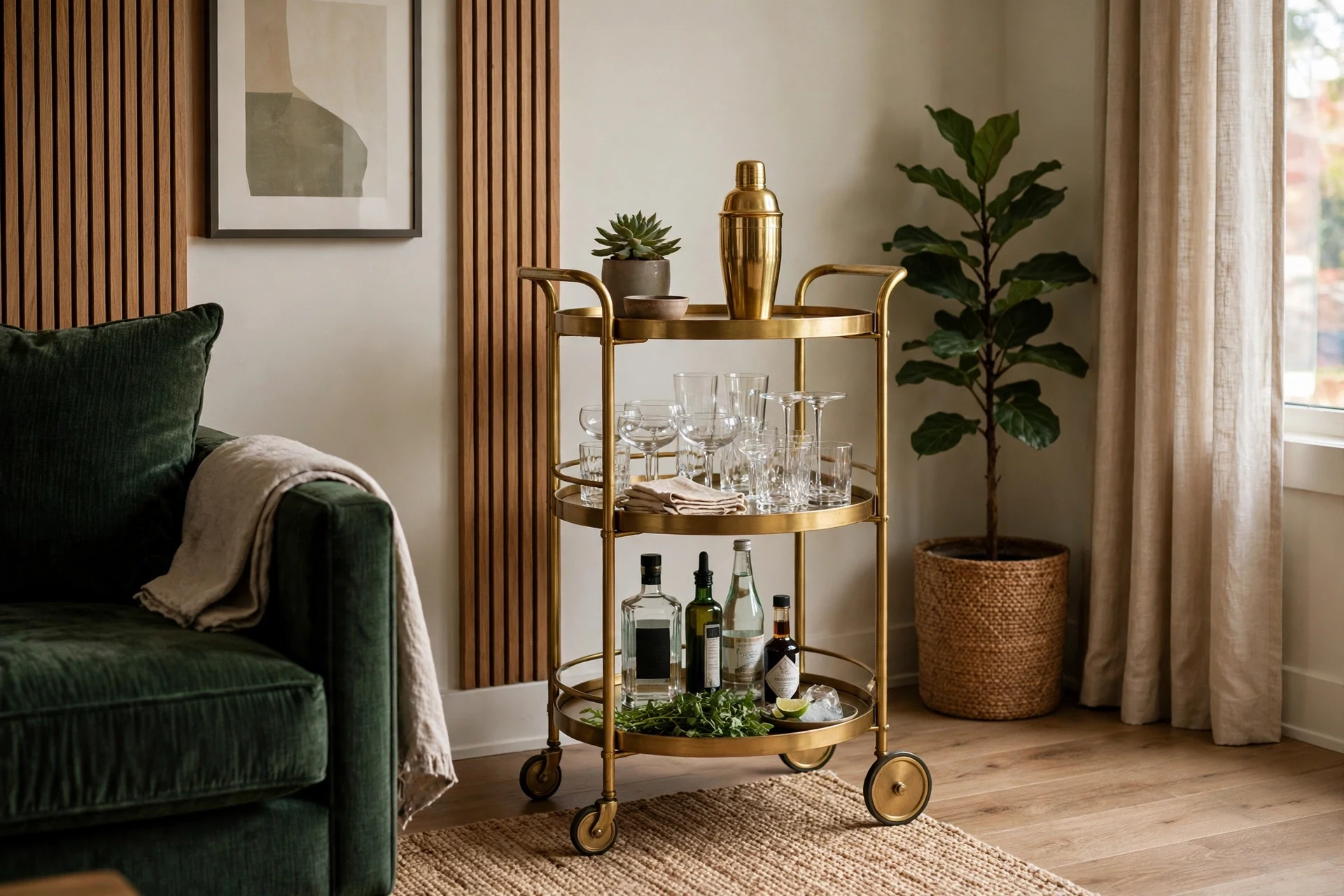
A bar cart is the living room’s most charming multitasker. Rolled into a corner, it holds glasses, a bottle or two, and a small plant, and it looks like a piece of decor even when nobody is drinking. Rolled beside the sofa during a party, it becomes a serving station that saves a dozen trips to the kitchen. And in a home where nobody drinks, it still works — as a coffee station, a tea cart, or a display for a collection.
Style it with the same rules as a shelf: something tall, something short, and something green. Keep the top level for the prettiest items and the lower level for the practical ones, and leave a little empty space so it does not look crammed. A vintage brass cart adds warmth, a glass-and-chrome cart suits a modern room, and a wooden cart fits a farmhouse space. Whatever the style, a bar cart says this room is ready for guests.
32. Display Books by Color
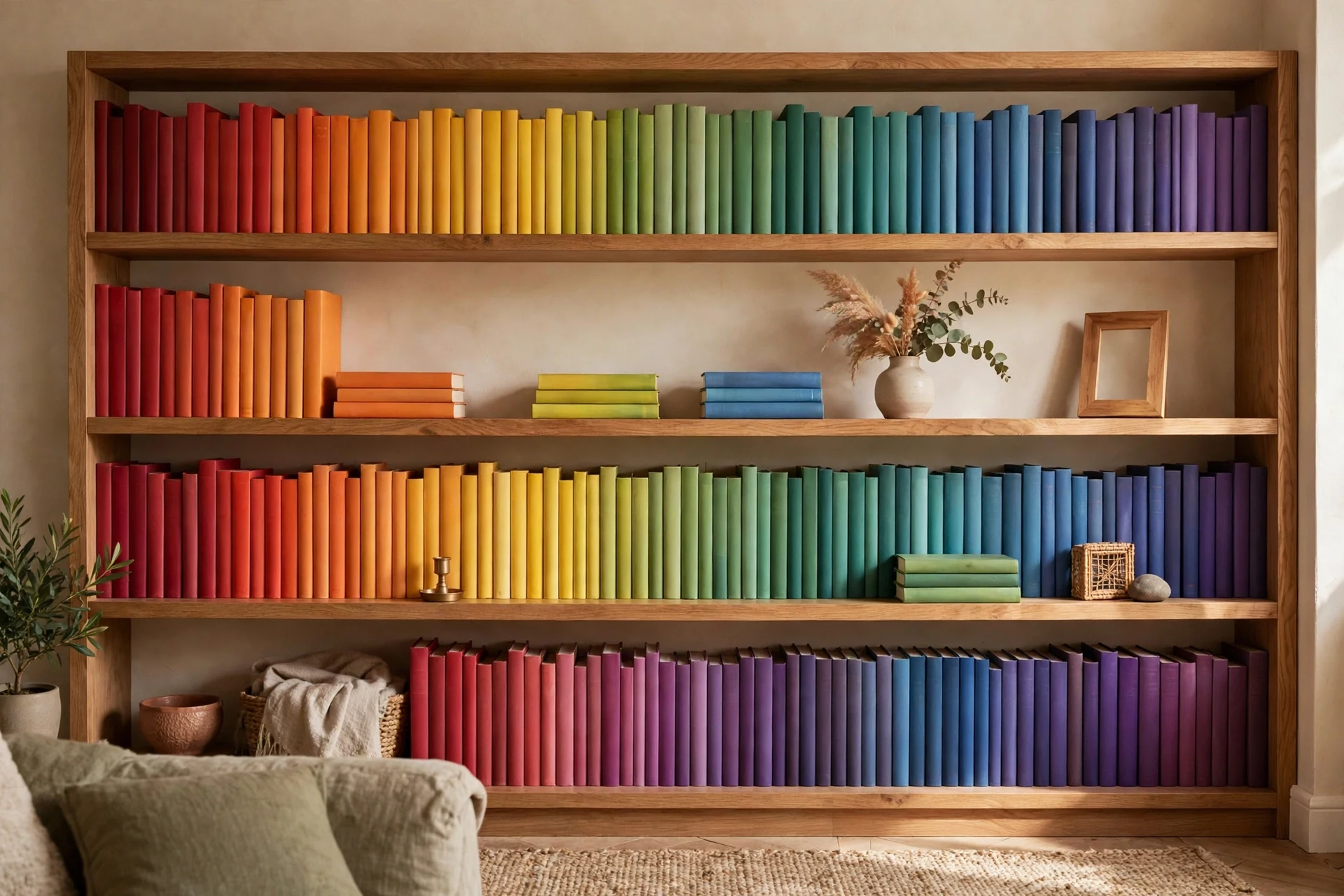
You do not need a design degree to make a bookshelf look good — you just need to sort by color. Grouping books by spine color turns a random shelf into a visual rainbow that looks intentional and cheerful, and it is the easiest styling trick in this list: take everything off, sort into color piles, and put them back in order. The shelf instantly looks curated, even if the books are a mix of novels, cookbooks, and kids’ stories.
If a full rainbow feels too much, try a softer version: group the books into two or three color families that match the room, like blues and neutrals, and let the rest live on another shelf. Mix in a few horizontal stacks to break up the vertical rows, and leave some empty space on each shelf for a vase or a framed photo. Color-sorted books are also easier to find than you would think — you remember the color of a spine far longer than the author’s name.
33. Build a Window Seat
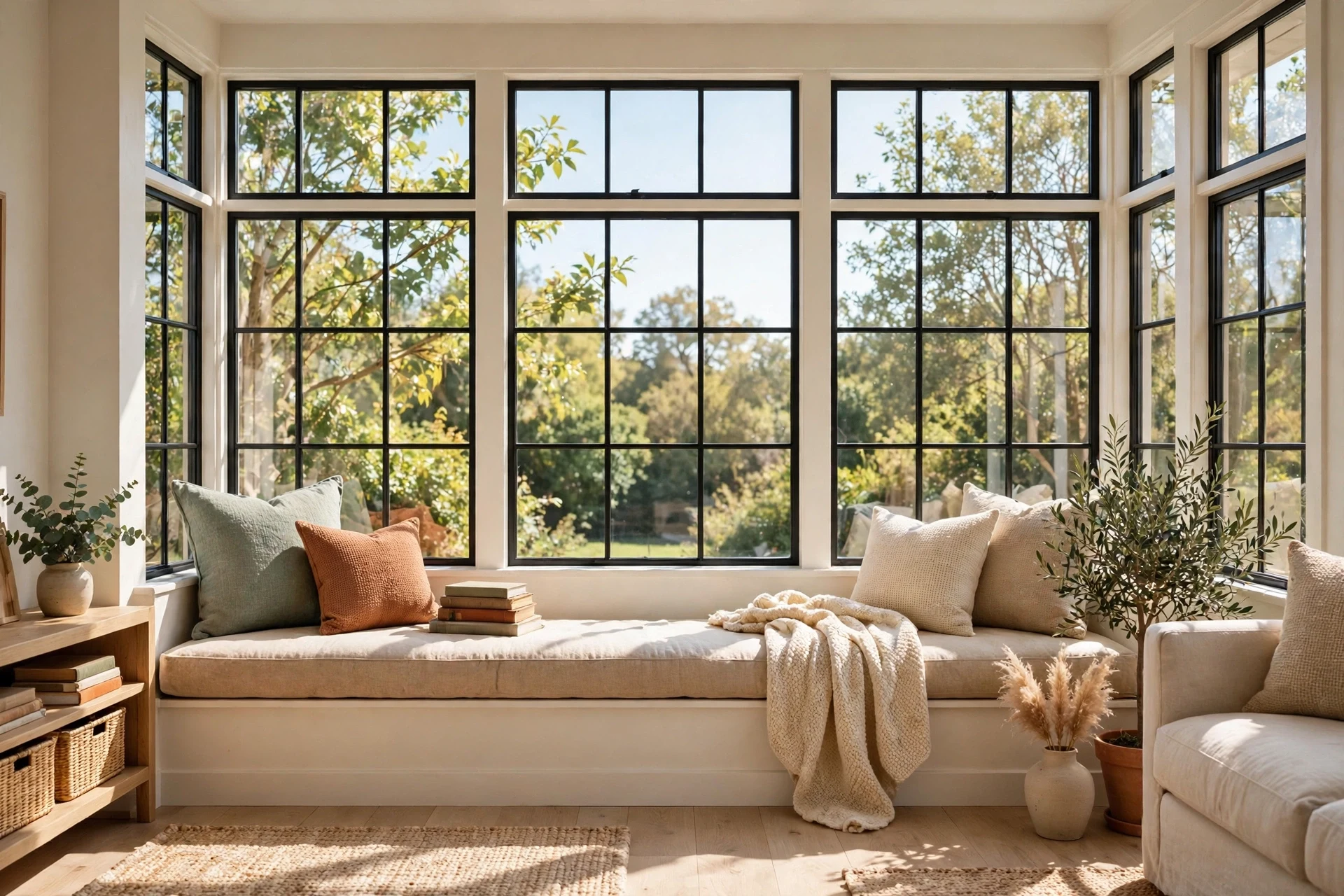
A window seat turns the least-used spot in the living room — the space under a window — into the most fought-over seat in the house. A simple bench with a cushion, a few pillows, and a throw creates a sunny reading spot by day and a cozy perch by night. If the bench has storage inside, it also solves the throw-blanket and board-game problem in one move.
You do not need to build anything custom. A low bench, a storage ottoman, or even a sturdy trunk placed under a wide window works, topped with a cushion cut to fit. Add a small basket beside it for books and a wall-mounted reading light above, and the window seat becomes a destination. Kids love it, guests love it, and the cat will claim it within the hour — which is the highest compliment a seat can get.
34. Use Slipcovers for a Fresh Look
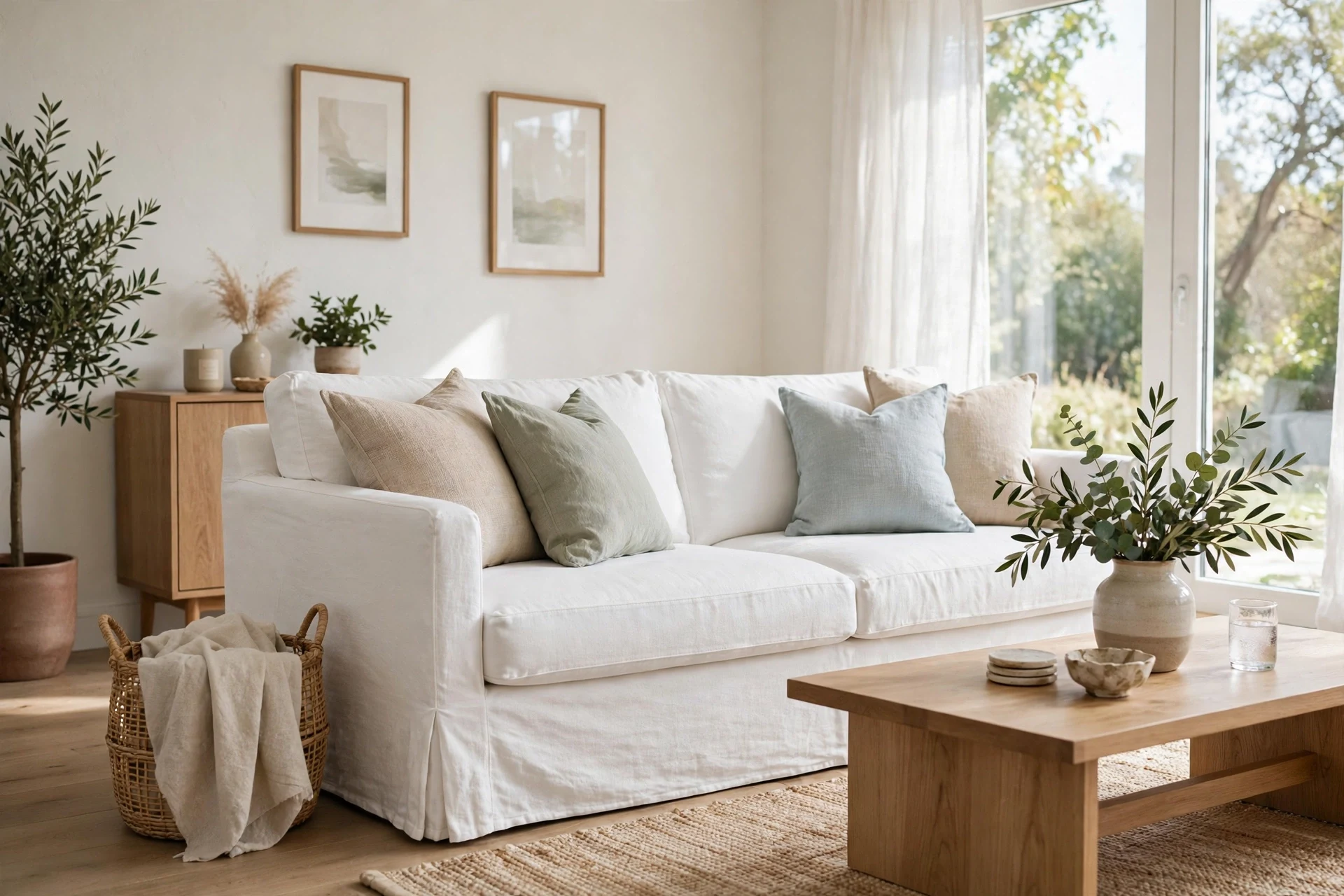
A slipcover is the fastest, cheapest room makeover that exists. A well-fitted slipcover in a light linen or a washable cotton transforms a tired, stained, or outdated sofa into something that looks brand new, and when it gets dirty you throw it in the wash instead of living with the stain. For families with kids or pets, a slipcover is not a compromise — it is a strategy.
The key is fit. A baggy slipcover looks like a sheet thrown over the sofa, so measure carefully and choose a brand that makes covers for your exact sofa model, or have one made. Tuck the fabric deep into the creases and smooth it daily for the first week until it settles. A white or natural slipcover brightens a dark room instantly, and if you buy two, you can swap them seasonally and the whole room feels new twice a year.
35. Layer a Second Rug
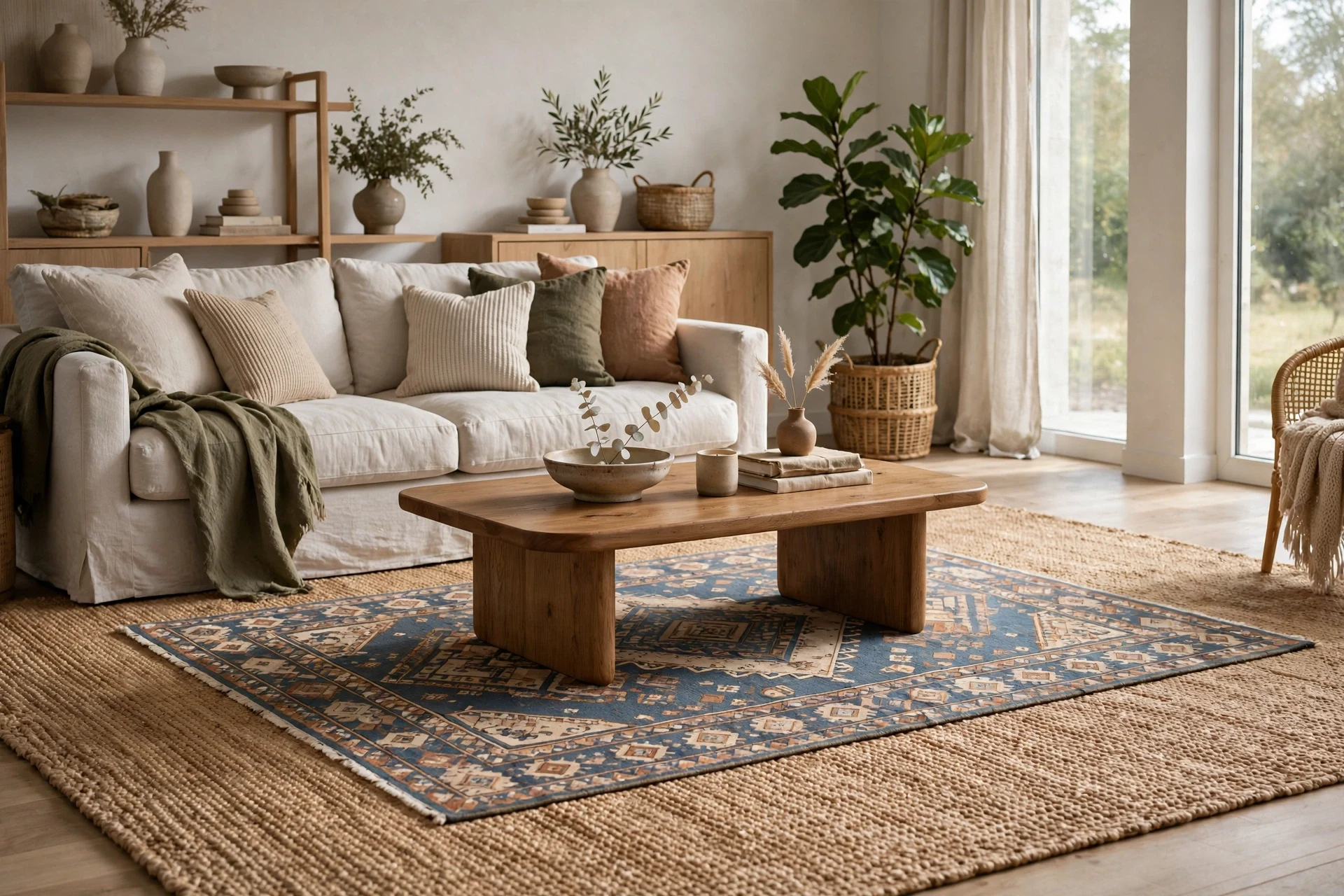
Layering rugs is the designer trick that looks expensive and costs very little. Start with a large, inexpensive base rug — jute or a flat-weave in a neutral — and layer a smaller, softer, more patterned rug on top, angled slightly or centered under the coffee table. The layers add depth, texture, and a collected look that a single rug cannot match, and they let you use a rug you love that is too small on its own.
Keep the two rugs in the same color family so they look deliberate rather than accidental, and make sure the top rug is large enough to anchor the coffee table and the front legs of the seating. A cowhide over jute, a vintage-style rug over sisal, or a plush wool rug over a flat cotton base are all combinations that work. Layering also protects the base rug in high-traffic spots, which means both rugs last longer.
36. Bring in Natural Wood Tones
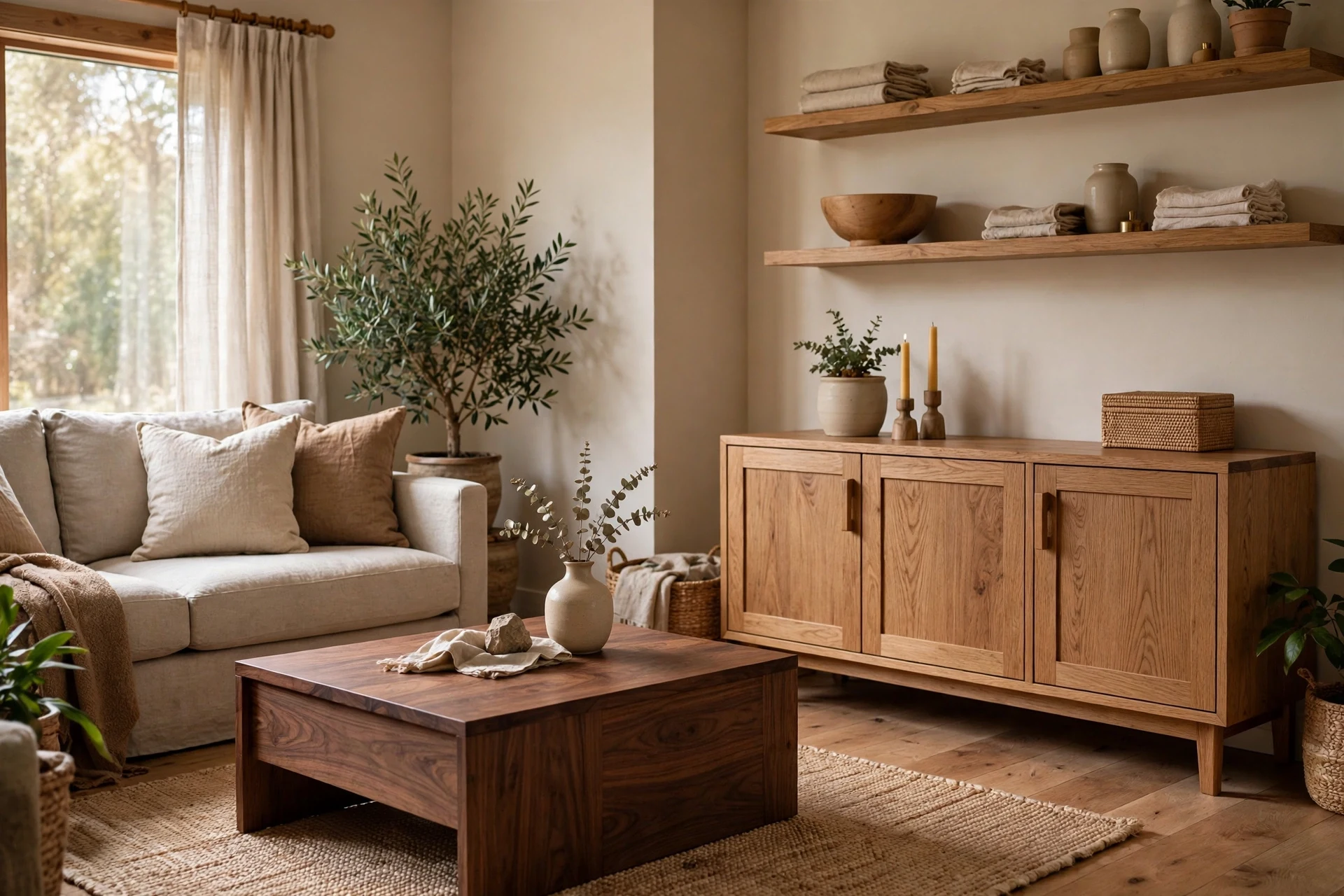
A living room full of painted and upholstered surfaces can feel flat, because everything has the same smooth finish. Natural wood — a walnut coffee table, an oak sideboard, a teak side table, or even a wooden bowl on a shelf — adds warmth, grain, and a sense of nature that balances all the fabric and paint. Wood ages gracefully, and a few scratches only add to its character.
Mix wood tones rather than matching them exactly. A light oak floor, a medium walnut table, and a dark teak frame can all live together as long as the undertones are similar — all warm or all cool. If the room feels too matchy, adding one wood piece in a different tone is often the fix. A single wooden element, like a live-edge shelf or a carved bowl, is enough to warm up a cool, modern room without changing anything else.
37. Create a Focal Point with Art
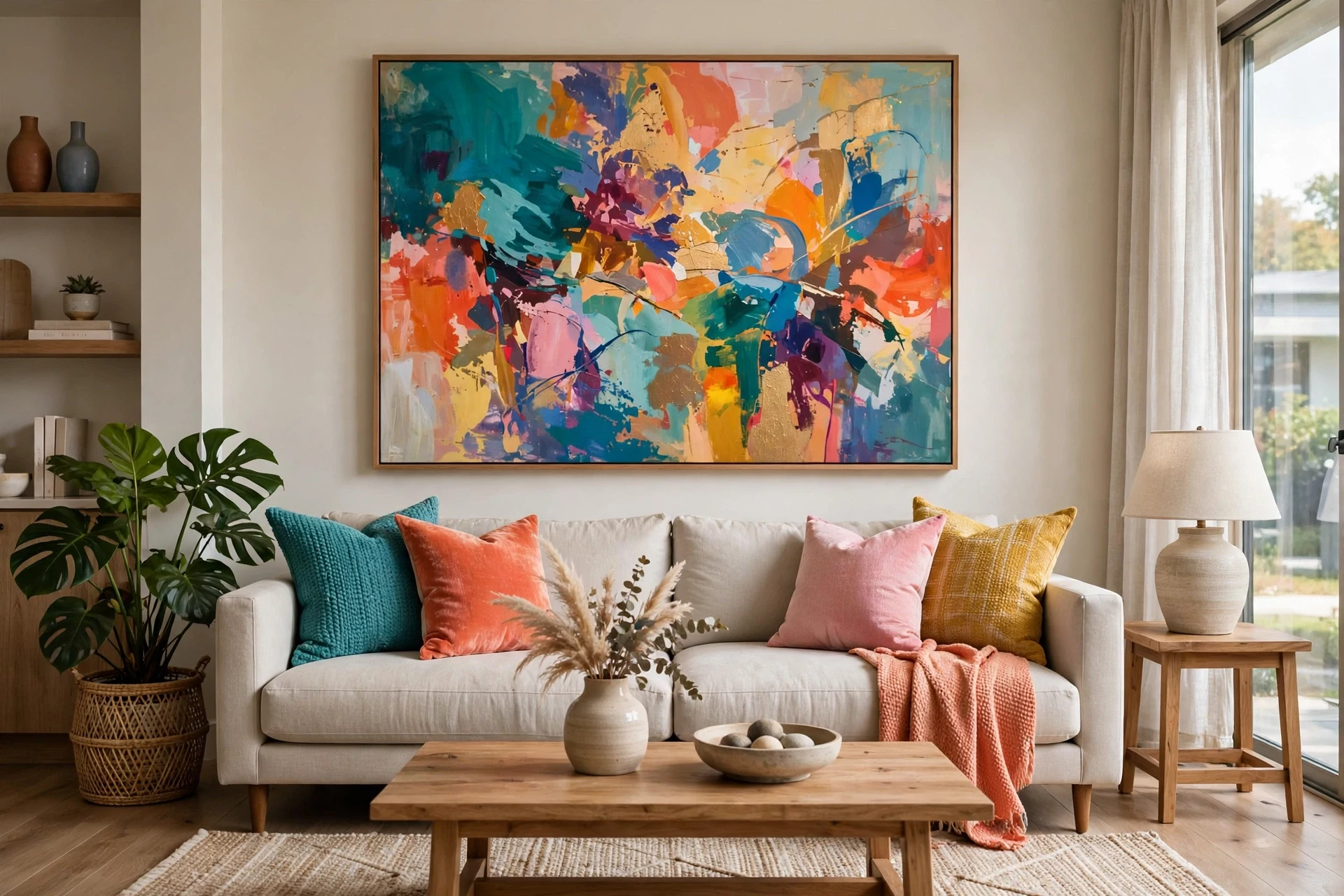
Every living room needs one thing the eye lands on first, and a single large piece of art is the simplest way to create it. One big canvas above the sofa beats five small frames scattered around the room, because it gives the eye a clear destination and sets the color palette for everything else. The art does not need to be expensive — a large print, a framed textile, or even a stretched piece of fabric can fill the space.
Hang the art so its center is at eye level, about 57 inches from the floor, and choose a piece that is about two-thirds the width of the sofa below it. Let the art set the room’s accent colors: pull one color from it for the pillows and another for a throw, and the whole room looks coordinated without trying. If you cannot decide on art, a large mirror or a woven wall hanging works the same way — the point is one clear focal point, not a wall full of maybe.
38. Add a Charging Station That Hides
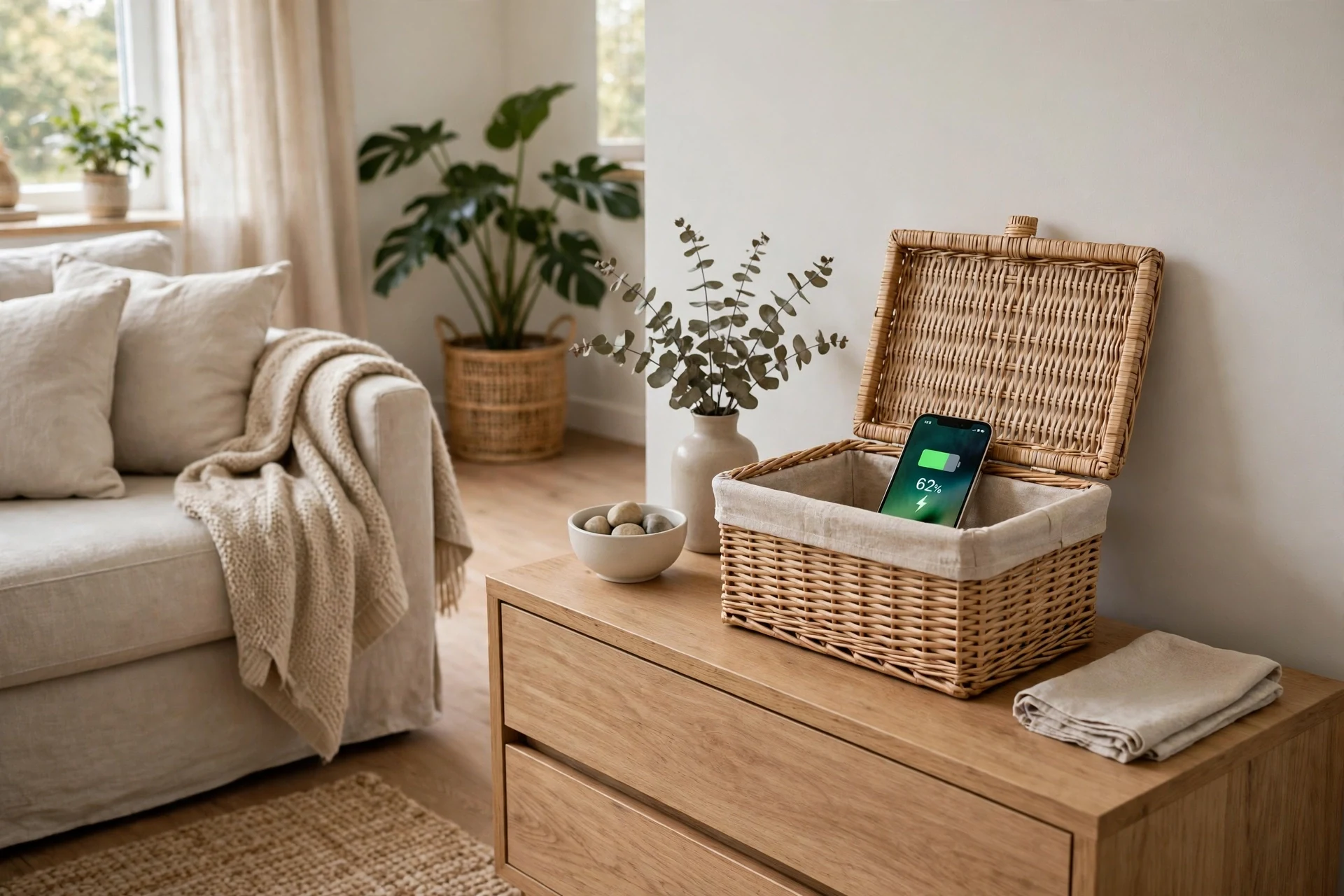
Phones, tablets, and remotes need charging, but a tangle of cables on the coffee table ruins the look of any living room. A hidden charging station — a drawer with a power strip inside, a basket with a charging cable threaded through the back, or a side table with a built-in outlet — keeps the devices charged and the cords invisible. It is a small upgrade that makes the room look calmer every single day.
The easiest version is a lidded basket on a shelf with a small power strip inside: devices go in, cables stay in, and the lid closes over everything. For a more permanent fix, have an electrician add an outlet inside a console-table drawer or behind the sofa. Label the cables if several people share the station, and keep one cable of each type so nobody has to hunt. Hidden charging is the kind of idea guests never notice — which is exactly the point.
39. Use Sconces to Free Up Table Space
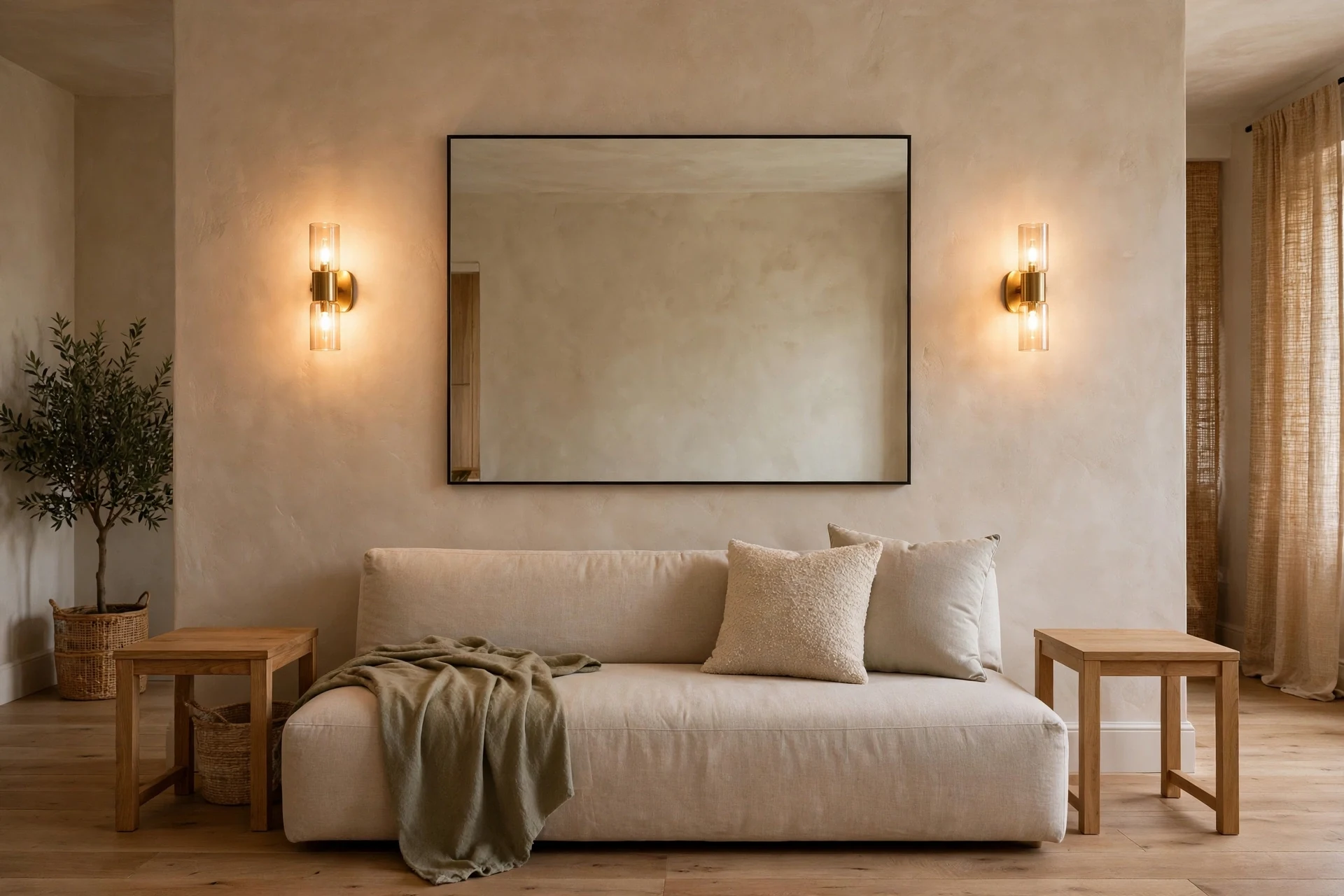
Table lamps are lovely, but they eat the most useful real estate in the living room — the top of the side table. Wall sconces give you the same warm light without taking a single inch of table space, and they add a layer of light at eye level that makes the room feel taller and more finished. A pair of sconces flanking a mirror, a fireplace, or a bookshelf is a classic look that works in almost any style.
Plug-in sconces are the renter-friendly option: they mount with two screws and the cord runs down the wall in a slim cover painted to match. Hardwired sconces are cleaner but need an electrician, so they are a good project to combine with any other electrical work. Choose sconces with a shade that directs light up and down for a soft wash on the wall, and put them on a dimmer so they can glow gently in the evening.
40. Keep a Pillow Swap System
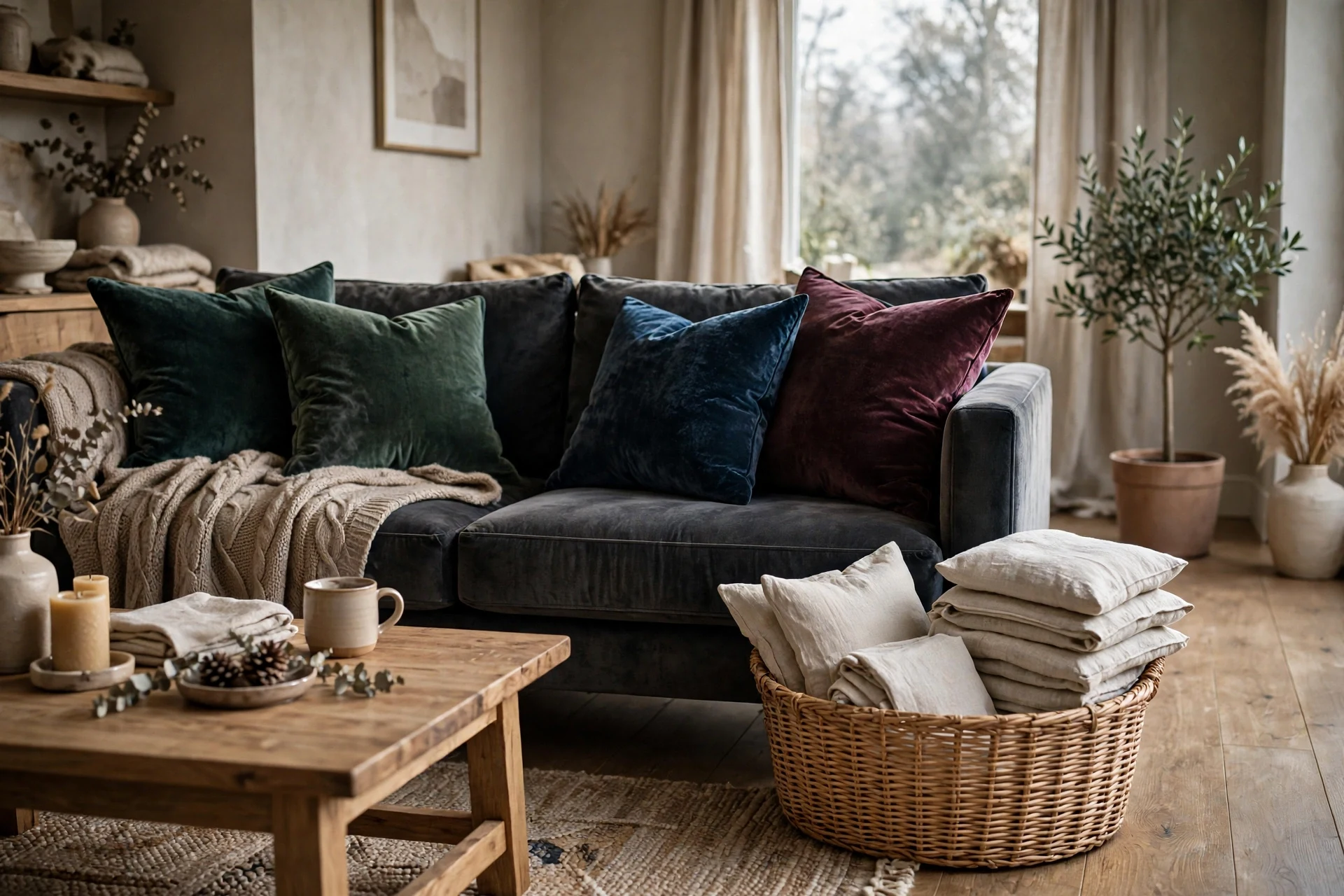
Throw pillows are the easiest thing in the living room to change, and the hardest to store — which is why most people buy a set once and live with it for years. A simple swap system fixes that: keep two sets of pillow covers, one for the warm months and one for the cool months, and store the off-season set in a vacuum bag under the bed or in a basket on a closet shelf. Swapping covers takes twenty minutes and makes the whole room feel new.
Choose covers with hidden zippers so the swap is quick, and keep the pillow inserts the same year-round — only the covers change. A light linen set in pale colors for spring and summer, and a heavier velvet or knit set in deeper tones for fall and winter, gives you two rooms for the price of a few covers. The swap is also a good moment to wash the inserts and check the sofa for anything hiding between the cushions.
41. Make Room for Games Night
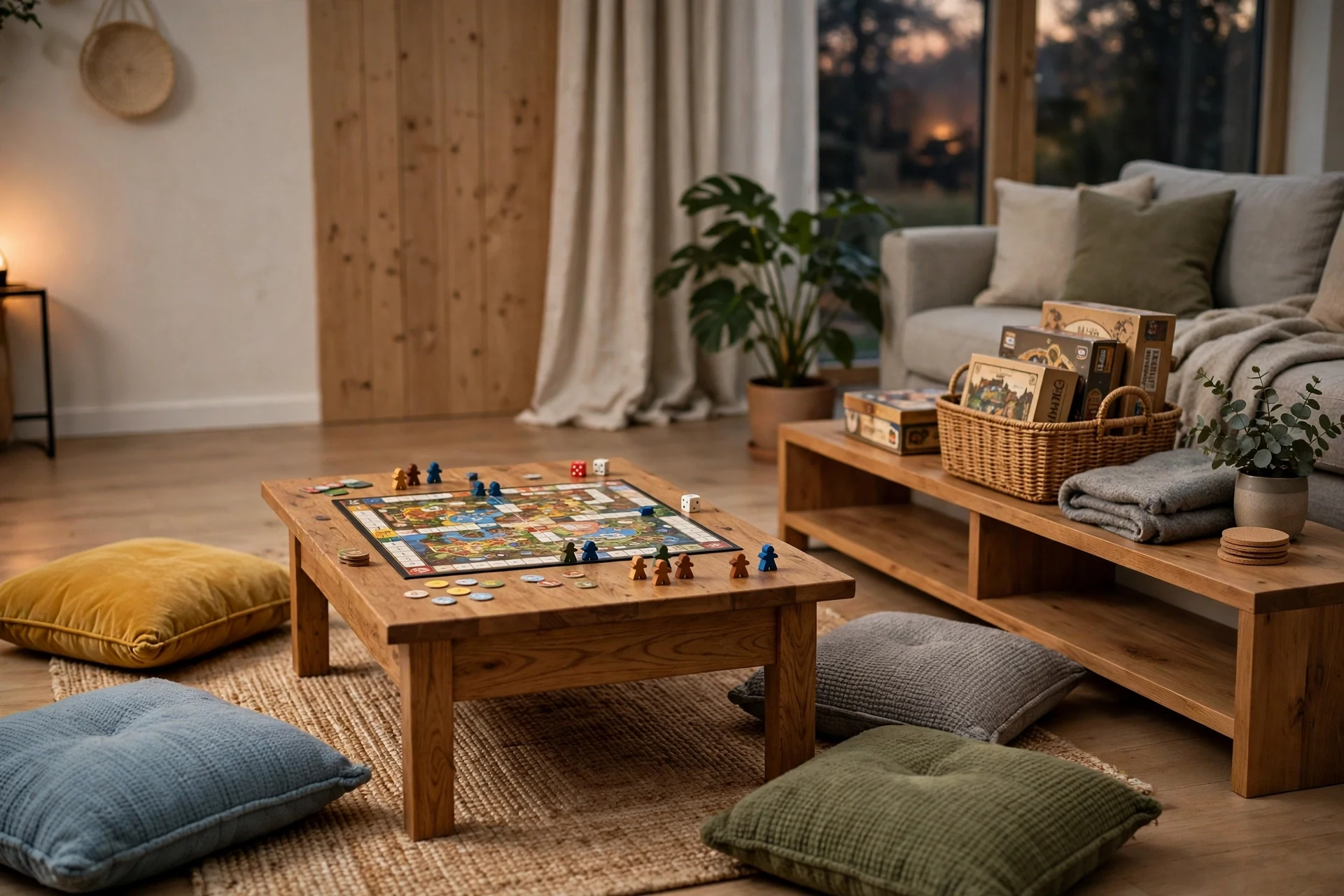
A living room built only for watching television quietly discourages the best kind of together time. Making room for games night does not require a game table — it requires a coffee table at the right height, a basket of games within reach, and seating that can pull close together. A coffee table around 18 inches high is comfortable for board games, and a basket on a low shelf keeps the games visible enough that someone actually suggests playing.
Add a few floor cushions for the players who prefer the rug, and keep a small tray handy for snacks and drinks so the game board stays safe. A stack of card games in a drawer by the sofa is the low-effort version, and it works just as well. The point is not the games themselves — it is a room that invites people to face each other and do something together, and that invitation is built into the furniture, not the schedule.
42. Add a Floor Cushion Zone
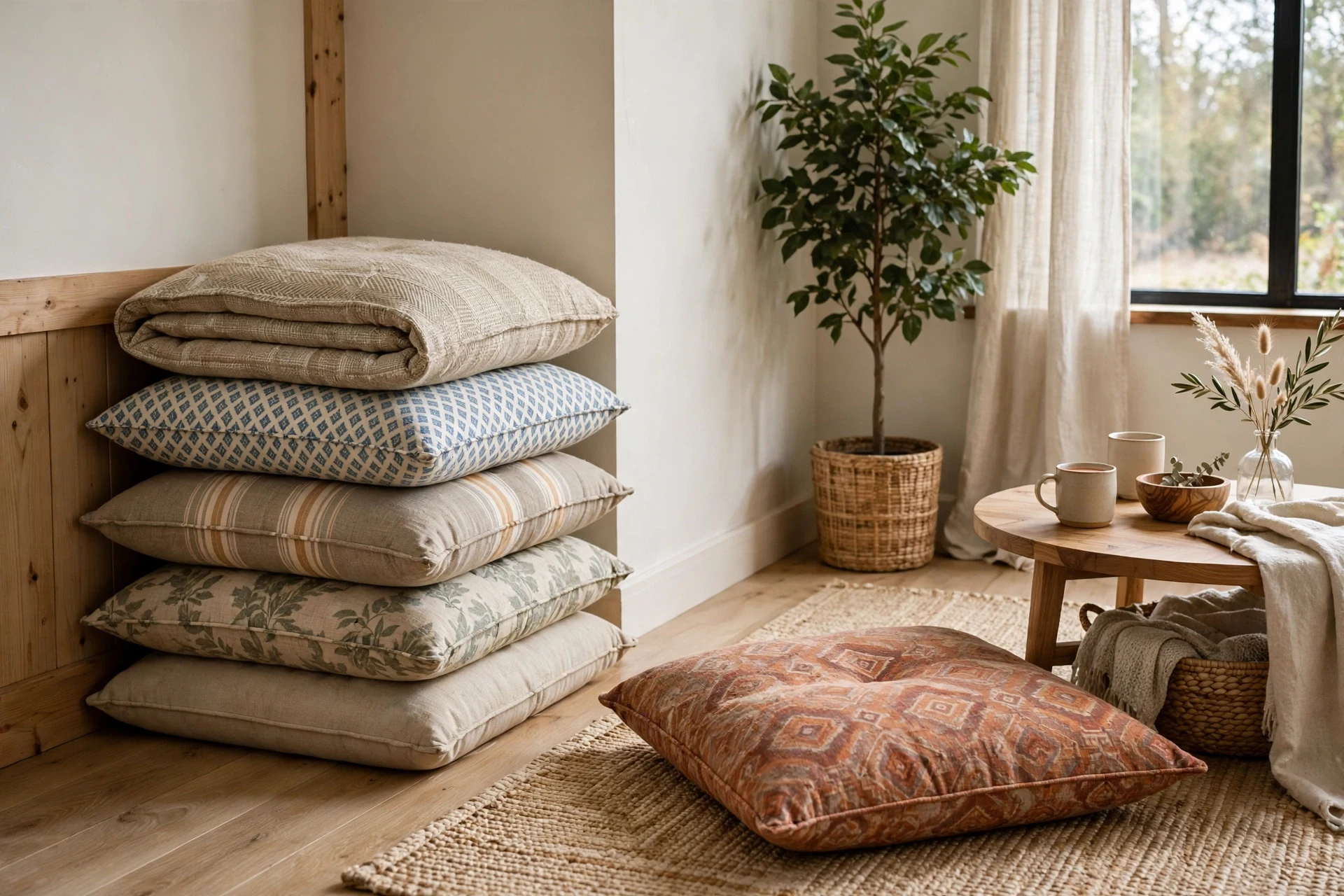
Floor cushions are the most flexible seating in a living room, and the most underused. A stack of large floor cushions in a corner becomes extra seating for movie night, a reading spot for kids, a meditation corner in the morning, and a play area in the afternoon — and when they are not needed, they stack neatly out of the way. They cost a fraction of a chair and take up almost no space when stored.
Choose cushions with removable, washable covers in a durable fabric, and pick a size that is generous — at least 24 inches square — so adults can actually sit comfortably. A round cushion softens a square room, and a mix of two colors or patterns keeps the stack from looking like a pile of laundry. Keep the stack near the coffee table so they are easy to grab, and watch how quickly they become the most popular seats in the house.
43. Layer Scent Like You Layer Light
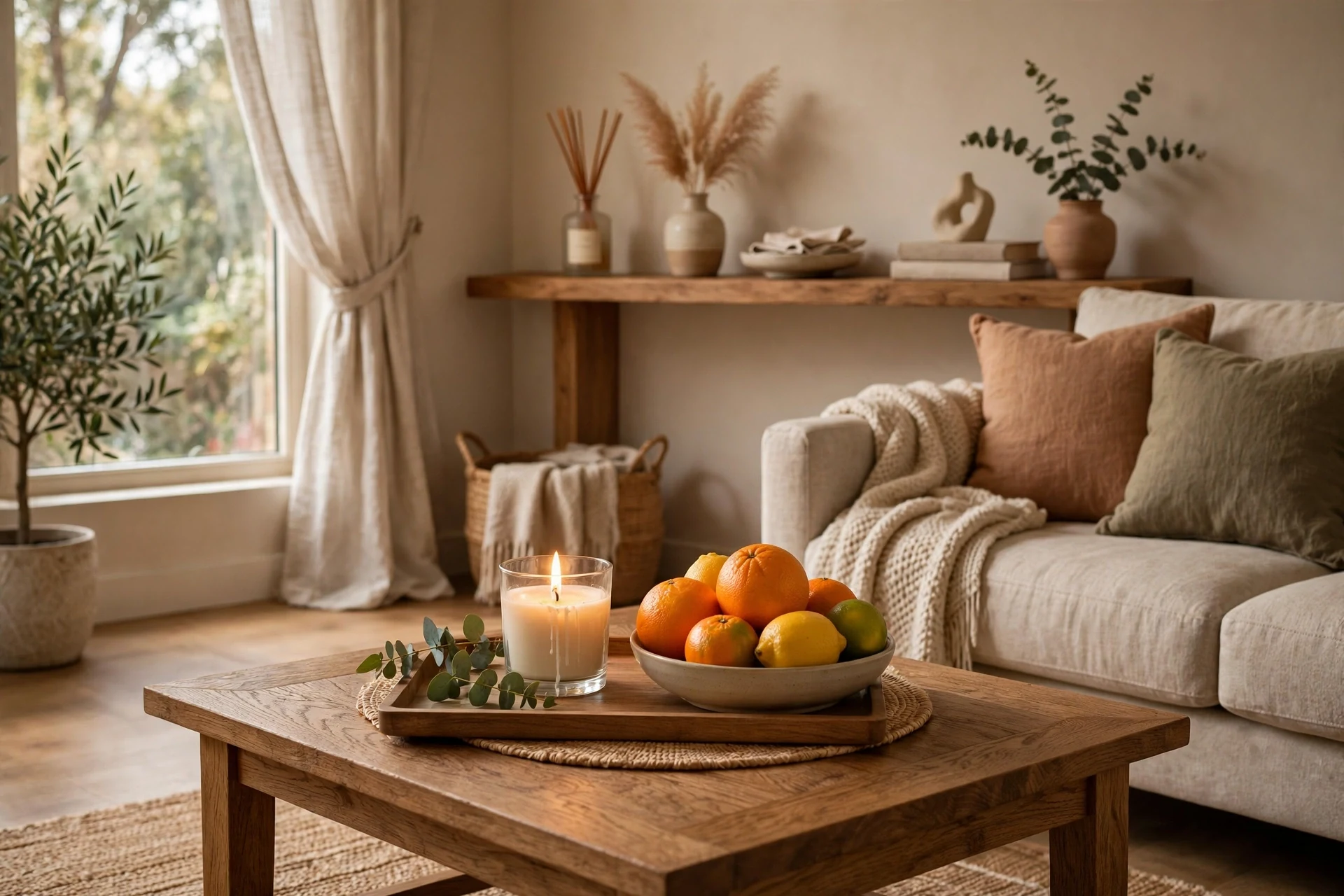
A living room can look perfect and still feel off, and often the missing piece is scent. Just as you layer light at different heights, layer scent at different strengths: a candle on the coffee table for the seating area, a diffuser on a shelf for the background, and fresh greenery or a bowl of citrus for a natural note near the entry. The combination makes the room feel cared for in a way that is hard to name but easy to feel.
Keep it subtle — one strong scent is a candle shop, but two or three gentle ones at different ends of the room create depth. Choose scents that suit the season without being seasonal decor: cedar and amber in the cooler months, citrus and linen in the warmer ones. And always keep a candle on a tray with a lid nearby, both for safety and to keep the scent fresh between uses. Scent is the invisible layer of decor, and it is the one guests remember after they leave.
44. Add Black Accents to Ground the Room
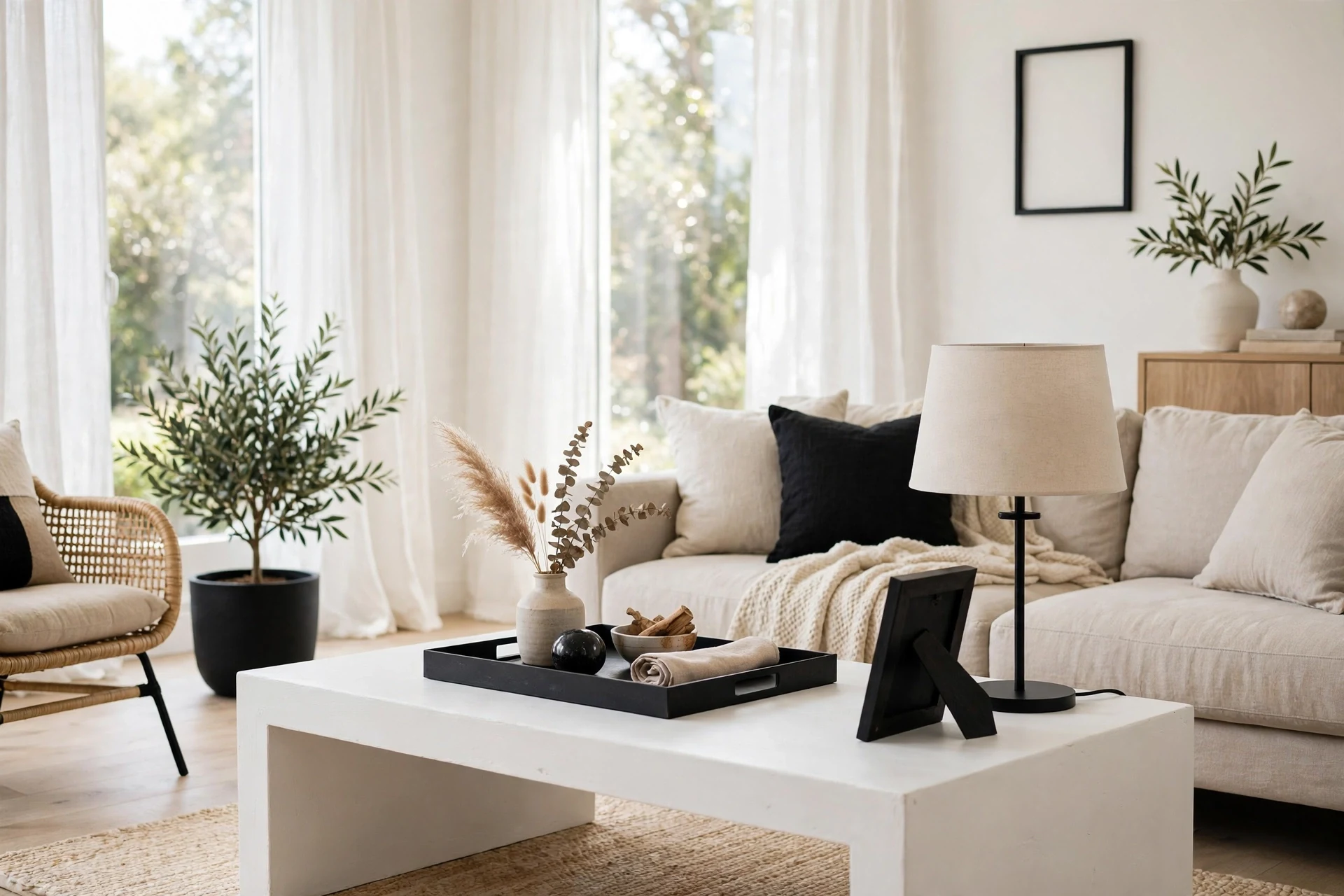
A living room in all soft, light colors can feel like it might float away. Black accents — a black picture frame, a black lamp base, black hardware on a cabinet, or a black tray on a white coffee table — ground the room and give the eye a place to rest. Black is the punctuation mark of a room: a little of it makes everything else look sharper, and none of it makes the room look washed out.
The rule is small doses, repeated two or three times. A black frame on the gallery wall, a black floor-lamp base, and a black vase on the mantel create a thread that ties the room together. Matte black is softer and more modern than glossy black, and it works with every style from farmhouse to contemporary. If black feels too strong, start with charcoal or a very dark bronze — the grounding effect is the same, just quieter.
45. Create a Pet-Friendly Corner
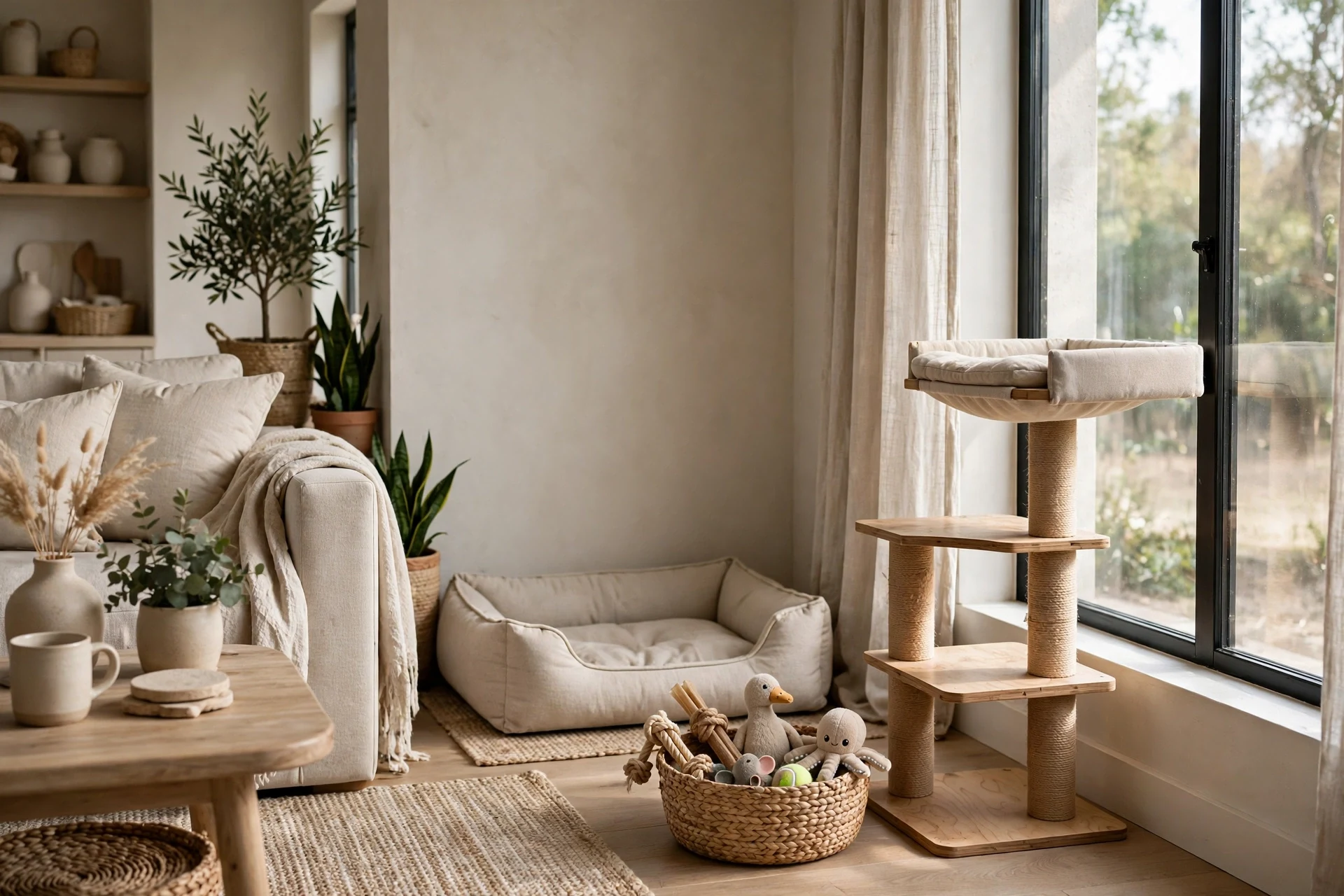
Pets live in the living room too, and giving them a defined corner keeps the rest of the room — and your sofa — in better shape. A washable dog bed in a color that matches the room, a basket for toys, and a small blanket on their favorite chair gives your pet a place that is theirs, and it looks like part of the design instead of an afterthought. Cats get a perch near the window and a scratcher that matches the furniture.
Choose pet items in the same palette as the room so the corner blends in, and keep a lint roller in a nearby drawer for quick cleanups before guests arrive. A washable throw on the sofa where the pet sleeps protects the upholstery and can go straight in the wash. A pet-friendly living room is not a compromise — it is a room designed for everyone who actually lives in it.
46. Use a Ladder Shelf for Vertical Storage
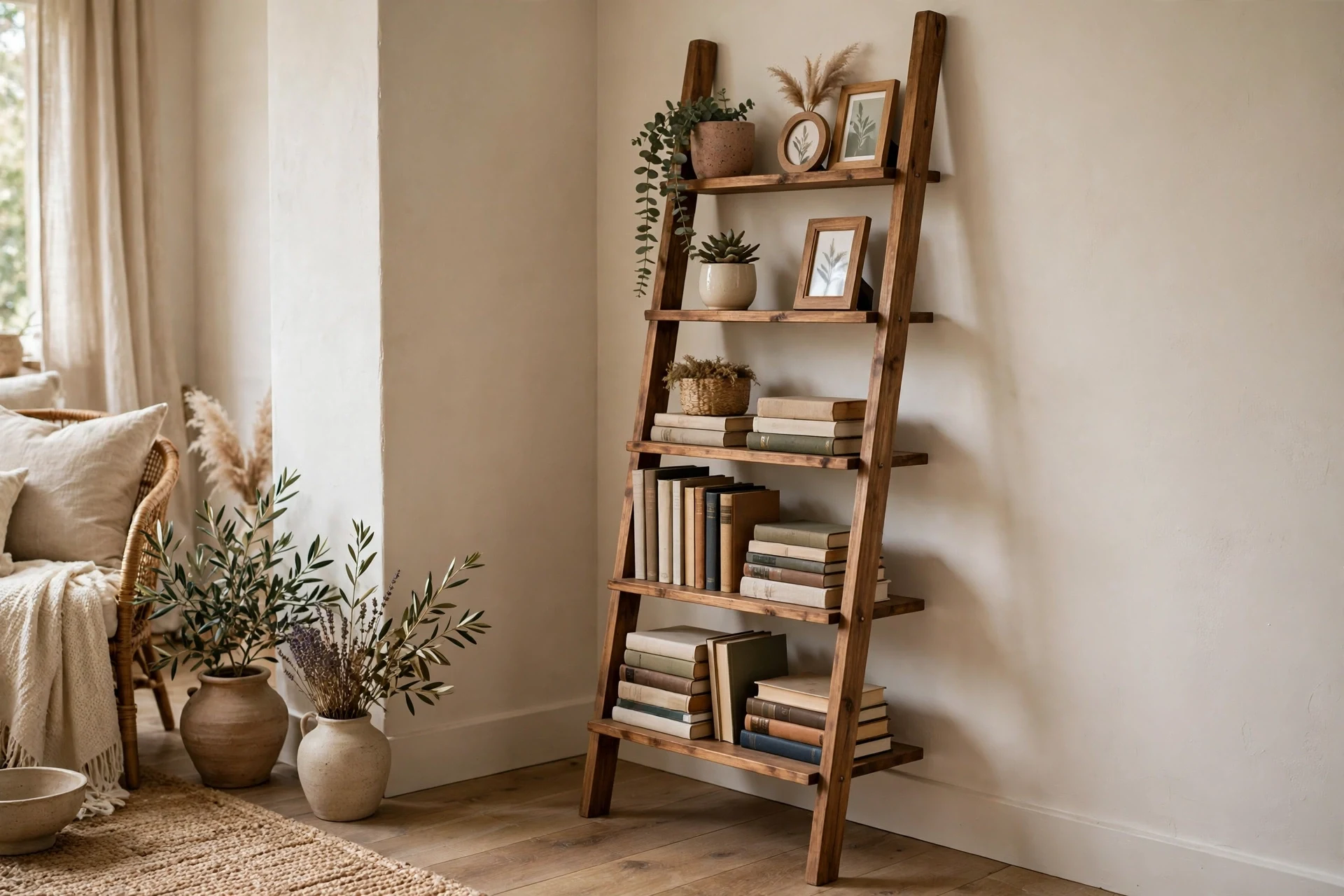
Floor space is precious in a living room, but wall space above eye level is usually empty. A ladder shelf leans against the wall and uses that vertical space for books, plants, baskets, and decor, without the bulk of a bookcase or the commitment of built-in shelves. Because it leans, it also works in rentals, and it moves easily when you rearrange.
Style a ladder shelf from the bottom up: heavier items like books and baskets on the lower rungs, lighter items like plants and small frames on the upper ones. Leave one shelf partly empty so the arrangement breathes, and keep the top shelf light — a single plant or a small vase is enough. A ladder shelf in a corner can also hold throws and magazines, turning a dead corner into useful storage that looks like decor.
47. Add a Statement Ceiling
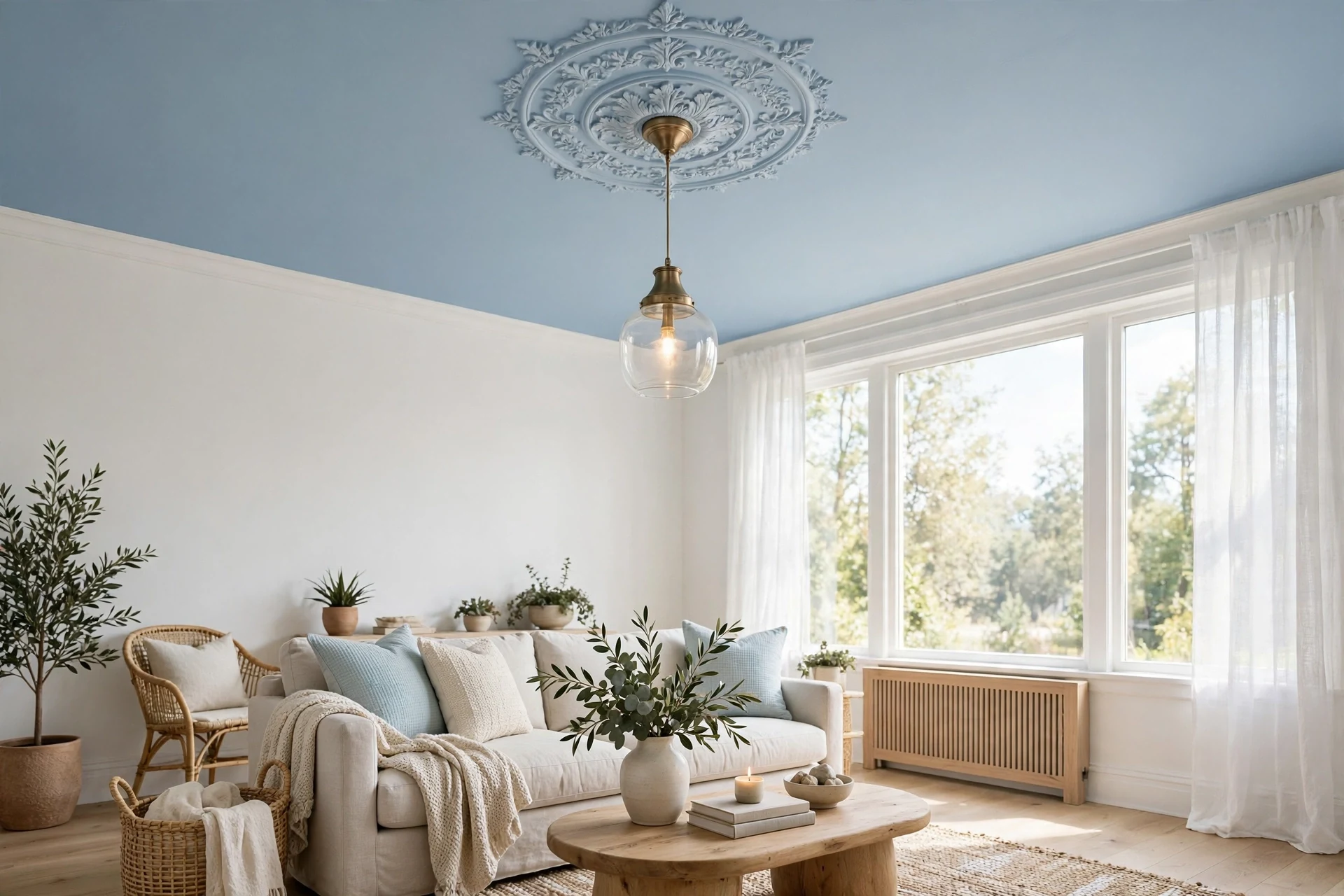
Everyone decorates the walls and forgets the ceiling — the largest surface in the room. A statement ceiling does not require construction: paint it a soft color a few shades deeper than the walls, add peel-and-stick wallpaper in a subtle pattern, or install lightweight beams or molding for architectural interest. The ceiling draws the eye up and makes the whole room feel taller and more finished.
Paint is the easiest version. A pale blue ceiling makes a room feel airy, a warm greige adds coziness, and a deep color on a high ceiling adds drama without overwhelming the room. If painting the whole ceiling feels bold, try painting just the ceiling of a tray or a coffered section, or add a medallion around a light fixture for a classic touch. The ceiling is the fifth wall — give it a little attention and the whole room benefits.
48. Mix Metals Thoughtfully
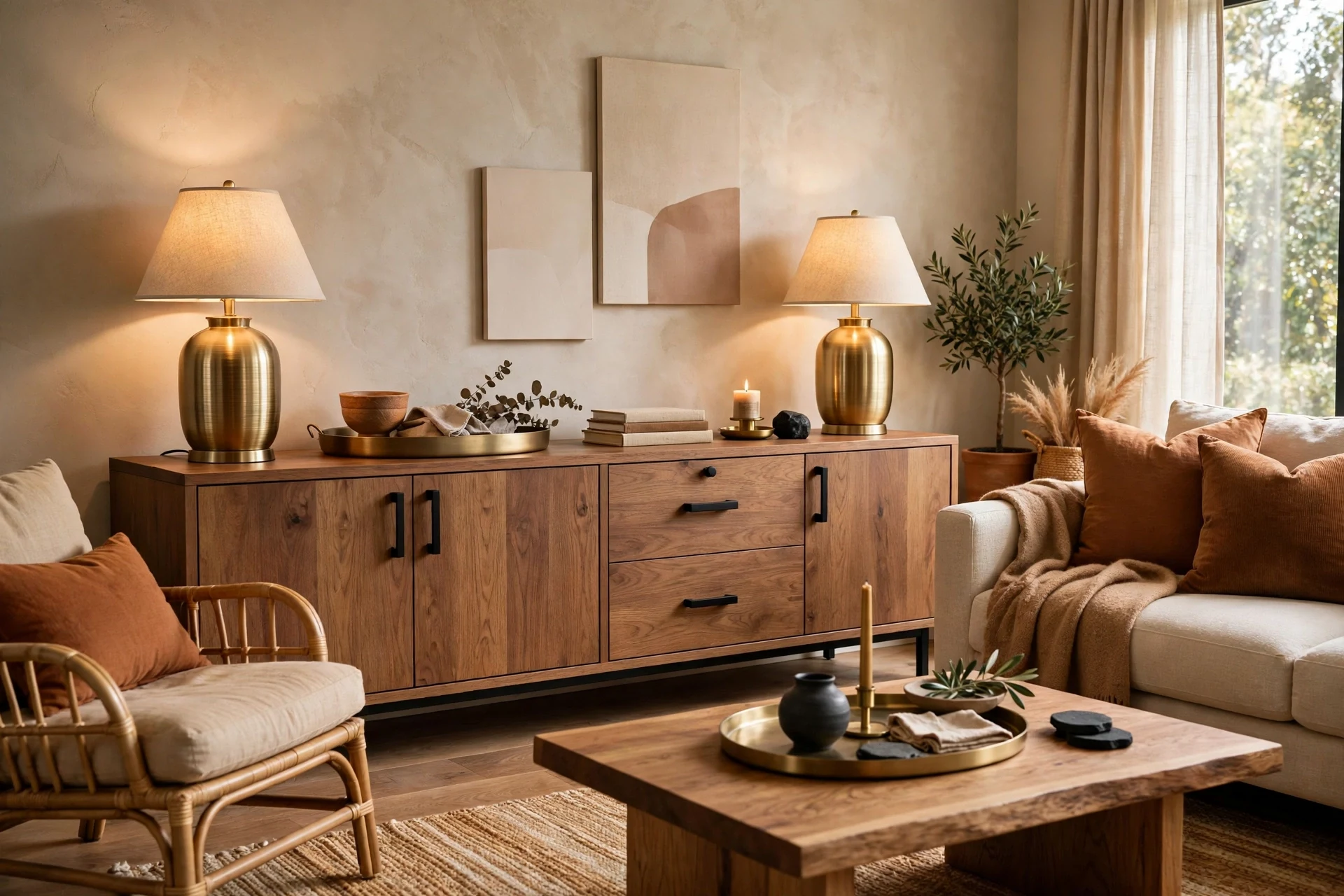
A living room with only one metal finish — all chrome, or all brass — can feel flat and matchy. Mixing metals adds depth and makes the room look collected, but the mix needs a little discipline. The rule that works: one dominant metal used in two or three places, one accent metal used once or twice, and a consistent finish within each piece. Brushed brass lamp bases and a brass tray as the dominant metal, with matte black hardware as the accent, is a combination that works in almost any room.
Keep the finishes in the same family — warm with warm, cool with cool — and do not mix more than two metals in a small room. A little variation is intentional; a lot of variation looks accidental. If you are unsure, start with the light fixtures and the hardware, because those are the metals the eye notices first, and let the smaller pieces follow their lead.
49. Create a Work-From-Home Nook
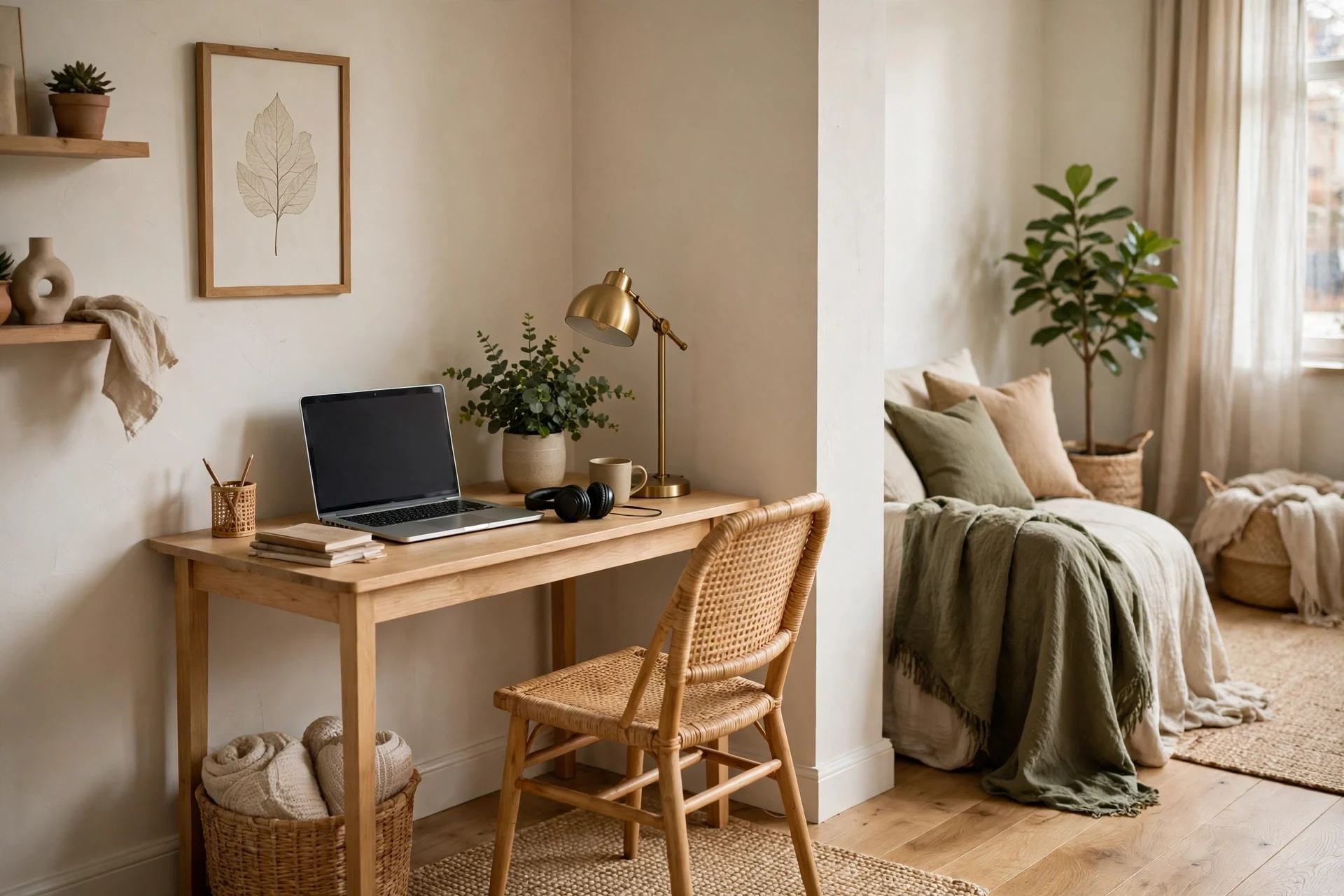
Working from the sofa is comfortable for about twenty minutes and terrible for the rest of the day. A small work nook in the living room — a compact desk or a wall-mounted fold-down table in a corner, a good chair, and a lamp — gives you a real place to work without giving up a whole room. When the workday ends, the laptop closes, the chair pushes in, and the living room is a living room again.
Choose a desk that matches the room’s furniture so the nook blends in, and add a basket or a drawer for chargers and papers so work clutter never spreads to the coffee table. A small plant and a framed print on the desk make it feel like part of the room, not an office that moved in. The nook works best near a window for natural light, and a curtain or a folding screen can hide it completely when guests come over.
50. Display a Personal Collection
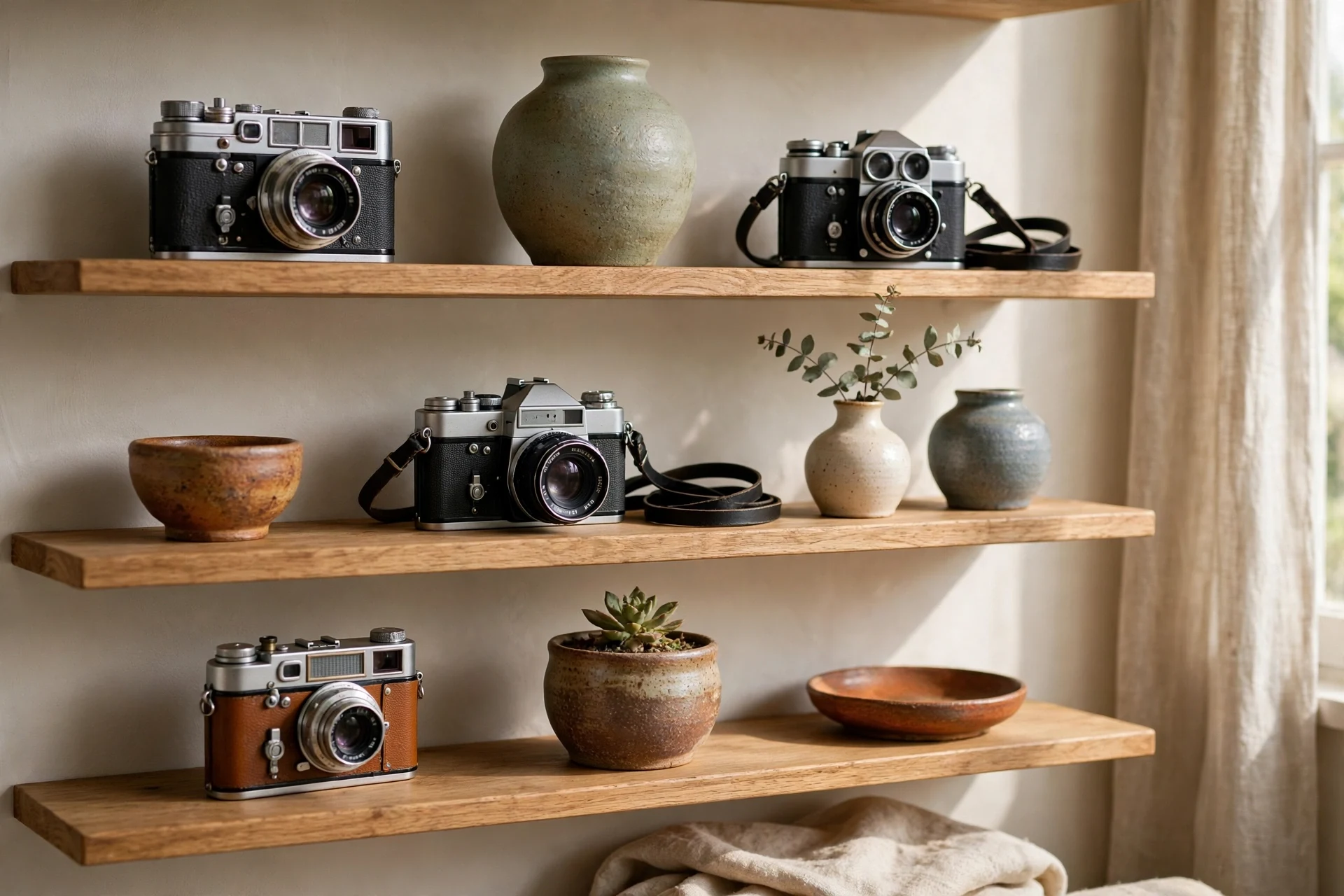
A living room full of things anyone could buy feels generic. A personal collection — vintage cameras, pottery, travel souvenirs, vinyl records, or even a set of interesting rocks — makes the room unmistakably yours. The key is displaying the collection together, in one place, instead of scattering it around the room. Grouped together, ordinary objects become a display; spread out, they become clutter.
Choose one shelf, one wall, or one cabinet for the collection, and give it a little breathing room — a collection packed tight looks like storage, while one with space between pieces looks like a gallery. If the collection is large, rotate it seasonally and store the rest; the pieces on display will get more attention, and the rotation keeps the room fresh. A personal collection is the fastest way to make a living room feel like it belongs to a real person.
51. Use Sheer Curtains for Soft Light
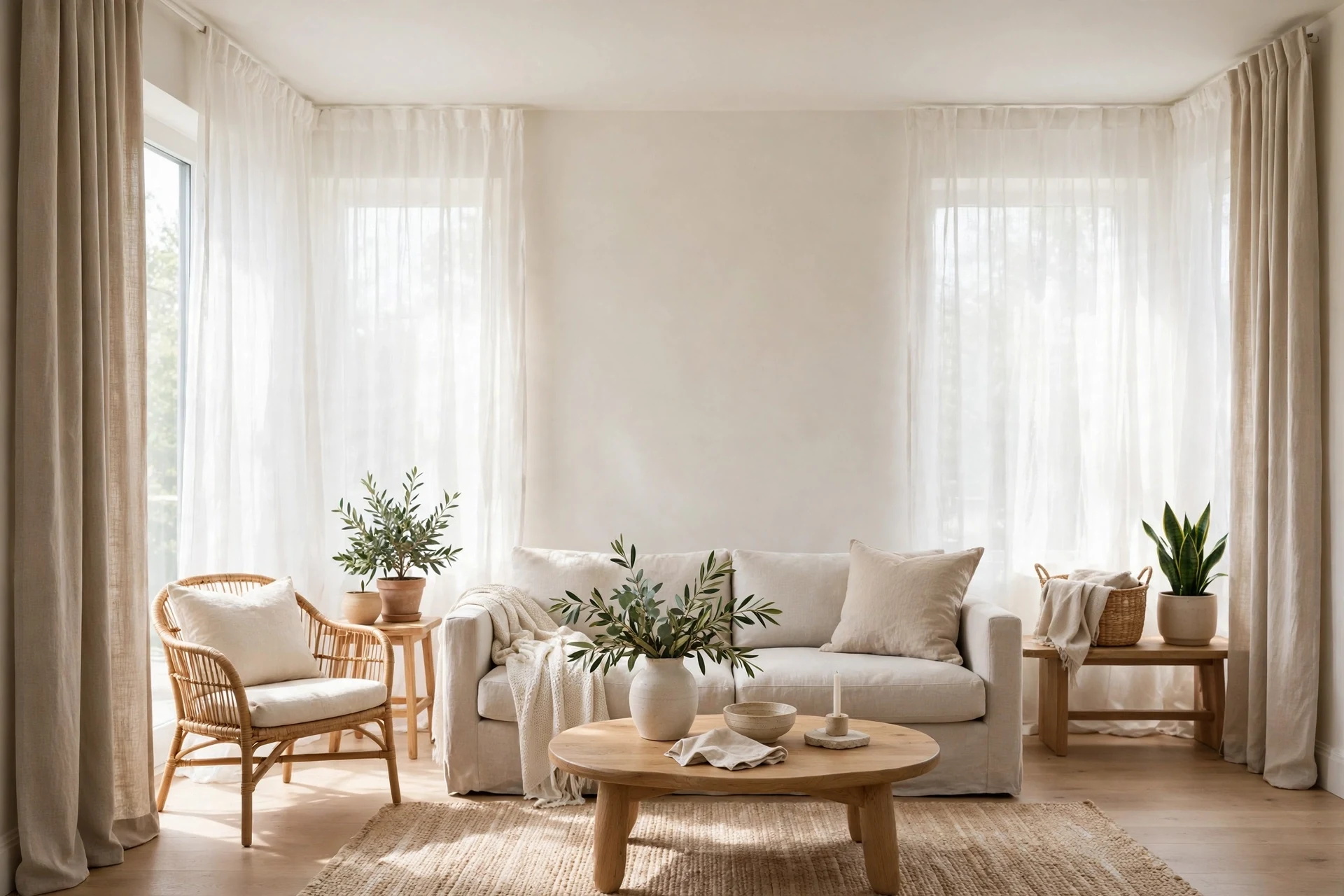
Heavy curtains block light and make a living room feel closed in, especially in a room that already gets limited sun. Sheer curtains are the fix: they soften the daylight, give you privacy from the street, and make the whole room glow without shutting the outside world out. A room with sheers feels brighter and larger than the same room with bare windows or heavy drapes.
Hang sheers the same way as regular curtains — high and wide, kissing the floor — and layer them with solid panels on the outside for the evening. White or ivory sheers work in almost any room, while a linen-look sheer adds texture. Sheers are also inexpensive, so they are an easy experiment: try them for a month, and if you miss the drama of heavy curtains, the solid panels are still there on the sides.
52. Do a Ten-Minute Reset Routine
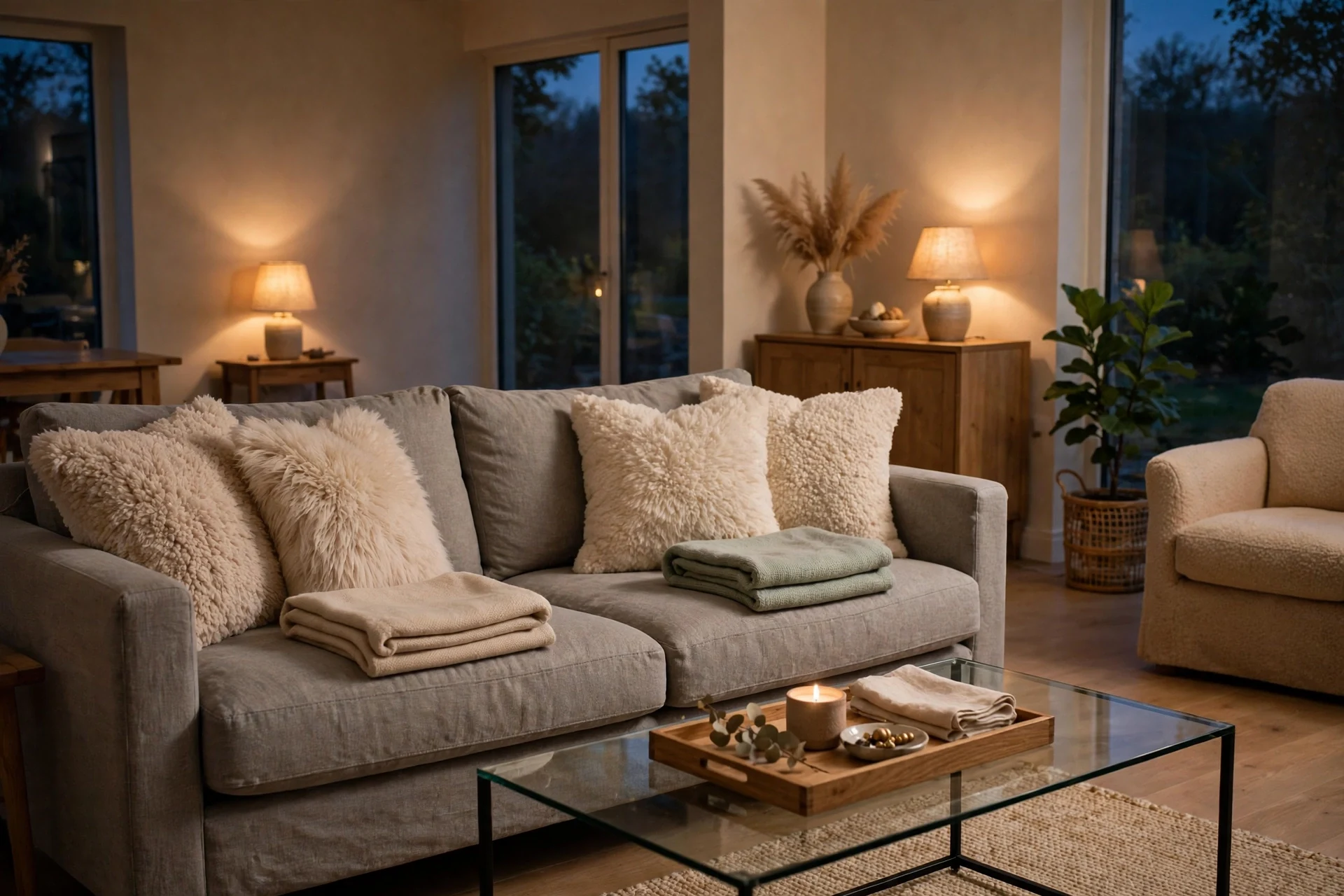
The best living room idea is not a purchase at all — it is a habit. A ten-minute reset every evening keeps the room looking like the photos in this article, and it takes less time than scrolling through them. Set a timer and do five things: fluff the pillows and fold the throws, clear the coffee table into the tray, return anything that belongs in another room, take out anything that is trash or recycling, and dim the lamps to evening mode.
Do it at the same time every day — right after dinner works for most households — and it becomes automatic in about two weeks. The reset does not deep-clean the room, and it does not need to; it returns the room to its baseline, so the next morning starts in a room that feels calm instead of chaotic. Every idea in this list works better in a room that gets a ten-minute reset, because good design is easier to see when the clutter is gone.
Frequently Asked Questions
How can I make my living room look bigger without renovating?
Start with the three moves that cost the least and change the most: hang your curtains high and wide, add a large mirror across from a window, and choose a rug that is big enough for the front legs of your furniture. Then pull the sofa a few inches off the wall and remove one piece of furniture you do not use. A room with clear walkways, reflected light, and furniture that fits the space reads as bigger the same day, with no construction at all.
What is the best layout for a small living room?
Put the largest piece, usually the sofa, against the longest wall, and keep the walkway through the room clear. Use a loveseat instead of a full sofa if the room is under 150 square feet, and choose furniture with visible legs, which makes the floor look larger. A round coffee table saves shin space and improves flow, and a floor lamp in the corner adds light without taking table space. For more layout-specific guidance, see our guide to small living room furniture layout.
How many throw pillows should a sofa have?
Five or fewer on a standard three-seat sofa: two larger pillows in the corners, two medium ones in front of them, and one lumbar pillow in the center. Fewer than three looks bare, and more than five leaves nowhere to sit. Mix textures rather than just colors — velvet, linen, and boucle together look far more styled than five matching pillows in different shades.
How do I make my living room cozy on a budget?
Layer softness and light. A throw blanket on the sofa arm, a secondhand lamp with a warm bulb, a large rug (or a layered rug over a cheap jute base), and a plant in a basket will change the feel of a room for under a hundred dollars. Thrift stores are the best source for lamps, baskets, and vintage finds, and a ten-minute evening reset keeps the room feeling calm for free.
What colors work best in a living room all year round?
Warm whites, soft greiges, pale sage, and dusty blue work in every season because they look good in both winter’s gray light and summer’s bright sun. Use them on the walls and the largest furniture, then add color in small, swappable doses — pillows, throws, and a vase in one accent color. That way the room stays fresh all year and a color change is a twenty-minute pillow swap, not a repaint.
Related Reading
- Winter Living Room Decor Ideas
- Living Room Wall Decor Ideas
- Small Living Room Furniture Layout
- Christmas Living Room Decor Ideas
- New Year Dining Room Decor Ideas
- Boho Bedroom Decor Ideas
- Small Living Room and Kitchen Combo Ideas
Conclusion
A genius living room is not a perfect living room — it is a room that fits the way you actually live. The ideas in this list work because they are small, practical, and forgiving: float the sofa, layer the light, size the rug right, give everything a place to live, and reset the room for ten minutes each evening. You do not need to do all 52 at once. Pick the one that fixes the thing that bothers you most, try it this weekend, and notice how the room feels on Monday morning. Then pick the next one. A living room becomes genius one smart idea at a time — and yours is already on its way.