
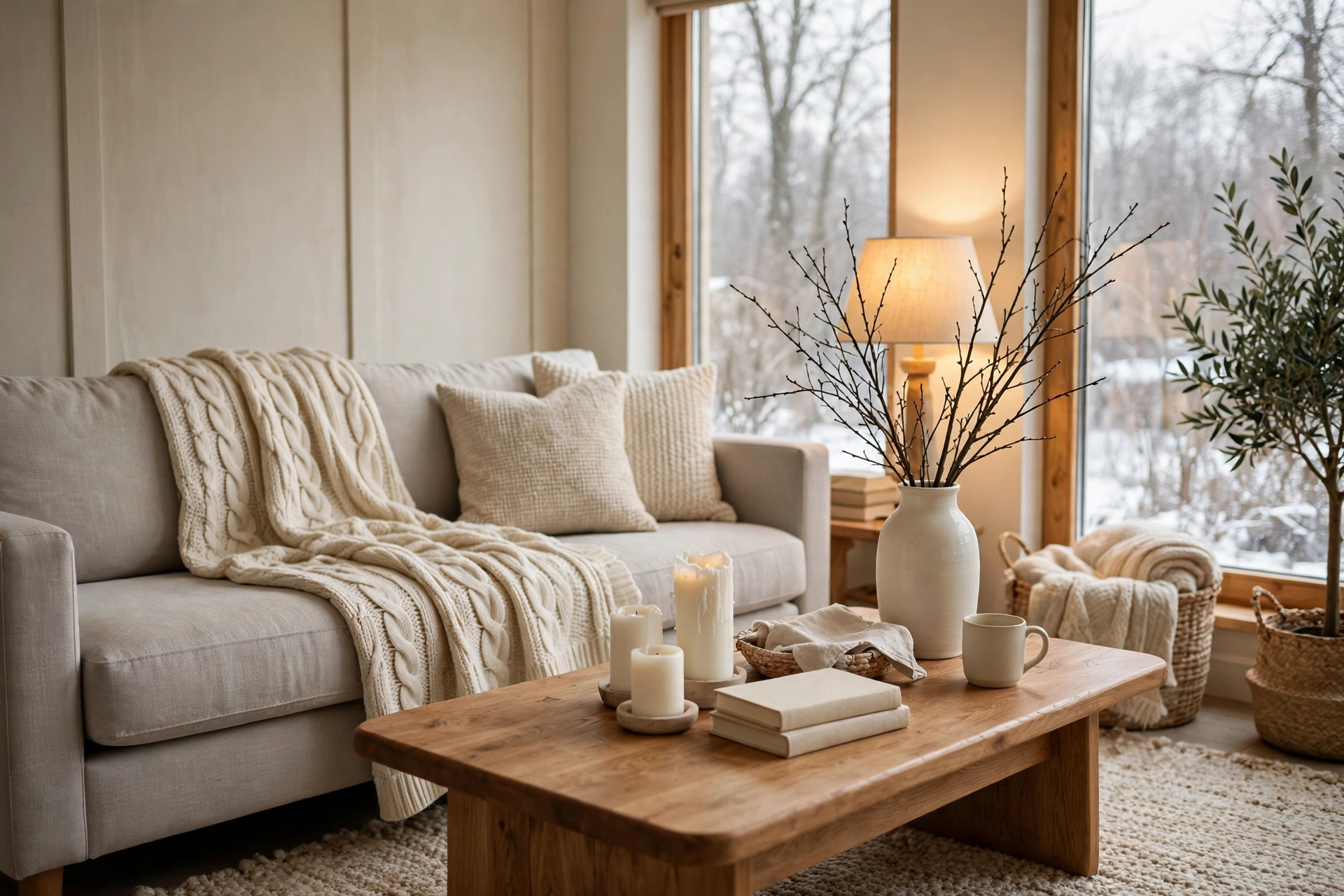
15 Winter Living Room Decor Ideas for January (After the Tree Comes Down)
Introduction
The first week of January is the strangest week for a living room. The tree is gone, the stockings are packed away, and the corner where the tree stood looks empty in a way that is hard to ignore. The room is not ugly — it is just bare, and the bare walls and empty surfaces make the whole house feel colder than it is.
The fix is not to leave the Christmas decor up longer. The fix is winter decor: a calmer, quieter style that belongs in January, February, and March. Winter living room decor ideas work with what the season already gives you — evergreen branches without a single ornament, chunky knit throws, wool cushions, warm wood, candles, and bare branches in a tall vase. Nothing red, nothing glittery, nothing that says Christmas. Just warmth, texture, and soft light for the darkest months of the year.
The ideas below start with the empty tree corner, because that is the spot everyone notices first, and then work through the sofa, the mantel, the windows, and the coffee table. Each one is simple enough to do in an afternoon with things you mostly already own. If you want to see what this room looked like before, our Christmas living room decor ideas guide shows the festive version — this is the calm room that comes after it.
1. Fill the Tree Corner With a Floor Lamp and a Plant
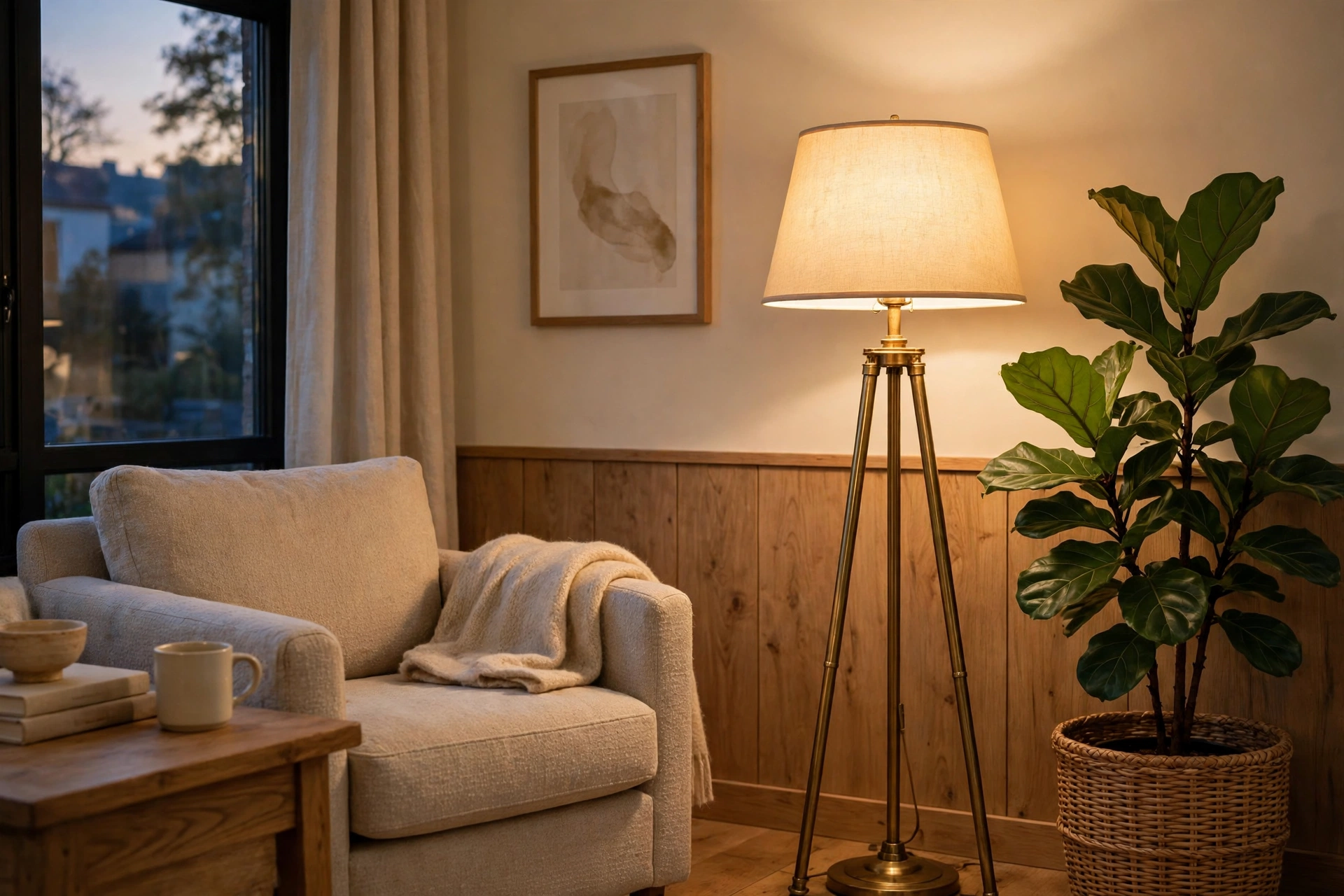
The empty corner is the first thing to fix, because it is the biggest hole in the room. A tall floor lamp with a warm-toned shade fills the vertical space the tree used to occupy, and a large potted plant — a fiddle-leaf fig, a snake plant, or a potted olive tree — fills the floor space. Put the lamp slightly behind the plant so the light glows through the leaves in the evening. Choose a lamp with a dimmer if you can, so the corner can be bright for reading and soft for relaxing. A woven basket as the plant pot adds one more layer of texture. The corner will never look like the tree corner again, and that is the point: it becomes a quiet, green corner that looks right all winter.
2. Keep the Evergreens, Lose the Ornaments
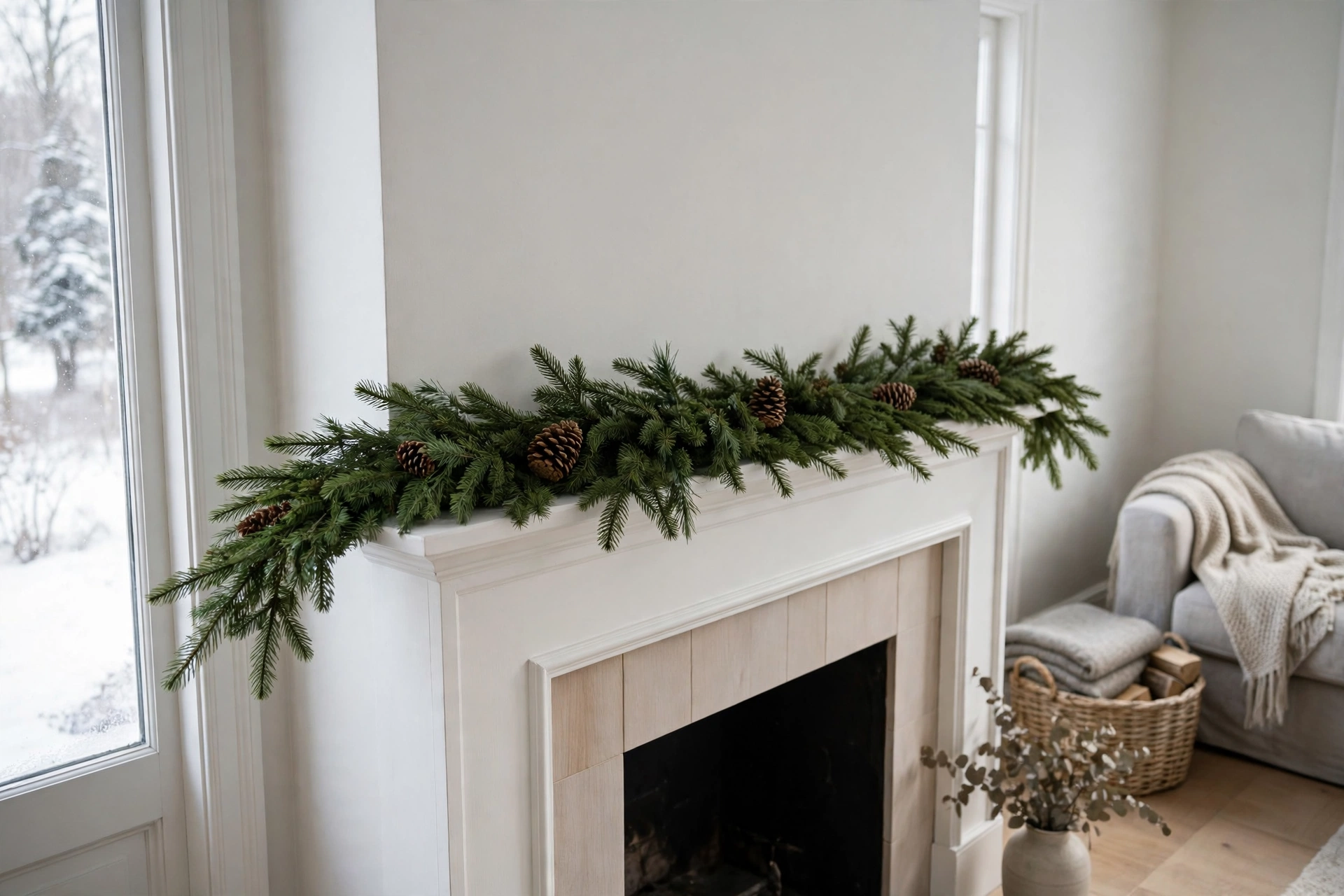
You do not have to throw the greenery away with the ornaments. Fresh or faux evergreen branches look just as good in January as they did in December — better, in fact, once the ornaments, ribbons, and lights come off and the branches can simply be green. Lay a plain evergreen garland along the mantel, tuck a few sprigs into a vase on the sideboard, and keep a small potted evergreen on the coffee table. The rule is simple: if it has an ornament, a bow, or a red berry cluster on it, take it off. Plain green branches, pinecones, and cedar sprigs are winter, not Christmas. They last for weeks, they smell wonderful, and they keep the room feeling alive while everything outside is bare.
3. Chunky Knit Throws on the Sofa
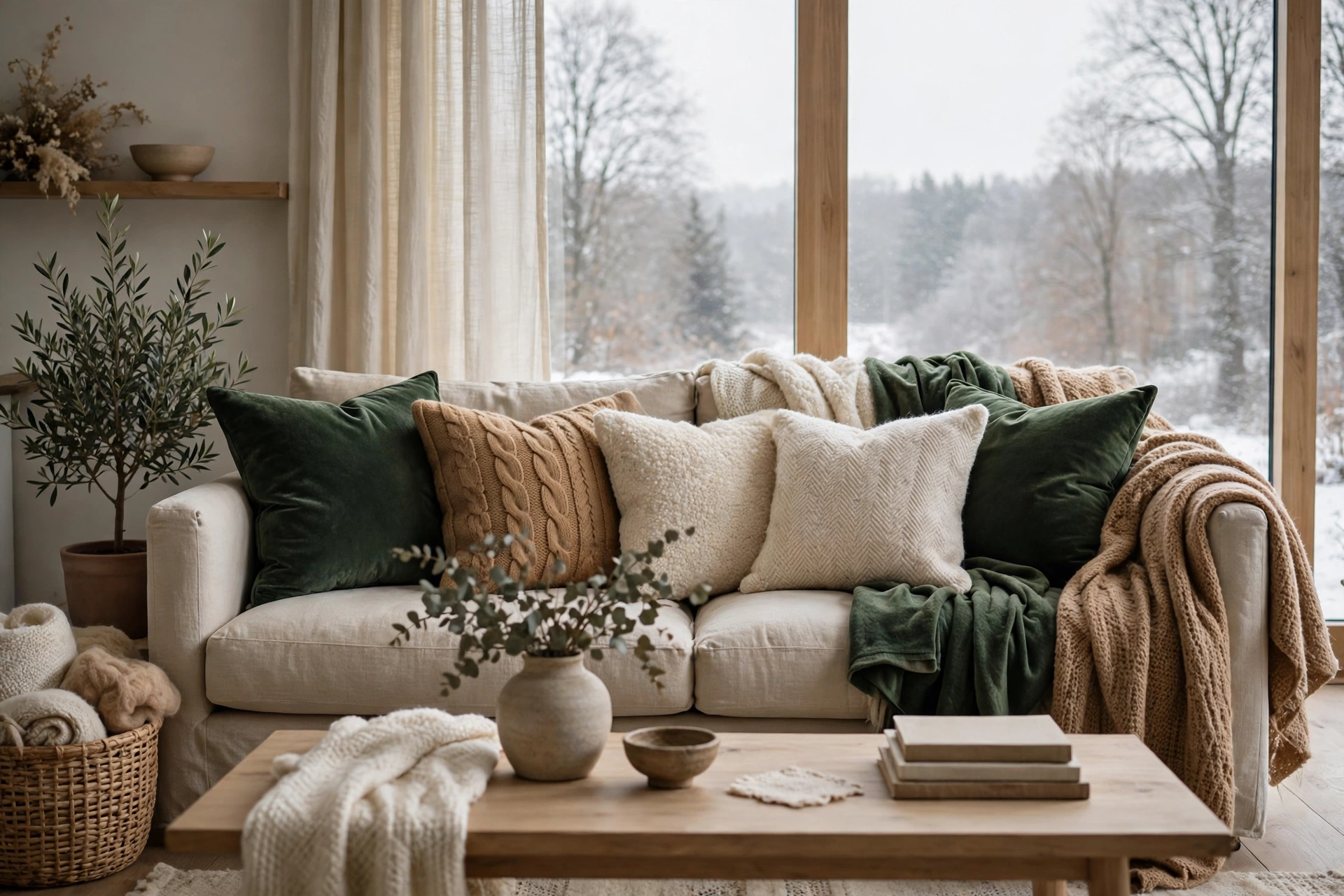
Nothing says winter faster than a chunky knit throw. Drape one over the back of the sofa and fold a second one over the arm, so the sofa looks soft and inviting from the doorway. Cream, oatmeal, and soft gray work best in January because they brighten a room that gets very little daylight. A waffle-knit or cable-knit texture matters more than the color — the thick, visible knit is what makes the room feel warm. Keep one throw within reach of every seat, not folded away in a closet. A throw that is actually used is the whole point of winter living room decor ideas: the room should look like someone lives in it, comfortably, all winter long.

4. Velvet and Wool Cushion Cover Swap
Swapping cushion covers is the fastest room change you can make, and January is the perfect time for it. Take off the festive covers and put on velvet and wool instead: deep forest green velvet, warm camel wool, charcoal gray, or soft cream bouclé. Mix two textures on the same sofa — one velvet, one wool — so the cushions look layered rather than matched. Two or three cushions are enough; a sofa covered in cushions looks fussy, not cozy. This is also the cheapest idea on the list, since covers cost far less than new cushions and store flat for next winter. Keep the palette to two or three colors so the sofa stays calm.
5. Warmer Rug Layer (Second Rug Over Flat-Weave)
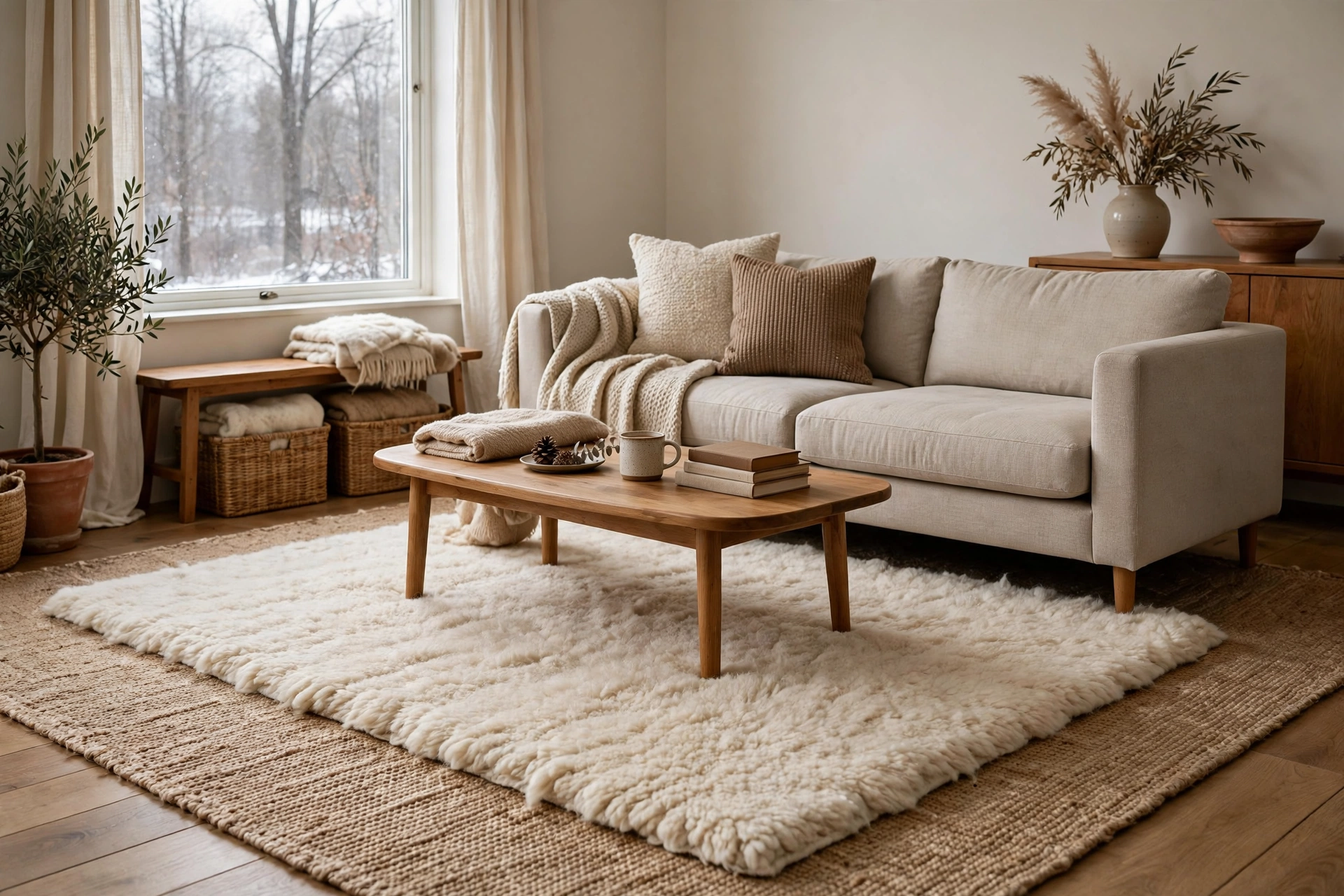
If your rug is a thin flat-weave, January is when you feel it — cold underfoot and visually flat. Layer a second rug on top: a thick wool rug, a high-pile shag, or a soft faux-sheepskin rug placed over the flat-weave at an angle. The top rug should be smaller than the bottom one, with a border of the flat-weave showing all around, so the layering looks deliberate. A sheepskin draped over the sofa arm or the reading chair adds the same warmth in miniature. Layered rugs also soften sound, which matters in a bare January room where every footstep echoes. Choose a warm neutral — cream, oatmeal, or soft taupe — and the floor will feel like part of the room again.
6. Thermal and Lined Curtains
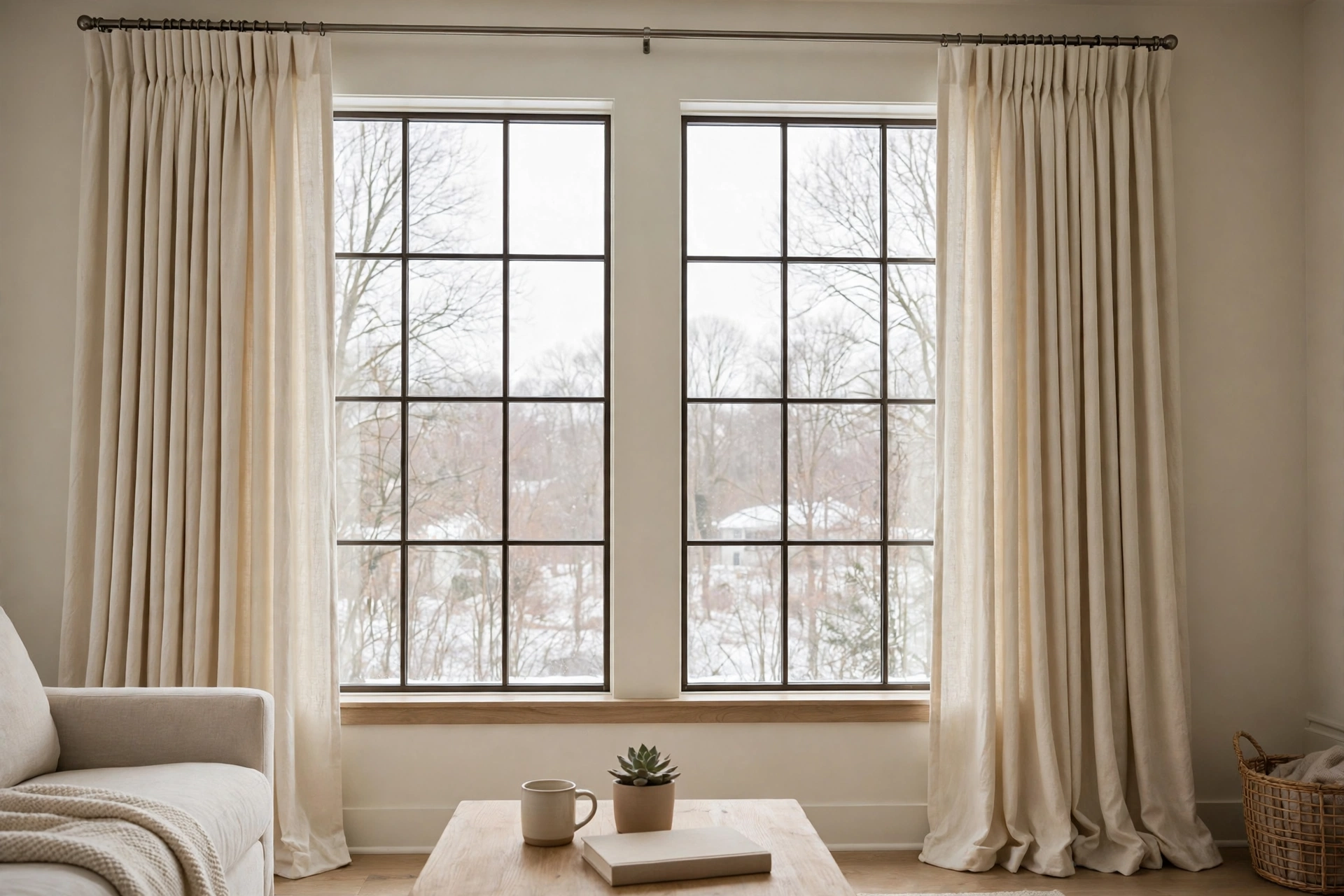
Dark January evenings start at four in the afternoon, and thin curtains do nothing against the cold glass or the early dark. Hang lined or thermal curtains in a warm neutral — cream, warm gray, or soft taupe — and let them fall all the way to the floor. The lining keeps drafts out and holds the room’s warmth in, and the heavier fabric makes the windows look finished instead of bare. Hang the curtain rod a few inches above the window frame and a few inches wider on each side, so the curtains frame the window instead of covering it. During the day, pull them fully to the sides so every bit of winter daylight gets in. This is one of the few winter living room decor ideas that saves on heating as well as looking good.
7. Candles and Low Light for Dark Evenings
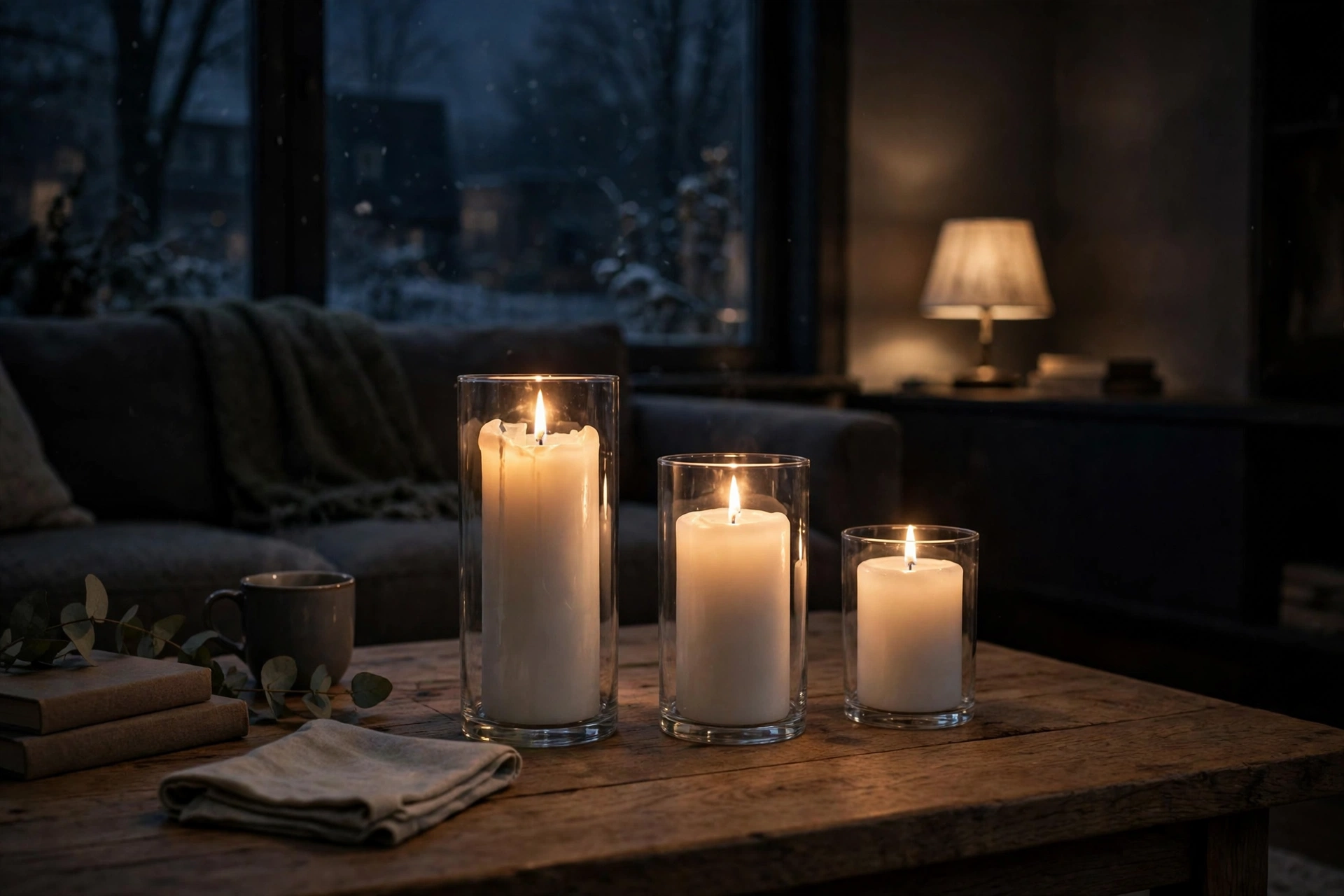
Winter evenings are long and dark, and overhead lights make a living room feel like an office. Turn the ceiling light off and use candles and low lamps instead. Group three pillar candles of different heights on the coffee table, put a lantern with a battery candle on the hearth, and keep one table lamp on at a low setting. The low, warm light is flattering, calming, and exactly right for a January evening. Use unscented or lightly scented candles in plain glass or ceramic holders — nothing red, nothing shaped like a holiday figure. Keep candles away from throws and curtains, and never leave them burning in an empty room. The Danish idea of hygge — a feeling of coziness and comfortable conviviality — is built on exactly this kind of low, warm light, and it is the simplest way to make a winter room feel like a refuge. Read more about the idea on Wikipedia’s page on hygge.
8. Winter Mantel Restyle (No Red, No Ornaments)
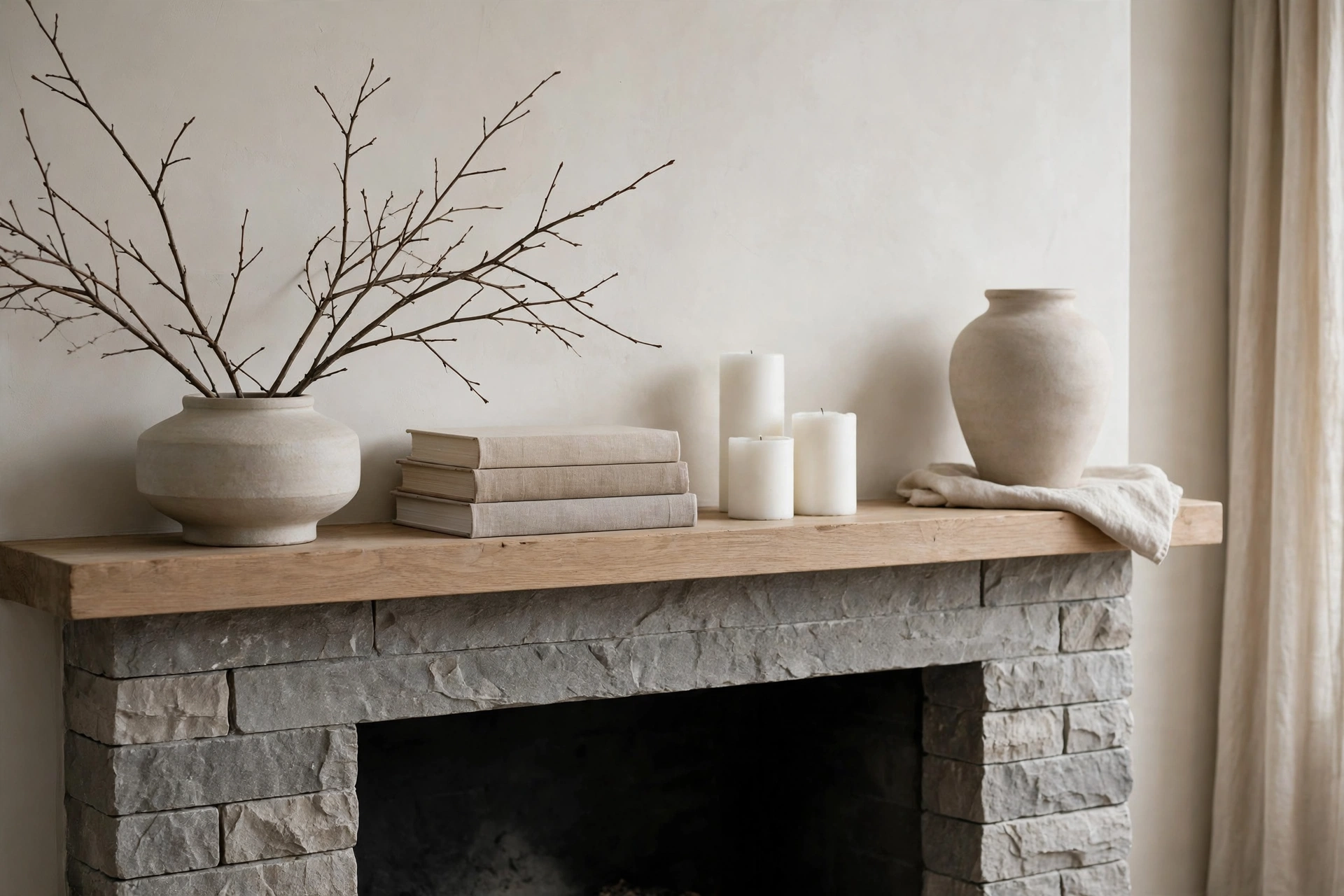
The mantel is the first surface people look at, and after Christmas it usually looks either bare or like a leftover. Restyle it for winter: a plain evergreen garland or a row of bare branches in low vases, two or three white pillar candles, a stack of two books, and one simple object — a ceramic vase, a wooden bowl, or a framed black-and-white print. No red, no ornaments, no garland with berries. Keep the arrangement low and asymmetrical, with the tallest piece at one end, so the mantel looks styled rather than lined up. Step back to the doorway and check it: if you can count more than five things, take one away. A calm mantel makes the whole room feel calm.
9. Bare Branch Arrangement in a Tall Vase
A tall vase of bare branches is the single most winter-looking thing you can put in a living room. Cut a few branches from the yard — dogwood, birch, or any bare twig with an interesting shape — and stand them in a tall floor vase in the tree corner or beside the fireplace. Leave them completely bare, or add a few dried seed heads if you have them. The branches catch the light beautifully, they cost nothing, and they last all winter without any care. If you do not have a yard, florists and craft stores sell bare branches in winter. Keep the vase simple — plain ceramic, glass, or wood — so the branches are the star. This is winter decor at its most honest: the outside, brought inside, exactly as it is.
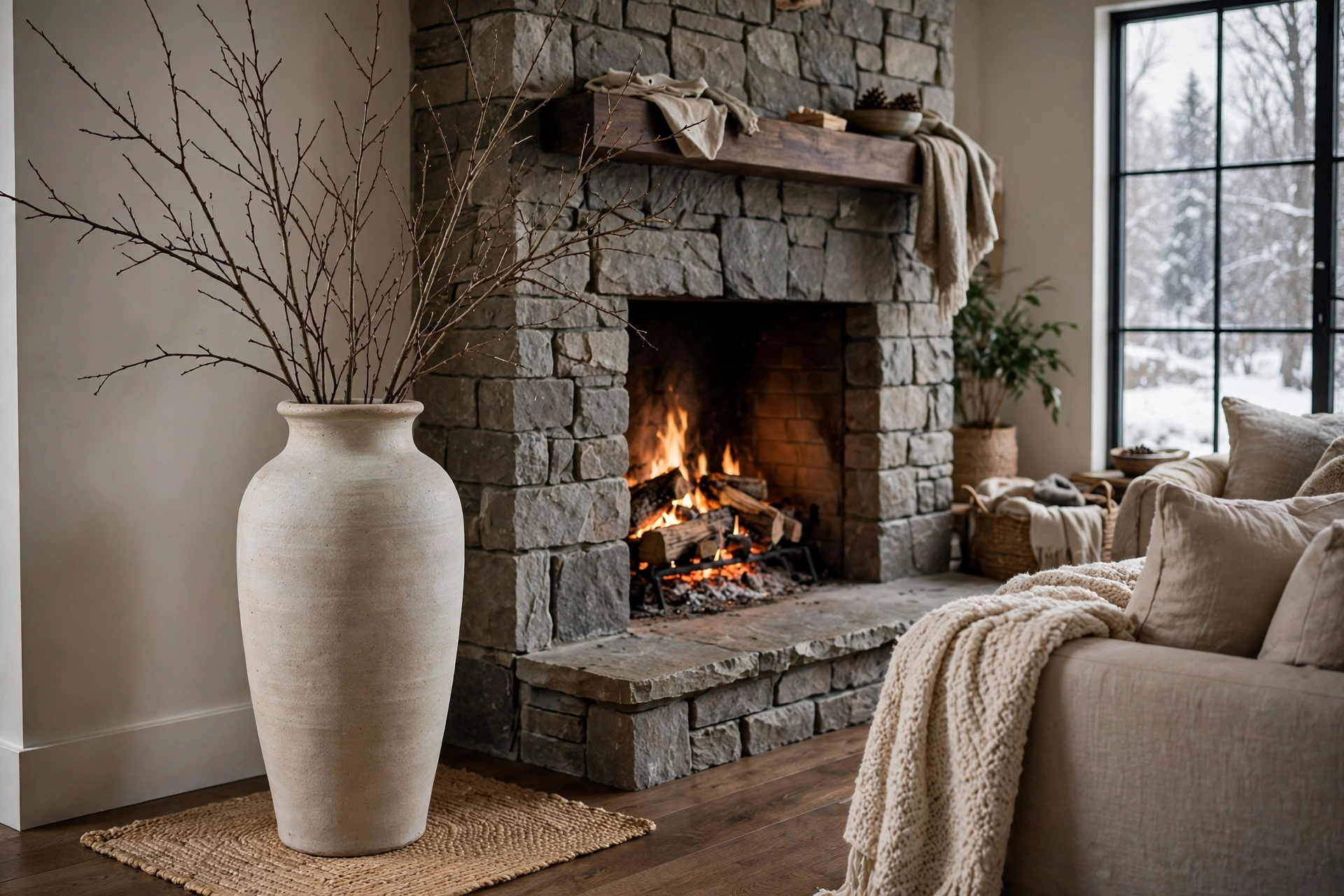
10. Winter Art Swap Above the Sofa
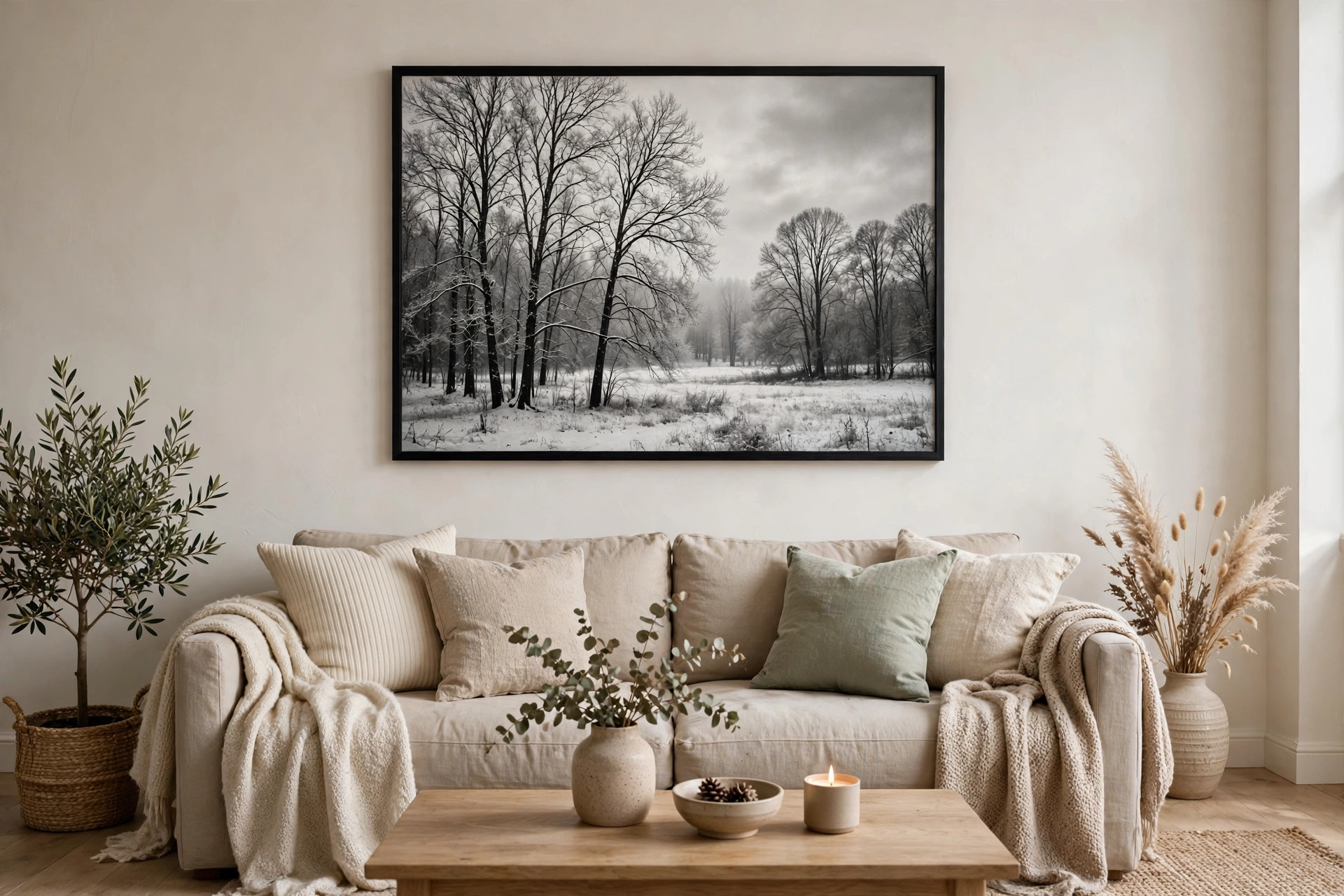
The art above the sofa sets the mood for the whole room, and a bright summer print looks wrong in January. Swap it for something winter: a black-and-white landscape photograph, a simple line drawing of bare trees, a moody abstract in gray and cream, or a framed textile. One large piece works better than a cluster of small ones in winter, because the room already has a lot of texture from throws and cushions. Lean the frame on the mantel or hang it at eye level above the sofa — either way, keep the frame simple and dark, in black wood or plain walnut. If you do not want to buy new art, turn an existing print around, or hang a plain linen panel for the season. The wall above the sofa is the biggest blank space in the room, and winter is the time it matters most.
11. Reading Corner Around One Good Lamp
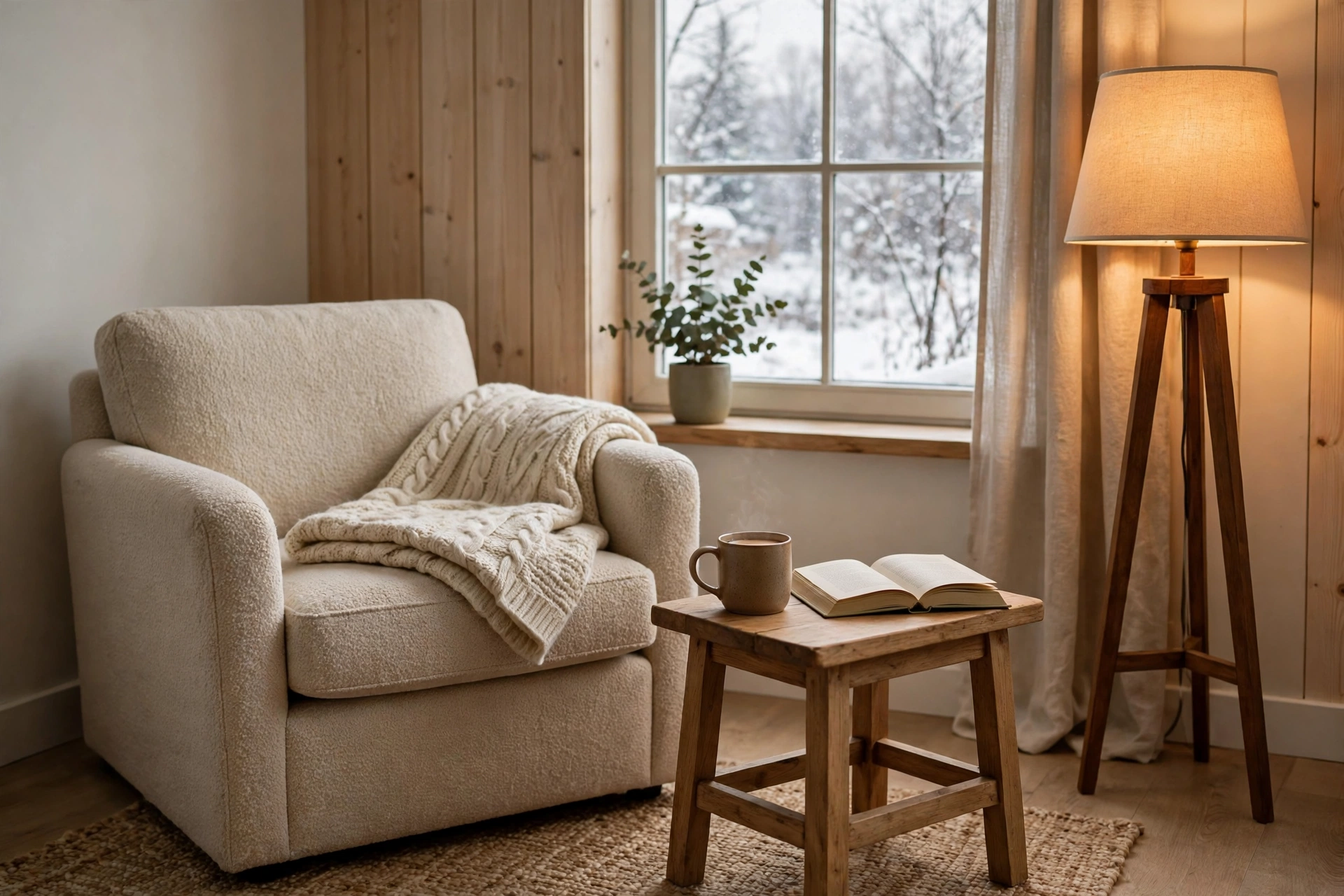
January is reading season, and a living room without a reading corner wastes the darkest months. Pick the best chair in the room, move it near a window or a floor lamp, and build a corner around it: a small side table for a mug and a book, a folded throw over the chair arm, and a basket of books or magazines on the floor. The lamp is the key — it should be bright enough to read by without glare, with the light falling over your shoulder. A reading corner gives the room a purpose beyond sitting and watching television, and it makes the room feel used in the best way. Once you have one, you will wonder why the chair spent December facing the tree instead.
12. Pinecone Bowl on the Coffee Table
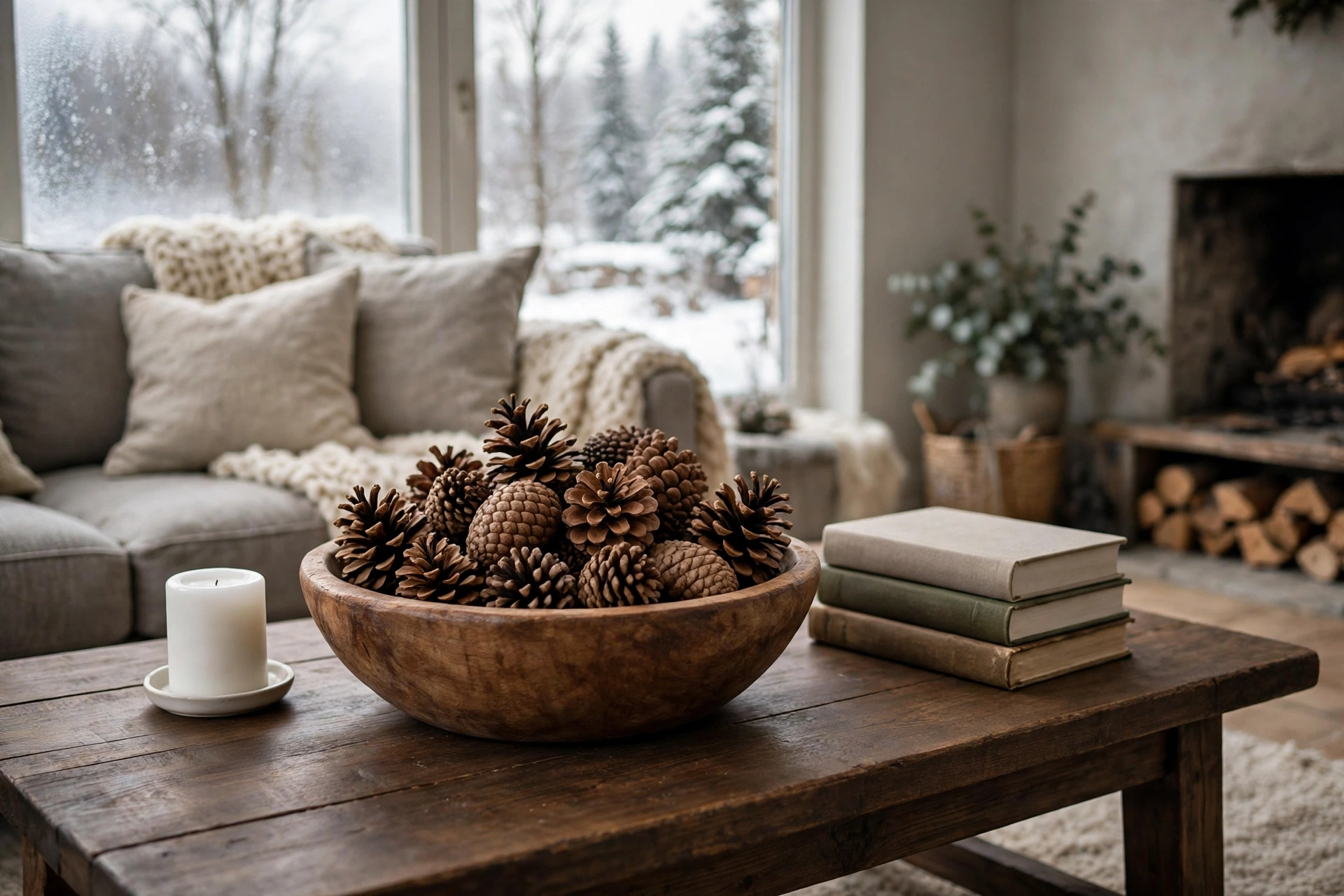
The coffee table is the smallest surface in the room and the easiest to get wrong in January — either bare or still holding Christmas. The fix is a single bowl of pinecones. Use a wide, shallow wooden or ceramic bowl, fill it with pinecones you gathered or bought, and add a few small sprigs of evergreen if you like. That is all. No ornaments mixed in, no red berries, no glitter. A pinecone bowl is winter, not Christmas, because pinecones belong to the whole season. Put the bowl on a tray with one candle and a small stack of books, and the coffee table is done. When the pinecones start to look dusty in March, empty the bowl and the table is ready for spring.
13. Clear, Calm Surfaces Reset
January is the natural moment for a surfaces reset, and the living room needs it most. Take everything off the side tables, the console, and the shelves, dust them, and put back only half of what was there. One lamp, one book, one object per surface. The empty space is not a problem — it is the point. A room with clear surfaces feels bigger, calmer, and easier to keep clean, and it makes the few things you do display look intentional. This is the least decorative idea on the list and the one that changes the room the most. Do it on the same day the tree comes down, while you are already in clearing-out mode, and the whole house will feel lighter.
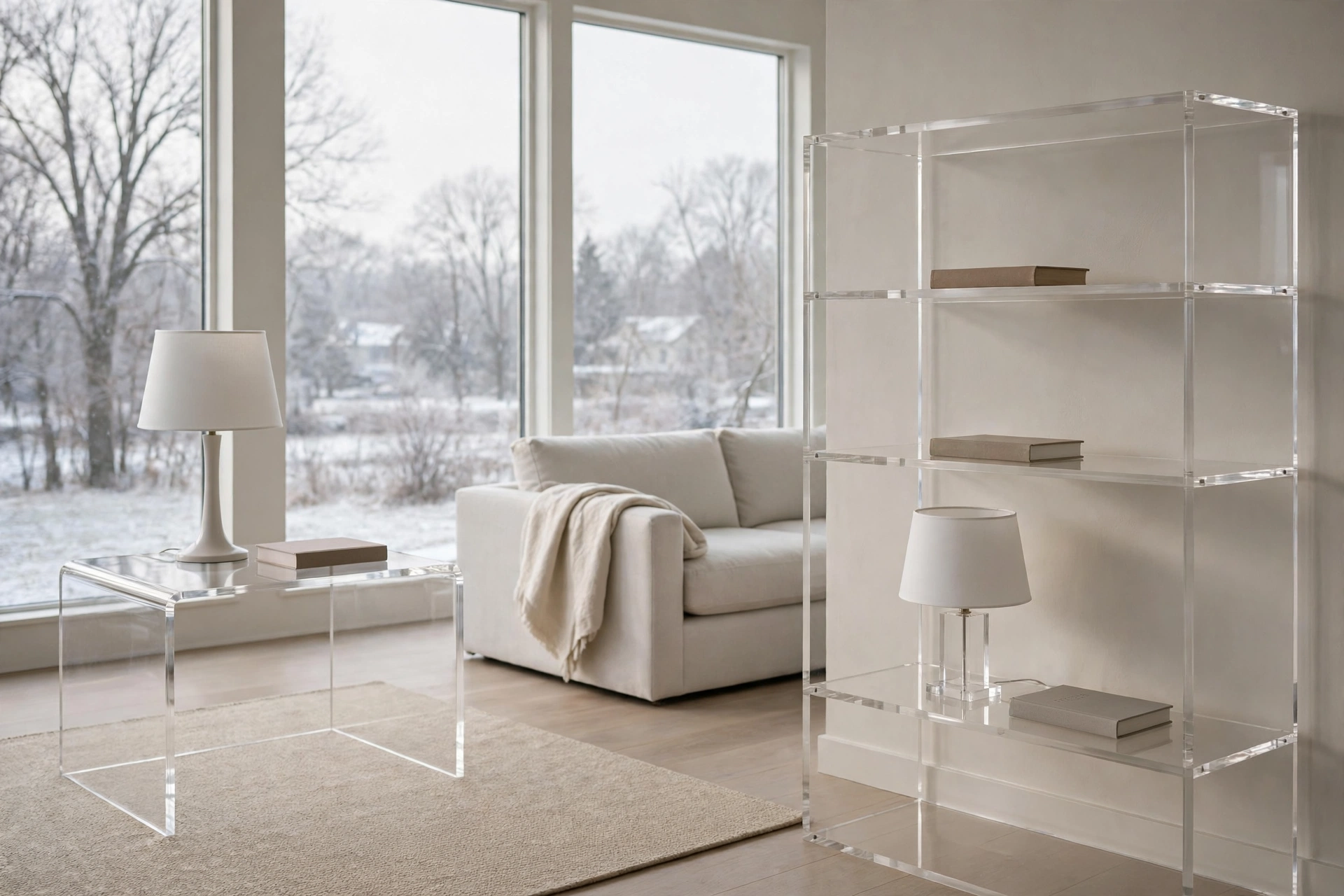
14. Warm Wood Tones to Balance White and Green
A January living room can easily turn cold: white walls, green branches, gray light from the window. Warm wood is the balance. Bring in a wooden tray on the coffee table, a walnut picture frame, a wooden bowl, or a teak side table — anything with a visible, warm grain. The wood does not have to match: oak, walnut, and pine can sit in the same room as long as the tones are all warm rather than gray or whitewashed. One or two wooden pieces are enough; the goal is a thread of warmth running through the room, not a log cabin. If your furniture is mostly white or gray, the wood pieces are what keep the room from feeling like a showroom in winter.
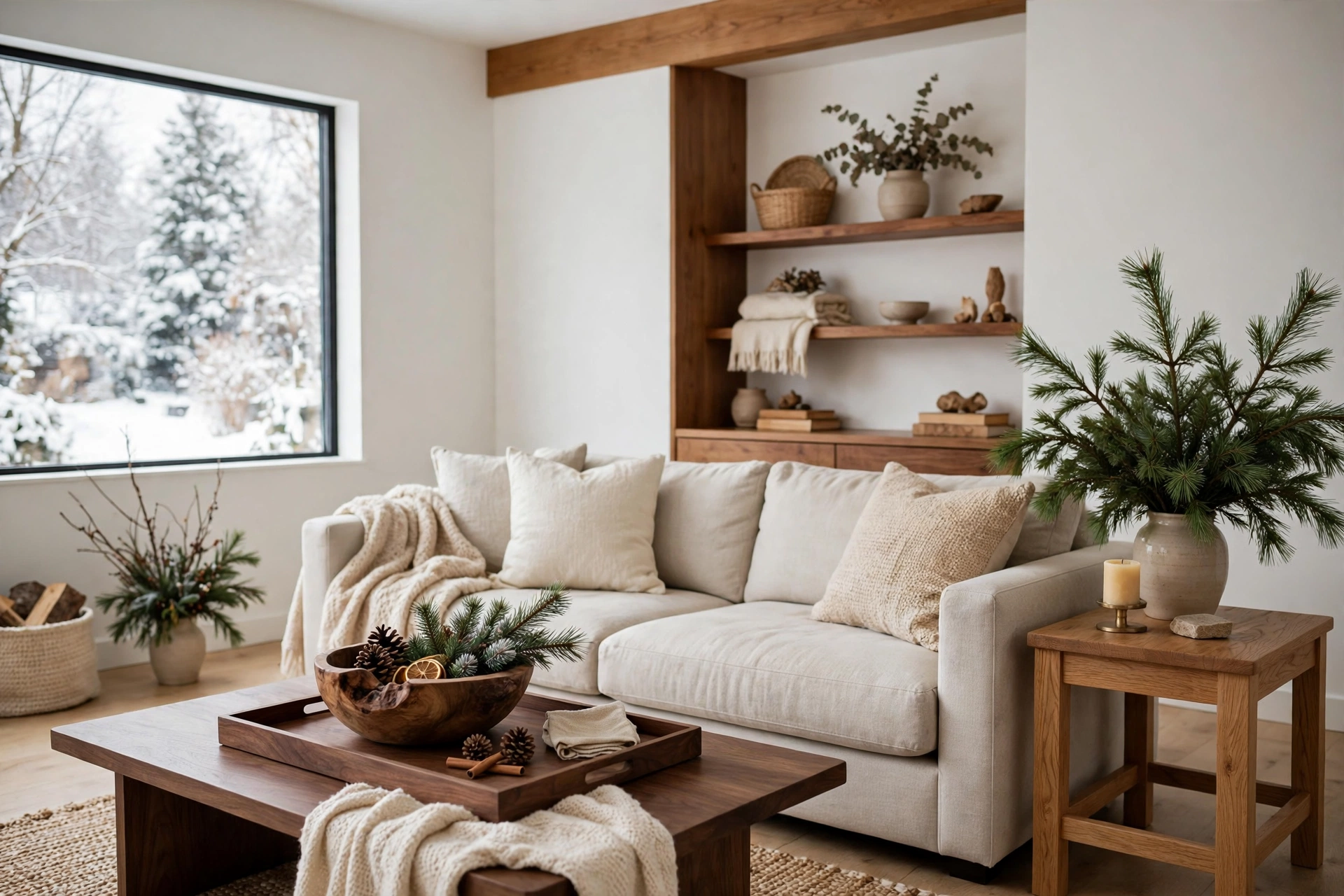
15. One Winter Statement Piece (Not a Christmas Piece)
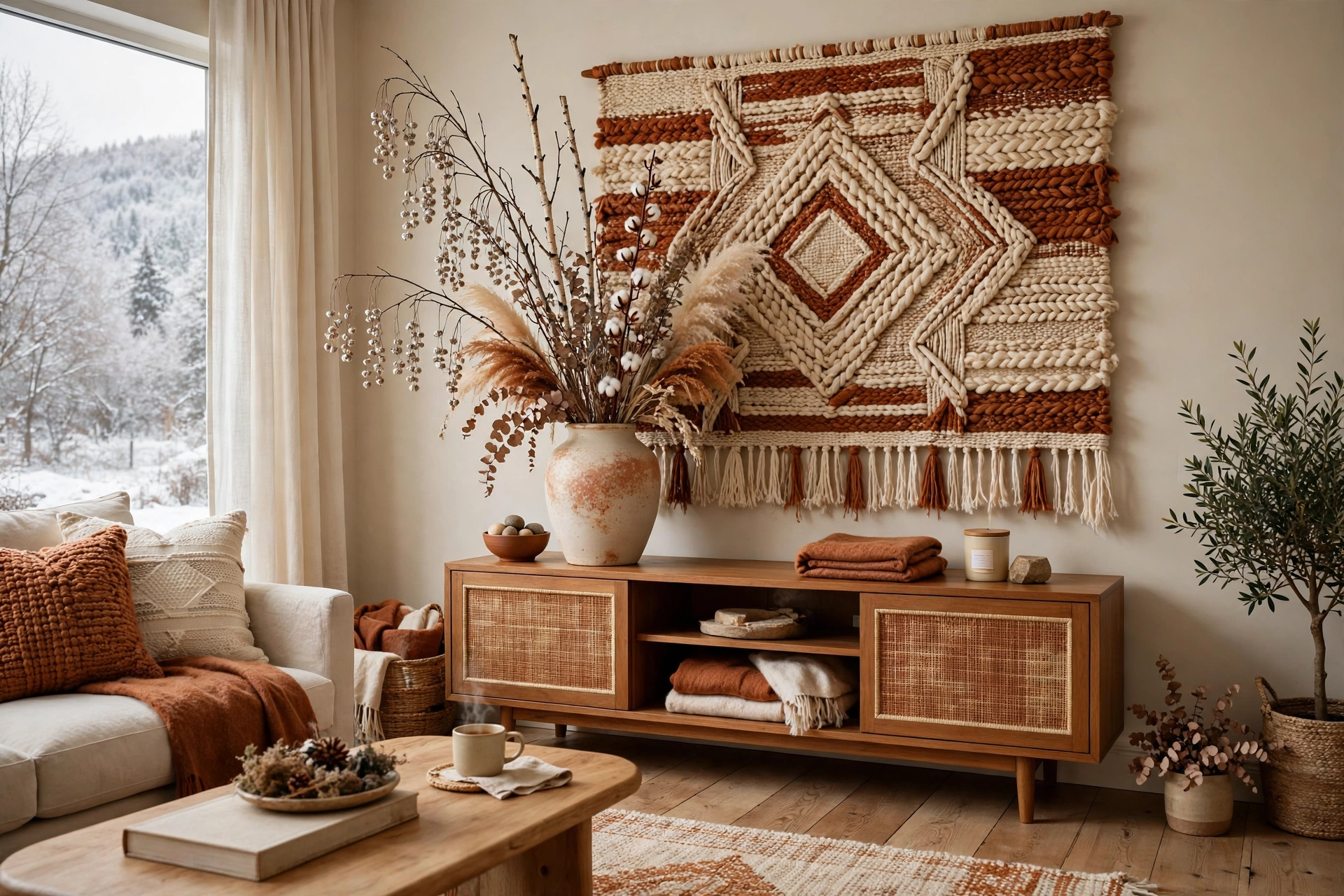
Every winter room needs one piece that makes it feel finished — and it cannot be anything left over from Christmas. Pick one winter statement piece: a large woven wall hanging, an oversized floor vase with branches, a sculptural floor lamp, or a big textured throw in a deep winter color like forest green or warm rust. One piece, in one spot, at a scale big enough to notice from the doorway. The statement piece is what stops the room from looking like a Christmas room with the decorations removed. It says the room was styled for winter on purpose. Choose it last, after the other fourteen ideas are in place, so you can see what the room still needs — and buy it once, not three times.
Frequently Asked Questions
Q: What is the difference between Christmas decor and winter living room decor ideas?
A: Winter living room decor ideas use the season’s own materials — evergreens without ornaments, knit throws, wool, warm wood, candles, and bare branches — while Christmas decor uses ornaments, red and green styling, and a tree. Winter decor stays up through January, February, and March, long after the Christmas decorations are packed away.
Q: When should I take the Christmas tree down and switch to winter decor?
A: Most households take the tree down in the first week of January, often around January 6. That is the natural moment to switch to winter living room decor ideas: clear the surfaces, restyle the mantel without red or ornaments, and fill the tree corner with a lamp and a plant the same day.
Q: How do I decorate a living room for winter without it looking like Christmas?
A: Use no ornaments, no red and green pairing, no tree, and no glitter. Winter living room decor ideas rely on plain evergreens, bare branches, pinecones, knit and wool textures, warm wood, and candlelight. If a piece only looks right next to a Christmas tree, it is Christmas decor — put it away.
Q: What colors work best for a winter living room in January?
A: Cream, oatmeal, soft gray, warm taupe, forest green, and camel work best for winter living room decor ideas. They brighten a dark room and pair naturally with evergreens and warm wood. Avoid the red and green pairing, which reads as Christmas even without ornaments.
Q: Can I keep my evergreen garland up after Christmas?
A: Yes. A plain evergreen garland with no ornaments, ribbons, or red berries is winter decor, not Christmas decor. Keep it on the mantel through January and into February, and replace it when the branches dry out. Fresh branches usually last several weeks indoors.
Related Reading
- Christmas Living Room Decor Ideas
- Christmas Throw Pillow Ideas
- Christmas Coffee Table Decor Ideas
- New Year Home Refresh Ideas
Conclusion
The tree coming down does not have to leave your living room empty. Winter living room decor ideas fill the room with the season itself: plain evergreens, chunky knits, wool cushions, layered rugs, lined curtains, candlelight, bare branches, and warm wood. None of it is Christmas, and all of it lasts until spring. Start with the tree corner, restyle the mantel, and swap the cushions — those three changes alone will make the room feel like it was decorated for January on purpose. The rest is texture and light, added one afternoon at a time, until the darkest months of the year feel like the coziest ones in the house.