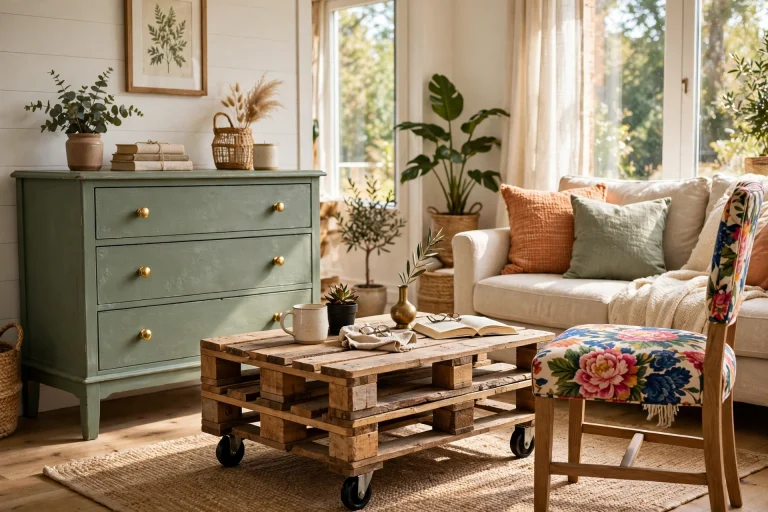
15 New Year Home Refresh Ideas for a Calm Fresh Start
Introduction
A New Year home refresh is a room-by-room restyle: swap the Christmas red for winter texture, rearrange the furniture around how you actually live, and clear one surface at a time until the house feels calm again. It is not a deep clean — that is a different job, with its own checklist — and it is not a purge either. This is the decor lane: what you see, where things sit, and how the rooms feel.
These New Year home refresh ideas work one room at a time, starting at the front door. If clutter is blocking the refresh, clear it first — our declutter guide shows how to do one room at a time. And once the rooms are restyled, our 10-minute daily habits keep them that way with almost no effort.
1. Reset the Entryway First
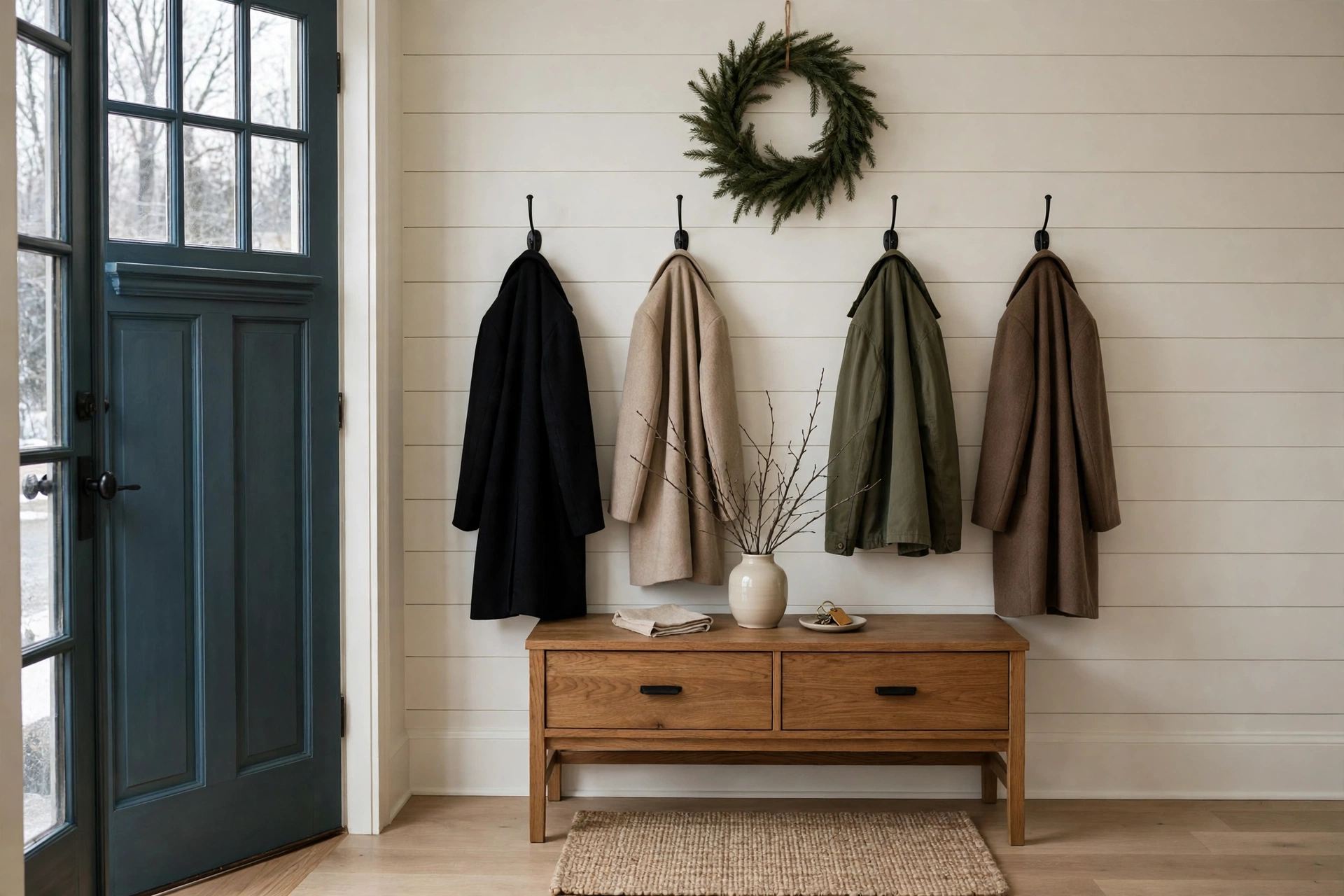
The entryway sets the tone for the whole house, so refresh it first. Take down the Christmas wreath and the holiday mat, and replace them with a plain winter wreath — evergreen, no ornaments — and a neutral doormat. Clear the coat hooks back to one coat per person, put the holiday boots away, and leave the bench or the shoe tray empty enough to use.
Add one calm touch: a small vase with bare branches, a basket for scarves and gloves, or a framed print in winter colors. The entryway is the smallest room in the house and the fastest to finish, and walking through a calm entryway every morning makes the rest of the refresh feel possible.
2. Swap Christmas Red for Winter Texture
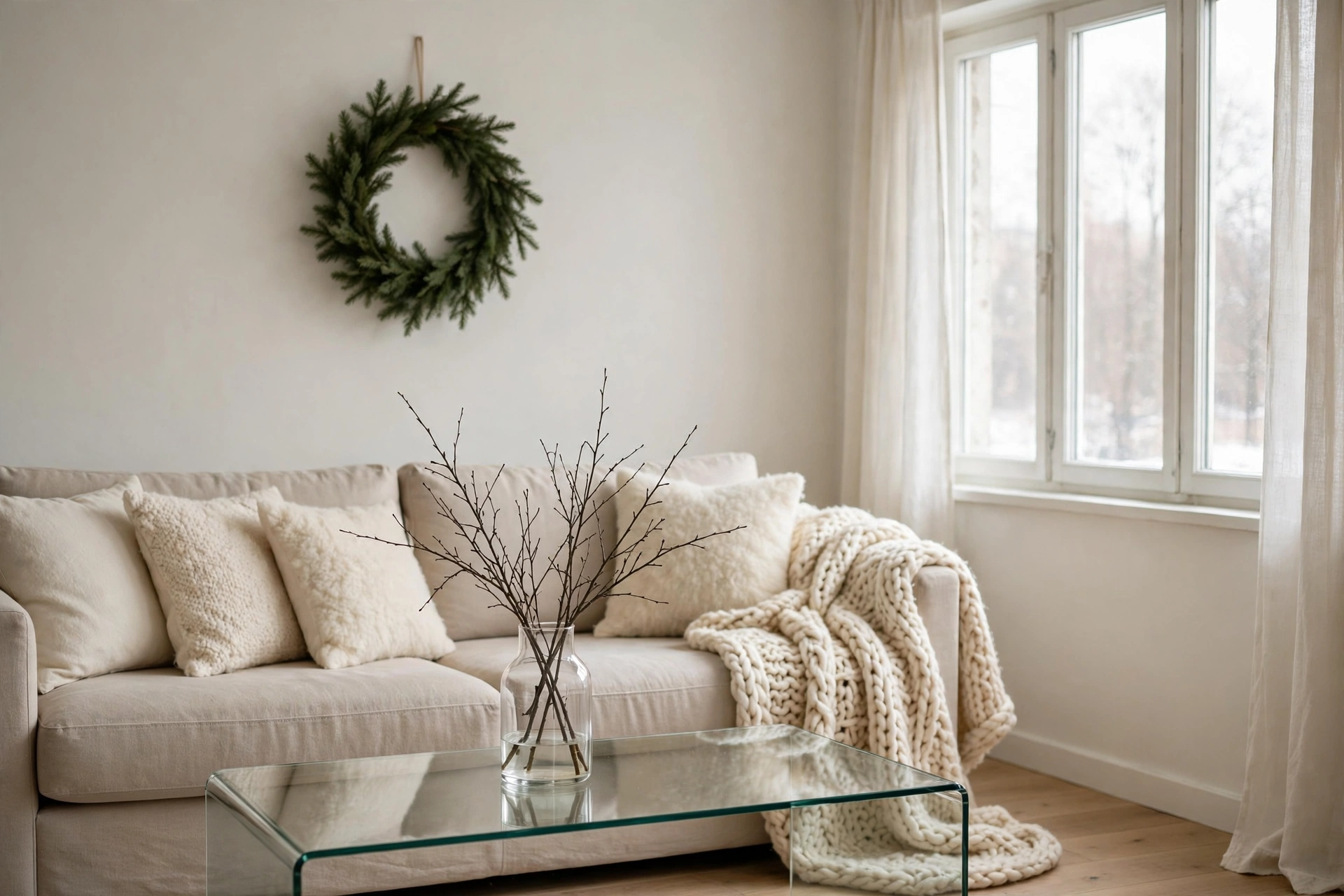
The fastest refresh in the house is a color swap: take out the Christmas red and replace it with winter texture. Swap red pillow covers for cream, wool, or oatmeal ones; trade the red throw for a chunky knit in a neutral color; replace red candles with white or cream ones in the same holders. The room keeps its warmth but loses the holiday signal.
Add texture instead of color: a wool throw over the sofa arm, a woven basket by the fireplace, a linen cushion where the sequined one sat. Winter texture reads calm where Christmas red reads loud, and the swap takes about twenty minutes per room — one of the highest-impact refreshes on this list for the least effort.

3. Clear One Surface Completely
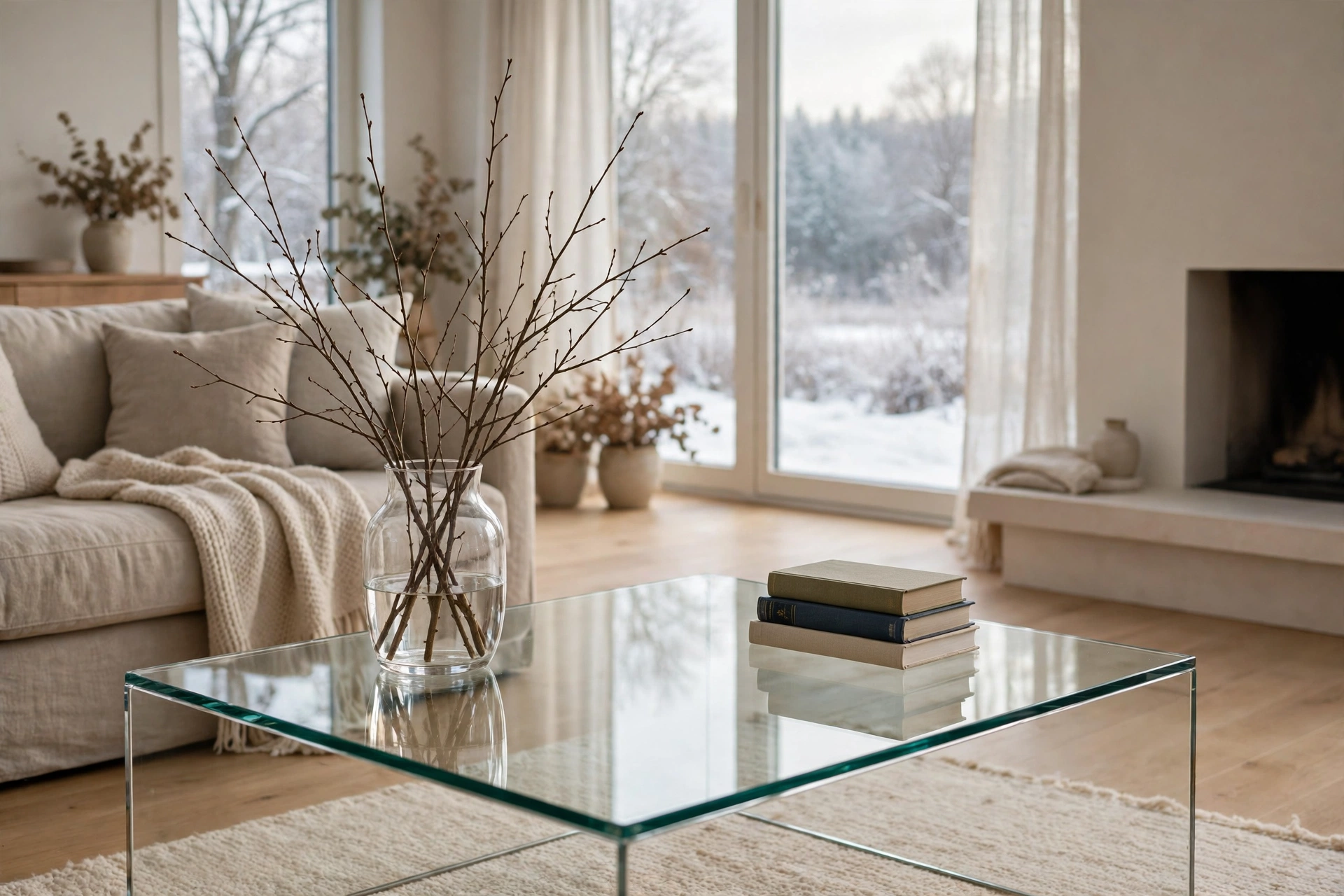
Pick one surface — the coffee table, the kitchen counter, the dresser — and clear it completely. Take everything off, wipe it down, and put back only three things: one useful item, one decorative item, and one empty space. A single clear surface changes how a room feels more than any new purchase, because your eye finally has somewhere to rest.
Do one surface a day, not the whole house at once. The coffee table today, the nightstand tomorrow, the entryway console the day after. By the end of the week, five clear surfaces make the house feel refreshed even if nothing else has changed — and the habit of clearing one surface a day is the easiest reset to keep.
4. Rearrange the Living Room Around Real Use
January is the best time to rearrange the living room, because the tree is gone and the room is already half-empty. Pull the sofa away from the wall and angle it toward the fireplace or the best window, move the reading chair to the spot with the most afternoon light, and put the side table where the coffee actually gets set down — not where it looked good in a photo.
Test the new layout for a day before you commit: sit in each seat, reach for the lamp, walk the path to the kitchen. If the room feels awkward, move one piece back and try again. A rearranged room costs nothing and feels like a new room, which is exactly what a January refresh is for.

5. Reset Kitchen Counters Around Your Daily Routine
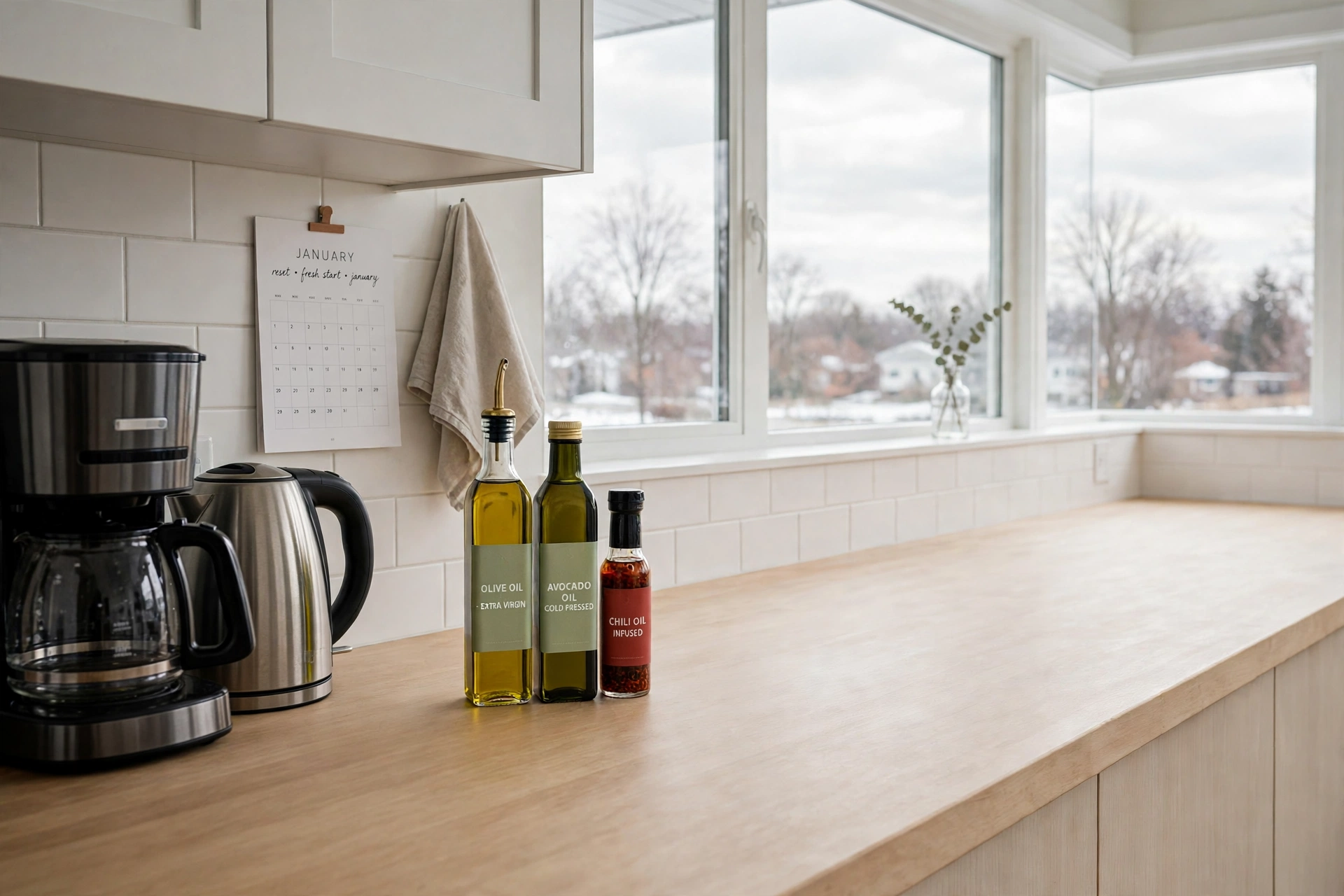
Kitchen counters collect everything over the holidays, so reset them around what you actually do every day. Keep out only the appliances you use daily — the coffee maker, the kettle, maybe the toaster — and move the rest into a cabinet or onto a shelf. Clear one stretch of counter completely and keep it clear; that empty space is where you chop, mix, and set down hot pans.
Group what is left by job: coffee things together, cooking oils and spices together, the fruit bowl on its own. A counter that matches your routine is faster to cook on and faster to wipe down, and it makes the whole kitchen feel bigger without moving a single cabinet.
6. Fresh Fridge + Pantry Start
The fridge and pantry deserve a fresh start in January, and this is the light version — not a deep clean, just a reset. Pull everything out of the fridge, toss anything expired, and put back only what you will actually use this week. In the pantry, group like with like — breakfast things on one shelf, baking on another — and move the oldest items to the front so they get used first.
Add one small upgrade: a few matching bins, labels on the shelves, or a lazy Susan in a deep corner cabinet. The reset takes an hour and saves ten minutes every time you cook for the next month, because you can finally see what you have. For a full pantry system, our small closet organization ideas use the same zone-and-label method in a different room.

7. Give New Christmas Gifts a Real Home
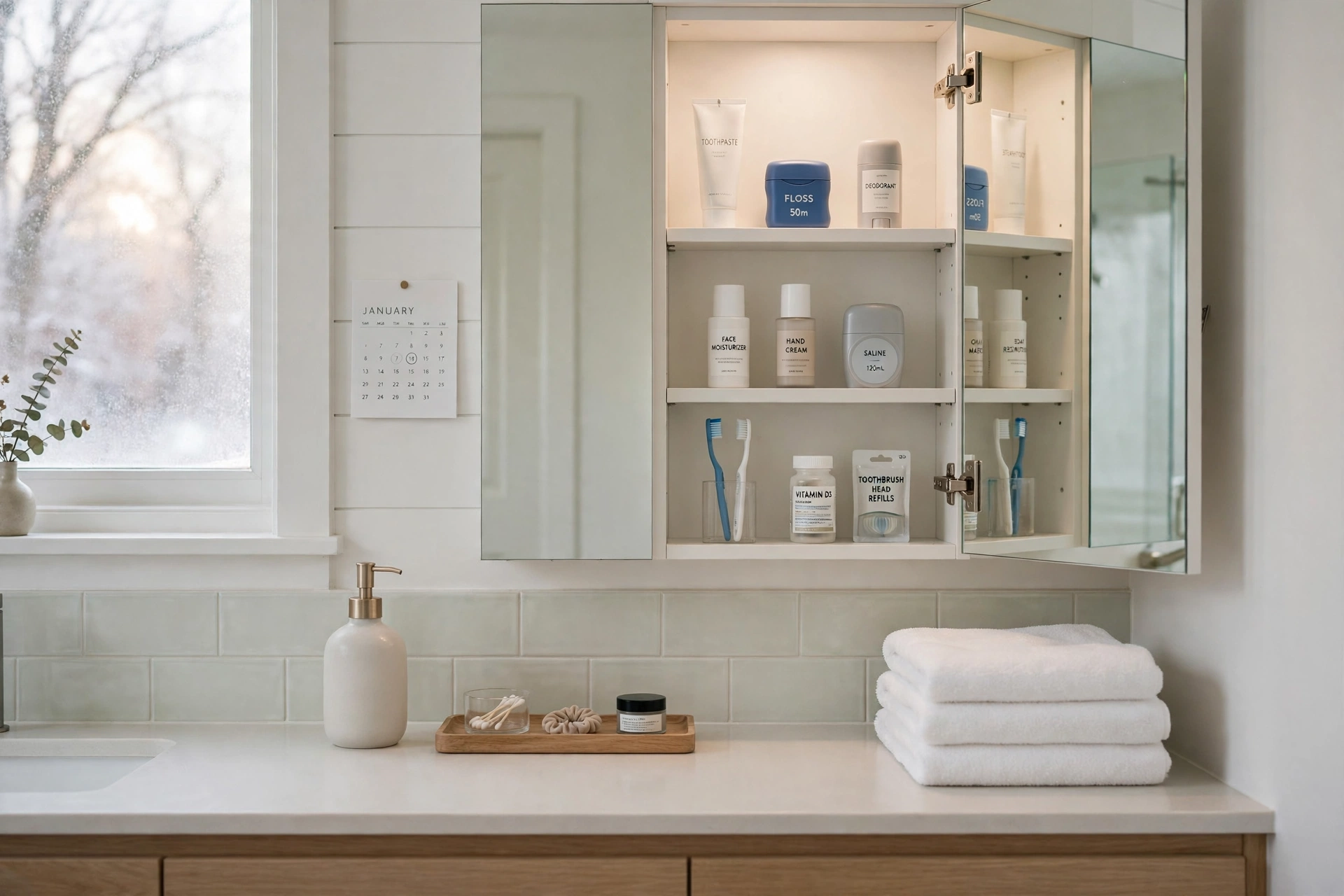
New Christmas gifts need a real home by mid-January, or they live on the dining table until spring. Walk through the house with every gift and find its place: books on the shelf, the new sweater in the closet, the kitchen gadget in its cabinet, the board game on the game shelf. If something has no place, that is a signal — either something old leaves, or the gift goes in a box for now.
The one-in, one-out rule helps here: for every new item that stays, one old item goes to the donation box. It keeps the refresh from becoming clutter with a bow on it, and it means the house holds the same amount of stuff in February as it did in November — just better stuff, in better places.
8. Reset the Bathroom Around What You Actually Use
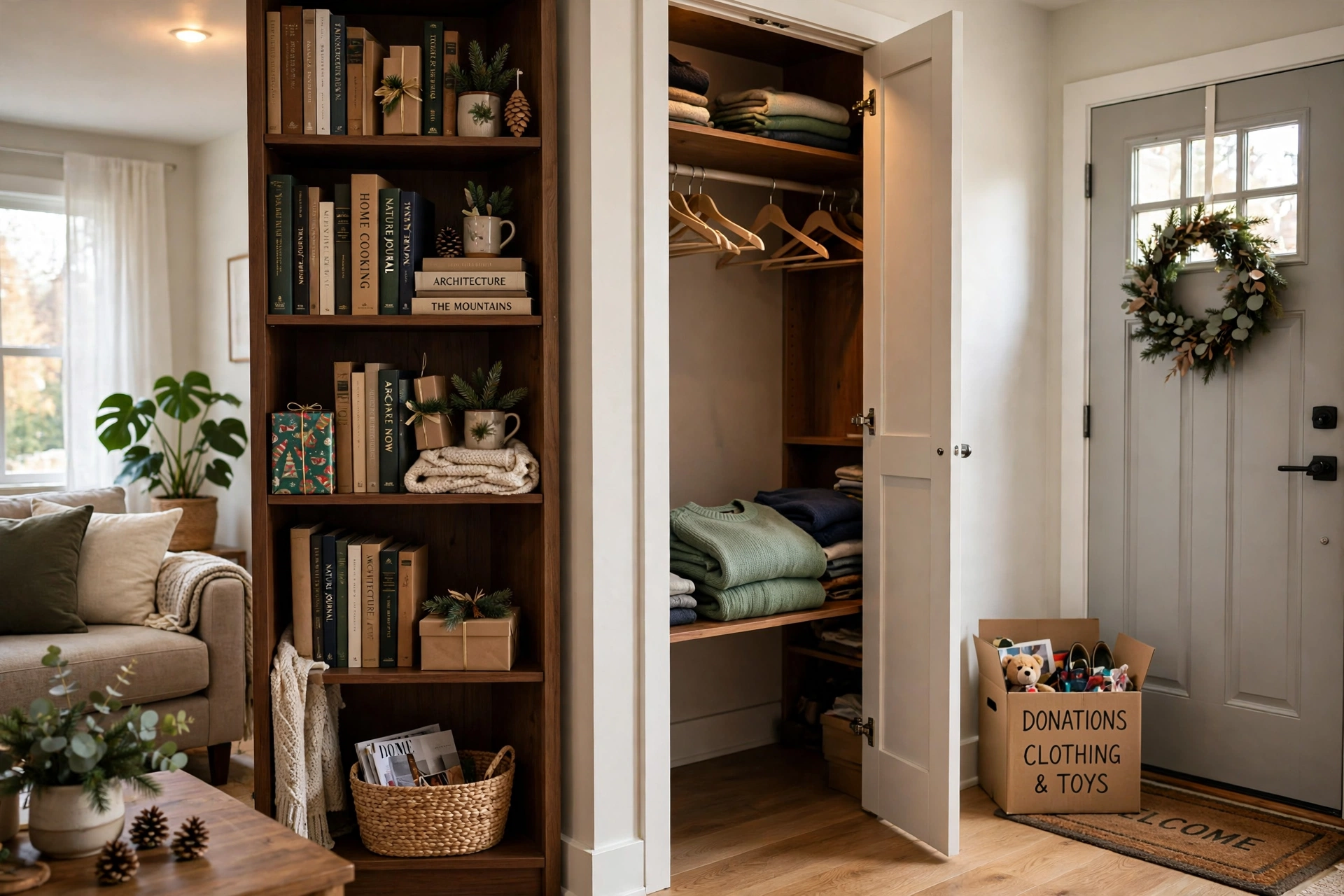
Bathrooms collect products all year, so reset yours around what you actually use every day. Pull everything out of the medicine cabinet and the vanity drawers, throw away anything expired, and put back only the daily items — toothbrush, face wash, moisturizer, the one hair product you reach for. Move the rest to a basket under the sink or a shelf in the linen closet.
Clear the counter down to a soap dispenser and one small tray, and swap in fresh hand towels and a clean shower curtain if the old one looks tired. A bathroom with a clear counter and only the products you use feels like a hotel bathroom — calm, bright, and easy to keep clean with a two-minute wipe each morning.
9. Lighter Window Treatments for More Winter Light
January days are short, so let in every bit of light you can. Swap heavy curtains for lighter ones — sheer panels, linen, or just the blinds on their own — and wash the windows inside while you are at it. Pull the curtains wide open during the day and tie them back so they frame the window instead of covering it.
If privacy matters, use a sheer layer that lets light through but blocks the view in, or keep the heavy curtains for nighttime only. The difference is immediate: a room with open, light windows feels bigger and warmer on a gray January afternoon, and it costs nothing but an hour of your time.

10. Swap in One Winter Art Piece
One new piece of art changes a whole wall, and January is the right time for it. Swap the Christmas print above the sofa for a winter landscape, a bare-branch photograph, or a simple abstract in cream and gray. You do not need to buy anything — rotate a piece from another room, frame a calendar page, or print a free winter photograph and frame it yourself.
Hang it at eye level, centered over the furniture below it, and step back to check it from across the room. One piece is enough: a single strong image makes the wall feel intentional, while three small ones scattered around it look like leftovers. Change it again in spring, and the house always feels current.

11. Add Warm Lighting: Lamps On Early, Warm Bulbs
Winter evenings are long and dark, so warm lighting is the cheapest mood upgrade in the house. Swap any cool-white bulbs for warm-white ones in the rooms you use at night, and turn the lamps on early — at four o’clock, not at seven, when the room has already gone dark and gloomy. A lamp on a timer does this automatically.
Add one more light source to the room you use most: a small lamp on the side table, a string of fairy lights along a shelf, or a candle on the coffee table. Three sources of warm light at different heights make a room feel cozy in a way one overhead light never can, and the whole change costs less than a takeaway dinner.

12. One-In, One-Out Rule for the Month
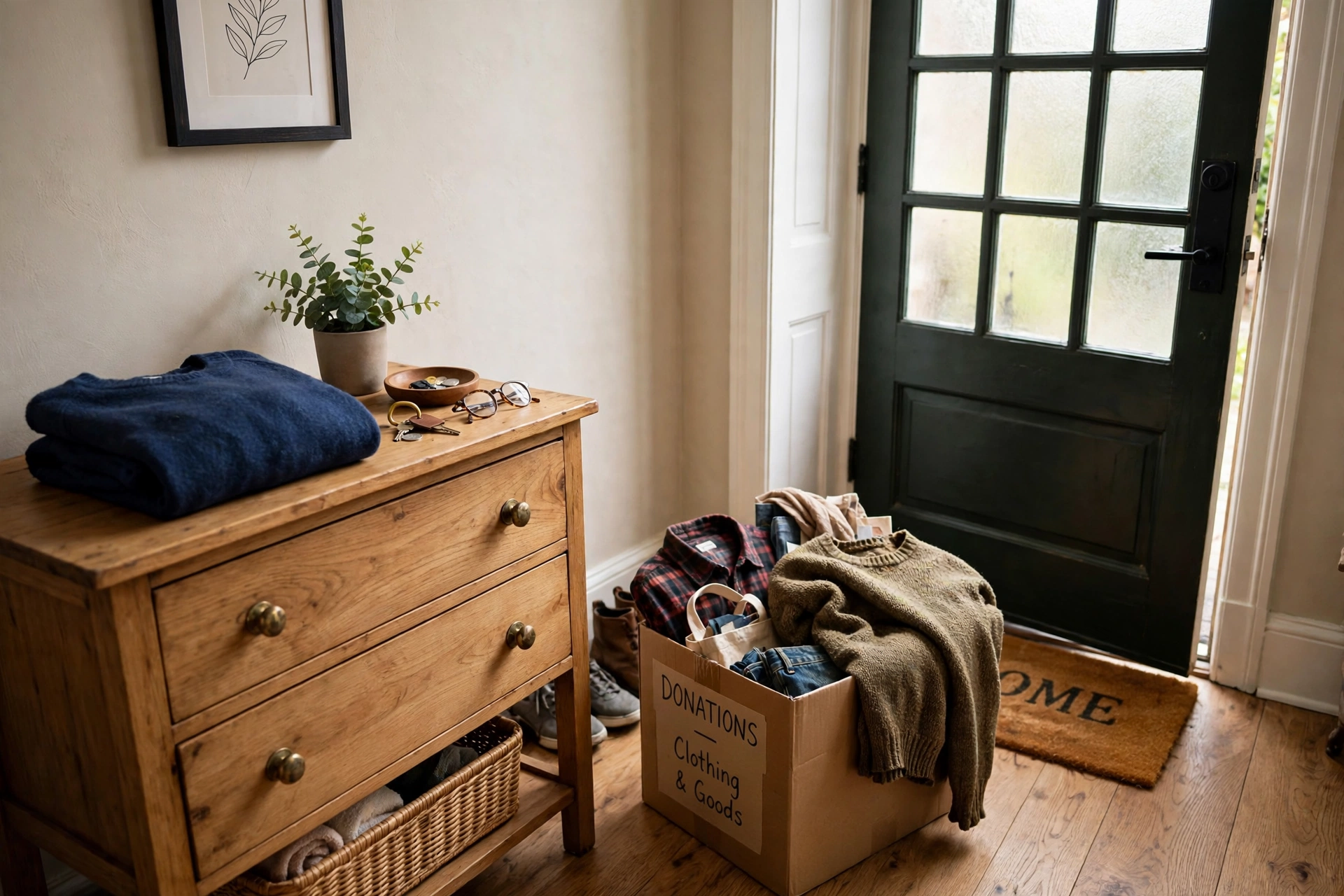
The one-in, one-out rule is the simplest way to keep a refresh from unraveling: for every new thing that comes into the house in January, one old thing leaves. A new sweater means an old one goes to the donation box; a new book means one leaves the shelf; a new kitchen gadget means one goes to the back of the cabinet or out the door.
Keep a donation box by the front door all month so the rule is easy to follow — when the box is full, drop it off. The rule works because it is small and specific, not a grand resolution. By February, the house holds the same amount of stuff it did in December, but everything in it is something you chose to keep.
13. Fresh Bedding + Towels
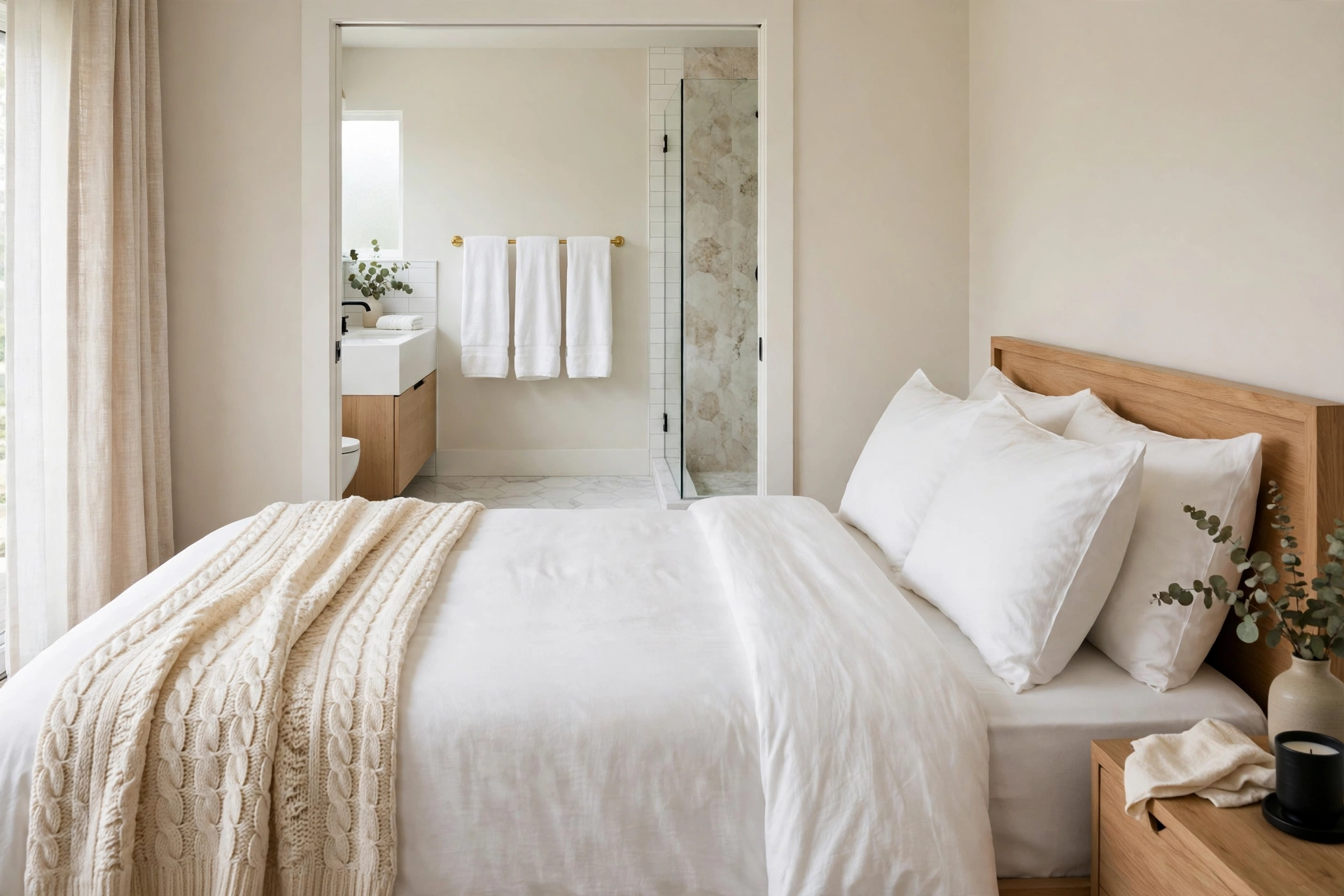
Fresh bedding and towels are the fastest way to make a bedroom and bathroom feel new. Wash everything — sheets, duvet cover, pillowcases, bath towels, hand towels — and put on the cleanest set you own. Swap in a lighter duvet or a fresh blanket in a winter color, and fold a spare blanket at the foot of the bed.
While you are at it, flip or rotate the mattress and vacuum under the bed, since the refresh has already got you moving furniture. Clean bedding changes how a bedroom smells and feels at the end of the day, and it is the one refresh you notice every single night, not just when you look at the room.
14. 10-Minute Evening Reset Habit
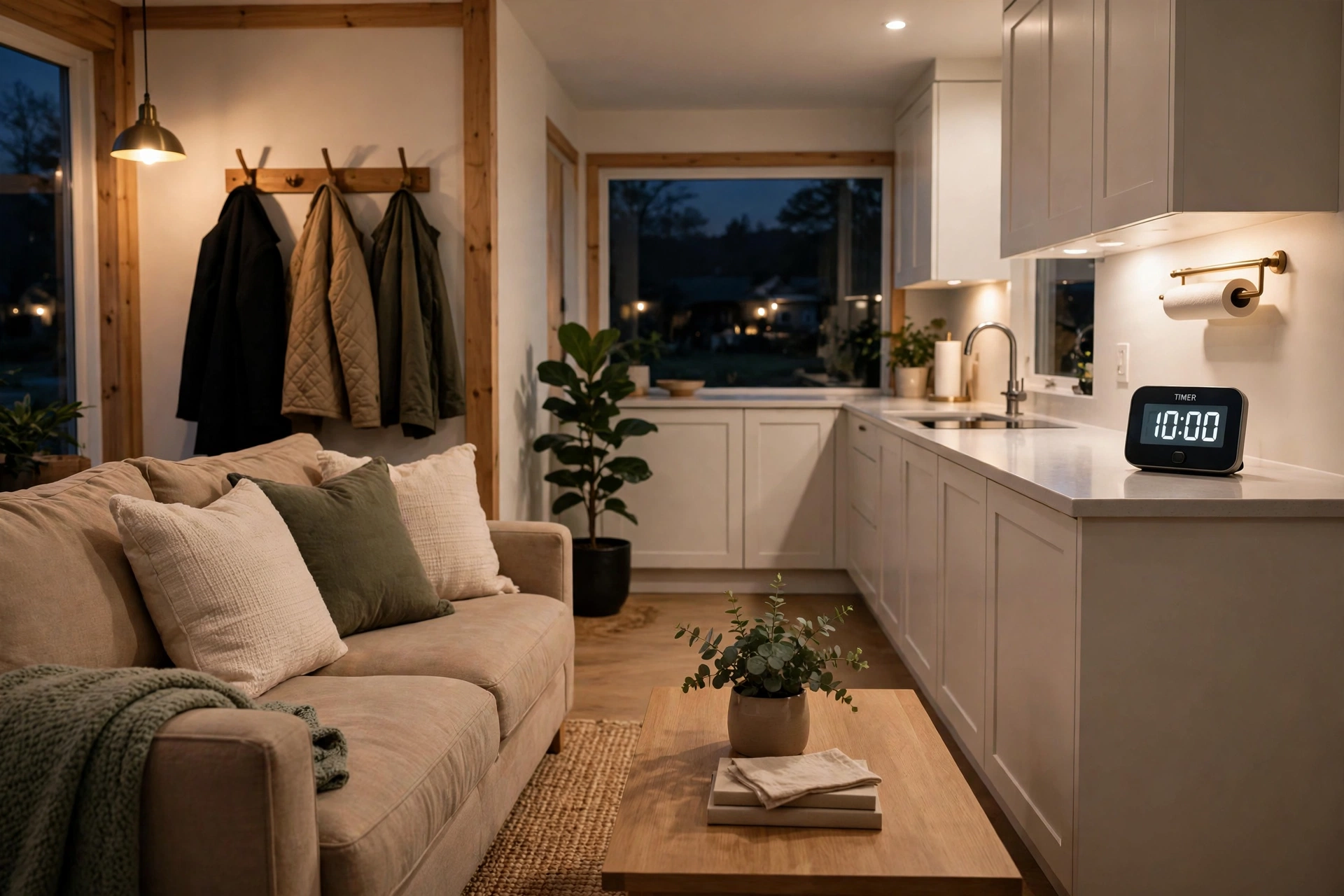
A refresh only lasts if there is a habit behind it, and the evening reset is the easiest one to keep. Every night, spend ten minutes putting the house back to its refreshed state: clear the kitchen counters, fluff the sofa cushions, hang up the coats, and put the day’s clutter back where it belongs. Set a timer so it stays ten minutes, not an hour.
Do it at the same time every evening — after dinner, before the television goes on — and the house greets you calm every morning. The reset is not cleaning; it is returning things to the places the refresh gave them. Ten minutes a night is what keeps January’s calm going into February and March.
15. Spread the Refresh Over Two Weekends
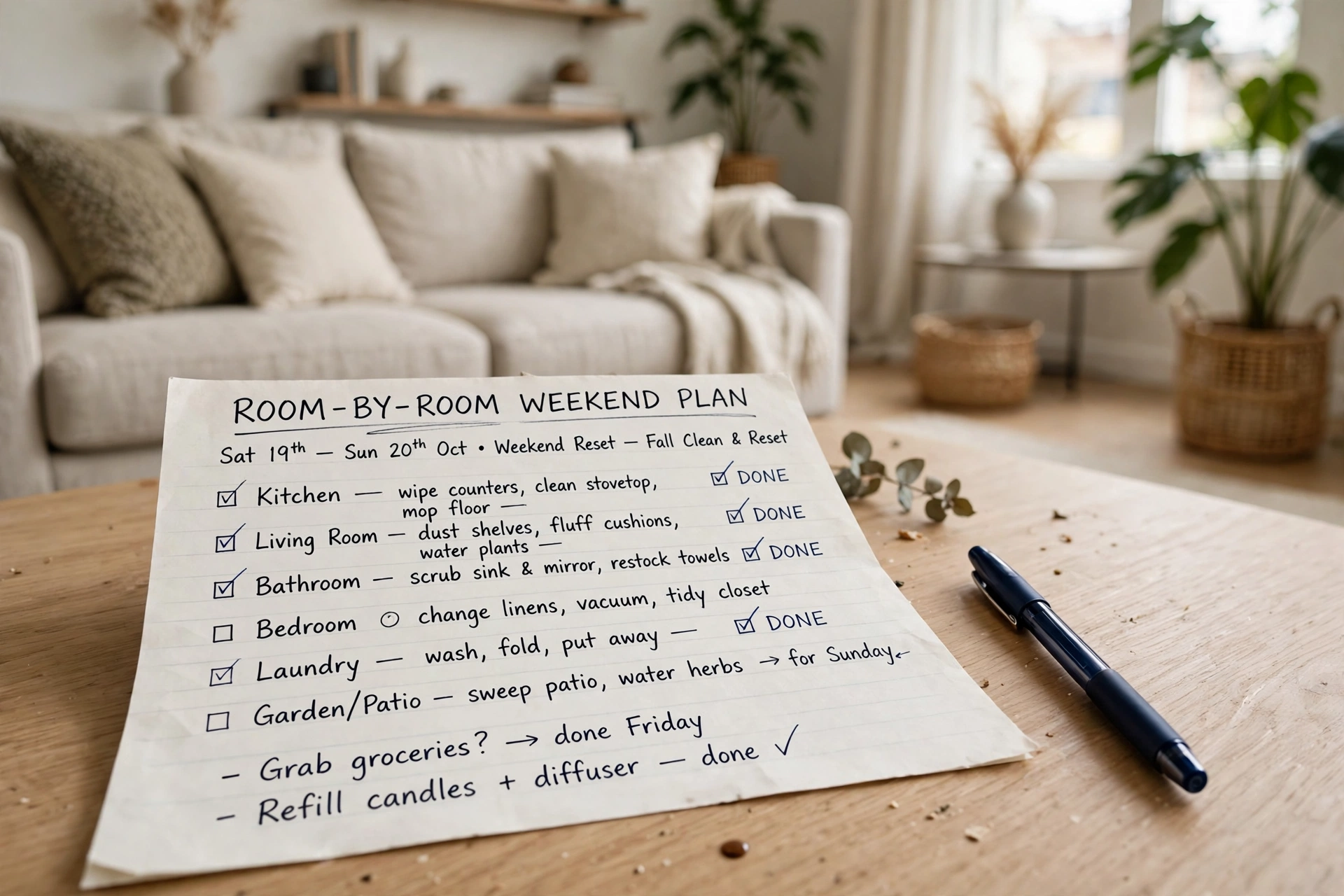
Spread the refresh over two or three weekends instead of trying to do it all in one day. Weekend one: entryway, living room, and the color swap. Weekend two: kitchen, bathroom, and the fridge and pantry reset. Weekend three: bedrooms, the art swap, and the lighting. One or two rooms per weekend is enough — the house changes visibly each time, and you still have your Sundays.
Write the plan on paper and tick off each room as you finish it. A written plan turns a vague “refresh the house” into fifteen small jobs with a finish line, and crossing off the last room feels like a real accomplishment. By the end of January, every room has been touched, and the house feels like yours again — not like Christmas leftovers.
Frequently Asked Questions
When should I start my New Year home refresh?
Start the week after Christmas, once the tree comes down — usually the last few days of December or the first weekend of January. Do the entryway and the color swap first, since those are the fastest wins, and spread the rest over two or three weekends. Starting early means the house feels fresh for the whole of January, not just the last week of it.
What is the first room to refresh in the new year?
Start with the entryway. It is the smallest room, the fastest to finish, and the one you walk through every day — so a calm entryway makes the whole house feel refreshed before you have touched another room. After that, do the living room, since it is where you spend the most time.
How do I refresh my home without buying new furniture?
Rearrange what you have, swap colors with textiles you already own, and clear surfaces instead of filling them. Moving the sofa, swapping pillow covers from another room, and putting one piece of art on a different wall makes the house feel new without spending anything — and the refresh lasts longer when it is built on what you already own.
Should I take down all Christmas decor at once?
Take the tree down first, then remove the rest room by room as you refresh each one — that way no room sits half-decorated and half-bare. Keep the plain evergreens and the winter greenery up if you like them; they are winter decor, not Christmas decor, and they bridge the gap until spring.
How do I keep the refresh from falling apart by February?
Build in one habit: the ten-minute evening reset. Every night, put the house back to its refreshed state — clear the counters, fluff the cushions, hang up the coats. A refresh without a habit fades in two weeks; a refresh with a ten-minute nightly reset is still there in March.
Related Reading
- How to Declutter Your Home Room by Room
- 10-Minute Daily Cleaning Habits for a Tidy Home
- 15 Small Closet Organization Ideas That Actually Work
- 15 Entryway Decor Ideas for a Warm Welcome Home
- Christmas Tree Decor Ideas 2026: 12 Stunning Styles
- Easy Home Cleaning Hacks
Conclusion
A New Year home refresh is not a renovation and not a resolution — it is fifteen small swaps, one room at a time, until the house feels calm again. Start at the entryway, swap the red for texture, and let the ten-minute evening reset hold it together. By February, the house will still feel fresh, and you will have done it without buying a single piece of furniture.