15 Entryway Decor Ideas for a Warm Welcome Home
Introduction
Good entryway decor ideas start with one truth: the entry has two jobs at once. It must welcome guests, and it must hold the everyday mess — keys, shoes, coats, mail, bags — so the rest of the house stays calm.
The fifteen ideas below work in any size of home, from a wide foyer to a hallway with no real entry. Start with the pieces that solve your biggest problem — usually storage or light — then add the decorative layers. If clutter is spilling out of the entry, our declutter guide clears the way first.
1. Start with a Console Table — Classic Entryway Decor Ideas
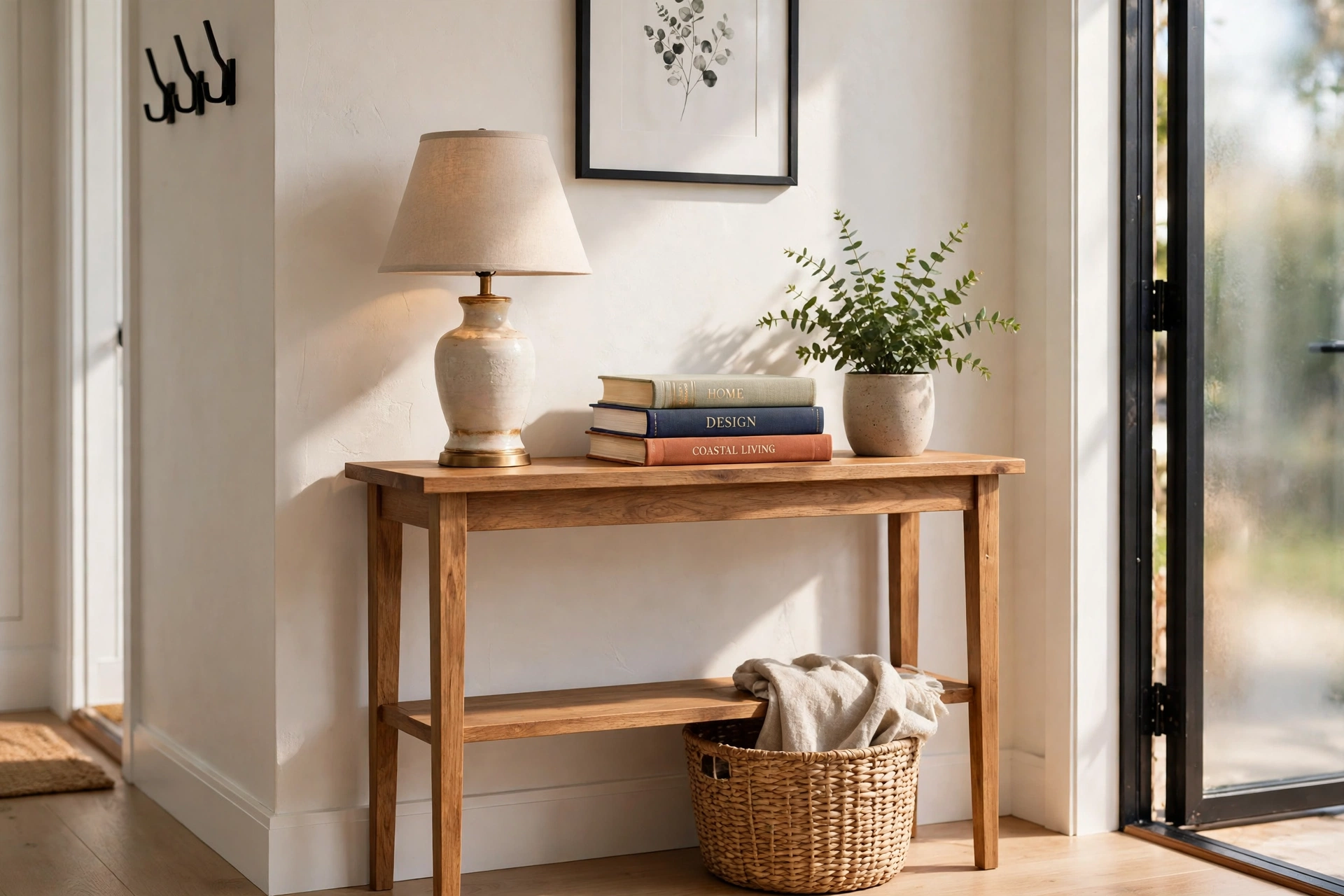
A console table is the anchor of almost every well-styled entryway: a surface for keys, mail, and a lamp, plus storage underneath, without eating the walkway. Choose a narrow one — 10 to 14 inches deep — so two people can pass.
If your hallway is under 36 inches wide, skip the console and use a wall-mounted shelf instead (see Idea 11). A console with one or two drawers is the most useful piece you can buy. Style the top with three things: something tall (a lamp or vase), something flat (books or a tray), and something living (a small plant).
2. A Mirror Above the Console — Entryway Decor Ideas That Add Light
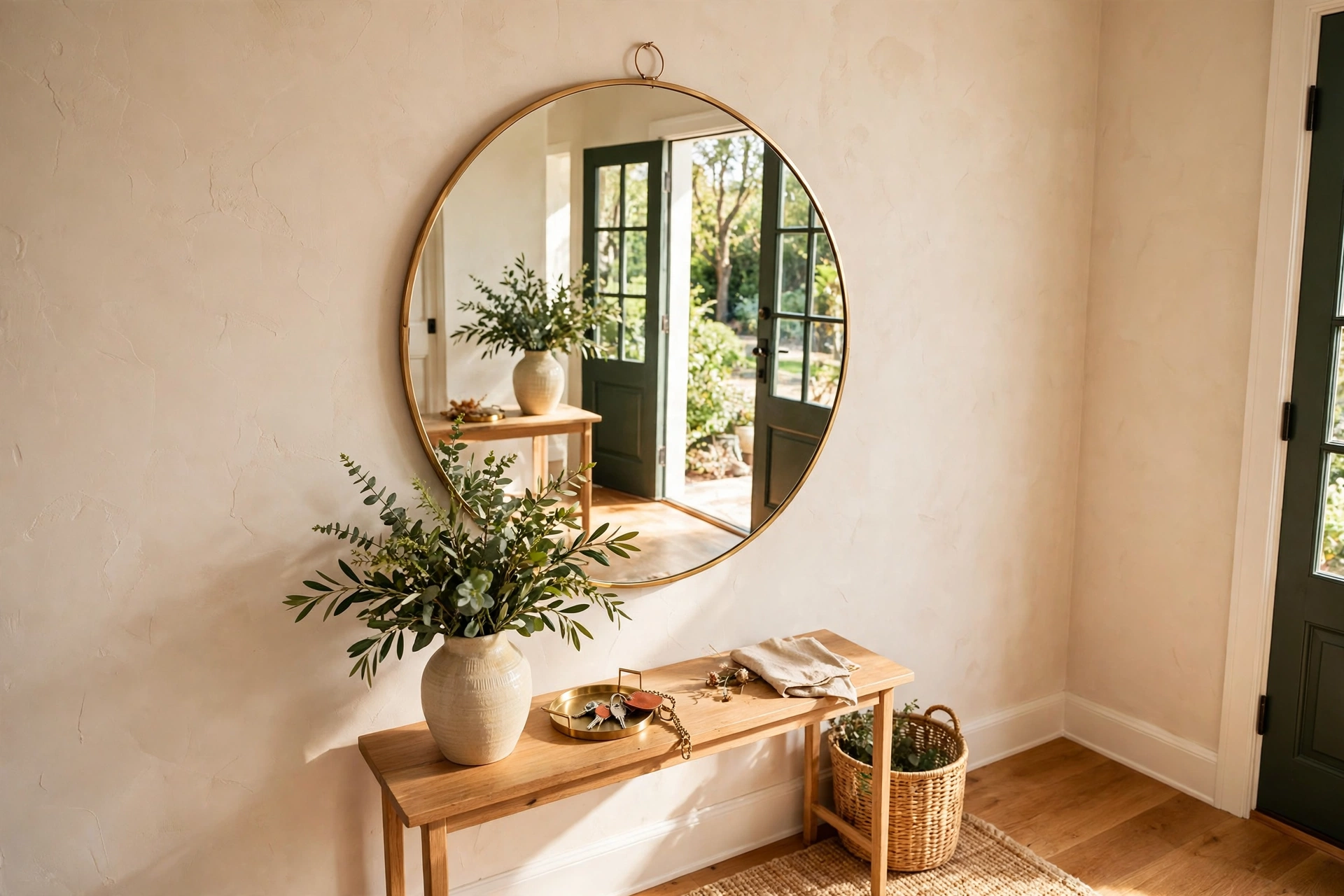
A mirror above the console does three jobs at once: it bounces light into a dark hallway, makes a small entry feel bigger, and gives everyone a last look before heading out. Hang the center at eye level, about 57 to 60 inches from the floor.
A round or arched mirror softens a boxy hallway; a rectangular mirror suits a long, formal entry. Keep the mirror a little narrower than the console — about two-thirds as wide — so the proportions look intentional. HGTV’s entryway table guide shows the same pairing again and again: a console, a mirror, and one or two simple objects.
3. A Bench with Storage Underneath
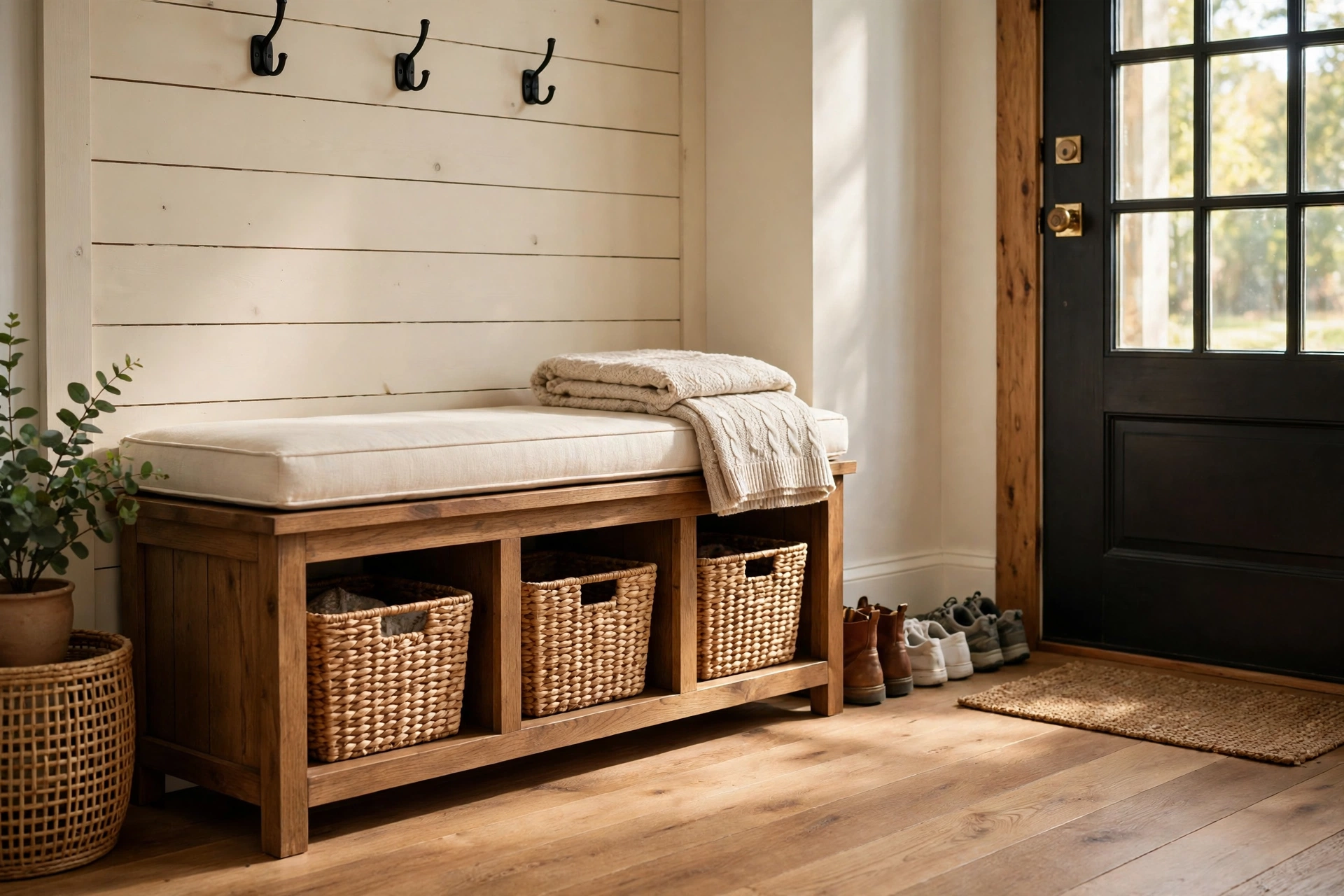
A bench earns its place the moment someone sits down to tie their shoes — and it hides clutter while it does it. Look for one with a lift-up seat or open cubbies underneath, where shoes live out of sight instead of scattered across the floor.
The right bench height is about 18 inches, standard seat height, so sitting and standing feel natural. In a narrow entry, a backless bench slides under a console or against the wall without blocking the walkway. Add a washable cushion and a folded throw, and the bench looks like a welcome.
4. Wall Hooks for Coats and Bags — Simple Entryway Decor Ideas
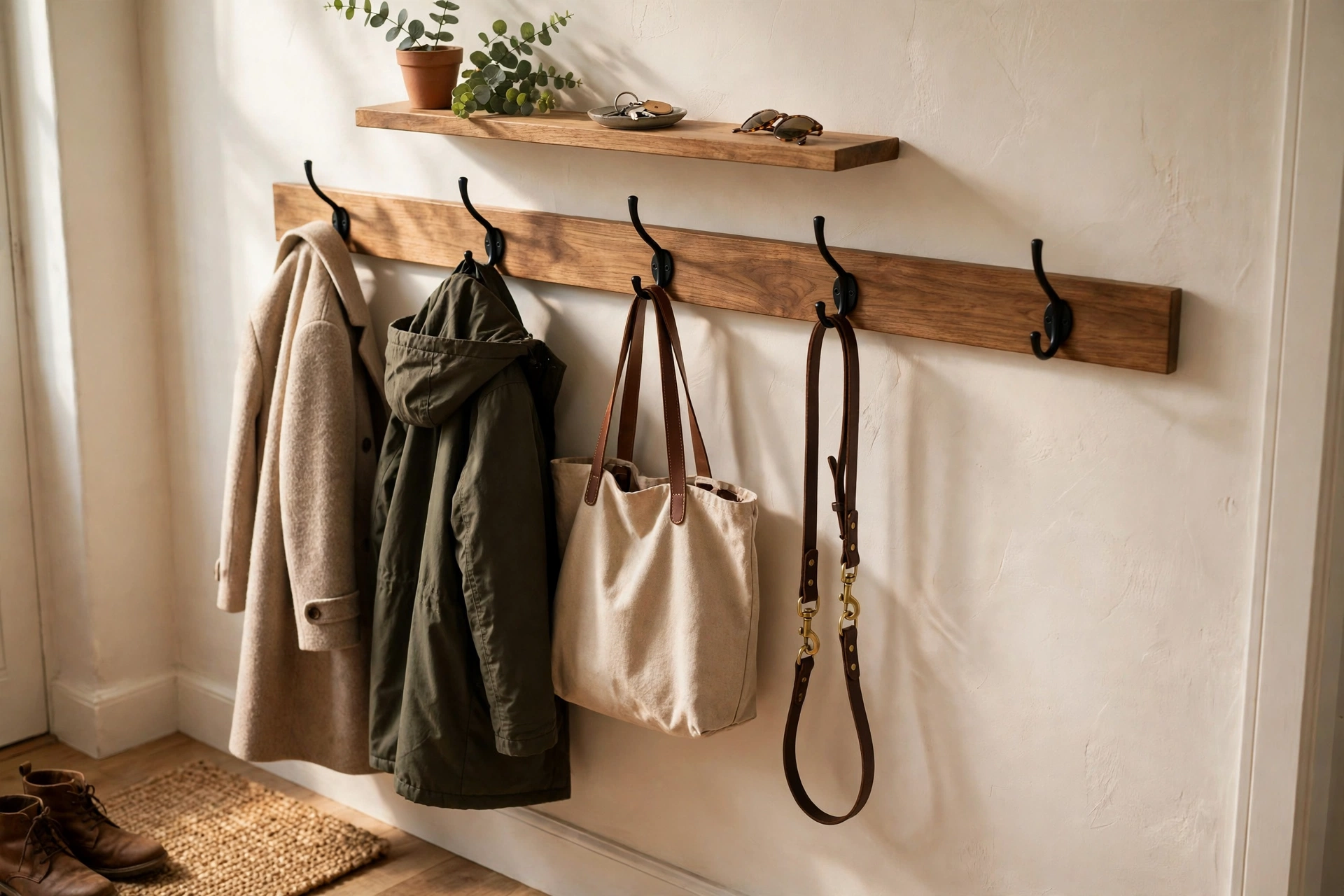
Hooks are the cheapest, fastest entryway upgrade there is, and they solve the coat pile that ends up on the dining chairs. Mount a row of sturdy hooks at about 60 inches high, and add one lower row at 48 inches if kids use the entry too.
Space the hooks 6 to 8 inches apart so coats hang without bunching, and choose hooks rated for real weight: a winter coat with a bag weighs several pounds. A rail with five hooks costs less than one dinner out and installs in under an hour. In a rental, use heavy-duty adhesive hooks.
5. A Rug That Defines the Space
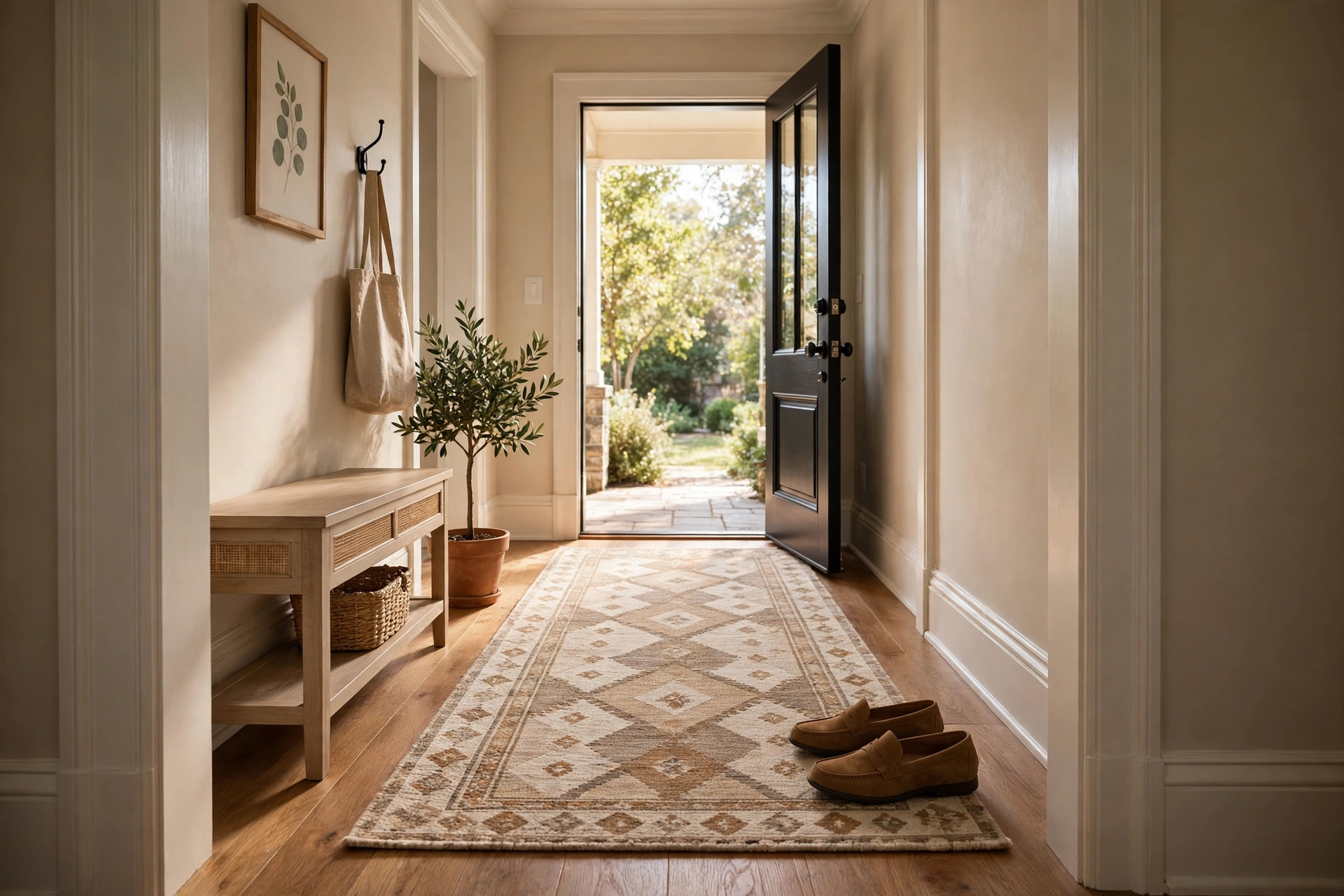
A rug tells everyone where the entry ends and the rest of the house begins — and it catches the dirt that would otherwise travel through the house. Choose a low-pile rug the front door can swing over without catching, and leave a few inches of floor showing on each side so the rug looks placed, not wall-to-wall.
Washable rugs are the honest choice for an entry: mud, rain, and snow land here first. A runner suits a long hallway; a small round or rectangular rug works in a square landing. Pick a busy pattern — it hides dirt between washes far better than a solid light color.
6. A Drop Zone for Keys and Mail — Entryway Decor Ideas That Keep Clutter Out
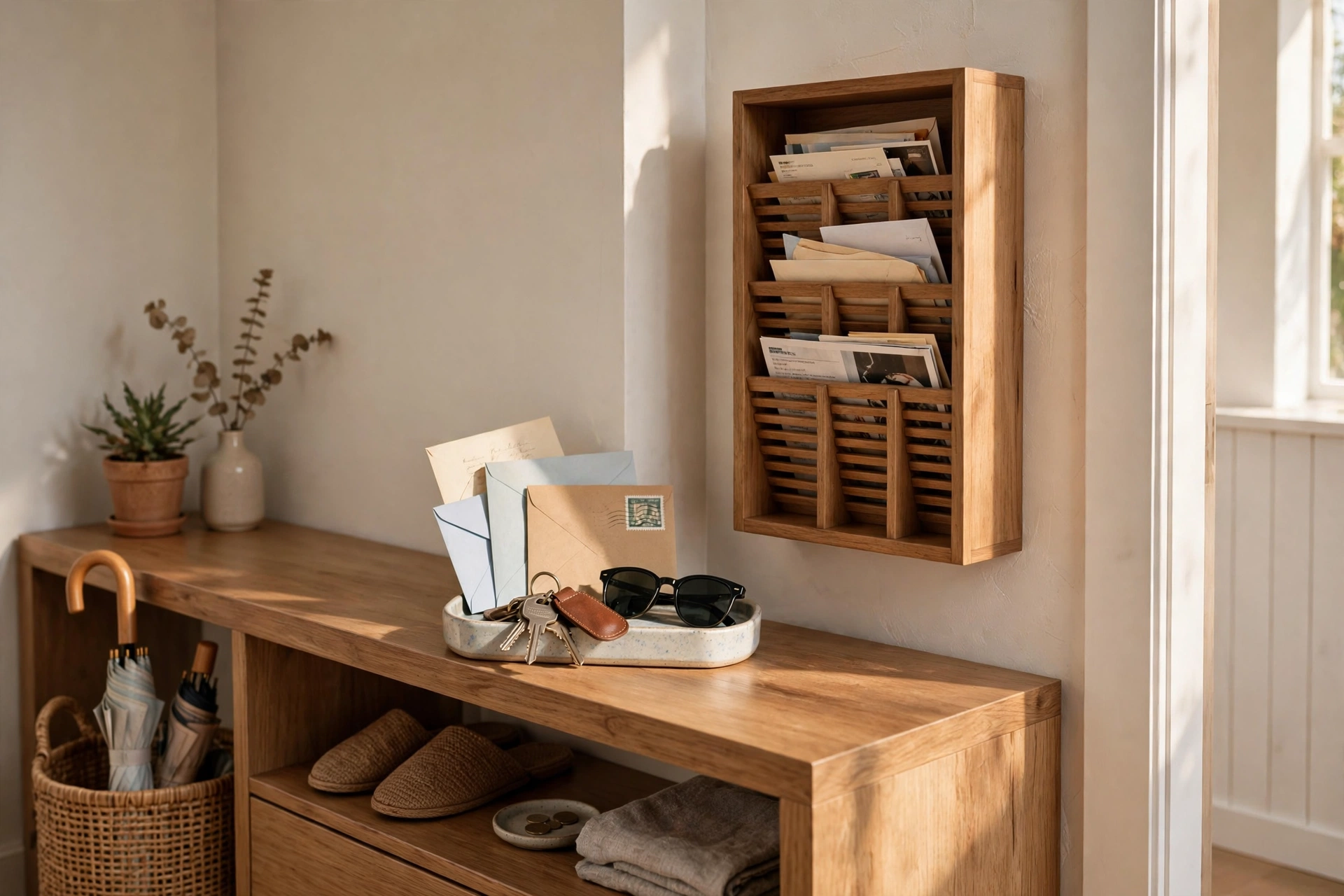
Every entry needs one small, obvious home for keys, mail, and sunglasses — otherwise they land on every flat surface in the house. A shallow tray or small bowl on the console does the job: keys go in the tray when you walk in, and mail gets sorted the same evening.
Add a wall-mounted mail sorter or a lidded basket beside the console for papers that need action, and empty it once a week. Our home organization ideas guide builds the same habit into the whole house, but the entry drop zone is where it starts. One tray, one rule: everything lands in the tray.
7. A Statement Light Fixture
Most entries are the darkest part of the house, and the right light fixture changes the whole feeling of the space. A pendant or small chandelier over the console draws the eye up and makes even a plain entry feel finished. Hang it about 7 feet from the floor in a standard entry, higher if the ceiling is tall.
If the entry has no ceiling fixture, two wall sconces flanking the mirror do the same work and add warm light at face height. Choose warm white bulbs (around 2700K) so the entry feels welcoming instead of clinical. A dimmer is worth the small cost: bright light for finding things, soft light for evenings.
8. A Gallery Wall in the Hallway — Entryway Decor Ideas for Blank Walls
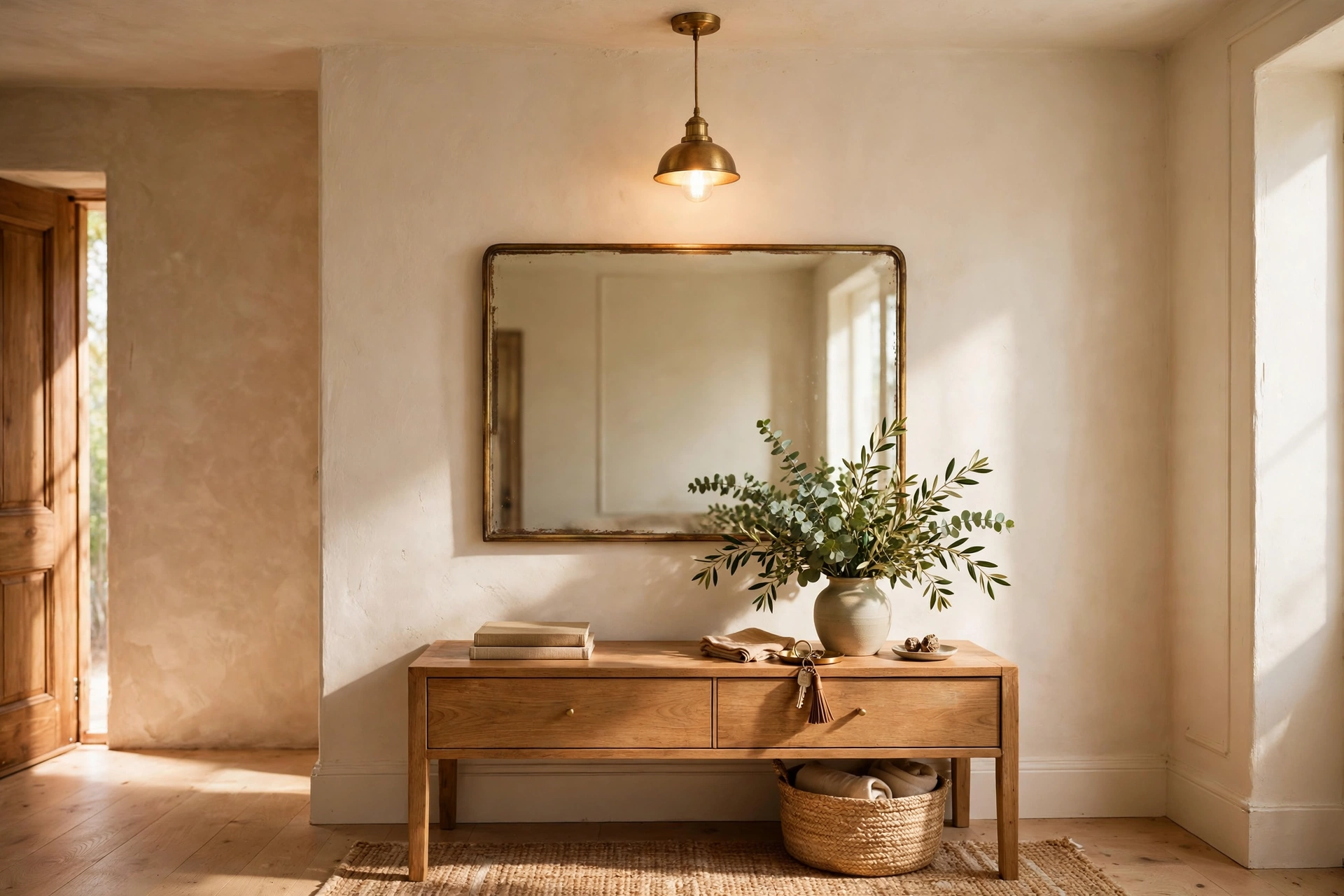
A long, blank hallway wall is wasted space, and a gallery wall turns it into the most personal part of the house. Start with one large piece in the center — a framed print, a family photo, or a map — then build outward with smaller frames, keeping two-finger gaps.
Hang the center at eye level, about 57 inches from the floor, and lay the whole layout on the floor first to check the spacing before you drill. Mix frame sizes but keep one thing consistent — the frame color, or the mat color — so the wall looks collected, not random. In a rental, use picture-hanging strips rated for each frame’s weight.
9. A Shoe Station That Actually Works
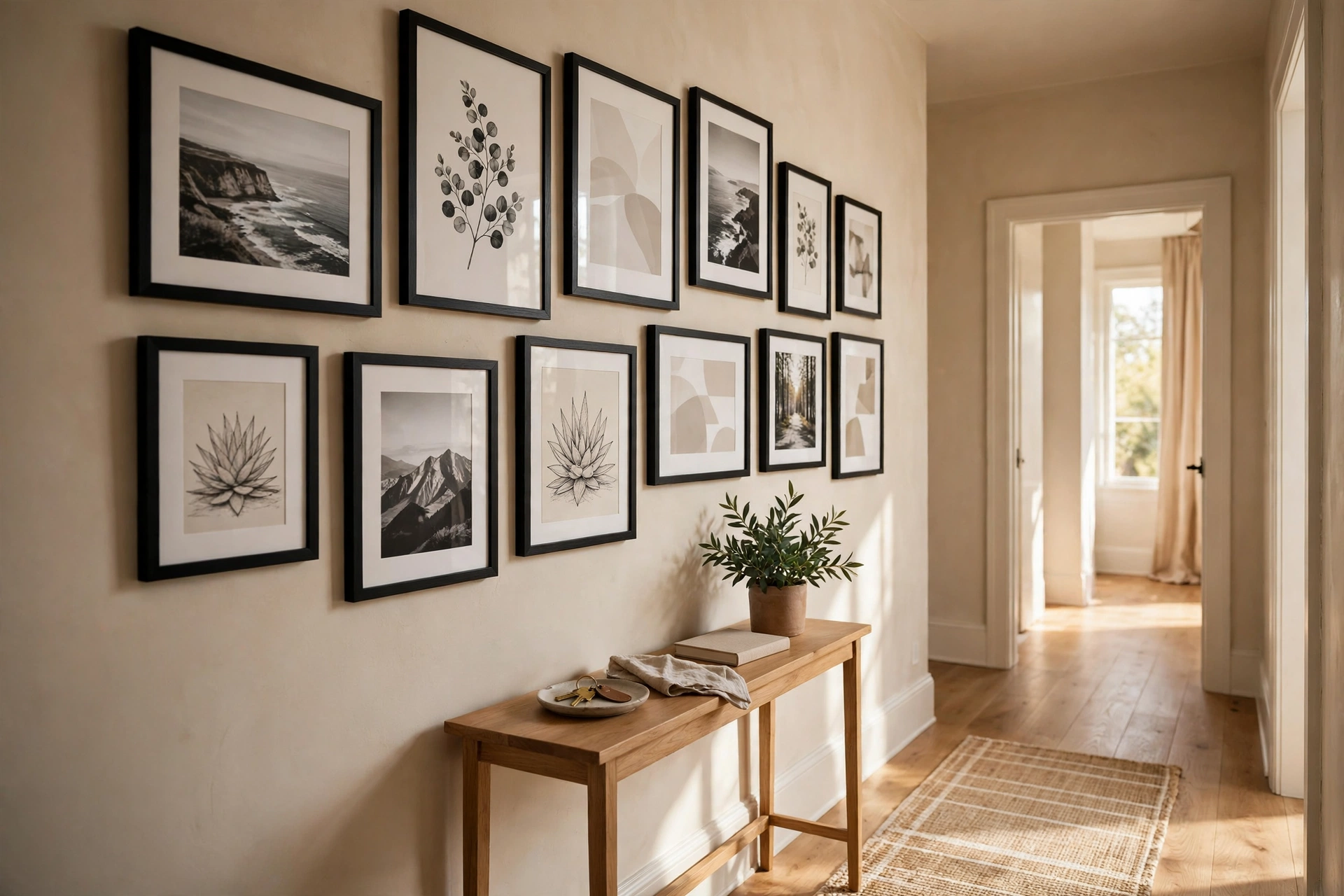
Shoes are the entry’s biggest clutter problem, and a shoe station solves it only if it is easier than kicking shoes off by the door. A low two-tier rack, a tray with raised edges, or a bench with cubbies all work — place it within arm’s reach of the door so the habit forms on its own.
Keep the station to one pair per person, and move off-season shoes to the closet. A boot tray with a lip catches rain and snow melt, and a quick shake outside keeps it clean. Our small closet organization ideas guide covers where the extra shoes go.
10. Greenery by the Door — Easy Entryway Decor Ideas
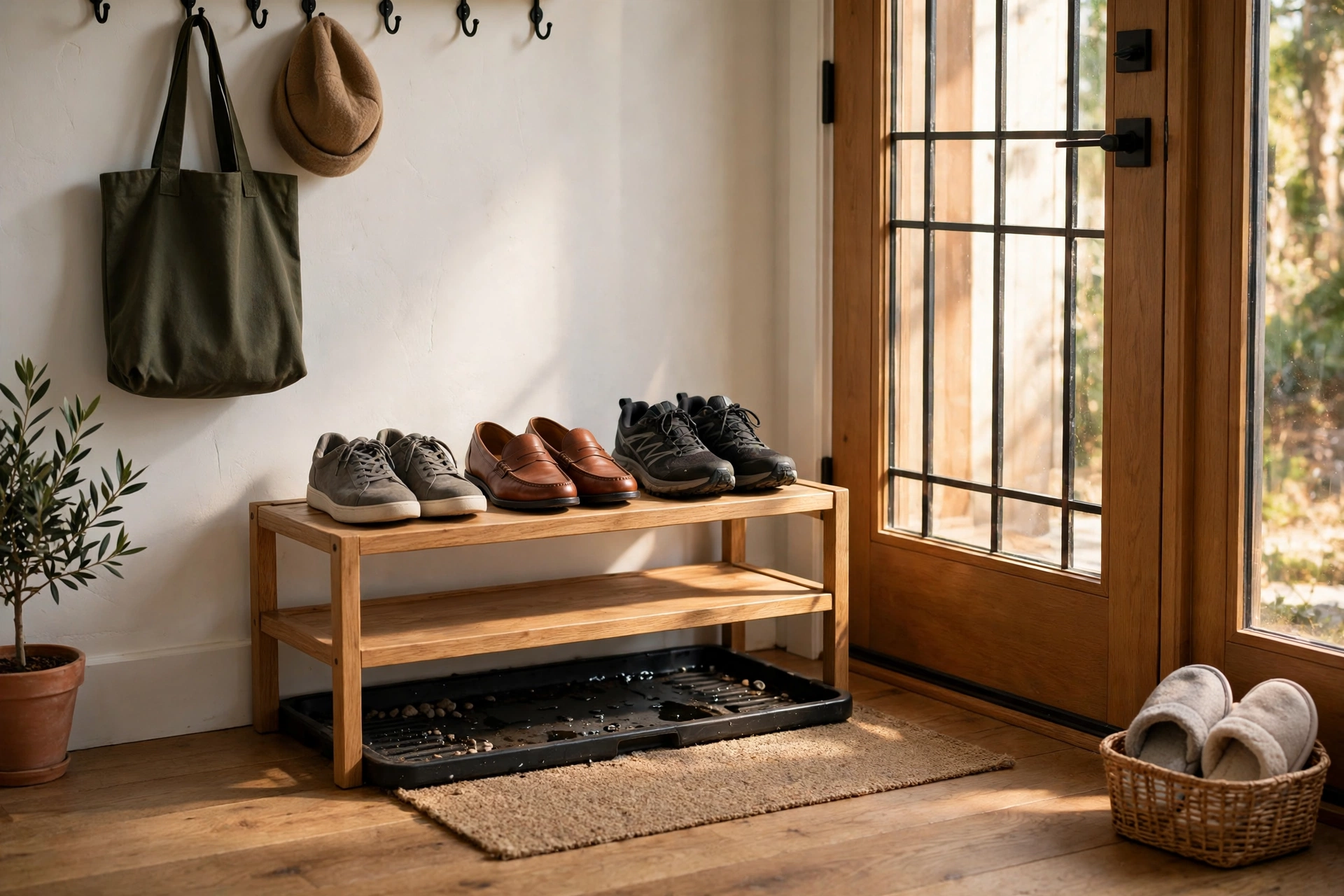
One plant changes an entry from a passageway into a room. A tall snake plant or fiddle-leaf fig fills an empty corner, a trailing pothos softens a high shelf, and a small potted herb on the console adds life at eye level. Plants also soften hard corners and make a plain wall feel finished.
If the entry gets little natural light, choose low-light plants — snake plants, pothos, and ZZ plants tolerate a dark hallway — or use a realistic faux plant. Keep the pot in proportion: a tiny plant on a big console looks lost, and a huge plant blocks a narrow hall.
11. A Small Entryway? Go Vertical — Entryway Decor Ideas for Tight Spaces
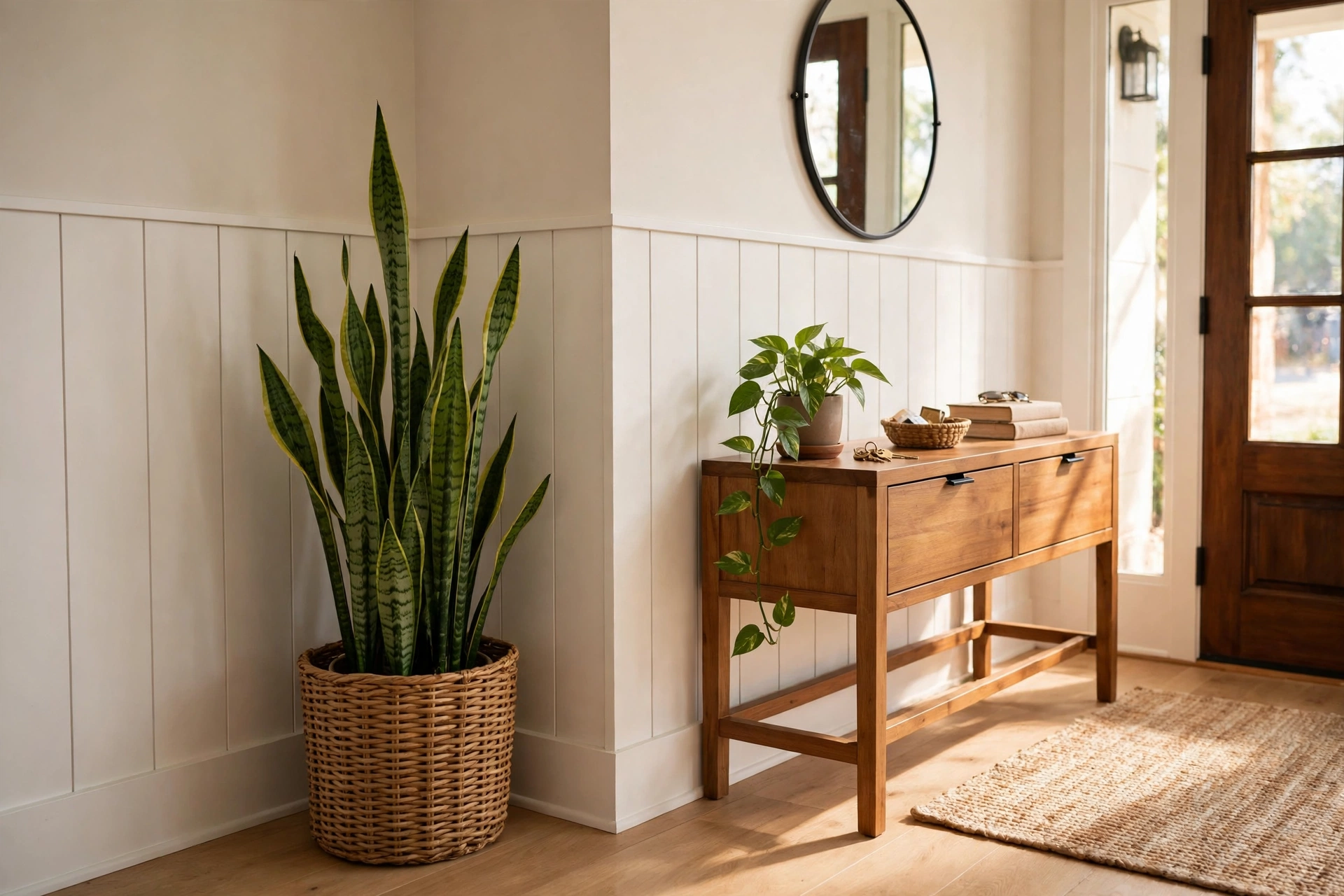
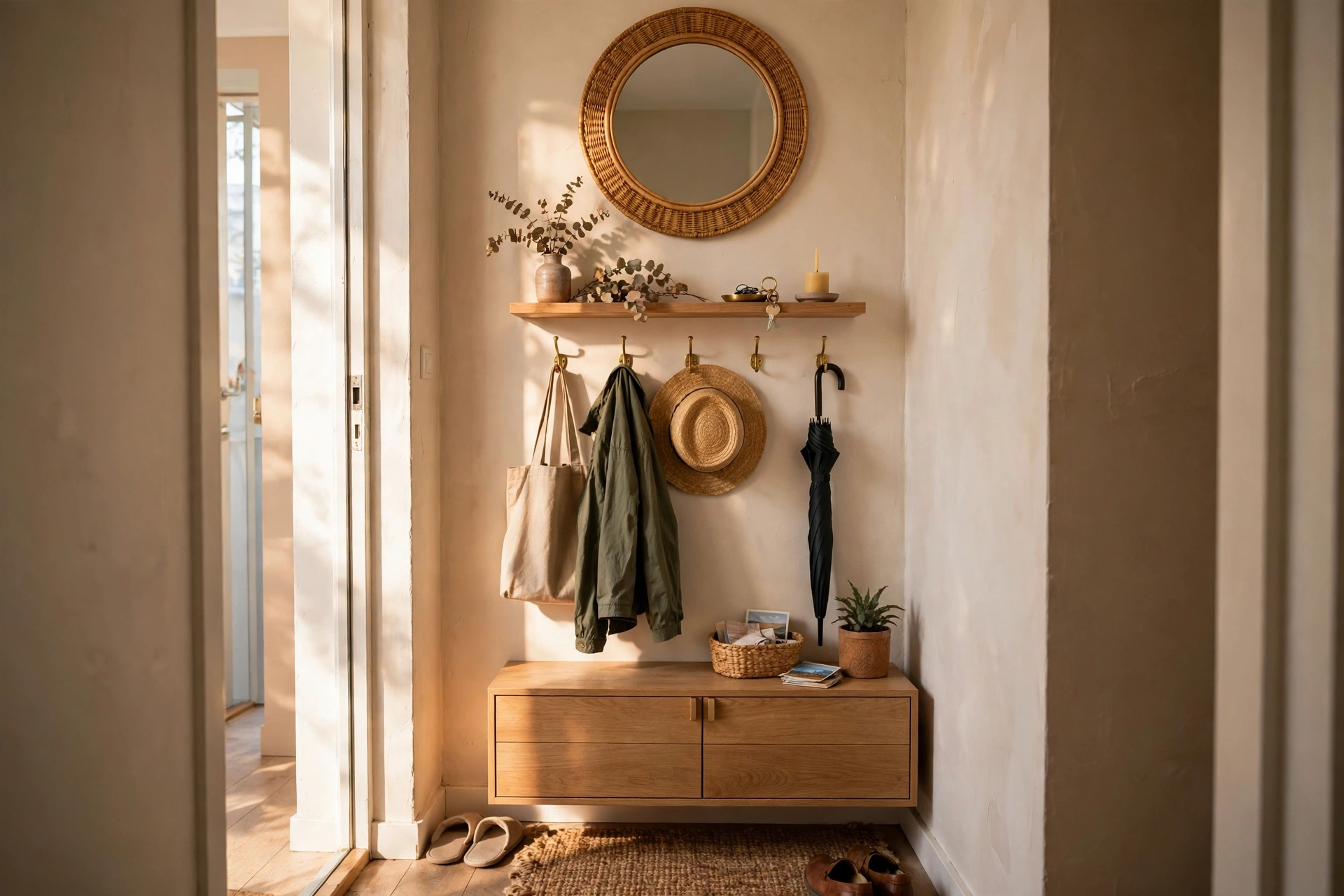
A tiny entry does not need less decorating — it needs vertical decorating. A wall-mounted shelf at console height holds keys and a small vase with zero floor space. Hooks above it hold coats, a mirror above that adds light, and a narrow shoe cabinet keeps shoes off the floor.
Floating shelves in a stack of two or three give you display space for a plant, a framed photo, and a candle without any floor furniture. Measure first: the shelf should be no deeper than 6 inches, and the walkway at least 36 inches clear. Small entries reward discipline — three well-chosen pieces beat ten crowded ones.
12. No Entryway at All? Create One with a Room Divider
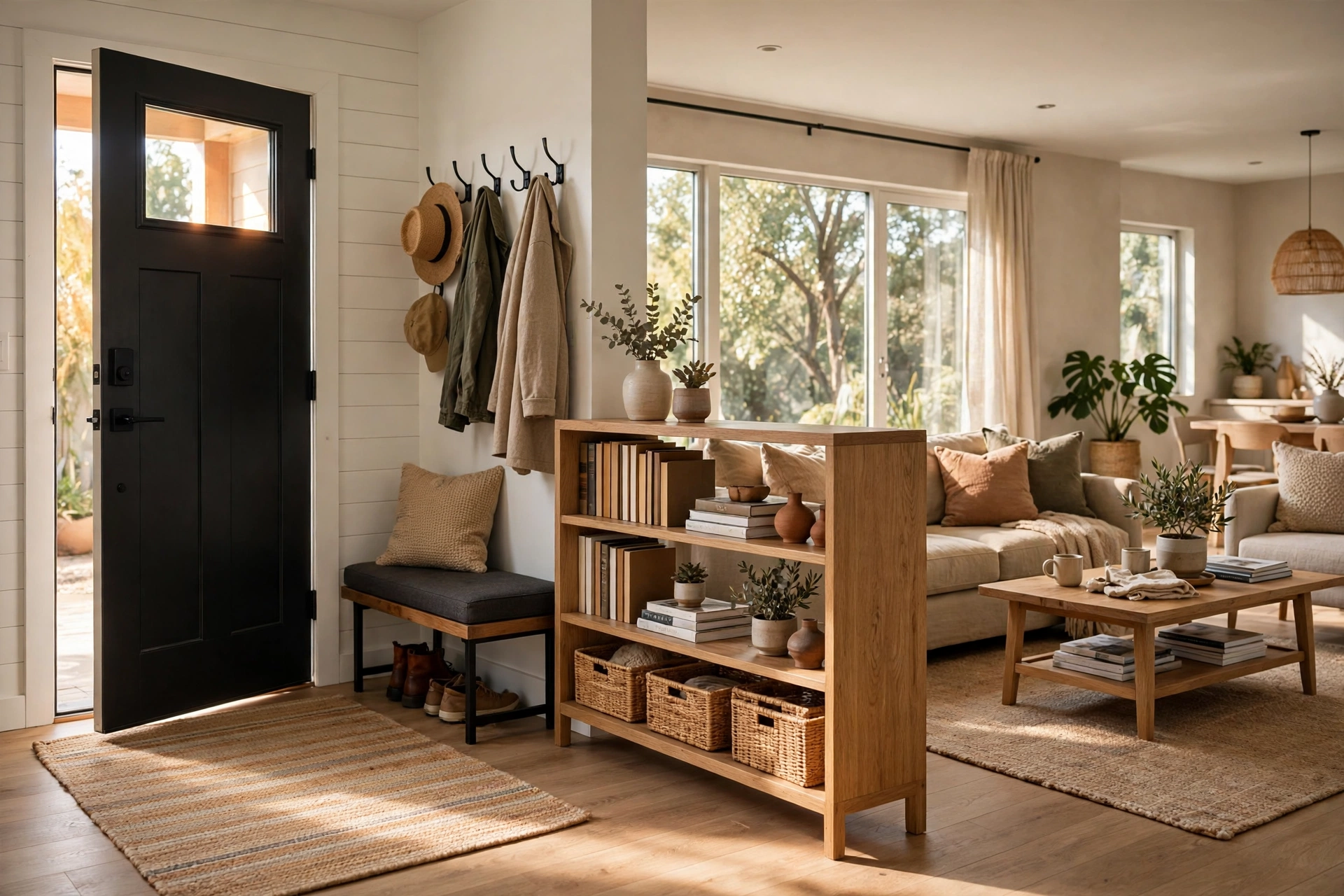
Many apartments and open-plan homes have no entryway — the front door opens straight into the living room. You can still create one: a freestanding room divider, an open bookshelf turned sideways, or a tall console placed perpendicular to the door all mark the boundary without a wall.
Place a rug on the entry side of the divider and the console against it, and the brain reads the space as a separate room. A bench on the living-room side gives the divider a second job. Keep the divider low enough to see over — about waist height — so the space still feels open, and choose open shelving so light passes through.
13. Seasonal Swaps Without Redecorating — Entryway Decor Ideas for Every Season
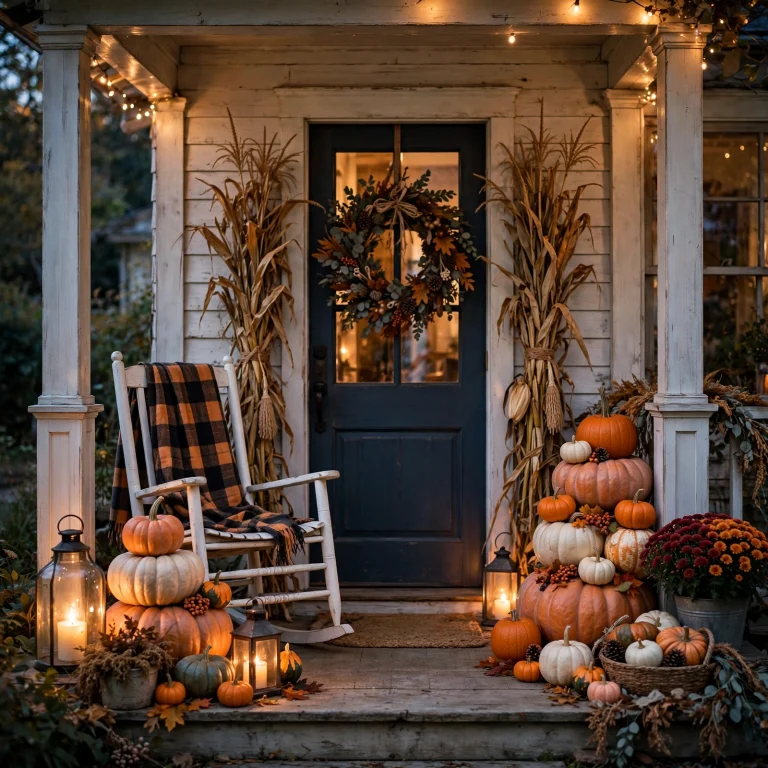
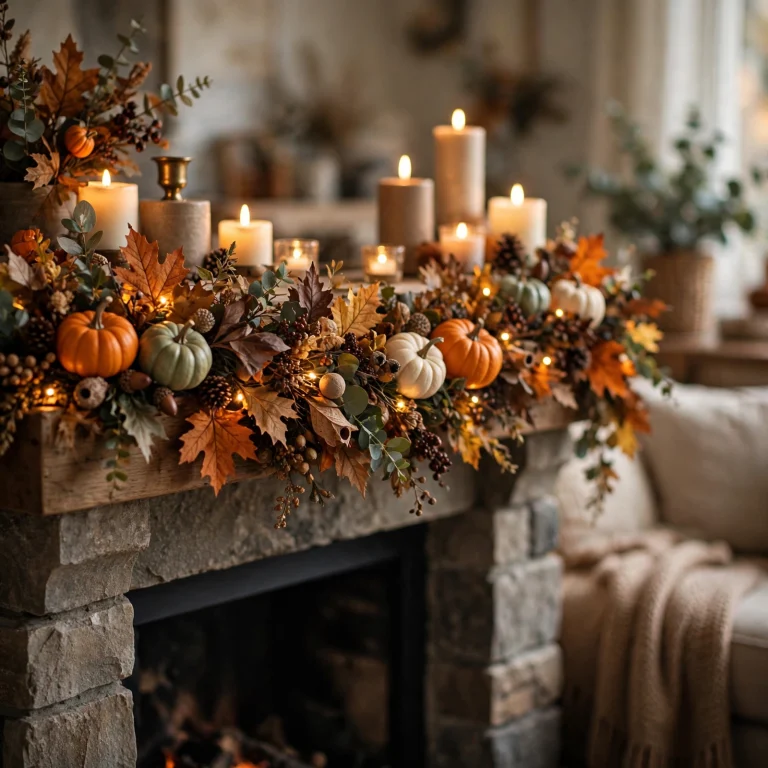
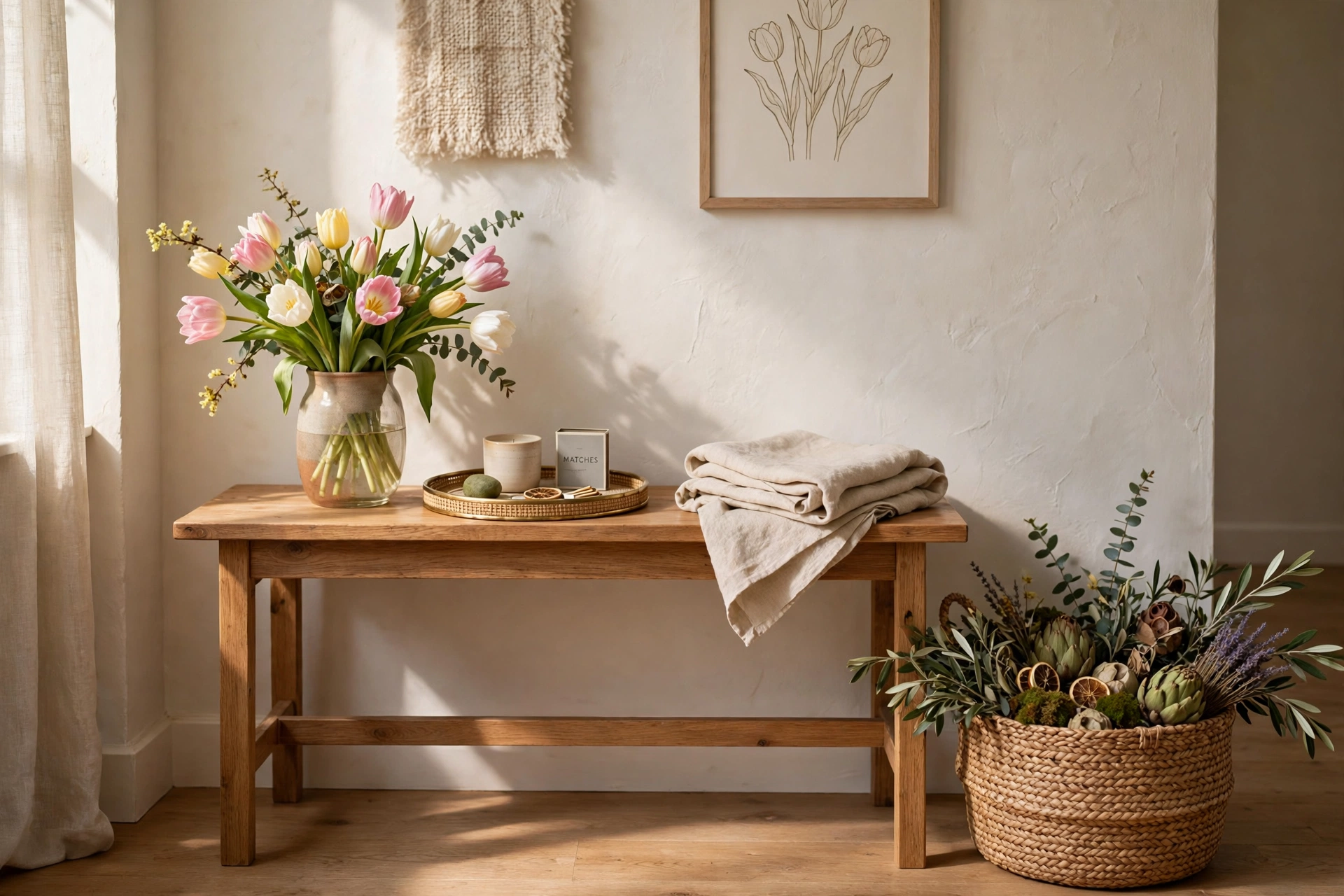
The entry is the easiest place in the house to change with the seasons, because only a few small pieces need swapping. Keep the big furniture — console, mirror, bench — the same all year, and rotate the small things: fresh flowers in spring, citrus in summer, dried leaves and a throw in fall, evergreen branches in winter.
One vase, one tray, and one textile signal the season. Store the out-of-season pieces in one labeled bin in the closet, so the swap takes ten minutes. The furniture stays put; only the small accents change.
14. A Personal Touch: Photos and Meaningful Pieces
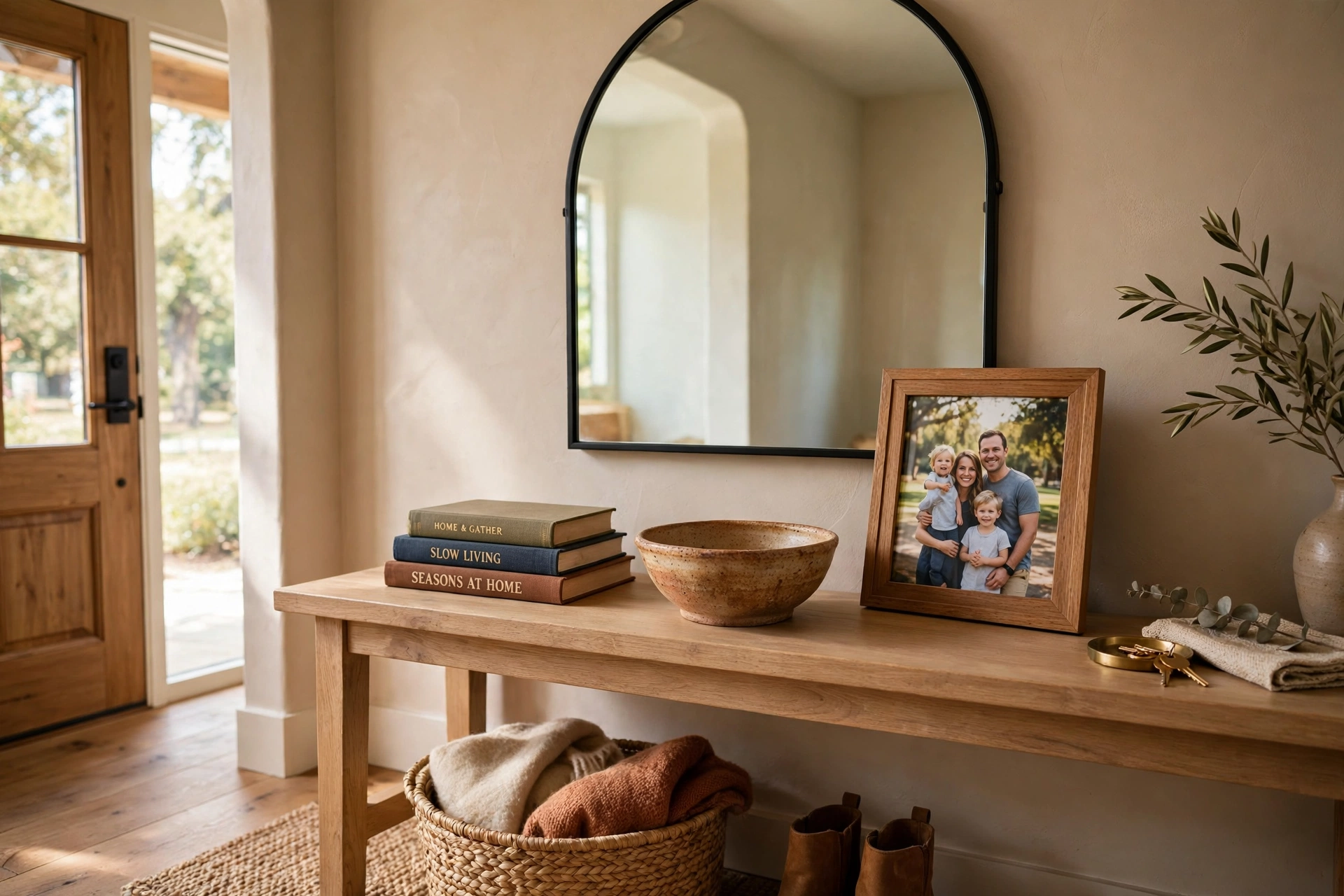
An entry full of store-bought decor looks like a showroom; an entry with one or two personal pieces looks like a home. A framed photo from a favorite trip, a handmade bowl from a local market, a child’s drawing in a simple frame — guests actually notice and ask about these.
Keep it to one or two personal items on the console or the gallery wall, mixed in with the practical pieces. Too many turns the entry into a display case. The personal piece should sit at eye level, where it is seen every time someone walks in.
15. One Cohesive Look from Door to Hallway — Cozy Entryway Decor Ideas
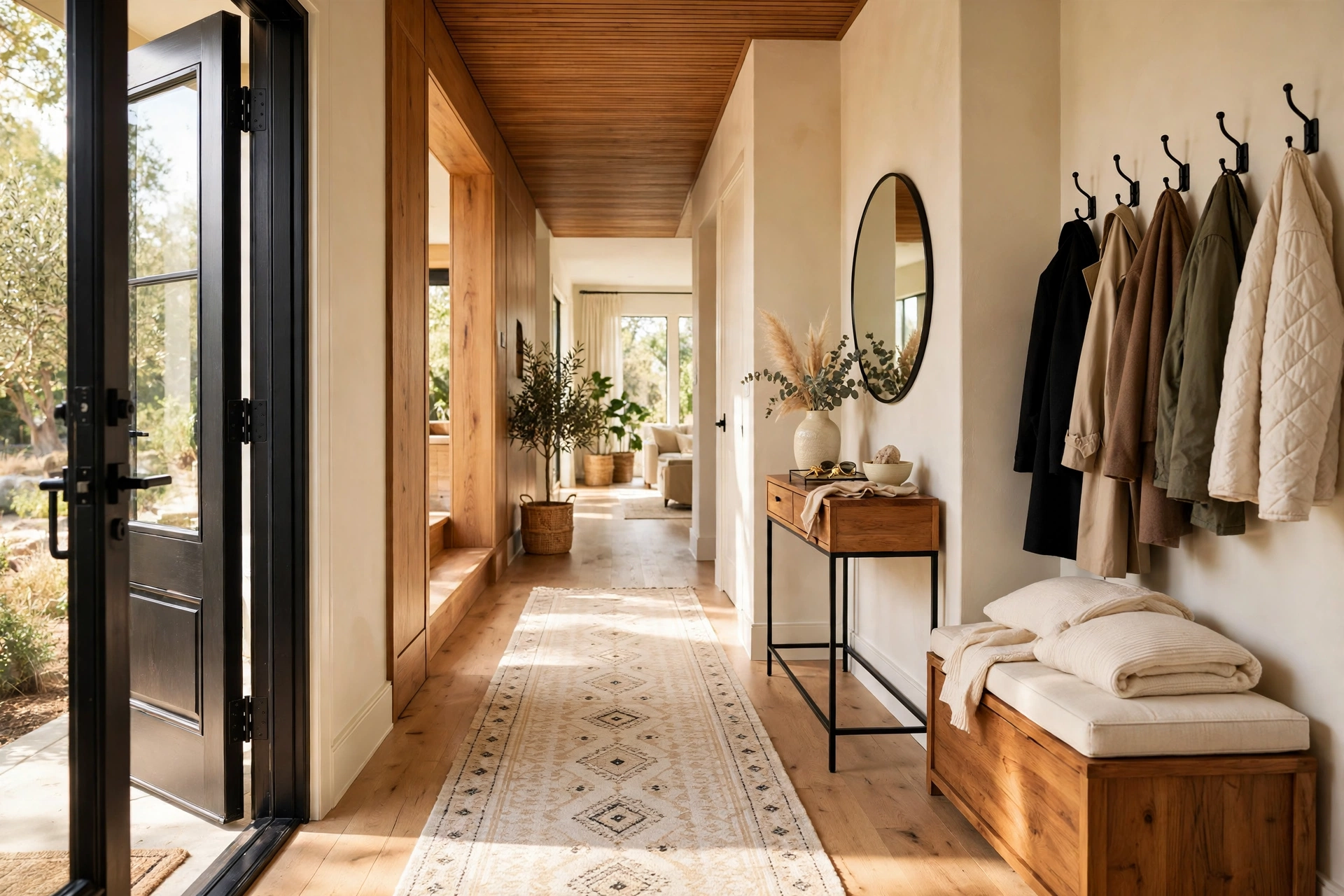
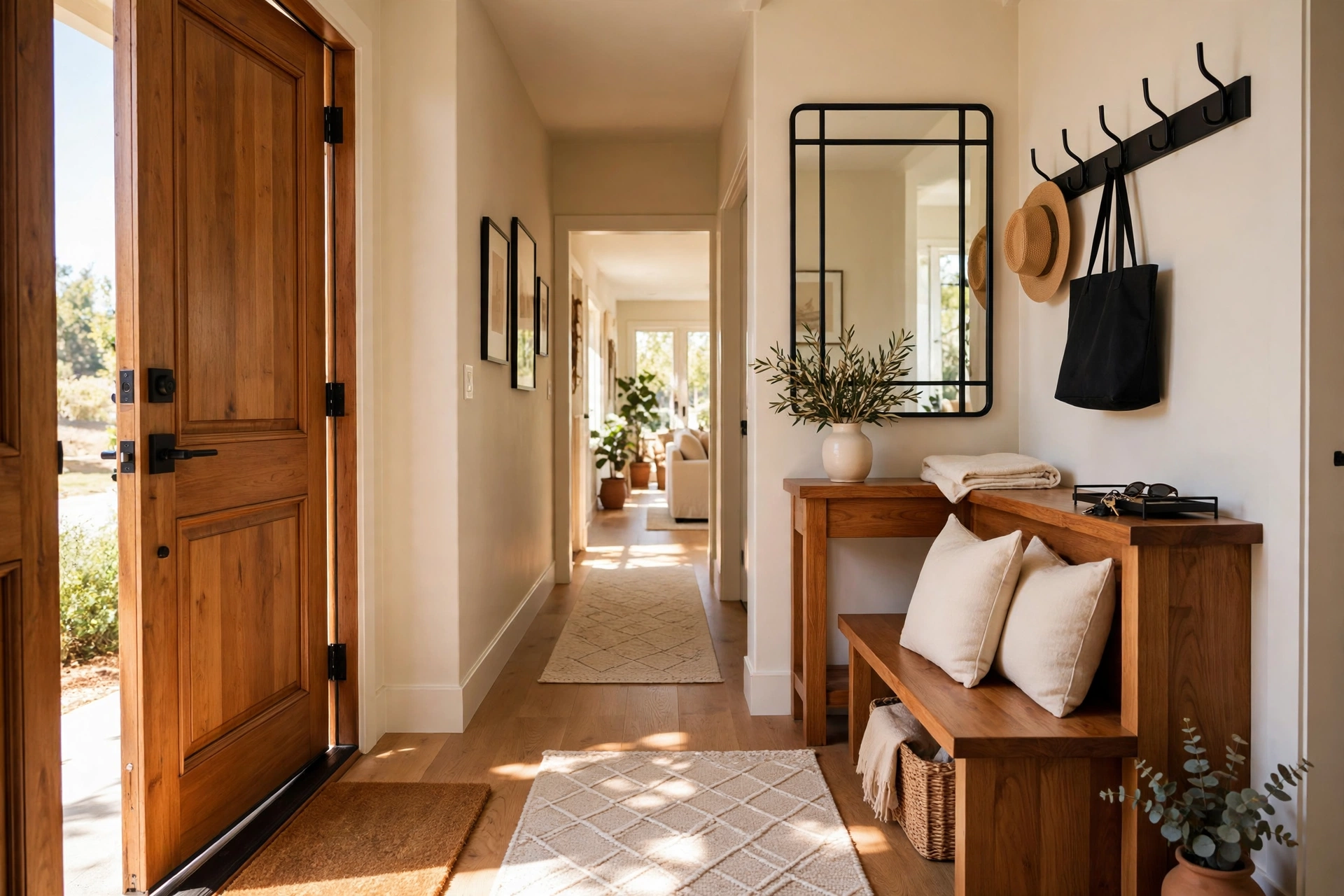
The final idea ties the other fourteen together: pick one palette and one material and repeat them from the front door to the hallway. Warm wood, black metal, and cream textiles, for example — wood in the console and bench, black in the hooks and mirror frame, cream in the rug and cushions.
Repeating two or three elements makes a small entry feel designed instead of assembled, and it makes future purchases easy: if it does not match the palette, it does not come home. Our easy DIY home decor projects on a budget guide has cheap ways to add the missing pieces, from painted frames to thrifted baskets. Start with the palette, and the entry pulls itself together.
Frequently Asked Questions
What should every entryway have?
Five things: a place for keys and mail, a place for coats, a place for shoes, a mirror or light source, and one decorative piece that makes it feel like home. Start with those five; add decor only after the practical pieces are in place.
How do I decorate an entryway with no space?
Go vertical and go narrow. A wall-mounted shelf, hooks, and a round mirror stacked on one wall give you a landing zone, coat storage, and light with zero floor space. Keep furniture depth under 14 inches and the walkway at least 36 inches clear.
How do I keep my entryway organized?
Give everything one home and make that home the easiest option. Keys in the tray, coats on the hooks, shoes in the station — within arm’s reach of the door. A ten-second reset when you come home keeps it tidy. Our 10-minute daily cleaning habits guide builds the same reset into the whole house.
How do I decorate a small entryway on a budget?
Start with the free fixes: declutter, move in a piece of furniture you already own, and hang a mirror you have. Then add one thrifted console or wall shelf, a washable rug, and a plant — most entries come together for under $100. Our small home organization ideas on a budget guide has more low-cost storage ideas for an entry.
Related Reading
- Small Home Organization Ideas on a Budget
- Home Organization Ideas
- How to Declutter Your Home Room by Room
- Easy DIY Home Decor Projects on a Budget
- Small Closet Organization Ideas
- Christmas Entryway Decor Ideas
Conclusion
Entryway decor ideas work when the practical pieces come first and the pretty pieces follow. A console, a mirror, hooks, a shoe station, and a drop zone for keys — get those five right, add one plant and one personal piece, and the first thing guests see is a welcoming home. Start with the piece that solves your biggest problem.