How to Remove Carpet Stains: 15 Proven Fixes by Stain Type
Introduction
To learn how to remove carpet stains, start with one fact: the stain matters more than the cleaner. Red wine, coffee, pet urine, grease, ink, and blood are different substances, and each one needs a different fix. The wrong cleaner can set a stain permanently, so the fifteen fixes below are organized by stain type — find your stain, follow its steps, and stop as soon as the carpet is clean.
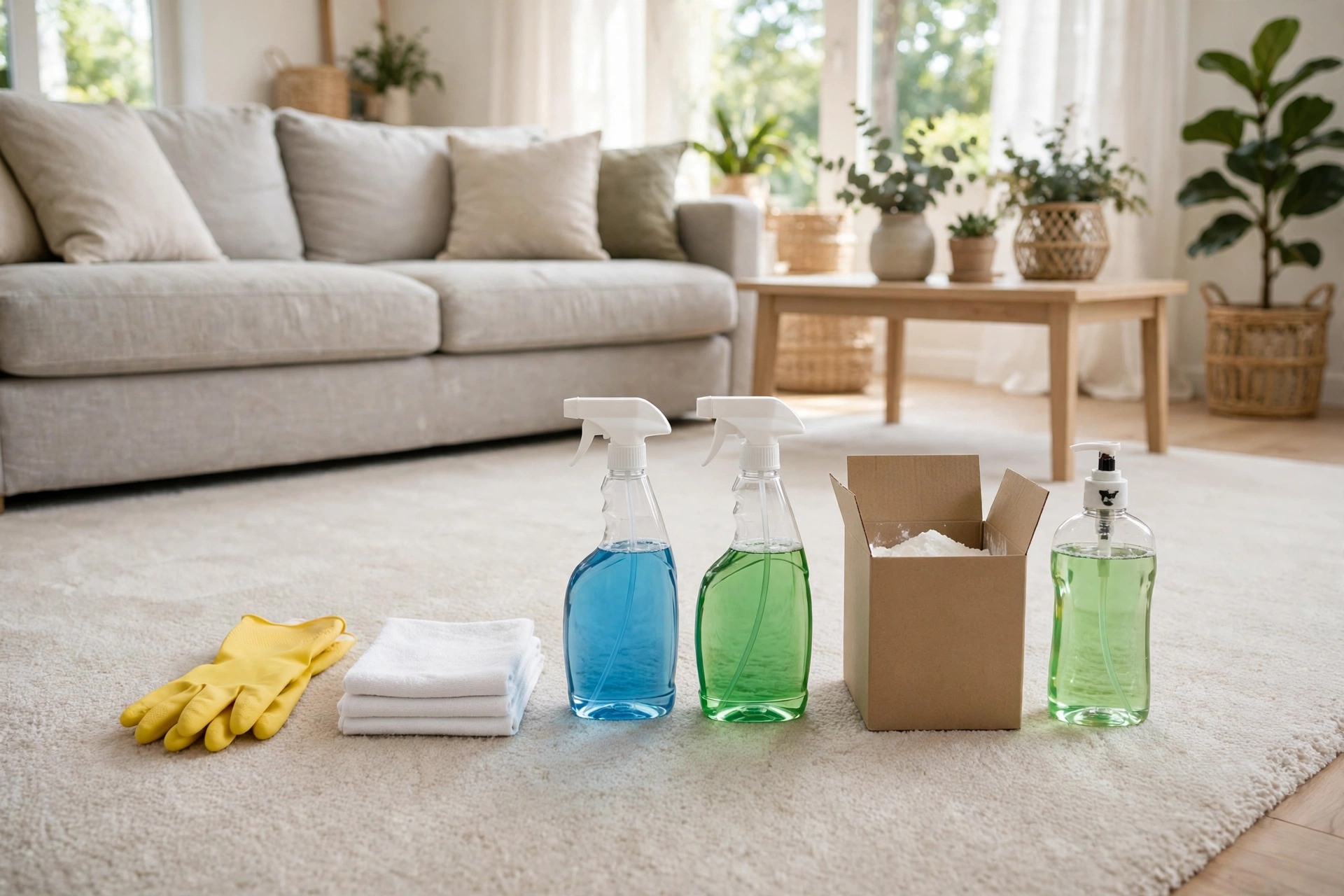
Every fix here uses supplies you can buy at any US grocery or hardware store: white vinegar, baking soda, dish soap, hydrogen peroxide, rubbing alcohol, and an enzyme cleaner. Before you start, test any solution on a hidden spot — inside a closet or under a sofa — and wait five minutes to make sure it does not change the color. And remember what this guide is not: it is stain removal by hand, not vacuuming. Once the stain is gone and the carpet is dry, our guide on how long to wait to vacuum after shampooing carpet covers the drying and vacuuming side, and our best carpet vacuum cleaners guide helps if your vacuum itself needs an upgrade.
1. The Golden Rules: Blot, Never Rub; Act Fast; Work Outside-In
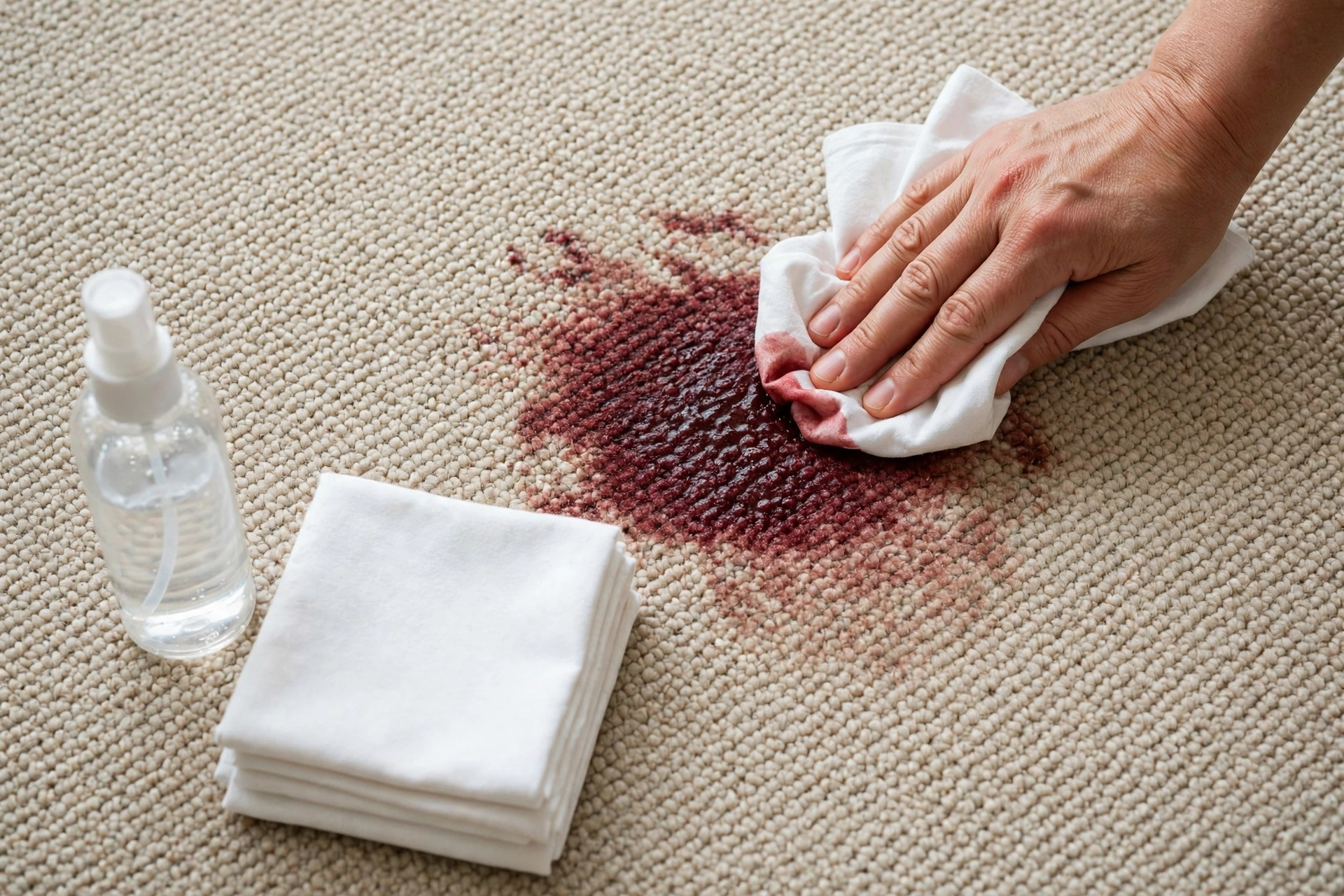
Every stain in this guide obeys the same three rules, so learn them before you touch a single spot. First, blot — never rub. Press a clean white cloth straight down on the stain and lift; rubbing pushes the stain deeper and frays the carpet fibers. Second, act fast. A fresh stain sits on the surface; a stain that dries bonds with the fiber, so start while it is still wet whenever you can. Third, work from the outside in. Dab the edges of the stain first and move toward the center, so the stain shrinks instead of spreading into a bigger ring.
Keep a stack of clean white cloths beside you — colored towels can transfer dye onto wet carpet — and change to a clean section as soon as one picks up color. Never pour a cleaning solution directly onto the carpet; apply it to the cloth first, so you control how wet the carpet gets.
2. Know Your Fiber First: Synthetic vs. Wool
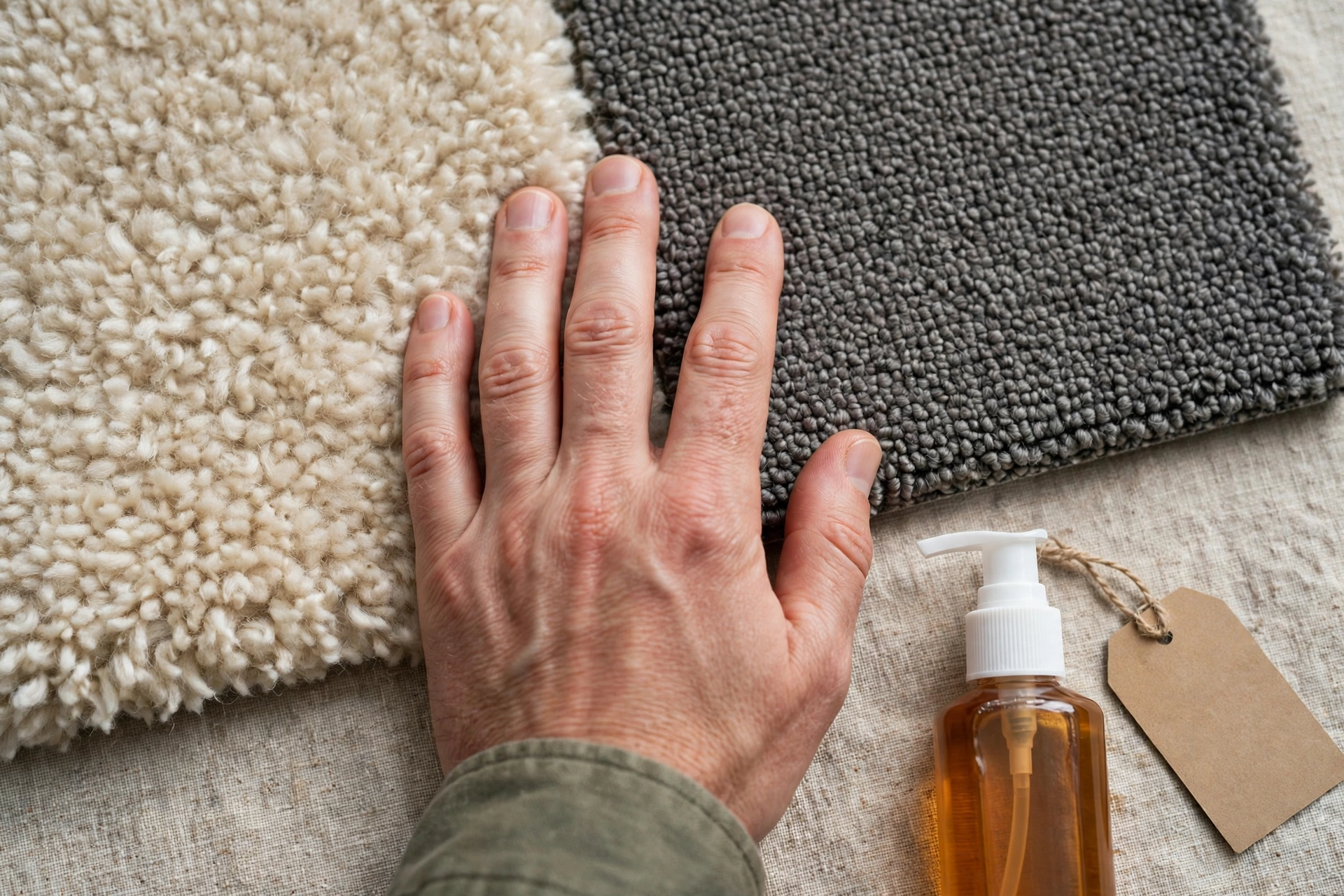
Before you use any cleaner, know what your carpet is made of — the wrong product on the wrong fiber can bleach or damage it. Most American wall-to-wall carpet is synthetic: nylon, polyester, or olefin. Synthetic fibers are tough and can handle diluted vinegar, dish soap, and 3% hydrogen peroxide. Wool carpet is different: wool is a natural protein fiber, so never use bleach, oxygen bleach, or hot water on it, and use only wool-safe or pH-neutral cleaners.
If you are not sure what you have, check the carpet label, the builder’s paperwork, or a leftover piece in a closet. When in doubt, treat it as wool — the gentler method works on synthetic too — and always test a hidden spot first, because even a safe solution can react with a dye or a previous treatment.
3. Red Wine: Salt First, Then Vinegar and Dish Soap
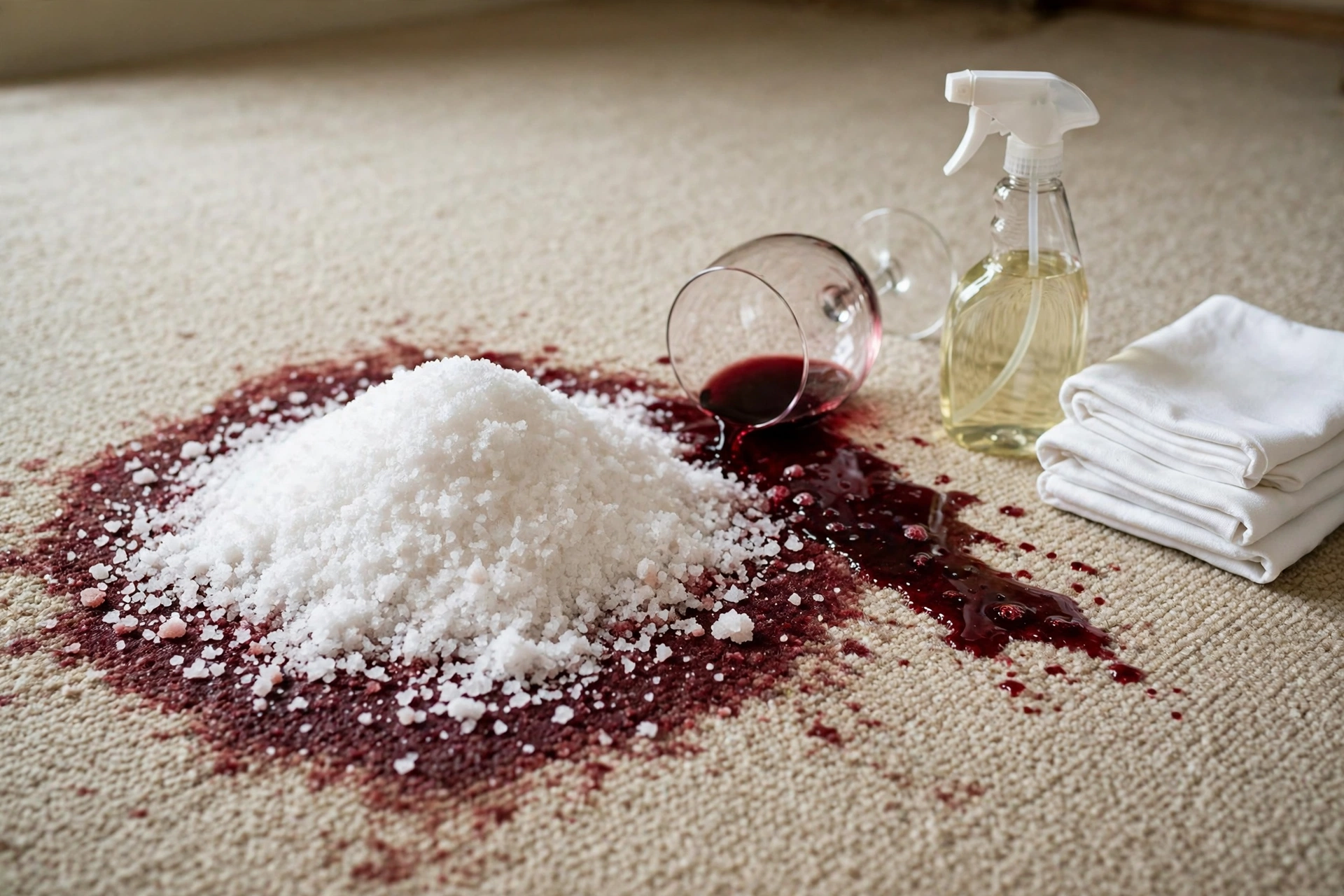
Red wine is the stain people panic about most, and it is very fixable if you act fast. Blot up as much wine as you can with a clean white cloth, pressing straight down. Then cover the stain generously with table salt or baking soda — both pull the wine up out of the fibers as they dry. Leave it for 10 to 15 minutes, then vacuum up the dried salt.
For what is left, mix one tablespoon of white vinegar and one tablespoon of dish soap in two cups of cool water. Blot the solution onto the stain with a white cloth, working outside-in, and keep turning the cloth to a clean section. Rinse by blotting with a cloth dampened in plain cool water, then press a dry towel over the spot and stand on it to pull out the moisture. On white or very light carpet, a little 3% hydrogen peroxide on a cloth can finish the job — never on wool or dark carpet without a spot test.
4. Coffee and Tea: Dish Soap First, Peroxide Only on Light Carpet
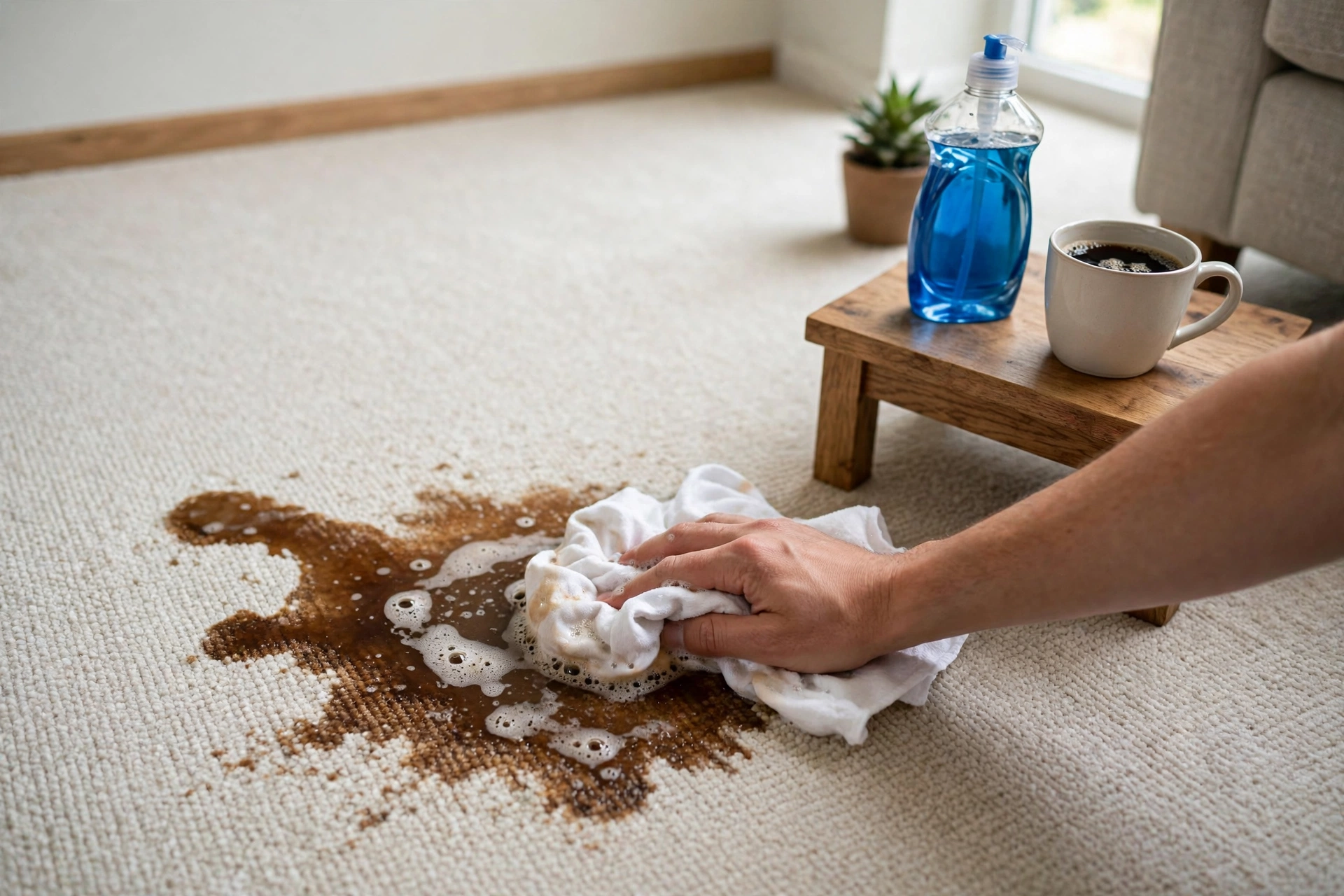
Coffee and tea stains are tannin stains, and they respond to the same simple mix: one tablespoon of dish soap in two cups of cool water. Blot up the spill first, then blot the soap solution onto the stain, working outside-in and turning the cloth often. Rinse with a cloth dampened in plain cool water and blot dry.
If a faint brown shadow remains on a light-colored synthetic carpet, dab 3% hydrogen peroxide onto a white cloth and blot the shadow — never pour it straight on the carpet, and never use it on wool or dark carpet, where it can lighten the dye. For coffee with milk or cream, treat it as a protein stain first: use cool water only (hot water sets milk proteins), then follow with the soap solution.
5. Pet Urine: Enzyme Cleaner Only
Pet urine is the one stain where the usual cleaners fail. Urine contains proteins (uric acid and urea) that soap and vinegar cannot break down, so the stain and the smell come back — and the smell tells the pet to use the same spot again. The only fix that truly works is an enzyme cleaner, whose live bacteria and enzymes digest those proteins into odorless water and carbon dioxide. You can find enzyme cleaners at any pet store or in the pet aisle of a grocery store.
Blot up what you can, then saturate the spot — urine soaks into the carpet pad, so the cleaner must reach the pad too. Cover it with a damp towel and leave it for 8 to 12 hours, overnight if you can. Do not scrub first and do not use hot water, which sets the proteins. For the full pet-smell routine beyond the stain itself, see our guide on how to get rid of pet odor in your house.
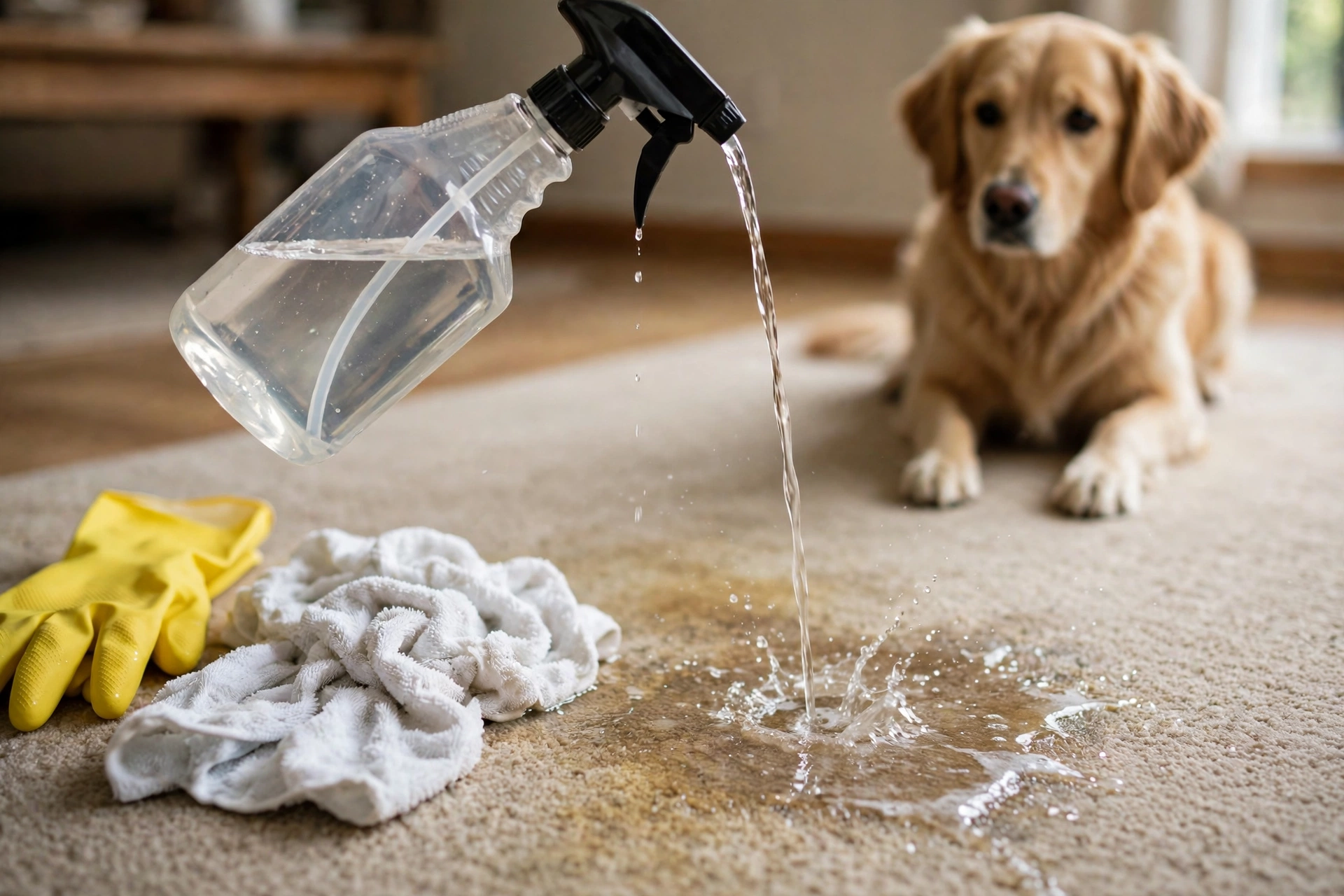
6. Grease and Oil: Absorb First, Then Dish Soap
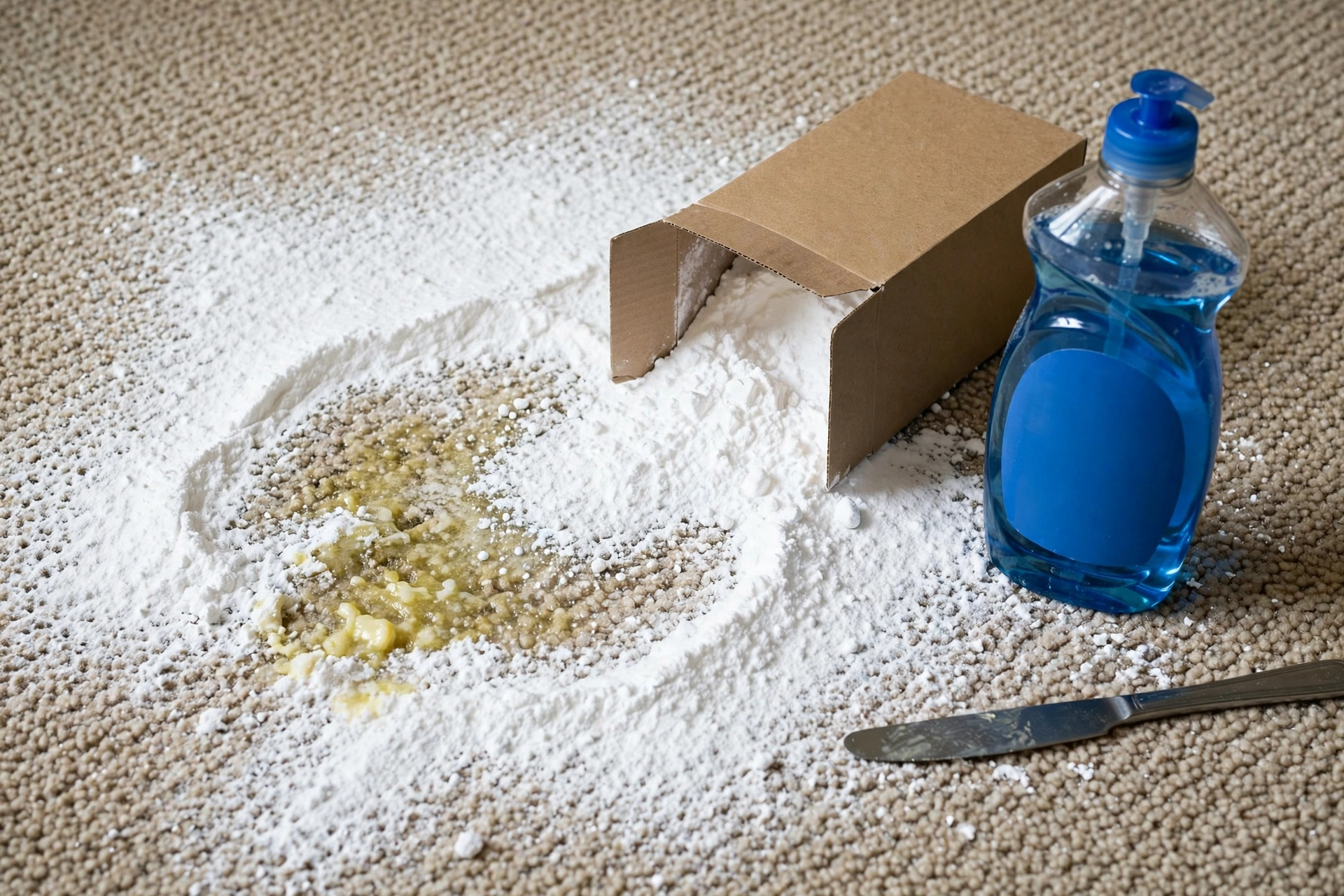
Grease — butter, cooking oil, salad dressing, lipstick, crayon — repels water, so water alone only spreads it. Start by absorbing: sprinkle baking soda or cornstarch generously over the stain and leave it for 15 to 20 minutes to soak up the oil, then vacuum it up. For a solid smear like lipstick or crayon, scrape off what you can with a dull butter knife first.
Then blot a solution of one tablespoon of dish soap in two cups of warm water onto the stain — dish soap is made to cut grease. Work outside-in, turn the cloth often, and rinse with a cloth dampened in plain water. If a shadow remains, repeat the baking soda step rather than reaching for a stronger solvent; solvents can dissolve carpet backing glue.
7. Mud: Let It Dry First
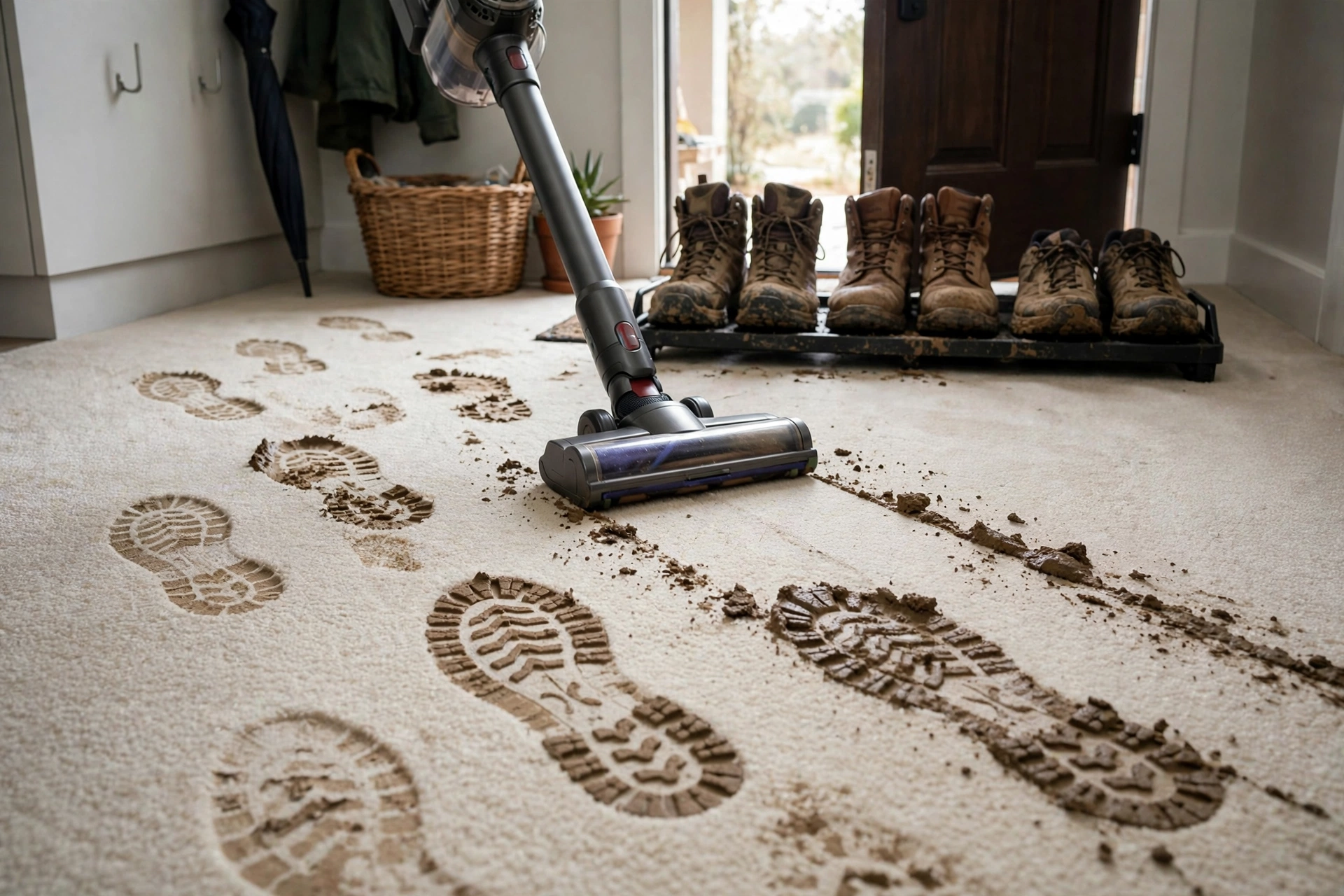
Mud is the one stain where doing nothing is the right first step. Wet mud smears and pushes deeper into the fibers if you touch it. Leave it completely alone until it is fully dry — usually a few hours, or overnight for a big patch. Then vacuum slowly over the spot several times to pick up the dried dirt.
Whatever faint mark is left, blot with the dish soap solution from Section 4 (one tablespoon of dish soap in two cups of cool water), then rinse with a damp cloth and blot dry.
8. Ink and Marker: Rubbing Alcohol on a Cloth, Never Poured
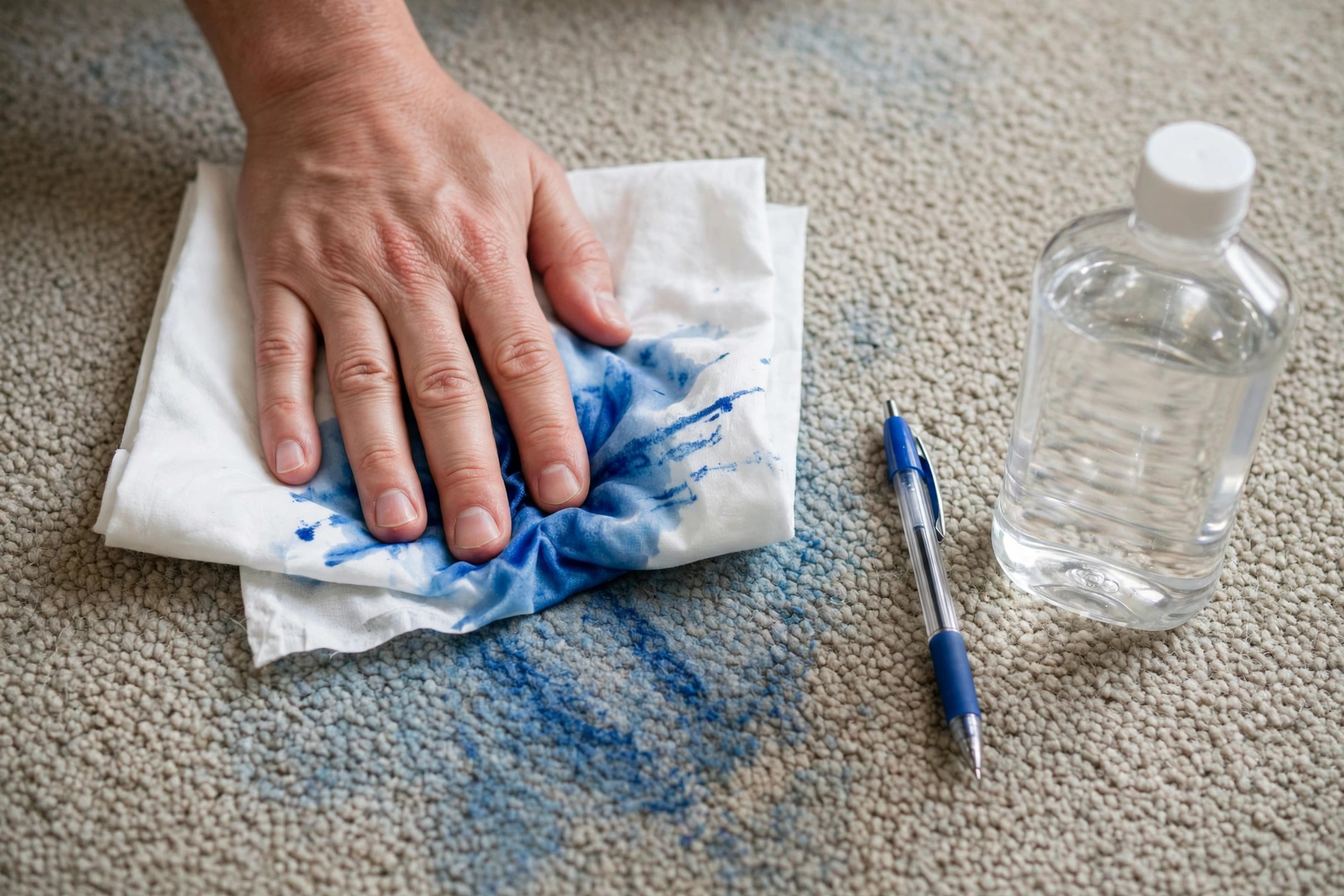
Ink and marker dissolve in alcohol, not water — and the key is patience. Dampen a clean white cloth with rubbing alcohol (isopropyl alcohol) and press it onto the stain; never pour alcohol directly on the carpet, or the ink will spread. Hold the cloth still for 30 seconds, lift, and check. Keep using clean sections of the cloth, re-dampening as needed, until no more ink transfers.
Do not rub — rubbing drives ink deeper. Work in a well-ventilated room, since alcohol fumes build up fast in a closed space. When the ink is gone, blot the spot with the dish soap solution to remove the alcohol residue, then rinse with a damp cloth.
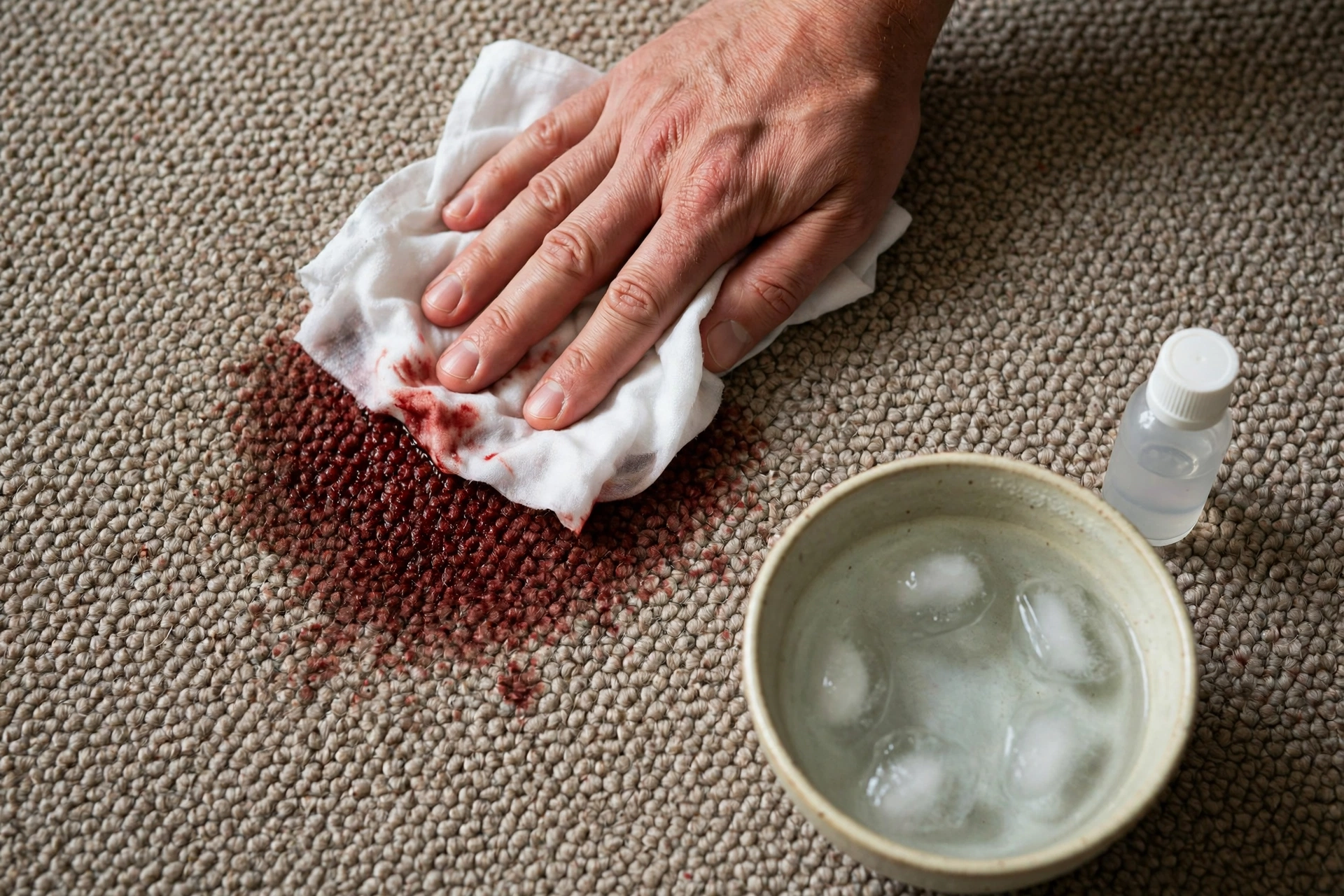
9. Blood: Cold Water Only
Blood is a protein stain, and hot water is its worst enemy — heat cooks the proteins and sets the stain permanently. Use cold water only, from the first blot to the last rinse. Blot up what you can with a cold, damp white cloth, then keep blotting with fresh cold water, turning the cloth often.
For a dried blood stain, mix one tablespoon of dish soap in two cups of cold water and blot it on, or make a paste of cold water and table salt and let it sit for 10 minutes before blotting it away. On light synthetic carpet, a little 3% hydrogen peroxide on a cloth can finish a stubborn shadow — but test first, and never use it on wool.
10. Food and Sauce: Scrape, Then Dish Soap, Then Rinse
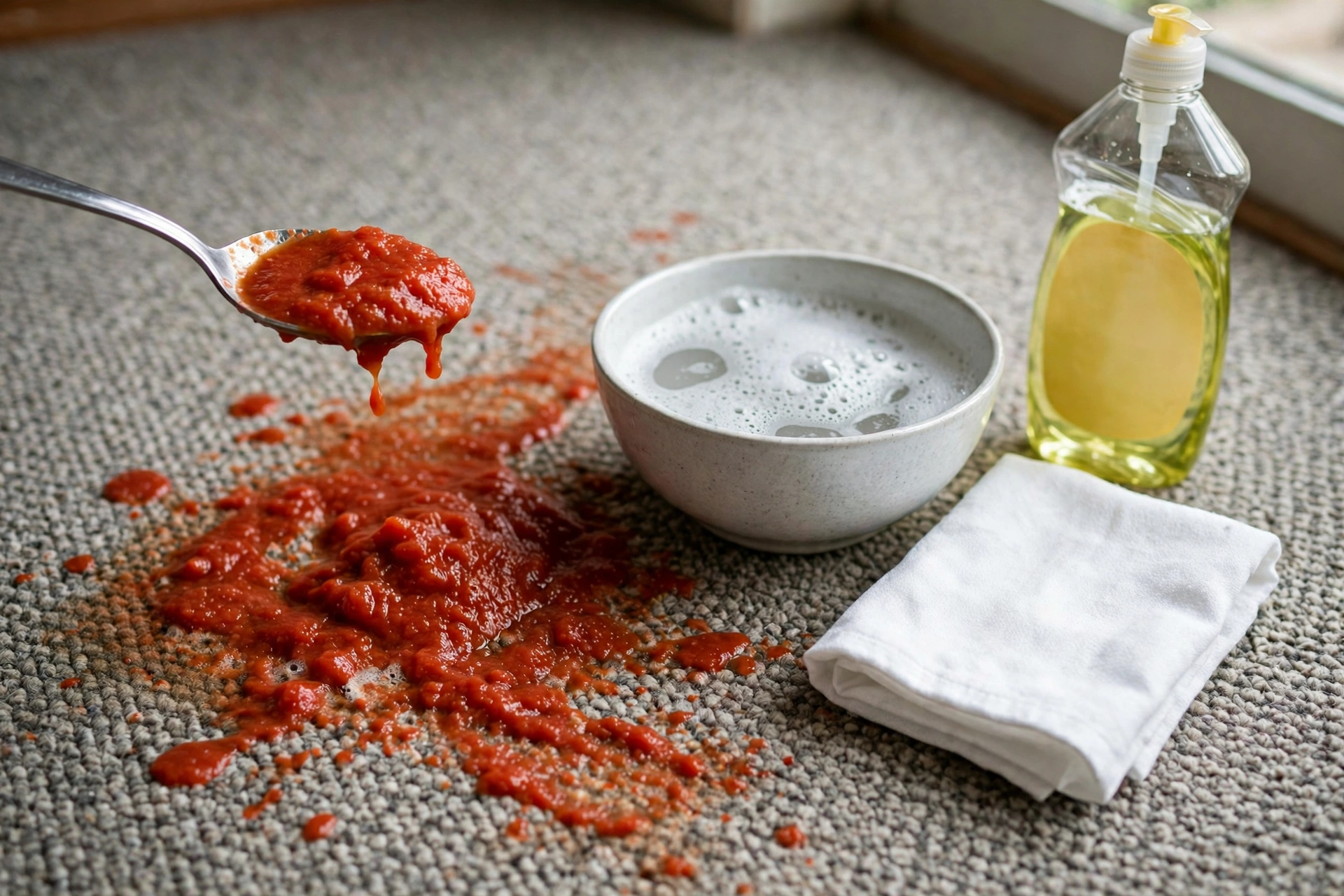
Food stains — tomato sauce, chocolate, ketchup, curry, baby food — are usually a mix of grease, color, and protein, so the fix is a sequence. First scrape up the solids with a spoon or a dull knife, lifting straight up, never scraping across. Then blot the dish soap solution (one tablespoon of dish soap in two cups of cool water) onto the stain, working outside-in.
Rinse by blotting with a cloth dampened in plain cool water, and repeat the soap step if the color lingers. Tomato and curry stains may leave a faint yellow or orange shadow on very light carpet — a little 3% hydrogen peroxide on a white cloth, tested first on a hidden spot, usually clears it.
11. Paint: Water-Based Paint Washes Out, Oil-Based Paint Needs a Pro
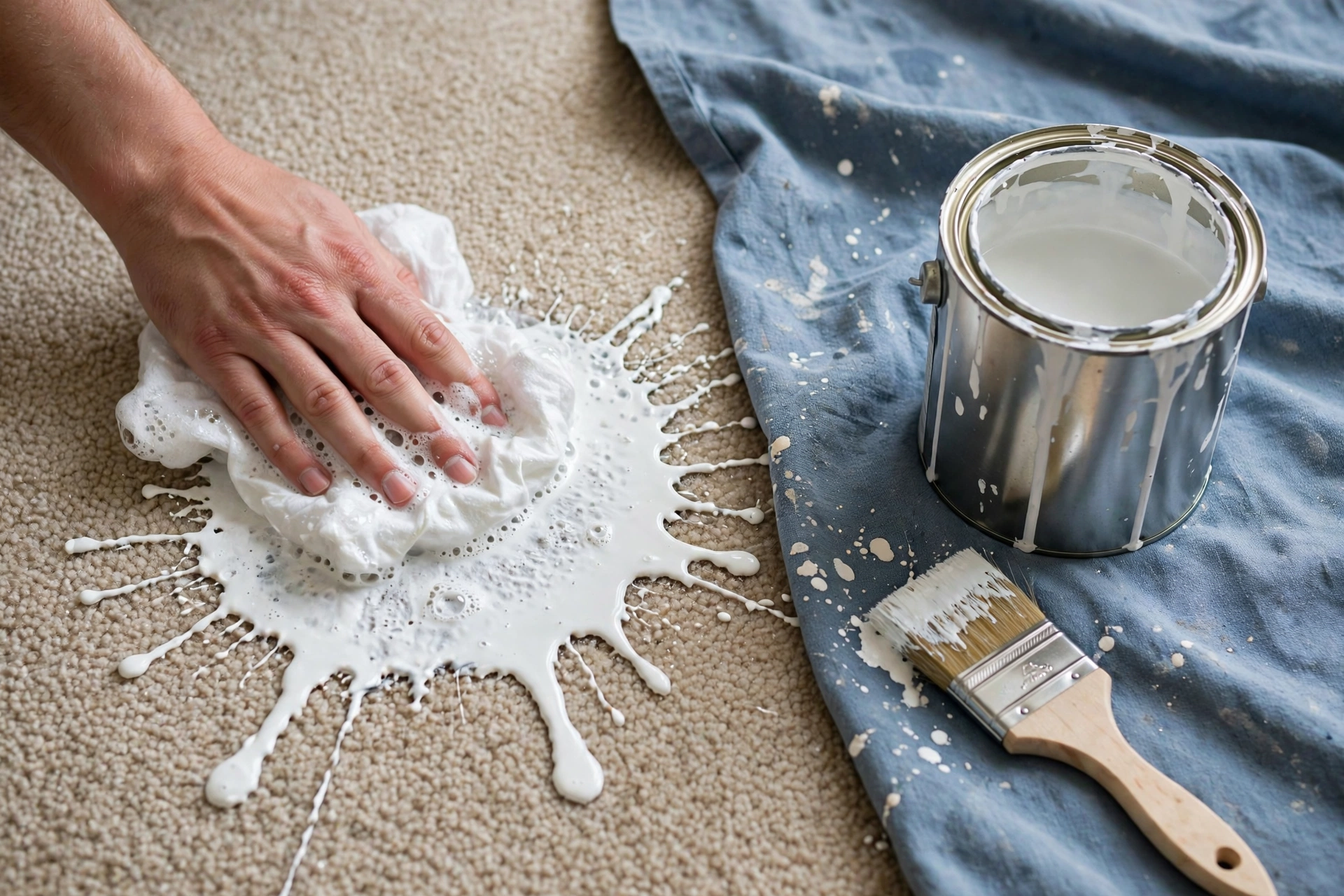
First, find out which paint it is — the can or the label tells you. Water-based paint (latex or acrylic, the kind most US homes use) washes out: blot up the wet paint, then blot with the dish soap solution, rinsing often, until the color is gone. For dried latex paint, soften it with a little warm soapy water and gently scrape with a dull knife before blotting.
Oil-based paint is different: it needs a solvent, and solvents can damage carpet fibers and backing, so this is a job for a professional carpet cleaner. If the paint has dried hard and covers a large area, call a pro instead of scraping at it for hours.
12. Old Set-In Stains: Soak, Agitate Gently, Repeat
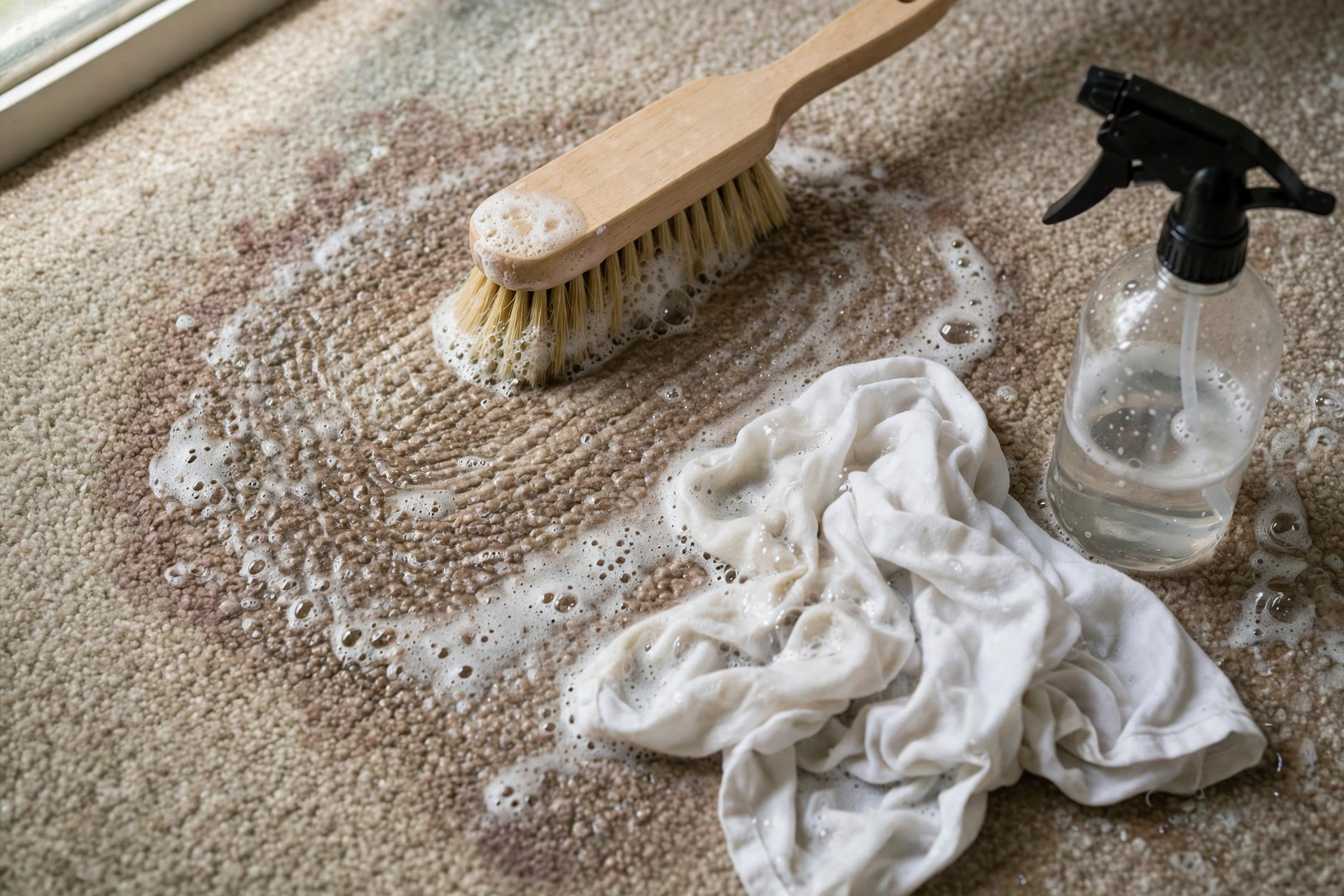
An old stain that has been there for months is not hopeless — it just needs more time. Start by re-wetting it: lay a cloth dampened with the dish soap solution over the stain and leave it for 15 to 20 minutes to soften the dried residue. Then blot, working outside-in, and use a soft-bristled brush to gently agitate the fibers — light strokes only, never hard scrubbing.
Rinse by blotting with a damp cloth, then repeat the soak-and-blot cycle two or three times. Old stains often fade a little with each round rather than disappearing at once. If three rounds change nothing, the stain has likely bonded with the dye, and a professional with a hot-water extraction machine is the next step.
13. Spot-Cleaning Technique: Wet Pass, Dry Pass, Weighted Cloth
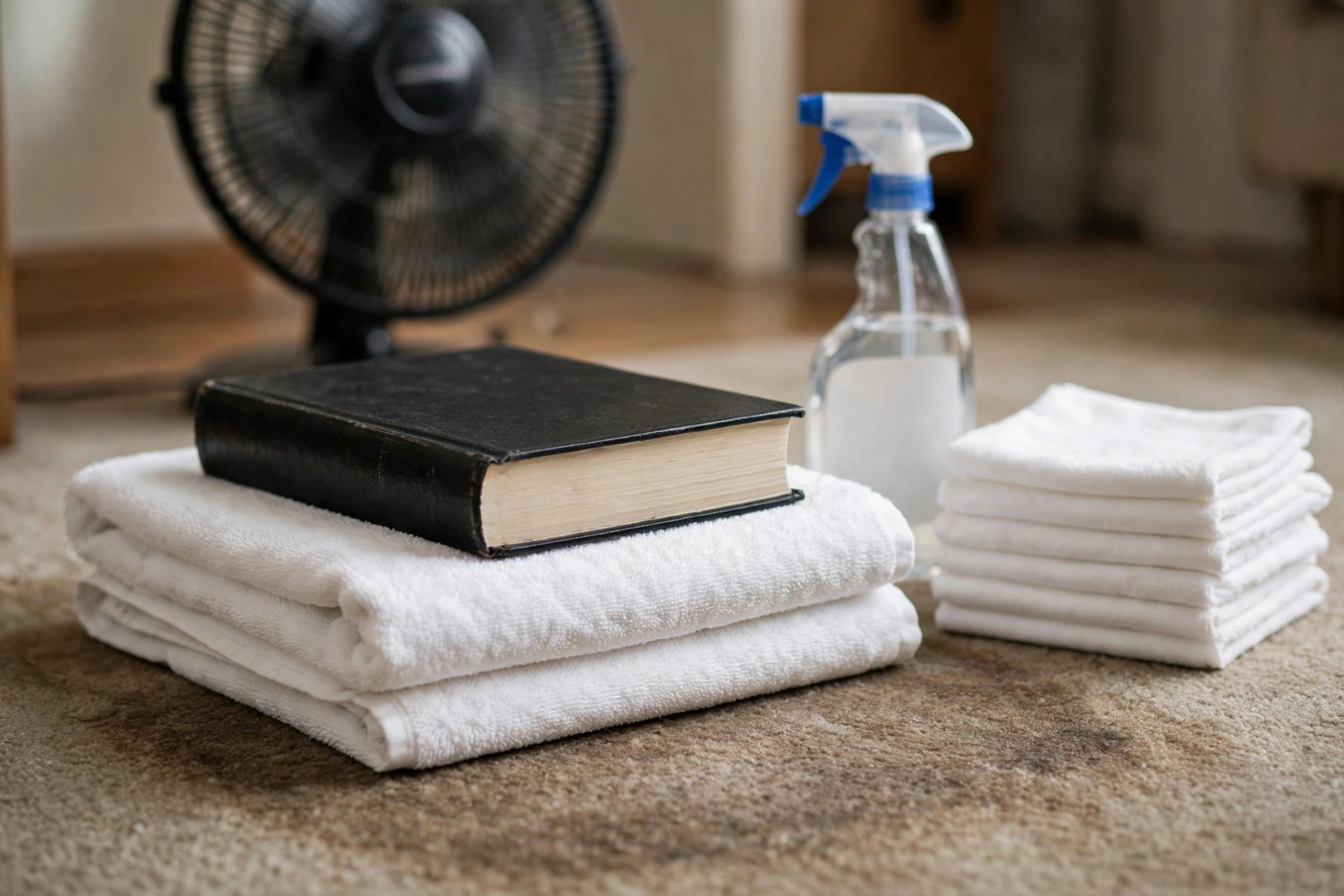
The technique matters as much as the cleaner. Work in two passes: a wet pass, then a dry pass. For the wet pass, blot your cleaning solution onto the stain with a white cloth — never pour it on. For the dry pass, press a clean, dry white towel over the spot and stand on it, or place a heavy book on top of the towel for 15 minutes, so your body weight pulls the moisture and the dissolved stain out of the fibers.
Wicking is the reason the dry pass matters: moisture left in the pad rises to the surface as it dries and brings the stain back up with it. Always finish with a dry pass, and keep the room ventilated — a fan or an open window helps the carpet dry fully within a few hours.
14. What Never to Do: Layering Products, Hot Water on Protein, Steam on Urine
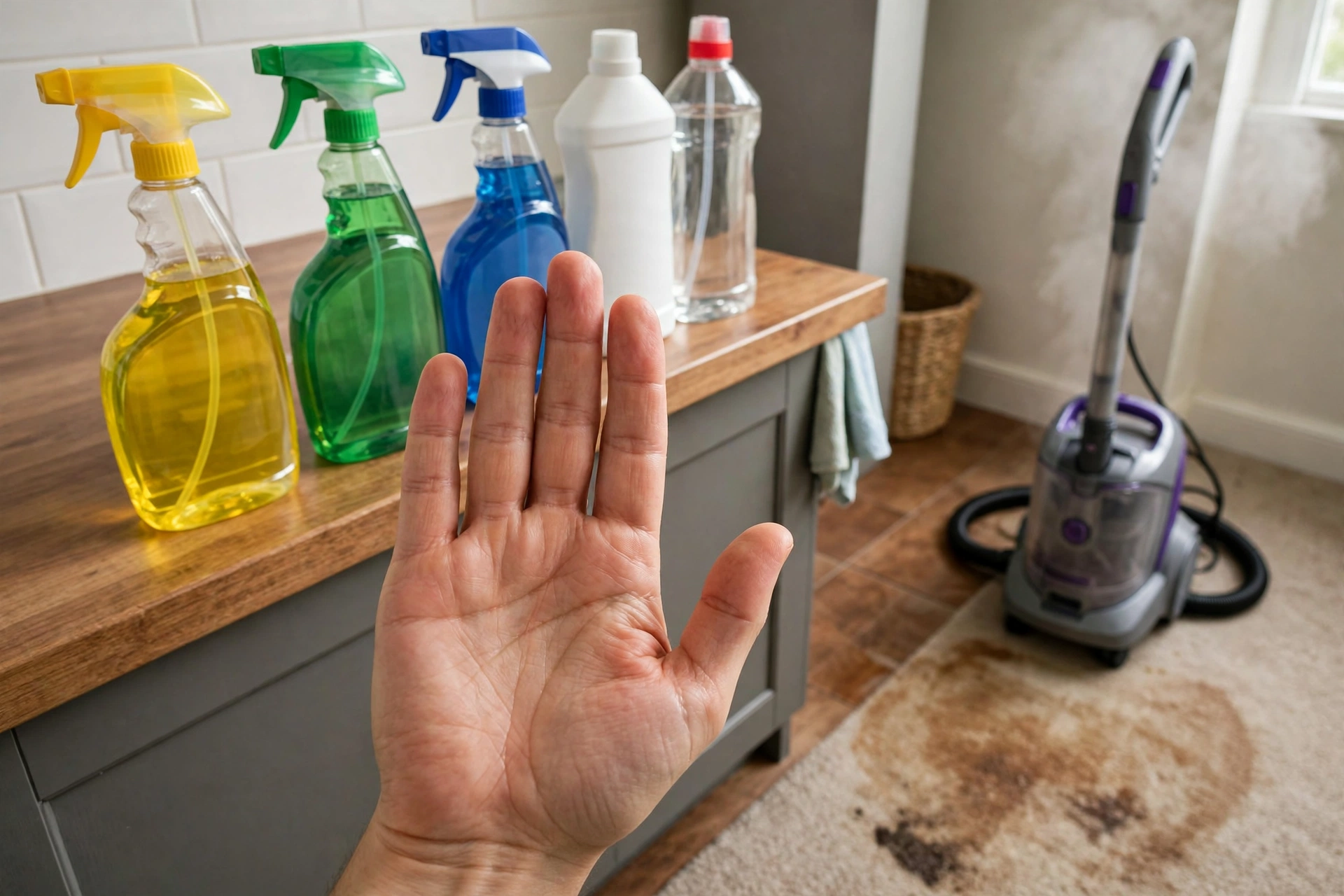
Some stain mistakes are worse than the stain itself. Never layer cleaning products on the same spot — mixing bleach with vinegar or ammonia creates toxic fumes, and mixing products can set a stain or bleach the carpet. Use one solution at a time, rinse it out, and only then try another. Never use hot water on protein stains — blood, milk, egg, vomit, or pet urine — because heat sets the proteins permanently. Never use a steam cleaner on a pet urine stain: the heat bonds the urine proteins to the fiber and makes the smell permanent. And never use bleach on carpet — it removes color from the fibers, not just the stain. For a deeper look at how carpet fibers and cleaning methods interact, see the carpet cleaning overview on Wikipedia.
15. When to Call a Professional
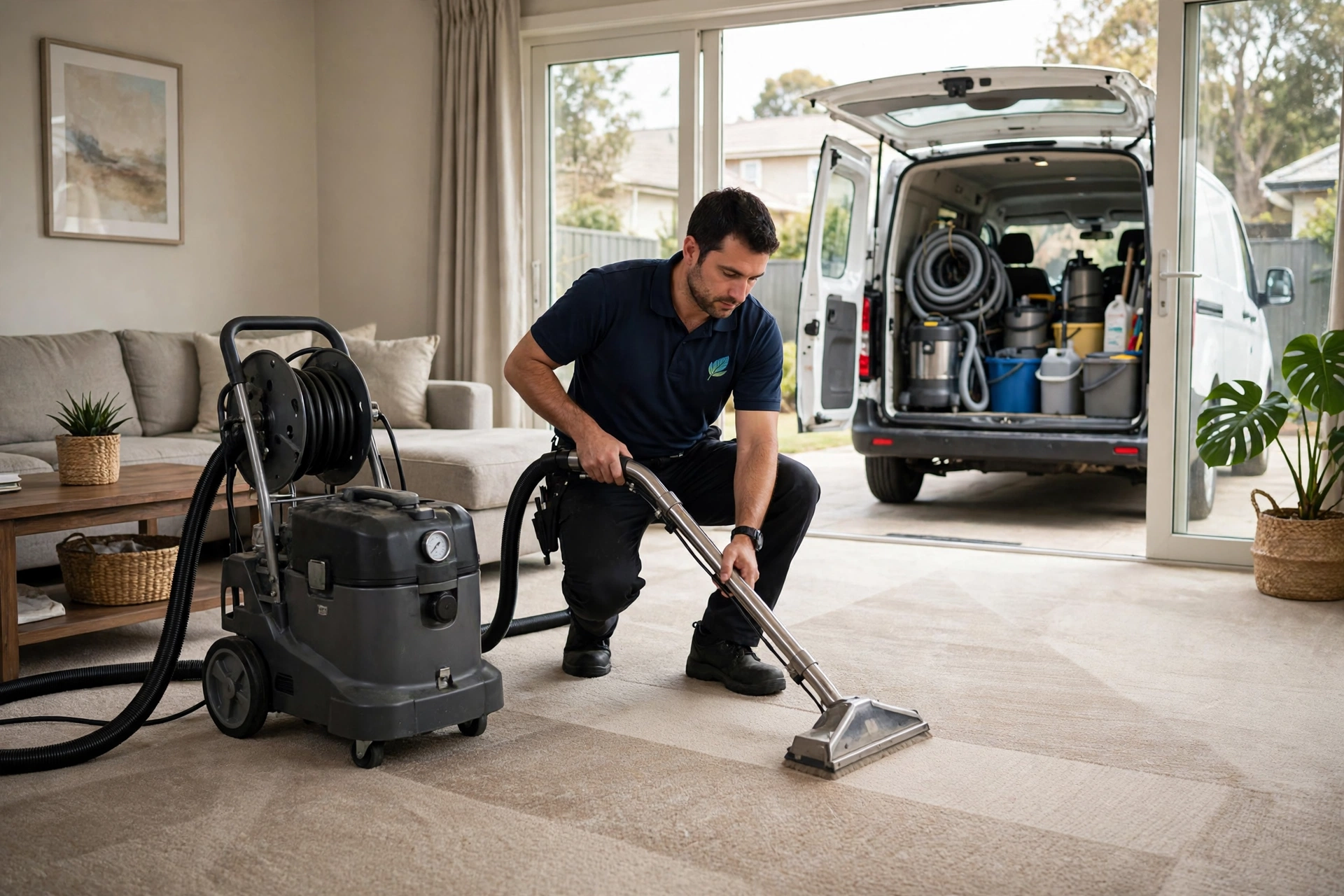
Some stains are a professional’s job, and calling one early saves the carpet. Call a pro if the stain covers a large area, has soaked through to the pad or subfloor, is from oil-based paint, bleach, or a chemical, or has survived three rounds of the right treatment. Also call one if the carpet is wool and the stain is serious, or if the stain returns after drying — that usually means the pad is holding it.
Ask for a quote before they start and check that they are certified by the Institute of Inspection, Cleaning and Restoration Certification (IICRC). After a professional cleaning, let the carpet dry fully before walking on it — our guide on how long to wait to vacuum after shampooing carpet explains the drying timeline.
Frequently Asked Questions
What is the best way to remove carpet stains at home?
The best way to remove carpet stains at home is to match the fix to the stain type: blot, never rub; work outside-in; and use the right solution for the stain — dish soap solution for most food and coffee stains, enzyme cleaner for pet urine, rubbing alcohol for ink, and cold water only for blood. Always test any solution on a hidden spot first.
Can I use vinegar to remove carpet stains?
Yes, vinegar helps on many carpet stains — mix one tablespoon of white vinegar and one tablespoon of dish soap in two cups of cool water and blot it onto the stain. It works well on red wine and general food stains. But vinegar does not break down the proteins in pet urine, so use an enzyme cleaner for urine, and never mix vinegar with bleach.
How do I remove an old dried carpet stain?
To remove an old dried carpet stain, re-wet it first: lay a cloth dampened with dish soap solution over the stain for 15 to 20 minutes, then blot and gently agitate with a soft brush. Repeat the soak-and-blot cycle two or three times — old stains fade a little each round. If three rounds change nothing, a professional with hot-water extraction is the honest next step.
Does baking soda remove carpet stains?
Baking soda helps with carpet stains in two ways: sprinkled dry, it absorbs grease and oil and pulls red wine up out of the fibers; as a paste, it can lift light surface marks. It does not dissolve a set stain on its own, so use it as the first step — absorb, vacuum, then follow with the right liquid solution for the stain type.
Will hydrogen peroxide bleach my carpet?
Hydrogen peroxide can lighten carpet dye, so use it only on light-colored synthetic carpet, only at 3% strength, and only on a white cloth — never poured straight on. Always test a hidden spot first, and never use it on wool or dark carpet. When in doubt, skip it: the dish soap solution removes most stains without any lightening risk.
Related Reading
- How Long Should You Wait to Vacuum After Shampooing Carpet?
- Best Carpet Vacuum Cleaner: Keeping Your Home Clean and Fresh
- How to Get Rid of Pet Odor in Your House: 15 Fixes That Actually Work
- 35 Easy Home Cleaning Ideas That Actually Work: A Real Person’s Guide
- How to Get Rid of Dust in Your House
- How to Clean Hardwood Floors
Conclusion
Learning how to remove carpet stains comes down to three habits: blot, never rub; match the fix to the stain; and act while the stain is fresh. Dish soap solution handles most food and coffee stains, enzyme cleaner is the only real fix for pet urine, rubbing alcohol lifts ink, and cold water is the rule for blood. Test every solution on a hidden spot, finish with a dry pass so the stain does not wick back up, and call a professional when a stain has soaked into the pad.