How to Clean a Dishwasher: 15 Steps for a Fresh, Working Machine
Introduction
To learn how to clean a dishwasher, start with what is actually inside it: food bits trapped in the filter, grease coating the spray arms, mold growing in the door seal, and mineral scale from hard water lining the tub. A dishwasher is a sealed, hot, damp box — the perfect place for all four to build up — and when they do, dishes come out spotted, cloudy, or still dirty, and the machine starts to smell.
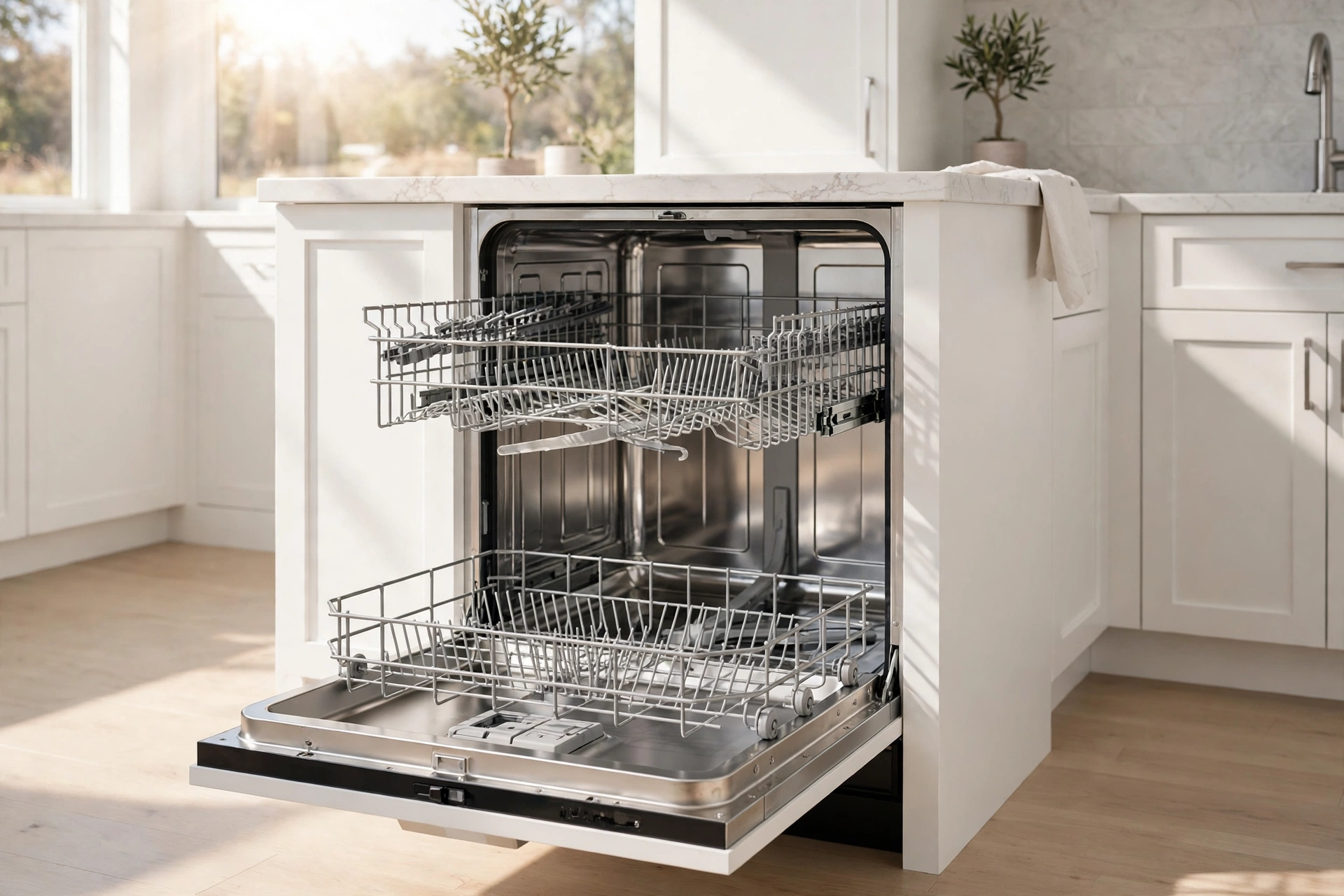
The good news is that a full clean takes less than an hour of hands-on work, and the supplies are things you already have: dish soap, white vinegar, baking soda, and an old toothbrush. The fifteen steps below work for every standard built-in and portable dishwasher, and they are in the order that makes sense — the dirty parts first, then the cleaning cycles, then the habits that keep it clean. A dishwasher is, at its simplest, a machine that sprays hot water and detergent over racks of dishes, so every step below is really about keeping those spray paths clear. If the rest of your appliances need the same care, our washing machine cleaning guide covers the other big water-using machine in the house, and our coffee maker cleaning guide handles the small one on the counter.
1. Read the Manual First
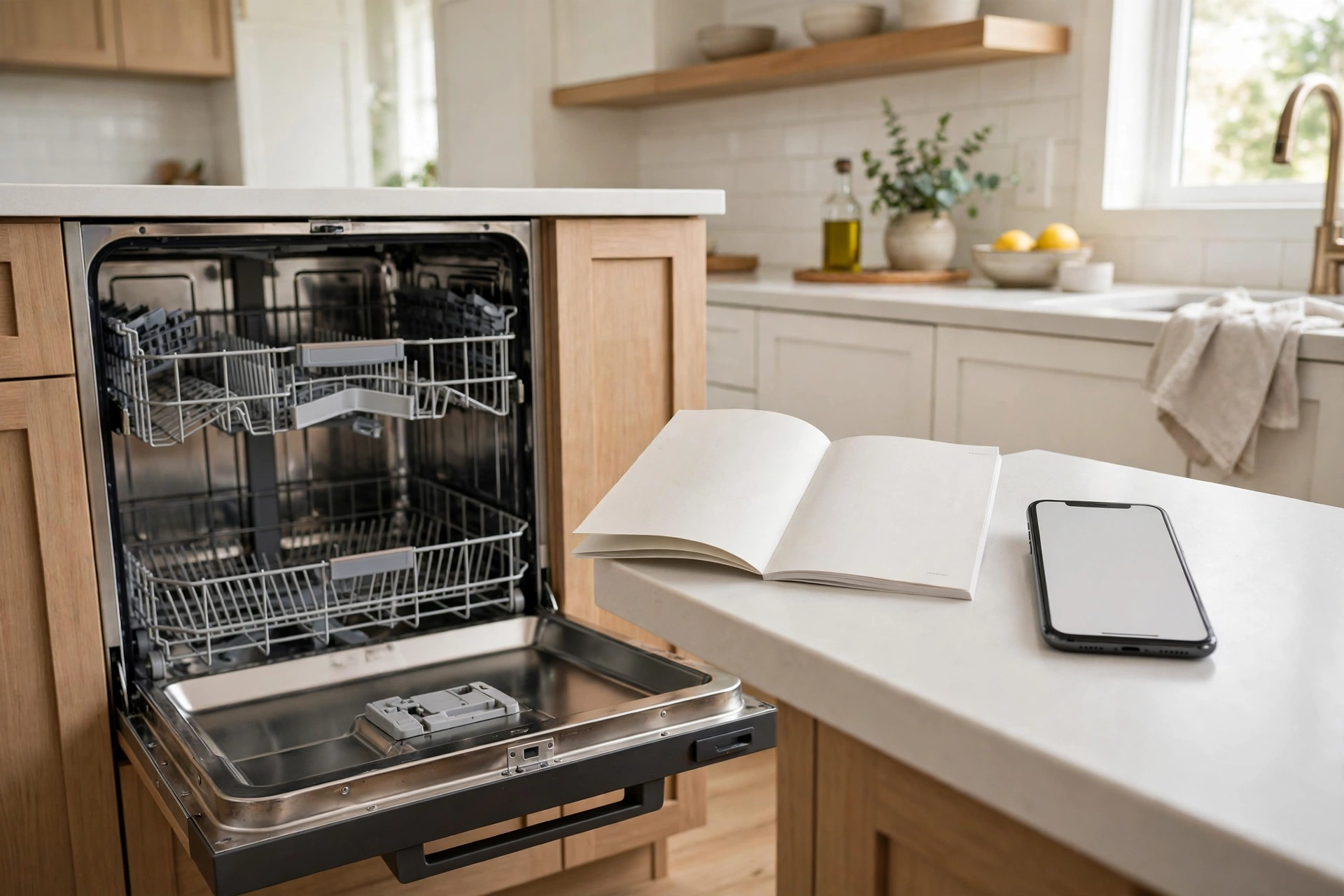
Every dishwasher model is different, and the manual is the one source that knows yours. Before you clean anything, find the manual — or look it up on the manufacturer’s website with the model number from the sticker on the door edge — and check three things: where the filter is and how it comes out, which parts are dishwasher-safe to remove, and whether the manufacturer warns against vinegar or any other cleaner.
Some manufacturers warn that vinegar can wear down rubber seals over time, and some say never to use bleach at all. Those warnings matter more than any cleaning guide, including this one. The manual also tells you how to run a cleaning cycle on your exact model and whether your machine has a self-cleaning filter or one you remove by hand.
2. Empty It and Remove Visible Debris
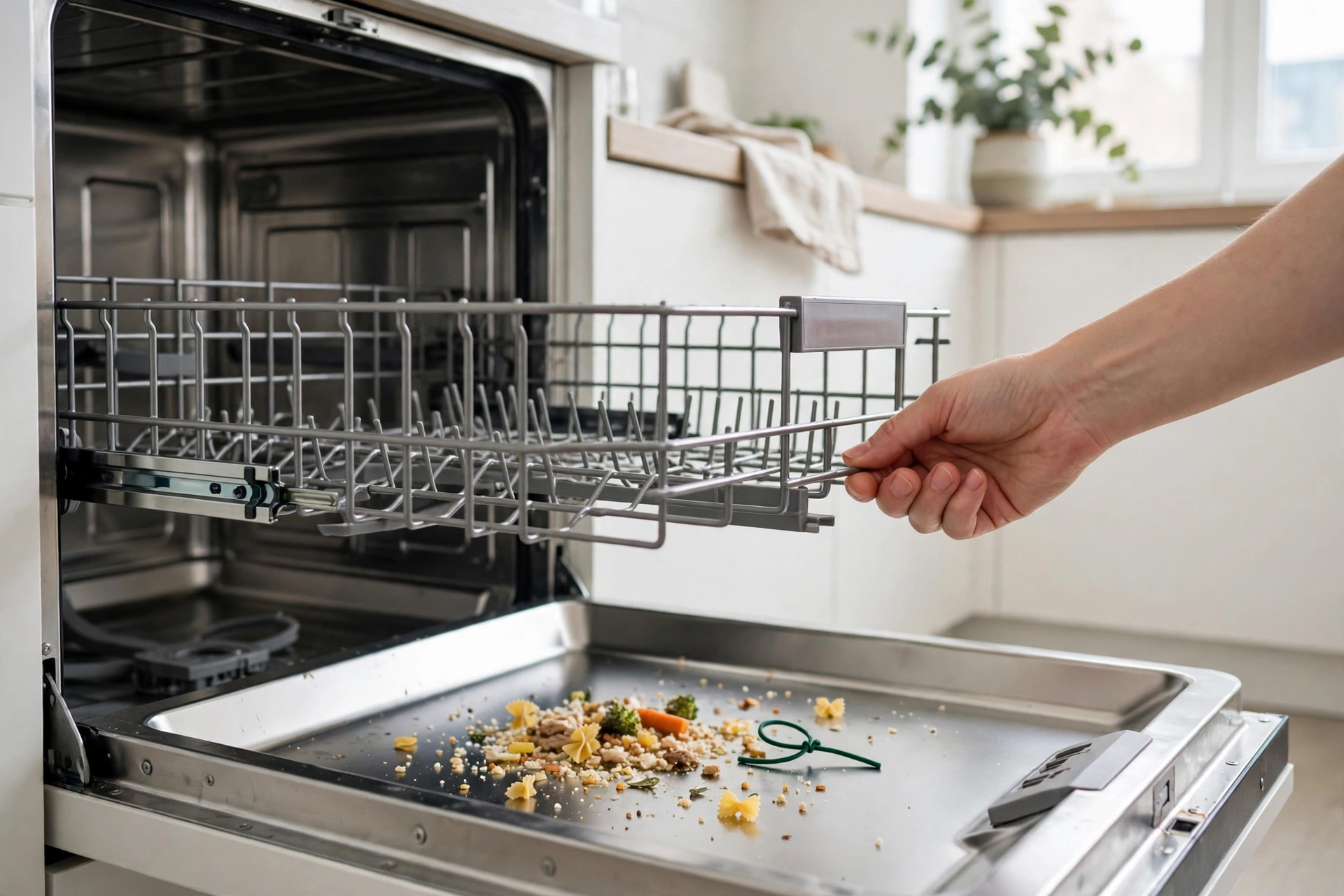
Start with a completely empty dishwasher. Pull out both racks, take out every dish, glass, and utensil, and look at the bottom of the tub. You will almost always find something: a piece of pasta, a bit of lettuce, a popcorn kernel, a twist tie, or a shard of broken glass hiding under the bottom rack.
Pick up every bit by hand, and check the corners and the edges where the door meets the tub — debris collects there and rots. If you find broken glass, use a damp paper towel to pick up the small shards so you do not cut yourself, and throw the towel away. Do not run a cycle to wash debris away; get it out before it clogs the filter or the drain. A clear tub is the starting point for everything that follows.
3. Clean the Filter — the Most Important Part
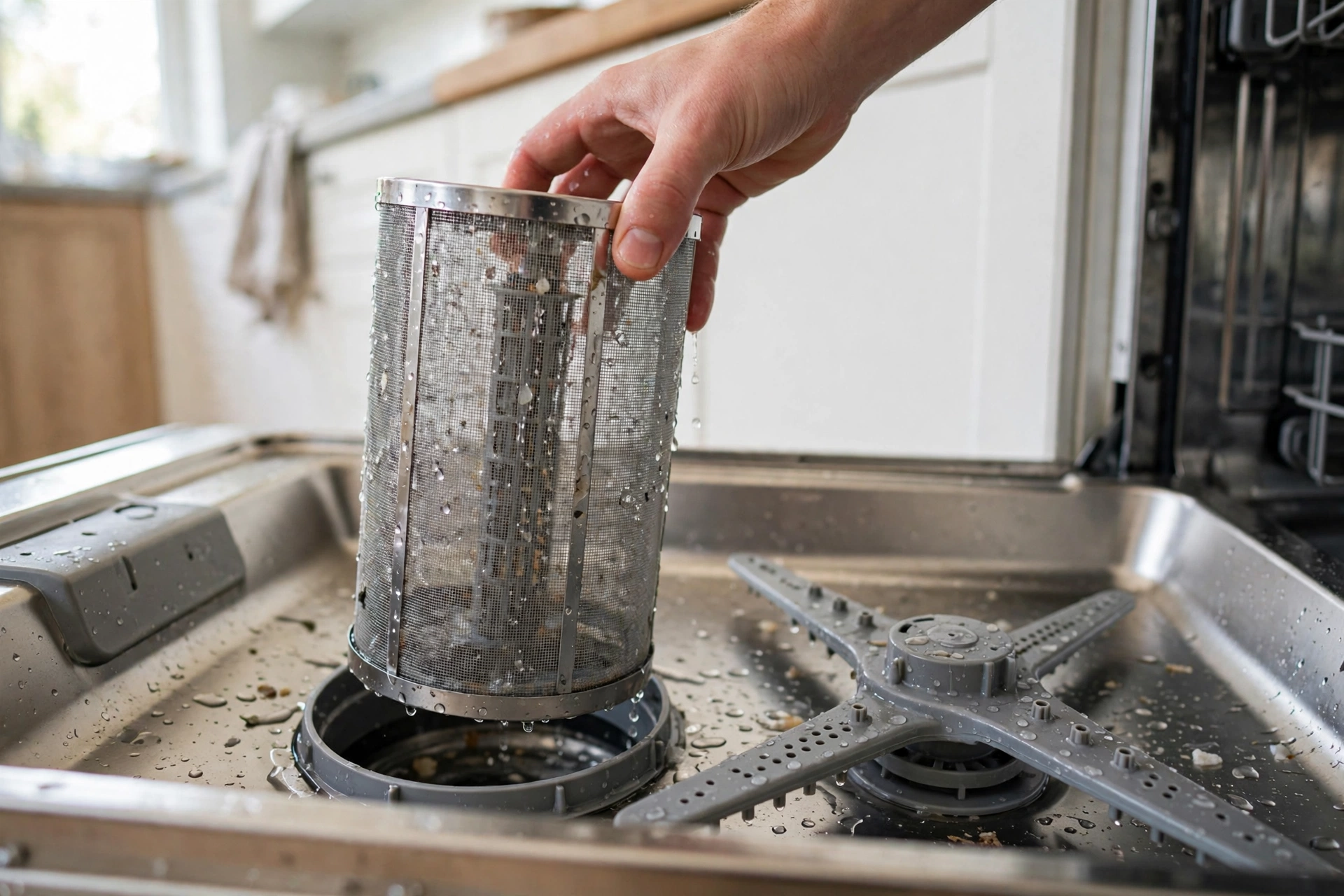
The filter is the single most important part of how to clean a dishwasher, and it is the part most people never touch. It sits at the bottom of the tub, usually under the bottom spray arm, and its job is to catch food so it does not clog the pump or spray back onto your dishes. When it is clogged, water cannot drain properly, dishes come out dirty, and the machine smells.
Twist the filter counterclockwise — most lift straight out — and take it to the sink. Rinse it under hot running water, then scrub both the fine mesh and the coarse basket with dish soap and an old toothbrush until water runs through it freely. If it is greasy, soak it for ten minutes in hot soapy water first. Rinse, shake off the water, and twist it back into place until it locks. If it does not lock, it will rattle and leak food back into the wash, so check that it sits flat.
4. Clean and Unclog the Spray Arms
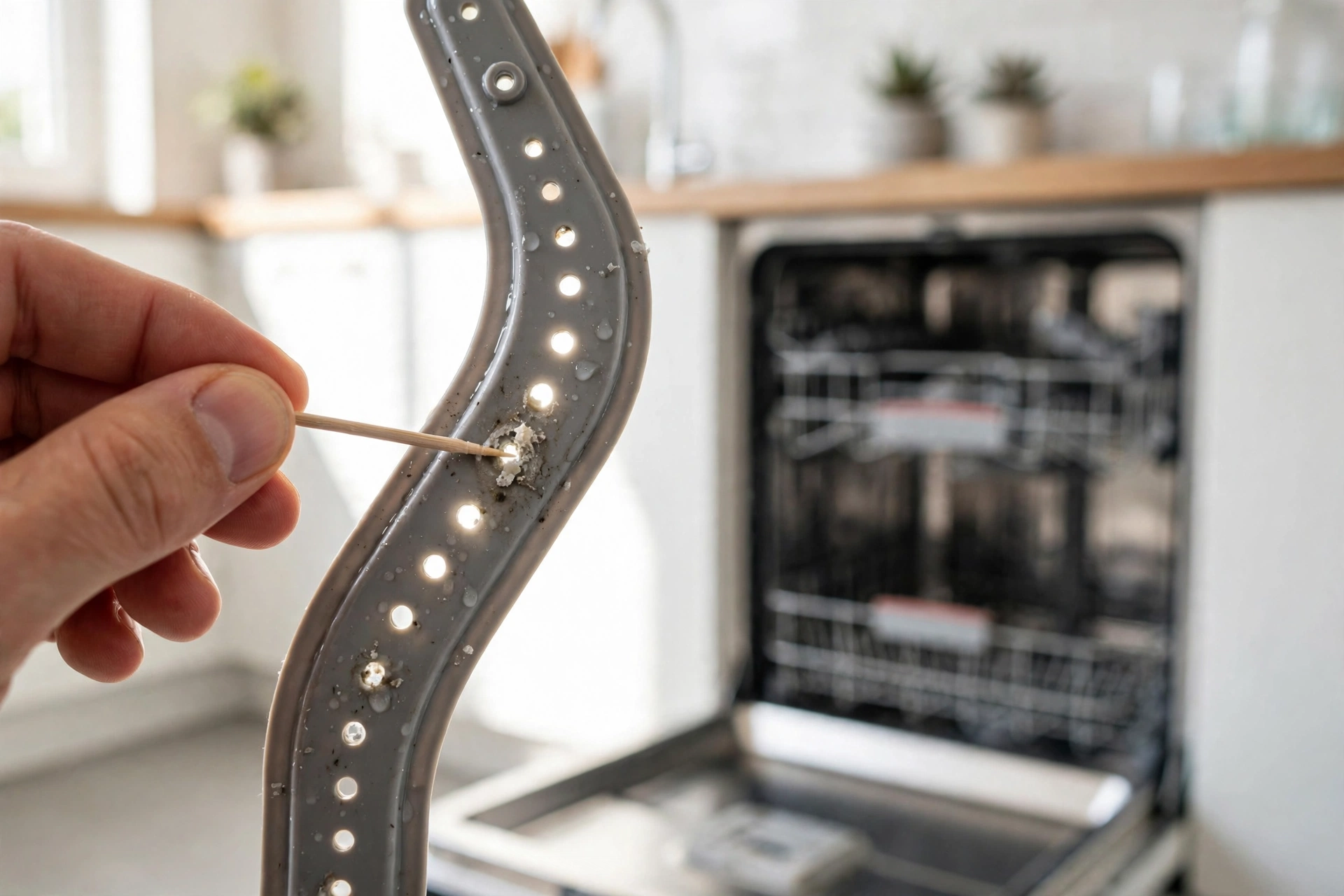
The spray arms are what actually wash your dishes, and their little holes clog with food and mineral scale. Both the top and bottom arms usually pull off or unscrew — check your manual — and once they are out, hold each one up to the light and look through the holes.
Poke any clogged hole gently with a toothpick or a straightened paper clip, then rinse the arm under hot water and shake it to hear if anything rattles inside. If an arm will not spin freely when you flick it, check the bearing where it mounts — grit collects there and stops the spin, which leaves one side of the dishwasher unwashed. Wipe the mount clean, slide the arm back on, and give it a spin by hand before you close the door. It should turn smoothly with no wobble.
5. Wipe the Door Seal and Gasket
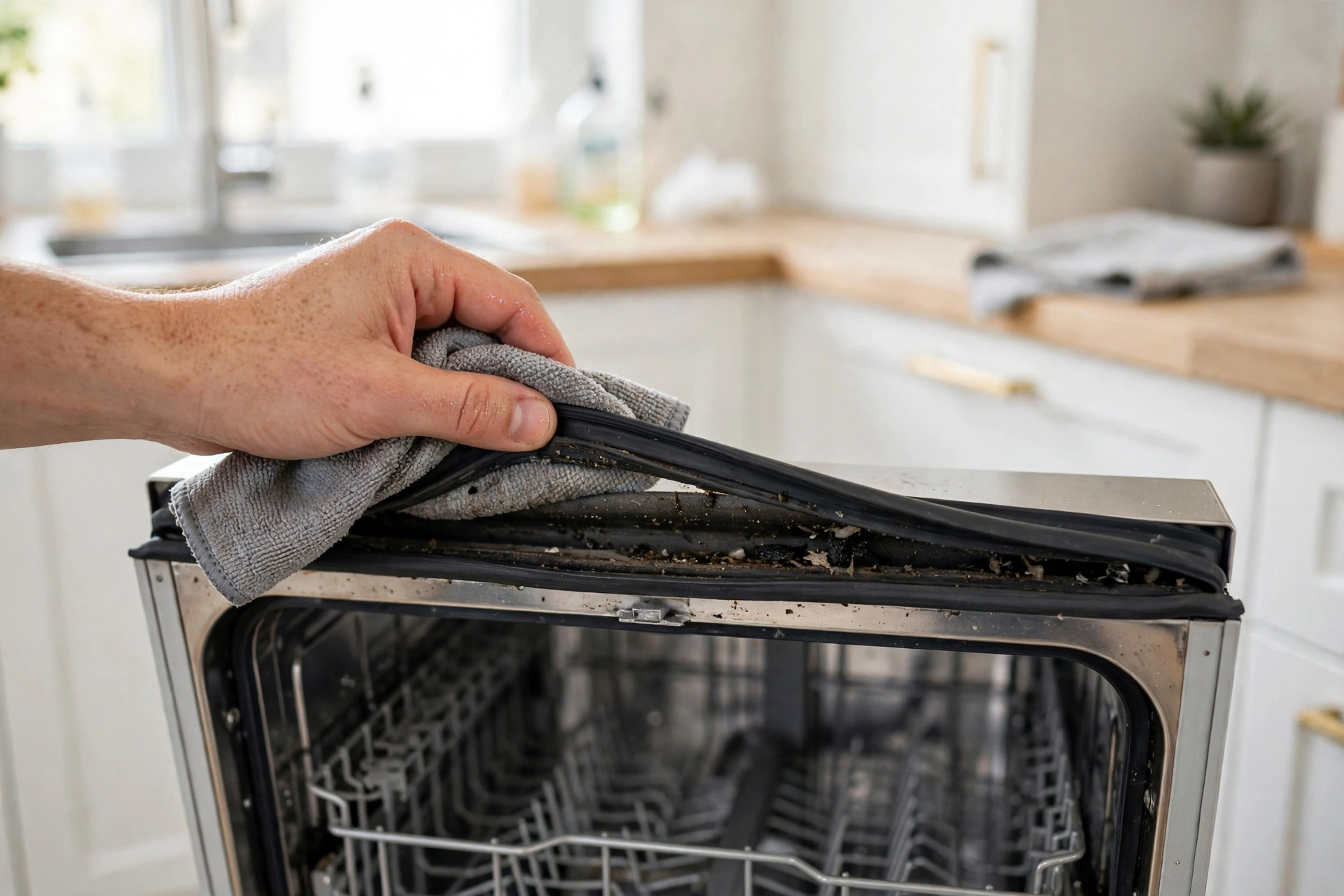
The rubber gasket around the door is dark, damp, and warm — exactly where mold and mildew grow. Pull the seal gently away from the door frame and look into the folds: black or pink spots there are the source of many dishwasher smells, and they are easy to miss because the seal looks clean from the front.
Wipe the whole gasket, folds and all, with a damp cloth and a little dish soap, or a paste of baking soda and water for stubborn spots. An old toothbrush reaches into the folds. Dry the seal with a clean towel when you finish, because a damp seal grows mold again fast. Never use bleach on the gasket unless your manual specifically allows it — bleach can dry out and crack the rubber, and a cracked gasket leaks.
6. Clean the Drain Area
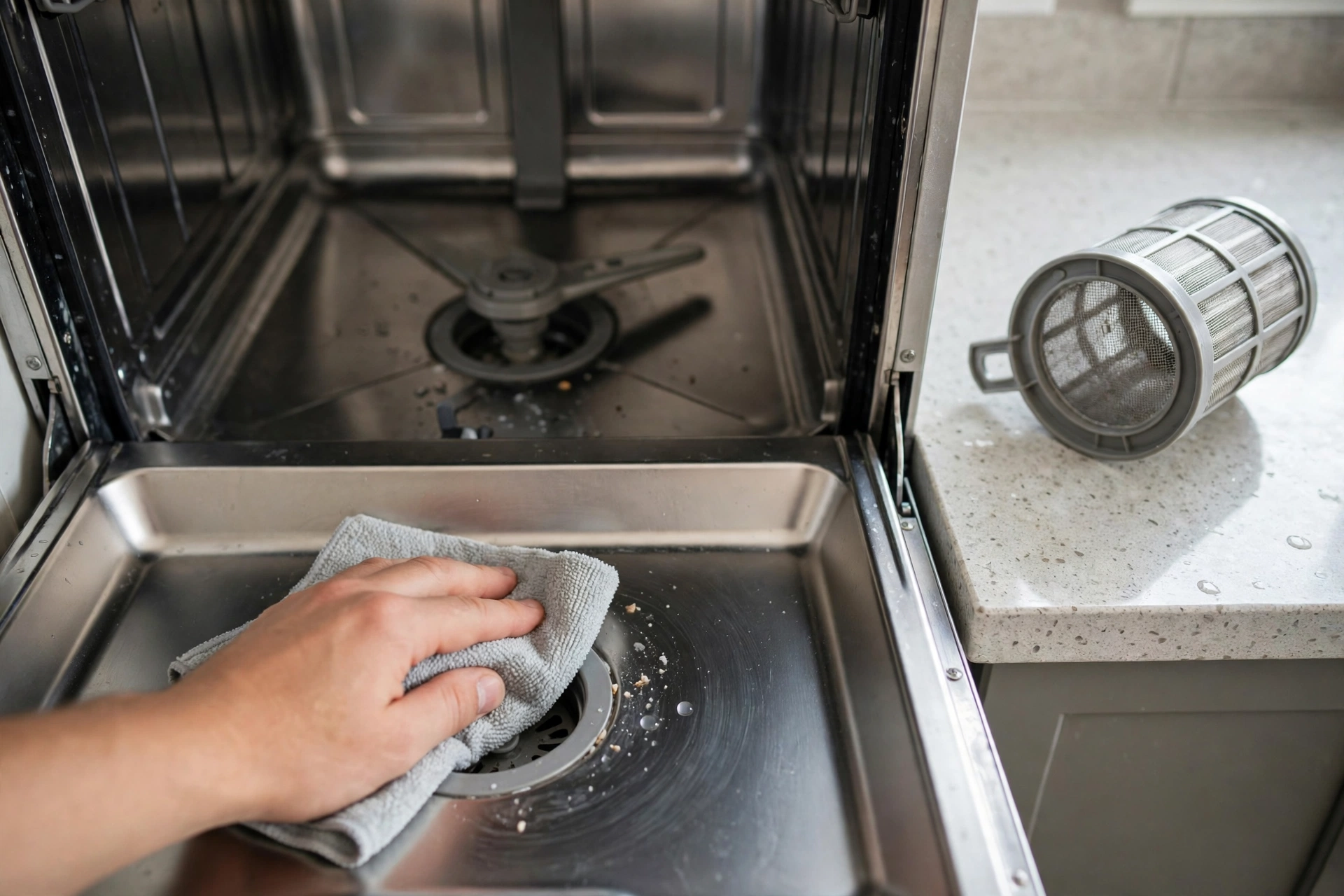
The drain is at the very bottom of the tub, under or beside the filter, and it collects the food the filter missed. With the filter out, look into the drain opening with a flashlight. You may see a small cover or grate over it — lift it out if your manual shows how — and scoop out any debris with a spoon or a paper towel.
Wipe the area around the drain with hot soapy water and a cloth, and check for standing water: a little water at the bottom of a dishwasher is normal, but a deep pool that does not drain means the drain or the hose is partly blocked, and that is a repair job, not a cleaning job. If the water drains normally, put the grate and the filter back and move on. This step takes two minutes and prevents the smell that makes people think their dishwasher is broken.
7. Run a Vinegar Cycle
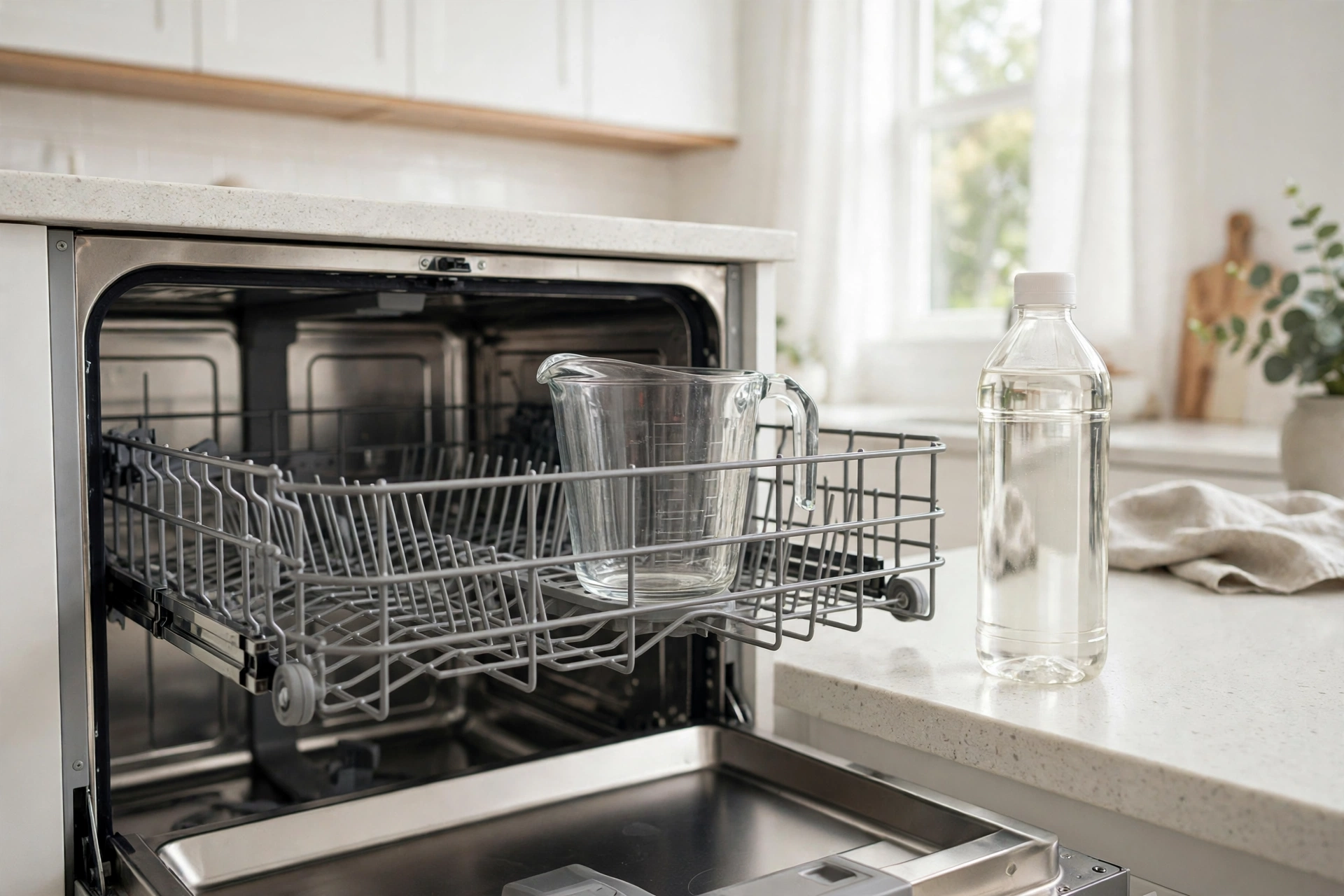
The vinegar cycle is the classic step in how to clean a dishwasher, and it works on mineral deposits and odor at the same time. Place a dishwasher-safe cup or bowl filled with one to two cups of white vinegar on the top rack, close the door, and run a hot-water cycle with no detergent and no dishes. The vinegar sprays through the machine and dissolves the chalky white deposits left by hard water.
Do not pour the vinegar into the bottom of the tub or into the detergent dispenser — the cup on the top rack lets it distribute slowly through the cycle. Check your manual first: a few manufacturers warn against vinegar because it can wear rubber seals over time, and if yours does, skip this step and use the baking soda cycle in step 8 plus a manufacturer-approved dishwasher cleaner instead. Never use apple cider vinegar; it leaves a smell and a tint that white vinegar does not.
8. Run a Baking Soda Cycle
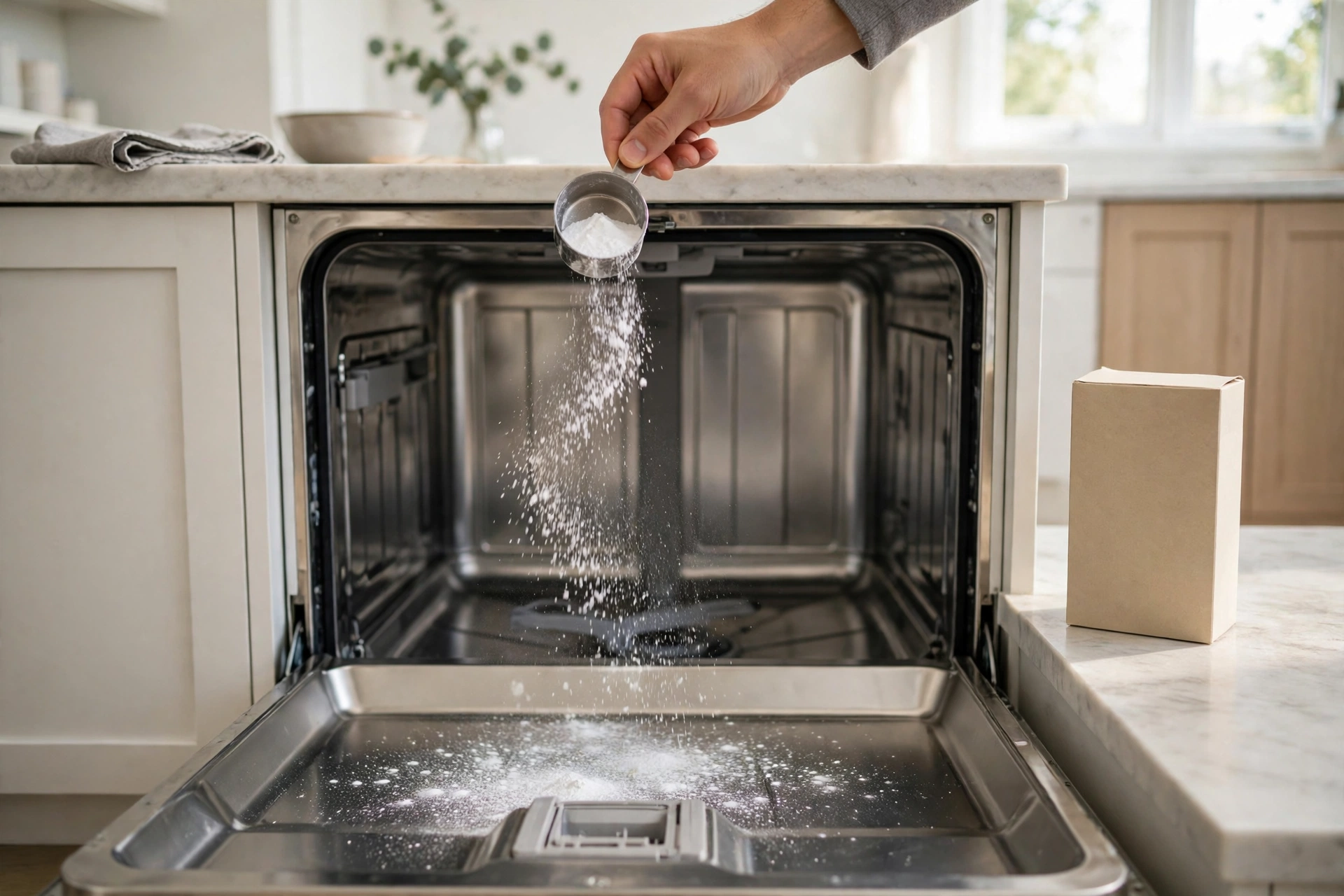
After the vinegar cycle finishes, sprinkle one cup of baking soda across the bottom of the empty tub and run a short hot-water cycle. Baking soda is a mild abrasive and a deodorizer: it scrubs the light grime the vinegar loosened and absorbs the odors that were hiding in the tub, the racks, and the seal.
Do not mix the vinegar and the baking soda in the same cycle — they cancel each other out, and you get a fizzy show with no cleaning power. Run them one after the other, vinegar first, baking soda second, and the tub should look and smell noticeably fresher when the second cycle ends. If your manual warns against vinegar, this baking soda cycle on its own is still worth doing — it is the gentlest deep clean there is, and it is safe for every model.
9. Clean the Racks and Utensil Basket
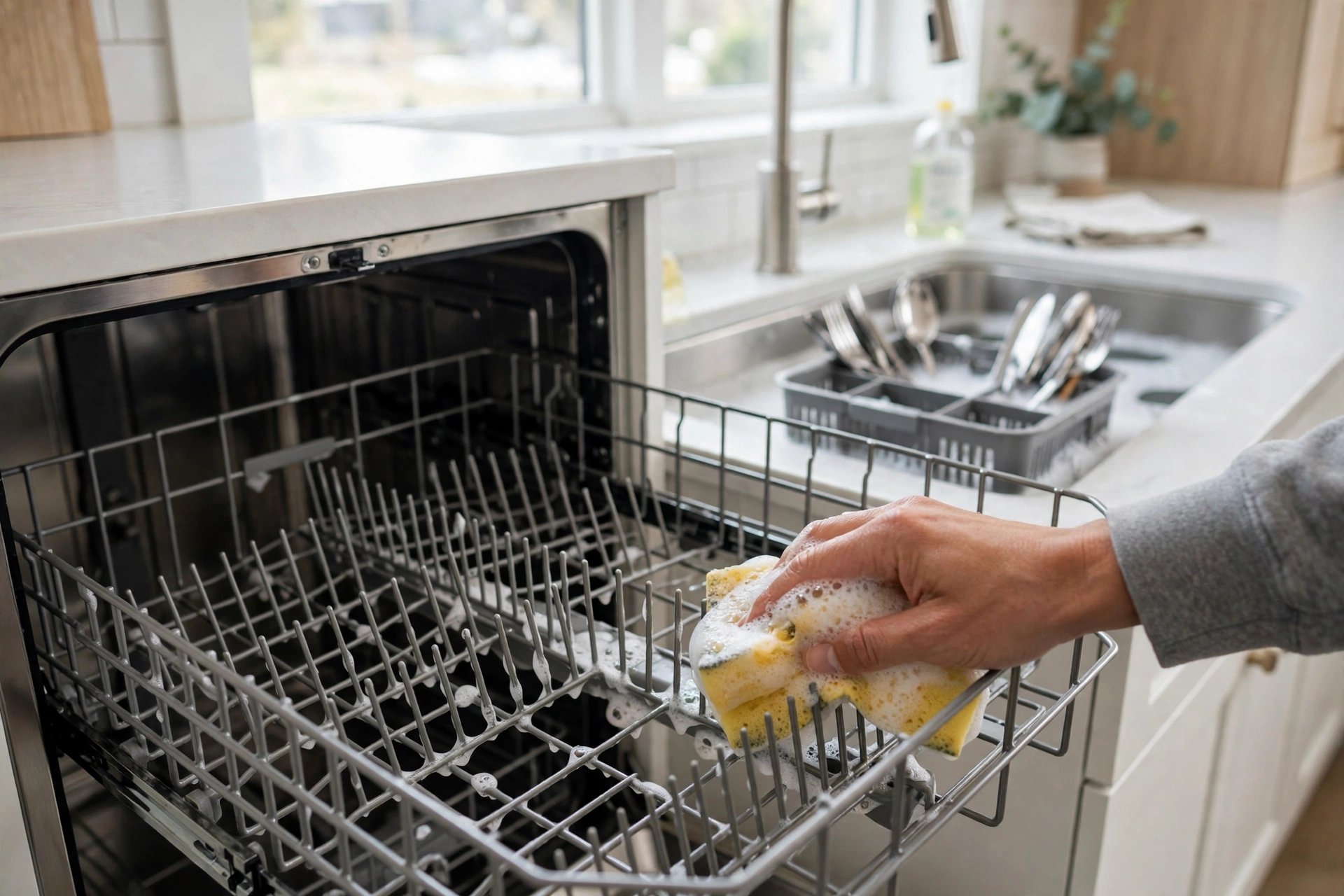
The racks and the utensil basket get splashed with food and detergent on every load, and the tines and the basket slots collect a sticky film. With the racks pulled out, wipe each one down with hot soapy water and a cloth, paying attention to the tines where food dries on. The utensil basket comes out — empty it, scrub it in the sink with a brush, and rinse it until the water runs clear.
Check the wheels on the bottom rack while you have it out: food and grit jam them, and a rack that sticks is a rack you will yank, which bends the tines. Wipe the wheels and the rails they run on, and spin each wheel by hand. If a tine is chipped and the metal underneath is rusting, cover the chip with a dishwasher rack repair cap or a dab of appliance touch-up paint, because rust spreads and stains dishes.
10. Clean the Control Panel and Exterior
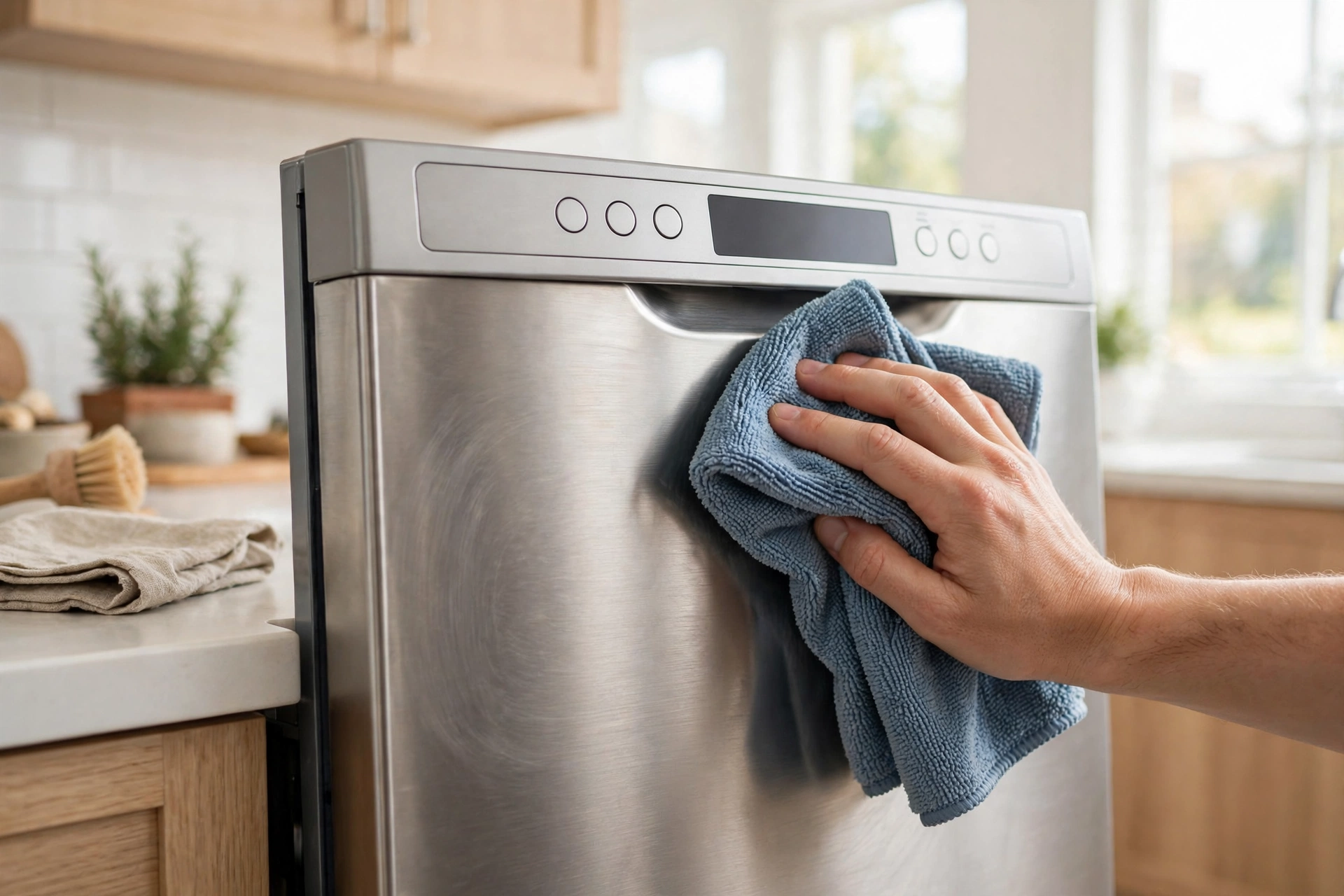
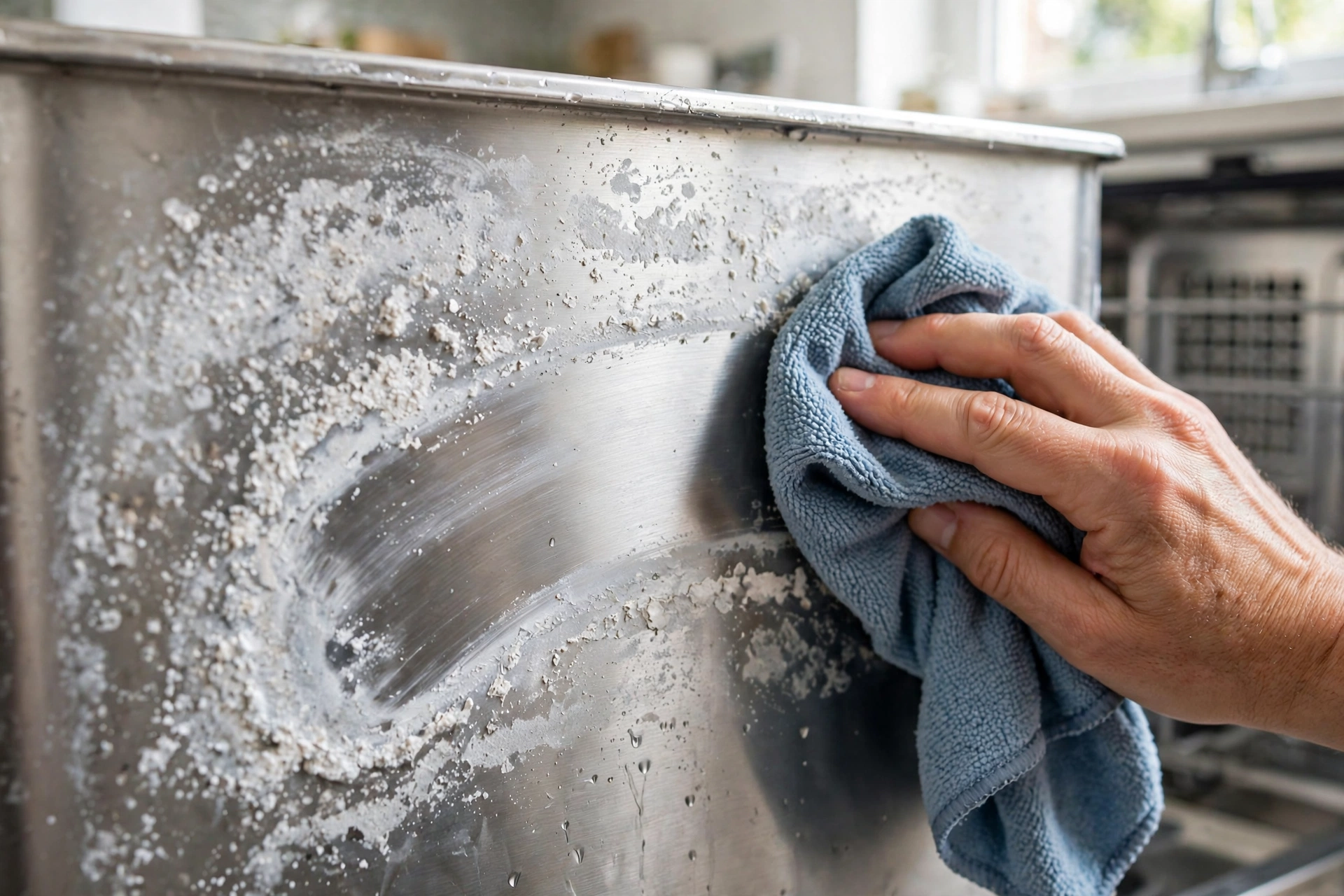
The outside of the dishwasher collects fingerprints, cooking grease, and splashes, and the control panel collects sticky residue that works its way into the buttons. Wipe the whole front with a damp microfiber cloth and a drop of dish soap, then dry it. For a stainless steel front, wipe with the grain of the steel — never in circles — or the finish will show streaks; our stainless steel cleaning guide covers the technique in detail for every stainless surface in the kitchen.
Do not spray cleaner directly onto the control panel; spray the cloth instead, so liquid never seeps behind the buttons. If your dishwasher has a fingerprint-resistant finish, skip the soap and use a damp cloth only, then buff dry. A clean front is not just cosmetic — sticky buttons are the first thing to fail on a dishwasher, and they fail because residue builds up around them.
11. Sanitize the Interior
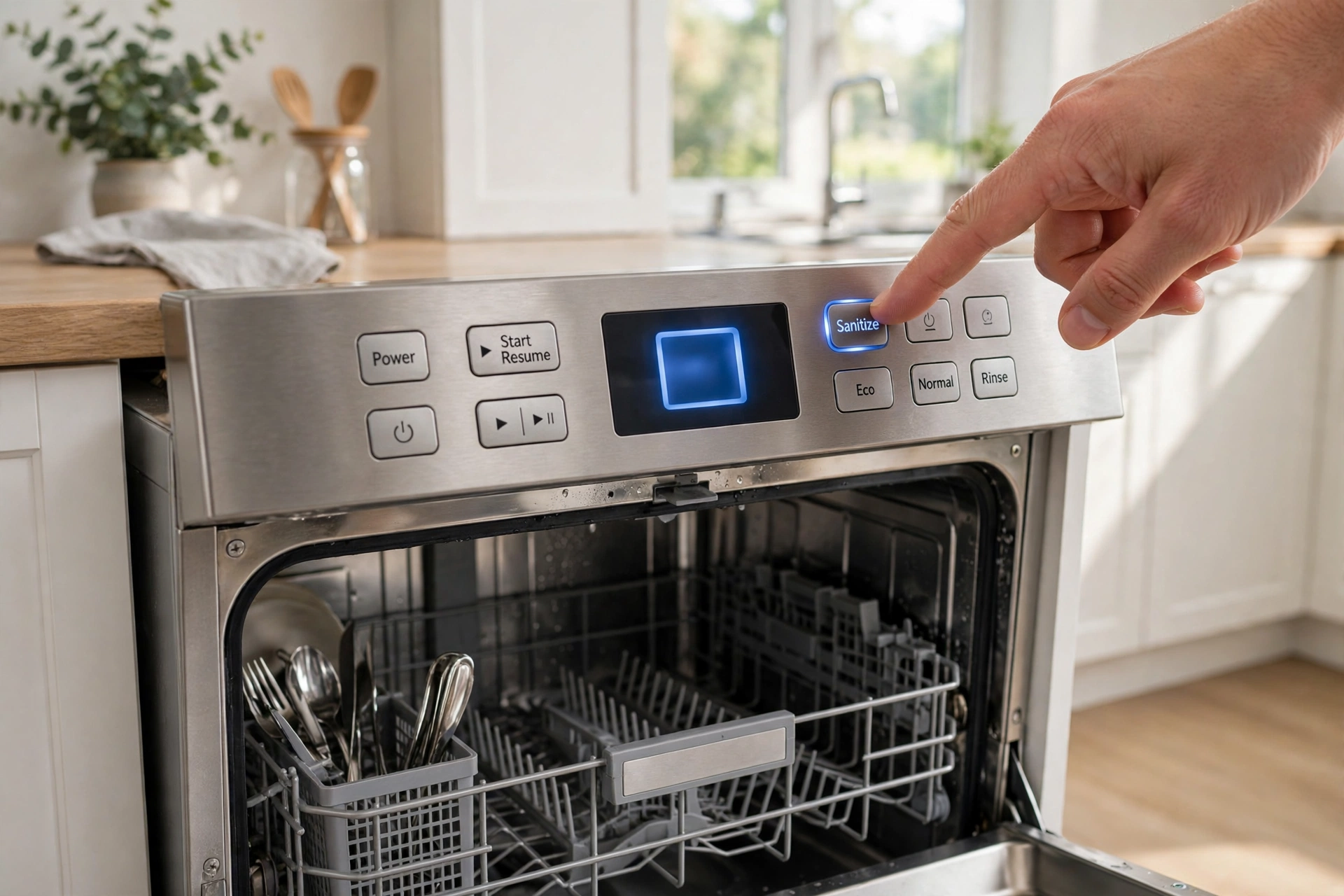
Once the machine is clean, sanitize it. Most modern dishwashers have a sanitize or high-temp wash option on the control panel — run an empty cycle on that setting, which heats the water hotter than a normal wash and kills the bacteria that cause odors. If your machine has no sanitize setting, run the hottest, longest cycle it offers, empty, with no detergent.
Sanitizing is not the same as cleaning: it does not remove food or scale, it only kills what is left after cleaning, which is why it comes after steps 3 through 8 and not before them. Do it after any illness in the house, after a long stretch of not using the dishwasher, or any time the machine has smelled bad. Never add bleach to sanitize a dishwasher unless the manual explicitly says you may — bleach damages stainless steel tubs and rubber seals, and it is very hard to rinse out of the spray lines.
12. Prevent Mold: Leave the Door Open After Each Use
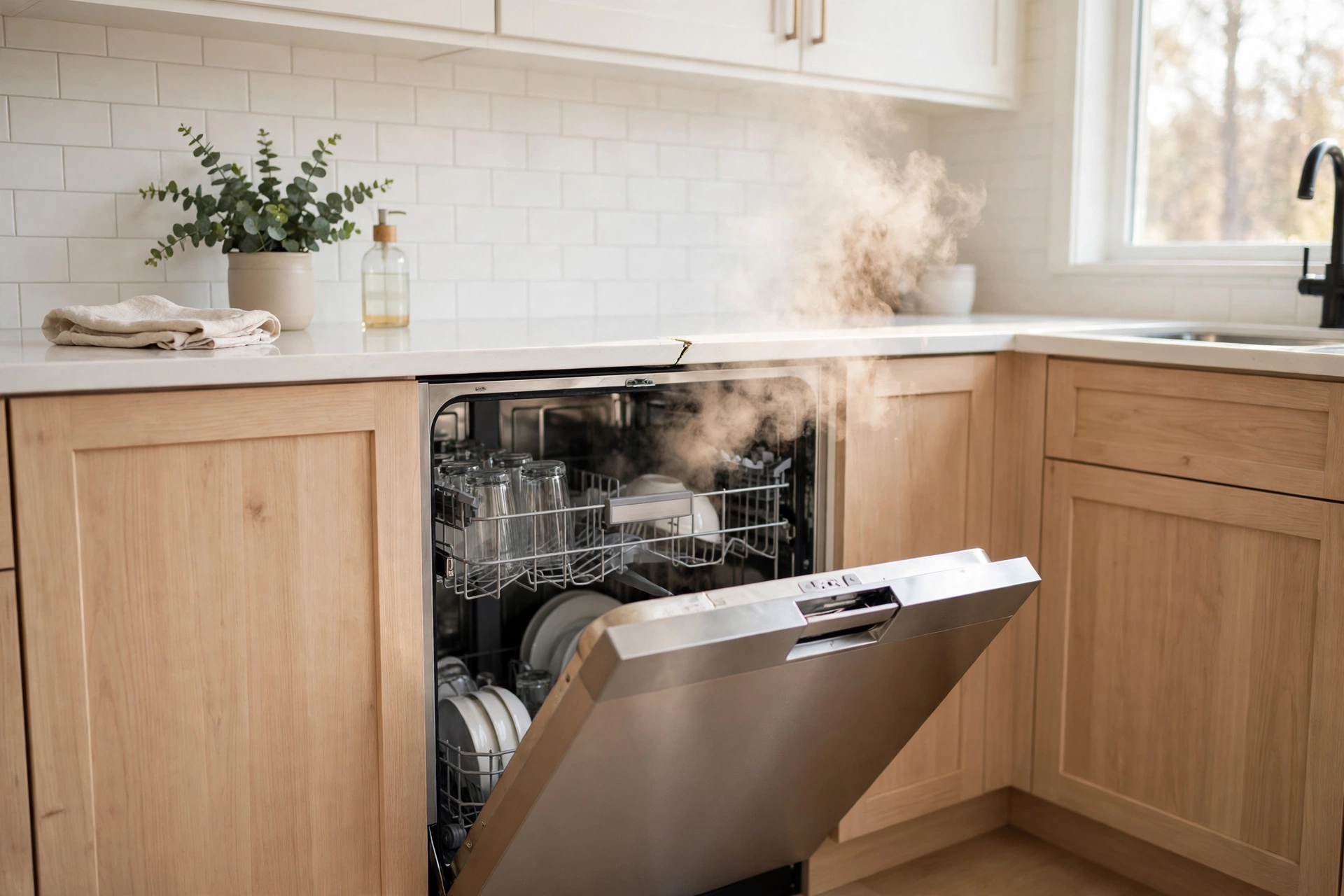
The single best habit for keeping a dishwasher clean is also the simplest: after each load, leave the door open a crack for an hour or so until the inside dries. A closed dishwasher stays warm and damp for hours, and mold grows in warm, damp, dark places — the seal, the corners, the bottom of the tub.
Cracking the door lets air circulate and dries the tub, the racks, and the seal. If the smell of a damp dishwasher bothers you, this one habit usually fixes it within a week. It also helps dishes dry without spots, because the steam escapes instead of condensing back onto the plates. If you have small children or pets, crack the door just an inch or two — enough for air, not enough for a hand or a paw to get in.
13. Deal With Smells That Keep Coming Back
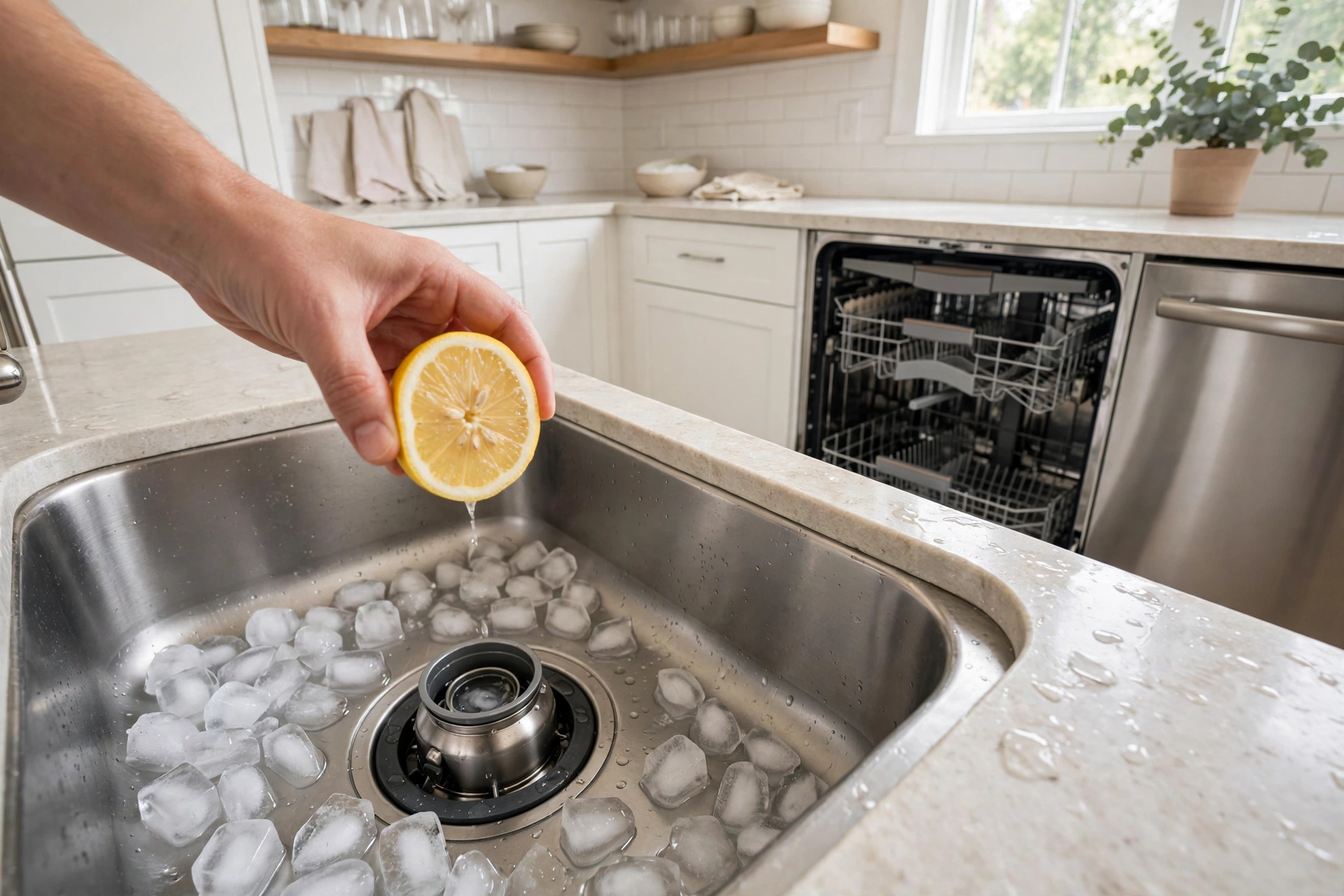
If the dishwasher still smells after a full clean, the odor is coming from somewhere the cycles do not reach. Work through the hiding places in order: the filter and drain area (steps 3 and 6), the folds of the door gasket (step 5), and the spray arms (step 4). Then check the garbage disposal and the sink drain, because a dishwasher drains through the same plumbing — a smelly disposal makes the dishwasher smell, and no amount of cleaning the dishwasher will fix it.
Run the disposal with cold water and a few ice cubes and lemon halves, and clean the sink drain with hot water and dish soap. If the smell persists after all of that, run one more empty hot cycle with a cup of vinegar on the top rack, and leave the door open overnight. A smell that survives a clean filter, a clean seal, a clean disposal, and a vinegar cycle is rare, and it usually means a drain hose problem that needs a plumber.
14. Deal With Limescale in Hard-Water Homes
White, chalky deposits on the tub walls, the racks, and your glasses are limescale — mineral deposits left behind when hard water evaporates. Limescale builds up fastest in homes with hard water, and it is the reason glasses come out cloudy even when they are clean. The vinegar cycle in step 7 dissolves light limescale, but heavy buildup needs more.
For stubborn scale, run the vinegar cycle twice in a row, or use a citric-acid dishwasher cleaner made for the job — citric acid is the same descaler used for coffee makers and kettles, and it is safe for most dishwashers when used as directed. After descaling, wipe the tub walls with a cloth to remove the loosened flakes. The long-term fix is a water softener, but that is a plumbing decision, not a cleaning one — and until then, a monthly vinegar or citric-acid cycle keeps the scale from coming back.
15. The Monthly Schedule: Weekly, Monthly, Yearly
A dishwasher stays clean if the work is spread out instead of saved for one big job. Weekly: scrape dishes before loading, wipe the door seal, and leave the door cracked after each load. Monthly: clean the filter, wipe the spray arms, and run the vinegar cycle followed by the baking soda cycle. Every three months: pull out the racks, scrub the utensil basket, and check the drain area. Yearly: inspect the gasket for cracks, check the rack tines for rust, and run a sanitize cycle.
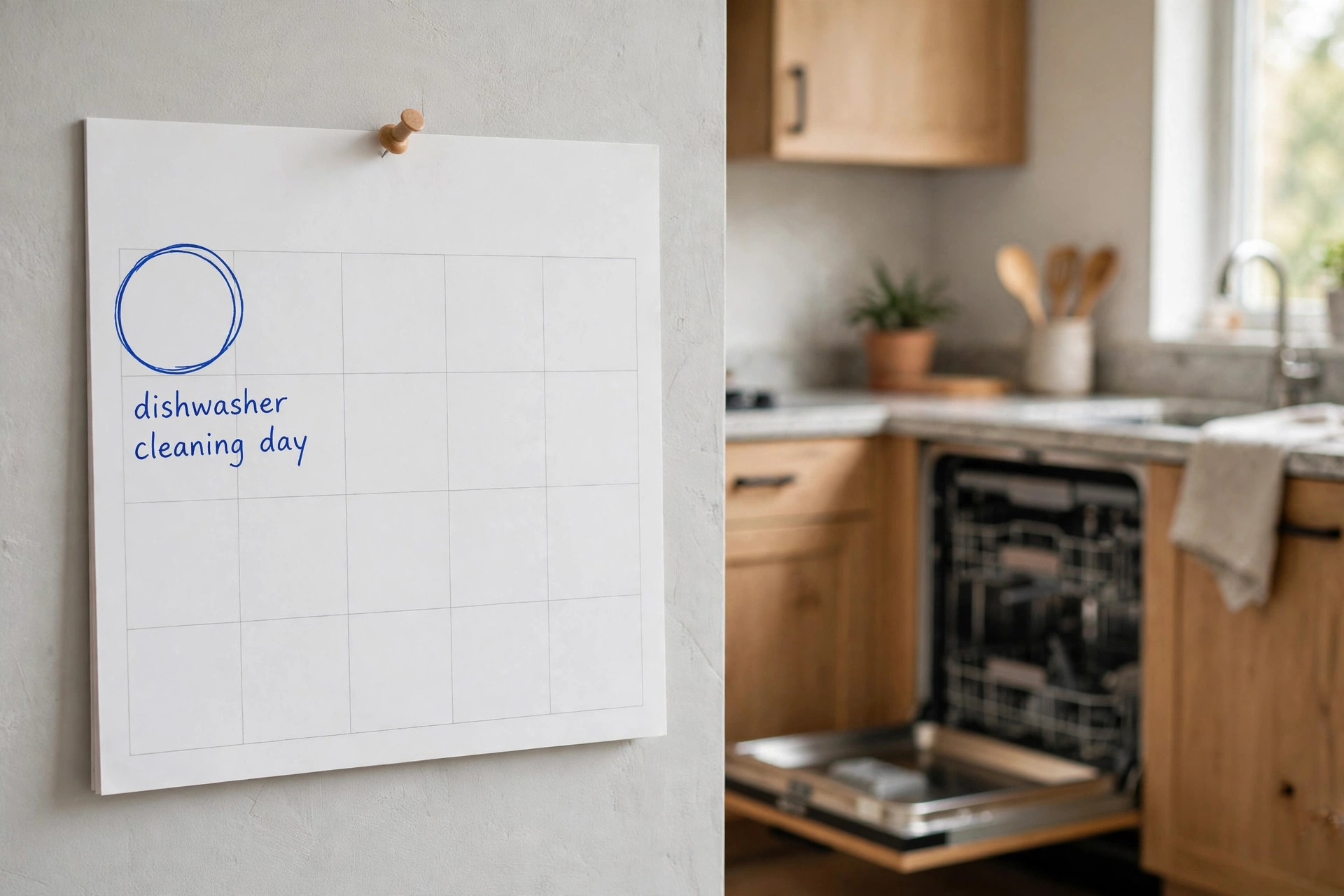
Put the monthly clean on the calendar for the same day every month — the first Saturday works for most households — and it takes about twenty minutes plus two cycles running in the background. A dishwasher that gets this schedule lasts longer, washes better, and never smells, and the dishes tell you it is working: clear glasses, no spots, no film, and no odor when you open the door.
Frequently Asked Questions
Q: How often should I clean my dishwasher?
A: Clean the filter every month and run a vinegar cycle followed by a baking soda cycle once a month. Wipe the door seal weekly and leave the door cracked after each load so the inside dries. In a hard-water home, descale every month without fail — limescale builds up fast, and a monthly cycle is easier than fighting heavy buildup twice a year.
Q: Can I use vinegar to clean my dishwasher?
A: Yes, in most dishwashers — place a cup of white vinegar on the top rack and run a hot cycle with no dishes or detergent. But check your manual first, because some manufacturers warn that vinegar can wear down rubber seals over time. If your manual warns against it, skip the vinegar and use a baking soda cycle plus a manufacturer-approved dishwasher cleaner instead.
Q: Why does my dishwasher smell bad?
A: A bad smell usually comes from a clogged filter, food trapped in the drain area, or mold in the folds of the door gasket — the three places this guide cleans in steps 3, 5, and 6. Clean all three, run a vinegar cycle, and leave the door open to dry. If the smell stays, check the garbage disposal and sink drain, because the dishwasher shares that plumbing and a smelly disposal makes the dishwasher smell too.
Q: Can I put dishwasher parts in the dishwasher to clean them?
A: The racks and the utensil basket are already in the dishwasher, so they get cleaned by the cycles — but the filter, the spray arms, and the gasket need to be removed and scrubbed by hand, because the machine cannot clean its own filter. Never put the filter or spray arms in the dishwasher itself, and never put any part with electronics or a motor in water. Hand-washing with hot soapy water and a toothbrush is the reliable way for every removable part.
Q: How do I get rid of limescale in my dishwasher?
A: Run a vinegar cycle with a cup of white vinegar on the top rack, then a baking soda cycle, and wipe the tub walls to remove the loosened flakes. For heavy limescale in a hard-water home, run the vinegar cycle twice or use a citric-acid dishwasher cleaner. To keep it from coming back, repeat the descale once a month — and if the problem is severe, a water softener is the long-term fix.
Related Reading
- How to Clean a Washing Machine
- How to Clean a Coffee Maker
- How to Clean Stainless Steel
- How to Clean Grout
- How to Get Rid of Pet Odor in Your House
- Easy Home Cleaning Hacks
Conclusion
A dishwasher that smells or leaves spots is not broken — it is dirty, and now you know how to clean a dishwasher, filter to seal to spray arms. Clean the filter monthly, run the vinegar and baking soda cycles, leave the door cracked after each load, and the machine will wash better, last longer, and never smell. Twenty minutes a month is all it takes.