How to Clean Grout (and Keep It Clean)
To learn how to clean grout, first understand what grout is: mostly cement and sand, full of tiny pores that soak up dirty mop water, grease, and soap. The Tile Council of North America notes its large surface area absorbs stains — which is why mopping alone never brings it back.
The fifteen sections below show how to clean grout in order, gentlest first, so you stop as soon as it looks clean. Every method is safe for ceramic and porcelain tile; warnings flag the exceptions for natural stone and colored grout. If your floors feel dull all over, our hardwood floor cleaning guide covers the rest of the floor-care routine.
1. Know Your Grout Type First — How to Clean Grout Starts Here
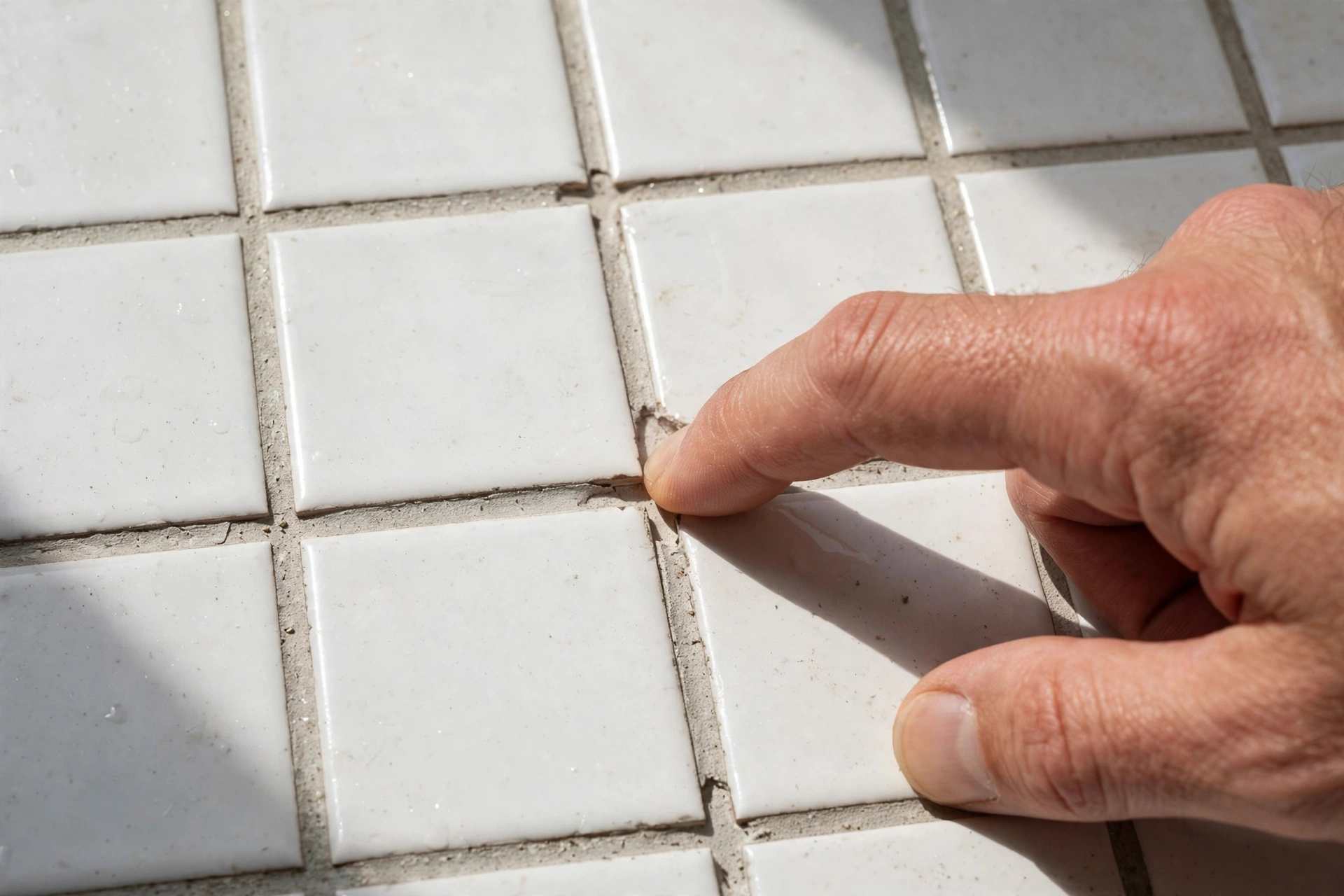
Before you scrub, find out which grout you have — the wrong cleaner can damage it. Sanded grout feels gritty and fills wide joints (over 1/8 inch); unsanded feels smooth and fills narrow joints. Epoxy grout is a hard, plastic-like resin: stain-resistant, non-porous, never needs sealing.
Press a fingernail into a hidden joint to test it. Gritty means sanded, smooth and chalky means unsanded, hard and slick means epoxy. When in doubt, assume cement-based grout.
2. The Everyday Clean: pH-Neutral Cleaner and a Nylon Brush
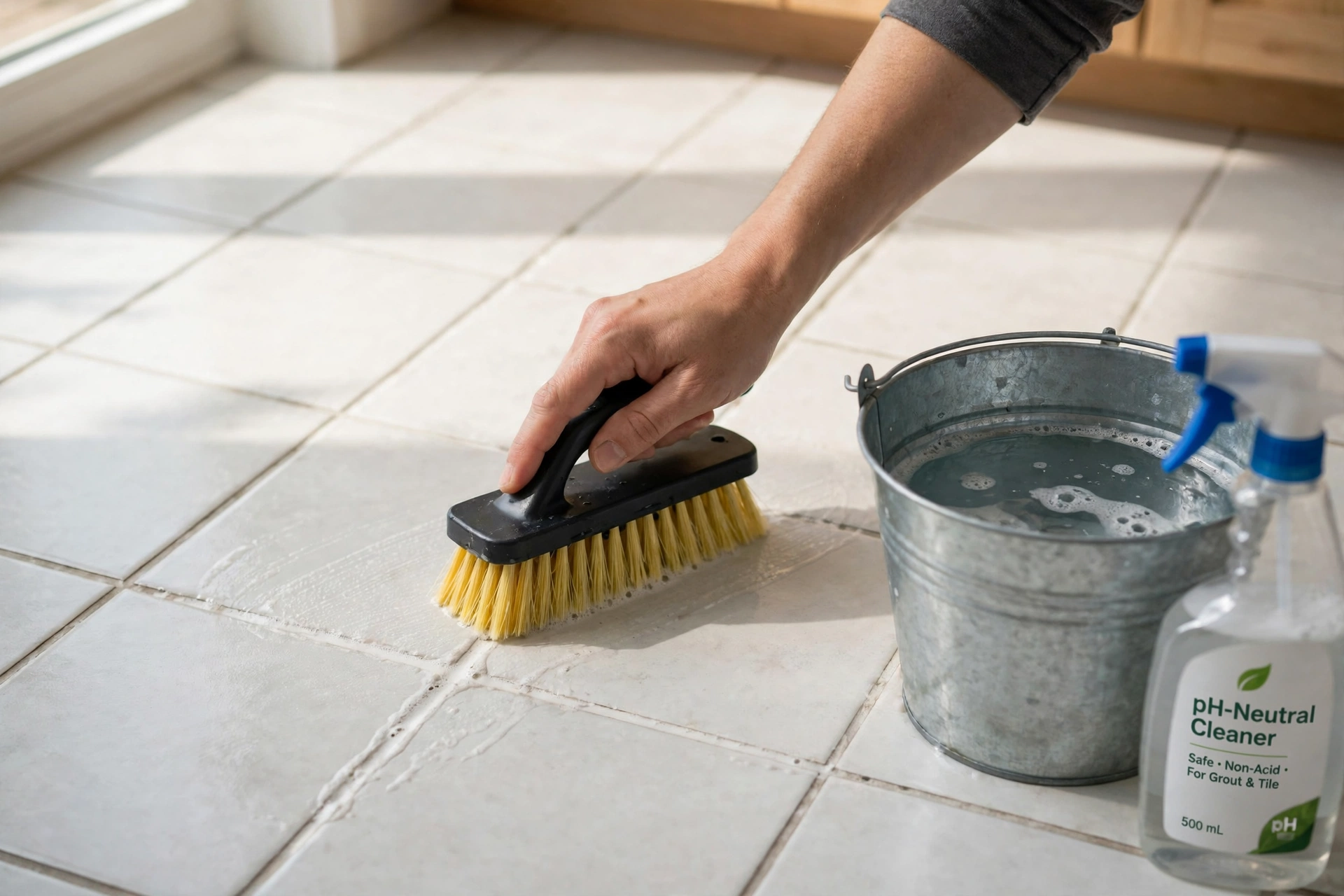
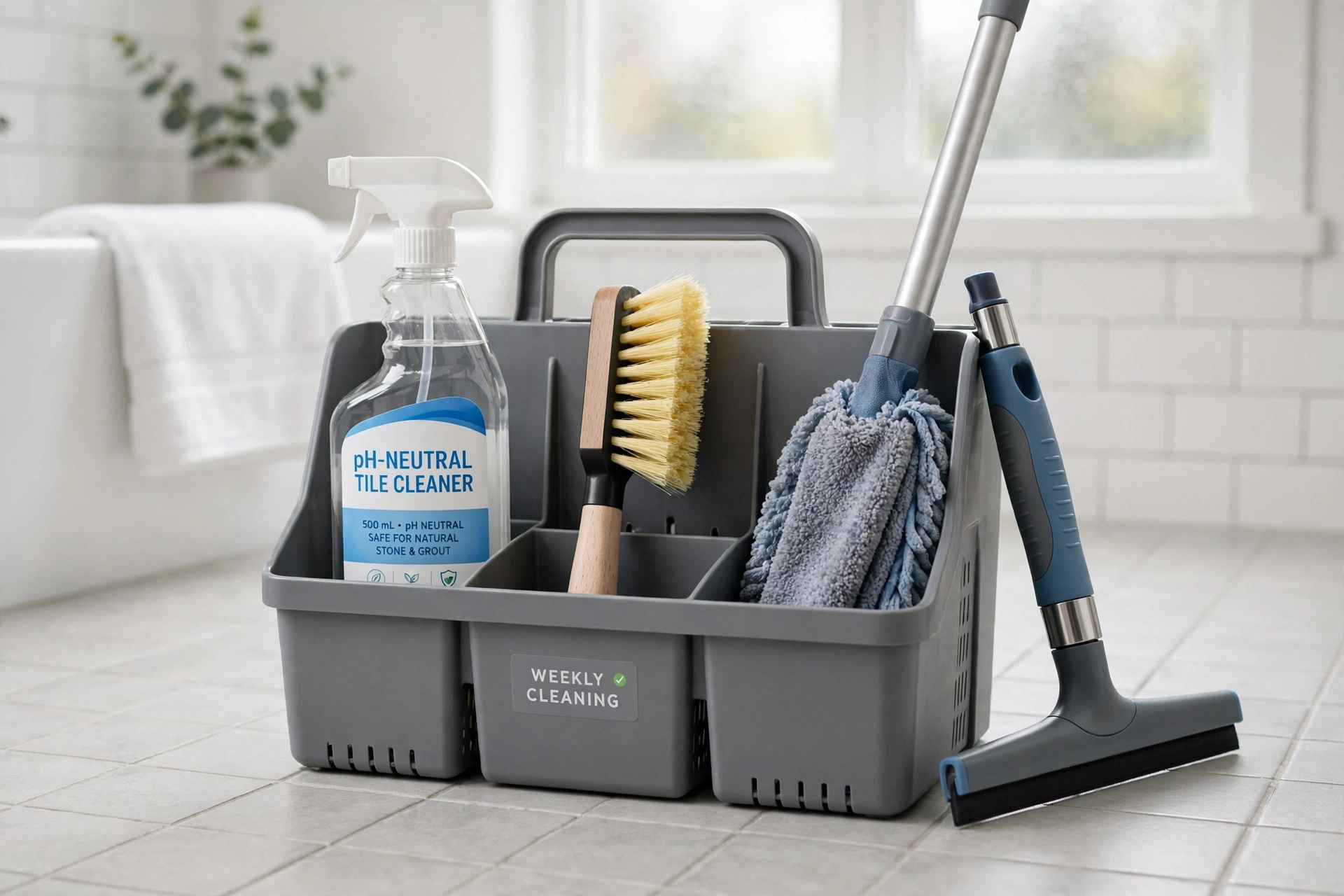
For lightly dirty grout, the everyday method is enough. Mix a pH-neutral tile cleaner with warm water, apply it along the joints, and wait five to ten minutes. Then scrub with a stiff nylon brush (never wire) along the joint.
Rinse with clean water and pick the dirty water up with a towel or wet/dry vacuum instead of letting it dry back into the joints. The Tile Council of North America calls this the best way to clean grout — it lifts the dirt off the joint instead of pushing it around. Do this weekly and the deep clean stays rare.
3. The Baking Soda and Hydrogen Peroxide Paste — How to Clean Grout That Is Already Gray
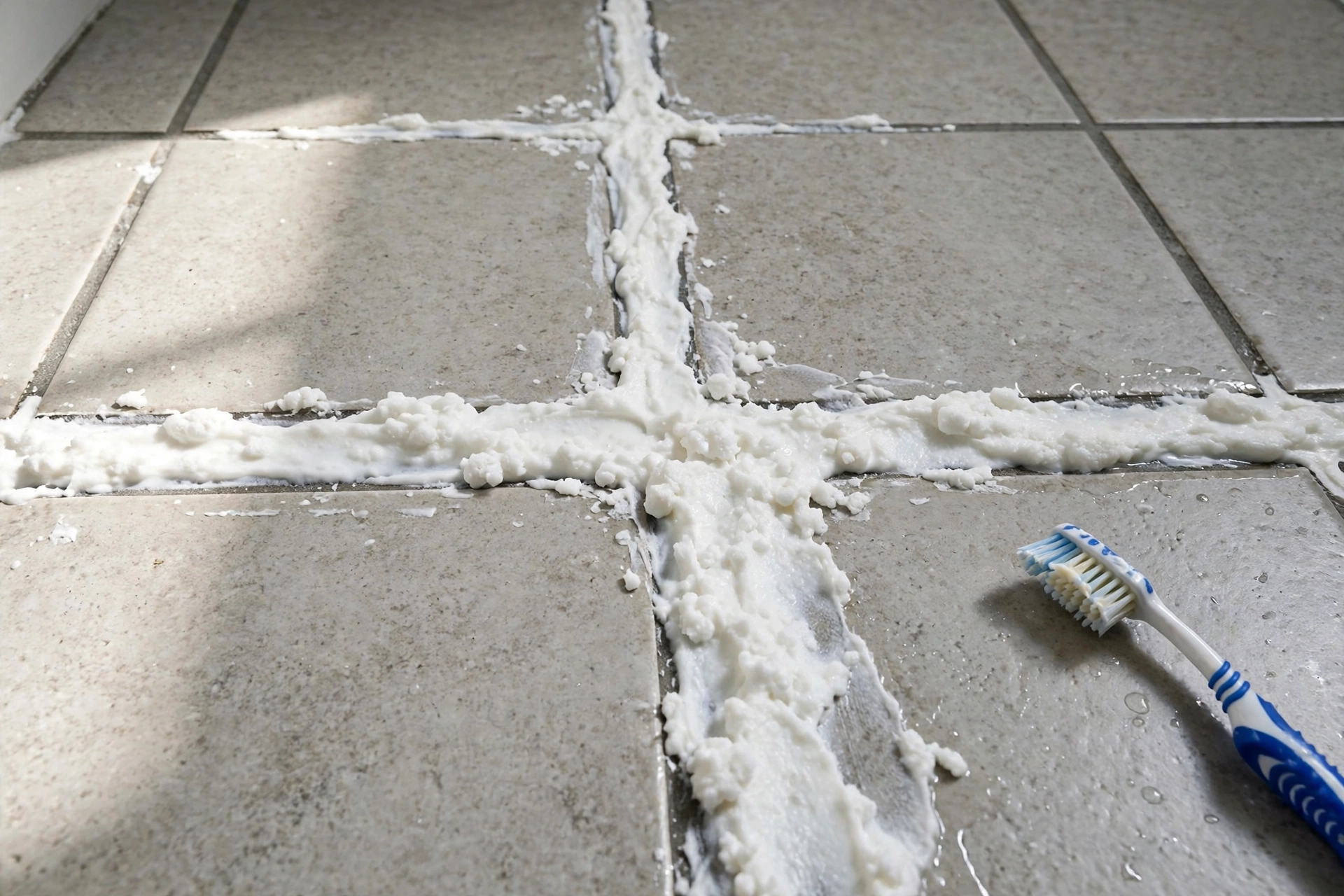
When the everyday clean stops working, try this paste first — cheap, effective, safe for white and light grout. Mix baking soda with 3% hydrogen peroxide into a thick paste, about three parts soda to one part peroxide. Spread it along the joints and let it sit ten to fifteen minutes.
Scrub with a nylon brush, then rinse. The peroxide lifts stains without chlorine bleach’s harshness. If the grout still looks gray, repeat the paste once before moving to a stronger method — two gentle passes beat one aggressive one.
4. Oxygen Bleach for Stubborn Stains
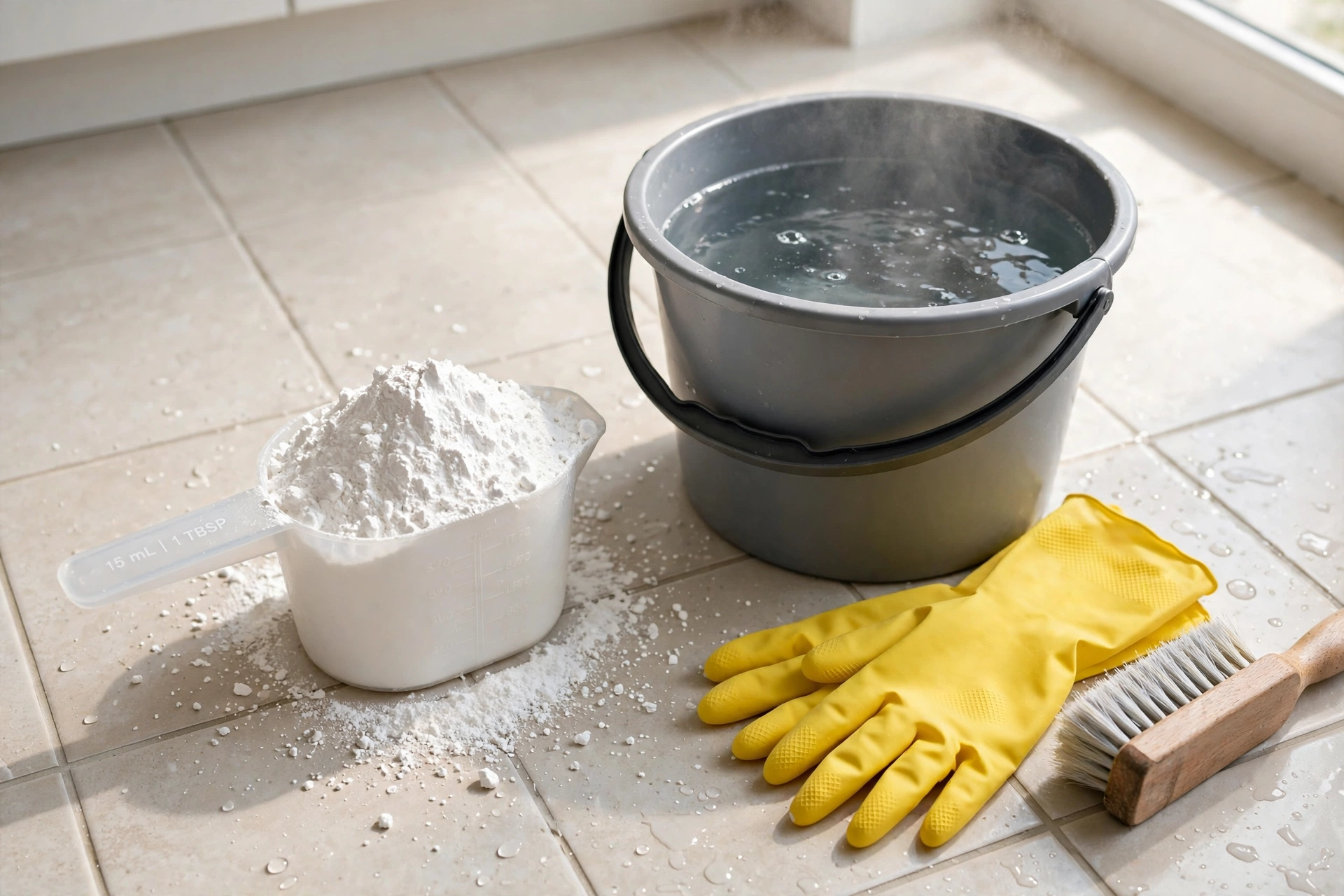
Oxygen bleach (sodium percarbonate, sold as OxiClean and similar powders) is the next step in how to clean grout when the paste is not enough, and the safest strong cleaner for colored grout. Dissolve it in warm water per the label, pour it along the joints, and wait thirty to sixty minutes. Scrub and rinse.
Unlike chlorine bleach, oxygen bleach will not fade colored grout or damage sealer as quickly, and it is safe on most tile. Use it on kitchen floor grout soaked with cooking grease, or entryway grout darkened by foot traffic. Wear gloves and never mix it with another cleaner.
5. Steam Cleaning — How to Clean Grout Without Chemicals
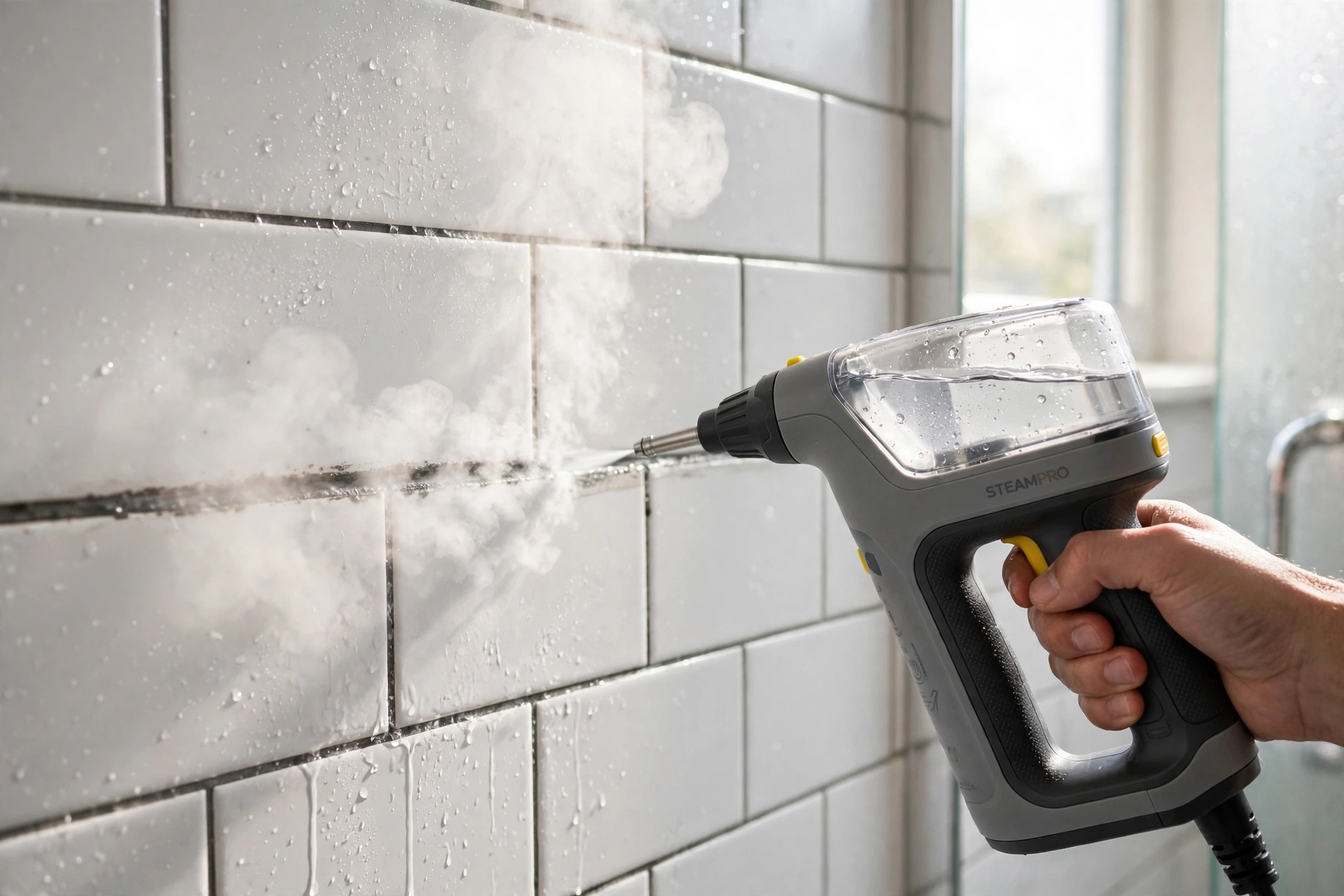
A steam cleaner blasts hot vapor into the pores and lifts dirt with no chemicals — but it has rules. Use short bursts and keep the nozzle moving; holding steam in one spot can soften grout and loosen tiles. Never use steam on cracked grout, because the pressure drives water behind the tile.
MAPEI, one of the largest grout manufacturers, warns against the regular use of steam cleaners on tile and grout. Treat steam as an occasional deep clean — once or twice a year at most — and always reseal afterward.
6. Store-Bought Grout Cleaners That Work
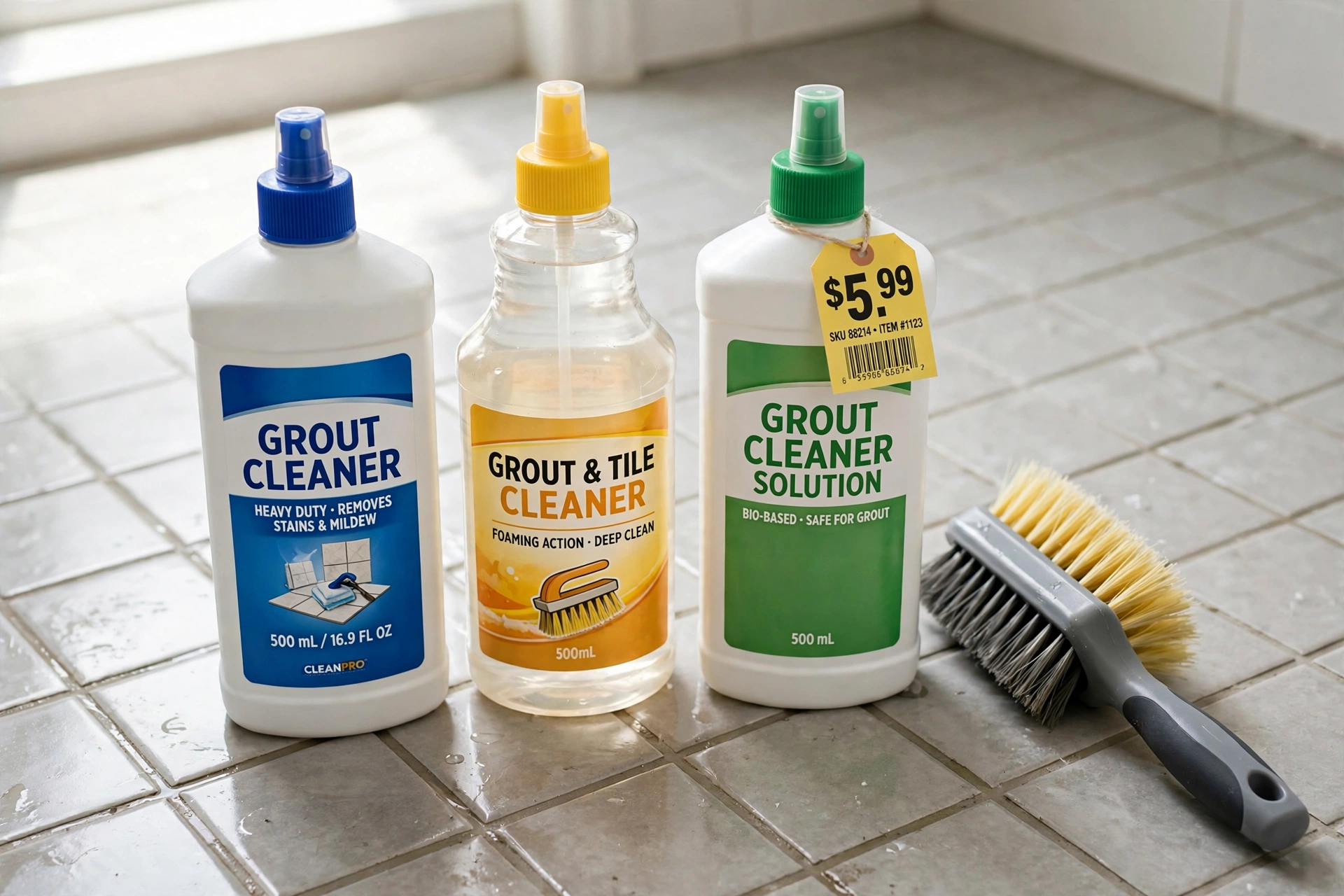
If you would rather buy a bottle than mix a paste, look for a cleaner labeled specifically for grout. The best ones are alkaline, not acidic — the Tile Council of North America recommends alkaline cleaners, since acid dissolves cement grout. Zep, Bona, and Aqua Mix sell for under $15.
Spray it on, wait the label’s dwell time (usually five to ten minutes), scrub with a nylon brush, and rinse thoroughly. Rinse twice if the water looks cloudy — leftover residue attracts soil and blocks sealer, as our easy home cleaning hacks guide explains. Skip cleaners listing vinegar or citric acid.
7. Shower Grout and Mold: How to Clean Grout in the Bathroom
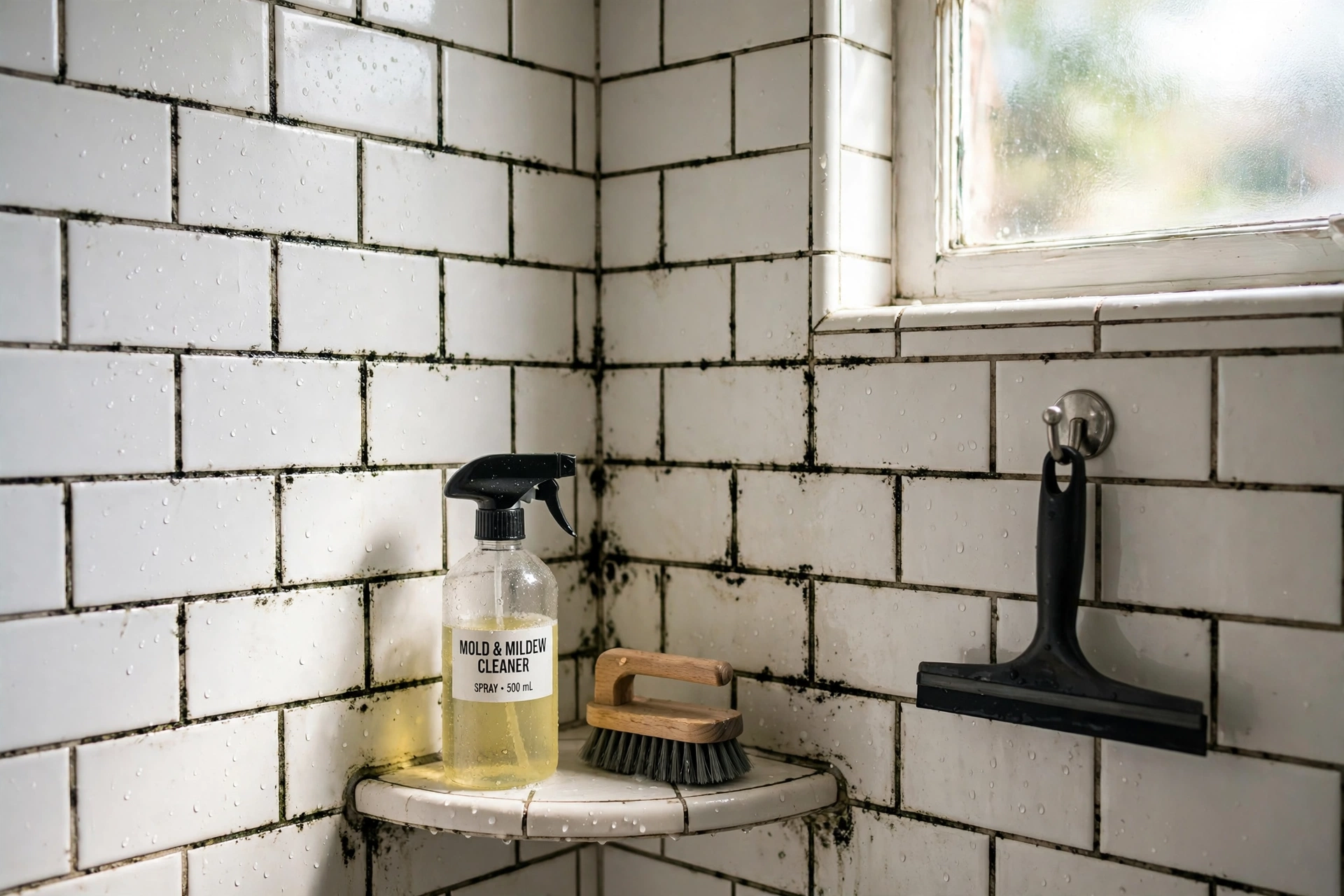
Shower grout turns black for a different reason: mold and mildew grow in the constant moisture and live inside the pores. The EPA notes mold can begin growing within 24 to 48 hours on moist porous surfaces — exactly what shower grout is. Start with the baking soda and peroxide paste from Section 3.
For black spots the paste does not remove, use chlorine bleach (1:10 with water) on white grout only, brushed on and rinsed after ten minutes. Never use bleach on colored grout. After cleaning, squeegee the shower after every use; dry grout stops the mold from coming back.
8. Floor Grout vs. Wall Grout — Different Dirt, Different Method
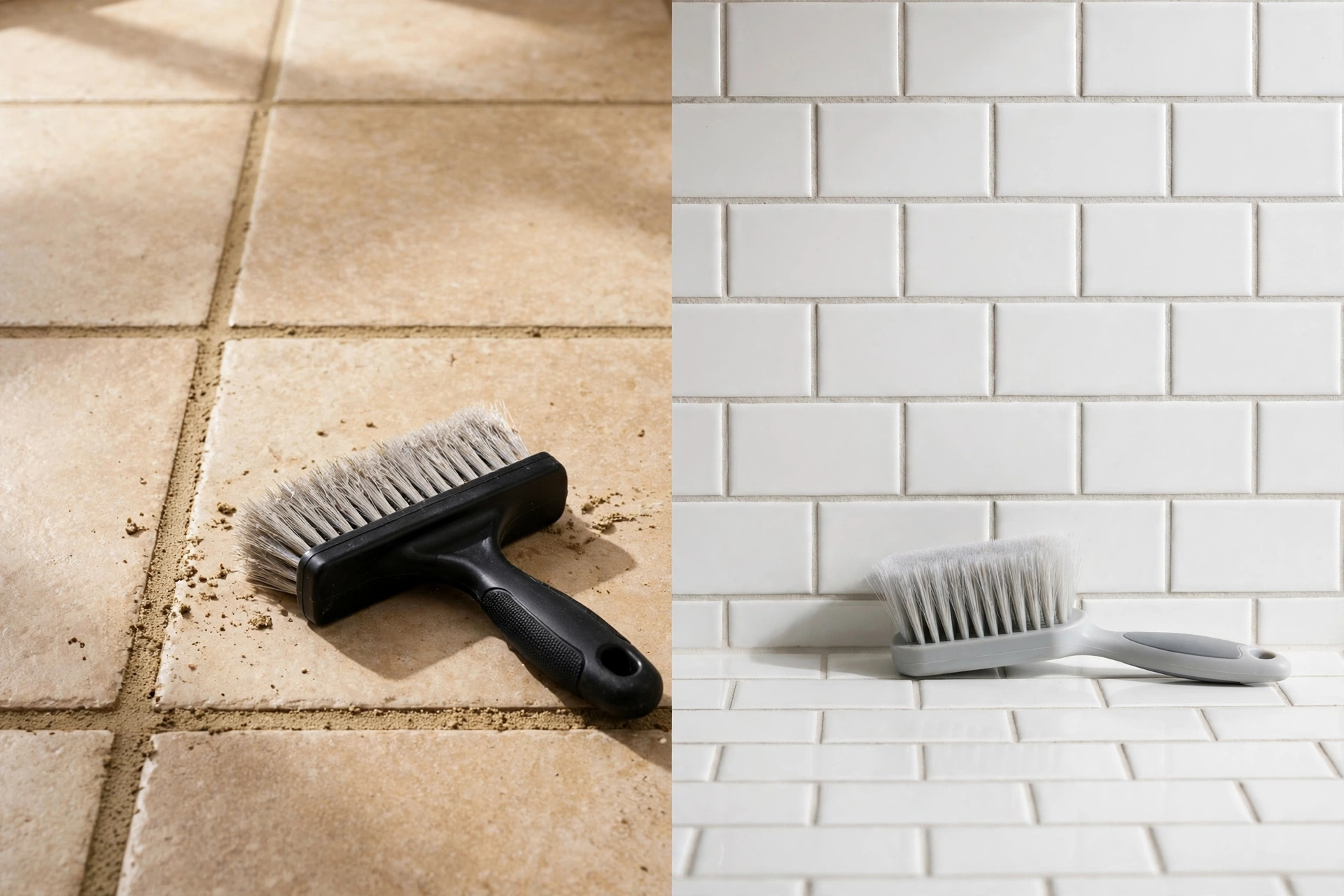
Floor grout and wall grout get dirty in different ways. Floor grout takes foot traffic, mop water, pet paws, and dropped food — it needs the strongest methods and the most frequent sealing. Wall grout, especially in kitchens, collects grease and soap film, and usually responds to the everyday pH-neutral clean.
Scrub floor grout along the joint, not across it, so the brush reaches into the line. On wall grout, use a softer brush and less pressure — the joints are narrower and usually unsanded, so they scratch easily. Clean the walls first, then the floor.
9. Cleaning Colored Grout Without Fading It
Colored grout — gray, beige, terracotta, charcoal — is the easiest grout to ruin: the wrong cleaner strips the color right out of the joint. The rule: no chlorine bleach, ever, and no acidic cleaners. Stick to pH-neutral cleaner routinely and oxygen bleach for deep cleaning.
Test any new product on a hidden joint first and wait 24 hours. If the test spot looks lighter, stop. For badly stained colored grout, a grout colorant (Section 14) beats a stronger cleaner — it restores the color instead of stripping more away.
10. Efflorescence: That White Powdery Film
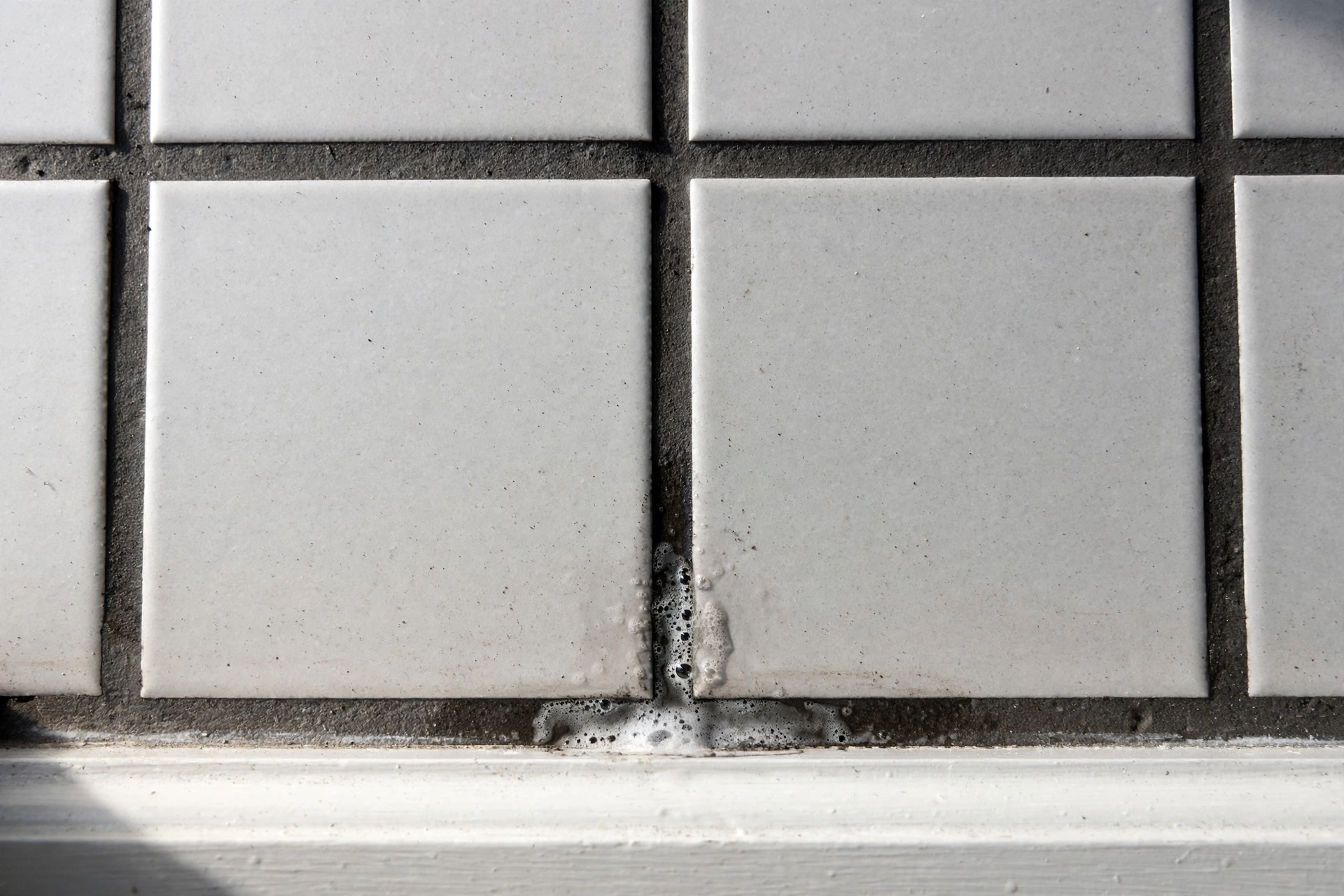
If a white, chalky film keeps appearing on your grout, it is efflorescence — mineral salts carried to the surface by evaporating water. It is not mold and not dirt, so soap will not fix it. Brush the dry powder off, wipe with clean water, and let it dry completely.
The film keeps returning until the moisture source is fixed — usually a leak, poor ventilation, or standing water. Once the film is gone and the grout is dry, a penetrating sealer (Section 12) slows it down. If it returns in the same spot, look for water getting in behind the tile — and keep grit off the floor, since sand and dust grind into the joints (see our guide to getting rid of dust).
11. What Never to Use on Grout — How to Clean Grout Without Damaging It
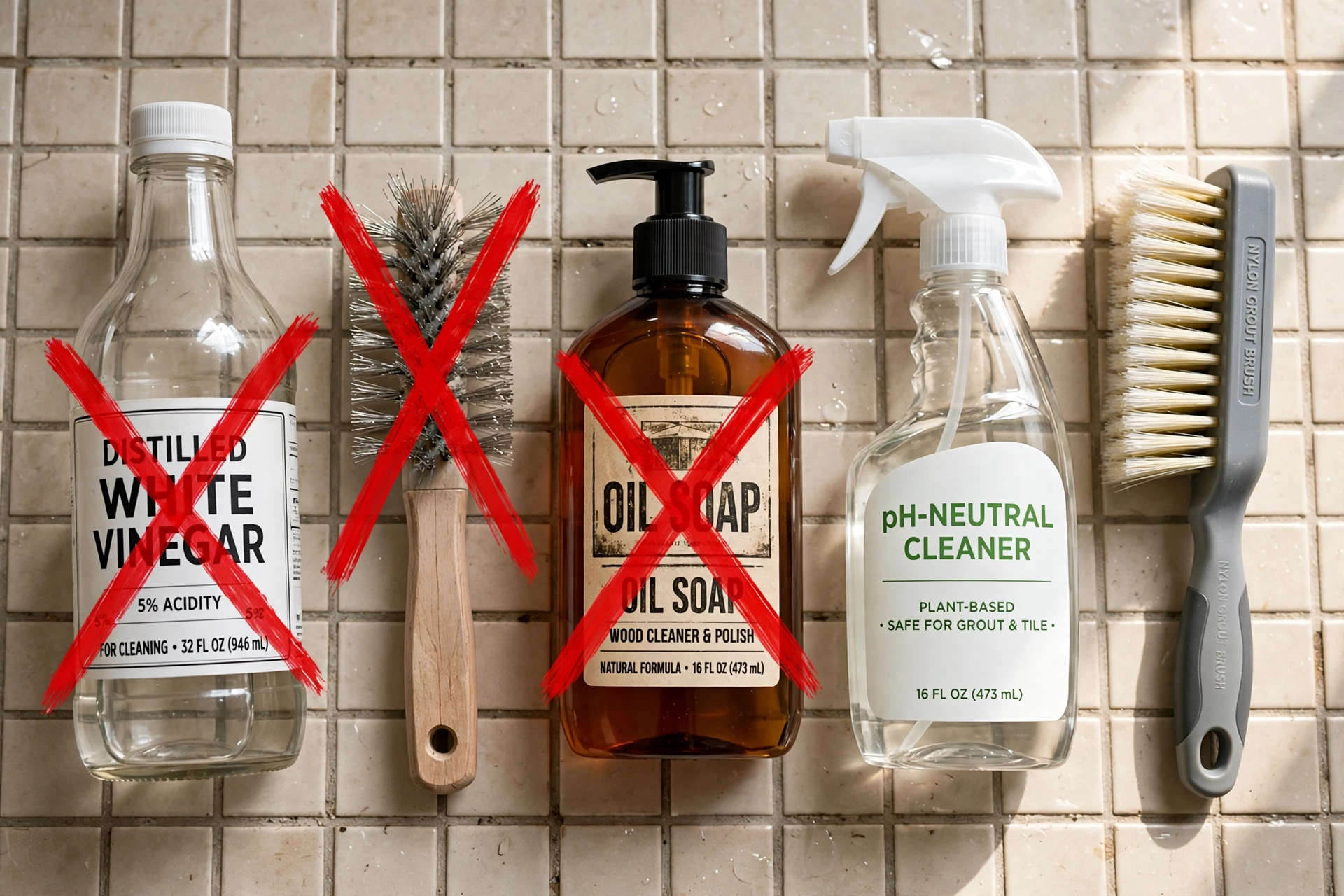
Some common cleaners damage grout faster than dirt does. Vinegar and other acids dissolve cement grout — the Tile Council of North America is explicit that grout needs an alkaline cleaner, not an acid-based one, and MAPEI warns never to use vinegar on stone and grout. Oil-based cleaners like Murphy’s Oil Soap and Pine-Sol leave a waxy film.
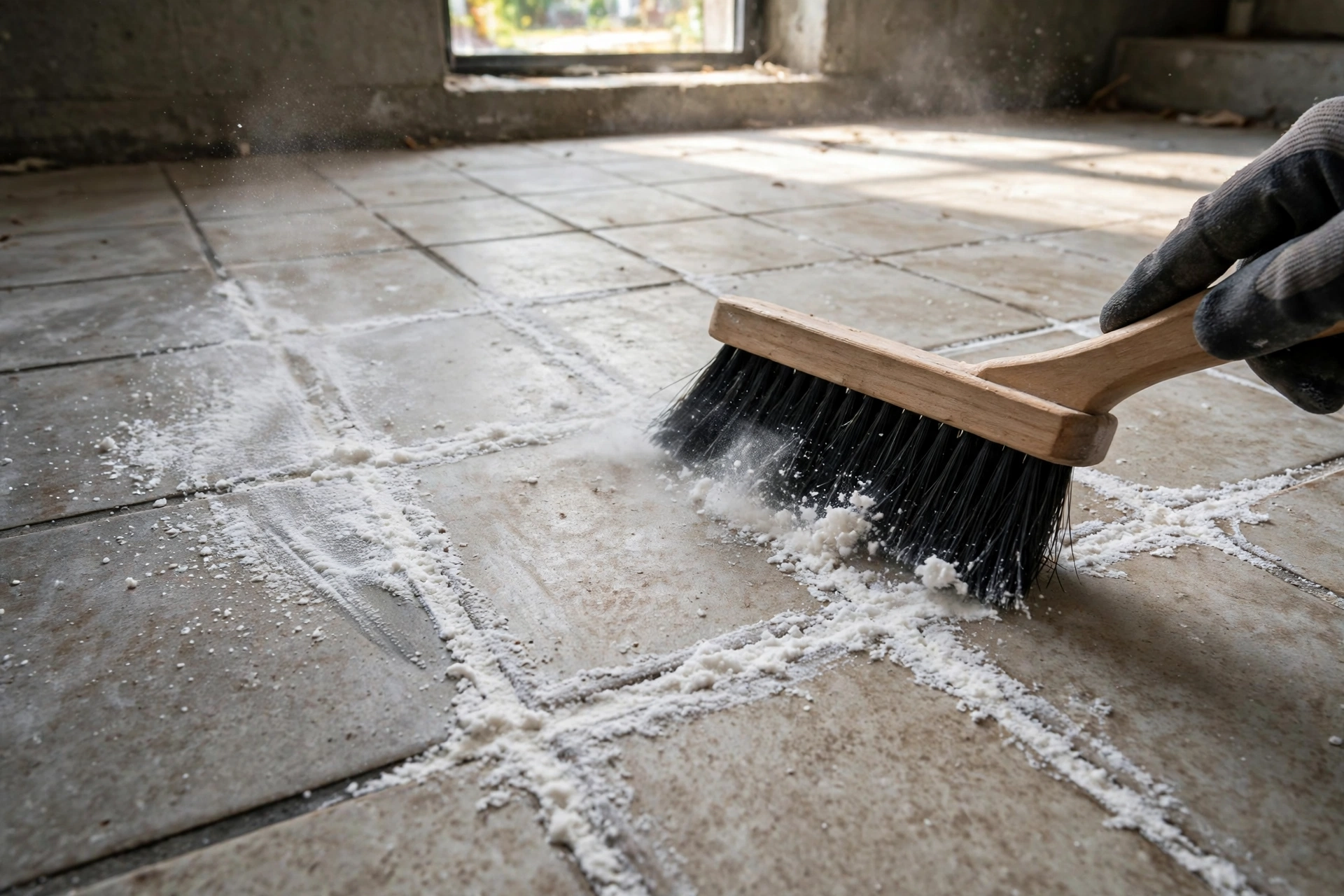
Wire brushes and steel wool scratch grout and tile, leaving metal particles that rust in the joints. Highly alkaline cleaners used weekly can strip sealer over time — a Tile Council expert told Architectural Digest they “can strip away sealant from the grout over time.” Use the gentlest method that works.
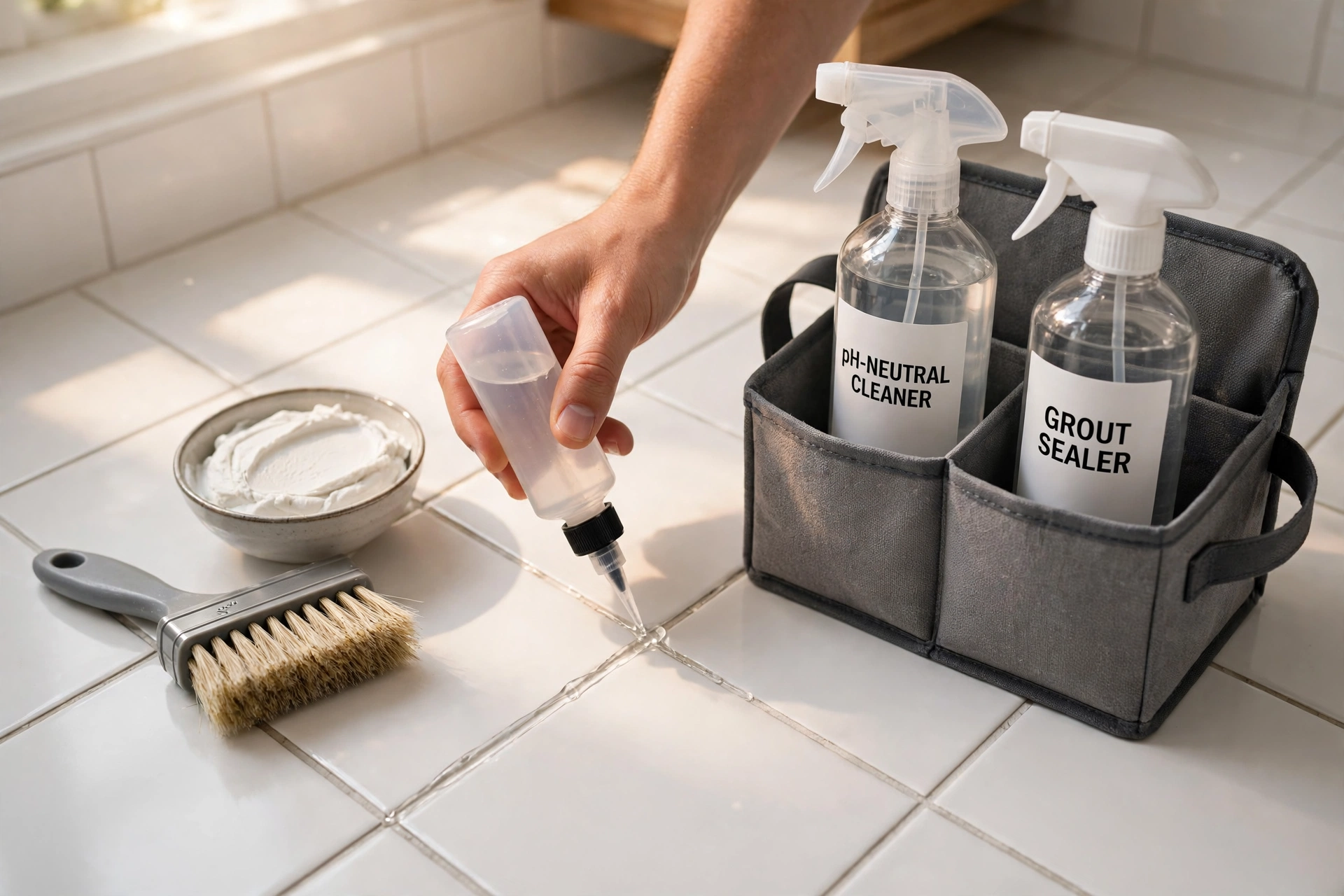
12. How to Seal Grout After Cleaning
Sealing is the step that makes the cleaning last, and it only works on cement-based grout — epoxy grout is already non-porous and needs none. Wait until the grout is completely clean and bone dry, at least 24 to 48 hours after cleaning. Never seal damp or dirty grout: sealer locks in whatever is already in the joint.
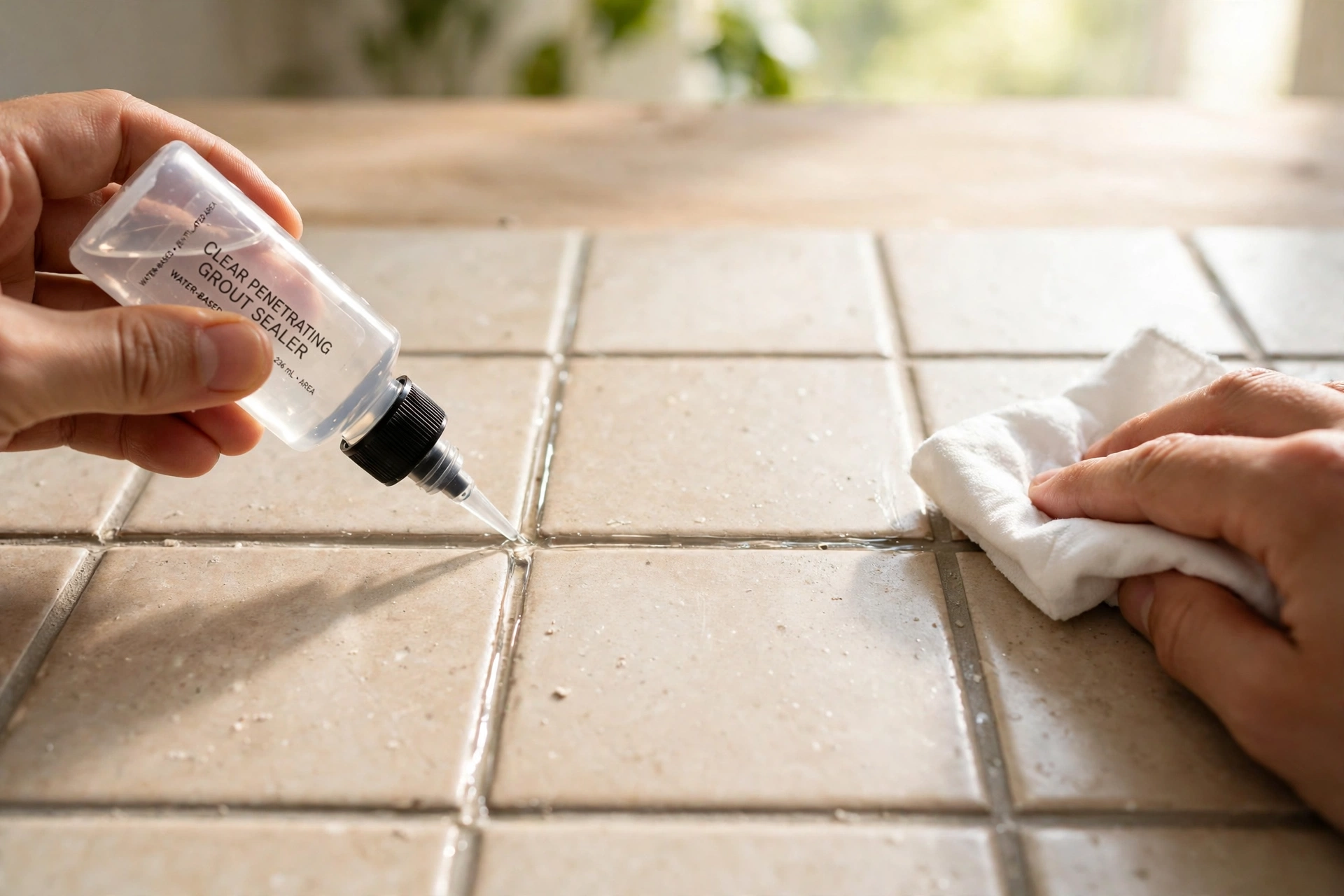
Apply a clear penetrating sealer along each joint, wait up to five minutes, then wipe the tile dry — sealer left on tile leaves a haze. A second coat after 30 minutes protects light grout better. Penetrating sealers bond inside the grout and repel water, while topical sealers coat the surface and wear off faster under foot traffic.
13. How Often to Reseal — The Water-Drop Test
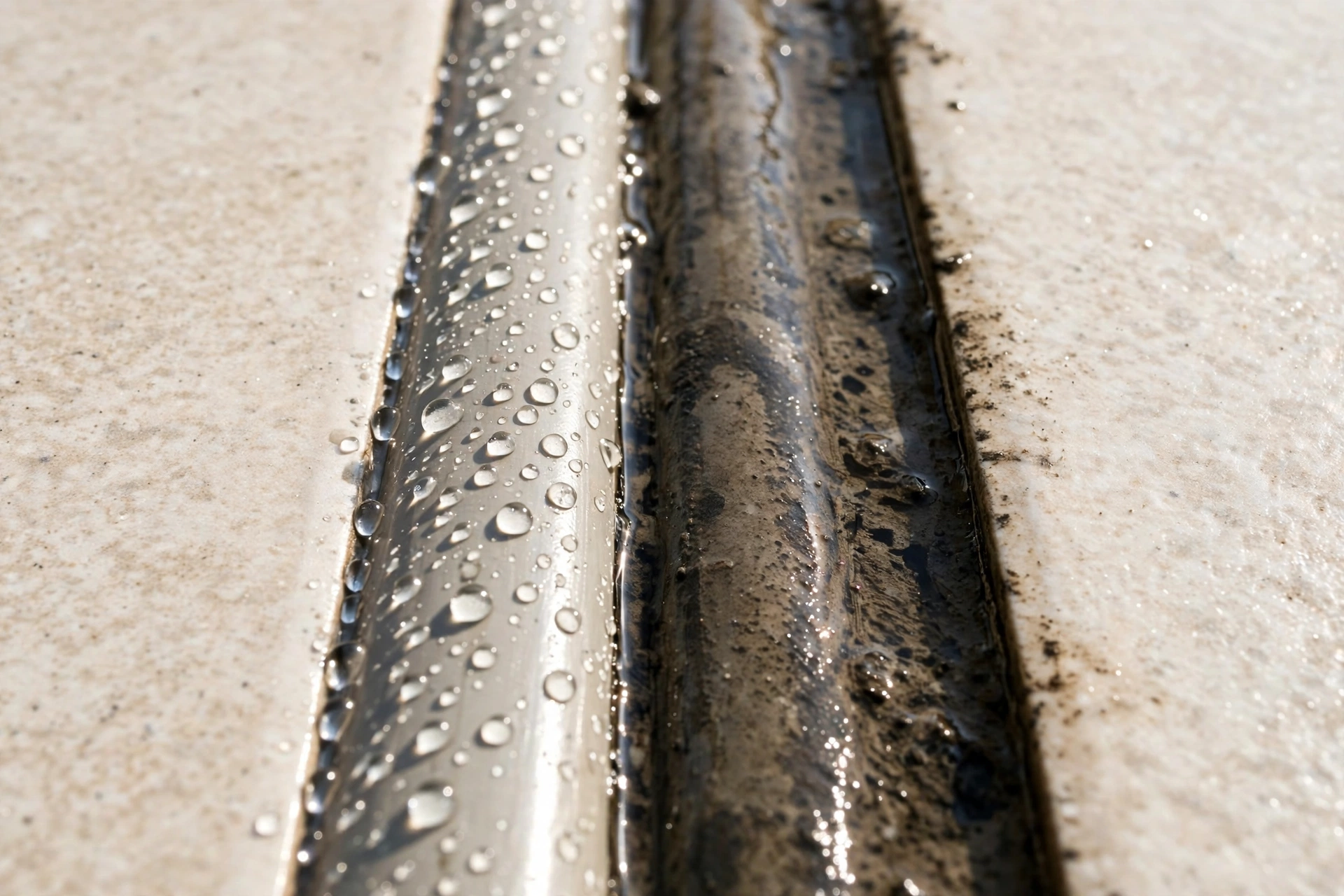
Most homes need grout resealed every one to two years, busy kitchens and entries sooner. The water-drop test tells you when: put a few drops on a grout line. If they bead up, the sealer is still working. If the water soaks in and the joint darkens, reseal — the final step in knowing how to clean grout for good.
Repeat the test once or twice a year, in the kitchen and the busiest bathroom. Most sealers allow light foot traffic after two hours, no water for twelve hours, and a full cure at twenty-four hours — follow your bottle, since times vary. Clean the grout first, then seal; sealing dirty grout traps the dirt in.
14. Grout Color Sealing: When a Stain Will Not Budge
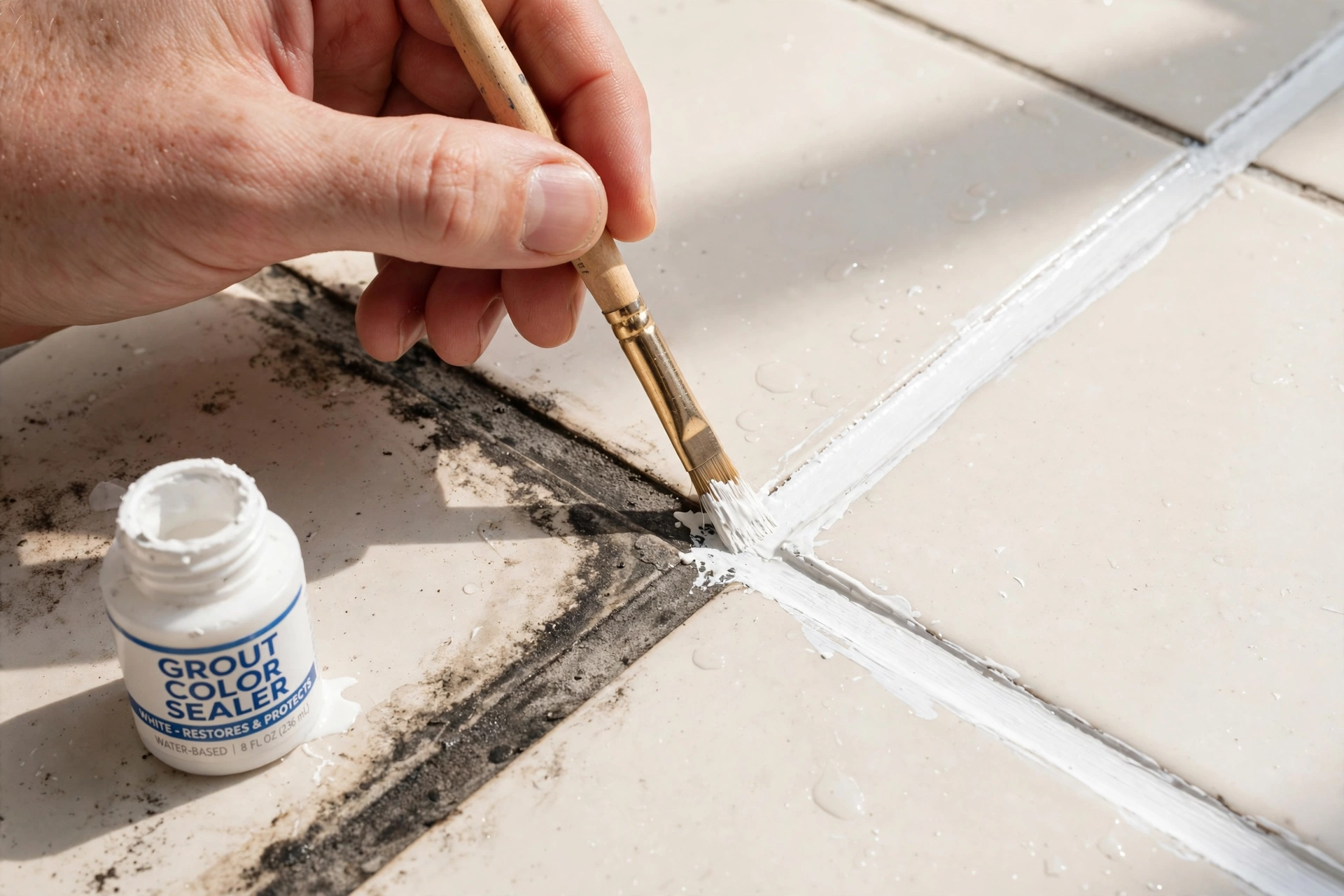
When a stain has soaked so deep that no cleaner removes it, grout color sealing is the last resort before regrouting. A color sealer is an epoxy-based paint that restores the original color — or changes it — and seals at the same time. It works best on clean, dry grout free of old sealer.
Apply it with a small brush along each joint, wipe the tile immediately, and let it cure 24 to 72 hours before wetting it. It is a weekend project, not a quick fix. If the grout is cracked, crumbling, or missing, regrouting is the honest answer — paint will not hold a joint that is falling apart.
15. The Weekly Routine That Keeps Grout Clean — How to Clean Grout for Good
The secret to clean grout is not a stronger cleaner — it is a shorter routine done often. Once a week, sweep or vacuum, then mop with a pH-neutral cleaner, changing the water when it turns cloudy. Towel-dry the floor and squeegee the shower after every use.
Our 10-minute daily cleaning habits fit this routine into a normal day: five minutes a week on grout, thirty seconds on the squeegee. If clutter is piling up faster than you can clean it, our declutter guide clears the way first. Do the weekly routine and reseal when the water-drop test says so.
Frequently Asked Questions
Can I use bleach on grout?
Yes, but only chlorine bleach on white grout, diluted one part bleach to ten parts water, and only for mold spots — never weekly. Bleach fades colored grout and strips sealer over time, so save it for shower mildew the paste did not remove. Never mix bleach with ammonia or any acid.
How often should I seal grout?
Once you know how to clean grout, reseal it every one to two years. If drops soak in and darken the joint in the water-drop test, reseal. Kitchens, entries, and showers need it sooner; epoxy grout never needs sealing.
Why does grout turn black in the shower?
Black shower grout is usually mold and mildew growing inside the porous grout, fed by constant moisture. Clean it with the baking soda and peroxide paste, then squeegee after every use. If black spots return within days, the grout may be unsealed or ventilation too weak — fix the moisture, not just the stain.
Is steam cleaning safe for grout?
Steam cleaning is safe as an occasional deep clean on sound, sealed cement grout — short bursts, nozzle always moving, never on cracked joints. It is not safe weekly: regular steam can soften grout, loosen tiles, and strip sealer. MAPEI warns against the regular use of steam cleaners on tile and grout.
Can I use vinegar to clean grout?
No. Vinegar is an acid, and acid dissolves cement grout — that is why learning how to clean grout starts with an alkaline cleaner. The Tile Council of North America recommends alkaline cleaners over acid-based ones. Vinegar also damages natural stone like marble and travertine. Use a pH-neutral tile cleaner instead.
Related Reading
- Easy Home Cleaning Hacks
- 10-Minute Daily Cleaning Habits
- How to Get Rid of Dust in Your House
- How to Clean Stainless Steel
- How to Declutter Your Home Room by Room
- Can You Vacuum Artificial Turf?
Conclusion
Grout stays clean when you work with what it is — a porous material that needs a gentle cleaner, a real rinse, and a sealer that keeps the dirt out. Start with the pH-neutral clean, move up to the paste only when you need it, and seal the joints while clean and dry. Five minutes a week and a yearly water-drop test is how to clean grout once and keep it clean.