15 Pantry Organization Ideas That Make Cooking Easier
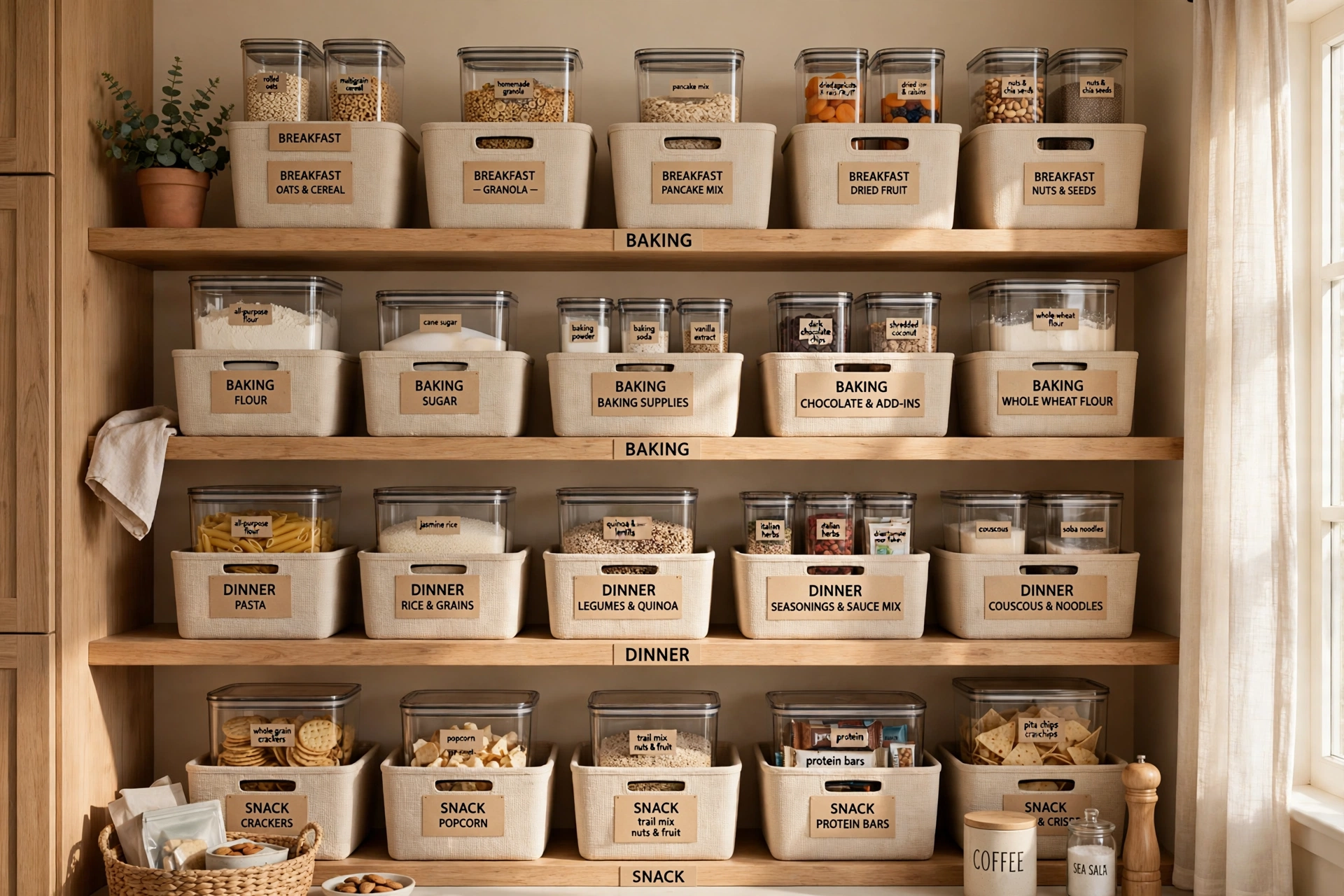
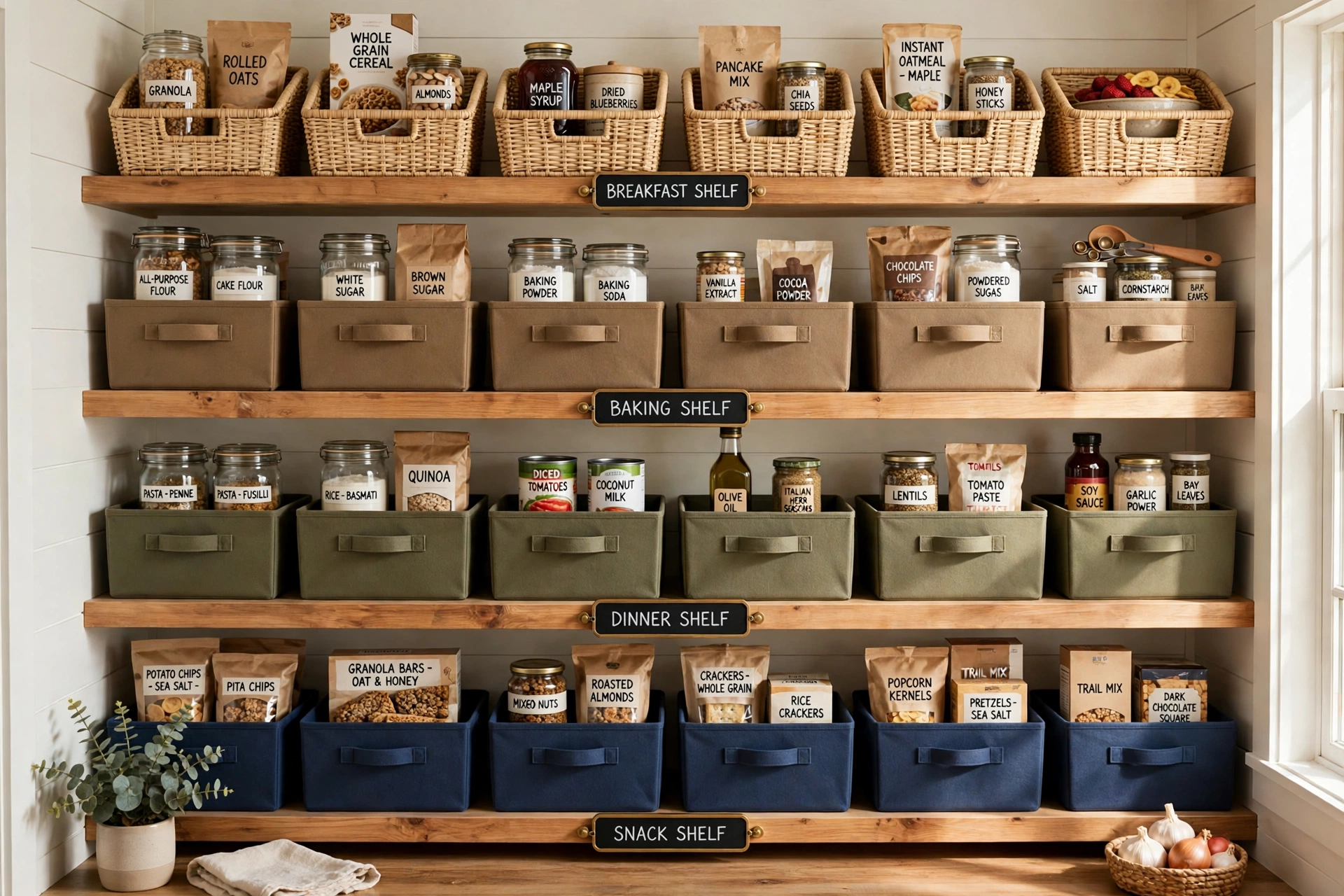
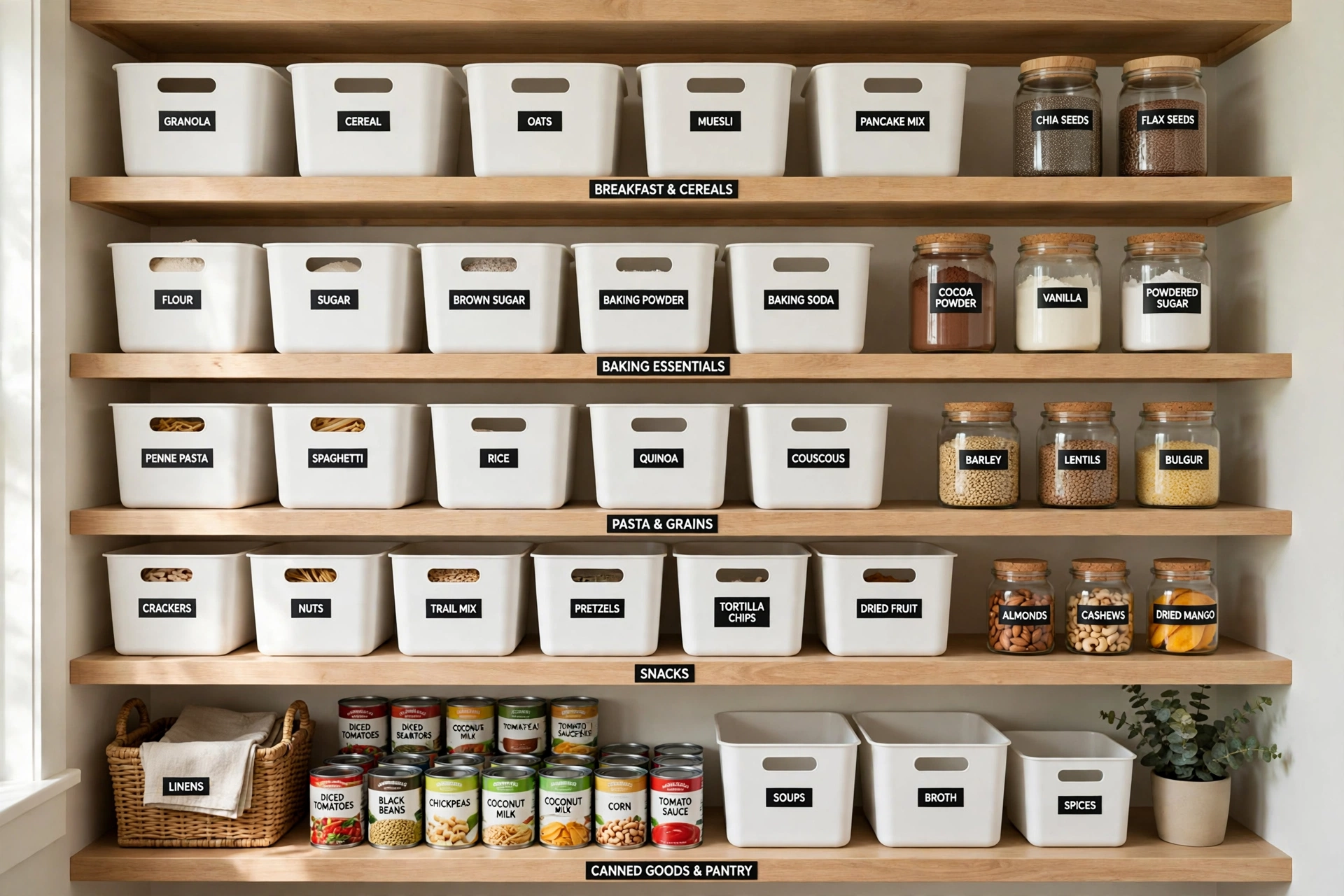
Pantry organization ideas work best when they follow how you actually cook, not how a photo looks. You do not reach for “all the cans” — you reach for dinner, or breakfast, or baking. So the pantry below is organized by use: breakfast, baking, dinner, and snack zones. Everything has a home, and the home is where your hand expects it.
The fifteen ideas run from the empty-shelf reset to the system that keeps it working all year. Most cost under $50 in bins and labels, and none need a remodel — even a single cabinet shelf counts as a pantry here. One USDA rule runs through the food-safety ideas: store shelf-stable food cool, clean, and dry, and it keeps far longer than most people think.
1. Start by Emptying It All Out — Classic Pantry Organization Ideas
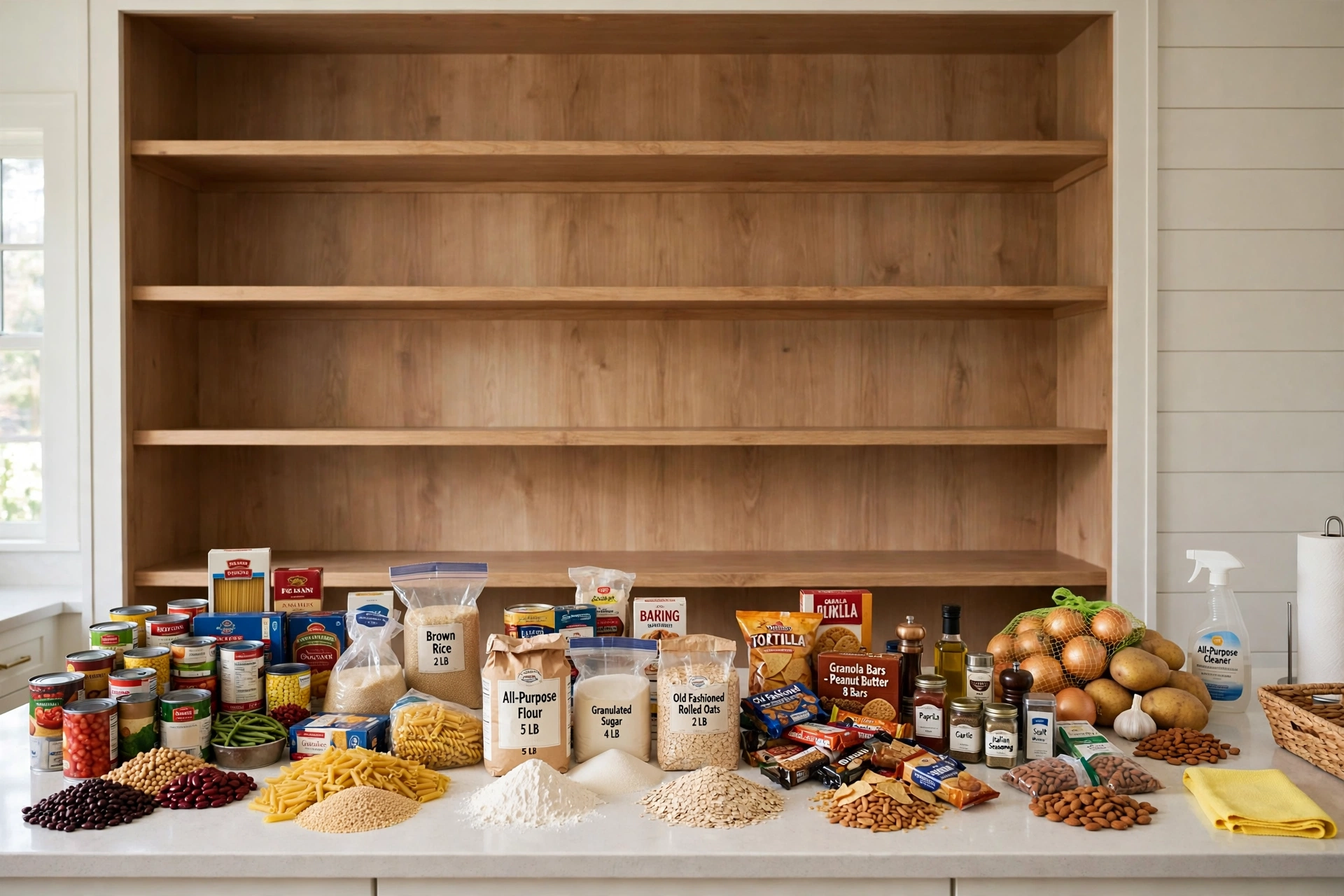
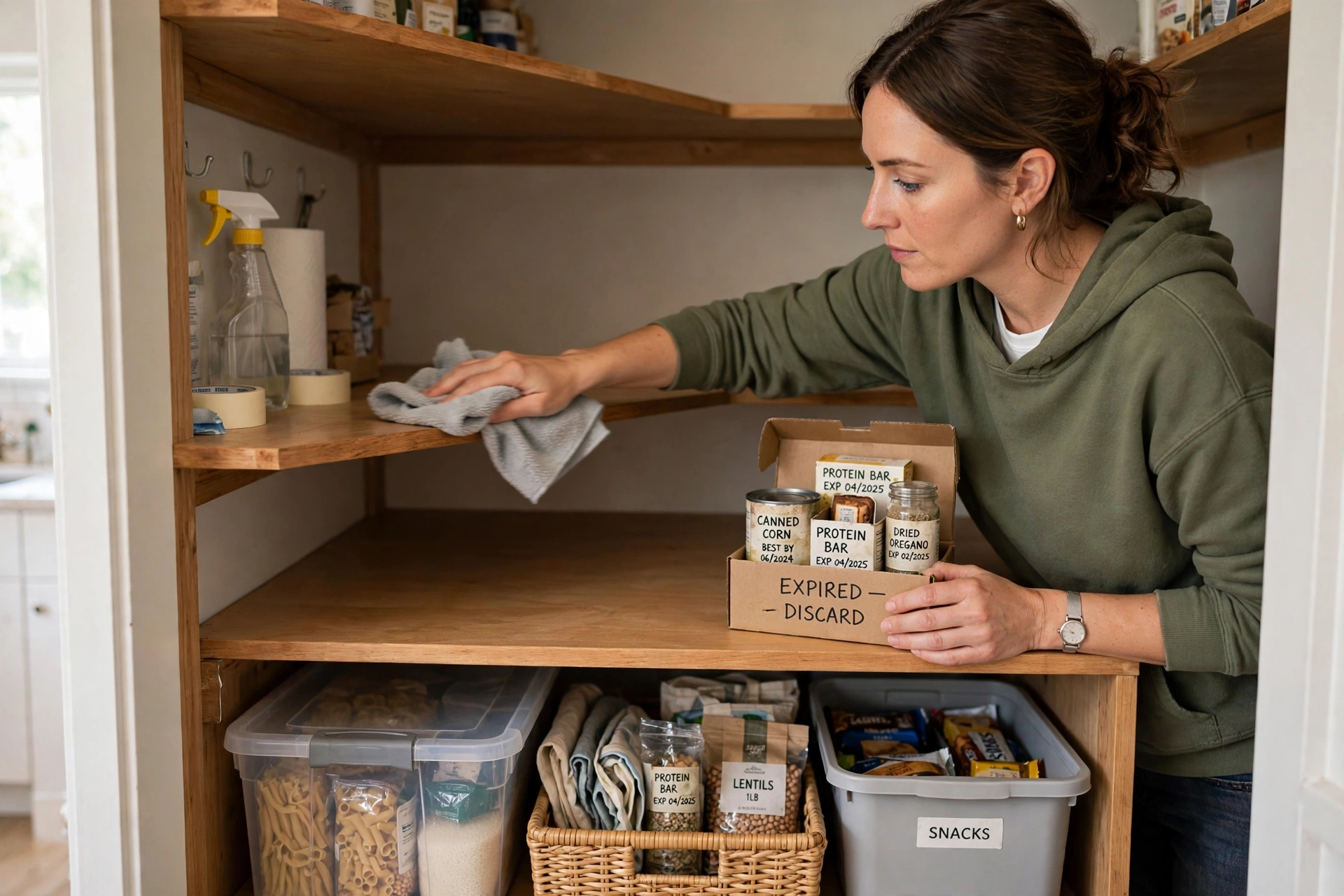
Every good pantry reset starts the same way: take everything out. Pull every can, box, and bag onto the counter, wipe the shelves, and sort into three piles — keep, toss, donate. Expired spices, stale crackers, and the third half-used bag of flour all go. You cannot organize clutter; you can only hide it.
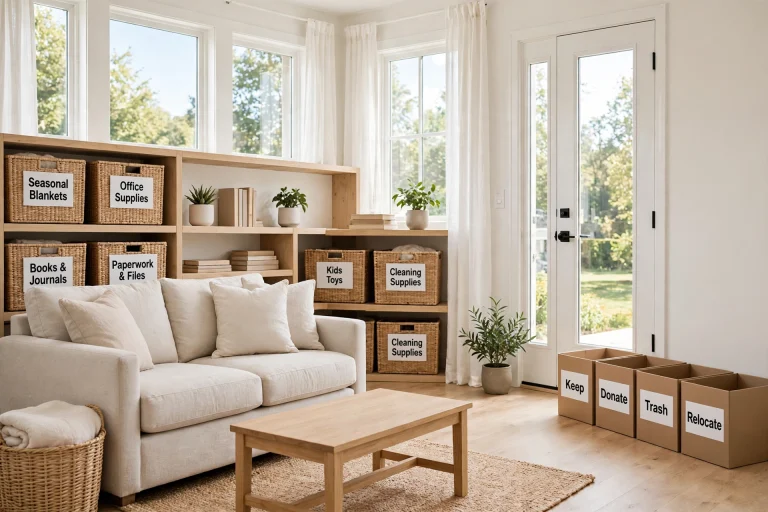
This is the fastest win on this list: most pantries lose a third of their space to things nobody will ever eat. Our how to declutter your home room by room guide uses the same keep-toss-donate method for the whole house.
2. Zone by Use: Breakfast, Baking, Dinner, Snacks — Pantry Organization Ideas That Work
Zones are the heart of pantry organization ideas that actually last. Group food by the meal or job it serves: breakfast together (oats, cereal, peanut butter), baking together (flour, sugar, baking powder), dinner together (pasta, rice, canned tomatoes), snacks together. When you cook, you visit one zone, not five shelves.
Put daily zones at eye level and weekly ones up high or down low — baking supplies can live on a top shelf; dinner staples belong in the middle. A holiday baking zone earns its own spot too — our Christmas kitchen decor ideas guide shows how a festive kitchen still needs a working pantry behind it.
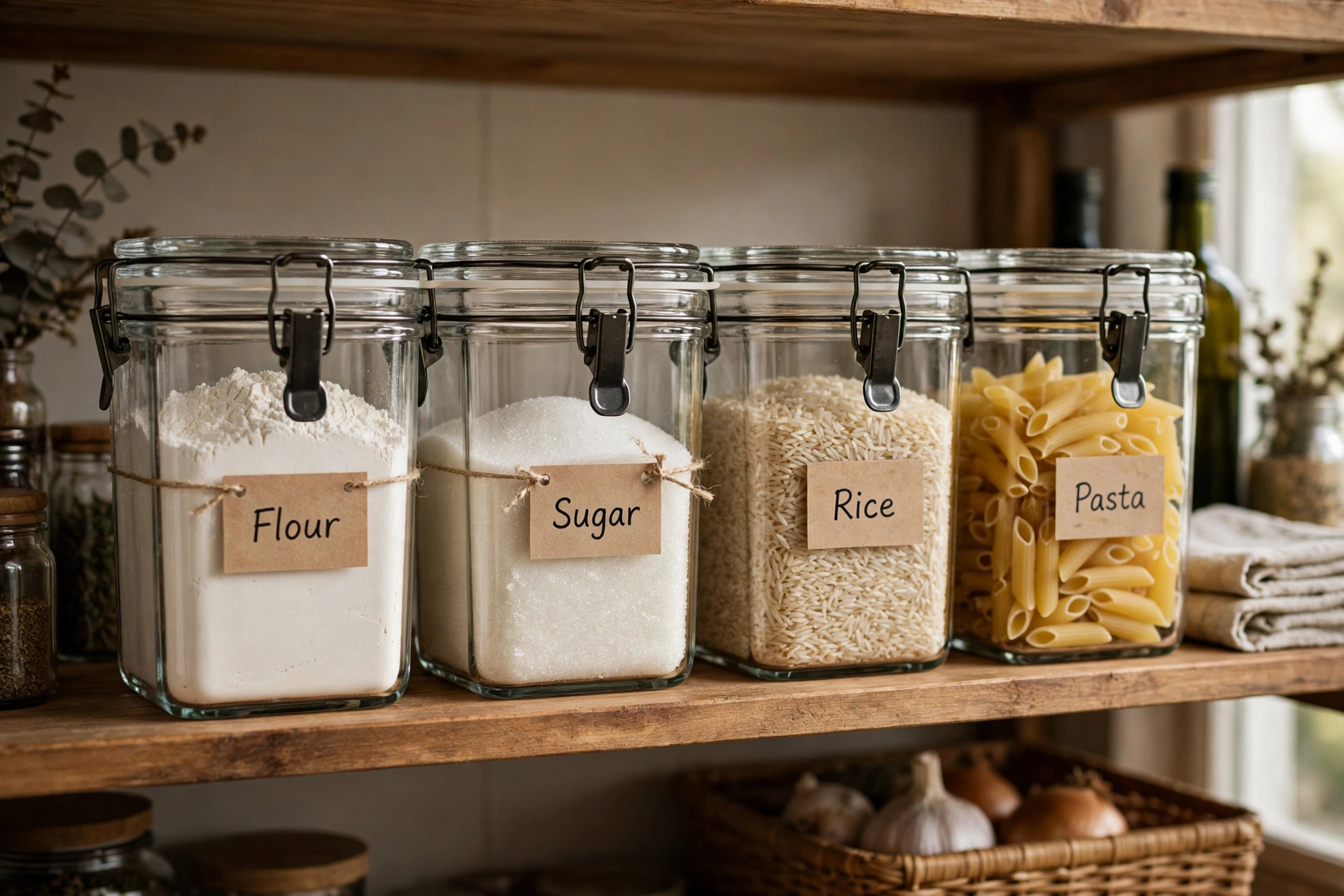
3. Decant Staples into Clear Airtight Containers
Flour, sugar, rice, pasta, and cereal last longer and pour easier from clear airtight containers than from torn bags and sagging boxes. You can see at a glance what is running low, sealed lids keep out moisture and pests, and square containers waste less space than round ones.
Decant only the staples you use constantly — five or six containers is plenty, and one bag of rice fills two. Label each one with the contents and the date you filled it.
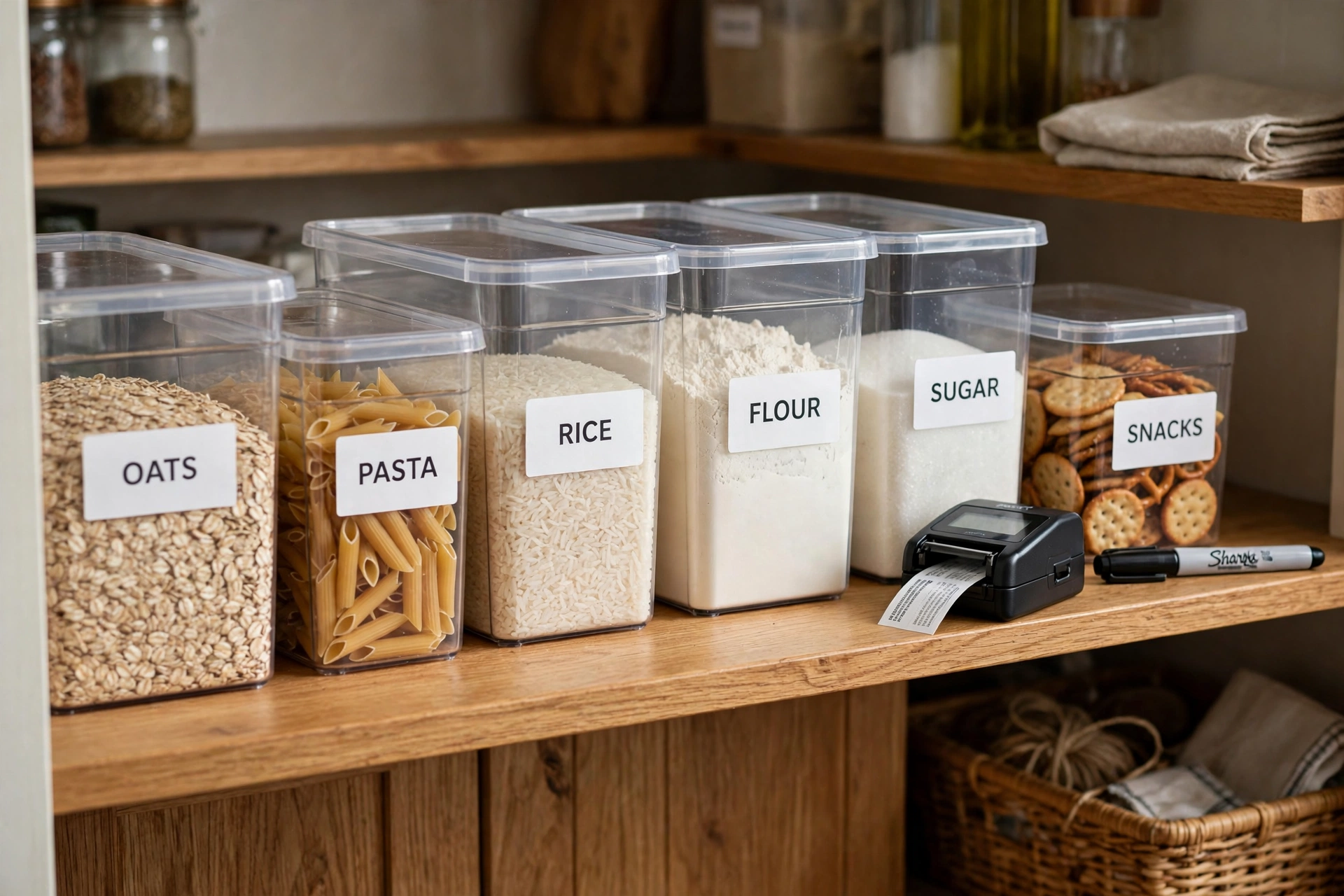
4. Label Everything — Even the Obvious Stuff
Labels are what turn a tidy pantry into a pantry anyone in the house can use. Label the front of every bin and container, not the top — you read shelves from the front. A simple label maker, chalk labels, or masking tape and a marker all work; the method matters less than doing it.
Label by contents and by zone — one of the simplest pantry organization ideas, and the one that lets anyone in the house put groceries away without asking. Date the label when you decant, and you will never wonder how old the flour is. Keep a spare roll of tape and a marker in the pantry itself, so relabeling takes ten seconds.
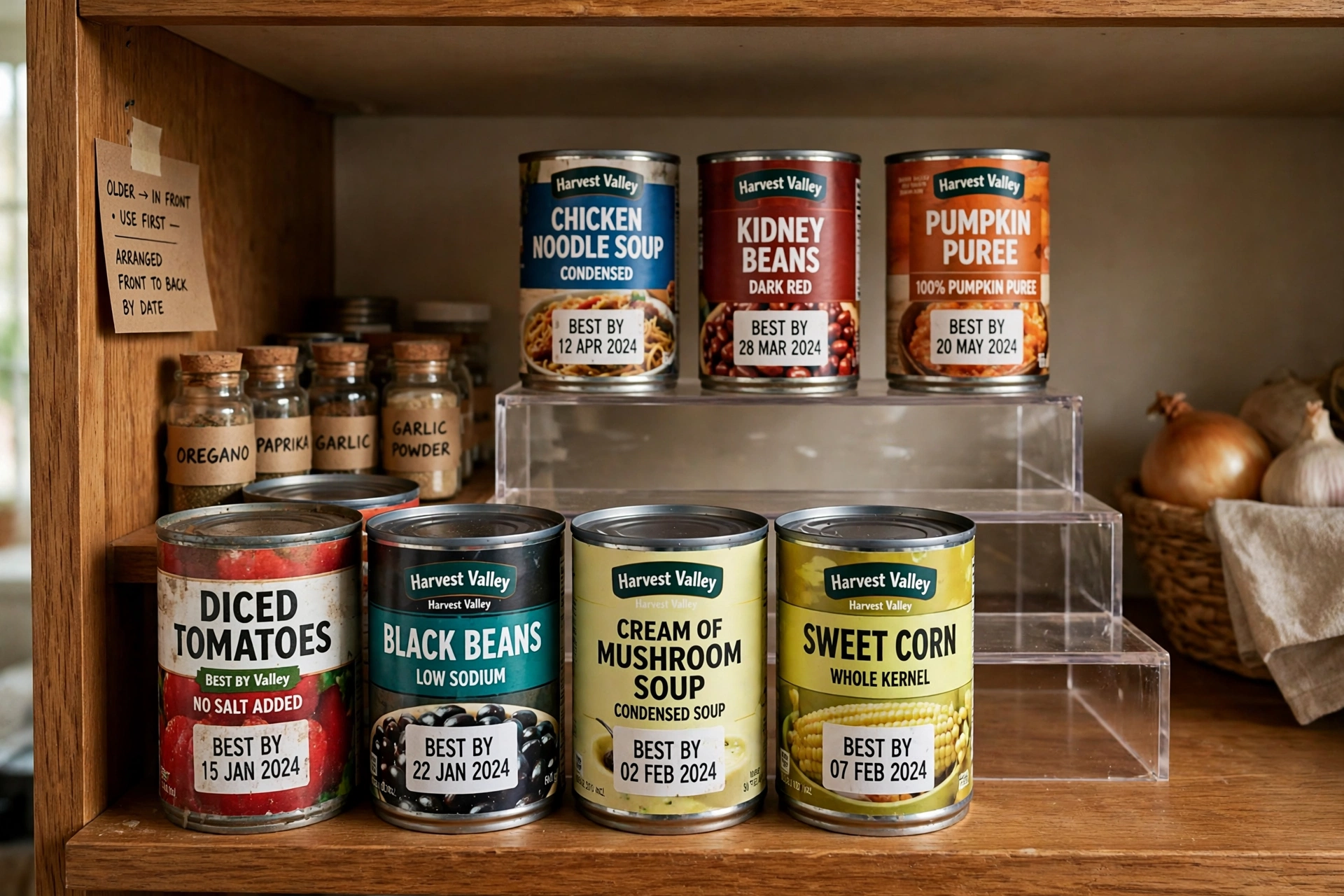
5. First In, First Out: The Rotation Rule — Pantry Organization Ideas That Save Food
First in, first out is the one pantry organization idea that saves real money: slide each new can or box behind the older one, and always pull from the front. The oldest food gets used first, and nothing expires quietly at the back.
Make rotation easy with a simple habit: new groceries go to the back, always. A can riser or a small step shelf helps — it lifts the back row so you can see what is there. This single rule is why stores stock shelves the same way, and it works just as well at home.
6. Use the Door — Over-the-Door Racks and Hooks
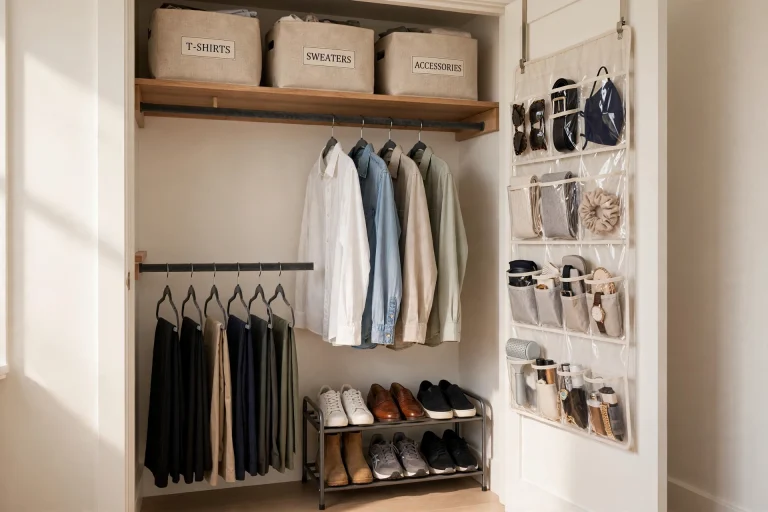
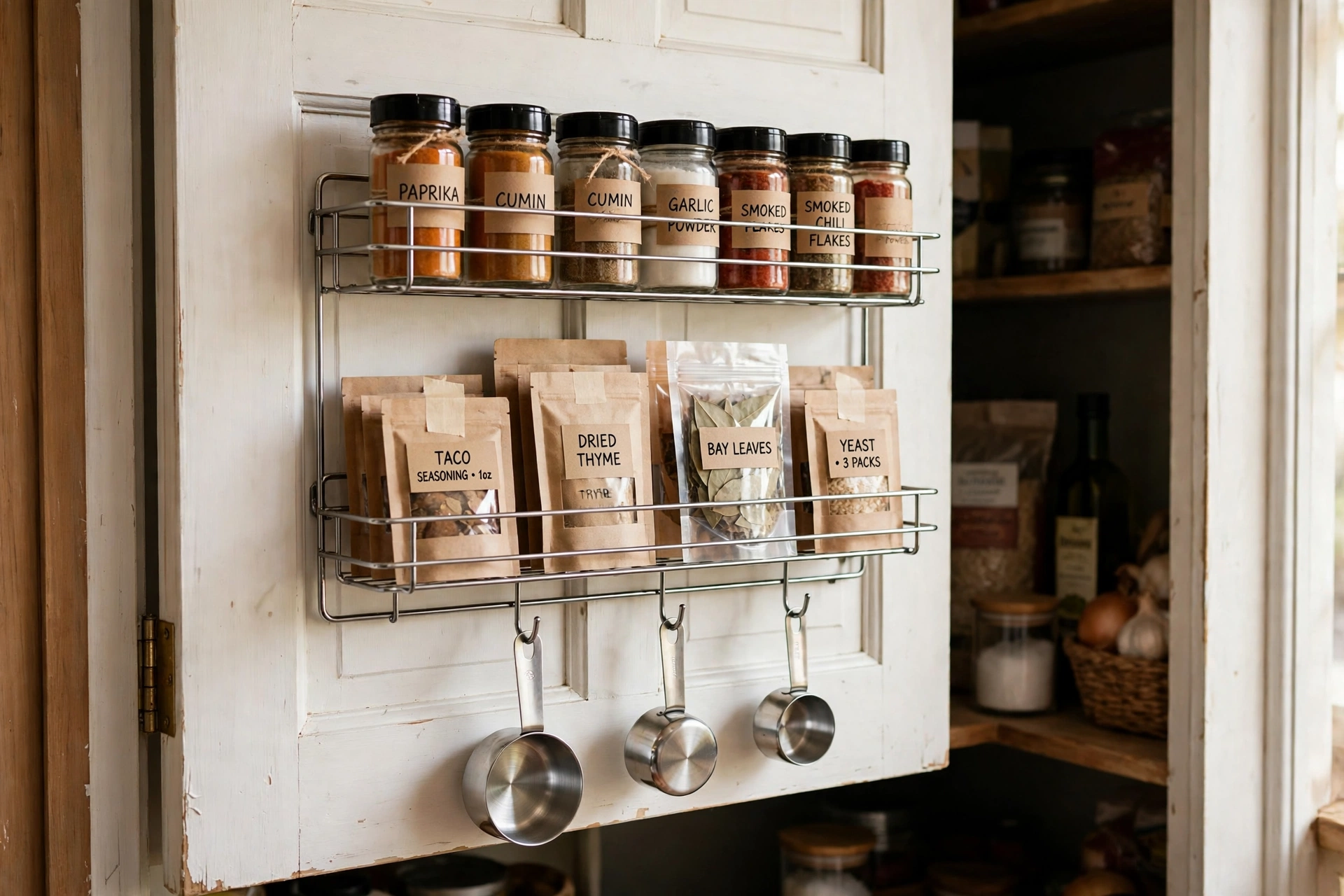
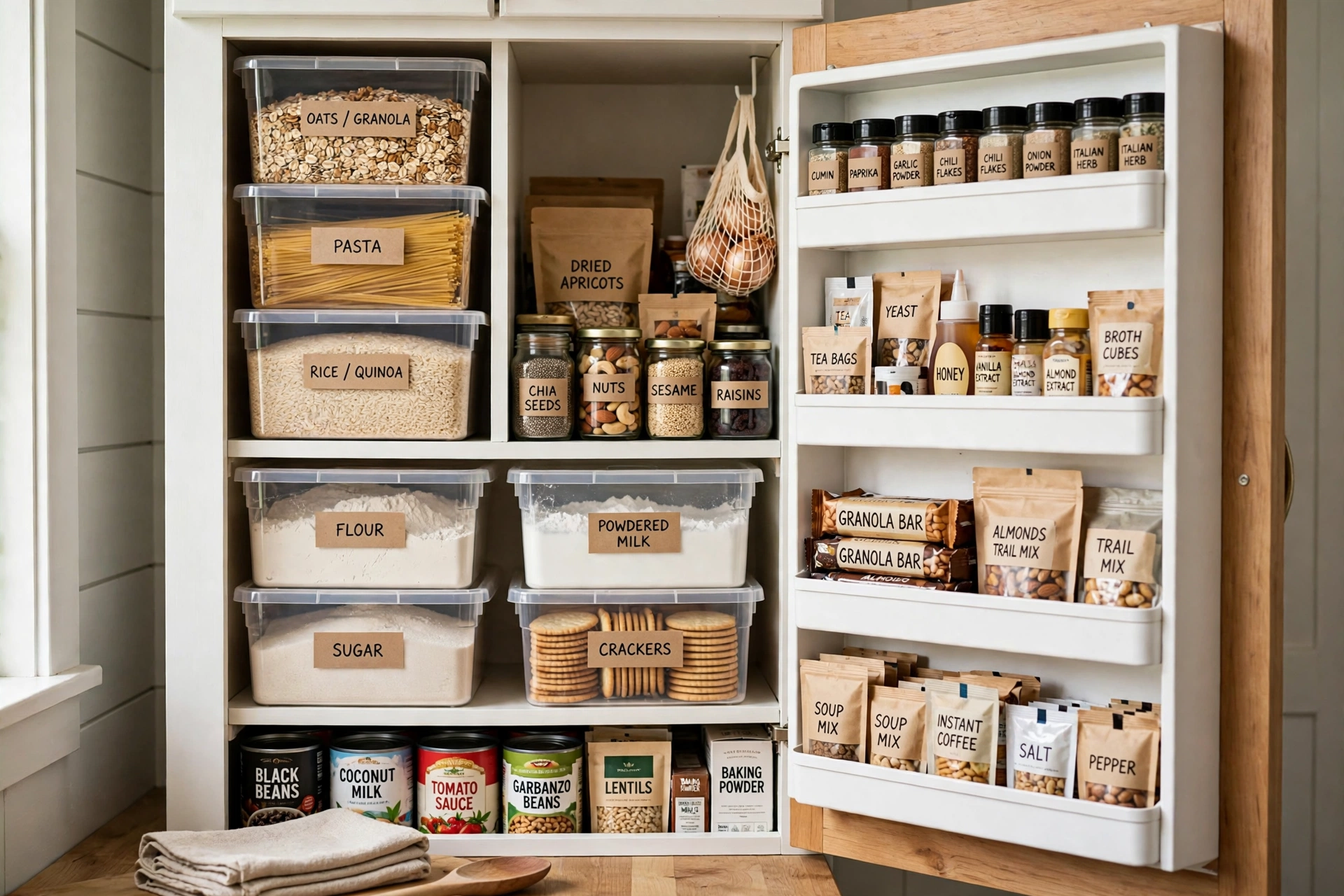
The inside of the pantry door is free storage most people ignore. A slim over-the-door rack holds spices, oils, small jars, and packets in the space that was doing nothing, and hooks hold measuring cups, aprons, and reusable bags. No drilling, no damage — a renter-friendly fix.
Measure first: the rack must clear the shelves when the door closes, so keep it under two inches deep — spice jars, sauce packets, and tea boxes are the perfect fit, and it is one of the cheapest pantry organization ideas there is. Our small closet organization ideas guide uses the same door-rack trick for a different small space.
7. Baskets and Bins for Loose Items — Simple Pantry Organization Ideas
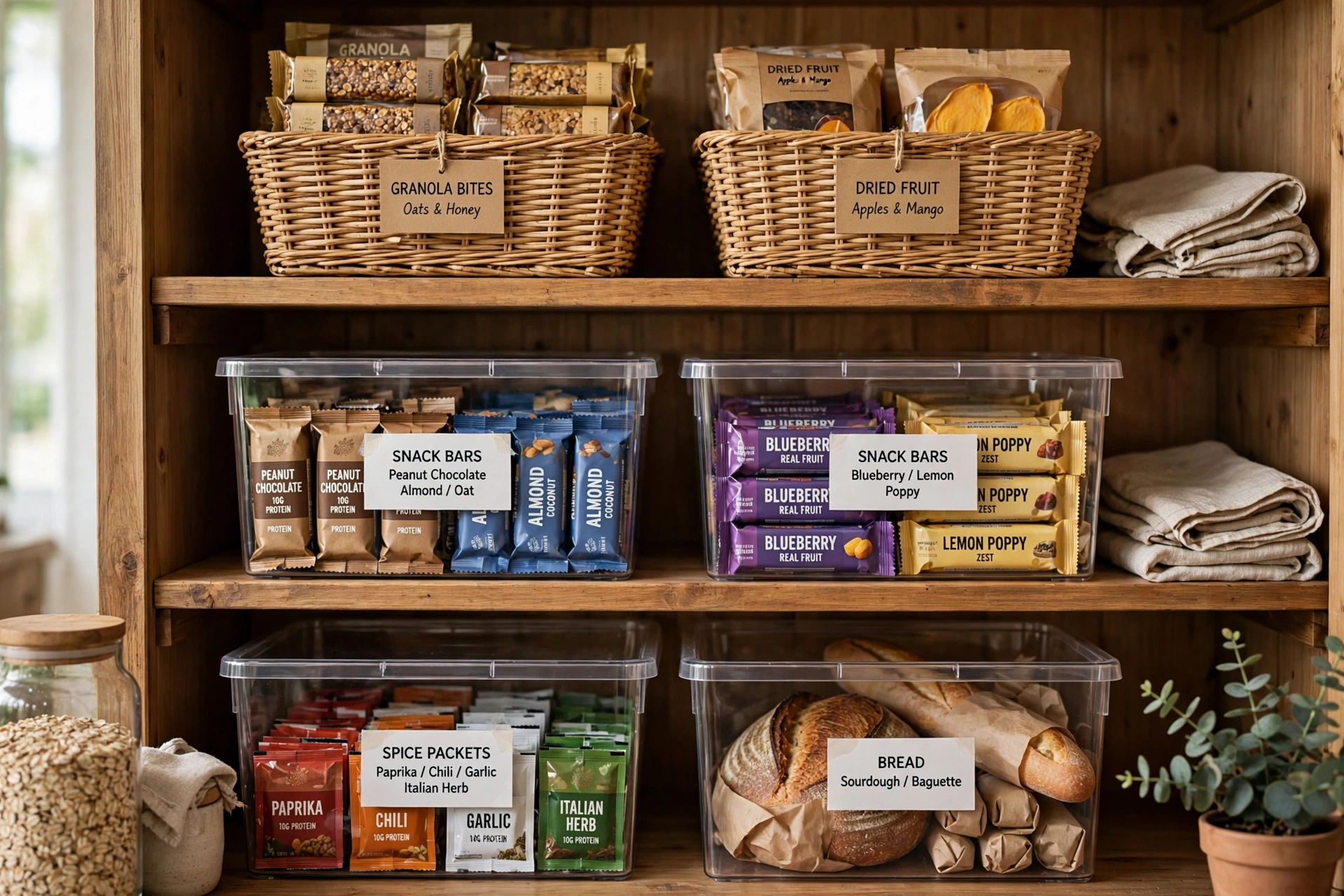
Loose packets, snack bars, spice pouches, and half-open bags become clutter the moment they hit a shelf. Corral them in baskets and bins — one bin per category, pulled out like a drawer when you need something. Small bins for spice packets, medium bins for snacks, a deep bin for bread and wraps.
Pick bins with handles and a low front, so you can see inside without lifting them out. Woven baskets look warm; clear plastic shows contents instantly. Either works — the point is that nothing sits loose on a shelf, and a label on each bin holds the system together.
8. Tiered Risers So Nothing Hides in Back
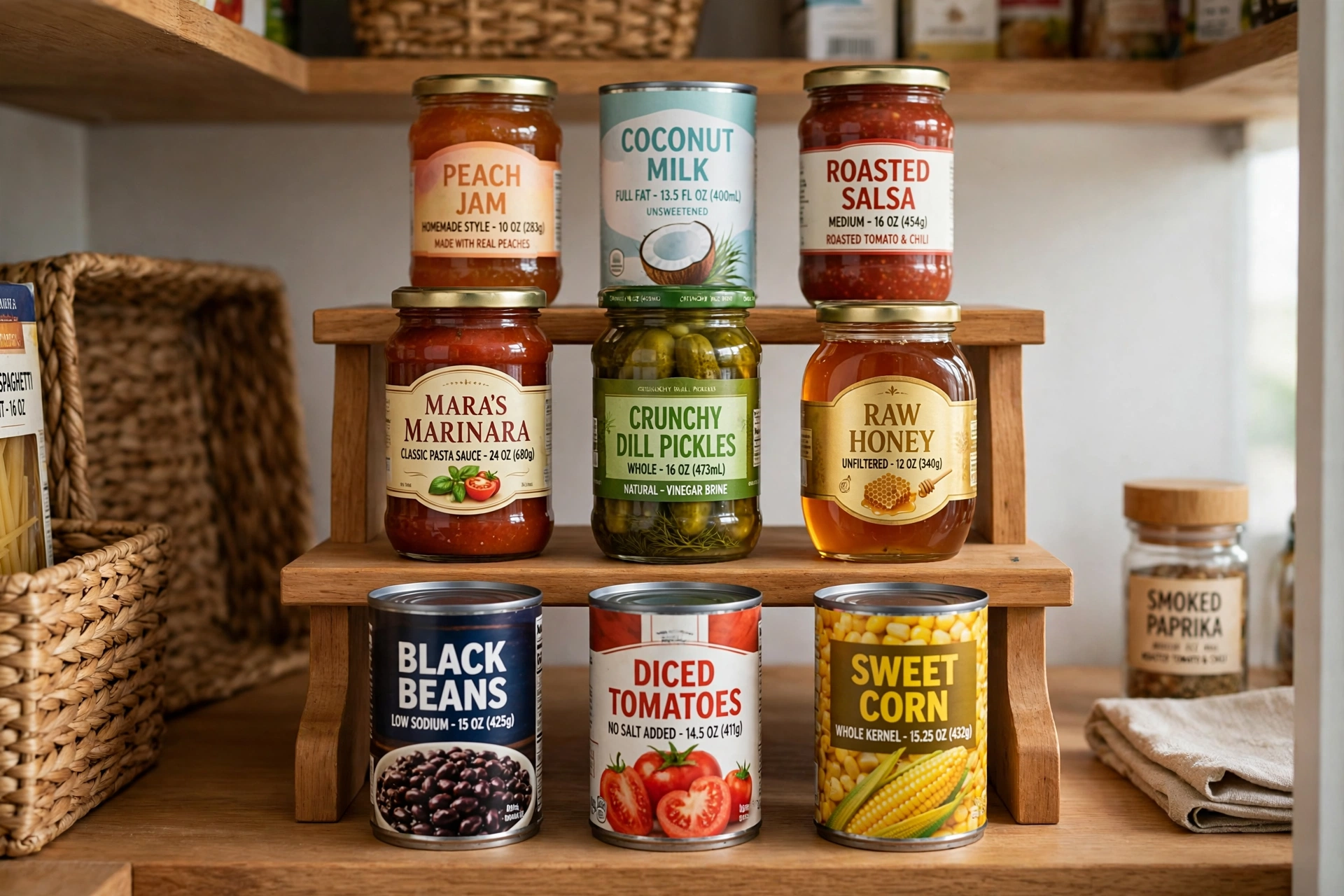
A tiered riser is a small step shelf that lifts the back row of cans and jars above the front row, so every label is visible. Without one, the back row disappears — and that is where expired cans are born. Risers cost about $10 each and fit standard shelves.
Use risers for cans, jars, and small bottles only; heavy items belong on the shelf itself. One per shelf is enough, and two stacked work for tall shelves. If a riser wobbles, a strip of shelf liner underneath fixes it.
9. A Snack Zone Kids Can Reach — Pantry Organization Ideas for Families
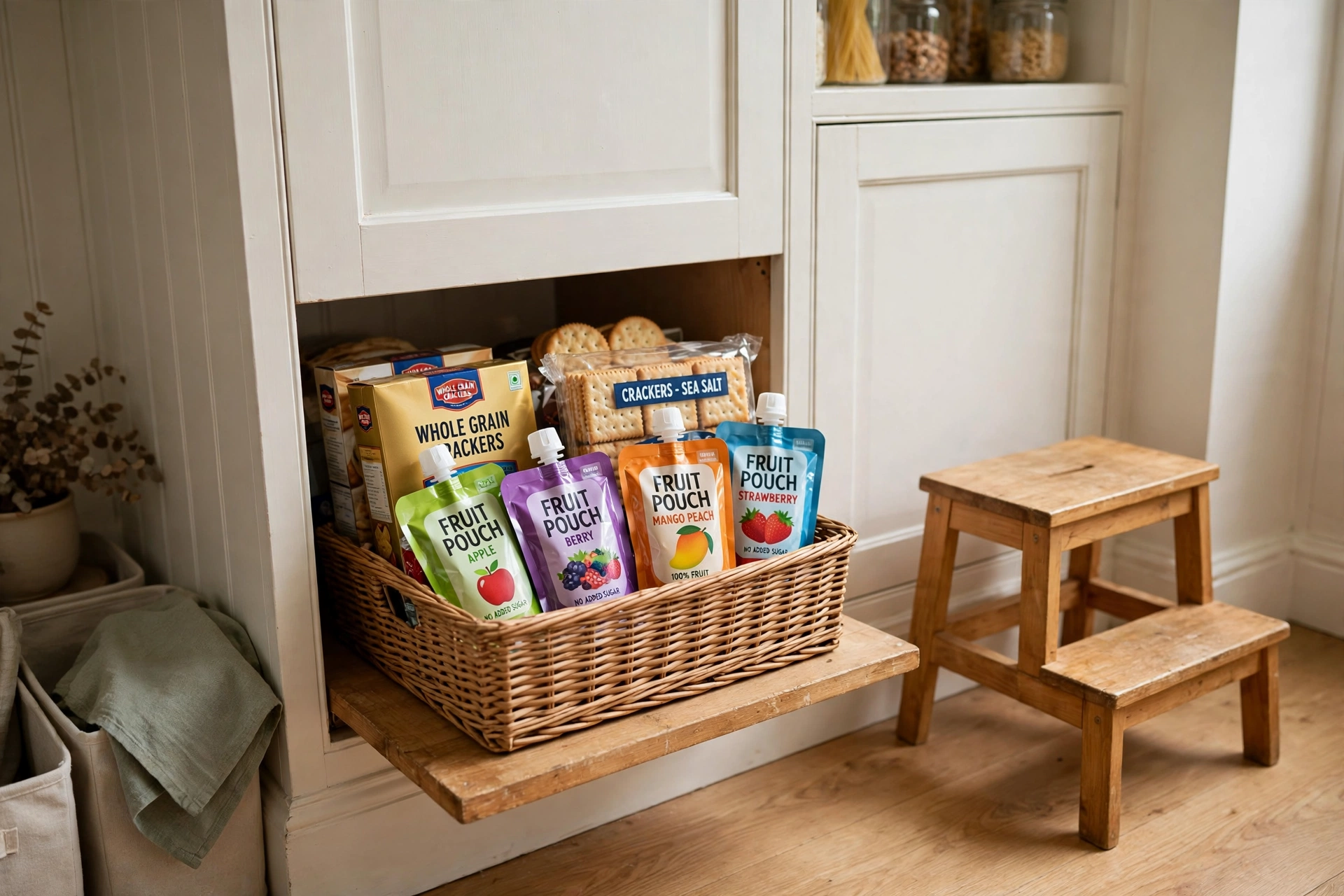
A snack zone at kid height ends the daily “what can I eat?” question. Dedicate one low shelf or bin to snacks children may take themselves — crackers, fruit pouches, granola bars — and keep the rest out of reach. Kids learn to choose, and you stop being the gatekeeper.
Refill the snack bin once a week from the main stock, and keep it to foods you are happy with at any hour. Put candy and baking chocolate up high, in the adult zone. The rule is simple: if it is in the snack zone, it is fair game.
10. The Baking Station — Easy Pantry Organization Ideas for Bakers
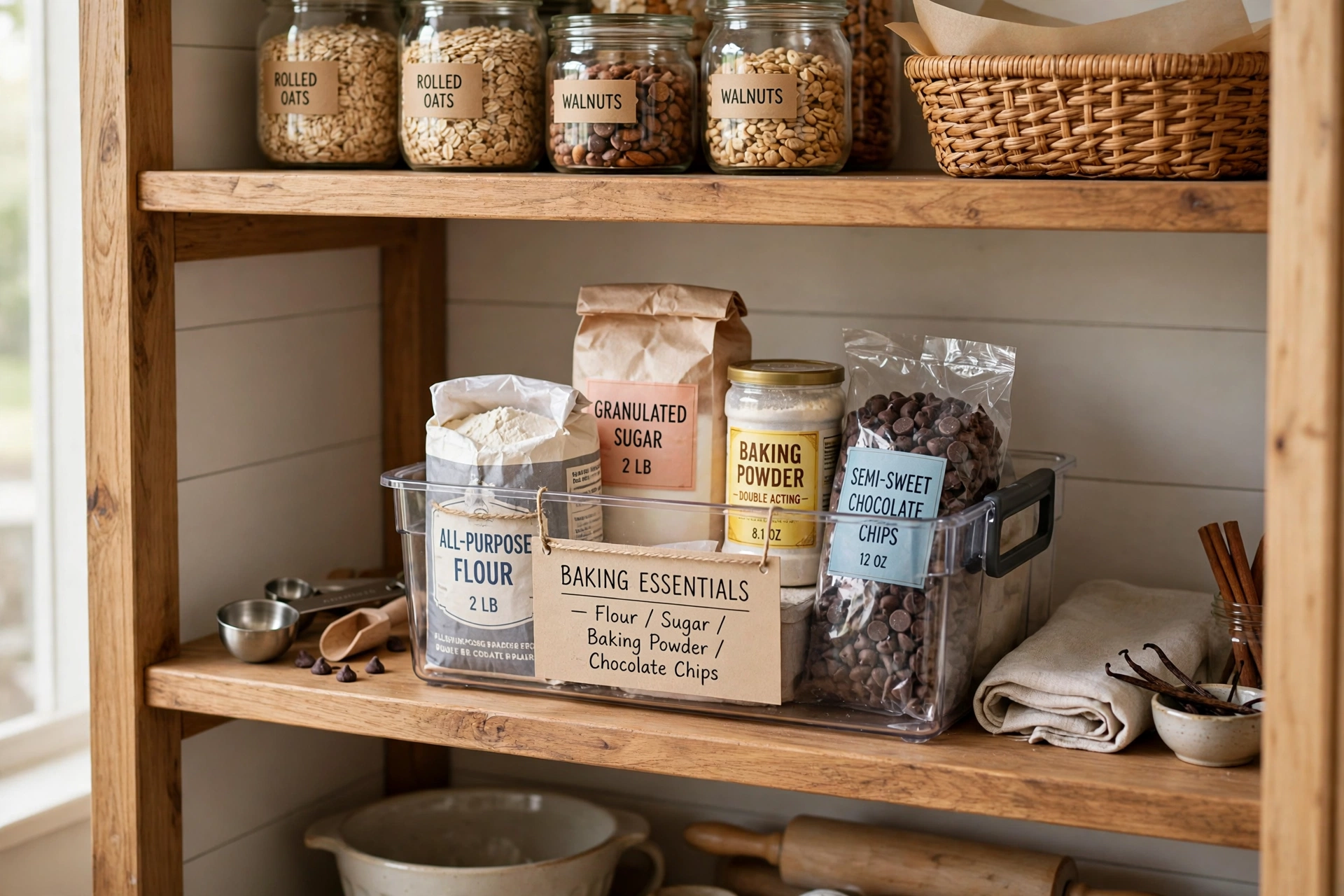
Bakers need one shelf where everything for a batch lives together: flour, sugar, baking powder, baking soda, vanilla, and chocolate chips. Pull the bin out, bake, put it back — no hunting through five shelves for the baking powder.
Keep leavening fresh: baking powder weakens with age and moisture, so store it sealed and replace it yearly. A small basket holds piping tips, cupcake liners, and sprinkles. Weekly bakers earn the eye-level shelf for this station; holiday-only bakers can put it higher.
11. Small Pantry? Go Vertical and Use Every Inch
A small pantry is not a lost cause — it is a vertical one. Add a half-shelf in a tall gap, hang hooks under shelves for mugs and measuring cups, and use the door (Idea 6). Risers and stackable bins turn one shelf into two layers, and most shelves are 12 to 16 inches deep, so a second row fits if the front row stays shallow.
Store the tallest items — cereal boxes, oil bottles — on the sides, and keep the center clear for the bins you reach for daily. Our easy DIY home decor projects on a budget guide has more under-$35 fixes in the same spirit.
12. The Weekly Shop List Lives on the Pantry Door
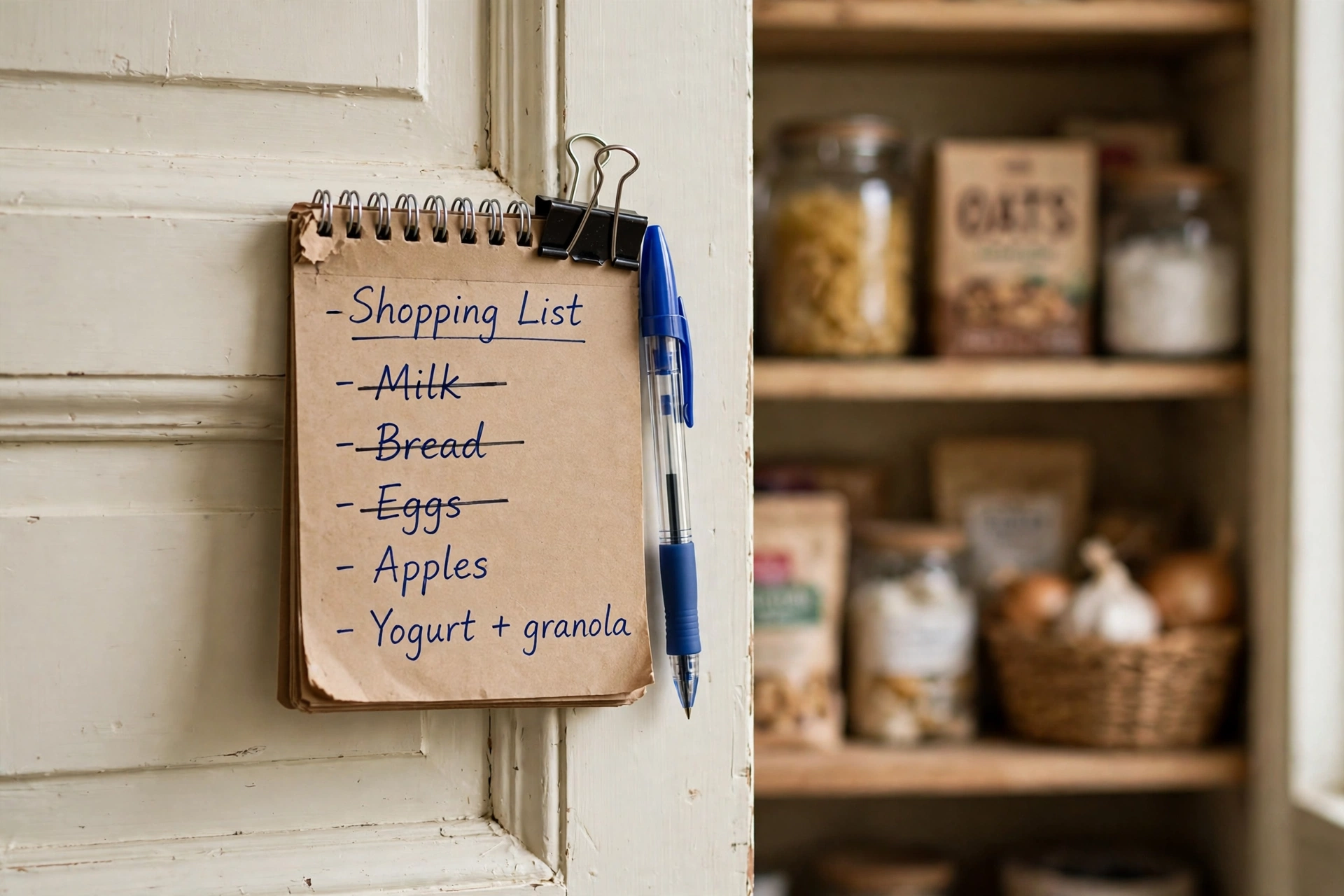
A shopping list that lives on the pantry door gets used — that is where you notice you are out of something, and it is one of the simplest pantry organization ideas, costing nothing. Stick a small notepad or a dry-erase board inside the door, and add items the moment you finish them, not the night before shopping. Cross them off as you buy.
This turns the pantry into its own inventory system. Pair it with the FIFO rule from Idea 5: when you write “rice” on the list, you already know the back row is empty — and a magnetic notepad costs a few dollars.
13. Keep Cans in Order: Low-Acid 2–5 Years, High-Acid 12–18 Months
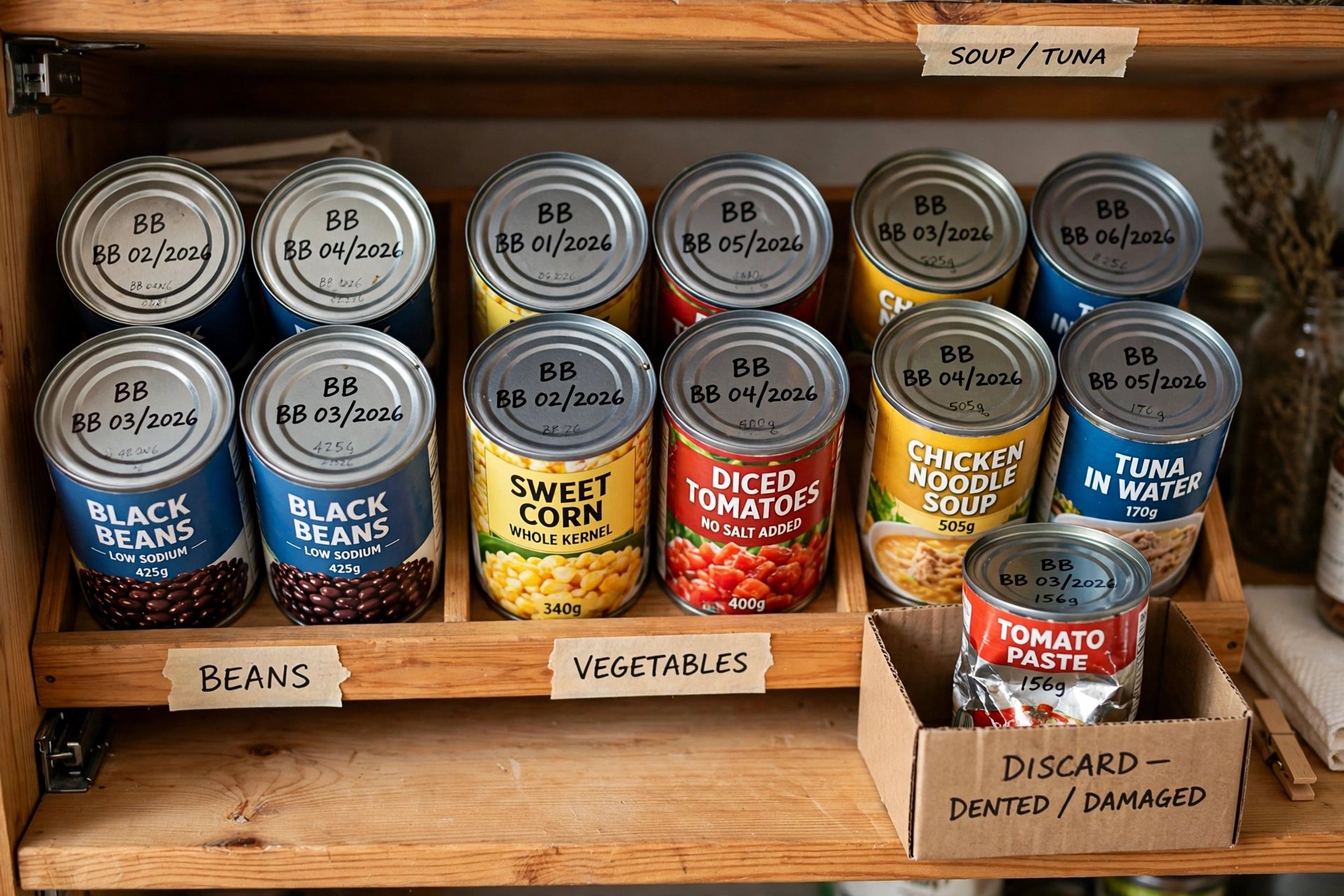
Canned food keeps longer than most people think — but not forever, and not all cans equally. USDA shelf-stable food guidance puts low-acid canned foods (vegetables, beans, meat, soup) at 2 to 5 years, and high-acid canned foods (tomatoes, fruit, pickles) at 12 to 18 months — quality windows, not hard safety cutoffs, as long as the can is undamaged.
Toss any can that is bulging, leaking, deeply dented, or rusted, whatever the date says. The USDA’s guide to storing dry goods adds the storage rule that makes those numbers real: keep canned goods cool, clean, and dry, away from extreme heat or cold — never above the stove or in a damp garage, and never let them freeze.
14. A Deep-Clean Reset Every Season — Pantry Organization Ideas That Last
A pantry stays organized only if someone resets it, and once a season is the right rhythm. Every three months, pull out one shelf at a time, wipe it down, toss expired items, and put everything back by zone — about 30 minutes, less than a load of laundry.
Seasonal resets catch the slow drift: the snack bin that migrated, the baking shelf that filled with random jars, the can that expired two years ago. Tie it to a season change so you remember — first weekend of spring, summer, fall, and winter. Our 10-minute daily cleaning habits guide keeps the kitchen tidy between resets.
15. One System for the Whole Pantry — Calm Pantry Organization Ideas
The last idea holds the other fourteen together: pick ONE system and use it everywhere — same bins, same labels, same zones, on every shelf. A pantry with one look is a pantry you can read at a glance, and one anyone in the house can put away without asking.
It is also the cheapest way: one set of matching bins costs less than five different kinds, and the shelves look calm instead of chaotic. Live with the system for a month before changing it — and if the pantry still fights you, the answer is usually fewer things, not more bins. Our home organization ideas guide shows the same one-system rule for the rest of the house.
Frequently Asked Questions
Q: How do I organize a small pantry?
A: Start by emptying it and keeping only what you use. Then zone by use, add a half-shelf or risers for vertical space, use the door for spices and packets, and decant staples into stackable square containers.
Q: Should I decant everything into containers?
A: No — decant only the staples you use constantly: flour, sugar, rice, pasta, cereal, coffee. Five or six clear airtight containers are enough; keep the rest in its packaging, and label each container with its contents and fill date.
Q: How long do canned goods last in the pantry?
A: Per USDA guidance, low-acid canned foods (vegetables, beans, meat, soup) keep 2 to 5 years, and high-acid canned foods (tomatoes, fruit, pickles) keep 12 to 18 months. Those are quality windows, not safety cutoffs — a sealed, undamaged can kept cool and dry can be safe well beyond them — but toss any can that bulges, leaks, or is dented or rusted.
Q: How do I keep pantry pests out?
A: Store dry goods in sealed airtight containers, keep shelves clean and dry, and check bags of flour, rice, and pasta when they come home — pantry moths often arrive inside packaging. Toss anything with webbing or tiny holes, wipe the shelf, and decant new bags before they go on the shelf.
Q: How often should I clean out my pantry?
A: Do a quick check monthly — toss anything expired while you put groceries away — and a full reset every season, about 30 minutes per pantry. That is when you re-check zones, replace worn labels, and confirm the rotation rule still works.
Related Reading
- Home Organization Ideas
- Small Home Organization Ideas on a Budget
- How to Declutter Your Home Room by Room
- Small Closet Organization Ideas
- Easy Home Cleaning Hacks
- 10-Minute Daily Cleaning Habits
Pantry organization ideas work when they follow how you cook: zones by use, clear containers, labels you can read, and first in, first out. Start with the empty-shelf reset, build one zone at a time, and let the seasonal reset keep it honest.