15 Pet-Safe Christmas Decor Ideas for Homes With Dogs and Cats
Introduction
A Christmas tree is a playground to a dog and a climbing gym to a cat. To your pets, the tree is full of shiny things to bat, chew, and chase, the cords are toys, the water in the stand is a drink, and the wrapped gifts underneath smell like treats. That is exactly why decorating for Christmas in a home with pets takes a different kind of planning — not less festive, just smarter.
These pet safe Christmas decor ideas are built for homes with dogs and cats, room by room and decoration by decoration. You will learn how to anchor the tree so a curious cat cannot topple it, which ornaments can survive a swat from a paw, which classic holiday plants to skip entirely, and how to keep cords, candles, and edible decor safely out of reach. The goal is a home that still looks like Christmas — warm, glowing, and full of cheer — while your pets stay safe through the whole season. If your home also has little kids, pair these ideas with our Christmas kids room decor ideas for a holiday setup that works for the whole family.
1. Anchor the Tree So It Cannot Topple
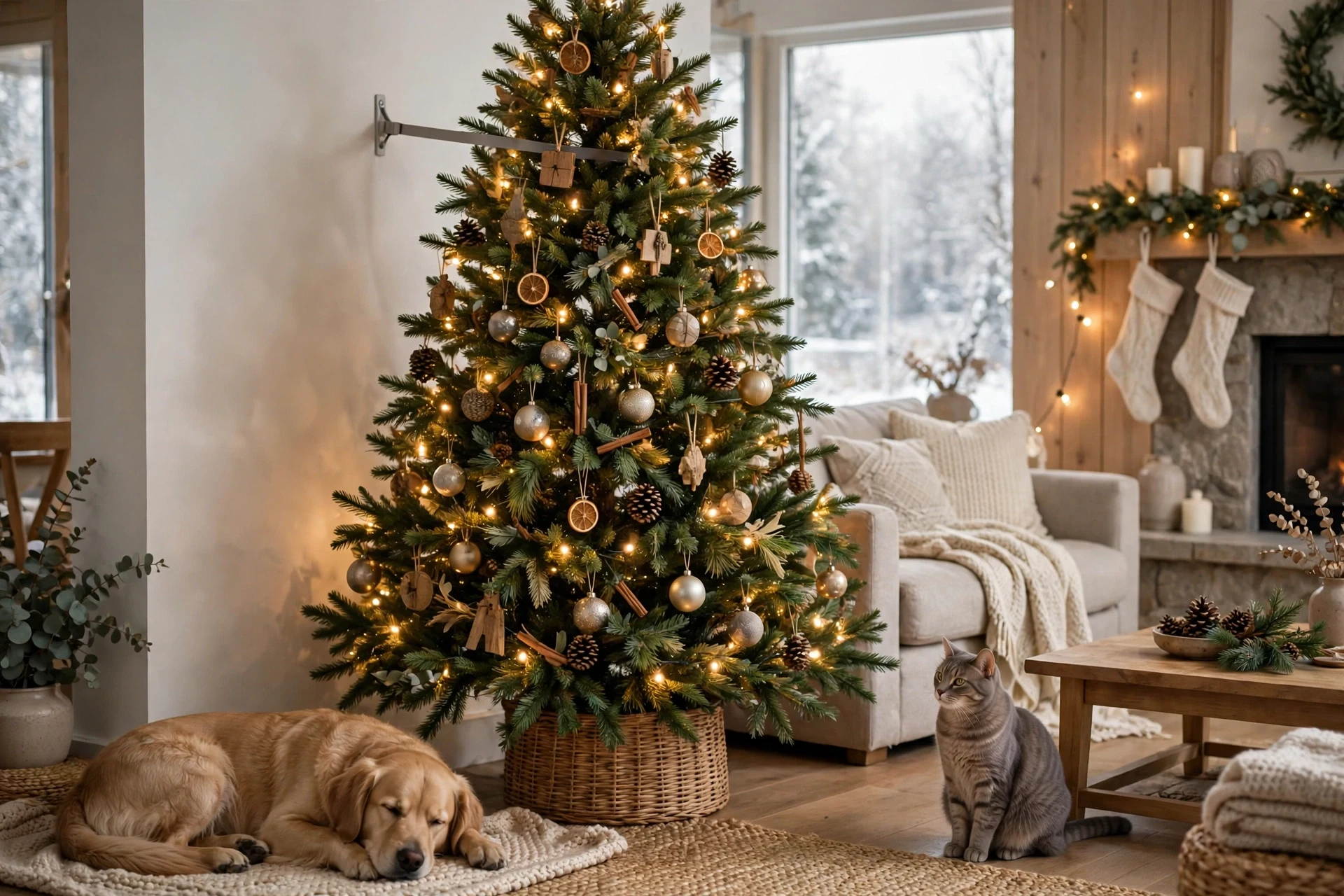
A cat launching itself at a low branch or a large dog bumping the tree during a game of fetch can send a whole Christmas tree crashing to the floor — and a falling tree means broken ornaments, spilled stand water, and a very frightened pet. The single most important pet-safety move you can make is anchoring the tree before a single ornament goes on it. Use a wall strap, a length of fishing line, or a purpose-made tree anchor to tie the trunk to a wall stud or a heavy piece of furniture behind it, and choose a wide, heavy tree stand that will not tip easily.
Anchoring takes about ten minutes and it changes everything about how the tree behaves. Once the tree is secured at the top and weighted at the bottom, your cat can climb a branch or two and your dog can brush past it without the whole thing coming down. Check the strap once a week through the season, because a live tree dries out and shifts slightly as it settles. A tree that stays upright is safer for your pets, your ornaments, and your floors — and it is the foundation every other idea in this list builds on.
2. Choose Shatterproof Ornaments Only
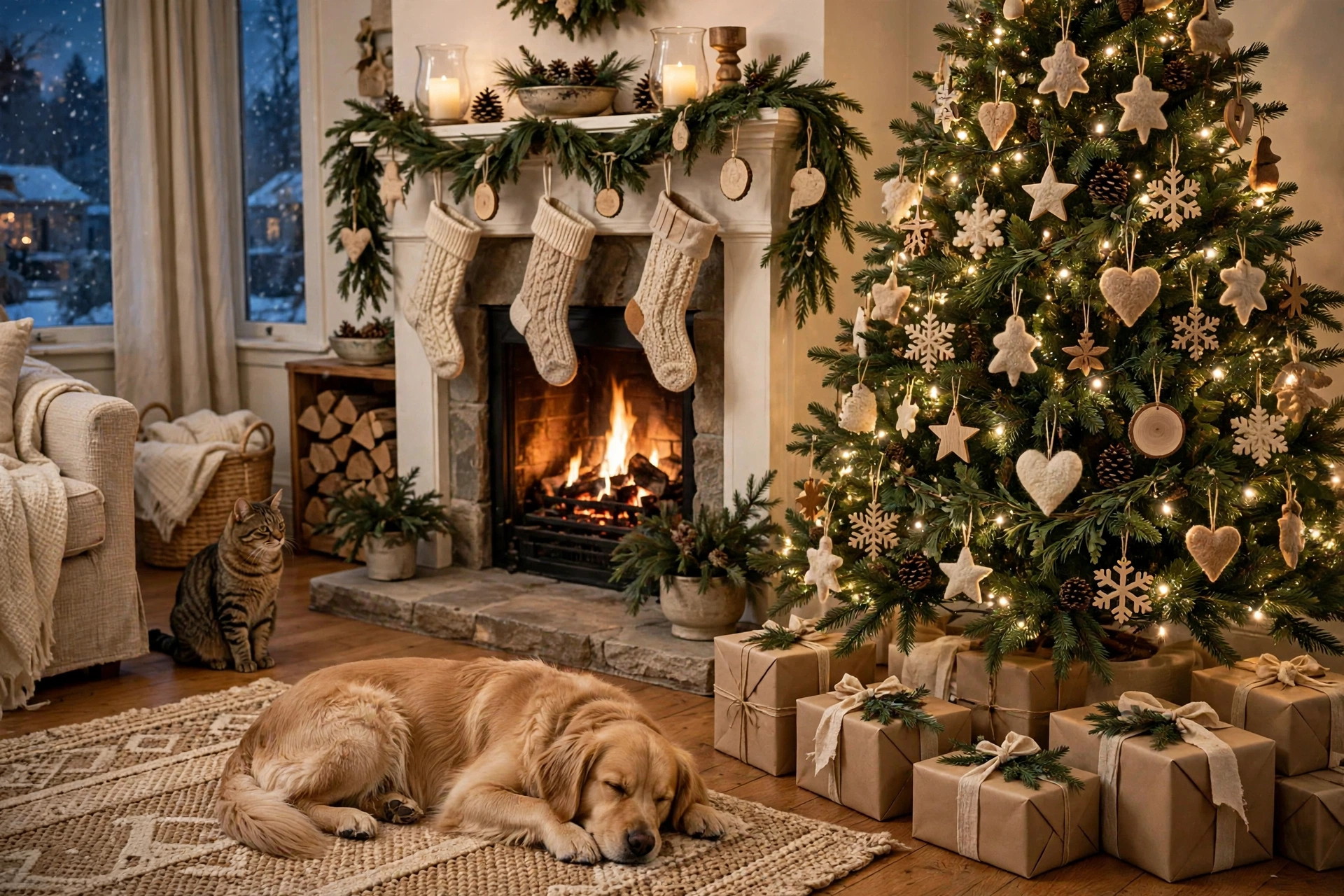
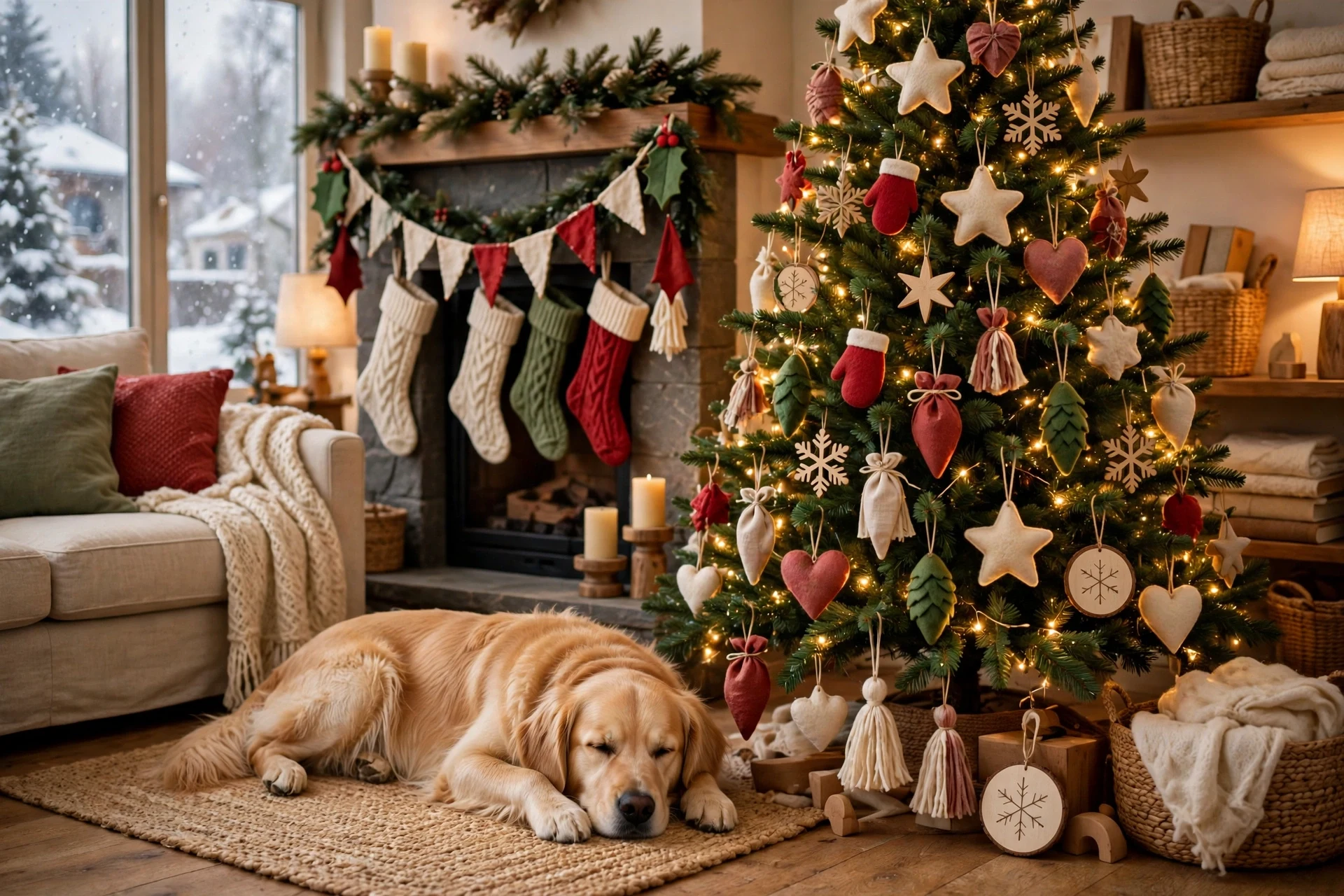
Glass ornaments are beautiful, and they are also the first thing a paw knocks off the tree. A shattered glass ornament leaves sharp shards on the floor that can cut paws and get swallowed, and the glitter and paint on broken pieces are an extra hazard. In a home with pets, the rule is simple: every ornament within reach should be shatterproof. Felt, wood, fabric, and high-quality plastic ornaments look just as festive as glass, and when they fall they bounce instead of breaking.
Shatterproof does not mean boring. Felt animals, wooden stars, fabric snowflakes, and painted resin ornaments come in every color and style, and mixing textures actually makes a tree look richer. Keep any precious glass ornaments you already own in a display on a high shelf or in a closed cabinet, where they can be enjoyed without risk. Save the lowest branches for the toughest ornaments, and hang the prettiest felt and wood pieces at pet-eye level — that way the tree still looks full and finished, and the worst thing a curious paw can do is knock an ornament onto the rug.
3. Skip the Tinsel — Especially With Cats
Tinsel looks like harmless sparkle, but for cats it is one of the most dangerous Christmas decorations there is. Cats are drawn to the shiny, fluttering strands, and once a cat starts playing with tinsel it is very easy for them to swallow a piece. Swallowed tinsel can cause serious digestive problems, and it is one of the most common holiday emergencies veterinarians see in cats. The safest choice is to leave tinsel off the tree entirely.
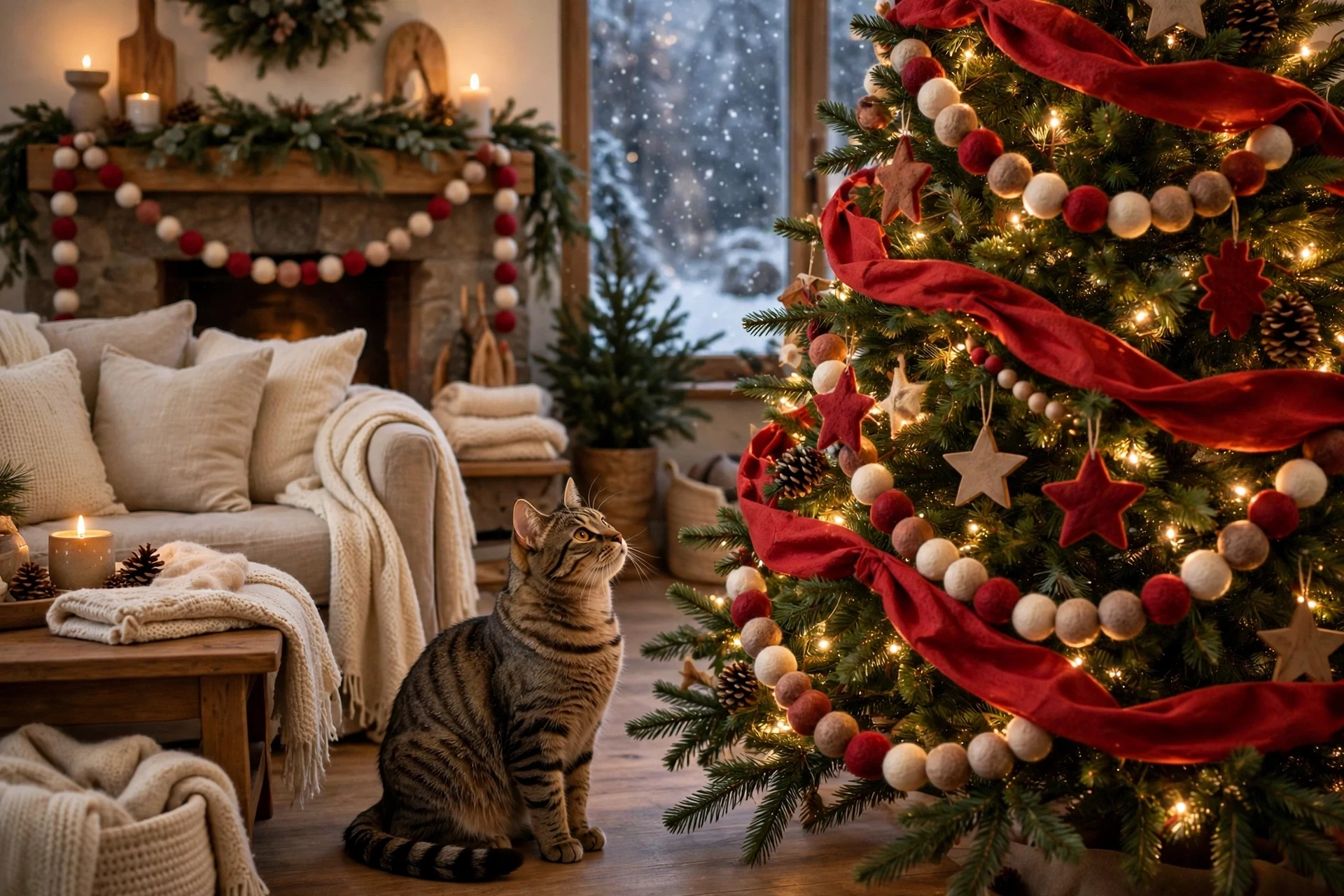
You do not have to give up the shimmer. Wide fabric ribbon, felt garland, and strands of wooden beads give a tree the same festive fullness without the risk, and they look more expensive than tinsel anyway. If you love sparkle, add it with shatterproof glitter ornaments and warm lights instead. A tinsel-free tree still glows, still photographs beautifully, and never sends your cat to the vet — which is the easiest trade in this whole list.
4. Skip the Toxic Plants: Lilies, Mistletoe, and Holly
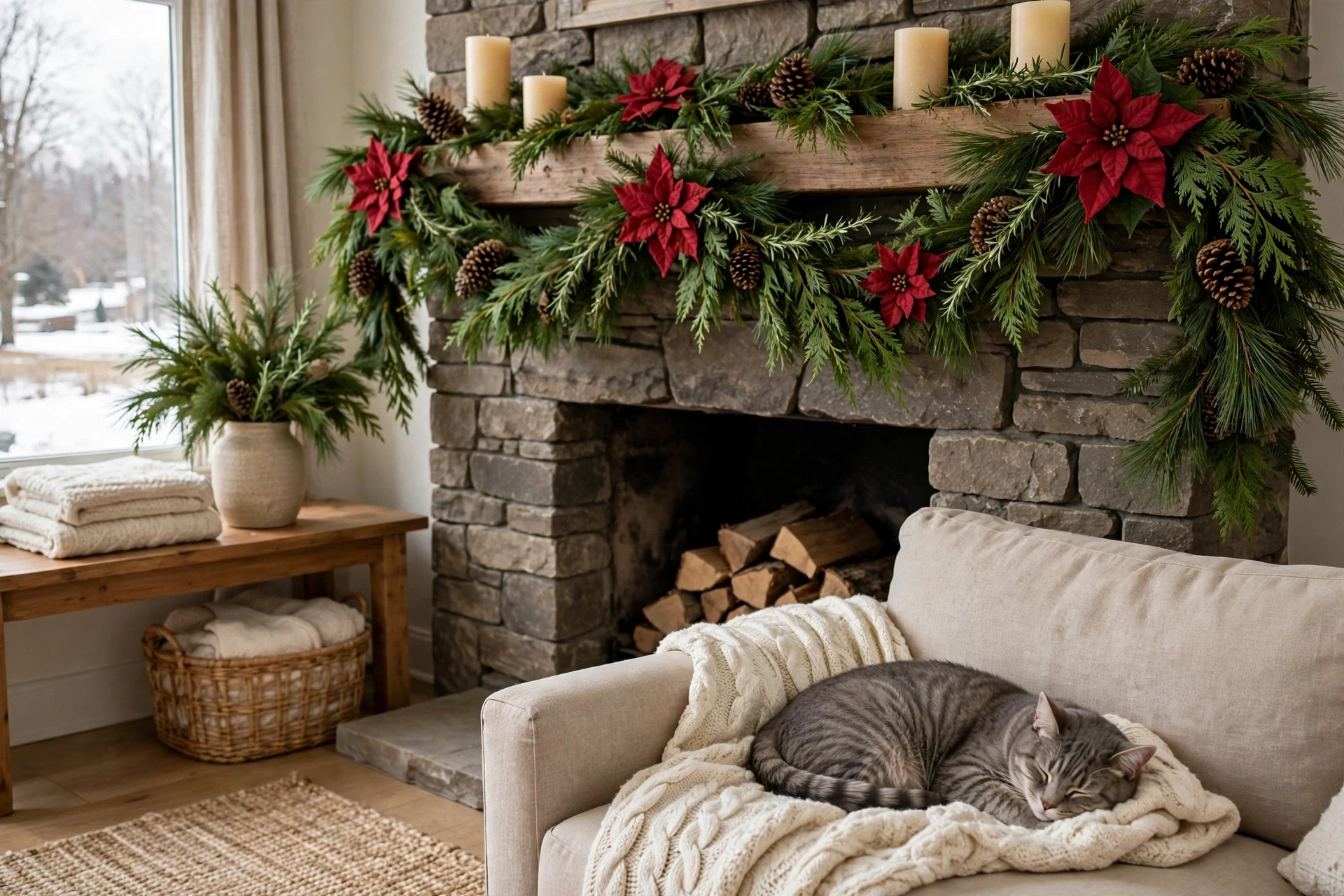
Some of the most classic Christmas plants are unsafe for pets, and this is the one area where guessing is not good enough. Lilies are extremely dangerous for cats, and mistletoe and holly can cause serious problems for both dogs and cats if chewed or eaten. The safest approach is to skip these three plants entirely and choose pet-friendly greenery instead — fresh pine, spruce, and cedar branches, rosemary, and silk or fabric versions of the classics all give you the same holiday look.
If you love the look of a traditional plant, keep it somewhere your pets truly cannot reach, like a high shelf in a closed room — but honestly, the simplest rule is the best one: if it is on the toxic list, it does not come into the house. Before you buy any plant, flower, or greenery this season, check the ASPCA’s toxic and non-toxic plant list first. It takes two minutes and it is the most reliable reference for pet owners. A quick check before you buy beats a panicked vet visit every time.
5. Cover Every Cord and Go Cordless Where You Can
Christmas light cords are irresistible to pets. To a puppy they are chew toys, to a kitten they are strings to pounce on, and a chewed cord can shock a pet or start a fire. Start by running cords behind furniture and along baseboards instead of across open floor, then cover any exposed length with hard plastic cord covers or cord protectors — the rigid kind, not the soft foam kind a determined chewer can bite through. Tape the covers down so they cannot be nosed aside.
Better still, go cordless wherever you can. Battery-operated string lights, flameless candles, and battery-powered window candles remove the cord problem entirely, and modern LED versions last for weeks on a set of batteries. For the tree itself, use a single cord run straight from the tree to the outlet behind it, covered the whole way, and plug it into a power strip with a switch you can turn off when you leave the room. No dangling cords, no tempting loops on the floor, and no reason for a curious mouth to investigate.
6. Use Flameless Candles Only
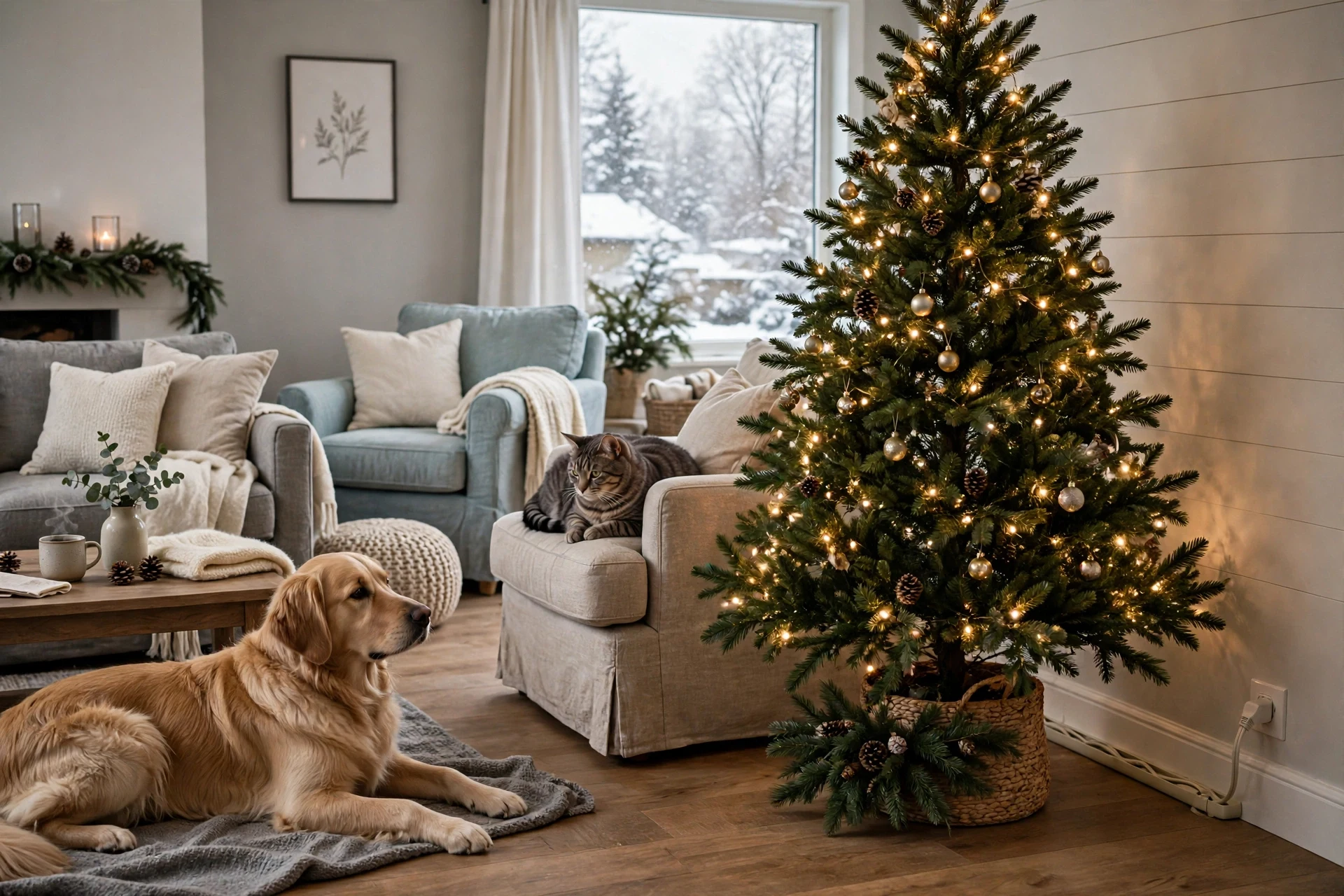
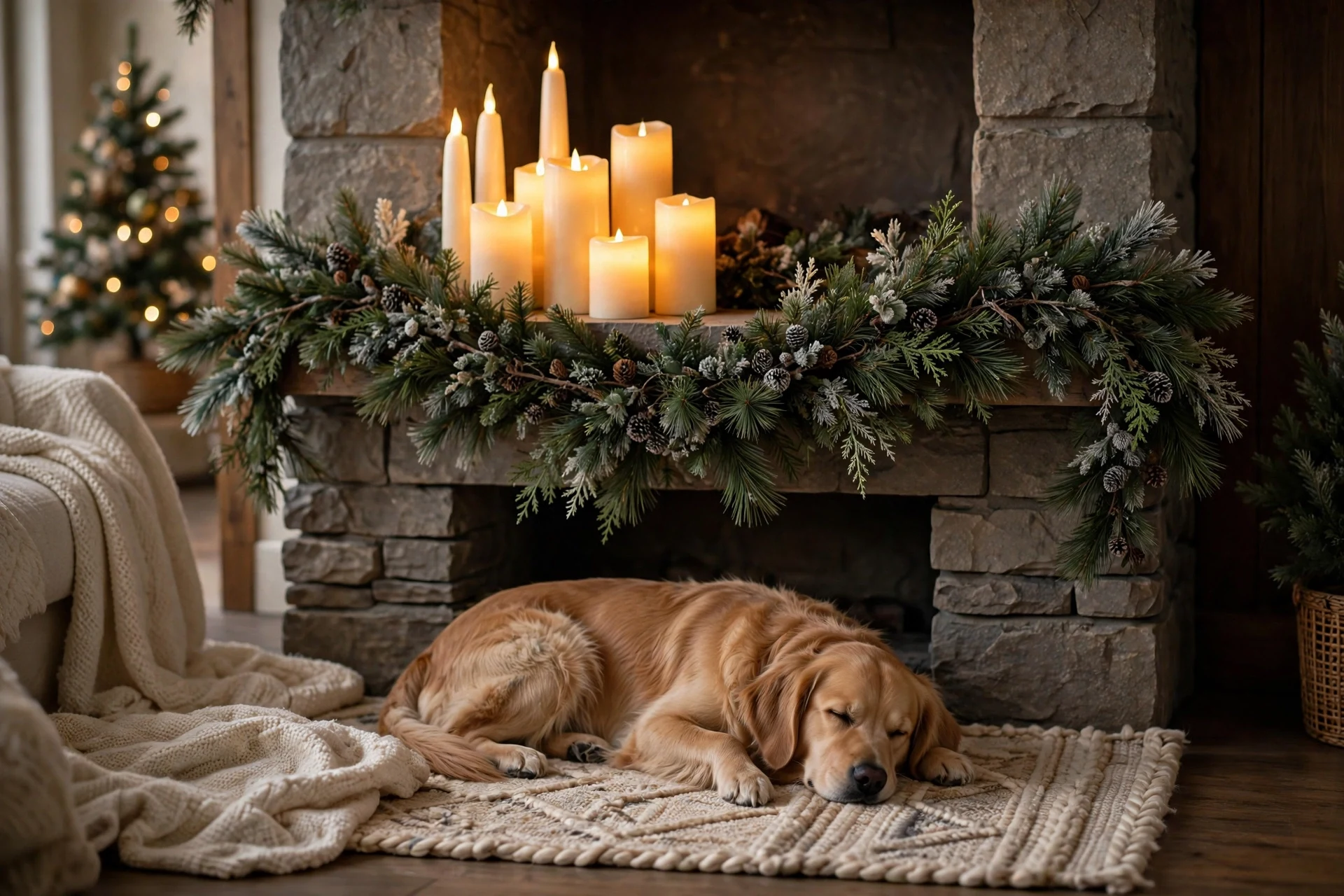
A real candle flame and a pet in the same room is a bad combination. A wagging tail can knock a candle over, a cat can jump onto a mantel and brush a flame, and a curious nose can get burned investigating the glow. Flameless LED candles give you the same warm flicker and the same cozy holiday glow with zero fire risk, and the best ones are almost impossible to tell apart from real candles from across the room.
Flameless candles are also more practical for decorating. You can put them inside lanterns, cluster them on a mantel, set them in windows, and even place them inside the tree itself — places you would never put a real flame. Choose candles with a remote control and a timer so they turn themselves off at bedtime, and pick the warm-white ones for the most realistic glow. Keep any real candles you love in a room your pets never enter, or save them for a special evening when the pets are settled elsewhere. For everyday holiday ambiance, flameless is the way.
7. Give Your Pet a Corner by the Tree
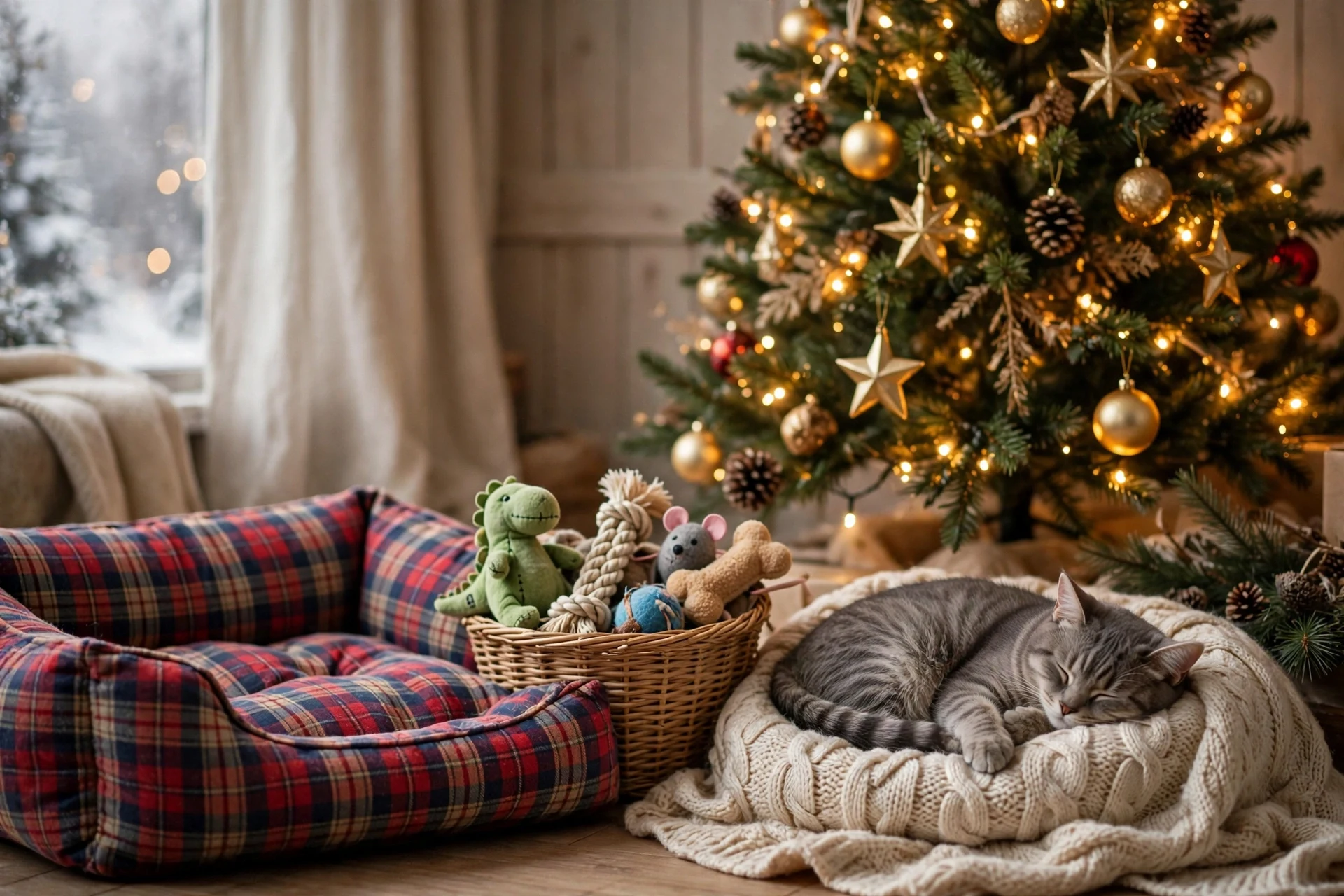
Pets hang around the tree because that is where the family is — so give them a place of their own right there. Set up a pet corner a few feet from the tree: a comfortable bed or blanket, a favorite toy or two, and a chew or a treat puzzle to keep them happily occupied. When your dog or cat has their own cozy spot, they are far less likely to climb into the tree or bat at the lowest ornaments.
The pet corner works best when it feels like a reward, not a banishment. Put it where your pet can still see the room and be near you, and refresh the toys every few days so the spot stays interesting. A washable bed in a holiday color ties the corner into your decor, and a small basket for toys keeps everything tidy. This is the idea that turns pet-proofing from a list of “no” into a “yes” — your pet gets a special place, and your tree gets left alone.
8. Hang Ornaments Up High and Keep the Bottom Branches Bare
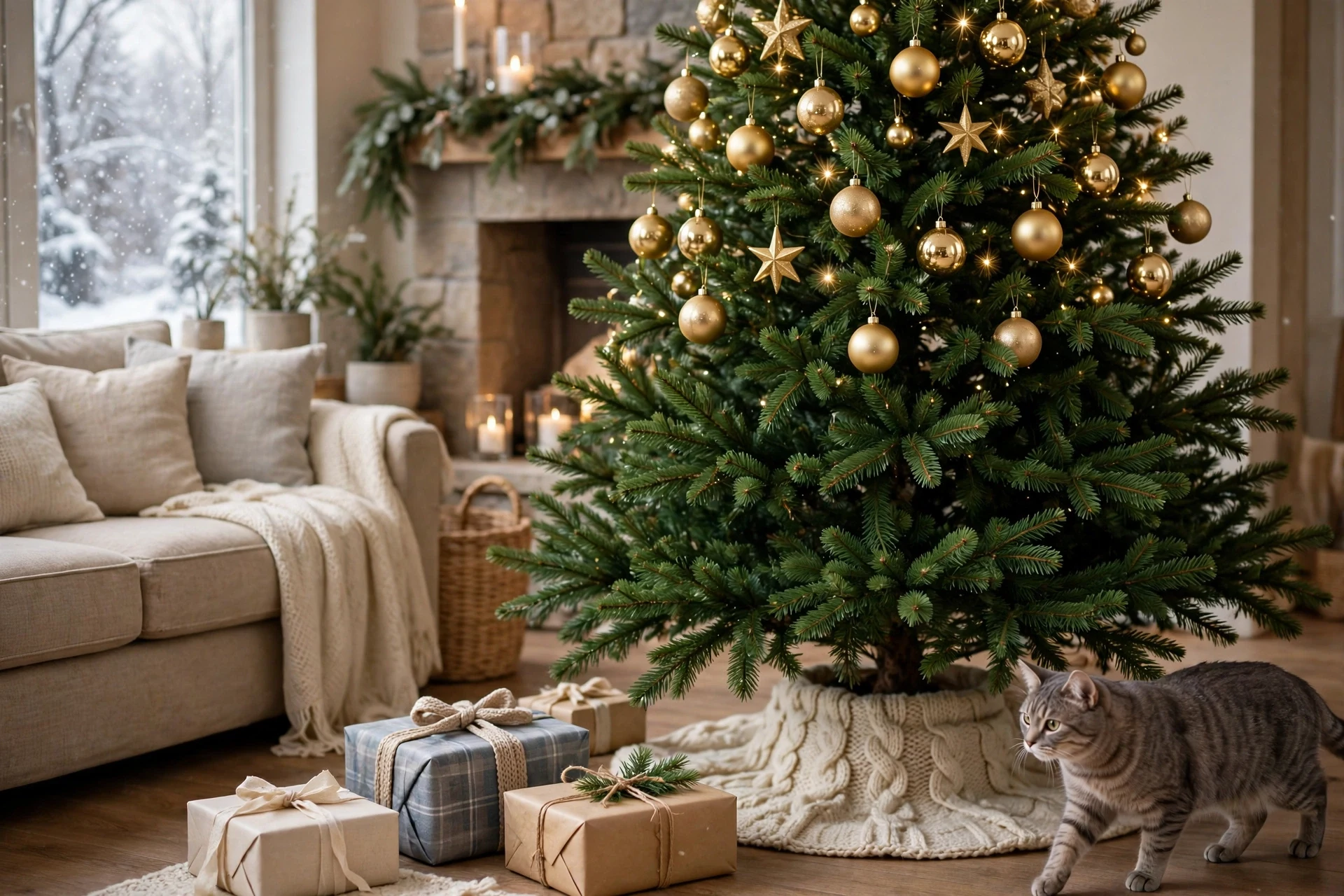
The bottom third of the tree is pet territory — it is exactly at nose, paw, and tail height. The simplest way to protect both your ornaments and your pets is to leave the lowest branches mostly bare, or decorate them only with large, soft, shatterproof ornaments that cannot be swallowed and will not break. Hang your favorite and most delicate pieces in the top two-thirds of the tree, well above the reach of a jumping cat or a standing dog.
This one move solves more problems than almost any other. There is nothing dangling at eye level to bat, nothing small enough to chew, and nothing within reach of a wagging tail. The tree still looks full from across the room, because the eye is drawn to the decorated middle and top, and the bare lower branches read as intentional when the tree skirt and presents fill the space below. For more tree styling ideas that work with this approach, see our Christmas tree decor ideas.
9. Keep Edible Decor Out of Reach
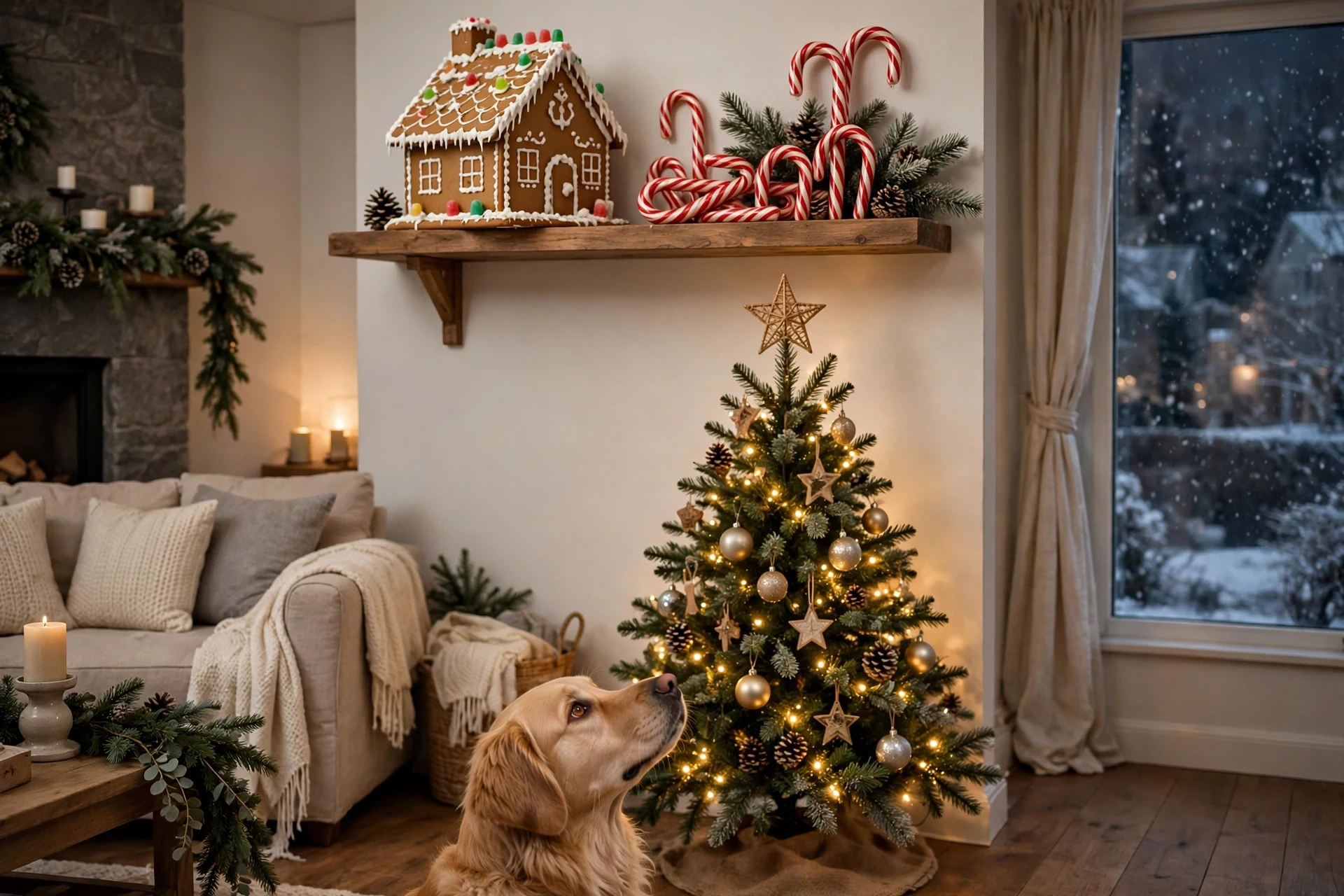
Chocolate ornaments, candy canes, popcorn strings, and gingerbread decorations are a holiday tradition — and they are all dangerous for pets. Chocolate is toxic to dogs and cats, candy canes can break into sharp pieces, and anything hung low enough to grab will be grabbed. The rule is simple: nothing edible goes on the tree or on any surface your pets can reach, no matter how cute it looks.
You can still enjoy edible holiday decor, just keep it where pets cannot get to it. Put the gingerbread house on a high shelf, keep the candy cane bowl on a tall console, and hang popcorn garland only in a room the pets do not enter. And keep wrapped gifts with food inside — boxes of chocolates, cookie tins — on a high shelf until they are opened, because a dog that smells chocolate through wrapping paper will not wait for Christmas morning. If your pet does get into something they should not have, call your veterinarian right away rather than waiting to see what happens.
10. Secure the Tree Skirt So It Cannot Be Chewed or Pulled
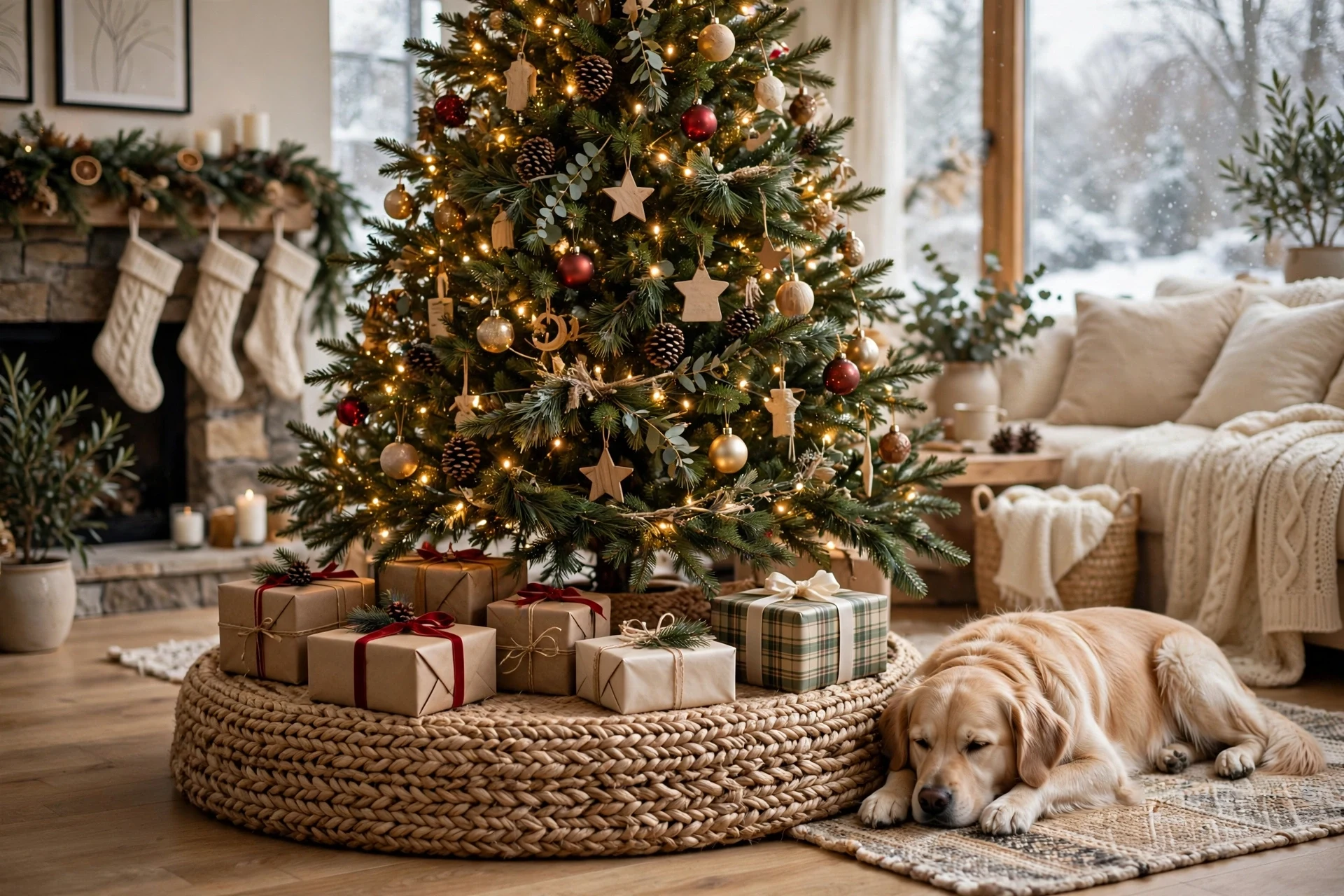
A tree skirt looks soft and inviting to a pet — it is a blanket that smells like the tree, right at floor level. Dogs chew it, cats knead it and drag it across the room, and a skirt that gets pulled can drag ornaments off the low branches with it. Choose a heavy, tightly woven tree skirt instead of a loose, fluffy one, and secure it in place with a few discreet stitches or safety pins attaching it to the tree stand, or weigh the edges down with a couple of decorative weights hidden under the folds.
A secured skirt also keeps the tree stand water covered, which matters more than most people realize: the water in a live tree stand can contain sap, preservatives, and bacteria, and pets will drink it if they can reach it. A snug skirt over the stand, plus a fitted stand cover, keeps curious tongues out. Pick a skirt you can toss in the washing machine, because even a secured skirt will collect pet hair and the occasional paw print by the end of the season.
11. Put a Baby Gate or Playpen Around the Tree for Puppies
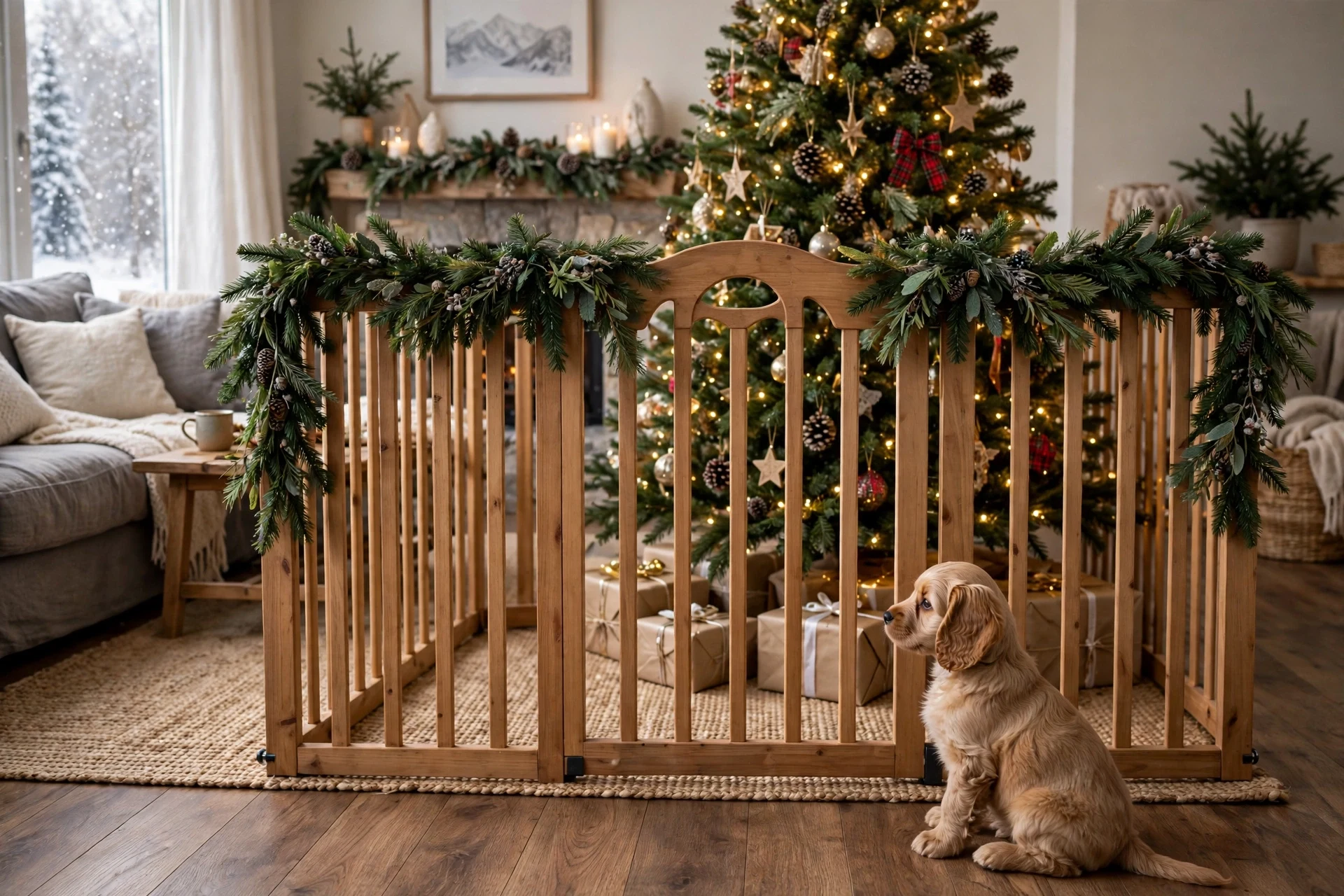
Puppies and young dogs explore the world with their mouths, and a Christmas tree is the biggest, most exciting new object in the house. For the first holiday season with a puppy — or any time you have a very curious dog — the most reliable solution is a physical barrier. A decorative baby gate, a freestanding playpen, or a low fireplace screen arranged around the tree keeps your puppy out of the branches while still letting everyone see and enjoy the tree.
A barrier is not a punishment, and it does not have to look ugly. Freestanding wooden gates and decorative metal screens come in finishes that match your holiday decor, and a garland draped along the top of the gate turns the barrier into part of the display. Use the gate when you cannot supervise — when you leave the room, at night, and during parties — and take it down for supervised family time by the tree. Most puppies outgrow the need for it after one season, and your ornaments will survive to see the next one.
12. Choose Safe Garland: Fabric, Felt, and Wood
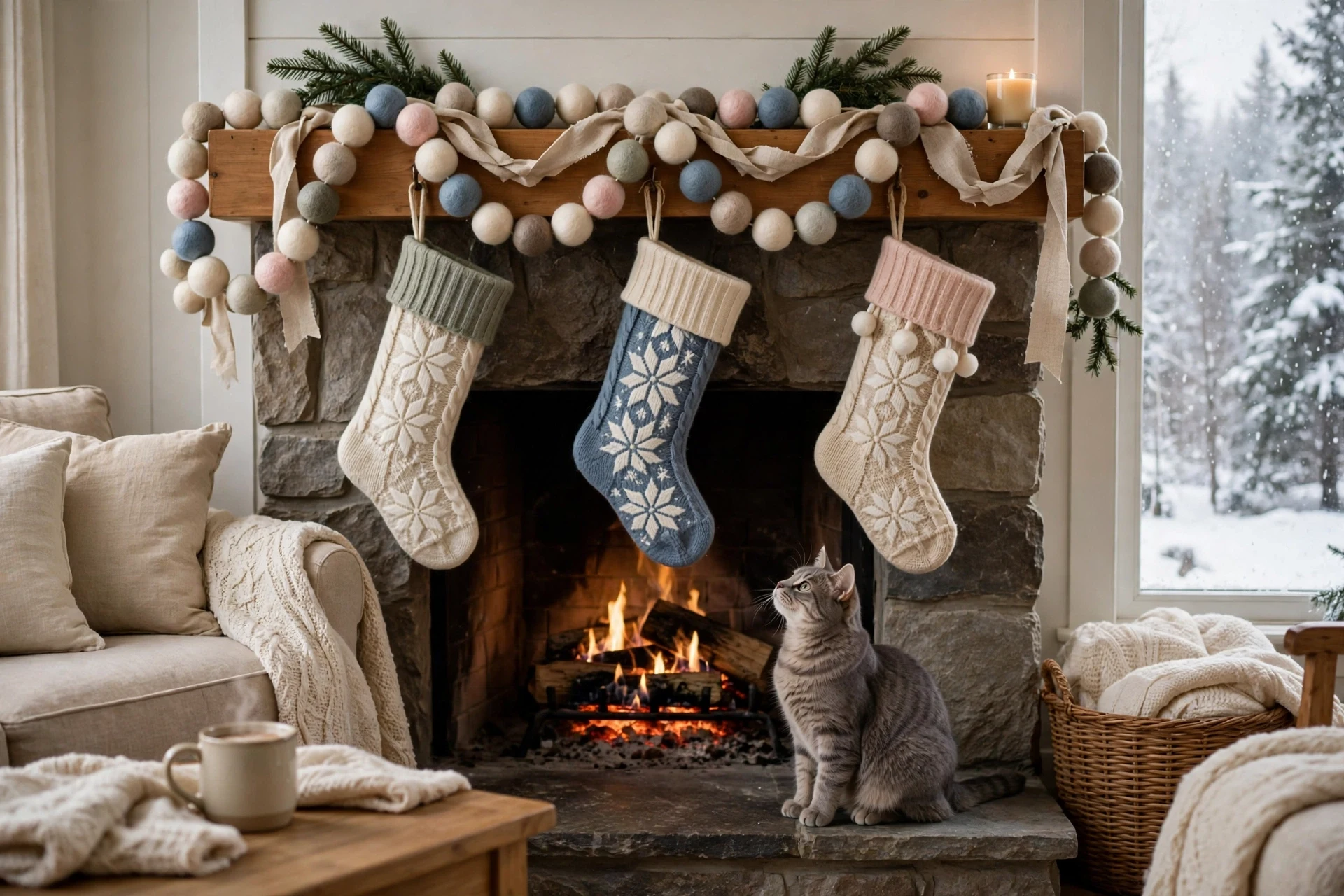
Garland drapes at exactly the height where pets can reach it, so the material matters as much as the look. Beaded garland is a choking hazard, thin tinsel garland is a swallowing hazard, and anything with small glued-on pieces will come apart under a determined paw. Safe garland is made from fabric, felt, wood, or thick rope — materials that are too big to swallow, too sturdy to shred in one bite, and soft enough not to hurt a pet that bats at them.
Felt ball garland, wooden bead garland with large beads strung on thick cord, and fabric ribbon garland all look warm and handmade, and they hold up to a season of curiosity far better than the fragile stuff. Hang garland high on the mantel and the top of the tree, and secure the ends with hooks or ties so a pet cannot pull a whole strand down in one tug. If you love a full, layered garland look, layer two safe materials together — felt balls over a fabric ribbon, for example — and you get the richness without any of the risk.
13. Keep the Water Bowl Away From Cords and the Tree
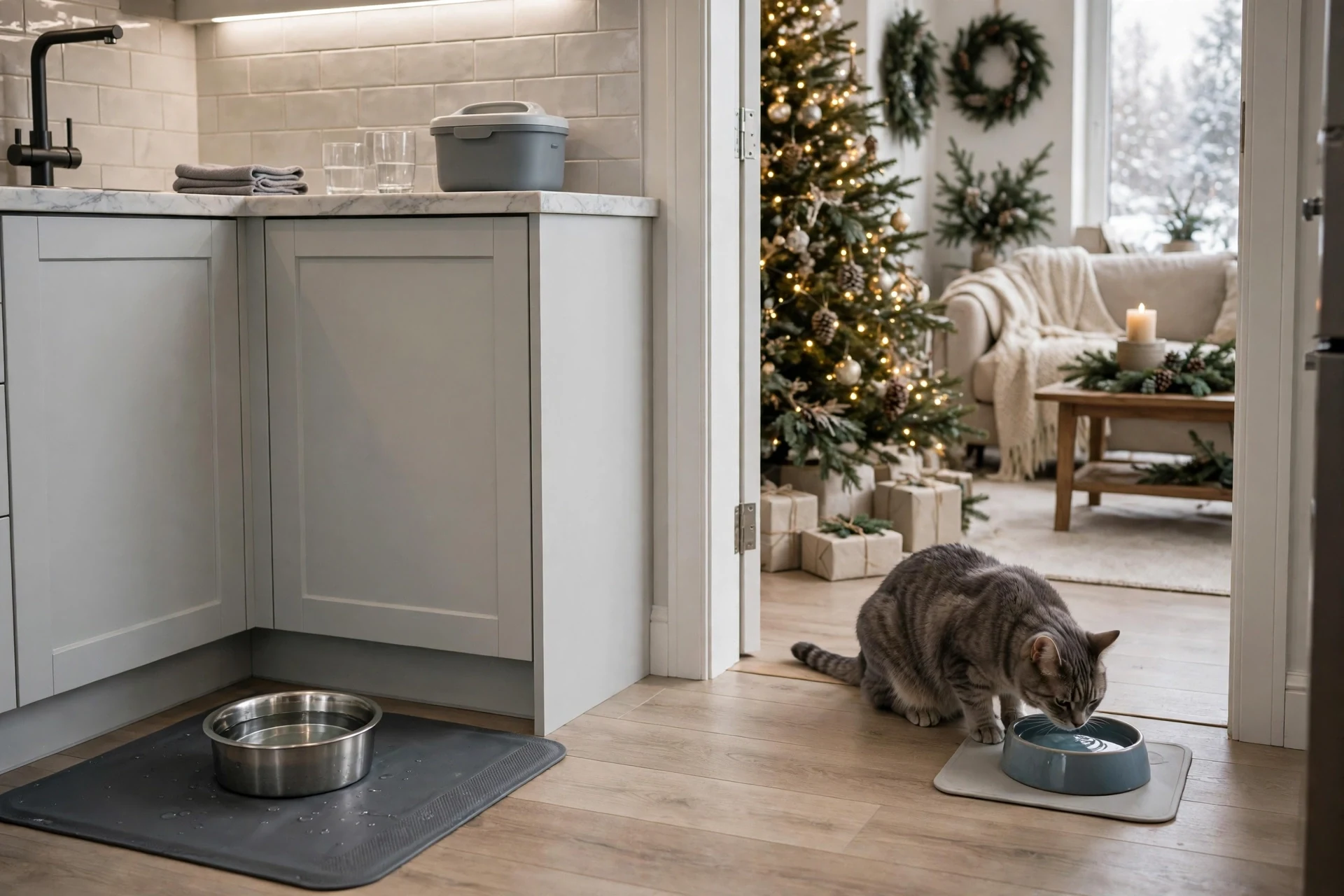
Pets need water all day, but the water bowl should never sit next to the tree or anywhere near a light cord. A pet drinking near the tree can splash water onto cords and plugs, knock a bowl over onto a power strip, or drink from the tree stand instead of their own bowl. Move the water bowl to its usual spot in the kitchen or hallway — well away from the tree, the lights, and any outlet — and keep the tree stand water covered with a skirt and a stand cover.
If your pet is used to drinking in the living room, set the bowl on the opposite side of the room from the tree, on a waterproof mat, and at least a few feet from any cord or outlet. Check the bowl twice a day and refresh it, because a pet that cannot find clean water in its usual place is more likely to go looking for the tree stand. This is a small move, but it removes a real electrical risk and keeps your pet drinking from the right place all season.
14. Check the ASPCA Plant List Before You Buy Any Plant
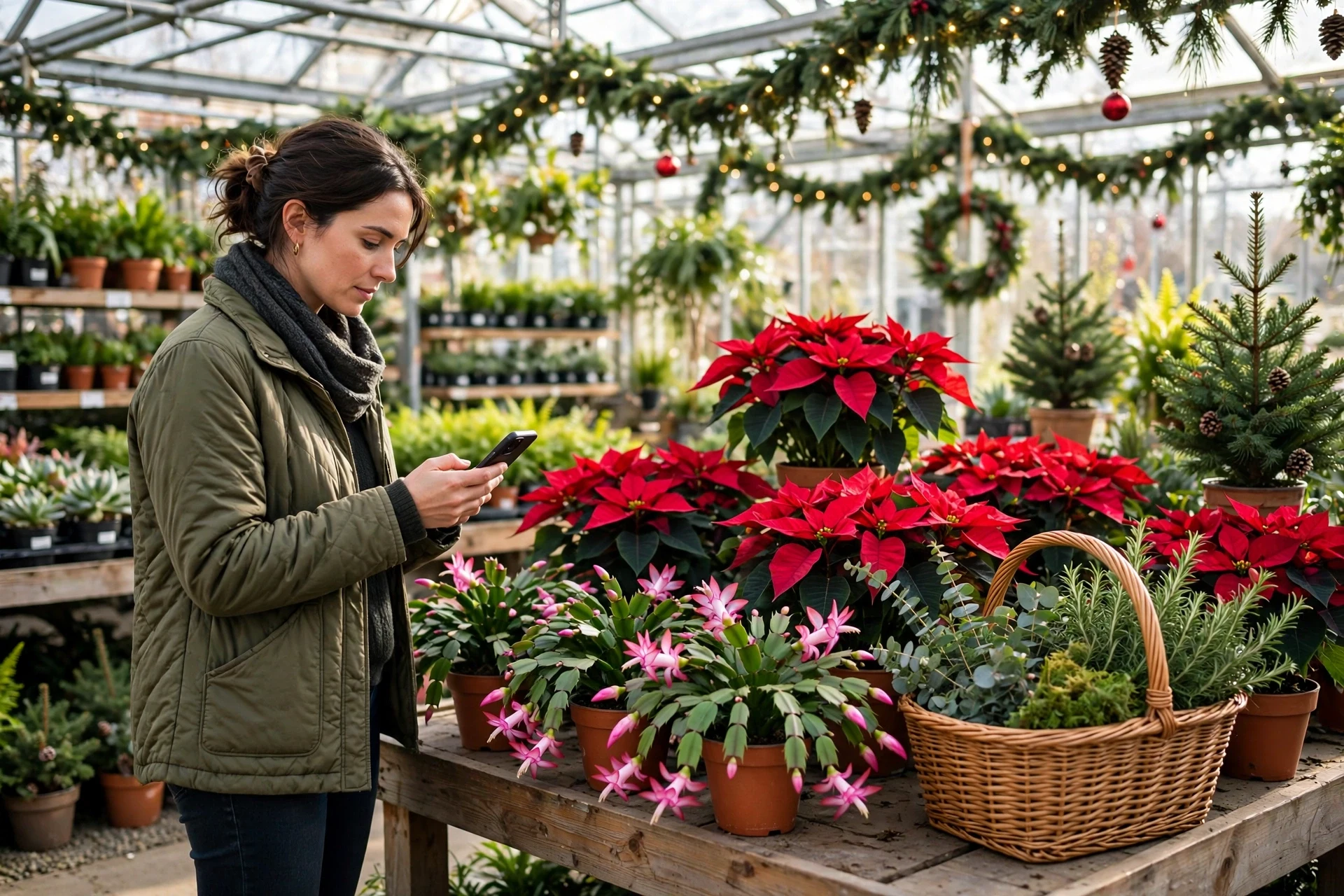
Every plant, flower, and sprig of greenery that comes into your home this season deserves a two-minute check. The ASPCA maintains a searchable list of toxic and non-toxic plants for dogs and cats, and it is the single most reliable reference a pet owner can use. Before you buy a poinsettia, a Christmas cactus, a wreath, a centerpiece, or even a bunch of fresh greenery at the farmers market, look the plant up on the list and make sure it is safe for the animals in your home.
Make the check a habit, not a one-time task. Holiday arrangements often mix several plants together, and a centerpiece can contain one safe plant and one toxic one side by side. If you are not sure about a plant, ask the florist or the garden center — and if they cannot tell you, choose a different plant. Keeping the ASPCA list bookmarked on your phone turns a stressful guessing game into a quick habit, and it protects your pets from the plants you never thought to question.
15. Do a Post-Holiday Sweep for Needles, Hooks, and Ribbon
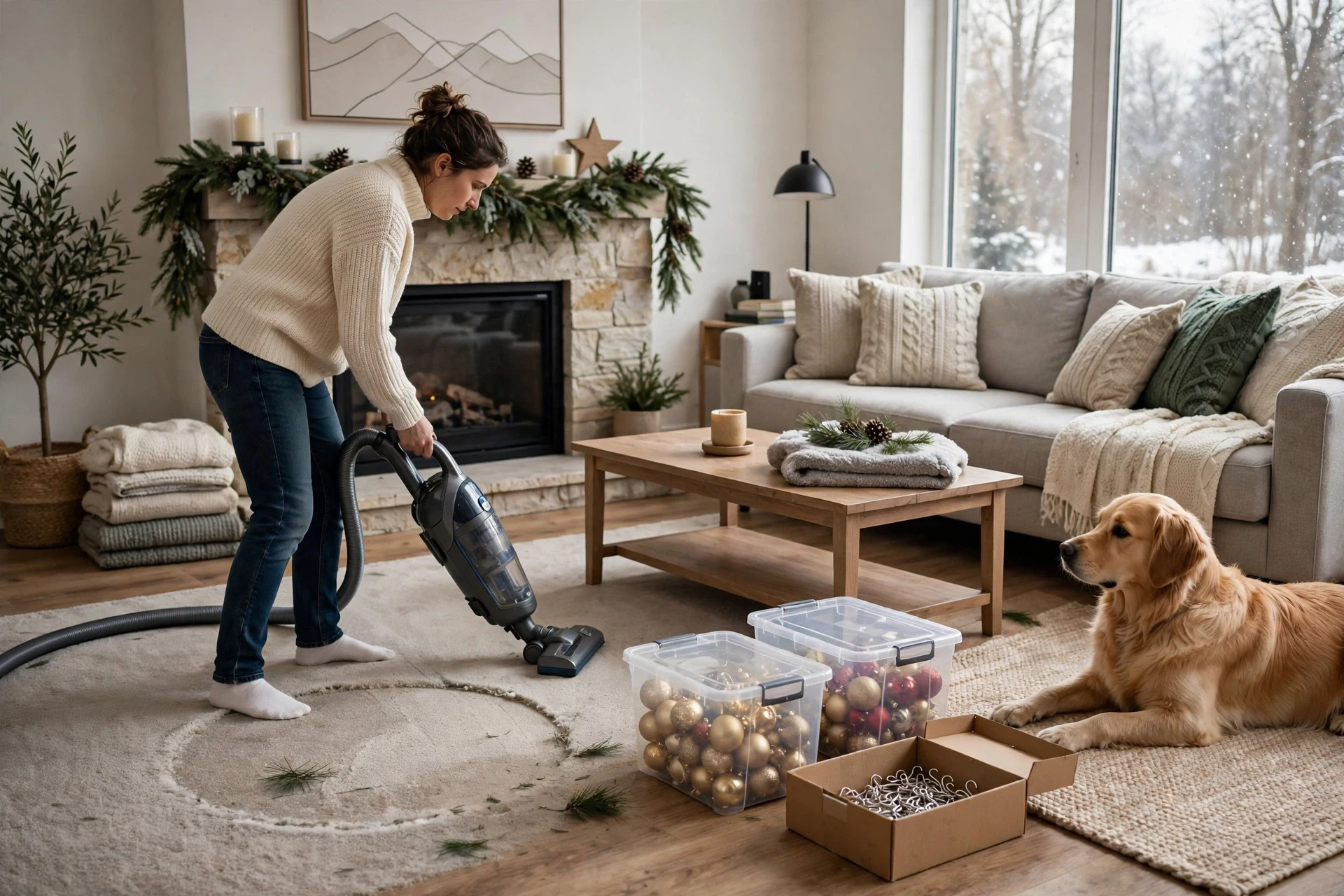
The holiday is not over when the tree comes down — the most dangerous day for pets is often the day you take the decorations down. Ornament hooks, broken ornament pieces, pine needles, ribbon ends, and bits of tinsel hide in the carpet and under furniture, and a pet nosing around the empty tree spot will find them. Do a thorough sweep the same day the tree comes down: vacuum slowly around the tree area, run your hand along the baseboards, check under the sofa and the tree skirt, and pick up every hook and needle you can find.
Then do the same check in the rooms where gifts were opened, because wrapping paper, ribbon, bows, and small gift tags end up everywhere. Bag the decorations in sealed bins rather than open boxes, and store ornament hooks in a closed container so they cannot spill. A ten-minute sweep and a careful pack-away means your pets stay safe after the holidays too — and next December, you will open bins full of intact decorations instead of a mess of tangled ribbon and broken pieces.
Frequently Asked Questions
Are poinsettias toxic to dogs and cats?
Poinsettias are mildly toxic to dogs and cats — eating them usually causes drooling, vomiting, or an upset stomach rather than a serious emergency — but they are still best kept out of reach or replaced with fabric or silk poinsettias. The plants to be most careful about are lilies, which are extremely dangerous for cats, along with mistletoe and holly. When in doubt about any holiday plant, check the ASPCA’s toxic and non-toxic plant list before you bring it home. These pet safe Christmas decor ideas help you choose holiday plants that are safe for dogs and cats.
How do I keep my cat from climbing the Christmas tree?
Anchor the tree to the wall with a strap so it cannot topple, keep the lower branches bare, and give your cat an appealing alternative nearby — a tall cat tree or a perch by a window. Cover the tree stand water, use shatterproof ornaments, and skip tinsel entirely. Some owners also wrap the trunk in foil or double-sided tape for the first few days, since cats dislike the texture. A cat that has its own high perch and a pet corner by the tree is far less interested in climbing yours. These pet safe Christmas decor ideas give your cat a better place to climb than your tree.
What Christmas decorations are safe for dogs?
Shatterproof felt, wood, and fabric ornaments, flameless LED candles, fabric or felt garland, and fresh pine or cedar greenery are all safe choices for dogs. Keep cords covered, use a heavy anchored tree stand, and keep chocolate, candy canes, and edible decor out of reach. If you also need to manage pet smells during the holiday season, our guide on how to get rid of pet odor in your house covers that separately. These pet safe Christmas decor ideas focus on shatterproof ornaments, flameless candles, and covered cords.
Can I use real Christmas lights with pets in the house?
Yes, as long as every cord is covered and out of reach. Run cords behind furniture, protect exposed lengths with hard plastic cord covers, and plug the tree into a switched power strip you can turn off when you leave the room. Battery-operated LED lights are the safest option for mantels, windows, and garlands, since they remove cords entirely. Never leave a pet unsupervised with a lit tree and exposed cords. These pet safe Christmas decor ideas use battery-operated lights wherever cords would be within reach.< These pet safe Christmas decor ideas let you keep the sparkle without leaving a single cord exposed./p>
How do I pet-proof my Christmas tree on a budget?
Start with the free moves: move ornaments to the top two-thirds of the tree, take the tinsel down, move the water bowl away from the tree, and keep edible decor on high shelves. Then spend a little on the two things that matter most — a wall strap or anchor for the tree and a few hard cord covers. Felt and wood ornaments cost less than glass, and flameless candles are cheaper than replacing a scorched mantel. For more budget-friendly holiday styling, see our Christmas living room decor ideas. These pet safe Christmas decor ideas prove that pet-proofing does not have to cost a lot.
Related Reading
- How to Get Rid of Pet Odor in Your House — keep the house fresh while the pets enjoy the holidays.
- Christmas Kids Room Decor Ideas — festive, kid-friendly styling for the children’s room.
- Christmas Tree Decor Ideas — tree styling ideas to pair with the safety tips above.
- Christmas Nursery Decor Ideas — gentle, safe holiday decor for the littlest member of the family.
- Christmas Living Room Decor Ideas — festive styling for the room where the tree lives.
- Christmas Hallway Decor Ideas — holiday touches for the entry and hallway.
Conclusion
A pet-safe Christmas is not a less beautiful Christmas — it is a Christmas you can actually relax and enjoy. Anchor the tree, swap glass for felt and wood, skip the tinsel and the toxic plants, cover the cords, and light everything with flameless candles. Give your dog or cat a cozy corner by the tree, and they will choose their own bed over your lowest branches every time. These pet safe Christmas decor ideas take a single afternoon to put in place, and they protect your pets for the whole season — and the post-holiday sweep protects them after it, too. Decorate with your pets in mind, and the holidays stay merry for every member of the family, paws included. These pet safe Christmas decor ideas work best when everyone in the house follows the same simple rules.