15 Toy Organization Ideas That End the Floor-Covered-in-Lego Era
Introduction
Every parent in America knows the sound: the barefoot step onto a LEGO brick at 11 p.m. Toys start the day in a neat pile and end it spread across the bedroom, the playroom, and the living room floor, and cleanup takes longer than the play did. The problem is not too many toys. The problem is that the toys have no homes — and a toy without a home lands on the floor, which is what makes cleanup feel impossible.
These toy organization ideas fix that by sorting toys two ways at once: by toy type and by room. Building blocks, small figures, soft toys, board games, craft supplies, and dress-up clothes each get their own system, and each system lives where the toys actually get played with — the bedroom, the playroom, or hidden in the living room. Add a rotation system and picture labels for kids who cannot read yet, and cleanup becomes a five-minute game instead of a nightly battle. A LEGO brick is the classic example: small pieces spread further and hurt more than any other toy in the house. The fifteen ideas below work for one child or four, a dedicated playroom or a single shared bedroom. If the bedroom itself needs a plan too, our small bedroom organization hacks cover the rest of the room, and our how to declutter your home room by room guide shows how to clear the excess before you organize what stays.
1. Sort by Type First — Where Good Toy Organization Ideas Begin
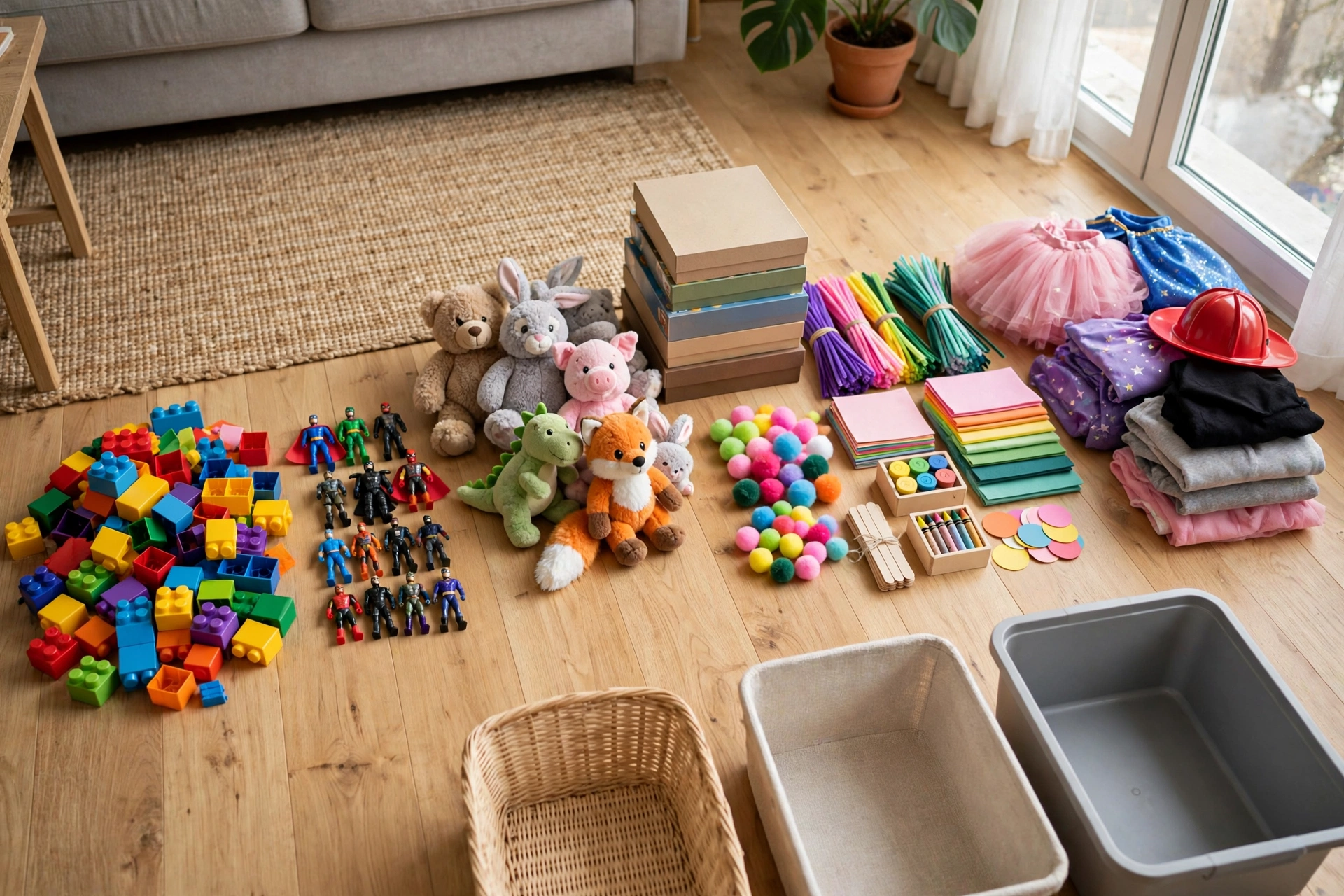
Every toy organization project starts the same way: dump every toy onto the floor and sort it by type before you buy a single bin. Building blocks in one pile, small figures in another, soft toys in a third, then board games, craft supplies, and dress-up clothes. Do not sort by room yet, and do not sort by child. Sorting by type is what makes every idea after this one work — a bin only stays tidy when everything inside it belongs together.
This first sort is also your purge: broken toys go in the trash, missing-piece toys go in a “parts” bag for a week and then out if the piece never turns up, and untouched toys go straight into the donation box from idea 15. Most families let go of a quarter of the pile here, which means fewer bins to buy and less to clean up every night.
2. Cube Shelves and Fabric Bins: One Toy Type per Cube
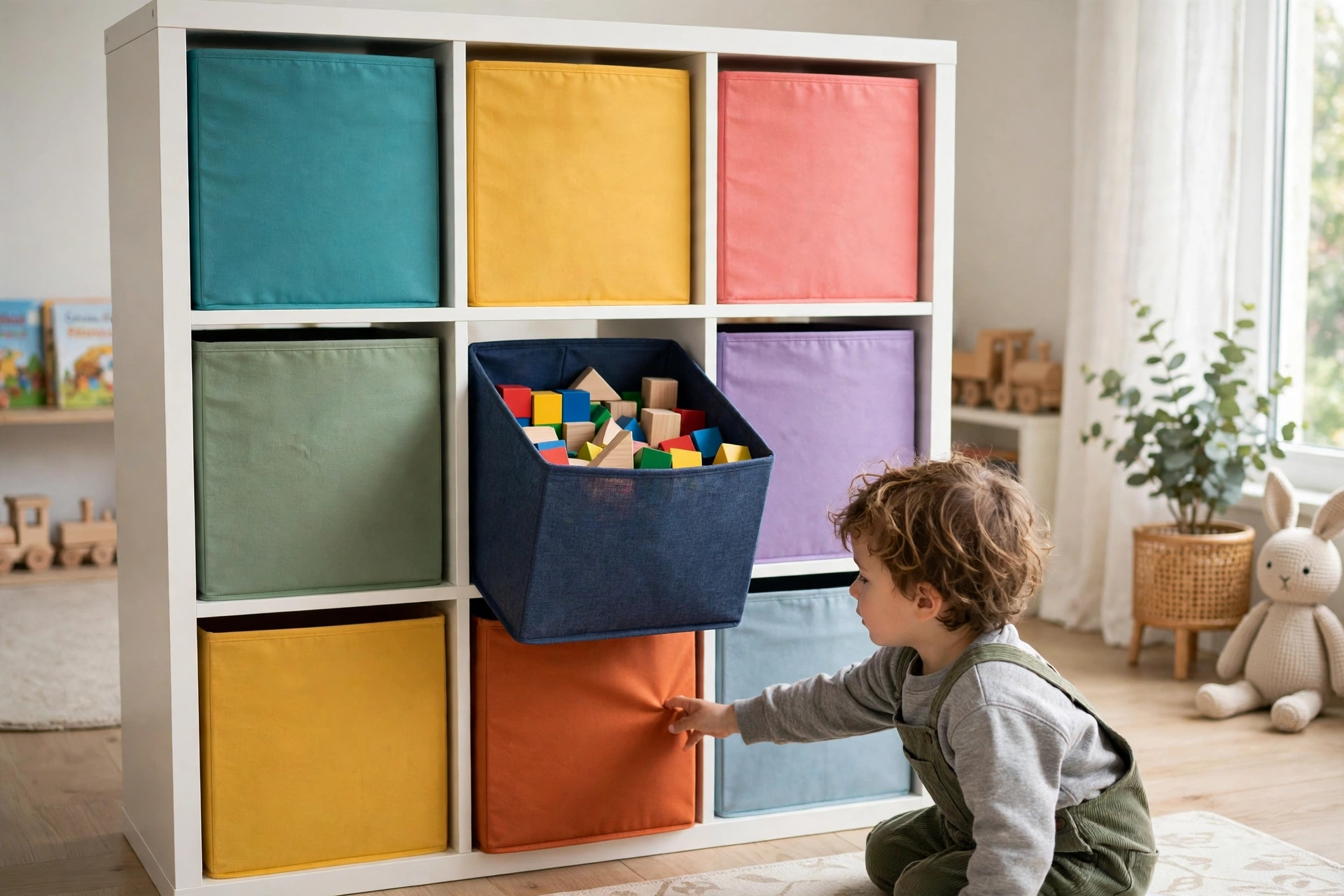
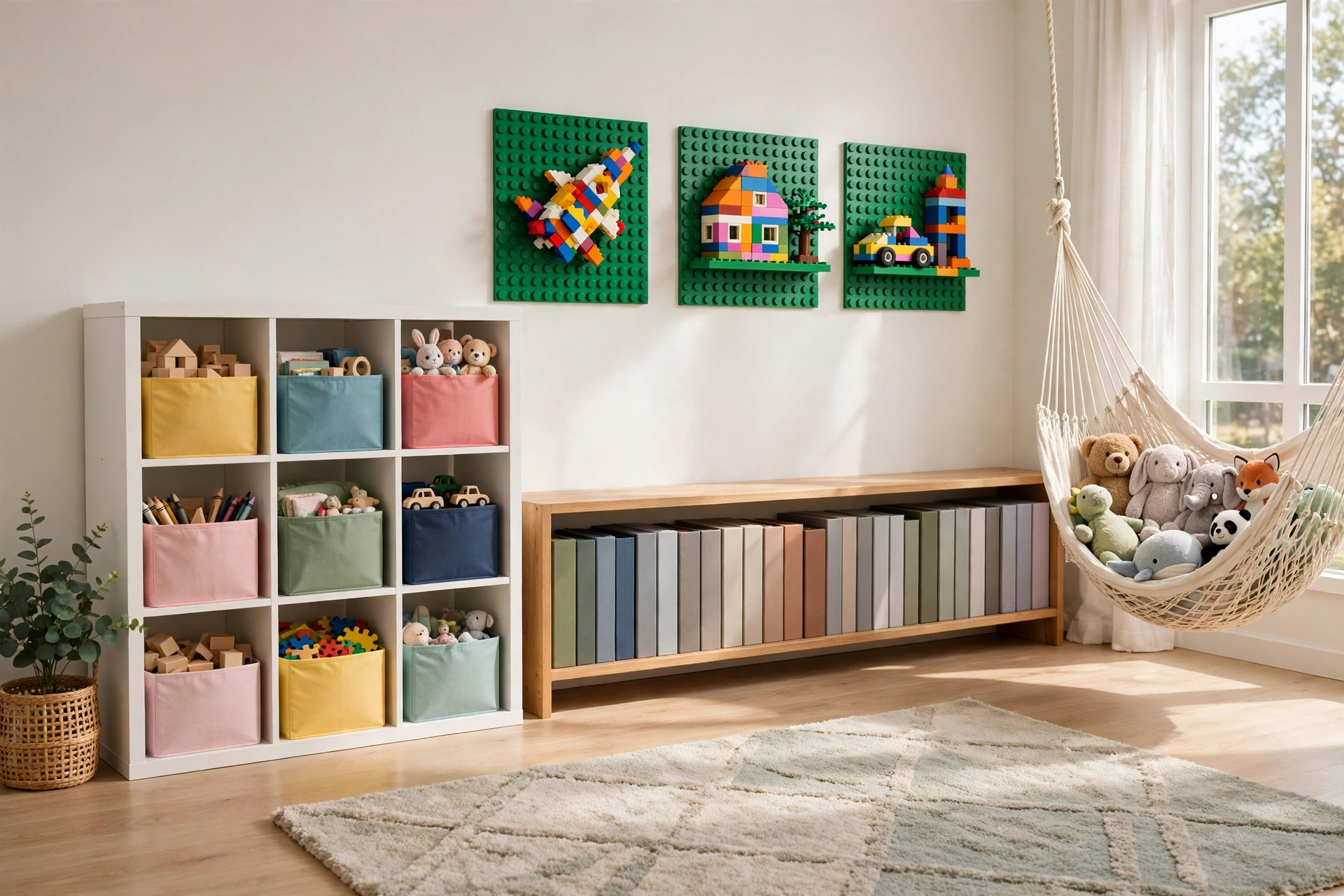
Cube shelves are the workhorse of toy storage: they turn a wall into a grid of homes, one per toy type. A standard 3-by-3 or 4-by-2 shelf holds nine or eight fabric bins, each cube one type — blocks in one, figures in the next, crafts in another. Fabric bins slide in and out like drawers, so a child can pull a whole bin to the floor to play and slide it back when done.
Buy bins that fit snugly, in a color per type — blue for blocks, red for figures, green for crafts — and keep the heaviest bins on the bottom row so the shelf never tips. Anchor the shelf to the wall with its strap, because a climbing toddler can pull a loaded cube shelf over in seconds. It works in a bedroom, a playroom, or a living-room corner.
3. Picture Labels for Non-Readers
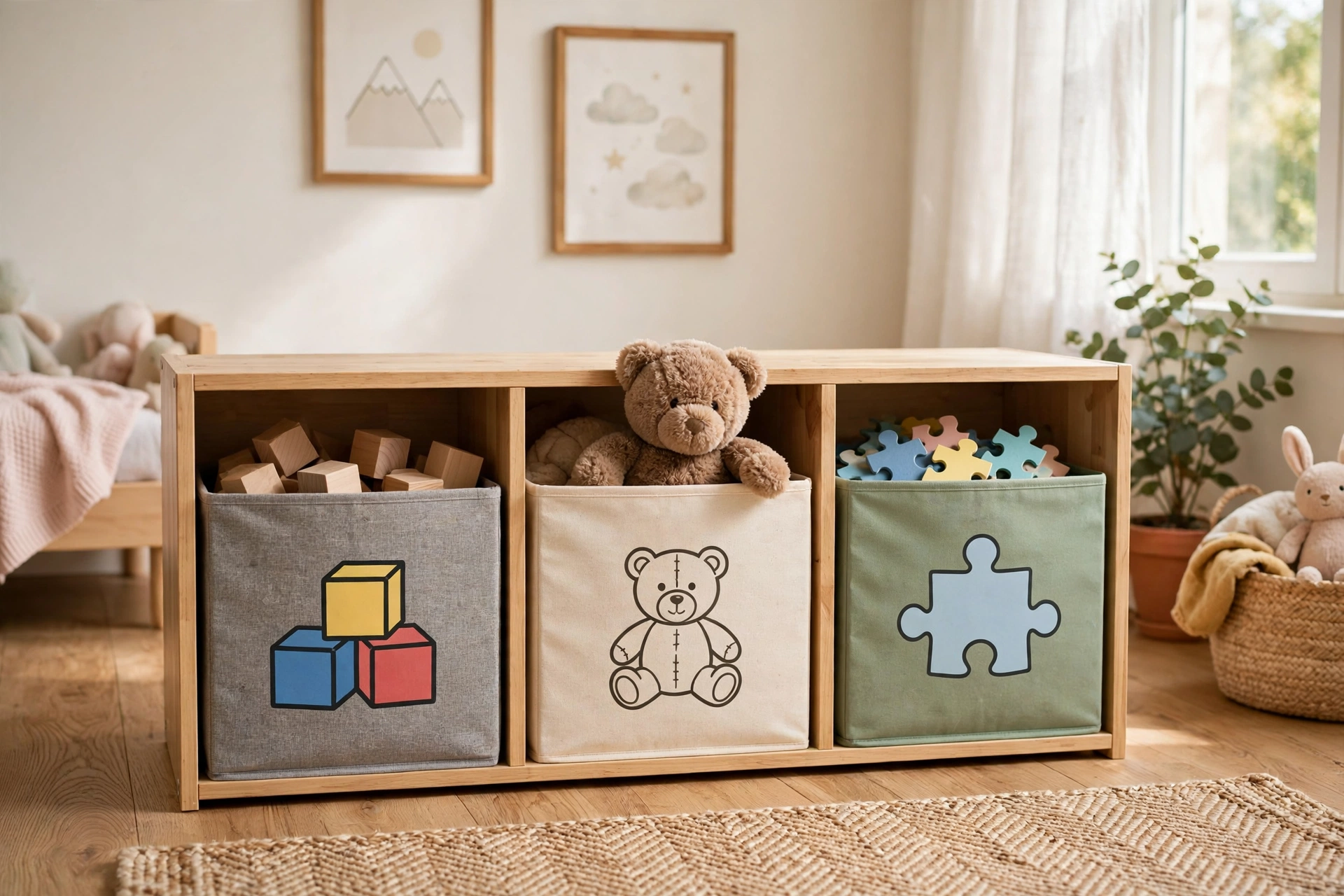
A label a child cannot read is decoration, not a system. Label every bin with a picture of what belongs inside it, for kids who cannot read yet and early readers still guessing. A photo of the blocks, a drawing of a teddy bear, a printed picture of a puzzle: whatever the bin holds, the picture shows it. Children as young as two can match a toy to a picture, which means they can clean up without an adult standing over them.
Make the labels big and simple: one picture per bin, stuck on the front at a child’s eye level. Print photos from your phone, cut pictures from a toy catalog, or let the kids draw the labels themselves — they will use labels they made far more often. Keep words off the label, or small underneath the picture, so the picture does the work. Pair the picture with the bin color from idea 2, and even a three-year-old can put every toy back in the right cube.
4. Clear Drop-Front Boxes (See Without Dumping)
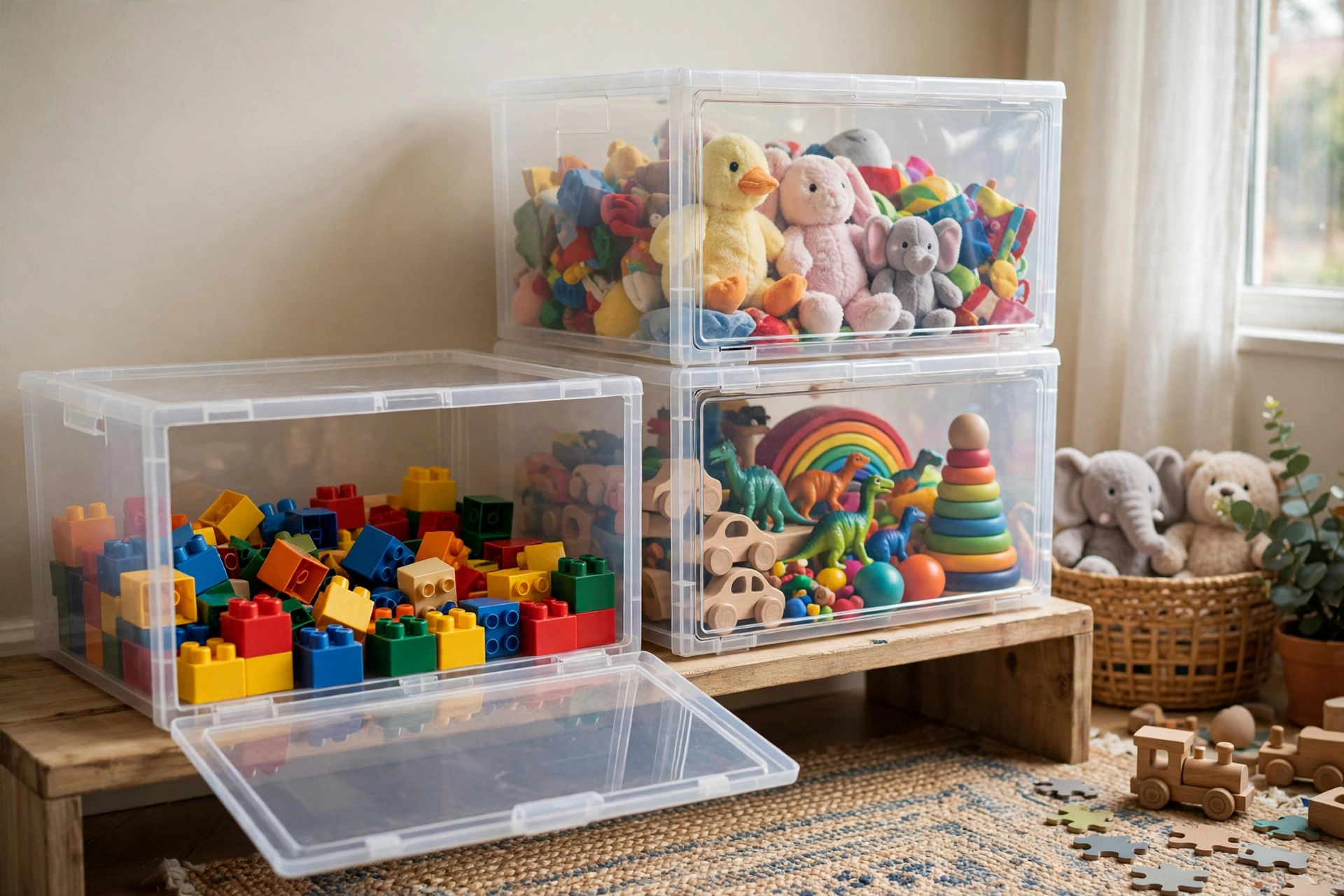
The worst toy-storage habit is the dump: a child tips a whole bin onto the floor to find one toy at the bottom. Clear drop-front boxes stop it: the front panel folds down like a door, so a child can see everything inside and reach in for one toy without emptying the box. The clear sides mean they find the toy before opening the box at all.
Use drop-front boxes for the worst dumpers: small building sets, doll accessories, and craft kits full of little pieces. Stack them two high, one box per type, just like the cubes. They cost more than plain bins, so buy them only where dumping is worst and use fabric bins elsewhere. If a box still gets dumped, it usually holds two types of toys — split it and the dumping stops.
5. The Rotation System (Half Out, Half Stored, Swap Monthly)
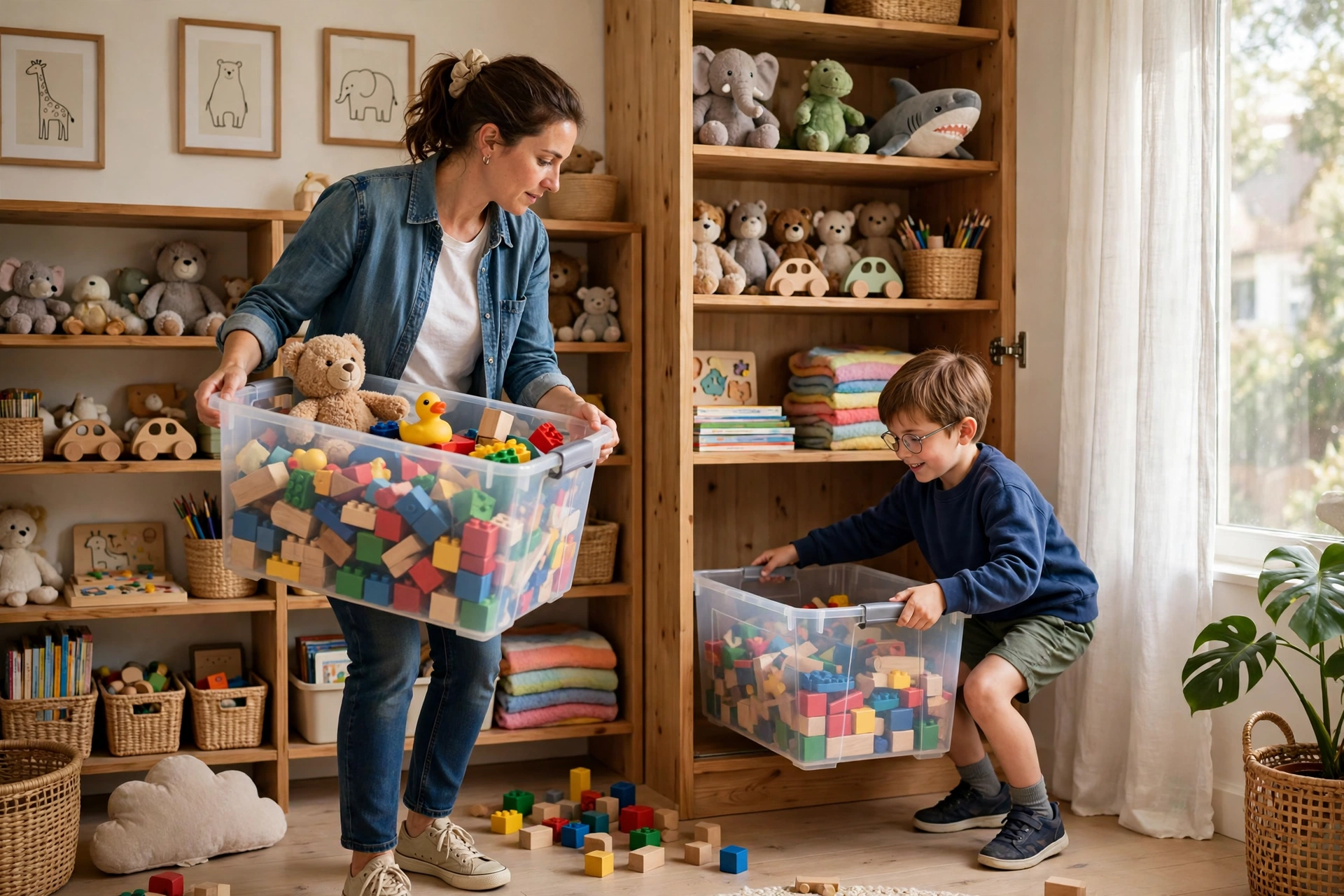
Kids play with a toy more when they have not seen it for a month. The rotation system uses that: half the toys live out in the playroom, half live in labeled bins in a closet, the garage, or under a bed. Once a month, swap them. Stored toys come out feeling brand new, played-out toys go into storage, and cleanup gets easier because fewer toys are out at once.
Set a fixed swap day, like the first Saturday of the month, and make it a game: the kids pick which bins come out and which go away. Keep daily favorites out all the time and rotate everything else. Store resting toys in the same labeled bins they play from, so the swap is a bin exchange, not a re-sort. Families who try this often stop buying new toys for a while, because the “new” toys keep appearing from storage.
6. LEGO Toy Organization Ideas: Baseplates on the Wall, Sorted by Color
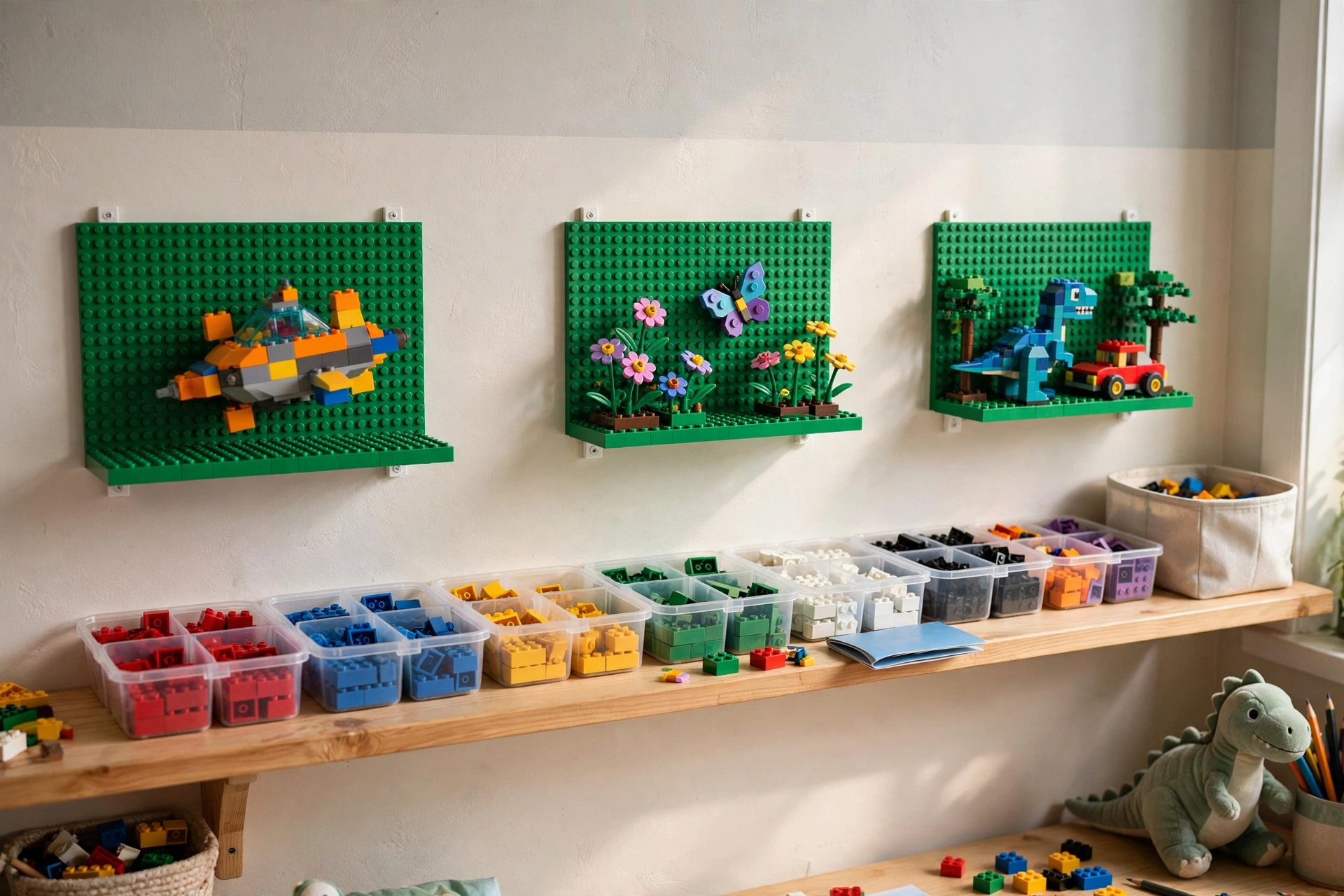
LEGO needs its own system more than any other toy, because one set scatters hundreds of small pieces across a room. Start with baseplates mounted on the wall at a child’s height: kids build on the wall, creations stay on display, and pieces are not underfoot. A row of baseplates above a low table turns an empty wall into a building station.
Then sort loose bricks by color into small divided containers or zip-top bags in a bin — not by set, a losing battle once sets mix, but by color, which a child can keep up. Keep one small bin for pieces in current use and the color bins on a shelf below the baseplates. Add a building mat under the station to catch strays, and shake it into the bin at cleanup time. The floor stays clear, the creations stay up, and the 11 p.m. barefoot step becomes history.
7. Small Figures: Toolbox or Tackle Box
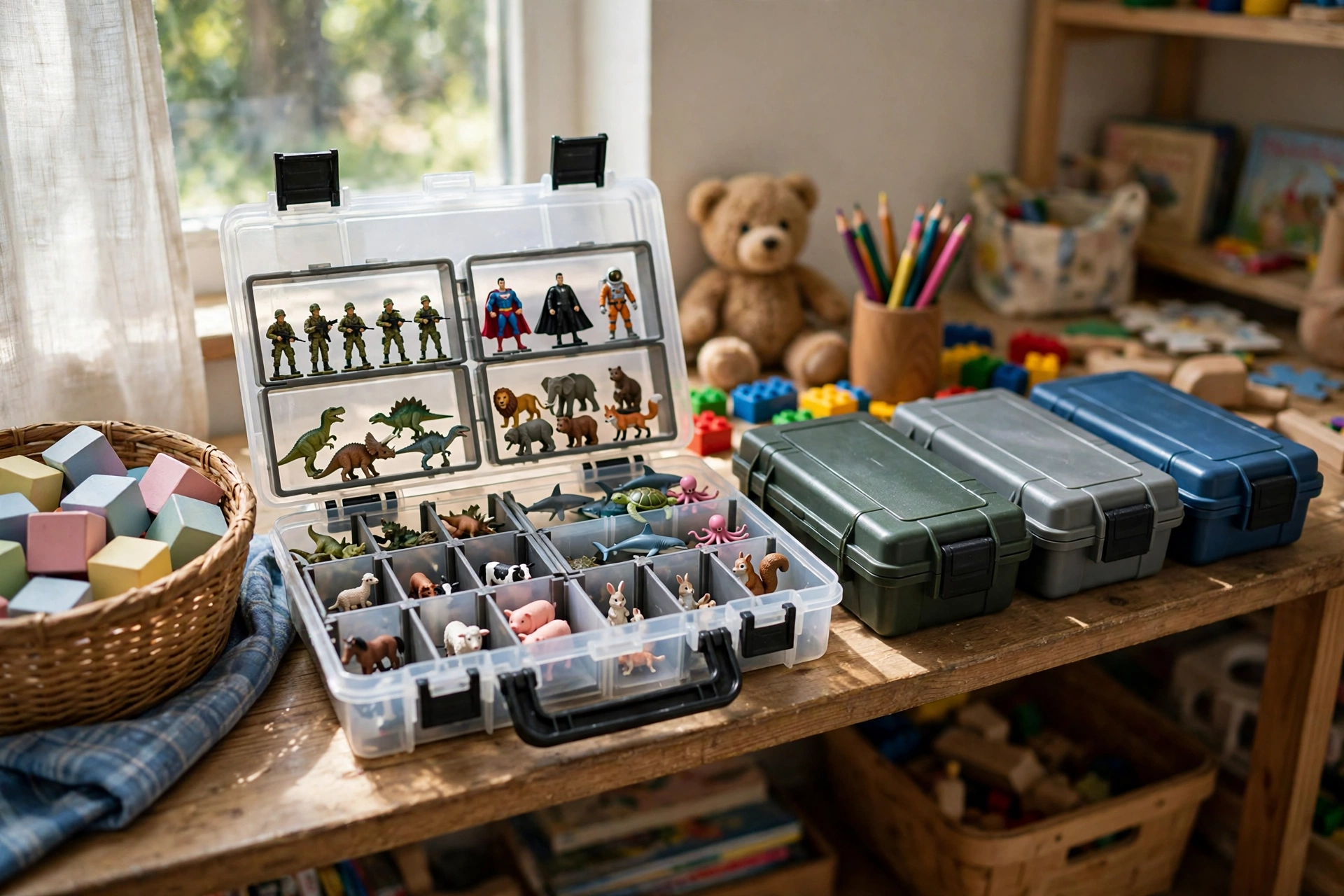
Action figures, animal figures, and tiny playset characters are the hardest toys to store: small, oddly shaped, and always in the dozens. A hardware toolbox or fishing tackle box is the perfect home: adjustable dividers make a compartment per figure type, the clear lid shows what is inside, and the handle means the whole collection travels to the living room or the car in one trip.
Let each child pick their own box, arrange the compartments, and label the lid with a picture of the figures inside. Keep boxes on a low shelf so kids can grab one, play, and put it back without help. When the collection outgrows the box, purge — do not buy a bigger box. A tackle box that closes is a collection with a limit, and a limit keeps small figures from taking over the house.
8. Soft Toys: Hammock, Hanging Net, or Basket
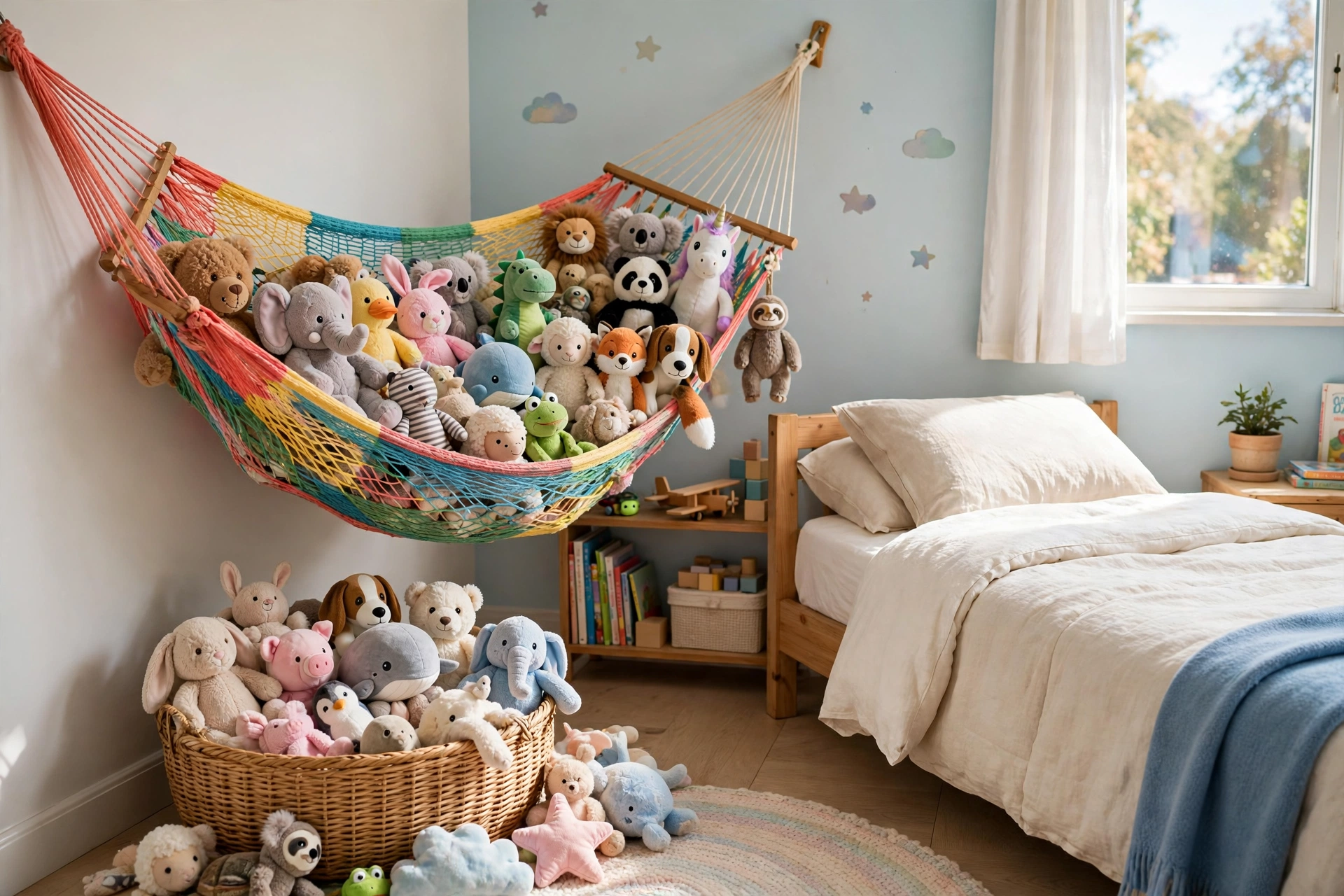
Soft toys multiply faster than any other toy: every birthday and holiday adds another, and none of them ever breaks. A toy hammock strung across a bedroom corner holds dozens of stuffed animals off the floor and turns them into decoration — which is what they are when nobody is playing with them. A hanging net works the same way over a bed, and a big basket holds the daily favorites.
The rule that makes soft-toy storage work is one in, one out: a new stuffed animal means an old one goes in the donation box. Keep the five or six most-loved animals in the bed or the basket and let the hammock hold the rest. If the hammock and the basket are both full, the collection is full — purge, do not buy a second hammock. Check the hooks monthly: a full hammock is heavy, and a falling net of stuffed animals is a mess you do not want to clean up twice.
9. Board Games: Vertical Like Books
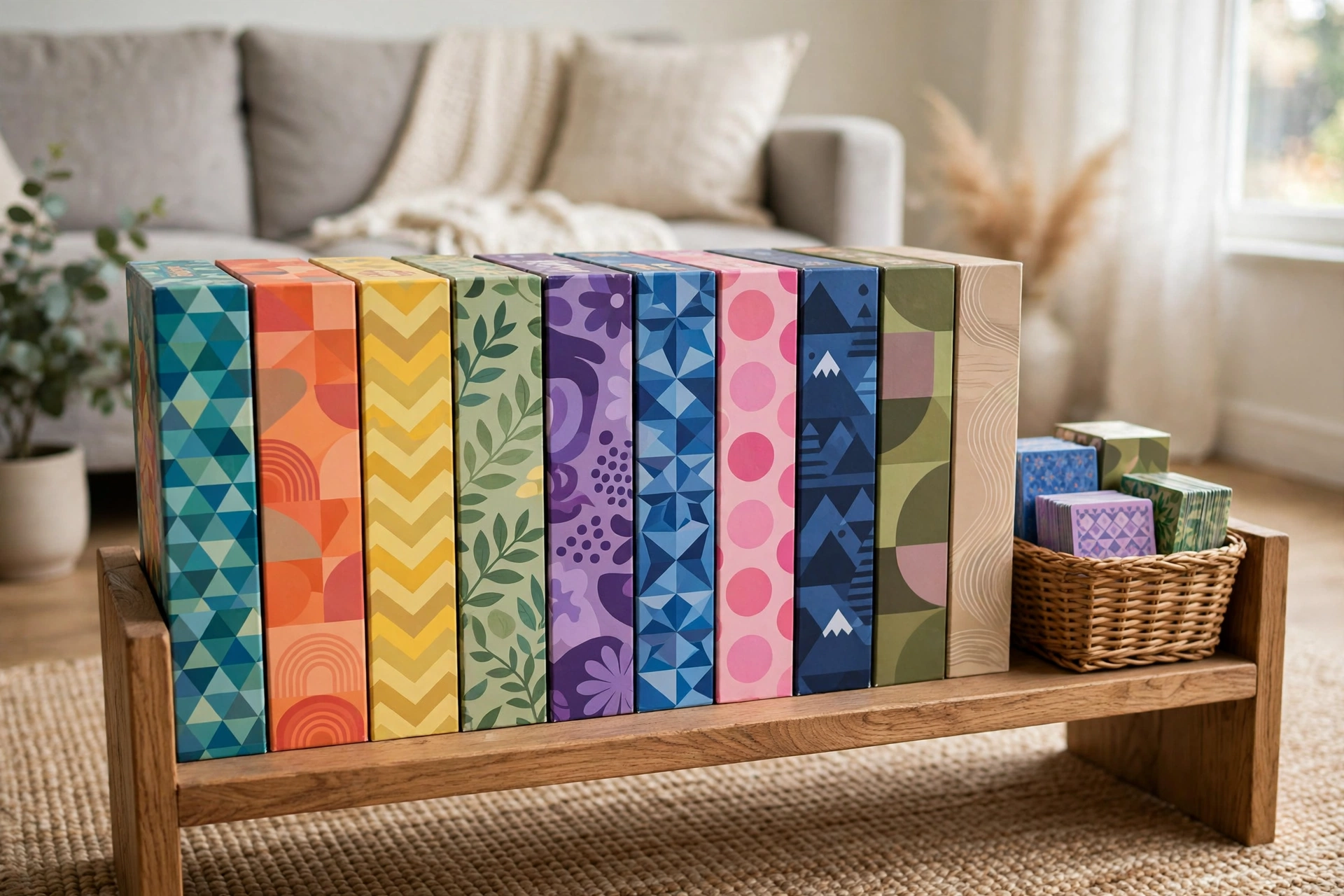
Board games stacked flat are a cleanup disaster: pulling the bottom game means lifting the whole stack, and boxes slide, tear, and lose pieces. Store them vertically, like books, and every game is reachable without moving another one. Stand the boxes upright in a cube shelf or on a bookcase shelf, spines facing out.
Keep game pieces in zip-top bags inside each box, so a tipped box cannot spill a hundred pieces across the floor, and rubber-band loose lids shut. Put the most-played games at the front, the big rarely played ones at the end, and card games in a small basket beside the shelf. A vertical shelf also shows at a glance which games you own — which makes it easier to say no to the next duplicate at the store.
10. Craft Supplies: Rolling Cart
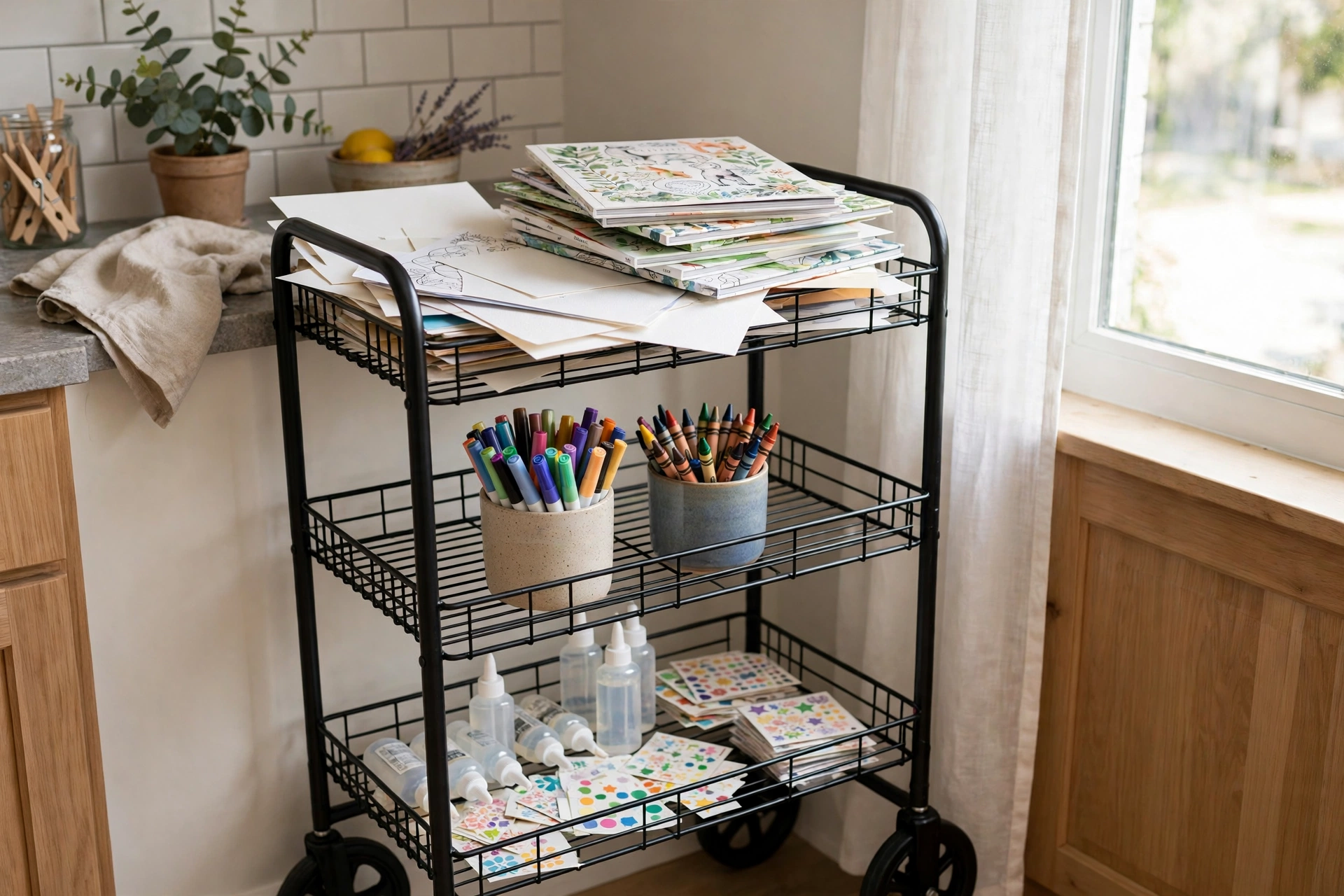
Craft supplies are the messiest toy category: glitter, markers, glue, and paper spread across every surface they touch. A three-tier rolling cart keeps them contained and mobile — paper and coloring books on top, markers and crayons in cups in the middle, glue, scissors, and stickers on the bottom. It rolls to the kitchen table for craft time and back to its corner when the kids are done.
Give every supply a spot on the cart and label it with a picture, like the toy bins, so markers go back in the cup instead of on the table. Keep a small trash cup on the top tier for paper scraps and a washable mat under the cart’s parking spot for escaped glitter. When the cart is full, the craft supplies are full — use up what you have before buying more, and the cart stays a tool instead of a junk pile.
11. Dress-Up: Low Hooks and a Mirror
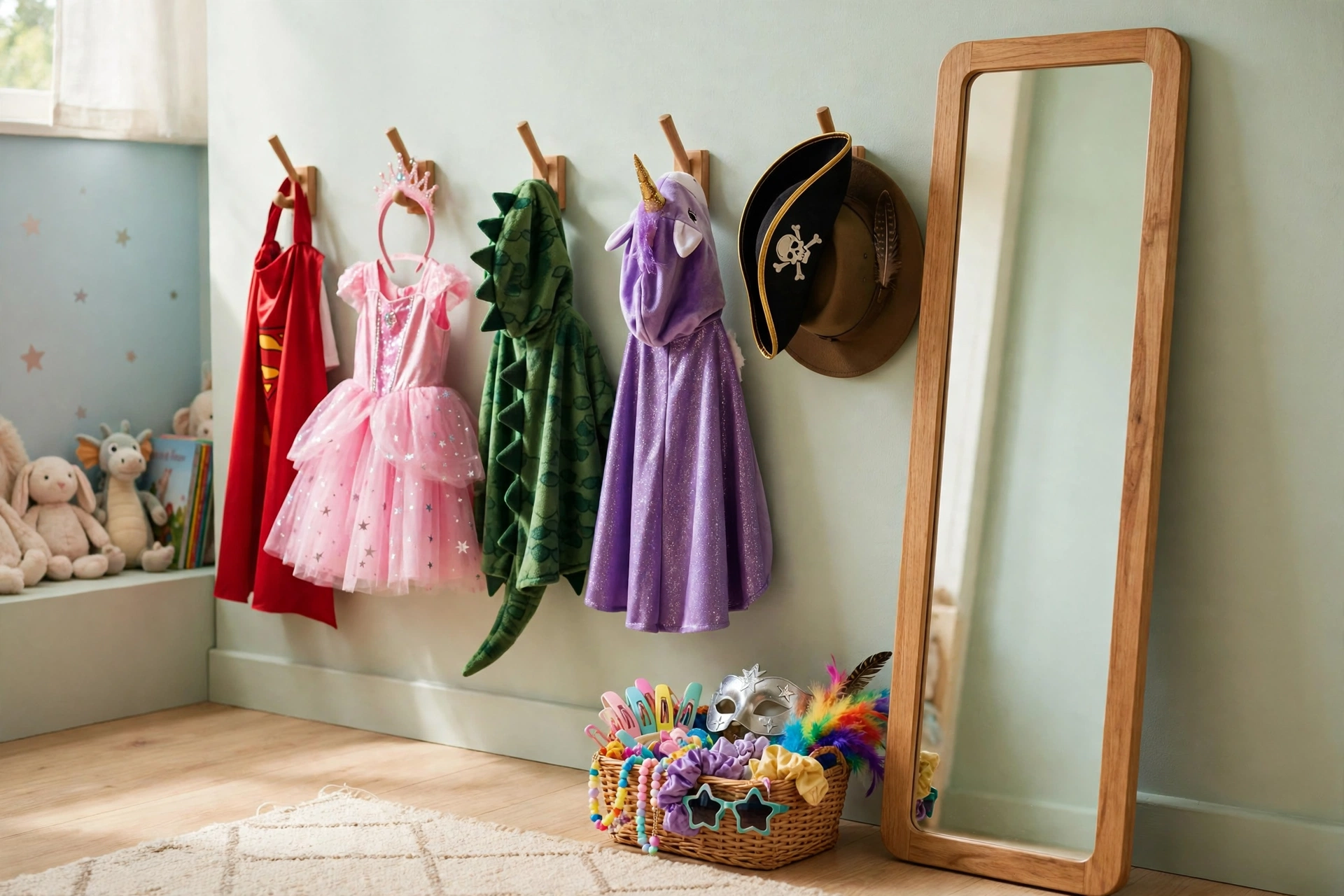
Dress-up clothes only get played with if a child can reach them and see themselves in them. Hang a row of low hooks — about three feet off the floor — on a bedroom or playroom wall, and hang costumes, capes, and hats on them instead of folding them into a drawer where they vanish. Put a child-height mirror beside the hooks, and the corner becomes a stage.
Keep the collection small on purpose: four or five costumes, a couple of hats, one box of accessories like wands and crowns. A basket under the hooks holds shoes and accessories, and everything goes back on its hook when playtime ends. A costume never worn goes in the donation box — five costumes the kids love beat a closet full of ones they ignore.
12. Hidden Living-Room Toy Organization Ideas: Ottoman and Storage Bench
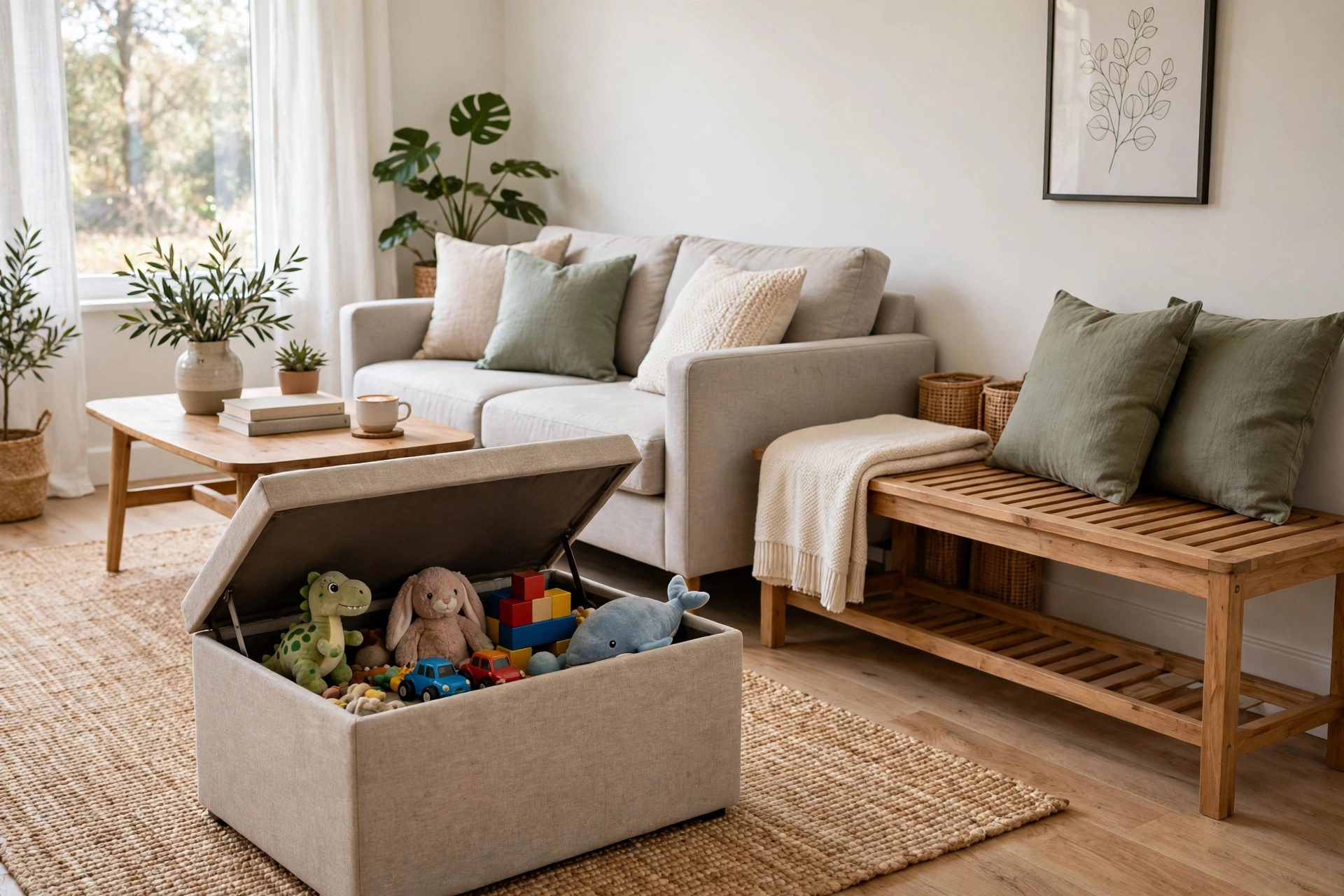
Toys migrate to the living room no matter what you do, so it needs its own hidden storage. A storage ottoman in front of the couch holds the toys played with while adults watch television, and closes up to look like furniture when the kids go to bed. A storage bench against the wall holds bigger toys — dollhouse furniture, train tracks, building sets — behind a lid that doubles as extra seating.
Pick furniture that matches the room, not the playroom: neutral fabric, wood that matches your other furniture, lids that close flat. Keep only living-room toys in the living-room furniture, and keep the rule that the ottoman closes before bedtime — five minutes of cleanup, lids down, and the living room is an adult room again. It saves the most arguments in the house, because it stops the living room looking like a toy store after dark.
13. Under-Bed Rolling Bins for the Overflow
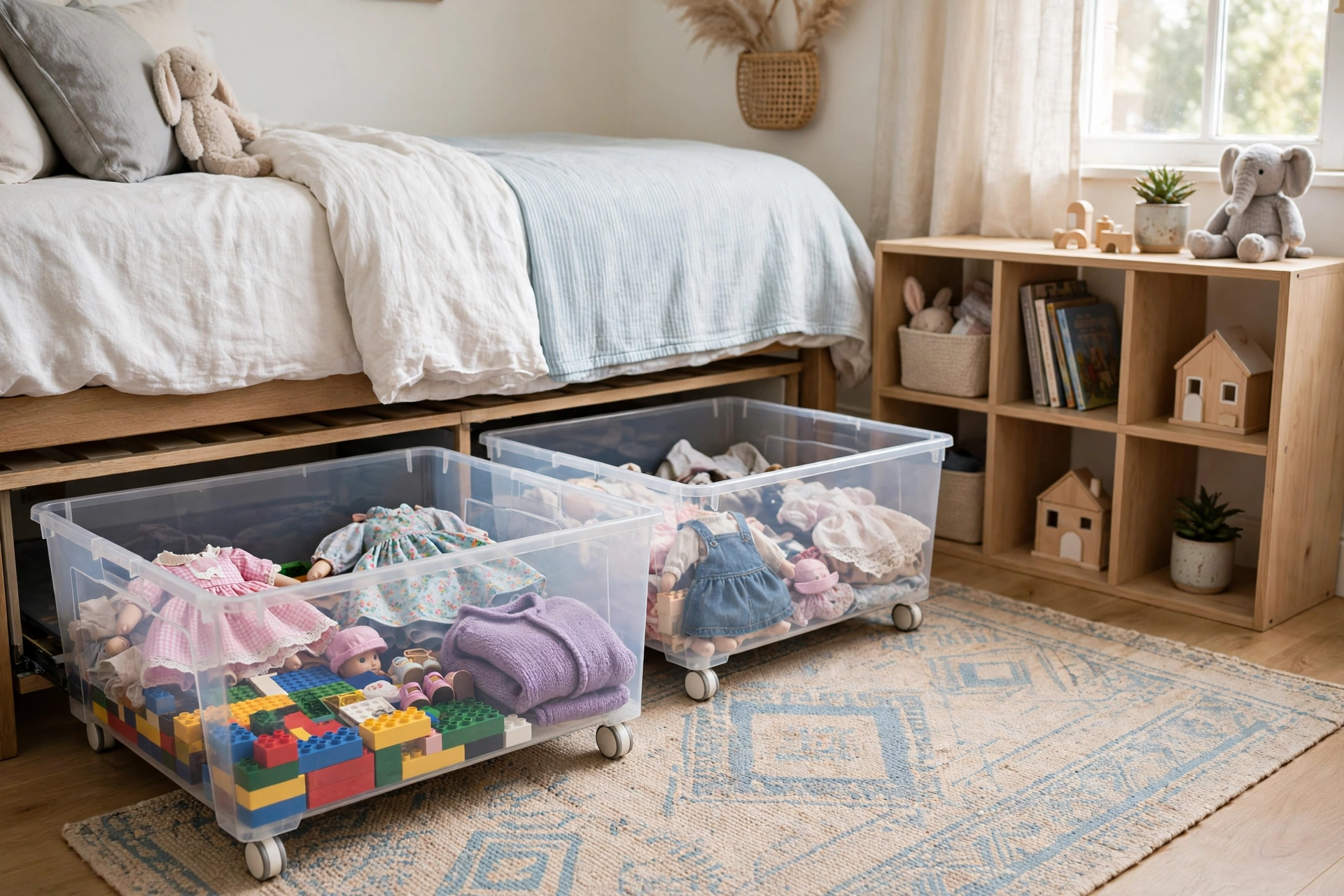
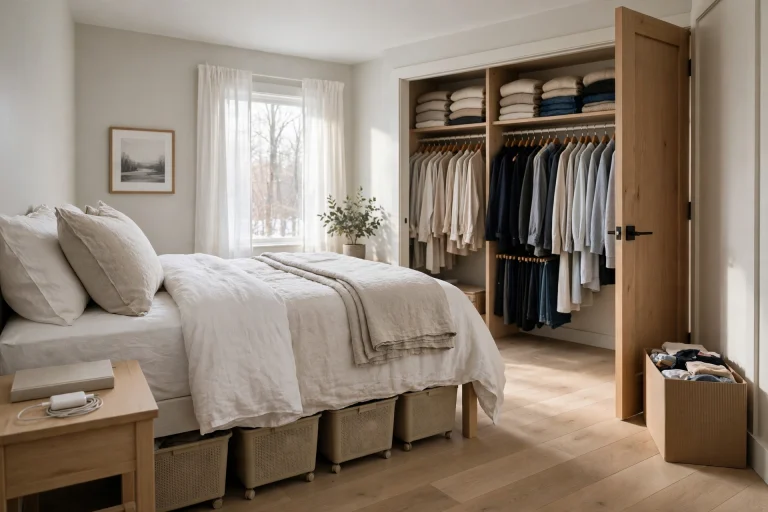
The space under a child’s bed is the best overflow storage in the house, and rolling bins make it usable. Low bins on wheels slide under the bed and pull out like drawers, holding what does not fit in the cube shelves: big building sets, doll clothes, extra craft paper. A child can pull a bin out, play, and roll it back without help, and the toys are invisible when it is pushed in.
Measure the clearance under the bed before you buy — most beds have six to eight inches, and a bin too tall will not fit. Use clear bins or picture labels so kids find what they want without pulling out every bin. Keep the rotation-system bins here too, since the monthly swap is just a bin exchange. If the bed is too low, bed risers add the extra inches for a few dollars, and the space you gain is worth far more.
14. Bath Toys in a Wall-Mounted Caddy That Dries Between Baths
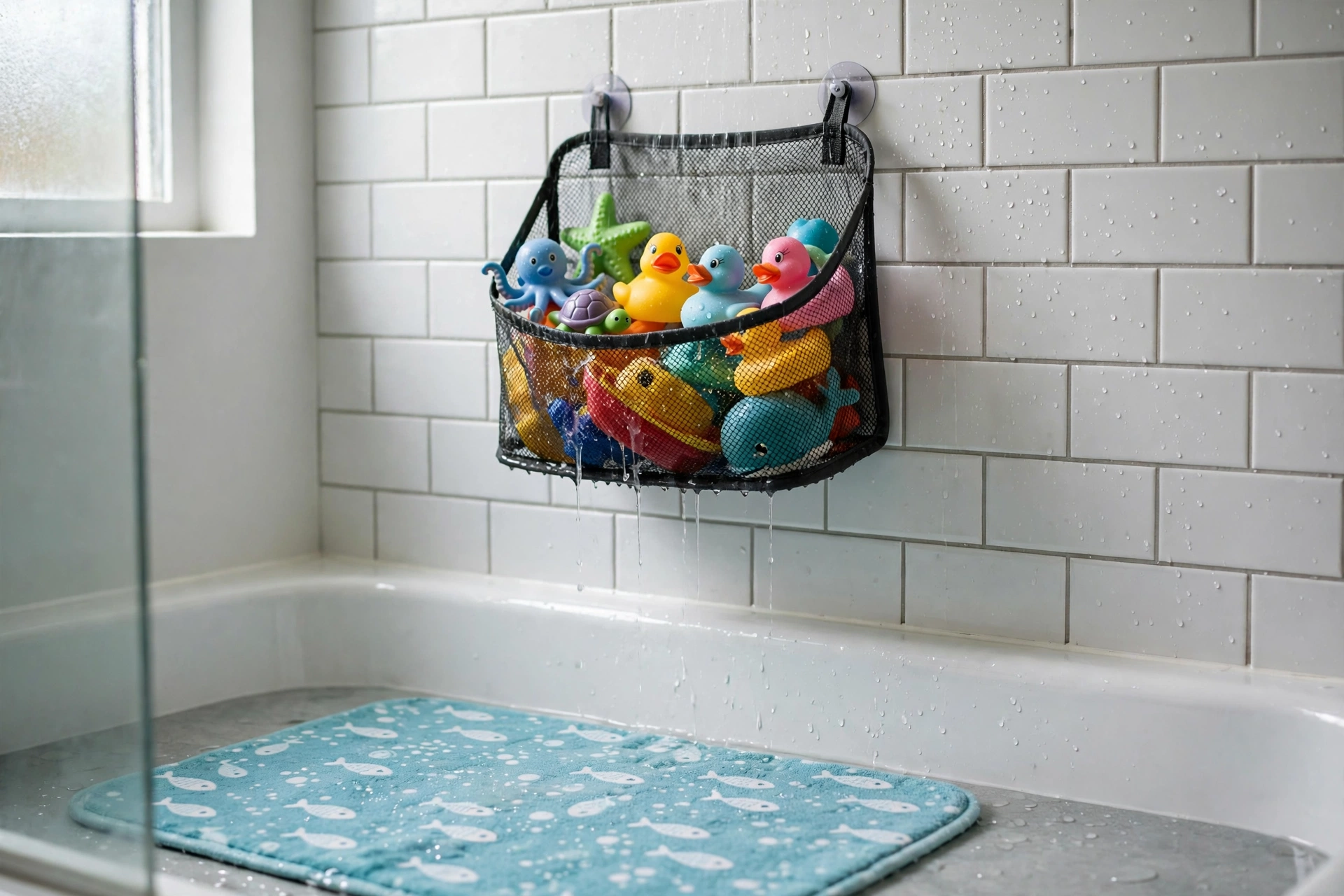
Bath toys are the most likely to grow mold, because they sit wet in a pile at the bottom of the tub. A wall-mounted caddy with mesh sides or drainage holes hangs on the shower wall with suction cups or adhesive hooks, and toys drip dry between baths instead of sitting in a puddle. The caddy keeps toys in the tub area, so they do not migrate to the bedroom floor, and cleanup is just scooping them into the caddy.
Keep the bath toy collection small — five or six toys are plenty — and check the caddy weekly for toys that hold water inside, like squirting animals, which grow mold first. Squeeze them out after every bath, and retire any toy that smells musty even after a wash. A caddy that dries is the difference between bath toys that last for years and ones you throw away every few months.
15. The Donation Box and the One-In, One-Out Rule
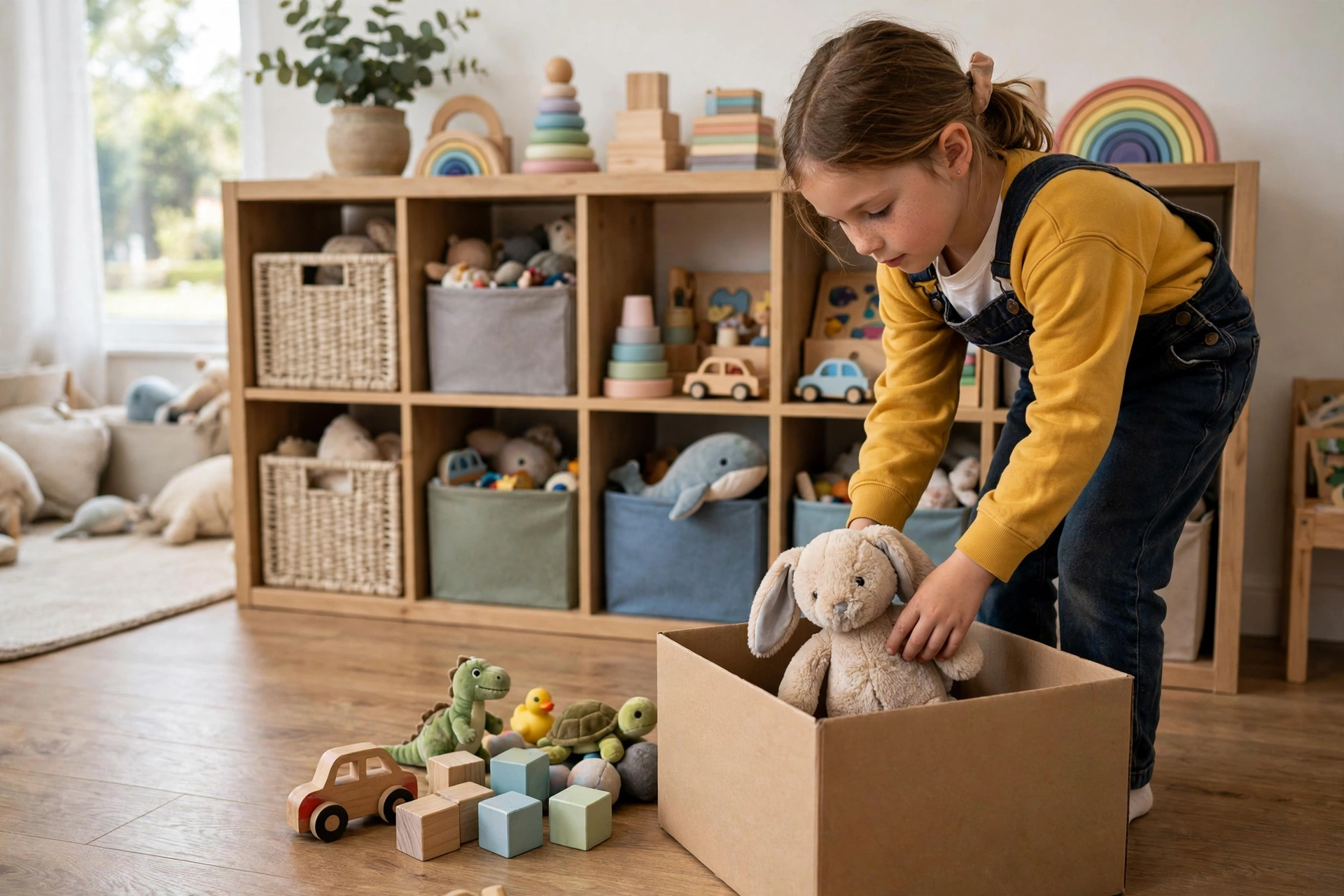
No toy organization system survives a house where toys only come in and never go out. Keep a donation box in the playroom or bedroom closet at all times — a sturdy box with a picture label, so kids know what it is for. An outgrown, broken, or untouched toy goes in the box, and when the box is full it goes to a donation center, a school, or a shelter.
Pair the box with the one-in, one-out rule: every new toy in means one old toy out. Let the kids choose which toy leaves, because a rule they help enforce is one they will follow. Make the donation trip a family habit, and talk about where the toys go — kids who know their old toys will make another child happy let them go far more willingly. This is the idea that makes the other fourteen last, because a collection with an exit stays at a size a family can actually organize.
Frequently Asked Questions
How do I start organizing my kids’ toys?
Start by dumping every toy out and sorting by type — blocks, figures, soft toys, board games, crafts, dress-up — before you buy a single bin. These toy organization ideas work because the sort comes first: purge broken and untouched toys, then give each type its own home, one per cube or bin, with picture labels a child can follow. Sort first, buy bins second, label everything last.
What is the best storage for toys in a small bedroom?
Cube shelves with fabric bins are the best toy storage for a small bedroom: they use wall space instead of floor space and give each toy type its own cube. These toy organization ideas also use under-bed rolling bins for overflow and a toy hammock in the corner for soft toys, so the floor stays clear for play. Anchor the shelf to the wall and keep the heaviest bins on the bottom row.
How do I get my kids to clean up their toys?
Give every toy a home a child can find without help — a cube with a picture label, a hook at their height, a box they can reach. These toy organization ideas work for cleanup because a three-year-old can match a toy to a picture, even without reading. Make cleanup a five-minute game before bedtime, praise the finished room instead of nagging about the mess, and keep the rotation system so fewer toys are out to clean up.
How does the toy rotation system work?
Half the toys live out in the playroom, half live in labeled bins in a closet or under a bed, and you swap them once a month. These toy organization ideas use rotation because a toy unseen for a month feels brand new — less begging for new toys, faster cleanup with fewer toys out. Keep daily favorites out and rotate everything else on the first Saturday of the month.
How often should I declutter my kids’ toys?
Do a quick purge every season and a deeper sort once a year, usually before a birthday or holiday when new toys arrive. These toy organization ideas stay working because the donation box is always out and the one-in, one-out rule runs all year: a new toy in means an old toy out. Overflowing bins signal a purge, not more storage.
Related Reading
- Small Bedroom Organization Hacks
- How to Declutter Your Home Room by Room
- Pantry Organization Ideas
- Laundry Room Organization Ideas
- Small Closet Organization Ideas
- Garage Organization Ideas
Conclusion
A floor covered in LEGO is not a sign of too many toys — it is a sign the toys have no homes. With these toy organization ideas — sort by type first, one type per cube, picture labels for non-readers, a rotation system, and a donation box with a one-in, one-out rule — every toy gets a place, cleanup takes five minutes, and the living room is a living room again after bedtime. Start with the big sort this weekend, add one idea at a time, and let the kids help choose the bins and draw the labels. A toy system a child can use is one that lasts.