15 New Year Porch Decor Ideas for a Fresh January Welcome
Introduction
The day after the holidays, the front porch is usually the first place in the house that looks tired. The red bows are faded, the garland is dropping needles, and the whole entrance feels like a party that ended last week. But January is not a month to leave the porch bare — it is the month when a fresh, calm entrance matters most. Guests still come by, neighbors still walk past, and you still come home to that door every single evening.
These 15 New Year porch decor ideas are built for the January porch, not the Christmas one. There is no red, no Santa, and no tinsel here. Instead, you will find winter wreaths in eucalyptus and pinecone, layered rugs that warm up a cold floor, porch pots full of greenery and birch, lanterns that glow on dark winter evenings, and gold and silver accents that feel celebratory without feeling festive. The ideas are simple, budget-friendly, and designed to last well past January — most of them carry straight into February with barely a change. Start with the wreath, add a rug, and by the time you reach the last idea your porch will look like the new year just moved in.
1. Hang a Winter Wreath Without a Hint of Red
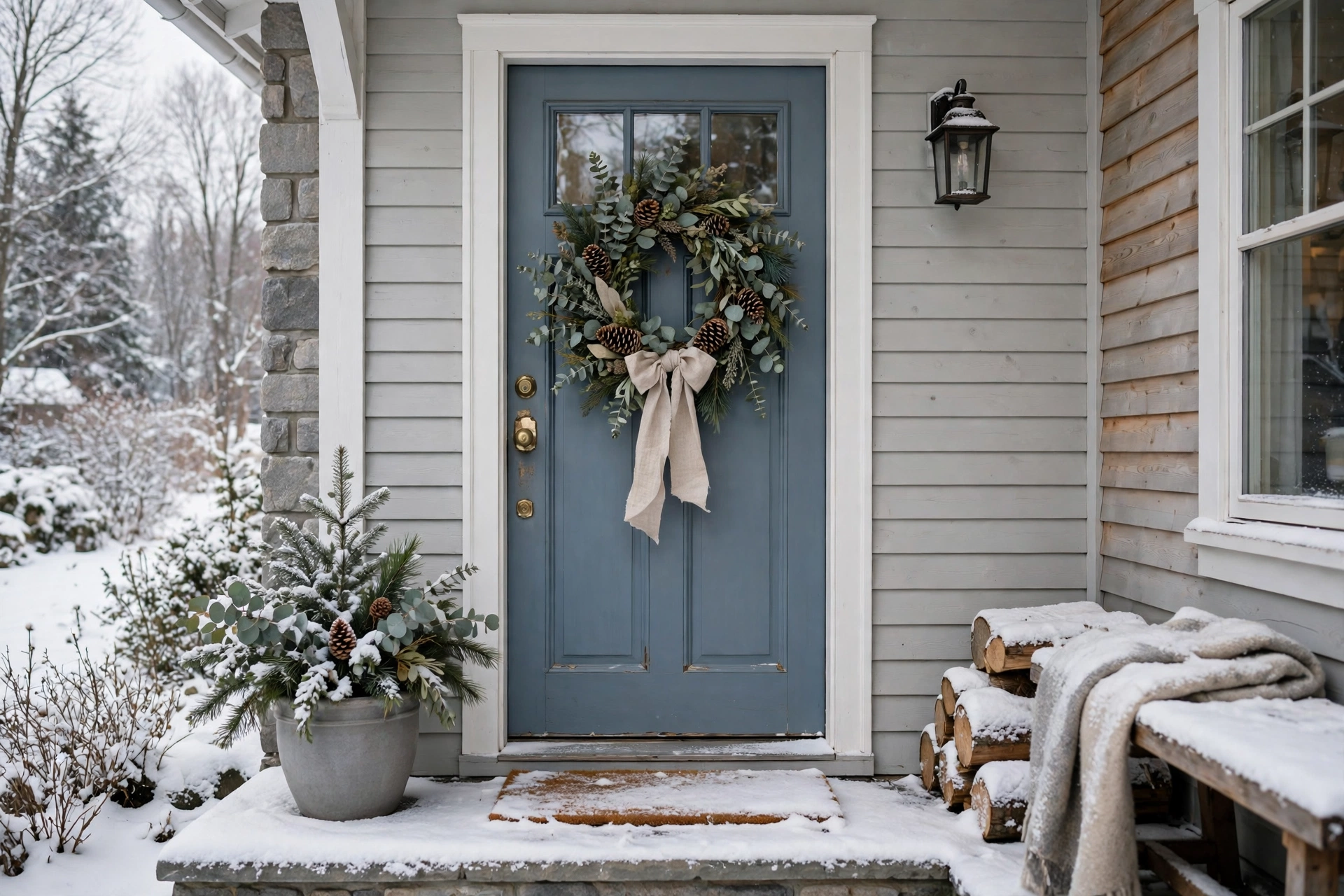
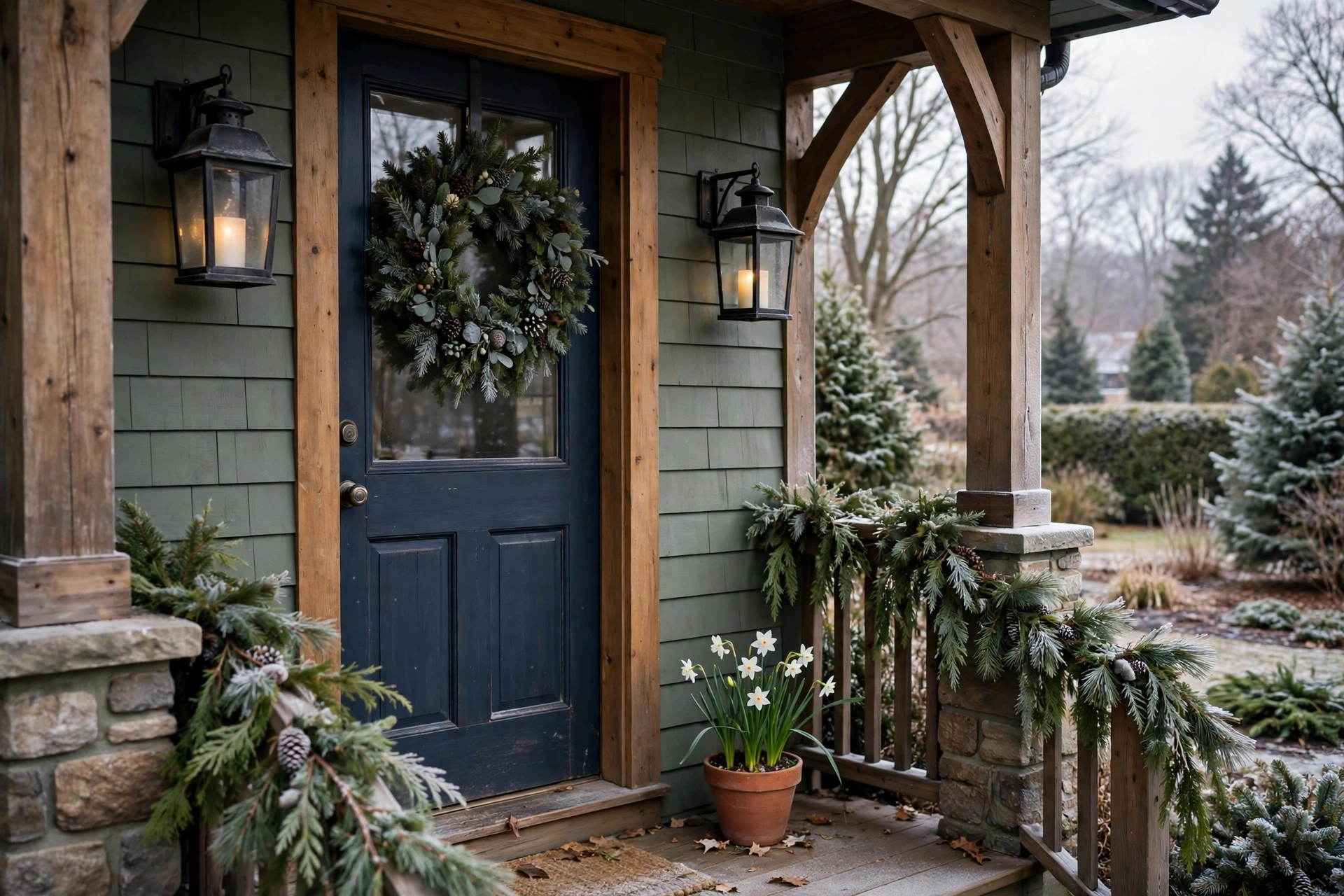
A winter wreath is the fastest way to change the whole feeling of a front door, and the January version is a different animal from the December one. Skip the red berries, the red bow, and the shiny ornaments. Instead, build the wreath from eucalyptus, olive branches, cedar, and a few natural pinecones, tied with a simple linen or burlap ribbon in a soft cream or sage. The result reads as winter, not Christmas — calm, green, and quietly elegant against a dark door, and it will still look right in the middle of February when every trace of the holidays is gone.
Hang it at eye level, centered on the door, with a sturdy over-the-door wreath hanger so the door itself stays undamaged. If your door is painted a bold color, a wreath in soft greens will pop beautifully; if the door is white or natural wood, add a few frosted branches or a sprig of dried lavender for contrast. Mist the greenery lightly every few days to keep it fresh, and if you would rather not maintain real foliage, a good-quality faux eucalyptus wreath looks just as good and can be stored for next January in a single box.
2. Layer Two Rugs for Instant Warmth
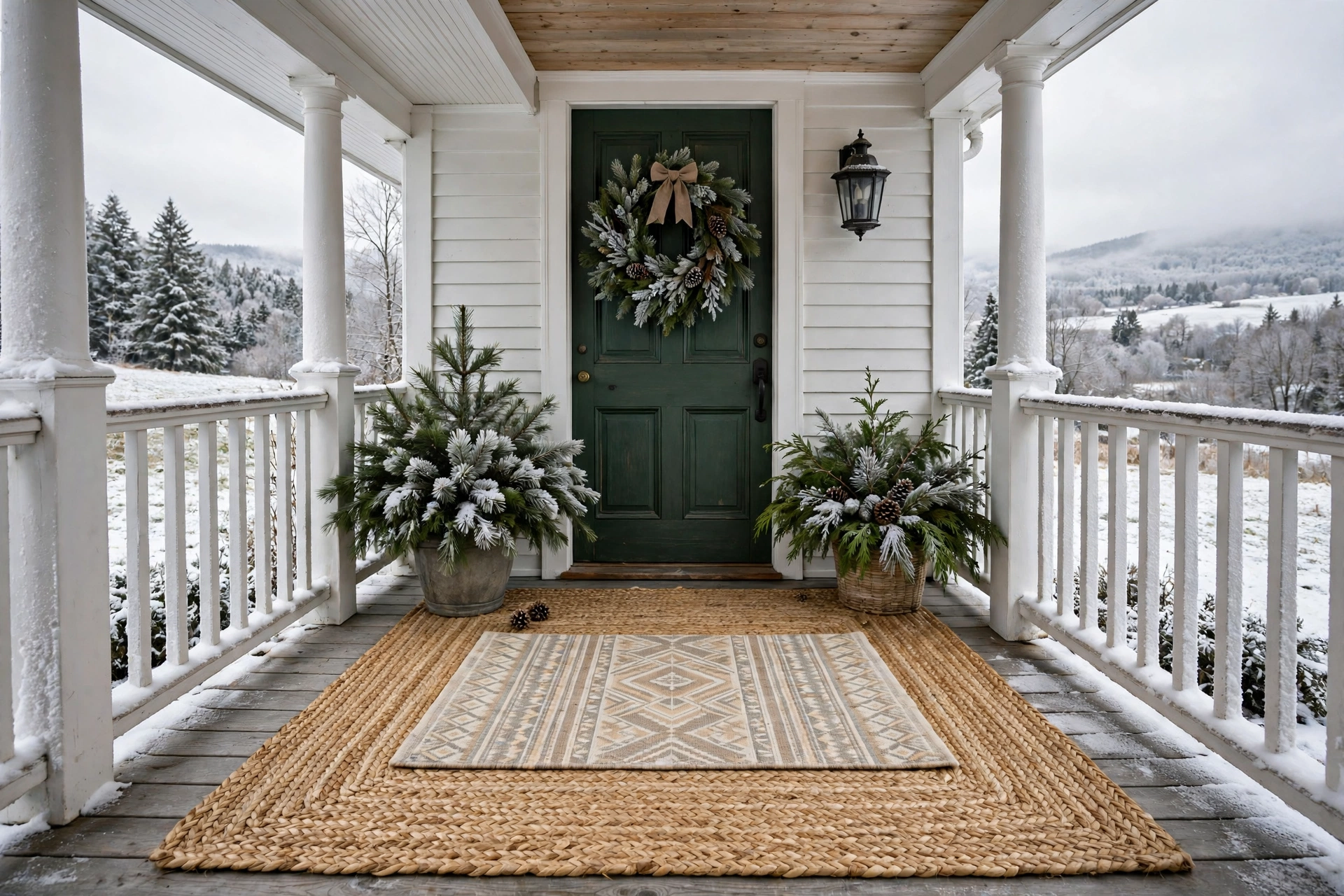
A bare porch floor in January looks cold even when the rest of the porch is decorated, and one thin doormat rarely fixes it. Layering two rugs is the simplest way to warm up the entrance: start with a larger natural-fiber rug, like seagrass or jute, and place a smaller neutral-patterned mat on top, slightly off-center so a border of the base rug shows. The layered look adds texture, catches winter slush and salt, and makes the doorway feel like a real room instead of a strip of concrete.
Choose outdoor-rated rugs for both layers so rain and snow will not ruin them, and keep the palette neutral — cream, charcoal, sage, or a soft plaid in grays and whites. A rug pad underneath the base layer stops everything from sliding on an icy step, which matters more than it sounds on a January morning. Shake both rugs out once a week, and when spring finally arrives, the same base rug can stay put while you swap only the top mat for a brighter seasonal pattern.
3. Fill Winter Porch Pots with Greenery, Birch, and Pinecones
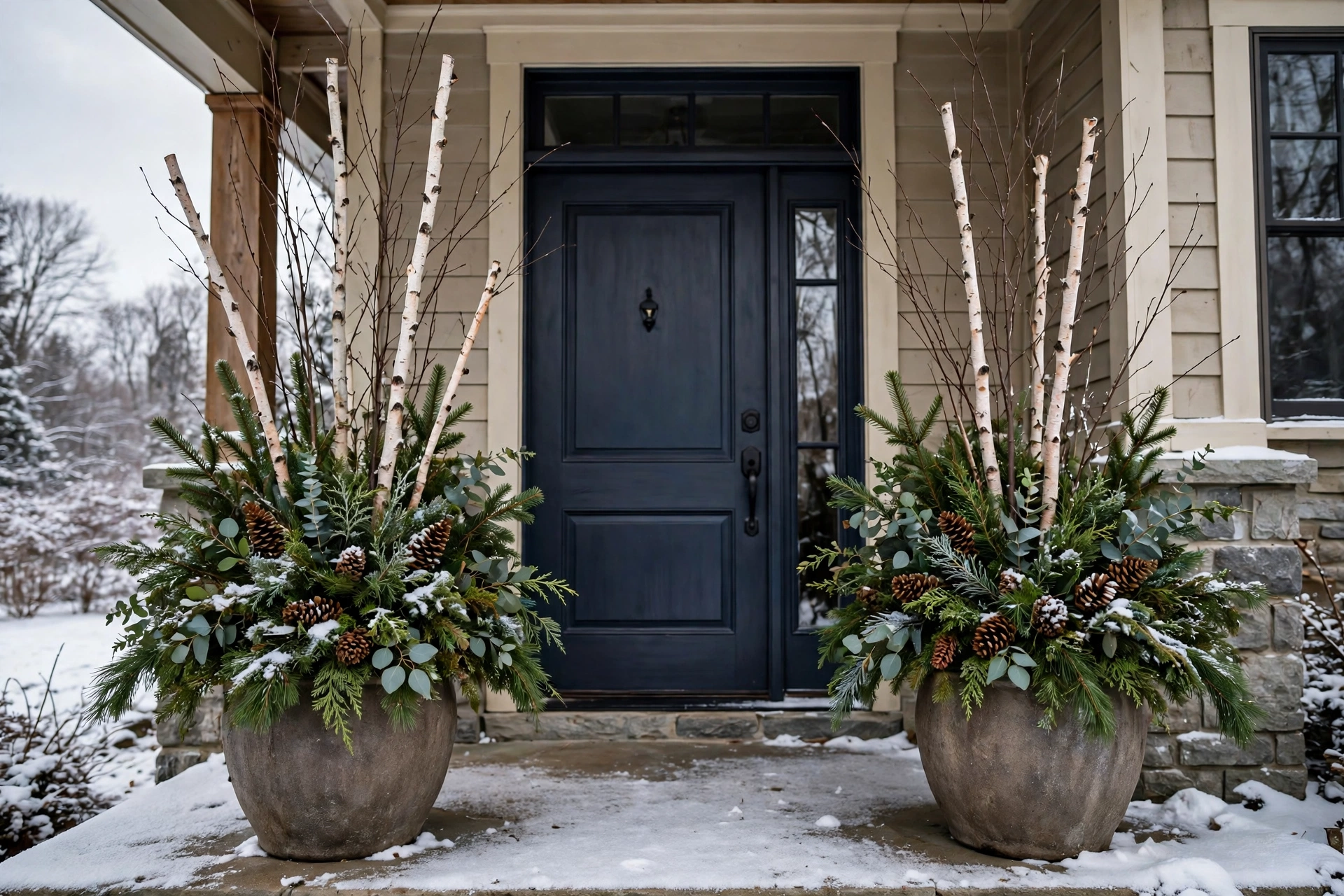
Empty planters are the saddest sight on a January porch, and they are also the easiest fix. Fill your porch pots with a winter arrangement that needs almost no care: a base of fresh cedar and pine boughs, a few tall birch branches rising from the center, and pinecones tucked in around the edges for texture. A pot like this looks intentional from the street, holds up through frost and snow, and costs far less than buying new plants in the middle of winter.
Use the same arrangement on both sides of the door for a balanced, welcoming look, and vary the heights slightly so the pair does not look like a matched set from a store display. If the pots are large, fill the bottom third with a turned-over nursery pot or a block of foam so you need less greenery to reach the rim. For a little sparkle, tuck in a few silver-painted pinecones or a sprig of frosted eucalyptus — just enough shine to catch the light without turning the pot into a holiday decoration.
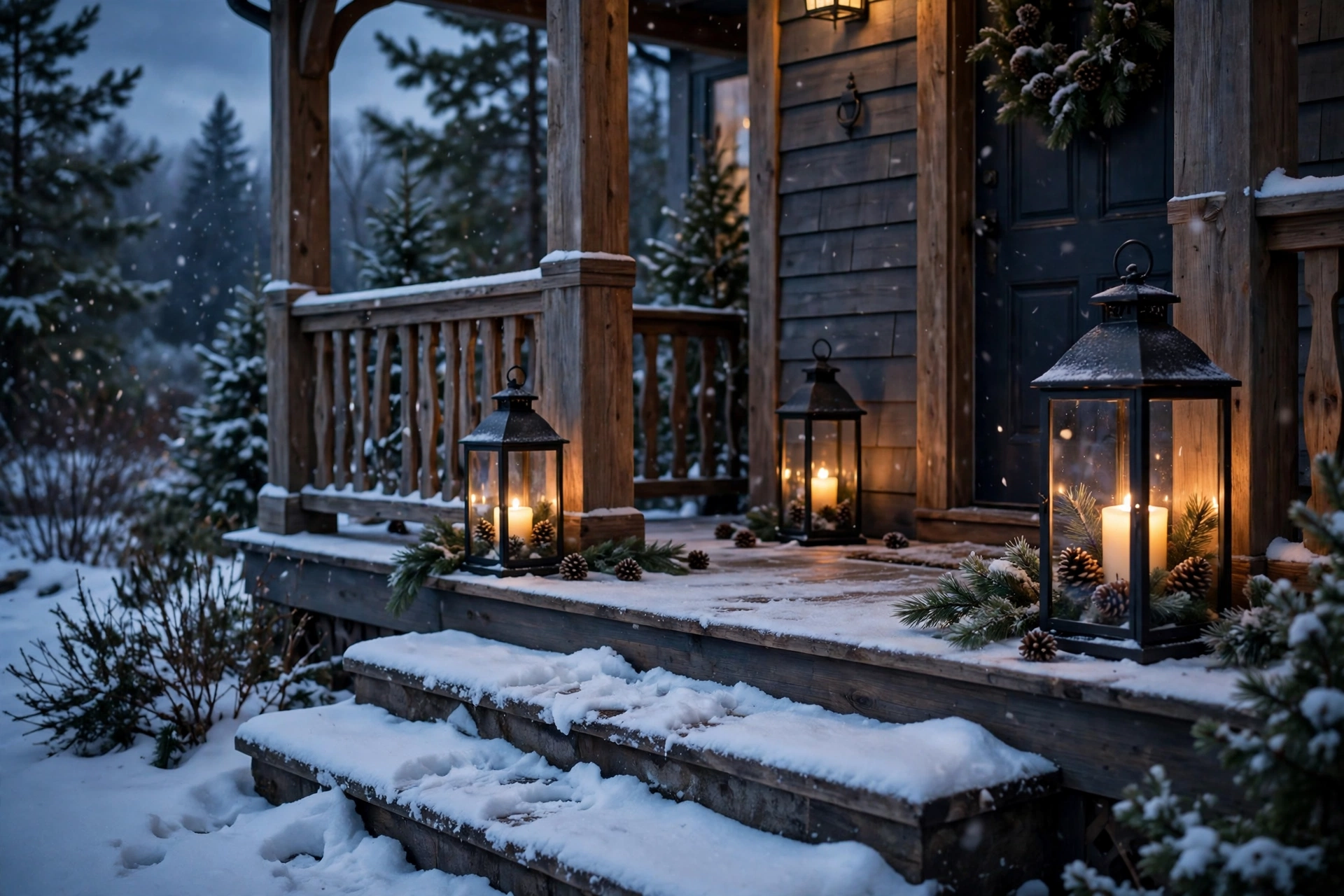
4. Light Lanterns with Flameless Candles
January evenings get dark early, and a porch without light feels unwelcoming before dinner is even on the table. Lanterns with flameless candles solve the problem beautifully: they glow warmly for hours, they never blow out in the wind, and there is no fire risk near a wooden door or a stack of blankets. Place a large lantern on each side of the steps, or cluster three lanterns of different heights in one corner of the porch for a layered glow that feels intentional rather than improvised.
Choose lanterns in black metal or brushed gold, which both suit a winter porch, and use warm-white flameless candles with a timer so they switch on at dusk and off before bed without you touching them. Fill the bottom of each lantern with a handful of pinecones or a few sprigs of cedar to hide the candle base and tie the lantern into the rest of your winter porch decor. The timer is the real trick here — your porch lights itself every evening, and you never have to remember to do it.
5. Add Gold and Silver Accents
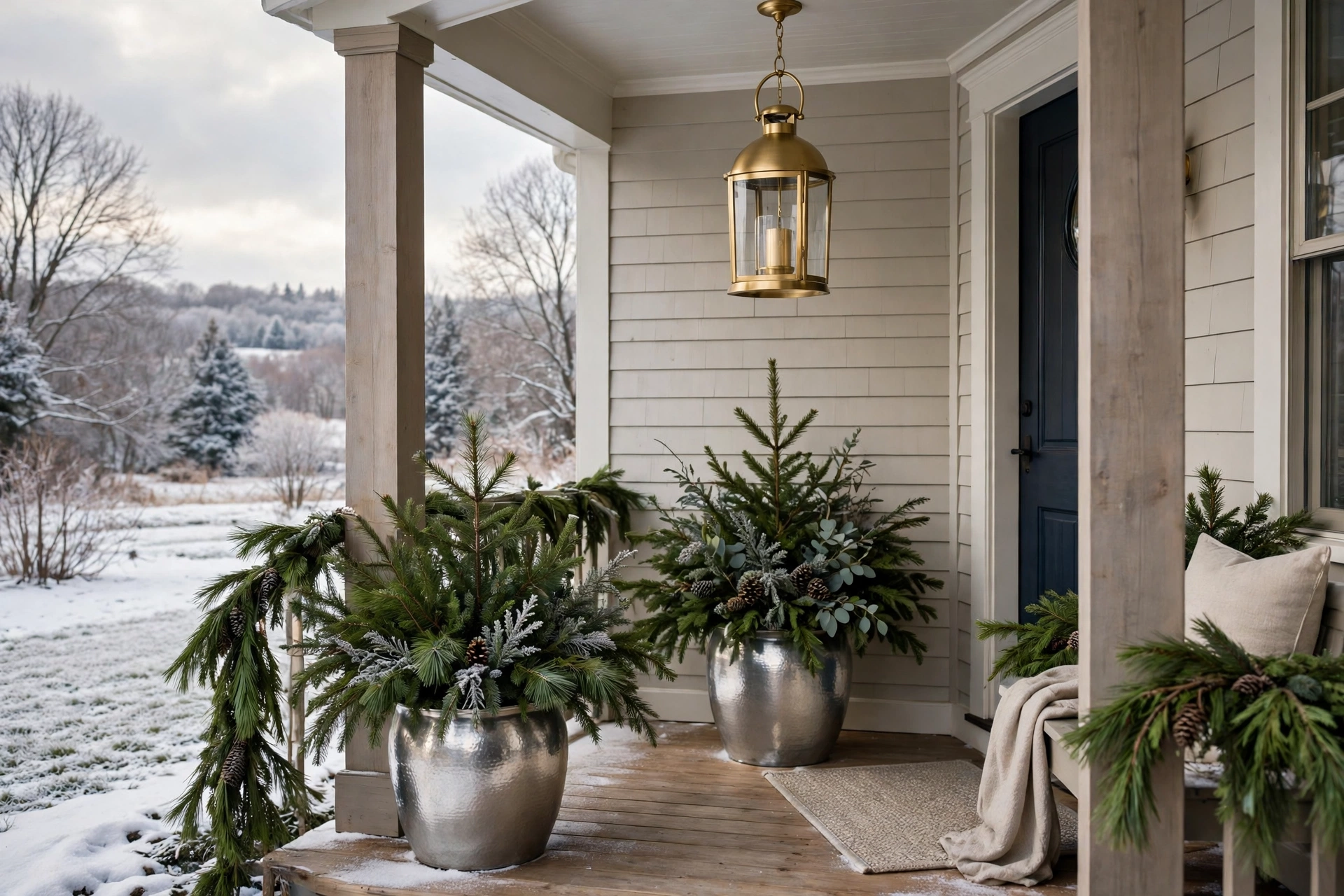
After the holidays, most people strip every bit of shine off the porch — and then wonder why the entrance looks flat. Gold and silver accents are not just for Christmas. A brushed-gold lantern, a silver tray holding a candle, or a pair of metallic planters adds the same warmth and light to a January porch without a single festive association. Metallic finishes catch the low winter sun and the glow of your porch light, which is exactly what a dark month needs.
The rule is restraint: pick one metal as your main accent and let the other appear only once or twice. Brushed gold planters with a silver mirror by the door, for example, feels collected rather than decorated. Keep the rest of the porch in natural textures — wood, greenery, woven fibers — so the metallic pieces read as jewelry, not clutter. And skip glitter entirely; a matte or brushed finish looks expensive in January, while glitter still says December.
6. Drape a Cozy Throw Over the Bench
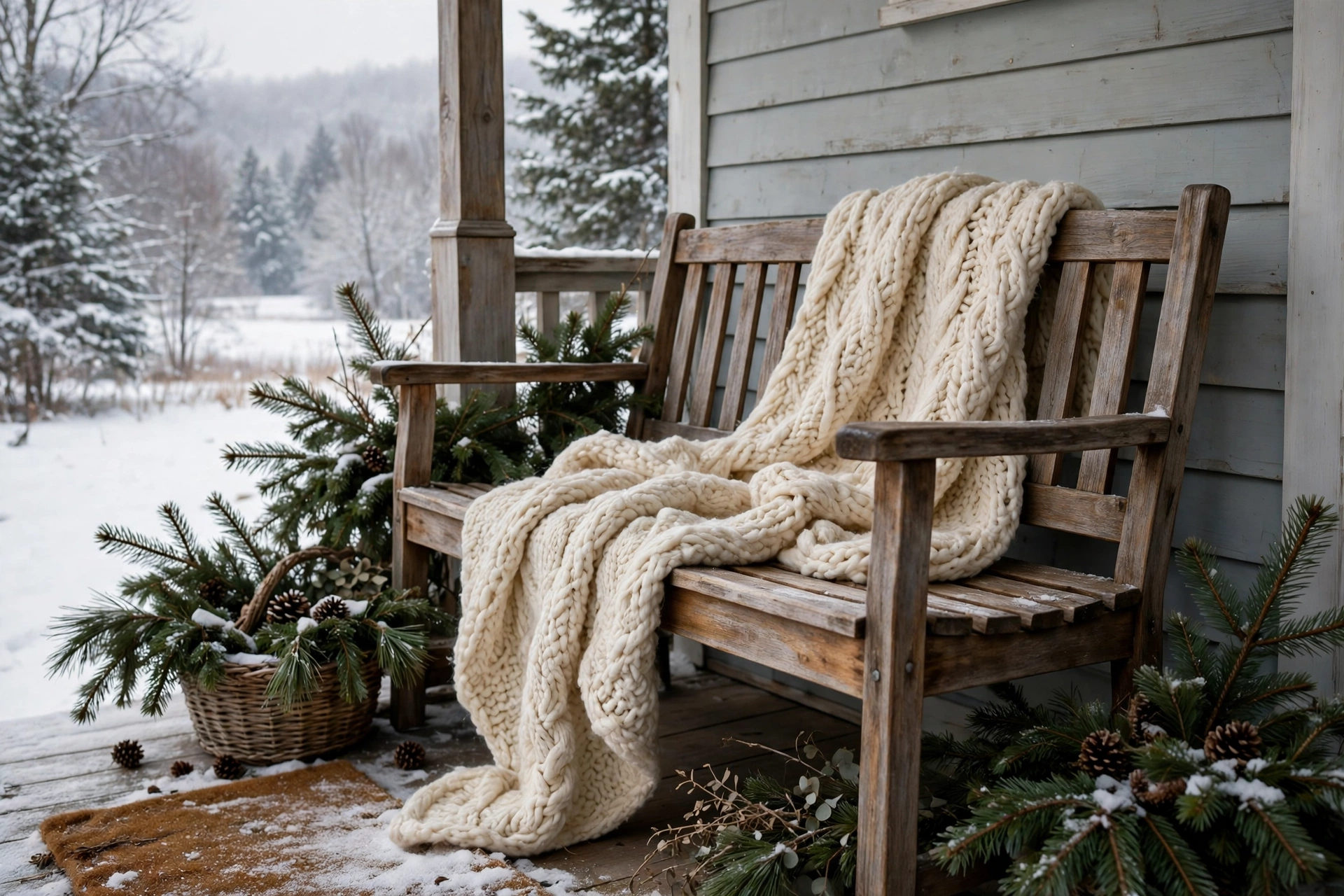
A porch bench without a throw is just a place to set down a bag. Add one thick, soft throw — a chunky knit in cream, a wool plaid in charcoal and white, or a faux-fur blanket in a warm neutral — and the bench becomes an invitation to sit, even in January. The throw adds color, texture, and a sense of warmth that no hard surface can give, and it is the first thing the eye lands on when someone walks up the steps.
Drape it casually rather than folding it into a perfect rectangle: fold it in thirds lengthwise, lay it across the bench, and let one end fall over the edge. Keep a second throw folded in a basket nearby so there is always a dry one ready if the first gets damp from snow. Choose a machine-washable fabric, because a porch throw will pick up winter weather, and wash it every couple of weeks so it stays fresh. When February arrives, swap the cream throw for a slightly deeper tone and the bench is ready for another month.
7. Flank the Door with Potted Evergreens
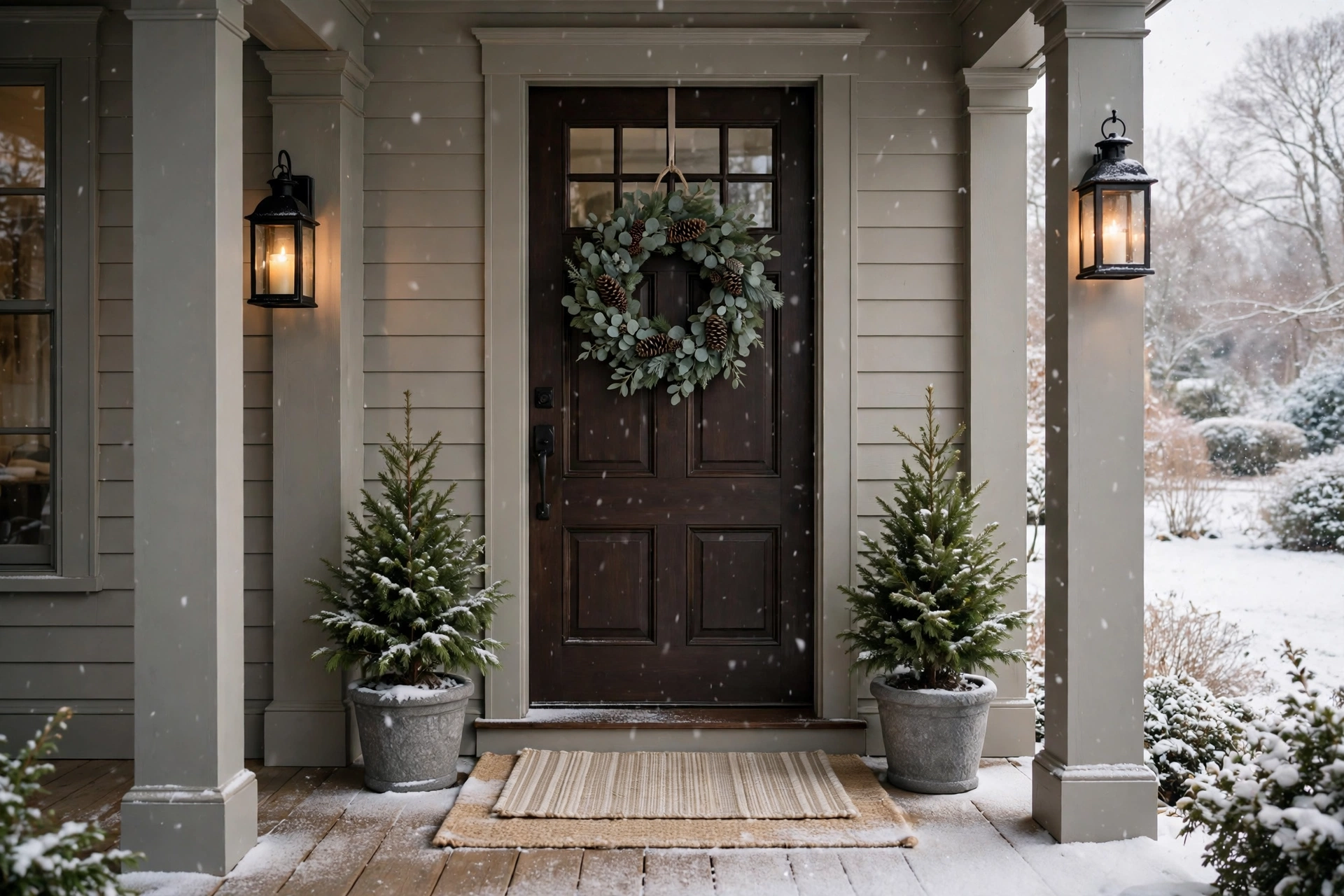
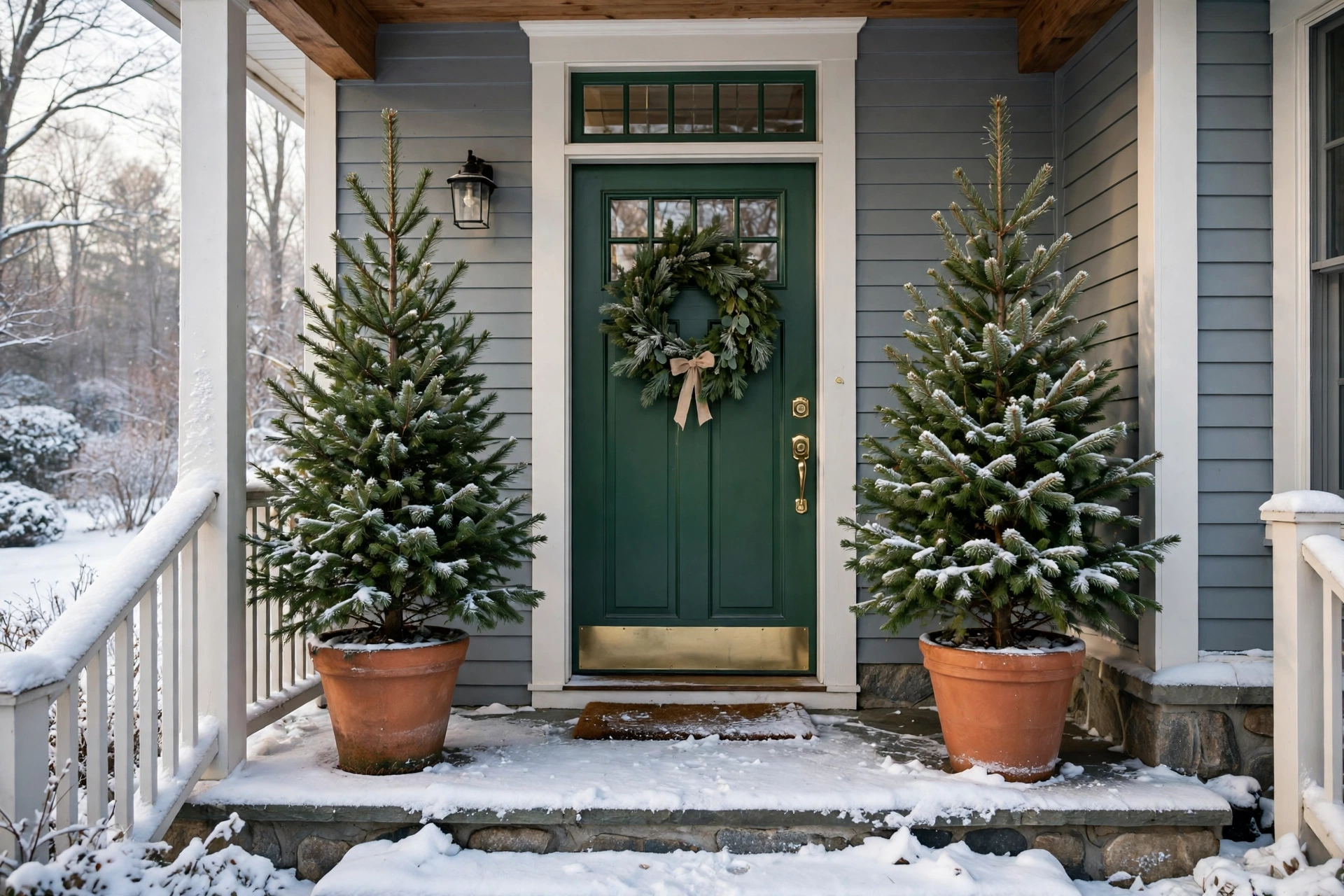
Nothing says “this house is cared for” in January like a pair of healthy evergreens by the front door. Small potted spruce, boxwood, or juniper trees frame the entrance, add height and structure when everything else in the garden is bare, and survive the cold with almost no attention. A matching pair on either side of the door creates symmetry that makes the whole porch look finished, even if nothing else has been decorated yet.
Choose pots that suit your house — classic terracotta for a traditional home, matte black or galvanized metal for a modern one — and raise them on small pot feet so melting snow drains away instead of pooling underneath. Water the evergreens sparingly, only when the soil is dry and the temperature is above freezing, and brush snow off the branches after a heavy fall so the weight does not bend them. If live plants feel like too much commitment in deep winter, good faux boxwood balls in the same pots give you the same structure with zero watering.
8. Keep Warm-White Fairy Lights Up Through January
Taking the fairy lights down with the rest of the Christmas decor is the most common January porch mistake. Warm-white fairy lights are not a holiday decoration — they are winter light, and they belong on a porch for the whole dark season. Draped along the porch railing, wrapped around a column, or strung across the top of the doorway, they turn a cold evening entrance into something genuinely welcoming. The trick is keeping them warm-white and simple: no colors, no flashing, no shapes.
Use outdoor-rated lights with a timer so they come on at dusk, and keep the strands tidy — one clean line along the railing beats a tangled web every time. If the lights were wrapped around a Christmas garland, move them to the bare railing or a plain branch instead, so nothing about the display reads as leftover holiday decor. The glow makes the porch feel warmer even on the coldest night, and when the days finally start getting longer, you can take them down knowing they earned their keep all winter.
9. Swap in a Winter Doormat
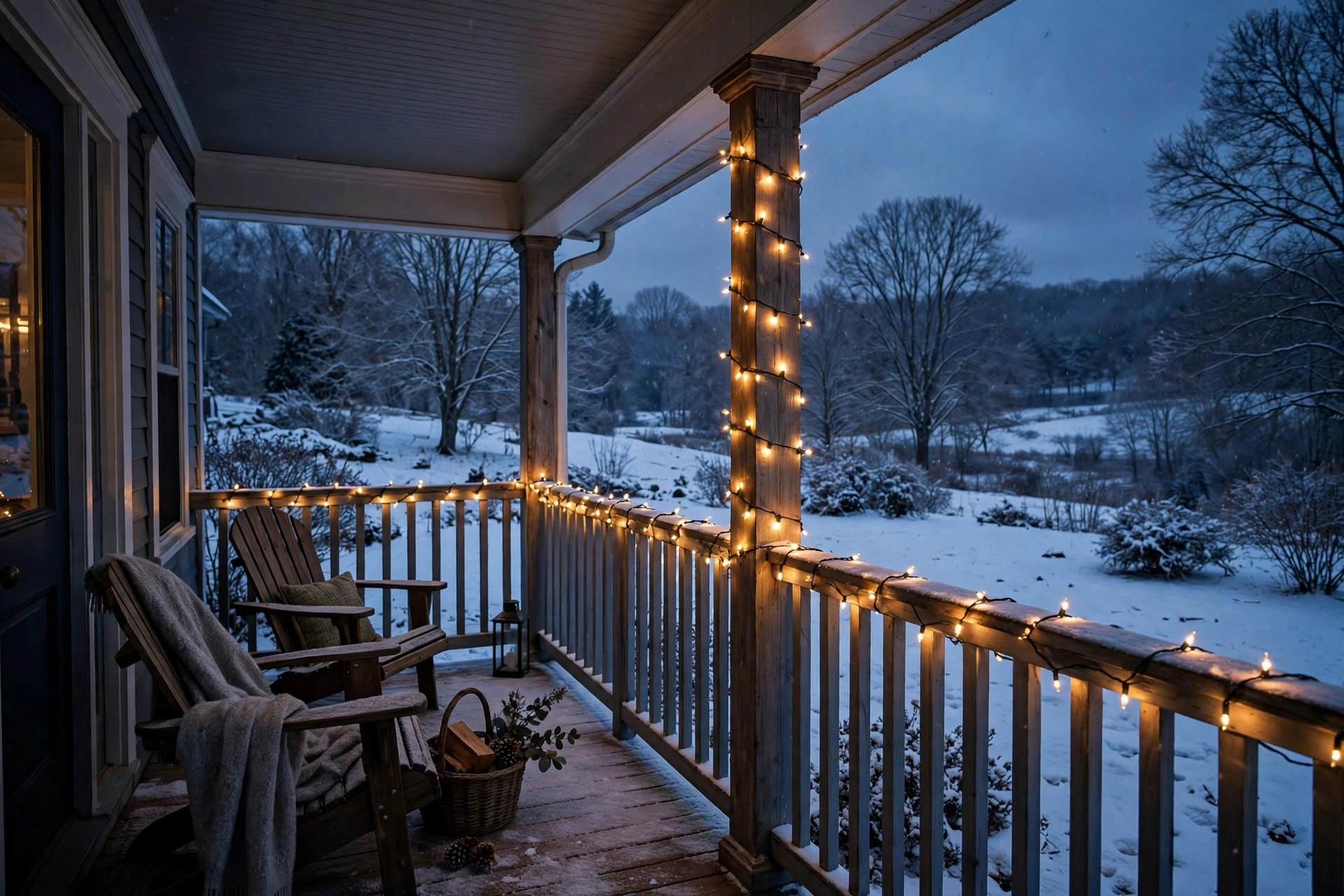
The Christmas doormat — the one with the reindeer, the Santa, or the “Merry” greeting — has a hard expiry date, and that date is the first week of January. A winter doormat, on the other hand, can stay out for months. Choose one with a simple seasonal message like “Welcome” or “Hello Winter,” or skip words entirely and pick a pattern: a subtle snowflake, a plaid in grays and cream, or a natural coir mat with a woven border. It greets guests, scrapes off slush and salt, and sets the tone for the whole entrance.
Layer the doormat over your larger base rug from idea two for the finished, pulled-together look, and make sure the mat is rated for outdoor use so it can handle wet boots and melting snow. Shake it out or hose it down every week or two — winter mats collect more salt and grit than any other season’s. If you love the idea of a seasonal mat, keep two in rotation: a neutral one for January and a slightly brighter one for late winter, so the entrance feels fresh again just when the season starts to drag.
10. Stack a Crate with Firewood and Blankets
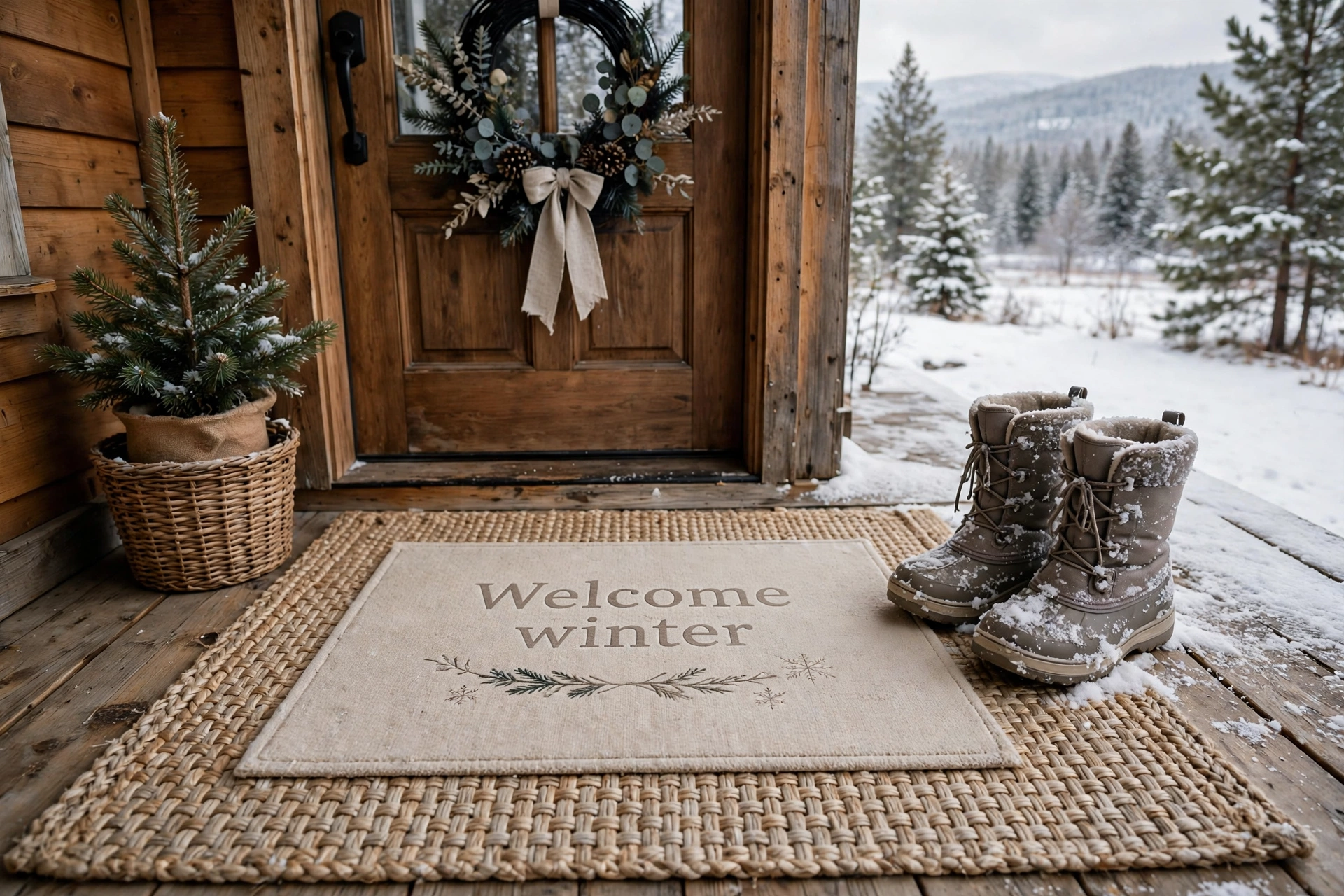
A wooden crate stacked with firewood is one of the most charming things you can put on a January porch — it looks rustic, it smells faintly of cedar, and it tells everyone this is a house that is ready for a cold night. Place a sturdy wooden crate beside the bench or by the door, fill it with neatly stacked firewood, and tuck a folded blanket or two on top so the display is both decorative and genuinely useful. Even if you never light a fire, the crate adds height, texture, and a sense of winter readiness that a bare porch never has.
Keep the crate under the porch roof so the wood stays dry, and line the bottom with a piece of burlap to catch bark and sawdust before they reach the floor. If you do have a fireplace or a fire pit, this crate becomes the most practical decor on the porch — a grab-and-go stack that saves a trip to the woodpile on a freezing night. Roll up the blankets tightly so they read as part of the arrangement rather than clutter, and choose blanket colors that match the bench throw for a coordinated look.
11. Hang a Mirror or Wall Art by the Door
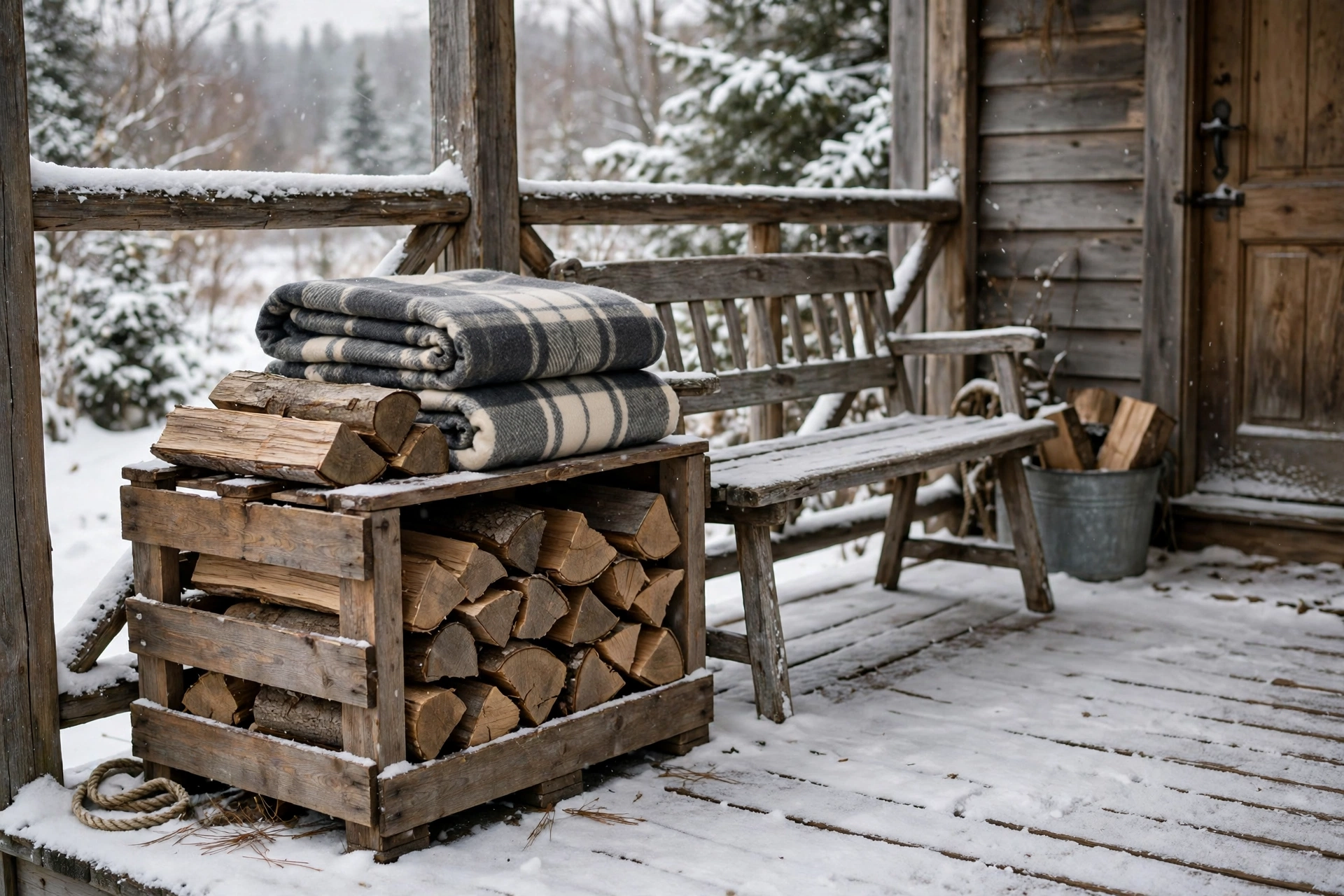
The wall beside the front door is usually the most ignored surface on the porch, and it is also the one with the most potential. A large mirror hung there bounces light around the porch, makes a small entrance feel bigger, and gives you a last look before you head out. If a mirror feels too fussy for an outdoor space, a piece of weatherproof wall art works just as well — a simple metal snowflake, a framed botanical print under glass, or a wooden sign with a short winter greeting.
Choose a piece that is roughly two-thirds the width of the space it hangs over, and mount it securely with outdoor-rated hardware so winter wind cannot send it flying. A mirror with a black or gold frame ties in beautifully with the lanterns and metallic accents elsewhere on the porch, while a piece of art in soft greens and creams echoes the wreath and the porch pots. Either way, that blank wall stops being blank, and the porch starts to feel like a room someone actually designed.
12. Add a Bird Feeder for Winter Interest
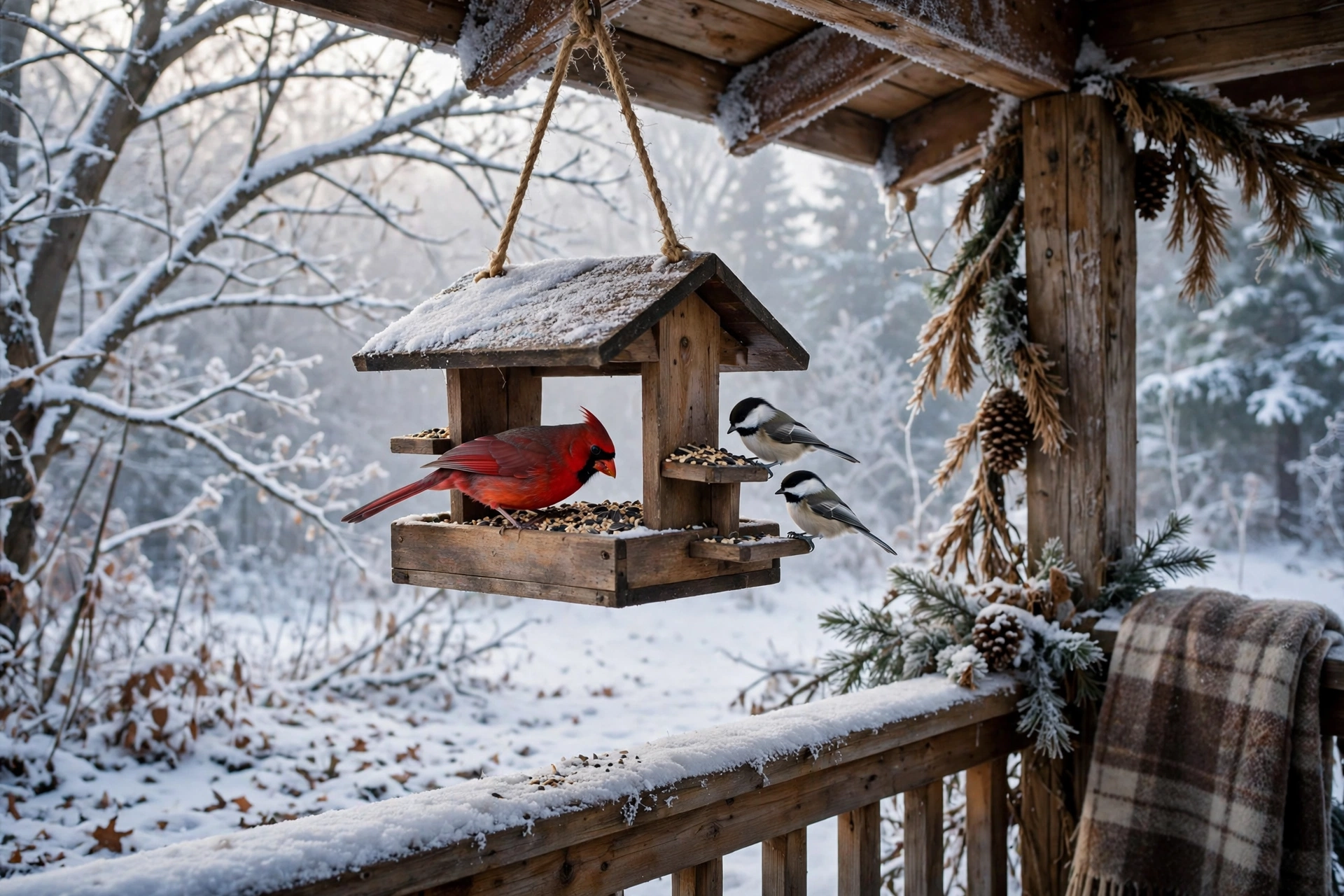
A bird feeder is the only porch decoration that moves, sings, and changes every day — and January is exactly when birds need it most. Hang a simple wooden or metal feeder from a porch hook or a shepherd’s hook in the yard where you can see it from the door, fill it with black-oil sunflower seed, and within a few days chickadees, finches, and cardinals will be visiting regularly. The flash of a red cardinal against the snow is the best color your January porch will ever have, and it costs nothing beyond a bag of seed.
Keep the feeder easy to reach so you can refill it without stepping into deep snow, and clean it every couple of weeks to keep the seed fresh and the birds healthy. A small suet feeder beside the seed feeder attracts woodpeckers too, and a shallow dish of water — refreshed daily so it does not freeze solid — turns the porch into a genuine winter haven for birds. Place the feeder where you can watch it from inside as well, and your January porch becomes a show worth coming home to.
13. Drape a Neutral Garland with No Ornaments
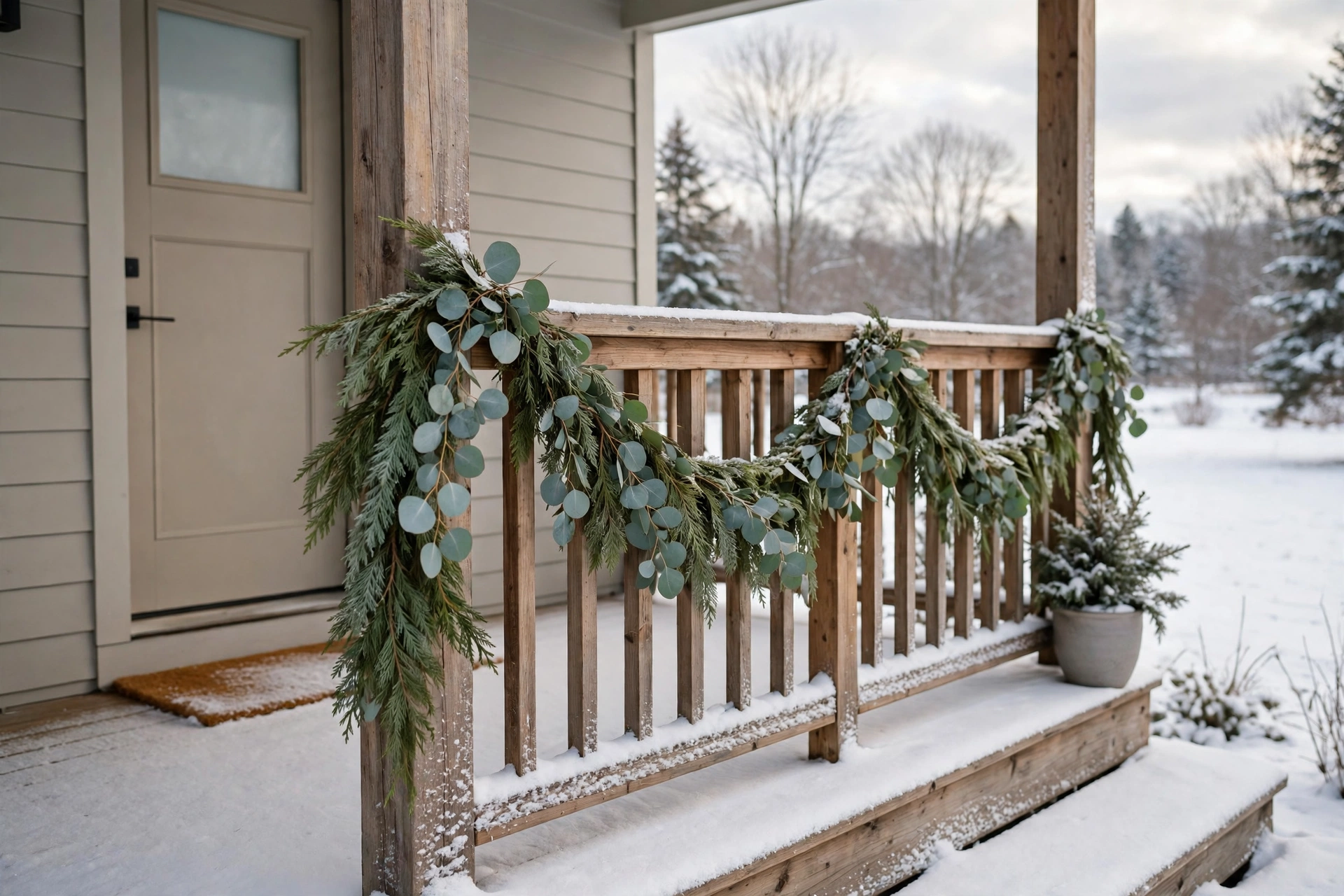
Garland does not have to come down with the Christmas tree — it just has to change. A neutral winter garland, made from plain cedar, pine, or eucalyptus with no ornaments, no berries, and no ribbon, draped along the porch railing or across the top of the doorway, adds the same lush greenery as the December version without a single festive association. It softens the hard lines of the porch, frames the entrance, and makes the whole space feel alive in the middle of winter.
Let the garland hang in a gentle swag rather than pulling it taut, and secure it with discreet wire or zip ties so it stays put through winter wind. Mix two kinds of greenery — cedar for fullness and eucalyptus for texture — so the garland looks gathered rather than store-bought. If real greenery is too much upkeep, a good faux cedar garland will last for years and can be fluffed into shape each January in about ten minutes. Either way, the rule holds: greenery yes, ornaments no.
14. Dress the Bench with Winter-Texture Cushions
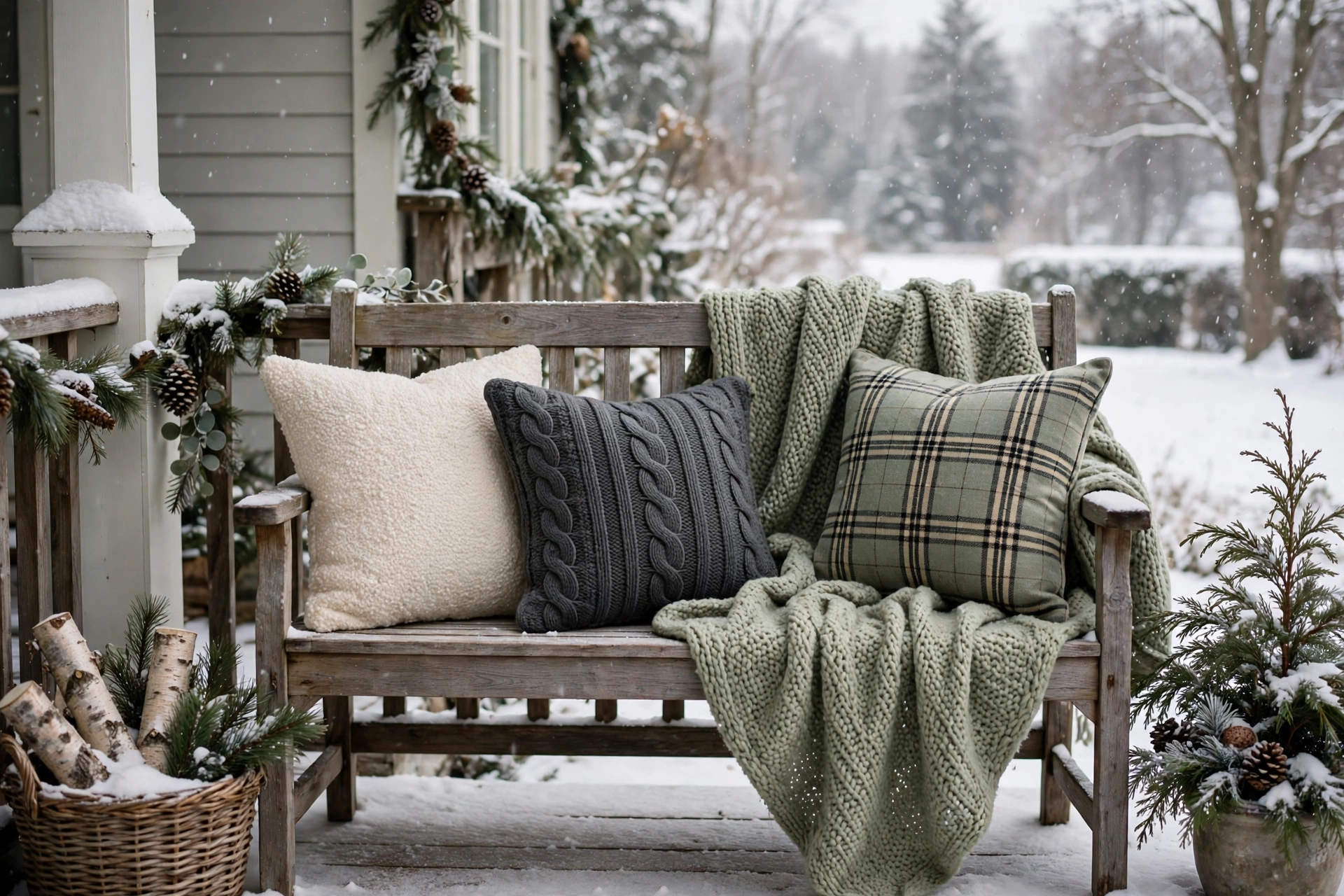
The throw from idea six makes the bench cozy, but cushions are what make it look finished. Two or three outdoor cushions in winter textures — a chunky knit, a nubby boucle, a soft faux-fur, or a woven plaid — layered against the back of the bench turn a plain seat into the coziest spot on the porch. Mix textures rather than colors: cream, charcoal, and sage in different fabrics look far more styled than three matching cushions in the same material.
Choose outdoor-rated cushion covers so a snow shower does not ruin them, and store the cushions in a deck box or bring them inside during a heavy storm. A lumbar pillow in the center ties the group together, and a cushion in a slightly deeper tone — a dark charcoal or forest green — grounds the arrangement so the pale textures do not wash out in the winter light. When spring comes, swap the heavy textures for lighter linens and the same bench is ready for a new season without buying a single new piece of furniture.
15. Make the Porch February-Ready
The smartest January porch is one that does not need to be redone in February. That means choosing decor with a long season built in: the evergreens stay, the lanterns stay, the fairy lights stay until the evenings get noticeably lighter, and the neutral garland stays until the first spring buds appear. What goes is anything that reads as specifically January — the “Hello Winter” mat, the snowflake art, the heaviest knit throw — and each piece gets swapped for something a little lighter as the month turns.
Make a quick list now of what stays and what goes, and keep a small storage bin near the porch for the pieces coming off. In February, replace the winter doormat with a plain neutral one, swap the cream throw for a sage or soft blue one, and add a small pot of early bulbs like paperwhites to the porch pots. The porch never goes bare, it never looks leftover, and it is always one small swap away from the next season. That is the whole point of decorating for January instead of for Christmas: you build once, and the porch just keeps working.
Frequently Asked Questions
When should I take down Christmas porch decor?
Take the clearly festive pieces down in the first week of January — red bows, ornaments, Santa figures, and anything that says “Merry Christmas.” Keep the neutral winter pieces, like plain greenery, lanterns, and warm-white lights, because those are January decor, not Christmas decor. If a piece makes you think of December when you look at it, it goes; if it makes you think of winter, it stays.
What porch decor works in January after Christmas?
Winter greenery, layered neutral rugs, lanterns with flameless candles, gold and silver accents, and cozy throws all work beautifully in January. The key is choosing pieces in winter colors — greens, creams, charcoals, golds — and avoiding red, ornaments, and holiday words. A winter wreath, potted evergreens, and a neutral garland are the three pieces that change a porch from “leftover Christmas” to “fresh January” the fastest.
How do I decorate a small porch for winter?
Focus on the door and the floor. A winter wreath on the door, a layered rug at the threshold, and one lantern beside the steps give a small porch a finished look without crowding it. Skip the bench and the crate if space is tight, and use the wall beside the door for a mirror or a small piece of art instead. For more small-space ideas, see our guide to Christmas porch decor ideas — the layout tips work for any season.
How do I keep porch plants alive in winter?
Choose cold-hardy evergreens like boxwood, spruce, and juniper, which handle frost without fuss. Water only when the soil is dry and the temperature is above freezing, and raise pots on small feet so melting snow drains away. Brush heavy snow off branches so the weight does not bend them, and move tender plants to a sheltered corner of the porch during a hard freeze. For more cold-weather plant care, see our winter living room decor ideas for bringing greenery indoors too.
What colors work best for a January porch?
Greens, creams, charcoals, and soft metallics — gold and silver — are the best January porch colors. They feel fresh and calm, they work with snow and bare branches, and they carry easily into February. Avoid red entirely in January, since it reads as leftover Christmas, and save bright spring colors for March. If you want one accent color, sage green or a soft dusty blue adds life without breaking the winter palette.
Related Reading
- Christmas Porch Decor Ideas — festive porch styling to compare with the fresh January look.
- Winter Living Room Decor Ideas — cozy cold-weather styling for the room just inside the door.
- Christmas Yard Decor Ideas — outdoor decorating ideas for the yard beyond the porch.
- Christmas Doormat Ideas — doormat inspiration for every season, including winter swaps.
Conclusion
A January porch does not need to be a leftover Christmas porch, and it does not need to be bare either. The fifteen ideas in this list prove that the front entrance can feel fresh, calm, and welcoming all winter long — a winter wreath on the door, layered rugs underfoot, lanterns glowing at dusk, gold accents catching the light, and evergreens that stay green no matter how cold it gets. None of it is expensive, none of it is complicated, and most of it will still be working in February with barely a change.
Start this weekend with the three moves that matter most: take down anything that says Christmas, hang a winter wreath, and layer a rug at the door. Then add one idea a week — the lanterns, the porch pots, the throw on the bench — and by the end of January your porch will look like the new year just moved in. That is what a fresh start is supposed to feel like, right at your front door.