15 New Year Entryway Organization Ideas for a Clutter-Free Start
The entryway is the smallest room in most homes and the hardest-working one. Every coat, shoe, backpack, key, umbrella, and piece of mail in the house passes through it, usually in a hurry, and usually in both directions. When the entryway has no system, that traffic turns into a pile: shoes by the door, coats on the banister, keys in a different pocket every morning, and a stack of mail nobody has opened since Tuesday.
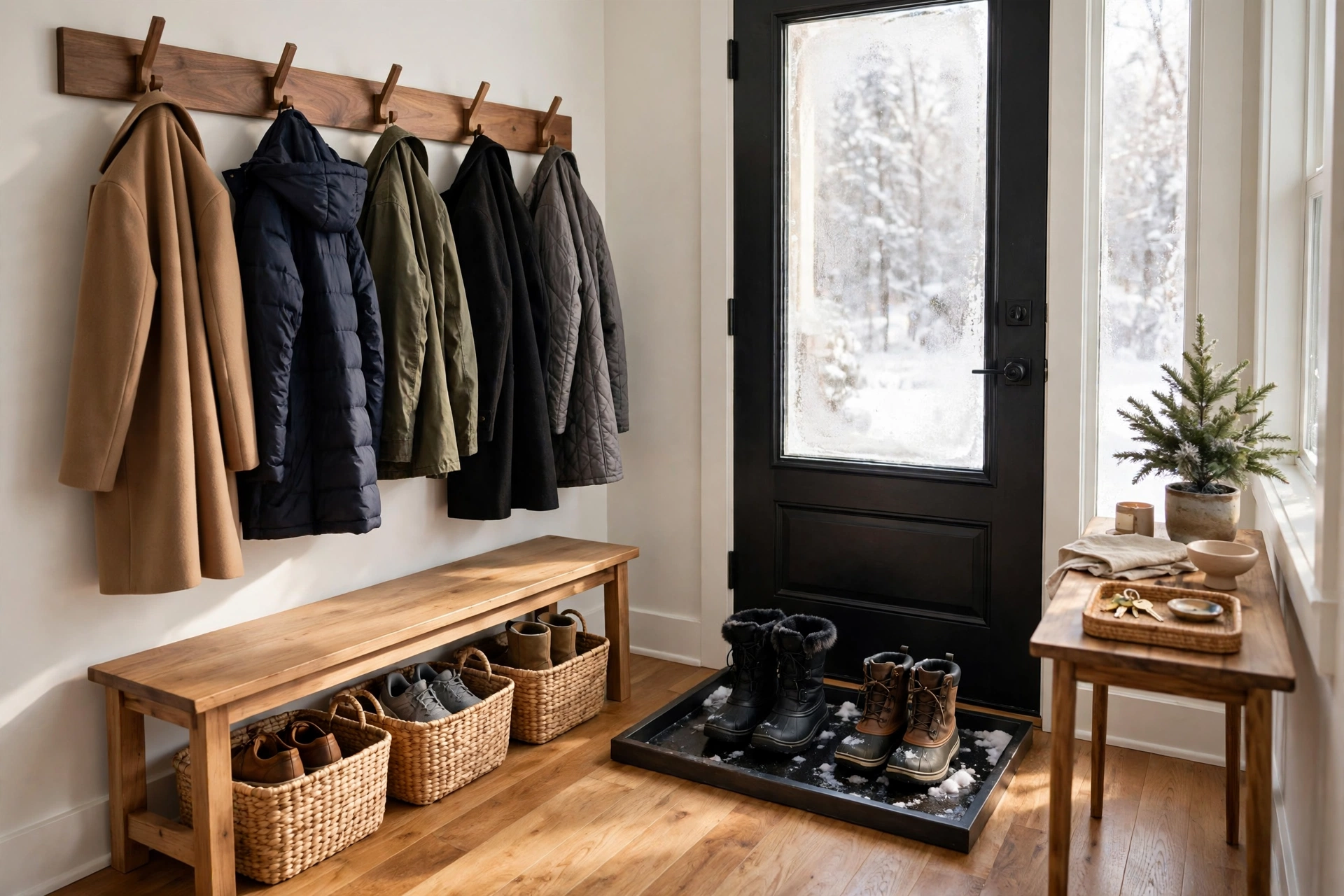
The new year is the perfect time to fix it, because an entryway does not need a makeover — it needs a system. The 15 New Year entryway organization ideas below are not about decorating. They are about hooks, trays, zones, and habits: giving every item one obvious home, making the drop-off point so easy that nobody has to think, and building a two-minute routine that keeps the whole thing working all year. Pick one idea this weekend — the hook rule or the boot tray is a good place to start — and add the rest one at a time. By February, your entryway will run itself, and every morning will start a little calmer.
1. Give Every Person One Hook
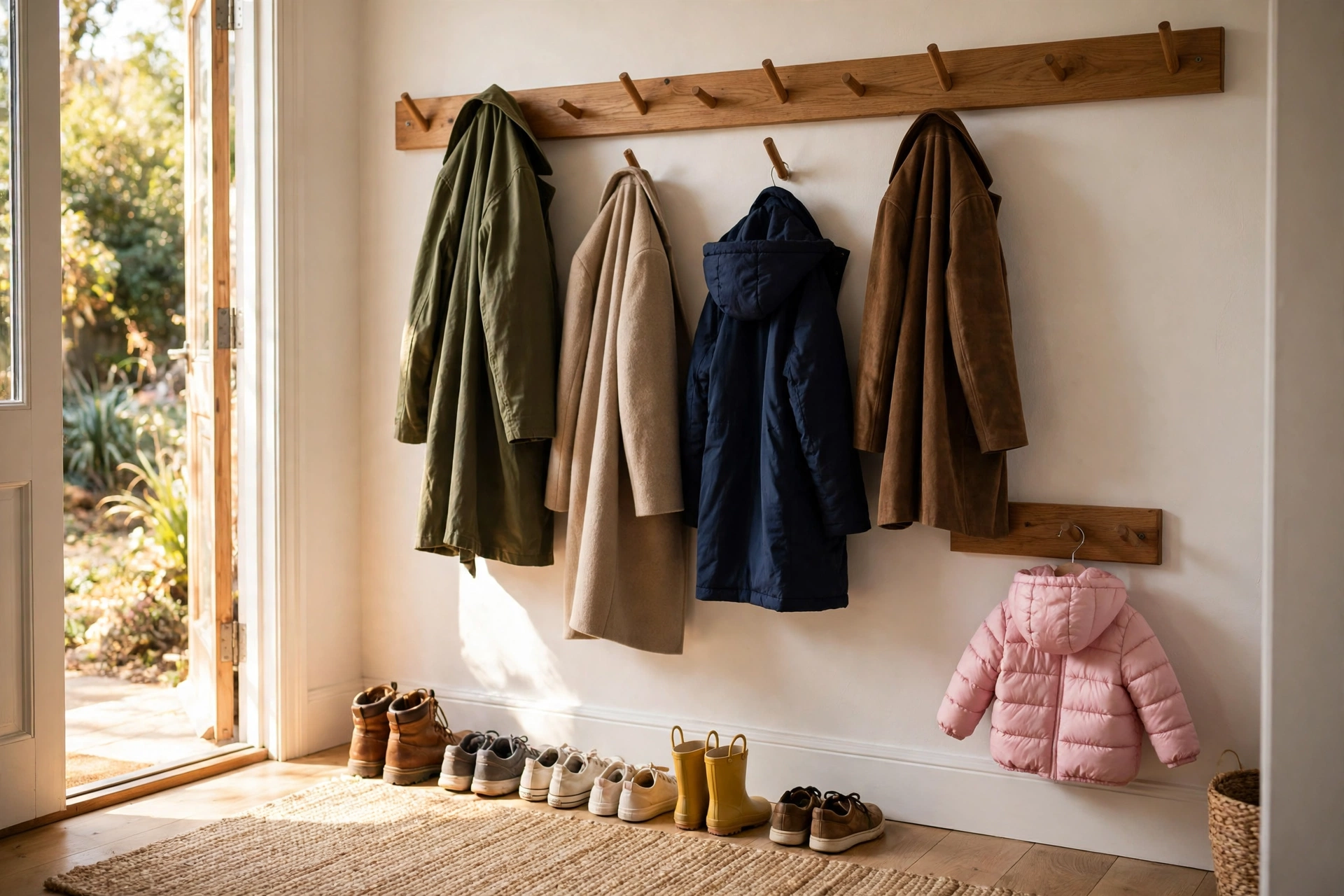
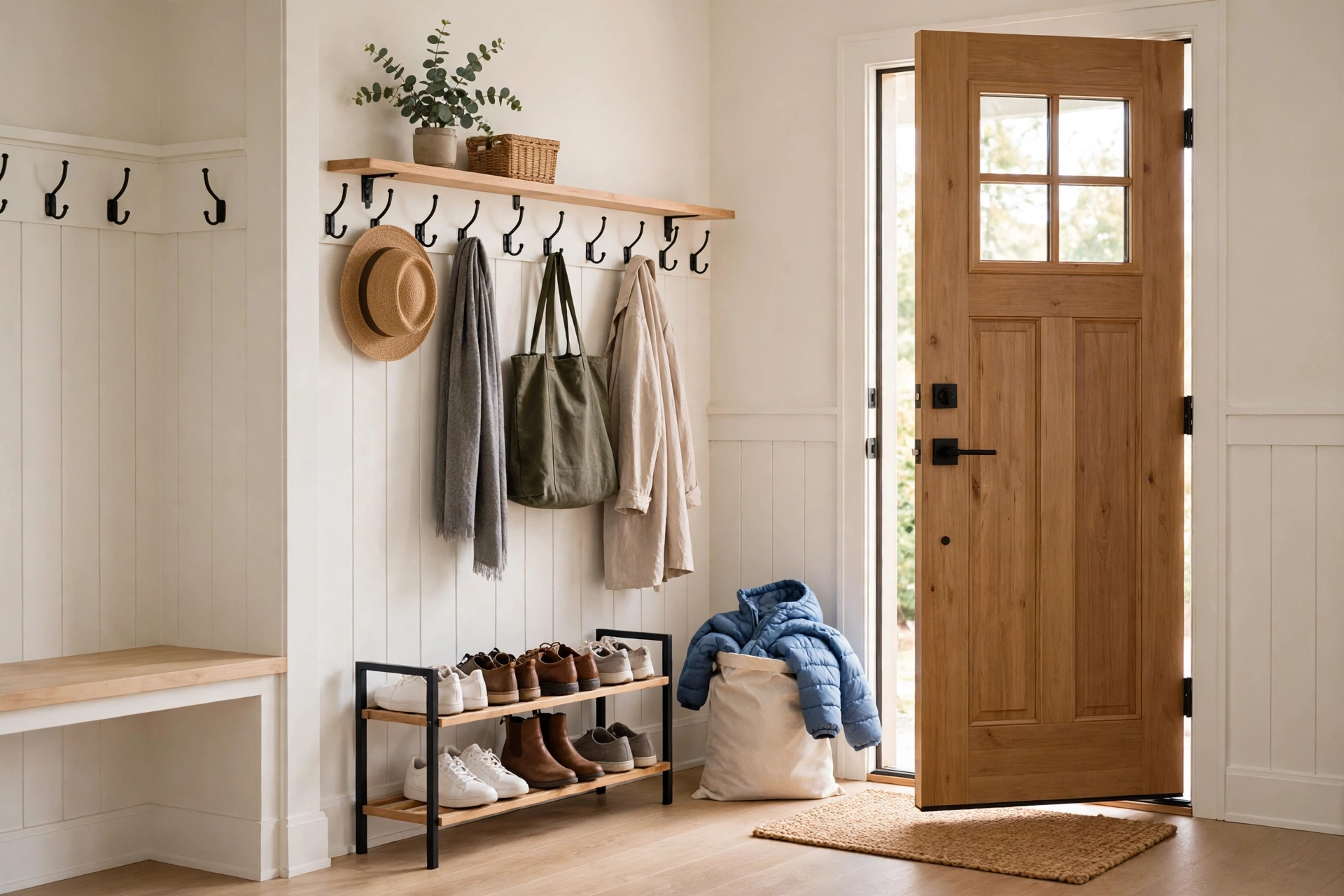
The fastest way to end the coat pile is also the simplest: one hook per person, at a height each person can actually reach. When a coat has a named hook, hanging it up takes two seconds; when it does not, the coat lands on the nearest chair, the banister, or the floor. Assign the hooks by name, and put kids’ hooks low enough that a child can hang their own coat without asking for help — about 40 inches from the floor works for most elementary-age kids, while adults are comfortable at 60 to 66 inches.
One hook per person also sets a natural limit. If a hook already holds a coat, the old one has to move before the new one goes up, which stops the slow build-up of five jackets nobody wears anymore. Keep the hooks sturdy — a solid wood peg rail or individual metal hooks screwed into a stud, not adhesive hooks that peel off the wall in February. And leave one spare hook by the door for guests, so visitors never have to drape their coat over your system.
2. Add a Lipped Boot Tray for Winter Slush
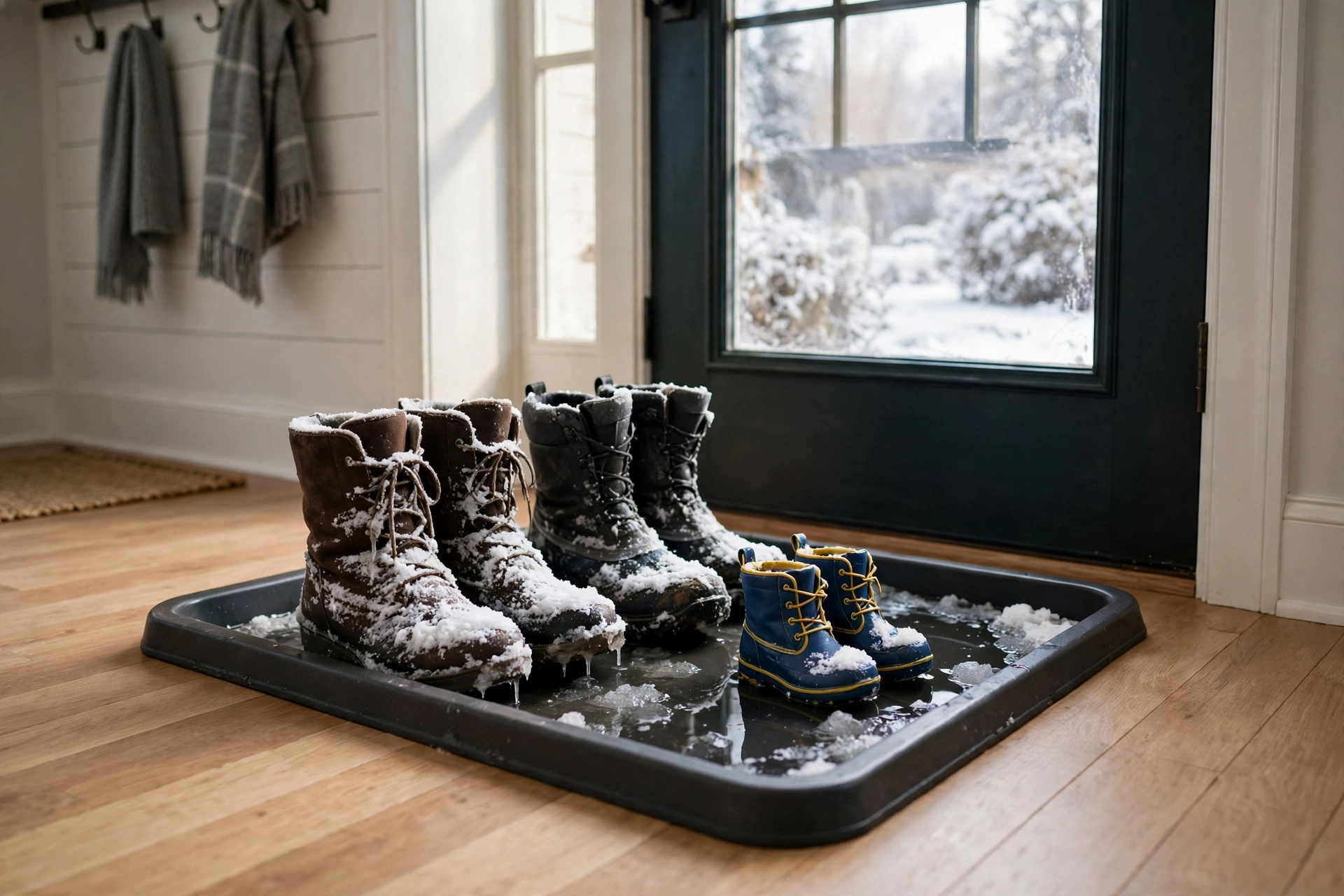
Winter boots bring the outside in: snow, slush, road salt, and mud, all of which end up on your floor if there is nowhere for them to drain. A lipped boot tray solves the whole problem in one piece. The raised edge holds the meltwater inside the tray instead of letting it spread across the hardwood, and the boots dry on the tray instead of on the floor. Look for a tray with a raised grid or ridges inside, which lifts the soles above the water so the boots dry faster and do not sit in a puddle.
Size the tray to your household, not to the space — it needs to hold every pair of boots that comes in on a snowy day, not just one or two. A tray about 30 inches wide fits two adult pairs and a child’s pair comfortably. Empty it every evening during snowy weeks, because a full tray overflows just as surely as a floor with no tray at all. A quick wipe with a damp cloth once a week keeps salt rings from building up, and a tray with a dark finish hides the stains that a light one would show.
3. Choose a Shoe Bench with Baskets Beneath
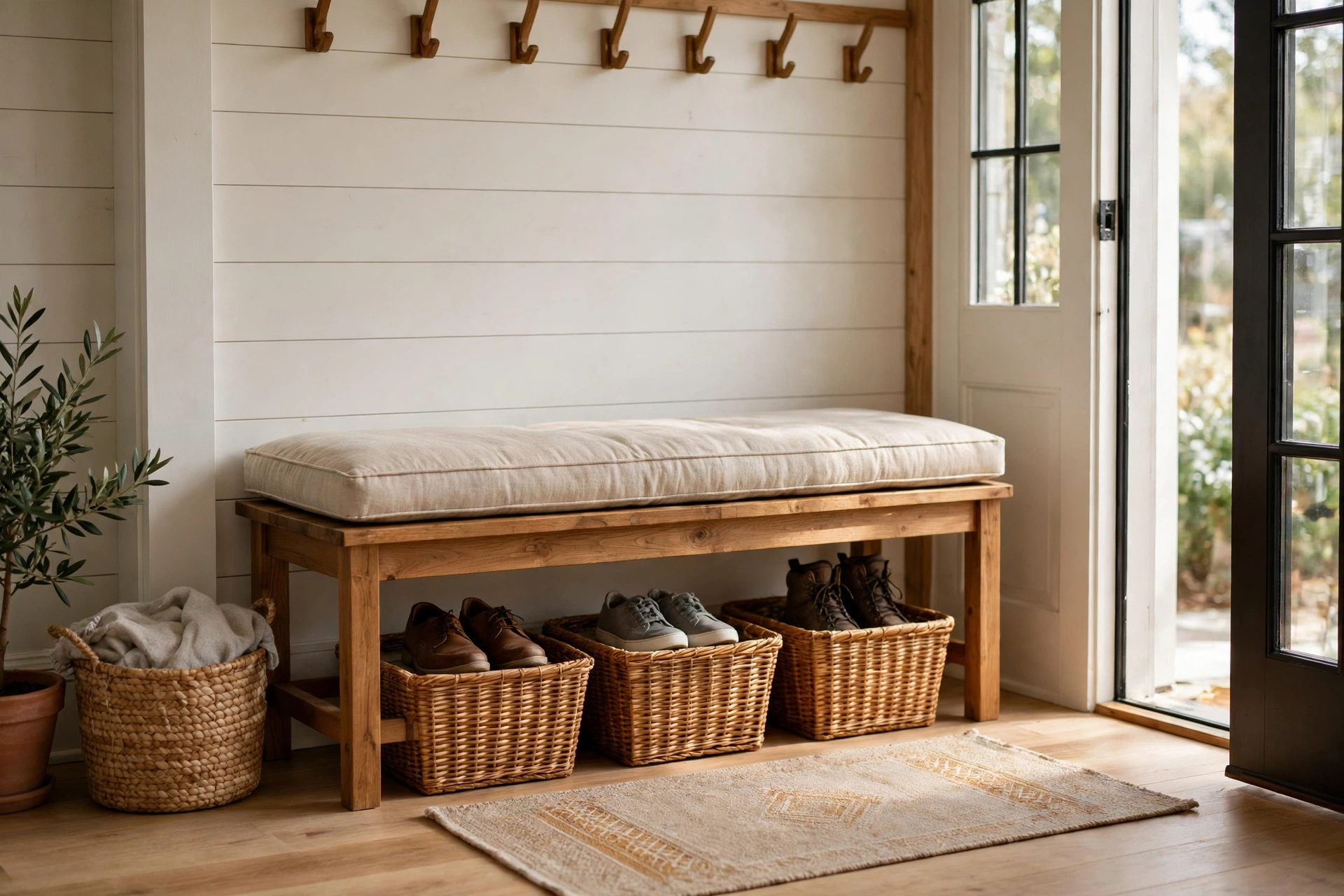
A shoe bench does three jobs at once: it gives you somewhere to sit while you put your shoes on, it hides the shoes underneath, and it turns the entryway into a room with a purpose instead of a hallway with a pile. The baskets beneath are the key — without them, the space under the bench just becomes a dark cave where shoes go to be forgotten. Slide one basket per person underneath, and every pair has a home that is easy to reach and easy to put away.
Pick a bench that is the right height for sitting, about 17 to 19 inches, and deep enough that a basket slides in and out without catching. Open baskets work best for shoes you wear daily, because nobody wants to open a lid with their hands full of groceries. If the bench is against a wall, add a cushion on top in a washable fabric, and the bench becomes the spot where everyone naturally pauses — which is exactly when they remember to put their shoes away.
4. Set Up a Key Bowl and Drop-Zone Tray
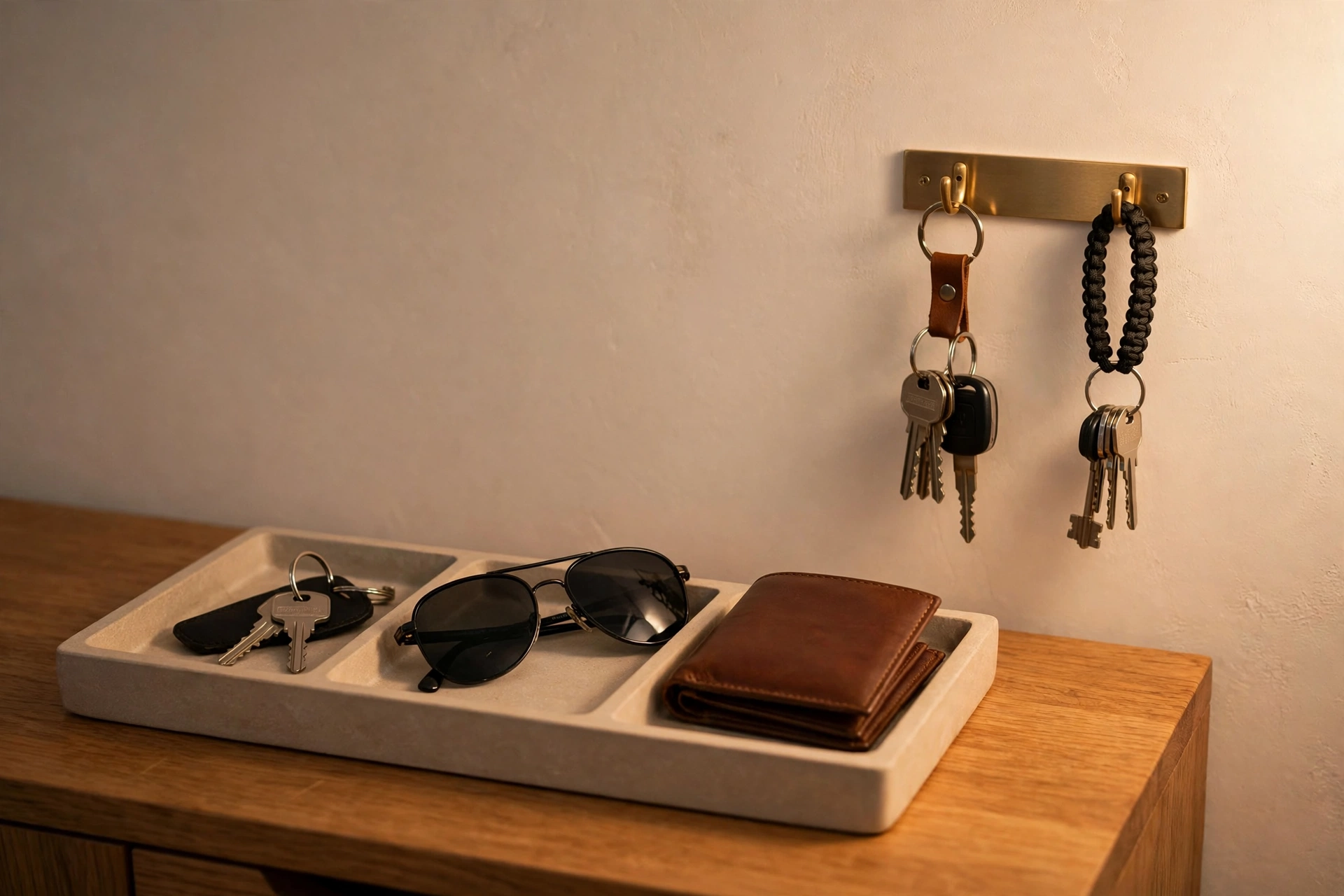
Lost keys are the entryway’s most expensive failure, and the fix costs almost nothing: a single, obvious place where keys land the moment you walk in. A small bowl or a shallow tray on a console table, a wall-mounted shelf, or the top of the shoe bench becomes the drop zone, and the rule is simple — keys live there and nowhere else. The moment the bowl has a permanent spot, the morning key hunt disappears, because the keys are always in the same place.
Make the drop zone do more than hold keys. A divided tray can hold keys in one section, sunglasses in another, and a wallet or phone in the third, so the whole pocket-emptying routine happens in one spot. Put the tray where your hand naturally goes when you step inside — within arm’s reach of the door, not across the room on a table you have to walk to. And if your household has more than one set of keys, add a small hook strip beside the bowl so each set hangs visibly instead of sinking to the bottom of a shared pile.
5. Sort Mail the Moment It Arrives
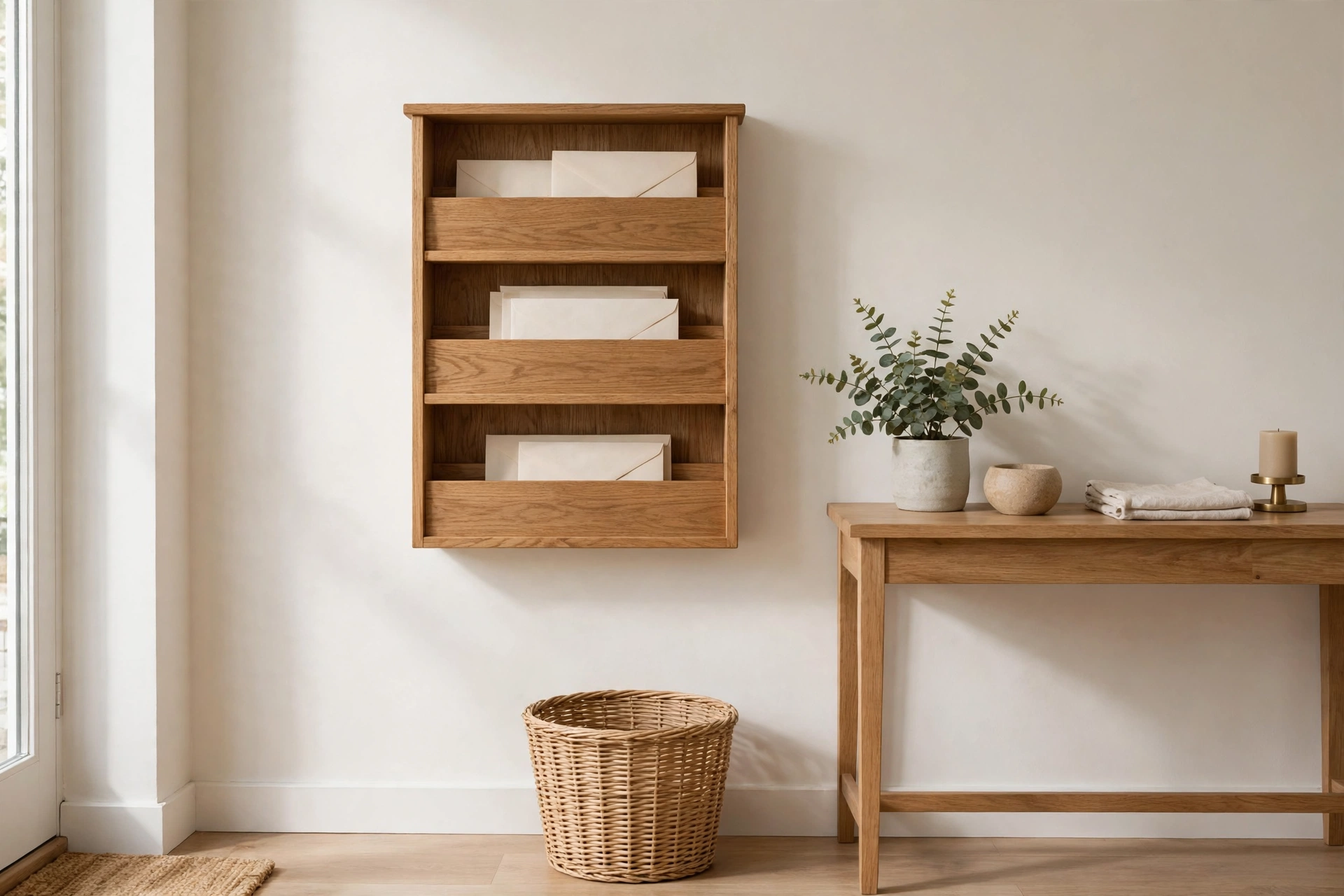
Mail is the entryway’s quietest clutter — it arrives a little at a time, gets set down “just for now,” and becomes a stack that nobody wants to touch. The fix is a mail sorter with three slots, labeled in, out, and to sign. Everything that comes through the door goes into the in slot immediately. Bills and letters to answer move to the to-sign slot, stamped outgoing mail goes in the out slot, and junk mail goes straight to the recycling bin without ever touching a pile.
A wall-mounted sorter keeps the system off the counter and visible, which matters — a system you can see is a system you use. Process the sorter once a week, on the same day every week, and the pile never grows past a handful of envelopes. Open the mail standing at the sorter, not at the kitchen counter, so the envelopes, the recycling, and the shredder are all within reach. The ten minutes it saves each morning is real, but the bigger win is never finding an unopened bill three weeks late.
6. Stand Umbrellas in a Drip-Tray Stand
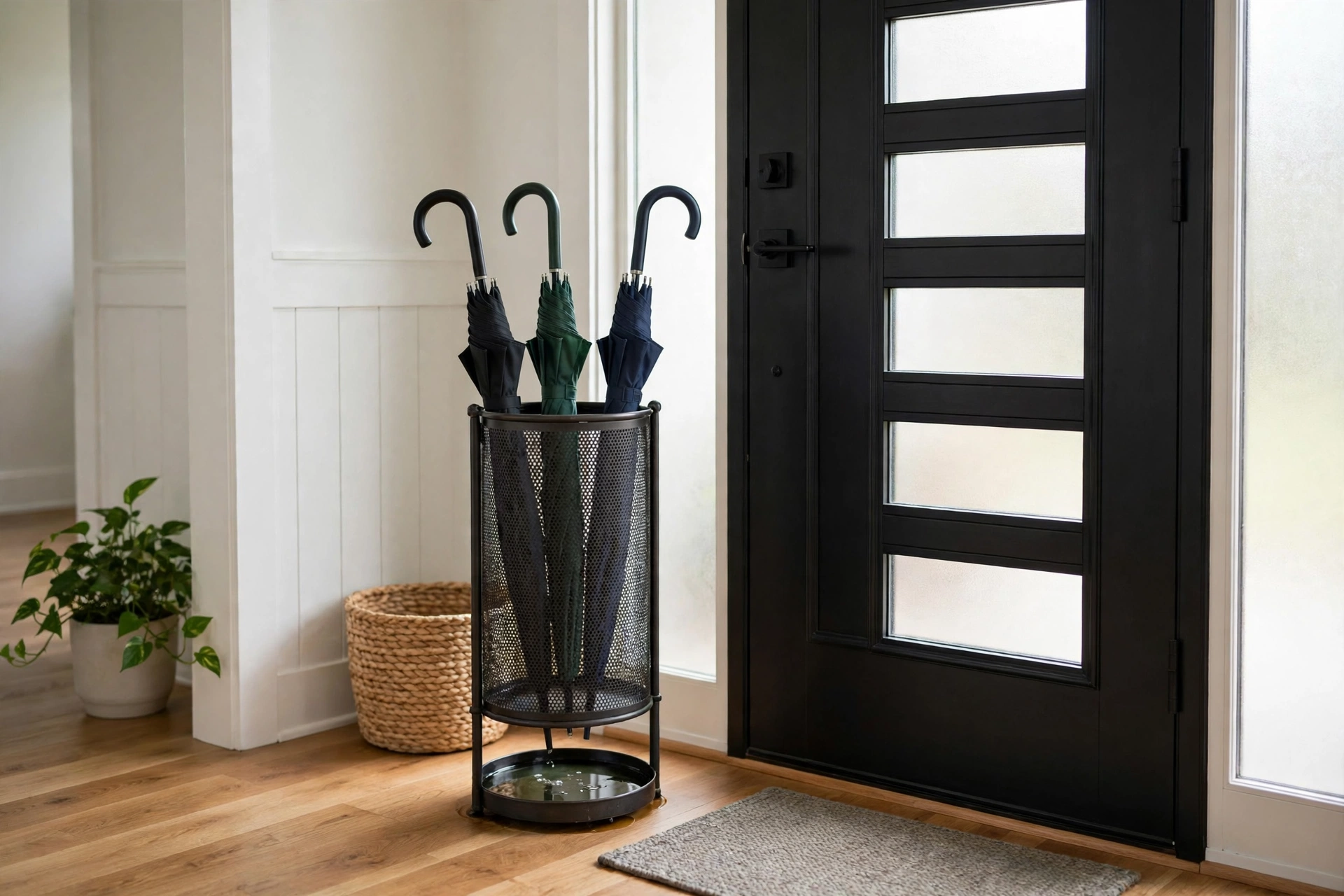
A wet umbrella has exactly two places to go: a stand that catches its drips, or your floor. An umbrella stand with a built-in drip tray gives every umbrella a home and keeps the puddle off the hardwood. Choose a stand tall enough that umbrellas stand upright without tipping — about 18 to 20 inches — and wide enough for the whole household’s umbrellas plus one guest’s. A removable drip tray at the bottom is the feature that matters most, because it lets you empty the water without lifting the whole stand.
Place the stand right beside the door, on the side your hand reaches as you come in, so the wet umbrella goes into it instead of leaning against the wall. Metal stands with a powder-coated finish resist rust far better than bare steel, and a stand with a slightly weighted base will not tip when a child bumps it. Once a month, empty the tray, wipe it dry, and check for standing water — a drip tray that never gets emptied is just a small indoor pond.
7. Reset the Coat Closet to This Season Only
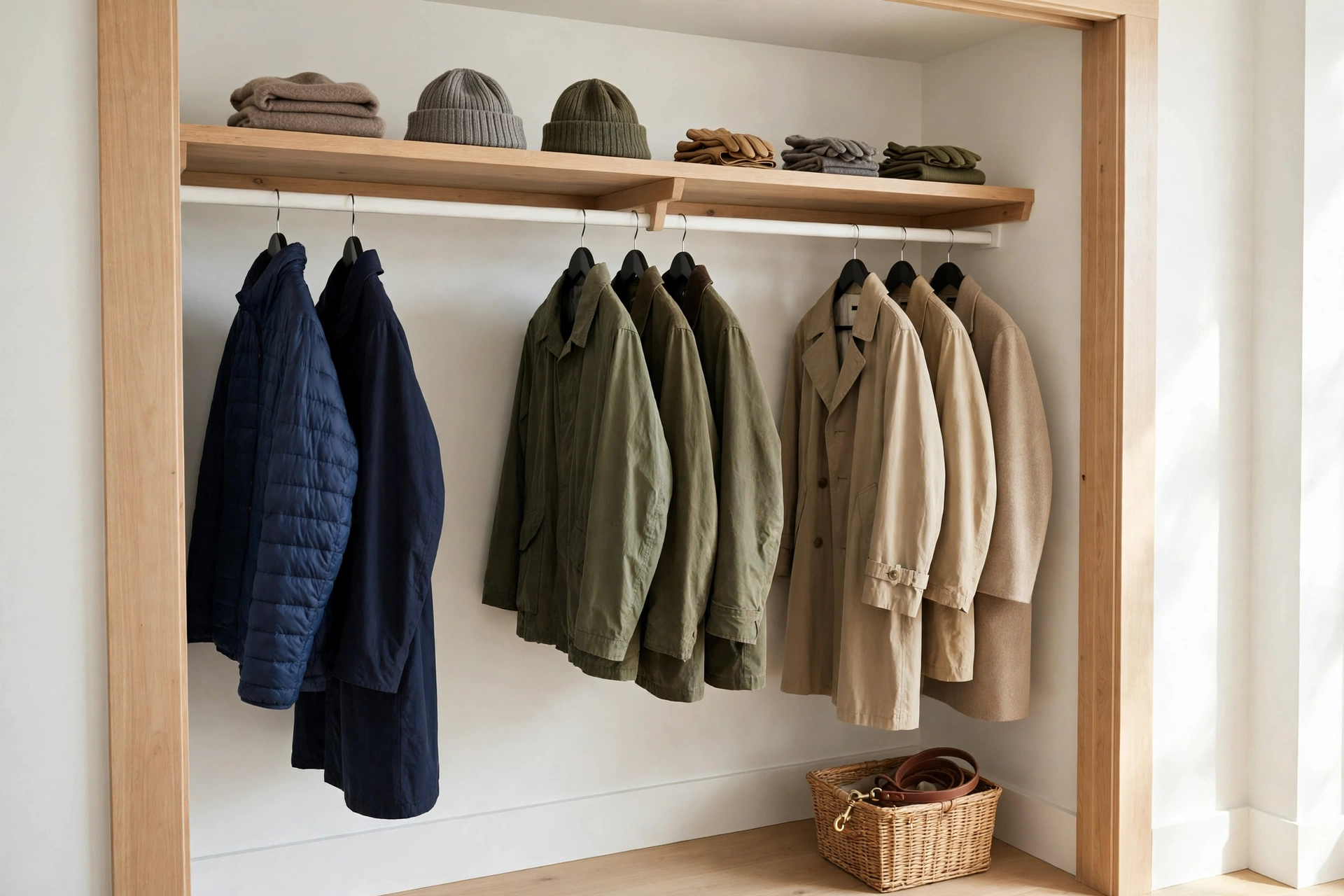
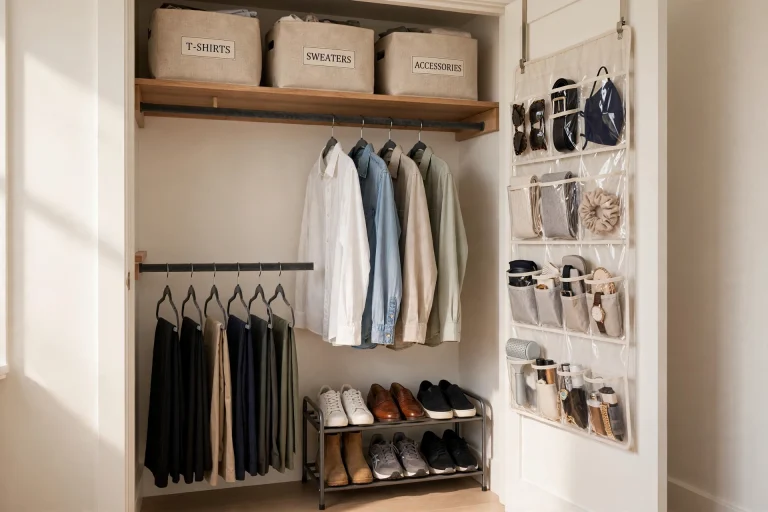
The entryway closet is not storage — it is a working closet, and it should hold only what this season needs. A closet packed with last winter’s coats, summer rain jackets, and three Halloween costumes has no room left for the coats you actually wear, which is why they end up on the hooks, the chairs, and the banister instead. Take everything out, keep only the coats, jackets, and outerwear the household is wearing right now, and move the rest to a bedroom closet or a storage bin.
Once the closet holds only the current season, organize what is left by person, left to right, with the most-worn coat at the front of each section. Add a shelf above the rod for hats and gloves in the season, and a small bin on the floor for the dog leash or the reusable shopping bags. Do this reset twice a year — once when the cold weather arrives, once when it leaves — and the closet will never overflow again. A closet that holds only the current season is a closet that actually gets used.
8. Give Each Person a Basket for Gloves and Hats
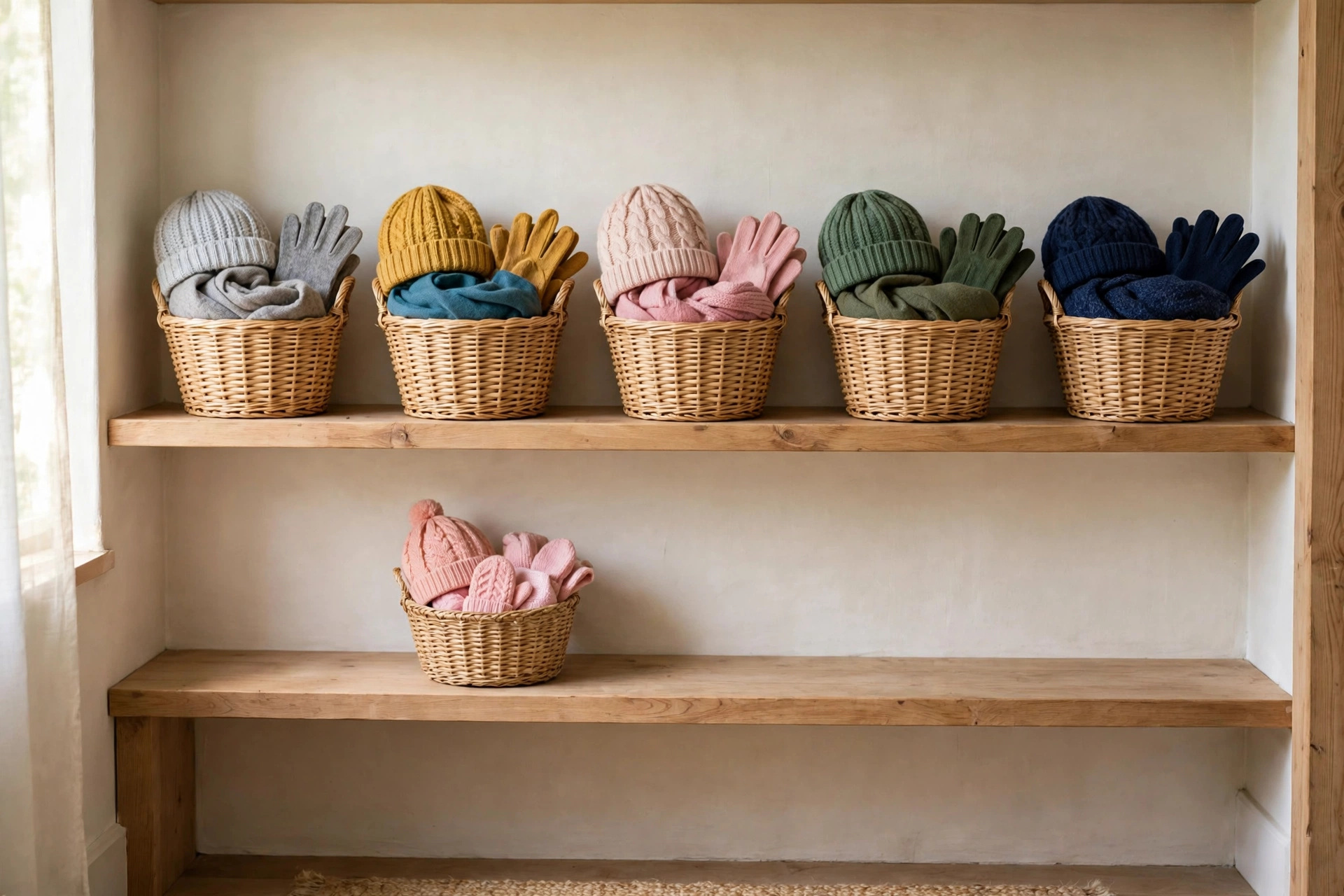
Gloves and hats are small, easy to lose, and always needed at the worst moment — usually when you are already late and standing at the door with your coat half on. A basket per person, kept at the entryway, ends the search. Each person gets one basket, labeled with their name, and every glove, hat, and scarf they own lives in it. When it is time to leave, they grab from their own basket instead of digging through a shared pile of everyone else’s winter gear.
Keep the baskets where the coats are — on the closet shelf, on top of the shoe bench, or in a cubby by the door — so the whole getting-ready routine happens in one spot. Small baskets work better than large ones here, because a big shared basket is where single gloves go to disappear. At the end of winter, each person checks their own basket: anything with a missing mate gets tossed, and anything outgrown goes in the donation bag. One basket per person turns a daily scramble into a thirty-second grab.
9. Keep a Stair Basket for One Trip Upstairs
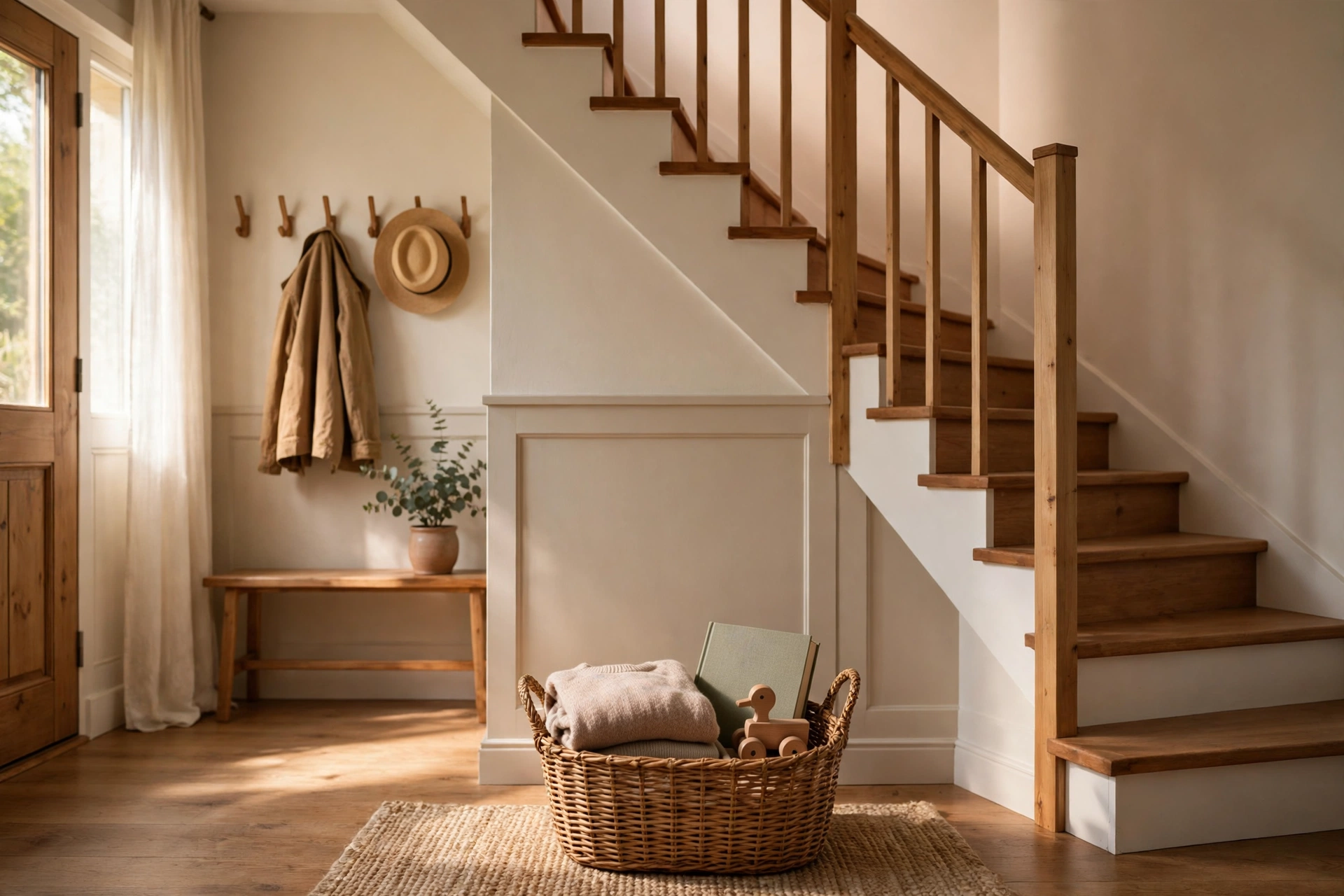
Half the clutter in an entryway does not belong there at all — it belongs upstairs, but nobody wants to make a special trip for one item. So the items pile up on the stairs, on the bench, and on the floor, waiting for a trip that never comes. A stair basket fixes that. Anything headed upstairs goes in the basket, and the next person going up carries the whole basket, drops the items where they belong, and brings the empty basket back down.
Place the basket at the bottom of the stairs or on the entryway bench, where it is easy to toss things into as you pass. Keep it shallow and light, with handles, so carrying it up is genuinely easier than carrying an armful of loose items. A basket that holds three or four items is the right size — any bigger and it becomes a second storage bin instead of a shuttle. The stair basket is a small idea with an outsized payoff: the entryway stops being the waiting room for the rest of the house.
10. Hang a Wall Pocket Strip for Leashes and Outgoing Post
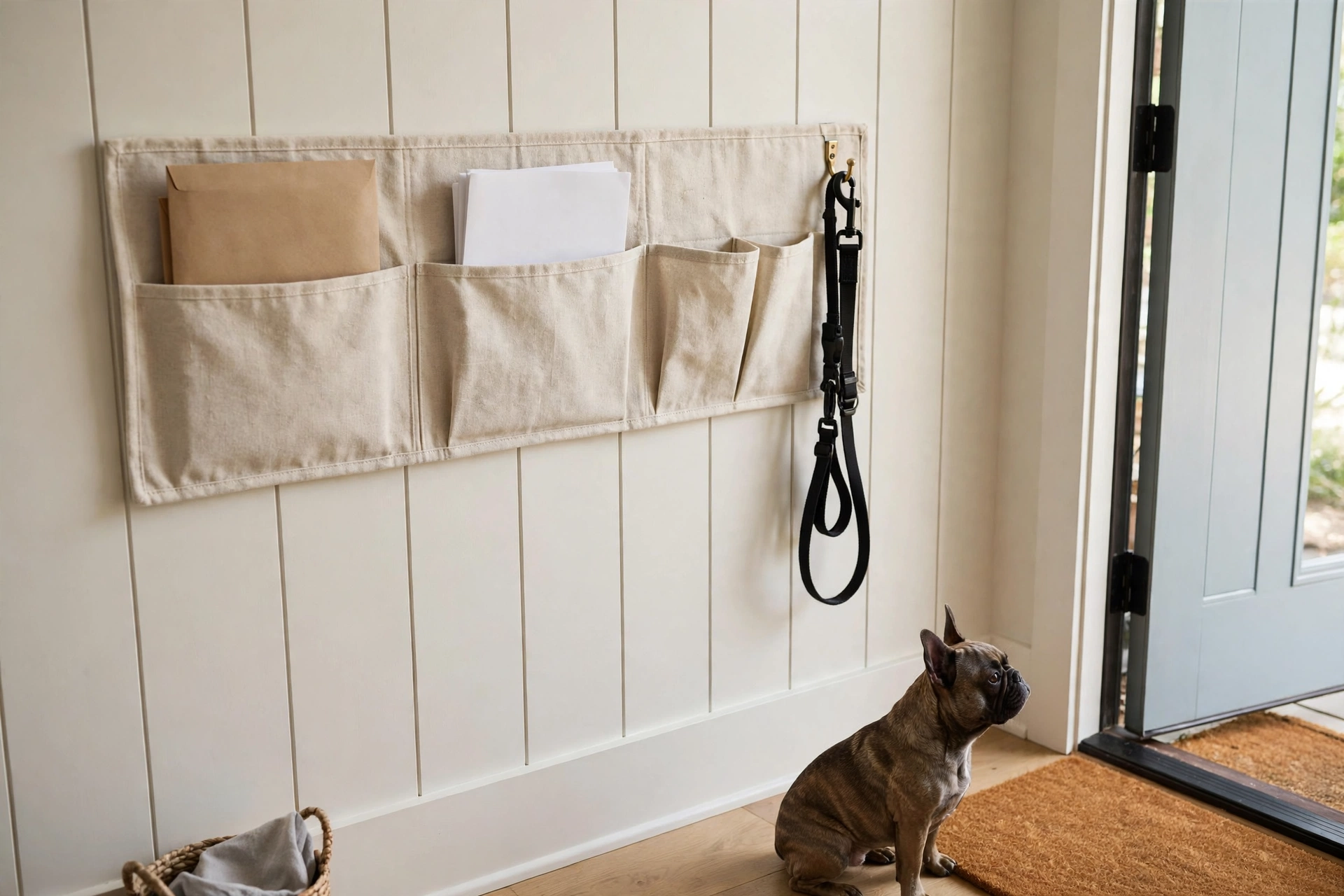
Some entryway items are too small for a shelf and too important for a drawer: the dog leash, the library book that is due, the letter that needs mailing, the permission slip that has to go back to school. A wall pocket strip — a row of small hooks and a pocket or two, mounted at eye level by the door — gives all of them a visible home. The leash hangs on a hook, the outgoing letter sits in the pocket, and both are impossible to miss on the way out.
Mount the strip where you will see it when you leave, not where you will see it when you arrive. The whole point is the last-second grab: the leash before the dog walk, the letter before the mailbox, the permission slip before the school run. Keep the strip to three or four pockets at most, and clear it every night, because a strip that holds last week’s mail is a strip nobody trusts. For households with a dog, the leash hook alone is worth the whole project — the morning walk starts at the door, not with a search of the house.
11. Place a Shoe Rack Right by the Door
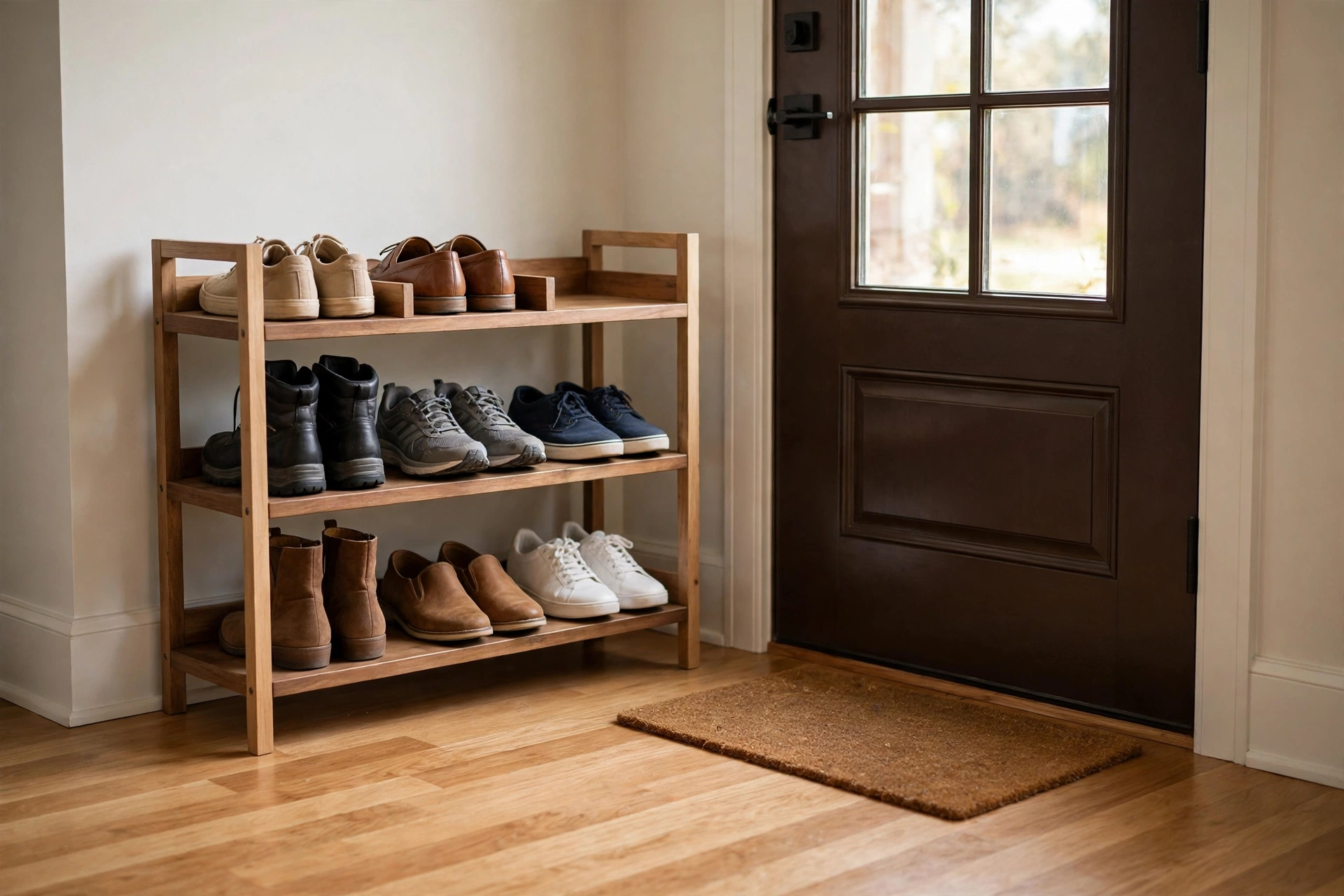
Shoes migrate. Without a rack, they drift from the door to the middle of the room, under the bench, and halfway down the hall, and the entryway never looks tidy for more than an hour. A shoe rack placed right by the door — within one step of where you take your shoes off — stops the migration at its source. The rule is that shoes live on the rack, and the rack lives by the door, so putting shoes away takes less effort than leaving them on the floor.
Choose a rack that fits the household’s real shoe count, not the ideal one. Two tiers hold about four pairs, three tiers about six, and a rack with an open design dries wet shoes faster than a closed cabinet. Leave one empty slot on the rack at all times, so a guest’s shoes have a place and the rack never looks completely full. And keep the rack’s footprint tight against the wall so it does not block the door swing or the walkway — a rack that trips people gets moved, and a moved rack gets ignored.
12. Start a Lost-and-Found Basket
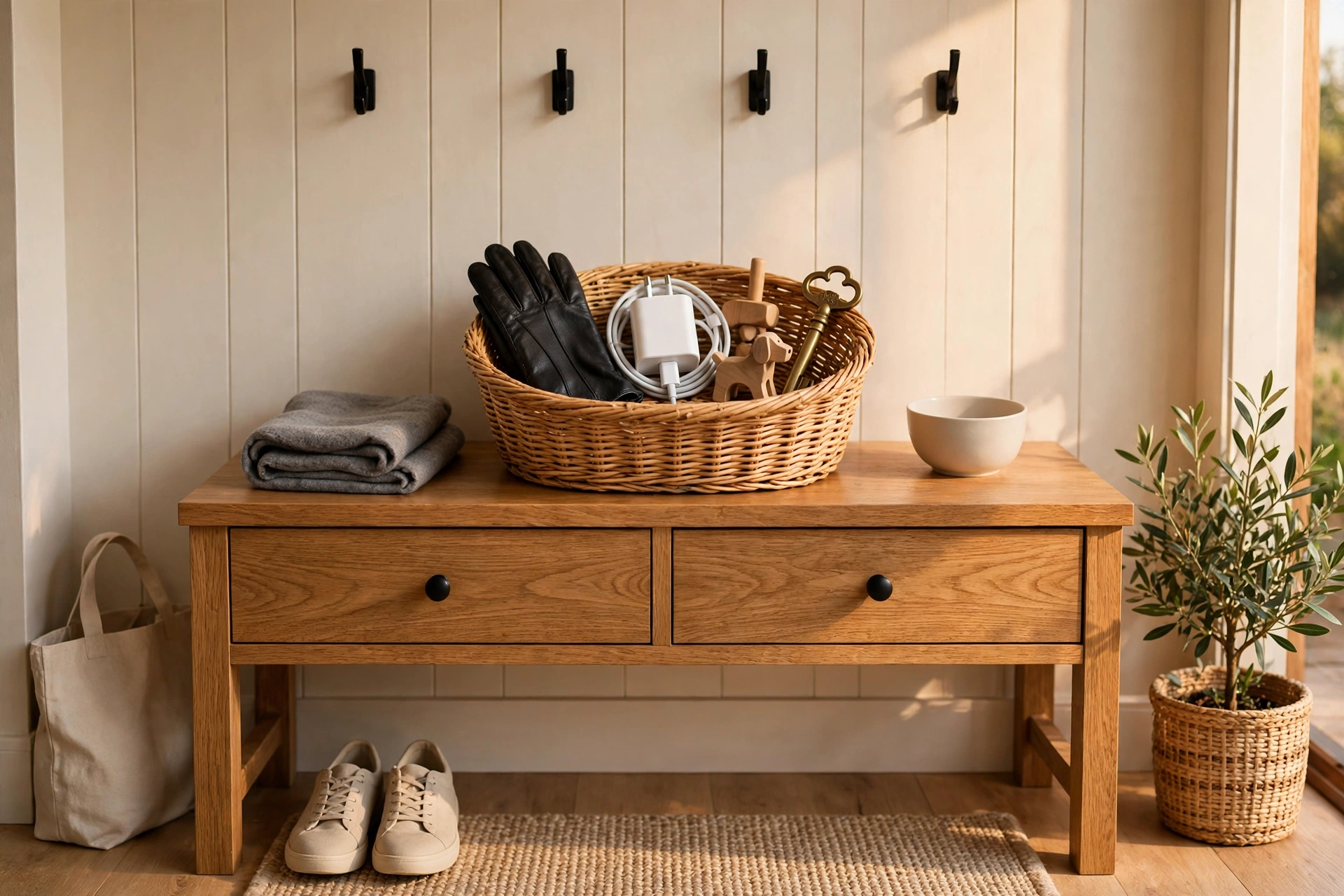
Every household has mystery items: the single glove, the key with no lock, the charger nobody claims, the toy that belongs to a friend’s child. Without a home, these things live on the entryway table, in a drawer, or on the stairs, cluttering every surface they touch. A lost-and-found basket gives them one place to wait. Anything unclaimed goes in the basket, and anything you are looking for gets checked there first.
Keep the basket in a visible spot — on the bench, on the closet shelf, or on the console table — and make emptying it part of the monthly routine. Once a month, tip it out: keep what is still useful, toss what is broken, and donate what nobody claims. The basket works because it turns a dozen small mysteries into one small container, and because everyone in the house knows where to look. A lost-and-found basket is the entryway’s junk drawer, except this one has a lid on the mess.
13. Do a Five-Minute Evening Reset
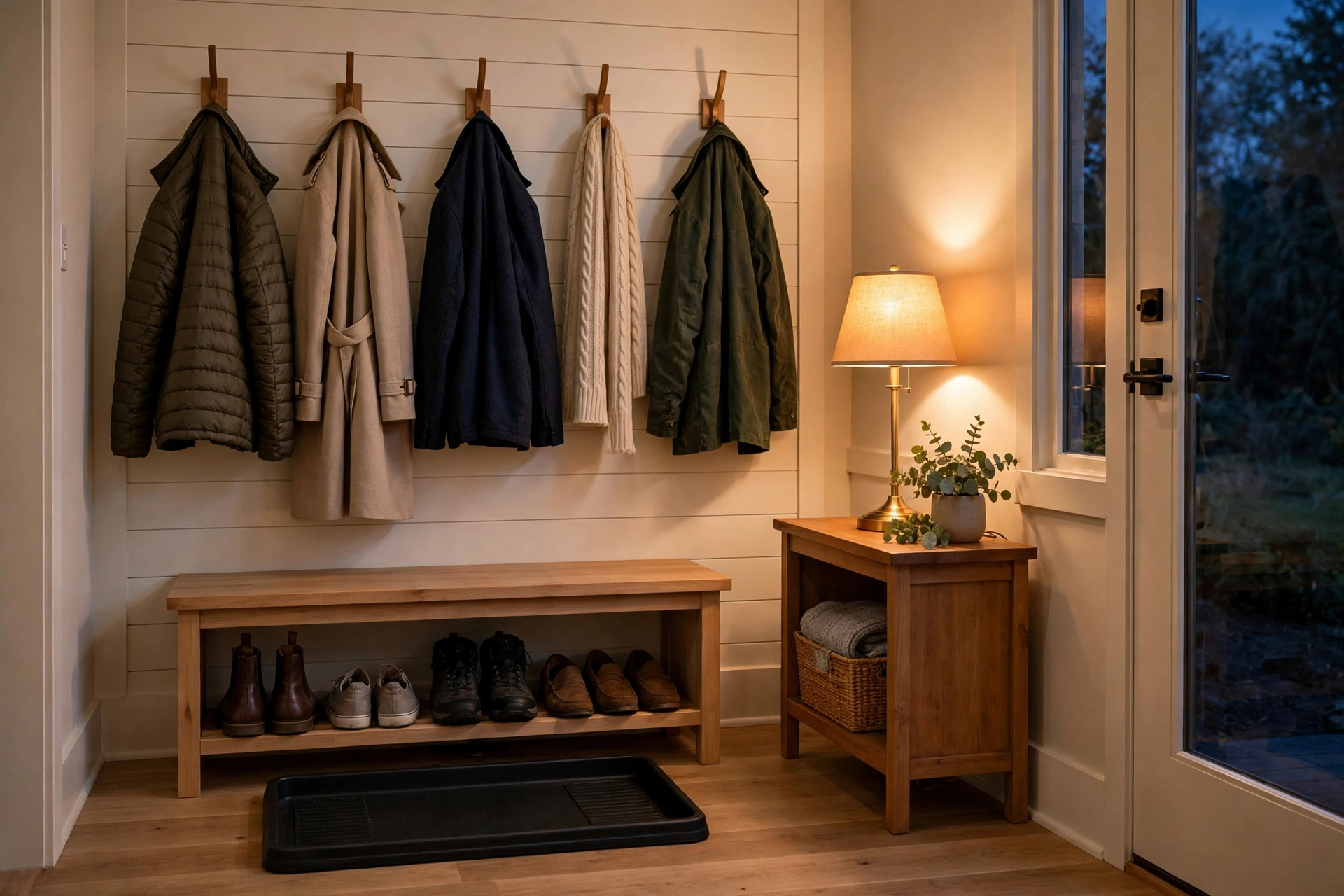
No entryway system survives without a reset, because the entryway is where the day lands. A five-minute evening reset — done at the same time every night, right after dinner or right before bed — returns the entryway to its baseline. Hang the coats that missed their hooks, line the shoes up on the rack, empty the boot tray if it needs it, clear the mail sorter, and take the stair basket up if it is full. Five minutes, once a day, and the entryway never gets bad enough to need a weekend overhaul.
Make the reset a shared job, not one person’s chore. In a household with kids, the reset is a two-minute race before bedtime: everyone puts away their own shoes, their own coat, and their own basket items. A timer helps — five minutes feels short when it is on the clock, and it keeps the reset from turning into a cleaning session. The reset does not deep-clean anything, and it does not need to. It just returns every item to the home the other ideas in this list gave it, so the system is ready for tomorrow morning.
14. Label Every Bin
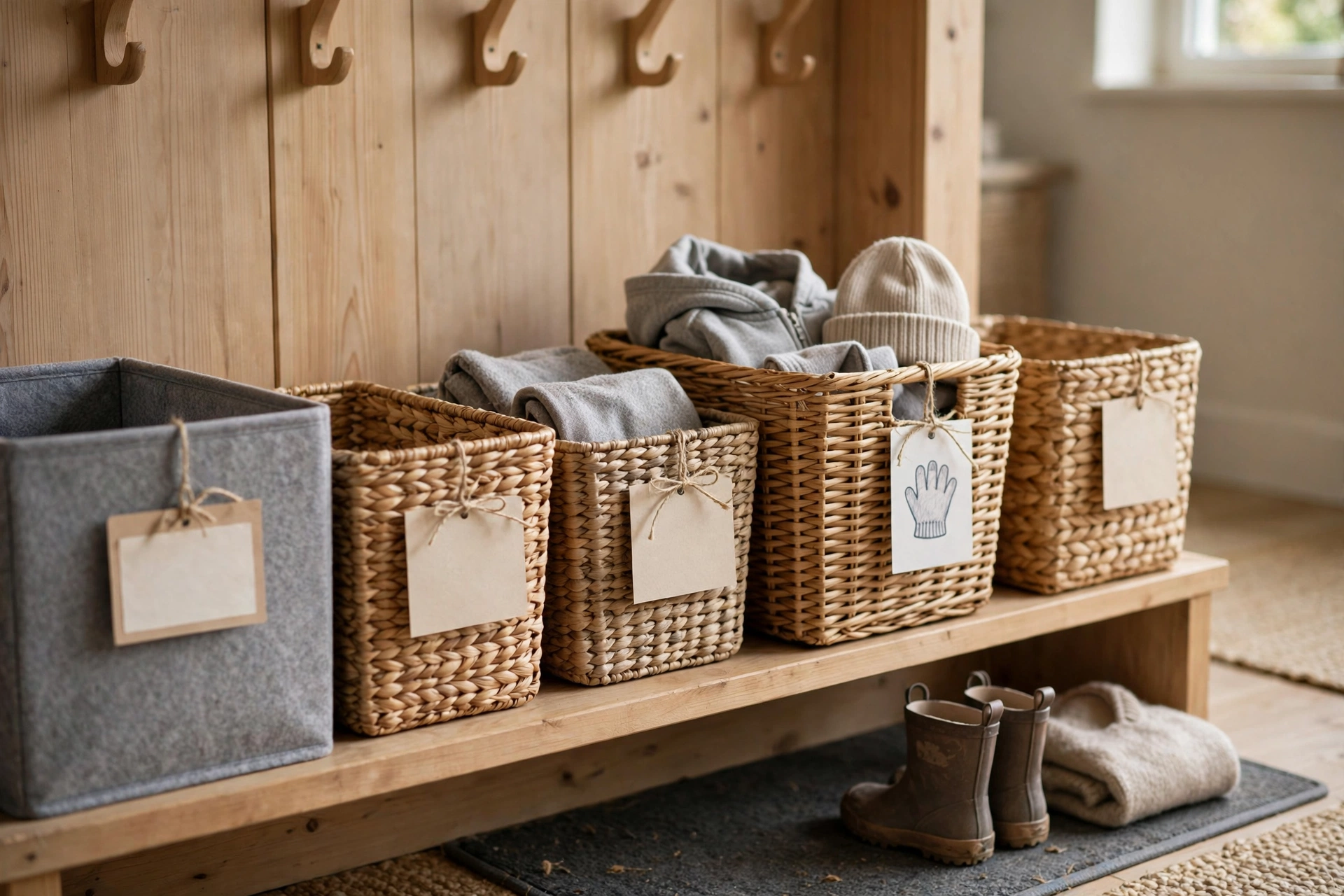
A system only works if everyone can see it, and labels are how a system becomes visible. Label every bin, basket, and tray in the entryway with what belongs in it: a name on each person’s basket, “gloves” and “hats” on the winter bins, “outgoing” on the mail slot, “leashes” on the dog hook. Labels turn a guess into a decision — nobody has to remember the system, because the system tells them what goes where.
Keep the labels simple and readable from a step away: one or two words, in a clear font, on a tag or a piece of tape that will survive daily use. For kids who cannot read yet, use a picture label — a drawing of a shoe, a glove, a leash — so they can follow the system too. And when the contents of a bin change with the season, change the label with them; a bin labeled “gloves” that holds sunscreen in July is a label nobody believes. Labeled bins are the difference between an entryway that looks organized and one that stays organized.
15. Run a Monthly Entryway Audit
Even the best entryway system drifts. A coat sneaks in that nobody wears, a pair of shoes appears that belongs in a bedroom, the mail sorter fills with catalogs nobody ordered, and the lost-and-found basket becomes a museum. A monthly audit stops the drift before it becomes a pile. Once a month, on the first Saturday or the first of the month, take ten minutes and ask one question about everything in the entryway: does this still land here?
Anything that has not been used in a month goes somewhere else — to its real home, to storage, or to the donation bag. Check the hooks for coats that have not moved, the shoe rack for pairs nobody wears, and the baskets for items that have outlived their purpose. Then fix whatever part of the system is not working: if the shoes keep missing the rack, the rack is in the wrong spot; if the mail keeps piling up, the sorter needs a weekly empty. The audit is not a chore — it is the maintenance that keeps the other fourteen ideas working all year long.
Frequently Asked Questions
How do I organize a small entryway with no closet?
Start with the wall, not the floor. A peg rail with one hook per person, a wall-mounted mail sorter, and a narrow shoe rack by the door give you a full system without taking any floor space. A slim bench with baskets beneath doubles as seating and storage, and a wall pocket strip holds the leash and outgoing mail. In a small entryway, vertical storage and a strict one-in-one-out rule matter more than any piece of furniture — and for more whole-home ideas, see our New Year organization ideas.
What is the best way to keep shoes from piling up by the door?
Give shoes a home that is easier to use than the floor: a rack or bench baskets placed within one step of the door, with one slot per person. The rule is simple — shoes go on the rack the moment they come off. Keep one empty slot for guests, and do a quick shoe audit once a month: any pair nobody has worn in a month moves to the bedroom closet. For dedicated shoe storage ideas, see our guide to shoe storage ideas.
How many hooks does an entryway need?
One hook per person in the household, plus one spare for guests. That is the whole formula. More hooks than that invite extra coats to move in and never leave; fewer hooks than that means coats end up on chairs and banisters. Mount adult hooks at 60 to 66 inches and kids’ hooks at about 40 inches, so every person in the house can actually reach their own hook.
How do I stop mail from piling up in the entryway?
Use a three-slot sorter — in, out, and to sign — and process it on the same day every week. Open mail standing at the sorter, recycle junk immediately, and never let a piece of mail sit in the in slot for more than a week. The system works because the sorter is visible and the routine is fixed; a pile only forms when the mail has nowhere to go and no day to be handled.
How often should I declutter the entryway?
Do a five-minute reset every evening and a ten-minute audit once a month. The daily reset returns coats, shoes, and mail to their homes, and the monthly audit removes anything that has stopped belonging in the entryway — out-of-season coats, unworn shoes, and unclaimed lost-and-found items. If you want the entryway to look finished as well as organized, our New Year entryway decor ideas cover the styling side.
Related Reading
- New Year Entryway Decor Ideas — fresh-start styling for the same entryway, once the systems are in place.
- New Year Organization Ideas — whole-home organization systems for the new year.
- Shoe Storage Ideas — more ways to store shoes neatly by the door and beyond.
- New Year Bedroom Organization Ideas — carry the same systems into the bedroom.
- New Year Cleaning Checklist — the full fresh-start cleaning list to pair with your entryway reset.
- Entryway Decor Ideas — year-round entryway styling once the clutter is gone.
Conclusion
A clutter-free entryway is not about buying more storage — it is about giving every item one obvious home and building the small habits that keep it there. One hook per person, a boot tray that catches the slush, a drop zone for keys, a mail sorter that gets emptied weekly, and a five-minute evening reset: none of these ideas is complicated, and none of them costs much. Together, they turn the busiest corner of your home into a launch pad instead of a pile. Start with the idea that fixes the thing that bothers you most this morning — the lost keys, the shoe pile, the coat on the banister — and add the rest one at a time. By the time the new year is a month old, your entryway will be running itself, and every day will start a little calmer than the last.
These New Year entryway organization ideas also line up with what professional organizers recommend — see Good Housekeeping’s guide to the items professional organizers always keep in their entryways for more inspiration.