15 New Year Organization Ideas for a Fresh Start at Home
Introduction
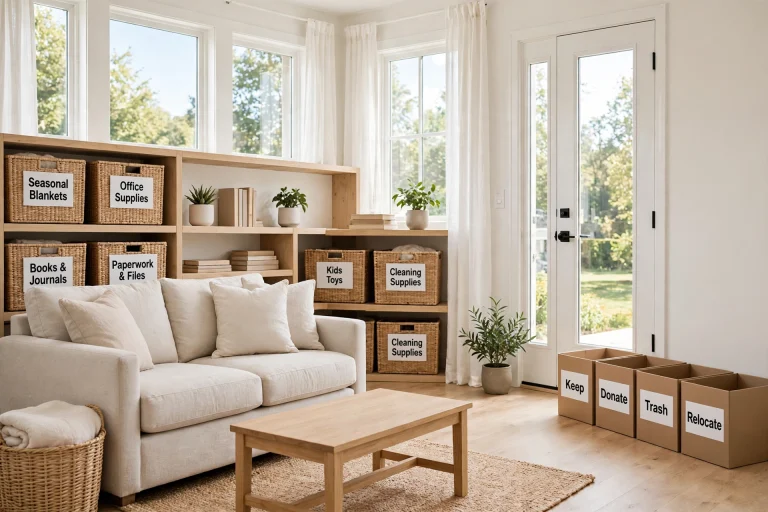
January is the one month when almost every American home gets the same urge at the same time: start fresh. The holiday decorations come down, the house looks tired, and every drawer, closet, and cabinet suddenly feels full. That is exactly why New Year organization ideas work so well in January — you already have the motivation, and all you need is a plan that turns it into finished rooms instead of half-sorted piles.
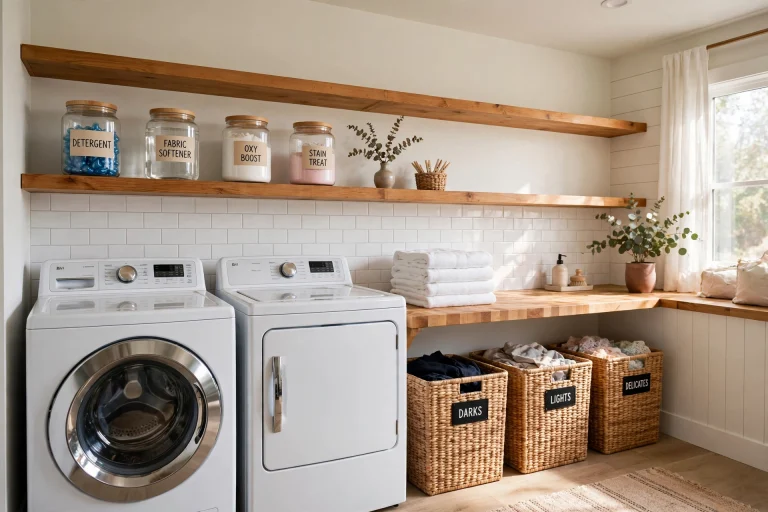
The secret is to think of your home as one system, not fifteen separate messes. A New Year’s resolution to “get organized” fails when it means tackling everything at once, and it succeeds when it means one zone a day, decluttering before you buy a single bin, and a small weekly habit that keeps the whole thing going. The fifteen New Year organization ideas below follow that order: plan the reset, clear the clutter, set up simple zones room by room, label what you keep, and finish with a routine that sticks past January. For the food side of the reset, our pantry organization ideas show how to zone shelves and containers, and our how to declutter your home room by room guide walks through the same declutter-first method in more detail. If the laundry area needs attention too, our laundry room organization ideas cover sorting detergents and supplies in a small space.
1. Make a Whole-Home Reset Plan, One Zone Per Day
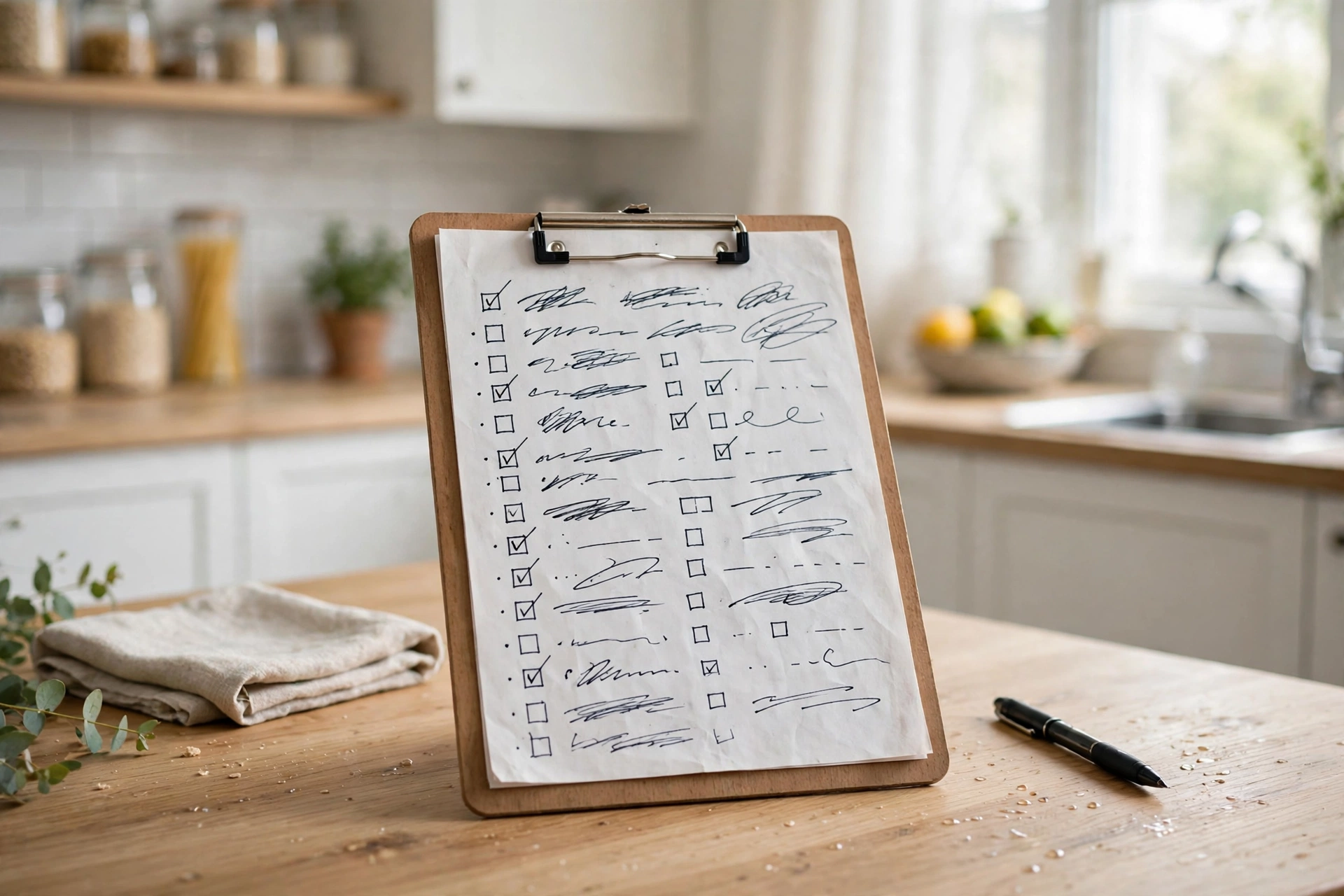
The fastest way to fail at New Year organization ideas is to start everywhere at once. Pick one zone per day instead — the pantry on Monday, the fridge on Tuesday, the closet on Wednesday — and write the plan on paper before you touch a single shelf. A whole-home reset takes about two weeks at one zone a day, and that pace is the point: you finish each zone completely instead of leaving five half-done rooms behind you.
Keep the plan visible, on the fridge or inside a kitchen cabinet door, and check each zone off as you finish it. Put a time limit on every zone, too — ninety minutes is plenty for most closets and cabinets, and a timer keeps a small job from eating your whole Saturday.
2. Declutter BEFORE You Organize
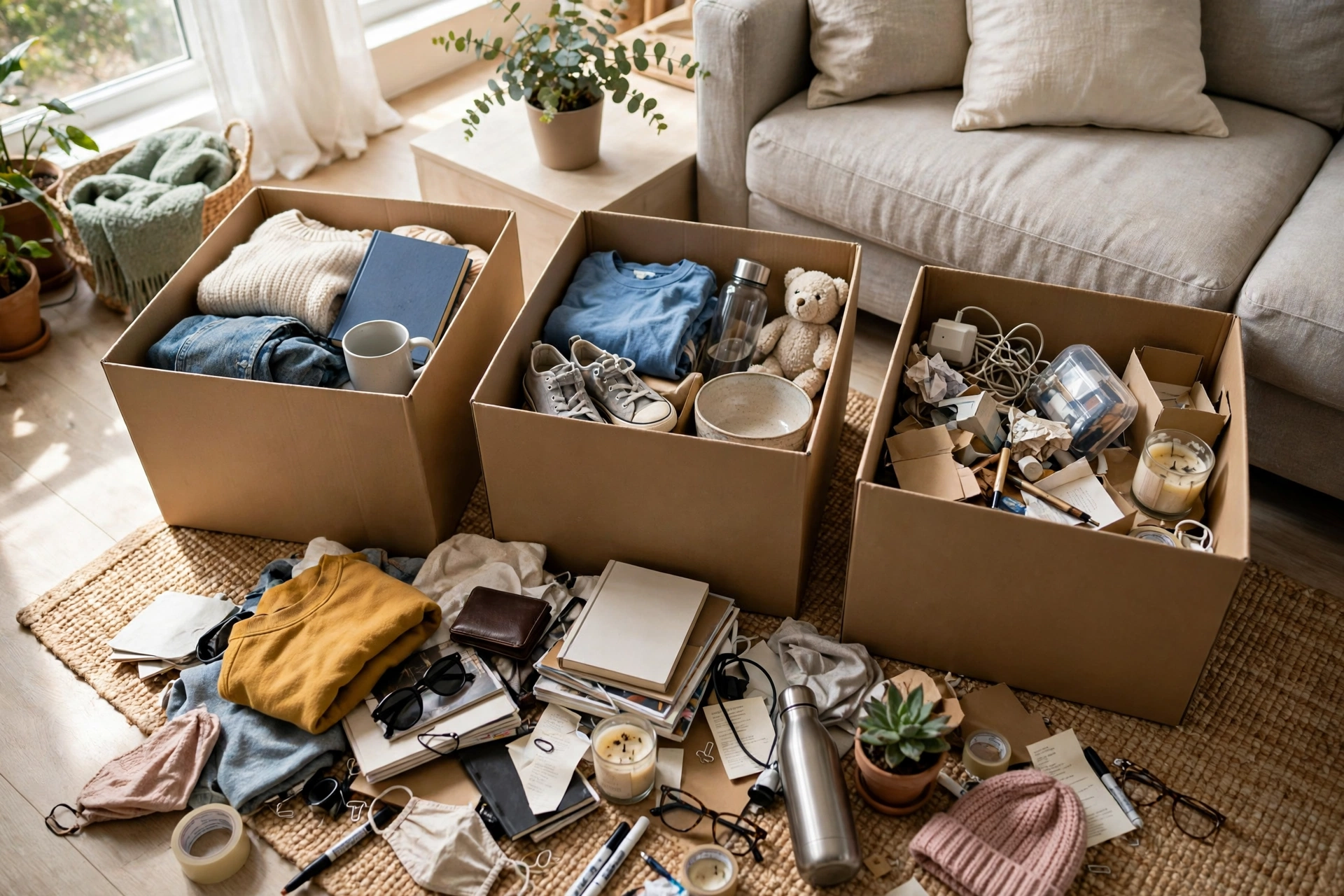
This is the rule that makes every other idea on this list work: declutter first, organize second. Buying bins and labels for things you do not need is just organizing clutter, and it is the most common reason New Year organization ideas fall apart by February. Before a single bin goes on a shelf, pull everything out of the zone, sort it into keep, donate, and toss piles, and be honest about what you actually used in the last year.
Use the one-year test for most things — if you have not used it, worn it, or reached for it in twelve months, it goes. Duplicates go too: nobody needs four spatulas, three half-used bottles of the same cleaner, or a drawer of phone chargers for phones you no longer own. Once the keep pile is smaller, organizing it takes half the time and half the storage, and the bins you do buy actually fit the things that matter.
3. Give the Pantry Clear Zones
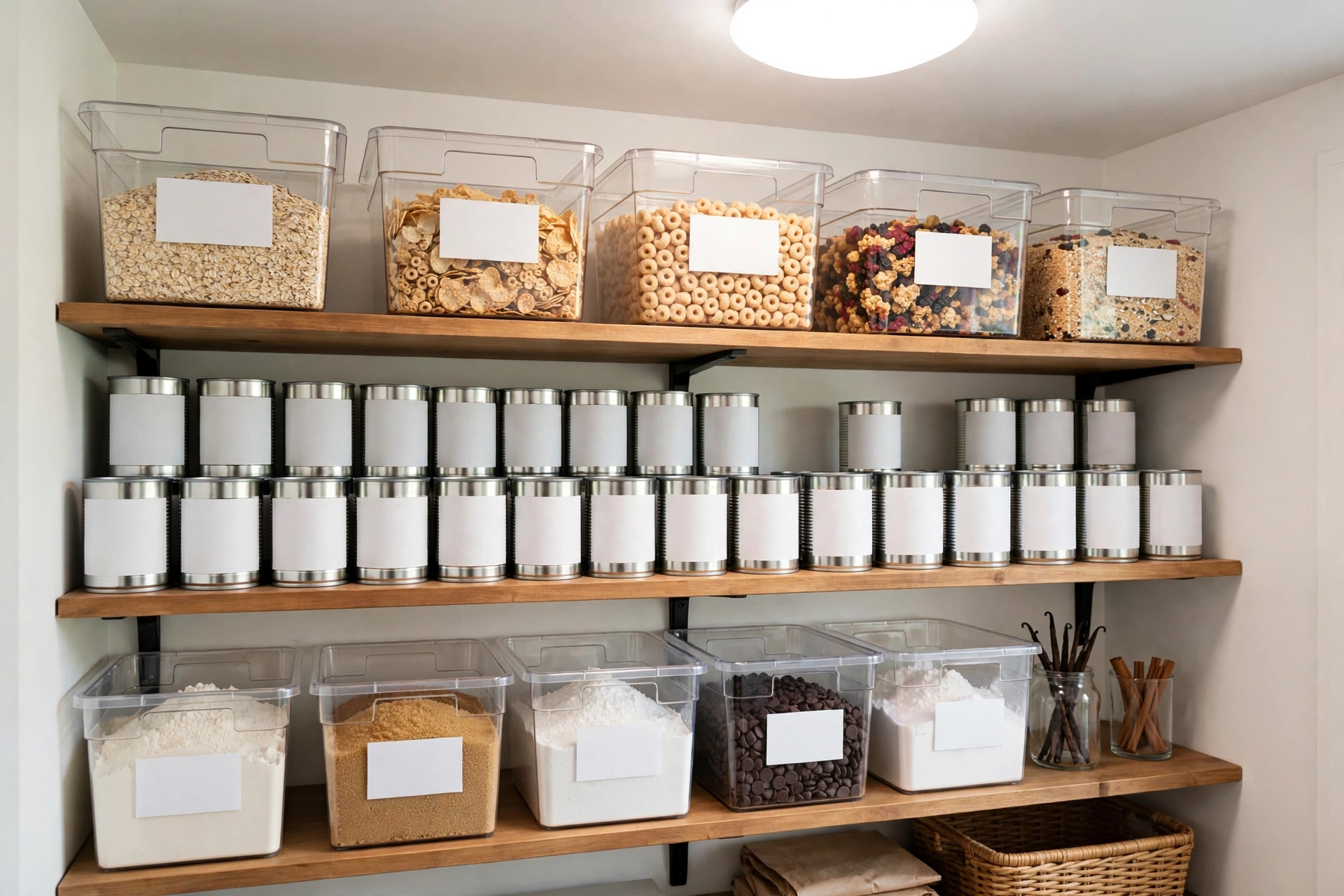
A pantry works when every shelf has a job. Divide yours into zones — breakfast, baking, canned goods, snacks, and backstock — and put each zone on its own shelf or in its own set of bins. Breakfast foods live together so mornings are fast, baking supplies share a shelf so you can see the flour before you start a recipe, and backstock goes up high or down low, out of the daily path.
Clear bins and canisters earn their keep here because you can see at a glance what is running low, and a small label on the front of each bin means anyone in the house can put groceries away in the right spot. Pull everything out once, check expiry dates, and toss anything past its date before you zone the shelves — a pantry reset is the fastest win in this whole list. Our pantry organization ideas go deeper on shelf-by-shelf zoning and container choices for pantries of every size.
4. Reset the Fridge and Freezer
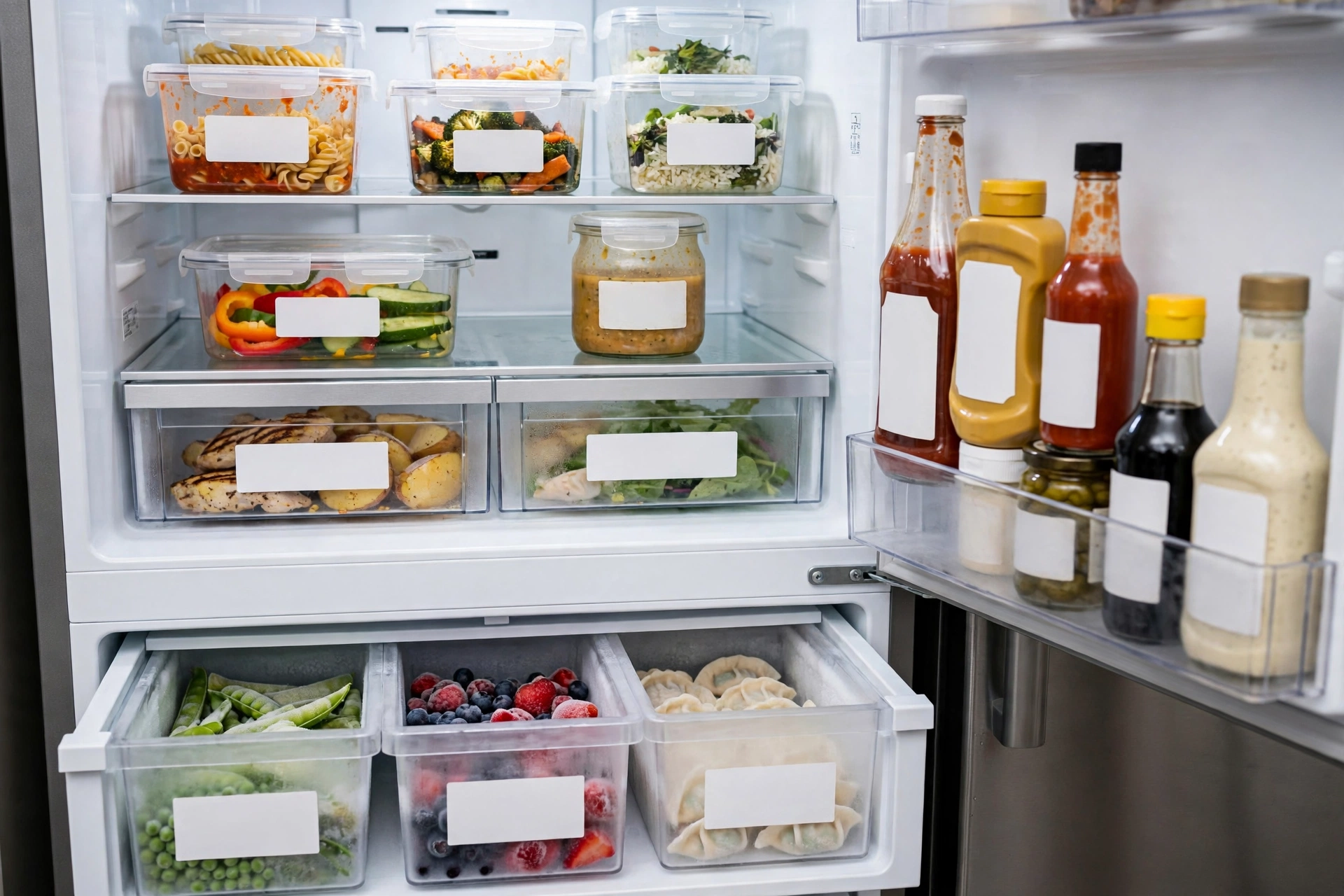
The fridge is the one zone the whole household opens a dozen times a day, so a reset here pays off immediately. Take everything out, wipe the shelves with warm soapy water, and toss anything expired, unlabeled, or older than you can remember. Then restock by zone: dairy and eggs on one shelf, leftovers in clear containers at eye level, condiments in the door, and produce in the crisper drawers where it belongs.
In the freezer, toss anything with heavy freezer burn or no label, then group like with like — one bin for meat, one for vegetables, one for bread and frozen meals — and label every bag with the contents and the date.
5. Edit the Bedroom Closet

The bedroom closet deserves an edit, not a full rebuild. Pull everything out, try the one-year test on every piece, and move off-season clothes into labeled bins on the top shelf or under the bed. What stays should be hung by type — shirts together, pants together, dresses together — with shoes in pairs on a rack or in clear boxes, not in a pile on the floor.
A closet edit works best with a simple rule for the year ahead: one in, one out. Every new item that comes in means one old item goes to the donation box, and that single habit keeps the closet from filling up again by spring. For the full room-by-room bedroom system, including nightstands, dressers, and under-bed storage, see our New Year bedroom organization ideas.
6. Tame the Bathroom Cabinets
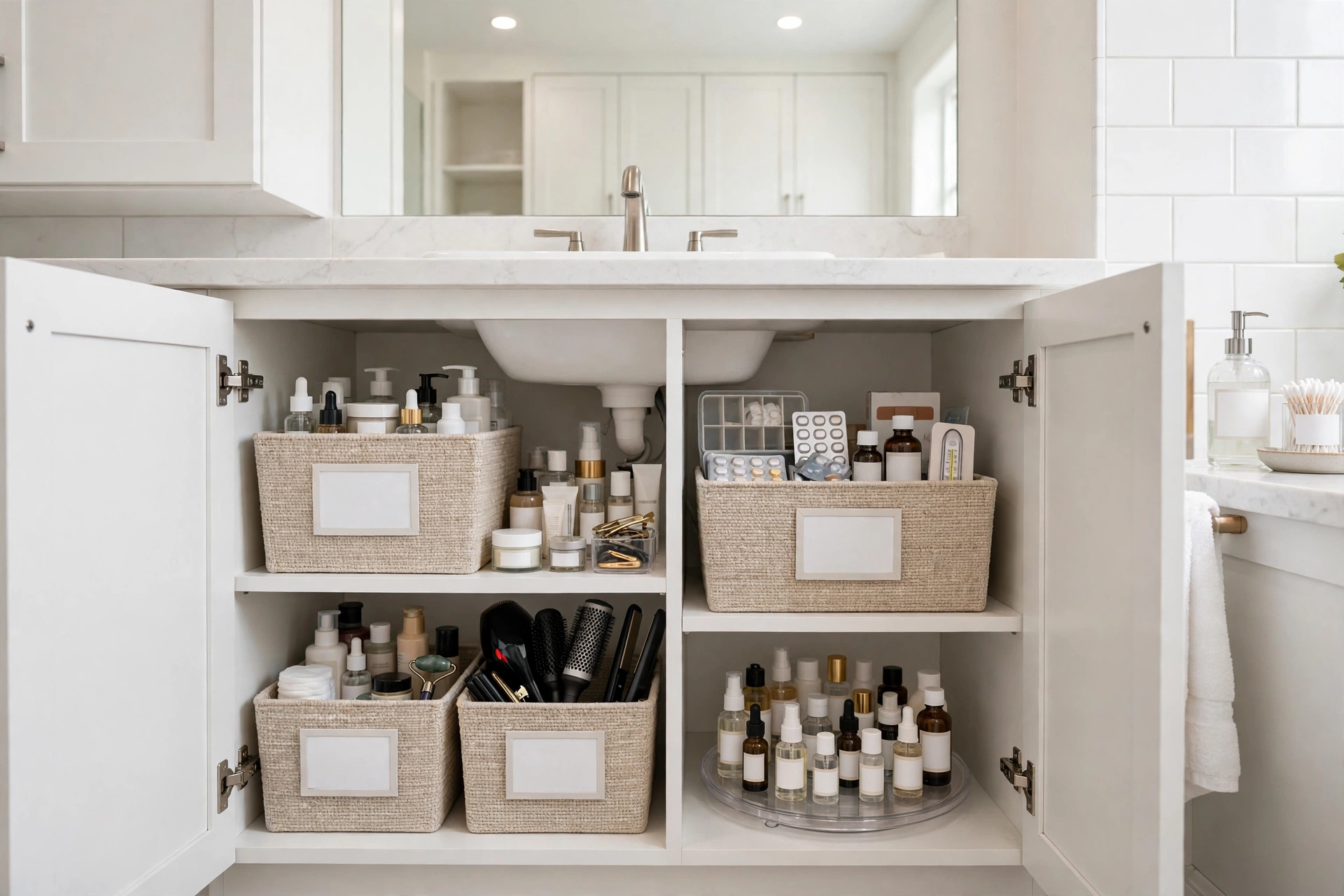
Bathroom cabinets fail for the same reason every small cabinet fails: too many small bottles, no zones, and nothing labeled. Pull everything out, toss expired medicines, old sunscreen, and cosmetics past their date, and sort what stays by person and by job — one bin for daily skincare, one for hair tools, one for medicines and first aid, one per family member if the bathroom is shared.
Small bins, drawer dividers, and a turntable for deep cabinets keep the small things findable, and matching dispensers in the shower cut the bottle count from twenty to three. Keep the countertop to a tray with the two or three things you use every morning, and put the rest behind a door. Our New Year bathroom organization ideas cover the whole bathroom, from the medicine cabinet reset to towel and linen storage.
7. Sort the Linen Closet
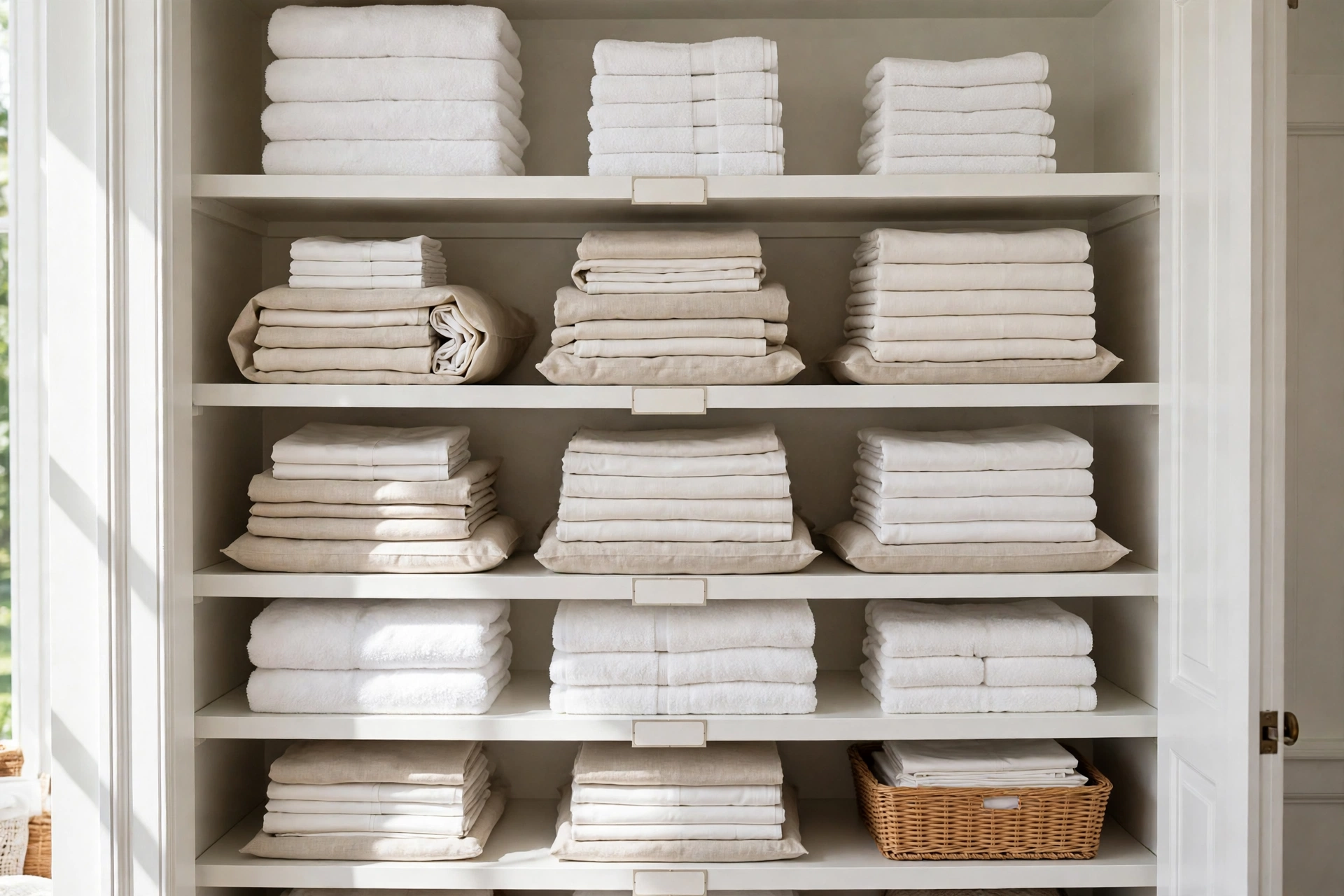
The linen closet is a small space with a big job, and it works best when it is sorted by bed, not by color. Stack sheet sets by bed size, fold each set inside one of its own pillowcases so the pieces never separate, and keep towels in one stack, washcloths in another, and spare blankets on the top shelf. A label on each shelf — “Queen,” “Twin,” “Bath Towels” — means nobody has to unfold three sets to find the right one.
Keep only two sets per bed in rotation plus one spare, and donate the stained, torn, or single orphan sheets that have been living at the back of the shelf for years. A linen closet reset takes about thirty minutes, and it ends the weekly hunt for a matching sheet set for good.
8. Conquer the Junk Drawer
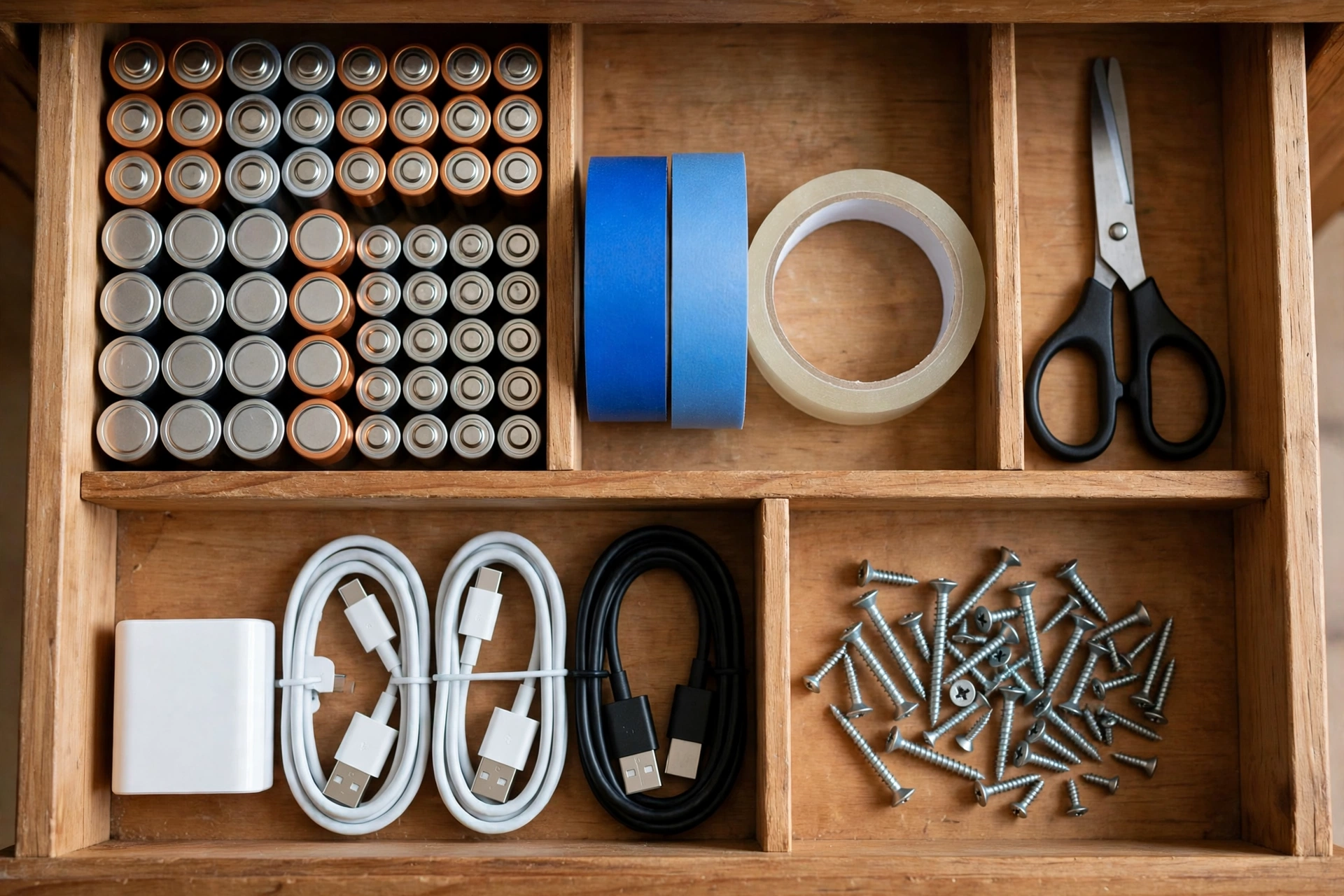
Every American home has one, and every New Year organization ideas list needs it: the junk drawer. Empty it completely onto the counter, throw away the dried-out pens, dead batteries, and mystery keys, and sort what stays into small groups — batteries, tape and scissors, phone chargers, screws and picture-hanging hardware, and stamps and envelopes.
A cheap drawer divider or a few small containers turns the drawer from a pile into a grid, and the rule going forward is simple: the drawer holds only what fits in its dividers, and anything that does not fit lives somewhere else. Ten minutes is all this one takes, and it is the most satisfying small win in the whole reset — the drawer you open every day finally opens to order instead of chaos.
9. Clear the Paper Pile and Build a Command Center
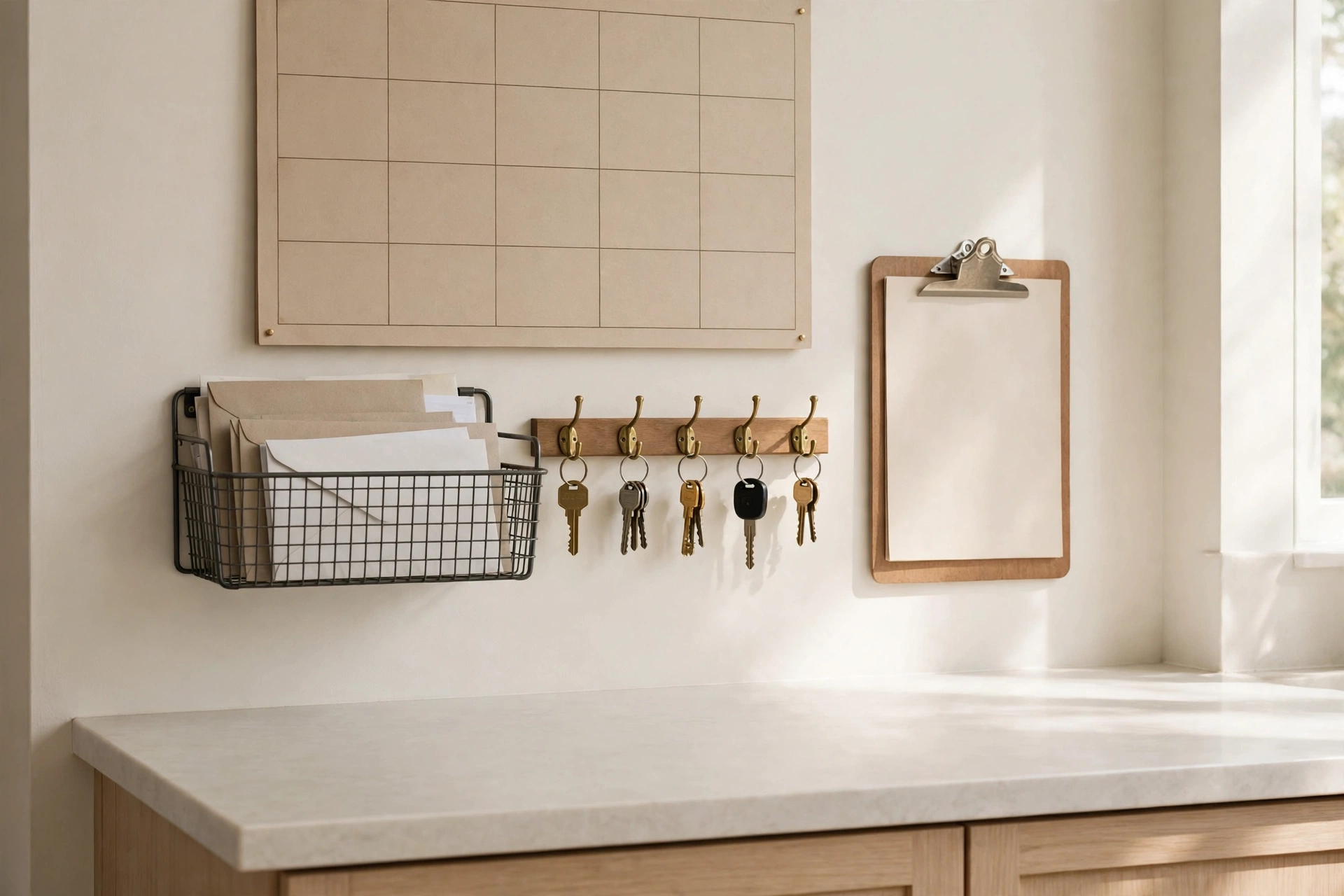
Paper is the clutter that grows while you are not looking — mail on the counter, school forms on the fridge, bills on the table. Start by clearing every pile in the house into one spot, then sort it in one sitting: action, file, shred, recycle. Set up a simple filing system for what stays — a folder per category, or one accordion file if that is all the space you have — and shred or recycle the rest the same day.
Then build a command center in one fixed spot, usually the kitchen or the entryway: a wall calendar, a tray for incoming mail, a hook for keys, and a small board or clipboard for the week’s schedule. Everything paper-related lives there from now on, and the kitchen counter stays clear because the mail has a home the moment it comes through the door.
10. Set Up a Mudroom and Entryway Drop Zone
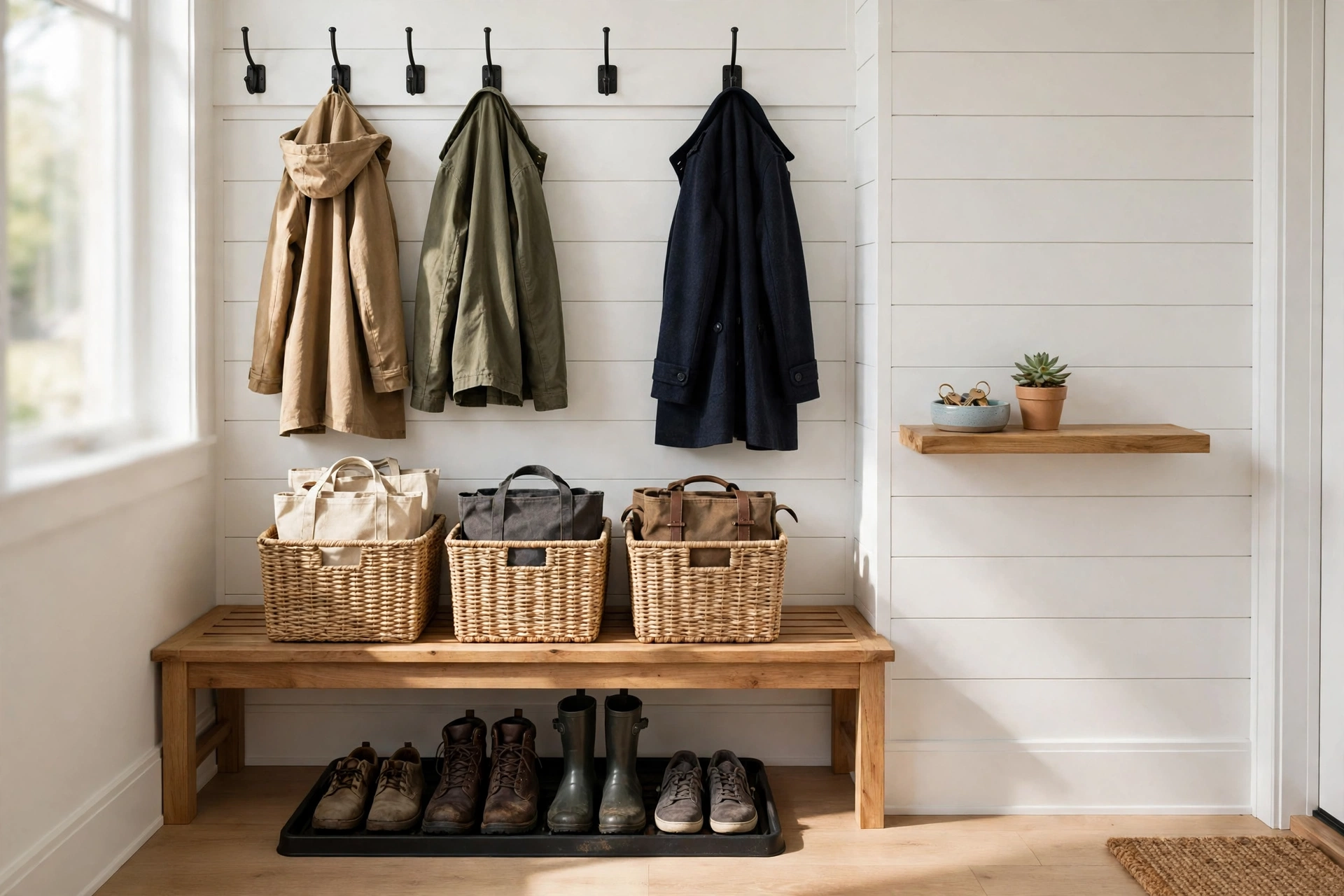
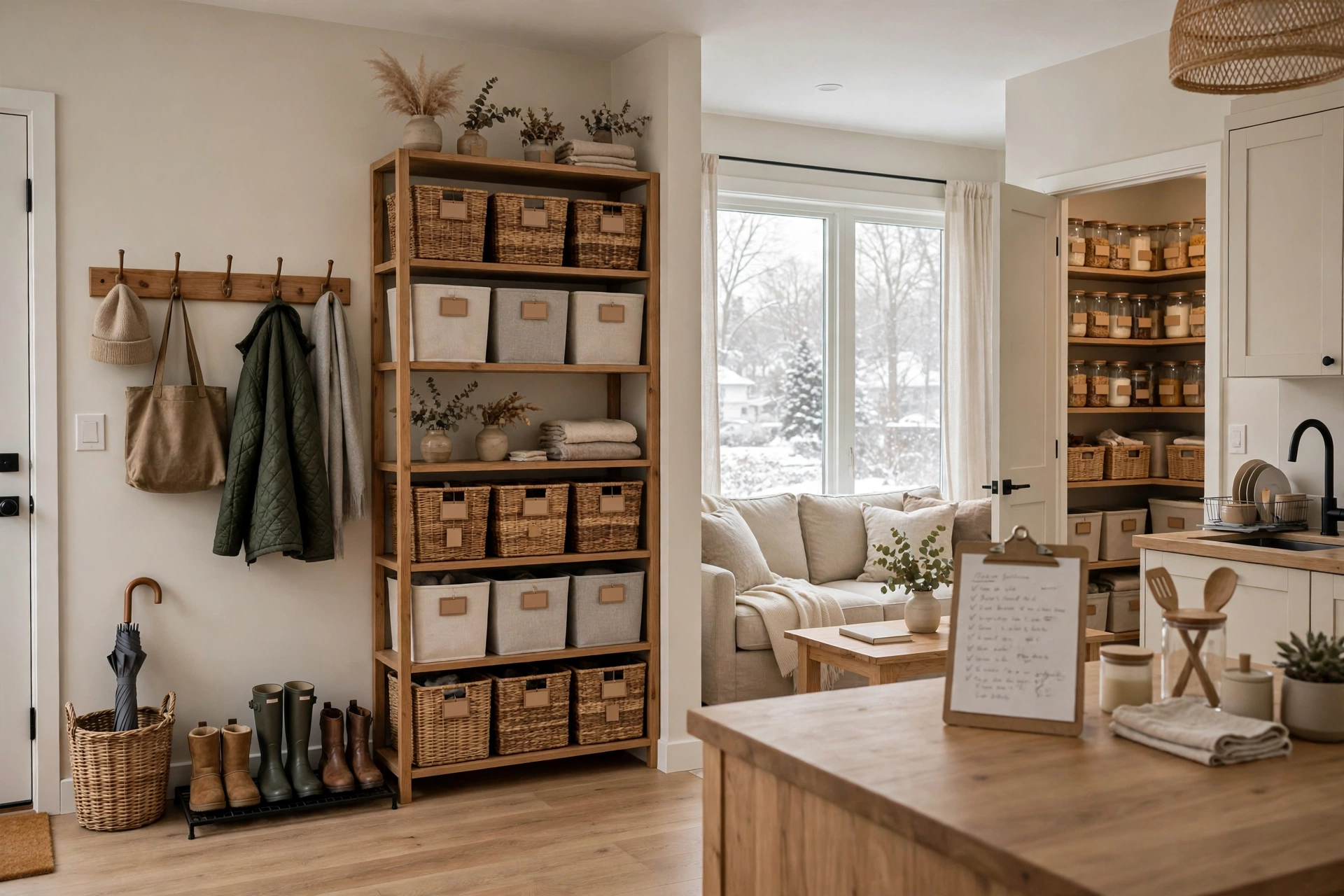
The entryway is where the outside world walks into your house, so it needs a system that catches the mess at the door. Give every person a hook for their coat, a cubby or basket for their bag, and a spot for shoes — a boot tray in winter, a shoe rack the rest of the year. Keys go on one hook or in one small dish, never on the counter, and a small basket by the door holds the things that leave the house every day: sunglasses, reusable bags, and the dog leash.
This is the drop zone that protects every other zone in the house, because coats and bags that have a home at the door never end up on the dining chairs. For the front-door styling side of the entryway, see our New Year entryway decor ideas — this article keeps the focus on the storage system that makes the welcome work.
11. Build a Cleaning Supplies Caddy
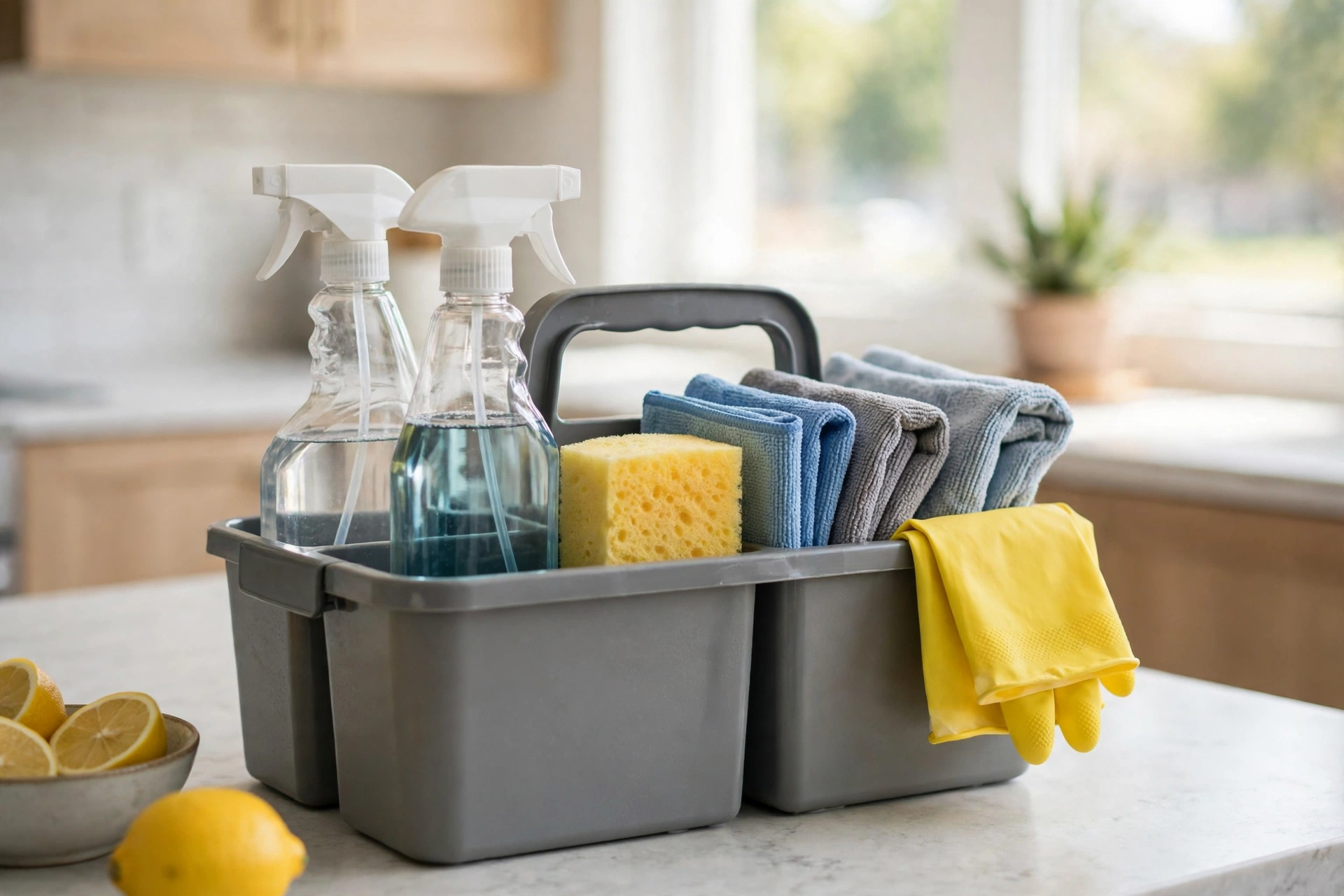
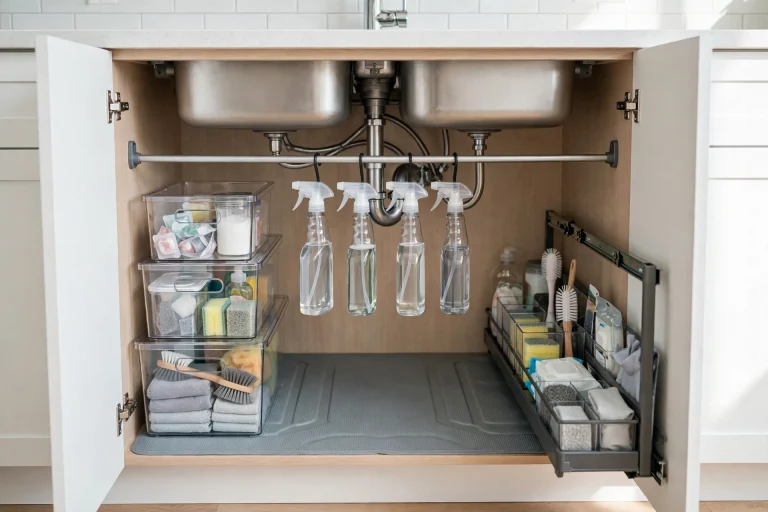
Cleaning supplies scattered across three rooms mean you never have what you need when you need it. Build one caddy that holds the daily essentials — all-purpose spray, glass cleaner, a sponge, microfiber cloths, and rubber gloves — and keep it in one place, usually under the kitchen sink or in the laundry room. When it is time to clean a room, you carry the caddy there and bring it back when you are done, instead of opening three cabinets for one ten-minute job.
Keep backups and specialty cleaners in a separate labeled bin behind the caddy, and restock the caddy once a week from the backups. One caddy, one home, every room cleaned from the same kit — it is the simplest of these New Year organization ideas, and the one that saves the most time every single week.
12. Clear the Digital Clutter Too

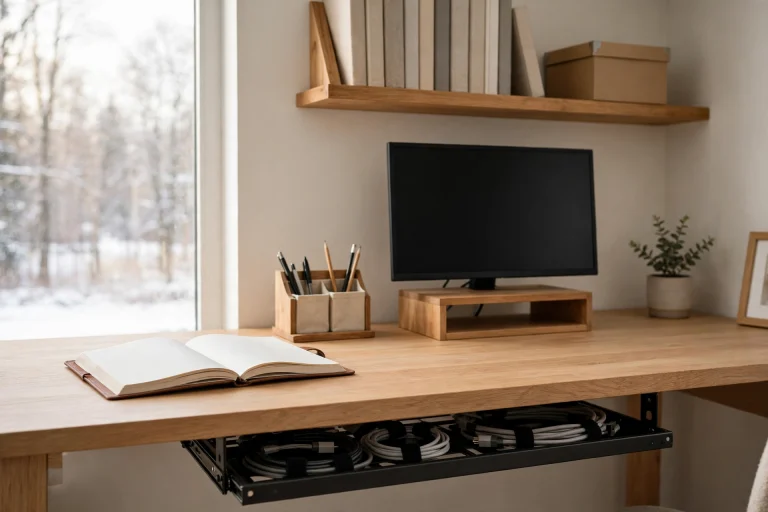
A fresh start is not only physical. Digital clutter — thousands of unsorted photos, a desktop covered in files, an inbox with ten thousand unread messages — weighs on you the same way a messy room does, and January is the right time to clear it. Start with photos: back them up to one place, delete the duplicates and blurry shots, and sort the keepers into folders by year and event.
Then tackle the inbox: unsubscribe from ten mailing lists a day for a week, archive everything older than a month that needs no action, and set up three folders — action, waiting, and reference — so new mail has a destination. Finish with the desktop and the downloads folder, and put a monthly reminder on the calendar so the digital reset gets the same ten-minute check as the physical one.
13. Label Everything You Keep
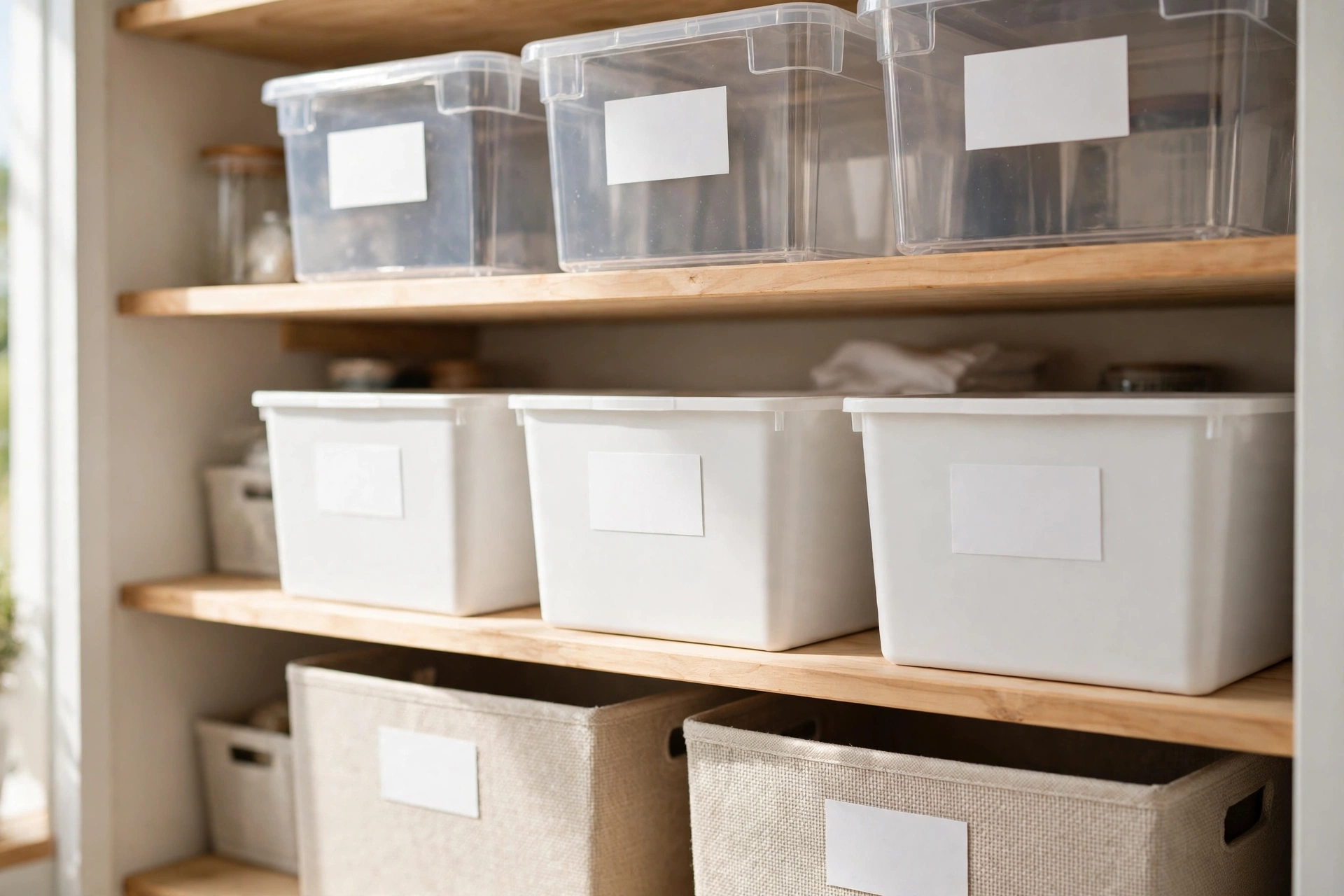
Labels are what turn a tidy weekend into a system that lasts, because they tell everyone in the house where things belong. Label every bin, every shelf, and every drawer you organized — short, plain words on the front, where you can read them without pulling the bin out. “Baking,” “Batteries,” “Queen Sheets,” “Dog Supplies” — the goal is not a beautiful label, it is a system a partner, a teenager, or a houseguest can follow without asking.
A label maker gives the cleanest result, but masking tape and a marker work just as well and cost nothing. Label as you go, zone by zone, and do not skip the shelves that only you use — you are the person who will forget where things go first, and the label is the reminder that keeps the system honest.
14. Keep a Donation Box by the Door

The donation box is the habit that keeps the decluttering going all year. Put a sturdy box or bag by the front door, label it “Donate,” and drop things into it the moment you decide you no longer need them — the sweater that never fit, the duplicate kitchen gadget, the book you will not reread. When the box is full, take it to a donation center the same week, and put a fresh empty box in its place.
This one habit does what a single January clean-out cannot: it makes letting go a daily reflex instead of an annual event. Keep the box visible and easy to reach, and tell the whole household the rule — if it goes in the box, it leaves the house, no second-guessing and no fishing things back out.
15. Do a Weekly 10-Minute Reset So It Sticks Past January

Every one of these New Year organization ideas works in January, and every one of them fails without a maintenance habit. Put a ten-minute reset on the calendar for the same time every week — Sunday evening works for most families — and walk the house with a basket: anything out of place goes in the basket, anything that belongs in another room goes back to its labeled home, and the basket gets emptied before the timer ends.
Ten minutes a week is the whole secret. It catches the drift before it becomes a mess, it keeps the labels honest, and it means next January you will not need another whole-home reset — you will just need a light refresh.
Frequently Asked Questions
What are the best New Year organization ideas for a whole home?
The best New Year organization ideas start with a whole-home reset plan — one zone per day — and decluttering before you organize anything. Then set up simple zones in the pantry, fridge, closet, and bathroom cabinets, label everything you keep, and finish with a donation box by the door and a weekly 10-minute reset. That order matters: plan, declutter, zone, label, maintain. A plan without decluttering just organizes clutter, and zones without a weekly reset slide back into a mess by February.
How do I start organizing my home for the New Year?
Start your New Year organization ideas with the zone that bothers you most and a ninety-minute timer, and declutter it before you buy a single bin. Pull everything out, sort it into keep, donate, and toss piles, and use the one-year test — if you have not used it in twelve months, let it go. Once the keep pile is smaller, set up bins and labels for what stays, and write the next zone on your plan before you stop for the day. One finished zone a day beats five half-finished rooms every time.
How long does a whole-home New Year reset take?
A whole-home reset using these New Year organization ideas takes about two weeks at one zone per day, with most zones taking sixty to ninety minutes. Small zones like the junk drawer or the linen closet take ten to thirty minutes, while the closet or the pantry can take a full ninety. Do not try to finish the whole house in one weekend — the pace is the point. One zone a day keeps the work manageable, and the weekly 10-minute reset afterward keeps the house tidy for the rest of the year.
What should I declutter first in January?
Declutter the things you touch every day first, because those are the New Year organization ideas that pay off fastest: the fridge and pantry, the junk drawer, and the entryway drop zone. Toss expired food and medicines, duplicates, and anything broken or dried out, then move on to the closet with the one-year test. Start with the daily-use zones and the quick wins — a clear fridge and an empty junk drawer give you the momentum to tackle the bigger closets and cabinets next.
How do I keep my home organized after January?
The way to keep these New Year organization ideas working past January is a weekly 10-minute reset at the same time every week, plus two small habits: one in, one out for the closet, and a donation box by the door that leaves the house the moment it fills up. Labels keep the system readable for everyone in the house, and the reset catches the drift before it becomes a mess. Ten minutes a week is all it takes — a home that gets a weekly reset stays organized all year, not just in January.
Related Reading
- New Year Bathroom Organization Ideas
- New Year Bedroom Organization Ideas
- New Year Kitchen Organization Ideas
- Pantry Organization Ideas
- How to Declutter Your Home Room by Room
- Laundry Room Organization Ideas
Conclusion
A fresh start does not need a remodel or a shopping spree — it needs a plan, an honest declutter, and a few simple systems that everyone in the house can follow. These New Year organization ideas give you exactly that: one zone a day, clear zones in the pantry and fridge, an edited closet, labeled bins, a donation box by the door, and a weekly 10-minute reset that keeps it all going past January. Start with the zone that bothers you most this weekend, and by the end of two weeks your whole home will feel lighter, calmer, and ready for the year ahead.