How to Clean a Shower Head: 15 Steps for Full Pressure Again
Introduction
A shower that used to feel strong can turn weak and patchy so slowly that you barely notice it happening — until one morning half the nozzles are spraying sideways and the rest are barely dribbling. In most American homes the culprit is mineral buildup: much of the United States has hard or very hard tap water, and every hot shower leaves a little calcium and magnesium behind on the shower head. That chalky white crust is limescale, and it narrows the tiny spray outlets until the pressure you paid for never reaches you.
The good news is that learning how to clean a shower head is a one-afternoon job, not a plumber visit, and it costs a few dollars in vinegar or citric acid. The fifteen steps below work in order: diagnose the problem first, try the quick fixes, then soak or bag the head, clean the hidden filter inside, and protect the finish so the fix lasts. If the rest of the bathroom shows the same white crust, our guide on how to remove hard water stains covers the glass, chrome, and tile around the shower, and our New Year bathroom organization ideas will help you put the whole room back in order once the shower is running like new.
1. Diagnose First: Limescale, Low Pressure, or a Clogged Filter
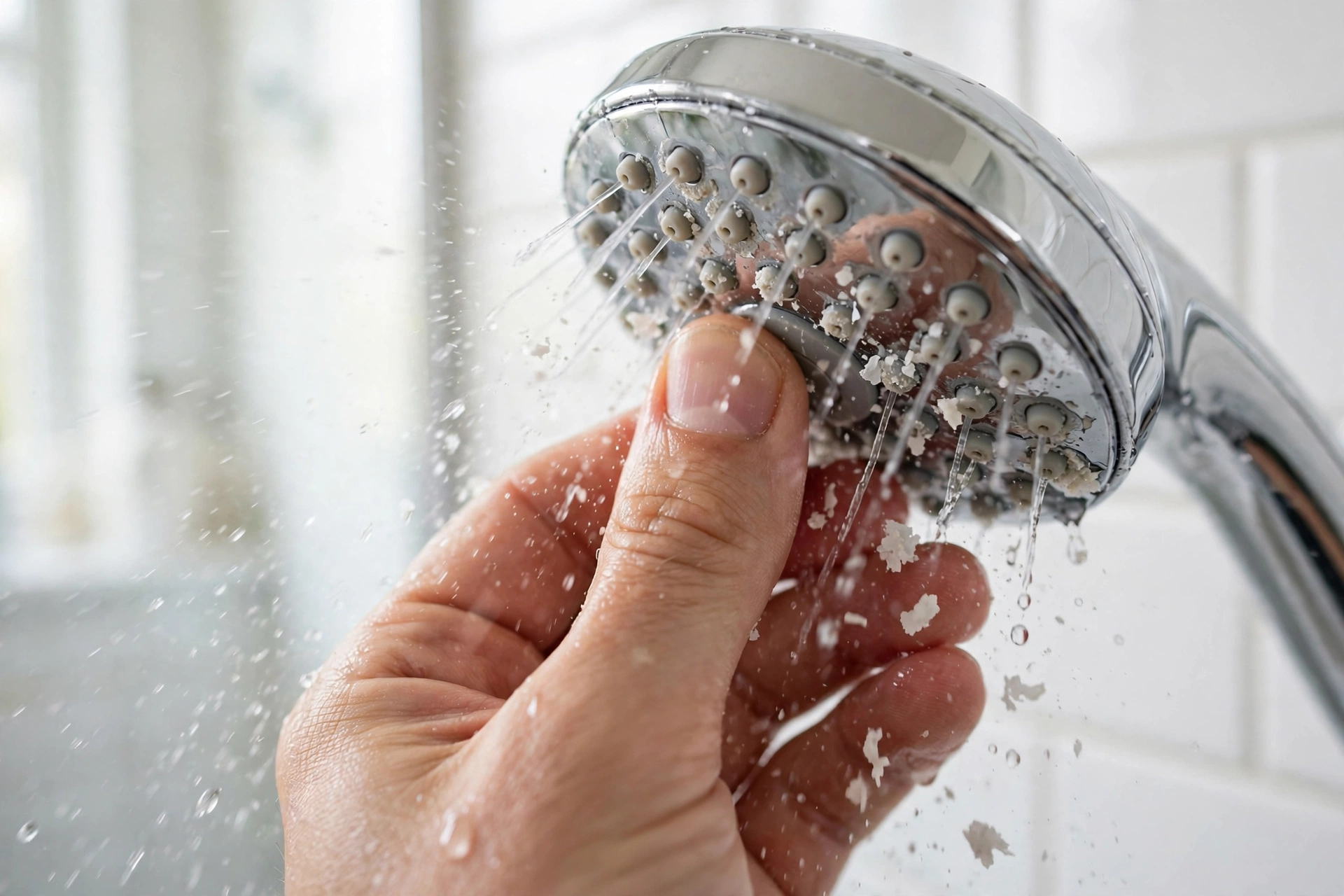
Before you unscrew anything, work out what is actually wrong, because how to clean a shower head depends on the cause. Run the shower and look closely at the spray. If some nozzles spray fine and others dribble or shoot sideways, that is limescale clogging individual outlets. If the whole spray is weak and even, check a tap elsewhere in the house: if every tap is weak, the problem is the house supply, not the head.
Look for white or greenish crust around the nozzles and on the face of the head. White chalky buildup is limescale from hard water; a green tint on a brass fitting can be corrosion, which points toward replacement (see step 13). Finally, remember the hidden suspect: a mesh filter inside the shower head inlet that catches grit from the pipes. A clogged filter chokes the whole spray evenly, and it is the most commonly missed cause of weak pressure.
2. Rub the Rubber Nozzles: The 30-Second Thumb Trick
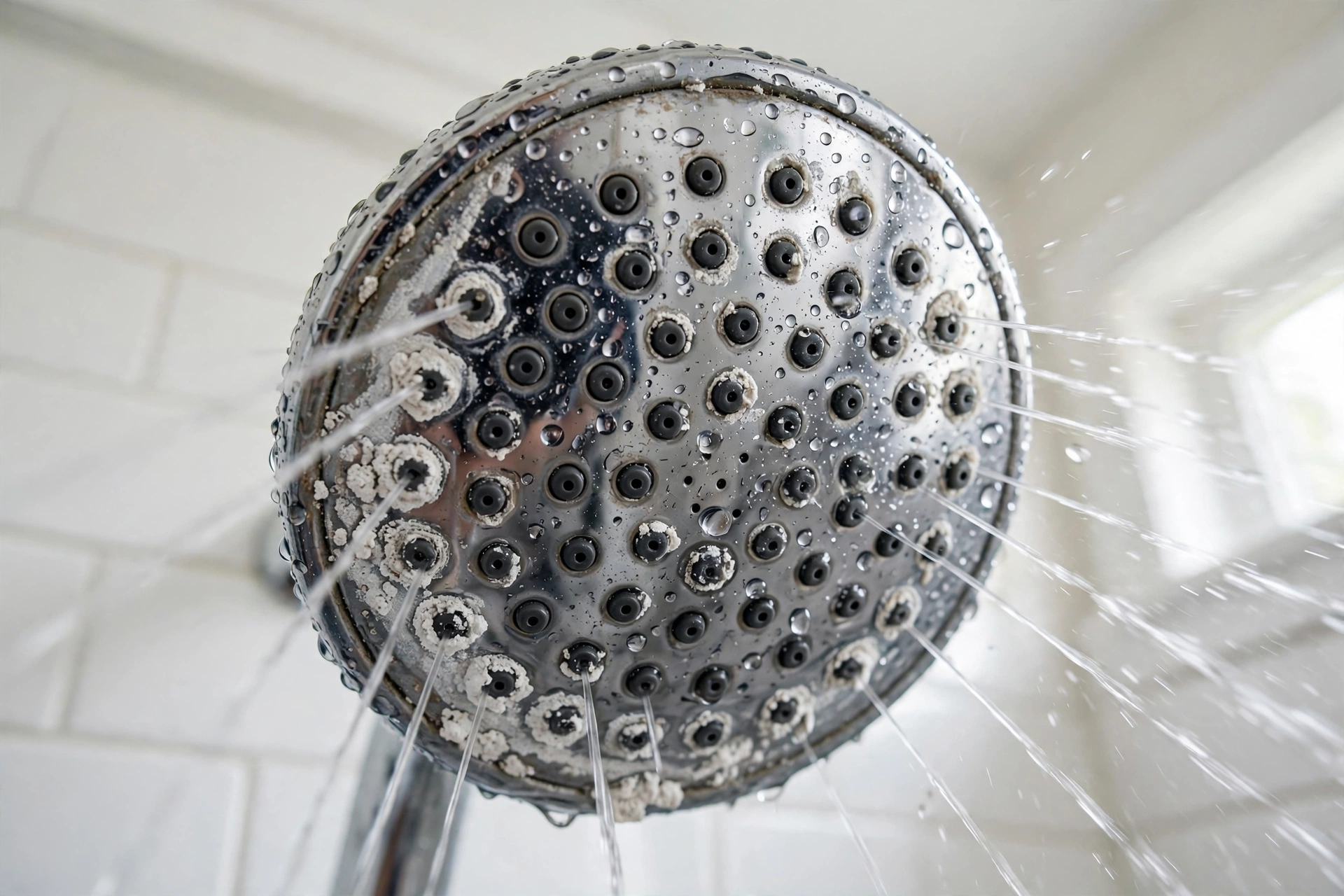
Start with the easiest fix in this whole guide, because it takes thirty seconds and no tools at all. Most modern shower heads — from brands like Moen, Delta, and Kohler sold at Home Depot and Lowe’s — have soft silicone or rubber nozzles instead of fixed metal jets. Those nozzles are designed to be flexed: mineral deposits crack and flake off when the rubber moves.
With the shower running, press your thumb over each nozzle and rub it in small circles, working across the whole face of the head. You will feel gritty flakes come loose and see the spray pattern improve nozzle by nozzle. Do this once a week and limescale never gets the chance to harden into a real clog. If the nozzles are stiff plastic or metal rather than rubber, skip this step and move on to the soak in step 4.
3. Remove the Head: Hand-Tight, and Keep the Washer and Mesh Filter
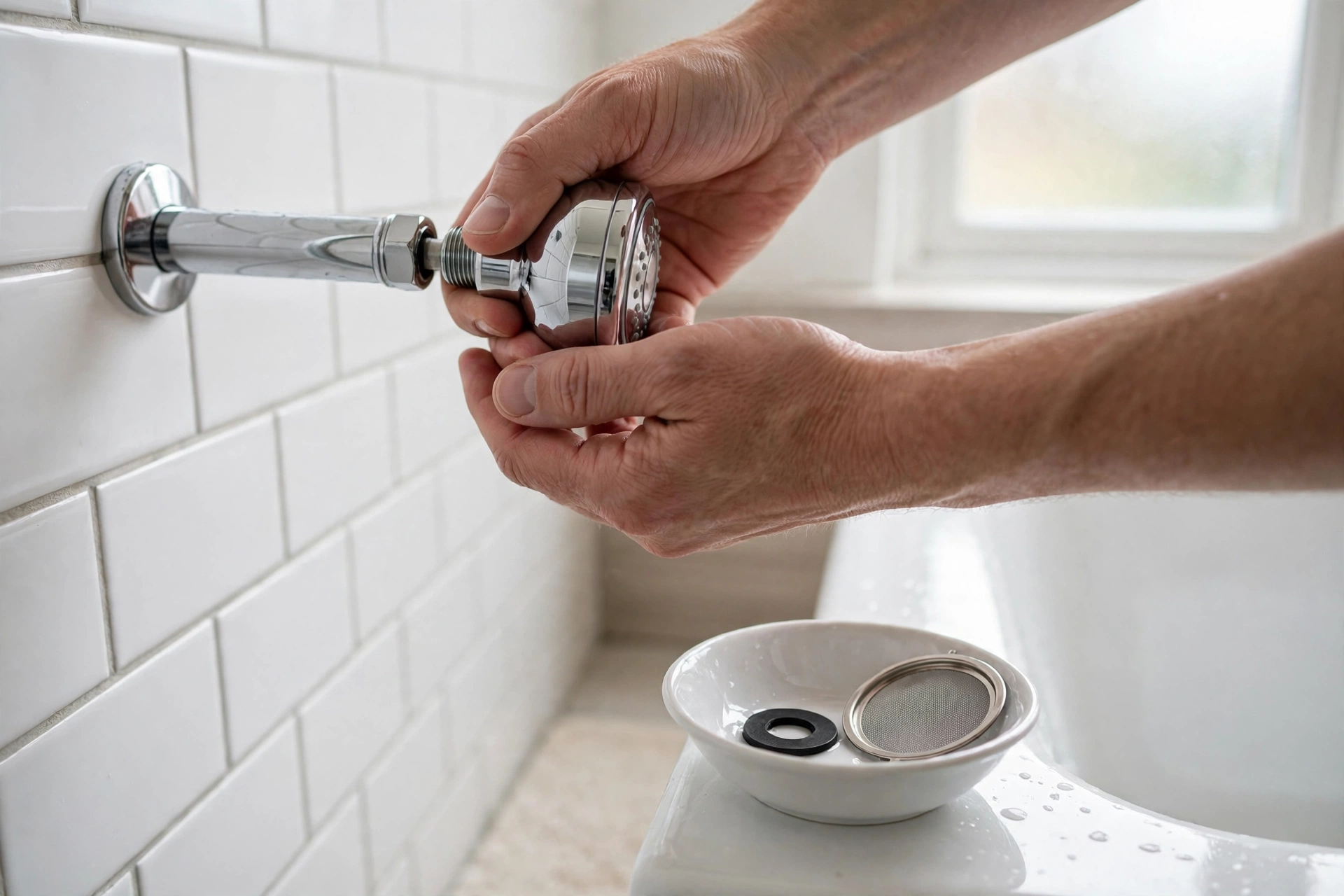
If the thumb trick is not enough, take the head off — it makes every later step easier and keeps vinegar off your shower walls. Most shower heads unscrew by hand: grip the head, not the shower arm, and turn counterclockwise. If it is stuck, wrap a cloth around the connecting nut and use adjustable pliers gently, just enough to break it loose, then finish by hand. Never wrench the shower arm itself, which can loosen the pipe inside the wall.
As the head comes off, catch what falls out of the inlet: a small rubber washer and, in most heads, a fine mesh filter screen. Put both in a small bowl so they do not go down the drain — the washer keeps the joint from leaking when you put it back, and the mesh filter is the part you will clean in step 9. Note which way the filter faces before you remove it, so it goes back the same way.
4. Vinegar Soak: 30 to 60 Minutes in Plain White Vinegar
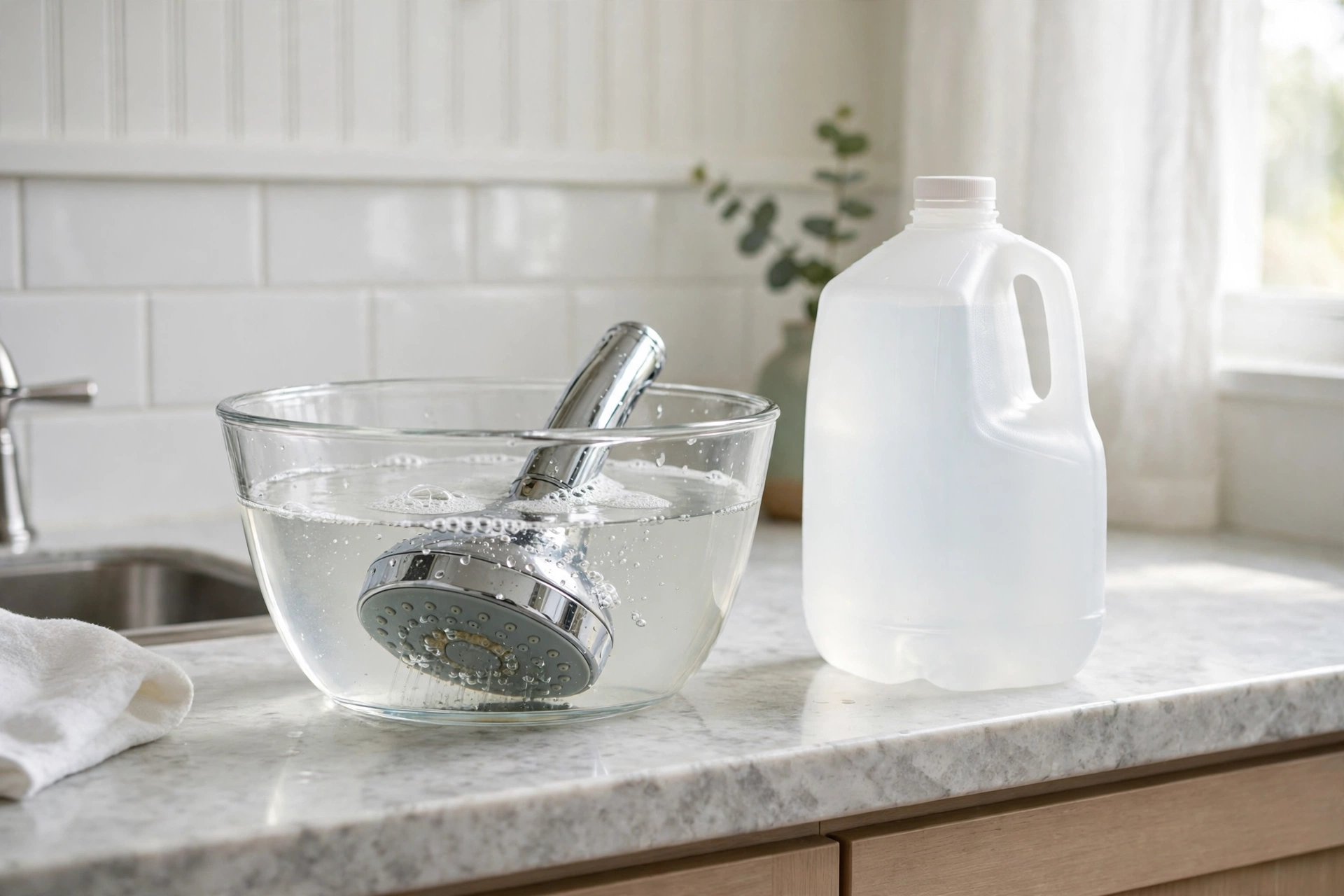
White distilled vinegar is the classic answer for how to clean a shower head, and for good reason: it dissolves limescale, it costs a couple of dollars a gallon at Walmart or Target, and it is safe for chrome and stainless steel. Fill a bowl or a plastic container with enough plain white vinegar to cover the face of the head completely, and set the head face-down in it. Thirty minutes handles light buildup; leave it for a full hour if the crust is thick or the nozzles are badly clogged.
Do not use apple cider vinegar or scented cleaning vinegar — plain distilled white vinegar is the right strength and leaves no residue. If the head has a plastic body, vinegar is still fine, but do not leave it overnight: a very long soak can dull some plastics.
5. Citric Acid Soak: The Low-Smell Alternative to Vinegar
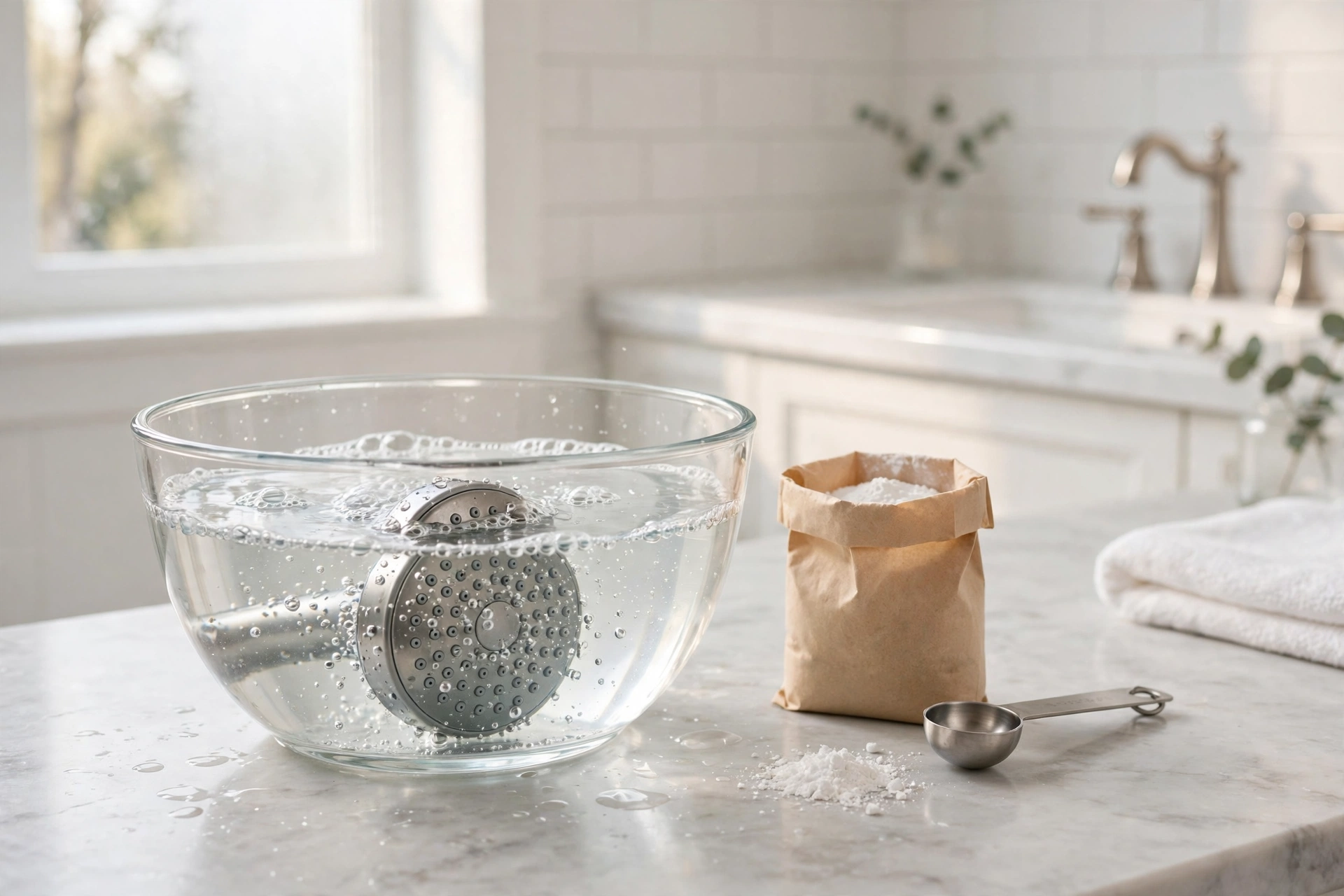
If you hate the smell of vinegar, citric acid is the alternative worth knowing about — it dissolves limescale just as well, and the only smell is a faint citrus one. Buy food-grade citric acid powder (sold in the canning aisle at Walmart and Target, and in bulk on Amazon) and dissolve two tablespoons in a quart of warm tap water, about 120°F from the hot tap. Submerge the head face-down and soak it for 30 minutes.
Citric acid is a good choice for households with a septic system, since it breaks down cleanly, and it is the same active ingredient in many store-bought descalers like CLR and Lime-A-Way — you are simply skipping the brand markup. Never mix citric acid with bleach or any chlorine cleaner.
6. The Bag Method for Fixed Heads: Clean It Without Removing It
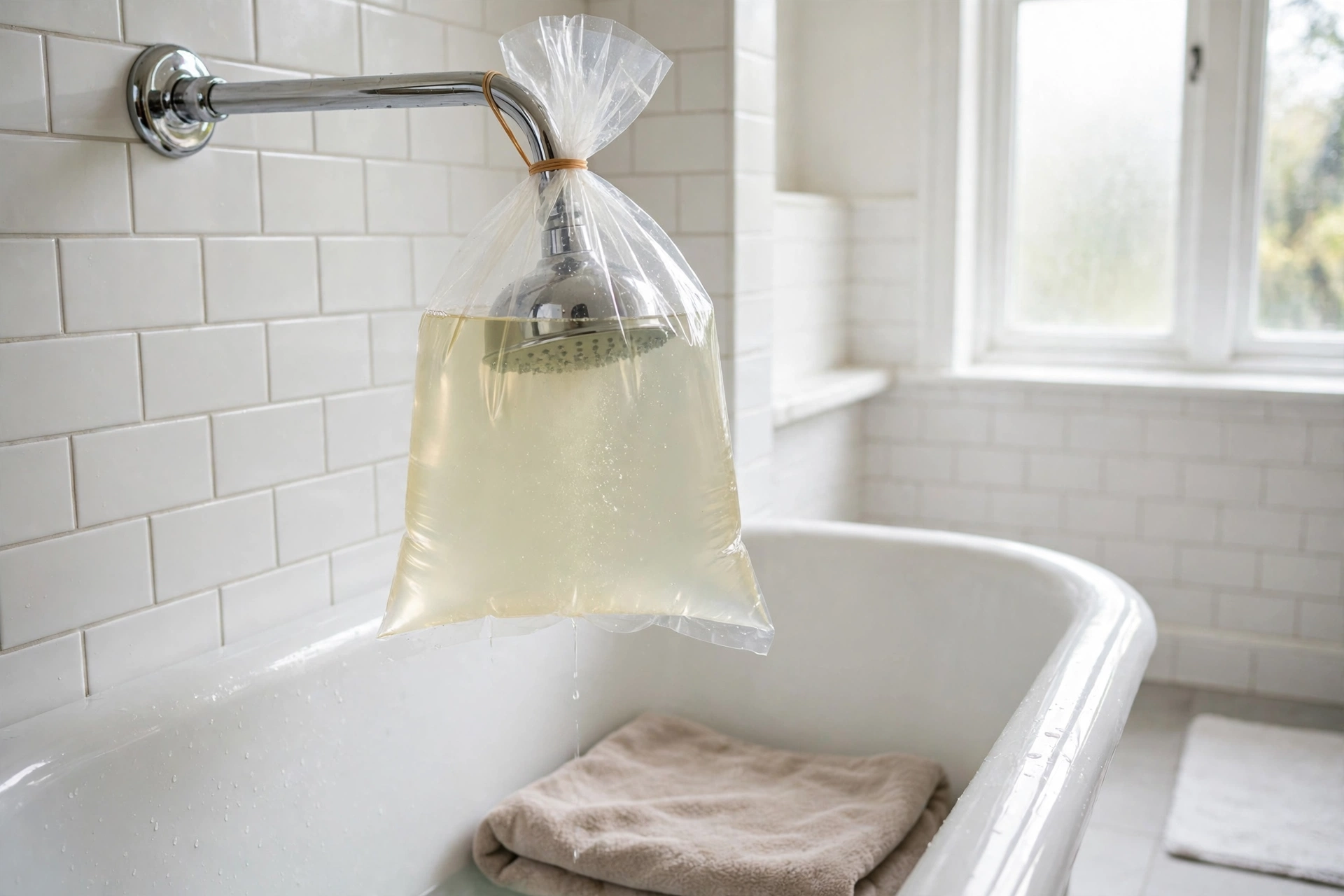
Some shower heads will not come off — the fitting is corroded tight, the head is a large rainfall model, or you rent and do not want to risk the plumbing. The bag method is how to clean a shower head without removing it at all. Fill a sturdy plastic bag or a large zip-top bag with white vinegar (or the citric acid solution from step 5) until the head will be fully submerged, then lift the bag up over the head, secure it to the shower arm with a rubber band or zip tie, and leave it for 30 to 60 minutes.
Use a bag thick enough not to split under the weight — a gallon freezer bag works, a thin grocery bag does not. Put an old towel in the tub underneath, just in case. After the soak, remove the bag carefully, pour the vinegar down the drain, and run the shower for a minute before you step in.
7. Baking Soda Paste for the Face of the Head
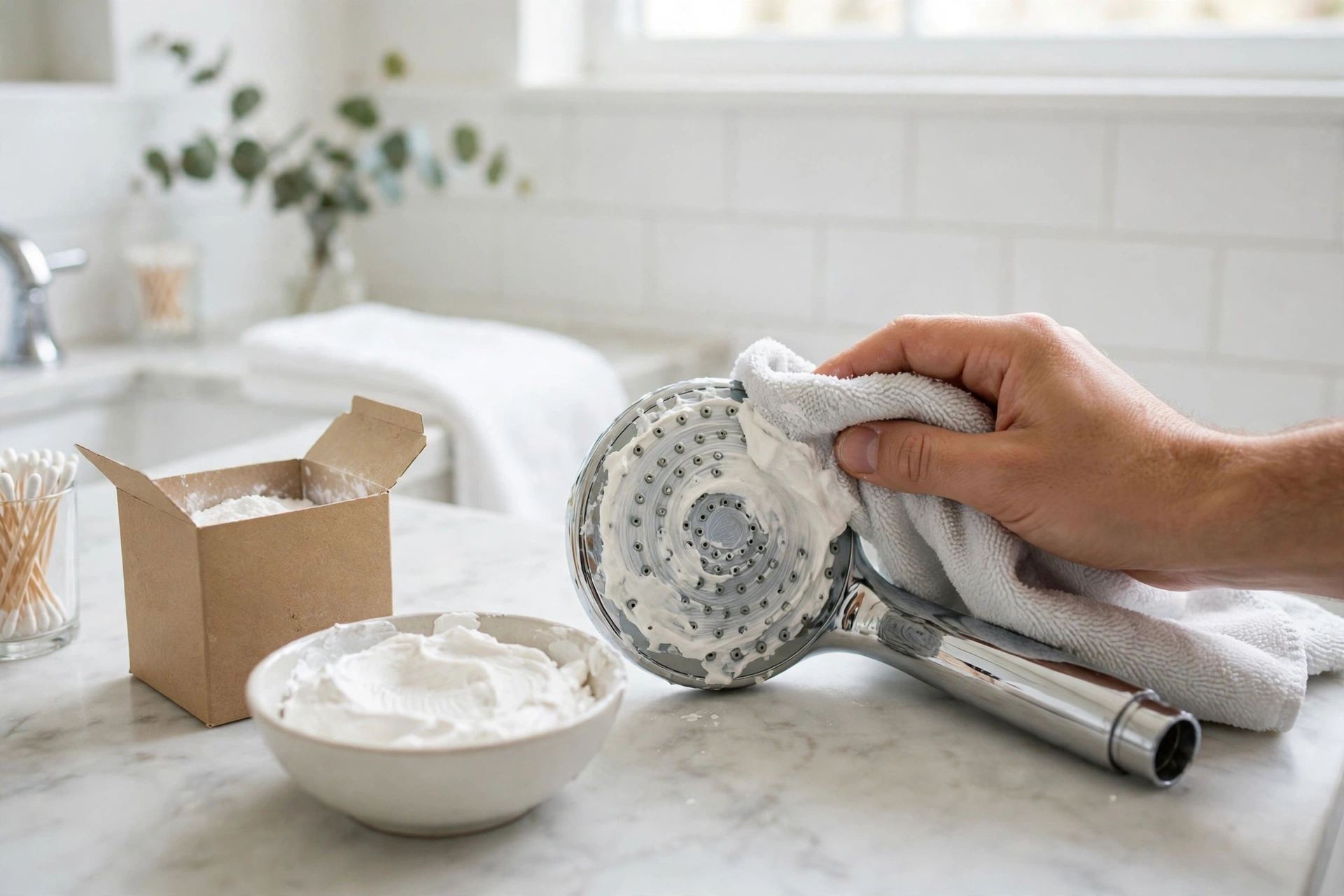
The face of the head — the flat disc the nozzles sit in — often keeps a dull film even after a soak, especially around the rim. Baking soda paste handles that without scratching. Mix three parts baking soda with one part water into a thick paste, spread it over the face with a soft cloth or an old toothbrush, and leave it for 15 minutes. Then wipe it off with a damp cloth.
Baking soda is a mild abrasive, which is exactly why it works on the film and exactly why you should not use it on a polished mirror finish with heavy pressure — light, even strokes are enough. Never use baking soda paste as a replacement for the vinegar soak: baking soda neutralizes acid, so if you mix the two, they cancel each other out.
8. Toothbrush the Nozzles — Never Pins or Wire
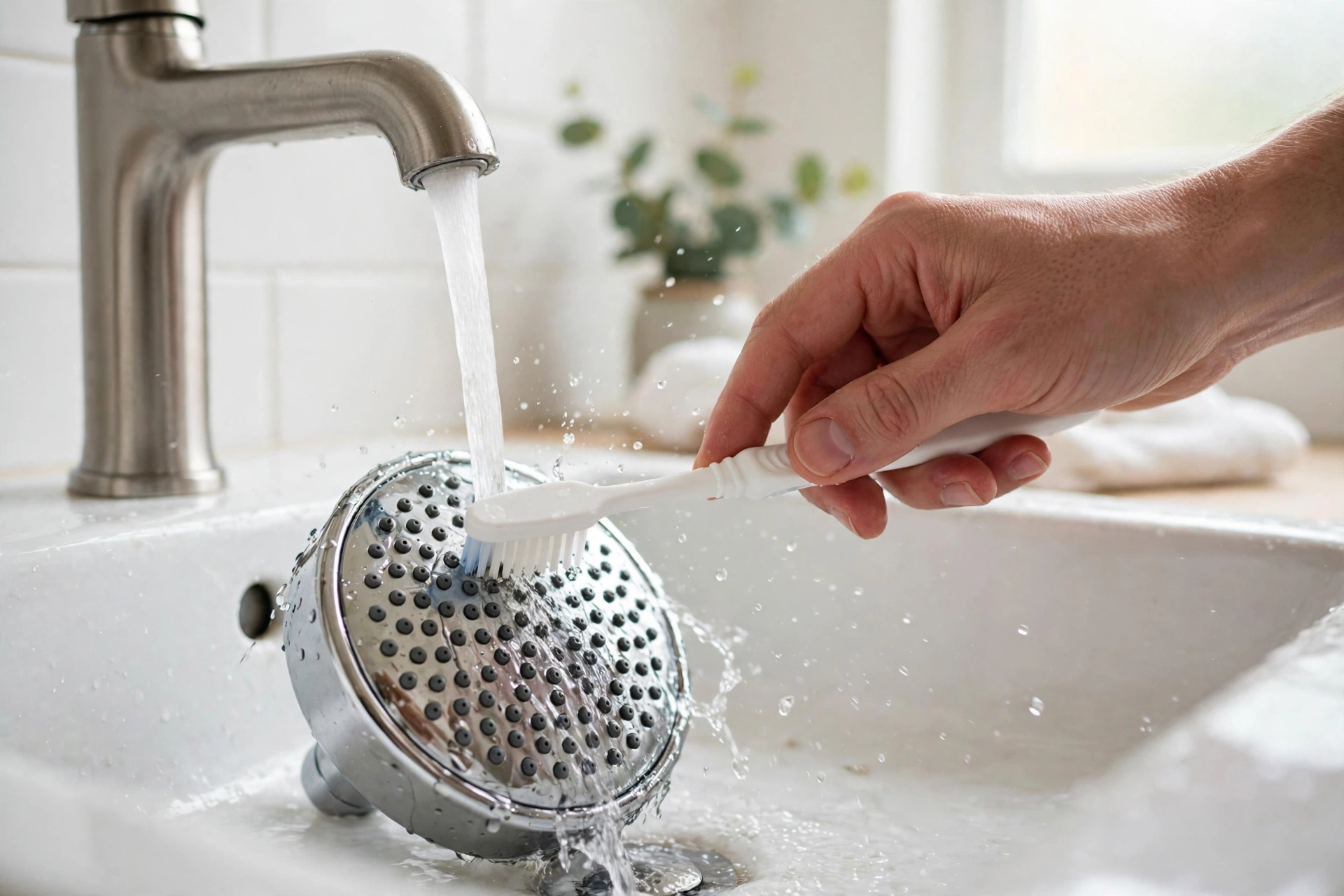
After the soak, a soft toothbrush is the right tool for the nozzles. Brush each nozzle gently in circles under running water, and the softened mineral deposits will come away. An old soft-bristled toothbrush is ideal; a firm grout brush is too stiff and can scratch the face.
What you must never do is poke the nozzles with a pin, needle, or wire. It is the most common bad advice for how to clean a shower head, and it damages the outlets permanently: a pin widens or scores the tiny spray holes, so the nozzle sprays crookedly forever, and on rubber nozzles it can puncture the tip outright. If a nozzle still will not clear after a soak and a toothbrush, soak it again for another 30 minutes.
9. Clean the Inlet Mesh Filter
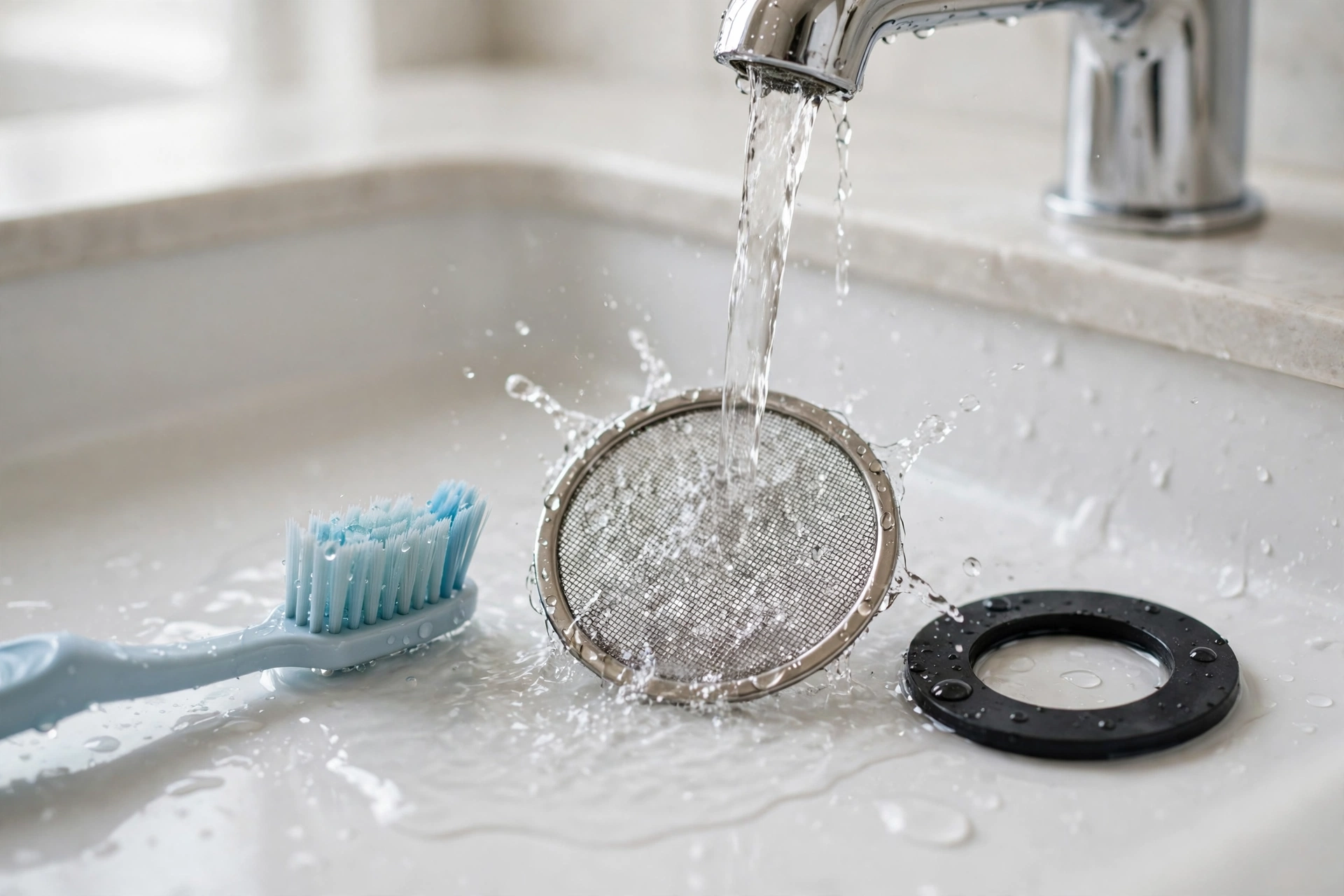
Remember the little mesh screen you saved in step 3? This is its moment. Hold it under running water and brush it lightly with the toothbrush to remove the sand, grit, and mineral flakes trapped in the mesh. If it is caked, soak it in a small cup of vinegar for 15 minutes first, then brush and rinse.
A clean filter is often the single biggest pressure win in this whole guide: the filter sits right where the water enters the head, so a clogged one throttles every nozzle at once. Check the washer at the same time — if it is flattened, cracked, or hard, replace it. A new rubber washer costs under a dollar at Home Depot or Lowe’s.
10. Finish Safety: Brass, Gold, and Nickel Get Acid for 30 Minutes Max
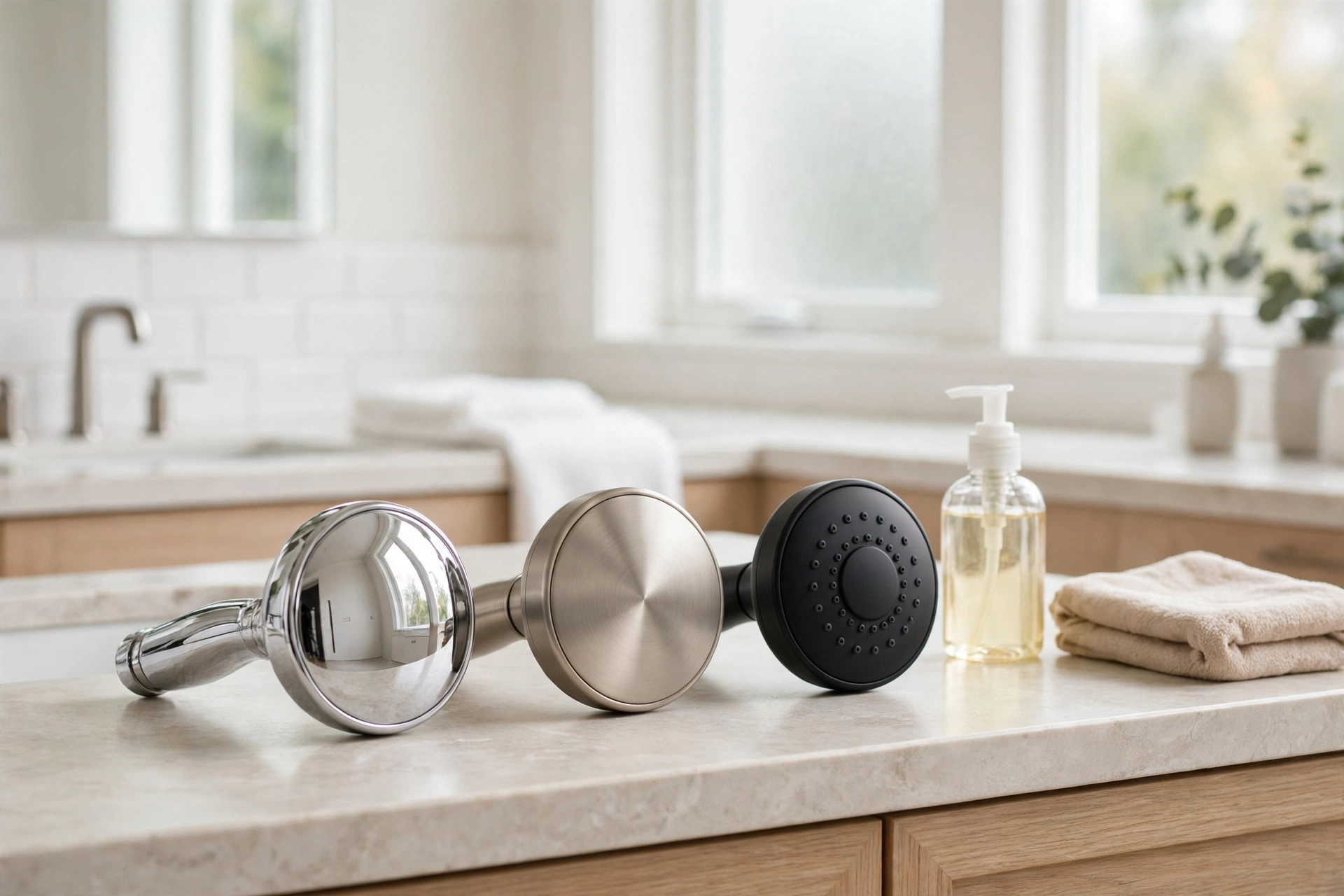
This is the step that protects your investment. A plain chrome or stainless steel head can take a full 60-minute vinegar soak without complaint, but plated finishes — polished brass, gold, brushed nickel, matte black, and oil-rubbed bronze — are a thin coating over a base metal, and acid can dull, spot, or lift that coating if it sits too long. For any plated or specialty finish, cap the acid soak at 30 minutes, no more, and rinse the head thoroughly right after.
Before you soak any head, check the maker’s care guidance — Moen, Delta, and Kohler all publish finish-care instructions, and most warn against vinegar and abrasives on specialty finishes. If the guidance says no acid at all, use warm soapy water and the thumb trick from step 2. Never use bleach, oven cleaner, or scouring powder on any shower head — they etch the finish and void most warranties.
11. Rinse and Flush: Run the Shower for 1 to 2 Minutes
Reattach the head by hand — hand-tight plus a quarter turn with a cloth-wrapped pliers at most — making sure the washer and filter are back in place. Then, before you step into the shower, turn it on and let it run for 1 to 2 minutes with the shower door or curtain open and your face turned away.
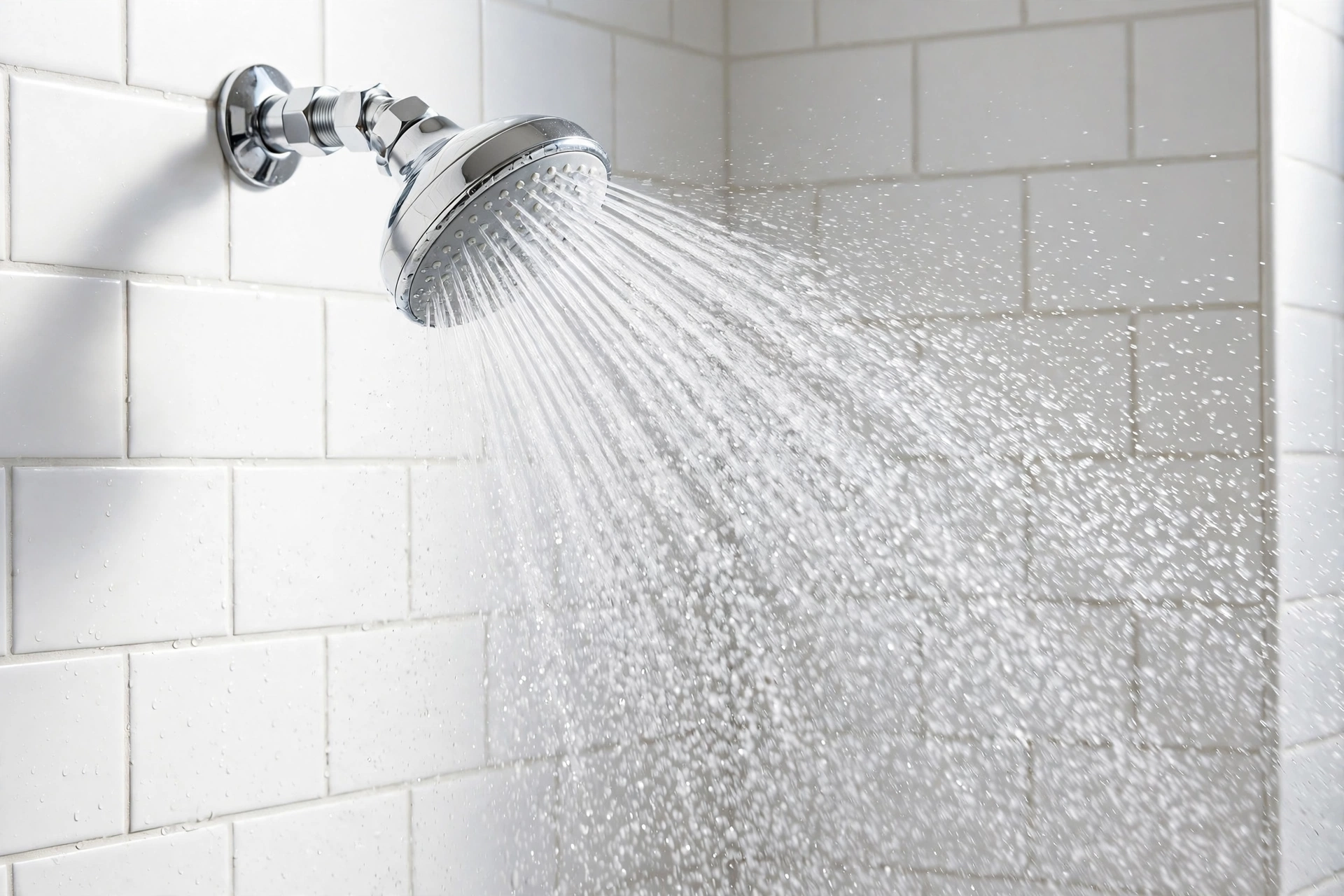
The flush pushes out the loosened mineral flakes and any vinegar left inside the head, so you do not get a face full of gritty water or vinegar smell on your first shower. Watch the spray pattern as it runs: it should be even across the whole face, with every nozzle firing straight.
12. Dry and Polish the Face
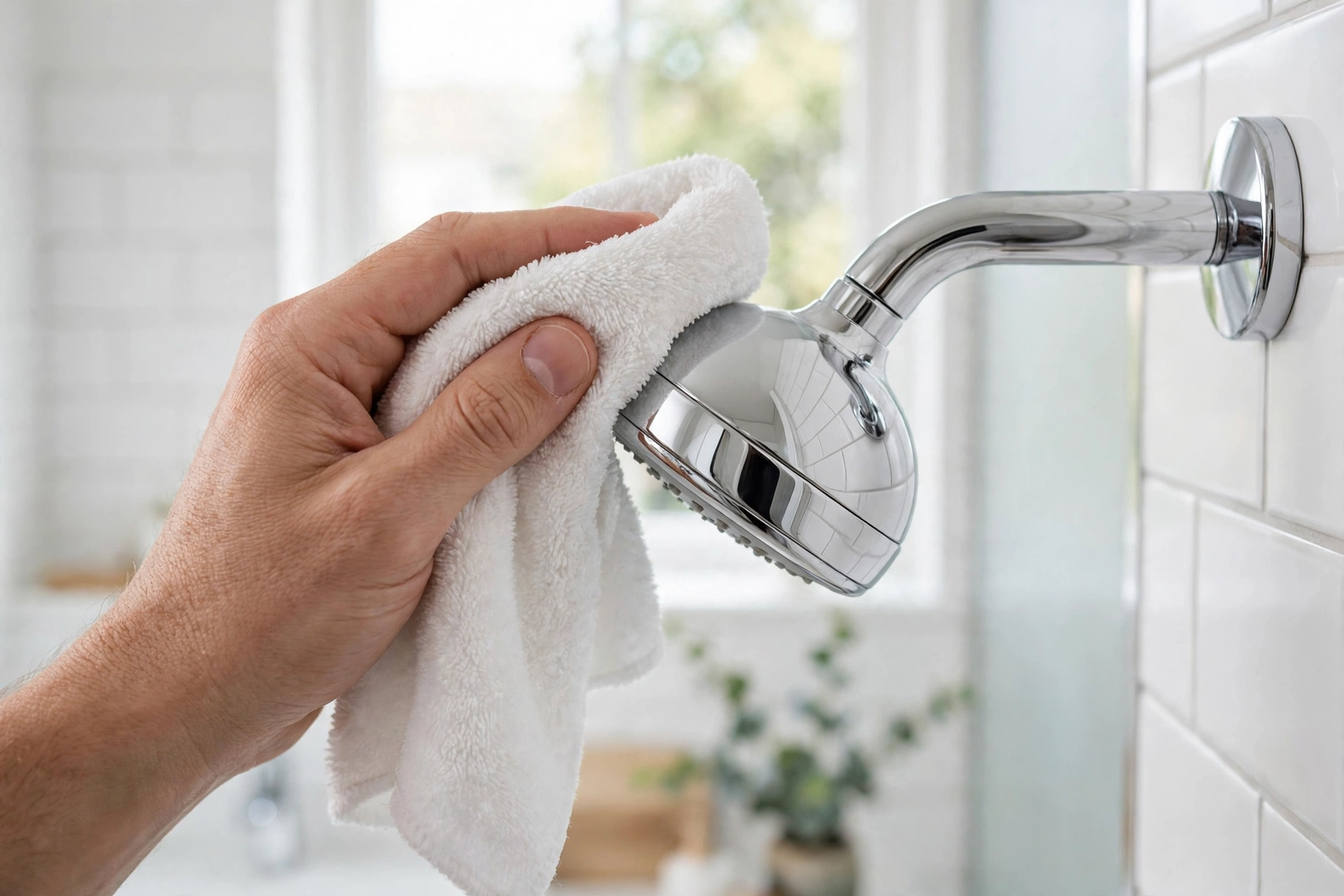
A clean shower head deserves a dry finish. After the flush, wipe the face and the body of the head dry with a soft microfiber cloth, and buff the chrome or nickel lightly until it shines. Drying matters more than it sounds: the water drops left sitting on the face after a shower are exactly what dry into new limescale spots, so a 20-second wipe-down after the deep clean sets the head up to stay clean longer.
For chrome, a dry microfiber cloth alone gives a streak-free shine. For brushed nickel or matte black, wipe in the direction of the grain and skip the polish — those finishes are designed to look soft, not mirror-shiny.
13. When to Replace Instead of Clean
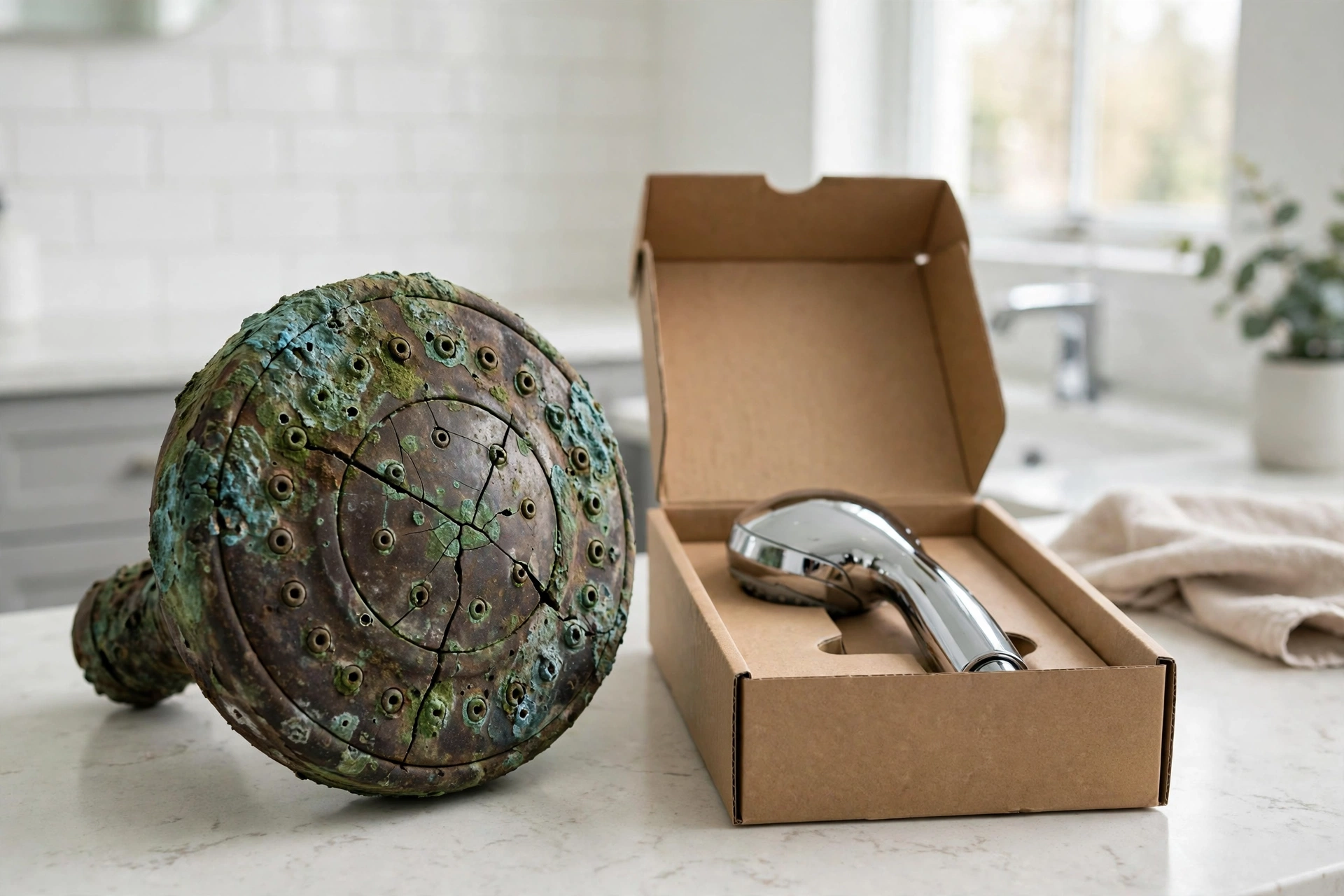
Sometimes how to clean a shower head has the honest answer: don’t — replace it. Clean the head and reassemble it, then check these three signs. First, corrosion: green or white crusty patches on brass fittings, or pitting and flaking on the finish, mean the metal itself is breaking down, and no soak restores it. Second, a cracked face or a split in the body will leak no matter how clean it is. Third, pressure that stays weak after a soak, a clean filter, and a clear house supply usually means the internal waterways are narrowed by years of scale you cannot reach.
A good replacement head costs $25 to $80 at Home Depot, Lowe’s, or Amazon, and swapping one takes ten minutes with the same hand-tight technique from step 3. If your head is more than ten years old, a new water-saving model (1.75 gallons per minute or less, WaterSense labeled) will often spray better than the old one ever did, while using less water.
14. Monthly 5-Minute Maintenance Wipe
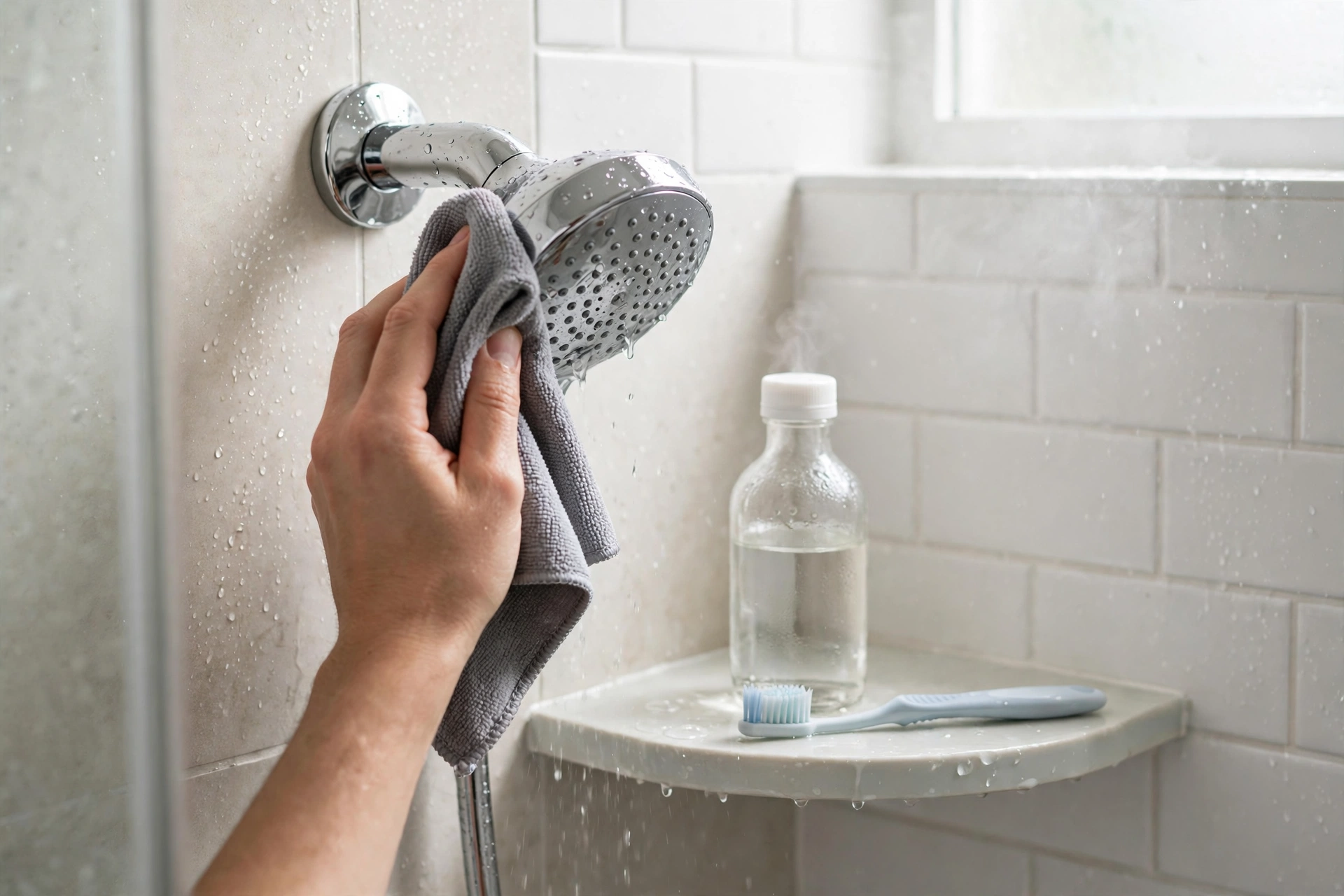
The deep clean above is a once- or twice-a-year job, but a five-minute monthly wipe is what keeps you from ever needing it again. Once a month — pick the first Saturday, or tie it to changing the air filter — rub the rubber nozzles with your thumb while the shower runs, wipe the face dry with the microfiber cloth, and check the spray pattern. If a nozzle starts to dribble, that is your cue to do a quick 30-minute vinegar soak before the crust hardens.
Tie the wipe to a habit you already have, like cleaning the bathroom mirror or swapping the hand towels, and it will actually happen. Five minutes a month beats an hour of soaking and scrubbing every year, and it is the cheapest way to keep the pressure you just restored.
15. Hard-Water Prevention: Wipe After Showers and Consider a Softener
The last step is the one that makes steps 1 through 14 rare. Limescale forms when hard water dries on the head, so the simplest prevention is to wipe the face dry after your shower — the same 20-second habit from step 12, done daily instead of once.
If your water is very hard — white crust on the faucets within days, spots on every glass — a wipe-down alone will not keep up. That is when a water softener earns its keep: a whole-home softener (installed by a plumber, $800 to $2,500 in most US markets) removes the calcium and magnesium before they reach the shower, protecting the head, the water heater, and the dishwasher at the same time. A cheaper middle step is a shower-head filter cartridge, which catches some minerals but needs replacing every few months.
Frequently Asked Questions
How do I clean a shower head without removing it?
To learn how to clean a shower head without removing it, use the bag method: fill a sturdy plastic bag with white vinegar until the head will be fully submerged, lift the bag over the head, secure it to the shower arm with a rubber band, and leave it for 30 to 60 minutes. Then remove the bag, run the shower for 1 to 2 minutes to flush out loosened deposits, and rub the rubber nozzles with your thumb while the water runs.
How long should I soak a shower head in vinegar?
When you learn how to clean a shower head with vinegar, soak it for 30 to 60 minutes: 30 minutes for light buildup, a full hour for thick crust or badly clogged nozzles. For plated finishes like brass, gold, or brushed nickel, cap the soak at 30 minutes and check the maker’s care guidance first, since acid can dull thin plated coatings. Never leave a shower head in vinegar overnight.
Can I use baking soda to clean a shower head?
Yes, but baking soda is a finishing step, not the main clean, when you learn how to clean a shower head. Make a paste of three parts baking soda to one part water, spread it on the face of the head, leave it for 15 minutes, and wipe it off — it removes the dull film a soak leaves behind. Never mix baking soda with vinegar during the soak, because the two neutralize each other. Use the acid soak first, then the baking soda paste.
Why is my shower head still low pressure after cleaning?
If your shower head is still low pressure after you learn how to clean a shower head, the cause is usually one of three things: a clogged inlet mesh filter you did not clean, low water pressure in the whole house (check whether other taps are weak too), or internal scale you cannot reach in a very old head. Clean the mesh filter first — it throttles the whole spray and is the most commonly missed fix.
How often should I clean my shower head?
How often you need to clean a shower head depends on your water: in hard-water areas, do a 5-minute nozzle rub and wipe every month and a full vinegar soak once or twice a year. In soft-water areas, a yearly soak is usually enough.
Related Reading
- How to Remove Hard Water Stains
- New Year Bathroom Organization Ideas
- How to Clean a Dishwasher
- Pantry Organization Ideas
- Small Closet Organization Ideas
- How to Get Rid of Pet Odor in Your House
Conclusion
A weak shower is rarely a plumbing problem — it is usually a dirty shower head, and now you know how to clean a shower head from diagnosis to prevention. Start with the thirty-second thumb trick, soak the head in vinegar or citric acid, clean the mesh filter most people never find, and respect the finish so the fix does not cost you the coating. Then keep it clean with a five-minute monthly wipe and a quick dry after each shower. Do that, and the strong, even spray you just restored will still be there next year.