15 New Year Kitchen Decor Ideas for a Fresh January Reset
Introduction
By the second week of January, the kitchen usually tells the truth about the holidays. The red ribbons have gone limp, the green garland is shedding needles onto the counter, and the whole room feels tired — too busy, too bright, and too much. January is the month to let the kitchen breathe again, and that is exactly what these New Year kitchen decor ideas are for: a calm reset, not another round of decorating.
The reset is simple. Take down the holiday reds and greens and replace them with a quiet winter palette of icy blue, gray, and white. Keep the winter greenery — pinecones and plain evergreen still belong in January — but lose the ornaments, the glitter, and the Santa mugs. Style a few small vignettes instead of filling every surface, swap in cozy textiles, and let soft light do the work that color used to do. A kitchen is the hardest-working room in the house, so the decor has to earn its place: everything here looks good and still lets you cook, chop, and make coffee without moving a display out of the way first.
This is the decor lane, not the organizing lane. If your cabinets and drawers need systems, our New Year kitchen organization ideas cover zones, labels, and storage that actually stick. And if you still want a festive look for December, our Christmas kitchen decor ideas keep the garlands, the cocoa station, and the mini tree where they belong — in December.
1. Winter Palette Swap: Icy Blue, Gray, and White
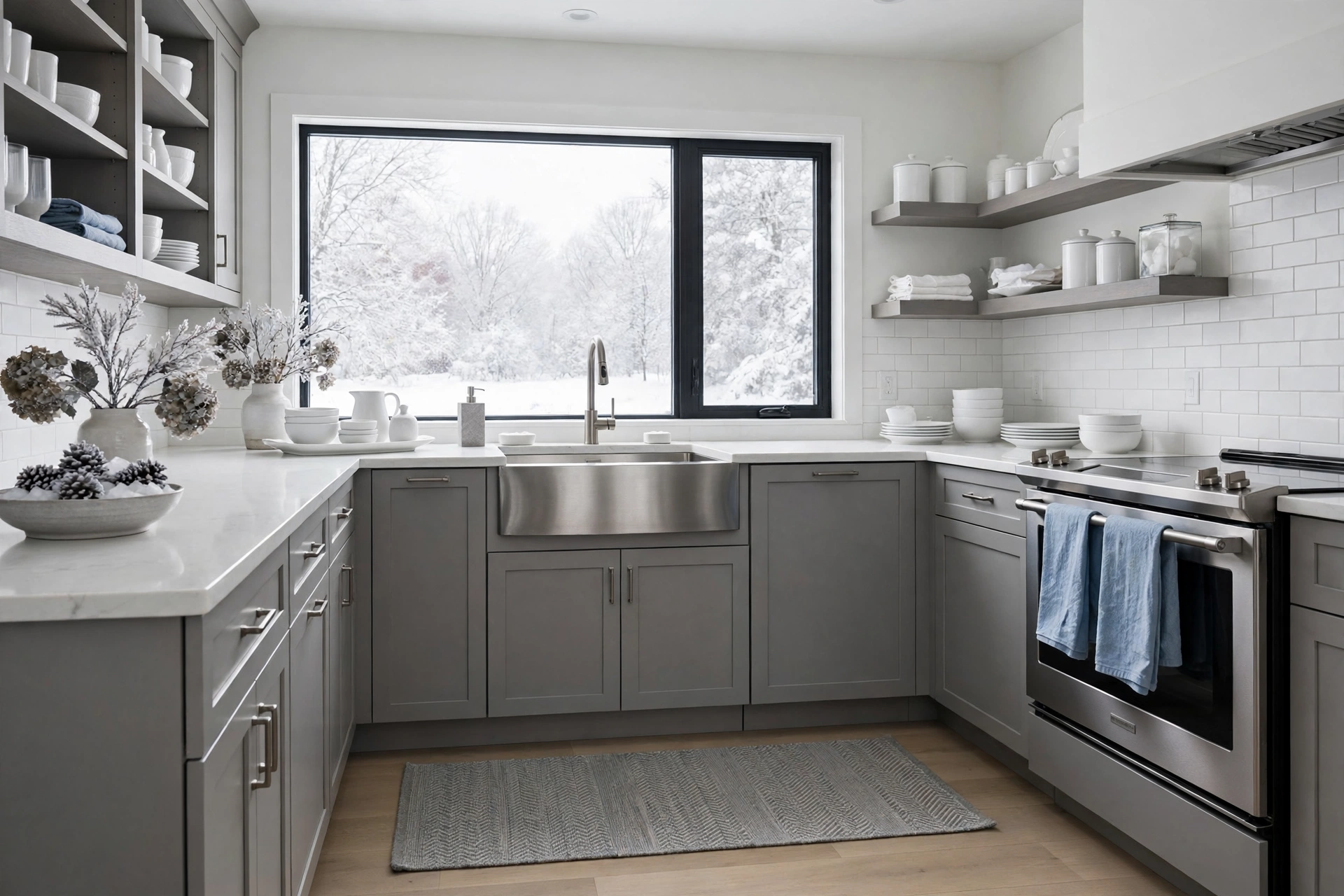
The single biggest change you can make in January costs almost nothing: swap the palette. Pack away every red and green thing — the dish towels, the placemats, the red mugs, the green garland with its ornaments — and bring in icy blue, soft gray, and clean white instead. The room instantly feels crisp, bright, and calm, like a fresh snowfall rather than a party that ended last week.
Start with the textiles, because they are the fastest swap in the room: icy blue dish towels on the oven handle, a gray runner in front of the sink, and white placemats on the table set the palette in five minutes. Then swap a red canister for a white one and a green soap dispenser for a gray or clear one. You do not need a whole new kitchen — three or four swaps are enough for the eye to read the room as winter instead of Christmas.
2. Keep the Winter Greenery, Lose the Ornaments
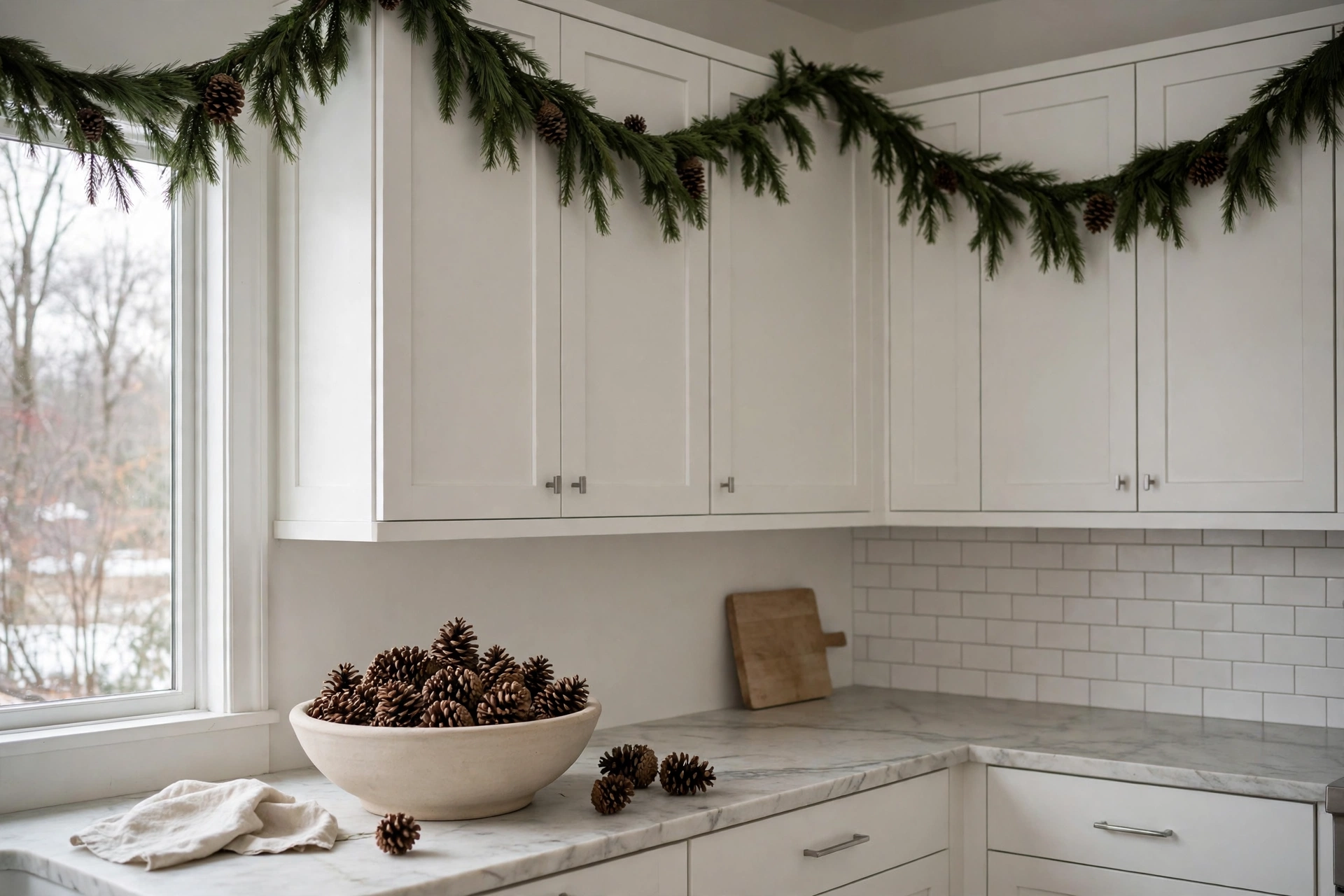
January greenery is not a Christmas leftover — it is the whole point of a winter kitchen. Plain evergreen branches, pinecones, and a little cedar still look right in January because they belong to the season, not to the holiday. What has to go is everything that says Christmas: the ornaments, the red berries, the gold bows, the glitter, and the little Santa figurines tucked into the branches.
Take your garland down, strip it back to bare evergreen, and put it back up. A plain evergreen garland across the top of the cabinets or along a windowsill looks calm and intentional once the ornaments are gone, and it lasts for weeks since nothing fragile hangs from it. Fill a wide bowl with pinecones and nothing else, or tuck a few sprigs of cedar into a tall vase. The rule is simple: if it sparkles, dangles, or has a face, it goes into the storage box. If it grew on a tree, it stays.
3. Bare-Branch Arrangement in a Tall Vase
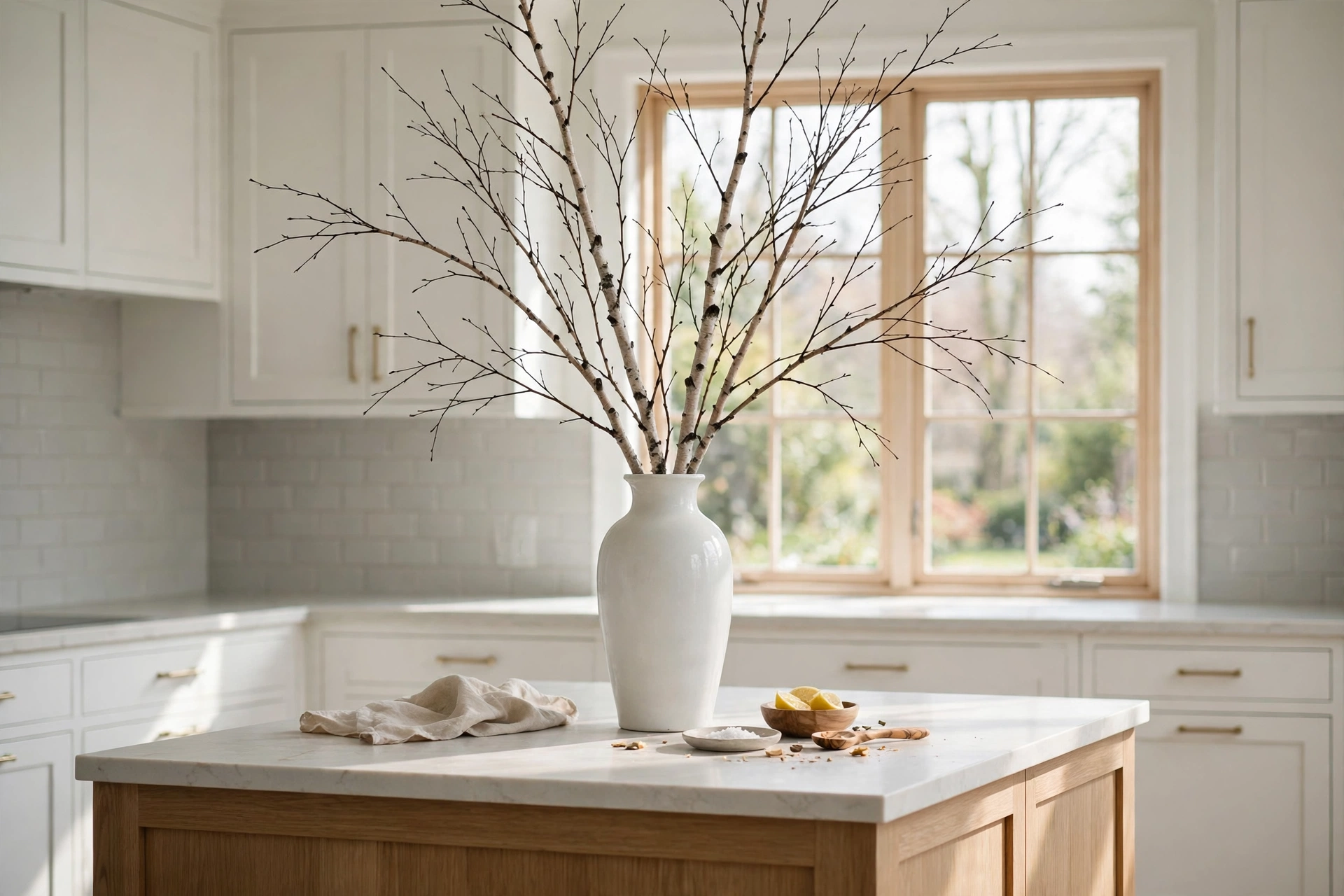
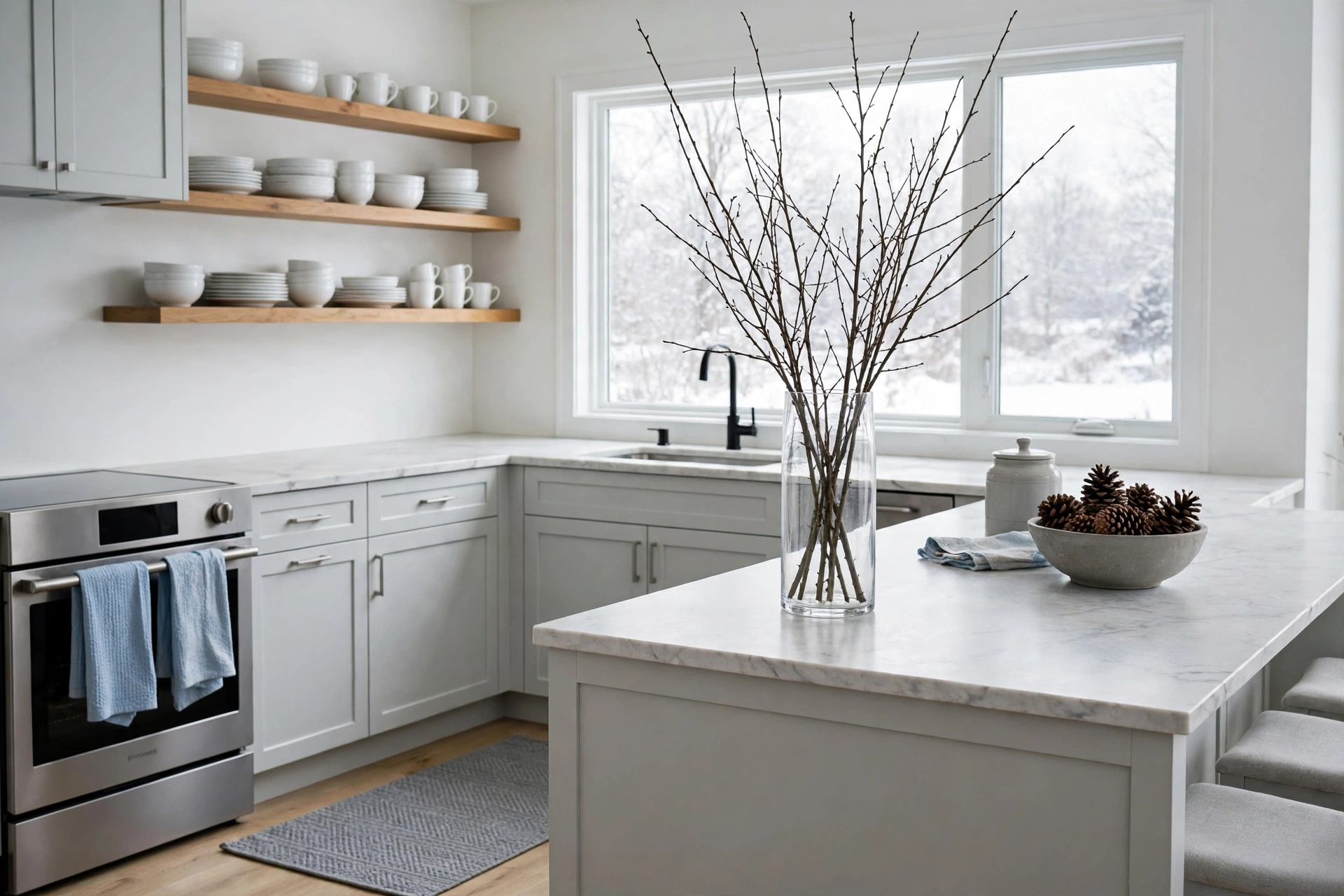
Nothing says January quite like bare branches. A tall vase filled with bare branches — birch, dogwood, curly willow, or just a few graceful branches cut from the yard — gives the kitchen height, structure, and a sculptural shape that no green plant can match in winter. It is the simplest centerpiece in this whole list, and it costs next to nothing.
Pick a tall, narrow vase in white, clear glass, or soft gray, and fill it with five to seven branches of different heights. Trim the bottoms at an angle so they sit flat, fan the branches out so they do not crowd each other, and set the vase on the island or the table where it will not block the worktop. A few branches with tiny buds are even better — a quiet promise that spring is coming, which is exactly the feeling a January kitchen needs.
4. Counter Vignette: Tray, Candle, and Greenery
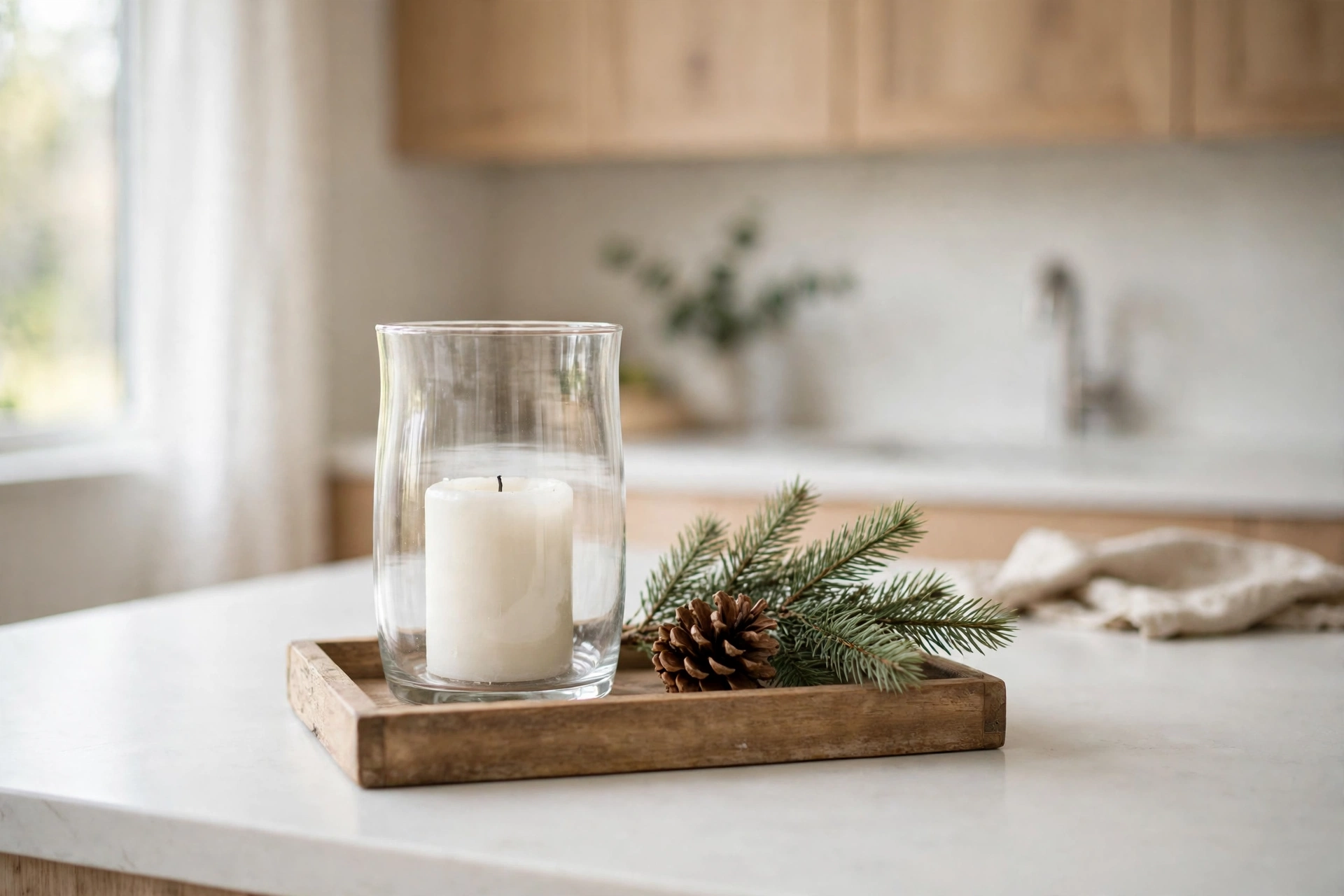
A vignette is a small, deliberate grouping that makes a counter look styled instead of cluttered — and in January, one good vignette beats five scattered decorations. The formula is simple: a tray, a candle, and a sprig of greenery. The tray corrals everything into one neat footprint, the candle adds soft light, and the greenery ties it to the season.
Choose a wooden tray, a marble board, or a simple white tray that fits your counter, and set it near the stove or the sink where you will actually see it. Add a pillar candle or a candle in a glass hurricane — flameless is the safer choice if you cook a lot — then tuck a small sprig of evergreen or a pinecone beside it. That is the whole vignette. The trick is to stop at three things: a vignette with six objects is just clutter with a tray underneath it, and the tray should be small enough that it never blocks your chopping space.
5. Open-Shelf Restyle: White Dishes and One Plant
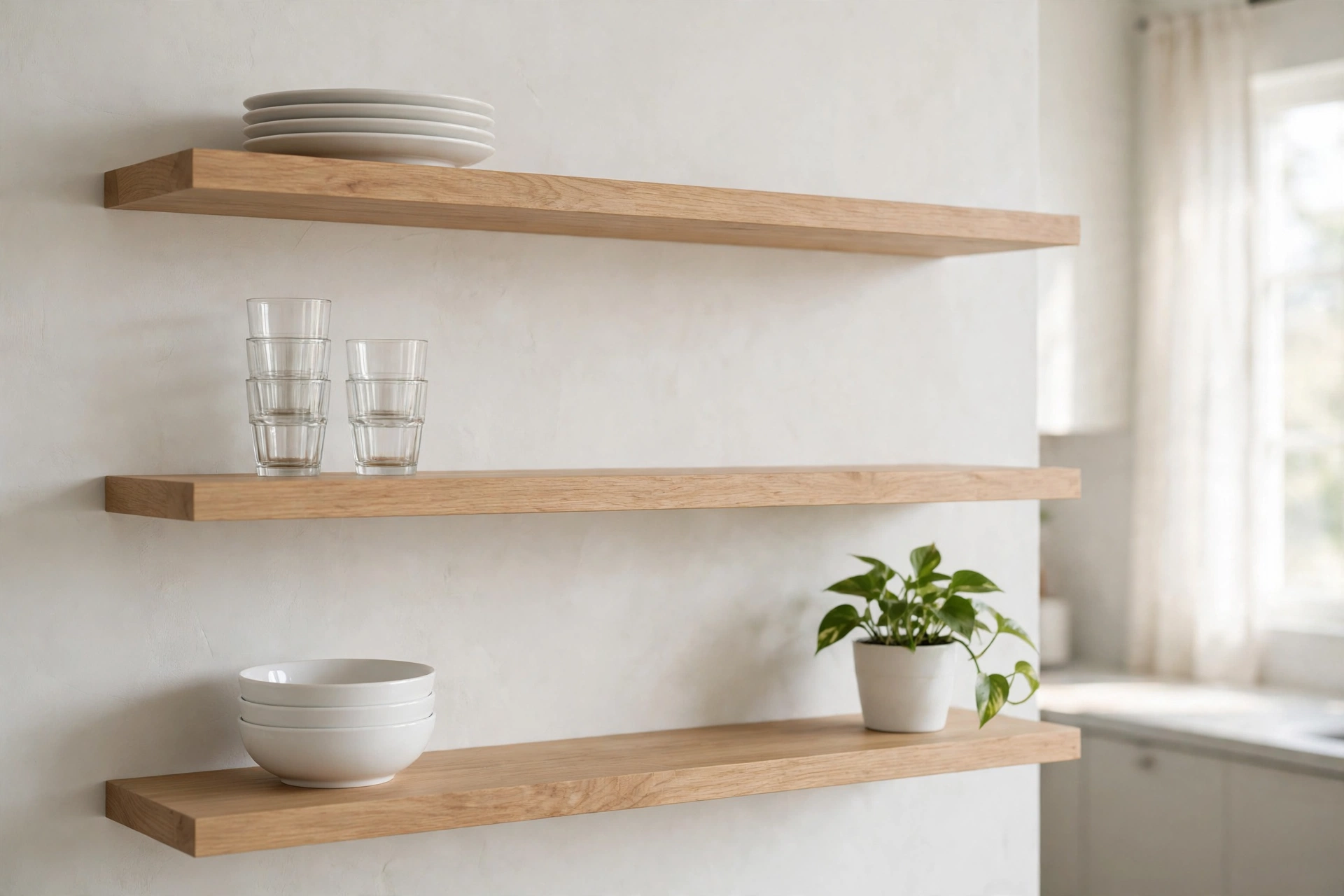
If you have open shelves, January is the month to restyle them — and the rule is the same as everywhere else in the kitchen: less, lighter, calmer. Take everything off the shelves, wipe them down, and put back only white dishes, a few clear glasses, and one plant. The white dishes reflect the pale January light, the shelves look twice as deep as they did when they were packed, and the single plant gives the eye one living thing to rest on.
Stack white plates and bowls in short, even stacks, and group like with like — all the mugs on one shelf, all the bowls on another. Leave breathing room between the stacks: a shelf that is two-thirds full looks styled, while a shelf that is completely full looks like storage. The plant should be small — a pothos, a small herb, or a sprig of eucalyptus in a jar — in a white or gray pot. Do not put the holiday mugs back up, even the pretty ones: red and green mugs will undo the whole palette swap in one glance.
6. Fresh Towels and Oven Mitts
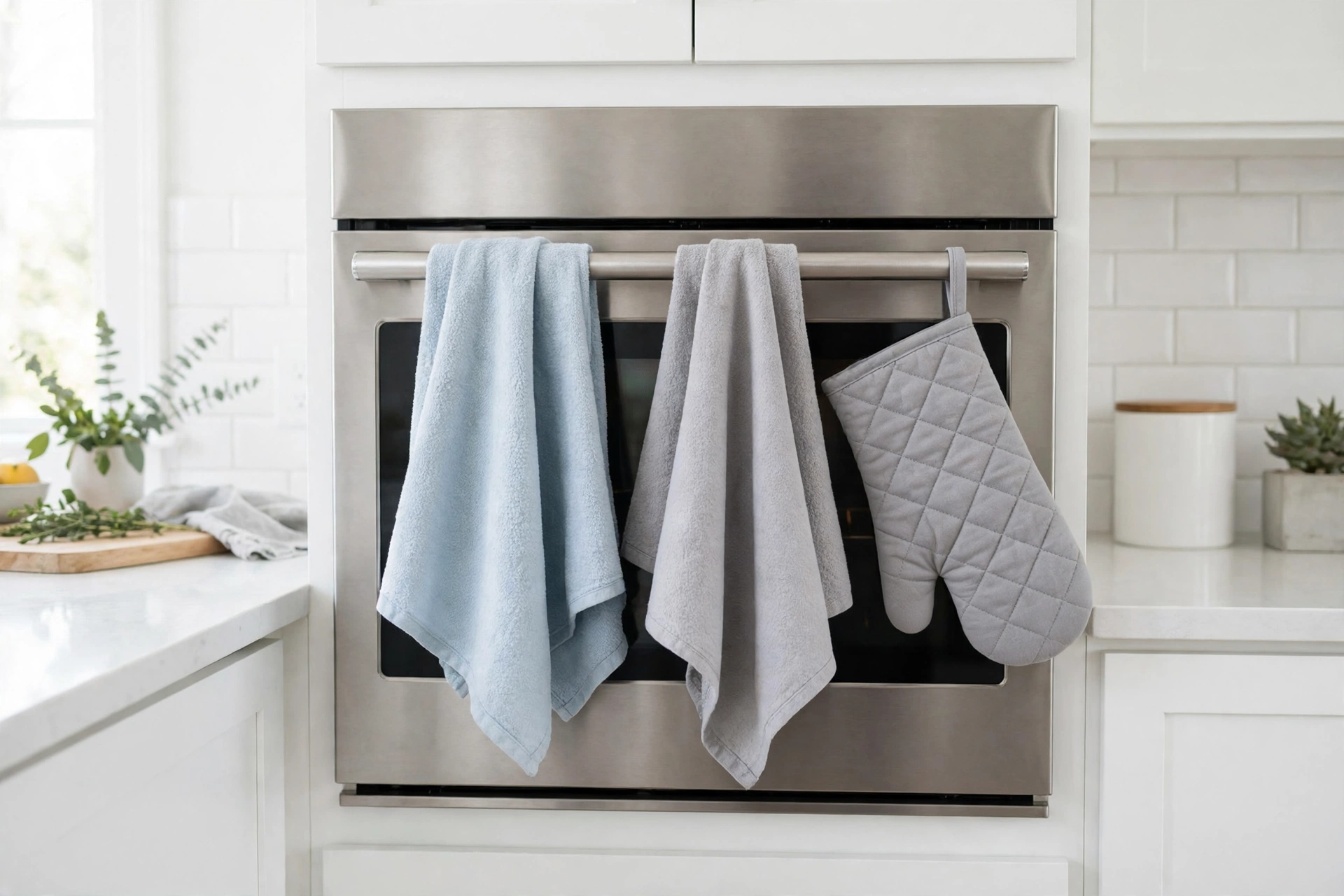
Dish towels and oven mitts are the cheapest decor swap in the kitchen, and they are also the one you touch every day — which makes them the highest-impact change per dollar in this whole list. The red and green holiday towels have done their job; retire them to the storage box and hang fresh ones in the January palette instead.
Pick two or three towels in icy blue, soft gray, and white, and hang them where they are useful: one on the oven handle, one on the dishwasher handle, and one folded over a hook by the sink. Match the oven mitts to the towels — a gray quilted mitt or a white linen one keeps the palette consistent — and retire the stained, faded mitts that have been hanging there since summer. New textiles make the whole kitchen feel clean in a way that scrubbing alone never quite manages, because your hands touch them a dozen times a day.
7. Herb Pots on the Windowsill
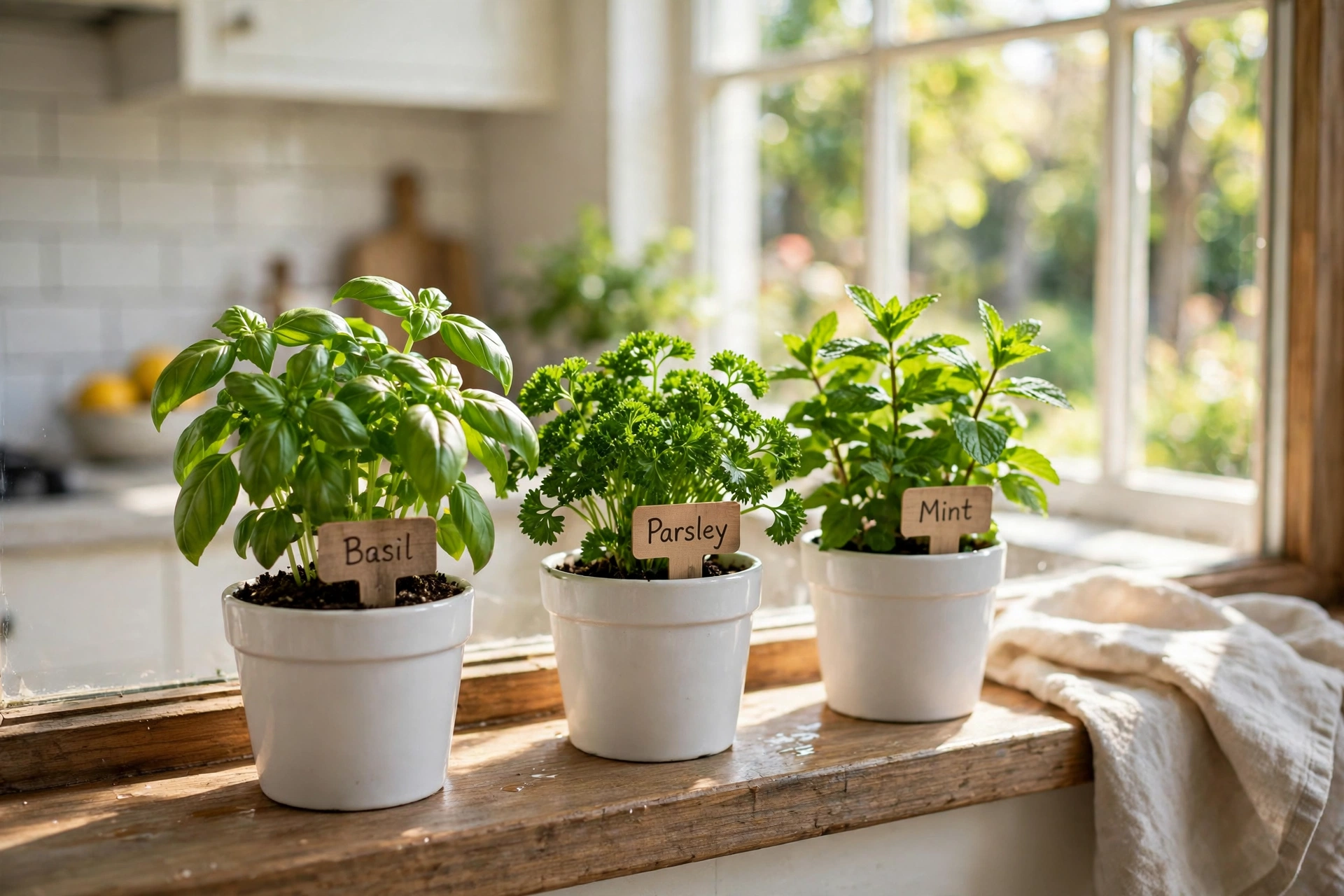
A row of small herb pots on the windowsill is the January kitchen’s answer to a garden: green, alive, useful, and perfectly in season. Basil, parsley, mint, and chives all grow happily on a sunny kitchen windowsill in winter, and they give you fresh herbs for cooking at the exact moment you are most likely to be making soups, stews, and roast dinners.
Use matching pots — white ceramic, soft gray, or simple terracotta — and keep them small, three to five inches across, so they fit the sill without crowding the window. Label each pot with a plain white plant marker or a small wooden tag, and group them in a shallow tray so watering does not drip onto the sill. If you do not cook with fresh herbs, grow one pot of mint for tea and one of rosemary for roasting, and let that be enough. Two thriving pots beat five leggy ones.
8. Cutting-Board Wall Display
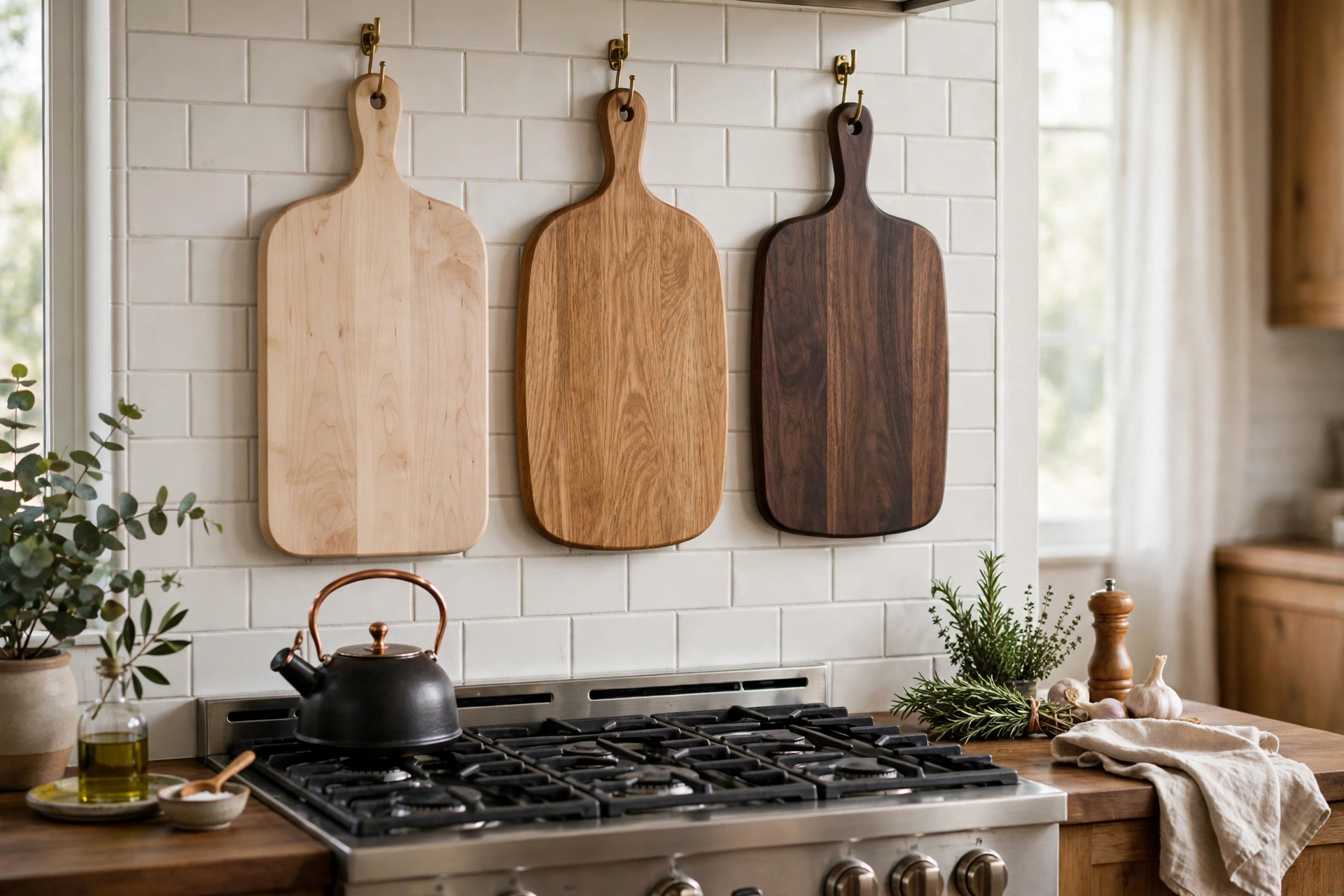
Cutting boards are beautiful objects that most kitchens hide in a drawer — January is the time to hang them up. A wall display of wooden cutting boards in different shapes, sizes, and wood tones turns a blank stretch of wall into a warm, practical feature, and it frees up drawer space at the same time.
Pick a wall near the stove or the prep area, and hang three to five boards on simple hooks, picture ledges, or a rail with S-hooks. Vary the shapes — one round, one long rectangle, one paddle-shaped — and let the wood tones do the decorating: pale maple, warm oak, and deep walnut side by side look intentional without any extra color. Keep the boards you actually use at the lowest hook, so the display is a working wall, not a museum. Wipe the boards with food-safe mineral oil once a month to keep the wood from drying out.
9. Statement Pendant Light
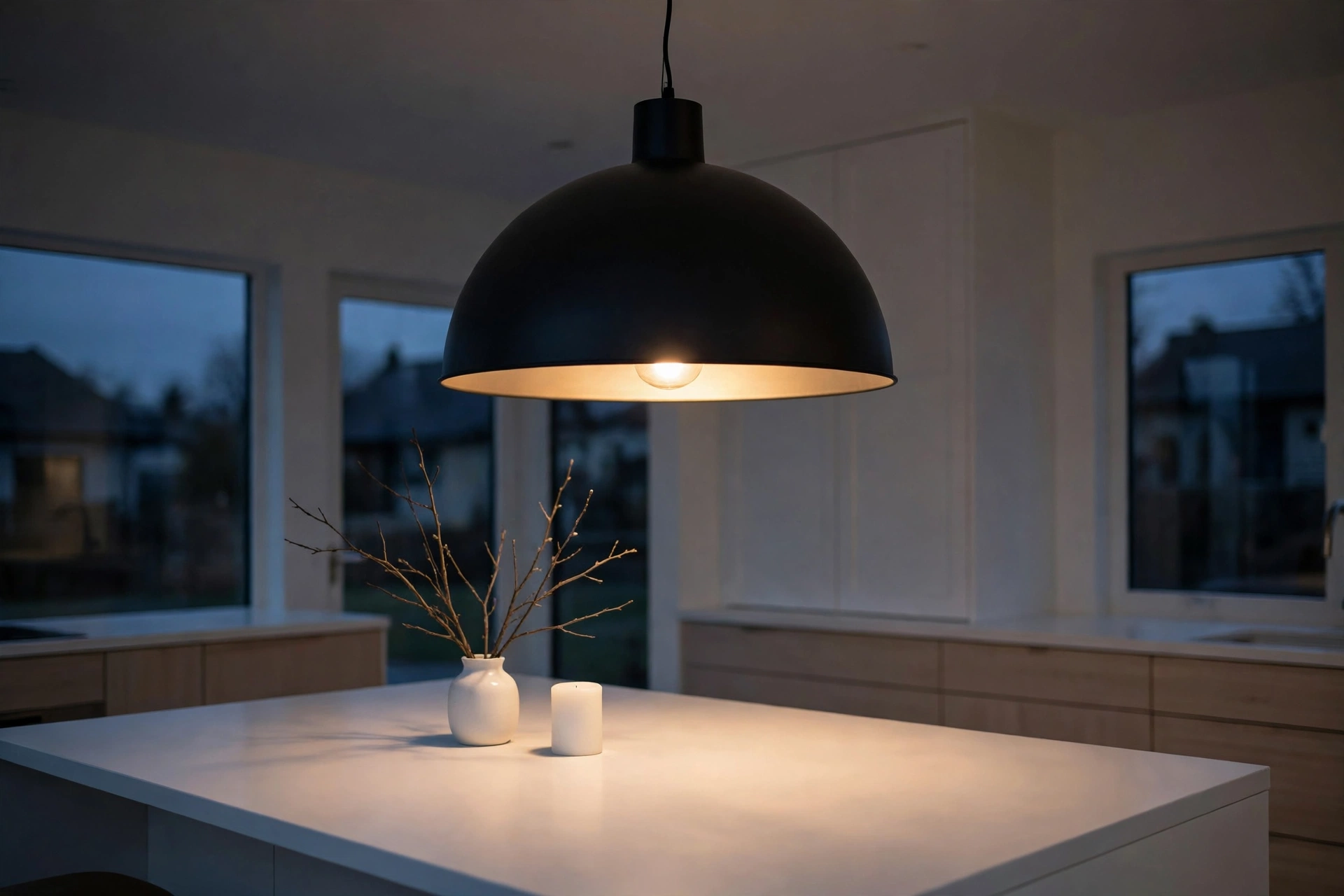
If one thing in the kitchen deserves to be a statement, it is the light over the island or the table. A statement pendant light — a large glass globe, a matte black dome, a brass lantern, or a cluster of small pendants — changes the whole room after dark, and in January, when the days are short and the evenings are long, the kitchen light matters more than it does in any other month.
Choose a pendant that fits the scale of the space: one large pendant over a small island, or two or three smaller ones spaced evenly over a long island. Hang it low enough to feel intimate — about thirty to thirty-six inches above the countertop — but high enough that nobody bumps their head. Warm white bulbs, around 2700K, keep the light cozy rather than clinical, and a dimmer switch is worth every penny: full brightness for cooking, low and warm for dinner.
10. Rug Swap: A Washable Runner
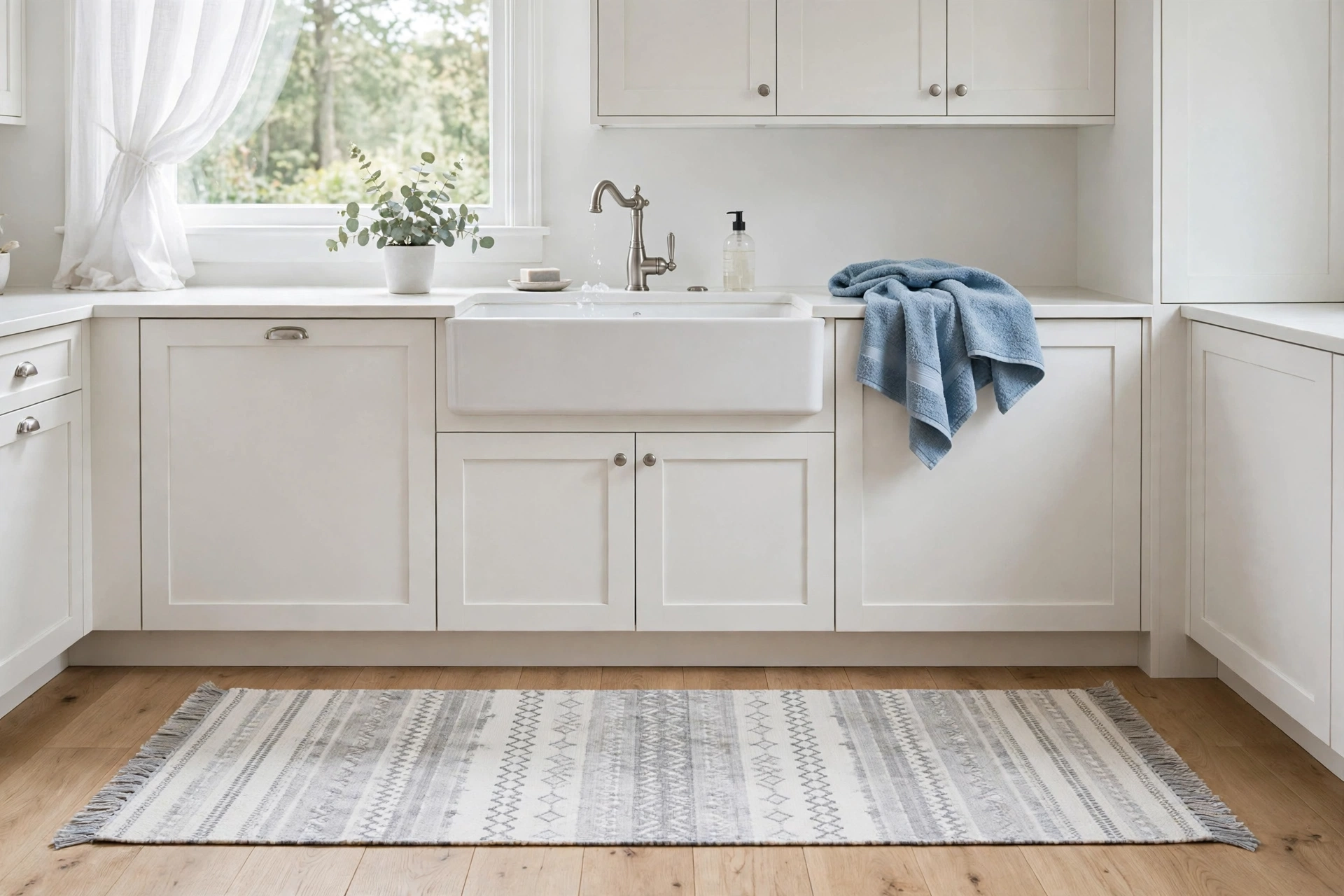
The rug in front of the sink takes more abuse than any other textile in the house — water, crumbs, muddy shoes, and dropped food — and by January the holiday rug has usually had enough. Swap it for a washable runner in the January palette, and the floor becomes part of the reset instead of the one thing you forgot.
Look for a runner that is machine-washable, low-pile, and non-slip: icy blue, soft gray, or a simple gray-and-white pattern that hides crumbs between washes. Measure the space in front of the sink or the stove and buy a runner that fits it without bunching up against the cabinets — a runner that is too long curls at the ends and becomes a trip hazard. Keep the pattern calm: a busy pattern fights with the pale palette, while a simple stripe, a subtle geometric, or a solid color lets the rest of the kitchen do the talking.
11. Fruit Bowl as Decor
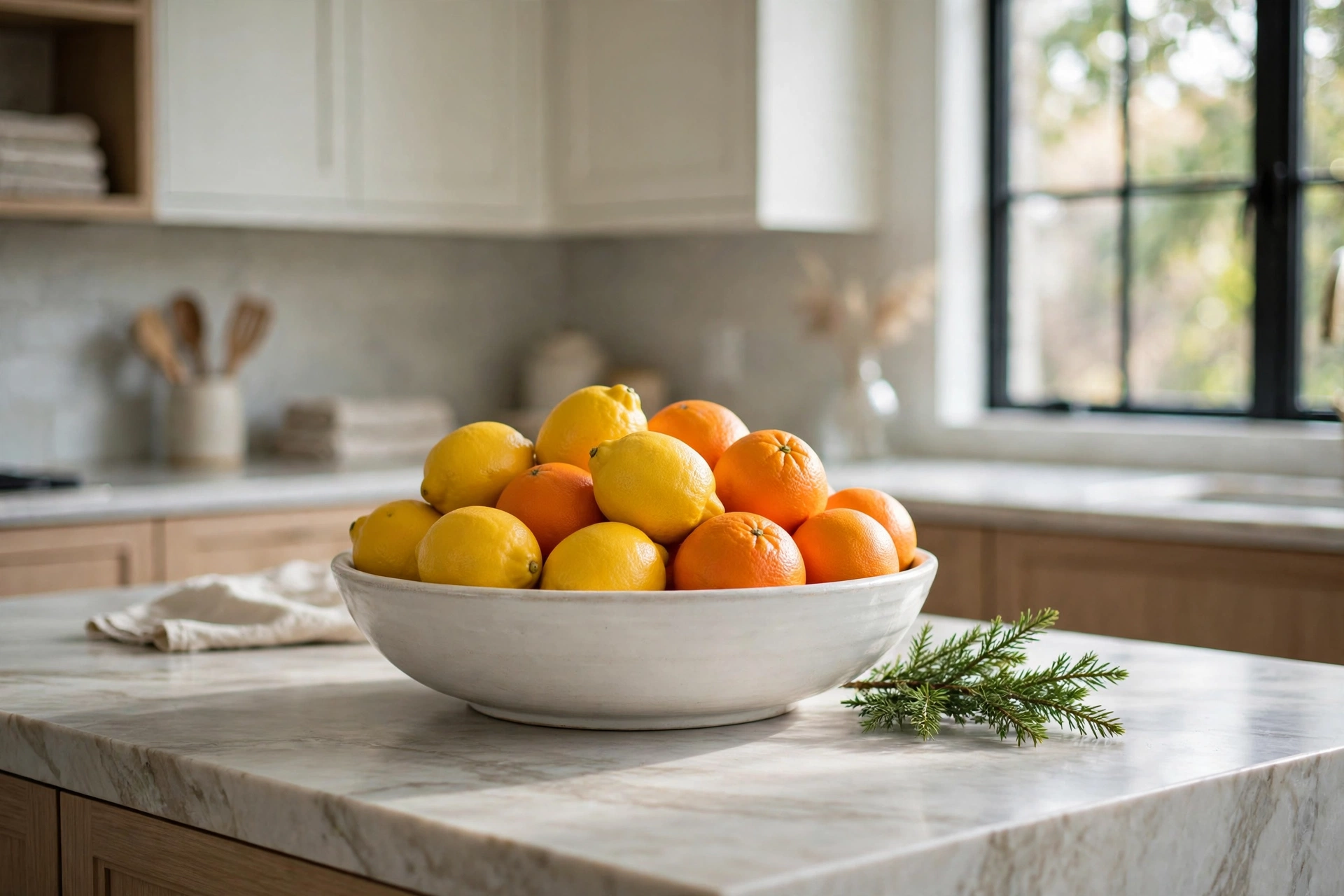
A bowl of fresh fruit is the oldest kitchen decoration there is, and in January it does double duty: it is a centerpiece and a snack. A wide, shallow bowl filled with lemons, oranges, apples, or green pears brings a single note of fresh color into the pale winter palette, and it smells good, too — citrus on the counter makes the whole kitchen feel clean.
Choose a bowl that suits the room — white ceramic, clear glass, or pale wood — and fill it with one kind of fruit, or two at most. A bowl of lemons alone looks intentional and bright; a bowl of mixed fruit in five colors looks like a grocery bag that got emptied onto the table. Set the bowl on the island or the table where it will be seen and reached for, and refill it as the fruit gets eaten. In January, citrus is at its best, and a bowl of oranges with a sprig of evergreen beside it is the simplest winter centerpiece you can make.
12. Coffee and Tea Station Restyle
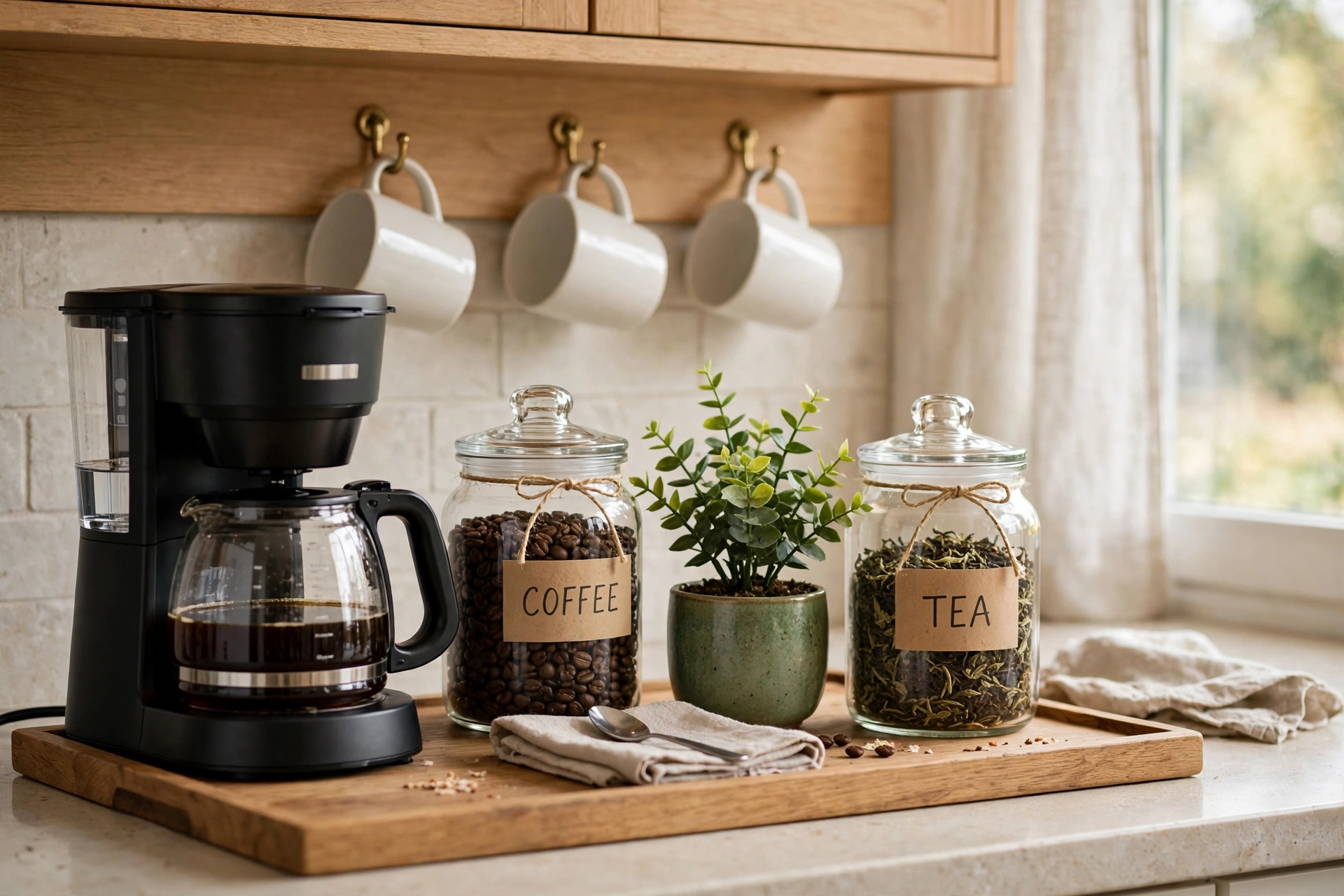
The coffee and tea station is the first thing you use every morning, so it deserves to feel like a fresh start in January. Clear the whole station — every mug, jar, spoon, and box — wipe the surface down, and rebuild it in the winter palette: white mugs, clear glass jars, one small plant or a sprig of evergreen, and nothing else.
Put the coffee maker or kettle at the back, the mugs on hooks or in a short stack at the front, and the coffee, tea, and sugar in matching glass jars with simple labels. A small wooden tray under the jars keeps spills contained and makes the whole station look like one deliberate grouping instead of a row of unrelated things. Retire the holiday mugs to the cabinet and bring out the plain white or icy blue ones.
13. Chalkboard With a January Quote

A small chalkboard in the kitchen is a January tradition worth keeping: one short quote, changed once a month, in neat white chalk on a black board. It is the cheapest wall decor in this list, it takes five minutes to change, and it sets the tone for the whole month every time you walk past it.
Pick a quote that fits January — something about fresh starts, slow mornings, or the quiet of winter — and write it in your best handwriting, or use a chalk marker for cleaner lines. Hang the board where you will see it while you cook: by the stove, on the pantry door, or leaning on the counter against the backsplash. Keep the board small — a twelve-by-eighteen-inch board is plenty — and keep the quote short, one or two lines at most, so it reads at a glance. Change the quote on the first of the month and wipe the board clean before you write the new one.
14. Decluttered Counters: Daily-Use Appliances Only
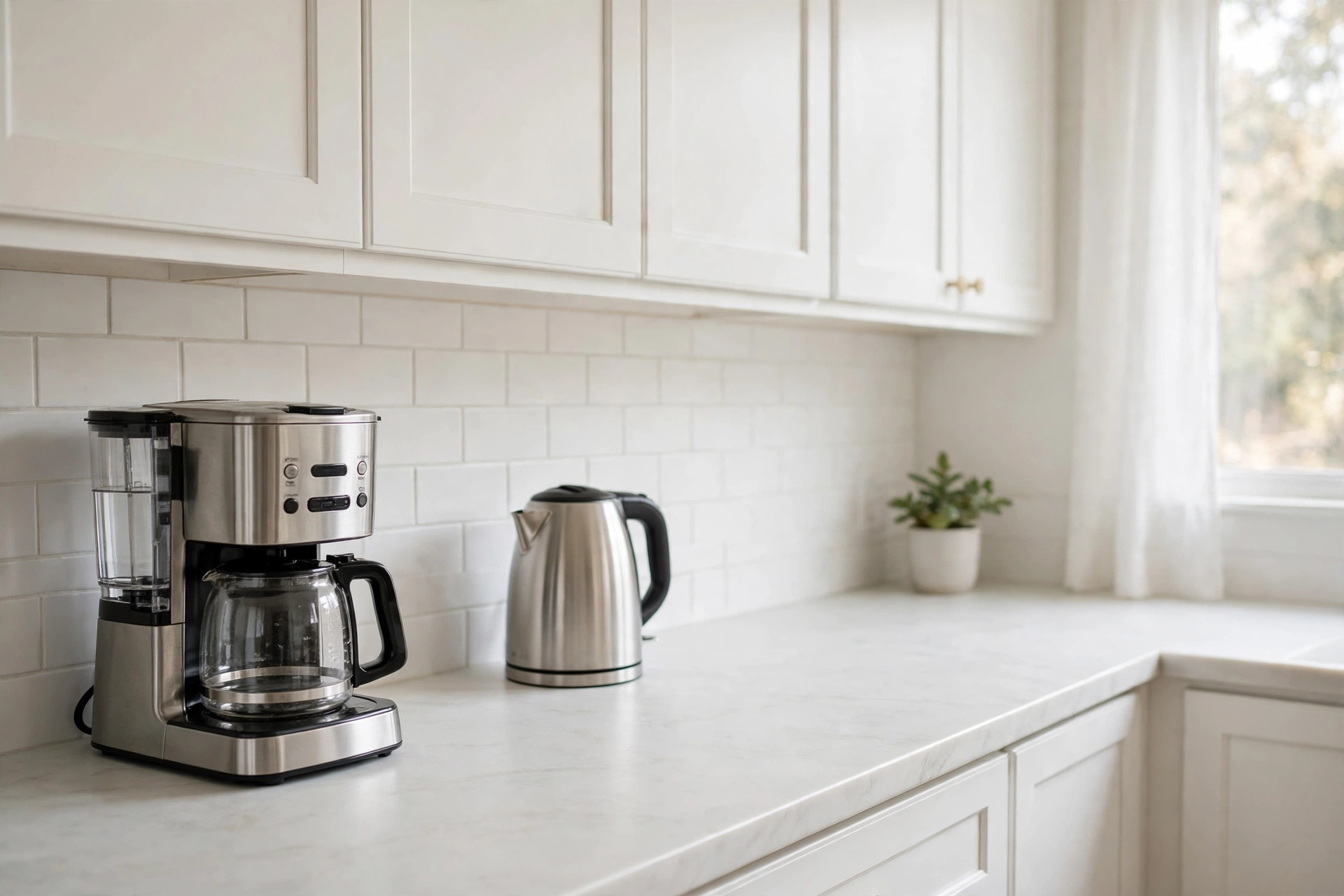
The most powerful January decor idea is not something you add — it is something you take away. Clear counters make a kitchen look bigger, brighter, and calmer than any new decoration can, and January is the month to enforce the rule: only the appliances you use every day stay on the counter. Everything else goes into a cabinet.
The daily-use list is short: the coffee maker, the kettle, and maybe the toaster. The blender, the food processor, the stand mixer, and the waffle iron — all wonderful, all used once a week at most — belong in a cabinet or on a pantry shelf, where they are easy to reach but out of sight. Keep the rule for a month and see if you miss anything. Most people find they use the stored appliances just as often — it takes ten seconds to lift a blender out of a cabinet — and they enjoy the clear counters every single day.
15. One Fresh Flower Bunch a Week
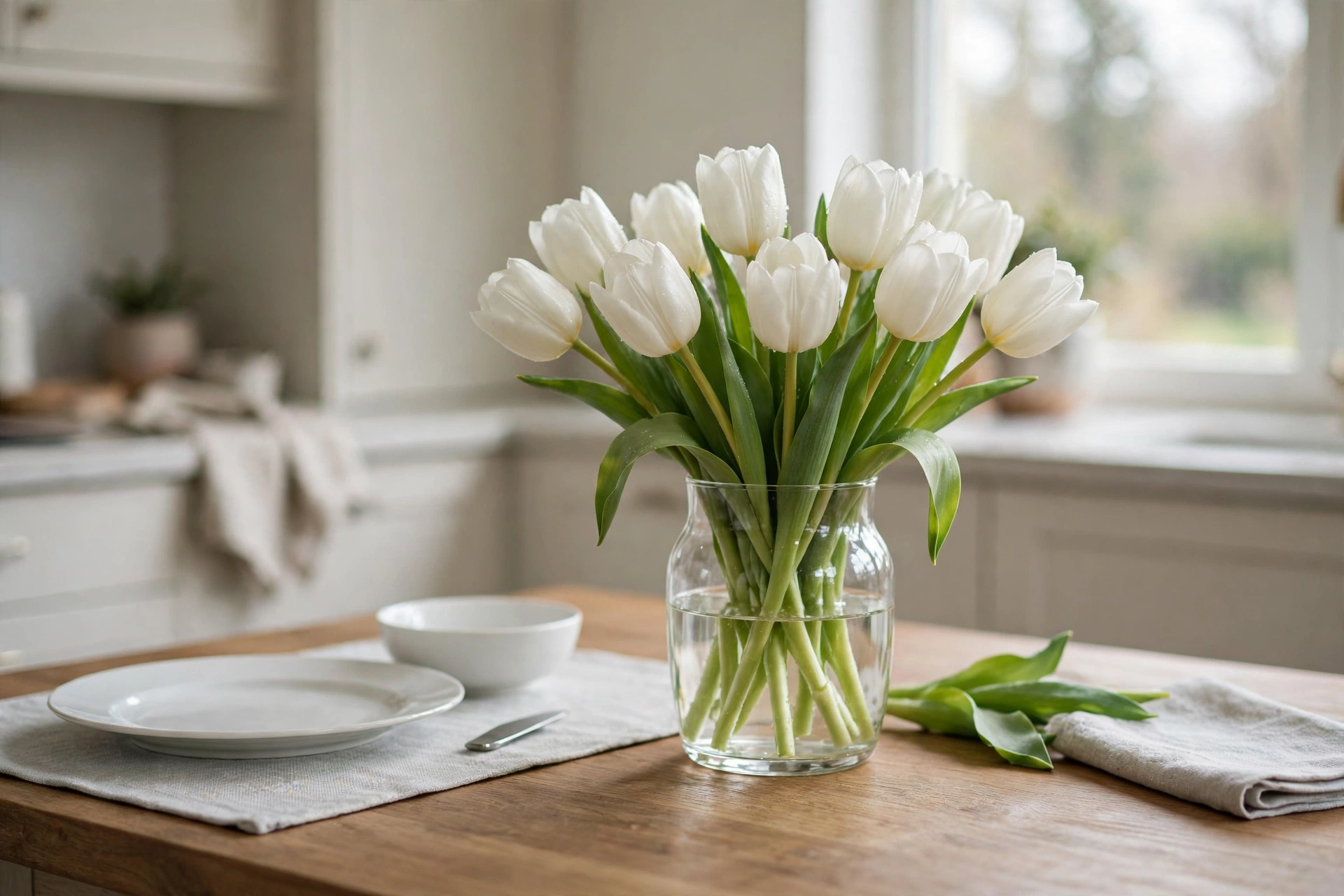
The last idea is the simplest and the most joyful: buy one bunch of fresh flowers every week in January. A bunch of white tulips, pale blue hydrangeas, white daisies, or even a few stems of eucalyptus in a jar costs less than a takeout lunch, and it is the one decoration in the kitchen that is guaranteed to be fresh, because you replace it before it ever gets tired.
Pick the flowers up with the weekly groceries and put them straight into a simple vase — clear glass, white ceramic, or a plain jar — on the table, the island, or the windowsill. Trim the stems at an angle, change the water every two or three days, and pull out any stem that starts to droop. One bunch, one vase, one spot: that is all it takes to make the kitchen feel alive in the darkest month of the year. Make it a habit, not a one-off — a flower habit is the January version of a New Year resolution that actually sticks.
Frequently Asked Questions
How do I decorate my kitchen for January after Christmas?
Take down everything red, green, glittery, or ornament-covered, and rebuild the room in a calm winter palette of icy blue, gray, and white. Keep the plain winter greenery — pinecones and bare evergreen — and add simple vignettes, fresh textiles, and soft light. These New Year kitchen decor ideas work as a reset, not a redecoration: swap the palette, clear the counters, and add one fresh thing a week, like flowers or herbs, to keep the room feeling new all month.
What colors work best for New Year kitchen decor ideas?
The January palette is icy blue, soft gray, and white, with wood tones and a little green from plants and evergreen as the only warm notes. Icy blue is the accent — towels, a vase, a candle — while gray and white cover the big surfaces. This palette is what makes New Year kitchen decor ideas feel like a fresh start instead of a leftover Christmas display: no red, no green ornaments, no gold glitter, just calm winter colors that reflect the pale January light.
Can I keep my Christmas garland up in January?
You can keep the greenery, but not the Christmas version of it. Strip the garland back to plain evergreen — take off the ornaments, ribbons, berries, and bows — and it becomes a winter garland that looks right all through January. These New Year kitchen decor ideas keep pinecones and plain evergreen because they belong to winter, not to Christmas.
What is the cheapest way to refresh my kitchen for the New Year?
Swap the dish towels and oven mitts, clear the counters down to daily-use appliances only, and buy one bunch of fresh flowers. Those three changes cost less than twenty dollars and change the room more than any single purchase. These New Year kitchen decor ideas are built around low-cost swaps — textiles, a washable runner, a fruit bowl, a chalkboard quote — because a January reset should feel light on the wallet as well as light on the eyes.
How do I keep my January kitchen decor from looking bare?
Layer texture instead of color: a knit towel, a wooden tray, a linen runner, a ceramic vase, and a living plant all add warmth without adding clutter. Keep one vignette on the counter, one plant on the shelves, and one bunch of flowers on the table — three small focal points are enough. These New Year kitchen decor ideas avoid the bare look by giving every surface one deliberate thing, and leaving the rest of the space empty on purpose, so the room feels calm rather than unfinished.
Related Reading
- Christmas Kitchen Decor Ideas
- New Year Kitchen Organization Ideas
- Pantry Organization Ideas
- How to Clean a Dishwasher
- How to Declutter Your Home Room by Room
- Laundry Room Organization Ideas
Conclusion
January is the kitchen’s quiet month, and these New Year kitchen decor ideas are built for it: a calm palette of icy blue, gray, and white, plain winter greenery instead of ornaments, a few small vignettes, cozy textiles, soft light, and one fresh bunch of flowers a week. Start with the palette swap this weekend — the kitchen will feel bigger, brighter, and ready for the year ahead. A fresh January kitchen is not about buying more decor; it is about choosing less, choosing calm, and letting the season do the decorating.