15 Laundry Room Organization Ideas That Make Wash Day Easier
Introduction
The best laundry room organization ideas start with one decision: give every step of wash day its own spot. When sorting, washing, drying, folding, and putting away each have a place, the room stops being a pile of clean clothes waiting for someone else to deal with it — and wash day takes less time, because nothing is ever lost or in the way.
These fifteen laundry room organization ideas work in a dedicated laundry room, a closet, or a hallway nook, and most of them cost very little. The expensive part of a laundry room is not the storage — it is the time lost to a room that fights you. If the rest of the house needs the same treatment, our small closet organization ideas use the same zone-and-bin thinking, and our declutter guide clears the way before you organize anything.
1. Zone the Room by Task — Sort, Wash, Dry, Fold, Put Away
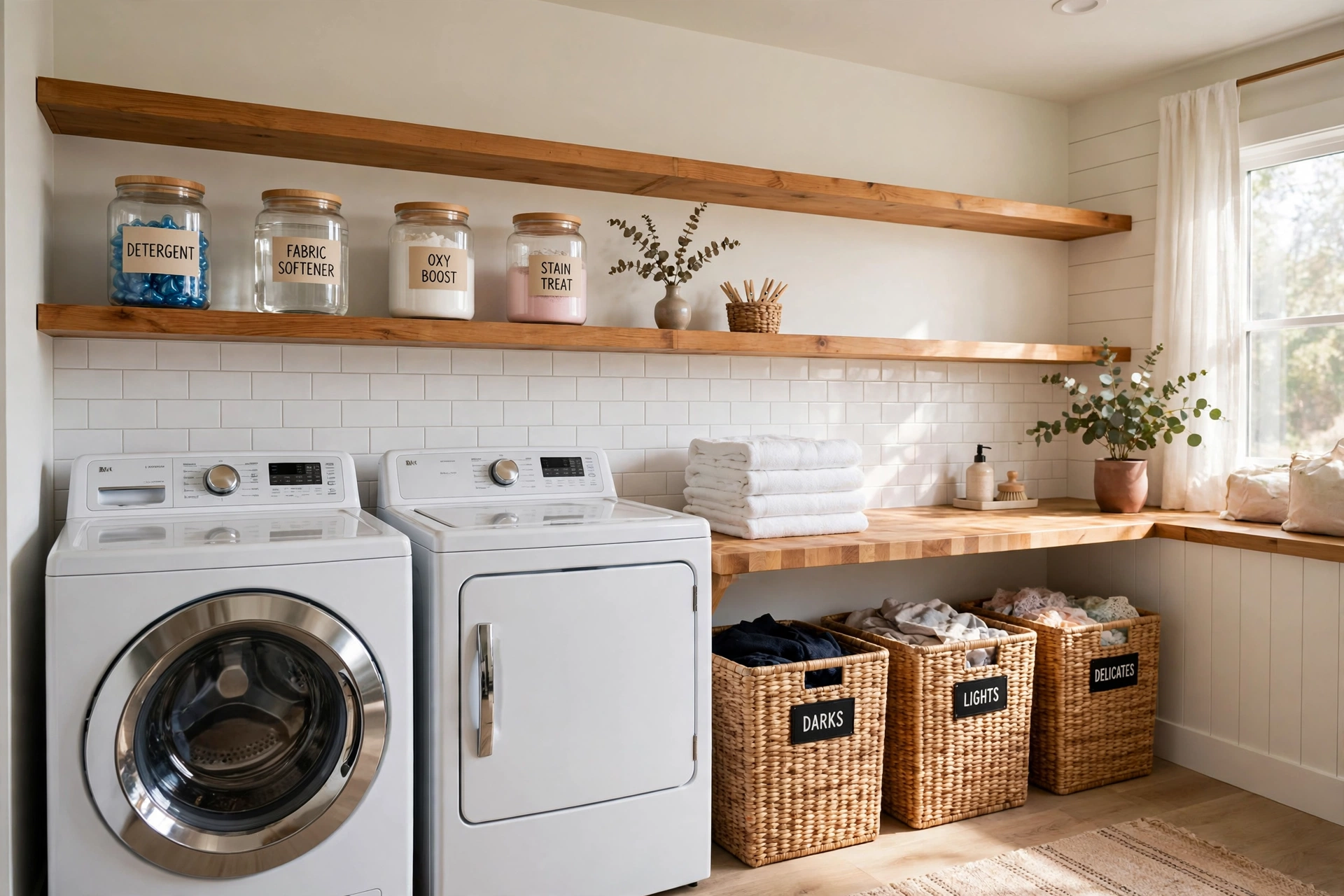
A laundry room works when it follows the order of the work: sort, wash, dry, fold, put away. Walk the path a load actually takes and give each step a place, even if that place is just one shelf or one hook. Dirty clothes land in the sorter, the washer and dryer sit in the middle, clean clothes get folded on the counter, and folded stacks go straight into a basket bound for the right room.
Zoning matters most in a small room, because every step happens in the same few square feet. When the steps blur together, clean clothes end up on the same surface as dirty ones. Tape the zones on the floor with painter’s tape for a week while you test the layout — if you keep crossing the room to reach the dryer, move the folding spot closer to it.
2. Shelves Above the Machines
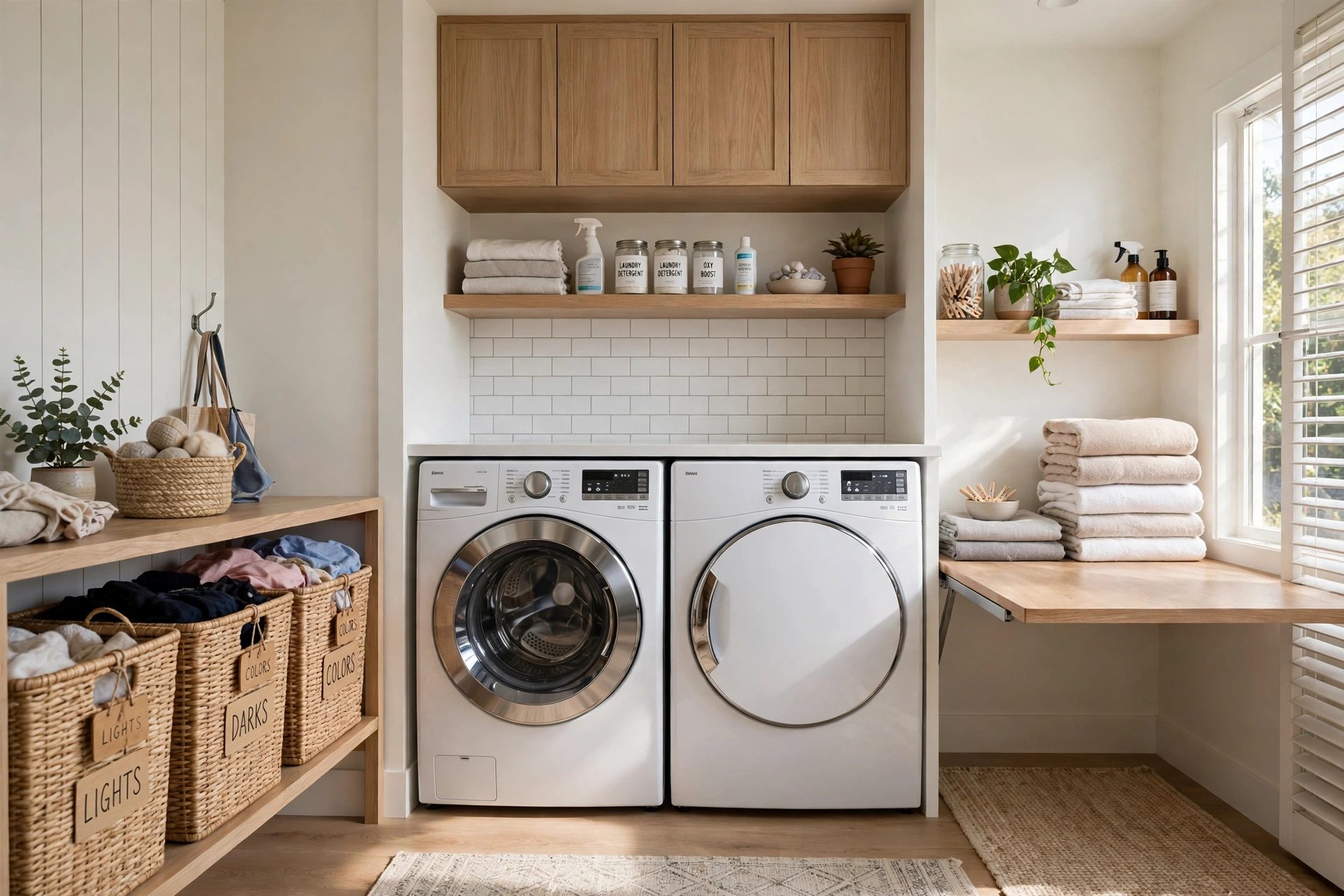
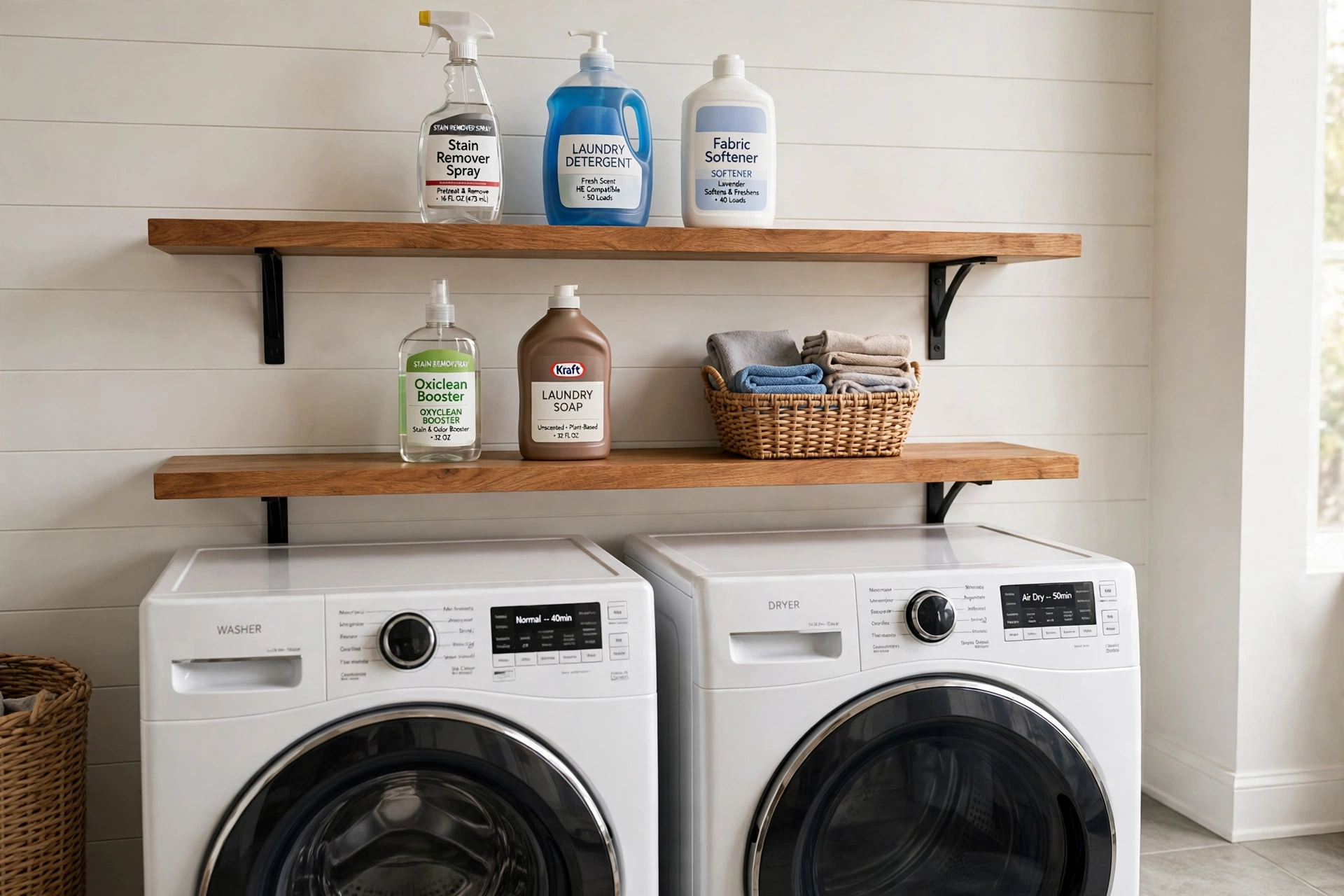
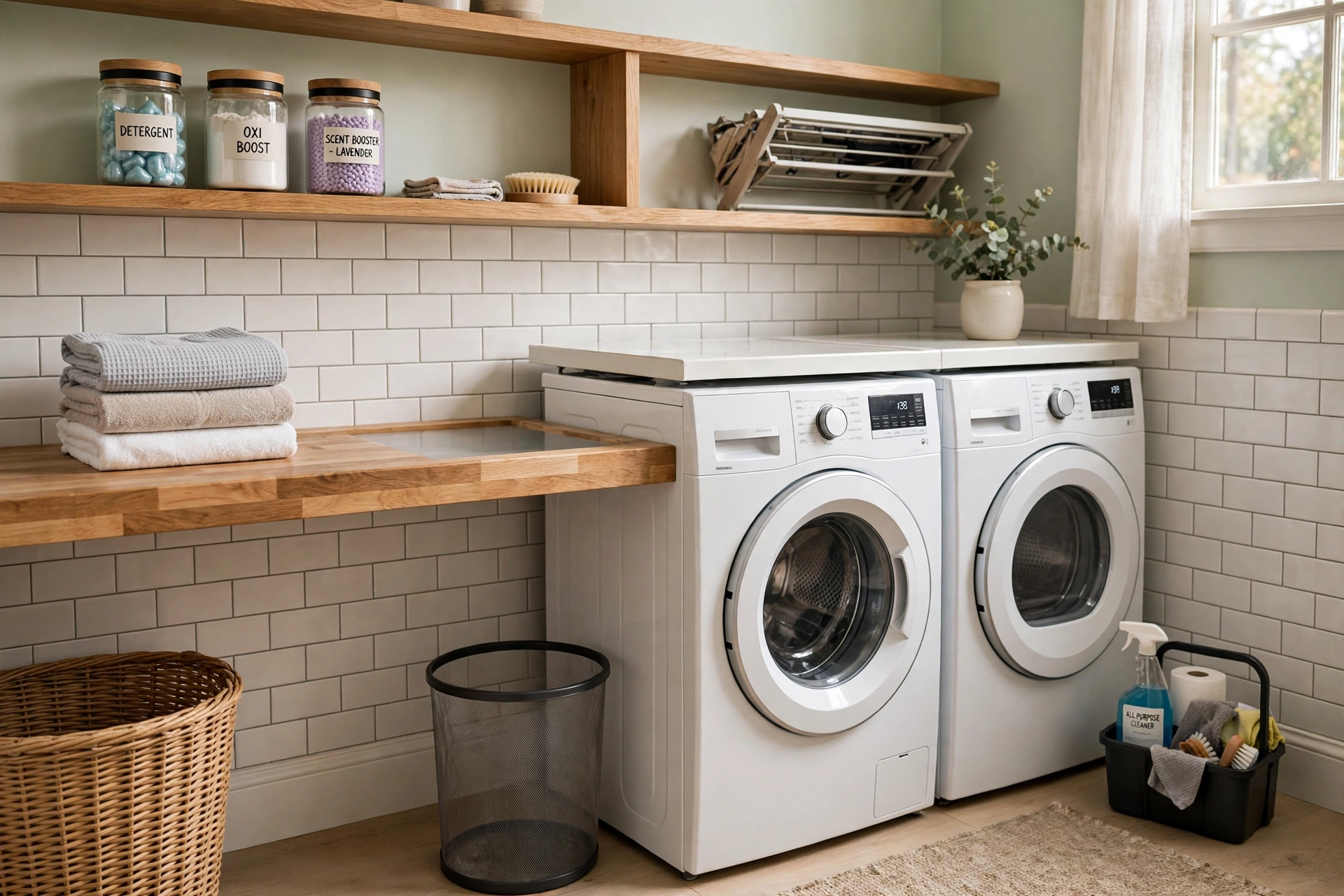
The wall above the washer and dryer is the most useful storage in the room, and in most homes it is empty. Mount two sturdy shelves about 12 inches deep, high enough to clear the washer lid on a top-loader — usually at least 18 inches above the machine. Use them for detergent, stain remover, and the supplies you reach for every load.
Keep the everyday items on the lower shelf and the backstock on the upper one, so you are never digging behind a bottle you need. Solid wood or melamine shelves hold heavy detergent jugs without sagging; wire shelves let dust fall through but can tip small bottles. If the wall is drywall, anchor into studs — a shelf full of detergent is heavier than it looks.
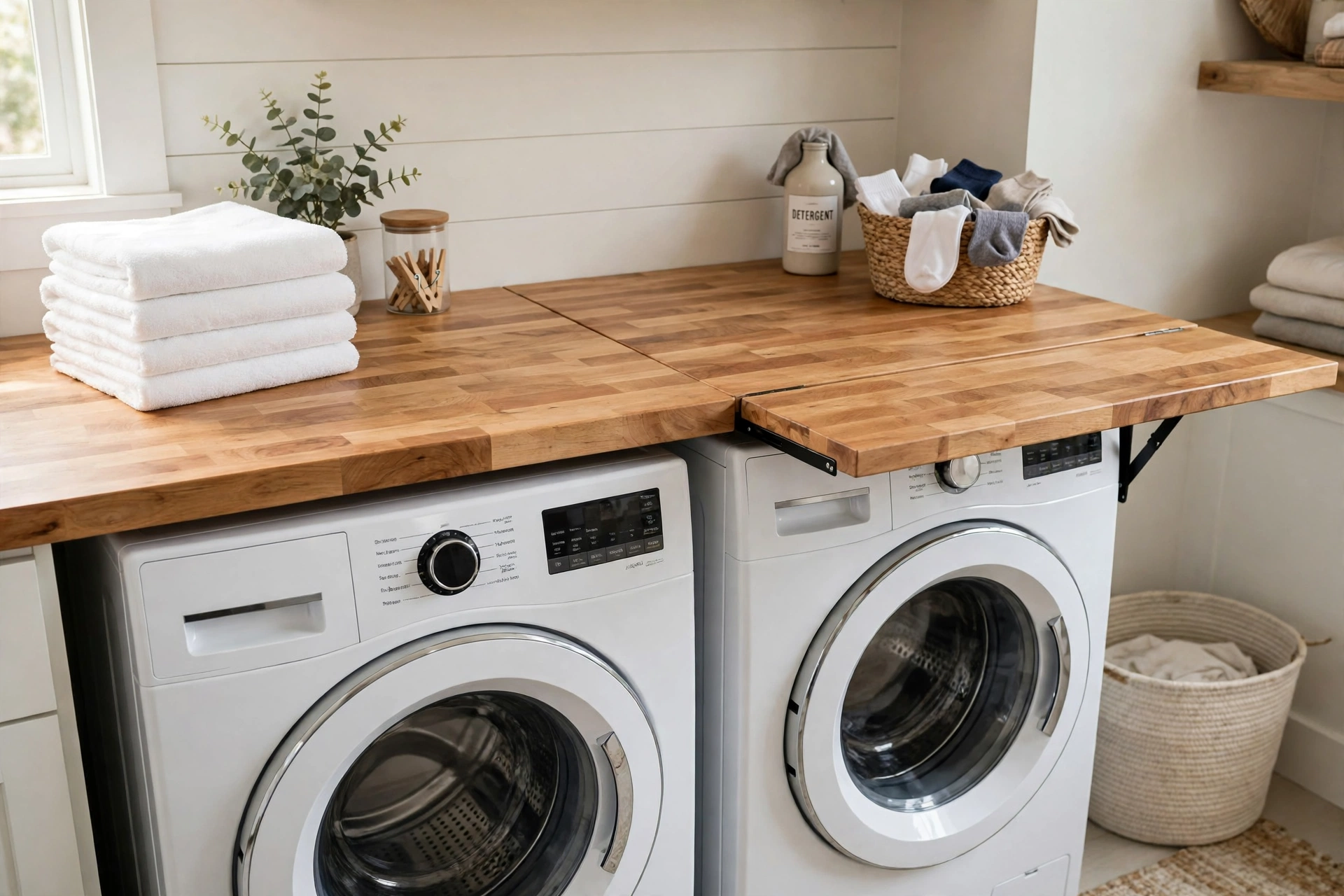
3. A Folding Counter Over Front-Loaders
Front-loaders have a flat top, which is a folding counter waiting to happen — if you cover it. A simple plywood or butcher-block slab laid across both machines, about 28 to 30 inches deep, turns dead space into a folding station at exactly the right height. Sand the edges smooth and seal the wood so a damp towel does not stain it.
The counter only works if it stays clear. Give it one rule: nothing lives on it except what is being folded right now. A small basket at one end catches the single socks and stray items, and everything else goes straight to a bin. If your machines are different heights, shim the slab level with small wood blocks underneath.
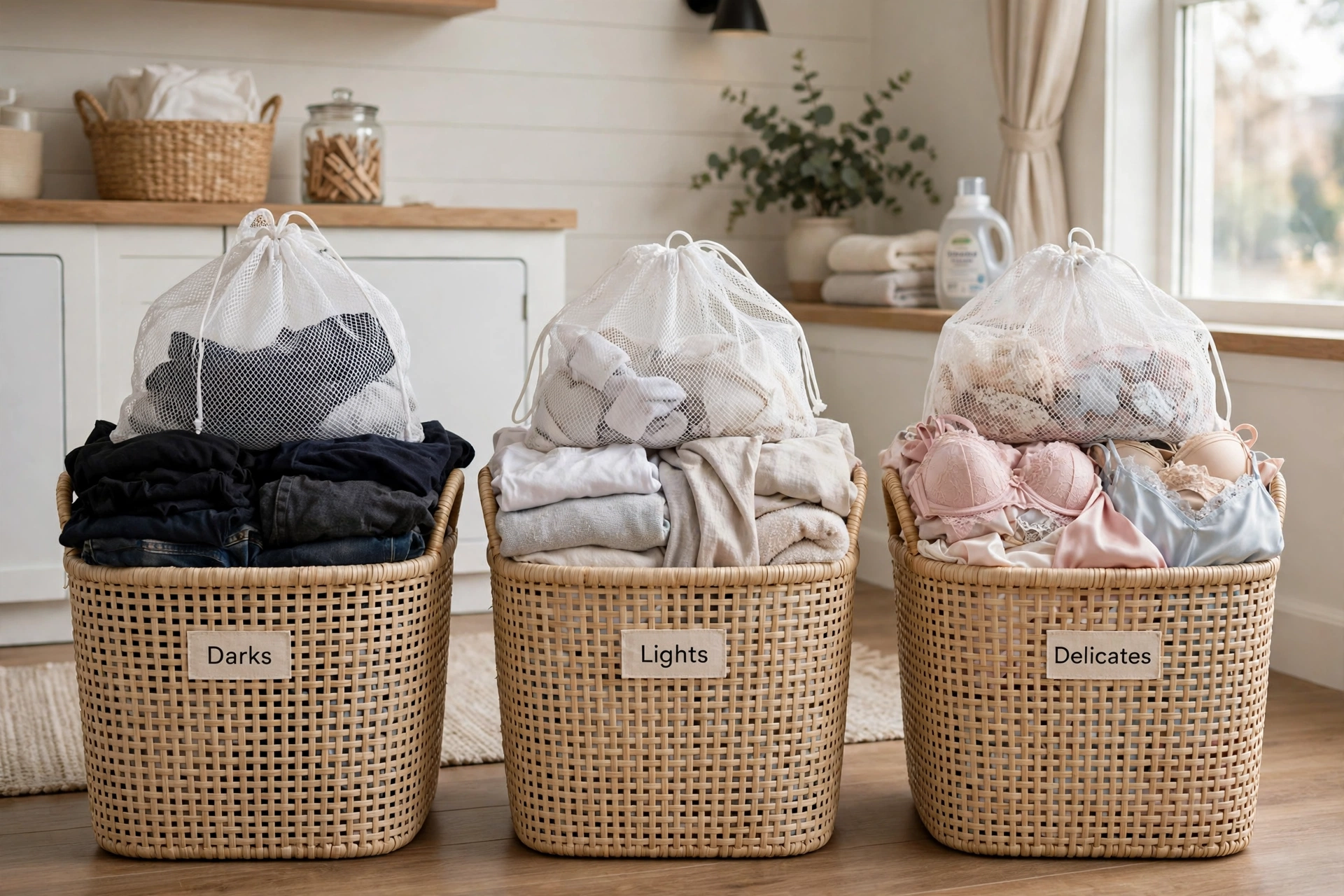
4. Labeled Bins by Load Type
Sorting works when the bins do the thinking. Set up three labeled bins — darks, lights, and delicates — and everyone in the house sorts as they undress instead of dumping everything in one hamper. When a bin is full, that load goes in the wash, and the guesswork disappears.
Use bins with lids or liners so a full bin does not spill, and label them in big, clear words — or pictures, for kids who cannot read yet. Mesh laundry bags inside the bins keep delicates separate without a second sorting step. If floor space is tight, stack the bins on a shelf unit or slide them under a counter instead of lining them up along the wall.
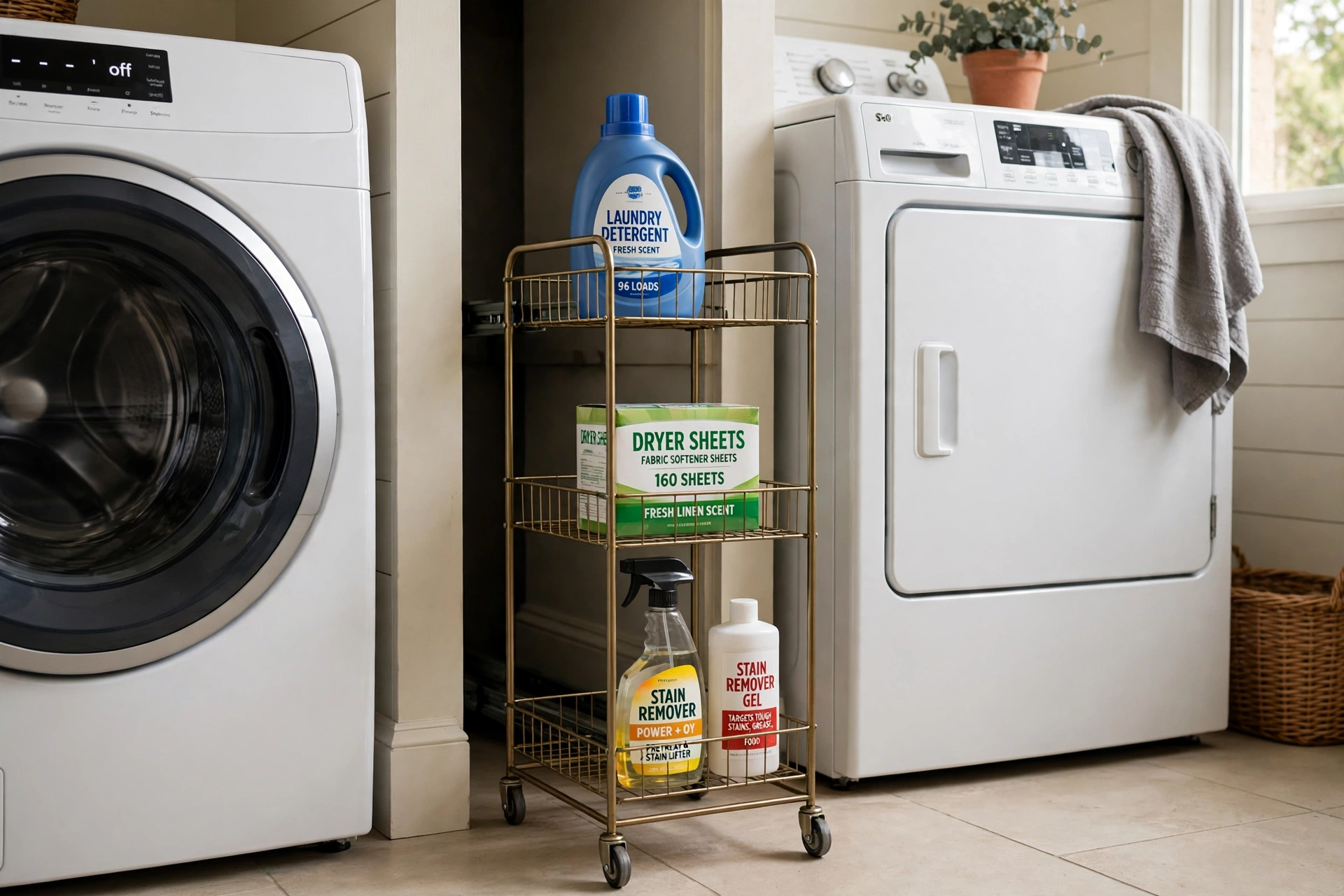
5. A Slim Rolling Cart in the Gap
The narrow gap between the washer and dryer — or between a machine and the wall — is wasted space in almost every laundry room. A slim rolling cart, usually 5 to 7 inches wide, slides into that gap and holds detergent, dryer sheets, stain sticks, and the odds and ends that otherwise pile up on the machines.
Choose a cart with at least three tiers and small wheels that roll smoothly on your floor. Keep the heaviest items on the bottom tier so it does not tip when you pull it out. When the cart is pushed back in, the room looks tidy; when you need something, it rolls out in one second. It is the cheapest storage upgrade in this whole list.
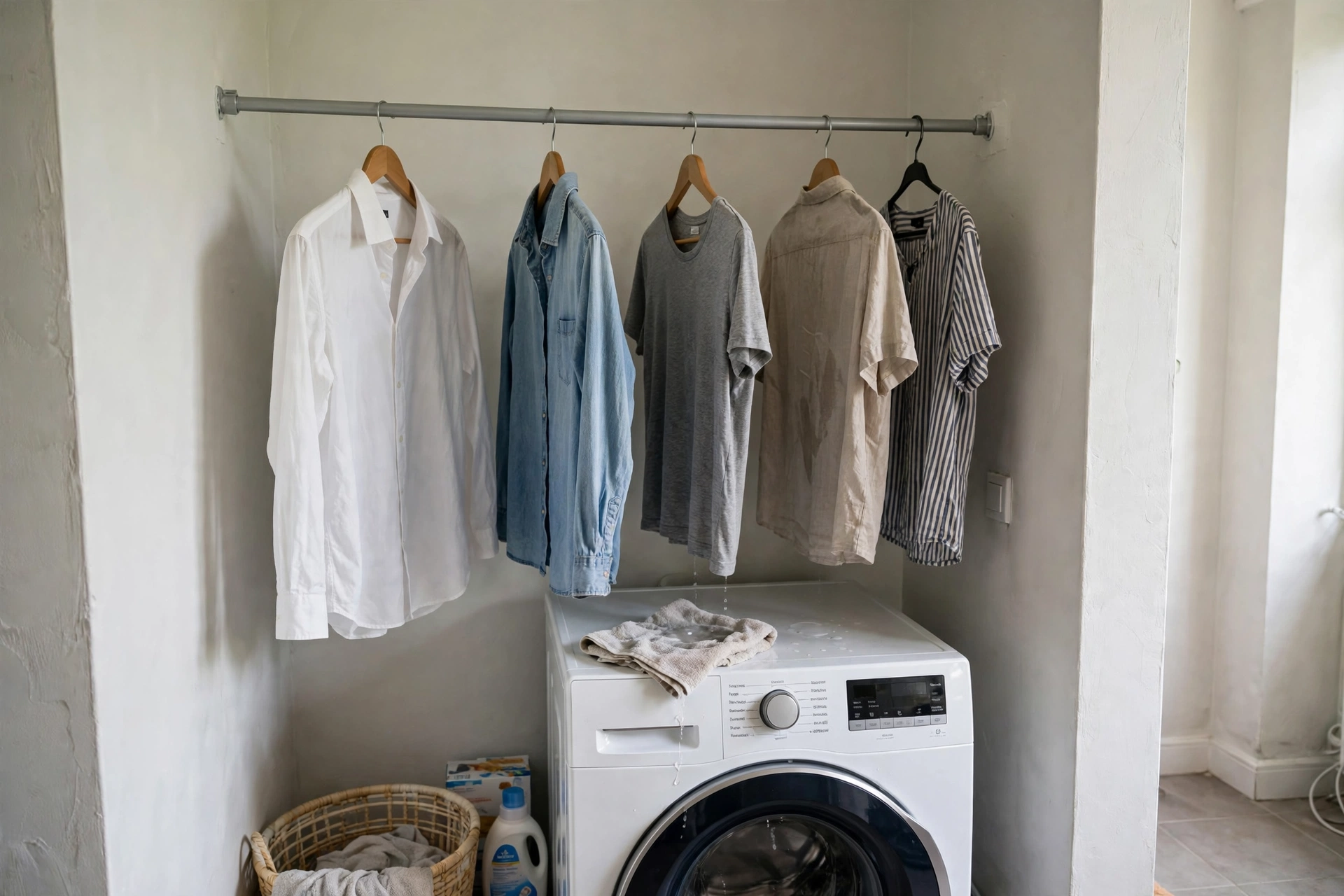
6. A Tension Rod for Hang-Dry Clothes
Delicates, swimsuits, and anything that should not go in the dryer need a place to hang — and a tension rod gives you one without drilling a single hole. Wedge a spring-loaded shower rod between two walls, or between a wall and a tall cabinet, right above the machines or over a sink. Hang the clothes on hangers and let them drip into the tub or a towel below.
The rod holds more than you would think if you keep it to lightweight items: shirts, delicates, and kids’ clothes, not soaked jeans. Put it high enough that hanging shirts do not brush the machines, and take it down when you do not need it — it stores in seconds. For a permanent version, mount a fixed rod on brackets instead.
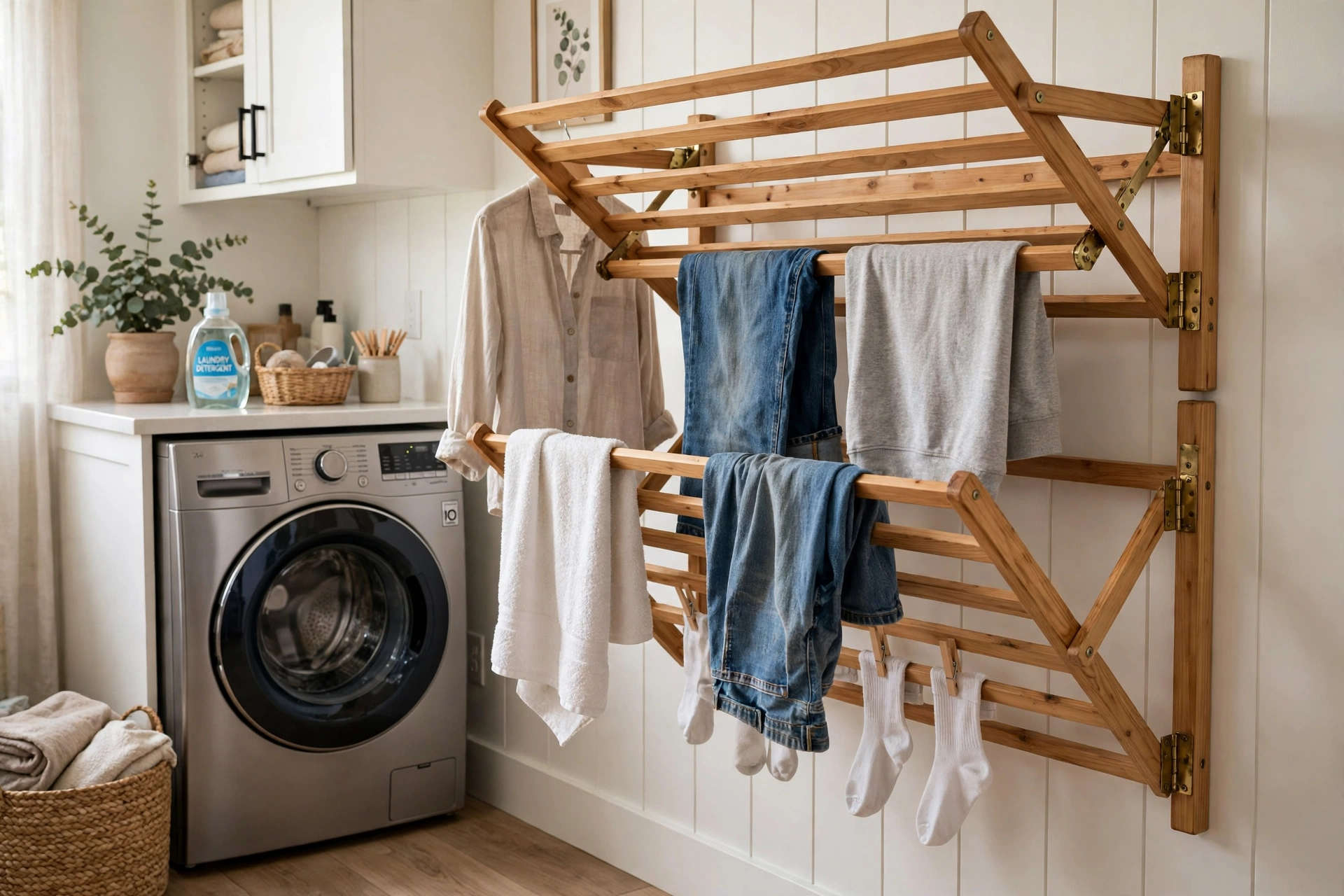
7. A Wall-Mounted Fold-Down Drying Rack
A fold-down drying rack is the answer when floor space is too tight for a freestanding rack. Mounted on the wall, it folds flat when you do not need it and drops down to hold a full load when you do. Most models hold 20 to 30 pounds of wet laundry — enough for a load of delicates or a few days of hang-dry clothes.
Mount it into studs, not just drywall, because wet laundry is heavy. Put it near the washer so you are not carrying dripping clothes across the room, and hang it over a hard floor or a towel, not carpet. When it is folded away, the wall looks empty — which is the whole point in a small laundry room.
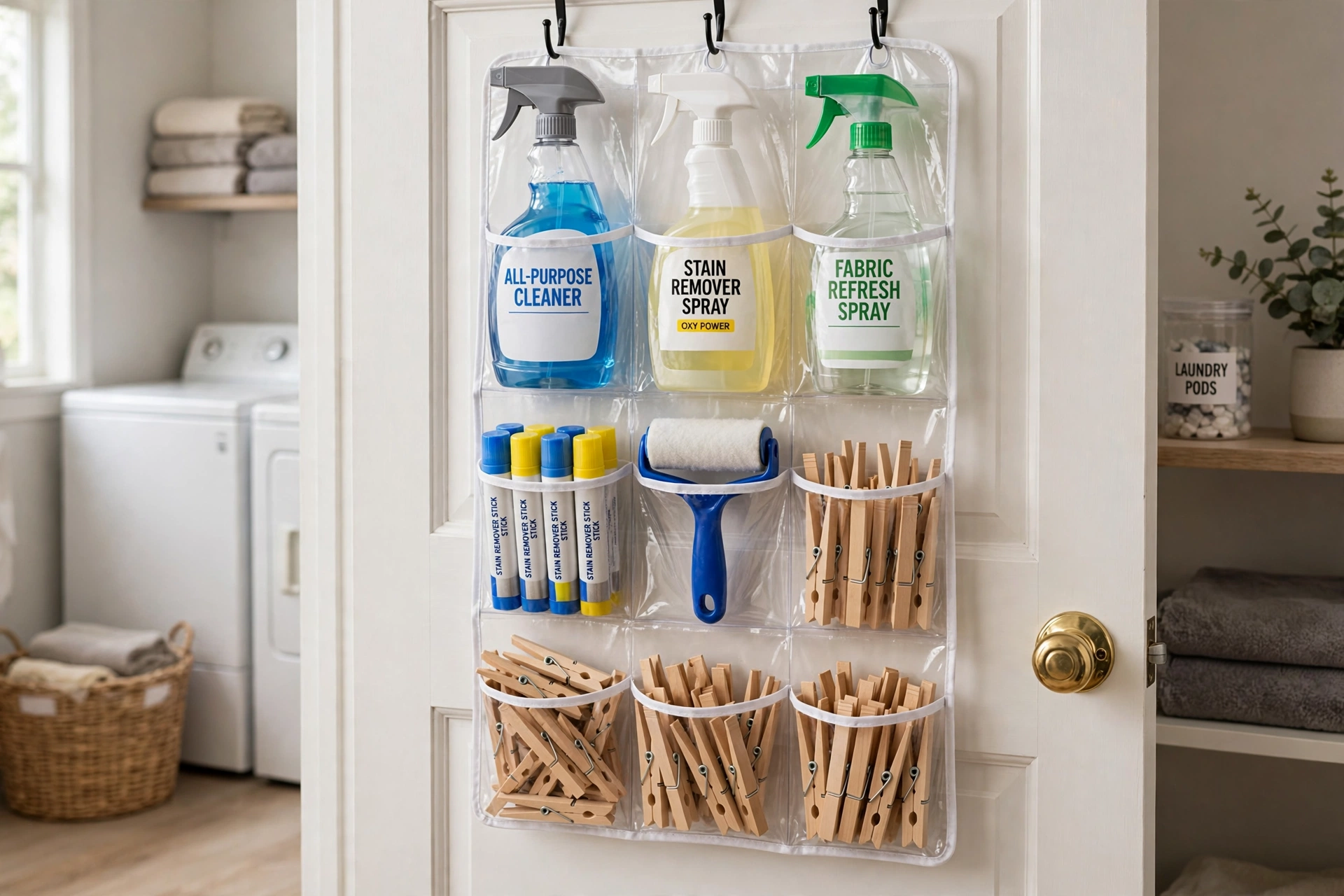
8. An Over-the-Door Organizer for Sprays and Stain Removers
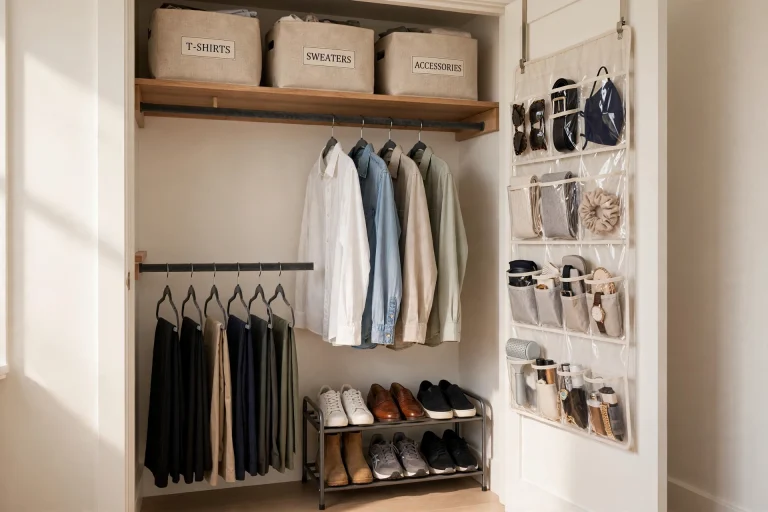
The back of the laundry room door is free storage. Hang a clear over-the-door organizer with pockets sized for spray bottles, stain sticks, lint rollers, and the small tools that otherwise crowd the counter. Clear pockets matter — you can see what you have without opening every pocket.
Keep the heaviest bottles in the lowest pockets so the door still closes easily and the organizer does not swing. If the door is a hollow-core interior door, use over-the-door hooks rather than screws. This one trick alone can clear a whole shelf, and it costs less than a bottle of detergent.
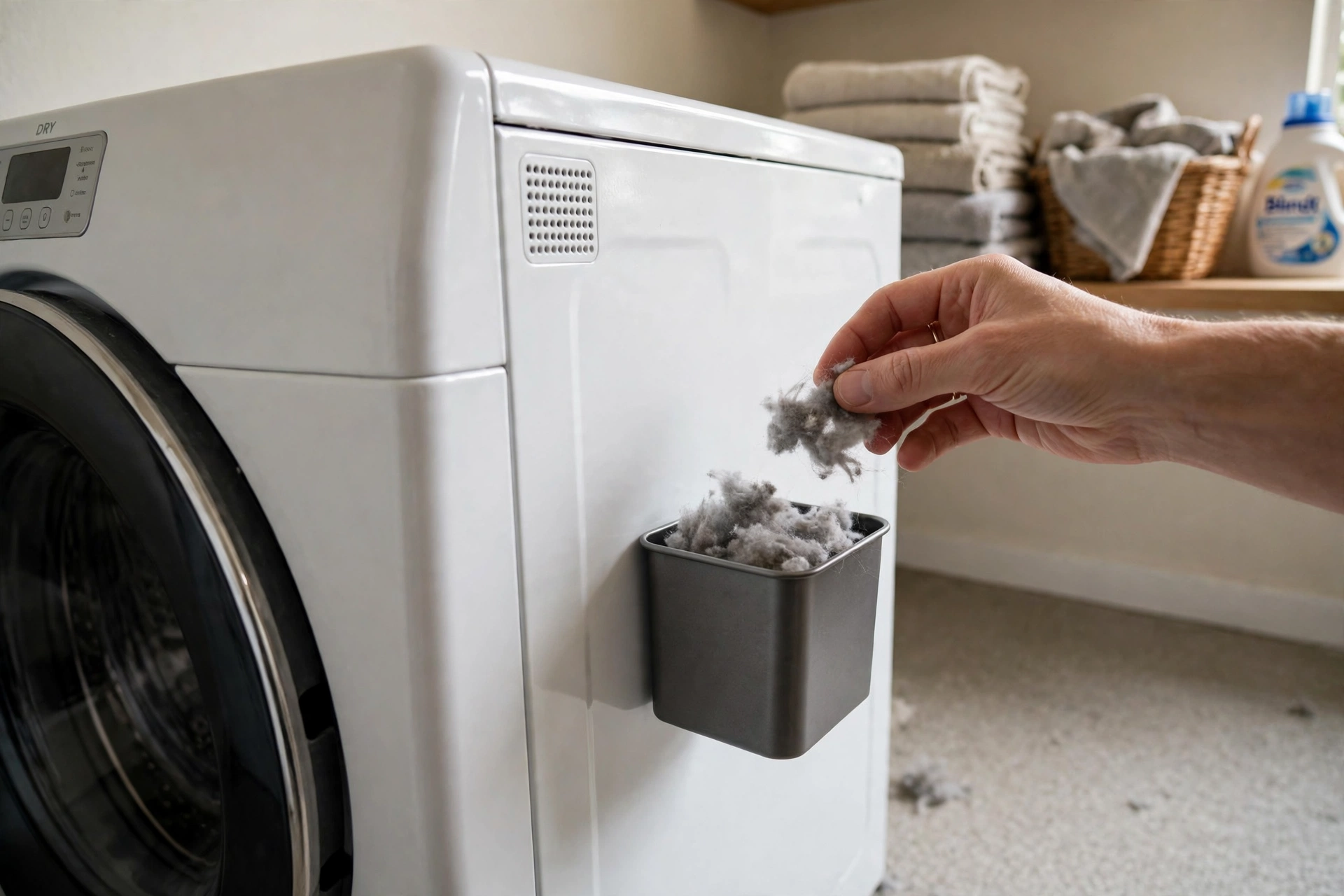
9. A Magnetic Lint Bin on the Dryer
Lint has nowhere to go in most laundry rooms, so it ends up on the floor, on the machines, or back in the clean clothes. A small magnetic bin stuck to the side of the dryer gives it a home. Empty the lint trap, drop the lint in the bin, and empty the bin when it is full — no more lint on the floor.
Any small metal container with a magnet works: a magnetic pencil cup, a small tin, even a repurposed spice jar with a magnet glued on. Put it on the side of the dryer you face when you unload, at arm height. It is a two-minute fix that keeps the room cleaner every single day.
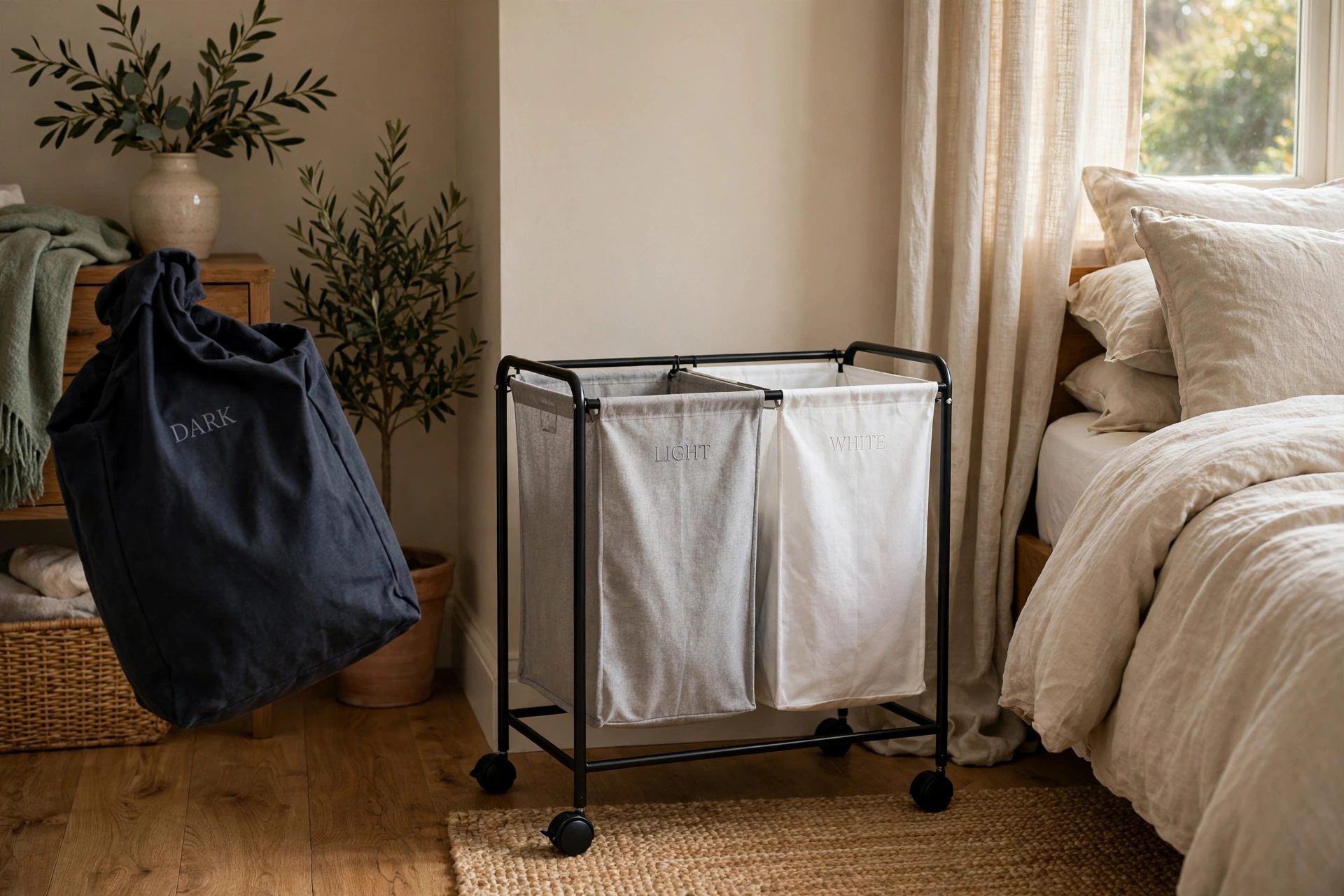
10. A Hamper Station That Sorts Itself
A hamper station is just a sorting system with a permanent address: a rolling three-bag sorter, or three hampers in a row, each labeled by load type. Dirty clothes go straight into the right bag, and when a bag is full, you carry that one bag to the washer — no sorting pile on the floor, no second pass.
Rolling sorters are the easiest version because the bags lift out and go straight to the machine. If the room is small, use a single divided hamper with two or three compartments instead. Put the station where dirty clothes actually land — usually the bedroom or the bathroom, not the laundry room — and the system runs itself.
11. A Pegboard for Cleaning Tools
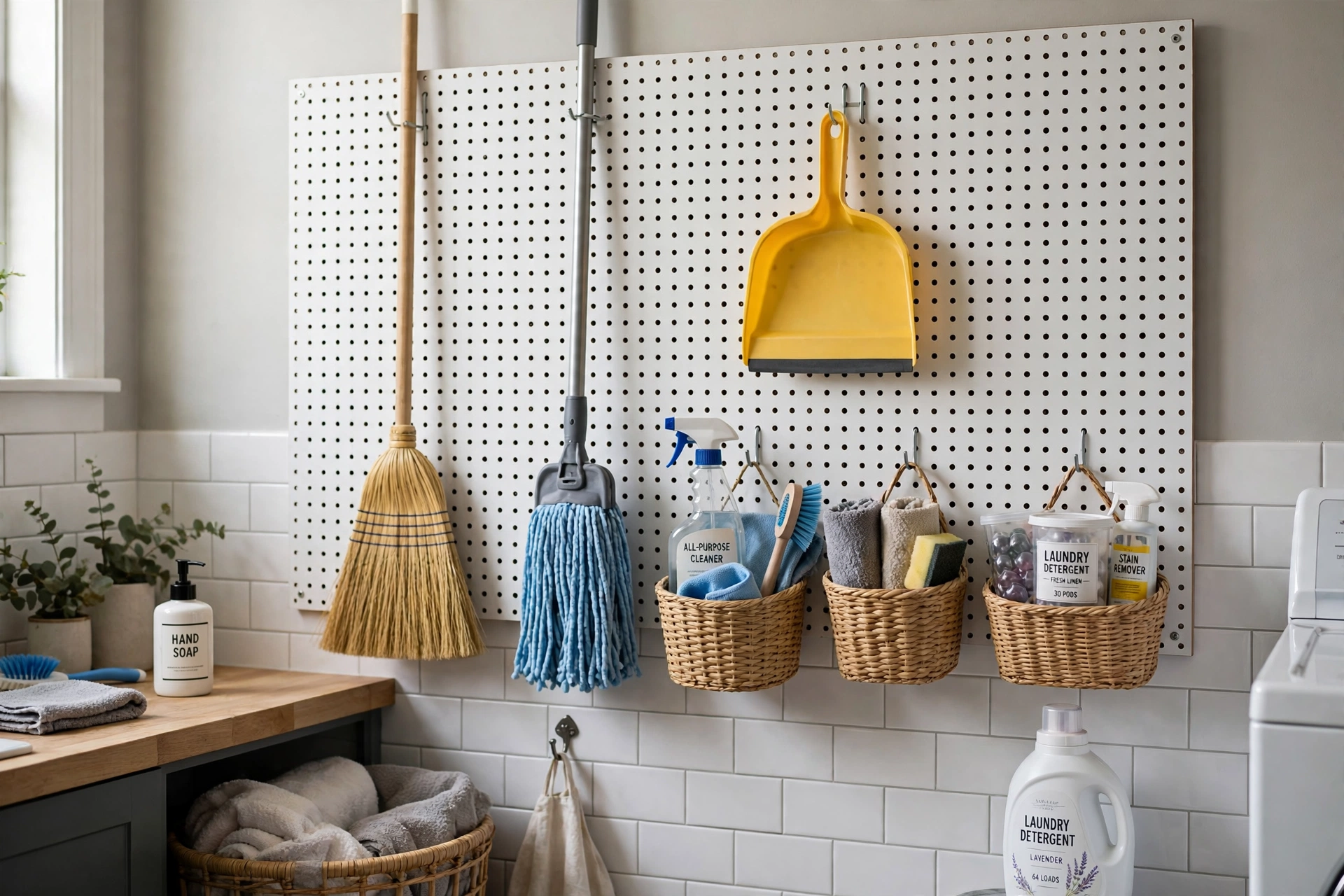
Pegboards turn a blank wall into flexible storage for everything with a handle: brooms, mops, dustpans, ironing boards, and the long-handled tools that never fit in a cabinet. Mount a pegboard panel on the wall, add hooks and small baskets, and hang the tools where you can see them all at once.
The trick is to hang each tool in the same spot every time, so grabbing it becomes automatic. Put the daily tools at arm height and the rarely used ones up high. A pegboard also keeps wet mops off the floor, so they dry faster and smell less. Paint it the same color as the wall if you want it to blend in, or leave it natural for a workshop look.
12. Decant Detergent Into Labeled Jars
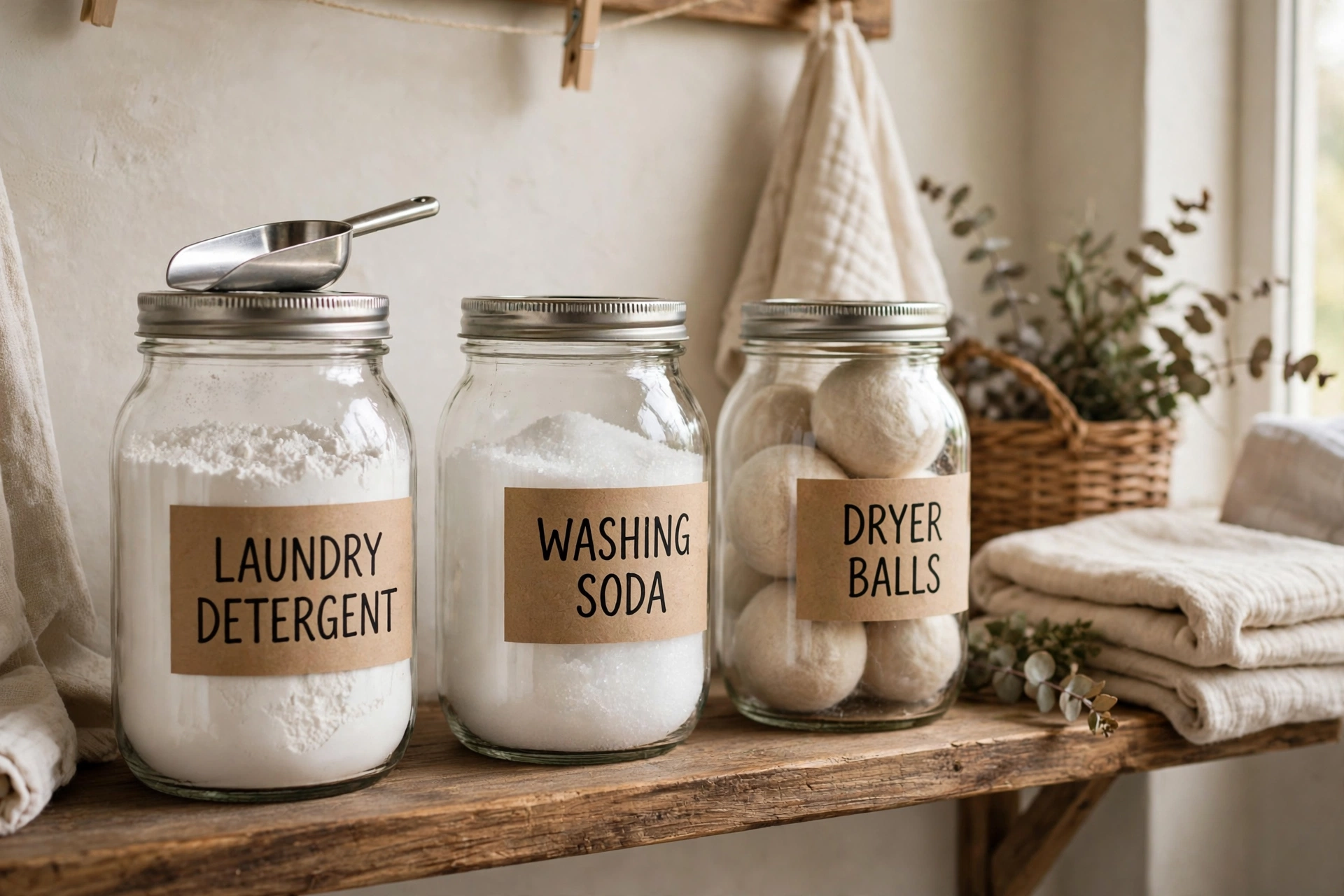
Detergent bottles are bulky, ugly, and hard to pour neatly. Decanting liquid detergent into a glass jar or a pump bottle — and powder into a wide-mouth jar with a scoop — saves shelf space, stops spills, and makes the shelf look like it belongs in a magazine instead of a warehouse. Label each jar with what is inside and the dose per load.
Only decant what you will use within a few weeks, and keep the original bottle somewhere safe with its label and safety information — especially in a home with kids. A small chalkboard label or a strip of masking tape does the job; the point is that anyone doing laundry can find the right product and the right amount without asking.
13. The Lost-Sock Jar
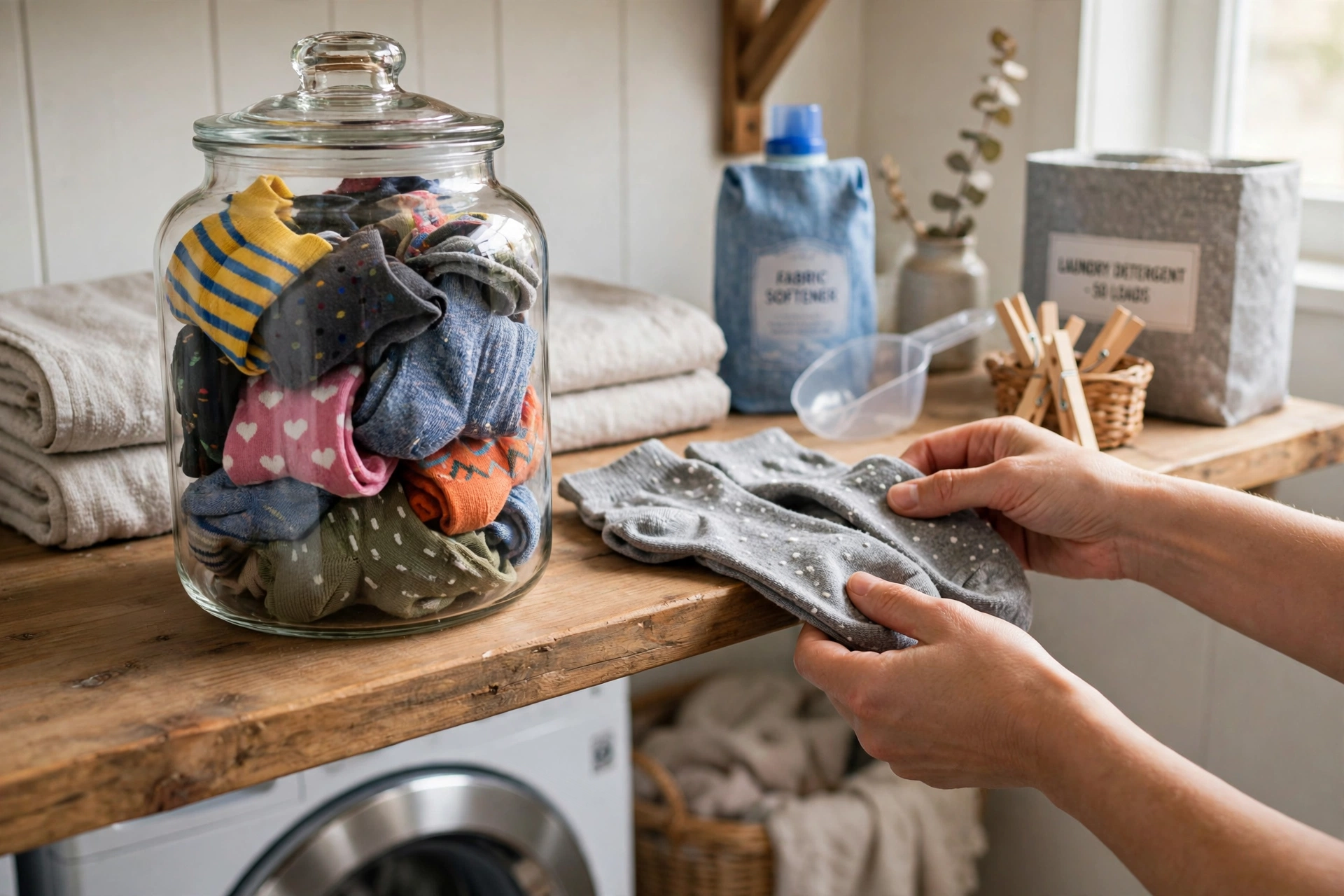
Every laundry room needs a lost-sock jar: a clear jar or small basket where single socks wait for their partners. When a sock comes out of the dryer alone, it goes in the jar instead of the trash or the back of a drawer. Once a month, empty the jar and match what you can; the rest gets retired to the rag bin.
The jar works because it makes the problem visible instead of letting single socks pile up in three different drawers. Put it on the folding counter or on a shelf right next to the dryer, where the sorting happens. Kids love it — give them the job of matching socks once a week, and the jar stays small.
14. Small-Space Setup: Laundry in a Closet or Hallway
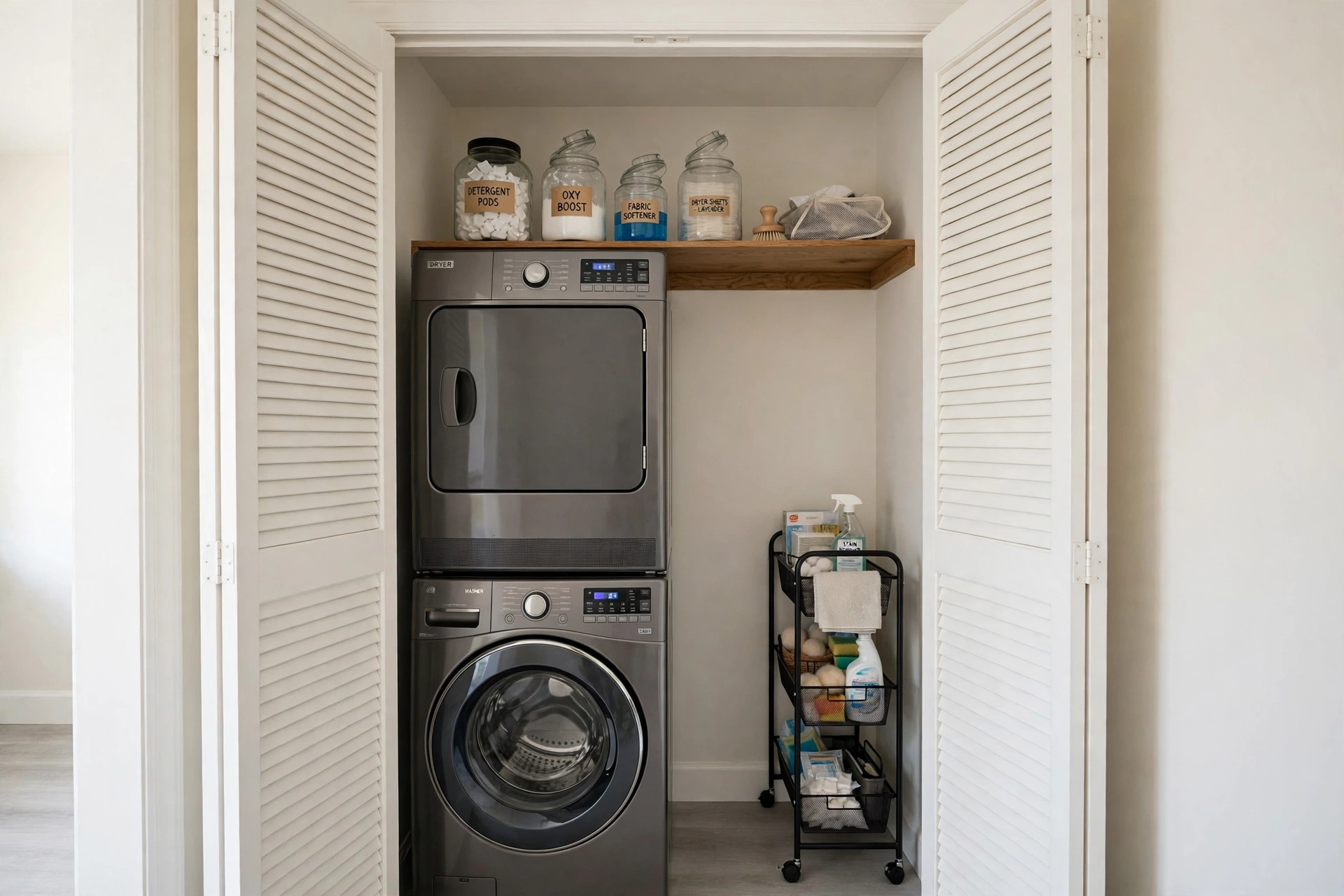
Not every home has a laundry room — many have a closet, a hallway nook, or a stackable pair tucked behind bifold doors. The same organization ideas work, just smaller: one shelf above the machines, a rolling cart in the gap, a tension rod inside the closet, and a single divided hamper instead of three bins.
The rule for a closet setup is that everything must have a closed-door home. If supplies live on top of the machines, they show every time the doors open; if they live in a basket on the shelf, they do not. Use the inside of the closet doors for a narrow organizer, and keep a folding basket nearby instead of a counter you do not have room for.
15. The Two-Minute Reset After Every Wash Day
The best laundry room organization idea is not a product — it is a habit. After the last load, spend two minutes resetting the room: wipe the machines, return the detergent to its shelf, empty the lint bin, hang the damp towels, and clear the folding counter. Two minutes, every wash day, and the room never gets messy enough to need a big cleanup.
Pair the reset with something you already do — start the last load, then reset while it runs. Keep a small caddy with a cloth and an all-purpose spray right in the room so the reset needs no trip to another cabinet. A room that is reset after every use stays organized; a room that is only organized once stays organized for a week.
Frequently Asked Questions
How do I organize a very small laundry room?
Start with the wall, not the floor: shelves above the machines, a fold-down drying rack, and an over-the-door organizer add storage without taking a single square foot. Then use a slim rolling cart in the gap between machines and a single divided hamper instead of three bins. If the laundry lives in a closet, keep everything in closed baskets so the room looks tidy when the doors open.
What is the best way to sort laundry?
Sort by load type as clothes come off, not on wash day: one bin each for darks, lights, and delicates. When a bin is full, that load goes in. Wash new colored items separately the first few times, and use a mesh bag for delicates so they never need a second sorting pass.
Where should I store detergent and stain removers?
On a shelf above the machines, within arm’s reach of the washer — never on the floor, where bottles tip and leak. Keep the daily products on the lower shelf and backstock above. Store everything up high or in a latched cabinet if small children can reach the room, and keep the original labels for safety information.
How do I keep the laundry room from smelling damp?
Ventilation and dryness are the fix: leave the washer door open between loads so the drum dries, wipe the gasket dry, and run the room’s vent or crack a door. Wash the lint trap area and the detergent drawer regularly, because trapped residue is what smells. Run a cleaning cycle on your washer regularly, too — our guide to how to clean a washing machine walks through it step by step. If the smell persists, check for a slow leak behind the machines.
How often should I reorganize the laundry room?
A full reorganization once or twice a year is enough if the daily system works — the two-minute reset after every wash day does the real maintenance. Reorganize when something changes: a new machine, a new family member doing laundry, or a storage idea that is not working. If a bin or shelf is always overflowing, the system needs adjusting, not more willpower.
Related Reading
- 15 Small Closet Organization Ideas That Actually Work
- How to Declutter Your Home Room by Room
- How to Clean a Washing Machine
- 10-Minute Daily Cleaning Habits for a Tidy Home
- Small Home Organization Ideas on a Budget
- 26 Simple Home Organization Ideas That Change Everything
- Entryway Decor Ideas for a Warm Welcome Home
Conclusion
A laundry room that works is a laundry room with a place for every step — sort, wash, dry, fold, put away — and a two-minute reset that keeps it that way. Start with zones, add the shelves and bins, and let the small fixes like the lint bin and the lost-sock jar do the daily work. Wash day will never be fun, but it can be fast.