15 Shoe Storage Ideas That End the Pile by the Door
Introduction
The best shoe storage ideas start with an honest count: how many pairs actually live by the door, and how many of them are worn every week. The answer is usually four to six daily pairs and a dozen more that belong somewhere else entirely. The pile exists because every pair shares one spot — the floor — and the floor has no system.
These fifteen shoe storage ideas give every pair a real place, from a slim cabinet that fits a hallway barely wider than a door to a full shoe wall in a walk-in closet. Most of them work in a rental, most cost less than a pair of shoes, and all of them beat the pile. If the entryway itself needs styling once the shoes are handled, our entryway decor ideas pick up where this guide leaves off, and our small closet organization ideas apply the same thinking inside the closet.
1. A Slim Flip-Drawer Cabinet for Narrow Entryways
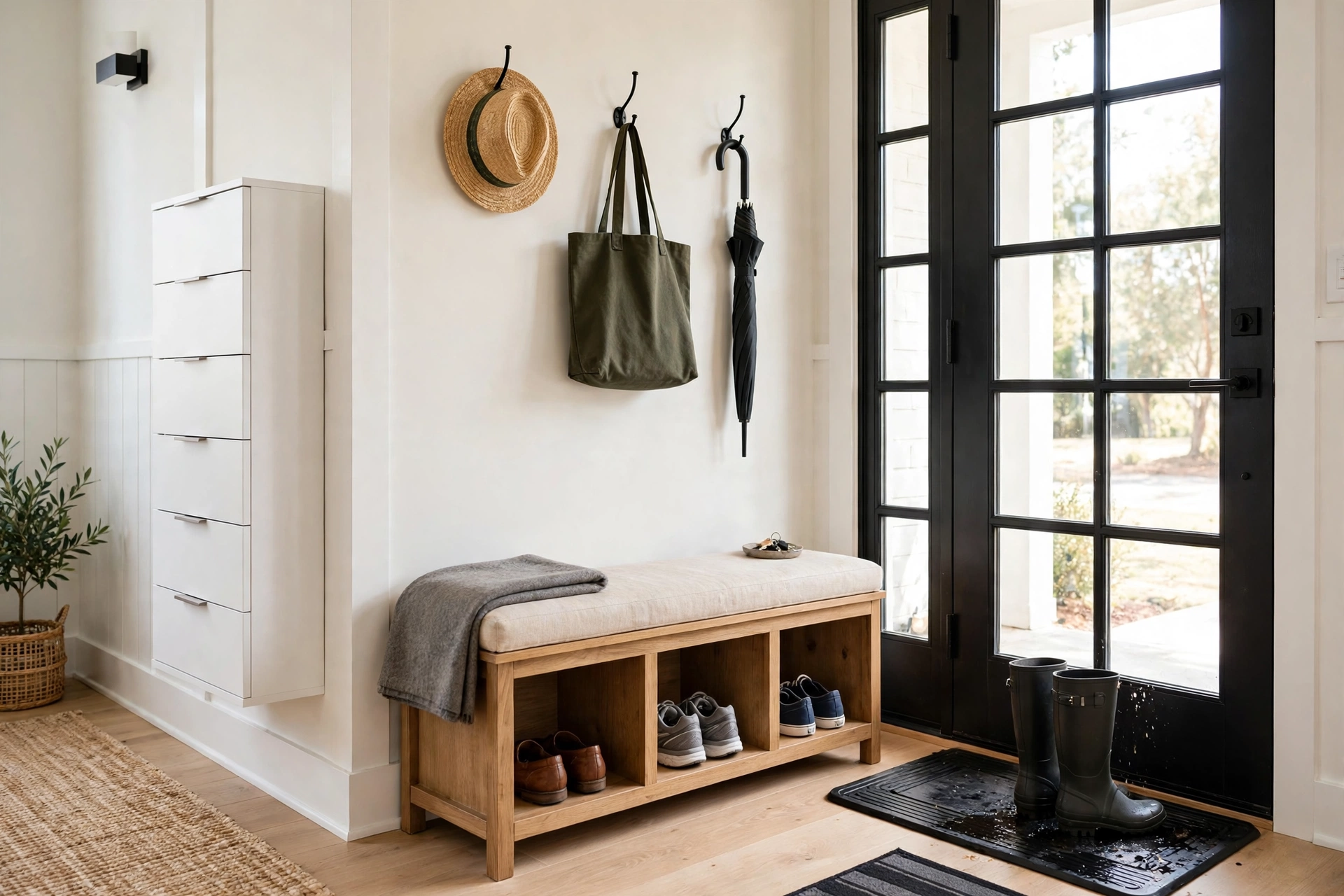
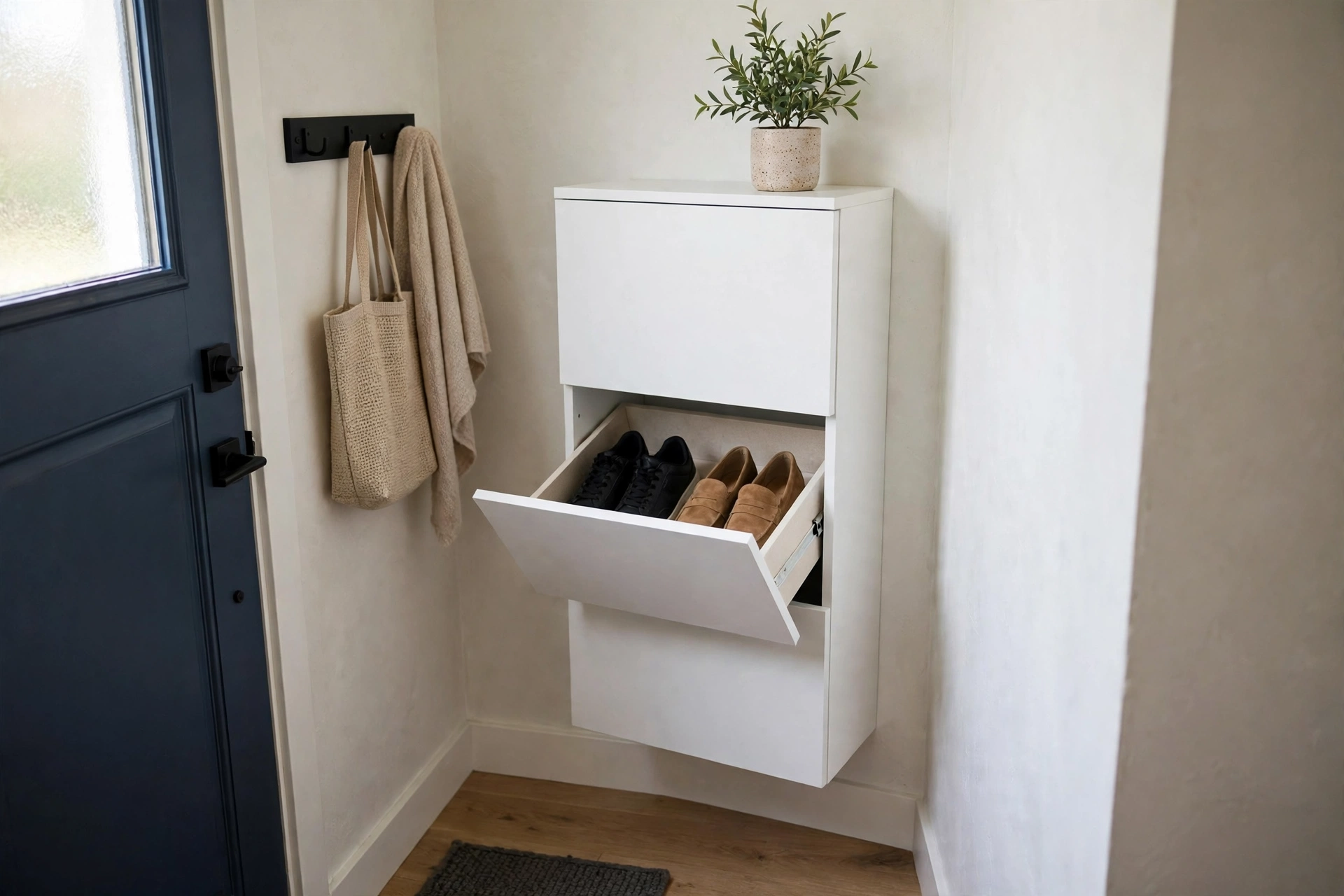
When the entryway is barely wider than the door, a flip-drawer shoe cabinet is the only furniture that fits. These cabinets are about 6 to 8 inches deep — slimmer than a bookshelf — and the drawers tilt out to hold two rows of shoes each. A two-drawer unit holds eight to twelve pairs and takes up no more floor space than a picture frame leaning against the wall.
Mount it to the wall so it cannot tip, especially in a home with kids who will pull the drawers open. Put the daily pairs in the top drawer, where they are easiest to reach, and the rest below. If the hallway is too narrow even for that, a single-drawer unit by the door still beats the pile — it just holds fewer pairs.
2. A Storage Bench With Cubbies Underneath
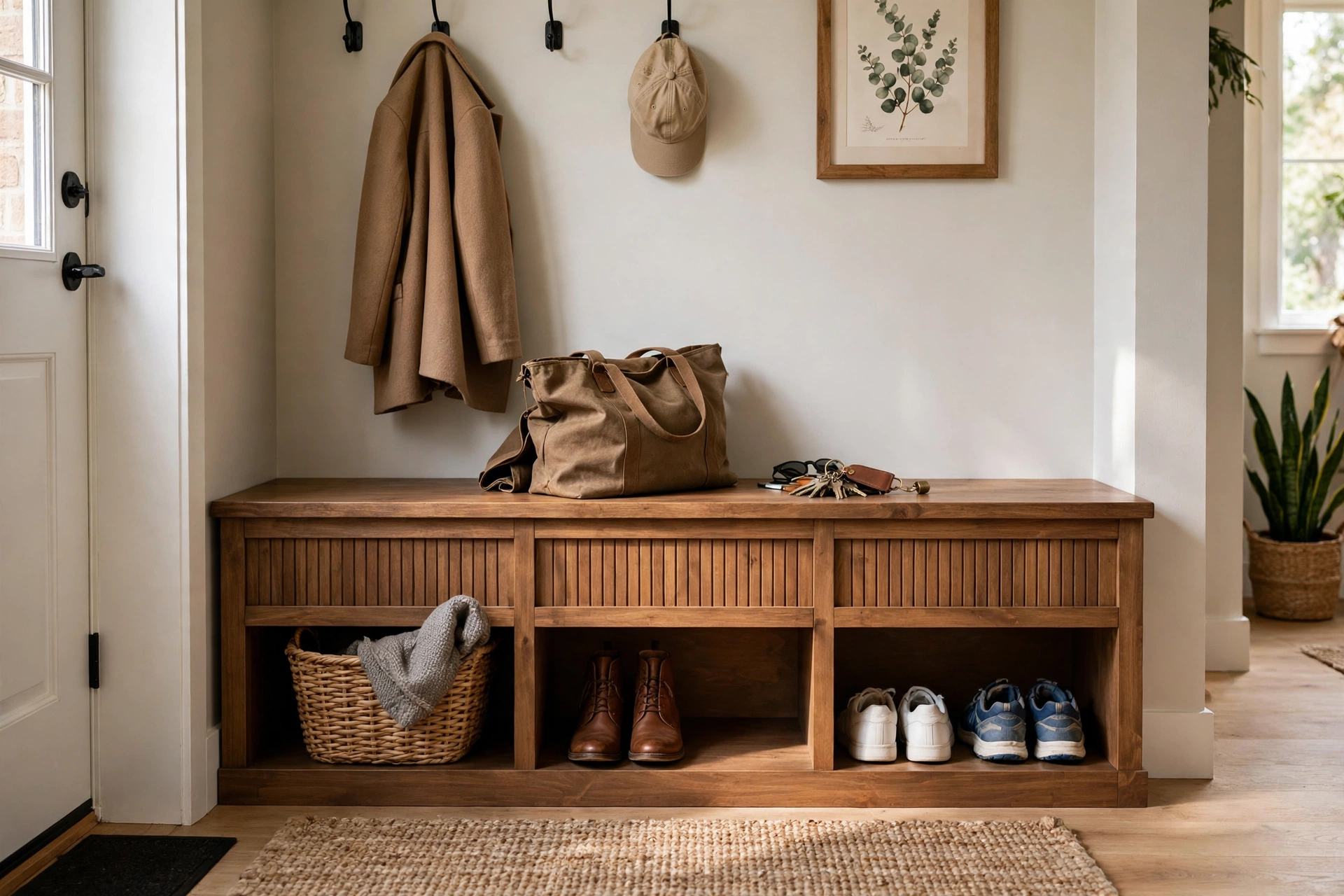
A storage bench does two jobs at once: a place to sit while you put shoes on, and cubbies underneath that hold them. A bench with two or three cubbies per side holds six to nine pairs, and the top stays clear for bags, keys, and the mail. It works in an entryway, a mudroom, or at the foot of a bed.
Choose a bench with open cubbies rather than a closed cabinet if you want shoes to air out — closed storage traps moisture and smell. Add a small basket in one cubby for the kids’ shoes, which never stay in neat pairs anyway. If you buy a bench without cubbies, slide low baskets underneath it and get the same result for less money.
3. An Over-the-Door Shoe Organizer
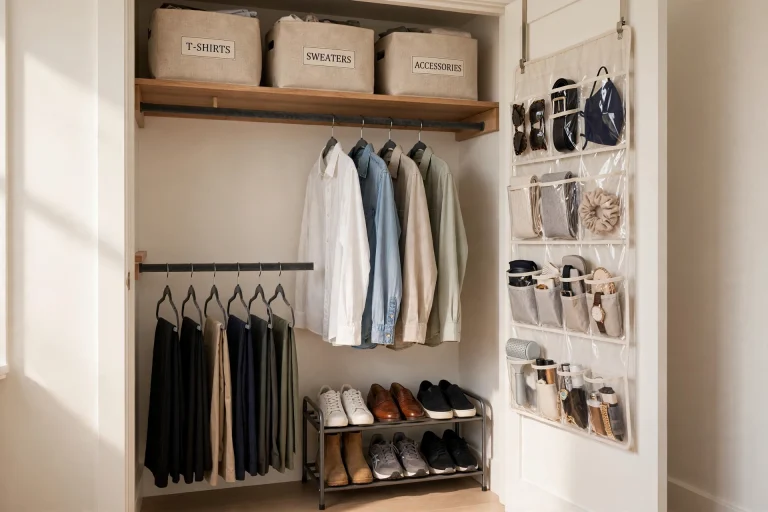
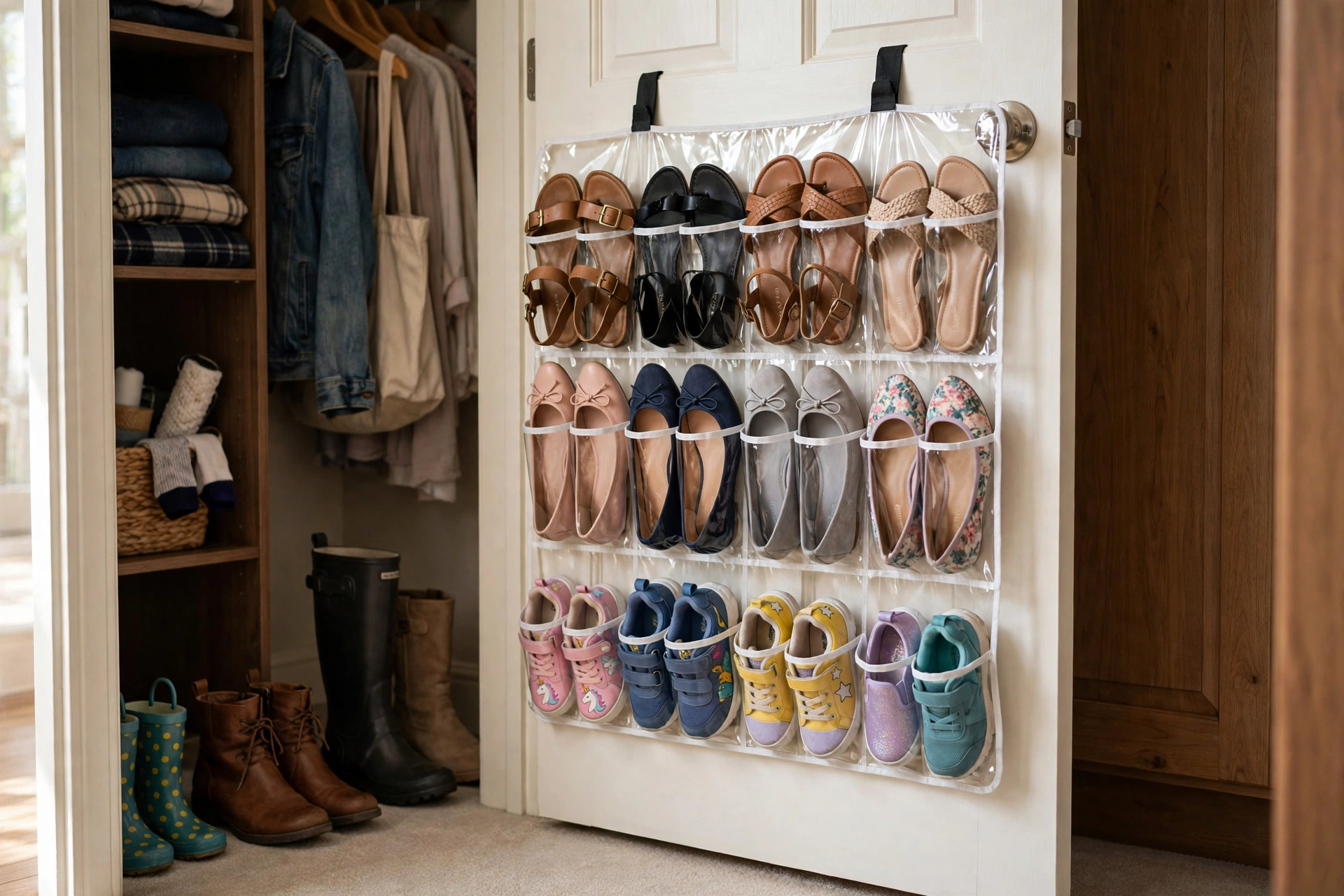
An over-the-door shoe organizer holds twenty-four pairs or more and uses zero floor space — it hangs on the back of a door you already have. Clear pockets work best, because you can see every pair at a glance instead of opening pockets to find the one you want. Hang it on the inside of a closet door or the laundry room door, not the front door, where it shows every time someone visits.
This is the best option for flat shoes, sandals, and kids’ shoes; heavy boots will stretch the pockets and pull the organizer down. Keep the heaviest pairs in the lowest pockets so the weight sits near the floor. If the door is a hollow-core interior door, use the over-the-door hooks that come with the organizer rather than screwing into it.
4. A Tiered Bamboo Rack by the Door
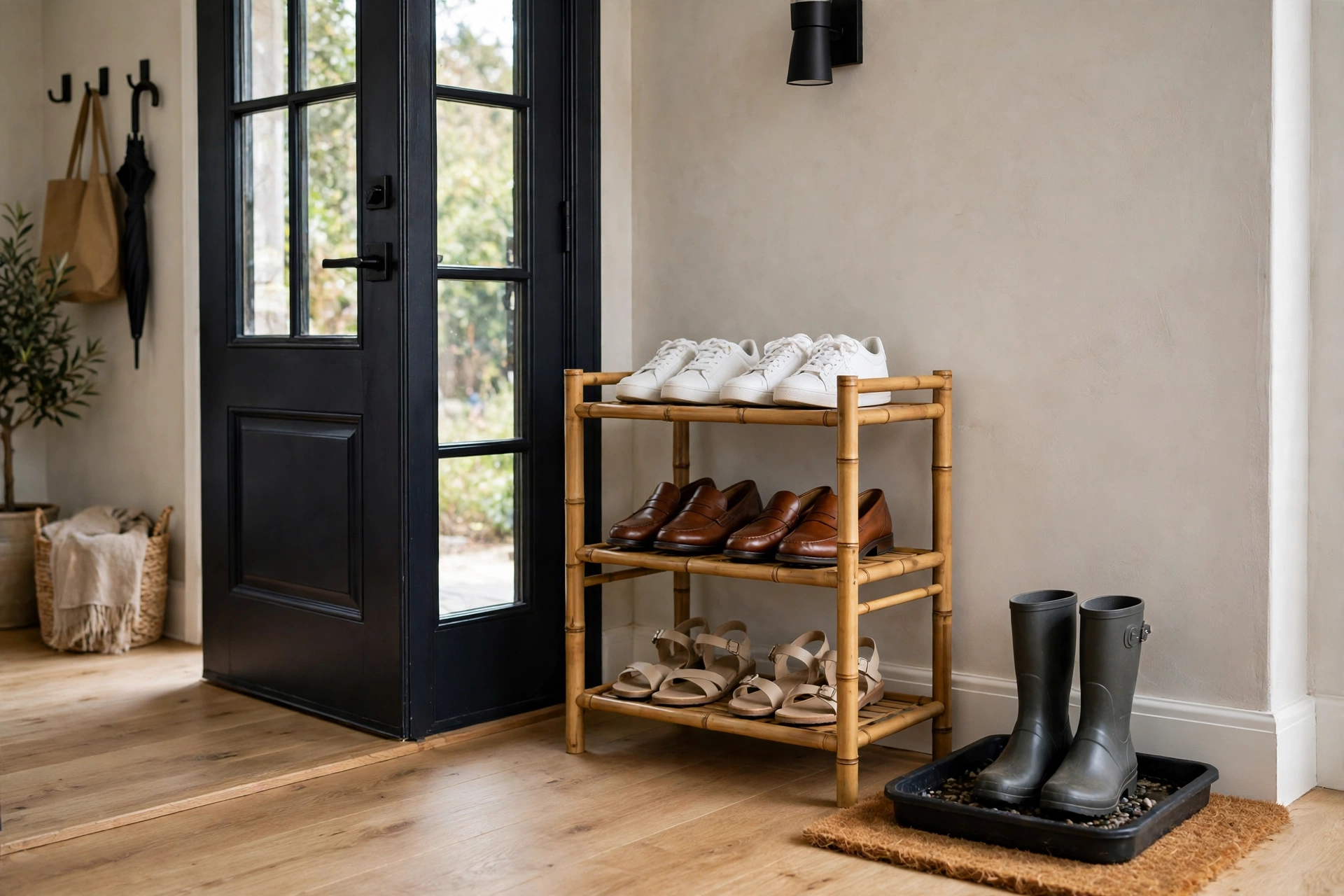
A tiered bamboo rack is the simplest shoe storage idea that actually works: three or four open shelves, no assembly drama, and it holds eight to twelve pairs right where people take their shoes off. Bamboo handles damp shoes better than painted wood, and it looks good enough that you will not mind seeing it every day.
Put the rack exactly where shoes come off — next to the door, not across the room — or people will ignore it. Keep the bottom shelf for the muddiest pairs and wipe it down weekly. If the rack starts overflowing, that is the signal to rotate some pairs into storage, not to buy a bigger rack — the rack is the limit, and the limit is the system.
5. Floating Shelves for a Modern Look
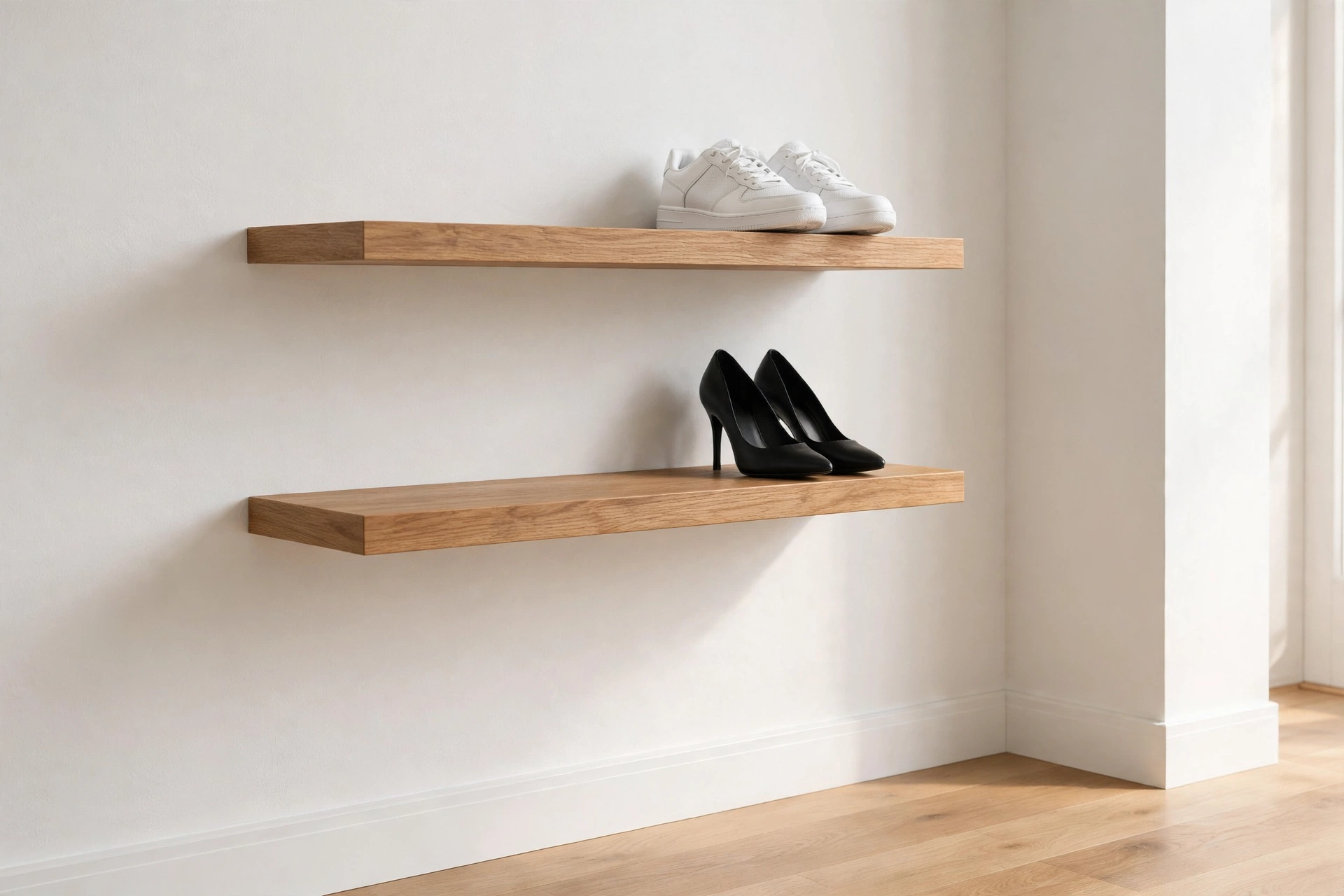
Floating shelves turn shoe storage into a display: two or three shelves mounted on the wall at ankle-to-knee height, holding the pairs you wear most, with nothing on the floor at all. They work best in a modern entryway or a walk-in closet, where the shoes themselves are part of the look — clean sneakers, favorite heels, the pairs you actually like.
Space the shelves about 12 to 14 inches apart vertically so taller shoes fit, and make the shelves 12 to 14 inches deep so a pair sits fully on the shelf without hanging over the edge. Mount into studs — a shelf full of shoes is heavy. Keep the everyday pairs on the lowest shelf, where they are easiest to grab on the way out.
6. Stackable Clear Drop-Front Boxes
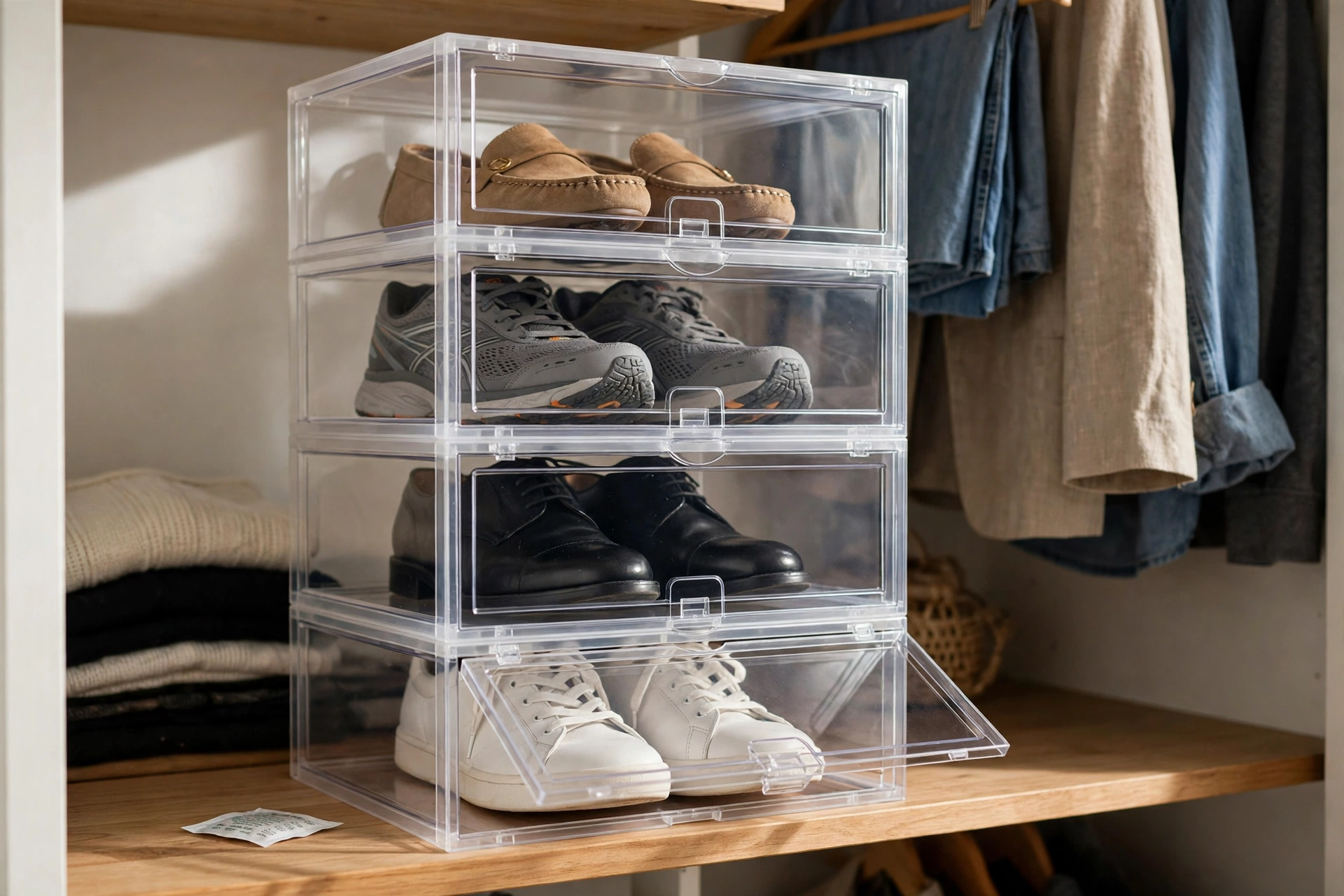
Clear drop-front boxes are the closet version of shoe storage: each pair lives in its own box, the front drops open so you can pull shoes out without unstacking, and the clear plastic shows exactly what is inside. They stack six high or more, they keep dust off, and they turn a messy closet shelf into a tidy grid.
They work best for the pairs you wear less often — occasion shoes, seasonal shoes, the ones worth protecting. For daily shoes, a box is one step too many; use open shelves instead. Labeling is unnecessary with clear boxes, but if you use colored ones, a small photo label on the front saves a lot of opening and closing.
7. A Boot Tray With a Raised Lip
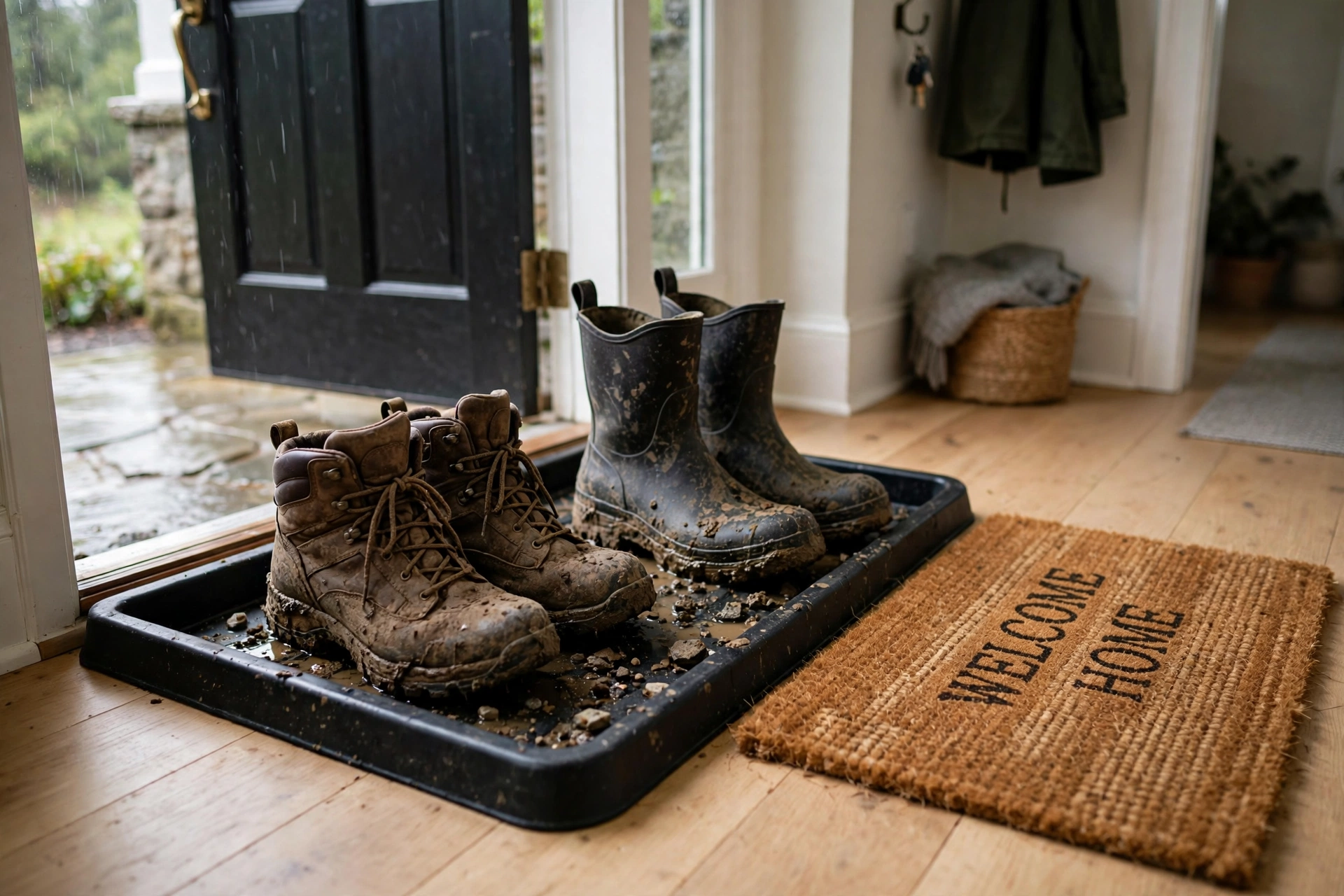
A boot tray is the smallest idea on this list and one of the most useful: a shallow tray with a raised lip that catches mud, water, and salt before they reach the floor. Put it right inside the door, and wet shoes go on the tray, not on the rug. The lip is the whole point — without it, the tray is just a mat.
Choose a tray big enough for two pairs, in rubber or metal so it wipes clean, and empty it after rain or snow instead of letting dirty water sit in it. In winter, a second tray by the back door catches the boots that never make it to the front. It is a five-dollar fix that saves the floor every single day.
8. Under-Bed Boxes for Occasion Shoes
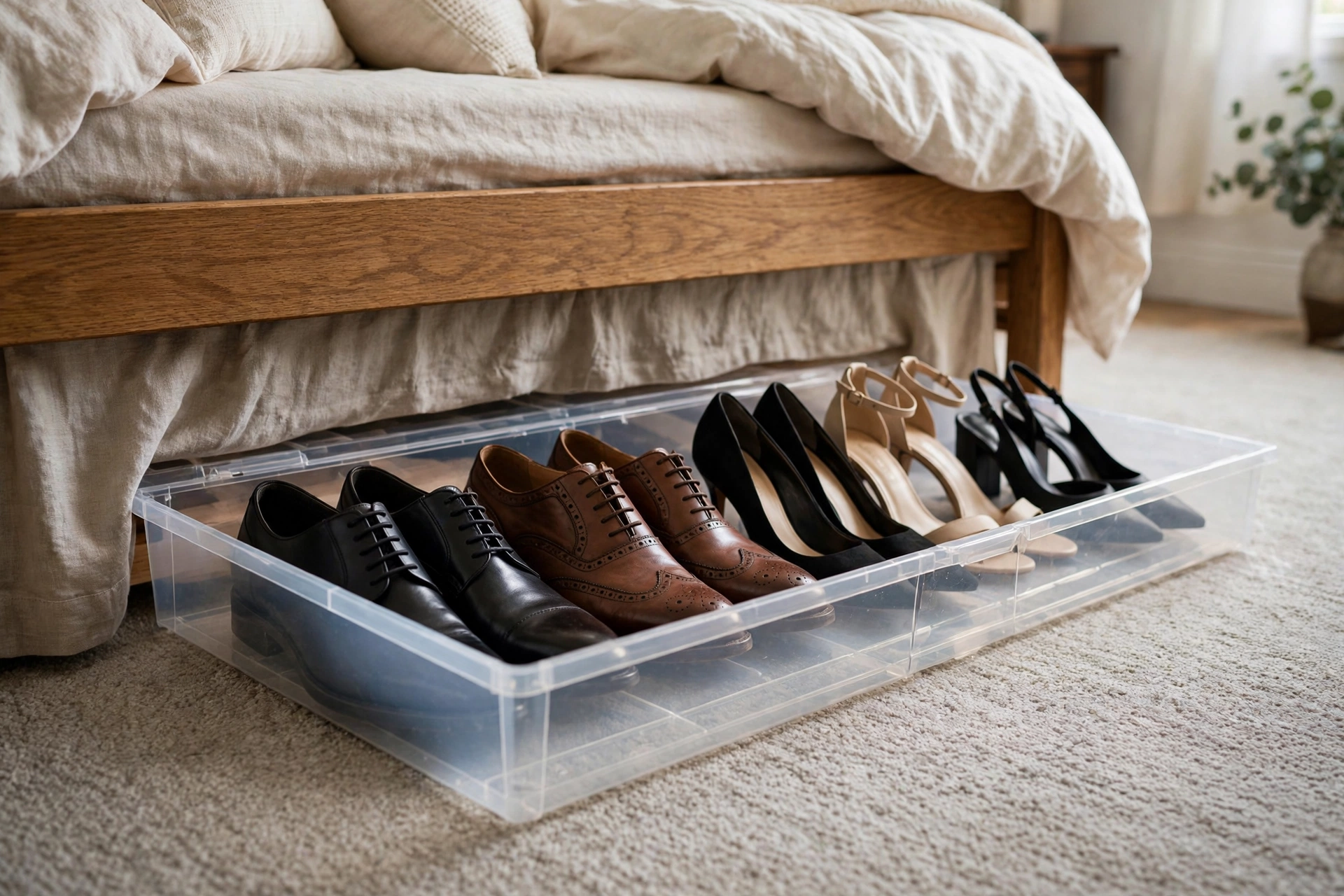
Occasion shoes — the heels for weddings, the dress shoes for interviews, the sandals for vacation — do not belong by the door, and they do not belong in the daily rotation either. Under-bed boxes are their home: flat, lidded, out of the way, and big enough for several pairs. Use clear boxes or label them, because the whole point is that you can find the pair you need without digging.
Keep one box per occasion or per person, and check the shoes once a season — leather dries out in storage, and a quick condition keeps them wearable. Stuff the toes with acid-free tissue or old socks so the shoes hold their shape. If the bed is too low for boxes, use the top shelf of a closet instead.
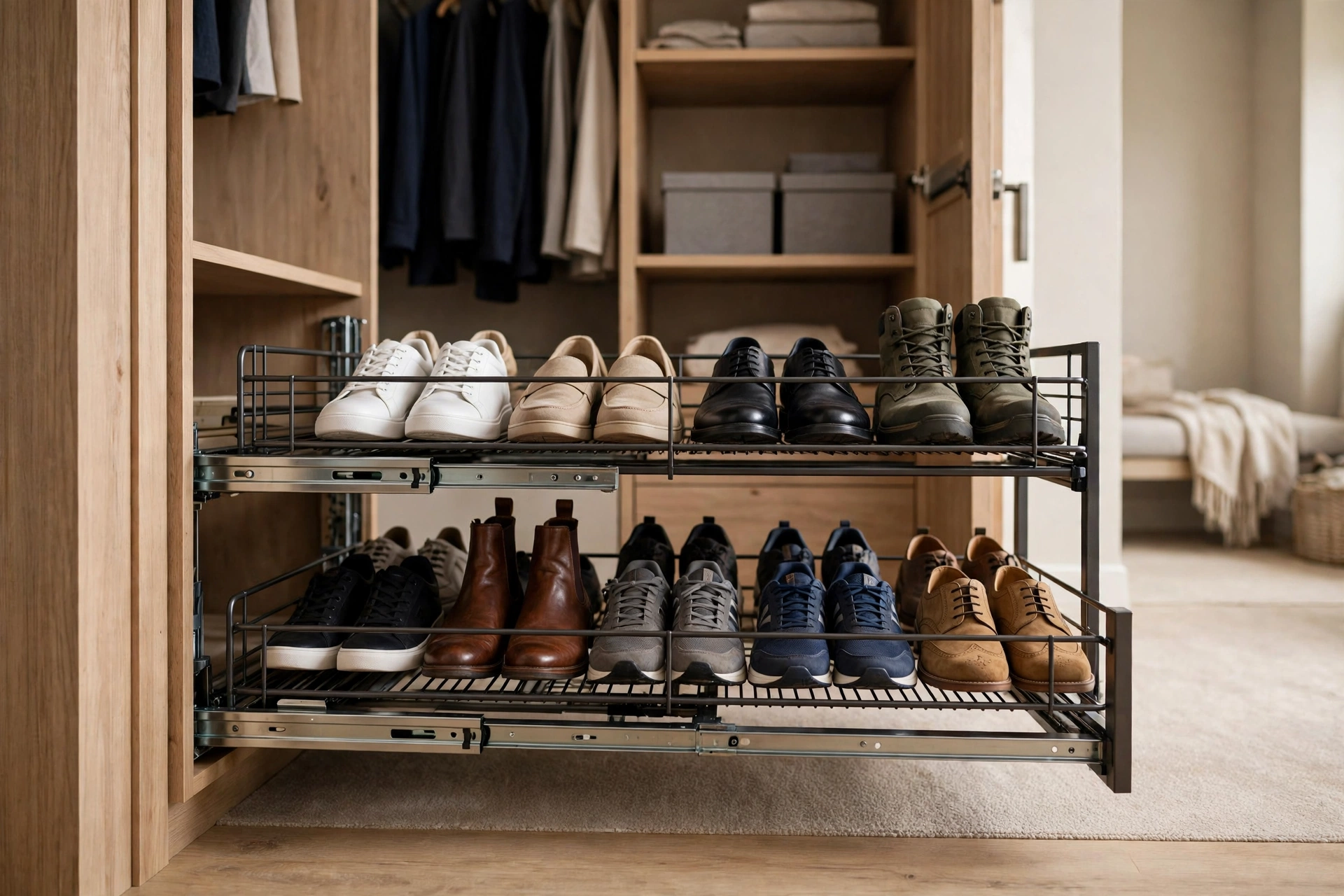
9. Pull-Out Shoe Racks on Full-Extension Slides
Pull-out shoe racks are the closet upgrade that changes everything: a shelf on full-extension slides that rolls all the way out, so you can see and reach the pairs at the very back. Standard closet shelves waste the back half of every shelf; a pull-out rack wastes nothing.
Install them at ankle-to-waist height, where the slide is easy to reach, and leave enough clearance in front of the closet for the rack to extend fully. A rack with a front rail keeps shoes from sliding off when you pull it out. This is the one idea on this list that usually needs a handyman or a weekend of careful measuring — but it is also the one that makes a closet feel twice as big.
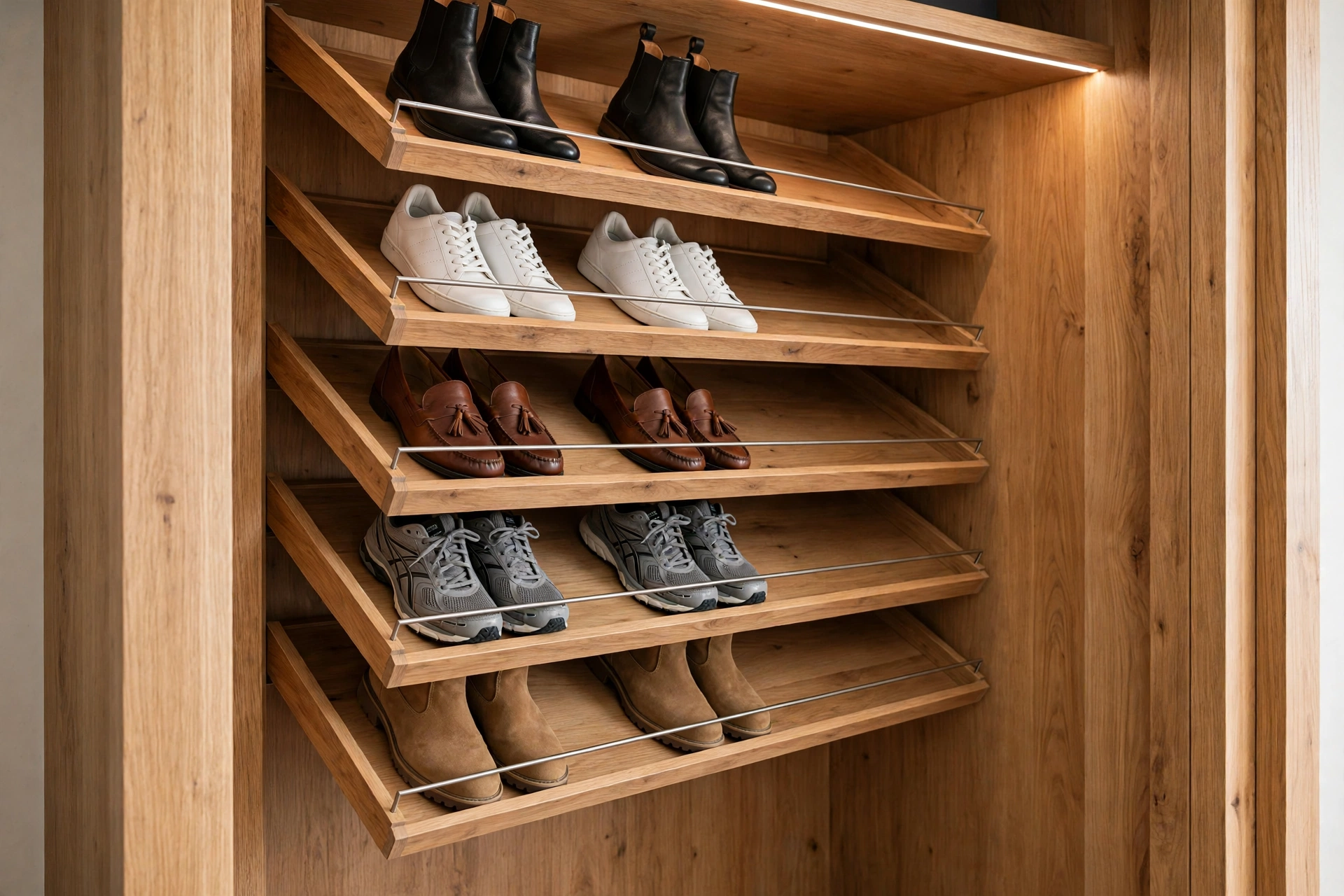
10. Slanted Shelves With a Front Rail
Slanted shelves show shoes the way a store does: tilted slightly forward, each pair visible at a glance, with a slim front rail to stop them sliding off. They work in a closet or a built-in entryway unit, and they are the best option when you want to see all your shoes at once instead of remembering what is on the third shelf down.
The angle is gentle — about 15 degrees is enough to display the shoes without them tipping. The front rail can be a thin strip of wood or metal, just tall enough to catch the heel. Build them 12 to 14 inches deep so a full pair fits, and space them far enough apart that taller boots and heels clear the shelf above.
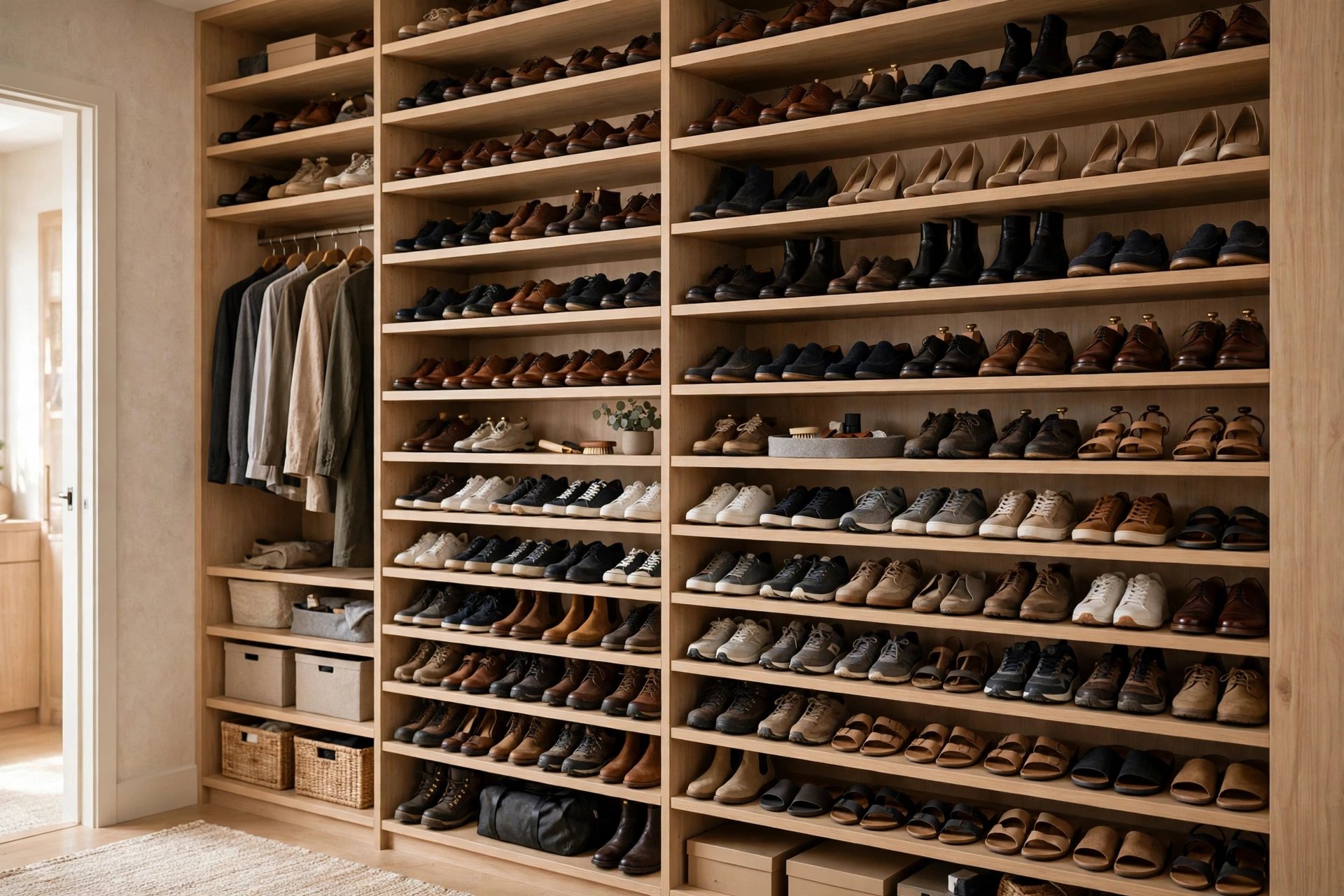
11. A Floor-to-Ceiling Shoe Wall in a Walk-In Closet
If you have a walk-in closet and a real collection, stop hiding it: build a shoe wall. Floor-to-ceiling shelves on one wall, sized to your collection, with the everyday pairs at arm height and the rarely worn pairs up high and down low. A shoe wall turns storage into a feature, and it ends the habit of keeping shoes in boxes on the floor.
Plan it around your actual shoes, not a generic grid: measure your tallest boots and your longest pairs first, then set the shelf spacing. Leave one shelf open at the bottom for the pair you are wearing today. A shoe wall only works if it stays edited — when a new pair arrives, an old pair leaves, or the wall fills up and the pile comes back.
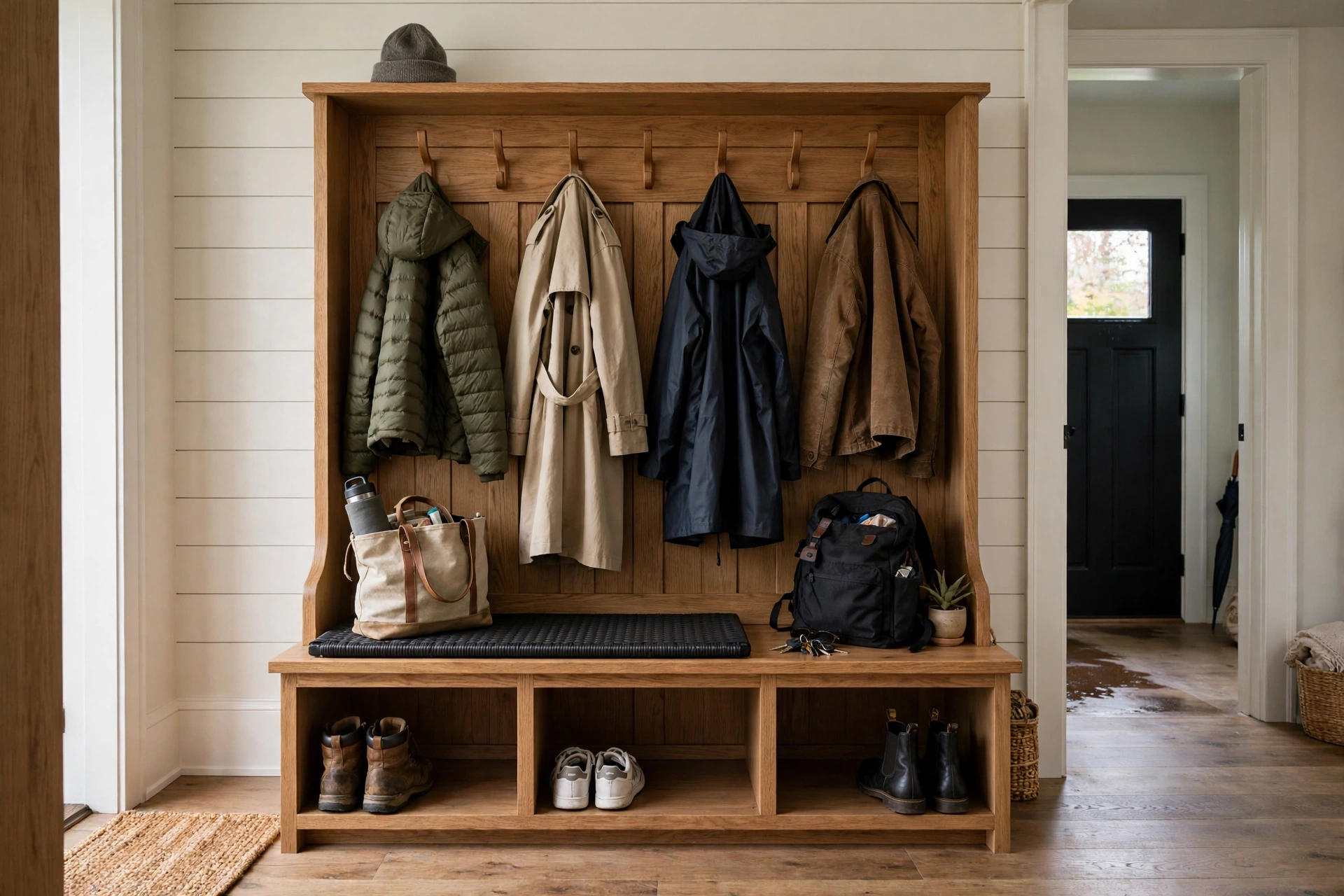
12. A Hall Tree: Coats and Shoes Together
A hall tree combines a coat rack, a bench, and shoe storage in one piece of furniture — and it solves the whole entryway in one purchase. Coats hang on the hooks, bags go on the bench, and shoes slide into the cubbies or onto the shelf underneath. It works best in a mudroom or a wide entryway where the furniture has room to breathe.
Choose a hall tree with open shoe storage underneath rather than closed doors, so shoes air out and the kids can actually find theirs. Anchor it to the wall — a hall tree loaded with coats and shoes is top-heavy and will tip if a child climbs it. If the entryway is narrow, a slim hall tree with a single row of hooks still beats a coat pile on the floor.
13. A Repurposed Dresser or Ladder as Shoe Storage
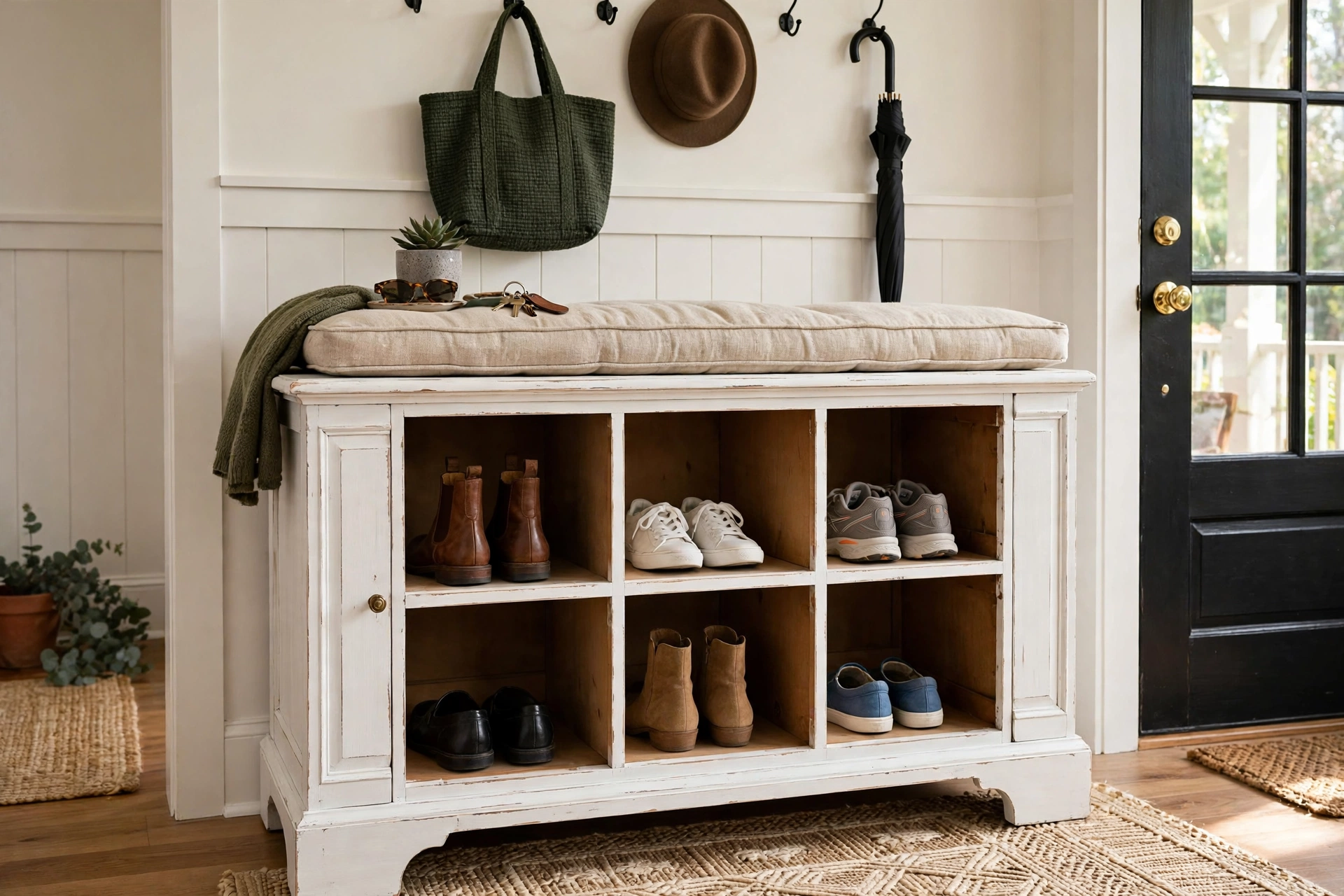
The cheapest shoe storage is the furniture you already have. An old dresser with its drawers removed becomes a set of open shoe cubbies — just add a coat of paint and it looks intentional. A leaning ladder becomes a display rack: hang heels by their straps from the rungs, or lay flat shoes across them. A wooden crate stack becomes a cubby unit for a kids’ room.
The trick is to make it look deliberate, not like a stopgap: paint it, add a cushion on top of the dresser, or stain the ladder to match the room. Measure the openings before you commit — dresser drawers are often too shallow for boots, and ladder rungs are too narrow for wide shoes. For boots, use the bottom drawer space or keep a boot tray beside it.
14. A Kids’ Basket They Will Actually Use
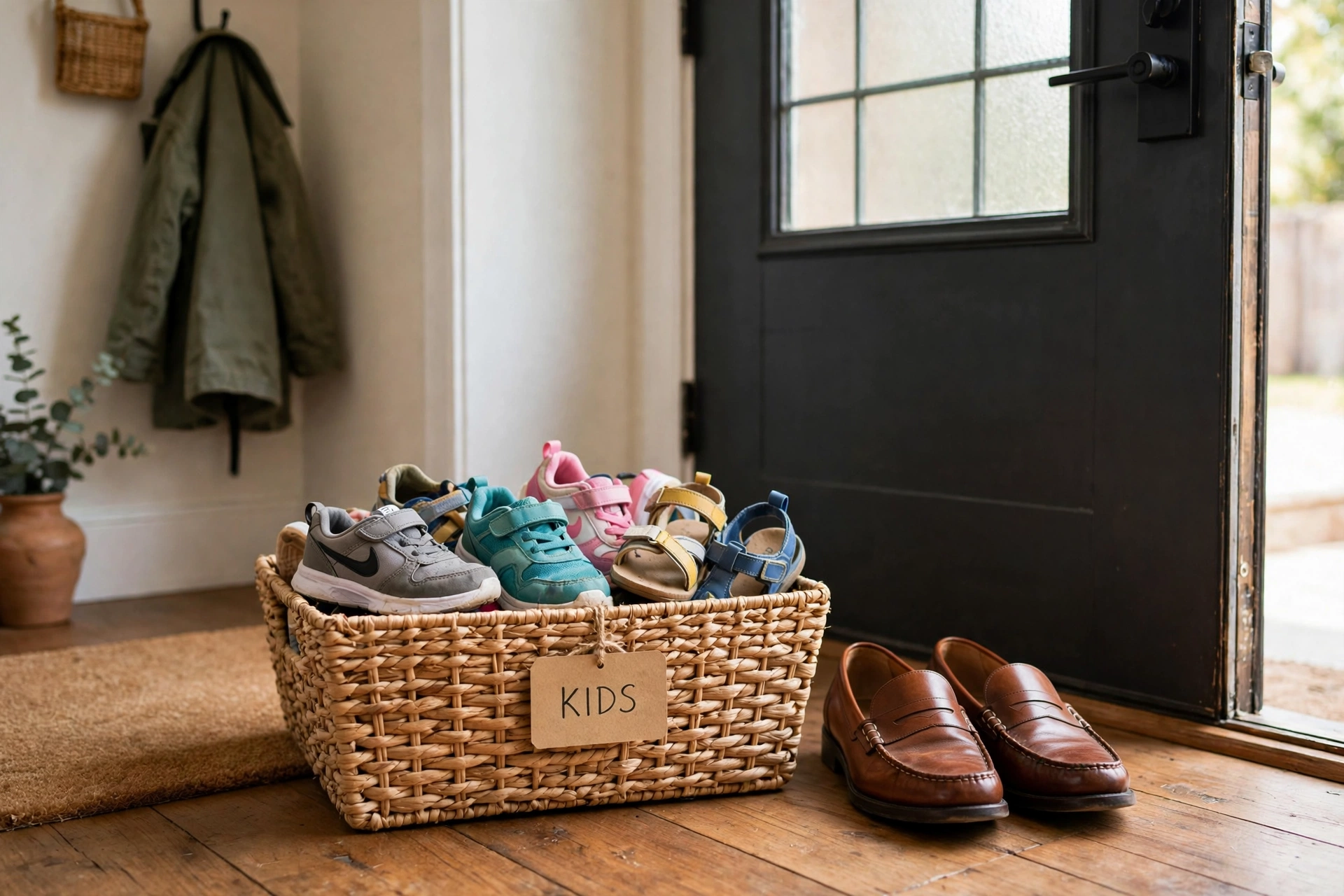
Kids will not use a shoe rack — they will use a basket. Give each child one low, open basket by the door, big enough for two or three pairs, and teach them the one rule: shoes go in the basket, not on the floor. No lids, no doors, no sorting by pair — the basket is the system, and the system works because it is easier than the floor.
Label the basket with the child’s name or a picture so there is no argument about whose basket is whose. Empty it once a week together and put the outgrown pairs in a donation bag — kids’ shoes pile up faster than anyone’s, and the basket only works if it stays at one child’s worth of shoes. A basket that overflows is a basket that needs emptying, not a bigger basket.
15. Seasonal Rotation: Daily Pairs by the Door, the Rest Stored Away
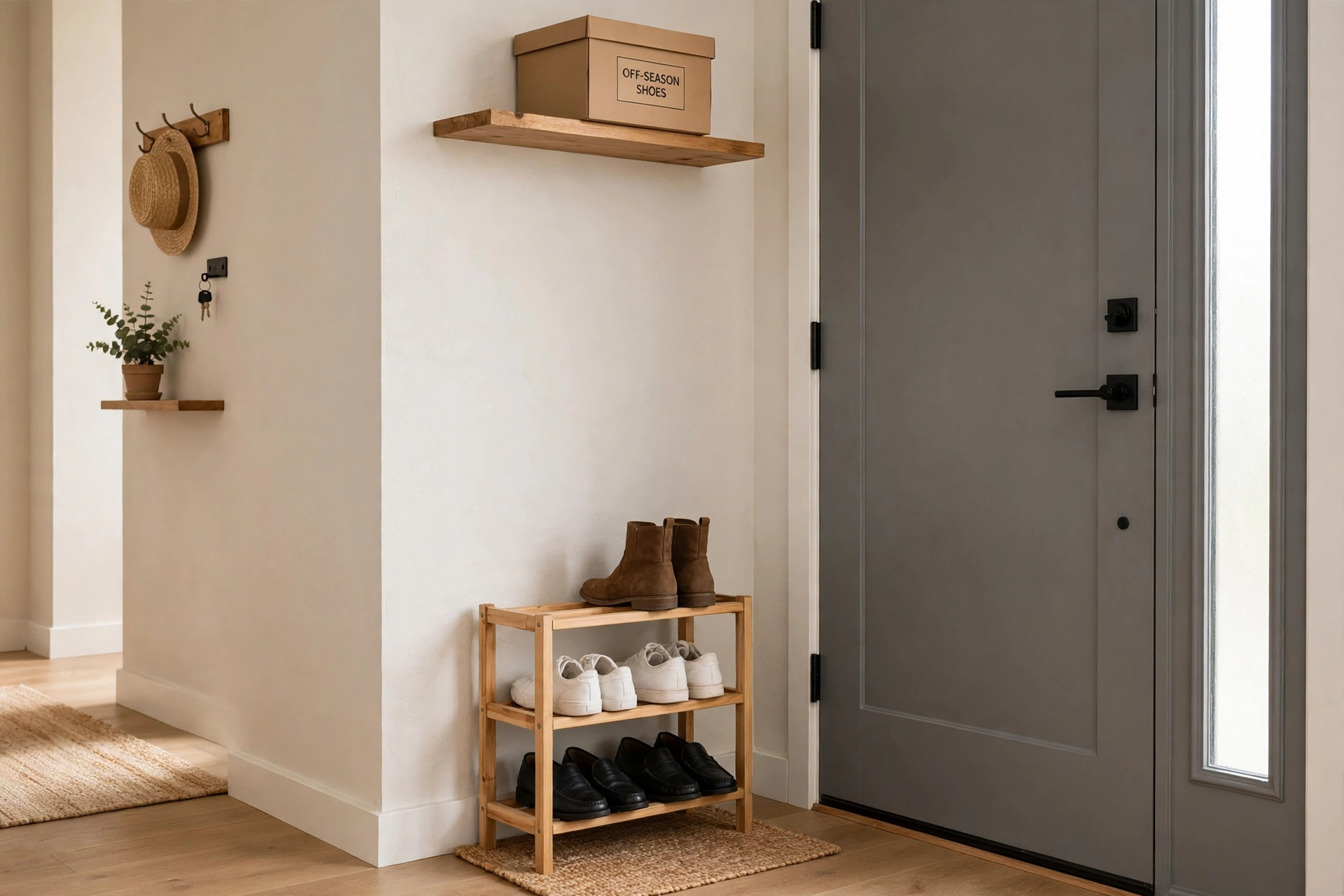
The final shoe storage idea is not furniture — it is a rule. Keep only the daily pairs by the door: the shoes you wear this week, in this weather. Everything else — winter boots in summer, sandals in winter, the occasion pairs — lives in storage: under the bed, on a high closet shelf, or in labeled boxes. Twice a year, at the season change, swap them.
Rotation works because the pile by the door is never really about storage space — it is about too many pairs competing for one spot. When only six pairs live by the door, six pairs fit. Keep a small basket for the off-season pairs that are coming back soon, and donate the ones that have not been worn in a year. The door stays clear, and the closet stays honest.
Frequently Asked Questions
How deep should shoe shelves be?
Twelve to fourteen inches deep fits most adult shoes without them hanging over the edge. Measure your longest pair — usually a men’s size 12 or a tall boot — before you build or buy, because a shelf that is too shallow wastes the whole unit. For kids’ shoes, ten inches is enough. Slanted shelves need the same depth, plus a front rail to stop shoes sliding off.
How do I store shoes in a tiny entryway?
Use the wall and the door, not the floor: a slim flip-drawer cabinet about six inches deep, an over-the-door organizer, or a narrow tiered rack right where shoes come off. Keep only the daily pairs there — two or three per person at most — and store the rest in a closet or under the bed. A boot tray catches the mud so the small space stays clean.
How do I keep stored shoes from smelling?
Air them out before storing, and never store damp shoes in a closed box. Stuff the toes with newspaper or cedar shoe trees to absorb moisture, and add a small sachet of baking soda or a cedar block in the box. Open storage — racks and cubbies — smells less than closed storage, so save the boxes for shoes you wear rarely and air them once a season.
How many pairs should I keep by the door?
Two or three pairs per person, at most — the ones you wear this week, in this weather. Everything else belongs in the closet or in storage. If the rack by the door is always full, the answer is not a bigger rack; it is a seasonal rotation. The door is for daily shoes, not the whole collection.
What is the best way to store boots?
Standing up, with the shafts supported so they do not flop over and crease — boot shapers, rolled magazines, or pool noodles cut to length all work. Tall boots need a shelf at least 16 inches high; short boots fit on a standard shelf. Keep muddy boots on a boot tray by the door until they are dry, then move them to their shelf.
Related Reading
- Entryway Decor Ideas for a Warm Welcome Home
- 15 Small Closet Organization Ideas That Actually Work
- Small Home Organization Ideas on a Budget
- How to Declutter Your Home Room by Room
- 26 Simple Home Organization Ideas That Change Everything
- 12 Christmas Entryway Decor Ideas Guests Will Love
Conclusion
The pile by the door is not a storage problem — it is a too-many-pairs-in-one-spot problem. Give the daily pairs a rack or a cabinet, give the rest a real home in the closet or under the bed, and rotate with the seasons. Six pairs by the door fit. Twenty do not, and no rack will change that.