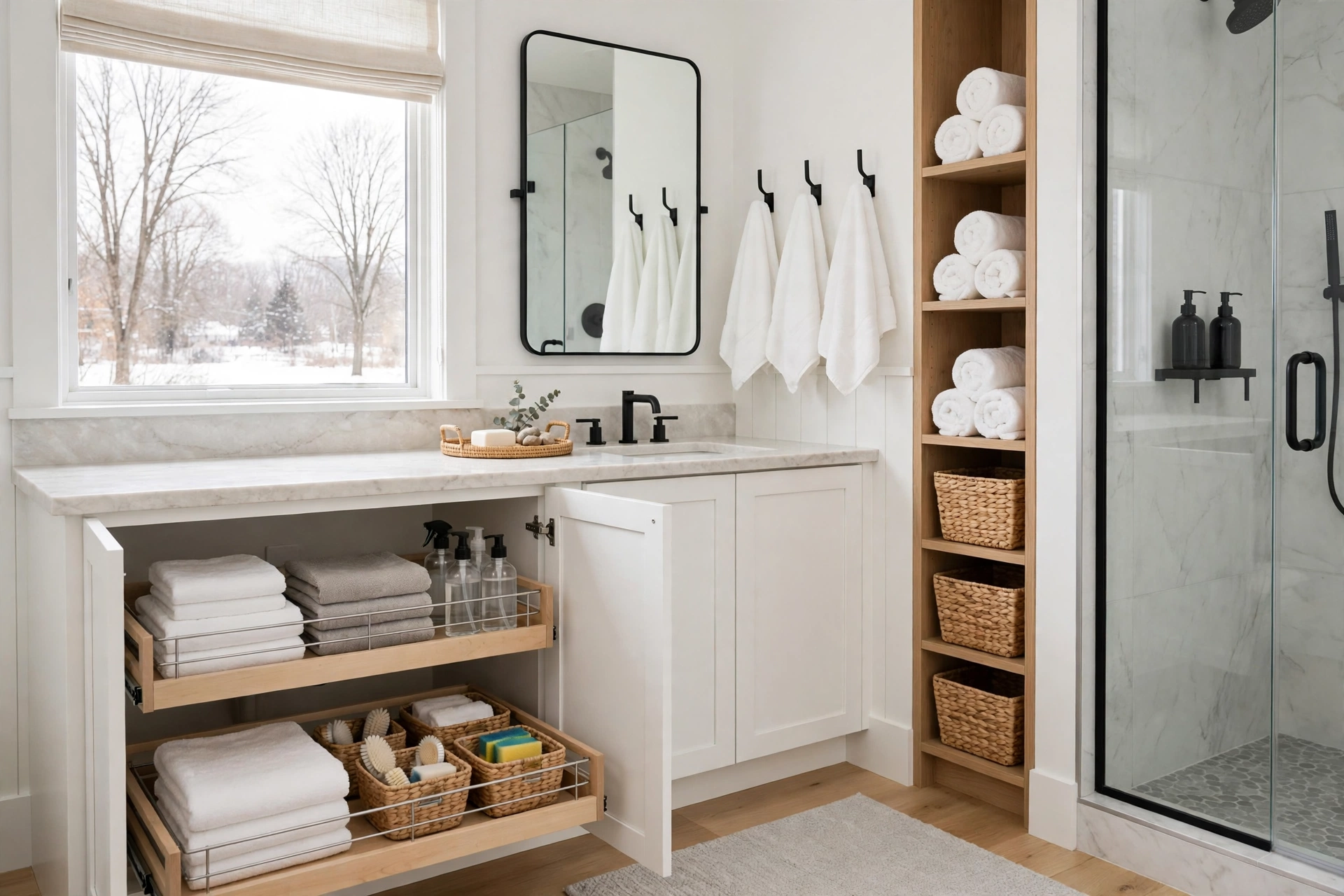
15 New Year Bathroom Organization Ideas for a Fresh Start
Introduction
January is the one month of the year when most of us actually want to start over, and the bathroom is the best place to begin. It is the smallest room in the house, it is the room every person in the family uses every single day, and it is usually the room where clutter builds up fastest — half-empty shampoo bottles, expired sunscreen, makeup you stopped wearing two years ago, and towels that never quite dry. A bathroom that starts the day in chaos sets the tone for the whole morning, and a bathroom that is organized makes the first ten minutes of the day feel calm instead of rushed.
The good news is that New Year bathroom organization ideas do not need a remodel or a big budget. The fifteen ideas below treat the whole bathroom as one system, in the order that works: purge first, then zone the room, then give everything a labeled home, and finally build the one small habit that keeps it all in place. Start with the cabinet under the sink, where our under-sink organization ideas go deep on pull-outs and tiered trays, and use the same bin-and-label system our pantry organization ideas use for food storage.
1. Under-Sink Pull-Outs and Tiered Trays
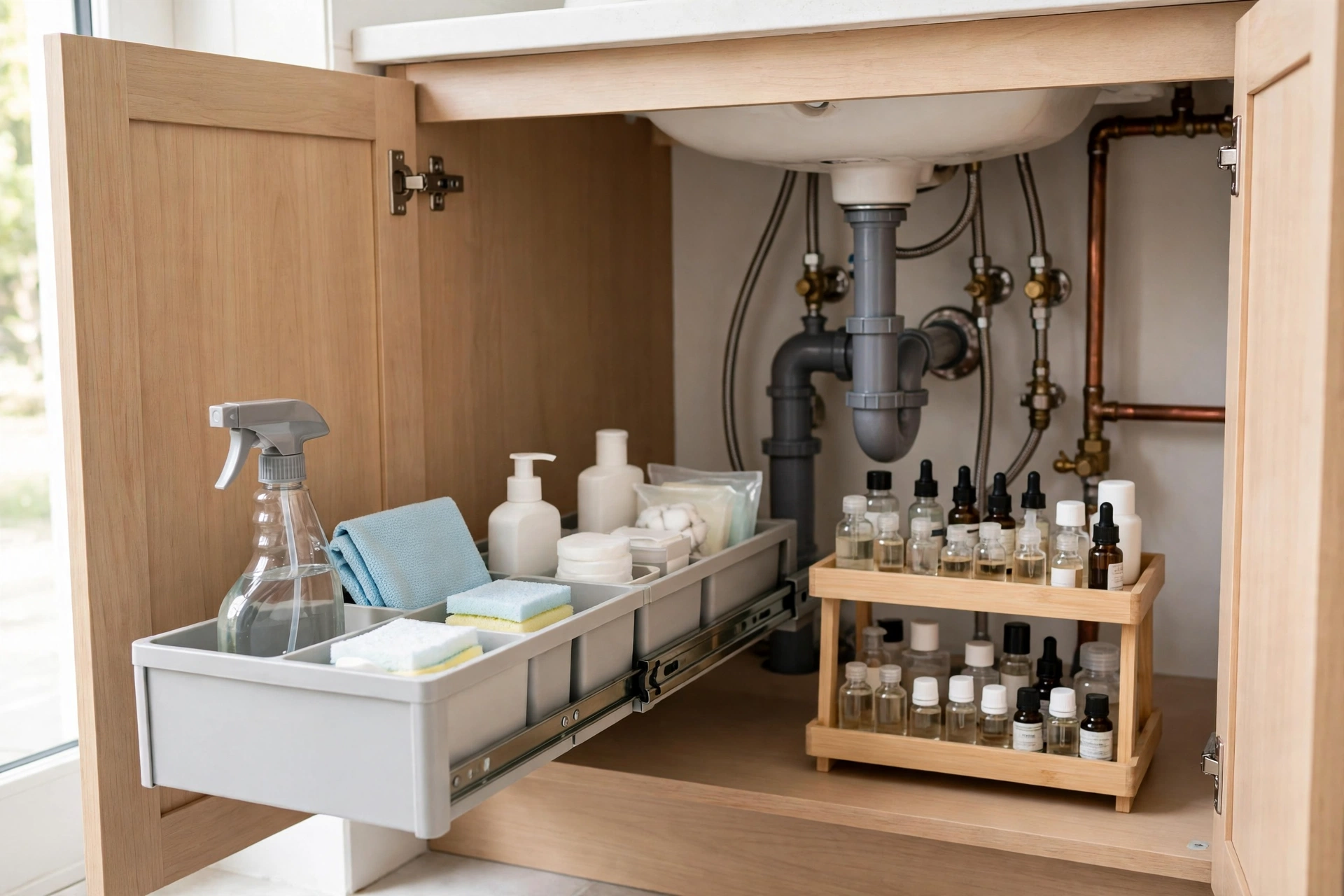
The cabinet under the bathroom sink is the biggest hidden storage space in the room, and it is usually the most wasted — a dark box where bottles pile up and the one you need is always at the back. A pull-out caddy on a sliding rail fixes that, because it brings the whole back of the cabinet out to you in one smooth pull. Look for a U-shaped or two-tier design that fits around the pipes, and check the weight rating before you buy: a caddy full of cleaning products and spare toiletries is heavy, and a cheap rail will sag within a month.
Tiered trays do the same job on the cabinet floor. A two-tier tray stacks small bottles above taller ones, so you can see both levels at a glance instead of digging through a single deep pile. Keep daily items in the front pull-out and backups in the back. Our under-sink organization ideas cover the full system for this cabinet, including leak-proof mats and tension rods, so start there if this is the messiest cabinet in your house.
2. Vertical Shelving to Free the Counter
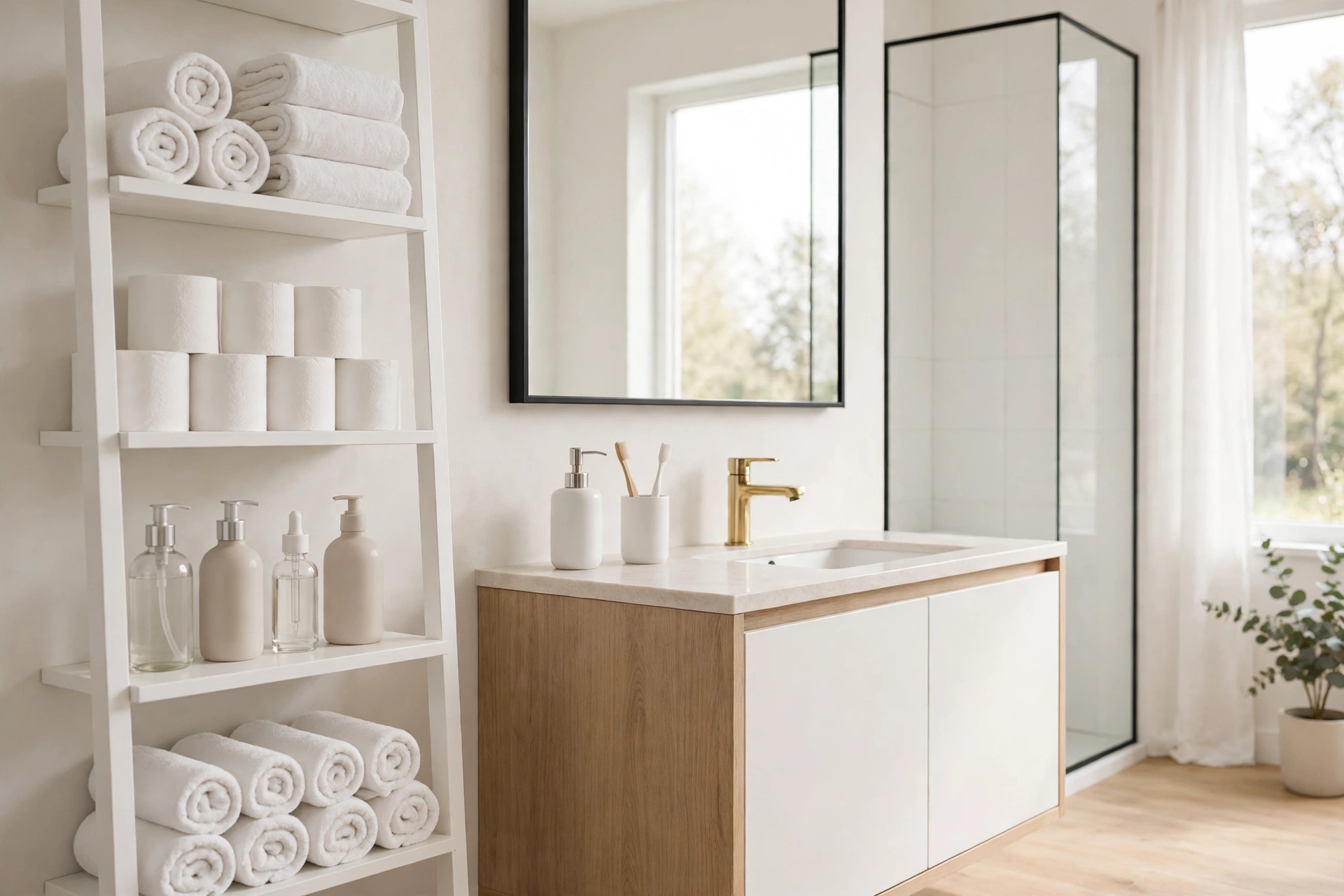
The bathroom counter is the smallest work surface in the house, and it is the one that collects the most clutter. The fix is to go up, not out. A tall, narrow shelving unit — or two or three floating shelves mounted on an empty stretch of wall — moves everything that does not need to be at hand height off the counter and onto a shelf where you can still see it and reach it.
Keep only what you use every single morning on the counter: a toothbrush holder, hand soap, and one tray. Everything else — spare towels, extra toilet paper, backup toiletries, the hair dryer — lives on the shelves.
3. Medicine Cabinet Reset
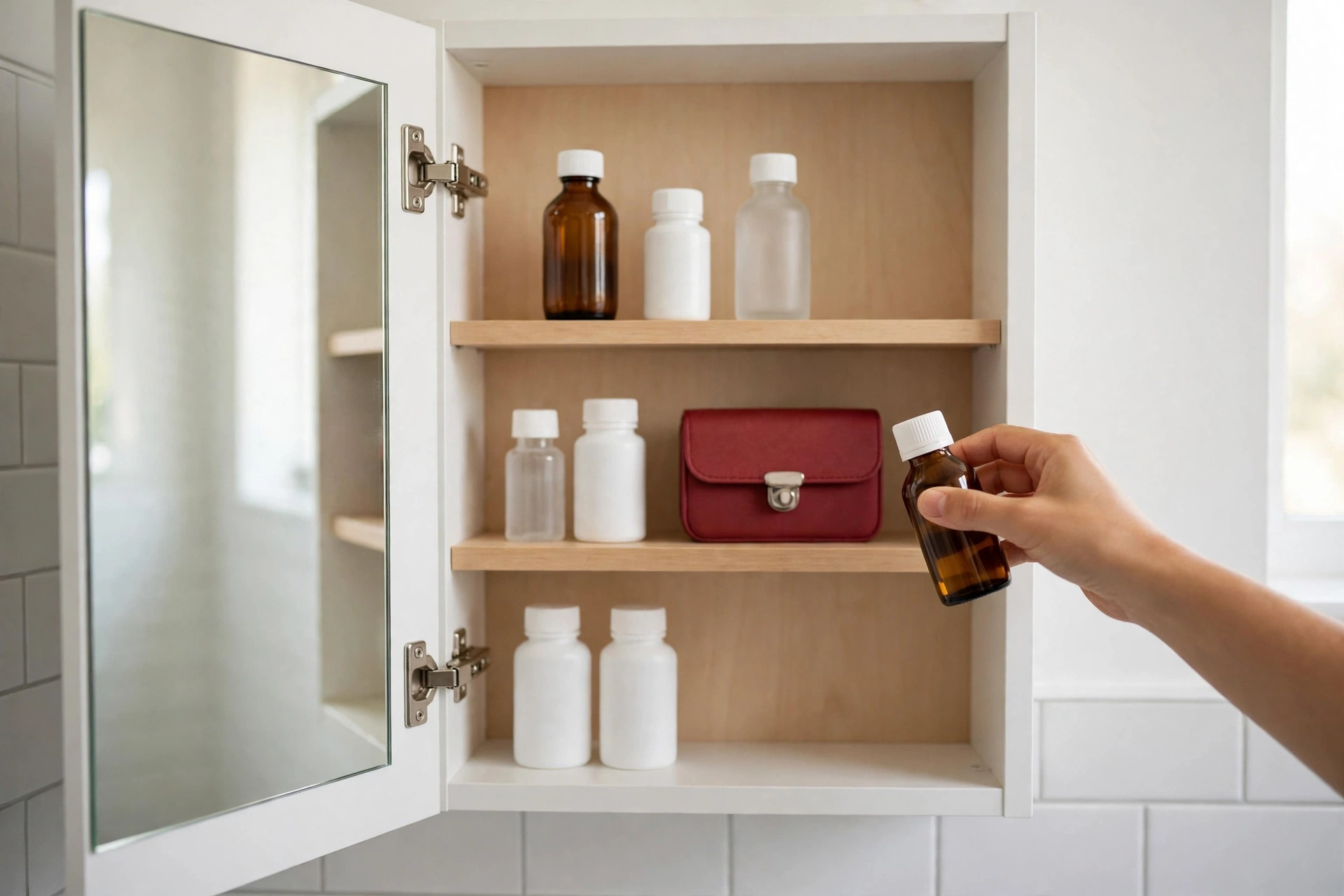
The medicine cabinet is the one storage space in the bathroom that everyone opens and nobody cleans out. January is the time to empty it completely, wipe every shelf, and put back only what belongs there. Check the date on every bottle: pain relievers, allergy medicine, prescription refills, eye drops, and contact lens solution all expire, and expired medicine does not just stop working — it can be unsafe to use.
While the cabinet is empty, check the mirror and the hinges too. Tighten a loose screw, wipe the mirror tracks, and line the shelves with a wipeable liner so the next spill cleans up in seconds. Put daily medicines on the middle shelf at eye level, first-aid supplies on the top shelf, and nothing at the bottom except what you reach for every day. If your household has children, medicines go in a lidded bin on the highest shelf, never within reach of small hands.
4. Drawer Dividers for Makeup and Small Items
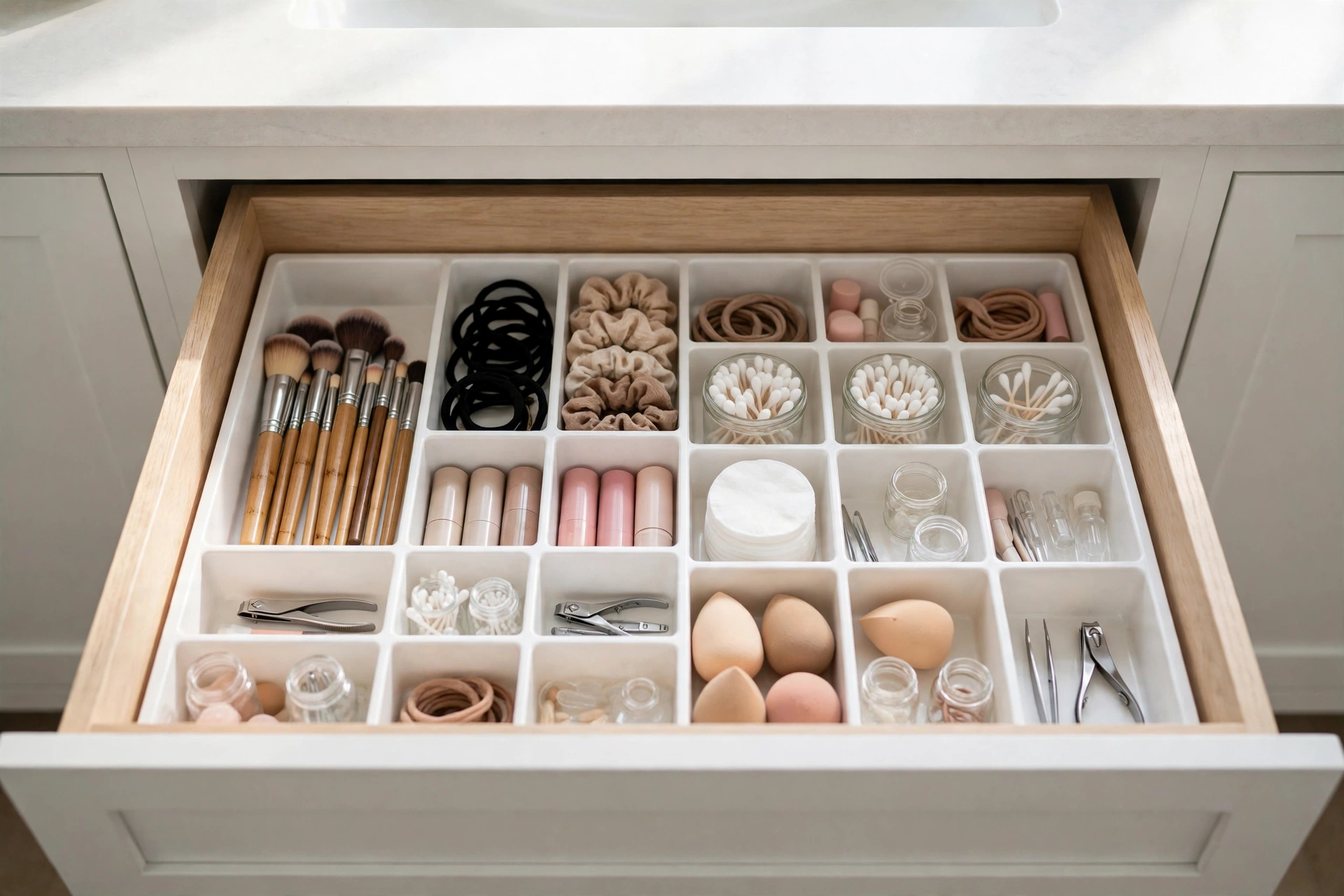
A bathroom drawer without dividers is a junk drawer with better lighting. Makeup, hair ties, bobby pins, tweezers, cotton pads, and nail clippers all slide into one tangled pile the moment the drawer closes, and finding anything means digging. Drawer dividers — the adjustable kind, or simple small trays and boxes — turn one deep drawer into a grid of small homes, one per category.
Sort before you divide. Pull everything out, throw away dried-out mascara, broken compacts, and the lipstick shades you never wear, then group what is left: face products together, eye products together, hair accessories in their own section. Measure the drawer first and buy dividers that fit with no gaps, because a divider that slides around is worse than no divider at all.
5. Matching Dispensers for the Shower
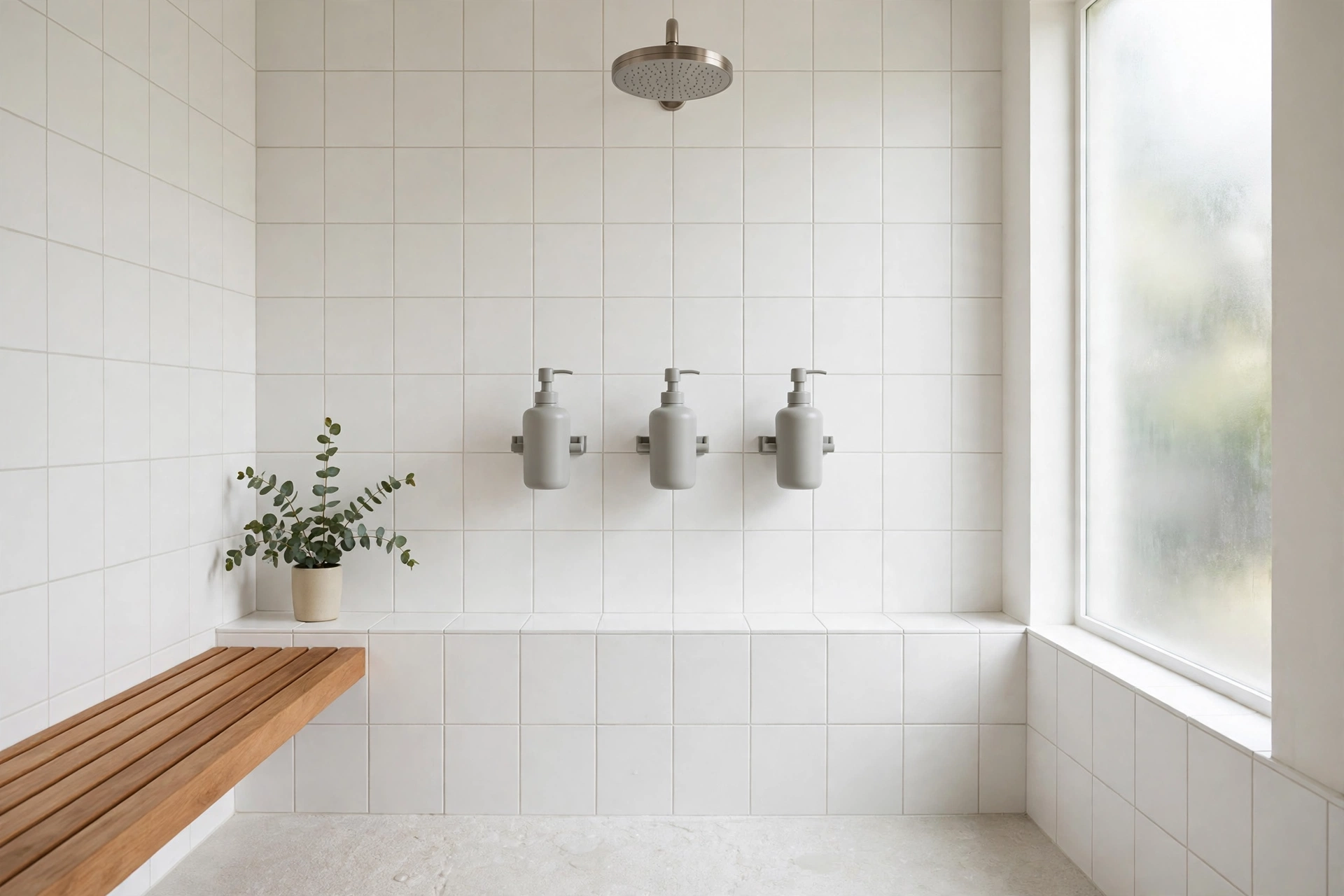
Open most showers and you will count twenty bottles: three shampoos, two conditioners, a body wash for every family member, a half-empty bottle of something nobody remembers buying. Matching dispensers end that pile in one move. Mount two or three refillable pump dispensers on the shower wall — one for shampoo, one for conditioner, one for body wash — and refill them from large bottles stored under the sink.
Matching dispensers do more than look tidy. They cut the visual clutter to almost nothing, they stop the shower ledge from turning into a slippery shelf of falling bottles, and they save money, because a large refill bottle costs less per ounce than a dozen small ones. Choose dispensers with clear labels on each pump, so nobody washes their hair with body wash. If anyone in the family has a medicated shampoo, give them their own labeled bottle on a small corner shelf — one exception, not twenty.
6. Towel and Linen Baskets
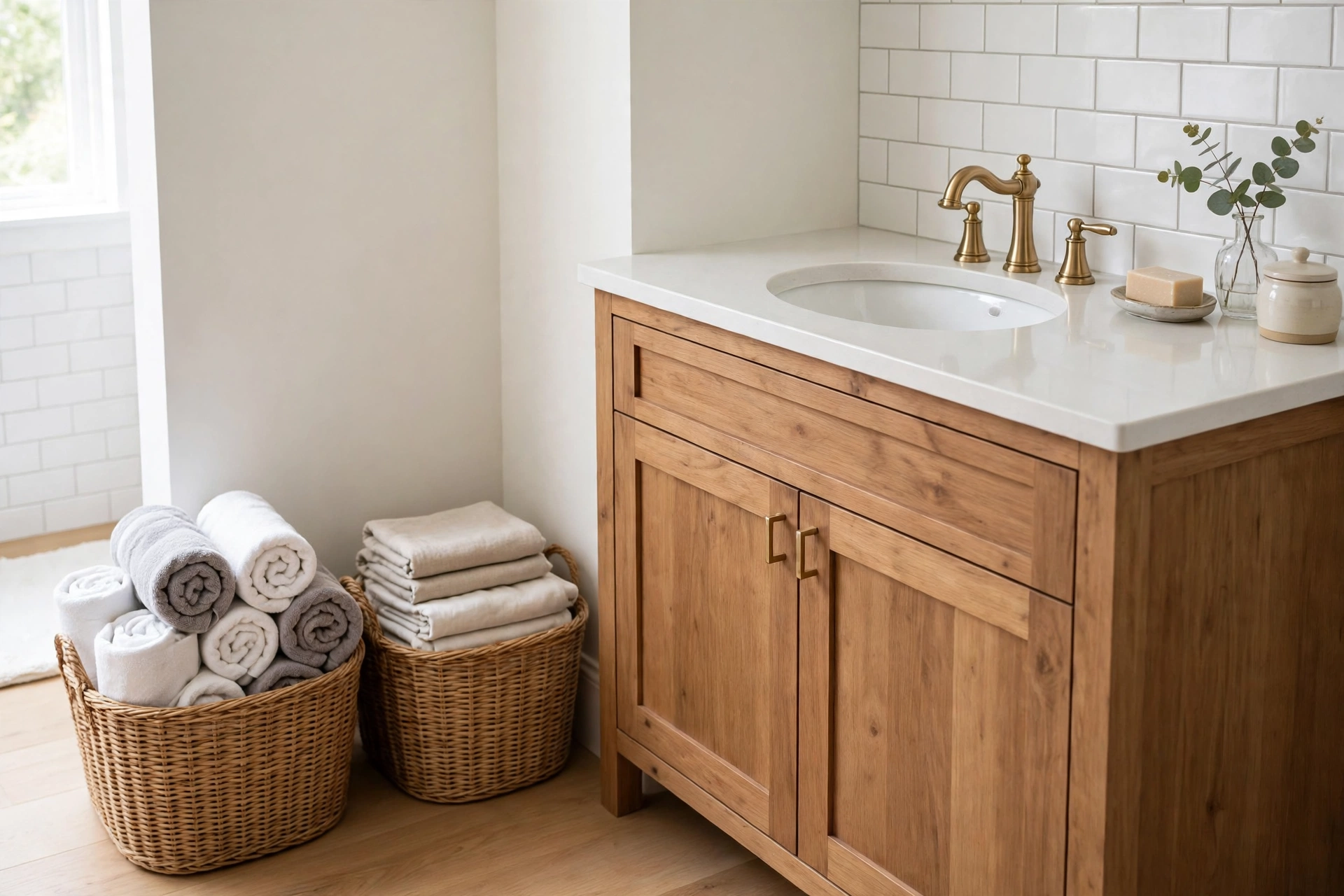
Towels and linens are the bulkiest things a bathroom stores, and they are the things most likely to end up in a damp pile on the floor. Baskets fix both problems. A large woven basket beside the vanity holds clean hand towels and washcloths, rolled so you can see how many are left at a glance. A second basket — or a tall laundry hamper with a lid — holds dirty towels until wash day, so they are off the floor and out of sight.
Roll towels instead of folding them for basket storage: rolled towels fit more per basket, they look neater, and you can pull one out without disturbing the rest. Keep one set of guest towels in a separate basket on a high shelf, so guests never have to dig through the family’s everyday towels. If the bathroom is small, a basket that slides under the vanity or fits on top of the toilet tank uses space that is otherwise wasted.
7. Hooks and Racks for Robes and Towels
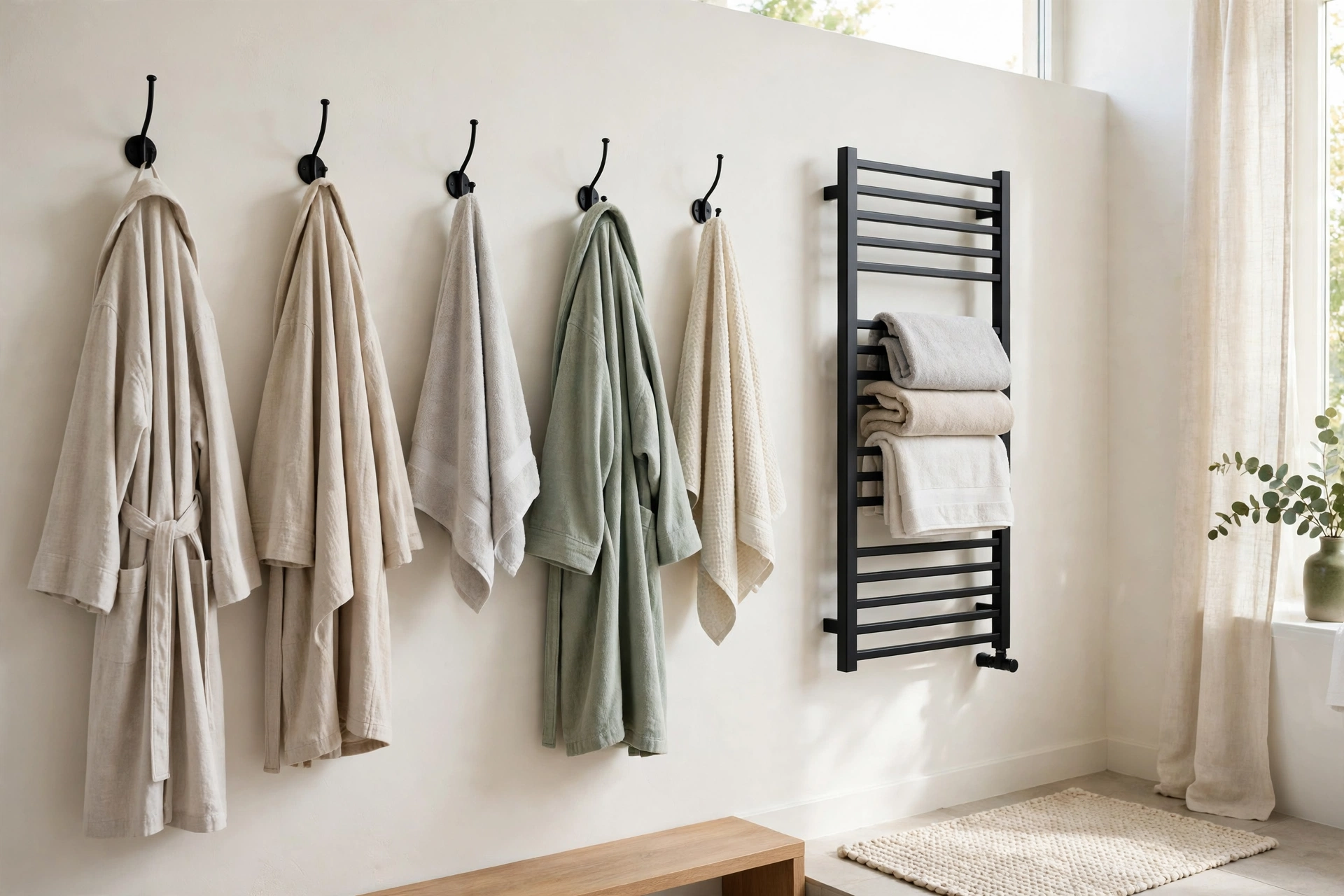
Towel bars look tidy in a catalog, but in a real family bathroom they fail: one bar holds one towel, and a family of four needs four bars. Hooks and racks are the answer, because one row of hooks holds a robe, a towel, and a washcloth per person, all on the same stretch of wall. Mount a row of sturdy hooks on the back of the door or on an empty wall, one hook per family member, and give each person their own hook so nobody has to guess whose towel is whose.
A heated towel rack is worth considering if your bathroom stays damp: warm, dry towels in the morning, and towels that actually dry between uses instead of going musty. Whatever you choose, keep the hooks at a height everyone in the family can reach — kids’ hooks go lower, adults’ hooks higher.
8. Countertop Tray Corrals
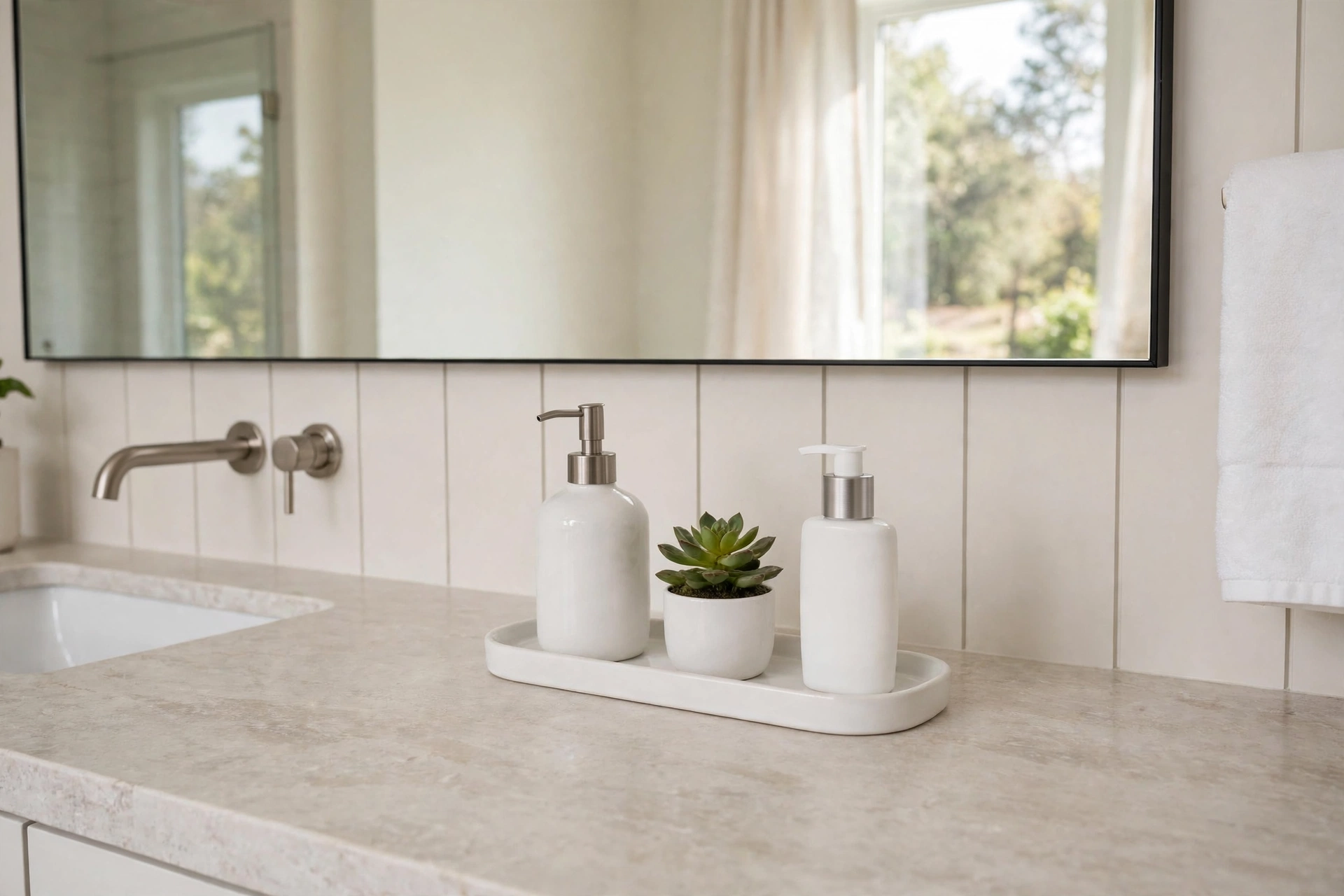
If your counter still collects clutter even after you have added shelves, the problem is not storage — it is boundaries. A countertop tray gives the things that must stay on the counter a defined home. Put the tray on the counter, put the daily items inside it — hand soap, a small vase, the toothbrush holder, a hand cream — and everything else lives somewhere else. The tray is the corral: if it does not fit in the tray, it does not live on the counter.
Choose a tray that fits your counter with room to spare, and pick a material that handles water: a ceramic tray, a wooden tray with a waterproof finish, or a simple metal tray with a raised edge. A raised edge matters, because it stops a tipped bottle from rolling off the counter and onto the floor.
9. Expired Product Purge
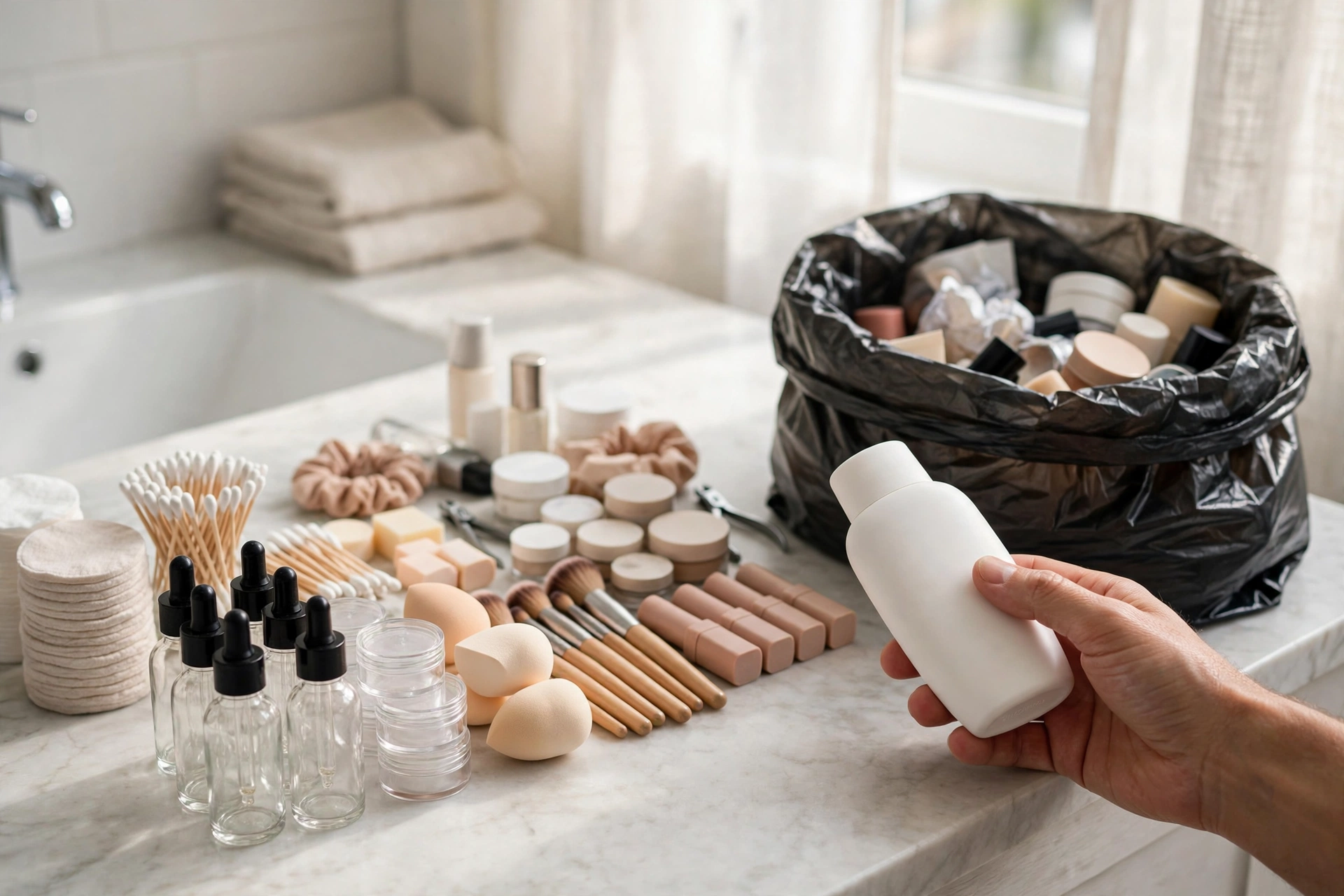
The expired product purge is the single most satisfying hour of a January bathroom reset, and it is also the most important for safety. Pull every product out of every cabinet, drawer, and shower ledge — medicines, cosmetics, sunscreen, hair products, nail polish, first aid — and check the date or the opened-symbol on each one. Sunscreen loses its protection after it expires, mascara should be replaced every three months, and old medicines can be ineffective or unsafe.
Be honest about what you actually use. The half-empty bottle of self-tanner from two summers ago, the three nearly identical face creams, the sample sizes from a hotel stay in 2024 — if you have not used it in a year, you will not use it next year. Bag the expired products for disposal, following your local rules for medicines (many pharmacies take them back), and donate unopened, in-date extras to a local shelter.
10. Labeled Bins for Every Family Member
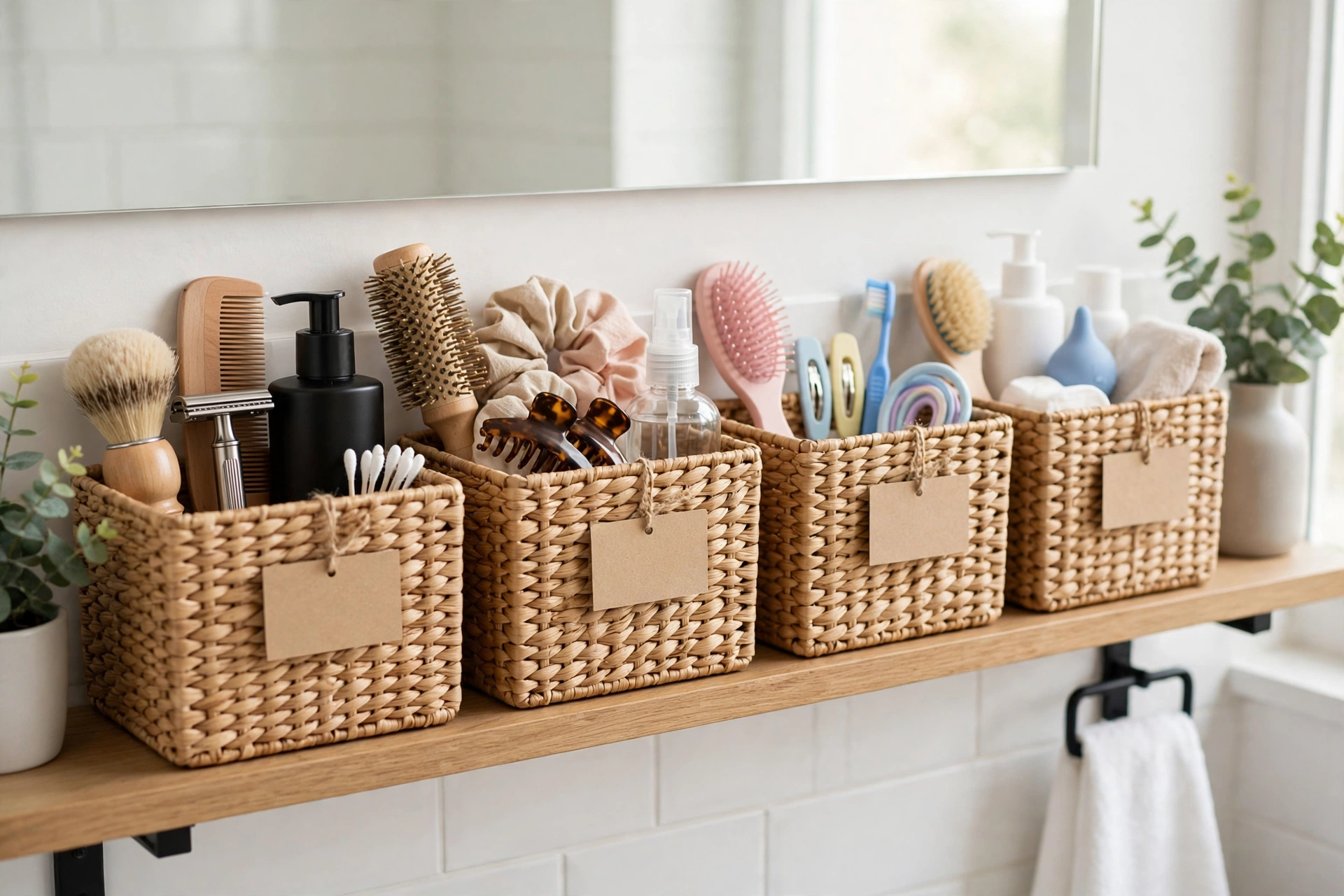
In a shared bathroom, the fastest way to end the morning argument about whose shampoo is whose is to give every person their own bin. One labeled bin per family member, on a shelf or in the cabinet, holds that person’s daily products: their shampoo, their skincare, their hairbrush, their toothbrush and toothpaste. When it is their turn in the bathroom, they pull out their bin; when they are done, the bin goes back on the shelf.
Label each bin with a name, not a color code — a label maker gives the cleanest result, but masking tape and a marker work just as well. Keep the labels short and plain, and put them on the front of the bin where you can read them without pulling the bin out. In a house with kids, the kids’ bins go on the lowest shelf, where they can reach them without climbing, and adults’ bins go higher.
11. Over-Toilet Storage
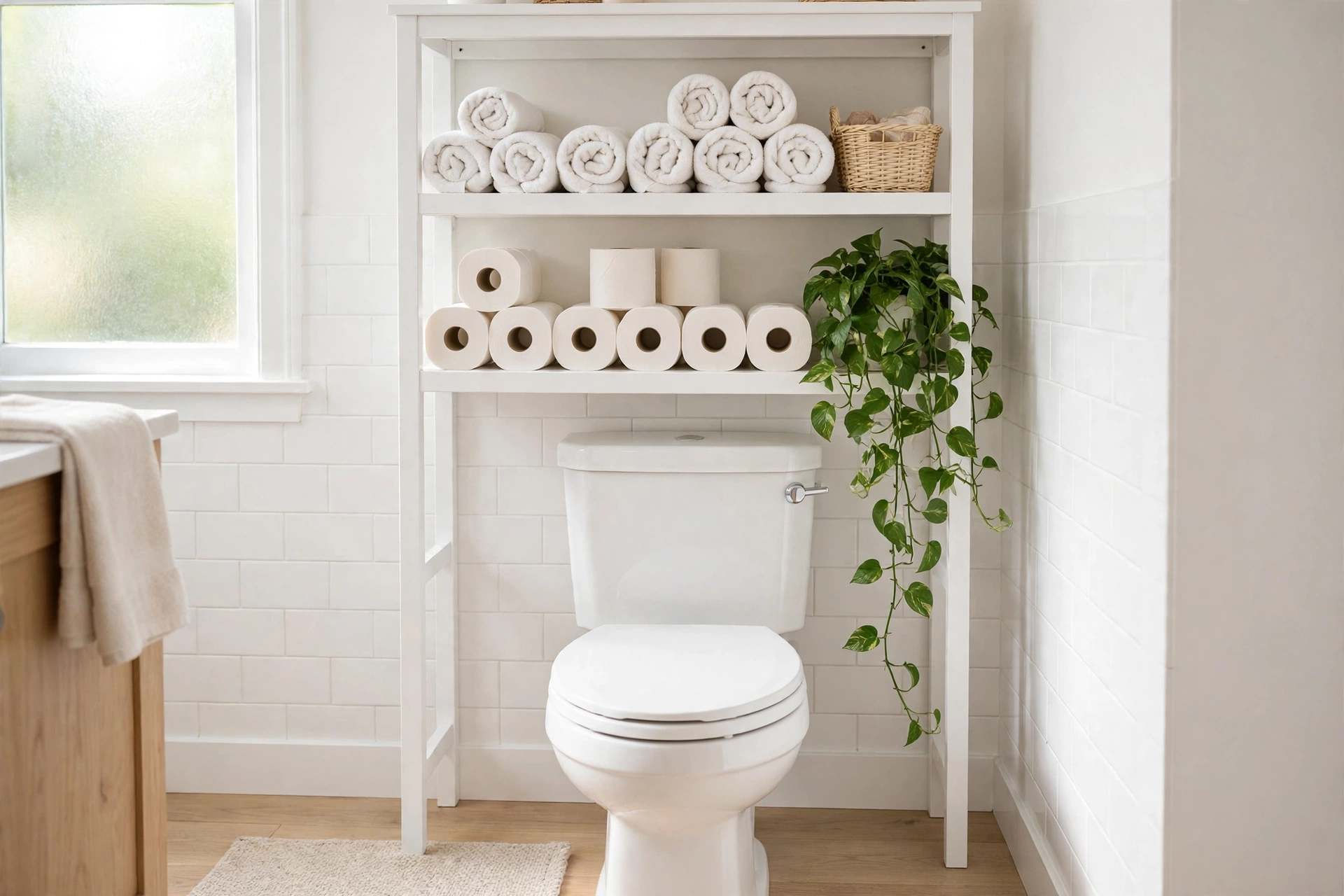
The wall above the toilet is the most underused storage space in the bathroom. An over-toilet storage unit — a freestanding shelf that straddles the tank, or two floating shelves mounted above it — adds two or three shelves of storage without taking a single inch of floor space. Use it for the things you reach for often but do not need on the counter: extra toilet paper, spare hand towels, a small basket of toiletries, a plant that likes humidity.
Keep it light and keep it tidy. Heavy items belong lower down, not three feet above a porcelain tank. Leave enough clearance above the tank lid so you can lift it off without moving the shelf, and never store anything glass directly above the toilet.
12. Small-Space Vertical Hacks
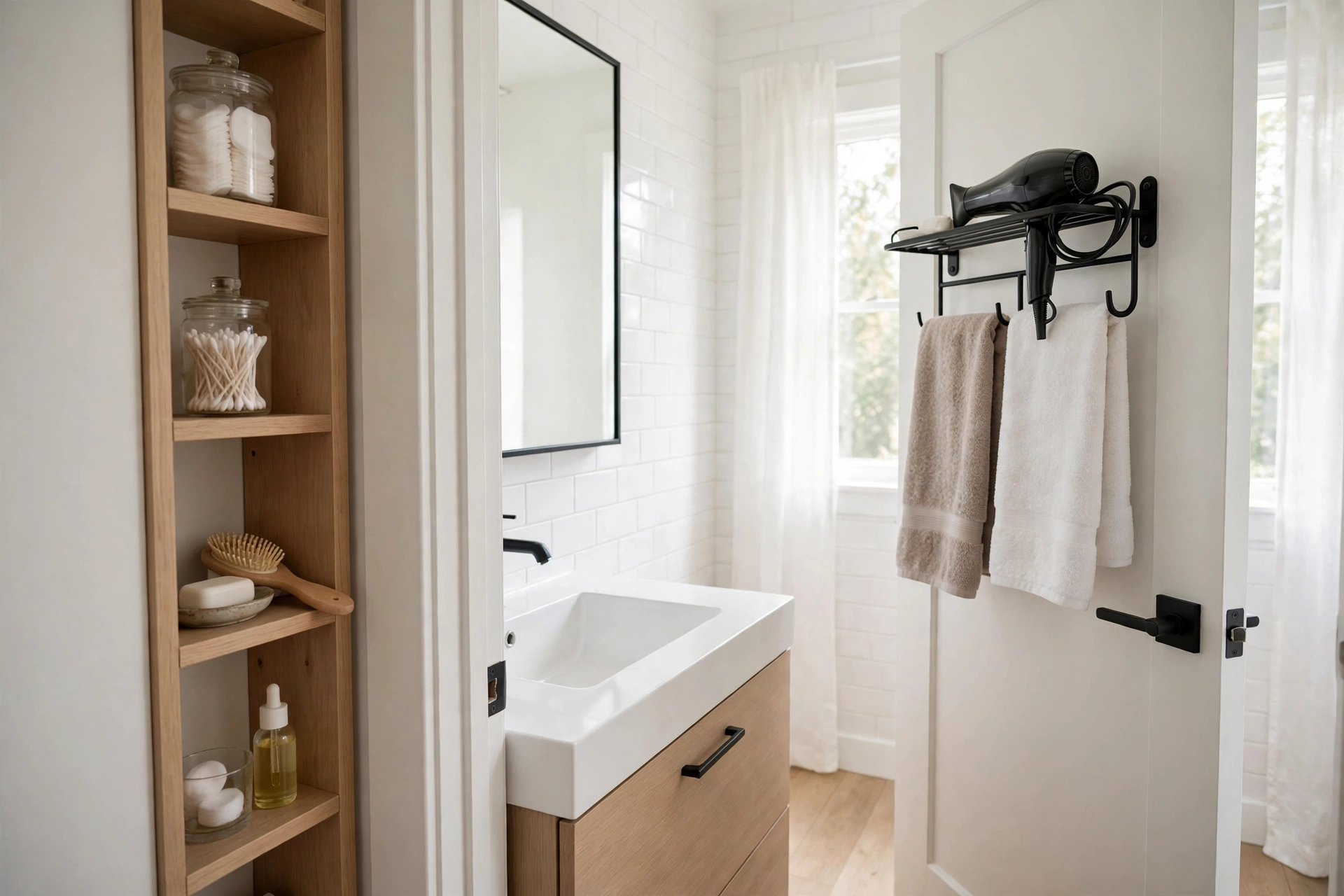
A small bathroom feels smaller when everything is stored at counter height, because the counter is the only surface and it is always full. The fix is to use the vertical space that small bathrooms always have and almost never use: the back of the door, the narrow gap beside the vanity, and the wall above the mirror. An over-door rack holds hair tools, cleaning supplies, or spare toiletries on hooks and baskets that hang from the door itself. A tall, narrow shelf — twelve inches wide or less — slides into the gap between the vanity and the wall and holds bottles that would otherwise crowd the counter.
Measure before you buy anything for a small bathroom, because a rack that is one inch too deep will stop the door from closing, and a shelf that is one inch too wide will not fit the gap. Keep the heaviest items low, the lightest items high, and leave at least one stretch of wall completely empty — a small bathroom needs one clear surface for the eye to rest on, or it will feel cluttered no matter how organized it is.
13. Kids’ Bath Caddy
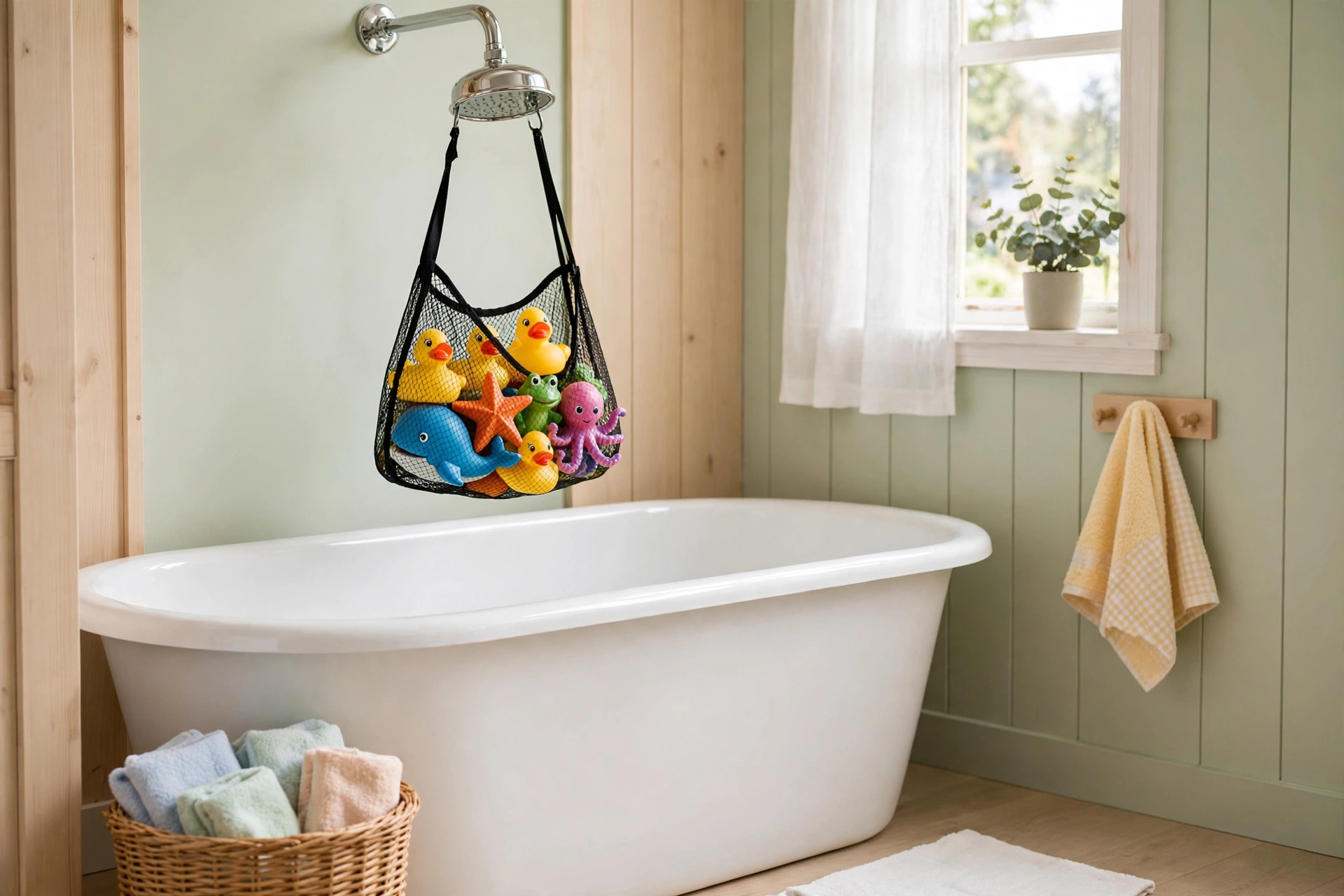
Kids’ bath time creates its own special kind of bathroom mess: rubber ducks, bath crayons, toy boats, bubble bath, and a washcloth that is always somewhere else. A kids’ bath caddy ends it. Give the kids one caddy — a mesh bag that hangs from the showerhead or a suction-cup basket on the tub wall — and every bath toy lives in it. Mesh is the right material, because it lets the toys drain and dry between baths instead of sitting in a puddle and going moldy.
Keep the caddy at a height the kids can reach, so they can put their own toys away — that is half the point. One small basket beside the tub holds the washcloths and the bubble bath, and one hook holds their towel. When bath time is over, the toys go in the caddy, the caddy hangs on its hook, and the tub is clear for the next person.
14. Weekly Wipe-Down Routine
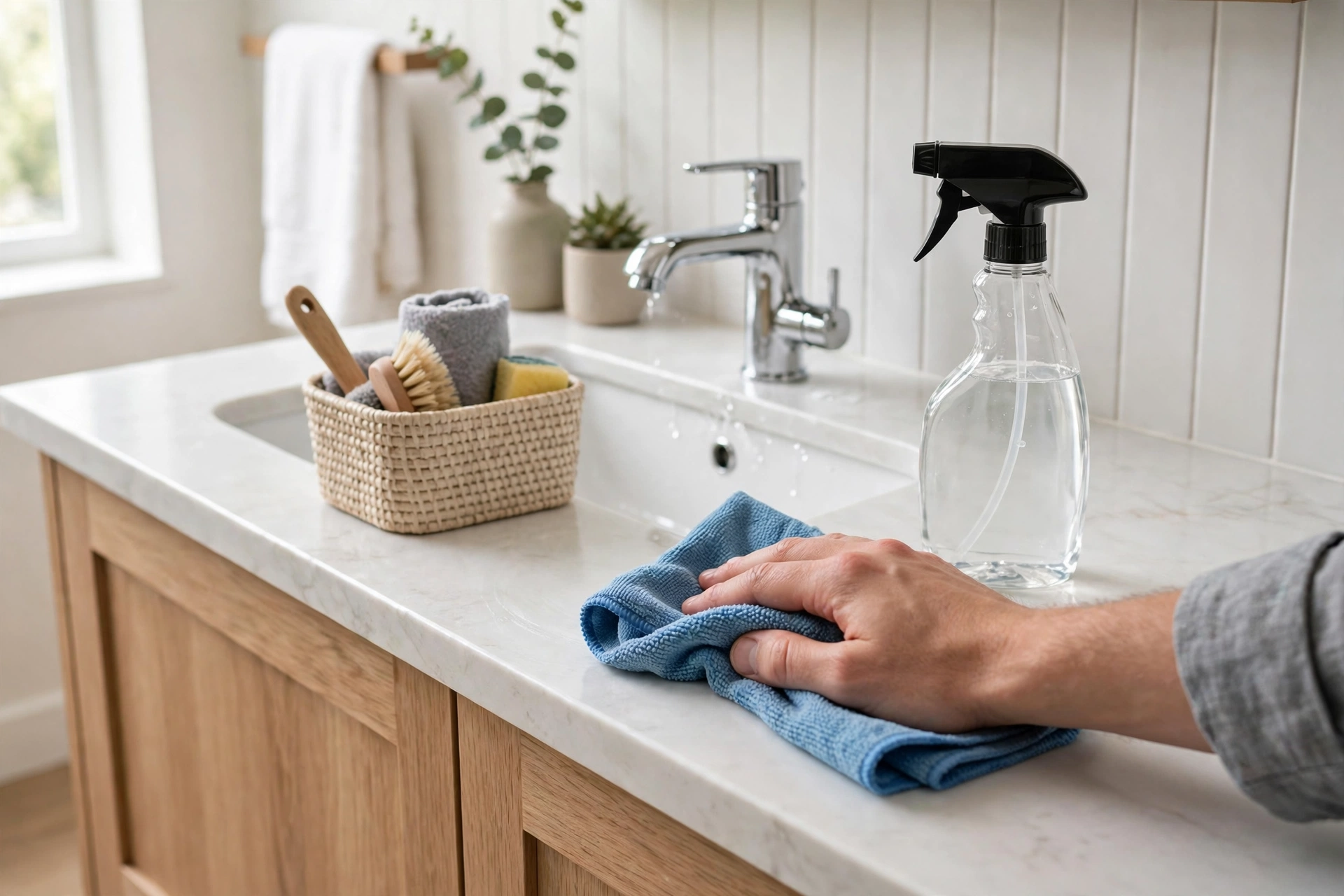
No organization system maintains itself, and the bathroom is the room where a system falls apart fastest, because it gets used every day by every person in the house. The fix is a weekly wipe-down routine that takes fifteen minutes and happens on the same day every week — Sunday evening works for most families, because it sets the bathroom up for the week ahead. Wipe the counter and the sink, clean the mirror, wipe the faucet and the toilet seat, empty the trash, and put anything that has drifted out of its home back where it belongs.
Keep the cleaning supplies for the routine in one caddy under the sink, so the wipe-down never starts with a search for the spray bottle. A small spray bottle of all-purpose cleaner, a microfiber cloth, and a toilet brush are all you need for the weekly pass; the deep clean — the grout, the shower, the floor — happens once a month.
15. Fresh Towels and a Shower Curtain Swap
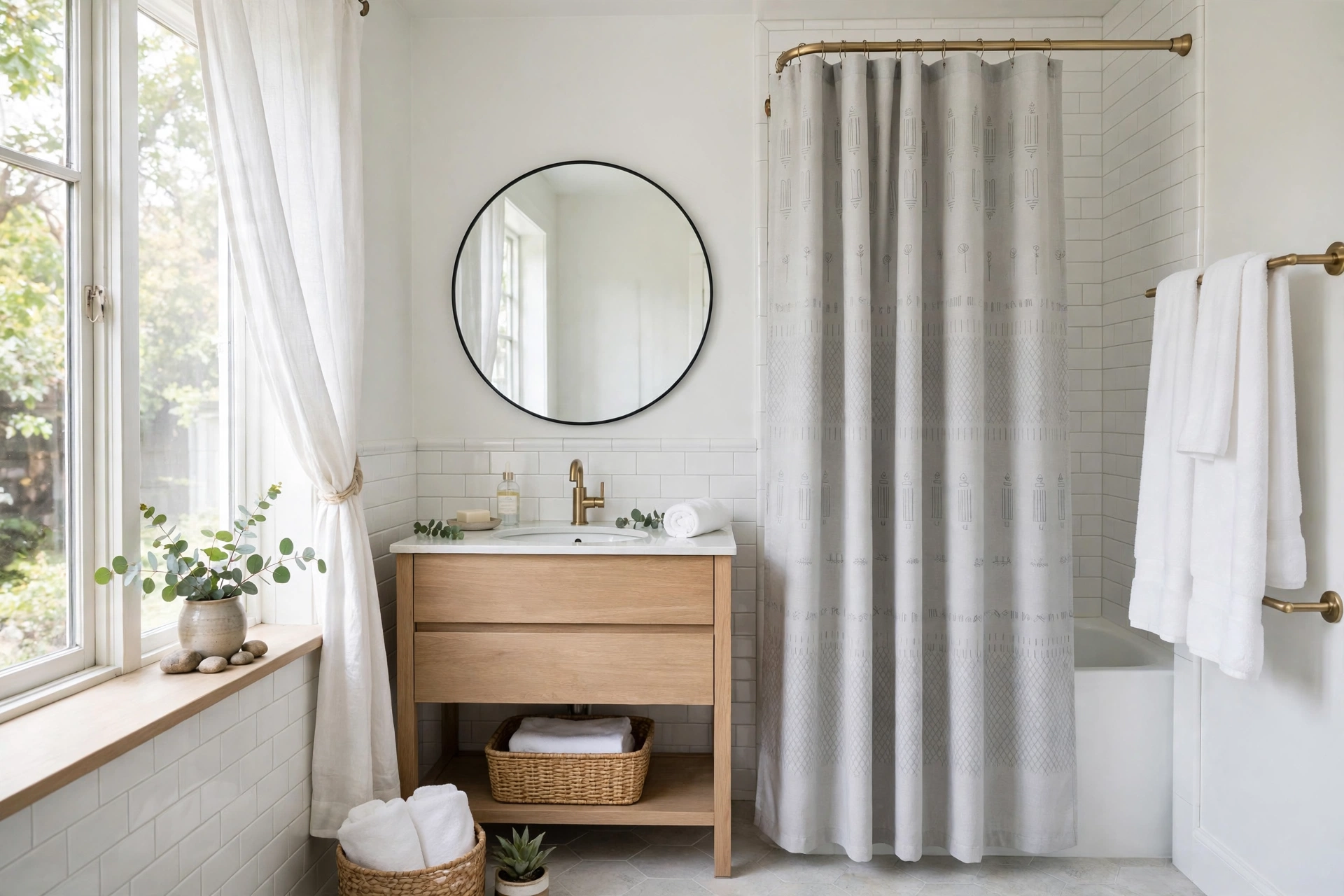
The last idea is the cheapest and the fastest, and it is the one that makes the whole room feel new. Swap the towels and the shower curtain. Fresh towels in a new color — white for a clean, hotel feel, or a soft sage or warm gray for a calm January palette — and a new shower curtain in a simple pattern or a solid color, and the bathroom looks like a different room for the price of a single shopping trip.
While the old curtain is down, clean the shower curtain rod and the rings, and check the liner: if the liner is stained or torn, replace it too, because a new curtain over a grimy liner still looks grimy. Wash the new towels before you hang them, so they are soft and absorbent from the first use.
Frequently Asked Questions
How do I start organizing my bathroom in January?
Start with a full purge before you buy any storage. Empty every cabinet, drawer, and shower ledge, throw away expired products, and donate what you do not use. Then zone the room — under-sink, medicine cabinet, drawers, shower — and give each zone its own storage. These New Year bathroom organization ideas work in that order on purpose: purge first, then zone, then label, so you organize only what is actually worth keeping.
What is the best way to organize a small bathroom?
Use the vertical space: tall narrow shelves, over-door racks, hooks, and over-toilet storage, and keep the counter nearly clear with a single tray corral. Small bathrooms need fewer things, not more storage — so the purge matters even more. These New Year bathroom organization ideas are built for small bathrooms too: ideas 2, 11, and 12 are all vertical storage that adds space without taking a single inch of floor.
How do I keep the bathroom organized after January?
Build the fifteen-minute weekly wipe-down into your routine — same day, every week — and do a ten-minute reset on the first Saturday of every month: toss empties and expired products, restock what is low, and put everything back in its labeled spot. That is the secret behind these New Year bathroom organization ideas: the system is only as good as the habit that maintains it, and fifteen minutes a week keeps the bathroom tidy all year instead of just in January.
How do I organize bathroom products for the whole family?
Give every family member their own labeled bin on a shelf or in the cabinet, with their daily products inside, and give kids a low shelf and their own bath caddy. One hook per person for towels and robes stops the morning mix-ups. These New Year bathroom organization ideas treat the bathroom as a shared system, not one person’s space, so the bins and hooks are what make the room work for everyone in the house.
What should I throw away when organizing my bathroom?
Throw away anything expired — medicines, sunscreen, cosmetics, and anything with a strange smell or color — plus dried-out mascara, broken compacts, and products you have not used in a year. Check the expiration date or the opened-symbol on every bottle. These New Year bathroom organization ideas start with the purge for a reason: expired products are unsafe, and organizing things you will never use just wastes the storage you worked so hard to build.
Related Reading
- Under-Sink Organization Ideas
- Pantry Organization Ideas
- Laundry Room Organization Ideas
- Small Closet Organization Ideas
- How to Declutter Your Home Room by Room
- How to Clean a Dishwasher
Conclusion
A bathroom that starts January organized can stay organized all year, and it does not take a remodel to get there. With these New Year bathroom organization ideas — a full purge, under-sink pull-outs, vertical shelving, labeled bins for every family member, and a fifteen-minute weekly wipe-down — the smallest room in the house becomes the calmest one. Start with the purge this weekend, add one idea at a time, and keep the weekly routine on the calendar. A tidy bathroom saves you time every morning, and once you can actually find the toothpaste, you will wonder why you waited so long.