15 New Year Dining Room Decor Ideas for a Sparkling January
Introduction
January is the one month when the dining room gets a real fresh start. The Christmas decorations are packed away, the table is clear, and the room is waiting for a look that belongs to the new year — not to December. New Year dining room decor ideas work best when you decorate the whole room, not just the table: the sideboard, the chandelier, the walls, the windows, and the chairs all get a say in how the room feels.
The January palette is simple and elegant: gold, silver, black, and white, with winter florals doing the color work. No red, no green, no ornaments — the festive season is over, and the room should look like it knows it. A dining room is where the family gathers for the first dinners of the year, so it deserves to feel bright, calm, and a little bit special. The fifteen ideas below start at the table and move outward to the sideboard, the chandelier, the walls, and the windows, and most take an afternoon. For the table itself, our New Year table decor ideas cover the full tablescape — place settings, runners, and party-night details — while this guide stays on the room around it. If you hosted Christmas here too, our Christmas dining room decor ideas show the festive version of the same room, so you can see exactly what to pack away and what to keep.
1. A Low Winter Floral Centerpiece
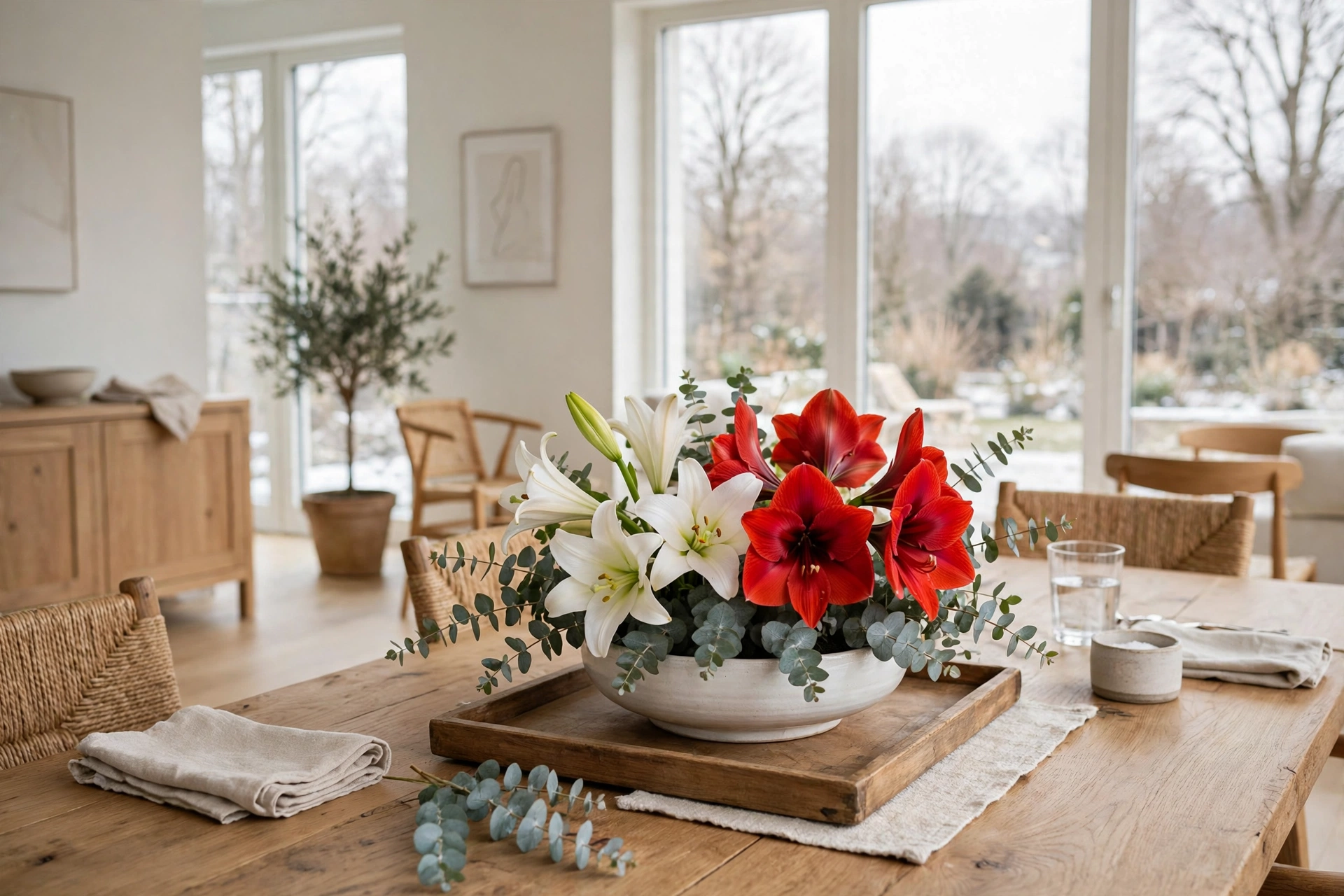
The centerpiece is one of only two table ideas in this guide, and it has one rule: keep it low. A low arrangement of white lilies and amaryllis in a shallow bowl or a long wooden tray gives the table its January shape without blocking a single face across it. White flowers against a dark wood or black table look crisp and expensive, and a few stems of silver-dusted eucalyptus tucked between the blooms add winter texture without any Christmas feel.
Keep the arrangement under 12 inches tall at its highest point, and put anything tall — taper candles, a tall vase — at the ends of the table instead. Lilies last about a week in a vase, and amaryllis stems open slowly over several days, so one arrangement can carry you through the first week of January and into the first dinner party of the year. Use a tray underneath to catch fallen petals and water drips, and change the water every two days to keep the stems fresh.
2. A Gold and Black Palette for the Whole Room
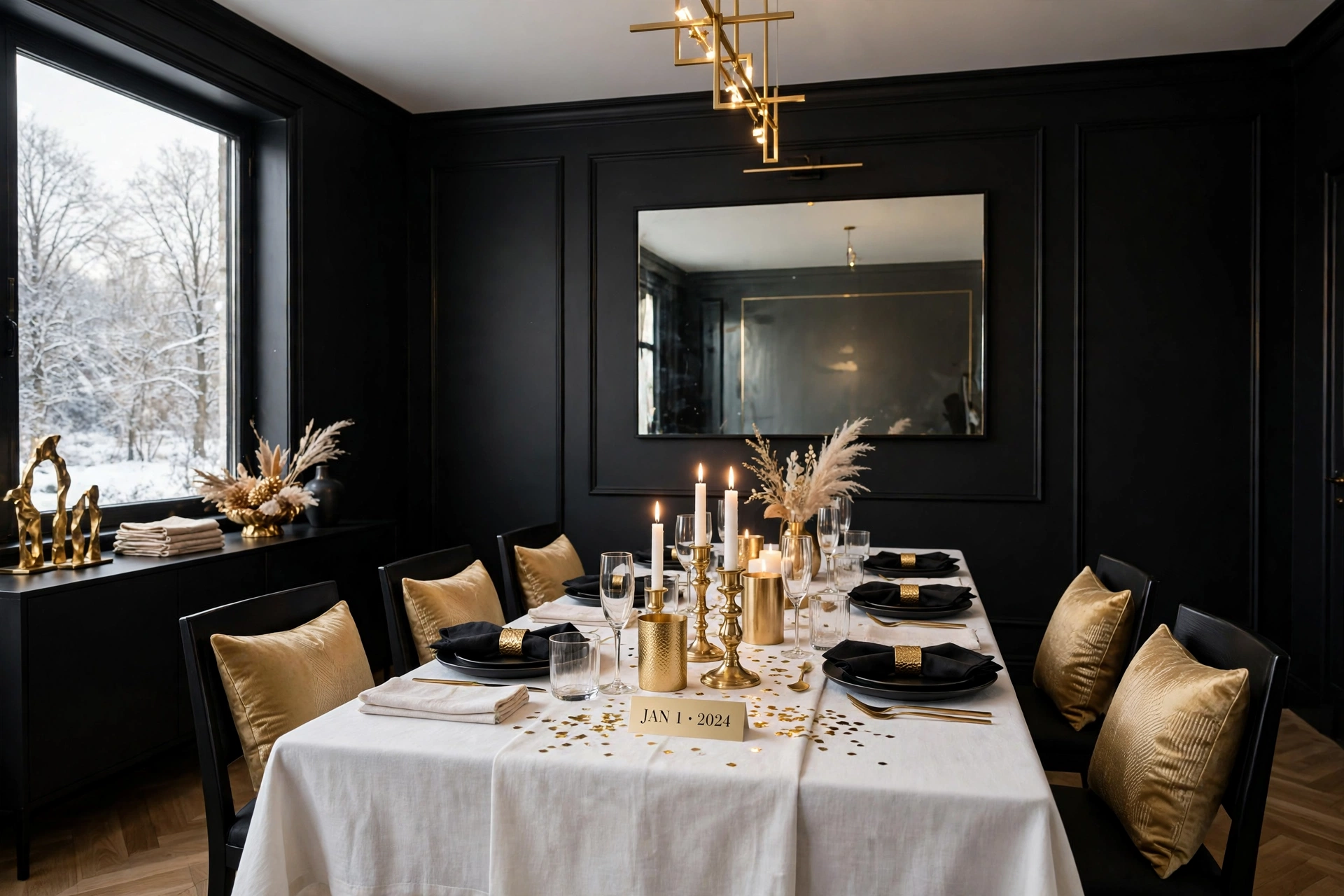
New Year dining room decor ideas start with the palette, and January’s best one is gold and black. Gold brings the sparkle of New Year’s Eve without the glitter, and black grounds it so the room looks grown-up rather than party-store. Use gold in the small things — candle holders, the mirror frame, the bar cart handles, the flatware — and black in the bigger ones: chair cushions, the rug pattern, the sideboard hardware, a black vase or two.
Keep the walls and the tablecloth light — white, ivory, or pale gray — so the gold and black have somewhere to shine against. A room that is all gold looks gaudy, and a room that is all black looks heavy; the balance is roughly two-thirds light neutrals, one-third black, and gold as the accent that appears in every corner. Once the palette is set, every other idea in this guide falls into place, because you already know which color each new piece should be.
3. The Sideboard as a Serving Station
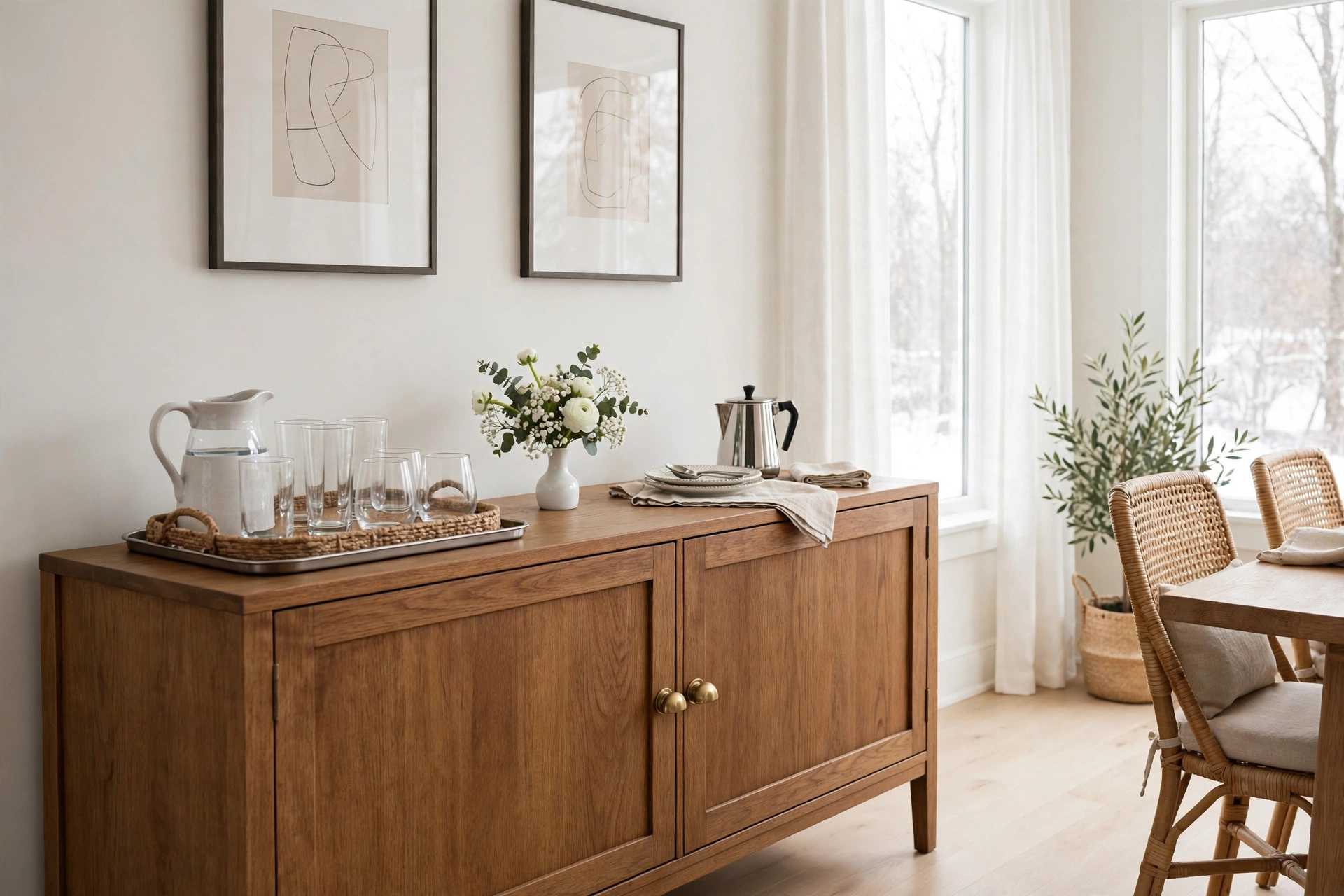
The sideboard is the hardest-working piece of furniture in the dining room in January, so style it like a serving station instead of a display shelf. Clear one end for drinks — a tray with glasses, a pitcher of water, and a bottle of sparkling wine — and use the other end for the food that does not fit on the table: the bread basket, the dessert plates, the coffee pot. The middle stays for decoration: a small winter floral arrangement, two candlesticks, and a stack of plates ready to go.
Everything on the sideboard should earn its place — if it is not served or poured, it goes back in the kitchen. A January sideboard looks best with breathing room: one tray, one arrangement, one pair of candlesticks, and nothing else. Wipe it down before guests arrive, and keep a folded linen napkin under the tray so a wet glass never leaves a ring on the wood.
4. Greenery on the Chandelier — No Ornaments
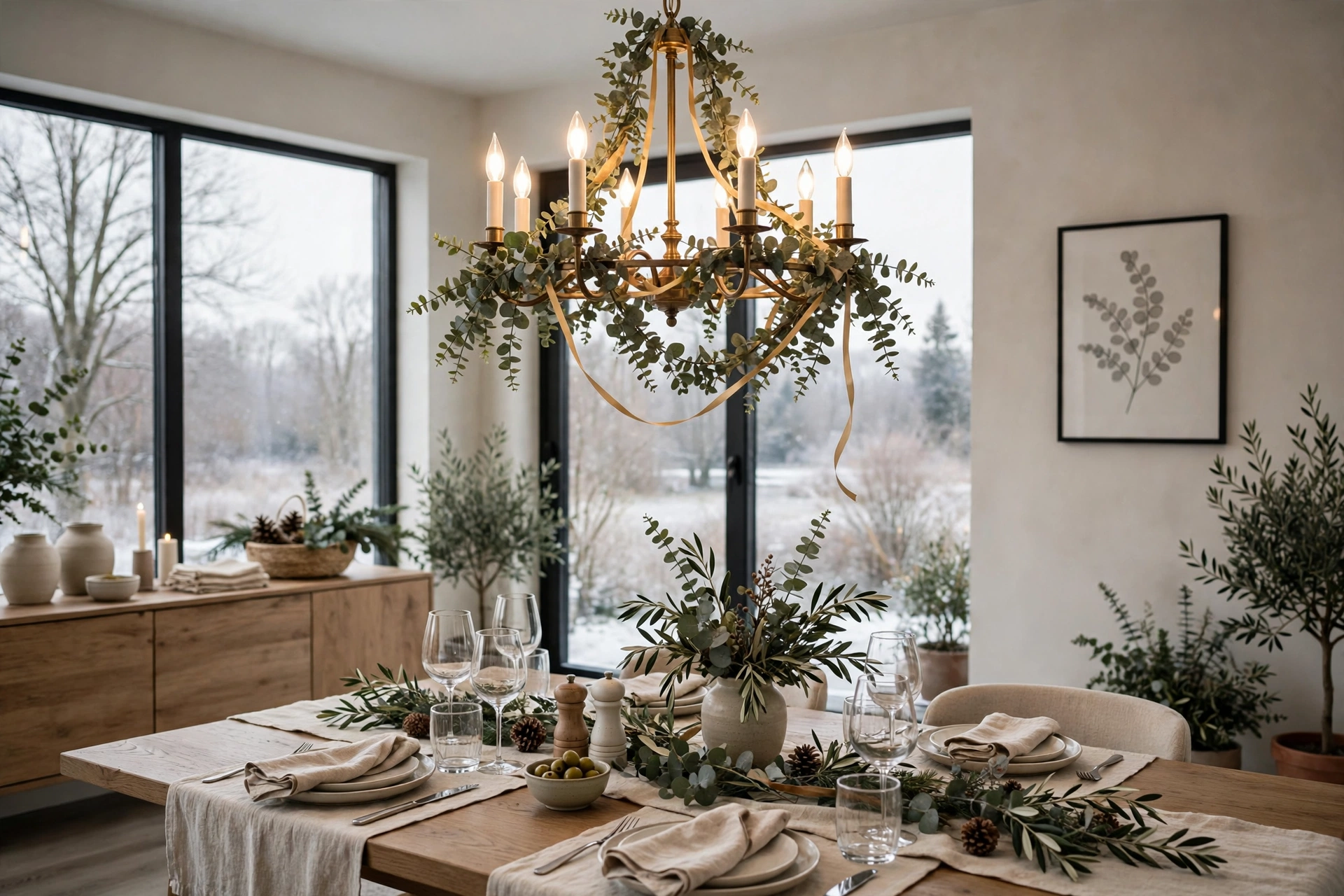
The chandelier sets the mood of the dining room more than anything else, and a light swag of greenery turns the fixture into a decoration. Drape faux eucalyptus or olive branches over the chandelier arms, with a few pinecones and a thin gold ribbon at the center. The greenery catches the warm light beautifully, and because there are no ornaments on it, the look reads as winter, not Christmas.
Use faux greenery only — real greenery dries out above warm bulbs, and dried leaves near a light fixture are a fire risk. Keep the swag light, tie it on with ribbon instead of wire, and keep every stem clear of the bulbs. Swap the bulbs for warm white ones in the 2200K–2700K range if you have not already, and put the chandelier on a dimmer if you can: bright overhead light flattens a dinner table, while warm, low light makes it glow.
5. A Winter Wreath on the Wall Above the Sideboard
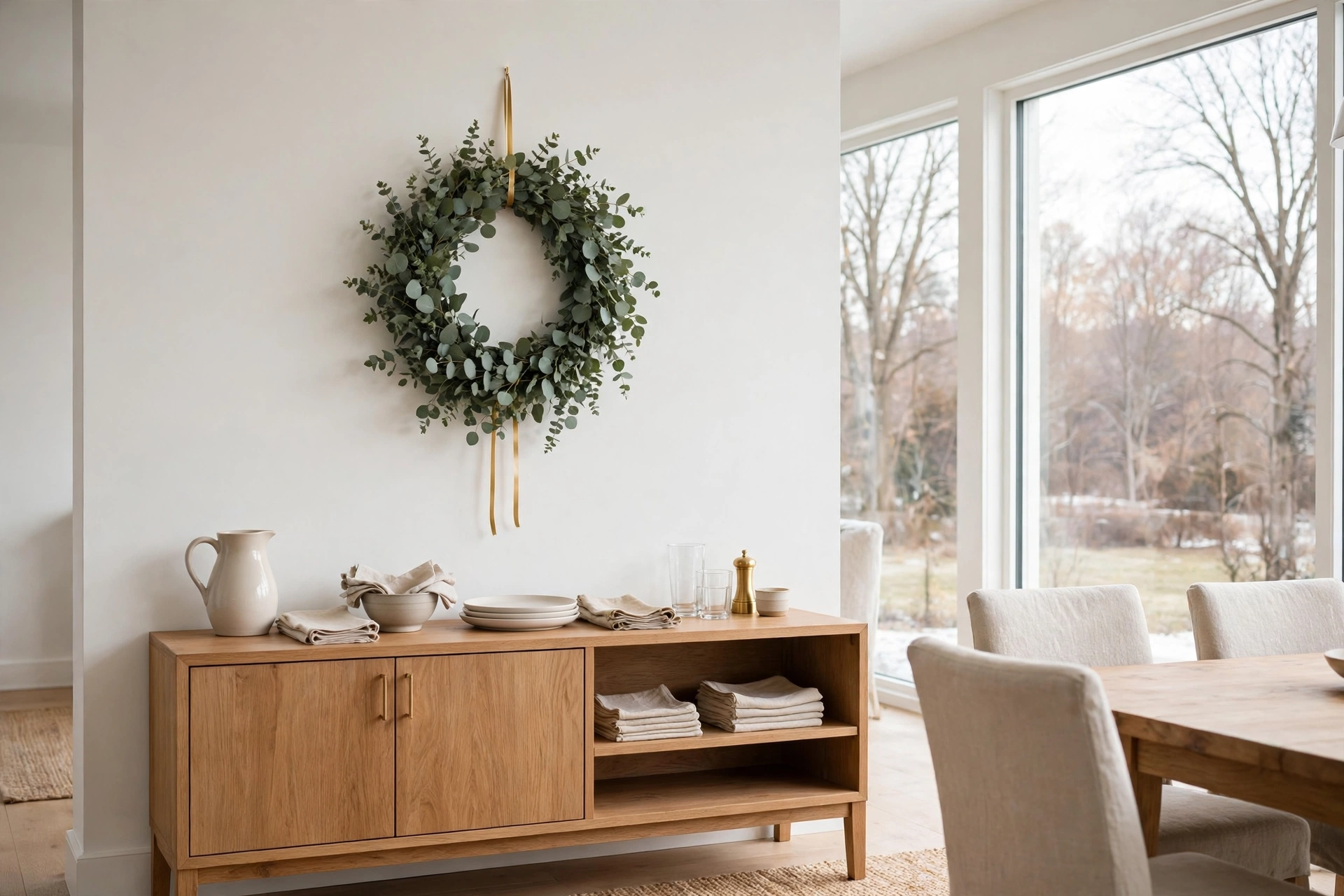
The wall above the sideboard is the first thing guests see when they walk into the dining room, so it deserves more than a bare wall. Hang one winter wreath there — eucalyptus, olive branch, or dried white flowers — centered on the sideboard below it. A wreath between 18 and 24 inches across fits most sideboards, and a plain green or white wreath with a slim gold ribbon reads as January, not December.
Skip the red berries, the pinecones in clusters, and the plaid bow: those are Christmas signals, and this room has moved on. Hang the wreath on a nail or a Command hook rated for its weight, and center it carefully — a wreath hung off-center is the first thing the eye catches. Leave it up through January and into February; a winter wreath is one of the few decorations that earns a long stay.
6. A Lighter Curtain Swap
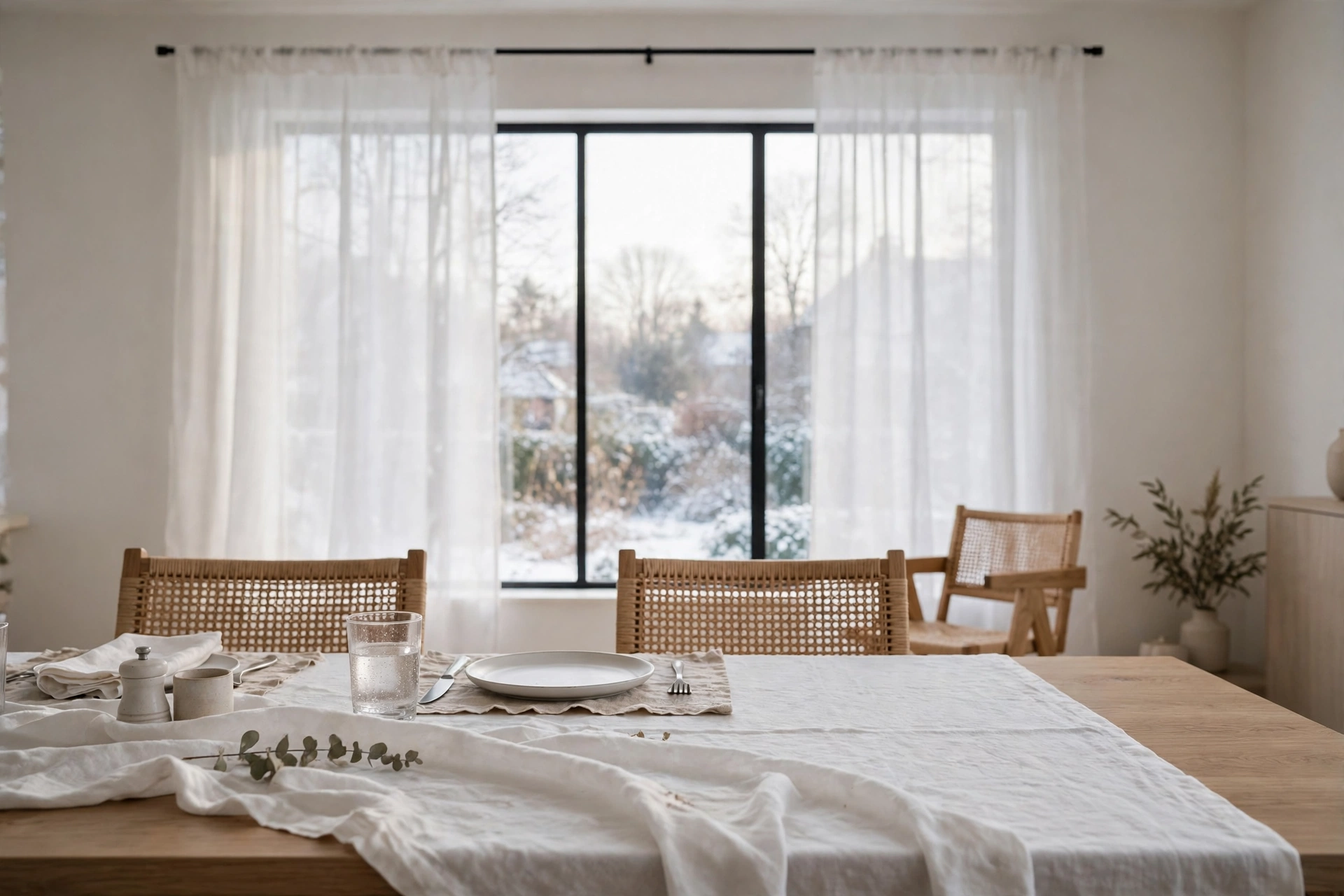
Swapping the curtains is the fastest way to change the whole dining room, and it takes twenty minutes. Take down the heavy winter drapes and hang sheer white or pale gray panels instead — they let the low January daylight in, and they make the room feel taller and brighter in the darkest weeks of the year. Hang them high and wide so the window looks bigger, and let them pool just slightly on the floor for a soft, finished look.
If new curtains are not in the budget, take the heavy ones down and leave the windows bare for January, with a simple sheer panel on a tension rod inside the frame. The point is light: January days are short, and every bit of daylight the room can catch makes dinner feel less like midwinter and more like a fresh start. Keep the curtain hardware simple — slim black or gold rods suit the January palette.
7. A Gallery Wall With Winter Prints
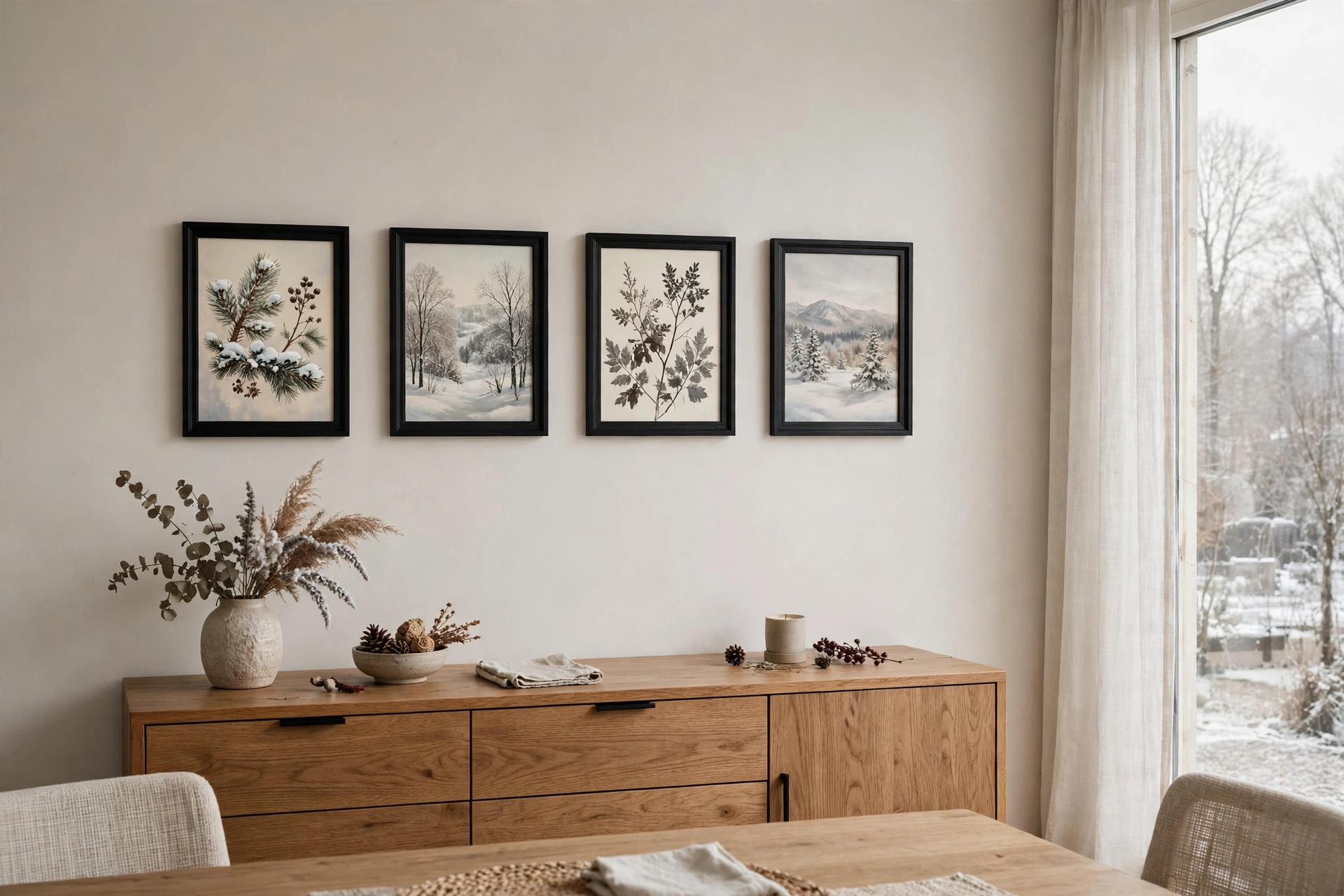
The dining room walls are the one place in the house where a few framed winter prints feel right instead of cluttered. Hang three or four small frames in a row — a black-and-white botanical print, a simple landscape in soft gray and gold, a line drawing of winter branches — and keep the frames matching: thin black frames with white mats suit the January palette and keep the wall calm.
Keep the frames small and the arrangement simple: one straight row at eye level, same-size frames spaced two inches apart. Use removable picture-hanging strips if you rent, and keep the gallery to one wall so the room does not feel like a picture shop. Swap the prints in spring — a gallery wall that changes with the season is the cheapest art rotation there is, and January’s quiet prints set the tone for the whole year.
8. A Rug Under the Table for Winter Texture
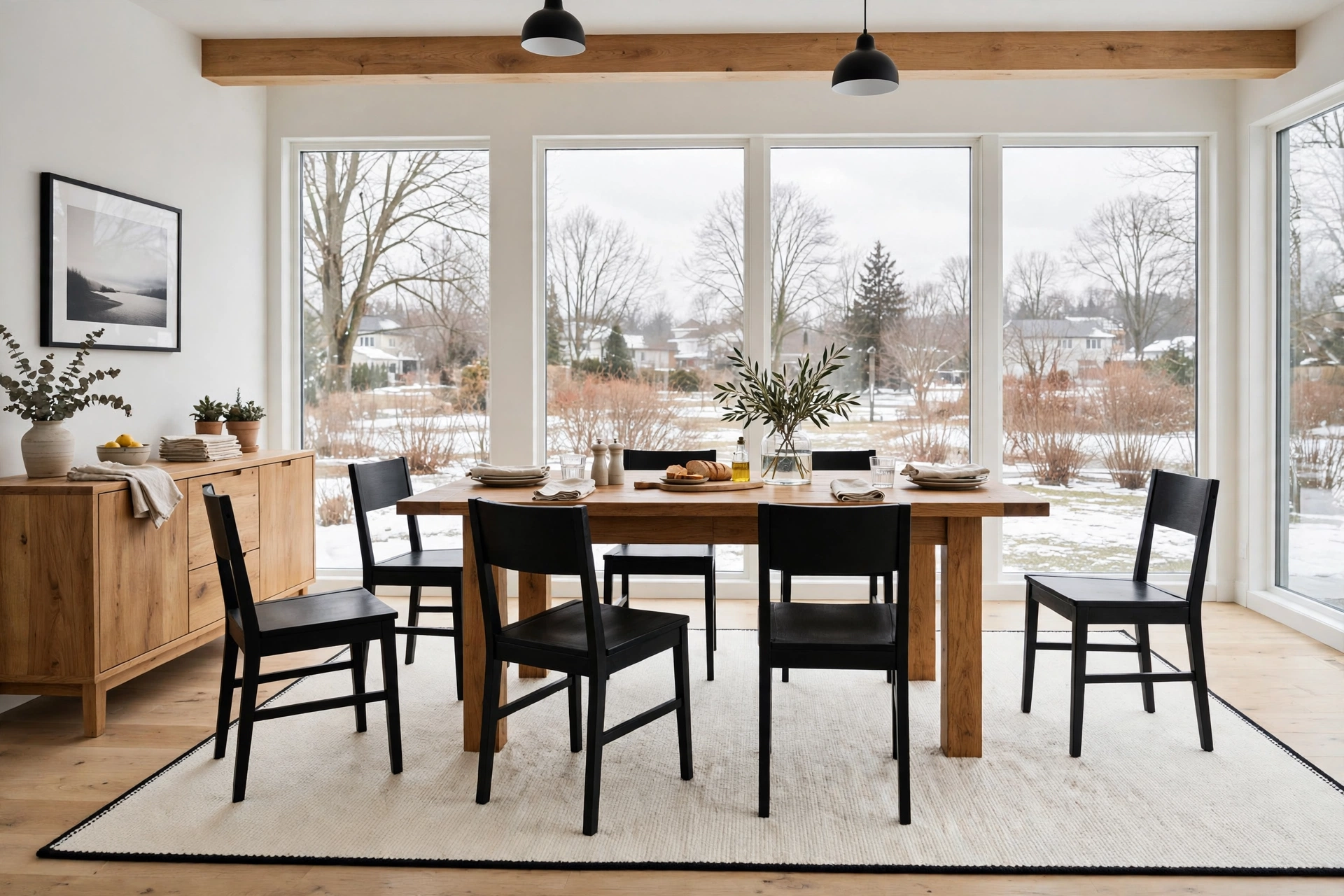
A rug under the dining table does two things at once: it warms a cold floor for an evening of sitting, and it defines the dining area in an open-plan room. For January, choose texture over pattern — a flat-weave wool rug in ivory or pale gray, or a low-pile rug with a subtle woven texture, adds warmth without competing with the gold and black palette. A rug with a faint geometric border in black is the most it should say.
Choose a low-pile rug — high pile traps crumbs and chair legs — and make it big enough that the chairs stay on the rug when they are pulled out. Measure first: the rug should extend at least 24 inches past the table on every side. A flat-weave or indoor-outdoor rug cleans up easily after dinner, and a pale rug with a dark border hides a dropped crumb better than a plain white one.
9. Dress the Dining Chairs
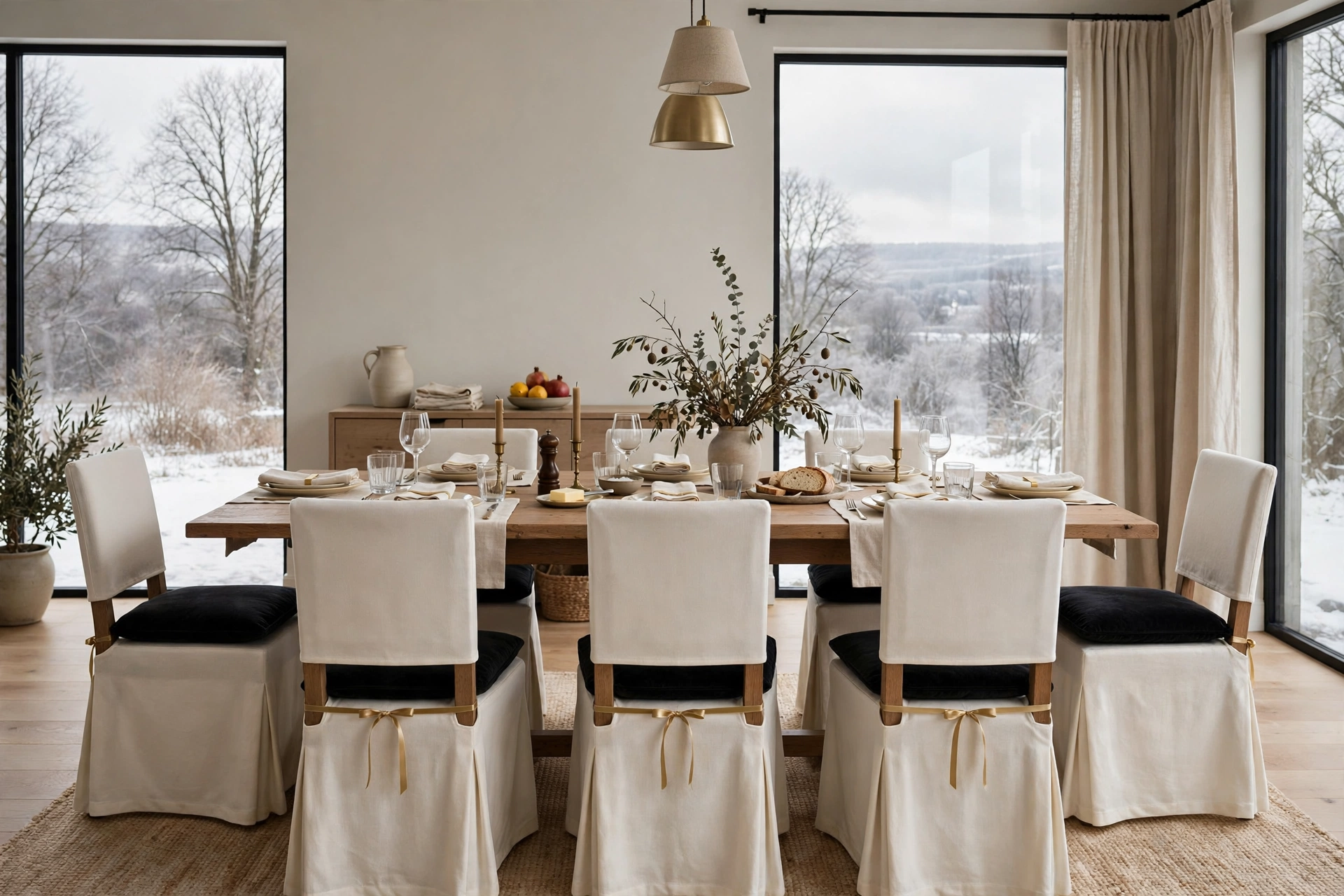
Chairs are the biggest undecorated surface in most dining rooms, and dressing them is one of the cheapest New Year dining room decor ideas there is. Slipcovers in ivory or pale gray give old chairs a fresh January look in minutes, and a pair of cushions in black velvet or gold linen on each seat adds comfort and color at the same time. Tie a slim gold ribbon around the back of each chair and finish it with a small bow at the top — six chairs, six bows, and the room looks dressed.
Use the same ribbon and the same cushions on every chair, and keep the bows small — a big bow catches on sleeves all evening. If slipcovers are too much work, cushions alone do the job: two cushions per chair, one for the seat and one for the back, in the room’s palette. Washable covers matter here, because dining chairs take more spills in January than any other month.
10. Candle Clusters on the Sideboard — Flameless
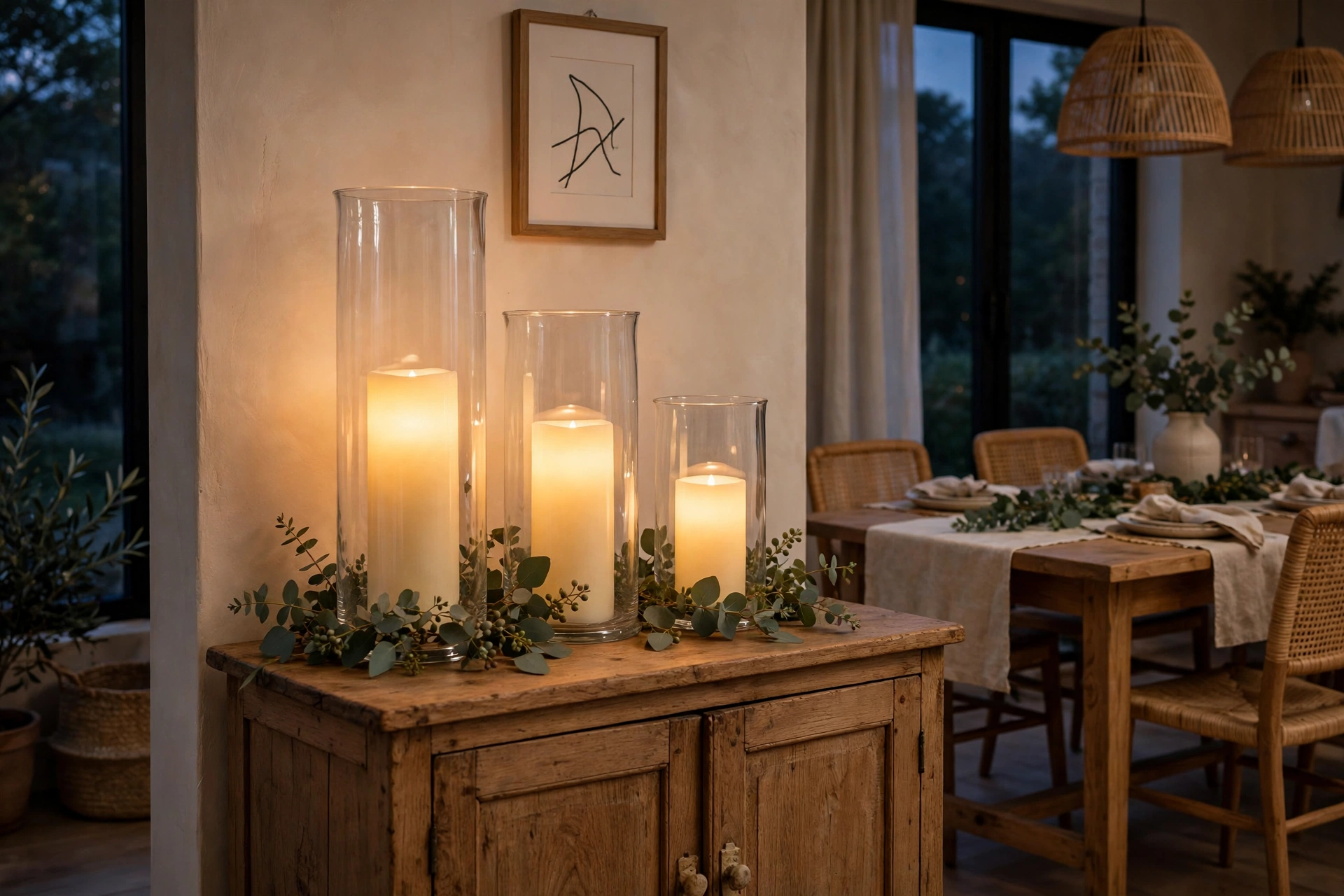
Real candles belong on the dinner table, watched, for the length of the meal — but on the sideboard, where nobody is watching them, flameless candles are the safer choice. Battery candles in glass hurricanes flicker like the real thing, and a remote or a timer switches them off when the evening ends. Group three hurricanes of different heights on the sideboard with a sprig of eucalyptus at the base of each one, and the sideboard glows all evening with no risk at all.
Mix gold and clear glass hurricanes for a little variety, and keep the tallest in the middle or at the back so the cluster reads as one shape. Never leave a real candle burning on the sideboard unattended, and keep every flame clear of the greenery and the curtains. Flameless candles cost little, last for years, and they are the one January decoration you can switch on every single night without thinking about it.
11. A Bar Cart in the Corner
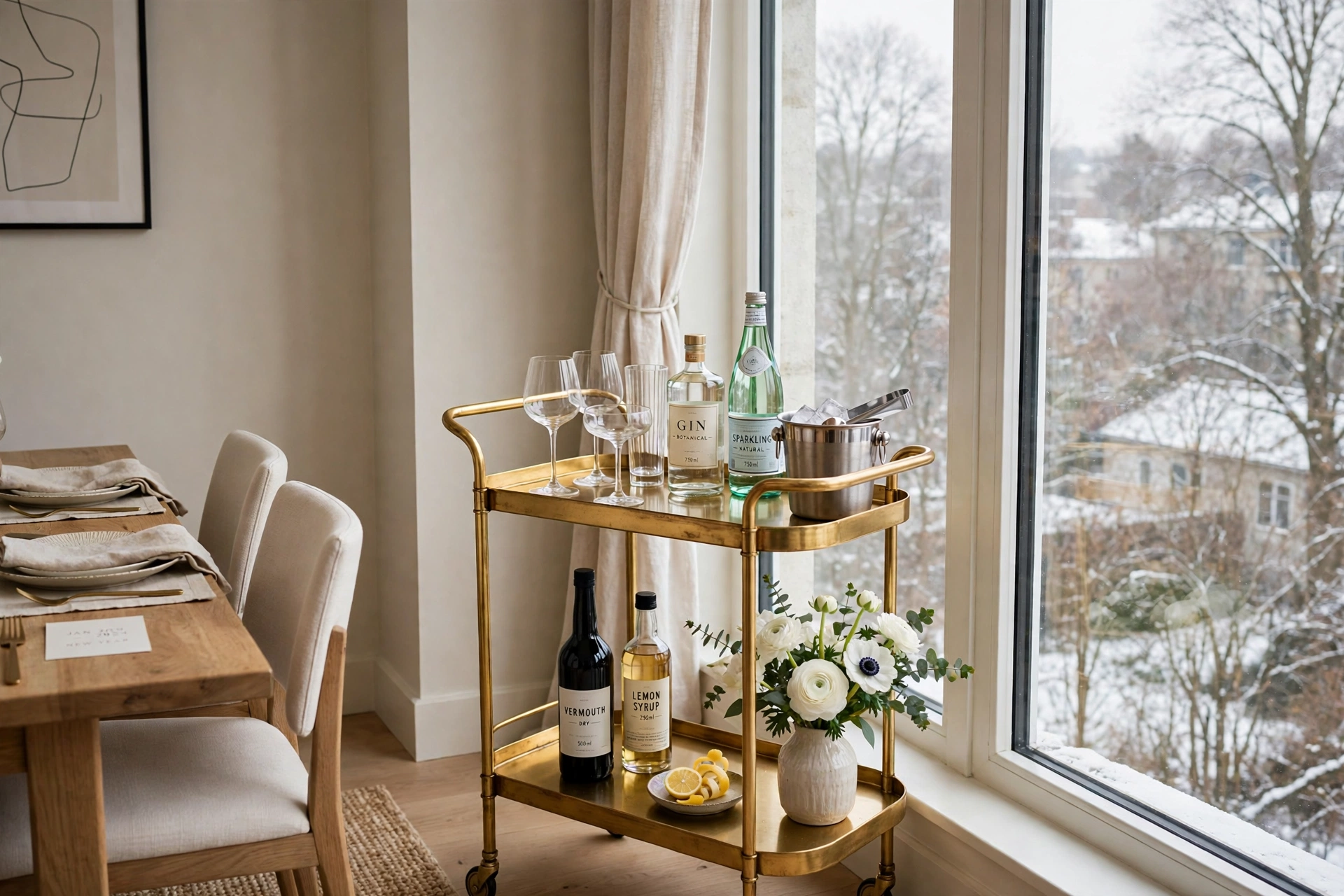
A bar cart in the corner of the dining room is the one piece of furniture that says New Year without saying a word. A two-tier gold cart with a tray of glasses, a bottle or two, a small ice bucket, and a vase of white flowers fills the empty corner by the window and gives guests somewhere to gather before dinner. Keep it tidy: one tray, four to six glasses, two bottles, and the flowers — a cart crowded with bottles looks like a liquor store, not a dining room.
Roll the cart out of the way when dinner is served, and roll it back for dessert and after-dinner drinks. If a gold cart is not in the budget, a small wooden side table with a tray does the same job — the point is a dedicated drinks spot, not the cart itself. A bar cart also works for non-drinkers: sparkling water, juice, and a pitcher of infused water make it a drinks station for everyone.
12. Potted Bulbs on the Table — Spring Is Coming
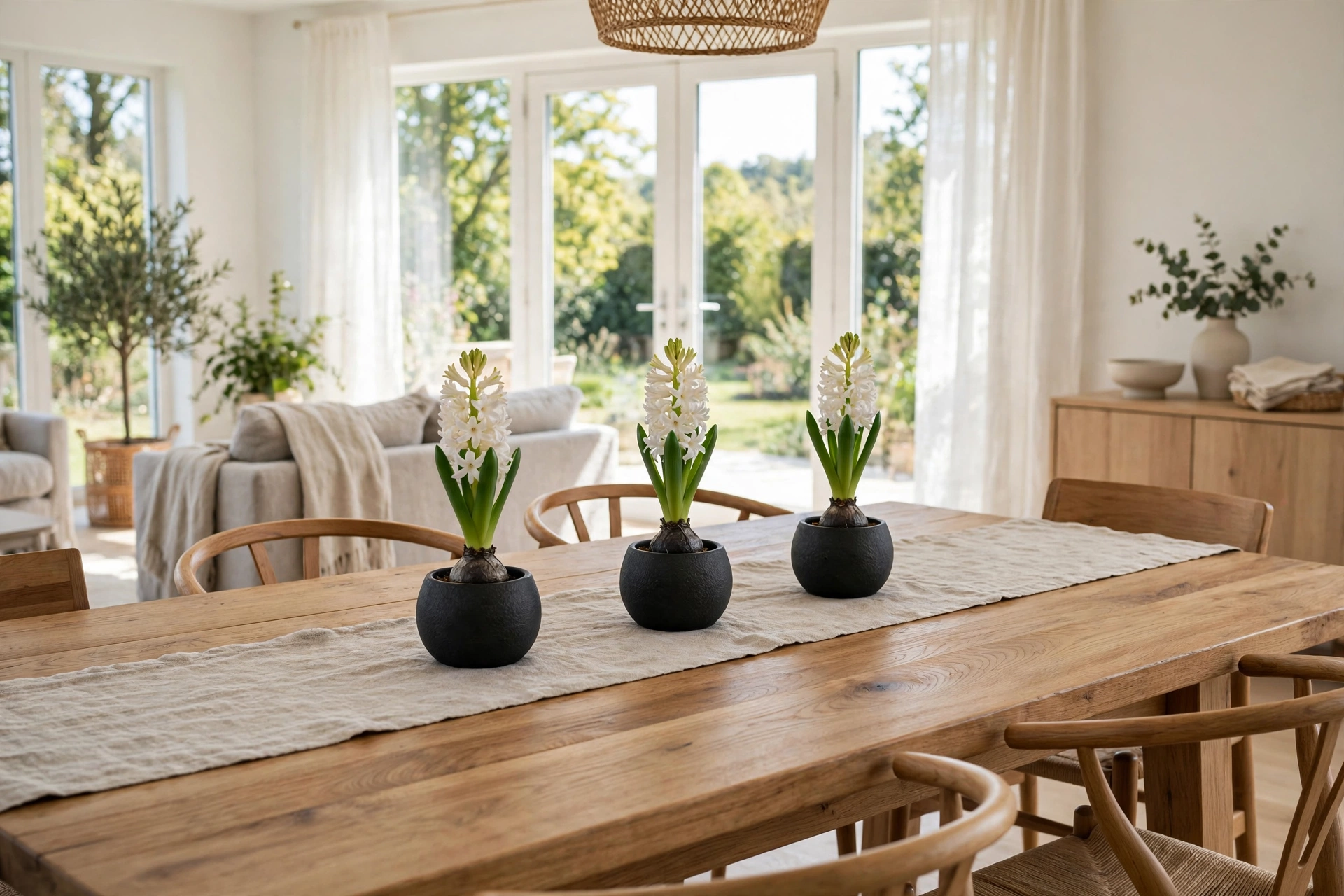
Potted hyacinth and narcissi are the most hopeful of all New Year dining room decor ideas: they are winter flowers that promise spring. Set three small pots of white hyacinth or paperwhite narcissi down the center of the table in matching pots — black ceramic or plain terracotta painted white — and the table smells faintly of spring while the snow is still on the ground outside. The bulbs bloom for two to three weeks, and the green shoots are as pretty as the flowers.
Buy the bulbs already potted and just starting to shoot, and keep them in a cool spot away from the radiator so they last longer. Water sparingly — a bulb sitting in wet soil rots fast — and turn the pots every few days so the stems grow straight. When the flowers fade, plant the bulbs outside in spring; paperwhites are not hardy in cold climates, but hyacinths will come back year after year.
13. A Mirror to Bounce the Candlelight
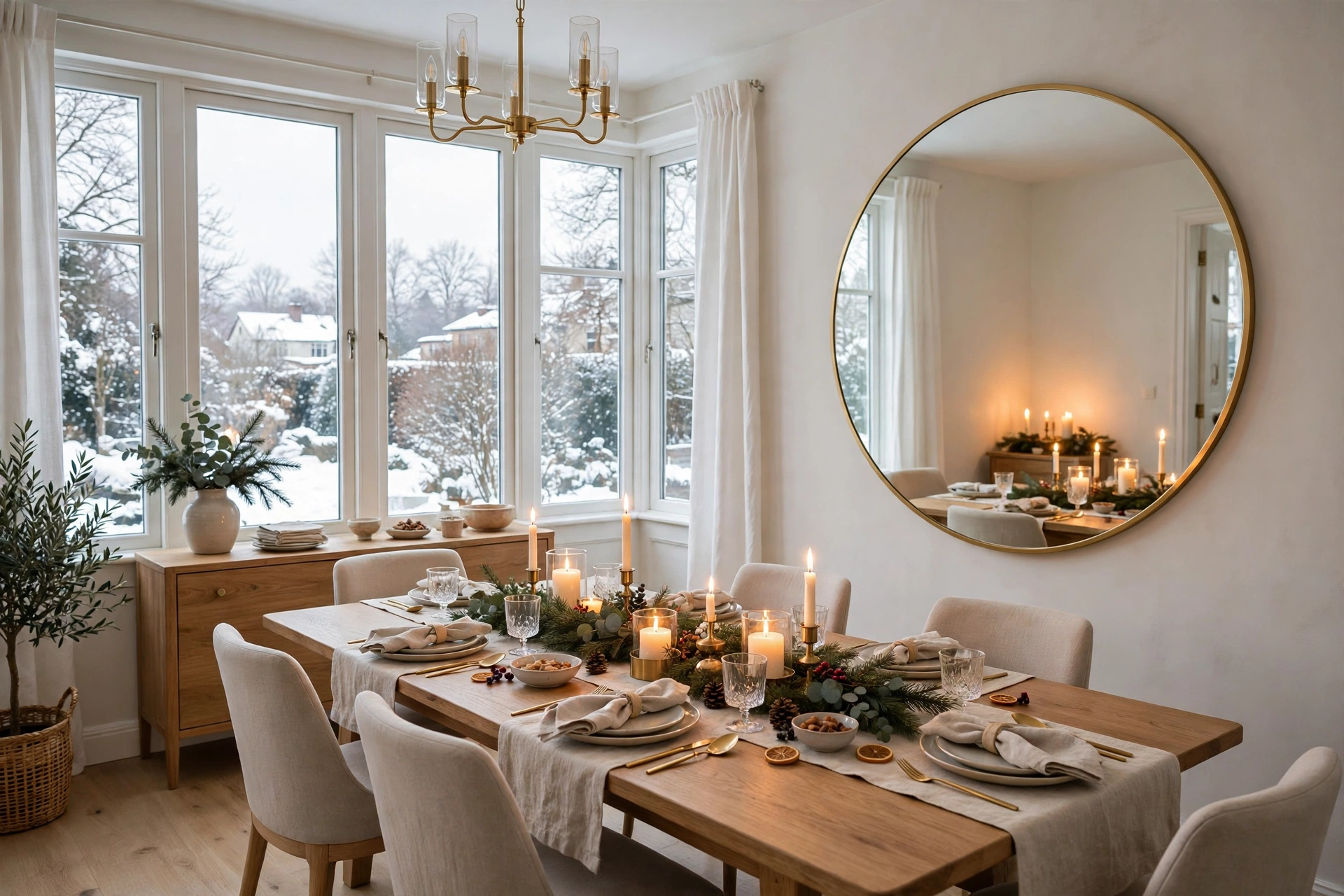
January days are short, and a mirror is the cheapest way to steal more light for the dining room. Hang a large mirror on the wall opposite the window, or lean one against the wall above the sideboard, and it bounces daylight across the room in the afternoon and candlelight across the table in the evening. A mirror with a slim gold or black frame suits the January palette, and a round mirror softens a room full of straight lines.
Hang the mirror at eye level, centered on the wall, and check what it reflects before you fix it in place — a mirror that reflects a blank wall or a messy corner doubles the mess. The best spot reflects the window, the chandelier, or the table itself. A mirror also makes a small dining room feel bigger, which matters in January when the room is used every night and the walls start to close in.
14. A Fresh Fruit and Greenery Runner
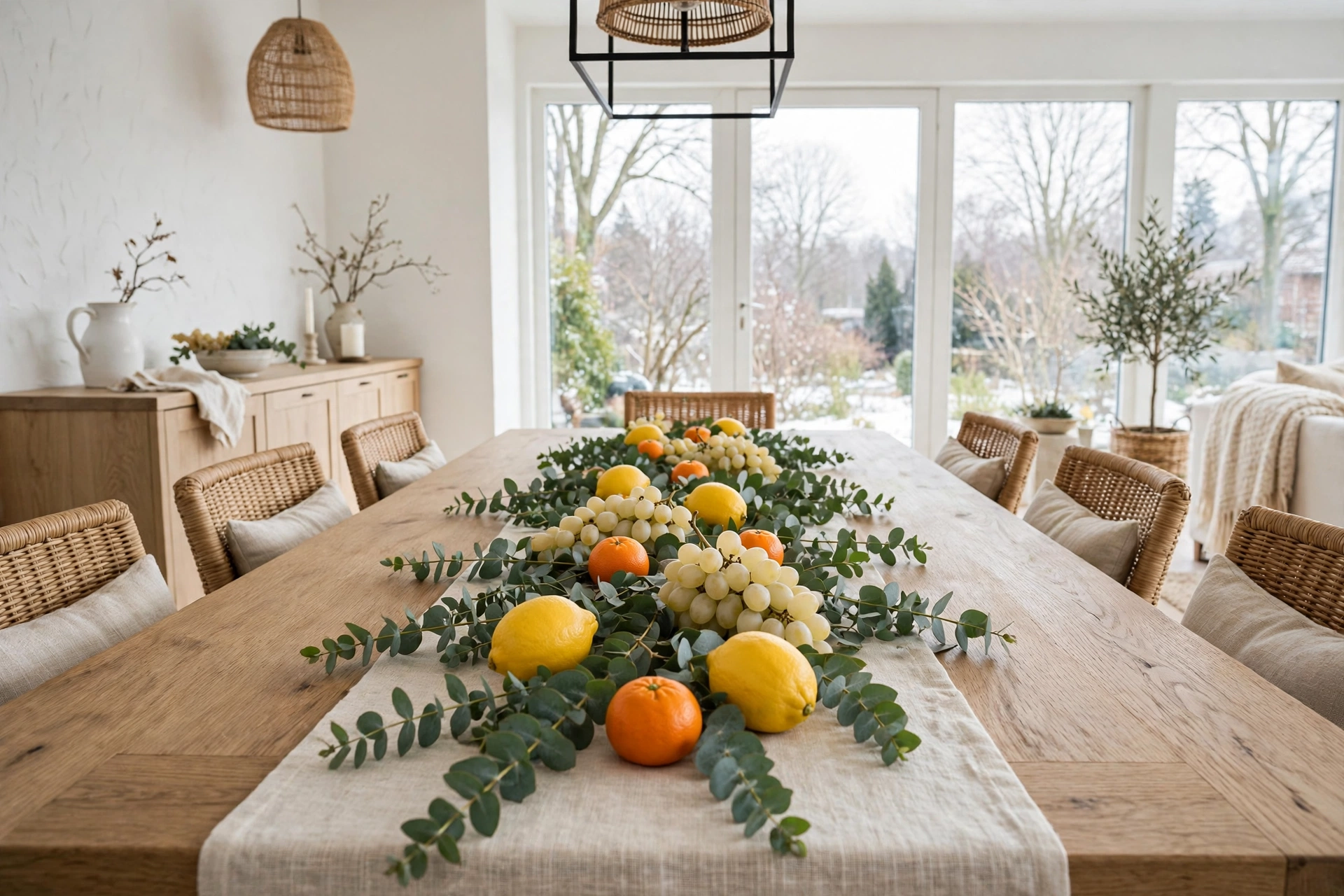
A runner of fresh fruit and greenery is the simplest centerpiece that still looks like you tried. Lay a length of eucalyptus or olive branches down the center of the table, then tuck in whole lemons, white grapes, and a few small oranges — the yellow and green against the dark wood and white linen is fresh, bright, and unmistakably January. No flowers, no candles, no fuss: the fruit is the decoration, and it goes into the kitchen when dinner is over.
Use fruit you will actually eat, and replace anything that softens or spots within a few days. Lemons last the longest on a table — up to two weeks — while grapes need replacing every three or four days. Keep the runner narrow, no more than a foot wide, so the plates still fit, and put a thin linen runner underneath the greenery to protect the table from sap and moisture.
15. One Color Scheme for the Whole Room
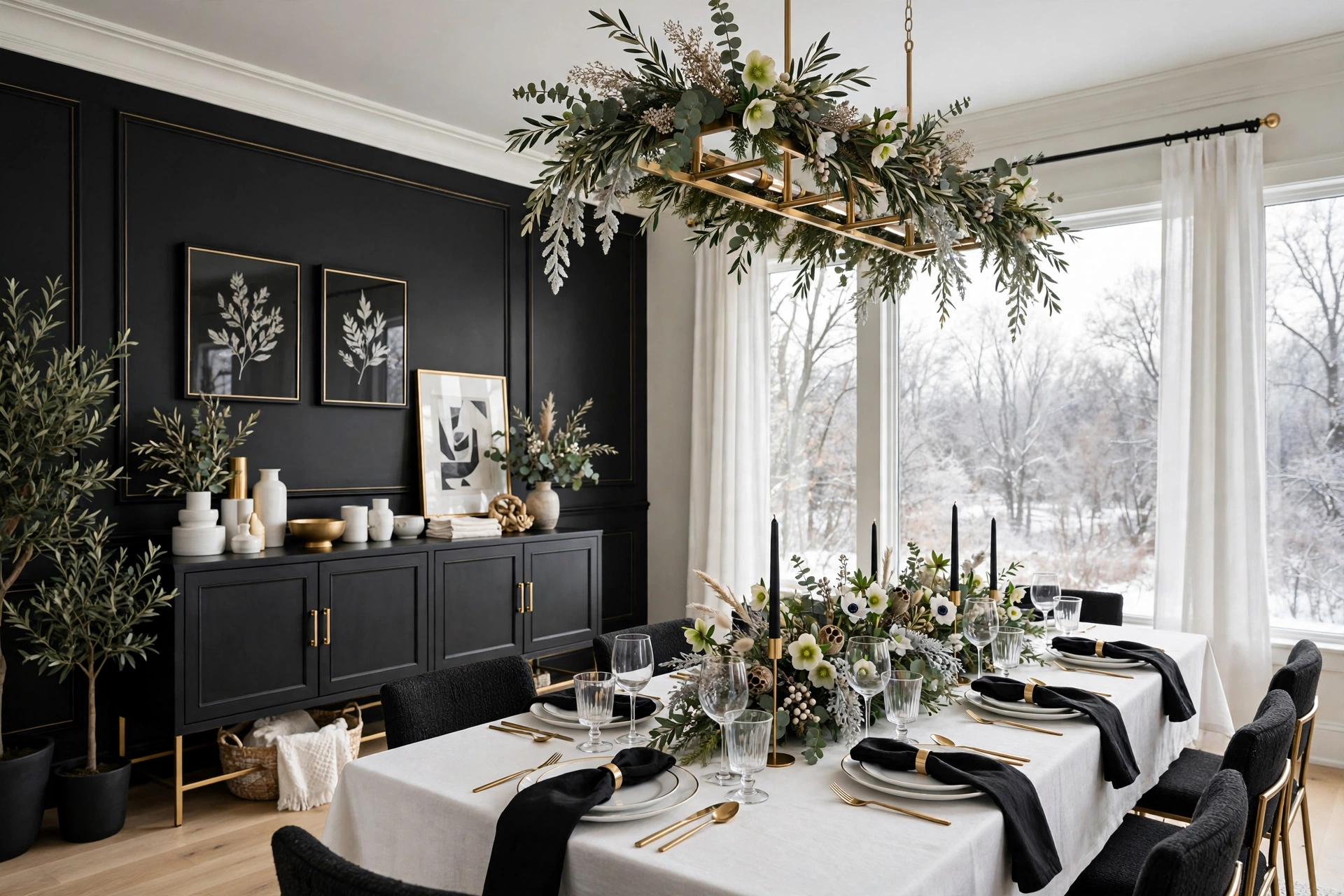
The last idea is the one that holds the other fourteen together: pick one color scheme and repeat it everywhere. Gold and black with white is the January scheme in this guide, but the rule matters more than the colors — two colors plus one metallic, repeated in the centerpiece, the chair ribbons, the curtains, the sideboard, and the bar cart. Our Christmas dining room decor ideas use the same rule with a festive palette, and our Christmas kitchen decor ideas show how one color can carry a whole room if you commit to it.
When every idea uses the same palette, the room looks designed instead of decorated. Walk through the room before guests arrive and count the colors: if a red napkin, a green candle, or a silver tray has crept in, take it out. January is a fresh start, and a room with one clear color story is the freshest start there is.
Frequently Asked Questions
How do I decorate my dining room for the New Year without it looking like Christmas?
The difference is the palette and the materials. New Year dining room decor ideas use gold, silver, black, and white with winter florals — white lilies, amaryllis, eucalyptus — and no red, no green, no ornaments, and no pinecones in clusters. Take down every Christmas decoration first, then decorate the whole room in the January palette: the sideboard, the chandelier, the walls, and the windows, not just the table. If a piece still says Christmas, it does not belong in January.
What colors work best for New Year dining room decor ideas?
Gold, silver, black, and white are the classic January combination. Gold brings the New Year’s Eve sparkle, black grounds the room, silver adds a cool shine, and white keeps everything bright in the darkest weeks of the year. Pick two colors plus one metallic and repeat them in every corner — the centerpiece, the chair cushions, the sideboard, and the bar cart. These New Year dining room decor ideas stay elegant because the palette stays disciplined: no red, no green, no extra colors sneaking in.
How do I make a small dining room feel bigger in January?
A mirror is the fastest fix: hang a large mirror opposite the window and it bounces daylight across the room and doubles the sense of space. Lighter curtains help too — sheer white panels let in every bit of January daylight — and a rug that fits the table with 24 inches to spare defines the dining area without crowding it. Keep the color scheme to gold, black, and white, and keep the sideboard and bar cart tidy. These New Year dining room decor ideas work in a small room because they add light and order instead of more stuff.
What should I put on the dining room sideboard in January?
Style it as a serving station: one end for drinks, with a tray, glasses, and a pitcher; the other end for the food that does not fit on the table, like the bread basket and dessert plates; and the middle for decoration — a small winter floral arrangement and two candlesticks, or a cluster of flameless candles. These New Year dining room decor ideas treat the sideboard as working furniture, not a display shelf, so everything on it should be served or poured. If it is not used at dinner, it goes back in the kitchen.
How long should I keep New Year dining room decor up?
Most of these New Year dining room decor ideas last through January and into February: the winter wreath, the greenery on the chandelier, the mirror, the rug, and the gallery wall are all season-long pieces. The fresh flowers and fruit need replacing every week or two, and the potted bulbs bloom for two to three weeks. Take the New Year’s Eve sparkle — the gold ribbon, the bar cart bottles — down by mid-January, and let the quiet winter pieces carry the room until spring.
Related Reading
- New Year Table Decor Ideas
- Christmas Dining Room Decor Ideas
- Christmas Kitchen Decor Ideas
- Christmas Table Decor Ideas
- New Year Entryway Decor Ideas
- Pantry Organization Ideas
Conclusion
January is the dining room’s fresh start, and these New Year dining room decor ideas give the whole room that new-year feeling — a gold and black palette, winter florals, a sideboard that works as a serving station, greenery on the chandelier, and one color scheme repeated in every corner. Start with the palette, dress the chairs, swap the curtains, and let the mirror and the candlelight do the rest. A dining room decorated this way feels bright and calm all January long, and when spring finally comes, the potted bulbs on the table will already be blooming.