

How to Clean Windows Streak-Free: 15 Easy Tips for Glass That Looks Invisible
Introduction
Learning how to clean windows streak free is mostly about technique, not about buying a stronger spray. Most streaks are not dirt left behind — they are cleaning solution that dried on the glass before it was removed, or soap residue that was never rinsed off in the first place. Spray a window, wipe it with a paper towel, and the towel just pushes a thin film of dirty water around until it dries into lines. That is why the same window can look worse after cleaning than before.
Professional window cleaners use a different method, and it works on a first-floor kitchen window just as well as on a storefront: wet the glass with a little soapy water, loosen the dirt, then pull the water off with a squeegee in one smooth pass and touch up only the edges. These fifteen tips follow that method from start to finish — when to clean, what to mix, how to hold the squeegee, and what never to use — so the glass disappears and only the view is left.
1. Pick the Right Time: Never Clean in Direct Sun
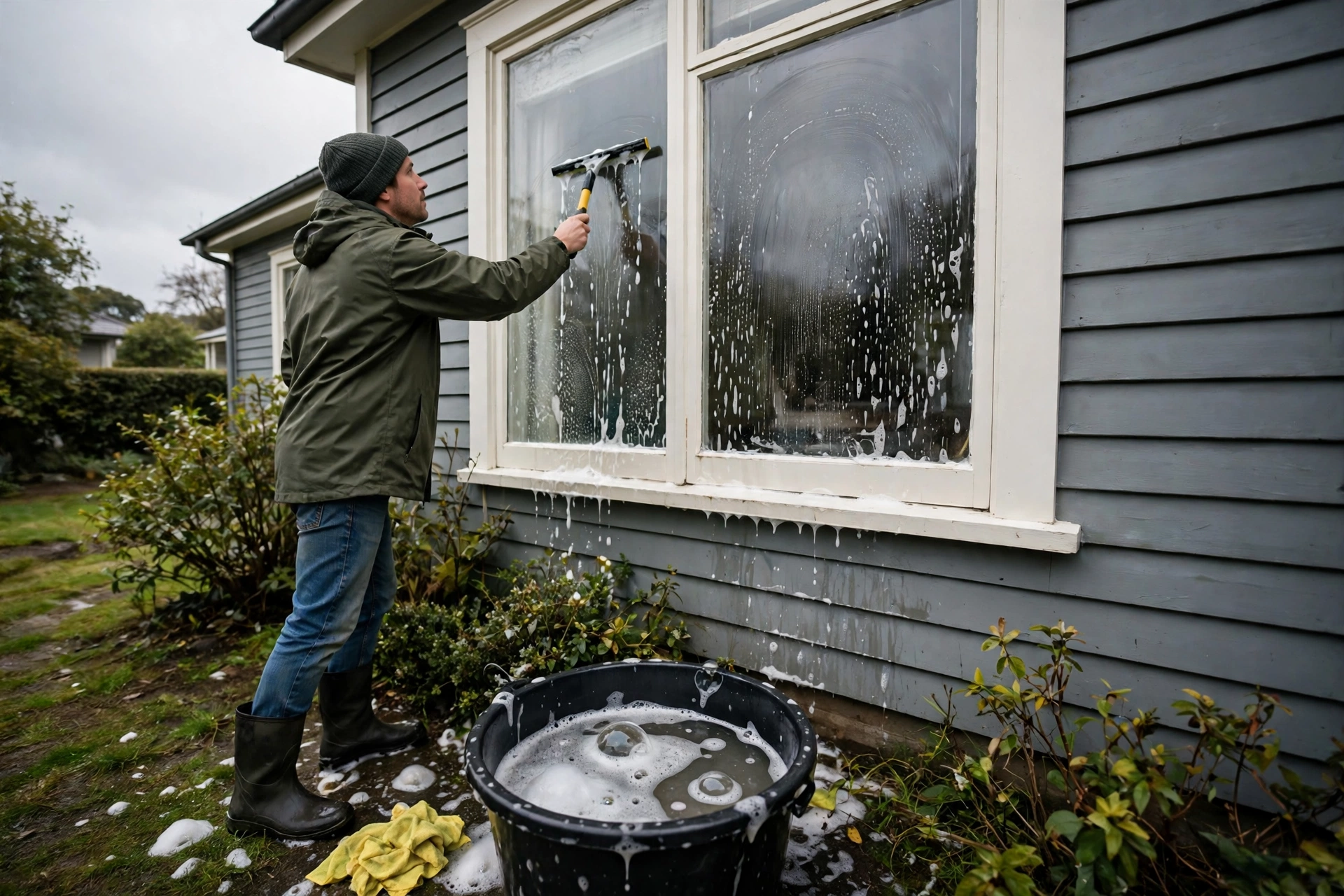
A window cleaned in direct sunlight will streak almost every time, no matter how good the technique is. Sun heats the glass and dries the cleaning solution in seconds, before the squeegee can pull it off, and the dried solution is the streak. Clean on a cloudy day, in the early morning, or in the late afternoon when the glass is in shade. If the sun is hitting one side of the house, start on the shaded side and work around to the sunny side later. This one choice — shade over sun — does more for streak-free glass than any product on the shelf.
2. Dust the Frames and Tracks First
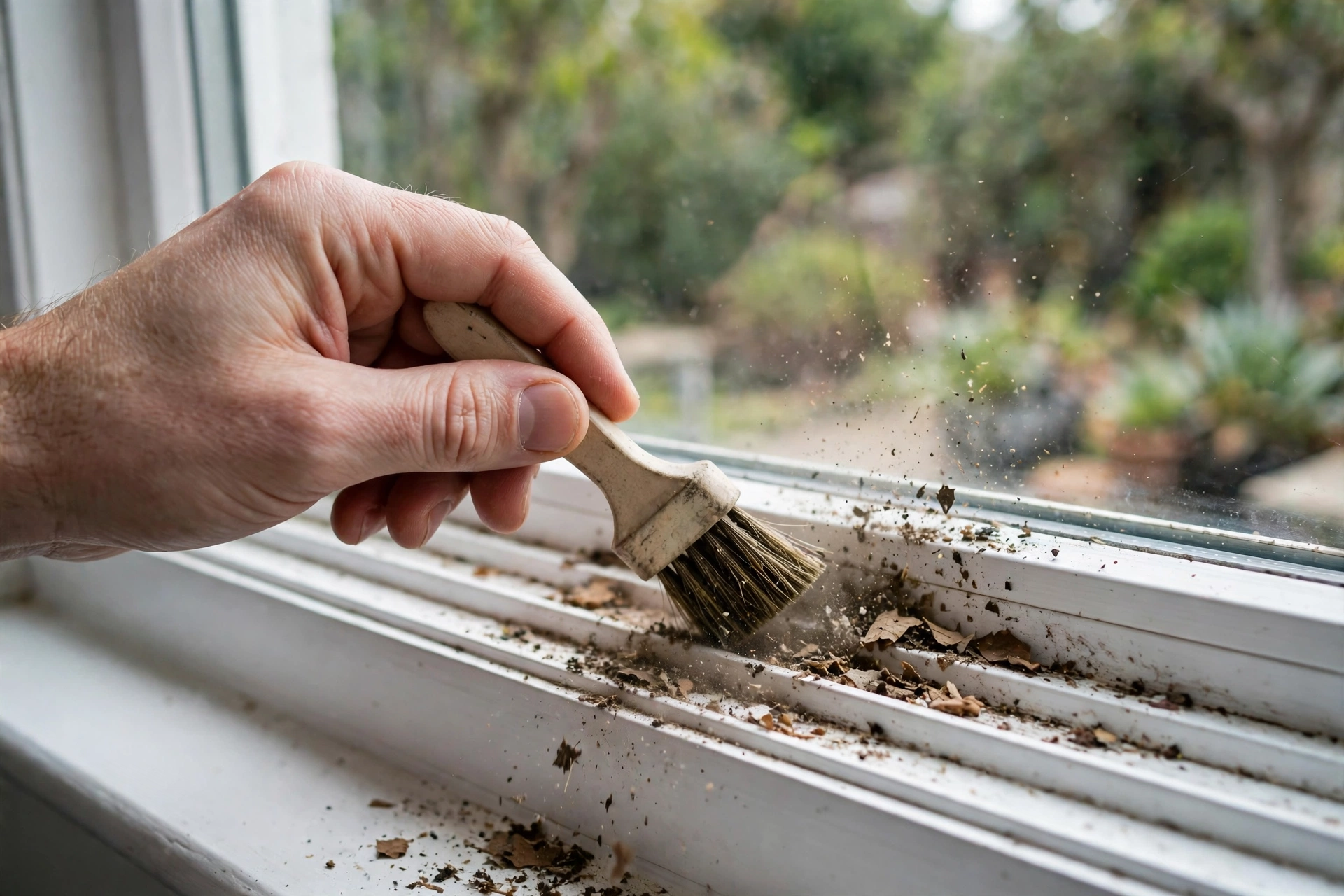
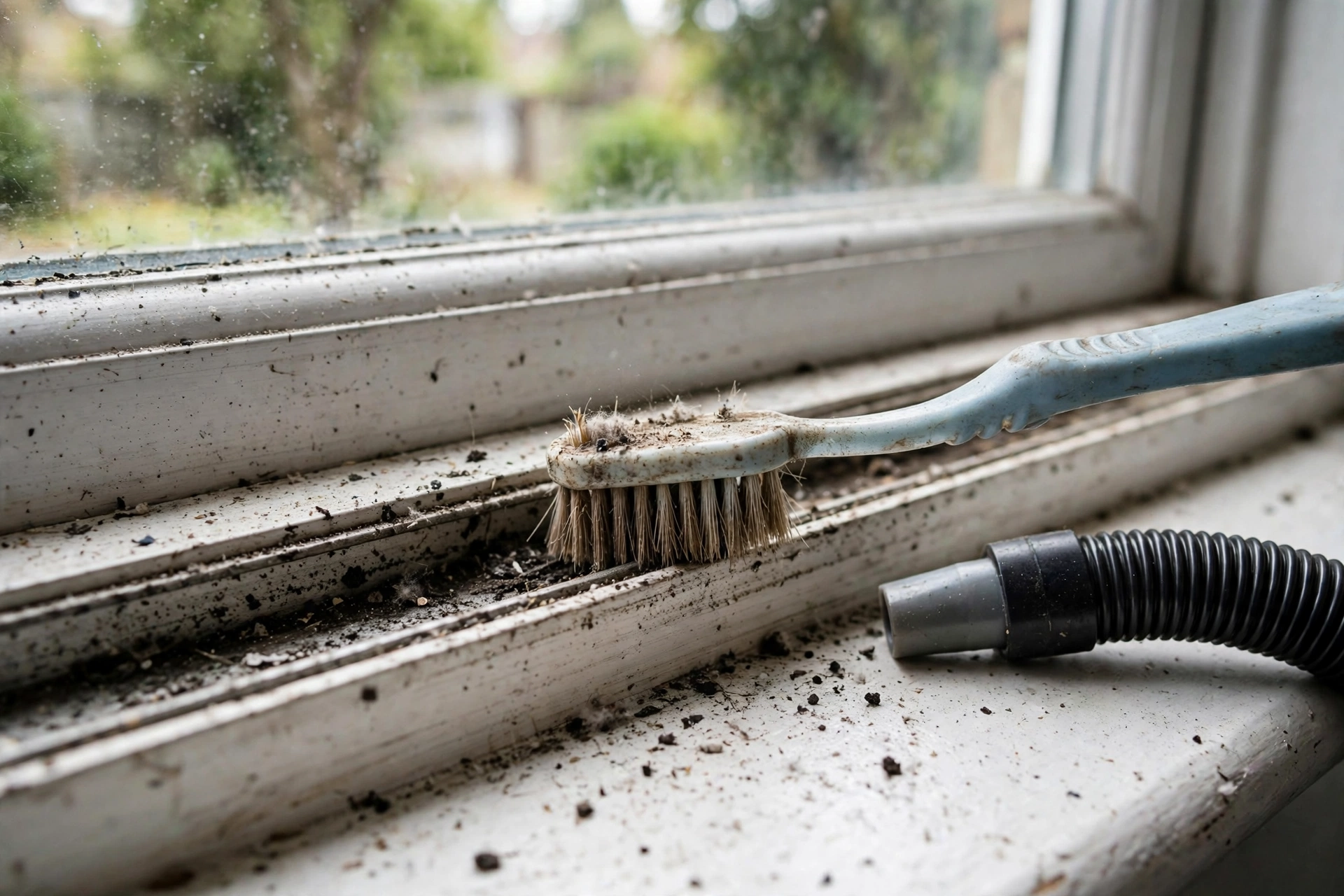
Dirt from the frame is the fastest way to ruin a clean window. Dust the frame, the sill, and the track with a dry brush or a vacuum with a brush attachment before any water touches the glass. Otherwise the first wet pass drags grit from the frame across the pane and leaves gray smears. Open the window and brush out the track, where sand, dead insects, and leaves collect all year. A quick dry pass now saves a second full wash later. It is a small step, but it matters when you are learning how to clean windows streak free.
3. Dish Soap and Water: One Drop Is Enough
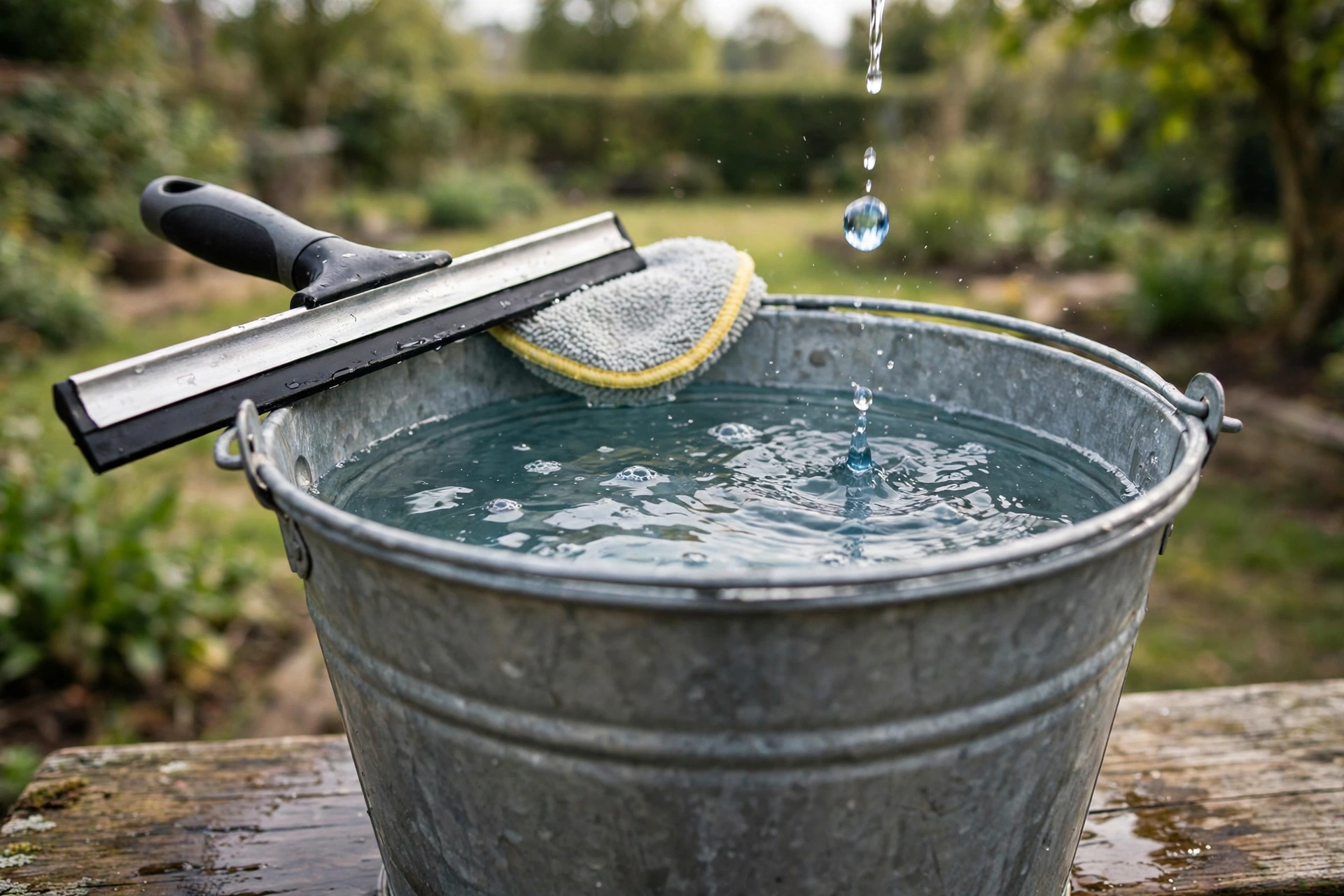
The best window solution is the simplest one: a bucket of cool water with just a few drops of plain dish soap — about one drop per quart, or a teaspoon in a gallon. The soap is only there to break the surface tension so the water can lift dirt; more soap does not clean better, it leaves a film that dries into streaks. Skip the fancy glass cleaners for the main wash and save them, if you use them at all, for a final spot check. If the water feels slippery between your fingers, you used too much soap — dump it and start over with less.
4. Vinegar Solution for Mineral Deposits
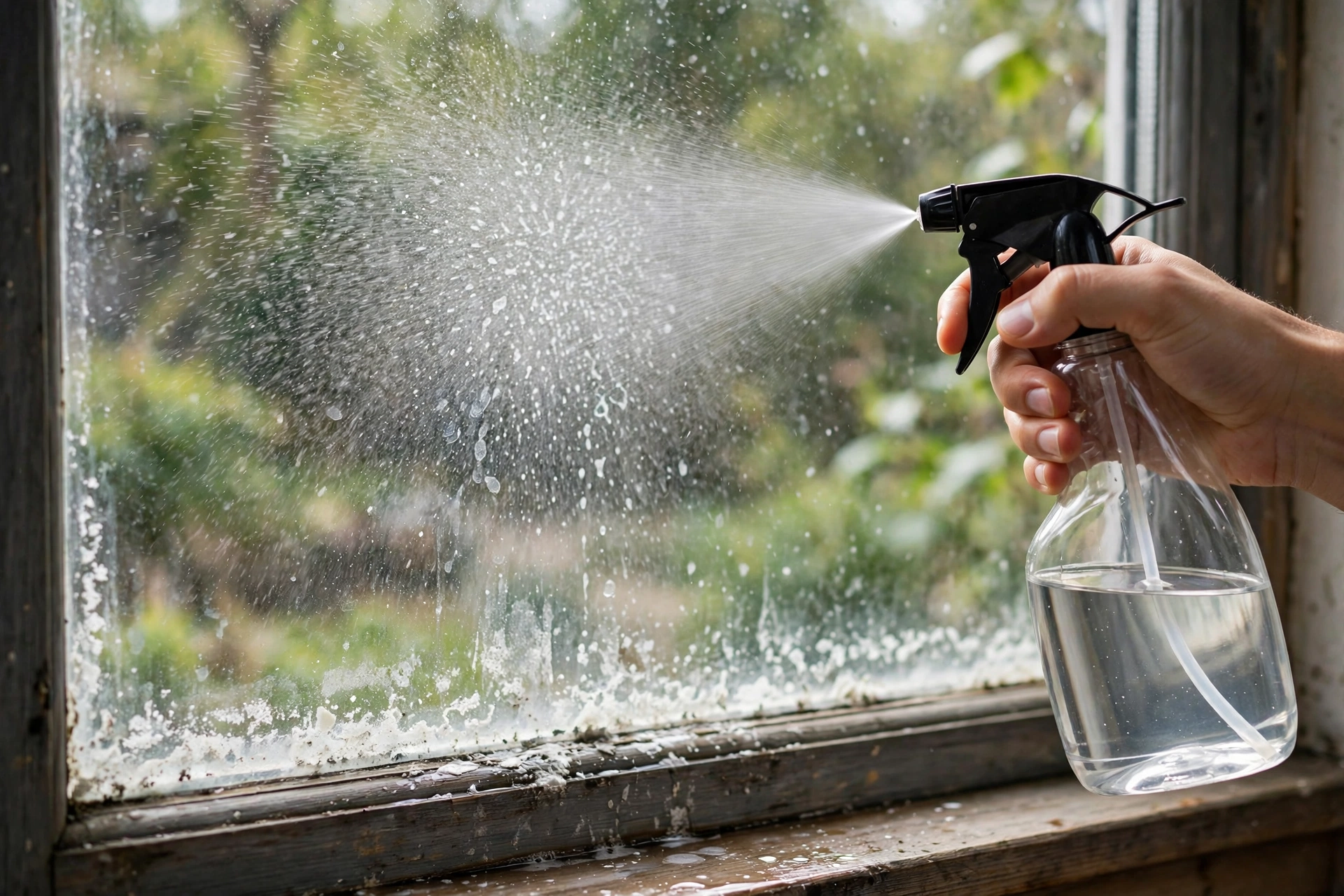
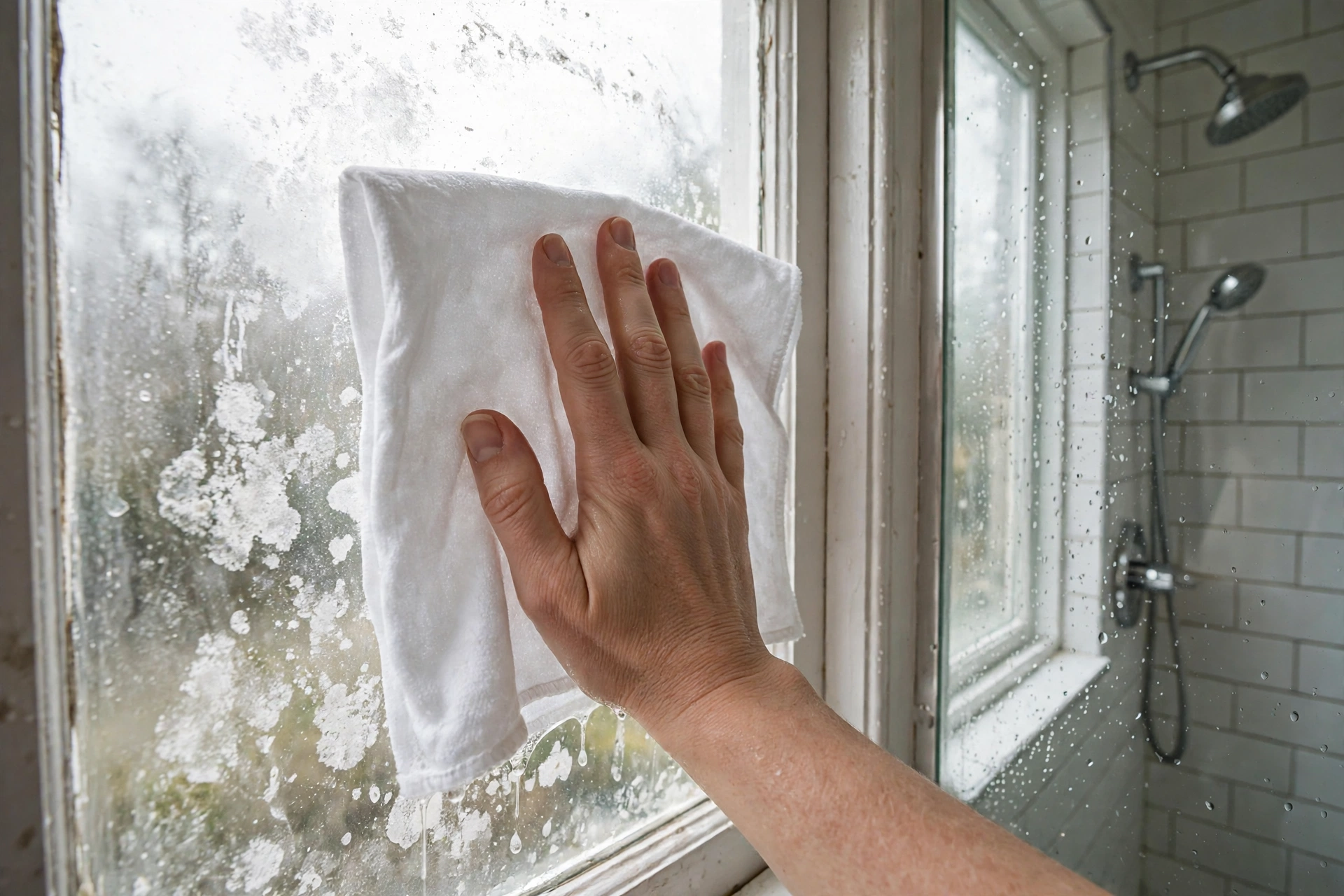
Hard water leaves white mineral spots that soap alone will not move. Mix equal parts white vinegar and water in a spray bottle and spray the spotted areas first, letting it sit for two or three minutes before the main wash. The mild acid dissolves the mineral deposits so the squeegee can carry them away. This is the step to use on bathroom windows and on any pane near a sprinkler, where mineral spots build up fastest. Rinse with plain water afterward so no vinegar smell lingers in the room. That first pass on the spots is what makes learning how to clean windows streak free so much easier on hard-water glass.
5. Squeegee Top to Bottom in Overlapping Strokes
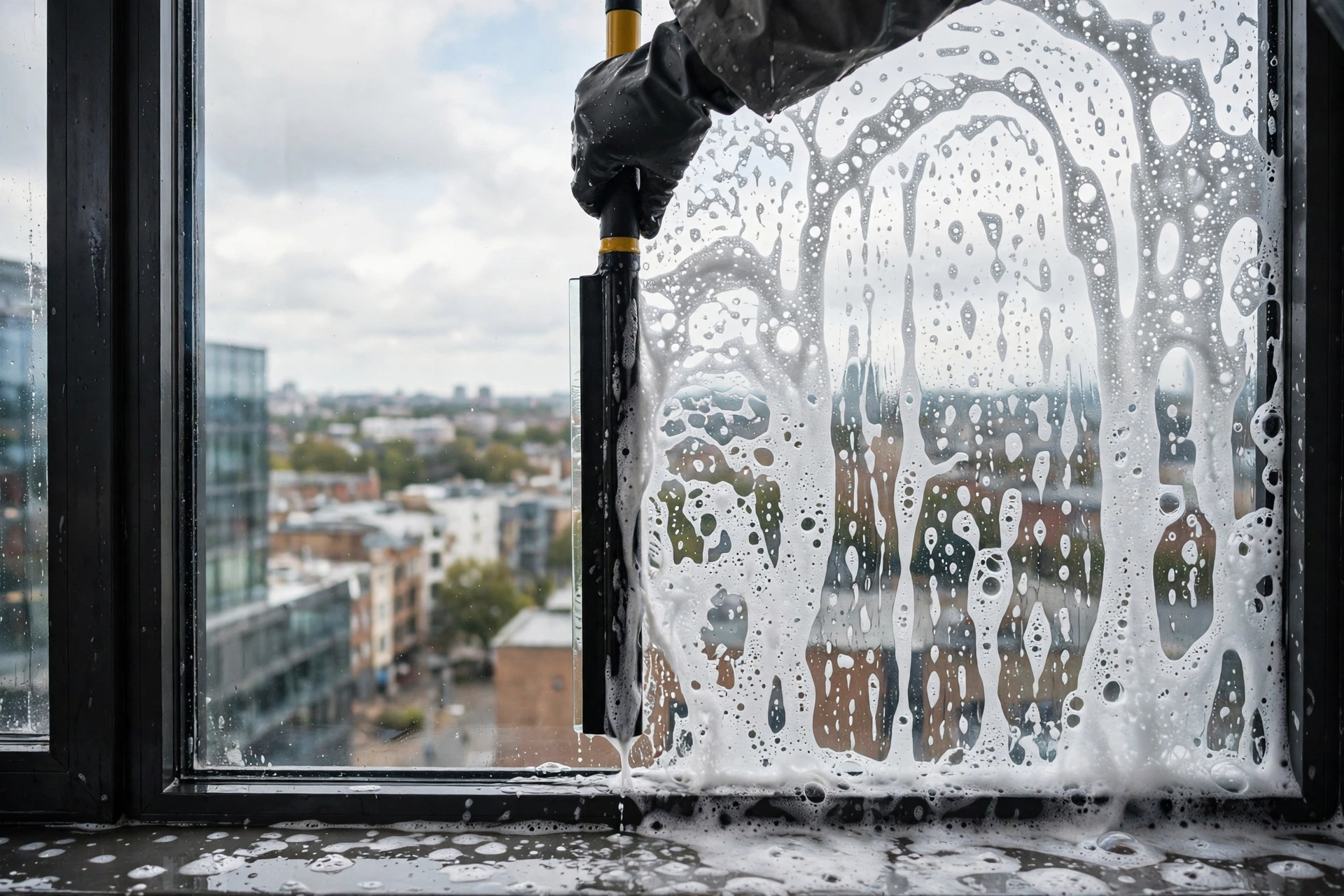
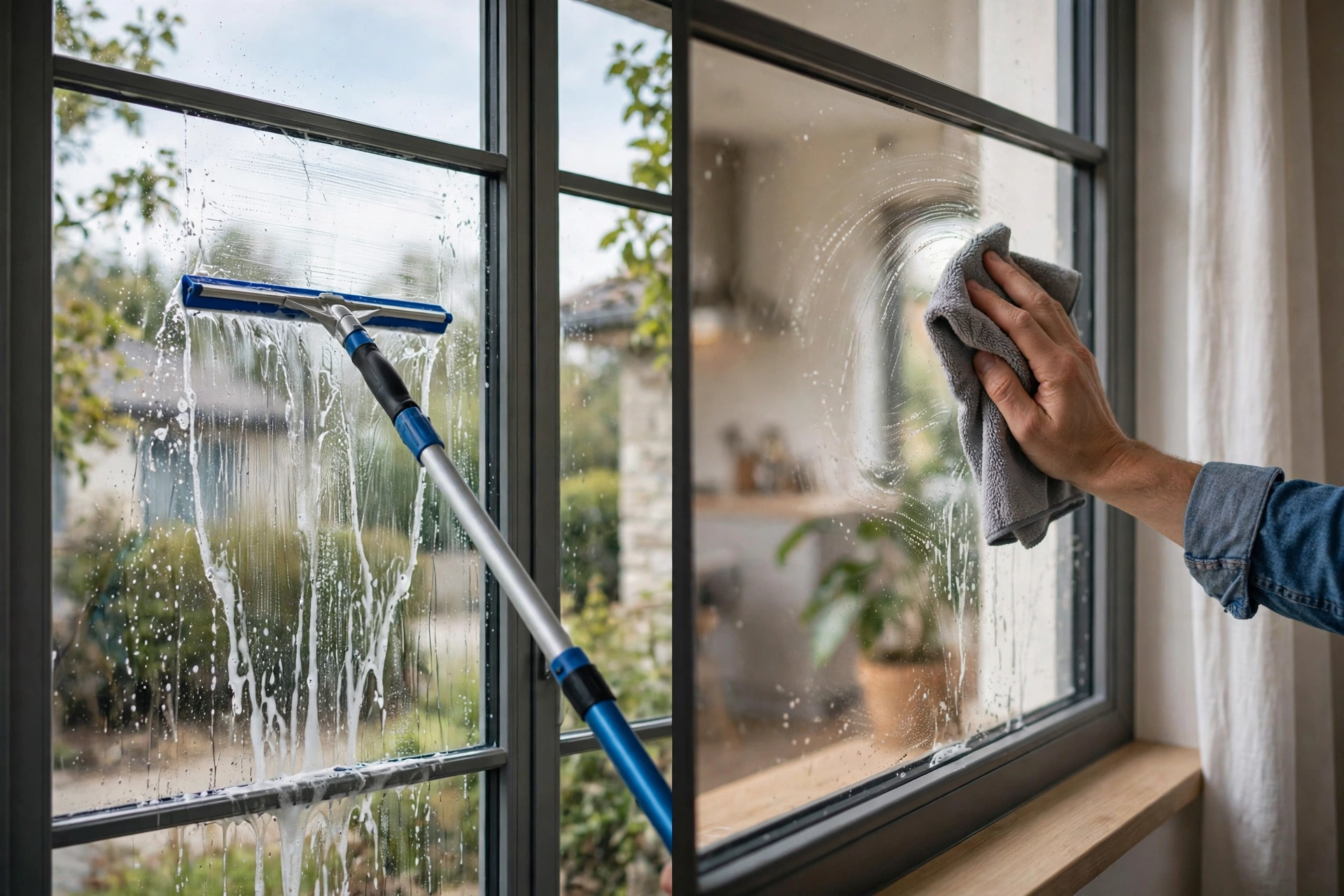
A squeegee is a flat rubber blade that pulls water off glass in one pass, and it is the whole secret of streak-free windows. Start at the top corner, press the blade flat against the glass, and pull straight down in a smooth stroke. Wipe the blade with a dry cloth after every stroke, then make the next stroke overlapping the first by about an inch so no line of water is left between passes. Work across the window from one side to the other, always pulling the dirty water down and off the glass instead of pushing it around.
6. The Figure-of-Eight Squeegee Technique
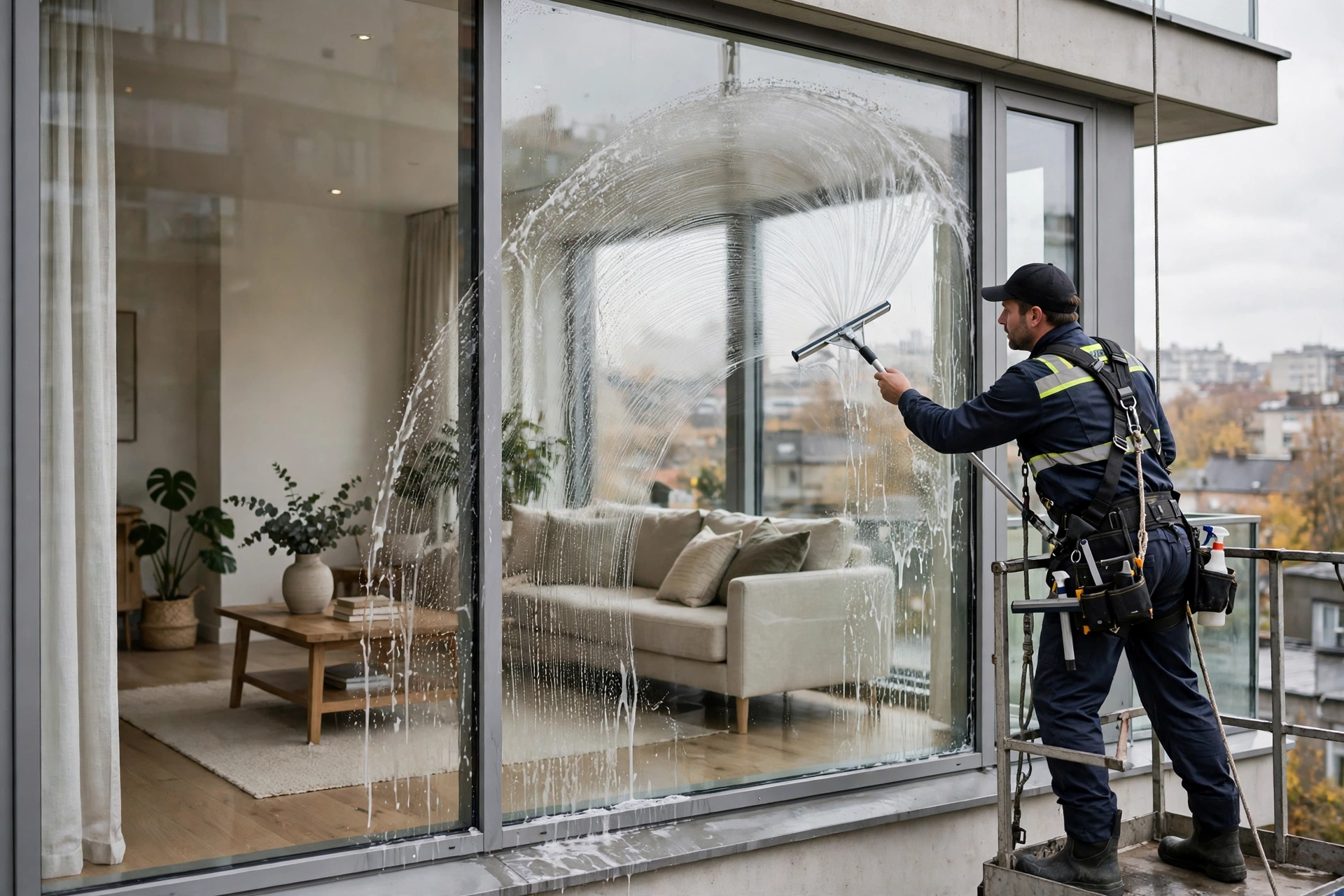
Once straight strokes feel comfortable, the figure-of-eight — professionals call it fanning — is faster and leaves even fewer lines. Start at a top corner and move the squeegee in a continuous sideways figure-eight, keeping the leading edge of the blade always touching wet glass and the trailing edge always on dry glass. The turn at each end of the eight keeps the dirty water ahead of the blade instead of trapping it in a corner. It takes a few windows to learn, so practice on a garage or basement window first, where a missed spot does not matter. Take your time with the motion — that is how you learn how to clean windows streak free without leaving lines behind.
7. Microfiber Cloth for the Edges
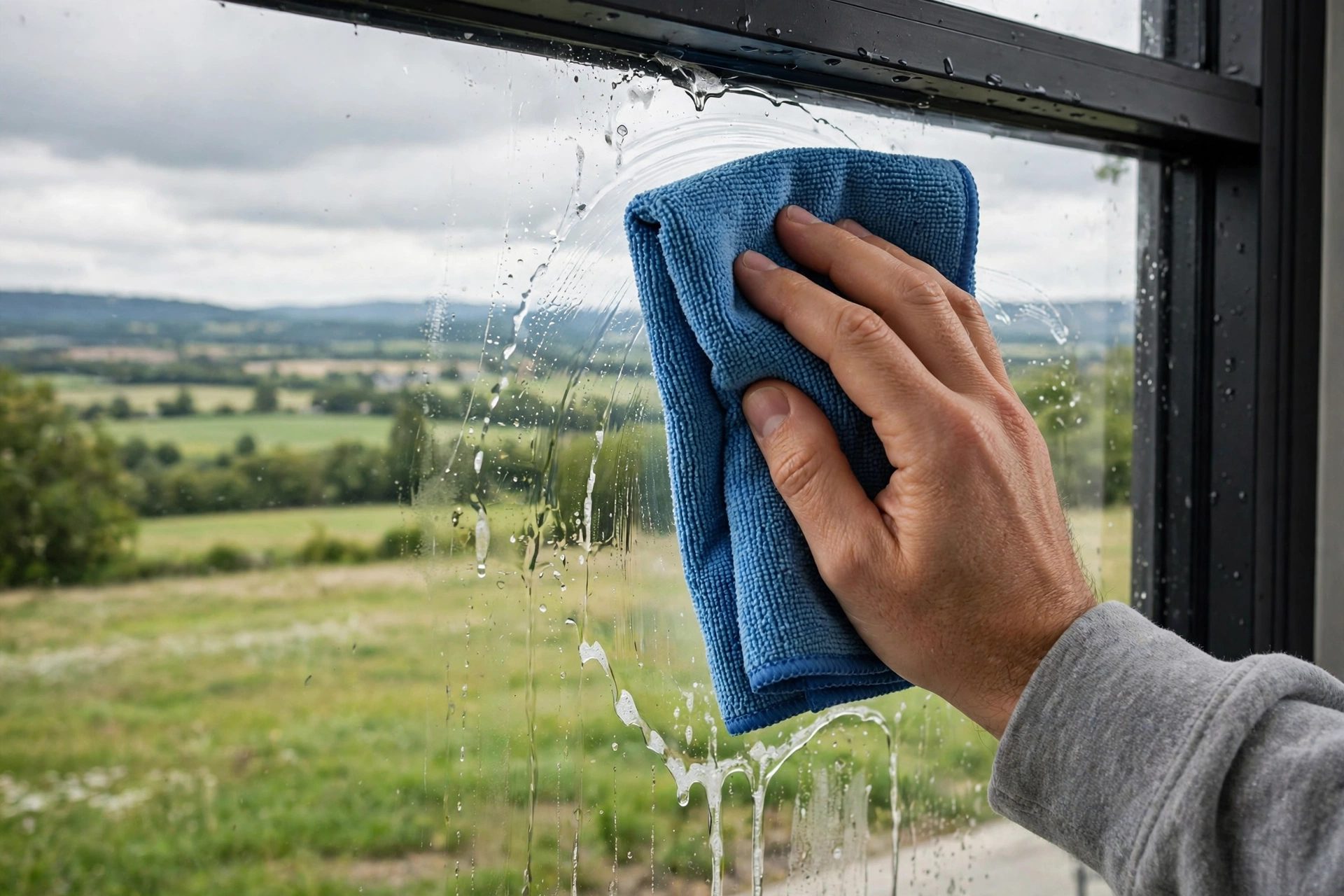
The squeegee cannot reach into the very corners, and the last half inch around the frame is where streaks hide. Keep a clean, dry microfiber cloth in your pocket and wipe the edges and corners after the final squeegee pass, using a fresh fold of the cloth each time. Microfiber lifts water instead of pushing it, which is why it works where paper towels fail — paper leaves lint and just moves the film around. Wash microfiber cloths without fabric softener, which coats the fibers and ruins their grip.
8. Clean the Tracks
Window tracks hold more dirt than the glass ever will: sand, pollen, dead insects, and the black grime that washes down from the frame. Vacuum the track first, then scrub it with an old toothbrush dipped in soapy water, and wipe it dry with a rag. A clean track matters for the glass too — the next rain will wash track dirt straight back onto the lower pane if the track is still filthy. Do the tracks while the glass is still wet, so one rinse handles both. A clean track is part of learning how to clean windows streak free, because the glass stays clean longer.
9. Clean the Screens
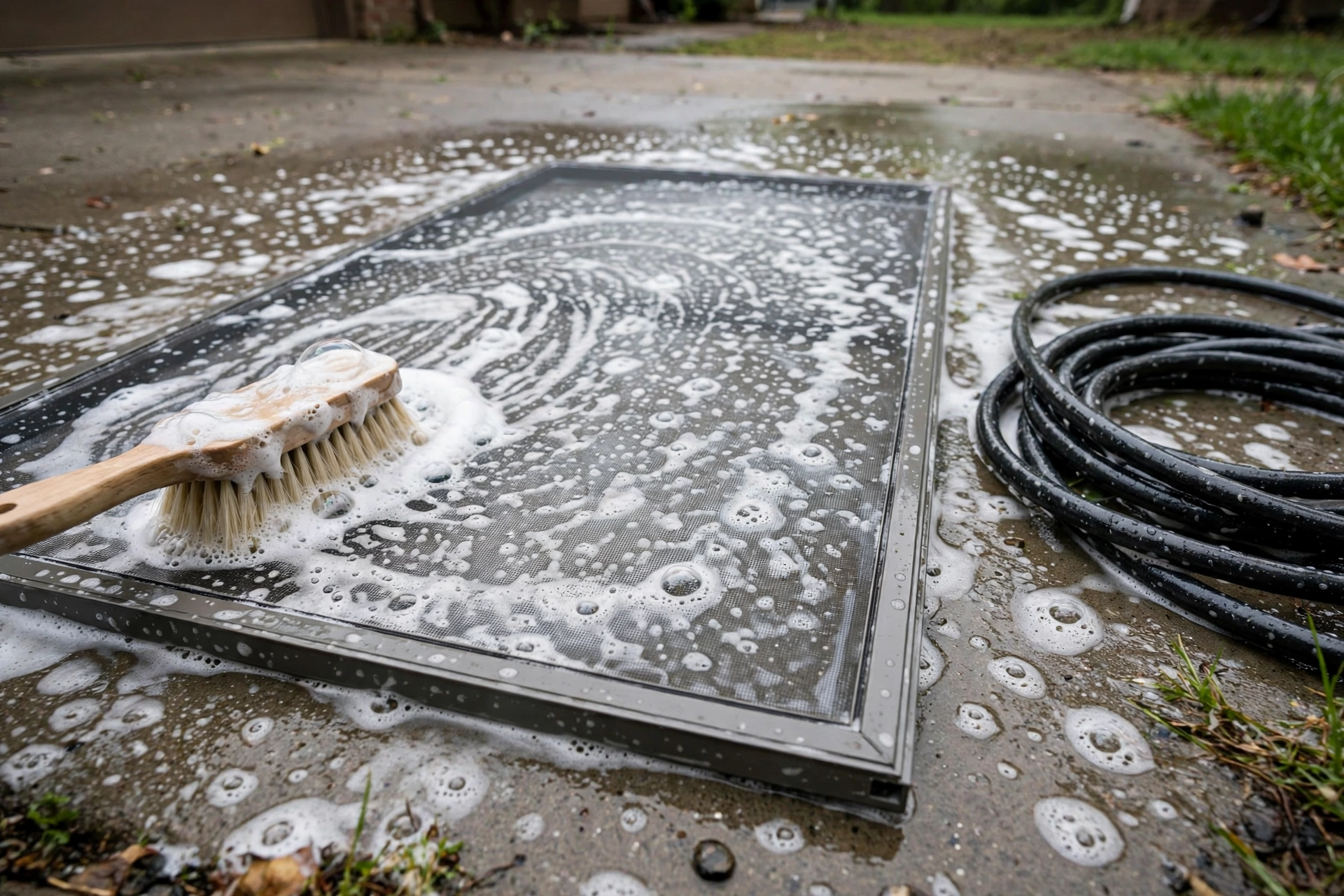
A dirty screen makes a clean window look gray from inside, because you are looking through dusty mesh. Pop the screens out, lay them flat on the driveway or lawn, and wash them with a soft brush and soapy water, then rinse with a garden hose and let them dry upright in the sun. Check the mesh for tears while they are out — a small hole is a five-minute patch now and a summer of mosquitoes later. Put screens back only when they are fully dry, or the damp mesh will leave marks on the clean glass.
10. Clean the Sills
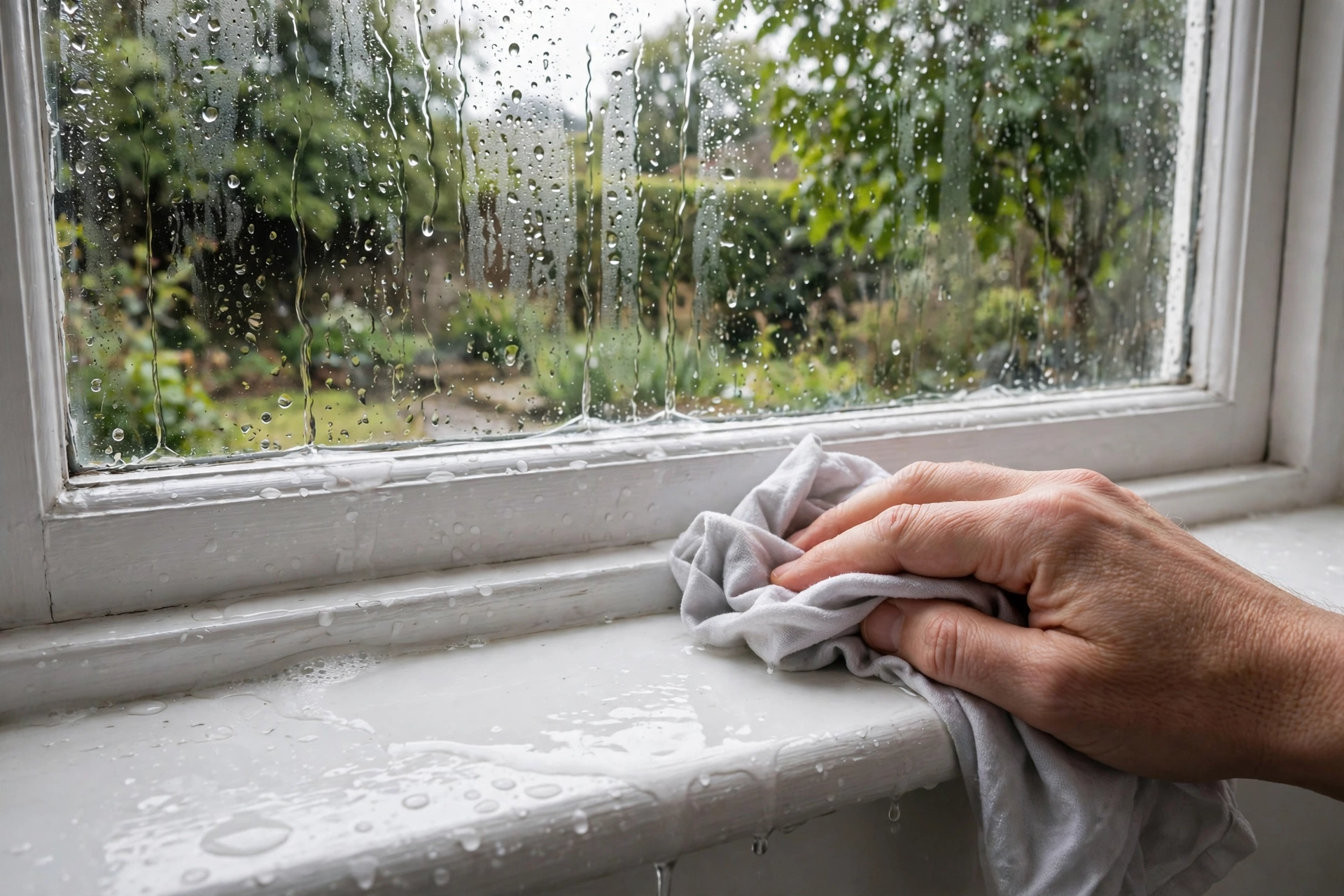
Sills catch every drip from the wash, so clean them last, after the glass. Wipe painted wood sills with a damp cloth and dry them right away — standing water swells paint and warps wood over time. If wash water drips onto the floor, wipe it up at once, especially on wood floors; our how to clean hardwood floors guide covers what to do when water sits on wood too long. A dry sill also shows whether the window seal is failing: a sill that stays damp days after cleaning may mean a leak, not a cleaning problem. A dry sill is a good sign that you are learning how to clean windows streak free the right way.
11. Hard Water Spots: A Citric Acid Soak
Old hard-water spots that vinegar did not move need a stronger soak. Dissolve a tablespoon of citric acid powder in a cup of warm water, apply it to the spots with a cloth, and leave it for five minutes before scrubbing gently and rinsing. Citric acid is the same mild acid used in canning and cleaning kettles, and it dissolves mineral scale without scratching glass. Never use an abrasive pad or a razor scraper on the spots — scratched glass catches dirt forever and can never be polished streak-free again.
12. Inside vs. Outside: Different Routines
Inside and outside windows get dirty in different ways, so clean them differently. Outside glass needs the full wash — soap, squeegee, tracks, and screens — because it collects pollen, bird droppings, and road film. Inside glass usually only needs a light pass: a damp microfiber cloth with a drop of dish soap, then a dry microfiber buff, since the dirt is mostly fingerprints, cooking film, and pet nose prints. Mark the outside with a small piece of tape before you start, so when a streak appears you know which side it is on without guessing. Knowing which side is which saves time when you are learning how to clean windows streak free.
13. High Windows: Ladder Safety and When to Hire
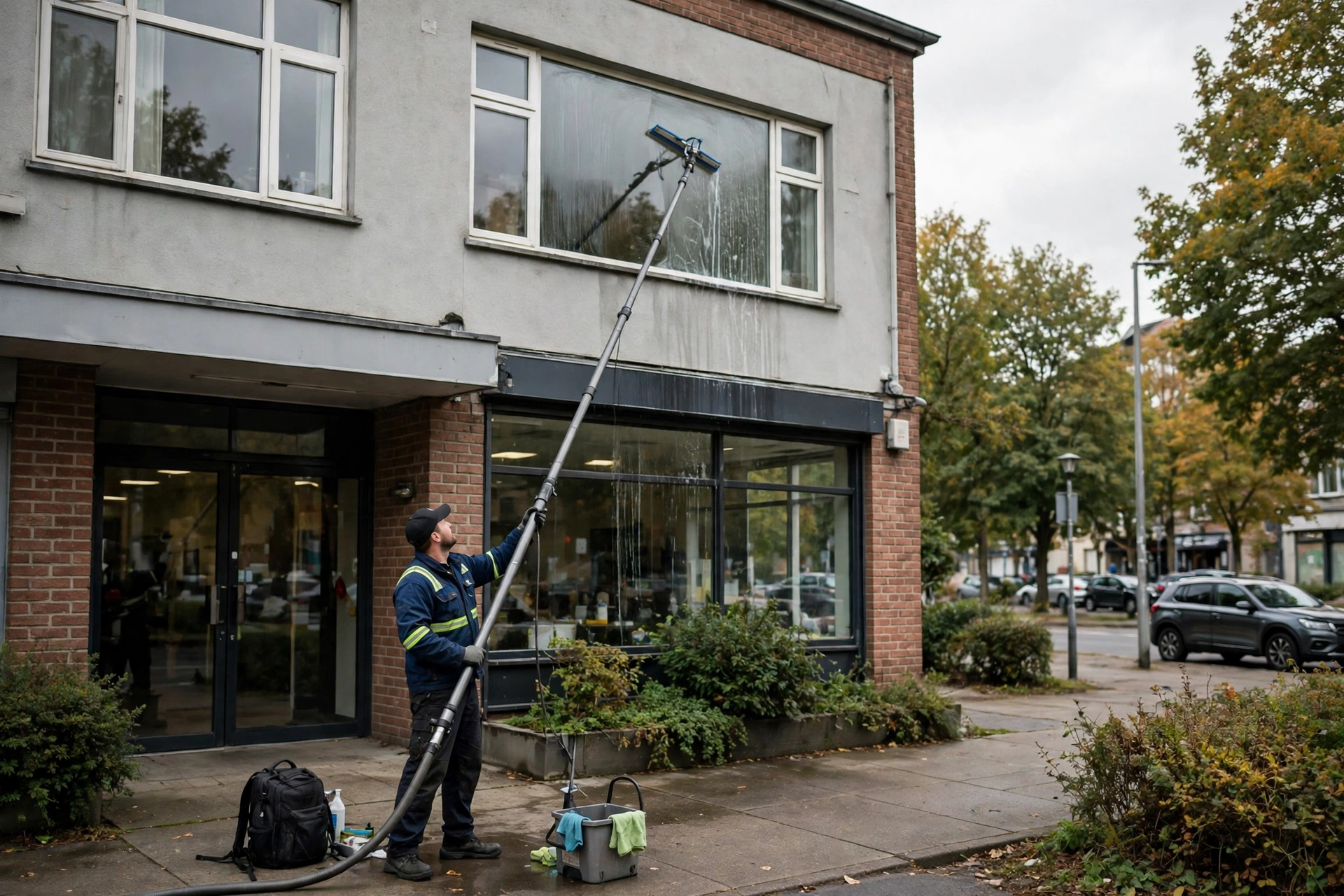
Second-story windows are where streak-free cleaning meets real risk. Use a telescoping squeegee pole from the ground for anything you can reach that way, and keep both feet on the ground. If a ladder is truly needed, it must be on level ground, at a 75-degree angle, with someone holding the base — never lean sideways from a ladder to reach a window, and never clean a high window in wind or rain. If the window is above the second floor, or the ladder feels wrong in any way, hire a professional: a pro with a water-fed pole cleans it in minutes, and no streak-free window is worth a fall.
14. How Often: Every Two Months, Inside and Out
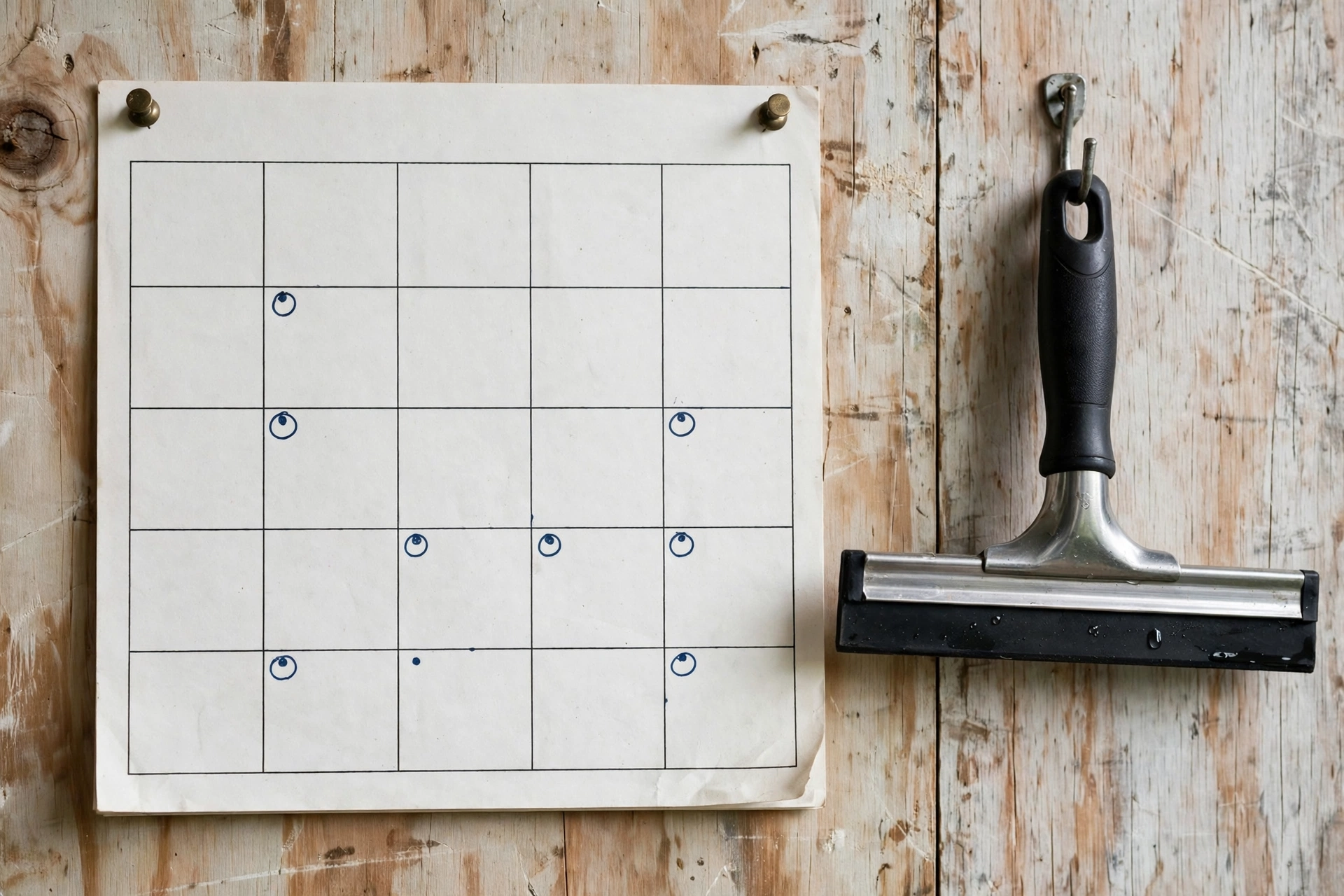
A realistic schedule keeps windows streak-free without becoming a chore: wash the outside every two months, and the inside every two months too, on the same day. Kitchens and bathrooms need the inside done more often — monthly is enough — because cooking film and steam leave a haze that builds up fast. After a pollen-heavy spring week or a dusty storm, do the outside again even if it is not due; fresh dirt comes off in one pass, while dirt baked on by a month of sun needs scrubbing. Put the next wash on the calendar the day you finish, or it will slide to “someday” and the streaks will win. A regular schedule is the easiest way to learn how to clean windows streak free and keep the glass invisible.
15. What Never to Use: Too Much Soap, Newspaper, and Ammonia Plus Bleach
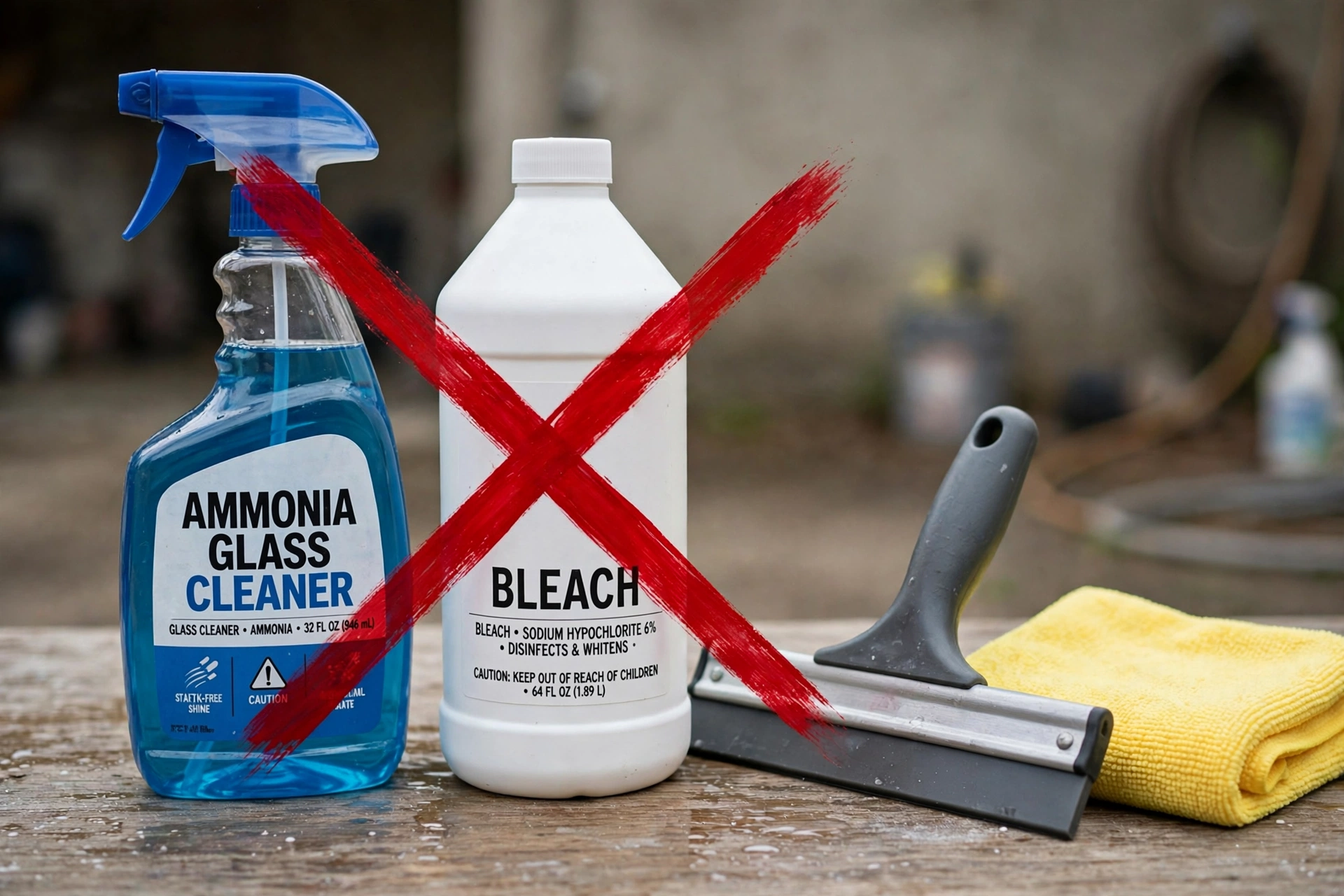
Three things ruin windows or put people at risk, so leave all of them out. Too much soap is the most common mistake — it is the streak itself, so measure the soap and keep it minimal. Newspaper was the old trick, but modern newspaper ink smears, the paper tears when wet, and it leaves lint on the glass; microfiber does the same job better. And never mix ammonia-based glass cleaner with bleach, or use them one after the other on the same window — together they make toxic chloramine gas. One cleaner, one method, and the squeegee will do the rest.
Frequently Asked Questions
Q: How do I clean windows streak free without a squeegee?
A: You can get close to streak free without a squeegee, but it takes more cloths. Wash with the same one-drop-of-soap solution, then dry the glass with a clean microfiber cloth, switching to a fresh fold every few strokes — the streaks come from a cloth that is already wet. For anyone learning how to clean windows streak free, a basic 10- or 12-inch squeegee costs less than a bottle of glass cleaner and makes the job faster on the very first try.
Q: What is the best homemade window cleaner?
A: A bucket of cool water with a few drops of plain dish soap is the best all-round mix, because the soap lifts dirt and the squeegee removes it all in one pass. For mineral spots, spray equal parts white vinegar and water first and let it sit for two or three minutes. Skip the recipes that add a cup of vinegar or a squirt of soap to every spray bottle — too much of either leaves the film that causes streaks.
Q: Why do my windows look clean until the sun hits them?
A: Sunlight at a low angle shows the thin film that room light hides, which is almost always dried cleaning solution or soap residue. The fix is not more cleaner — it is less. Wash again with plain water and only a drop of soap, squeegee it off completely, and buff the edges with a dry microfiber cloth. If the haze is still there after a plain-water wash, it may be mineral etching in the glass itself, which no cleaner removes.
Q: Should I clean windows in winter?
A: Yes, as long as the temperature is above freezing and the glass is not icy — cold glass is fine, frozen solution is not. Use lukewarm water, not hot, so the glass does not crack from the temperature shock, and work in the middle of the day when the sun has warmed the panes a little. In freezing weather, clean only the inside and wait for a thaw for the outside.
Q: How do I keep windows clean longer after washing?
A: Keep the screens and tracks clean, because they are what re-dirty the glass — a dirty screen sheds dust onto clean glass with the first breeze. Trim branches that touch the window, keep sprinklers from spraying the glass, and wipe the inside of kitchen and bathroom windows with a dry microfiber cloth once a week. Those small habits stretch a two-month wash into glass that still looks invisible at the next wash.
Related Reading
Conclusion
Learning how to clean windows streak free comes down to three habits: clean in the shade, use barely any soap, and pull the water off with a squeegee instead of wiping it around. Everything else — the vinegar for mineral spots, the microfiber for the edges, the clean tracks and screens — is support for those three habits. Start with one window, get the stroke right, and the rest of the house takes less time than the first window did. When the glass disappears and only the view is left, you will know the method worked.
