15 New Year Bedroom Organization Ideas for a Calm Fresh Start
Introduction
January is the one month of the year when the bedroom gets an honest look. The holiday decorations come down, the closet is still stuffed with gifts, and the nightstand has collected three months of clutter — books you finished, chargers for devices you no longer own, and things that belong somewhere else. A bedroom is where the day starts and ends, so when it is messy, the whole day feels messier.
The good news is that New Year bedroom organization ideas do not need a remodel, a new closet system, or a big budget. They need systems: a closet with a rule for what stays, a bed with storage underneath it, a nightstand with almost nothing on it, and a ten-minute habit at the end of the day. The fifteen ideas below are organized the way a real January reset works — clear it out first, then give everything a home, then build the habit that keeps it that way. If the closet needs a deeper rebuild, our small closet organization ideas cover the shelving and hanging systems in detail, and our laundry room organization ideas show how to keep dirty clothes from piling up before they ever reach the bedroom. For the rest of the house, our how to declutter your home room by room guide uses the same keep-or-let-go method, one room at a time.
1. The Closet Edit: Your First New Year Bedroom Organization Idea
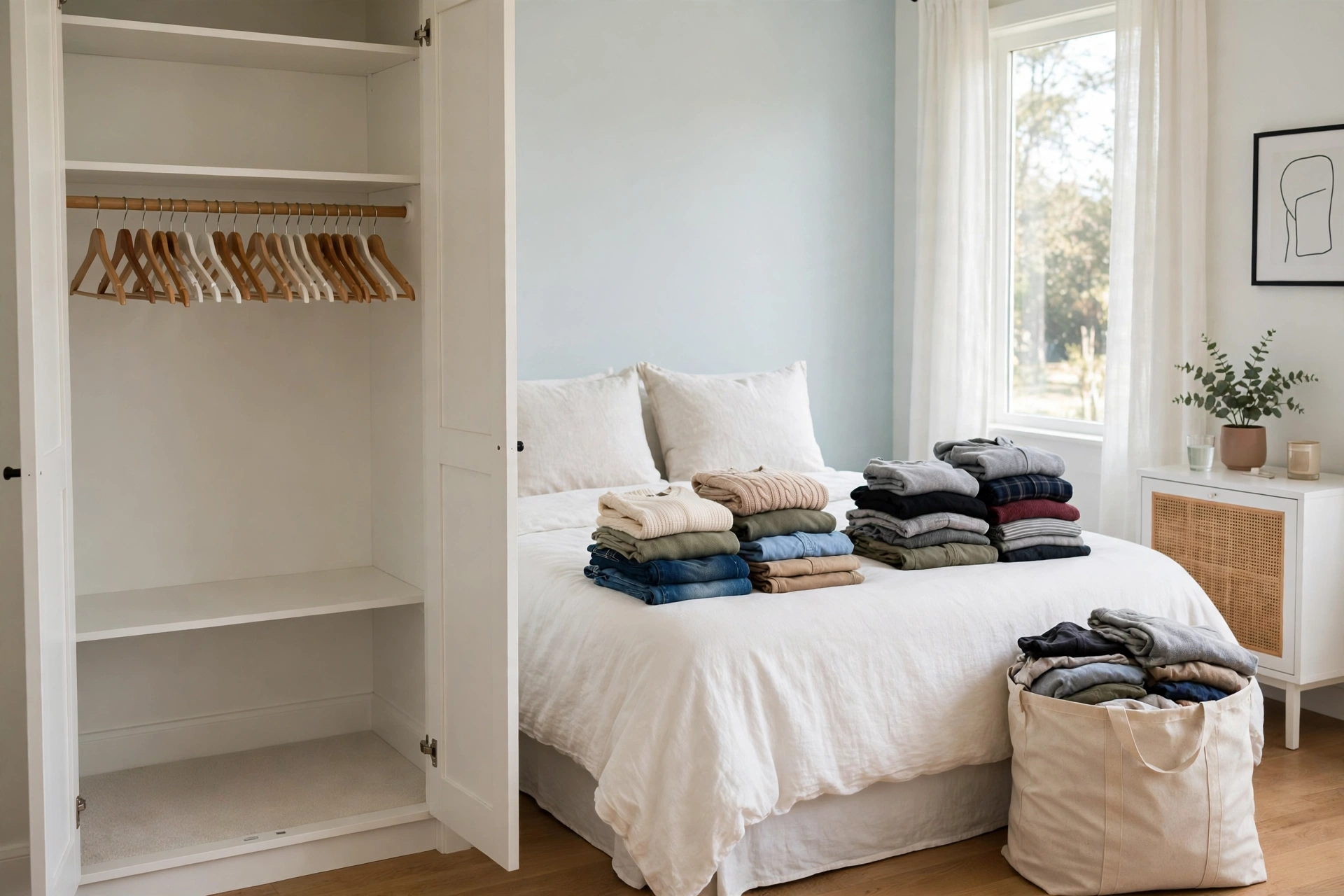
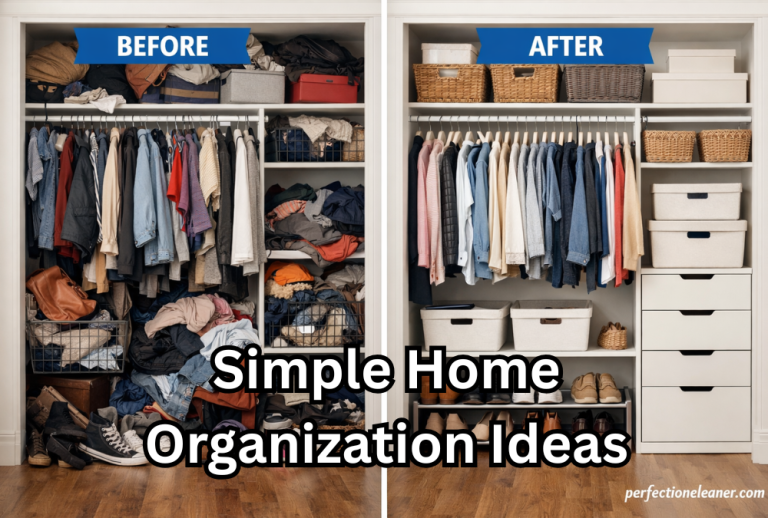
Every January bedroom reset starts in the closet, because the closet is where the clutter hides. Take everything out — every hanger, every folded stack, every pair of shoes on the floor — and lay it on the bed so you can see all of it at once. Then run the worn-in-the-last-year test: if you have not worn it in the past twelve months, it goes. The exception is a true special-occasion outfit, and even then, one is enough.
Pair the edit with a one-in, one-out rule for the year ahead. Every new item that comes into the closet means one old item goes out, the same week. The rule is simple enough to remember and strict enough to work, and it stops the closet from filling up again by March. Put the keepers back by category and hang them facing the same direction. Our small closet organization ideas go deeper on hanging and shelving systems if your closet needs more than an edit.
2. Under-Bed Storage for Off-Season Clothes
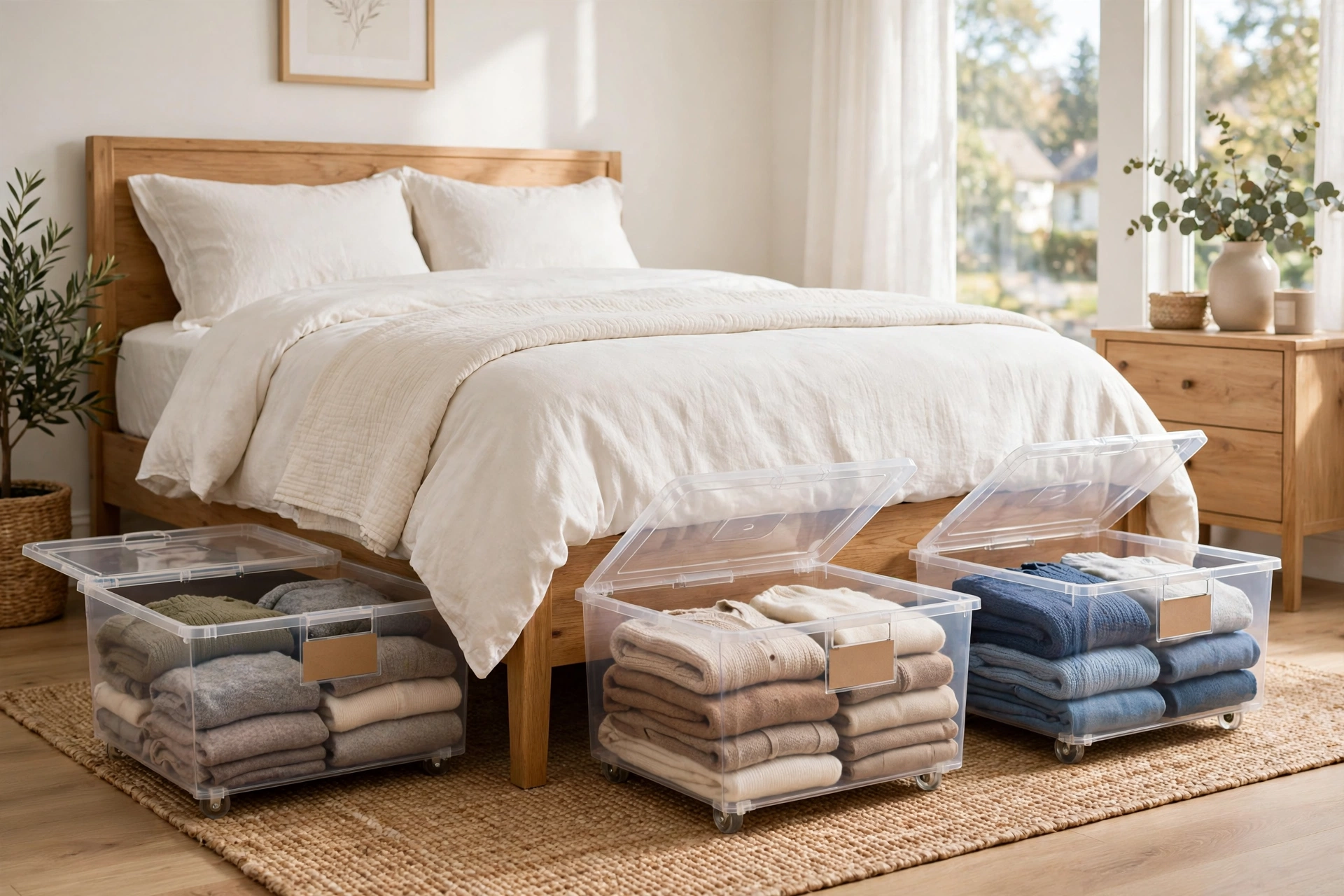
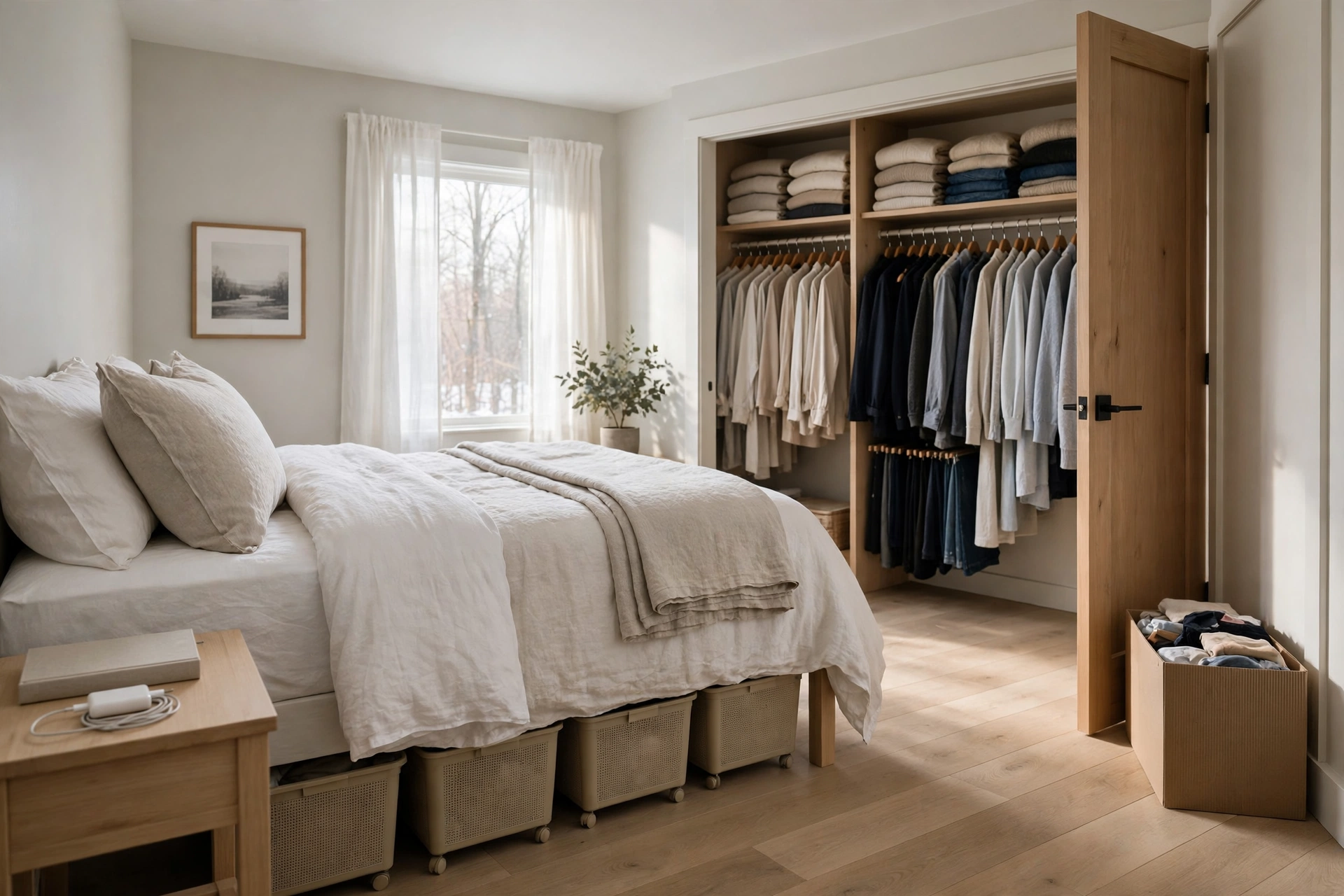
The space under the bed is the largest unused storage area in most bedrooms, and it is perfect for off-season clothes. Rolling bins with lids slide under a standard bed frame, keep dust out, and pull out easily when the season changes. Measure the clearance under your bed first — most frames give you six to eight inches — and buy bins that fit that height with a little room to spare.
Pack the bins by season, not by item type: all of the summer clothes in one bin, all of the heavy winter sweaters in another. Label each bin on the end you can see, so you can find the right one without pulling out all three. Vacuum-seal bags work inside the bins if you need to squeeze in bulky sweaters, but skip them for anything you will need mid-season, because re-sealing them every time gets old fast.
3. Nightstand Minimal Reset: One Book, One Charger, One Tray
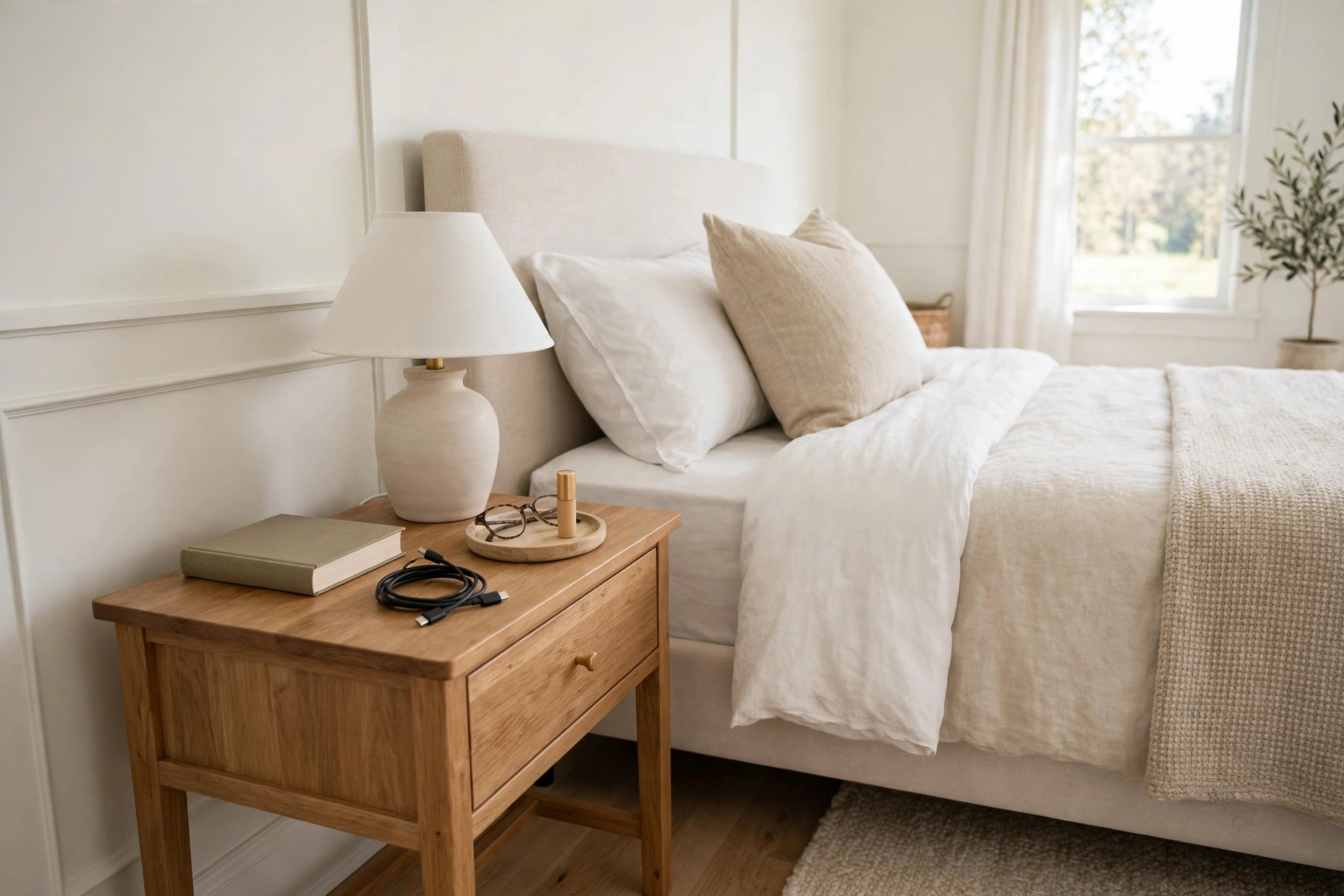
The nightstand is the smallest surface in the bedroom and the easiest one to clutter, because everything you use at night ends up there. The reset is simple: one book, one charger, one tray. The book you are actually reading goes on the nightstand, not the stack of five you might read someday. One charger — a single cable for the phone — replaces the tangle of old cables. One small tray holds the things that need a home: lip balm, a glass of water, reading glasses.
Everything else leaves. The drawer takes the rest: a pen, a notepad, and the charger for the tablet if you use one. Clear the top completely first, wipe it down, and put back only the three things. It takes five minutes.
4. Dresser Drawer Dividers
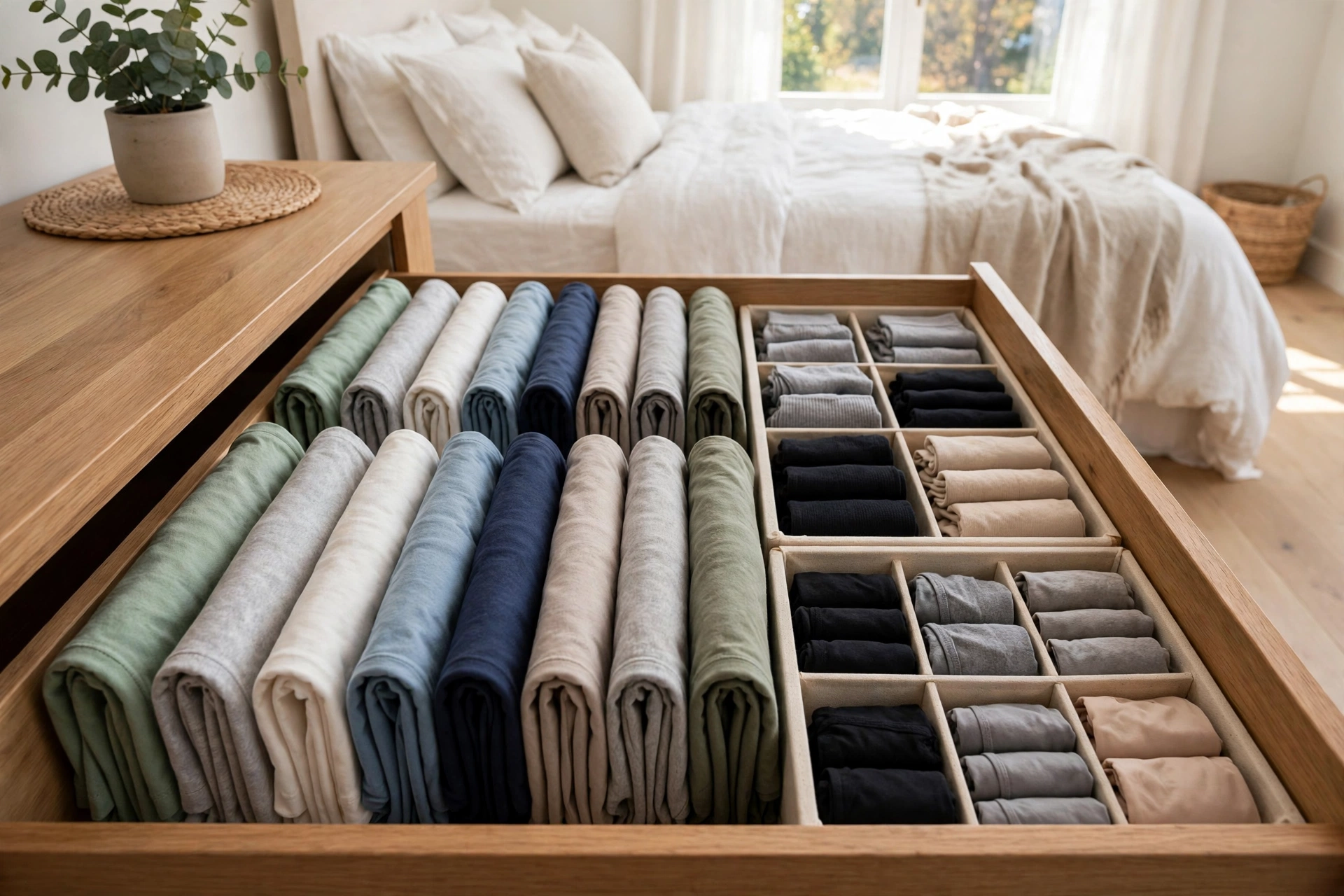
A dresser drawer without dividers is a drawer where everything ends up in one tangled layer. Drawer dividers — spring-loaded, adjustable, or simple fabric boxes — turn each drawer into a grid of small homes: socks in one square, underwear in another, t-shirts folded upright in a row. The trick is folding clothes so they stand up, file-style, instead of stacking them flat, so you can see every item at a glance.
Measure each drawer before you buy dividers, and leave one drawer undivided for bulky items like sweatshirts. Adjustable dividers are the safest bet if your dresser drawers are not a standard size, and fabric boxes are better than hard plastic in shallow drawers because they flex. Label nothing here — the grid itself is the system, and you will learn it in a week.
5. The Seasonal Clothing Swap
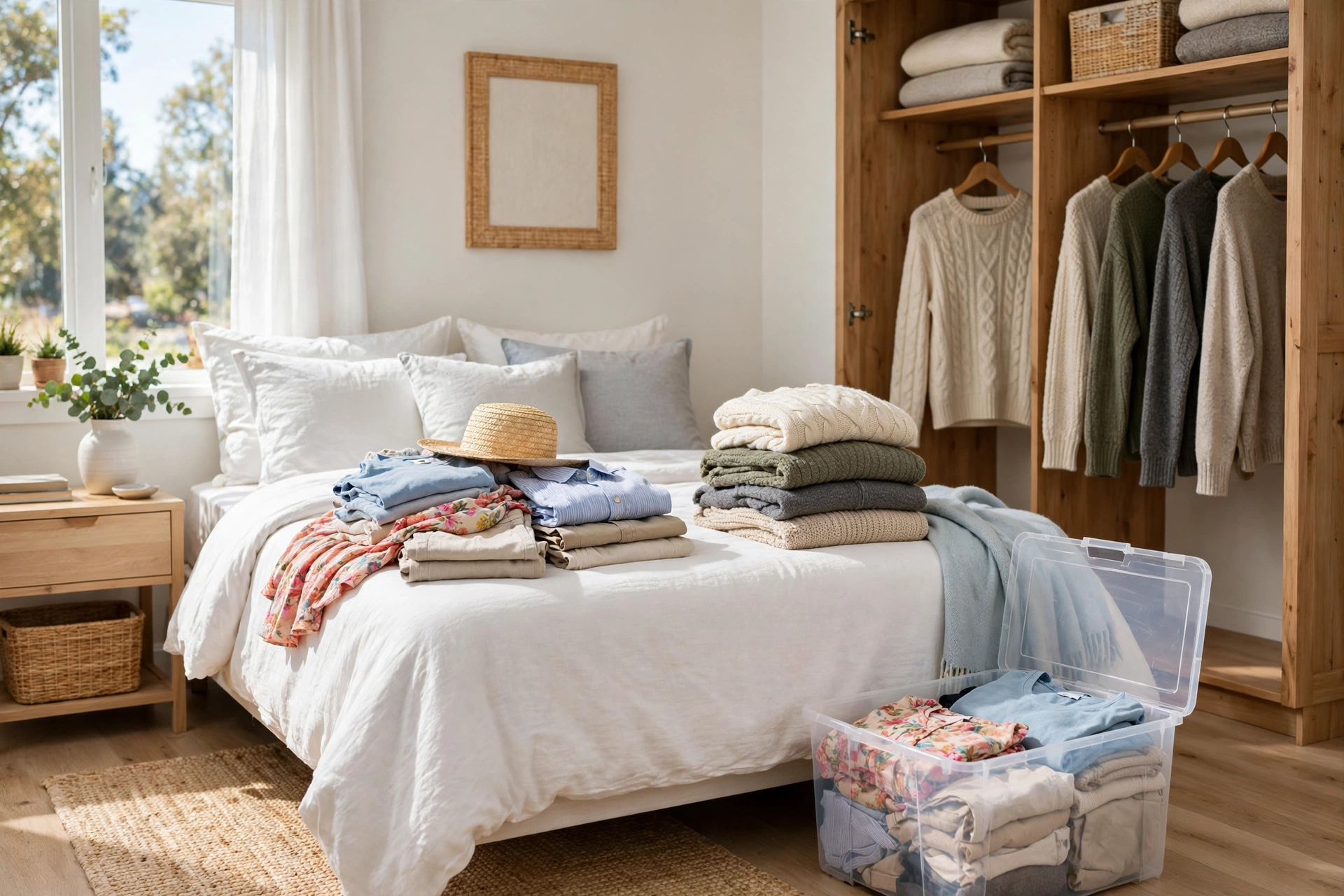
The seasonal clothing swap is the twice-a-year version of the closet edit, and January is the right time to do the winter one. Pull the summer clothes out of the closet and the dresser, pack them into the under-bed bins from Idea 2, and bring the heavy winter clothes — sweaters, coats, flannels — back into the closet and the top dresser drawers. Doing the swap in one sitting, instead of digging for a sweater every cold morning, saves time all season.
While you swap, run the worn-in-the-last-year test again on the clothes coming back in. A sweater you did not wear last winter is not going to get worn this winter, and it belongs in the donation box, not back on the shelf.
6. Shoe and Accessory Zones
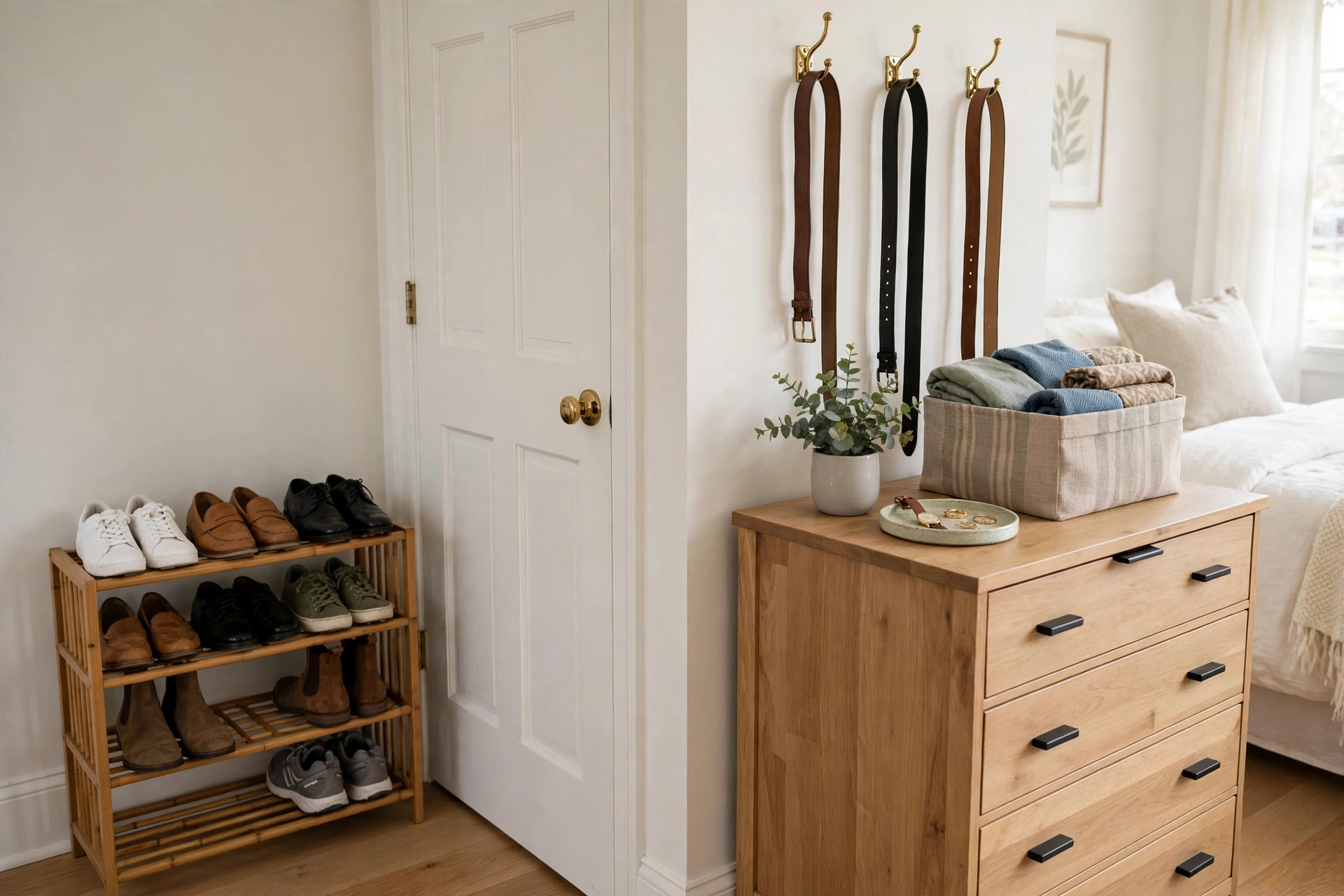
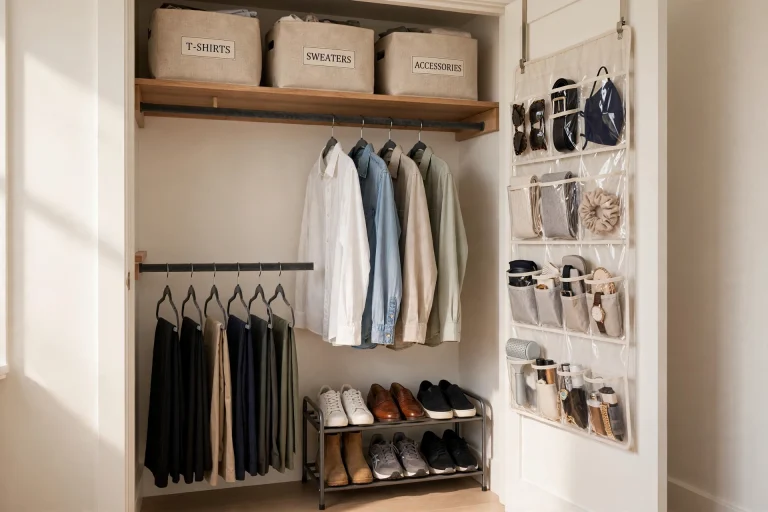
Shoes and accessories multiply quietly, because each pair is small and each one feels like it belongs somewhere different. Give them zones instead. Shoes get one zone only — a shoe rack by the closet door or a low shelf inside the closet — and the rule is that a pair lives in the zone or it leaves the bedroom. Keep the everyday pairs at eye level and the occasion shoes up high or in the back.
Accessories get their own zone on top of the dresser or on one shelf: belts hung on a single hook, scarves folded in one fabric box, hats on one shelf. A small shoe tray by the bedroom door catches the pair you kicked off last night, so it does not become a second pile by the bed. If the zone is full, the one-in, one-out rule from the closet edit applies here too.
7. Jewelry and Small-Item Trays
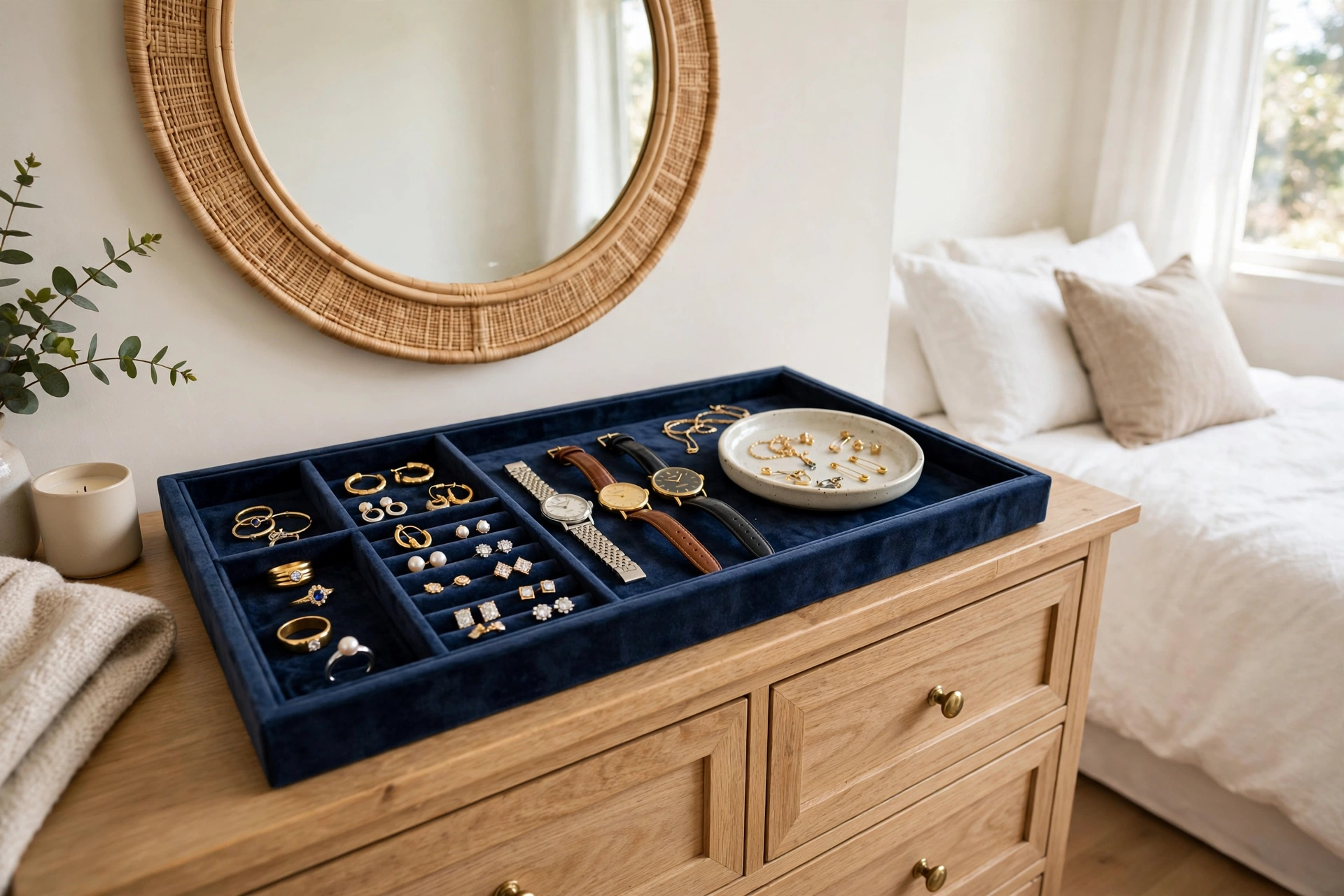
Jewelry, watches, cufflinks, and hair ties are the smallest things in the bedroom and the easiest to lose, because they have no home — they end up in a drawer, on the dresser, or in a pocket. A tray with compartments on top of the dresser fixes that: rings in one section, earrings in another, watches in a row, and a small dish for the everyday pieces you grab every morning.
Keep the tray small enough that it forces a limit. If it is full, something has to go before something new comes in, which is the one-in, one-out rule again, at a smaller scale. Put the tray where you get dressed, not where you sleep, so the pieces go back in the tray the moment they come off. A velvet-lined tray keeps metal from scratching and stops earrings from sliding around.
8. A Laundry Hamper System That Makes New Year Bedroom Organization Ideas Stick
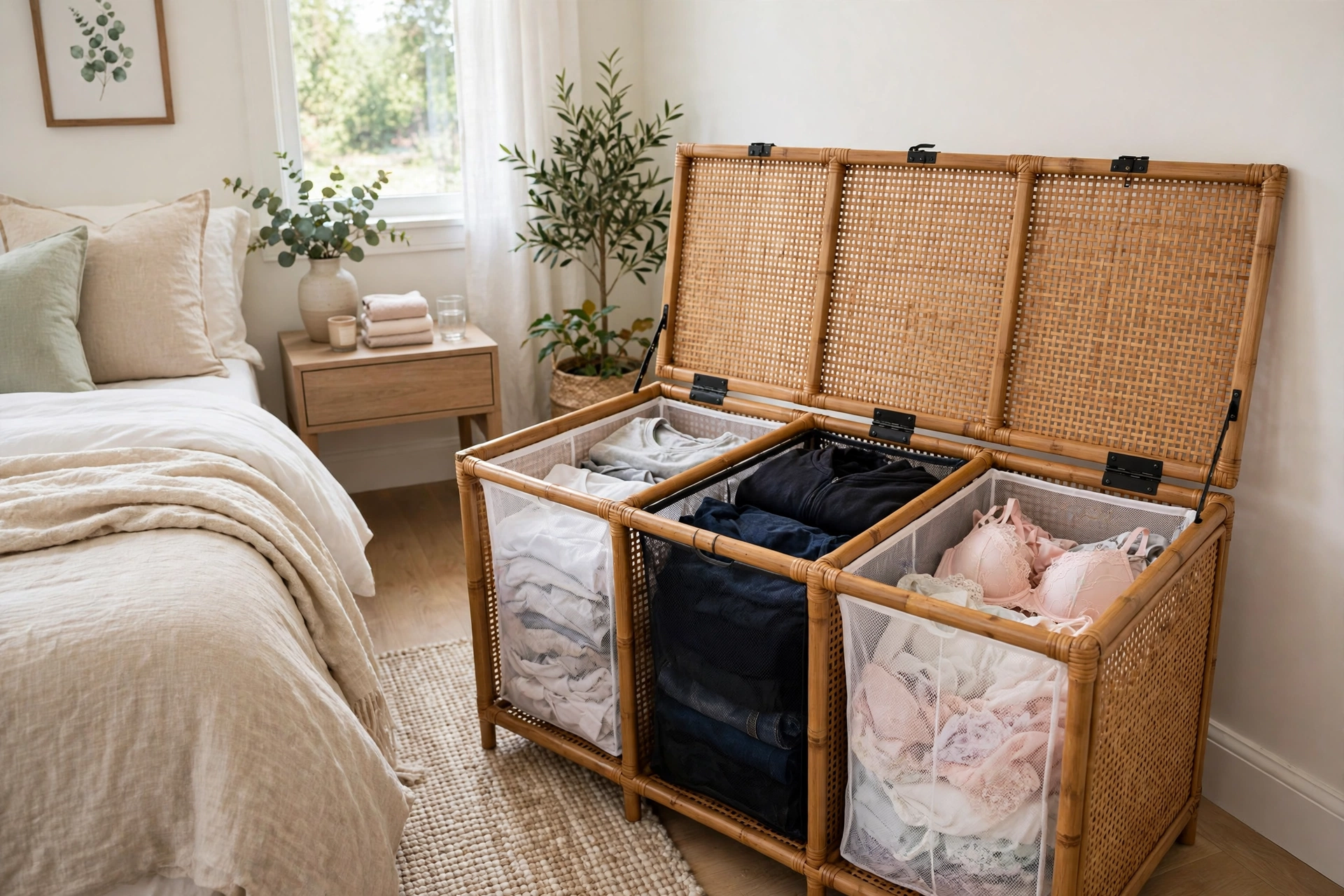
The laundry hamper is where bedroom organization either works or falls apart, because dirty clothes are the fastest-growing pile in the room. A sorting hamper — two or three compartments for lights, darks, and delicates — sorts the laundry at the source, so wash day starts with three full loads instead of one giant sorting session on the bedroom floor. Our laundry room organization ideas build on this same sort-at-the-source system for the whole laundry room.
Give each person in the bedroom their own hamper, or one divided hamper with a compartment per person, so nobody’s clothes end up in a pile on a chair. Keep the hamper in the closet or in the corner by the dresser, never in the middle of the room, and empty it on a schedule — every three days is enough for two people. A hamper with a lid keeps the room looking tidy even when it is full.
9. Bedside Charging Station
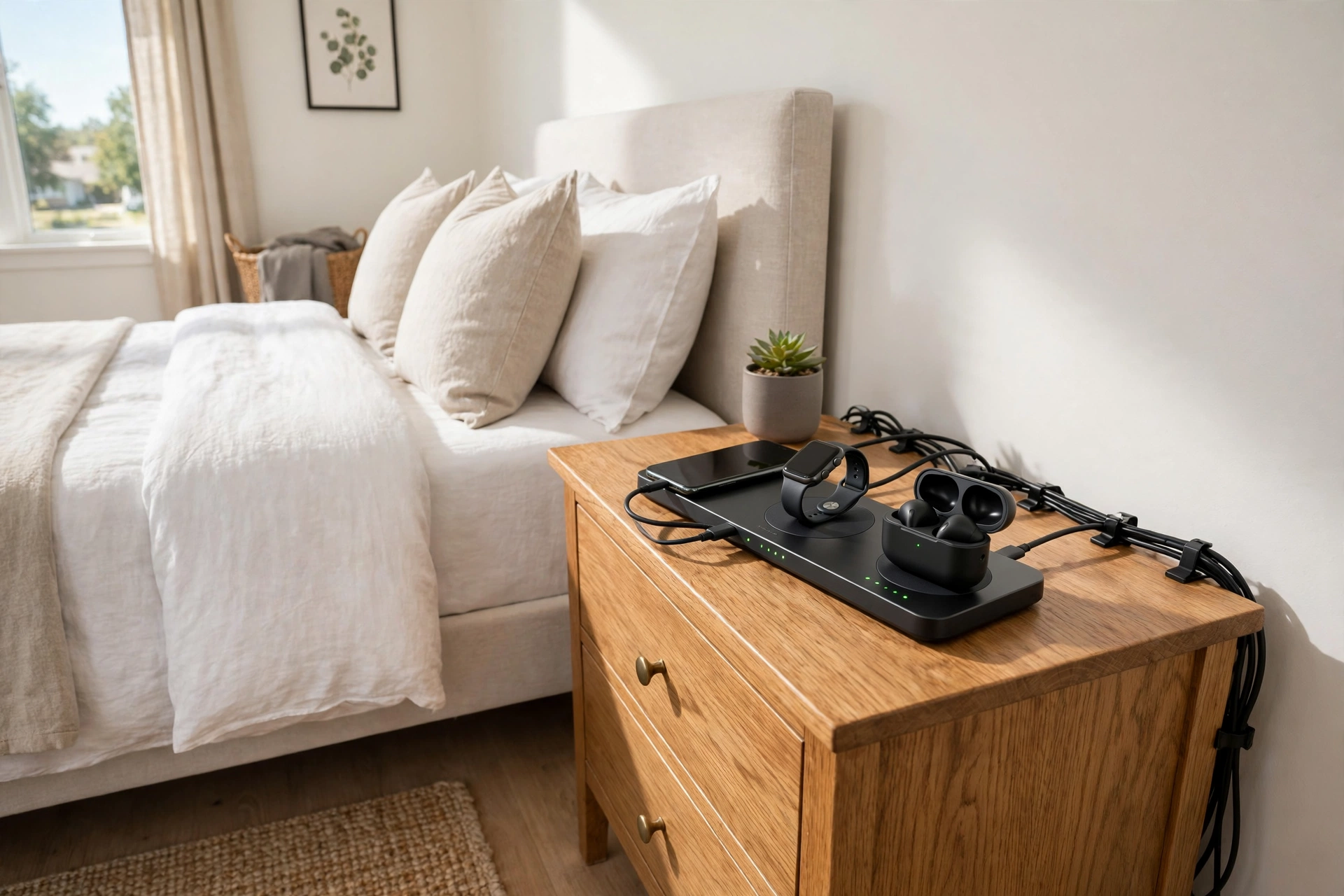
Phones, tablets, watches, and earbuds all need charging, and when each one has its own cable draped across the nightstand, the bedside becomes a tangle. A bedside charging station — a small dock or a tray with a multi-port charger — puts every device in one spot with one power strip, and the cables stay behind the nightstand instead of across it. Keep the station on the nightstand or on a small shelf beside the bed, within arm’s reach but out of the sleeping area.
Set a rule: devices charge in the station, not in the bed. It keeps the cables off the pillows, it keeps the phone from falling behind the bed, and it makes the nightstand reset from Idea 3 possible in the first place. If you use your phone as an alarm, put the station far enough from the bed that you have to stand up to turn it off — it doubles as a better wake-up habit.
10. Linen and Bedding Storage by Bed Size
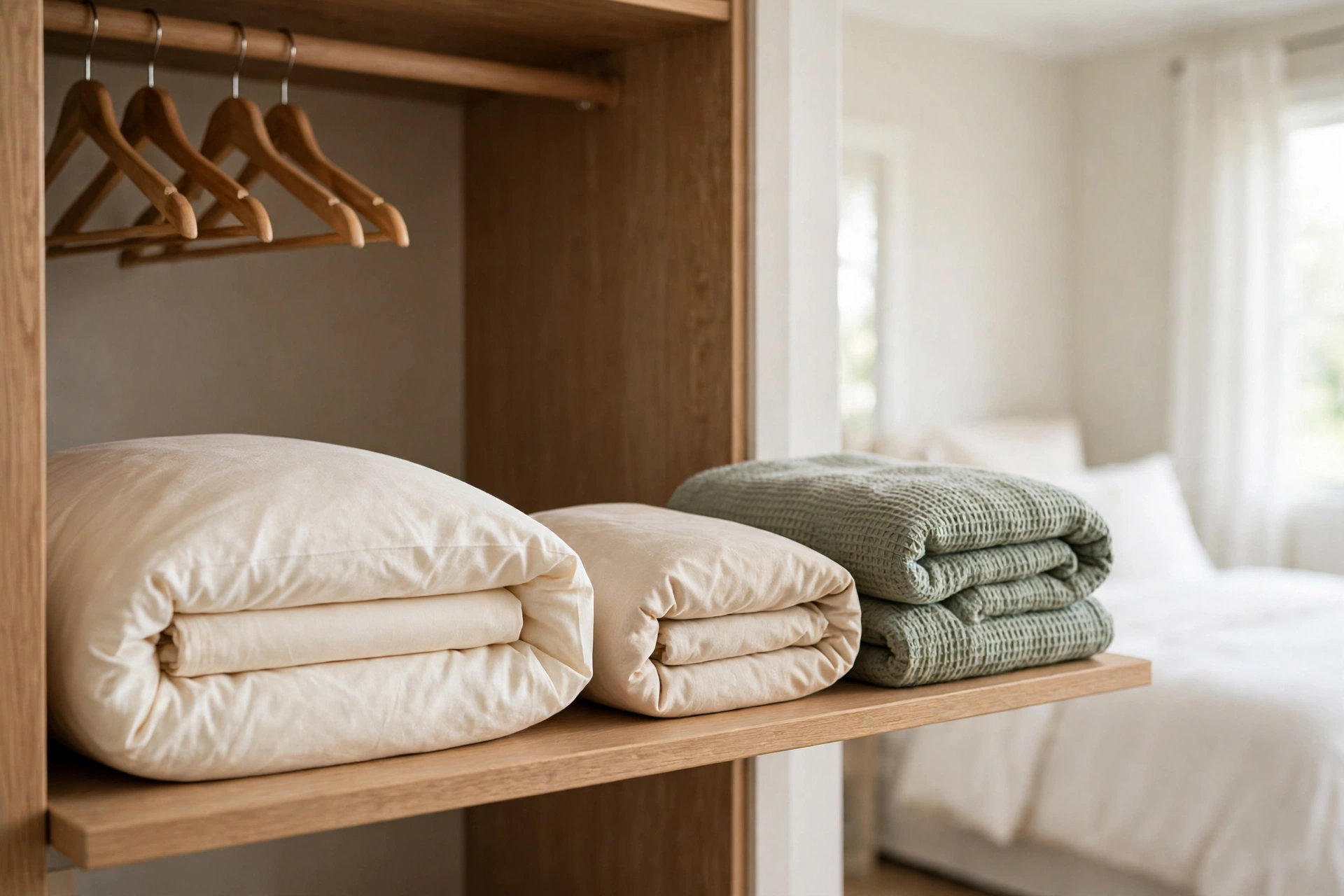
Sheets, pillowcases, and spare blankets pile up because they are stored by color or by wherever they fit, instead of by bed. Store linens by bed size: one shelf or one bin for the queen sheets, one for the twin sheets, one for the guest-room set. Fold each set together — flat sheet, fitted sheet, and one pillowcase inside the second pillowcase — so you can grab a whole set in one handful instead of hunting for the matching pillowcase.
Keep one spare set per bed in the bedroom itself, on the top shelf of the closet or in the under-bed bin, and store the rest in the linen closet. Label the shelf or the bin with the bed size, not the color, because size is what you are looking for at 10 p.m. when the sheets need changing. A spare blanket lives at the foot of the bed or in the same bin as the sheets, never draped over a chair.
11. Reading Nook Reset: Chair, Lamp, One Shelf
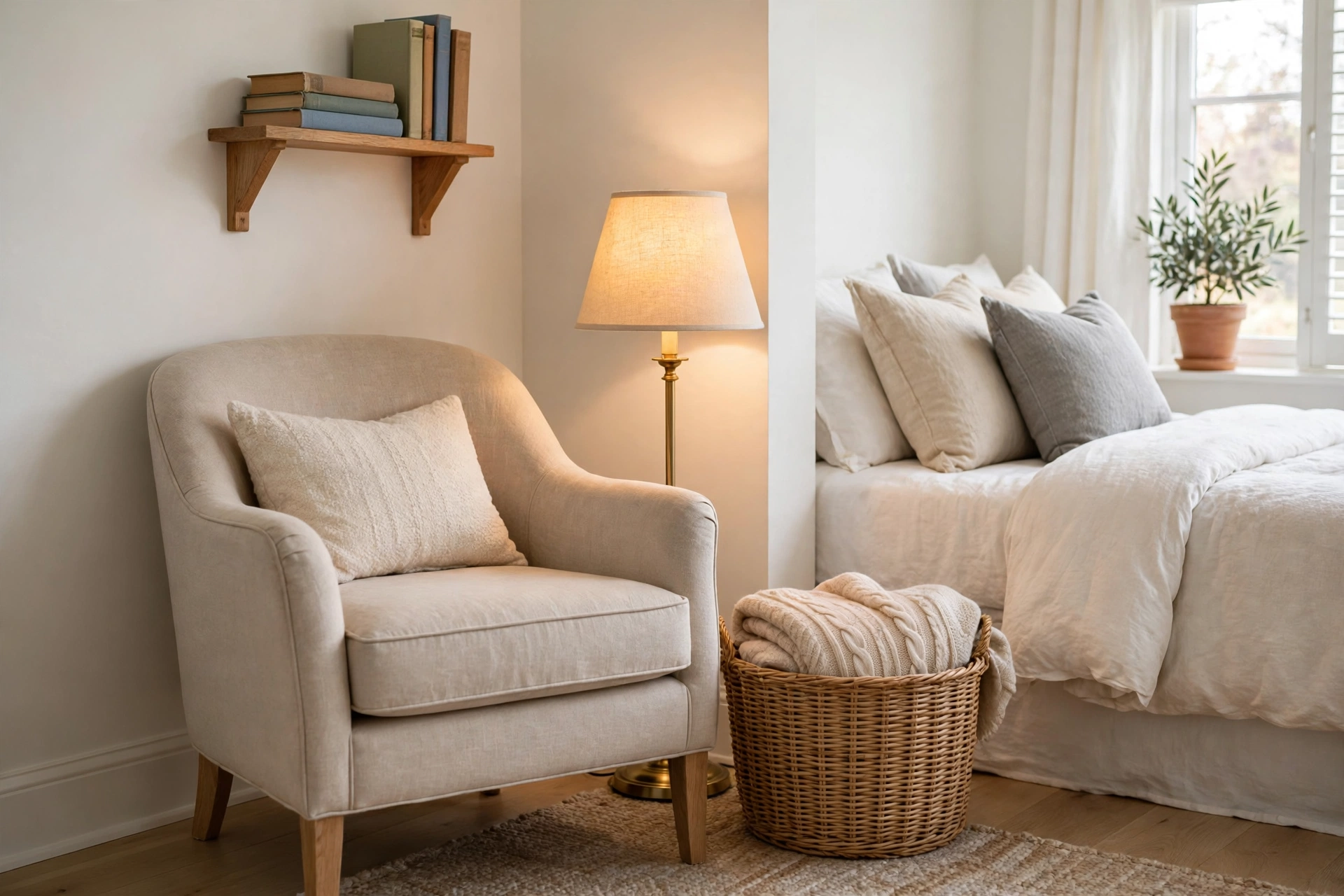
A reading nook does not need a whole room — it needs a chair, a lamp, and one shelf. Pick the corner with the best light, put a comfortable chair there, add a lamp with warm light, and give it a single shelf for the books you are actually reading. One shelf is the rule: when it is full, a book has to leave before a new one arrives, which keeps the nook from becoming a second bookshelf.
Keep the nook clear of everything else. No laundry basket, no charging cables, no pile of magazines — the chair is for reading, and the moment it becomes a storage spot, the nook is gone. A small basket beside the chair holds one blanket and one book, and that is all.
12. Wall Hooks and Vertical Storage
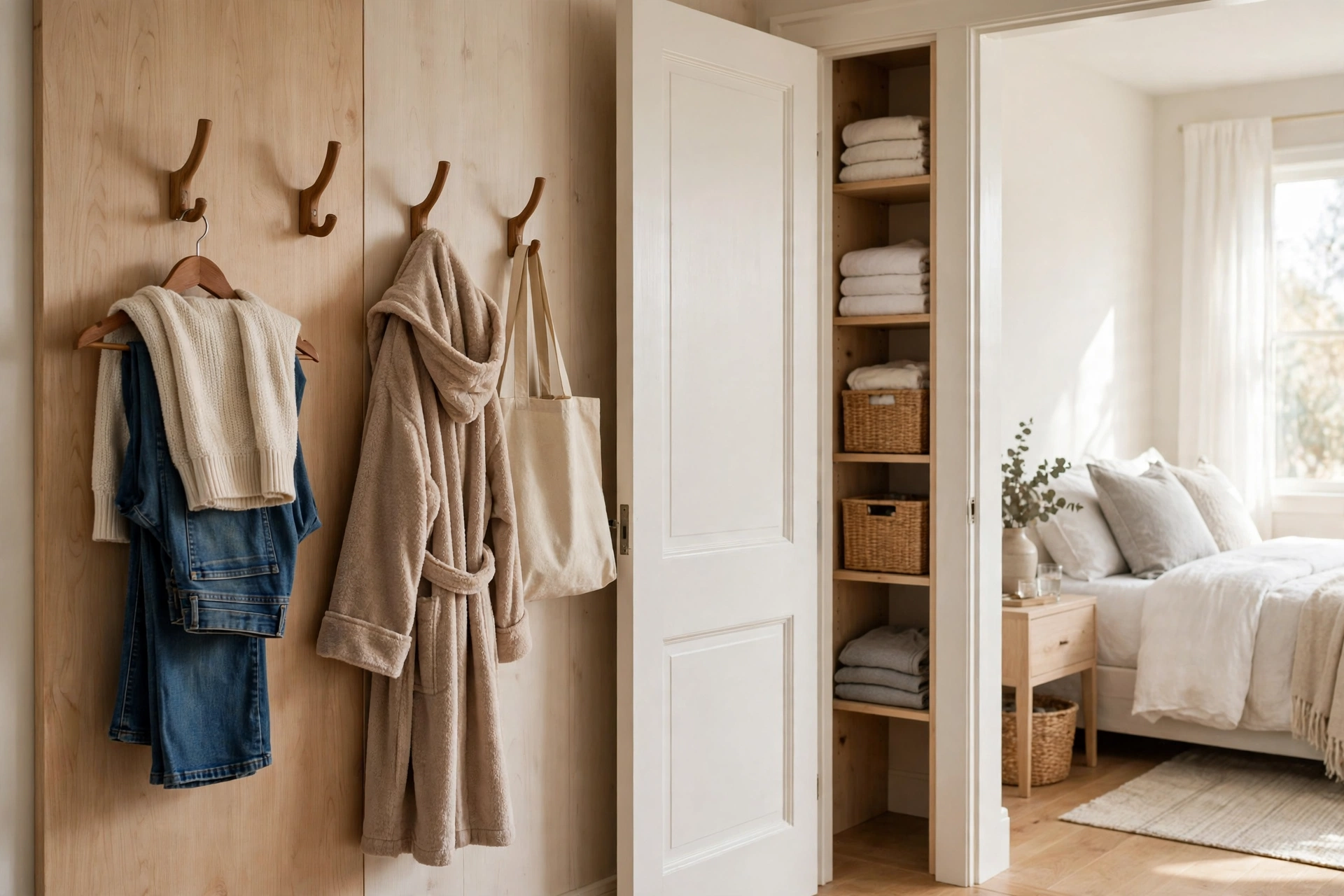
Bedroom walls are storage space that most people never use, because everything goes in a drawer or on the floor. A row of wall hooks by the door holds tomorrow’s outfit, a robe, and a bag, so they never end up on the chair — the chair that every bedroom has and nobody sits in, because it is covered in clothes. Mount the hooks at two heights if kids use the room, so the lower row is theirs.
Vertical storage works the same way inside the closet: a tall narrow shelf, a hanging organizer on the closet rod, or a set of hooks on the inside of the closet door. Keep the hooks for things you use daily and the shelves for things you use weekly, and never overload a hook — a hook rated for five pounds will pull out of drywall if you hang a heavy coat and a bag on it. Use a wall anchor for anything heavier than a robe.
13. Kids’ Bedroom Toy and Book Reset
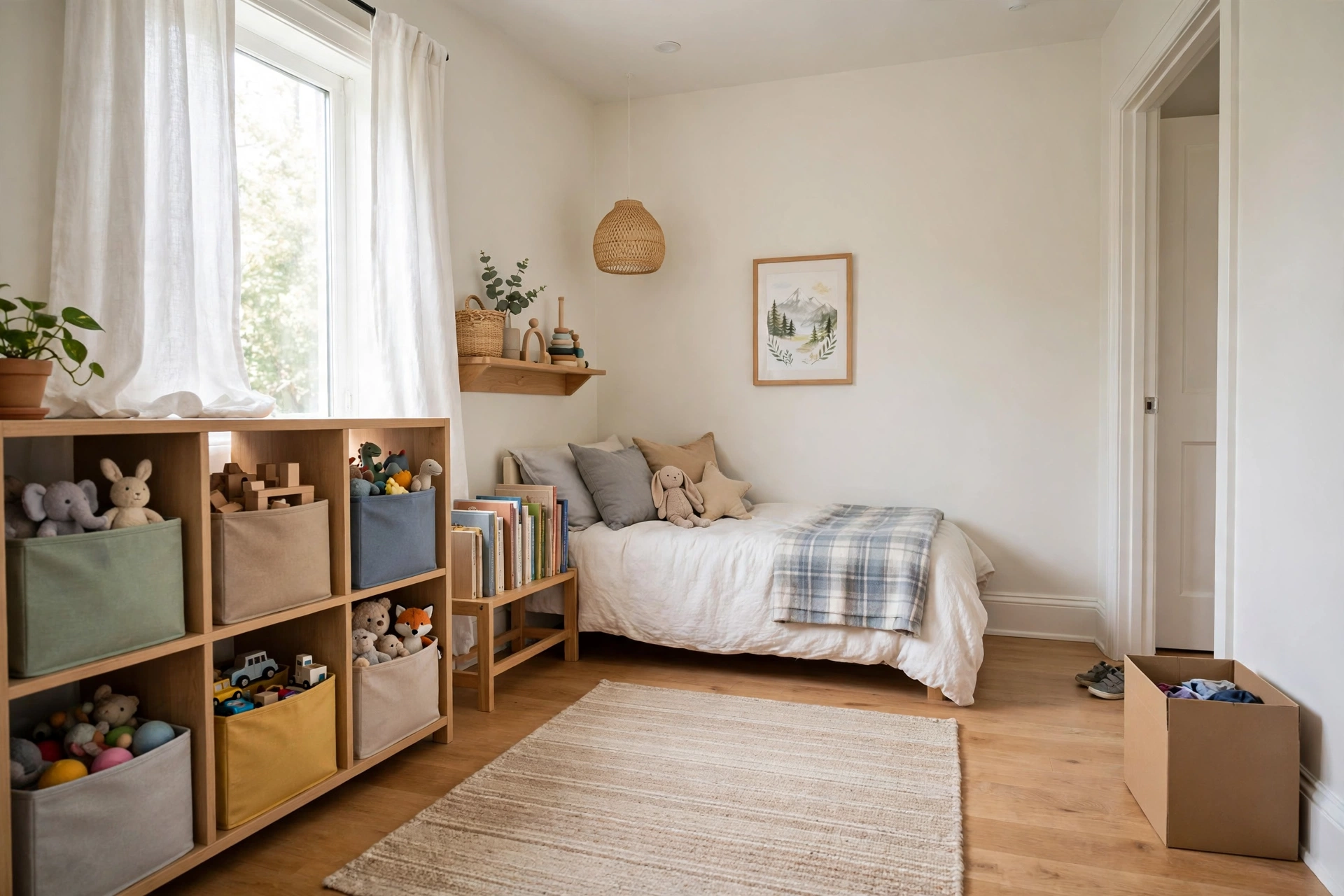
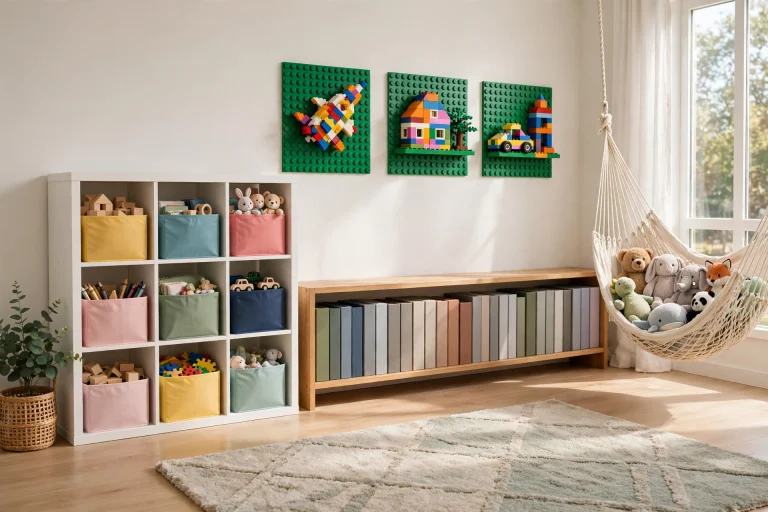
A kid’s bedroom fills up faster than any room in the house, because toys arrive from birthdays, holidays, and grandparents, and nothing ever leaves. The January reset is simple: sort the toys by type — building blocks, small figures, soft toys, board games, crafts — and give each type one bin on a low shelf, with a picture label on the front so a child who cannot read yet can still put things back. Our toy organization ideas go deeper on the full system, by toy type and by room, including the rotation system that keeps half the toys stored and swaps them in monthly.
Books get their own shelf, standing upright like a little library, with the favorites at eye level. The one-in, one-out rule works for kids too: a new toy means an old toy goes into the donation box by the door, and letting the child choose which one goes makes it a decision they own instead of a rule imposed on them.
14. Donation Box by the Door
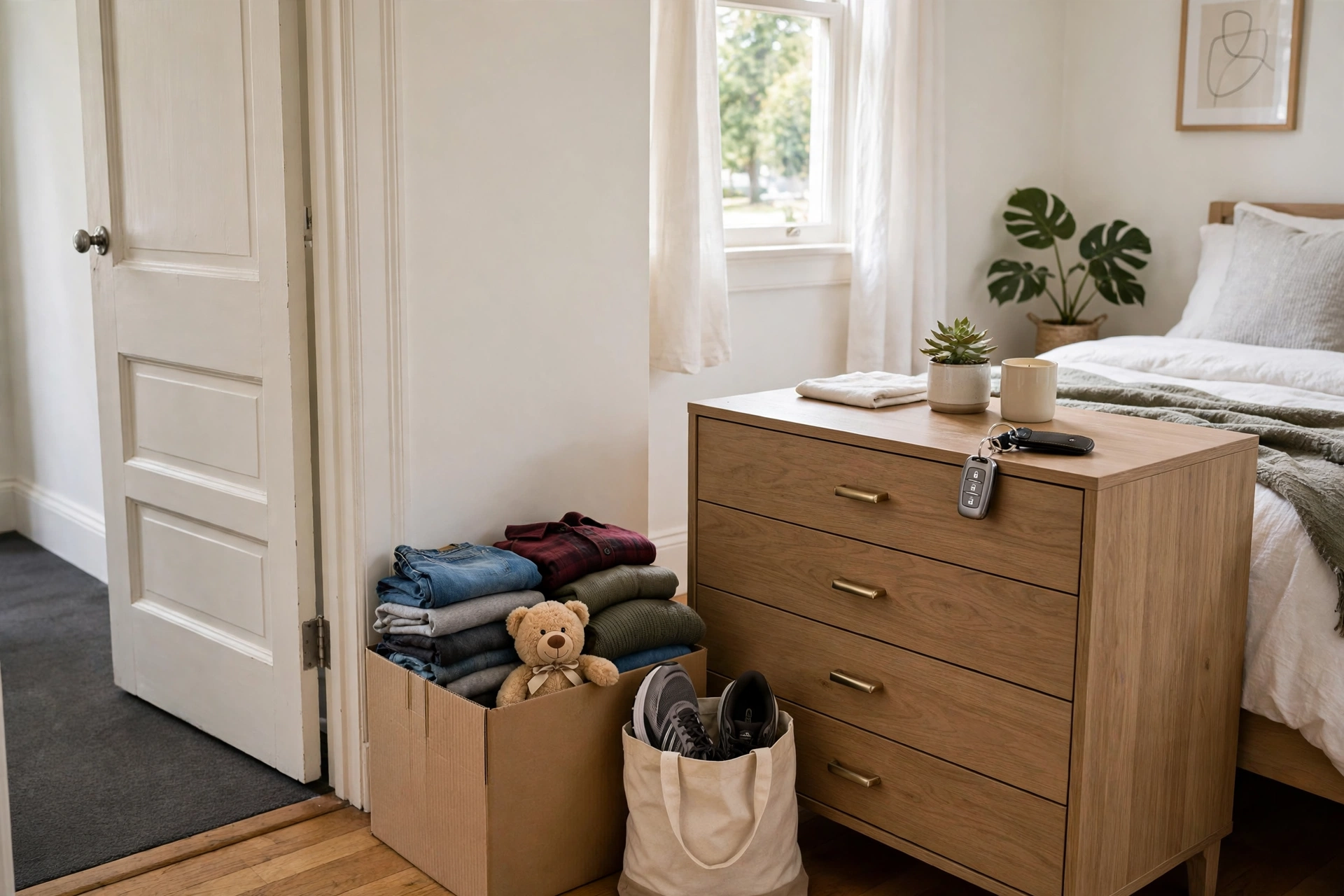
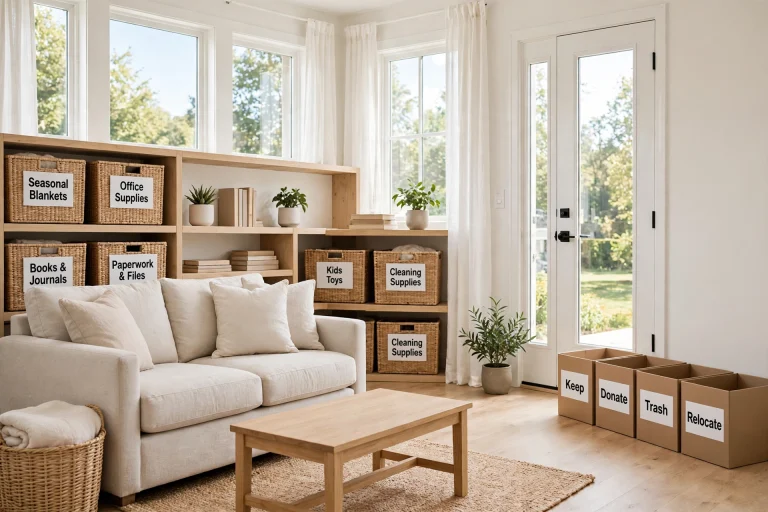
The donation box is the engine of the whole January reset, because every other idea in this article produces something to let go of. Put a sturdy box or bag by the bedroom door on January 1st and leave it there all month. Every time the closet edit, the dresser dividers, or the kids’ toy reset turns up something you do not use, it goes straight into the box — not back on a shelf, not into a pile for later, into the box.
When the box is full, tie it shut and put it in the car the same day, so it goes to the donation center on the next trip out instead of sitting in the hallway until February. Start a second box if the first one fills up before the month ends — a full box is a good sign. Most donation centers in the US accept clothes, shoes, toys, and linens in good condition, and many offer a receipt for tax purposes, so keep the receipt with your tax papers.
15. The 10-Minute Nightly Reset That Keeps These New Year Bedroom Organization Ideas Working
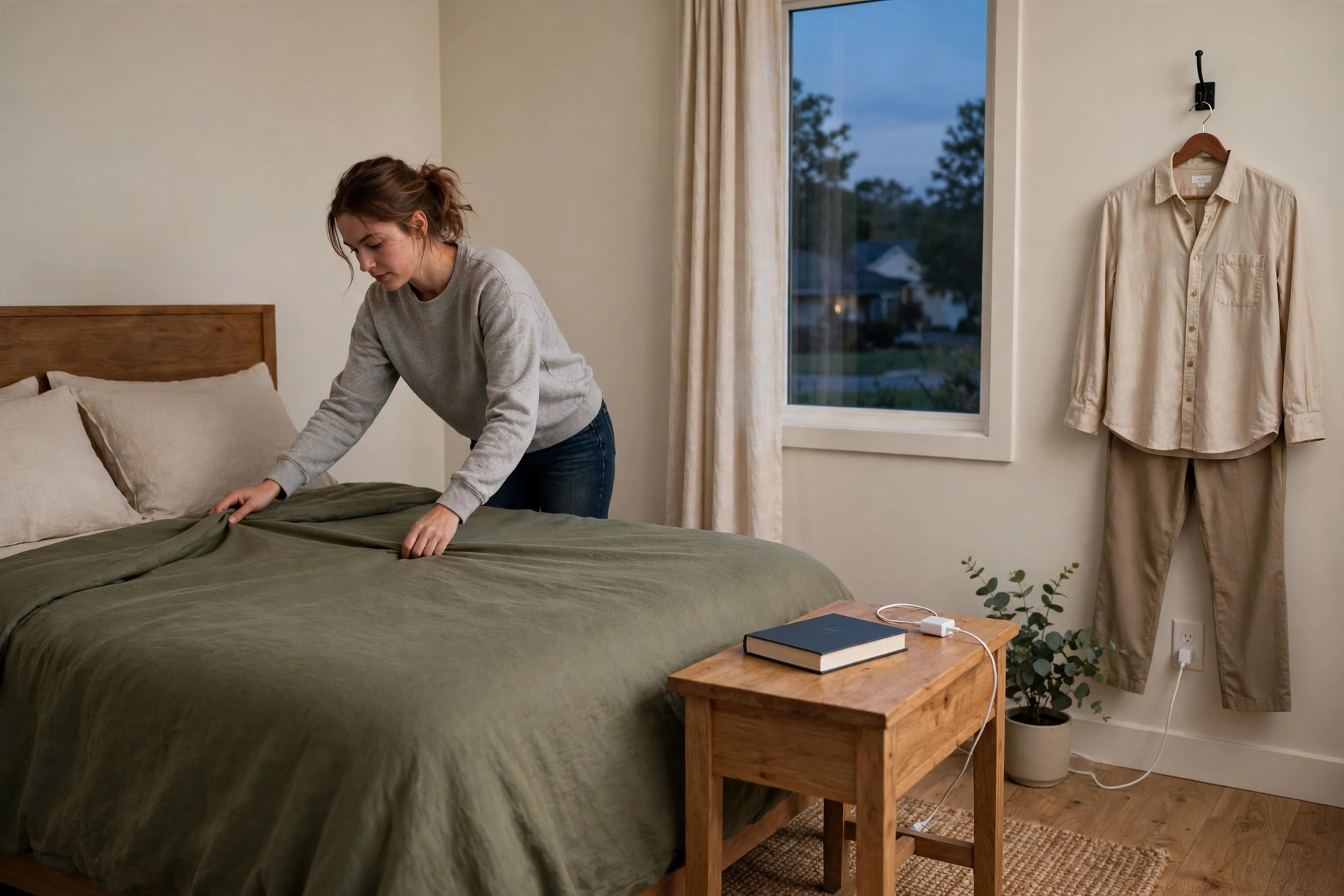
None of these New Year bedroom organization ideas last without the habit that holds them together: a ten-minute reset every night before bed. Set a timer for ten minutes and do the same five things, in the same order, every night. Make the bed or straighten the covers. Put tomorrow’s outfit on the wall hook. Drop dirty clothes in the hamper, not on the chair. Clear the nightstand back to one book, one charger, one tray. Put anything that wandered into the bedroom back where it belongs.
Ten minutes is short enough to do on a tired night, and it is the whole secret: a bedroom that gets a ten-minute reset every night never needs another full-day overhaul, because the mess never gets a chance to build up.
Frequently Asked Questions
How do I start organizing my bedroom for the New Year?
Start with the closet edit, because it is the biggest win. Take everything out of the closet, run the worn-in-the-last-year test, and pair it with a one-in, one-out rule for the year ahead. Then move to the nightstand reset and the under-bed bins. These New Year bedroom organization ideas work best in that order — clear it out first, then give everything a home, then build the ten-minute nightly habit that keeps it that way.
What is the best way to organize a small bedroom?
Use the walls and the space under the bed, because the floor is already full. Wall hooks by the door, a tall narrow shelf in the closet, and rolling bins under the bed add storage without taking floor space. Keep the nightstand to one book, one charger, and one tray, and keep only one spare sheet set per bed in the room. These New Year bedroom organization ideas are built for real bedrooms, including small ones.
How do I keep my bedroom organized after January?
The ten-minute nightly reset is the answer. Make the bed, hang tomorrow’s outfit on the hook, drop dirty clothes in the hamper, and clear the nightstand — every night, same order, ten minutes. A monthly check on the donation box and a seasonal clothing swap twice a year keep the systems working. New Year bedroom organization ideas only stick if there is a habit behind them, and the nightly reset is that habit.
How do I organize a bedroom closet without buying a new system?
You do not need a new closet system — you need an edit. Take everything out, keep only what you wore in the last year, and put it back by category with the one-in, one-out rule. Add drawer dividers to the dresser and rolling bins under the bed for off-season clothes. These New Year bedroom organization ideas use bins, hooks, and dividers, not a remodel, so the whole reset costs less than a single new closet system.
How often should I declutter my bedroom?
Do a full closet edit every January, a seasonal clothing swap in spring and fall, and a ten-minute nightly reset every day. Run the donation box all January, and keep a second one going through the year for anything that stops earning its place. That rhythm — one big edit, two swaps, and a nightly habit — is what these New Year bedroom organization ideas are built around, and it keeps the bedroom calm for years instead of weeks.
Related Reading
- Small Closet Organization Ideas
- Laundry Room Organization Ideas
- Pantry Organization Ideas
- How to Declutter Your Home Room by Room
- How to Clean a Dishwasher
- How to Get Rid of Pet Odor in Your House
Conclusion
A calm bedroom is not a lucky accident — it is a set of systems, and January is the best month to build them. With these New Year bedroom organization ideas — a closet edit with a one-in, one-out rule, under-bed bins for off-season clothes, a nightstand reduced to one book, one charger, and one tray, dresser dividers, a laundry hamper that sorts at the source, and a donation box by the door — the bedroom becomes a room that works instead of a room you avoid. Start with the closet edit this weekend, add one idea at a time, and keep the ten-minute nightly reset on the calendar.