
How to Clean a Couch: 15 Steps by Fabric Type That Actually Work
Introduction
A couch is the hardest-working piece of furniture in an American home. It holds movie nights, naps, snacks, pets, and guests — and it shows all of it. Spills soak in, crumbs settle into the seams, and after a year or two the whole thing can smell faintly like everything that ever happened on it. The good news is that learning how to clean a couch is not hard once you know one thing: the fabric code on the care tag. That little letter tells you exactly which cleaning method is safe, and which one will ruin your upholstery.
Most couch-cleaning disasters happen the same way — someone used water on a solvent-only fabric, or sprayed a harsh cleaner on a fabric that should never get wet. The fifteen steps below are built around the four fabric codes, W, S, WS, and X, so you always match the method to the material. A sofa is an investment, and a careful clean can add years to its life. If a spill has already spread to the floor, our guide to how to remove carpet stains uses the same blot-don’t-rub rule, and if the smell is the real problem, our how to get rid of pet odor in your house covers the whole home.
1. Read the Care Tag First (W / S / WS / X Decoded)
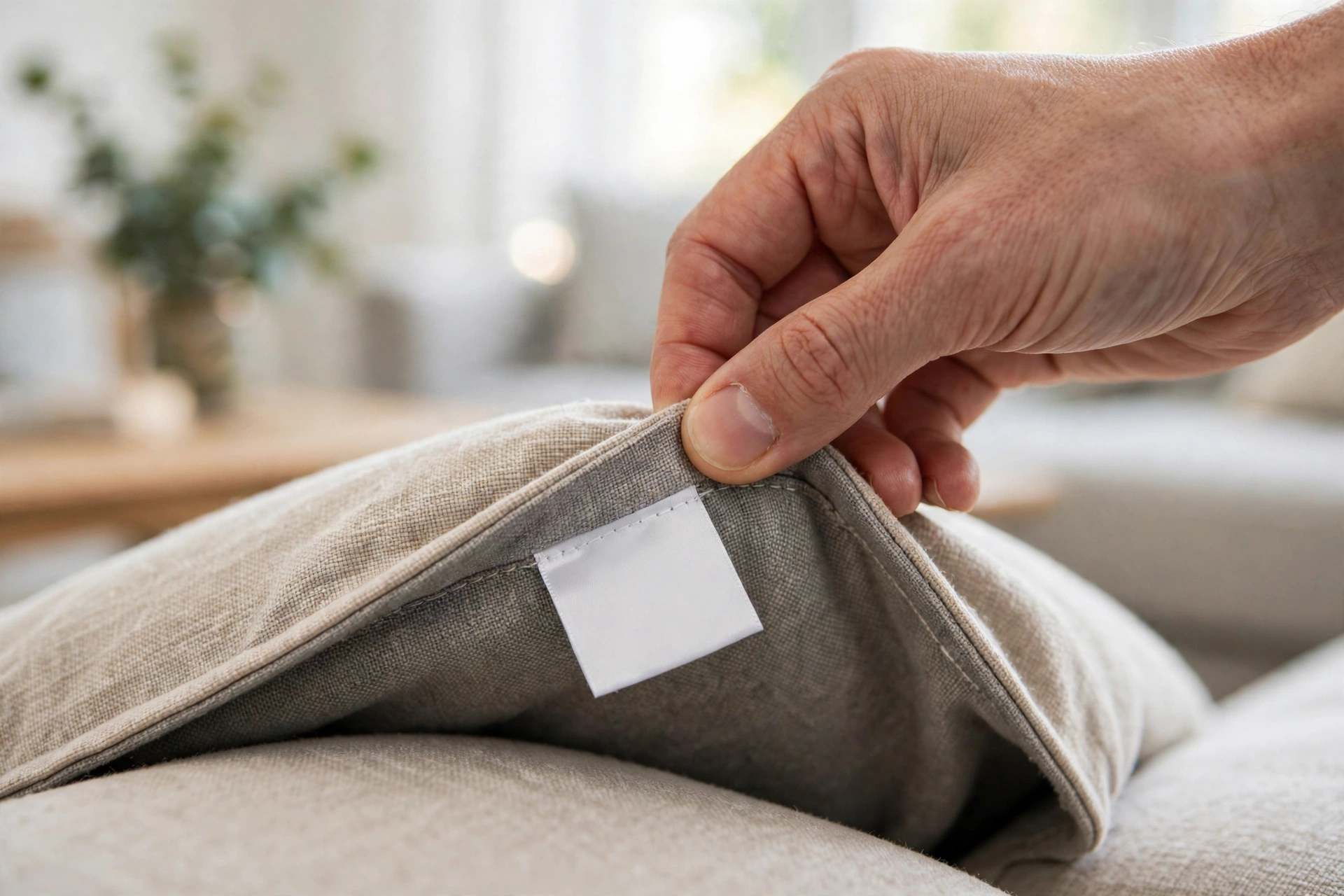
Before a single drop of cleaner touches your couch, find the care tag. It is usually sewn into the underside of a seat cushion, along the back seam, or under the base of the frame — flip a cushion over and look for a small white label. On it you will find one of four letters, and that letter is the whole ball game when you are learning how to clean a couch. W means water-based cleaners are safe. S means solvent-only: use a dry-cleaning solvent, never water. WS means either water-based or solvent cleaners are fine. X means vacuum and brush only — no water, no solvent, no liquids at all.
If the tag is missing or faded, do not guess. Test any cleaner on a hidden spot first — the back of a cushion or the underside of an arm — and wait an hour to check for discoloration or a water ring. A quick test costs you an hour; the wrong cleaner can cost you a couch. Photograph the tag once you find it, so you never have to hunt for it again.
2. Vacuum the Couch Properly (Crevice Tool, Under Cushions)
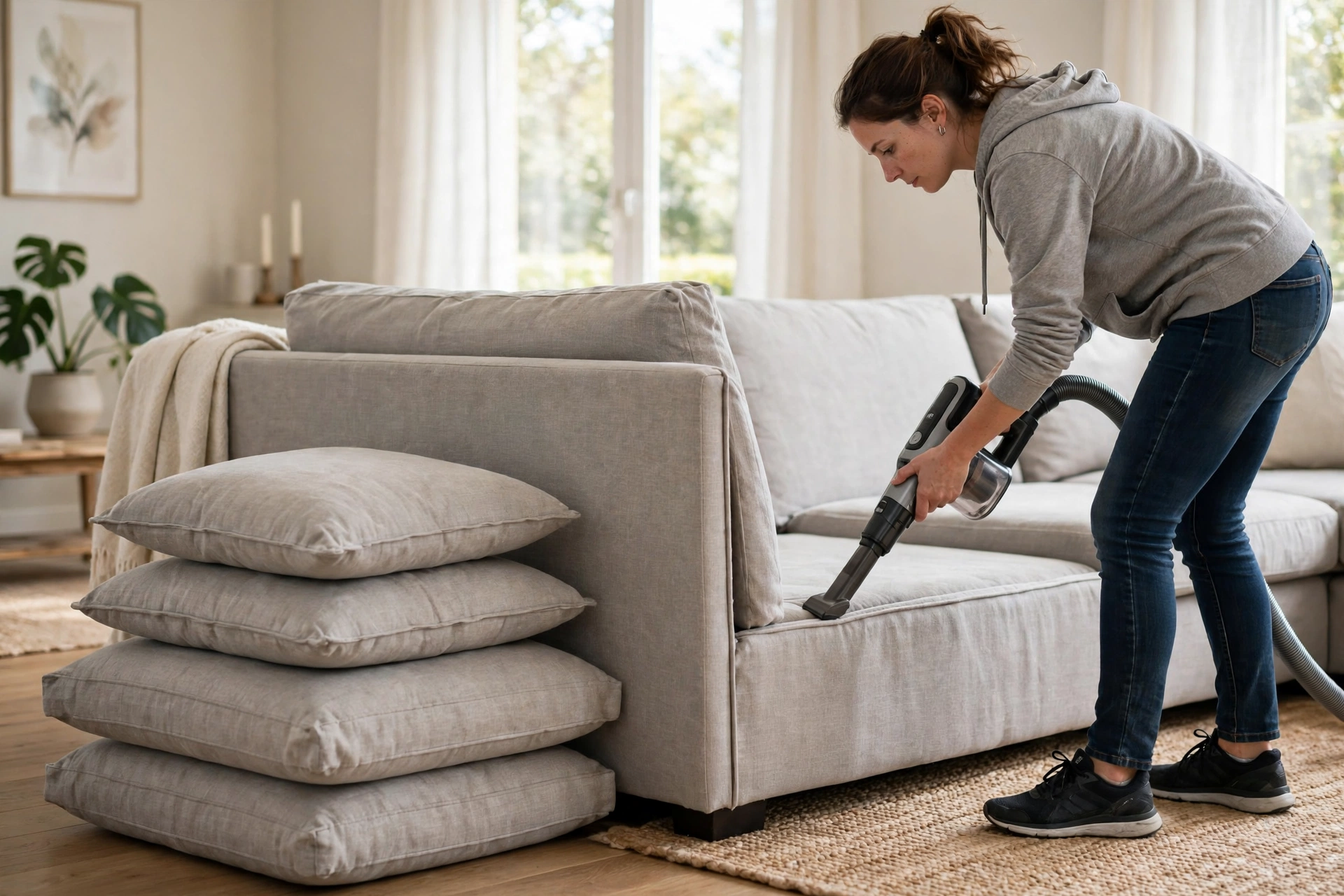
Every couch clean starts with a thorough vacuum, and this step alone makes a visible difference. Remove all the cushions and set them aside, then vacuum the base, the back, and the arms with the upholstery attachment, using slow, overlapping passes. Switch to the crevice tool for the seams, the gap where the back meets the seat, and the corners where crumbs and pet hair collect — that narrow gap along the back is where most of a couch’s hidden dirt lives.
Vacuum both sides of every cushion, plus the floor under and behind the couch. Use the brush attachment to lift dust and pet hair that suction alone misses, and empty the canister before you start so you get full suction. Cleaning solution on top of dry dirt just makes mud — get the dry soil out first and everything after it works better.
3. W-Code: Water-Based Cleaning
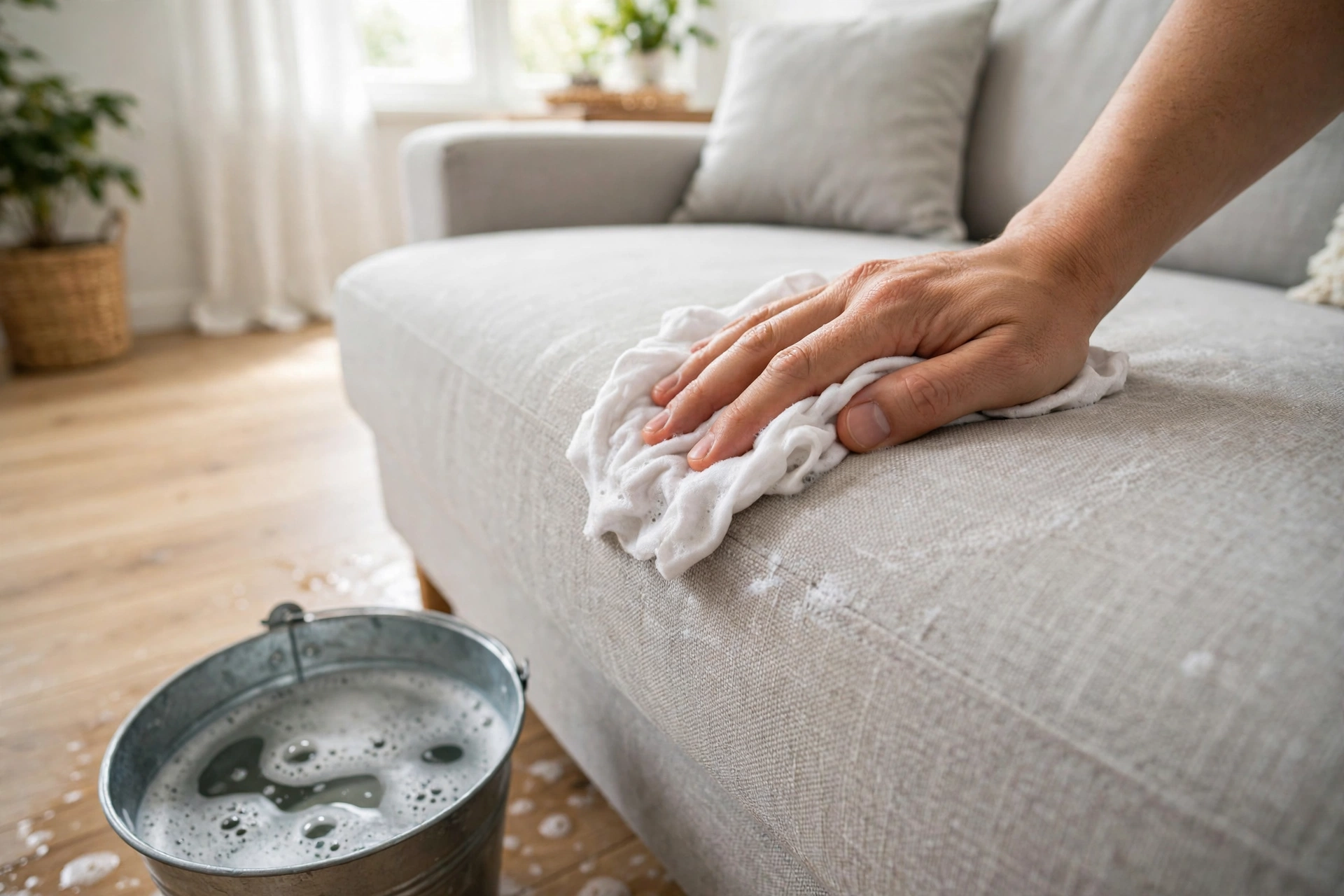
If your tag says W, water-based cleaners are your friend. Mix a few drops of mild dish soap or a dedicated upholstery cleaner into a bucket of cool water, and work in small sections with a clean white cloth — white matters, because a colored cloth can transfer dye onto damp fabric. Dip the cloth, wring it out until it is barely damp, and blot the fabric in gentle circles, working from the outside of a dirty area toward the center so you don’t spread the stain.
Rinse the cloth often and change the water when it turns gray. Work one cushion at a time and let each section dry before moving on. Never soak the fabric: a W code means water-based cleaning is safe, not that the couch can be flooded. Too much water soaks into the foam, and damp foam is where mildew starts. Finish by blotting with a dry towel and letting the couch air-dry completely.
4. S-Code: Solvent-Only Cleaning
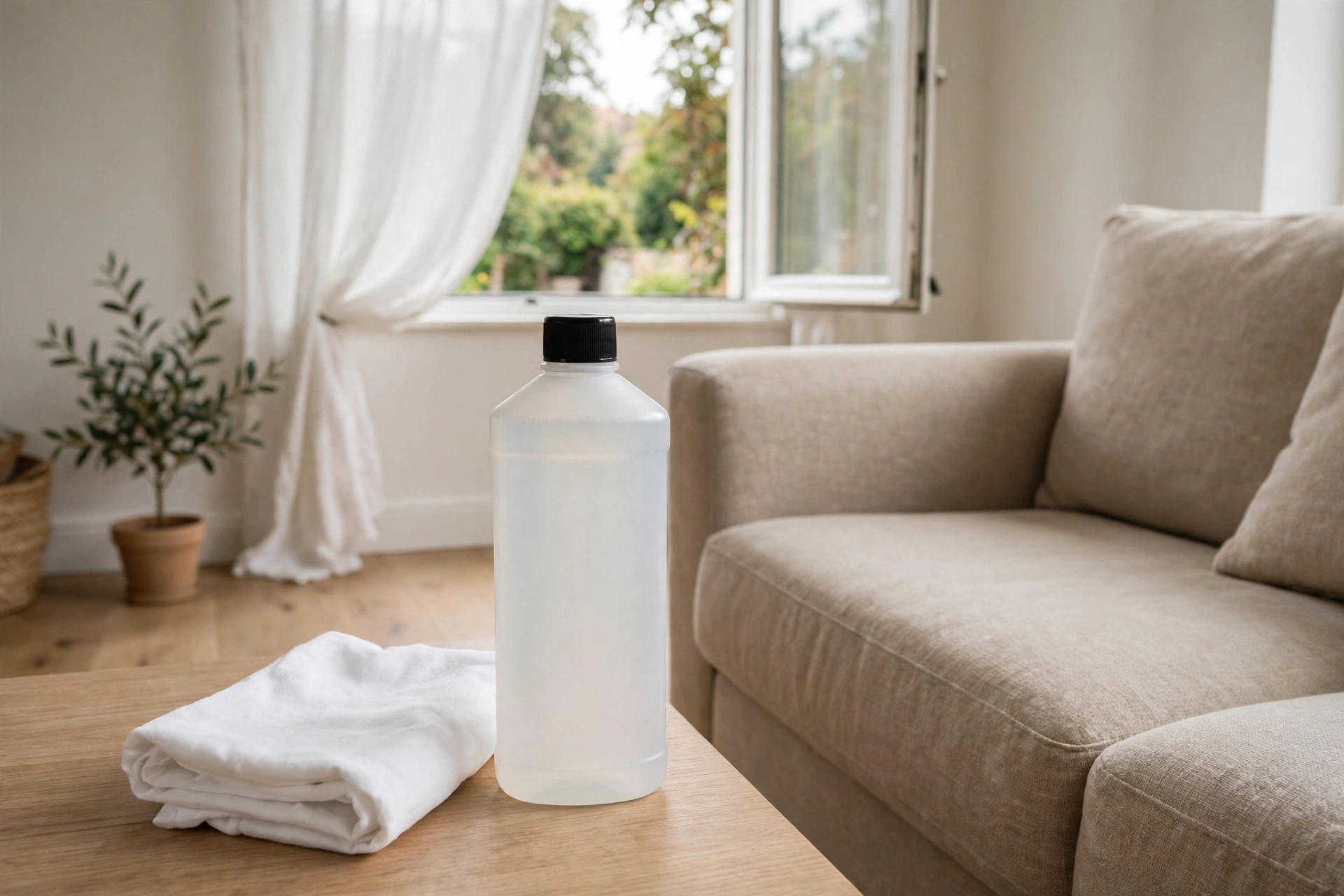
An S code means your couch can only be cleaned with a dry-cleaning solvent — water will leave rings, shrink the fabric, or cause water stains that never come out. Buy a solvent-based upholstery cleaner made for S-code fabrics (sold at home stores and online as dry-cleaning solvent or upholstery solvent), and work in a well-ventilated room: open the windows, keep the room aired out, and keep the product away from open flames, since solvents are flammable.
Apply the solvent sparingly to a clean white cloth, never directly onto the couch, and blot gently. Work in small areas and change to a clean part of the cloth often. Let each section dry fully before judging the result — a stain that looks faint while damp often disappears once dry. If the stain is large or the fabric is silk, call a professional: an S-code couch is the one fabric type where a professional is often the cheapest option.
5. WS-Code: Either Method
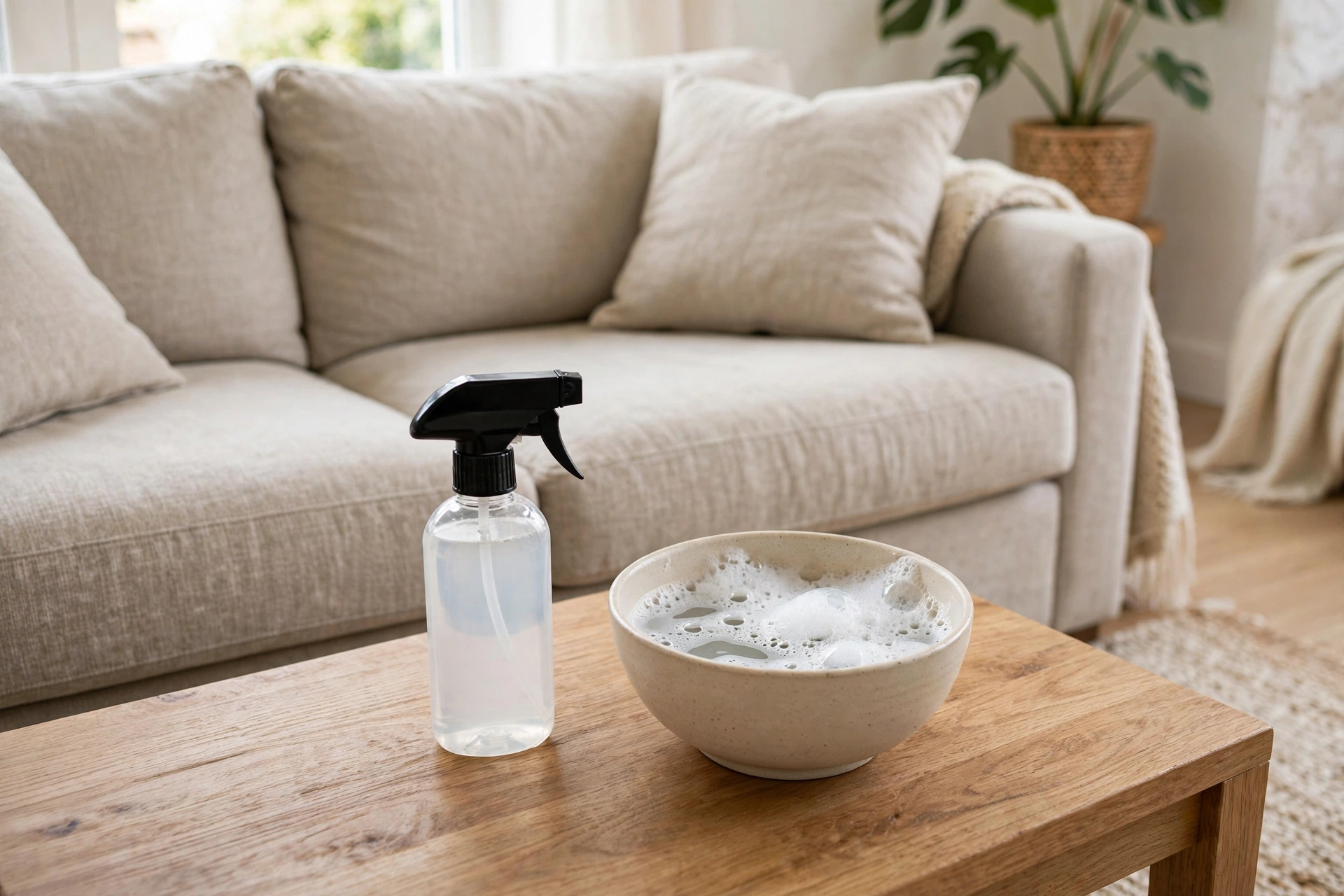
WS is the most forgiving code you can find on a couch tag — it means both water-based and solvent-based cleaners are safe, so you can choose the method that fits the stain. For everyday dirt and food spills, the water-based method from step 3 is usually the easiest: mild dish soap and cool water on a white cloth, blotted in small sections. For greasy stains, ink, or anything oil-based, a solvent cleaner from step 4 often works better, because solvent dissolves grease that water just spreads around.
The real advantage of a WS couch is that you can mix methods on the same piece: water-based cleaning for the general refresh, solvent for the stubborn spot. Still test first on a hidden area — dyes and finishes vary. And never mix the two cleaners in the same spot; let one dry fully before trying the other.
6. X-Code: Vacuum and Brush Only, No Liquids
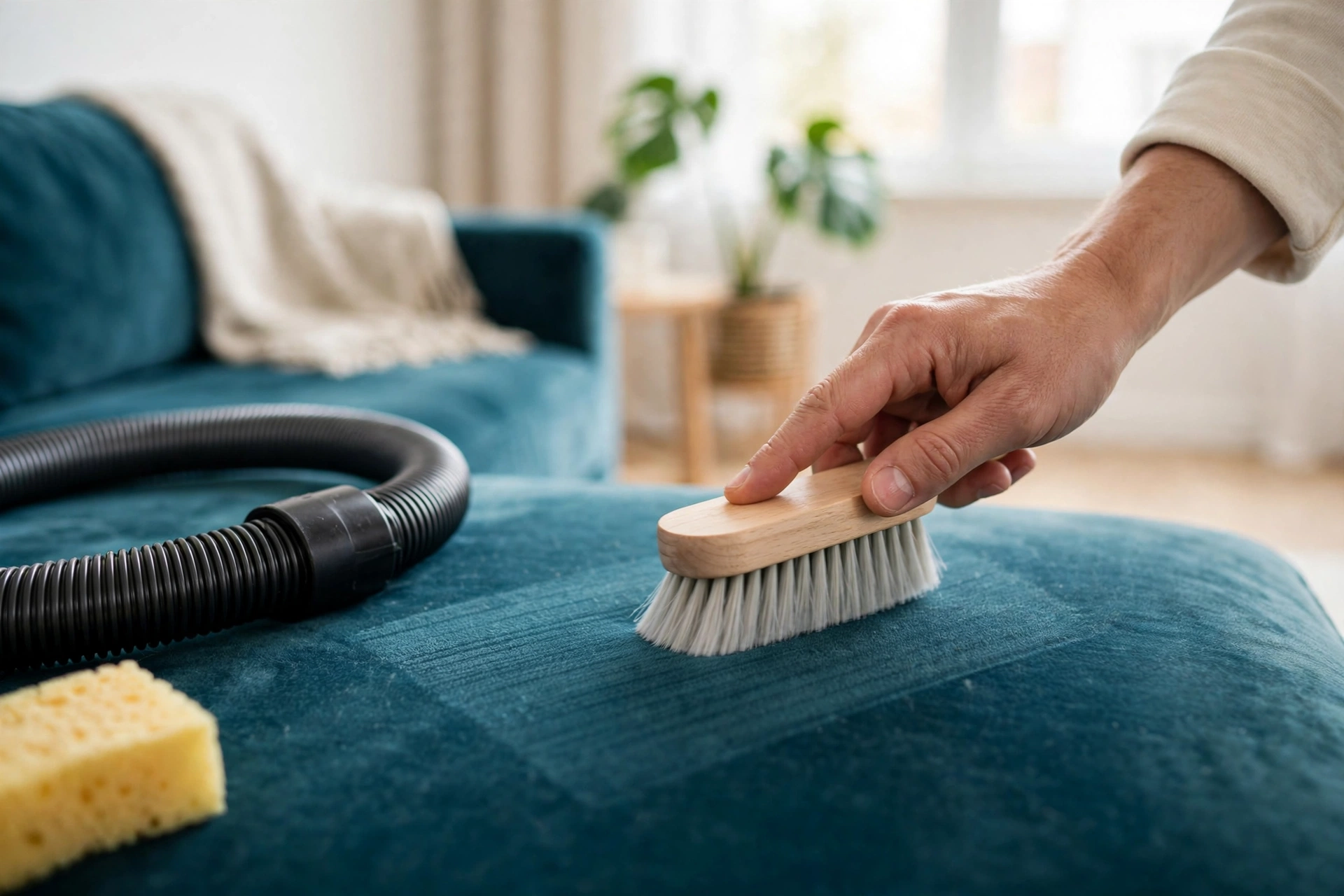
An X code is the strictest care tag, and it is also the most important one to respect. X means vacuum and brush only — no water, no solvent, no foam, no cleaning spray of any kind. These fabrics, often silk, velvet, or a delicate woven blend, will stain, shrink, or watermark the moment any liquid touches them, and the damage is usually permanent. Learning how to clean a couch with an X code is really learning what not to do.
So the whole job is dry: vacuum thoroughly, then brush the fabric with a soft upholstery brush to lift dust and revive the nap, working in one direction. Use a lint roller or a dry cleaning sponge — a soot sponge, sold at home stores — for surface dust. For real stains, the honest answer is a professional who works with dry methods, or a slipcover. Do not try a “just a little water” shortcut: on an X fabric, a little water is exactly how a small stain becomes a big one.
7. Baking Soda Deodorize
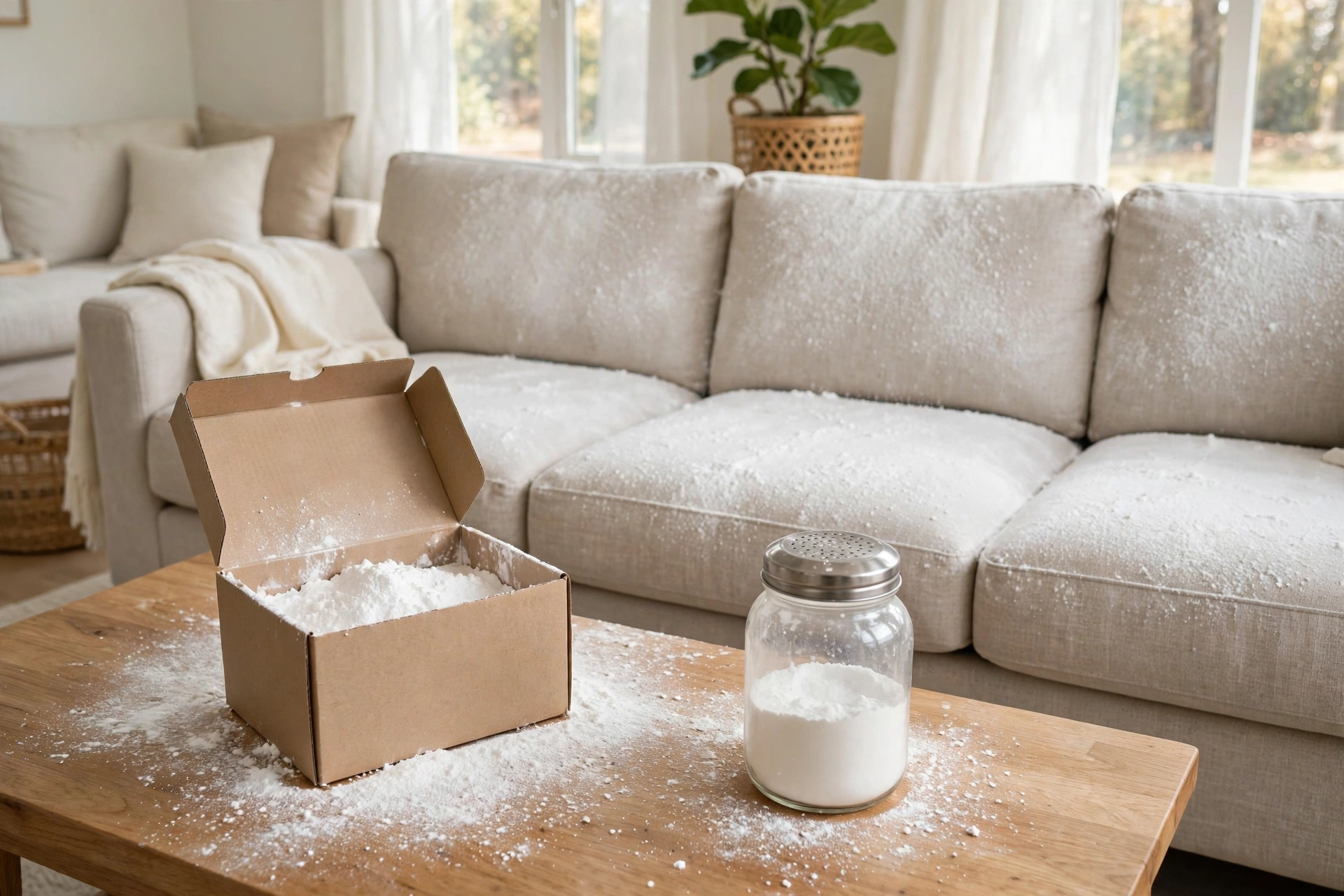
Baking soda is the simplest, cheapest deodorizer for a fabric couch, and it works on almost every fabric code — even X, because it is a dry powder. Sprinkle a generous, even layer of plain baking soda over the entire couch: seats, back, arms, and both sides of the cushions. Use a kitchen strainer or a shaker jar to spread it evenly rather than dumping it in clumps.
Leave it for at least 30 minutes; for a couch that really smells — pet odor, smoke, years of use — leave it overnight. Baking soda absorbs odor molecules instead of covering them up, which is why it works where scented sprays fail. Then vacuum it up thoroughly, going over each section twice, and use the crevice tool in the seams. For a light fresh scent, mix a few drops of essential oil into the baking soda first — but skip this on an X-code fabric and always test first.
8. Steam Clean (When the Code Allows)
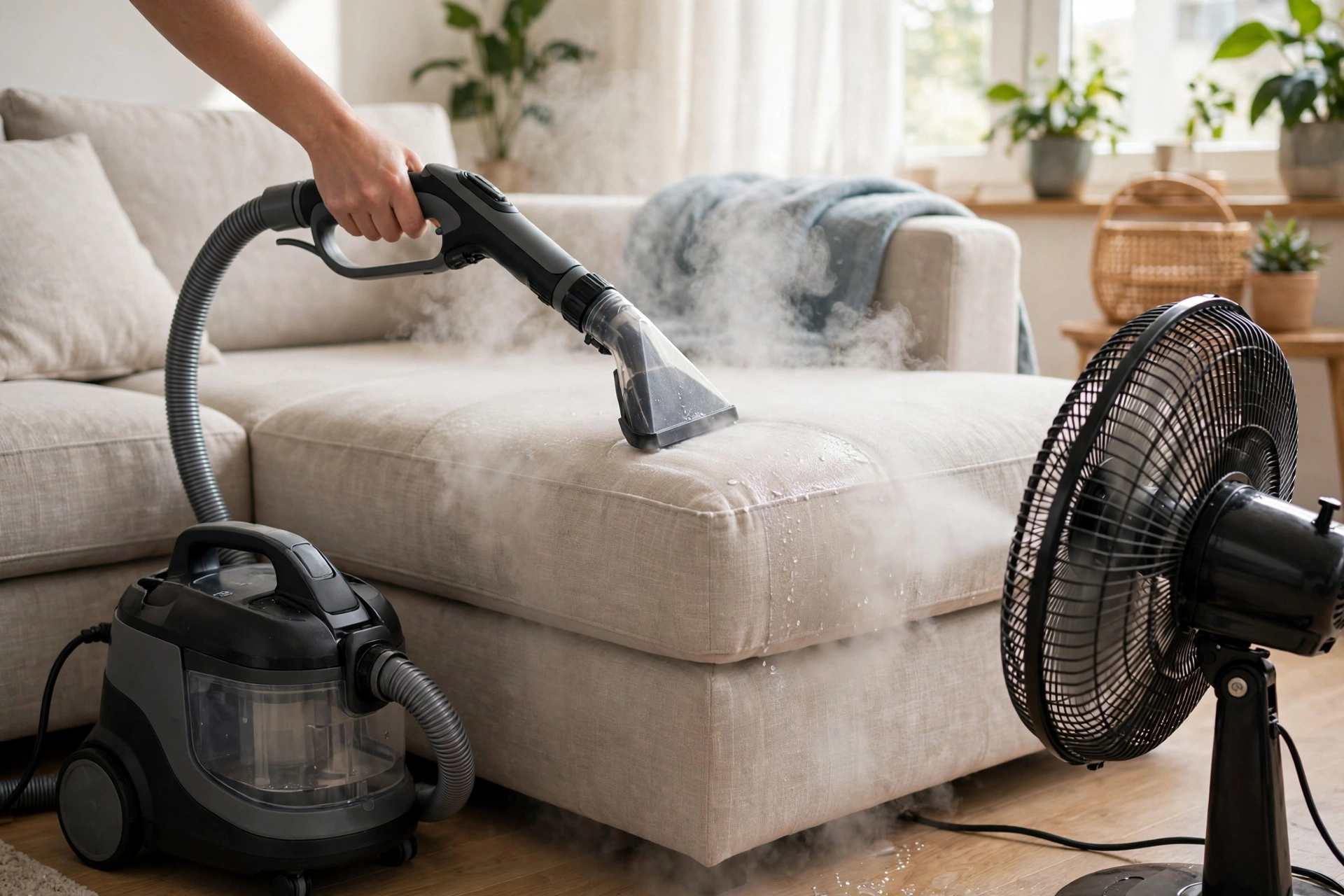
A steam cleaner can deep-clean a couch in a way that blotting never will — but only when the care tag allows it. Steam is safe for most W and WS fabrics, and it is absolutely forbidden on S and X codes: steam is water, and water is exactly what those fabrics cannot handle. Check your tag before you even plug the machine in, and if the tag is missing, do not steam.
If your code allows it, vacuum first, then work the steam cleaner in slow, overlapping passes, one cushion at a time. Keep the nozzle moving — too much steam in one place soaks the foam. Use the suction function after every pass to pull dirty water back out, and empty the tank often. Let the couch dry completely, four to six hours with a fan pointed at it, before anyone sits down. A couch used while still damp picks up new dirt faster, and damp foam can turn musty.
9. Spot-Treat Food Stains
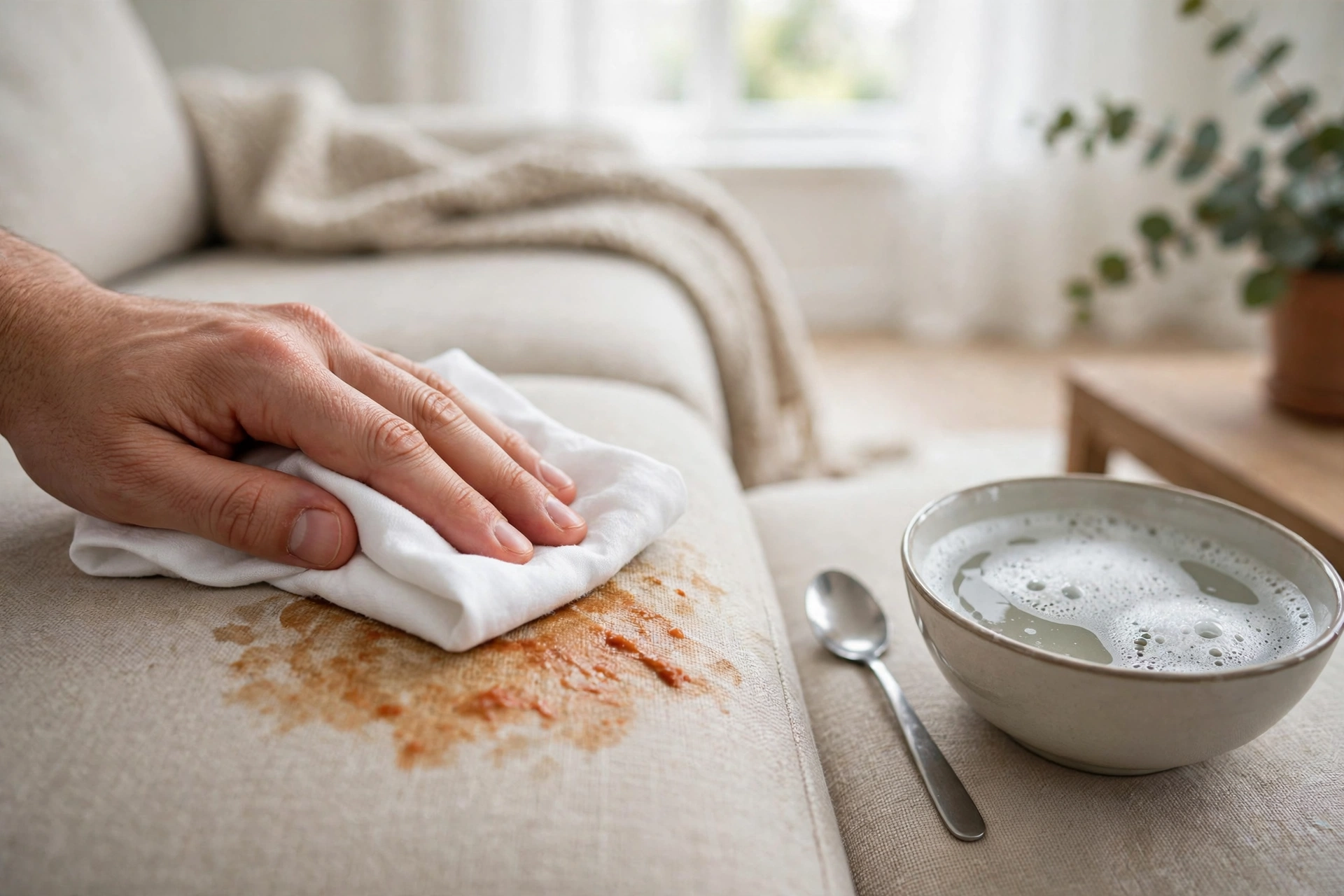
Food stains are the most common couch stain, and the rule for all of them is the same: blot, never rub. Rubbing pushes the stain deeper into the fibers and spreads it wider; blotting lifts it out. Scoop up any solid food with a spoon first, then blot the liquid with a clean white cloth, working from the outside of the stain toward the center. How you treat it next depends on the stain and your fabric code.
For most food stains on a W or WS couch, blot on a solution of one tablespoon of dish soap in two cups of cool water, then blot it off with a clean damp cloth. Greasy stains — butter, pizza, salad dressing — respond better to a solvent cleaner on an S or WS couch, or a sprinkle of cornstarch left for 15 minutes to absorb the grease before vacuuming. Coffee and tea need the soap solution plus a rinse-blot with plain water; red wine gets blotted, then covered with salt to draw it out. Finish by blotting with a dry towel and letting the spot air-dry — never use a hair dryer, since heat can set a stain that is not fully out.
10. Pet Odor on Fabric (Enzyme Cleaner)
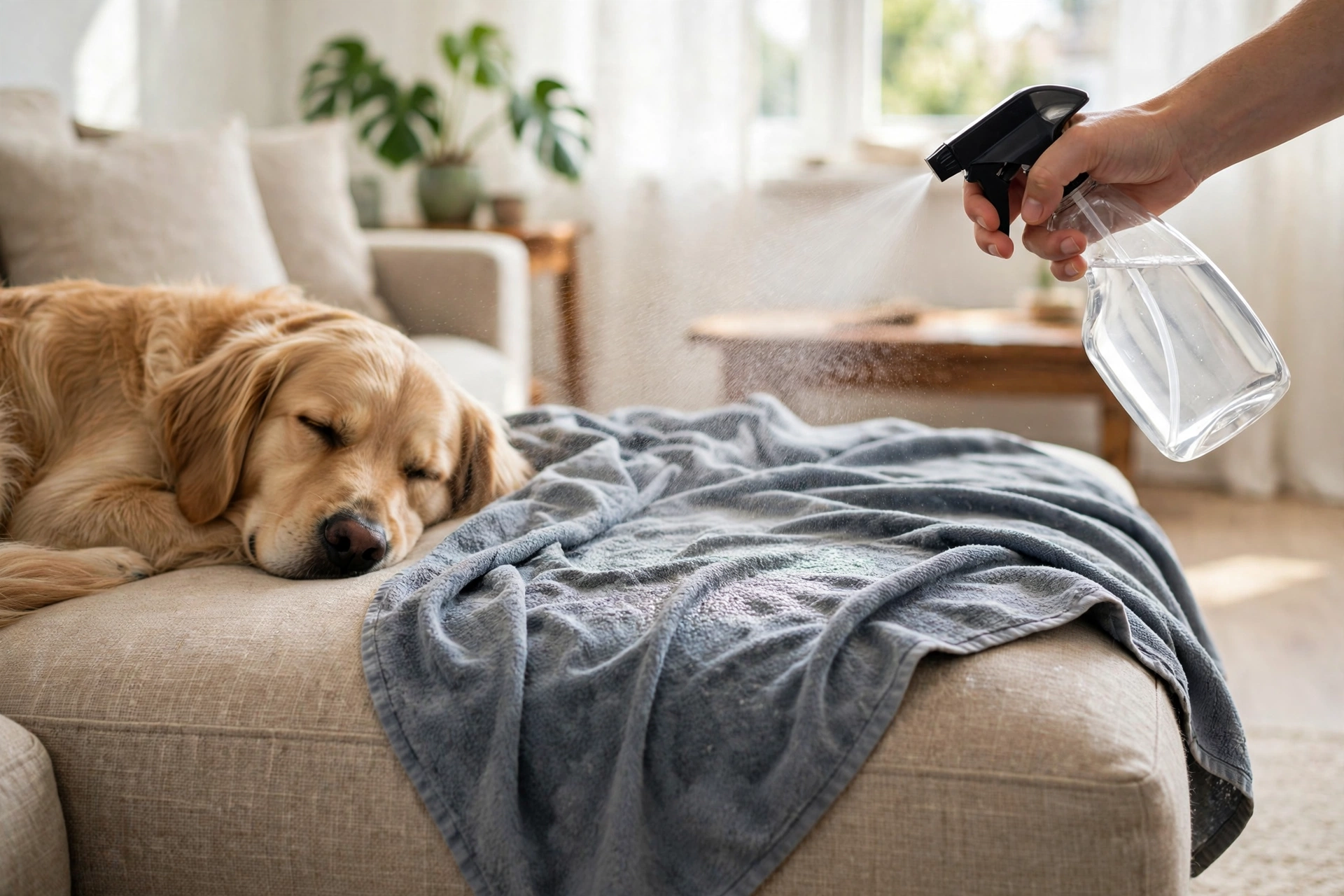
Pet odor on a couch is not a surface smell — it is bacteria and proteins soaked into the fabric and foam, which is why regular cleaners and air fresheners only mask it for a day. The fix is an enzyme cleaner, a product whose live enzymes break down the proteins in urine, saliva, and body odor at the molecular level. Look for one labeled for pet urine and upholstery, and use it on W and WS fabrics; on S or X fabrics, check the label first, and when in doubt, call a professional.
Saturate the affected area generously — the cleaner has to reach as deep as the odor went, which usually means soaking through to the foam. Cover the spot with a damp towel, because enzymes only work while wet, and leave it for the time on the label, usually several hours or overnight. Then blot up the excess and let it dry. One treatment usually does it for a fresh accident; an old odor may need two or three rounds. Our guide to how to get rid of pet odor in your house covers the rest of the house, and a rubber glove run over the fabric lifts pet hair a vacuum misses.
11. Clean the Cushions (Removable Covers)
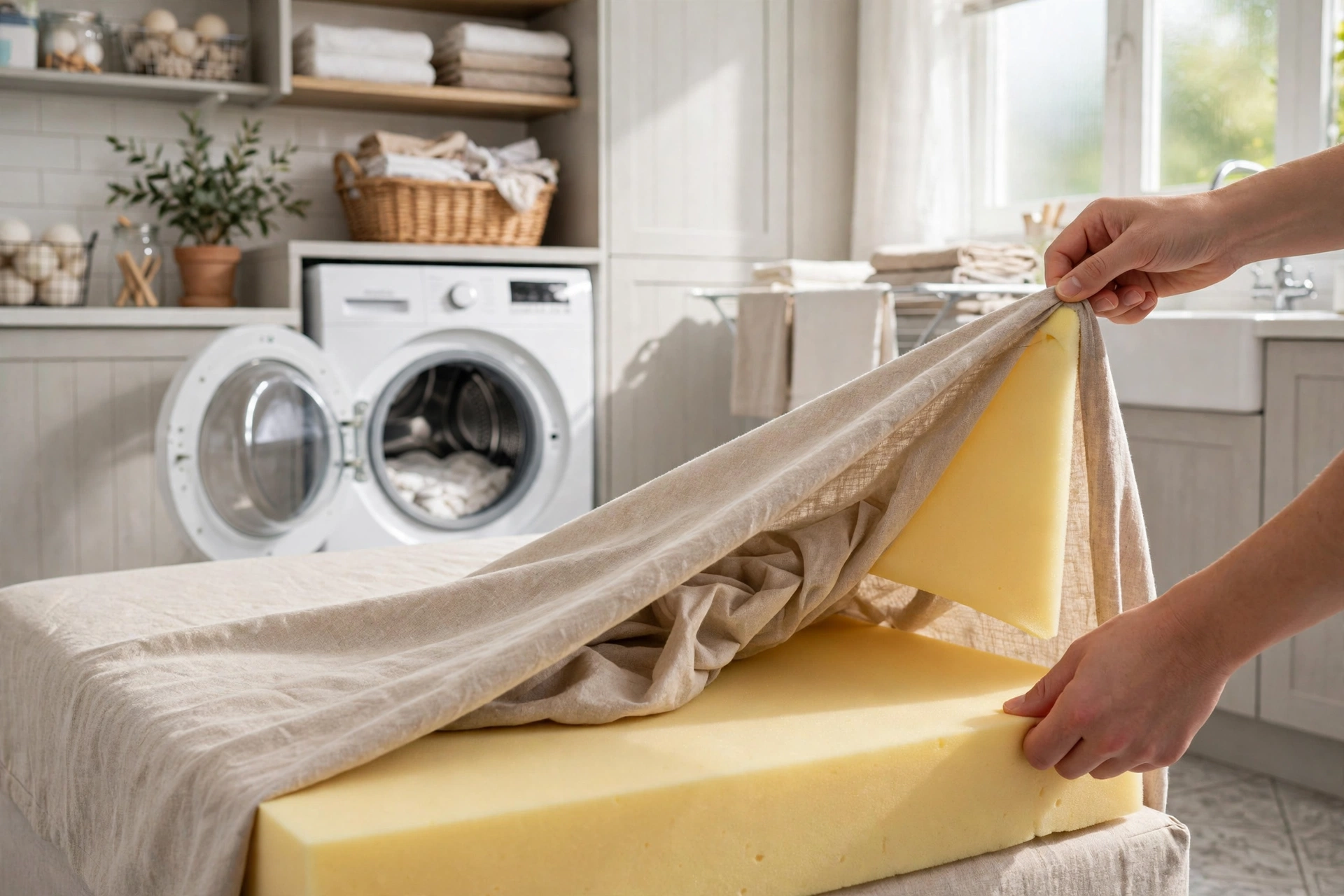
Removable cushion covers are the easiest part of a couch to clean — and the part people most often forget. Unzip the covers carefully and check the care label sewn inside each one: most are machine-washable, but some say dry-clean only, and a few warn against the dryer. Wash washable covers in cold water on a gentle cycle with mild detergent, and always zip them closed before washing so the zipper teeth don’t snag the fabric.
Air-dry the covers or tumble-dry on low — high heat shrinks a cover so it never fits again. Put the covers back on while they are still very slightly damp, so they stretch smoothly and dry to a perfect fit. While the covers are off, vacuum the foam inserts and let them air out in the sun for an hour; sunlight is a natural deodorizer. Rotate the cushions — front to back, left to right — when you put them back, so wear stays even.
12. Leather Couch Care (Separate Section)
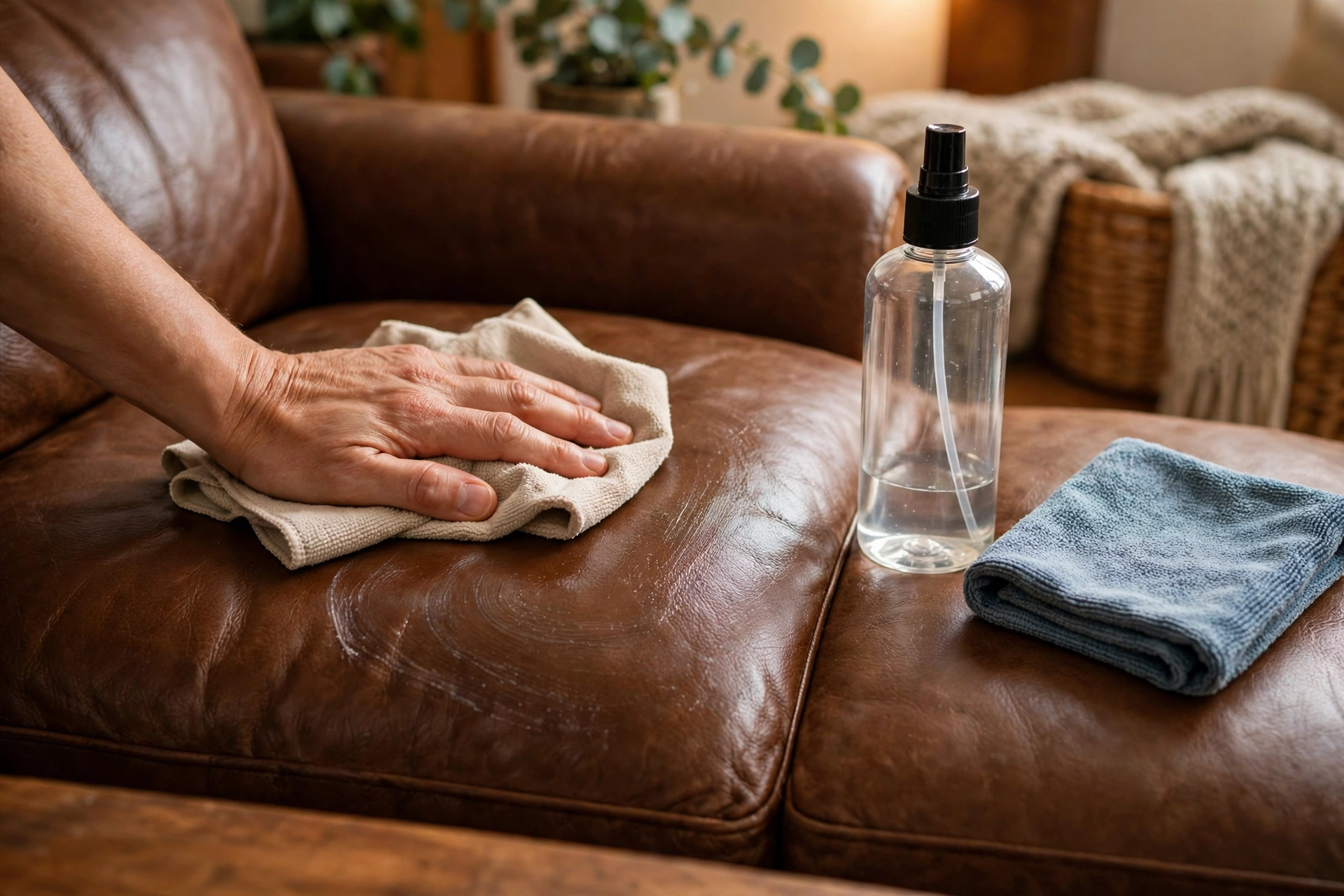
Leather is not fabric, and it needs its own routine. Learning how to clean a couch made of leather starts with knowing what not to do: never use water-based all-purpose cleaners, dish soap, or baby wipes on leather, and never use a solvent meant for fabric. Those products strip the leather’s natural oils and leave it dry, stiff, and cracked. Instead, dust the couch weekly with a dry microfiber cloth, and clean it every few months with a dedicated leather cleaner, applied to the cloth first, never directly onto the leather.
Work in small sections with gentle circular motions, then wipe away the excess with a second clean cloth. Twice a year, condition the leather — this is the step that keeps it soft and prevents the cracking that ruins old couches. Apply a thin layer, let it absorb, and buff off the excess. Keep leather out of direct sunlight and away from radiators, because heat and UV dry it out faster than anything else, and blot spills immediately: leather resists liquid for a few minutes, but a spill left sitting will stain.
13. Suede and Microfiber Care
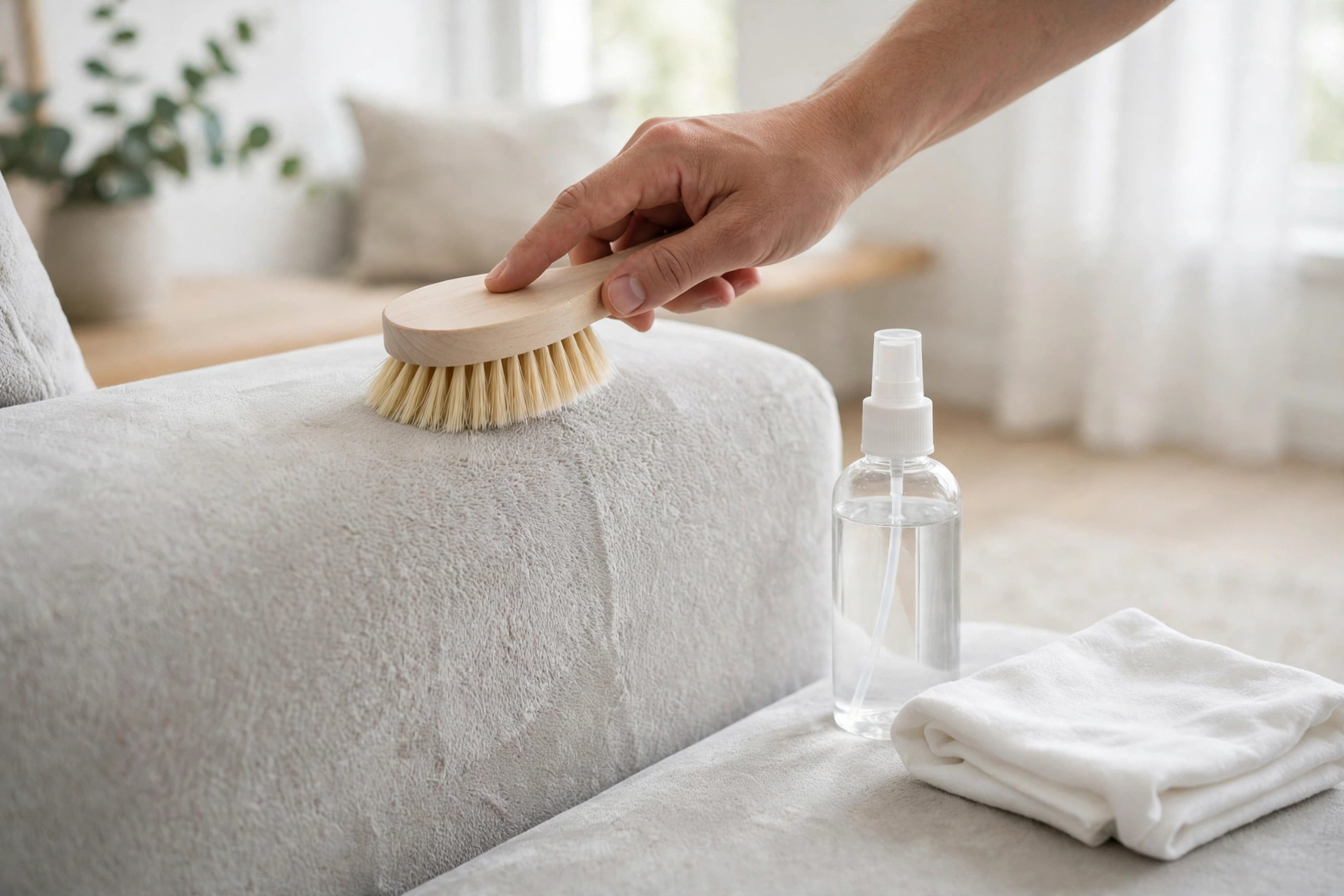
Suede and microfiber look similar and get confused constantly, but they are cleaned differently, so check the tag first. Real suede is usually an S or X code: brush it with a suede brush to lift the nap, use a suede eraser for scuffs and light marks, and never let water near it — a water spot on suede can be permanent. Microfiber, on the other hand, is usually a W or WS code and is one of the easiest couch fabrics to clean: it resists stains well and responds to a mild soap-and-water blot for most spills.
For microfiber, the classic trick is a spray bottle of rubbing alcohol: lightly mist the stain, scrub gently with a white cloth, and the alcohol evaporates quickly without leaving water marks — the exact problem water causes on microfiber. Once dry, brush with a dry soft brush to restore the nap. For both materials, a weekly brush keeps the nap looking new.
14. What Never to Use (Bleach, Harsh Solvents on the Wrong Code)
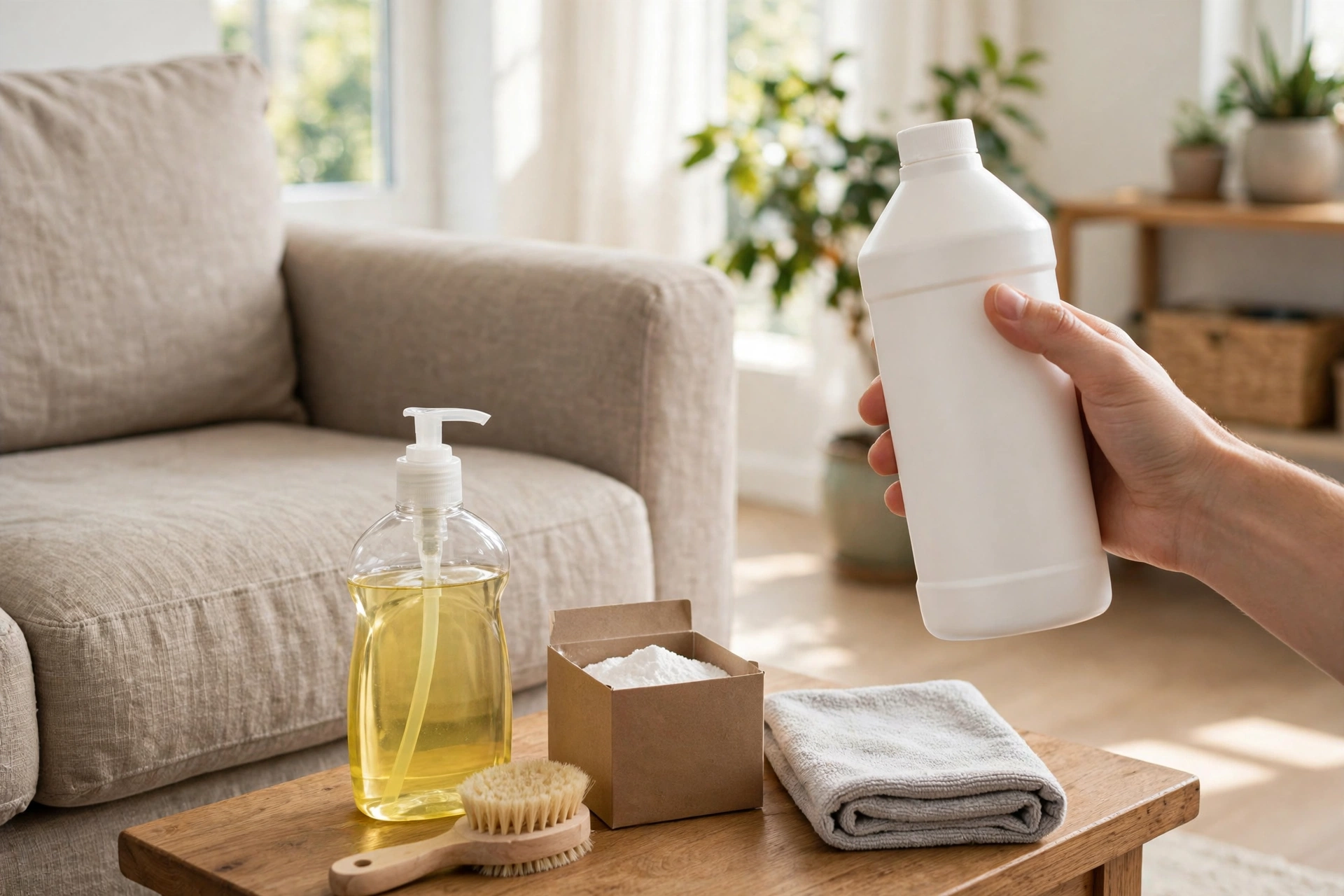
Some cleaning products should never touch a couch, no matter the fabric code. Bleach is first: it strips color, weakens fibers, and can dissolve the backing of upholstery fabric, leaving a pale patch no cleaner can fix. Harsh solvents — acetone, nail polish remover, paint thinner, strong degreasers — are just as dangerous on the wrong code: they can melt synthetic fibers and dissolve dyes.
Ammonia-based glass cleaners are another common mistake: they can discolor upholstery and damage leather finishes. Hot water is a quieter culprit — it sets protein stains like milk, egg, and blood, and it can shrink natural fibers, so always clean with cool or lukewarm water. And never mix cleaning products, especially bleach with anything else: the fumes are dangerous, and the mixture can damage fabric and your health. When in doubt about a product, read the care tag, read the product label, and test on a hidden spot — the ten minutes that takes is always cheaper than a ruined couch.
15. Monthly Maintenance Routine
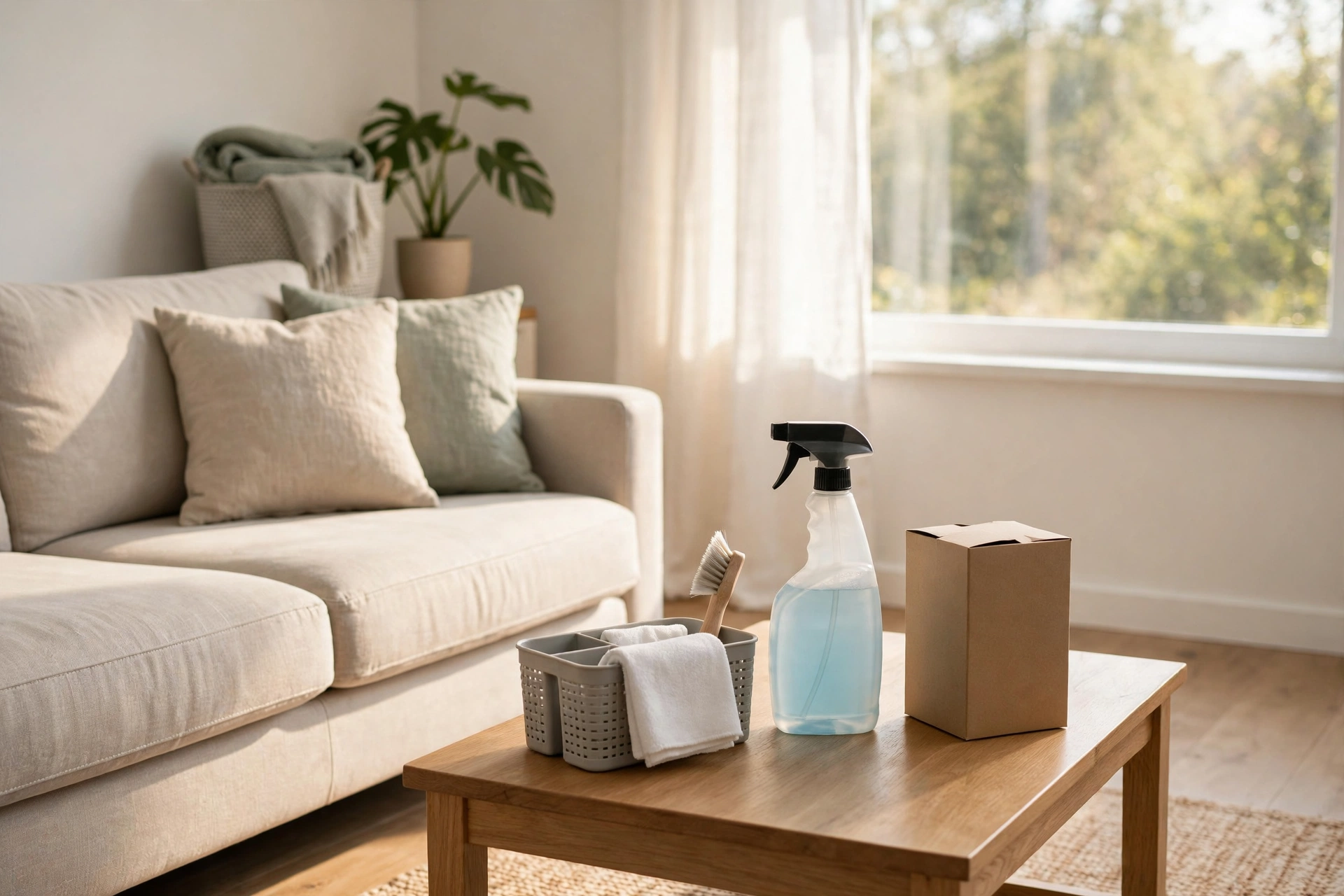
A couch stays clean when the cleaning is small and regular, not a once-a-year rescue mission. Once a month, give the couch ten minutes: vacuum it thoroughly, flip and rotate the cushions, brush the fabric, and spot-check for new stains while they are still fresh. That monthly pass is the whole secret — a fresh stain comes out in two minutes, and a month-old one can take an hour.
Twice a year, add the deeper steps: a baking soda deodorize, a steam clean if your code allows it, and a leather conditioning if your couch is leather. Keep a small couch-cleaning kit in a nearby closet — a white cloth, a bottle of upholstery cleaner matched to your fabric code, baking soda, and a lint roller — so a spill gets handled in the moment instead of drying into a stain. A couch that gets ten minutes a month will look better at five years old than a neglected couch looks at one.
Frequently Asked Questions
How do I clean a couch without ruining the fabric?
Read the care tag first and match the method to its code: W means water-based cleaners, S means solvent-only, WS means either, and X means vacuum and brush only, with no liquids at all. Test any cleaner on a hidden spot, blot instead of rubbing, and never soak the fabric — most ruined couches were ruined by the wrong cleaner, not the stain.
Can I use baking soda to clean a couch?
Yes — baking soda is one of the safest ways to learn how to clean a couch, because it is a dry powder that works on almost every fabric code, including X. Sprinkle it evenly, leave it for at least 30 minutes or overnight for strong odors, then vacuum it up. It absorbs odors instead of covering them, but it does not remove stains — for those, use the cleaner that matches your fabric code.
How do I get pet odor out of a couch?
Use an enzyme cleaner made for pet urine and upholstery, not a regular cleaner or air freshener — the key step when you learn how to clean a couch with pet odor. Saturate the area so the enzymes reach as deep as the odor went, keep it damp with a towel for several hours or overnight, then blot and let it dry. Old odors may need two or three treatments.
How often should I clean my couch?
A quick vacuum once a week and a ten-minute monthly pass are enough for most homes learning how to clean a couch on a routine. Deep-clean the whole couch every six to twelve months — more often with pets or small children — and treat spills the moment they happen.
Can I steam clean any couch?
No — steam is water, so you can only steam clean a couch when the care tag allows water, which means W and WS codes. Learning how to clean a couch with steam on an S or X code will leave water rings or permanent stains. If your tag says S or X, skip the steam cleaner and use the dry methods for your code, or hire a professional.
Related Reading
- How to Remove Carpet Stains
- How to Get Rid of Pet Odor in Your House
- How to Clean Hardwood Floors
- How to Clean Stainless Steel
- How to Clean Grout
- How to Clean a Dishwasher
Conclusion
Learning how to clean a couch comes down to one habit: check the care tag, match the method to the fabric code, and clean little and often. W, S, WS, and X are not fine print — they are the instructions, and a couch cleaned the right way looks better, smells fresher, and lasts years longer than one cleaned by guesswork. Start with the tag, vacuum first, and treat stains while they are fresh.