How to Clean a Microwave: 15 Easy Tips for a Spotless Oven
A microwave is the hardest-working appliance in most American kitchens — it reheats lunch, pops popcorn, defrosts dinner, and warms baby bottles — and it is also the one that gets cleaned the least. Splatters bake onto the walls a little more with every use, until one day you open the door and wonder when it got that bad. The good news is that knowing how to clean a microwave takes about ten minutes, and the main tool is a bowl of water. A microwave oven heats food with microwaves that excite water molecules, which is why steam is such a good cleaner for it: the same heat that cooks your food loosens the grime on the walls. The fifteen tips below start with the easy steam methods, then cover the parts people forget — the turntable, the door seal, the vents — and finish with the habits that keep it clean. If your other appliances need the same care, our coffee maker cleaning guide covers the small machine on the counter, and our dishwasher cleaning guide handles the big one under it.
1. The Lemon Steam Bowl — the Easiest Method
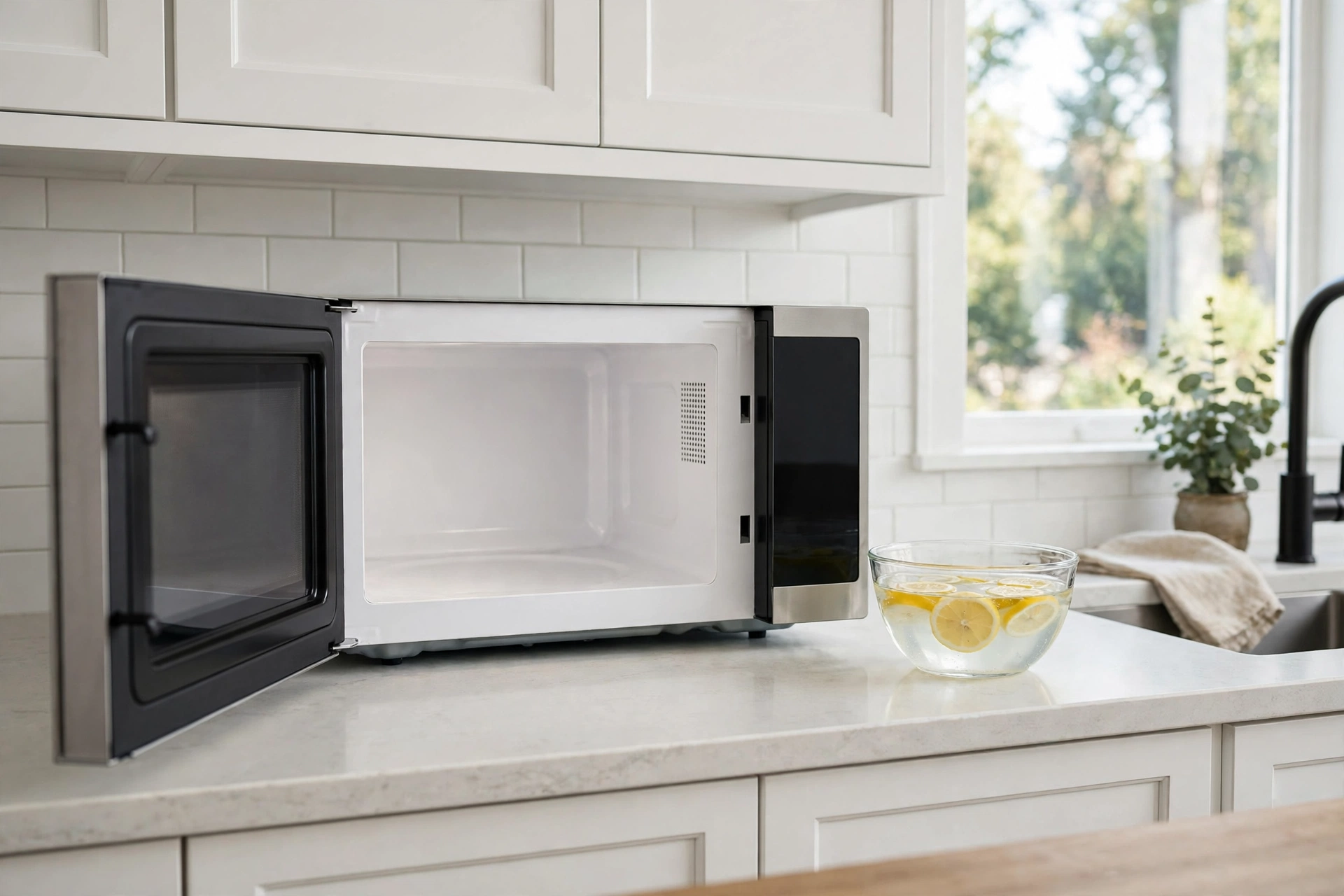
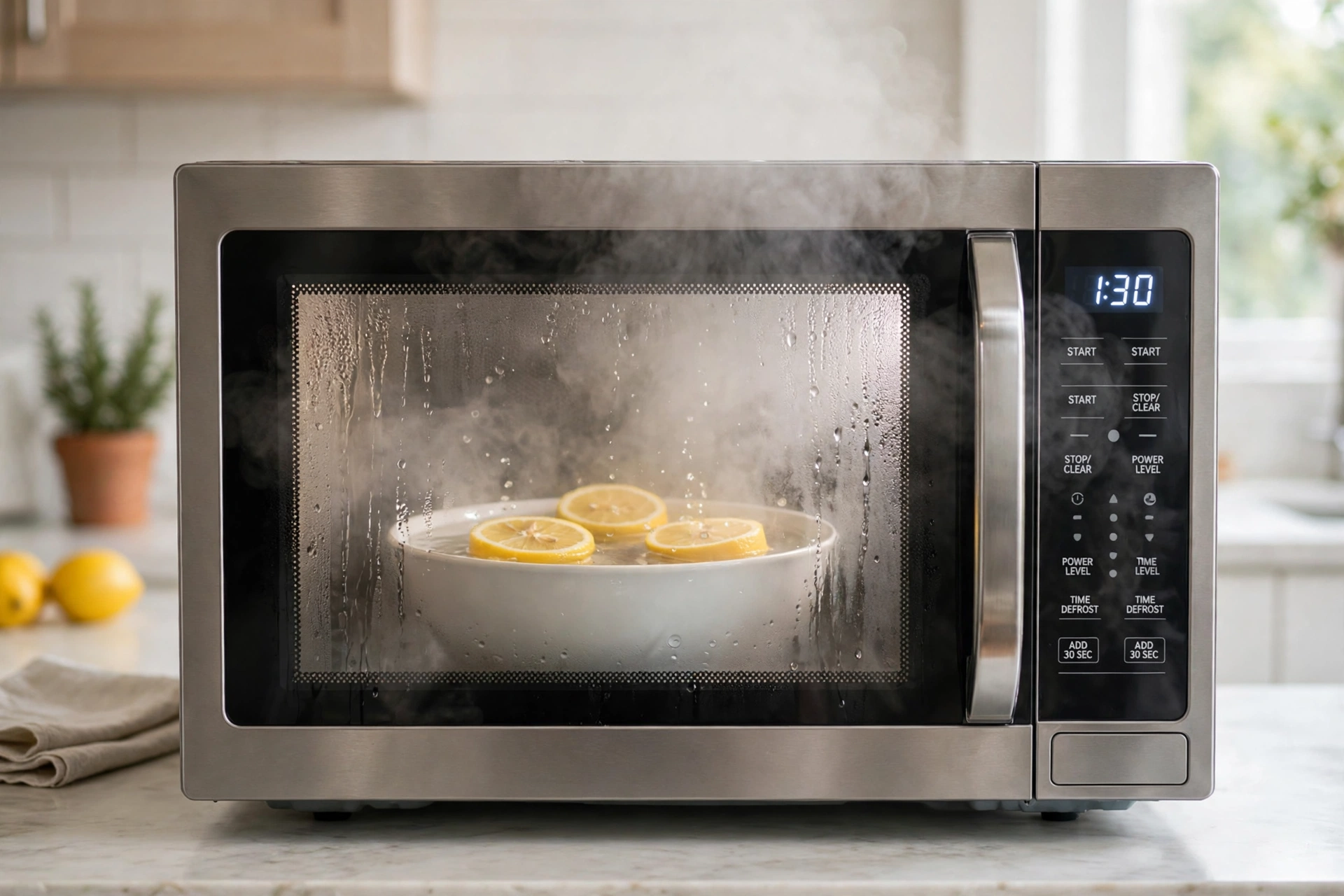
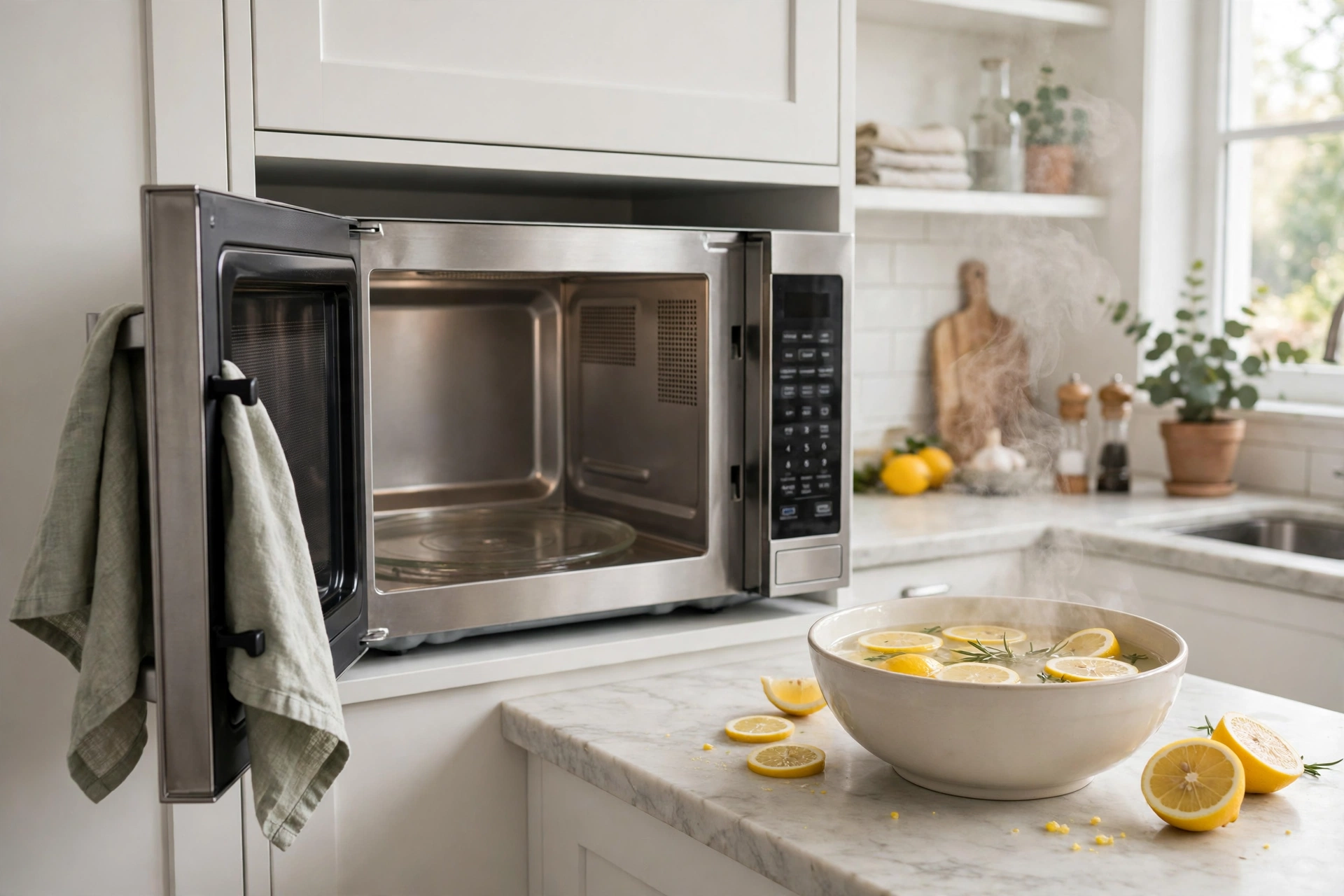
This is the method to try first, because it does most of the work for you. Fill a microwave-safe bowl with one cup of water, add the juice of half a lemon plus the squeezed halves, and microwave it on high for three to five minutes, until the water boils and the inside of the microwave is foggy with steam. Then — and this is the important part — leave the door closed for another five minutes so the steam can keep working on the dried-on splatters. Open the door, take the bowl out carefully with an oven mitt (it will be very hot), and wipe the walls, ceiling, and floor with a clean cloth or paper towel. The softened grime comes off with almost no pressure. The lemon leaves a fresh smell behind, and the whole job takes ten minutes, most of it waiting. If the splatters are old and stubborn, run the steam bowl a second time before you wipe.
2. Vinegar Steam for Stubborn Grime
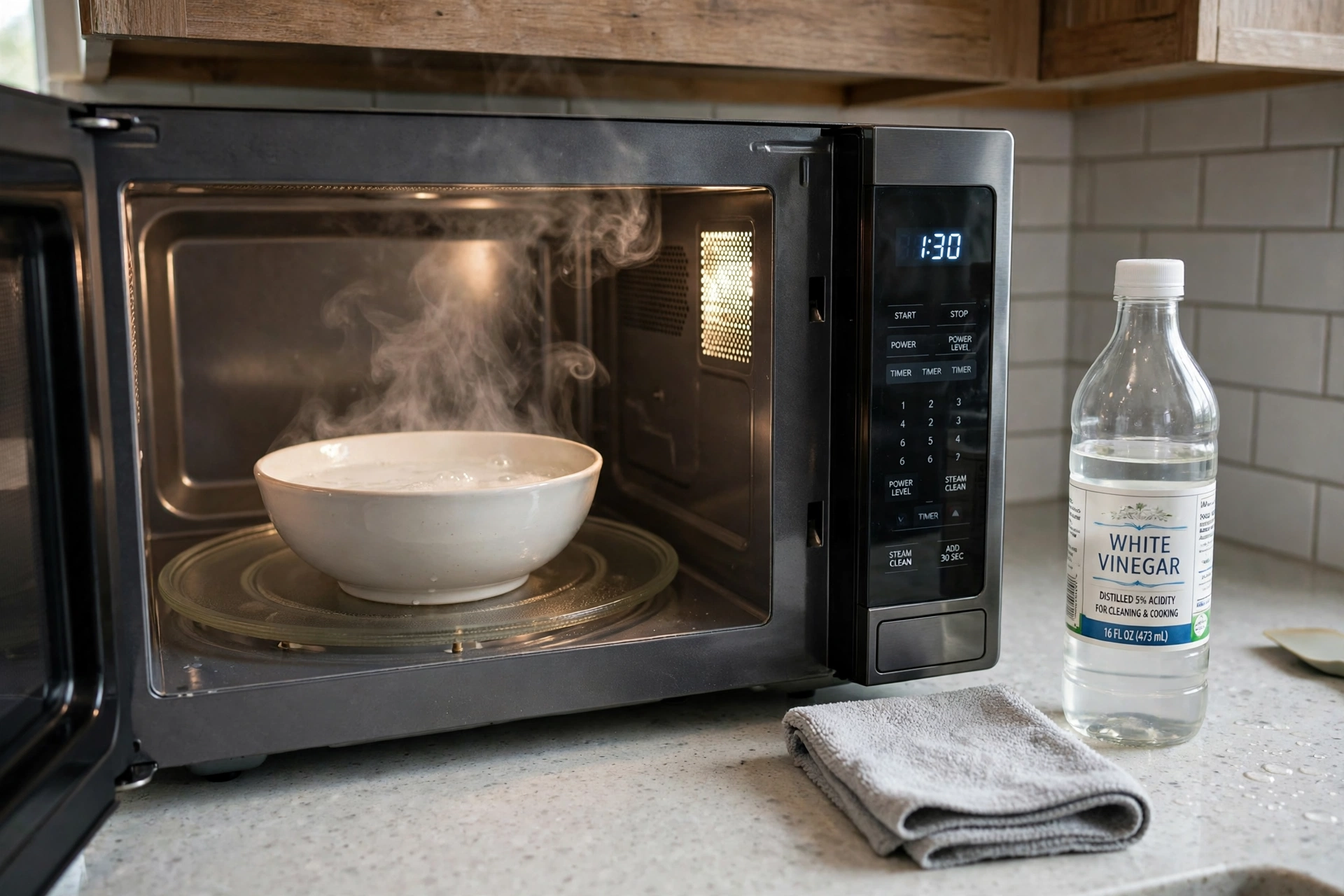
When lemon steam is not quite enough, vinegar steam is the stronger version. Mix one cup of water with two tablespoons of white vinegar in a microwave-safe bowl and microwave it on high for five minutes, then leave the door closed for five more minutes, just like the lemon method. Vinegar is a mild acid, so it cuts through the grease and food film that water alone leaves behind. The smell of hot vinegar is strong while the bowl is in there, but it fades within minutes of opening the door — and if you add a few drops of lemon juice, it fades even faster. Wipe the interior with a damp cloth, and for any spot that is still stuck, dip the cloth in the hot vinegar water and hold it on the spot for thirty seconds before wiping. Never use apple cider vinegar for this: it leaves a smell and a tint that white vinegar does not.
3. Baking Soda Paste for Stuck-On Spots
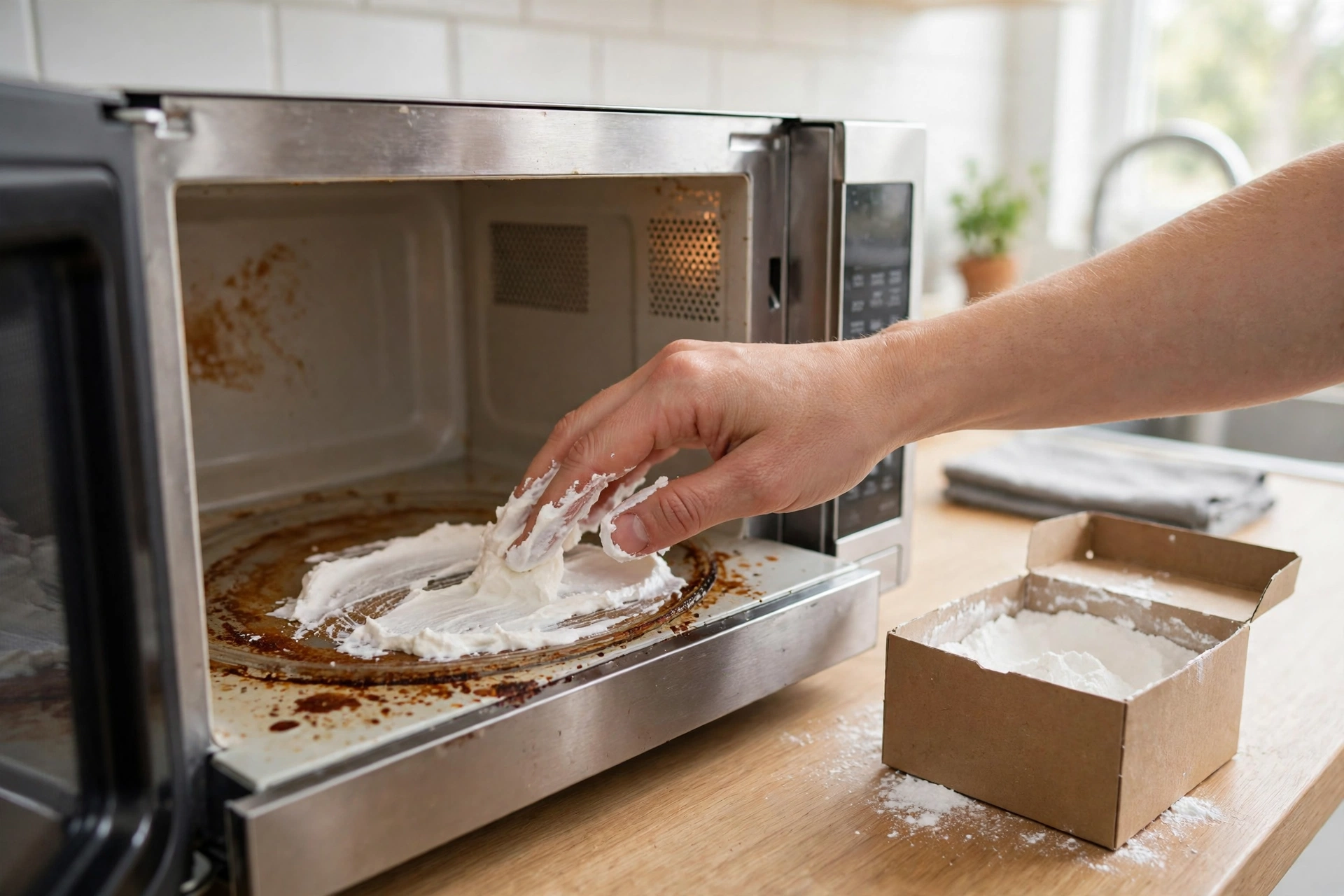
For the spots that steam alone will not move — the brown patch where soup boiled over three weeks ago — make a paste of three parts baking soda to one part water. Spread it on the stuck-on spot with a cloth or an old toothbrush, leave it for ten minutes, then wipe it away with a damp cloth. Baking soda is a mild abrasive, so it scrubs without scratching the interior coating, and it is a deodorizer at the same time. Do not use the paste on the door window if your microwave has a plastic window coating — a damp cloth is enough there — and rinse the cloth well so no baking soda residue stays behind. For a really stubborn spot, lay a damp cloth over the paste and microwave the cloth for thirty seconds: the heat and moisture soften the spot even more. This is the gentlest scrub there is, and it is safe for every microwave interior.
4. Clean the Turntable in the Sink
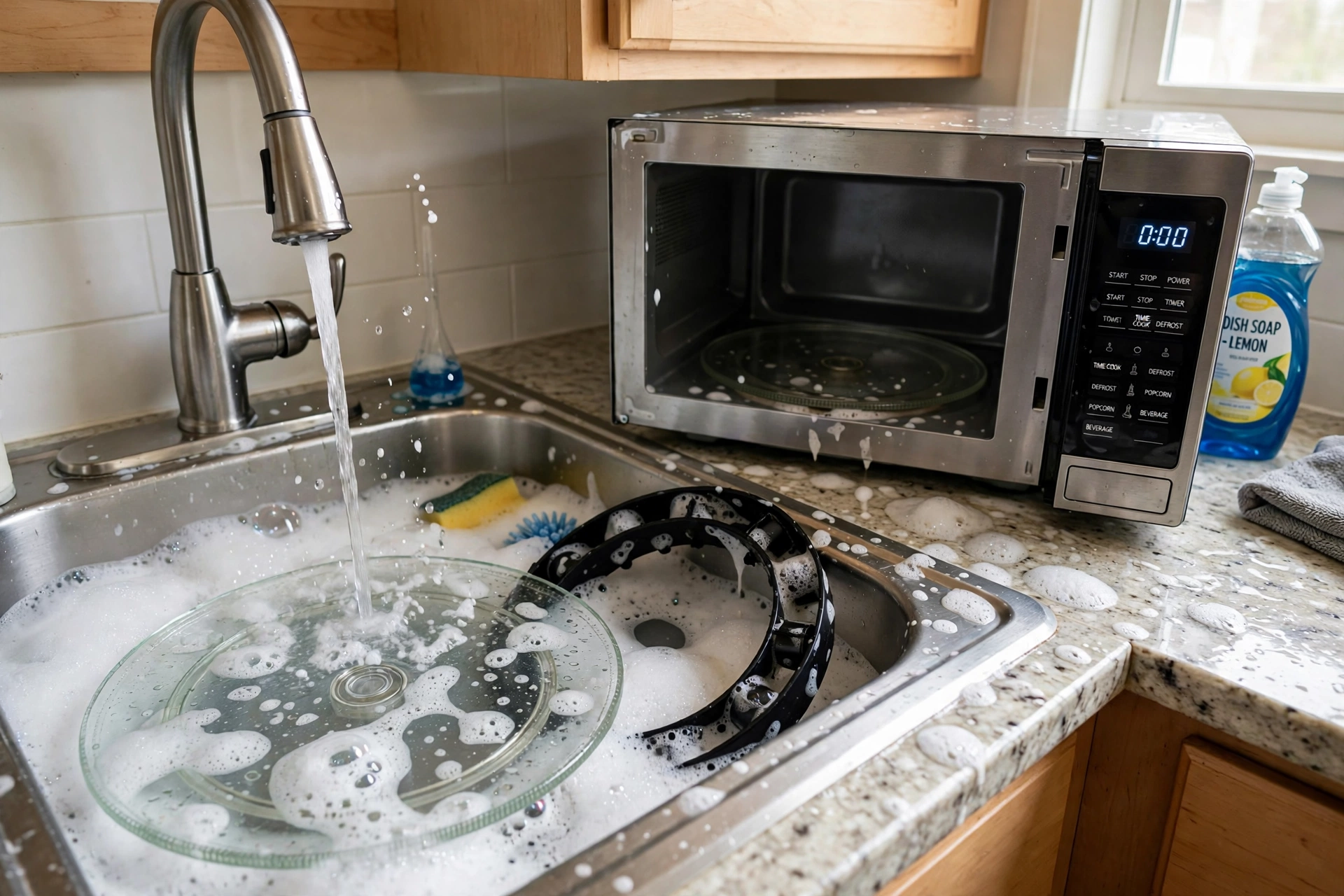
The glass turntable and its roller ring collect more grime than any other part of the microwave, because every spill runs down onto them. Lift the turntable out, take the roller ring out with it, and wash both in the sink with hot soapy water, just like a plate. If the turntable has baked-on food, let it soak for ten minutes first — the soak does the work, not your scrubbing. While they are out, wipe the floor of the microwave underneath, where crumbs and drips collect around the turntable mount. Dry the turntable and the ring completely before you put them back, and check that the ring sits flat in its track — a ring that is not seated right makes the turntable wobble and clunk on every rotation. Clean the turntable once a week and it will never need a deep clean again.
5. Wipe the Door Seal and Latch Area
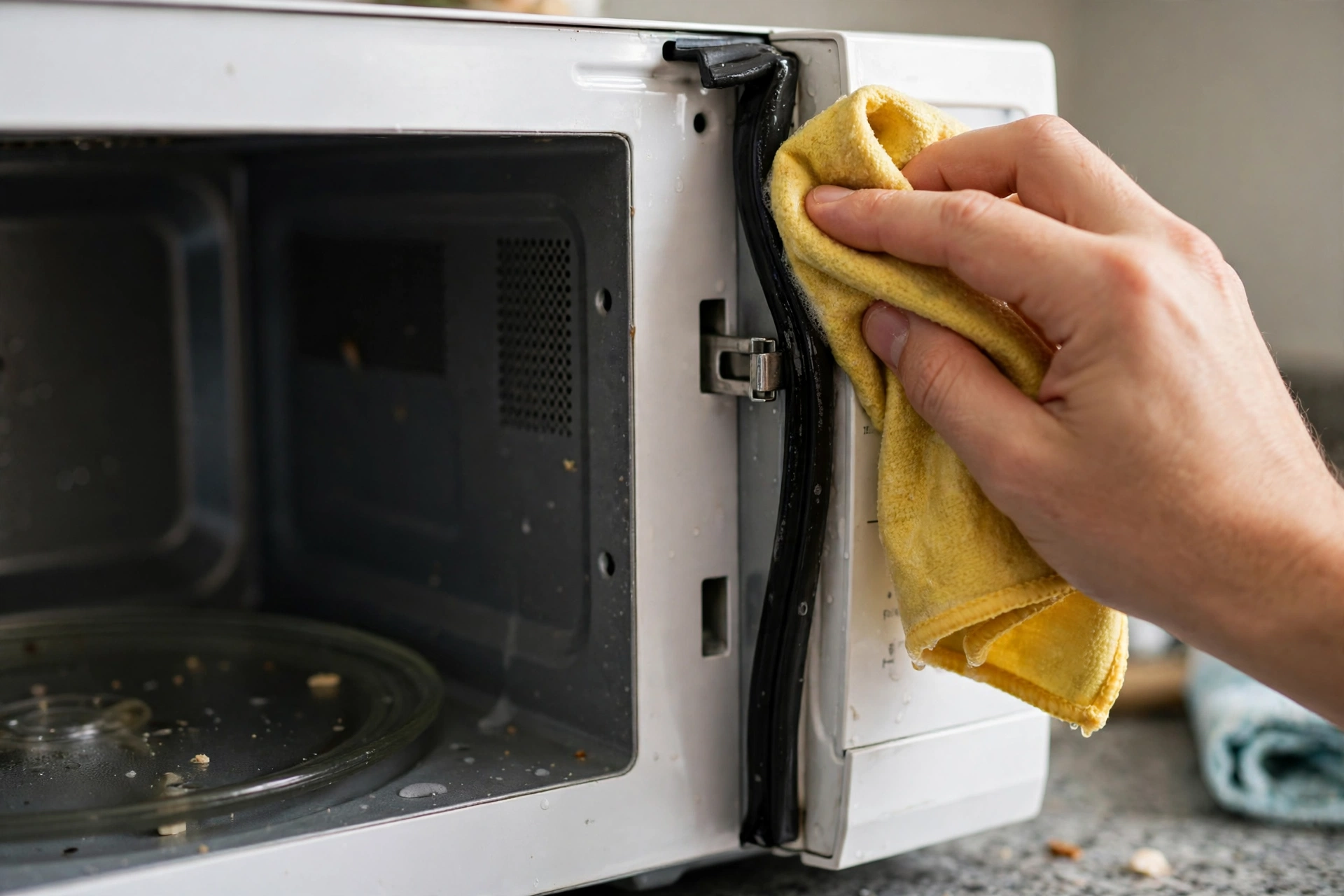
The rubber seal around the microwave door is easy to miss and quick to get grimy, because food splatters land there and then get baked on every time the door closes. Wipe the whole seal with a damp cloth and a drop of dish soap, and run the cloth around the latch area on the door frame, where crumbs collect and stop the door from closing properly. An old toothbrush reaches into the grooves of the seal. Dry the seal with a clean towel when you finish, because a damp seal grows mold in a warm kitchen. Never pry the seal off or pull at it — it is part of how the microwave keeps microwaves inside, and a damaged seal is a repair job, not a cleaning job. If the seal is cracked, torn, or loose, stop using the microwave and call the manufacturer.
6. Degrease the Exterior and Handle
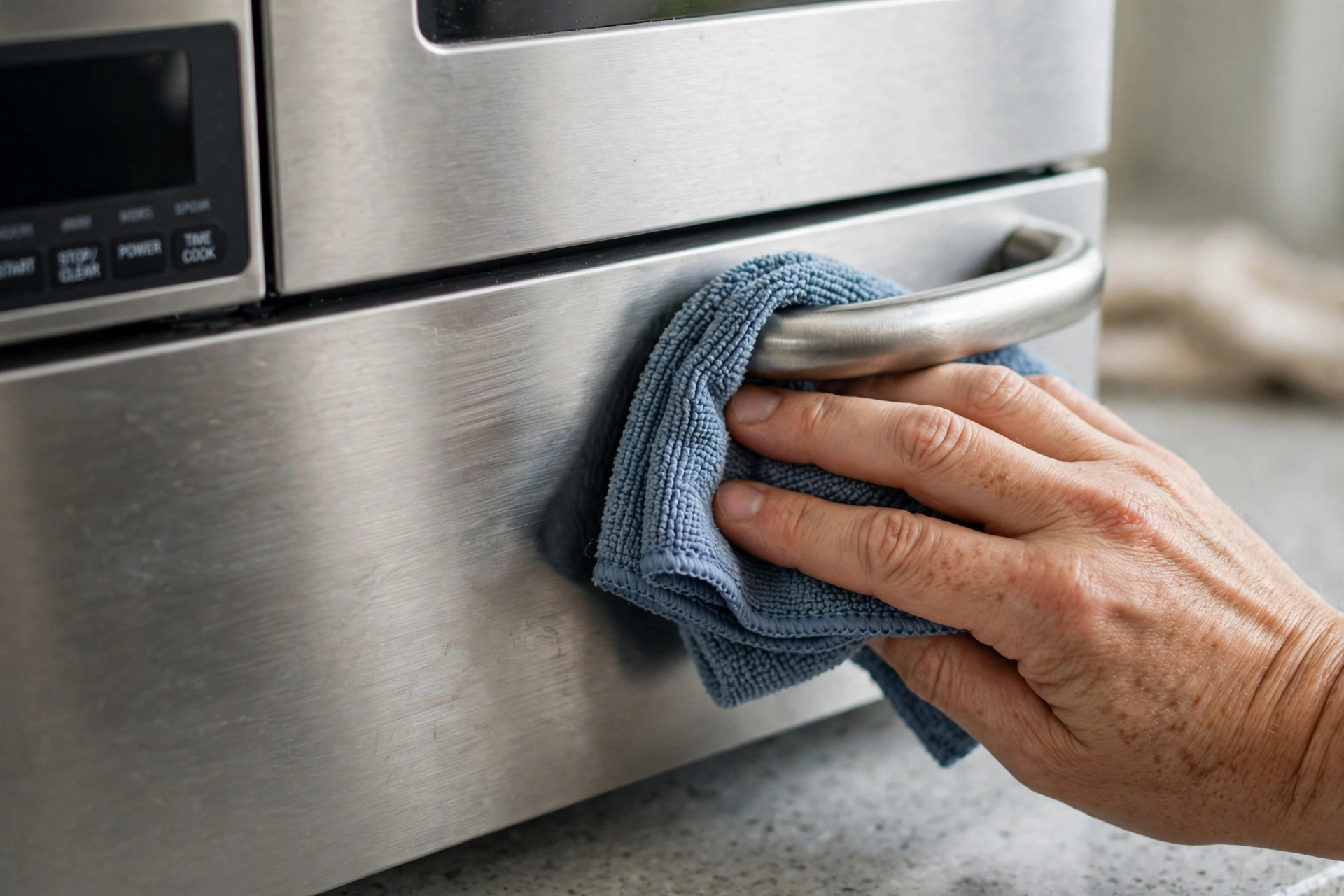
The outside of the microwave collects fingerprints, cooking grease, and splashes, and the handle is one of the most-touched surfaces in the whole kitchen. Wipe the front, the sides, and the handle with a damp microfiber cloth and a drop of dish soap, then dry it. For a stainless steel front, wipe with the grain of the steel — never in circles — or the finish will show streaks; our stainless steel cleaning guide covers the technique in detail for every stainless surface in the kitchen. Do not spray cleaner directly onto the control panel or the vents; spray the cloth instead, so liquid never seeps behind the buttons. A clean handle is not just cosmetic — it is the part of the microwave your hands touch before they touch food, and it deserves the same wipe as the inside.
7. Fix Burnt Smells With Coffee Grounds
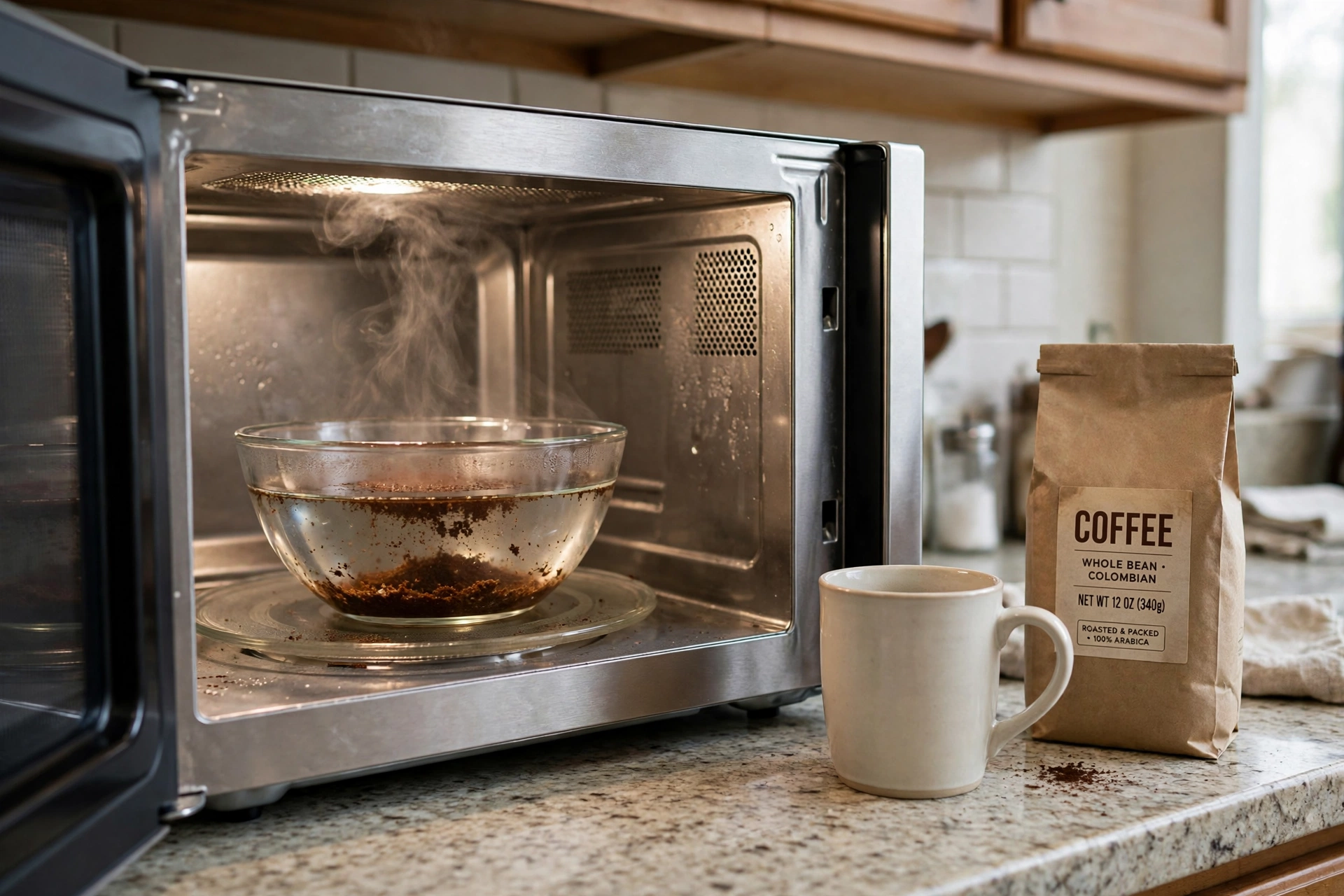
A burnt smell in a microwave can linger for days, long after the food that caused it is gone. The fix is simple: put two tablespoons of used coffee grounds in a microwave-safe bowl with a cup of water, microwave it for three minutes, and leave the door closed for ten minutes after. Coffee grounds absorb odors instead of covering them up, and the steam carries the deodorizing effect into every corner. If you do not drink coffee, a bowl of water with two tablespoons of baking soda works almost as well — microwave it for three minutes, leave the door closed, then wipe the interior. For a smell that will not quit, leave a small open bowl of baking soda in the microwave overnight with the door closed. Never try to cover a burnt smell with air freshener sprayed inside the microwave: it coats the walls with chemicals that will end up in your food.
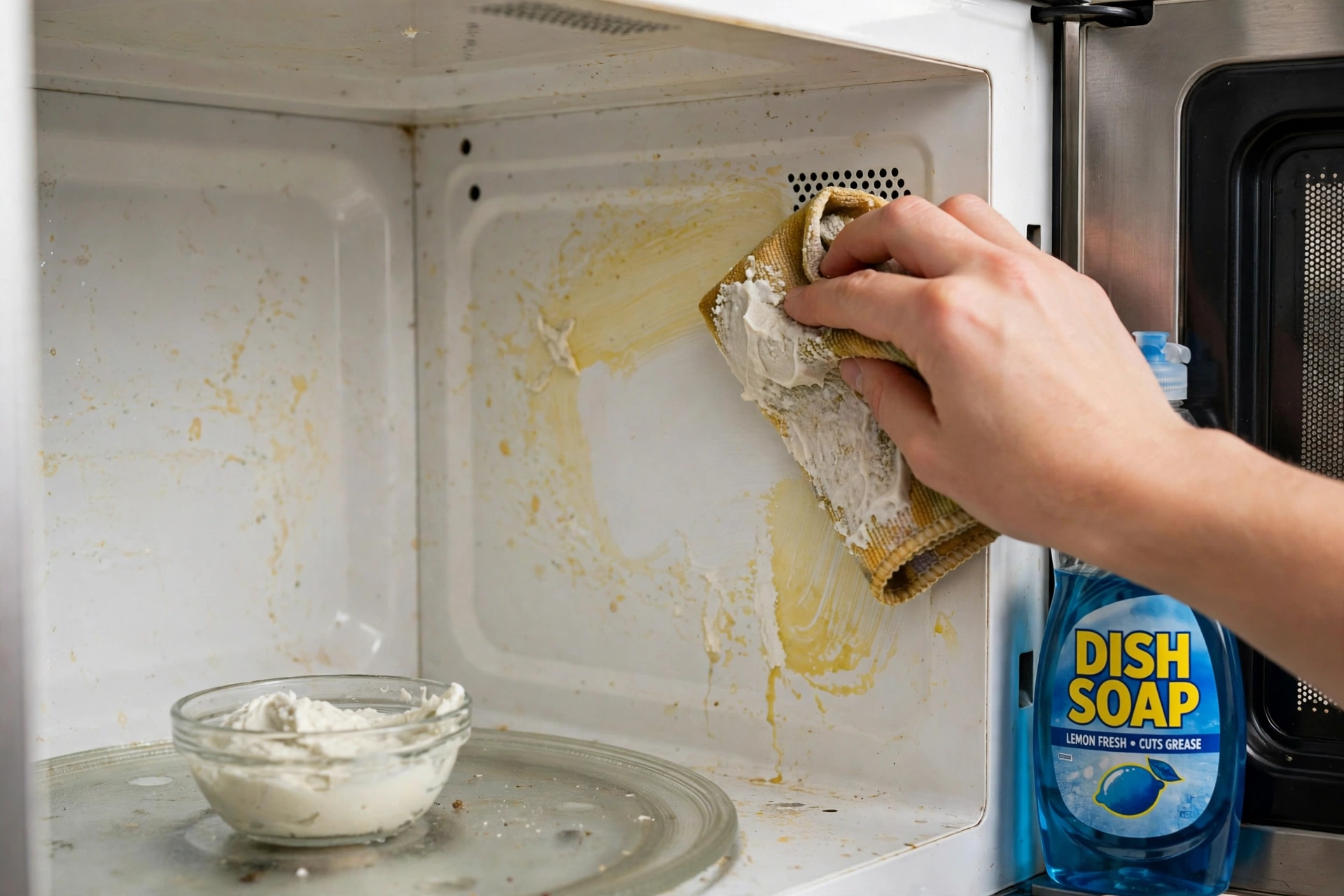
8. Remove Yellow Stains With Baking Soda and Dish Soap
White microwave interiors turn yellow over time, especially above the stove where cooking grease and heat rise into the microwave. Mix a paste of baking soda and a few drops of dish soap, spread it on the yellowed area, and leave it for fifteen minutes before wiping it off with a damp cloth. The baking soda lifts the stain gently, and the dish soap cuts the grease that holds it there. For stains that have been there for years, repeat the paste twice — the second application works on what the first one loosened. Do not use bleach on a yellowed interior: it can damage the coating and leave a chemical smell that is very hard to remove. A little yellowing is normal in an older microwave, and a clean, pale-yellow interior is fine — the goal is clean, not brand-new white.
9. Clean the Vents and Air Filter
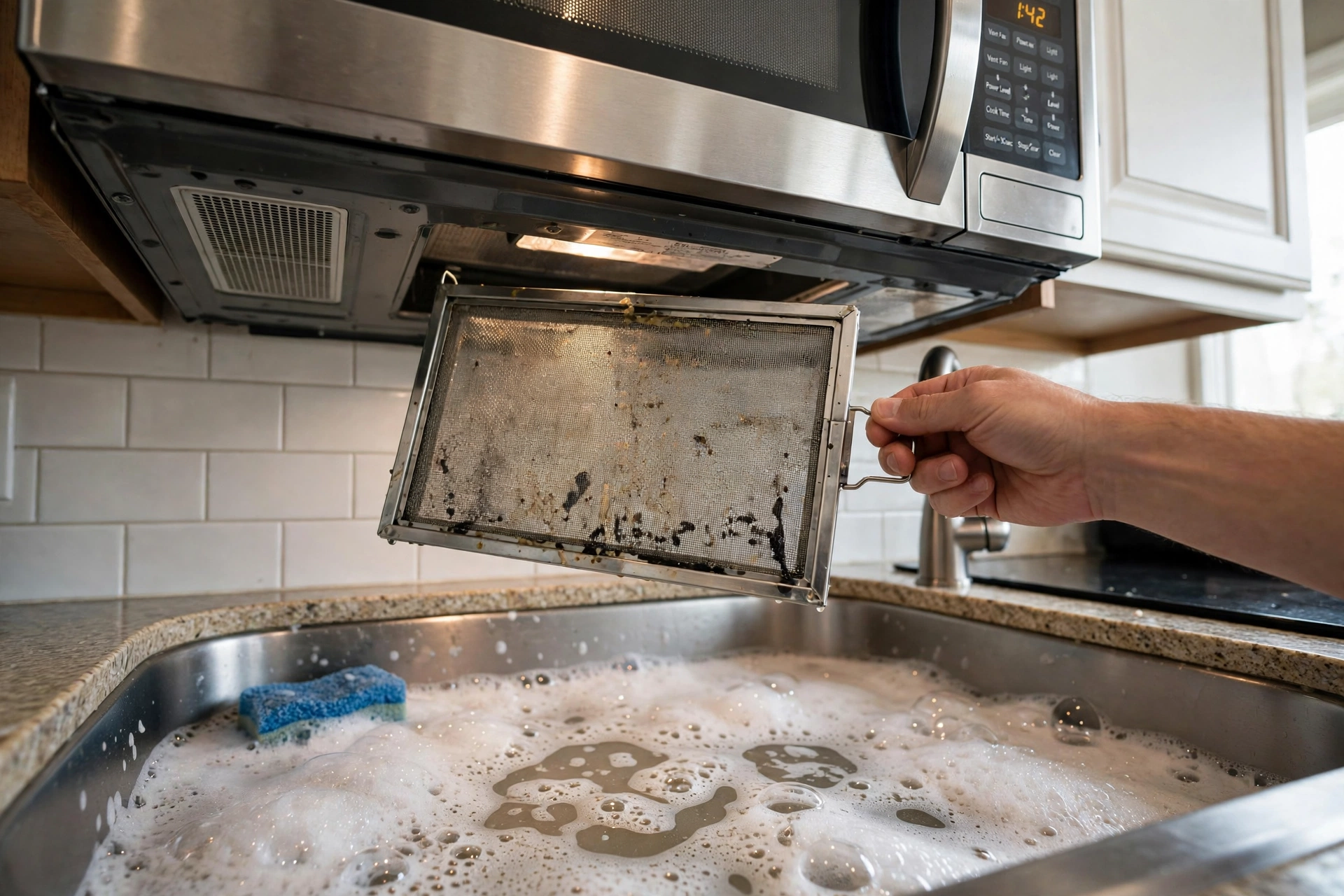
Over-the-range microwaves have vents and a grease filter underneath that catch cooking grease, and they are the dirtiest part of the whole appliance. Slide the filter out — it is usually under the microwave, held in by a latch — and soak it in the sink in hot water with dish soap for fifteen minutes, then scrub it with a brush and rinse it. If the filter is very greasy, add a quarter cup of baking soda to the soak water. Wipe the vent openings on the outside of the microwave with a damp cloth, and vacuum the vent slots gently with a brush attachment if dust has collected there. A clogged filter makes the microwave’s fan work harder and pulls less steam out of the kitchen, so clean it every month if you cook on the stove below it often. A countertop microwave has vents too — wipe them the same way, and never block them with anything stored on top.
10. Deodorize With an Orange Peel Steam
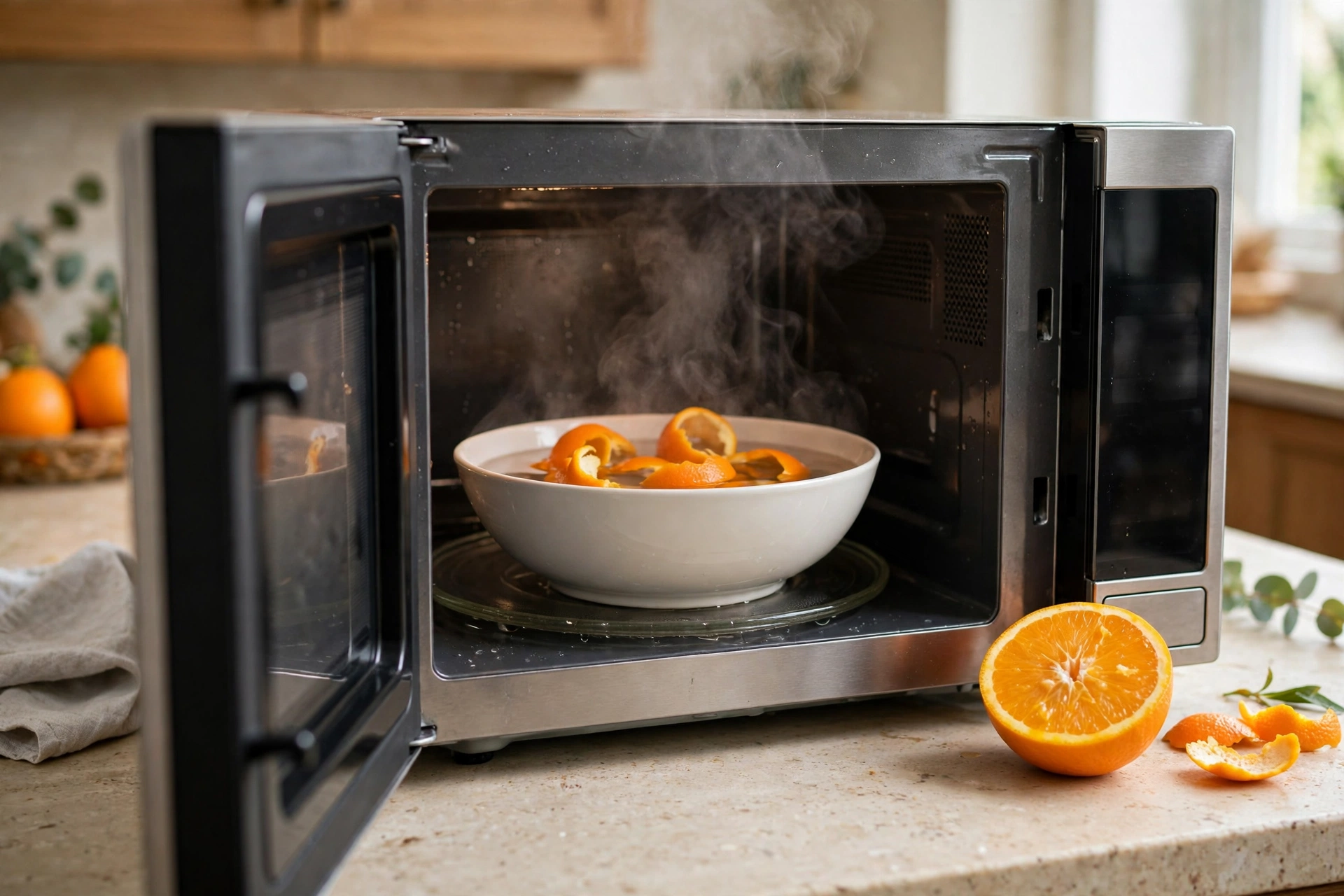
Lemon is the classic microwave deodorizer, but orange peel works just as well and smells warmer. Put a handful of orange peels in a bowl of water, microwave it for three to five minutes, and leave the door closed for five minutes after. The citrus oils in the peel steam into the microwave and leave a fresh, sweet smell that lasts longer than lemon. Save the peels from an orange you were already eating — this is a use for something you would throw away anyway. The same trick works with a few drops of vanilla extract in a bowl of water, which leaves the microwave smelling like a bakery. Use one of these steam deodorizers once a week and the microwave will never develop the stale smell that makes people dread opening the door.
11. Prevent Splatters With a Microwave Cover
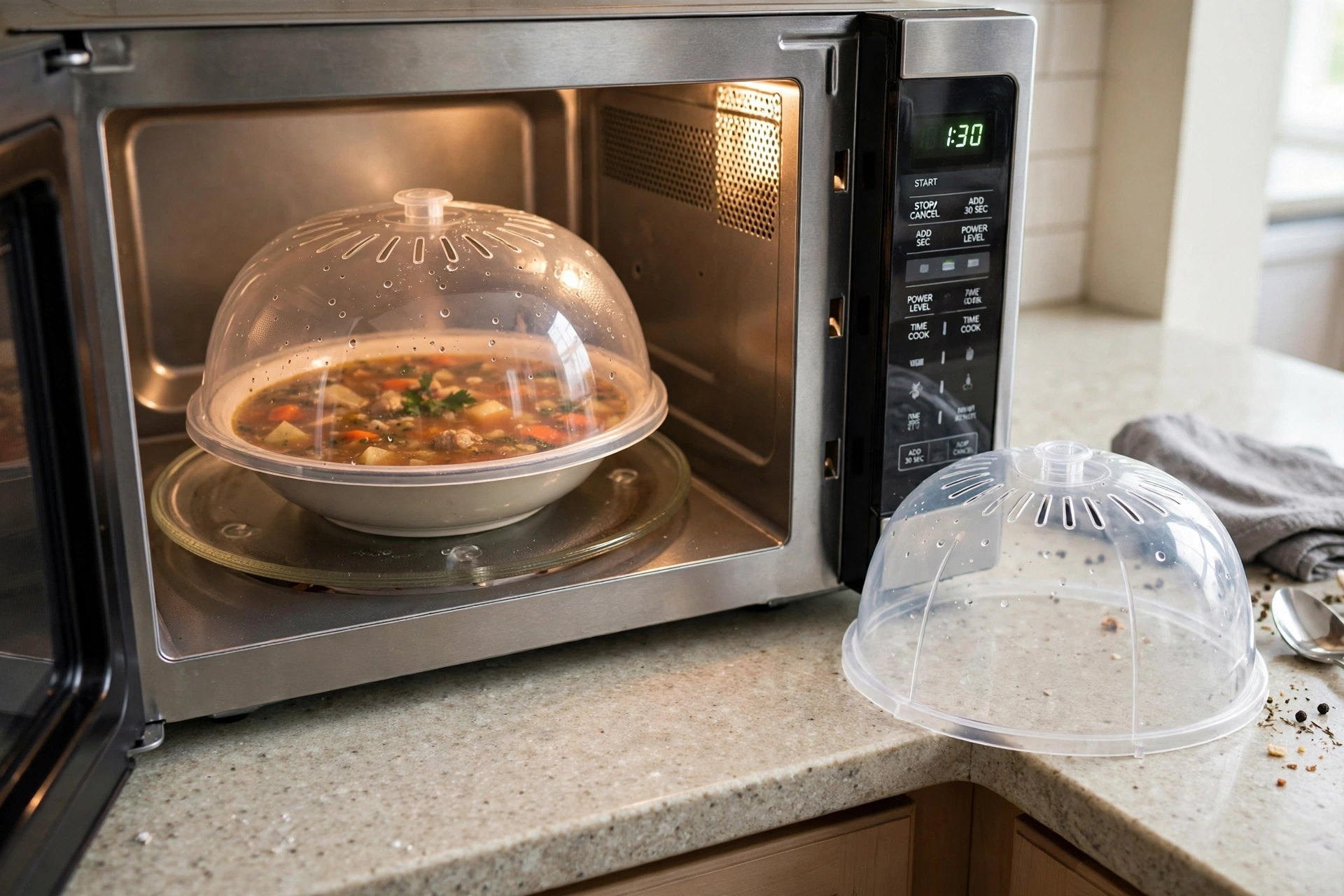
The best way to clean a microwave is to keep it from getting dirty in the first place, and a microwave food cover does that for a few dollars. It is a vented plastic dome that sits over the plate while food heats, catching every splatter before it reaches the walls. Put the cover on every time you heat anything that can splatter — soups, sauces, anything with a lid that pops — and the interior stays clean for weeks at a time. Wash the cover itself in the dishwasher or the sink once a week, because it catches all the mess the microwave does not. A paper towel laid loosely over the plate works in a pinch, but it can blow off or catch on a hot edge, so a proper vented cover is worth the small cost. This one habit cuts microwave cleaning in half, and it is the tip most people wish they had started years earlier.
12. Wipe Spills the Same Day — the 30-Second Habit
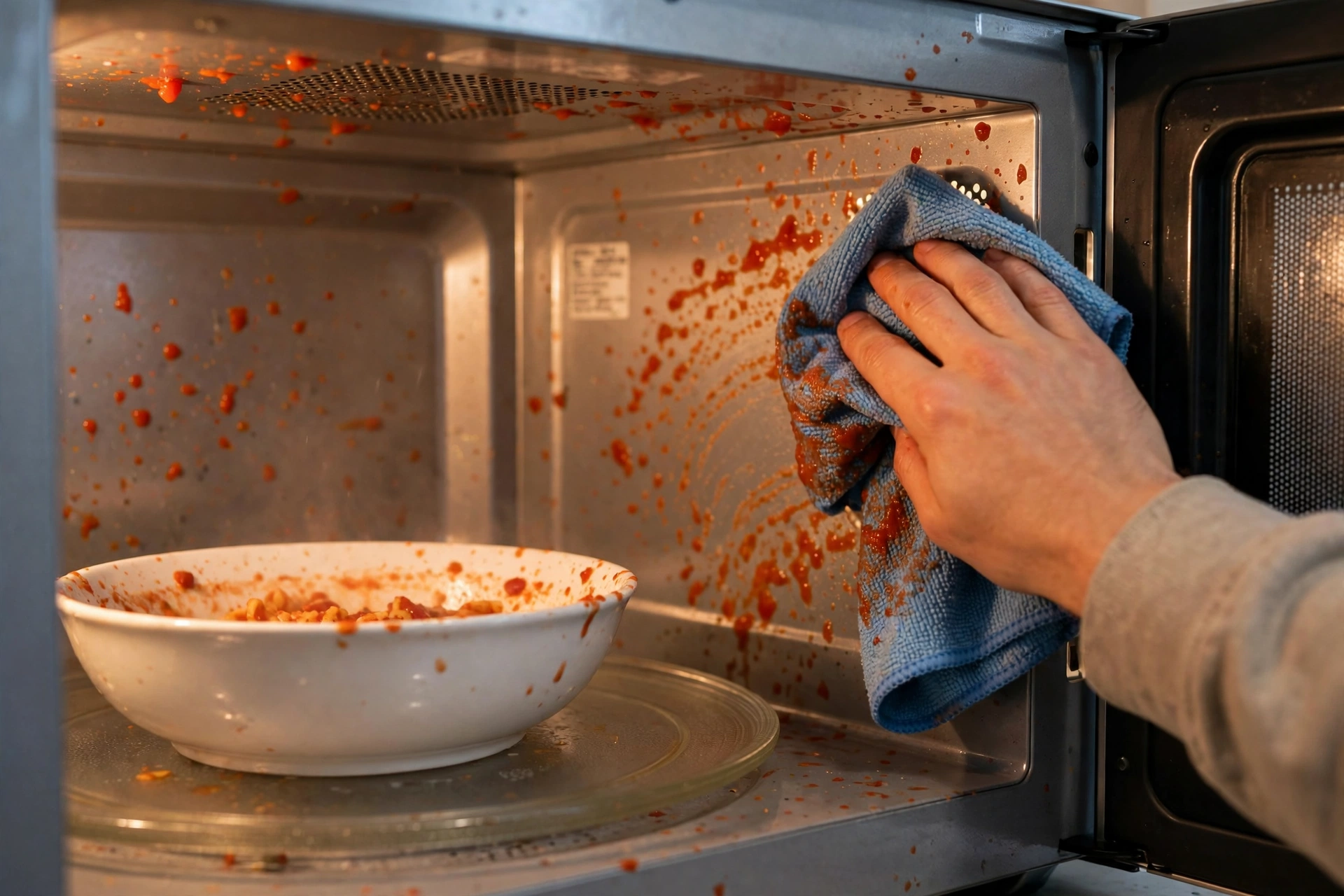
A spill wiped up the same day takes thirty seconds. The same spill left for a week bakes on and takes ten minutes of steam and scrubbing. The rule is simple: after anything splatters or boils over, wipe the microwave with a damp cloth while it is still warm, as soon as the food is out. Keep a cloth or a roll of paper towels right next to the microwave so there is no excuse to leave it for later. This habit matters most for the foods that bake on hardest: tomato sauce, cheese, butter, and anything with sugar. Sugar burns onto the interior coating and can stain it permanently if it is reheated again and again, so wipe sugary spills immediately, every time. Thirty seconds now saves a deep clean later — and it is the only tip on this list that costs no supplies at all.
13. What NEVER to Use: Steel Wool, Abrasives, and Harsh Chemicals
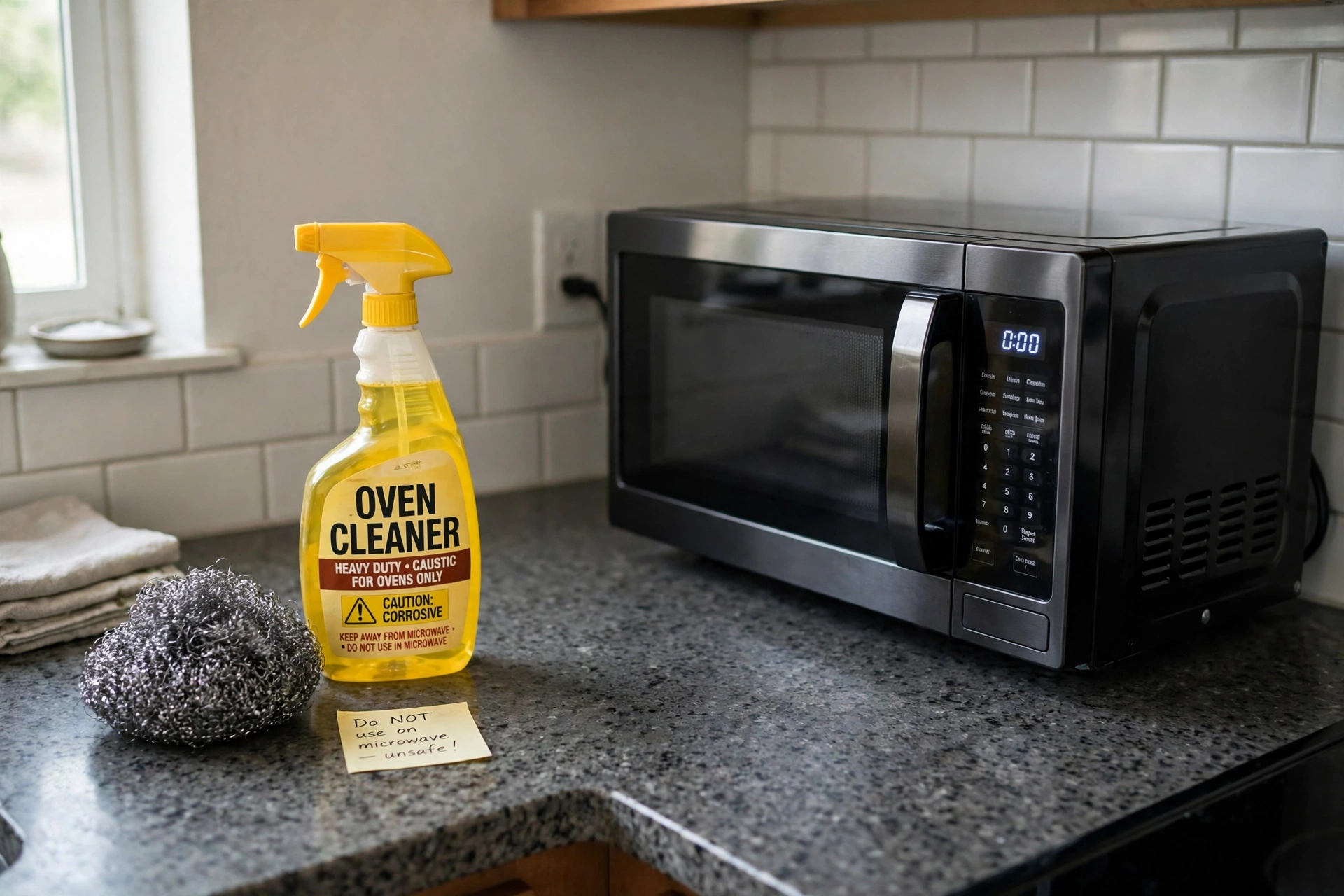
The inside of a microwave has a coating that protects the metal underneath, and the wrong cleaner will destroy it. Never use steel wool, scouring pads, or abrasive powder cleaners — they scratch the coating, and a scratched coating can rust, spark, or flake into food. Never use oven cleaner, bleach, or ammonia-based cleaners inside a microwave: they are too harsh for the interior coating, and their fumes linger in a closed box that heats your food. Stick to dish soap, white vinegar, baking soda, and lemon — the four cleaners that are safe for every microwave. If a product label does not say it is safe for microwaves, do not use it inside one. A damaged interior coating is not something you can fix with cleaning; it is the point where a microwave needs to be replaced, and it is almost always caused by the wrong cleaner, not by age.
14. Deep-Clean a Neglected Microwave, Step by Step
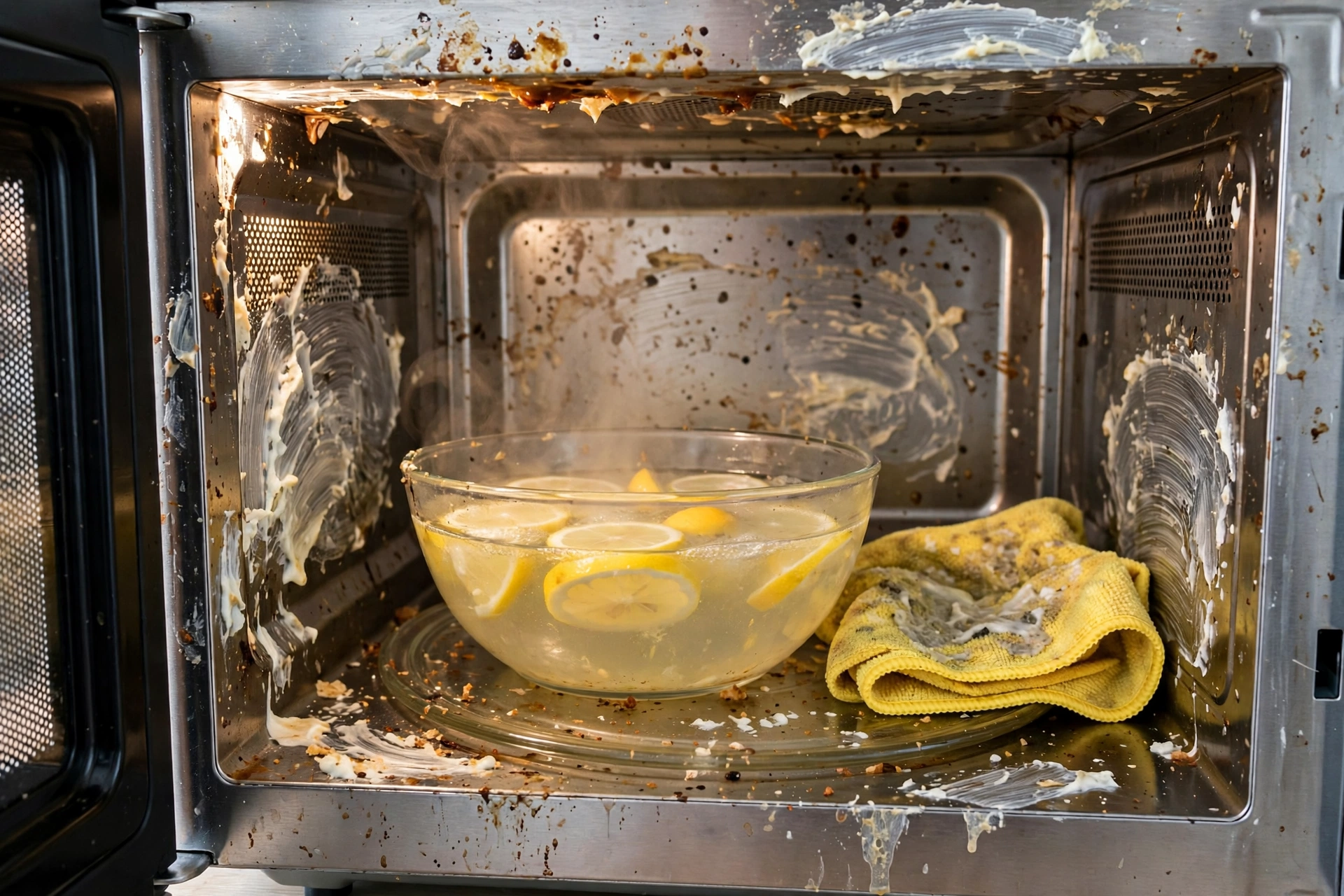
If the microwave has not been cleaned in months, do the full routine in order: lemon steam first, then the vinegar steam, then the baking soda paste on anything still stuck. Take the turntable and roller ring out and wash them in the sink. Wipe the door seal, the vents, and the exterior, and finish with an orange peel steam to remove the smell. The whole job takes about thirty minutes, and the microwave will look close to new when you are done. Work from the top down so drips fall onto surfaces you have not wiped yet, and change the cloth or rinse it often — a cloth full of grease just moves grease around. If the interior still looks stained after the full routine, that is usually discoloration from age and heat, not dirt, and it is harmless. A neglected microwave can almost always be saved; the one thing that cannot be saved is a damaged interior coating, so be gentle even when the grime is not.
15. A Weekly 2-Minute Microwave Routine
The microwave stays clean if the work is spread out instead of saved for one big job. Once a week — pick a day, like Sunday evening — run the lemon steam bowl for three minutes, wipe the interior while it is still warm, and wash the turntable in the sink. That is the whole routine, and it takes two minutes of actual work plus the steam time. Wipe the handle and the exterior at the same time, and check the door seal for crumbs. Put the weekly clean on the same day you wipe the counters, so it becomes part of a routine you already have instead of a job you have to remember. A microwave that gets two minutes a week never needs a thirty-minute deep clean, never smells, and never has a splatter old enough to bake on. Two minutes a week is the cheapest cleaning habit in the kitchen.
Frequently Asked Questions
How do I clean a microwave without scrubbing?
Use the lemon steam method: a bowl of water with half a lemon, microwaved on high for three to five minutes, then left with the door closed for five more minutes. The steam softens every splatter so it wipes off with a cloth and almost no pressure. This is how to clean a microwave the easy way — the steam does the work, not your arm.
Can I use vinegar to clean my microwave?
Yes — mix one cup of water with two tablespoons of white vinegar, microwave it for five minutes, leave the door closed for five more minutes, then wipe the interior. Vinegar cuts grease and food film better than water alone. The smell fades within minutes of opening the door, and adding a little lemon juice makes it fade even faster. That is how to clean a microwave with vinegar the right way — steam first, wipe second, and never pour vinegar into the detergent dispenser.
How do I get burnt smell out of my microwave?
Microwave a bowl of water with two tablespoons of coffee grounds or baking soda for three minutes, then leave the door closed for ten minutes. The steam carries the deodorizer into every corner, and coffee grounds absorb odors instead of covering them up. For a smell that will not quit, leave a small open bowl of baking soda in the microwave overnight with the door closed.
What should I never put in the microwave to clean it?
Never use steel wool, scouring pads, abrasive powders, oven cleaner, bleach, or ammonia-based cleaners inside a microwave — they scratch or damage the interior coating, and a damaged coating can rust, spark, or flake into food. Stick to dish soap, white vinegar, baking soda, and lemon, which are safe for every microwave interior.
How often should I clean my microwave?
Wipe spills the same day they happen, run the lemon steam clean once a week, and wash the turntable in the sink weekly. Deep-clean the door seal, vents, and grease filter once a month. A microwave that gets two minutes a week never needs a thirty-minute deep clean, and it never develops the stale smell that makes people dread opening the door.
Related Reading
- How to Clean a Coffee Maker
- How to Clean a Dishwasher
- How to Clean Stainless Steel
- How to Clean a Washing Machine
- How to Clean Grout
- How to Get Rid of Pet Odor in Your House
Conclusion
A dirty microwave is not a broken microwave — it is a microwave that needs ten minutes and a bowl of lemon water. Now you know how to clean a microwave, from the lemon steam method to the turntable, the door seal, the vents, and the burnt-smell fixes, plus the one habit that matters most: wipe spills the same day and run the steam clean once a week. Two minutes a week keeps the oven spotless, smelling fresh, and ready for whatever you heat next — and you will never have to scrub a baked-on splatter again.